EP2015571A2 - Teletext-Dekodiervorrichtung, Fernsehempfangvorrichtung, Videovorrichtung, Computer und integrierte Schaltung - Google Patents
Teletext-Dekodiervorrichtung, Fernsehempfangvorrichtung, Videovorrichtung, Computer und integrierte Schaltung Download PDFInfo
- Publication number
- EP2015571A2 EP2015571A2 EP08157554A EP08157554A EP2015571A2 EP 2015571 A2 EP2015571 A2 EP 2015571A2 EP 08157554 A EP08157554 A EP 08157554A EP 08157554 A EP08157554 A EP 08157554A EP 2015571 A2 EP2015571 A2 EP 2015571A2
- Authority
- EP
- European Patent Office
- Prior art keywords
- subpage
- displaying method
- page
- teletext
- information
- Prior art date
- Legal status (The legal status is an assumption and is not a legal conclusion. Google has not performed a legal analysis and makes no representation as to the accuracy of the status listed.)
- Withdrawn
Links
- 238000000034 method Methods 0.000 claims abstract description 276
- 230000015654 memory Effects 0.000 claims abstract description 90
- 238000000605 extraction Methods 0.000 claims description 26
- 239000000284 extract Substances 0.000 claims description 16
- 230000006870 function Effects 0.000 claims description 7
- 238000010586 diagram Methods 0.000 description 16
- 230000000694 effects Effects 0.000 description 1
- 230000004044 response Effects 0.000 description 1
Images







Classifications
-
- H—ELECTRICITY
- H04—ELECTRIC COMMUNICATION TECHNIQUE
- H04N—PICTORIAL COMMUNICATION, e.g. TELEVISION
- H04N7/00—Television systems
- H04N7/08—Systems for the simultaneous or sequential transmission of more than one television signal, e.g. additional information signals, the signals occupying wholly or partially the same frequency band, e.g. by time division
- H04N7/087—Systems for the simultaneous or sequential transmission of more than one television signal, e.g. additional information signals, the signals occupying wholly or partially the same frequency band, e.g. by time division with signal insertion during the vertical blanking interval only
- H04N7/088—Systems for the simultaneous or sequential transmission of more than one television signal, e.g. additional information signals, the signals occupying wholly or partially the same frequency band, e.g. by time division with signal insertion during the vertical blanking interval only the inserted signal being digital
- H04N7/0882—Systems for the simultaneous or sequential transmission of more than one television signal, e.g. additional information signals, the signals occupying wholly or partially the same frequency band, e.g. by time division with signal insertion during the vertical blanking interval only the inserted signal being digital for the transmission of character code signals, e.g. for teletext
Definitions
- the present invention relates to a technique of decoding teletext data of a page having multiple subpages, and displaying a teletext image on a display device using multiple subpage displaying methods.
- Teletext a text broadcasting system called Teletext has been adopted in European and Asian countries that employ the PAL television signal system.
- Information to be transmitted is composed of a plurality of pages, and each page is identified by a page number.
- Japanese Unexamined Patent Application Publication No. H05-199502 paragraphs 0002 to 0007 describes a television receiver that has a function of automatically displaying, in a loop, multiple subpages that have the same page number and have different contents.
- This television receiver has a function of interrupting the automatic loop (automatic updating) in accordance with a user's instruction during displaying of a page.
- a page including multiple subpages that have the same page number and have different contents may be displayed by two displaying methods, such as displaying by automatic updating, displaying with automatic updating being interrupted.
- a displaying method suitable for a page to be displayed varies depending on the contents of the page.
- a displaying method cannot be selected in advance before displaying, so that unnatural display may be performed by an inappropriate displaying method.
- an object of the present invention is to use an appropriate displaying method to display a teletext image of a page having multiple subpages that have the same page number and have different contents.
- a first embodiment of the present invention provides a teletext decoding device for decoding teletext data and displaying a teletext image on a display device, including a displaying method memory which is indicating a relationship between a page attribute and a subpage displaying method, and a teletext data processing part, identifying a subpage displaying method corresponding to the attribute of the page with reference to the displaying method information which is stored in the displaying method memory, and causing the display device to display a teletext image of the page using said subpage displaying method.
- the teletext data processing part causes the display device to display a teletext image using a subpage displaying method corresponding to the attribute of the page indicated by the displaying method information which is stored in the displaying method memory. Therefore, by storing, in the displaying method memory, the displaying method information indicating a relationship between the attribute of a page and a subpage displaying method suitable for the page, a teletext image can be displayed by an appropriate displaying method.
- the teletext data processing part further has a function of causing the display device to display the displaying method information which is stored in the displaying method memory, and setting the displaying method information in accordance with a user's input.
- the displaying method information is displayed on the display device, so that the user of the teletext decoding device can confirm that contents of the displaying method information have been switched. Also, the displaying method information is changed in accordance with a user's input, so that the user can select a subpage displaying method suitable for each page, and switch subpage displaying methods by input.
- the teletext data processing part includes a multi-subpage extracting part for extracting a page having multiple subpages from the teletext data, and determining a subpage displaying method for the detected page, and a relationship between an attribute and a subpage displaying method detected by the multi-subpage extracting part is added to the displaying method information in the displaying method memory.
- the displaying method memory stores displaying method information about a page having multiple subpages. Therefore, the displaying method information about a page having multiple subpages is displayed on the display device.
- the attribute of the page includes station information and a page number for identifying the page.
- the teletext decoding device of the third embodiment further includes an extraction conditions memory for storing extraction conditions.
- the teletext data processing part further includes a multi-subpage comparing/extracting part for extracting, from the page detected by the multi-subpage extracting part, a page satisfying the extraction conditions stored in the extraction conditions memory, and a relationship between an attribute and a subpage displaying method of the page extracted by the multi-subpage comparing/extracting part is added to the displaying method information in the displaying method memory.
- the displaying method memory stores displaying method information about a page satisfying extraction conditions which is stored in the extraction conditions memory. Therefore, it is possible to prevent an increase in information amount of the displaying method information displayed on the display device.
- the attribute of the page includes station information
- the multi-subpage extracting part extracts station information from the teletext data and stores into a station information memory with an internal number and an RF channel
- the teletext data processing part displays the station selection information stored in the station information memory, and displays the subpage displaying method of a page corresponding to station information designated by a user.
- the teletext data processing part is formed of an integrated circuit
- the displaying method memory is formed of an external RAM provided outside the integrated circuit or a built-in RAM provided inside the integrated circuit.
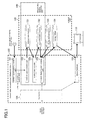
- a television receiver device includes a display device 110, a teletext data processing part (integrated circuit) 120, and an external RAM (externally provided RAM) 130 as shown in FIG. 1 .
- the teletext data processing part 120 is formed of an integrated circuit.
- the teletext data processing part 120 includes a teletext signal restoring control part 121, a teletext signal restoring part 122, a teletext data decoder 123, a key handler 124, a teletext display screen creating part 125, and display hardware 126.
- the external RAM 130 includes a teletext data memory 131, a page information memory 132, a displaying method memory 133, and a display VRAM 134 .
- the external RAM 130 may include a plurality of separate RAMs or a single RAM. In the latter case, memory areas in the RAM may be allocated to these memories.
- the teletext signal restoring part 122, the teletext data decoder 123, the teletext display screen creating part 125, the teletext data memory 131, and the page information memory 132 constitute a teletext data reading/displaying part 140.
- the teletext data processing part 120, the teletext data memory 131, the page information memory 132, and the displaying method memory 133 constitute a teletext decoding device.
- the teletext signal restoring control part 121 controls the teletext signal restoring part 122.
- the teletext signal restoring part 122 receives a video signal that includes teletext data transmitted from a broadcast station, restores a teletext signal, and stores the teletext signal as teletext data into the teletext data memory 131.
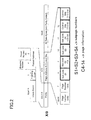
- FIG. 2 is a diagram for describing the data format of packet 0 of the teletext signal.
- Packet 0 contains page information, page type information and the like.
- the teletext data decoder 123 reads out teletext data from the teletext data memory 131, decodes the teletext data into decoded data, and stores the decoded data into the page information memory 132 for each page.
- the key handler 124 receives a remote controller key input that designates a page to be displayed, and transmits information indicating the page designated by the remote controller key input to the teletext display screen creating part 125 and the display hardware 126.
- the teletext display screen creating part 125 reads out decoded data of a page designated by a remote controller key input from the page information memory 132, creates image data suited to display, and writes the image data into the display VRAM 134 .
- the display hardware 126 reads out image data from the display VRAM 134 , transmits the image data to the display device 110, which in turn displays a teletext image.
- the display device 110 displays a teletext image based on image data transmitted from the display hardware 126.
- the television receiver device of this embodiment can display teletext data of a page having multiple subpages that have the same page number and different contents by two displaying methods (subpage displaying methods).
- a displayed teletext image is automatically updated irrespective of the subpage number when a teletext signal of a subpage that is different from the previous displayed subpage is received.
- This displaying method by automatic updating is referred to as automatic-update display, and is indicated by AUTO in the drawings.
- subpage numbers are displayed in a region other than that in which teletext data is displayed, together with the teletext data on a screen of the display device 110, to prompt the user to enter a remote controller key input so as to choose a subpage to be displayed, so that subpages to be displayed are switched, depending on the remote controller key input.
- This method of displaying a subpage list is hereinafter referred to as manual display, and is indicated by SUBPAGE in the drawings.
- the displaying method memory 133 previously is stored a multi-subpage displaying method table (displaying method information), such as that shown in FIG. 4 .
- the multi-subpage displaying method table indicates, station information (STATION), a page number (PAGE), page information (TYPE), a displaying method (MODE), and operation information (SETTING) that indicates whether display is enabled or disabled for each page.
- the page number is used to identify the page, and the page information indicates a type of the page.
- the teletext display screen creating part 125 reads out decoded data of each page from the page information memory 132. Thereafter, the teletext display screen creating part 125 identify page information in multi-subpage displaying method table in displaying method memory 133 based on station information (station name) and a page number, which are included in decoded data of the page. Thereafter, when the page information corresponding to the station information and the page number are present in the multi-subpage displaying method table, the teletext display screen creating part 125 transmits image data of the page to the display VRAM 134 so that the teletext data is displayed by a displaying method corresponding to the station information and the page number in the table.
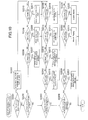
- the teletext display screen creating part 125 reads out decoded data of a page designated by a remote controller input received by the key handler 124, from the page information memory 132. Thereafter, the teletext display screen creating part 125 determines whether or not a current read page is the same as the previous read page. If they are different from each other, i.e., a new page has been read out, the operation goes to (S1002), or otherwise the operation goes to (S1006).
- the teletext display screen creating part 125 obtains a displaying method corresponding to the station information and page number of the current read page from the multi-subpage displaying method table stored in the displaying method memory 133.
- the teletext display screen creating part 125 determines whether the displaying method obtained in (S1002) is the manual display (SUBPAGE) or the automatic-update display (AUTO). If the displaying method is the manual display, the operation goes to (S1004). If the displaying method is the automatic-update display, the operation goes to (S1005).
- the teletext display screen creating part 125 sets the displaying method for the current read page to be the manual display.
- the teletext display screen creating part 125 sets the displaying method of the current read page to be the automatic-update display.
- the teletext display screen creating part 125 determines whether or not the current read subpage is the same as the previous read subpage. If they are not the same, the operation goes to (S1007), or otherwise the operation goes to (S1008).
- the teletext display screen creating part 125 determines whether the displaying method already set is the manual display or the automatic-update display. If the displaying method is the manual display, the operation is ended. If the displaying method is the automatic-update display, the operation goes to (S1008).
- the teletext display screen creating part 125 creates image data based on decoded data of the current read page, and writes the image data into the display VRAM 134.
- the display hardware 126 causes the display device 110 to display a teletext image based on the written image data.
- the teletext decoding device displays a teletext image of each page by a displaying method that is indicated by the station information and page number in the multi-subpage displaying method table stored in the displaying method memory 133. Therefore, when the multi-subpage displaying method table in which the page number is associated with a displaying method suitable for the page is stored in the displaying method memory 133, each page can be displayed by a suitable method.
- a displaying method is determined based on both the station information and page number in this embodiment, a displaying method may be determined based on either of them, or alternatively, based on other attributes. For example, only page information and displaying methods may be stored in the multi-subpage displaying method table, and a page may be displayed by a displaying method corresponding to the page information.
- a television receiver device includes, as shown in FIG. 6 , a teletext data processing part 220 instead of the teletext data processing part 120 of Embodiment 1.
- the teletext data processing part 220 includes a multi-subpage displaying method setting part 221 in addition to the components of the teletext data processing part 120 of Embodiment 1.
- the teletext data processing part 220, the teletext data memory 131, the page information memory 132, and the displaying method memory 133 constitute a teletext decoding device.
- the multi-subpage displaying method setting part 221 has a function of changing (modifying) the contents of the multi-subpage displaying method table stored in the displaying method memory 133. More specifically, the multi-subpage displaying method setting part 221 instructs a display screen creating part (not shown) to create an image that displays contents of the multi-subpage displaying method table on a screen of the display device 110. In accordance with this instruction, the display screen creating part creates the image displaying the contents of the multi-subpage displaying method table and writes the image data into a VRAM (not shown). Thereafter, display hardware (not shown) causes the display device 110 to display the contents of the multi-subpage displaying method table.
- the multi-subpage displaying method setting part 221 stores the multi-subpage displaying method table changed by the user into the displaying method memory 133.
- the user can choose a displaying method for each page by using the remote controller.
- the multi-subpage displaying method setting part 221 of this embodiment changes the contents of the multi-subpage displaying method table in accordance with a user's remote controller input
- the present invention is not limited to remote controllers.
- the contents of the multi-subpage displaying method table may be changed in accordance with an input by other input means, such as a keyboard, a mouse, and the like.
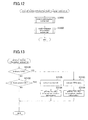
- the multi-subpage displaying method setting part 221 extracts one piece of station information from the multi-subpage displaying method table.
- the multi-subpage displaying method setting part 221 instructs the display screen creating part (not shown) to create an image of the station information.
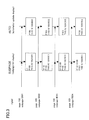
- the multi-subpage displaying method setting part 221 determines whether or not new station information to be extracted next is present in the multi-subpage displaying method table. If new station information to be extracted next is present, the operation returns to (S2001), or otherwise the operation goes to (S2005). When the steps up to (S2004) have been completed and the operation goes to (S2005), station information (channel information) is displayed as shown in portion (1) of FIG. 8 , for example.
- the multi-subpage displaying method setting part 221 waits for a user's remote controller input. Specifically, the multi-subpage displaying method setting part 221 waits for a signal indicating the contents of a user's remote controller input that will be transmitted from the key handler 124. If the signal is transmitted, i.e., the user enters an input using a remote controller, the operation goes to (S2006).
- the multi-subpage displaying method setting part 221 determines whether or not the user's remote controller input is an input for ending display of station information. Specifically, the multi-subpage displaying method setting part 221 determines whether or not the user's remote controller input is done through an END key.
- the display of the station information refers to a display, such as that shown in portion (1) of FIG. 8 , for example. If the user's remote controller input is done through the END key, the operation goes to (S2007), or otherwise the operation goes to (S2008). Note that the remote controller input is determined based on a signal indicating a content of the remote controller input transmitted from the key handler 124.
- the multi-subpage displaying method setting part 221 instructs the display screen creating part (not shown) to create image data which the display of the station information is removed.
- the multi-subpage displaying method setting part 221 determines whether or not the user's remote controller input is done through a RIGHT key while a cursor is positioned on the station information displayed on the screen. If the user's remote controller input is done through the RIGHT key in such a situation, the operation goes to (S2100), or otherwise the operation goes to (S2009). In the case of portion (1) of FIG. 8 , the cursor is positioned on CHANNEL2 which is station information. This is an exemplary situation in which the cursor is present on station information. In the example of FIG. 8 , the RIGHT key is pressed in this situation, and the operation then goes to (S2100).
- the multi-subpage displaying method setting part 221 instructs the display screen creating part (not shown) to cause the display device 110 to display the page number, page information, displaying method, and operation information of a page corresponding to the station information on which the cursor is positioned in (S2008). After the instruction, the operation goes to (S2005). Here, a display, such as that shown in portion (2) of FIG. 8 , appears on the screen of the display device 110. An operation in this case of the multi-subpage displaying method setting part 221 will be described elsewhere below.
- the multi-subpage displaying method setting part 221 determines whether or not the cursor is positioned on any one of displays of a page number, a displaying method, and operation information on the screen. If the cursor is positioned on any one of them, the operation goes to (S2200), or otherwise the operation goes to (S2010).
- the multi-subpage displaying method setting part 221 performs a process in accordance with a user's remote controller input for changing the multi-subpage displaying method table. This process will be described elsewhere below. If the process is completed, the operation returns to (S2005).
- the multi-subpage displaying method setting part 221 instructs the display screen creating part (not shown) to create image data of an image in which the position of the station information is changed, and returns to (S2005).
- the multi-subpage displaying method setting part 221 extracts one piece of station information from the multi-subpage displaying method table stored in the displaying method memory 133.
- the multi-subpage displaying method setting part 221 determines whether or not the station information extracted in (S2101) is the same as station information designated by the cursor. For example, if the display of portion (1) of FIG. 8 is presented on the screen, the multi-subpage displaying method setting part 221 determines whether or not the station information extracted in (S2101) is CHANNEL2. If the station information extracted in (S2101) is the same as the station information designated by the cursor, the operation goes to (S2103), or otherwise the operation goes to (S2107).
- the multi-subpage displaying method setting part 221 instructs the display screen creating part (not shown) to create an image in which these displays are added.
- the multi-subpage displaying method setting part 221 determines whether or not new station information to be next extracted is present in the multi-subpage displaying method table. If new station information is present, the operation goes to (S2101), or otherwise the process of (S2100) is ended.
- the multi-subpage displaying method setting part 221 determines whether or not the user's remote controller input is done through an ENTER key on the remote controller. If the user's remote controller input is not done through the ENTER key, the operation goes to (S2202), or otherwise the operation goes to (S2205).
- the multi-subpage displaying method setting part 221 determines whether or not the cursor is currently positioned on a page number (PAGE). If the cursor is present on a page number, the operation goes to (S2206), or otherwise, the operation goes to (S2203). For example, in portions (2) and (3) of FIG. 8 , since the cursor is present on a page number, the operation goes to (S2206).
- the multi-subpage displaying method setting part 221 determines whether or not the cursor is currently positioned on a displaying method (MODE). If the cursor is present on a displaying method, the operation goes to (S2212), or otherwise the operation goes to (S2204). For example, in portions (4) and (5) of FIG. 8 , since the cursor is present on a displaying method, the operation goes to (S2212).
- the multi-subpage displaying method setting part 221 determines whether or not the cursor is currently positioned on operation information (SETTING) indicating whether to enable or disable display of a page. If the cursor is present on operation information, the operation goes to (S2220), or otherwise the process of (S2200) is ended. For example, in portions (6) and (7) of FIG. 8 , since the cursor is present on operation information, the operation goes to (S2220).
- the multi-subpage displaying method setting part 221 stores current settings on the screen into the displaying method memory 133, replacing the previous multi-subpage displaying method table, and ends the process of (S2200). For example, between portions (7) and (8) of FIG. 8 , since the ENTER key is pressed, settings displayed in portion (7) of FIG. 8 are stored as a new multi-subpage displaying method table into the displaying method memory 133.
- the multi-subpage displaying method setting part 221 determines whether or not the user's remote controller input is done through the RIGHT key on the remote controller. If the user's remote controller input is done through the RIGHT key, the operation goes to (S2207), or otherwise the operation goes to (S2208). For example, between portions (3) and (4) of FIG. 8 , since the RIGHT key is pressed, the operation goes to (S2207).
- the multi-subpage displaying method setting part 221 moves the cursor onto a displaying method (MODE). More specifically, in order to display on the display device 110 an image in which the cursor is moved onto the displaying method, the multi-subpage displaying method setting part 221 instructs the display screen creating part (not shown) to create the image, and then ends the process of (S2200). For example, between portions (3) and (4) of FIG. 8 , the cursor is moved from a page number 889 onto a displaying method SUBPAGE.
- the multi-subpage displaying method setting part 221 moves the cursor
- the multi-subpage displaying method setting part 221 actually instructs the display screen creating part (not shown) to create an image in which the cursor is moved, which will not be described.
- the multi-subpage displaying method setting part 221 determines whether or not the user's remote controller input is done through an UP key on the remote controller. If the user's remote controller input is done through the UP key, the operation goes to (S2209), or otherwise the operation goes to (S2210).
- the multi-subpage displaying method setting part 221 moves the cursor onto the previous page, and then ends the process of (S2200).
- the previous page refers to a page that is displayed in an upper portion of the screen.
- the multi-subpage displaying method setting part 221 determines whether or not the user's remote controller input is done through a DOWN key on the remote controller. If the user's remote controller input is done through the DOWN key, the operation goes to (S2211), or otherwise the process of (S2200) is ended. For example, between portions (2) and (3) of FIG. 8 , since the DOWN key is pressed, the operation goes to (S2211).
- the multi-subpage displaying method setting part 221 moves the cursor onto the next page, and then ends the process of (S2200).
- the next page is a page that is displayed in a lower portion on the screen. For example, between portions (2) and (3) of FIG. 8 , the cursor is moved from a page number 151 onto the page number 889.
- the multi-subpage displaying method setting part 221 determines whether or not the user's remote controller input is done through a LEFT key on the remote controller. If the user's remote controller input is done through the LEFT key, the operation goes to (S2213), or otherwise the operation goes to (S2214).
- the multi-subpage displaying method setting part 221 moves the cursor onto a page number (PAGE), and then ends the process of (S2200).
- the multi-subpage displaying method setting part 221 determines whether or not the user's remote controller input is done through the RIGHT key on the remote controller. If the user's remote controller input is done through the RIGHT key, the operation goes to (S2215), or otherwise the operation goes to (S2216). For example, between portions (5) and (6) of FIG. 8 , since the RIGHT key is pressed, the operation goes to (S2215).
- the multi-subpage displaying method setting part 221 moves the cursor onto operation information (SETTING) indicating whether to enable or disable display of a page, and then ends the process of (S2200). For example, between portions (5) and (6) of FIG. 8 , the cursor is moved from a displaying method AUTO onto operation information.
- the multi-subpage displaying method setting part 221 determines whether or not a user's remote controller input is done through the UP key on the remote controller. If the user's remote controller input is done through the UP key, the operation goes to (S2217), or otherwise the operation goes to (S2218).
- the multi-subpage displaying method setting part 221 changes a display designated by the cursor to SUBPAGE, and then ends the process of (S2200).
- the multi-subpage displaying method setting part 221 determines whether or not the user's remote controller input is done through the DOWN key. If the user's remote controller input is done through the DOWN key, the operation goes to (S2219), or otherwise the process of (S2200) is ended. For example, between portions (4) and (5) of FIG. 8 , since the DOWN key is pressed, the operation goes to (S2219).
- the multi-subpage displaying method setting part 221 changes a display designated by the cursor to AUTO, and then ends the process of (S2200). For example, in portion (5) of FIG. 8 , a display designated by the cursor is AUTO.
- the multi-subpage displaying method setting part 221 determines whether or not the user's remote controller input is done through the LEFT key. If the user's remote controller input is done through the LEFT key, the operation goes to (S2221), or otherwise the operation goes to (S2222).
- the multi-subpage displaying method setting part 221 moves the cursor onto a displaying method (MODE), and then ends the process of (S2200).
- the multi-subpage displaying method setting part 221 determines whether or not the user's remote controller input is done through the UP key. If the user's remote controller input is done through the UP key, the operation goes to (S2223), or otherwise the operation goes to (S2224).
- the multi-subpage displaying method setting part 221 changes a display designated by the cursor to NO, and then ends the process of (S2200). Note that, here, the display of NO on the screen indicates that display is disabled, and a display of YES indicates that display is enabled.
- the multi-subpage displaying method setting part 221 determines whether or not the user's remote controller input is done through the DOWN key. If the user's remote controller input is done through the DOWN key, the operation goes to (S2225), or otherwise the process of (S2200) is ended. For example, between portions (6) and (7) of FIG. 8 , since the DOWN key is pressed, the operation goes to (S2225).
- the multi-subpage displaying method setting part 221 changes a display indicated by the cursor to YES, and then ends the process of (S2200). For example, in portion (7) of FIG. 8 , a display indicated by the cursor is YES.
- a television receiver device includes, as shown in FIG. 11 , a teletext data processing part 320 instead of the teletext data processing part 220 of Embodiment 2.
- the teletext data processing part 320 includes a station information/multi-subpage extracting part 321 in addition to the components of the teletext data processing part 220 of Embodiment 2.
- the teletext data processing part 320, the teletext data memory 131, the page information memory 132, and the displaying method memory 133 constitute a teletext decoding device.
- the station information/multi-subpage extracting part 321 receives a teletext signal that has been restored by the teletext signal restoring part 122, detects a multi-subpage, and adds the multi-subpage to the multi-subpage displaying method table stored in the displaying method memory 133. Contents of the multi-subpage displaying method table are displayed on a display device as described in Embodiment 2, so that the user can know all multi-subpages to be displayed. Also, since a page that is not a multi-subpage is not displayed, it is possible to prevent the user from trying to set a displaying method for a page that is not a multi-subpage.
- the station information/multi-subpage extracting part 321 extracts station information (STATION) from a teletext signal (teletext data) that has been restored by the teletext signal restoring part 122.
- the station infonnation/multi-subpage extracting part 321 (multi-subpage extracting part) extracts page information (TYPE) of a multi-subpage from the teletext signal (teletext data) restored by the teletext signal restoring part 122. Thereafter, the station information/multi-subpage extracting part 321 analyzes the extracted page information, and count subpages in a page, and determine a subpage displaying method.
- TYPE page information of a multi-subpage from the teletext signal (teletext data) restored by the teletext signal restoring part 122.
- the station information/multi-subpage extracting part 321 analyzes the extracted page information, and count subpages in a page, and determine a subpage displaying method.
- the station information/multi-subpage extracting part 321 performs the processes of (S3100) and (S3200) for each page.
- the station information/multi-subpage extracting part 321 determines whether or not VPS (Video Programming System) data is present in the teletext signal restored by the teletext signal restoring part 122. If VPS (Video Programming System) data is not present, the operation goes to (S3102), or otherwise the operation goes to (S3103).
- VPS Video Programming System
- the station information/multi-subpage extracting part 321 determines whether or not packet 30 is present in the teletext signal restored by the teletext signal restoring part 122. If packet 30 is present, the operation goes to (S3105), or otherwise the process of (S3100) is ended.
- the station information/multi-subpage extracting part 321 extracts the VPS data.
- the station information/multi-subpage extracting part 321 extracts country information and station information, finally confirms the station information, and ends the process of (S3100).
- the station information/multi-subpage extracting part 321 extracts data of packet 30.
- the station information/multi-subpage extracting part 321 extracts country information and station information, finally confirms the station information, and ends the process of (S3100).
- the station information/multi-subpage extracting part 321 extracts packet 0.
- the station information/multi-subpage extracting part 321 determines whether or not page information indicated by packet 0 extracted in (S3201) is subtitles (SUBTITLES). If the page information is subtitles, the operation goes to (S3203), or otherwise the operation goes to (S3204).
- the station information/multi-subpage extracting part 321 sets page information to be subtitles.
- the station information/multi-subpage extracting part 321 determines whether or not the page information indicated by packet 0 extracted in (S3201) is a newsflash (NEWSFLASH). If the page information is a newsflash, the operation goes to (S3205), or otherwise the operation goes to (S3206).
- the station information/multi-subpage extracting part 321 sets page information to be newsflash.
- the station information/multi-subpage extracting part 321 determines whether or not a subpage number indicated by packet 0 extracted in (S3201) is the same as a current time. If the subpage number is the same as the current time, the operation goes to (S3207), or otherwise the operation goes to (S3208).
- the station information/multi-subpage extracting part 321 sets page information to be time (TIME).
- the station information/multi-subpage extracting part 321 determines whether or not subpages that have the same page number and different subpage numbers are present in the internal table. If the subpages are present, the operation goes to (S3209), or otherwise the operation goes to (S3210).
- the station information/multi-subpage extracting part 321 outputs the country information and station information extracted in (S3100), a page number indicated by packet 0 extracted in (S3201), and the set page information, determines and outputs a displaying method for a page, and then ends the process of (S3200).
- the output station information, page number, page information and displaying method are added to the multi-subpage displaying method table in the displaying method memory 133.
- the station information/multi-subpage extracting part 321 saves the page number and the subpage number into the internal table.
- the station information/multi-subpage extracting part 321 repeats the process of (S3200) for each packet 0, to output information about a multi-subpage in a teletext signal to the displaying method memory 133.
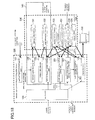
- a television receiver device includes, as shown in FIG. 15 , a display device 110, a teletext data processing part 420, and an external RAM (externally provided RAM) 430.
- the teletext data processing part 420 includes a multi-subpage comparing/extracting part 421 in addition to the components of the teletext data processing part 320 of Embodiment 3.
- the external RAM 430 includes an extraction conditions memory 431 in addition to the components of the external RAM 130 of Embodiment 3.
- the teletext data processing part 420, the teletext data memory 131, the page information memory 132, the displaying method memory 133, and the extraction conditions memory 431 constitute a teletext decoding device.
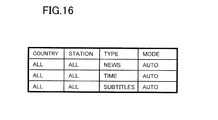
- a multi-subpage extraction conditions table such as that shown in FIG. 16 , is stored.
- This multi-subpage extraction conditions table indicates country information (COUNTRY), station information (STATION), page information (page type) (TYPE), and a displaying method (MODE) for each page as shown in FIG. 16 .
- the multi-subpage comparing/extracting part 421 compares information output by the station information/multi-subpage extracting part 321 with conditions listed in the multi-subpage extraction conditions table. Thereafter, the multi-subpage comparing/extracting part 421 extracts a multi-subpage for which matching conditions are present in the multi-subpage extraction conditions table, and adds the page number, station information and page information of the multi-subpage to the multi-subpage displaying method table stored in the displaying method memory 133.
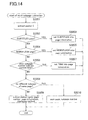
- the multi-subpage comparing/extracting part 421 reads out a set of data from the multi-subpage extraction conditions table.
- a set of data refers to one row of data in FIG. 16 .
- the multi-subpage comparing/extracting part 421 determines whether or not the country information extracted by the station information/multi-subpage extracting part 321 is the same as country information contained in the data read out in (S4001). If they are the same, the operation goes to (S4003), or otherwise the operation goes to (S4006). Note that, if country information is ALL in the data read out in (S4001), it is determined that they are the same even when the country information extracted by the station information/multi-subpage extracting part 321 indicates any country. The same is true of other pieces of information, such as station information and the like.
- the multi-subpage comparing/extracting part 421 determines whether or not the station information extracted by the station information/multi-subpage extracting part 321 is the same as station information contained in the data read out in (S4001). If they are the same, the operation goes to (S4004), or otherwise the operation goes to (S4006).
- the multi-subpage comparing/extracting part 421 determines whether or not the page information extracted by the station information/multi-subpage extracting part 321 is the same as page information contained in the data read out in (S4001). If they are the same, the operation goes to (S4005), or otherwise the operation goes to (S4006). In other words, if there is a match in all of country information, station information, and page information, the operation goes to (S4005). If there is a mismatch in at least one of country information, station information, and page information, the operation goes to (S4006).
- the multi-subpage comparing/extracting part 421 outputs a displaying method (MODE) contained in the data read out in (S4001) in addition to the station information, page number and page information extracted by the station information/multi-subpage extracting part 321.
- the output station information, page number, page information and displaying method are added to the multi-subpage displaying method table of the displaying method memory 133.
- the multi-subpage comparing/extracting part 421 determines whether or not there is data that has not yet been read out from the multi-subpage extraction conditions table, i.e., there are multi-subpage extraction conditions that have not been compared. If there is such data or conditions, the operation returns to (S4001), or otherwise the operation is ended.
- this embodiment by setting extraction conditions in advance, it is possible to reduce pages contained in a multi-subpage displaying method table. Therefore, even when teletext data is displayed based on a signal that is transmitted from a broadcast station and has a lot of pages to be displayed, it is possible to prevent an increase in the number of pages contained in a multi-subpage displaying method table. In other words, it is possible to prevent an increase in pages to be selected by the user.
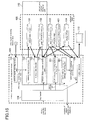
- a television receiver device includes, as shown in FIG. 18 , a display device 110, a teletext data processing part 520, and an external RAM (externally provided RAM) 530.
- the teletext data processing part 520 includes a station information/multi-subpage extracting part 521 instead of the station information/multi-subpage extracting part 321 of the teletext data processing part 420 of Embodiment 4.
- the external RAM 530 includes a station information memory 531 in addition to the components of the external RAM 430 of Embodiment 4.
- the teletext data processing part 520, the teletext data memory 131, the page information memory 132, the displaying method memory 133, and the extraction conditions memory 431 constitute a teletext decoding device.
- the station information memory 531 stores a station information table, such as that shown in FIG. 19 .
- This station information table indicates an internal number (NUMBER), an RF channel (CH), and station information (STATION) in association with each other as shown in FIG. 19 .
- the television receiver device when receiving an internal number input by, for example, a user's operation of a remote controller, refers to the station information table and receives an RF channel corresponding to the internal number.
- information indicating an internal number, an RF channel, and station information in association with each other as used herein refers to station selection information.
- the station information/multi-subpage extracting part 521 extracts station information from a teletext signal restored by the teletext signal restoring part 122, and outputs the extracted station information to the station information memory 531.
- the output station information is written into the station information table of the station information memory 531, and is used in combination with the station selection information possessed by the television receiver device.
- the station selection information possessed by the television receiver device refers to information that is obtained by automatic scanning or the like (e.g., information shown in two upper stages of FIG. 19 , i.e., information corresponding to CH03 and CH04).
- the multi-subpage displaying method setting part 221 uses station selection information indicated in the station information table instead of station information of the multi-subpage displaying method table used in Embodiment 3 or 4. Therefore, this station selection information is displayed as a display image, such as that shown in portion (1) of FIG. 8 , on the display device 110 instead of station information included in the multi-subpage displaying method table.
- this station selection information is displayed as a display image, such as that shown in portion (1) of FIG. 8 , on the display device 110 instead of station information included in the multi-subpage displaying method table.
- an internal number, an RF channel, and station information are displayed in association with each other in this embodiment.
- a television receiver device including a teletext decoding device can manage station information in a unified manner.
- station selection information possessed by the television receiver device and station information extracted from a teletext signal can be managed in a unified manner, so that pieces of station information no longer need to be separately managed.
- the station information/multi-subpage extracting part 521 extracts station information from a teletext signal restored by the teletext signal restoring part 122.
- the station information/multi-subpage extracting part 521 stores the station information extracted in (S3100) into the station information table of the station information memory 531.
- the station information/multi-subpage extracting part 521 extracts the page information (TYPE) of a multi-subpage from the teletext signal restored by the teletext signal restoring part 122.
- the detailed operations in (S3100) and (S3200) of the station information/multi-subpage extracting part 521 are similar to the operations of the station information/multi-subpage extracting part 321 described in Embodiment 3.
- the station information/multi-subpage extracting part 521 performs the operation of (S5100) in addition to the operations of the station information/multi-subpage extracting part 321 of Embodiments 3 and 4.
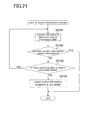
- the station infonnation/multi-subpage extracting part 521 extracts a set of data from the station information table of the station information memory 531.
- a set of data refers to one row of data in FIG. 19 .
- the station information/multi-subpage extracting part 521 compares station information (STATION) contained in the data extracted in (S5101) with the station information extracted in (S3100). If they are the same, the process of (S5100) is ended, or otherwise the operation goes to (S5103).
- the station information/multi-subpage extracting part 521 determines whether or not all data of the station information table has been compared in (S5102). If there is data that has not been compared, the operation returns to (S5101), or otherwise the operation goes to (S5104).
- the station information/multi-subpage extracting part 521 outputs the station information extracted in (S3100) as new station information to the station information memory 531.
- the output station information is stored into the station information memory 531 with the internal number being 0 and the RF channel being NONE.
- information obtained by associating the output station information with 0 and NONE as an internal signal and an RF channel is added to the station information table.
- the present invention is not limited to 0 and NONE.
- Information obtained by associating the output station information with other predetermined data may be added to the station information table.
- FIG. 22 is a diagram for describing a display by the television receiver device when a teletext signal indicating World Clock is received as a multi-subpage.
- a subpage number extracted from the teletext signal is a combination of numerals indicating hours and numerals indicating minutes. For example, in the case of 14:20, a subpage number is 1420.
- This teletext signal page displays time information of countries in the world. Therefore, the automatic-update displaying method is preferable for such a page.
- a teletext signal indicating a time on or after 00:00 the subpage number takes a value, such as 01, 02 or the like. Therefore, such a teletext signal is displayed in a displaying method different from automatic updating in the case of conventional teletext decoders.
- a displaying method can be registered for each page. Therefore, when automatic updating is registered for pages indicating times on and after 00: 00, teletext data of World Clock can be appropriately displayed in any event.
- FIG. 23 is a diagram for describing a display by the television receiver device when contents of NEWSFLASH are received as a multi-subpage.
- the automatic-update displaying method or the manual displaying method may be used, and the displaying methods may be desirably switched, depending on the user's preference.
- display is performed by automatic updating.
- a displaying method can be registered for each page. Therefore, by registering displaying methods, depending on the user's preference, teletext data can be displayed by a desired displaying method.
- the memories such as the displaying method memory 133 and the like, are each formed of an external RAM in Embodiments 1 to 5, they may each be formed of a built-in RAM included in an integrated circuit including a corresponding one of the teletext data processing parts 120 to 520.
- the type of the memory is not limited to RAM.
- the teletext data processing sections 120 to 520 are each formed of a one-chip integrated circuit in Embodiments 1 to 5, they may each be formed of a plurality of integrated circuit chips.
- the teletext decoding devices of Embodiments 1 to 5 may each be included in a video device, such as a video tape recorder, a hard disk video recorder, a DVD video recorder or the like, or a personal computer.
- a video device such as a video tape recorder, a hard disk video recorder, a DVD video recorder or the like, or a personal computer.
- data (displaying method information) stored in the displaying method memory 133 is not limited to data in the form shown in FIG. 4 , and may be data in other forms indicating a correspondence relationship between a page attribute (e.g., a page number, etc.) and a displaying method.
- data stored in the extraction conditions memory 431 is not limited to data in the form shown in FIG. 16 , and may be data in other forms indicating extraction conditions.
- the multi-subpage comparing/extracting part 421 may be adapted to extract a multi-subpage satisfying the extraction conditions, and add information about the extracted multi-subpage to the multi-subpage displaying method table.
- the present invention has the effect of displaying on a display device a teletext image of a page having multiple subpages that have the same page number and different contents by an appropriate displaying method desired by the device user, thereby making it possible to prevent inappropriate display.
- the present invention is useful as, for example, a teletext decoding device for decoding teletext data of a page having multiple subpages, and displaying the teletext image on a display device by multiple subpage displaying methods, or a television receiver device, a video tape recorder, a personal computer or the like that have the teletext decoding device.
Landscapes
- Engineering & Computer Science (AREA)
- Multimedia (AREA)
- Signal Processing (AREA)
- Two-Way Televisions, Distribution Of Moving Picture Or The Like (AREA)
- Computer And Data Communications (AREA)
- Information Transfer Between Computers (AREA)
Applications Claiming Priority (1)
| Application Number | Priority Date | Filing Date | Title |
|---|---|---|---|
| JP2007152802A JP2008306554A (ja) | 2007-06-08 | 2007-06-08 | テレテキストデコード装置、テレビジョン受像装置、ビデオ装置、パーソナルコンピュータ、および集積回路 |
Publications (2)
| Publication Number | Publication Date |
|---|---|
| EP2015571A2 true EP2015571A2 (de) | 2009-01-14 |
| EP2015571A3 EP2015571A3 (de) | 2011-08-03 |
Family
ID=39758873
Family Applications (1)
| Application Number | Title | Priority Date | Filing Date |
|---|---|---|---|
| EP08157554A Withdrawn EP2015571A3 (de) | 2007-06-08 | 2008-06-04 | Teletext-Dekodiervorrichtung, Fernsehempfangvorrichtung, Videovorrichtung, Computer und integrierte Schaltung |
Country Status (2)
| Country | Link |
|---|---|
| EP (1) | EP2015571A3 (de) |
| JP (1) | JP2008306554A (de) |
Citations (1)
| Publication number | Priority date | Publication date | Assignee | Title |
|---|---|---|---|---|
| JPH05199502A (ja) | 1991-07-24 | 1993-08-06 | Philips Gloeilampenfab:Nv | テレテキストデコーダを含むテレビジョン受信機 |
Family Cites Families (4)
| Publication number | Priority date | Publication date | Assignee | Title |
|---|---|---|---|---|
| NL8901724A (nl) * | 1989-07-06 | 1991-02-01 | Philips Nv | Teletext decoder en ontvanger van televisie signalen voor het ontvangen van cyclisch uitgezonden teletext pagina's. |
| IT1245455B (it) * | 1991-03-15 | 1994-09-20 | Sisvel Spa | Ricevitore perfezionato di trasmissioni teletext |
| IT1262382B (it) * | 1993-07-23 | 1996-06-19 | Edico Srl | Ricevitore di segnali teletext con controllo della durata di visualizzazione delle pagine rotanti. |
| DE19531072A1 (de) * | 1995-08-23 | 1997-02-27 | Thomson Brandt Gmbh | Teletextsystem mit einem Speicher |
-
2007
- 2007-06-08 JP JP2007152802A patent/JP2008306554A/ja not_active Withdrawn
-
2008
- 2008-06-04 EP EP08157554A patent/EP2015571A3/de not_active Withdrawn
Patent Citations (1)
| Publication number | Priority date | Publication date | Assignee | Title |
|---|---|---|---|---|
| JPH05199502A (ja) | 1991-07-24 | 1993-08-06 | Philips Gloeilampenfab:Nv | テレテキストデコーダを含むテレビジョン受信機 |
Also Published As
| Publication number | Publication date |
|---|---|
| EP2015571A3 (de) | 2011-08-03 |
| JP2008306554A (ja) | 2008-12-18 |
Similar Documents
| Publication | Publication Date | Title |
|---|---|---|
| US9641901B2 (en) | Method for displaying electronic program guide optimized for user convenience | |
| KR100427136B1 (ko) | 데이터변환장치 | |
| CN102200992B (zh) | 图像显示设备和图像显示方法 | |
| KR100473537B1 (ko) | 방송을이용하여대화성을실현하는송신장치,수신장치,수신방법,그수신프로그램을기록한매체,통신시스템 | |
| CN102349308B (zh) | 对与当前被观看的节目有关的媒体和其他内容的交互式访问 | |
| JP3965239B2 (ja) | 受信装置 | |
| CN1984291B (zh) | 执行时移功能的方法及使用该方法的电视接收机 | |
| EP2023620A1 (de) | Aufzeichnungsvorrichtung, Wiedergabevorrichtung, Aufzeichnungs-/Wiedergabevorrichtung, Bildaufnahmevorrichtung, Aufzeichnungsverfahren und Programm | |
| US8019774B2 (en) | Information processing apparatus, and method and program for searching text information candidate | |
| CN101365063A (zh) | 电子照相机以及视场图像再现装置 | |
| US8180199B2 (en) | Playback apparatus, playback method, program for playback method, and recording medium recorded with program for playback method thereon | |
| KR20090125985A (ko) | 영상표시기기에서 메뉴얼 제공 장치 및 방법 | |
| JP2008306554A (ja) | テレテキストデコード装置、テレビジョン受像装置、ビデオ装置、パーソナルコンピュータ、および集積回路 | |
| KR101122084B1 (ko) | 디지털 방송 수신 기능을 갖는 이동통신 단말기 및 이를이용한 방송 서비스 정보 관리방법 | |
| CN101094337A (zh) | 控制电视接收机的方法以及使用该方法的电视接收机 | |
| JP2002077762A (ja) | 放送受信装置 | |
| CN101207745A (zh) | 用于显示广播时刻表的图像显示装置和方法 | |
| JP4882780B2 (ja) | ディジタル放送受信装置 | |
| JP2006106037A (ja) | 画像表示装置 | |
| JP2011176893A (ja) | 放送受信機および録画番組表示方法 | |
| KR100705073B1 (ko) | 선호채널에 관한 이피지 정보의 표시를 위한 텔레비젼수상기 및 방법 | |
| KR100529320B1 (ko) | 텔리텍스트의 선호 페이지 편집 방법 및 그 장치 | |
| CN101212598B (zh) | 显示电子节目指南信息的方法 | |
| US20100063979A1 (en) | Manual search method and image display device using the same | |
| KR100577361B1 (ko) | 디지털 텔레비젼의 전자 프로그램 가이드 디스플레이 장치및 방법 |
Legal Events
| Date | Code | Title | Description |
|---|---|---|---|
| PUAI | Public reference made under article 153(3) epc to a published international application that has entered the european phase |
Free format text: ORIGINAL CODE: 0009012 |
|
| PUAI | Public reference made under article 153(3) epc to a published international application that has entered the european phase |
Free format text: ORIGINAL CODE: 0009012 |
|
| AK | Designated contracting states |
Kind code of ref document: A2 Designated state(s): AT BE BG CH CY CZ DE DK EE ES FI FR GB GR HR HU IE IS IT LI LT LU LV MC MT NL NO PL PT RO SE SI SK TR |
|
| AX | Request for extension of the european patent |
Extension state: AL BA MK RS |
|
| PUAL | Search report despatched |
Free format text: ORIGINAL CODE: 0009013 |
|
| AK | Designated contracting states |
Kind code of ref document: A3 Designated state(s): AT BE BG CH CY CZ DE DK EE ES FI FR GB GR HR HU IE IS IT LI LT LU LV MC MT NL NO PL PT RO SE SI SK TR |
|
| AX | Request for extension of the european patent |
Extension state: AL BA MK RS |
|
| RIC1 | Information provided on ipc code assigned before grant |
Ipc: H04N 7/00 20110101ALN20110628BHEP Ipc: H04N 7/088 20060101AFI20110628BHEP |
|
| AKY | No designation fees paid | ||
| REG | Reference to a national code |
Ref country code: DE Ref legal event code: R108 Effective date: 20120411 |
|
| STAA | Information on the status of an ep patent application or granted ep patent |
Free format text: STATUS: THE APPLICATION IS DEEMED TO BE WITHDRAWN |
|
| 18D | Application deemed to be withdrawn |
Effective date: 20120204 |