EP2016467B1 - Ladungsdirektor für flüssigtoner - Google Patents
Ladungsdirektor für flüssigtoner Download PDFInfo
- Publication number
- EP2016467B1 EP2016467B1 EP06759604.9A EP06759604A EP2016467B1 EP 2016467 B1 EP2016467 B1 EP 2016467B1 EP 06759604 A EP06759604 A EP 06759604A EP 2016467 B1 EP2016467 B1 EP 2016467B1
- Authority
- EP
- European Patent Office
- Prior art keywords
- charge director
- salt
- general formula
- director material
- micelle forming
- Prior art date
- Legal status (The legal status is an assumption and is not a legal conclusion. Google has not performed a legal analysis and makes no representation as to the accuracy of the status listed.)
- Expired - Lifetime
Links
- 0 COC(C(CC(O*)=O)S(ON)(=O)=O)=O Chemical compound COC(C(CC(O*)=O)S(ON)(=O)=O)=O 0.000 description 1
Images


Classifications
-
- G—PHYSICS
- G03—PHOTOGRAPHY; CINEMATOGRAPHY; ANALOGOUS TECHNIQUES USING WAVES OTHER THAN OPTICAL WAVES; ELECTROGRAPHY; HOLOGRAPHY
- G03G—ELECTROGRAPHY; ELECTROPHOTOGRAPHY; MAGNETOGRAPHY
- G03G9/00—Developers
- G03G9/08—Developers with toner particles
- G03G9/097—Plasticisers; Charge controlling agents
- G03G9/09783—Organo-metallic compounds
-
- B—PERFORMING OPERATIONS; TRANSPORTING
- B82—NANOTECHNOLOGY
- B82B—NANOSTRUCTURES FORMED BY MANIPULATION OF INDIVIDUAL ATOMS, MOLECULES, OR LIMITED COLLECTIONS OF ATOMS OR MOLECULES AS DISCRETE UNITS; MANUFACTURE OR TREATMENT THEREOF
- B82B1/00—Nanostructures formed by manipulation of individual atoms or molecules, or limited collections of atoms or molecules as discrete units
-
- B—PERFORMING OPERATIONS; TRANSPORTING
- B82—NANOTECHNOLOGY
- B82B—NANOSTRUCTURES FORMED BY MANIPULATION OF INDIVIDUAL ATOMS, MOLECULES, OR LIMITED COLLECTIONS OF ATOMS OR MOLECULES AS DISCRETE UNITS; MANUFACTURE OR TREATMENT THEREOF
- B82B3/00—Manufacture or treatment of nanostructures by manipulation of individual atoms or molecules, or limited collections of atoms or molecules as discrete units
-
- B—PERFORMING OPERATIONS; TRANSPORTING
- B82—NANOTECHNOLOGY
- B82Y—SPECIFIC USES OR APPLICATIONS OF NANOSTRUCTURES; MEASUREMENT OR ANALYSIS OF NANOSTRUCTURES; MANUFACTURE OR TREATMENT OF NANOSTRUCTURES
- B82Y30/00—Nanotechnology for materials or surface science, e.g. nanocomposites
-
- C—CHEMISTRY; METALLURGY
- C09—DYES; PAINTS; POLISHES; NATURAL RESINS; ADHESIVES; COMPOSITIONS NOT OTHERWISE PROVIDED FOR; APPLICATIONS OF MATERIALS NOT OTHERWISE PROVIDED FOR
- C09C—TREATMENT OF INORGANIC MATERIALS, OTHER THAN FIBROUS FILLERS, TO ENHANCE THEIR PIGMENTING OR FILLING PROPERTIES ; PREPARATION OF CARBON BLACK ; PREPARATION OF INORGANIC MATERIALS WHICH ARE NO SINGLE CHEMICAL COMPOUNDS AND WHICH ARE MAINLY USED AS PIGMENTS OR FILLERS
- C09C1/00—Treatment of specific inorganic materials other than fibrous fillers; Preparation of carbon black
- C09C1/02—Compounds of alkaline earth metals or magnesium
-
- C—CHEMISTRY; METALLURGY
- C09—DYES; PAINTS; POLISHES; NATURAL RESINS; ADHESIVES; COMPOSITIONS NOT OTHERWISE PROVIDED FOR; APPLICATIONS OF MATERIALS NOT OTHERWISE PROVIDED FOR
- C09C—TREATMENT OF INORGANIC MATERIALS, OTHER THAN FIBROUS FILLERS, TO ENHANCE THEIR PIGMENTING OR FILLING PROPERTIES ; PREPARATION OF CARBON BLACK ; PREPARATION OF INORGANIC MATERIALS WHICH ARE NO SINGLE CHEMICAL COMPOUNDS AND WHICH ARE MAINLY USED AS PIGMENTS OR FILLERS
- C09C1/00—Treatment of specific inorganic materials other than fibrous fillers; Preparation of carbon black
- C09C1/02—Compounds of alkaline earth metals or magnesium
- C09C1/025—Calcium sulfates
-
- C—CHEMISTRY; METALLURGY
- C09—DYES; PAINTS; POLISHES; NATURAL RESINS; ADHESIVES; COMPOSITIONS NOT OTHERWISE PROVIDED FOR; APPLICATIONS OF MATERIALS NOT OTHERWISE PROVIDED FOR
- C09C—TREATMENT OF INORGANIC MATERIALS, OTHER THAN FIBROUS FILLERS, TO ENHANCE THEIR PIGMENTING OR FILLING PROPERTIES ; PREPARATION OF CARBON BLACK ; PREPARATION OF INORGANIC MATERIALS WHICH ARE NO SINGLE CHEMICAL COMPOUNDS AND WHICH ARE MAINLY USED AS PIGMENTS OR FILLERS
- C09C1/00—Treatment of specific inorganic materials other than fibrous fillers; Preparation of carbon black
- C09C1/02—Compounds of alkaline earth metals or magnesium
- C09C1/027—Barium sulfates
-
- C—CHEMISTRY; METALLURGY
- C09—DYES; PAINTS; POLISHES; NATURAL RESINS; ADHESIVES; COMPOSITIONS NOT OTHERWISE PROVIDED FOR; APPLICATIONS OF MATERIALS NOT OTHERWISE PROVIDED FOR
- C09C—TREATMENT OF INORGANIC MATERIALS, OTHER THAN FIBROUS FILLERS, TO ENHANCE THEIR PIGMENTING OR FILLING PROPERTIES ; PREPARATION OF CARBON BLACK ; PREPARATION OF INORGANIC MATERIALS WHICH ARE NO SINGLE CHEMICAL COMPOUNDS AND WHICH ARE MAINLY USED AS PIGMENTS OR FILLERS
- C09C3/00—Treatment in general of inorganic materials, other than fibrous fillers, to enhance their pigmenting or filling properties
- C09C3/08—Treatment with low-molecular-weight non-polymer organic compounds
-
- G—PHYSICS
- G03—PHOTOGRAPHY; CINEMATOGRAPHY; ANALOGOUS TECHNIQUES USING WAVES OTHER THAN OPTICAL WAVES; ELECTROGRAPHY; HOLOGRAPHY
- G03G—ELECTROGRAPHY; ELECTROPHOTOGRAPHY; MAGNETOGRAPHY
- G03G9/00—Developers
- G03G9/08—Developers with toner particles
- G03G9/12—Developers with toner particles in liquid developer mixtures
- G03G9/135—Developers with toner particles in liquid developer mixtures characterised by stabiliser or charge-controlling agents
-
- G—PHYSICS
- G03—PHOTOGRAPHY; CINEMATOGRAPHY; ANALOGOUS TECHNIQUES USING WAVES OTHER THAN OPTICAL WAVES; ELECTROGRAPHY; HOLOGRAPHY
- G03G—ELECTROGRAPHY; ELECTROPHOTOGRAPHY; MAGNETOGRAPHY
- G03G9/00—Developers
- G03G9/08—Developers with toner particles
- G03G9/12—Developers with toner particles in liquid developer mixtures
- G03G9/135—Developers with toner particles in liquid developer mixtures characterised by stabiliser or charge-controlling agents
- G03G9/1355—Ionic, organic compounds
-
- C—CHEMISTRY; METALLURGY
- C01—INORGANIC CHEMISTRY
- C01P—INDEXING SCHEME RELATING TO STRUCTURAL AND PHYSICAL ASPECTS OF SOLID INORGANIC COMPOUNDS
- C01P2004/00—Particle morphology
- C01P2004/60—Particles characterised by their size
- C01P2004/64—Nanometer sized, i.e. from 1-100 nanometer
-
- C—CHEMISTRY; METALLURGY
- C01—INORGANIC CHEMISTRY
- C01P—INDEXING SCHEME RELATING TO STRUCTURAL AND PHYSICAL ASPECTS OF SOLID INORGANIC COMPOUNDS
- C01P2006/00—Physical properties of inorganic compounds
- C01P2006/40—Electric properties
Definitions
- the present application discloses charge directors in liquid electrography, some chemical materials useful as such charge directors, and methods for obtaining and using said materials.
- a photoconductive surface is selectively charged with a latent electrostatic image having image and background areas.
- a liquid developer comprising charged toner particles in a carrier liquid is brought into contact with the selectively charged photoconductive surface.
- the charged toner particles adhere to the image areas of the latent image while the background areas remain clean.
- a hardcopy material e.g. paper
- Variations of this method utilize different ways for forming the electrostatic latent image on a photoreceptor or on a dielectric material.
- the liquid developer (also referred to herein as ink or toner) comprises a thermoplastic resin (polymer) as the basis for the toner particles (also referred to herein as ink particles), and a non-polar liquid as a carrier liquid in which the toner particles are dispersed.
- the toner particles contain a colorant such as a pigment.
- a charge director also called charge control agent or imaging agent, is also added to the dispersion to induce charge on the particles.
- a charge adjuvant may be added to increase the charging effect of the charge director.
- US 4,585,535 and its divisional, US 4,719,026 , relate to a method of electrophoretically depositing a ferromagnetic material on a tape to produce high density recording media, and explains that "[t]here are two apparently different kinds of charge directors.
- the charge director in ISOPAR has a conductivity measured at 1 kHz that is larger than the conductivity obtained when it is mixed with toner particles. Lecithin and barium petronate are examples.
- the charge director in ISOPAR has almost no conductivity....
- Barium sulfocuccinate (BaOT) and salts of bistridecyl sulfosuccinate are examples of this case.”
- An aspect of some embodiments of the present invention is the provision of a novel charge director material for use in liquid electrographic system.
- Charge directors according to this aspect have one chemical charging component.
- Many of the prior art charge directors are mixtures of several charge director components having different chemistries.
- a possible disadvantage of using a mixture of materials as charge director is the possibility of selective adsorption of certain charge director components onto the surface of the ink particles. This may lead to differential depletion of the components responsive to their affinity to the ink particles. Therefore, a non-controllable change in the charge director composition may be expected during continuous printing process. This may adversely affect the long term characteristics of the charge director and reflected in degraded print quality.
- a system of electrically stabilized charge director containing one charge director component may be free of the above described drawbacks and therefore, the charge director concentration in the carrier liquid may be easily controlled.
- Another possible advantage is chemical stability during short or long term printing operation in the press.
- An aspect of some embodiments of the present invention is provision of a charge director material comprising at least one micelle forming salt and nanoparticles of a simple salt.
- Simple salts are salts that do not form micelles by themselves, although they may form a core for micelles with a micelle forming salt.
- the ions constructing them are all hydrophilic.
- Non-limiting examples for cations and anions of simple salts are Mg +2 , Ca +2 , Ba +2 , NH 4 + , Li + , Al +3 , tetrabutyl ammonium, Cl - , Br - I - , SO 4 -2 , PO 4 -3 , CO 3 -2 , HPO 4 -2 , H 2 PO 4 - , trifluoroacetate, and TiO 3 -4 .
- the micelle forming salt is a salt of a dialkyl ester of succinic acid.
- the charge director material is free of acidic hydrolysis products of the diester. While the alcoholic products of hydrolysis may be tolerated, and in some cases even beneficial, being free of acidic hydrolysis products appears to be highly advantageous in these embodiments, whether the acidic hydrolysis products appear in the charge director material as result of hydrolysis, or because of any other reason. Absence of acidic hydrolysis products increases the charging of the charge director, lengthens its shelf life, and may decrease the charge director sensitivity to humidity and to some pigments.
- the micelle forming salt is of the general formula MA n , wherein M is a metal, n is the valence of M, and A is an ion of the general formula (I) (I) [R 1 -O-C(O)CH 2 CH(SO 3 - )C(O)-O-R 2 ], wherein each of R 1 and R 2 is an alkyl group.
- the charge director material is further characterized in being substantially free of acids that are of the general formula (I) above, but one or both of R 1 and R 2 is hydrogen and if only one of them is hydrogen, the other is an alkyl group.
- the charge director material free of the acid HA, where A is as defined above. This may lengthen the shelf life of the charge director material, increase its charging capability, and improve print quality.
- the charge director material includes micelles of the micelle forming salt(s), the micelles enclosing nanoparticles of the simple salt.
- a method for obtaining a charge director material from a metal salt of dialkyl sulfosuccinate includes: reacting the metal salt with a strong acid to obtain a dialkyl sulfosuccinic acid, and reacting the obtained acid with a strong base to obtain charge director material.
- the reaction with the base may be carried out in the presence of another ionic substance (other than a metal salt of dialkyl sulfosuccinate) that may react with the base to provide the nanoparticles.
- nanoparticles are provided in a stabilized state, for instance, with a micelle forming substance stabilizing them.
- Another method for obtaining a charge director material is by transmetallation in polar solvent, in the presence of a nano particle source, such as a partially soluble salt.
- liquid developer comprising charge director material in accordance with the present invention.
- the liquid developer may be of the kind disclosed in US patent no. 5,346,796 with a charge director of the present invention replacing the charge director mentioned in the reference.
- the developer with the presently disclosed charge director was found to have many advantages on the developer that was prepared exactly according to the prior art. It gave less background printing, images with sharper edges, and proved much less water-sensitive. Furthermore, a liquid developer of the invention was able to retain a constant ink particle charge, while printing low coverage impressions in a much greater number than obtained with a prior art charge director.
- a substrate can be printed with a liquid developer that includes a charge director according to the invention.
- a charge director material for charging a liquid toner, the charge director material comprising (a) nanoparticles of a simple salt and (b) a sulfosuccinate salt of the general formula MA n , wherein M is a metal, n is the valence of M, and A is an ion of the general formula (I) (I) [R 1 -O-C(O)CH 2 CH(SO 3 - )C(O)-O-R 2 ], wherein each of R 1 and R 2 is an alkyl group; wherein, the charge director material comprises micelles of said sulfosuccinate salt enclosing said nanoparticles said charge director material being substantially free of acids of the general formula (I), wherein one or both of R1 and R2 is hydrogen, and if only one of them is hydrogen, the other is an alkyl group.
- a charge director material for charging a liquid toner comprising (a) nanoparticles of a simple salt; (b) a first micelle forming substance, being sulfosuccinate salt of the general formula MA n , wherein M is a metal, n is the valence of M, and A is an ion of the general formula (I) (I) [R 1 -O-C(O)CH 2 CH(SO 3 - )C(O)-O-R 2 ], wherein each of R 1 and R 2 is an alkyl group; and (c) a second micelle forming substance.
- the second micelle forming compound is basic barium petronate.
- the charge director material is substantially free of an acid of the general formula HA.
- the charge director material comprises micelles of said sulfosuccinate salt enclosing said nanoparticles.
- the average size of said nanoparticles is 200 nm or less.
- the average size of said nanoparticles is 2 nm or more.
- said simple salt has a cation selected from the group consisting of Mg +2 , Ca +2 , Ba +2 , NH 4 + , tert-butyl ammonium, Li + , and Al +3 , or from any sub-group thereof.
- said simple salt has an anion selected from the group consisting of SO 4 -2 , PO 4 -3 , NO 3 -, HPO 4 -2 , CO 3 -2 , acetate, trifluoroacetate (TFA), Cl - , Br - , I - , ClO 4 - , and TiO 3 -4 , or from any sub-group thereof.
- anion selected from the group consisting of SO 4 -2 , PO 4 -3 , NO 3 -, HPO 4 -2 , CO 3 -2 , acetate, trifluoroacetate (TFA), Cl - , Br - , I - , ClO 4 - , and TiO 3 -4 , or from any sub-group thereof.
- said first salt is selected from the group consisting of CaCO 3 , Ba 2 TiO 3 , Al 2 (SO 4 ) 3 , Al(NO 3 ) 3 , Ca 3 (PO4) 2 , BaSO 4 , BaHPO 4 , Ba 2 (PO 4 ) 3 , CaSO 4 , (NH 4 ) 2 CO 3 , (NH 4 ) 2 SO 4 , NH 4 OAc, Tert-butyl ammonium bromide, NH 4 NO 3 , LiTFA, Al 2 (SO 4 ) 3 , LiClO 4 and LiBF 4 , or any sub-group thereof.
- said simple salt is BaSO 4 or BaHPO 4 .
- said simple salt is BaHPO 4 .
- the charge director further comprises basic barium petronate (BBP).
- BBP basic barium petronate
- a chemical material comprising nanoparticles of a simple salt enclosed in micelles, the micelles comprising a metal salt of dialkyl sulfosuccinate salt other than di-2-ethyl-hexylsulfosuccinate.
- the simple salt is of the general formula M' p ⁇ q , wherein M' is a metal the same as or different than M, ⁇ is an anion, p and q are stoichiometric coefficients that ensure electrical balance of the salt, and wherein an acid H ⁇ has no proton with pK a smaller than 1.
- the simple salt is BaHPO 4 .
- the simple salt is BaCO 3 and at least some of the micelles include basic barium petronate.
- each of R 1 and R 2 is an aliphatic alkyl group.
- each of R 1 and R 2 independently is a C 6-25 alkyl.
- said aliphatic alkyl group is linear.
- said aliphatic alkyl group is branched.
- said aliphatic alkyl group includes a linear chain of more than 6 carbon atoms.
- R 1 and R 2 are the same.
- At least one of R 1 and R 2 is C 13 H 27 .
- M is Na, K, Cs, Ca, or Ba.
- the solubility of the salt MA n in the polar solvent is (a) lower than the solubility in same solvent of the salt M'A n' , and (b) lower than the solubility in same solvent of the salt M p X q .
- the reaction of the salt M'A n' with the salt M p X q is carried out in the presence of a simple salt selected from CaCO 3 , CaSO 4 , (NH 4 ) 2 CO 3 , (NH 4 ) 2 SO 4 , NH 4 OAc, Tert-butyl ammonium bromide, NH 4 NO 3 , Barium Titanate, LiTFA, Al(NO 3 ) 3 , Al 2 (SO 4 ) 3 , Ca 3 (PO4) 2 , LiClO 4 and LiBF 4 .
- a simple salt selected from CaCO 3 , CaSO 4 , (NH 4 ) 2 CO 3 , (NH 4 ) 2 SO 4 , NH 4 OAc, Tert-butyl ammonium bromide, NH 4 NO 3 , Barium Titanate, LiTFA, Al(NO 3 ) 3 , Al 2 (SO 4 ) 3 , Ca 3 (PO4) 2 , LiClO 4 and LiBF 4 .
- X is NO 3 - , or ClO 4 - .
- said polar solvent is methanol, water, or mixture thereof.
- the obtained charge director material is substantially free of acids of the general formula (I) (I) [R 1 -O-C(O)CH 2 CH(SO 3 - )C(O)-OR 2 ], wherein one or both of R 1 and R 2 is hydrogen, and if only one of them is hydrogen, the other is an alkyl group.
- the obtained charge director material comprises micelles of said sulfosuccinate salt enclosing said nanoparticle.
- a further method for obtaining a material comprising (i) nanoparticles of a simple salt and (ii) a sulfosuccinate salt of the general formula MA n , wherein M is a metal, n is the valence of M, and A is an ion of the general formula (I) (I) [R 1 -O-C(O)CH 2 CH(SO 3 - )C(O)-O-R 2 ], wherein each of R 1 and R 2 is an alkyl group; the method comprising:
- the strong base is added to neutralize 50-80% of acids.
- the method further comprises:
- the method further comprises:
- said strong acid has at least one proton with a pK a smaller than 1.
- the method also includes reacting the remaining acid HA with a non hydroxyl base.
- the non-hydroxyl base is triethyl amine, barium isopropoxide, aluminum isopropoxide or mixture thereof.
- the simple salt is BaCO 3 .
- the second micelle forming substance is basic barium petronate.
- each of R 1 and R 2 is an aliphatic alkyl.
- each of R 1 and R 2 independently is a C 6-25 alkyl.
- the aliphatic alkyl is linear.
- the aliphatic alkyl is branched.
- the aliphatic alkyl group comprises a linear chain of more than 6 carbon atoms.
- R 1 and R 2 are the same.
- each of R 1 and R 2 is C 13 H 27 .
- M is Na, K, Cs, Ca, or Ba.
- M' is Na.
- the salt has a cation selected from the group consisting of Mg +2 , Ca +2 , Ba +2 , NH 4 + , Li + , and Al +3 or from any sub-group thereof.
- the salt has an anion selected from the group consisting of SO 4 -2 , PO 4 -3 , CO 3 -2 , and TiO 3 -4 , or from any sub-group thereof.
- the salt is selected from the group consisting of CaCO 3 , Ba 2 TiO 3 , Al 2 (SO 4 ) 3 , Al(NO 3 ) 3 , and Ca 3 (PO4) 2 , BaSO 4 , BaHPO 4 , and Ba 2 (PO 4 ) 3 , or any sub-group thereof.
- a toner comprising a carrier liquid and toner particles charged by a charge director material according to the invention or produced by a method according to the invention.
- TR is used to denote di-bistridecylsufosuccinate anion and OT is used to denote dioctylsulfosuccinate anion.
- the solvent in all the reactions recited below was ISOPAR-L (Exxon), unless otherwise mentioned.
- workup refers herein to aqueous workup, as this term is used in the field. It may include, for instance, rinsing of the worked up material with water, adding water immiscible organic solvent, separating the phases, evaporating the organic liquid, adding another organic solvent, and evaporating.
- a charge director material that includes a micelle forming salt enclosing nanoparticles of a simple salt.
- the micelle forming salt is a salt of a dialkylsulfosuccinate other than di-2-ethyl-hexyl-sulfosuccinate.
- the nanoparticles of the simple salt are preferably particles of sub-micron size. Particles having volume-weighted average diameter of between about 2 nm and about 200 nm are preferred.
- the micelle forming salt is a salt of a di-alkyl ester of succinic acid, and the charge director material is free of hydrolysis products of the di-ester.
- a material is considered free or substantially free of a certain compound if this compound exists in it in amounts that do not substantially influence the charging capability of the material, its shelf life, ink charging stability and/or the reproducibility of its production. Quantitatively this generally implies that the compound constitutes no more than 1%, 2% or 5% w/w relative to the dialkyl sulfosuccinate salt or acid.
- the organic salt is of the general formula MA n , wherein M is a metal, n is the valence of M, and A is an ion of the general formula (I) (I) [R 1 -O-C(O)CH 2 CH(SO 3 - )C(O)-O-R 2 ], wherein each of R 1 and R 2 is an alkyl group.
- the above-mentioned acidic hydrolysis products are of the same general formula (I), but with at least one of R 1 and R 2 being an hydrogen.
- the charge director material according to these embodiments was found to include micelles of the micelle forming salt, and these micelles (or at least some of them) enclose nanoparticles of the simple salt.
- Non-limiting examples for the metal M are Na, K, Cs, Ca, and Ba.
- the two alkyl groups it contains may be the same or different, and in exemplary embodiments have from about 6 to about 25 carbon atoms.
- the alkyl groups may be linear or branched, and may include cyclic portions.
- Each one of the alkyl groups may be aliphatic or include aromatic groups, either as part of its backbone or as substituents.
- Each of the alkyl groups is optionally substituted, and non-limiting examples of possible substituents are halide, such as F, Cl, Br, and I, hydroxy, C 1-6 alkoxy, C 1-6 alkyl sulfonate, C 1-6 fluorinated alkyl, CF 3 , and NO 2 .
- alkyl groups having linear chains of up to 6 carbon atoms For instance, in concentration of 5 mg CD/g solids Ba(TR) 2 charged toner particles to particle charge of about 350 pS/cm, while Ba(OT) 2 charged similar toner particles only to about 50 pS/cm. With other metals, the advantage of TR salts on OT salt was even more pronounced.
- the TR has a linear chain of 12 carbon atoms, while the longest linear chain of the OT is of 6 carbons.
- Table 1 summarizes the conductivity measured with some charge director materials according to the invention.
- the nanoparticles are sulfate salts, and their cation is that of the micelle forming salt.
- Table 1 Charging characteristics with metal salts of OT and TR (50mg charge director material per 1g ink solids; conductivities in pS/cm) Black ink 3.2 Yellow ink 3.1
- Micelle forming salt PC pS/cm LF pS/cm DC PC LF DC KOT 160 17 153 19 18 KTR 200 35 3 182 38 10 Ca(OT) 2 68 20 16 161 27 22 Ca(TR) 2 242 33 7 231 41 7 Ba(OT) 2 353 68 27 316 93 38 Ba(TR) 2 403 142 17 374 129 12 Cr(OT) 3 -3 50 23 28 42 28 Mn(OT) 2 57 18 11 165 39 35 CsOT 154 26 22 200 43 33 LiOT 62 18 15 186 45 28 Al(OT) 3
- LF low field conductivity
- DC residual direct current conductivity
- PC - particle charge defined as the difference between high field and low field conductivities.
- the high field conductivity is measured in electrical field of 1500V/mm. It is generally accepted in the art that in order to be an effective charge director in liquid ink systems, a charge director should be characterized as follows: PC from about 70 to about 400 pS/cm; LF from about 15 to about 110 pS/cm; and DC ⁇ 20pS/cm.
- toners are produced by adding between 1 and 100 mg charge director per g of ink solids of charge director to toner particles produced in accordance with US 5,192,638 ; US 5,923,929 ; and US 6,479,205 .
- a charge director is provided by acidification of a micelle forming salt M'A n' , followed by titration of the acidification product.
- a flow chart describing this synthesis route is provided in Fig. 1 .
- the obtained charge director material comprises nanoparticles of a simple salt enclosed in micelles of a micelle forming salt MA.
- the charge director material is obtained from the salt M'A n' ((A) in Fig. 1 ) by acidification with strong acid (B), for instance, sulfuric, to obtain the acid HA.
- B strong acid
- the acid HA is reacted with a strong base, for instance, Ba(OH) 2 to obtain the charge director material.
- the product may be isolated in any way known in the art per se. For instance, it may be filtered (D1), and the solid filtrate worked up (D2) to obtain a clean charge director material. Alternatively, the solvent may be evaporated (E1), and the remaining material worked up (E2) to obtain a clean charge director material.
- Some charge director materials in accordance with embodiments of the present invention may also be obtained by transmetallation of a micelle forming salt in polar solvent, in the presence of a salt that may be a source of nanoparticles.
- the reaction involves three starting materials that are salts: a micelle forming salt; a cation replacing salt; and a nanoparticle source salt.
- the first two are preferably soluble in the polar solvent, while the latter is preferably non-soluble in it or only slightly soluble.
- the reaction is expected to have higher yield if the micelle forming salt that forms has a K sp of 10 -8 or less, in the polar solvent.
- Such a method may include providing a sulfosuccinate salt (for instance, a commercially available one), and adding to it two salts.
- a sulfosuccinate salt for instance, a commercially available one
- the cation of one of the salts when combined with the anion of the micelle forming salt, forms a product having very low solubility in the polar solvent.
- the other salt is selected to provide the nanoparticles required in the charge director material.
- the two salts may be the same, but it is often easier to carry out the reaction with two different salts.
- the micelle forming salt may be a sulfosuccinate salt of the general formula M'A n' , wherein M' is a metal other than the metal M recited above and n' is the valence of M'.
- the method includes reacting the salt M'A n' with a salt M p X q in the polar solvent, in the presence of another salt, which will be referred herein as a nanoparticle forming salt.
- the salt MpXq is to be selected such that its solubility in the polar solvent is preferably than solubility of the salt MA n in the polar solvent.
- X denotes an anion
- p and q are stoichiometric coefficients that ensure the salt to be electrically balanced.
- Non-limiting examples of polar solvents suitable for use in the above-described method are methanol, water, and mixture thereof.
- M' is Na
- M is K, Cs, Ca, Ba, or Al.
- Na was chosen as there are commercially obtainable sodium salts of some di-alkyl esters of sulfoccinic acids, but other cations may also be useful, if salts are available.
- Non-limiting examples for cations and anions of the nanoparticle forming salt include Mg +2 , Ca +2 , Ba +2 , NH 4 + , Tert-butyl ammonium, Li + , and Al + and SO 4 -2 , PO 4 -3 , CO 3 -2 , NO 3 - trifluoro acetate, and TiO 3 -4 .
- Nanoparticle forming salts include CaCO 3 , CaSO 4 , (NH 4 ) 2 CO 3 , (NH 4 ) 2 SO 4 , NH 4 OAc, Tert-butyl ammonium bromide, NH 4 NO 3 , Barium Titanate, LiTFA, Al(NO 3 ) 3 , Al 2 (SO 4 ) 3 , Ca 3 (PO4) 2 , LiClO 4 and LiBF 4 .
- Nanoparticle forming salt is added as powder, and if the salt is stable in the form of nanoparticles, as are some titanate salts, it is preferable to add it in this form.
- Non-limiting examples for salts that are suitable as cation replacers for reacting with the micelle formins salt are Ba(ClO 4 ) 2 and Ba(NO 3 ) 2 .
- a method according to a transmetallation embodiment may be summarized in the flow-chart of Fig. 2 , wherein (A) is the dispersion of the naoparticle forming salt in a polar solvent, (B) is addition of di alkyl sulfoxuccinate salt to the dispersion obtained in 1, (C) is the addition of a salt having a cation that should replace the cation of the sulfosuccinate salt, for instance a barium salt, and (D) is aqueous workup.
- Aerosol TR-70 (NaTR, Cytec) is evaporated; dried in a lyophilizer (ca. 0.2 Torr) or vacuumed over at 40 °C (ca. 20 Torr) to give the solid NaTR.
- Table II summarizes conductivities measured with charge director materials obtained by the method shown in scheme 2, with various nanoparticle forming salts, all in concentration of 20 mg charge director material per g solids.
- the micelle forming salt was BaTR 2 . Without adding any salt, a pure BaTR 2 is obtained; and this is found to be of negligible charging effect.
- a charge director material according to an embodiment of the invention may be obtained by (1) reacting a dialkylsulfosuccinate salt M'A with a strong acid to obtain a reaction mixture containing dialkylsuccinate sulfonic acid, HA; (2) workup of the obtained reaction mixture to obtain substantially pure HA; and (3) reacting this substantially pure acid with a predetermined amount of a strong base M(OH) n in the presence of an ionic substance, such as an acid or metal salt.
- the quantity of nanoparticles obtained in the method may be increased or decreased by increasing or decreasing the amount of ionic substance used.
- the required nanoparticles are believed to be formed from the anion of the ionic substance and the cation of the base.
- the amount of base is predetermined to ensure that no hydrolysis products are obtained during the base-acid reaction. If it is desired to obtain a charge director material free of sulfsuccininc acid HA, the (initial) acid that is not reacted with the strong base may be further reacted with a weaker base, which less likely to catalyze hydrolysis of the ester.
- a strong base is a base that has a hydroxyl base and a weak base has a alkoxy or amino base.
- suitable weak bases are triethyl amine, pyridine, morpholine, aluminum isopropoxide, barium isopropoxide, barium t-butoxide, and calcium isoproxide.
- such a method may include:
- An acid is considered strong, for the purpose of a reaction of the kind described in Fig. 3 , if it has at least one proton with a pK a of 1 or less, preferably -1 or less.
- suitable strong acids include HCl, HBr, and H 2 SO 4 .
- Any substance that may react with the base to give a salt may be used as ionic substances. These include, for instance, acids and metal salts.
- the acids should be strong enough and the salts soluble enough, to efficiently contribute anions for the formation of the nanoparticles. Nevertheless, the acids may be less strong than the acids used in the acidification of the starting material. For instance, phosphoric acid may be very satisfactory as an ionic substance, but does not generally qualify as a strong acid.
- materials comprising nanoparticles of simple salts enclosed in micelles, wherein the conjugated acids of the simple salts are not strong acids as these are defined above.
- Workup of the first reaction mixture may contain, for instance, filtration of the reaction mixture, concentrating the filtrate, drying, dissolving in a solvent, and repeating such steps with various solvents.
- the workup may also contain crystallization of the acid.
- substantially all the salt MA is converted to acid HA. This might require substantive excess of strong acid. For instance, in the case of sulfuric acid, 3 equivalents of acid may be required.
- the sulfosuccinic acid HA is considered substantially pure if it is free of any anions of the strong acid.
- the predetermined amounts of base are preferably less than 1 equivalent of all the protons that the base should react with, for instance, between 0.5 and 0.85 eq.
- the ionic substance may be acid, metal salt, mixtures thereof, or any other compound that would react with the base to form a salt.
- suitable acids include H 2 SO 4 , H 3 PO 4 , H 2 CO 3 , formic acid, and HClO 4 ; and non-limiting examples of suitable salts include Na 2 SO 4 , Na 2 HPO 4 , NaHCO 3 , NaCl, NaBr, NaI, and similar salts with K, Ca, Mg, Zn.
- An exemplary protocol for obtaining similar charge director material that is free of sulfoccinic acid HTR includes:
- a charge director material is obtained by providing (in (A)) a salt of dialkyl sulfosuccinate and adding to it (B) stabilized nanoparticles of a simple salt.
- the stabilized nanoparticles may be, for instance, a BaCO 3 in basic barium pateronate (BBP)(available from Crompton and Witco).
- BaCO 3 in BBP is known itself as a charge director, and it has now been found that a charge director comprising it together with BaTR 2 may have a synergistic effect, as summarized in table III below:
- Table III BaTR 2 BBP LFC HFC PC g 5% soln grams solids % in ink g 5% soln g solids % in ink wt % 0.25 0.0125 0.1 0 0 0 100.0 7 22 15 0.25 0.0125 0.1 0.08 0.004 0.032 75.8 10 71.2 61.2 0 0 0 0.25 0.0125 0.1 0.0 9 77.3 68.3 0.25 0.0125 0.1 0.14 0.007 0.056 64.1 13 149.3 136.3 0.05 0.0025 0.02 0.25 0.0125 0.1 16.7 15 175.8 160.8 0.25 0.0125 0.1 0.2 0.01 0.08 55.6 14 191.5 177.5333 0.1 0.005 0.04 0.25 0.0125 0.1 28.6 14 216.3 202.3 0.2
- An exemplary full protocol for obtaining such a charge director is: prepare a mixture of 2% (w/w) of toner particles in Isopar-L, add the amount of BaTR 2 solution followed by the amount of BBP solution. Incubate overnight at room temperature and measure conductivity values.
- a charge director material BaSO 4@ BaTR 2 was introduced as a charge director into ink comprising 2% (w/w) toner particles dispersed in ISOPAR.
- the ink was prepared as described in WO97/01111 and US patent application no. 11/068,620, filed February 28, 2005 (publication number: US 2006/0194138 ) except for the use of a charge director of the present invention.
- the ink was used to print in HP Indigo series II presses, models 5000, 3050, and 3000. Same procedure was also carried out with BaHPO 4 @BaTR 2 .
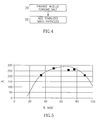
- Fig. 5 shows the particle charge achieved with charge directors prepared by a method according to the invention with different amounts of base.
- the graph shows that a high charge is achieved at 50-85% neutralization, and the highest charge is obtained when about 75% of the protons are titrated.
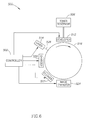
- FIG. 6 a schematic diagram is shown demonstrating the relationship of a plurality of elements of a printing apparatus 500, of the kind used to produce prints using a toner or CD of the invention.
- the printing apparatus 500 (which in itself is not new) shown in Fig. 6 is purely schematic to illustrate that the invention can be performed on any liquid toner printer or copier.
- the toner of the invention can be applied to any system, which transfers toner to a final substrate by one color separation as well as to printing apparatuses which transfer all the separations to an intermediate transfer member and then transfer the group of separations to the final substrate together.
- the exact mode of development is not important to the practice of the invention, and development can be by binary (layerwise) transfer of high concentration toner or by electrophoretic development using any of the multitude of methods known for bringing the toner into contact with a latent image.
- Printing apparatus 500 comprises conventional components such as a photoreceptor imaging cylinder 518 having a photoreceptor attached or bonded to it and an axis about which the cylinder rotates and an image transfer section 524 for transferring the developed image to a substrate either directly or via an intermediate transfer member, charger 520 and a laser unit 514 that provides a scanning laser beam 526 for generating latent images on photoreceptor 518, a developer 512 for developing the latent images and optionally, a cleaning station 522 are positioned around the perimeter of photoreceptor 518.
- a printing apparatus provided with the elements described with respect to Fig. 6 is useful with toner or inks comprising charge director materials described herein.
- a controller 502 is provided in the printing apparatus in order to issue commands to printing apparatus elements, receive data from printing apparatus elements, process printing apparatus element data, and/or to control printing apparatus operation, in an exemplary embodiment of the invention.
- printing apparatus elements include writing parameter controlling elements, such as a developer 512 and/or a laser 514.
- the printing apparatus includes reservoir tanks for storing printing materials, such as a toner reservoir 506.
- Such a printing machine was found to be capable of printing as many as 50,000 prints without requiring any addition of charge director material or component.
- charge director material is added after about each 5,000 impressions, depending on the coverage.
- charge director material is added after about each 5,000 impressions, depending on the coverage.
- the ink with the charge director material described herein also has a very low background (about 20 pS/cm, compared to between 60 and 100 pS/cm achieved with some known charge directors). This results in meaningful decrease in background ink development and improvement of sharpness of image contour.
Landscapes
- Chemical & Material Sciences (AREA)
- Engineering & Computer Science (AREA)
- Physics & Mathematics (AREA)
- General Physics & Mathematics (AREA)
- Organic Chemistry (AREA)
- Nanotechnology (AREA)
- Crystallography & Structural Chemistry (AREA)
- Condensed Matter Physics & Semiconductors (AREA)
- Materials Engineering (AREA)
- Composite Materials (AREA)
- Manufacturing & Machinery (AREA)
- Developing Agents For Electrophotography (AREA)
- Liquid Developers In Electrophotography (AREA)
Claims (15)
- Toner, umfassend eine Trägerflüssigkeit und Tonerpartikel, die mit Hilfe eines Ladungsdirektormaterials geladen sind, wobei das Ladungsdirektormaterial umfasst:(a) Nanopartikel eines einfachen Salzes und(b) ein Sulfosuccinatsalz der allgemeinen Formel MAn, wobei M ein Metall ist, n die Valenz von M ist und A ein Ion der allgemeinen Formel (I) ist:wobei R1 und R2 jeweils eine Alkylgruppe ist,
(I) [R1-O-C(O)CH2CH(SO3 -)C(O)-O-R2],
und wobei entweder:(i) das Ladungsdirektormaterial im Wesentlichen frei ist von Säuren der allgemeinen Formel (I), wobei jeweils eines oder beide R1 und R2 Wasserstoff ist/sind, und wobei wenn nur eines von ihnen Wasserstoff ist, das andere eine Alkylgruppe ist; oder(ii) das Sulfosuccinatsalz der allgemeinen Formel MAn eine erste Micelle-bildende Substanz ist und das Ladungsdirektormaterial ferner eine zweite Micelle-bildende Substanz umfasst. - Toner nach Anspruch 1, wobei jedes der R1 und R2 unabhängig ein C6-25-Alkyl ist.
- Toner nach Anspruch 1, wobei das Sulfosuccinatsalz der allgemeinen Formel MAn eine erste Micelle-bildende Substanz ist und das Ladungsdirektormaterial ferner eine zweite Micelle-bildende Substanz umfasst, die das basische Bariumpetronat (BBP) ist.
- Toner nach Anspruch 1, wobei das einfache Salz ein Kation hat, das ausgewählt ist aus der Gruppe bestehend aus Mg+2, Ca+2, Ba+2, NH4 +, tert-Butylammonium, Li+, Al+3, und ein Anion hat, das ausgewählt ist aus der Gruppe bestehend aus SO4 -2, PO4 3, NO3 -, HPO4 -2, CO3 -2, Acetat, Trifluoracetat (TFA), Cl-, Br-, I-, ClO4 -, TiO3 -4.
- Toner nach Anspruch 1, wobei das Ladungsdirektormaterial Micellen des Sulfosuccinatsalzes umfasst, welche die Nanopartikel einschließen.
- Toner nach Anspruch 1, wobei das einfache Salz BaSO4 oder BaHPO4 ist.
- Verwendung eines Ladungsdirektormaterials als ein Ladungsdirektor in flüssigem Entwickler, wobei das Ladungsdirektormaterial zum Laden eines flüssigen Toners dient und umfasst:(a) Nanopartikel eines einfachen Salzes und(b) ein Sulfosuccinatsalz der allgemeinen Formel MAn, wobei M ein Metall ist, n die Valenz von M ist und A ein Ion der allgemeinen Formel (I) ist:und wobei entweder
(I) [R1-O-C(O)CH2CH(SO3 -)C(O)-O-R2],
wobei jedes R1 und R2 eine Alkylgruppe ist,(i) das Ladungsdirektormaterial im Wesentlichen frei ist von Säuren der allgemeinen Formel (I), wobei jeweils eines oder beide R1 und R2 Wasserstoff ist/sind, und wenn nur eines von ihnen Wasserstoff ist, das andere eine Alkylgruppe ist; oder(ii) das Sulfosuccinatsalz der allgemeinen Formel MAn ist eine erste Micelle-bildende Substanz und das Ladungsdirektormaterial umfasst ferner eine zweite Micelle-bildende Substanz. - Ladungsdirektormaterial nach Anspruch 7, wobei jedes der R1 und R2 unabhängig ein C6-25-Alkyl ist.
- Ladungsdirektormaterial nach Anspruch 8, wobei das Sulfosuccinatsalz der allgemeinen Formel MAn eine erste Micelle-bildende Substanz ist und das Ladungsdirektormaterial ferner eine zweite Micelle-bildende Substanz umfasst, die das basische Bariumpetronat (BBP) ist.
- Ladungsdirektormaterial zum Laden eines flüssigen Toners, wobei das Ladungsdirektormaterial umfasst:(a) Nanopartikel eines einfachen Salzes und(b) ein Sulfosuccinatsalz der allgemeinen Formel MAn, wobei M ein Metall ist, n die Valenz von M ist und A ein Ion der allgemeinen Formel (I) ist:wobei jedes R1 und R2 eine Alkylgruppe ist,
(I) [R1-O-C(O)CH2CH(SO3 -)C(O)-O-R2],
wobei das Ladungsdirektormaterial Micellen des Sulfosuccinatsalzes aufweist, welche die Nanopartikel einschließen,
und wobei entweder(i) das Ladungsdirektormaterial weitgehend frei ist von Säuren der allgemeinen Formel (I), jeweils eines oder beide R1 und R2 Wasserstoff ist/sind, und wenn nur eines von ihnen Wasserstoff ist, das andere eine Alkylgruppe ist; oder(ii) das Sulfosuccinatsalz der allgemeinen Formel MAn ist eine erste Micelle-bildende Substanz und das Ladungsdirektormaterial umfasst ferner eine zweite Micelle-bildende Substanz. - Ladungsdirektormaterial nach Anspruch 10, wobei jedes der R1 und R2 unabhängig ein C6-25-Alkyl ist.
- Ladungsdirektormaterial nach Anspruch 10, wobei mindestens eines der R1 und R2 C13H27 ist.
- Ladungsdirektormaterial nach Anspruch 11, wobei das Sulfosuccinatsalz der allgemeinen Formel MAn eine erste Micelle-bildende Substanz ist und das Ladungsdirektormaterial ferner eine zweite Micelle-bildende Substanz umfasst, die das basische Bariumpetronat (BBP) ist.
- Ladungsdirektormaterial nach Anspruch 10, wobei das einfache Salz ein Kation hat, das ausgewählt ist aus der Gruppe bestehend aus Mg+2, Ca+2, Ba+2, NH4 +, tert-Butylammonium, Li+, Al+3, und ein Anion hat, das ausgewählt ist aus der Gruppe bestehend aus SO4 -2, PO4 -3, NO3 -, HPO4 -2, CO3 -2, Acetat, Trifluoracetat (TFA), Cl-, Br-, I-, ClO4 -, TiO3 -4.
- Ladungsdirektormaterial nach Anspruch 10, wobei das einfache Salz BaSO4 oder BaHPO4 ist.
Applications Claiming Priority (1)
| Application Number | Priority Date | Filing Date | Title |
|---|---|---|---|
| PCT/US2006/018297 WO2007130069A1 (en) | 2006-05-10 | 2006-05-10 | Charge director for liquid toner |
Publications (2)
| Publication Number | Publication Date |
|---|---|
| EP2016467A1 EP2016467A1 (de) | 2009-01-21 |
| EP2016467B1 true EP2016467B1 (de) | 2016-04-06 |
Family
ID=37814131
Family Applications (1)
| Application Number | Title | Priority Date | Filing Date |
|---|---|---|---|
| EP06759604.9A Expired - Lifetime EP2016467B1 (de) | 2006-05-10 | 2006-05-10 | Ladungsdirektor für flüssigtoner |
Country Status (6)
| Country | Link |
|---|---|
| US (3) | US20090311614A1 (de) |
| EP (1) | EP2016467B1 (de) |
| JP (1) | JP4937342B2 (de) |
| KR (1) | KR101254842B1 (de) |
| CN (1) | CN101473275B (de) |
| WO (1) | WO2007130069A1 (de) |
Families Citing this family (79)
| Publication number | Priority date | Publication date | Assignee | Title |
|---|---|---|---|---|
| CN102056999B (zh) | 2008-06-10 | 2014-04-09 | 惠普开发有限公司 | 具有改进的耐久性的液体电子照相油墨 |
| WO2010053480A1 (en) * | 2008-11-05 | 2010-05-14 | Hewlett-Packard Development Company, L.P. | Liquid electrophotographic ink with a charge director system |
| CN105068391B (zh) * | 2008-11-05 | 2020-04-17 | 惠普开发有限公司 | 具有电荷引导剂体系的液体电子照相油墨 |
| CN102272247B (zh) | 2008-12-30 | 2014-01-22 | 惠普开发有限公司 | 电子油墨和显示器以及图像显示方法 |
| EP2652052B1 (de) * | 2010-12-16 | 2016-09-07 | Hewlett-Packard Development Company, L.P. | Flüssige elektrophotografische tinte |
| WO2012097877A1 (en) | 2011-01-21 | 2012-07-26 | Hewlett-Packard Indigo B.V. | Liquid electrophotography printing apparatus and methods thereof |
| US9017802B2 (en) | 2011-03-11 | 2015-04-28 | Hewlett-Packard Indigo B.V. | Method for improving the durability of an ink printed on a substrate and substrate formed from such a method |
| CN103391978B (zh) | 2011-03-30 | 2015-12-16 | 惠普深蓝有限责任公司 | 液体调色剂组合物 |
| EP2691814B1 (de) * | 2011-03-30 | 2017-02-08 | Hewlett-Packard Indigo B.V. | Elektrostatische tintenzusammensetzung |
| US8514481B2 (en) | 2011-07-12 | 2013-08-20 | Hewlett-Packard Development Company, L.P. | Dual color electronically addressable ink |
| JP5763273B2 (ja) * | 2011-07-13 | 2015-08-12 | ヒューレット−パッカード・インデイゴ・ビー・ブイHewlett−Packard Indigo B.V. | 静電インク組成物、インク容器、印刷装置及び印刷方法 |
| EP2753983B1 (de) | 2011-09-09 | 2021-06-02 | HP Indigo B.V. | Verfahren und vorrichtung zur konzentration einer tinte für ein elektrostatisches druckverfahren |
| US8652245B2 (en) | 2011-09-15 | 2014-02-18 | Hewlett-Packard Development Company, L.P. | Dual color electronically addressable ink |
| WO2013044991A1 (en) | 2011-09-30 | 2013-04-04 | Hewlett-Packard Indigo B.V. | An electrostatic ink composition |
| WO2013107498A1 (en) | 2012-01-16 | 2013-07-25 | Hewlett-Packard Indigo B.V. | Electrostatic printing |
| US9223253B2 (en) | 2012-01-20 | 2015-12-29 | Hewlett-Packard Indigo B.V. | Electrostatic printing |
| WO2013107522A1 (en) | 2012-01-20 | 2013-07-25 | Hewlett-Packard Indigo B.V. | Concentrating an ink composition |
| US9588449B2 (en) | 2012-02-15 | 2017-03-07 | Hewlett-Packard Indigo B.V. | Electrostatic printing |
| WO2013159820A1 (en) | 2012-04-27 | 2013-10-31 | Hewlett-Packard Indigo B.V. | Liquid electrophotographic ink |
| EP2856264B1 (de) | 2012-05-31 | 2018-07-04 | HP Indigo B.V. | Elektrostaische tinten und verfahren zu deren herstellung |
| CN104640940A (zh) | 2012-07-20 | 2015-05-20 | 惠普印迪戈股份公司 | 聚合物涂覆的金属颜料颗粒,其制备方法和静电墨水 |
| US9899124B2 (en) | 2012-07-23 | 2018-02-20 | Hewlett-Packard Indigo B.V. | Electrostatic ink compositions |
| EP2877899B1 (de) | 2012-07-24 | 2020-04-29 | HP Indigo B.V. | Konzentrieren von stoffen |
| KR20150070367A (ko) | 2012-11-20 | 2015-06-24 | 휴렛-팩커드 인디고 비.브이. | 플라스틱 기판상의 인쇄 방법 및 정전 잉크 조성물 |
| US9523933B2 (en) | 2012-11-20 | 2016-12-20 | Hewlett-Packard Indigo B.V. | Methods of printing and electrostatic ink compositions |
| EP2951246B1 (de) | 2013-01-29 | 2019-03-13 | Hewlett-Packard Development Company, L.P. | Elektrostatische tintenzusammensetzungen, verfahren dafür und drucksubstrate damit |
| CN105103055B (zh) | 2013-01-29 | 2018-02-13 | 惠普深蓝有限责任公司 | 电子照相打印 |
| EP2999997B1 (de) | 2013-05-23 | 2018-03-28 | HP Indigo B.V. | Elektrostatisches drucken |
| US9770738B2 (en) | 2013-07-17 | 2017-09-26 | Hewlett-Packard Indigo B.V. | Method of producing an electrostatic ink composition |
| EP3060614A1 (de) | 2013-10-21 | 2016-08-31 | Hewlett-Packard Indigo B.V. | Elektrostatische tintenzusammensetzungen |
| US9874828B2 (en) | 2013-10-25 | 2018-01-23 | Hewlett-Packard Indigo B.V. | Electrostatic ink compositions |
| CN106133069B (zh) | 2014-01-15 | 2020-08-21 | 惠普印迪戈股份公司 | 浓缩墨水组合物 |
| EP3097454B1 (de) | 2014-01-24 | 2018-09-05 | HP Indigo B.V. | Flüssige elektrofotografische zusammensetzung |
| WO2015110174A1 (en) | 2014-01-24 | 2015-07-30 | Hewlett-Packard Indigo B.V. | Electrostatic ink compositions |
| CN106255730B (zh) | 2014-01-30 | 2020-01-10 | 惠普印迪戈股份公司 | 静电墨水组合物 |
| KR102008872B1 (ko) | 2014-03-25 | 2019-08-08 | 에이치피 인디고 비.브이. | 액체 전자사진용 바니시 조성물 |
| CN106471071B (zh) * | 2014-04-30 | 2020-01-24 | 惠普印迪戈股份公司 | 静电墨水组合物 |
| US20170139339A1 (en) | 2014-04-30 | 2017-05-18 | Hewlett-Packard Indigo, B.V. | Electrostatic ink compositions |
| EP3152265B1 (de) | 2014-06-09 | 2019-07-31 | HP Indigo B.V. | Elektrostatische tintenzusammensetzungen |
| US20170205724A1 (en) * | 2014-07-18 | 2017-07-20 | Hewlett-Packard Indigo B.V. | Electrostatic ink compositions |
| US9983498B2 (en) | 2014-07-29 | 2018-05-29 | Hp Indigo B.V. | Liquid electrophotographic ink composition |
| EP3180400A1 (de) * | 2014-08-14 | 2017-06-21 | Merck Patent GmbH | Mit fluortensiden beschichtete partikel und deren verwendung |
| WO2016062359A1 (en) | 2014-10-24 | 2016-04-28 | Hewlett-Packard Indigo B.V. | Electrophotographic varnish |
| CN107206749A (zh) | 2014-11-12 | 2017-09-26 | 惠普印迪戈股份公司 | 柔性包装材料 |
| US10353334B2 (en) | 2015-01-19 | 2019-07-16 | Hp Indigo B.V. | Printing methods |
| EP3248066B1 (de) | 2015-01-19 | 2022-04-20 | HP Indigo B.V. | Flüssige elektrofotografische lackzusammensetzung |
| WO2016116141A1 (en) | 2015-01-20 | 2016-07-28 | Hewlett-Packard Indigo B.V. | Electrophotographic printing and foiling |
| US10197949B2 (en) | 2015-01-20 | 2019-02-05 | Hp Indigo B.V. | Electrophotographic printing and glossing |
| EP3247754B1 (de) | 2015-01-20 | 2020-07-29 | HP Indigo B.V. | Flüssige elektrofotografische tintenzusammensetzung |
| BR112017014065A8 (pt) | 2015-01-30 | 2022-07-19 | Hewlett Packard Indigo Bv | Composição de tinta eletrostática, método para produzir uma composição de tinta eletrostática ciana e meio de impressão |
| WO2016128063A1 (en) * | 2015-02-13 | 2016-08-18 | Hewlett-Packard Indigo B.V. | Ink composition with uv-curable polymeric resin |
| WO2016155842A1 (en) * | 2015-04-02 | 2016-10-06 | Hewlett-Packard Indigo B.V. | Manufacture of a charge director |
| US10273372B2 (en) | 2015-04-07 | 2019-04-30 | Hp Indigo B.V. | Textile printing |
| CN107429094B (zh) * | 2015-04-28 | 2020-12-22 | 惠普印迪戈股份公司 | 静电墨水组合物 |
| WO2016173632A1 (en) | 2015-04-28 | 2016-11-03 | Hewlett-Packard Indigo B.V. | Electrostatic ink compositions |
| WO2017012639A1 (en) | 2015-07-17 | 2017-01-26 | Hewlett-Packard Indigo B.V. | Electrostatic ink compositions |
| EP3325562B1 (de) | 2015-07-17 | 2020-06-03 | Hp Indigo B.V. | Elektrostatische tintenzusammensetzungen |
| CN107532023B (zh) * | 2015-07-17 | 2021-07-13 | 惠普深蓝有限责任公司 | 静电油墨组合物 |
| EP3297829B1 (de) | 2015-10-23 | 2019-05-22 | Hp Indigo B.V. | Flexibles verpackungsmaterial |
| BR112018003499A2 (pt) | 2015-10-23 | 2018-09-18 | Hp Indigo Bv | material impresso flexível |
| CN107924155B (zh) | 2015-10-28 | 2021-04-20 | 惠普印迪戈股份公司 | 电子照相印刷 |
| KR102157995B1 (ko) | 2015-10-28 | 2020-09-22 | 에이치피 인디고 비.브이. | 가요성 포장 물질 |
| KR102106262B1 (ko) | 2016-03-04 | 2020-05-06 | 에이치피 인디고 비.브이. | 정전식 잉크 조성물 |
| US11236248B2 (en) | 2016-03-04 | 2022-02-01 | Hp Indigo B.V. | Metallic pigment particles |
| CN108463518A (zh) | 2016-03-18 | 2018-08-28 | 惠普印迪戈股份公司 | 静电墨水组合物 |
| WO2017174124A1 (en) | 2016-04-06 | 2017-10-12 | Hp Indigo B.V. | Liquid elecrophotographic inks |
| US20190025734A1 (en) | 2016-04-20 | 2019-01-24 | Hp Indigo B.V. | Electrostatic printing methods and systems |
| US11235230B2 (en) | 2016-04-20 | 2022-02-01 | Hp Indigo B.V. | Scratch-off structures |
| CN109070574A (zh) | 2016-07-29 | 2018-12-21 | 惠普印迪戈股份公司 | 采用热层压和新底漆技术的即时和高性能柔性包装应用 |
| CN109070575A (zh) | 2016-07-29 | 2018-12-21 | 惠普印迪戈股份公司 | 采用热层压的即时和高性能柔性包装应用 |
| WO2018145774A1 (en) | 2017-02-13 | 2018-08-16 | Hp Indigo B.V. | Foiling involving electrostatic inks |
| WO2018145775A1 (en) | 2017-02-13 | 2018-08-16 | Hp Indigo B.V. | Foiling involving electrostatic inks |
| CN110291161A (zh) | 2017-04-19 | 2019-09-27 | 惠普印迪戈股份公司 | 标签 |
| CN110291160A (zh) | 2017-04-19 | 2019-09-27 | 惠普印迪戈股份公司 | 标签 |
| WO2019011399A1 (en) | 2017-07-10 | 2019-01-17 | Hp Indigo B.V. | PRINTED RIGID PLASTIC SUBSTRATES |
| US20200159141A1 (en) | 2017-08-18 | 2020-05-21 | Hp Indigo B.V. | Electrophotographic composition |
| WO2019088246A1 (ja) * | 2017-11-06 | 2019-05-09 | キヤノン株式会社 | 硬化型液体現像剤及び該硬化型液体現像剤を用いた画像形成方法 |
| EP3700747B1 (de) | 2018-01-19 | 2025-05-21 | Hewlett-Packard Development Company, L.P. | Flexibles verpackungsmaterial |
| US11492547B2 (en) | 2020-06-04 | 2022-11-08 | UbiQD, Inc. | Low-PH nanoparticles and ligands |
Family Cites Families (29)
| Publication number | Priority date | Publication date | Assignee | Title |
|---|---|---|---|---|
| US4766061A (en) | 1985-11-21 | 1988-08-23 | Eastman Kodak Company | Photographic coupler dispersions |
| US4780389A (en) * | 1987-02-13 | 1988-10-25 | E. I. Du Pont De Nemours And Company | Inorganic metal salt as adjuvant for negative liquid electrostatic developers |
| US4780388A (en) * | 1987-05-26 | 1988-10-25 | E. I. Du Pont De Nemours And Company | Polyamines as adjuvant for liquid electrostatic developers |
| JP2876483B2 (ja) * | 1989-01-18 | 1999-03-31 | スペクトラム、サイエンセズ、ベーヴェー | 新規な液体トナー組成物 |
| US5246916A (en) | 1989-03-22 | 1993-09-21 | Sri International | Method of forming shaped superconductor materials by electrophoretic deposition of superconductor particulate coated with fusible binder |
| US5047306A (en) * | 1989-05-19 | 1991-09-10 | Spectrum Sciences B. V. | Humidity tolerant charge director compositions |
| US4990416A (en) | 1989-06-19 | 1991-02-05 | Coloray Display Corporation | Deposition of cathodoluminescent materials by reversal toning |
| AU7151691A (en) | 1990-09-13 | 1992-04-15 | Commtech International Management Corporation | Solvation-based charge direction of liquid electrophotographic developer compositions |
| US5306755A (en) * | 1992-04-09 | 1994-04-26 | The Gillette Company | Correction fluid containing a butyl methacrylate copolymer ditridecyl phthalate, a non-halogenated solvent and an opacifying agent |
| JP3206988B2 (ja) * | 1992-10-26 | 2001-09-10 | 大日本印刷株式会社 | 湿式トナーおよびその製造方法 |
| US5558855A (en) | 1993-01-25 | 1996-09-24 | Sonus Pharmaceuticals | Phase shift colloids as ultrasound contrast agents |
| JP2814896B2 (ja) * | 1993-10-25 | 1998-10-27 | 富士ゼロックス株式会社 | 静電写真用液体現像剤 |
| US5679724A (en) | 1995-09-29 | 1997-10-21 | Xerox Corporation | Submicron particles for ink jet inks |
| US5744269A (en) * | 1996-11-25 | 1998-04-28 | Specialty Toner Corporation | Method for protecting developed electrostatic images using an amphipathic toner |
| US5783349A (en) | 1997-06-30 | 1998-07-21 | Xerox Corporation | Liquid developer compositions |
| US5889162A (en) | 1998-08-10 | 1999-03-30 | Engelhard Corporation | Strong green-shade yellow disazo pigment |
| US6235100B1 (en) | 1999-06-24 | 2001-05-22 | Engelhard Corporation | Metallized azo yellow pigments |
| US6270884B1 (en) | 1999-08-02 | 2001-08-07 | Metal Coatings International Inc. | Water-reducible coating composition for providing corrosion protection |
| KR100337000B1 (ko) | 2000-10-14 | 2002-05-17 | 장길완 | 합성운모에 금속산화물을 코팅하여 펄 광택성 안료를제조하는 방법 |
| FR2826950B1 (fr) * | 2001-07-04 | 2004-09-10 | Solvay | Procede pour l'obtention de particules de carbonate de calcium precipite structurees a l'echelle nanometrique |
| US6669984B2 (en) | 2001-10-04 | 2003-12-30 | Basf Corporation | Powder-based coating composition, a cured film thereof, and a method of improving a color strength of the cured film |
| KR100457524B1 (ko) * | 2002-06-15 | 2004-11-17 | 삼성전자주식회사 | 습식 현상제 및 그 제조방법 |
| DE10235571A1 (de) * | 2002-08-03 | 2004-02-12 | Clariant Gmbh | Verwendung von Salzen schichtartiger Doppelhydroxide als Ladungssteuermittel |
| US6897251B2 (en) | 2002-11-21 | 2005-05-24 | Basf Corporation | Clearcoat compositions and method of reducing the ability of rain to bead on a film of the clearcoat composition |
| EP1711564A2 (de) * | 2003-12-06 | 2006-10-18 | BASF Coatings AG | Desagglomeriertes bariumsulfat enthaltende, härtbare massen, verfahren zu ihrer herstellung und ihre verwendung |
| US6958091B1 (en) | 2004-09-07 | 2005-10-25 | Kerr-Mcgee Chemical Llc | Surface-treated pigments |
| US6946028B1 (en) | 2004-09-07 | 2005-09-20 | Kerr-Mcgee Chemical Llc | Surface-treated pigments |
| WO2006051153A2 (en) * | 2004-11-09 | 2006-05-18 | Nanolab Systems Oy | Methods and devices for facile fabrication of nanoparticles and their applications |
| DE102005025720A1 (de) * | 2005-06-04 | 2006-12-07 | Solvay Infra Bad Hönningen GmbH | Nanopartikelhaltige makrocyclische Oligoester |
-
2006
- 2006-05-10 US US12/300,305 patent/US20090311614A1/en not_active Abandoned
- 2006-05-10 JP JP2009509528A patent/JP4937342B2/ja not_active Expired - Fee Related
- 2006-05-10 EP EP06759604.9A patent/EP2016467B1/de not_active Expired - Lifetime
- 2006-05-10 WO PCT/US2006/018297 patent/WO2007130069A1/en not_active Ceased
- 2006-05-10 KR KR1020087030066A patent/KR101254842B1/ko not_active Expired - Fee Related
- 2006-05-10 CN CN2006800551597A patent/CN101473275B/zh not_active Expired - Fee Related
-
2011
- 2011-09-27 US US13/246,563 patent/US9353267B2/en not_active Expired - Fee Related
-
2016
- 2016-02-23 US US15/050,892 patent/US9417545B2/en not_active Expired - Fee Related
Also Published As
| Publication number | Publication date |
|---|---|
| US20120018683A1 (en) | 2012-01-26 |
| US9353267B2 (en) | 2016-05-31 |
| JP4937342B2 (ja) | 2012-05-23 |
| JP2009536750A (ja) | 2009-10-15 |
| EP2016467A1 (de) | 2009-01-21 |
| WO2007130069A1 (en) | 2007-11-15 |
| CN101473275A (zh) | 2009-07-01 |
| KR20090008470A (ko) | 2009-01-21 |
| CN101473275B (zh) | 2012-02-01 |
| US9417545B2 (en) | 2016-08-16 |
| KR101254842B1 (ko) | 2013-04-15 |
| US20160170320A1 (en) | 2016-06-16 |
| US20090311614A1 (en) | 2009-12-17 |
Similar Documents
| Publication | Publication Date | Title |
|---|---|---|
| US9417545B2 (en) | Charge director for liquid toner | |
| JP4594010B2 (ja) | トナー | |
| DE69308855T2 (de) | Elektrisch stabilisierter flüssigentwickler | |
| US4268598A (en) | Developing powder composition containing fluoroaliphatic sulfonamido surface active agent | |
| JP3507070B2 (ja) | 荷電促進剤液体トナー | |
| DE19534384A1 (de) | Farb-Trockentoner für die Elektrophotographie und Herstellung desselben | |
| DE69033437T2 (de) | Elektrofotografische toner- und entwicklerzusammensetzungen und farbbildherstellungsverfahren, wobei sie eingesetzt werden | |
| EP0132718B1 (de) | Flüssige Entwickler für elektrostatische Bilder | |
| JP4810535B2 (ja) | 層状金属水酸化物の疎水性塩 | |
| JP5002591B2 (ja) | トナー粒子を帯電させる方法 | |
| EP3499314B1 (de) | Kartusche und bilderzeugungsvorrichtung | |
| US8221952B2 (en) | Method of charging toner particles | |
| TWI385491B (zh) | 用於在液體顯像劑中控制粒子傳導性之系統及方法 | |
| EP0531719A1 (de) | Elektrofotografische Toner und 3-Iminoisoindolinone |
Legal Events
| Date | Code | Title | Description |
|---|---|---|---|
| PUAI | Public reference made under article 153(3) epc to a published international application that has entered the european phase |
Free format text: ORIGINAL CODE: 0009012 |
|
| 17P | Request for examination filed |
Effective date: 20081127 |
|
| AK | Designated contracting states |
Kind code of ref document: A1 Designated state(s): AT BE BG CH CY CZ DE DK EE ES FI FR GB GR HU IE IS IT LI LT LU LV MC NL PL PT RO SE SI SK TR |
|
| AX | Request for extension of the european patent |
Extension state: AL BA HR MK YU |
|
| DAX | Request for extension of the european patent (deleted) | ||
| 17Q | First examination report despatched |
Effective date: 20130513 |
|
| GRAP | Despatch of communication of intention to grant a patent |
Free format text: ORIGINAL CODE: EPIDOSNIGR1 |
|
| INTG | Intention to grant announced |
Effective date: 20151019 |
|
| GRAS | Grant fee paid |
Free format text: ORIGINAL CODE: EPIDOSNIGR3 |
|
| GRAA | (expected) grant |
Free format text: ORIGINAL CODE: 0009210 |
|
| AK | Designated contracting states |
Kind code of ref document: B1 Designated state(s): AT BE BG CH CY CZ DE DK EE ES FI FR GB GR HU IE IS IT LI LT LU LV MC NL PL PT RO SE SI SK TR |
|
| REG | Reference to a national code |
Ref country code: GB Ref legal event code: FG4D |
|
| REG | Reference to a national code |
Ref country code: AT Ref legal event code: REF Ref document number: 788426 Country of ref document: AT Kind code of ref document: T Effective date: 20160415 Ref country code: CH Ref legal event code: EP |
|
| REG | Reference to a national code |
Ref country code: IE Ref legal event code: FG4D |
|
| REG | Reference to a national code |
Ref country code: NL Ref legal event code: FP |
|
| REG | Reference to a national code |
Ref country code: FR Ref legal event code: PLFP Year of fee payment: 11 |
|
| REG | Reference to a national code |
Ref country code: DE Ref legal event code: R096 Ref document number: 602006048548 Country of ref document: DE |
|
| REG | Reference to a national code |
Ref country code: LT Ref legal event code: MG4D |
|
| REG | Reference to a national code |
Ref country code: AT Ref legal event code: MK05 Ref document number: 788426 Country of ref document: AT Kind code of ref document: T Effective date: 20160406 |
|
| PG25 | Lapsed in a contracting state [announced via postgrant information from national office to epo] |
Ref country code: BE Free format text: LAPSE BECAUSE OF NON-PAYMENT OF DUE FEES Effective date: 20160531 |
|
| PG25 | Lapsed in a contracting state [announced via postgrant information from national office to epo] |
Ref country code: LT Free format text: LAPSE BECAUSE OF FAILURE TO SUBMIT A TRANSLATION OF THE DESCRIPTION OR TO PAY THE FEE WITHIN THE PRESCRIBED TIME-LIMIT Effective date: 20160406 Ref country code: PL Free format text: LAPSE BECAUSE OF FAILURE TO SUBMIT A TRANSLATION OF THE DESCRIPTION OR TO PAY THE FEE WITHIN THE PRESCRIBED TIME-LIMIT Effective date: 20160406 Ref country code: IS Free format text: LAPSE BECAUSE OF FAILURE TO SUBMIT A TRANSLATION OF THE DESCRIPTION OR TO PAY THE FEE WITHIN THE PRESCRIBED TIME-LIMIT Effective date: 20160806 Ref country code: FI Free format text: LAPSE BECAUSE OF FAILURE TO SUBMIT A TRANSLATION OF THE DESCRIPTION OR TO PAY THE FEE WITHIN THE PRESCRIBED TIME-LIMIT Effective date: 20160406 |
|
| PG25 | Lapsed in a contracting state [announced via postgrant information from national office to epo] |
Ref country code: PT Free format text: LAPSE BECAUSE OF FAILURE TO SUBMIT A TRANSLATION OF THE DESCRIPTION OR TO PAY THE FEE WITHIN THE PRESCRIBED TIME-LIMIT Effective date: 20160808 Ref country code: GR Free format text: LAPSE BECAUSE OF FAILURE TO SUBMIT A TRANSLATION OF THE DESCRIPTION OR TO PAY THE FEE WITHIN THE PRESCRIBED TIME-LIMIT Effective date: 20160707 Ref country code: AT Free format text: LAPSE BECAUSE OF FAILURE TO SUBMIT A TRANSLATION OF THE DESCRIPTION OR TO PAY THE FEE WITHIN THE PRESCRIBED TIME-LIMIT Effective date: 20160406 Ref country code: ES Free format text: LAPSE BECAUSE OF FAILURE TO SUBMIT A TRANSLATION OF THE DESCRIPTION OR TO PAY THE FEE WITHIN THE PRESCRIBED TIME-LIMIT Effective date: 20160406 Ref country code: LV Free format text: LAPSE BECAUSE OF FAILURE TO SUBMIT A TRANSLATION OF THE DESCRIPTION OR TO PAY THE FEE WITHIN THE PRESCRIBED TIME-LIMIT Effective date: 20160406 Ref country code: SE Free format text: LAPSE BECAUSE OF FAILURE TO SUBMIT A TRANSLATION OF THE DESCRIPTION OR TO PAY THE FEE WITHIN THE PRESCRIBED TIME-LIMIT Effective date: 20160406 |
|
| PG25 | Lapsed in a contracting state [announced via postgrant information from national office to epo] |
Ref country code: BE Free format text: LAPSE BECAUSE OF FAILURE TO SUBMIT A TRANSLATION OF THE DESCRIPTION OR TO PAY THE FEE WITHIN THE PRESCRIBED TIME-LIMIT Effective date: 20160406 Ref country code: IT Free format text: LAPSE BECAUSE OF FAILURE TO SUBMIT A TRANSLATION OF THE DESCRIPTION OR TO PAY THE FEE WITHIN THE PRESCRIBED TIME-LIMIT Effective date: 20160406 |
|
| REG | Reference to a national code |
Ref country code: CH Ref legal event code: PL |
|
| REG | Reference to a national code |
Ref country code: DE Ref legal event code: R097 Ref document number: 602006048548 Country of ref document: DE |
|
| PG25 | Lapsed in a contracting state [announced via postgrant information from national office to epo] |
Ref country code: CZ Free format text: LAPSE BECAUSE OF FAILURE TO SUBMIT A TRANSLATION OF THE DESCRIPTION OR TO PAY THE FEE WITHIN THE PRESCRIBED TIME-LIMIT Effective date: 20160406 Ref country code: EE Free format text: LAPSE BECAUSE OF FAILURE TO SUBMIT A TRANSLATION OF THE DESCRIPTION OR TO PAY THE FEE WITHIN THE PRESCRIBED TIME-LIMIT Effective date: 20160406 Ref country code: MC Free format text: LAPSE BECAUSE OF FAILURE TO SUBMIT A TRANSLATION OF THE DESCRIPTION OR TO PAY THE FEE WITHIN THE PRESCRIBED TIME-LIMIT Effective date: 20160406 Ref country code: RO Free format text: LAPSE BECAUSE OF FAILURE TO SUBMIT A TRANSLATION OF THE DESCRIPTION OR TO PAY THE FEE WITHIN THE PRESCRIBED TIME-LIMIT Effective date: 20160406 Ref country code: SK Free format text: LAPSE BECAUSE OF FAILURE TO SUBMIT A TRANSLATION OF THE DESCRIPTION OR TO PAY THE FEE WITHIN THE PRESCRIBED TIME-LIMIT Effective date: 20160406 Ref country code: DK Free format text: LAPSE BECAUSE OF FAILURE TO SUBMIT A TRANSLATION OF THE DESCRIPTION OR TO PAY THE FEE WITHIN THE PRESCRIBED TIME-LIMIT Effective date: 20160406 Ref country code: LI Free format text: LAPSE BECAUSE OF NON-PAYMENT OF DUE FEES Effective date: 20160531 Ref country code: CH Free format text: LAPSE BECAUSE OF NON-PAYMENT OF DUE FEES Effective date: 20160531 |
|
| PLBE | No opposition filed within time limit |
Free format text: ORIGINAL CODE: 0009261 |
|
| STAA | Information on the status of an ep patent application or granted ep patent |
Free format text: STATUS: NO OPPOSITION FILED WITHIN TIME LIMIT |
|
| REG | Reference to a national code |
Ref country code: IE Ref legal event code: MM4A |
|
| 26N | No opposition filed |
Effective date: 20170110 |
|
| REG | Reference to a national code |
Ref country code: FR Ref legal event code: PLFP Year of fee payment: 12 |
|
| PG25 | Lapsed in a contracting state [announced via postgrant information from national office to epo] |
Ref country code: IE Free format text: LAPSE BECAUSE OF NON-PAYMENT OF DUE FEES Effective date: 20160510 Ref country code: SI Free format text: LAPSE BECAUSE OF FAILURE TO SUBMIT A TRANSLATION OF THE DESCRIPTION OR TO PAY THE FEE WITHIN THE PRESCRIBED TIME-LIMIT Effective date: 20160406 |
|
| REG | Reference to a national code |
Ref country code: FR Ref legal event code: PLFP Year of fee payment: 13 |
|
| PG25 | Lapsed in a contracting state [announced via postgrant information from national office to epo] |
Ref country code: CY Free format text: LAPSE BECAUSE OF FAILURE TO SUBMIT A TRANSLATION OF THE DESCRIPTION OR TO PAY THE FEE WITHIN THE PRESCRIBED TIME-LIMIT Effective date: 20160406 Ref country code: HU Free format text: LAPSE BECAUSE OF FAILURE TO SUBMIT A TRANSLATION OF THE DESCRIPTION OR TO PAY THE FEE WITHIN THE PRESCRIBED TIME-LIMIT; INVALID AB INITIO Effective date: 20060510 |
|
| PG25 | Lapsed in a contracting state [announced via postgrant information from national office to epo] |
Ref country code: LU Free format text: LAPSE BECAUSE OF NON-PAYMENT OF DUE FEES Effective date: 20160510 Ref country code: TR Free format text: LAPSE BECAUSE OF FAILURE TO SUBMIT A TRANSLATION OF THE DESCRIPTION OR TO PAY THE FEE WITHIN THE PRESCRIBED TIME-LIMIT Effective date: 20160406 |
|
| PG25 | Lapsed in a contracting state [announced via postgrant information from national office to epo] |
Ref country code: BG Free format text: LAPSE BECAUSE OF FAILURE TO SUBMIT A TRANSLATION OF THE DESCRIPTION OR TO PAY THE FEE WITHIN THE PRESCRIBED TIME-LIMIT Effective date: 20160406 |
|
| PGFP | Annual fee paid to national office [announced via postgrant information from national office to epo] |
Ref country code: NL Payment date: 20200424 Year of fee payment: 15 Ref country code: FR Payment date: 20200422 Year of fee payment: 15 |
|
| PGFP | Annual fee paid to national office [announced via postgrant information from national office to epo] |
Ref country code: GB Payment date: 20200423 Year of fee payment: 15 |
|
| PGFP | Annual fee paid to national office [announced via postgrant information from national office to epo] |
Ref country code: DE Payment date: 20210421 Year of fee payment: 16 |
|
| REG | Reference to a national code |
Ref country code: NL Ref legal event code: MM Effective date: 20210601 |
|
| GBPC | Gb: european patent ceased through non-payment of renewal fee |
Effective date: 20210510 |
|
| PG25 | Lapsed in a contracting state [announced via postgrant information from national office to epo] |
Ref country code: GB Free format text: LAPSE BECAUSE OF NON-PAYMENT OF DUE FEES Effective date: 20210510 |
|
| PG25 | Lapsed in a contracting state [announced via postgrant information from national office to epo] |
Ref country code: NL Free format text: LAPSE BECAUSE OF NON-PAYMENT OF DUE FEES Effective date: 20210601 Ref country code: FR Free format text: LAPSE BECAUSE OF NON-PAYMENT OF DUE FEES Effective date: 20210531 |
|
| REG | Reference to a national code |
Ref country code: DE Ref legal event code: R119 Ref document number: 602006048548 Country of ref document: DE |
|
| PG25 | Lapsed in a contracting state [announced via postgrant information from national office to epo] |
Ref country code: DE Free format text: LAPSE BECAUSE OF NON-PAYMENT OF DUE FEES Effective date: 20221201 |