EP2016689B1 - Appareil, procédé et progiciel assurant une synchronisation de liaison sol-air par l'utilisation d'une attribution d'une ressource réservée de liaison sol-air - Google Patents
Appareil, procédé et progiciel assurant une synchronisation de liaison sol-air par l'utilisation d'une attribution d'une ressource réservée de liaison sol-air Download PDFInfo
- Publication number
- EP2016689B1 EP2016689B1 EP07734444.8A EP07734444A EP2016689B1 EP 2016689 B1 EP2016689 B1 EP 2016689B1 EP 07734444 A EP07734444 A EP 07734444A EP 2016689 B1 EP2016689 B1 EP 2016689B1
- Authority
- EP
- European Patent Office
- Prior art keywords
- user equipment
- preamble
- timing advance
- uplink resource
- assignment
- Prior art date
- Legal status (The legal status is an assumption and is not a legal conclusion. Google has not performed a legal analysis and makes no representation as to the accuracy of the status listed.)
- Active
Links
Images


Classifications
-
- H—ELECTRICITY
- H04—ELECTRIC COMMUNICATION TECHNIQUE
- H04W—WIRELESS COMMUNICATION NETWORKS
- H04W56/00—Synchronisation arrangements
- H04W56/004—Synchronisation arrangements compensating for timing error of reception due to propagation delay
- H04W56/0045—Synchronisation arrangements compensating for timing error of reception due to propagation delay compensating for timing error by altering transmission time
-
- H—ELECTRICITY
- H04—ELECTRIC COMMUNICATION TECHNIQUE
- H04B—TRANSMISSION
- H04B7/00—Radio transmission systems, i.e. using radiation field
- H04B7/24—Radio transmission systems, i.e. using radiation field for communication between two or more posts
- H04B7/26—Radio transmission systems, i.e. using radiation field for communication between two or more posts at least one of which is mobile
- H04B7/2662—Arrangements for Wireless System Synchronisation
- H04B7/2671—Arrangements for Wireless Time-Division Multiple Access [TDMA] System Synchronisation
- H04B7/2678—Time synchronisation
- H04B7/2681—Synchronisation of a mobile station with one base station
-
- H—ELECTRICITY
- H04—ELECTRIC COMMUNICATION TECHNIQUE
- H04W—WIRELESS COMMUNICATION NETWORKS
- H04W56/00—Synchronisation arrangements
- H04W56/0005—Synchronisation arrangements synchronizing of arrival of multiple uplinks
-
- H—ELECTRICITY
- H04—ELECTRIC COMMUNICATION TECHNIQUE
- H04W—WIRELESS COMMUNICATION NETWORKS
- H04W72/00—Local resource management
- H04W72/12—Wireless traffic scheduling
- H04W72/1263—Mapping of traffic onto schedule, e.g. scheduled allocation or multiplexing of flows
- H04W72/1268—Mapping of traffic onto schedule, e.g. scheduled allocation or multiplexing of flows of uplink data flows
-
- H—ELECTRICITY
- H04—ELECTRIC COMMUNICATION TECHNIQUE
- H04W—WIRELESS COMMUNICATION NETWORKS
- H04W72/00—Local resource management
- H04W72/20—Control channels or signalling for resource management
- H04W72/23—Control channels or signalling for resource management in the downlink direction of a wireless link, i.e. towards a terminal
-
- H—ELECTRICITY
- H04—ELECTRIC COMMUNICATION TECHNIQUE
- H04W—WIRELESS COMMUNICATION NETWORKS
- H04W74/00—Wireless channel access
- H04W74/08—Non-scheduled access, e.g. ALOHA
- H04W74/0833—Random access procedures, e.g. with 4-step access
-
- H—ELECTRICITY
- H04—ELECTRIC COMMUNICATION TECHNIQUE
- H04W—WIRELESS COMMUNICATION NETWORKS
- H04W72/00—Local resource management
- H04W72/04—Wireless resource allocation
Definitions
- the exemplary and non-limiting embodiments of this invention relate generally to wireless communications systems, methods, computer program products and devices and, more specifically, relate to techniques for achieving uplink temporal synchronization of user equipment.
- UTRAN-LTE is defined as a packet-based transmission system only. This implies that there will not be a so-called dedicated connection mode (or circuit switched mode) as exists in some currently deployed systems.
- the uplink air interface resources are divided between an UL-SCH and a contention based RACH.
- a Node-B may provide an allocation on the UL-SCH if the UE can be identified (such as with RLID/C-RNTI) and if the TA of the UE has been so recently controlled by the Node-B such that it can be considered to be valid. If the UE has no valid TA it is not allowed to transmit on the UL-SCH.
- the random access procedure may be used by the UE for initial network access, for TA adjustment, for transfer from LTE-IDLE to LTE-ACTIVE state, for uplink resource requests and during HO.
- One of a synchronous or non-synchronous random access procedure is used, depending on the validity of UE's TA.
- An intermediate document WO 2007/091150 published in the priority period, discloses a solution in which if user equipment has a need to establish uplink synchronization with a base station, a determination is made if uplink resources are available on a non-contention-based channel for the user equipment. If the uplink resources are available, the uplink resources are dedicated on the non-contention-based channel to the user equipment and an indication of the dedicated uplink resources is communicated to the user equipment. Using at least the uplink resources, the user equipment is synchronized on the non-contention-based channel in order to receive information from the user equipment.
- NCB non-contention based
- MAC in eNB includes dynamic resource schedulers that allocate physical layer resources for downlink shared channel and for uplink shared channel.
- RACH channel can be made to, for example, Annex B of 3GPP TR 25.813, V0.8.3, 3rd Generation Partnership Project, Technical Specification Group Radio Access Network; Evolved Universal Terrestrial Radio Access (E-UTRA) and Evolved Universal Terrestrial Radio Access Network (E-UTRAN), and Radio interface protocol aspects (Release 7).
- E-UTRA Evolved Universal Terrestrial Radio Access
- E-UTRAN Evolved Universal Terrestrial Radio Access Network
- Radio interface protocol aspects Release 7
- UTRAN-LTE One proposal for UTRAN-LTE is that the UE will receive the UL-SCH resource allocations from the network through an AT, where the UE would receive the AT at certain instants in time determined at least in part by the current DRX period of the UE (which may be defined by the network).
- resource(s) are assigned to the UE by the network through the use of DL control signaling.
- the exact format and content of this control signaling is not particularly germane to an understanding of the invention, and in fact may be subject to revision.
- the TA used by the UE before the DRX period may no longer be valid for use in transmission in the UL-SCH. If the UE no longer has a valid TA it is not allowed to transmit in the UL-SCH before the UE has received a new TA value from the network.
- the TA may not be valid.
- the use of DRX periods to ascertain the potential validity or invalidity of the current TA of the UE is but one non-limiting example.
- the procedure for achieving a valid TA includes transmission by the UE on the non-synchronized RACH channel.
- this approach which utilizes a contention based resource (where the possibility of collisions, backoffs and re-transmissions may occur), may introduce an undesirable and unpredictable delay.
- Another issue relates to a requirement in 3.9G that the UE in the Active state shall always be UL synchronized.
- Such a requirement would in practice mean that there would be a need for constant DL/UL transmissions in order to allow the network to maintain the UL synchronization (TA) of the UE up-to-date, and could require scheduled DL/UL transmission for no other reason than keeping the UE TA current.
- TA UL synchronization
- the UE when the UE receives a HO command to a new cell and does not have a valid TA for the new cell, the UE is not allowed to transmit a normal UL burst in the new cell. Instead, the UE must transmit a shorter duration burst that leaves a large part of the time slot as a guard time or guard band around the burst.
- the network measures the propagation delay from the received short burst and sends an appropriate TA value to the UE. The UE can then start to use the newly assigned TA value when transmitting a normal UL burst.
- the use of the PTCCH in the GPRS is another already deployed procedure for assuring that the UE has UL synchronization.
- the use of this procedure is only valid when the UE has an active TBF, which means that there is an already established UL/DL connection between the network and the UE.
- the exemplary embodiments of this invention relate to and are described below in the context of UTRAN-LTE. More specifically, the exemplary embodiments of this invention address the area of UE UL synchronization, and an ability for the network to estimate the UL synchronization for the UE. However, it should be appreciated that at least some aspects of the exemplary embodiments are applicable to other types of wireless communication systems such as GSM, HSPDA, or any packet-switched system.
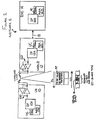
- a wireless network 1 is adapted for communication with a UE 10 via a Node B (base station) 12, also referred to herein as an eNodeB.
- the network 1 may include a RNC 14, or other radio controller function, which may be referred to as a mobility management entity MME or gateway (see 3GPP TS 36.300 V1.0.0).
- the UE 10 includes a data processor (DP) 10A, a memory (MEM) 10B that stores a program (PROG) 10C, and a suitable radio frequency (RF) transceiver 10D for bidirectional wireless communications with the Node B 12, which also includes a DP 12A, a MEM 12B that stores a PROG 12C, and a suitable RF transceiver 12D.
- the Node B 12 is coupled via a data path 13 to the RNC 14 that also includes a DP 14A and a MEM 14B storing an associated PROG 14C.
- the PROGs 10C and 12C include program instructions that, when executed by the associated DP, enable the electronic device to operate in accordance with the exemplary embodiments of this invention.
- the PROG 12C includes,program instructions that direct the Node B 12 to signal the UE 10, such as in a data structure sent as an AT, for assigning to the UE 10 a dedicated uplink resource (e.g., an UL-SCH sub-frame) in which to transmit a special synchronization burst to be used by the Node B 12 for calculating a TA value, as well as to receive the special burst from the assigned UL resource for use in calculating the TA value.
- the PROG 10C includes program instructions that direct the UE 10 to transmit the special burst in the assigned UL resource.
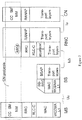
- FIG. 2 shows the protocol stack used for control signaling between the mobile station MS and the core network CN.
- Mobility management MM, call control CC and session management SM of the mobile station MS are signaled on the highest protocol layers between the mobile station MS and the core network CN in such a manner that the base stations BS and the radio network controller RNC located in between are transparent to this signaling.
- the radio resources management of radio links between mobile stations MS and base stations BS is carried out by a radio resource management system RRM which transmits control data from the radio network controller RNC to the base stations BS.
- RRM radio resource management system
- These functions associated with the general management of a mobile system form a group called core network protocols (CN protocols), also known as Non-Access Stratum.
- CN protocols core network protocols
- the signaling related to the radio network control between the mobile station MS, the base station BS and the radio network controller RNC is carried out on protocol layers called radio access network protocols (RAN protocols), i.e. Access Stratum. These include transfer protocols of the lowest level, whose control signaling is transferred to the higher levels for further processing.
- RAN protocols radio access network protocols
- the most essential one of the higher Access Stratum layers is the radio resource control protocol RRC which is responsible for example for establishing, configuring, maintaining and releasing logical connections between the mobile station MS and the radio network UTRAN and for transmitting control information from the core network CN and the radio network RAN to the mobile stations MS.
- the radio resource control protocol RRC is responsible for allocating sufficient capacity according to the instructions of the radio resource management system RRM to a user terminal connection in an application-based capacity allocation, for example.
- the exemplary embodiments of this invention may be implemented by computer software executable by the DP 10A of the UE 10 and the other DPs, such as in cooperation with a DP in the network, or by hardware, or by a combination of software and/or firmware and hardware.
- the various embodiments of the UE 10 can include, but are not limited to, cellular telephones, personal digital assistants (PDAs) having wireless communication capabilities, portable computers having wireless communication capabilities, image capture devices such as digital cameras having wireless communication capabilities, gaming devices having wireless communication capabilities, music storage and playback appliances having wireless communication capabilities, Internet appliances permitting wireless Internet access and browsing, as well as portable units or terminals that incorporate combinations of such functions.
- PDAs personal digital assistants
- portable computers having wireless communication capabilities
- image capture devices such as digital cameras having wireless communication capabilities
- gaming devices having wireless communication capabilities
- music storage and playback appliances having wireless communication capabilities
- Internet appliances permitting wireless Internet access and browsing, as well as portable units or terminals that incorporate combinations of such functions.
- the MEMs 10B, 12B and 14B may be of any type suitable to the local technical environment and may be implemented using any suitable data storage technology, such as semiconductor-based memory devices, magnetic memory devices and systems, optical memory devices and systems, fixed memory and removable memory.
- the DPs 10A, 12A and 14A maybe of any type suitable to the local technical environment, and may include one or more of general purpose computers, special purpose computers, microprocessors, digital signal processors (DSPs) and processors based on a multi-core processor architecture, as non-limiting examples.
- the exemplary embodiments of this invention provide a method and apparatus for the network 1 to measure the UL TA for a certain UE 10 when UL data transfer is required.
- the method and apparatus maybe applied to (but are not restricted to) a situation where the network 1 has knowledge beforehand that there will be a need for the UE 10 to transmit in the UL-SCH. This may be the case when the network 1 desires to request measurements of some sort from the UE 10, as well as when the network 1 expects that the UE has a need for sending positive or negative acknowledgments (ACK/NACK) in the UL in response to DL traffic.
- ACK/NACK positive or negative acknowledgments
- a network-assigned UE 10 dedicated UL resource is provided for use by the UE 10 for sending a special burst.
- This burst is then used by the network 1 (for example, is used by the Node B 12) for measuring the TA of the UE 10.
- the burst is specifically designed to accommodate a large timing uncertainty, e.g., the burst type may resemble the burst used on the non-synchronous RACH in E-UTRAN, or may resemble the access burst type known from GSM that is used in, for example, handover and RACH.
- the network 1 calculates the TA of the UE 10 based on the received special burst and thereafter informs the UE 10 of the new TA value in a following resource assignment message, or through other suitable control signaling means.
- the exemplary embodiments of this invention may be employed as well to the UE 10 in, for example, the E-UTRAN LTE-IDLE mode, and in other situations as well including but not limited to similar modes of other wireless systems noted by example above.
- the network 1 can uniquely address the UE 10. This may be done, for example, through the use of an AT sent on the DL.
- the unique address assigned to the UE 10 may be referred to as the RLID or as the C-RNTI, as two non-limiting examples.
- the UE 10 When the UE 10 is in the LTE-ACTIVE state it may lose synchronization if it has not transmitted on the UL for some period of time, and further the network 1 has not had the opportunity to calculate and assign a new TA value. In this case the UE 10 should not be allowed to transmit a normal burst in the UL-SCH before a new and valid TA value has been received from the network 1.
- the network 1 calculates the TA based on a special synchronization burst that the UE 10 sends in the UL.
- the Node B which may be referred to as an eNodeB, sends in an AT an order for the UE 10 to transmit on the RACH 310.
- the UE 10 responds at 320 by transmitting a preamble (the special synchronization burst) on the non-synchronized RACH.
- the eNodeB computes the TA for the UE 10 and sends in an AT 330 the calculated TA and the UL-SCH allocation.
- the UE 10 sends a unique ID on the UL-SCH, and at 350 the eNodeB sends a normal UL-SCH allocation in an AT.
- the exemplary embodiments of this invention instead provide for the special synchronization burst to be transmitted on an UL-SCH allocation assigned to the UE 10 by the network 1 (see Figure 3A 315, and Figure 4 440), and not on the RACH. That is, and referring to Figure 1 , the special synchronization burst is sent within an UL-SCH sub-frame that is assigned to the UE 10 by the Node-B in, for example, an AT. Note that a single AT/PDCCH may allocate more than one UE 10 to the same UL-SCH, which may be dedicated for the special synchronization bursts detailed herein.
- two UEs 10 may be assigned in the same AT/PDCCH the same UL (shared) resource on which to transmit their individual uplink synchronization signals.
- the eNode B 12 can distinguish the UEs from one another by use of a separate and unique preamble used by each of the UEs 10 on their uplink transmission of the special synchronization burst.
- a unique preamble is signalled to each UE upon cell entry (or other control signalling) so that each UE is pre-allocated a unique preamble for use with the UL-SCH synchronization burst.
- the AT/PDCCH itself may include an additional field so as to make an association between a preamble and an UE's RLID or other UE identifier used in the AT/PDCCH.
- the UE when the UE recognizes that a preamble in that new field is associated with its identifier, it uses that preamble on the UL-SCH synchronization burst. In either manner, the preamble enables the eNode B to distinguish multiple UE's sending their own synchronization bursts at the same time on the same shared channel.
- the special synchronization burst differs from the normal UL-SCH burst in the sense that a larger guard time (GT) is included to accommodate the unknown TA (and thus to avoid interfering with UL transmissions sent by other UEs 10).
- the guard time may be made equal to that used in the non-synchronous RACH transmission ( Figure 3B , 320).
- the eNodeB 12 calculates the TA of the UE 10 in a conventional manner, and assigns the TA to the UE 10 in the DL either through (as non-limiting examples): normal control signaling, as part of a header in a normal data transmission, or in a (next) AT.
- the synchronization burst may comprise a cell specific pilot code sequence.
- the network 1 to indicate to the UE 10 that the purpose of the assigned UL resource is for TA measurement.
- this may be indicated directly in an AT that no TA value is available (in a TA field), and that the UE 10 should therefore use the assigned UL-SCH resource for sending the synchronization burst transmission (see Figure 1 ).
- this may be indicated based on a TA value lifetime timer (a software and/or hardware timer) that runs in both the UE 10 and in the network 1 (or through the use of other time measurement alternatives such as, for example, the duration of DRX period(s) or frame numbers).
- the AT/PDCCH or other resource allocation message can include a preamble associated with a UE's temporary identifier (either associated in the AT itself or signalled to the UE upon the UE's entry into the cell), where the presence of such a preamble in the AT indicates to the UE that it is to send a special synchronization burst on the resources allocated it in that AT/PDCCH.
- the UE then sends that preamble itself on the uplink allocated resource as its synchronization burst (or in conjunction with some other information that serves as the burst).
- the same AT/PDCCH can allocate multiple UEs 10 for sending a synchronization burst by using unique preambles sent in the same AT/PDCCH and associated with different UEs.
- the preamble embodiment may be used to enable the e-Node B to distinguish among different UE's synchronization bursts even where the AT indicates that no TA value is available or where the lifetime timer has expired.
- the timing advance is a signal derived from the time synchronization of the UL sequence and sent by the eNB 12 to the UE 10, which the UE 10 uses to advance its timings of transmissions to the eNB so as to compensate for propagation delay and thus time align the transmissions from different UEs with the receiver window of a eNB 12.
- timing advance allows time domain multiplexing in the uplink.
- the active mode or state noted above is sometimes referred to as an LTE-ACTIVE or RRC_CONNECTED state.
- network controlled UE assisted handovers are performed.
- the timing advance may be permanently maintained or only temporarily maintained. If temporary, the MAC knows if layer 1 is synchronized and which procedure to use to start transmitting in the uplink. Cases where the UL synchronization status may move from "synchronized" to "non-synchronized” include an expiration of a timer; non-synchronized handover; or an explicit request by MAC or RRC in the eNB 12. Any of these may cause the eNB to send a resource allocation to the UE for the synchronization burst above and cause the UE to send it so as to become synchronized.
- the RACH need not be utilized for achieving the UL UE synchronization, and thereby the procedure in accordance with the exemplary embodiments of this invention avoids collision risks and the uncertainty in the delay that are inherent in the use of the RACH-based synchronization procedure. Assuming that the UE 10 receives the ATs when requested it can also be seen that this procedure is a more efficient use of radio resources.
- the signaling sequence 410 refers to the conventional Active state when UE 10 is UL synchronized, and the UE 10 uses the synchronized RACH channel for requesting resources from the network 1.
- the signal 420 is shown for completeness, but actually may be eliminated as the UE 10 already has UL synchronization. As such, the use of the non-synchronized RACH channel at this time would be a waste of resources.
- the signal 430 shows the conventional procedure, when the UE 10 is not UL synchronized, that uses the non-synchronized RACH channel to initially access the network.
- the signaling sequence 440 is in accordance with the exemplary embodiments of this invention (see also Figure 3A ), where the network 1 assigns via an AT a special UL resource to be used by the UE 10 for transmitting the UL access burst to be used by the network for TA estimation/calculation.
- the calculated TA is delivered to the UE in the DL, in this example, via an AT, although other control signaling procedures could be used as was noted above.
- the signaling sequence 450 illustrates a conventional Idle mode procedure (network 1 initiated through paging and UE 10 initiated through the non-synchronized RACH channel procedure). However, as was noted above the exemplary embodiments of this invention may be applied as well to Idle mode UL synchronization.
- the use of the exemplary embodiments of this invention reduces the load on the non-synchronized RACH channel and, therefore, saves radio resources as transmission on a scheduled resource is generally more efficient than transmission on a contention-based resource.
- setup delays due to possible RACH collisions can be reduced, as the possibility for a RACH collision to occur is eliminated.
- the use of the exemplary embodiments of this invention ensures an easy and controlled way for the network 1 to be able to acquire the UE TA value when the UL traffic needs are known.
- the use of the exemplary embodiments of this invention relaxes any restrictions that may be imposed on the length of DRX periods, as it simplifies and makes more efficient a subsequent UL re-synchronization of the UE 10 after a possibly lengthy DRX period.
- a network device is transmitting 501 to a user equipment an assignment of an uplink resource on which to send an uplink synchronization signal. This is followed by receiving 510 from the user equipment on the assigned uplink resource the uplink synchronization signal, and determining 520 from the uplink synchronization signal a current timing advance for the user equipment.
- a user equipment is receiving from a network device 601 an assignment of an uplink resource on which to send an uplink synchronization signal. Thereafter, the user transmits 610 the uplink synchronization signal on the assigned uplink resource.
- the exemplary embodiments of this invention provide methods, apparatus and computer program products for use in performing UL synchronization of the UE 10 by assigning to the UE 10 an UL resource in which to transmit an UL synchronization signal, and to receive at the Node B 12 the synchronization signal from the assigned UL resource for use in determining a current TA value for use by the UE 10 in subsequent UL transmissions to the Node B 12.
- the UL resource is preferably one dedicated to the UE 10 so as to avoid a potential for interference with or from a transmission from another UE, and is preferably a non-contention based UL resource.
- Specific preambles pre-allocated to different UEs 10 can also be used to avoid collision among UEs sharing the same UL-SCH as detailed above, in that the synchronization burst itself includes the pre-amble which the e-NodeB recognizes as unique to a particular UE 10.
- the synchronization signal may be a synchronization burst comprised of, for example, a cell specific pilot code sequence or a preamble associated with a specific UE 10 (e.g., associated upon cell entry or in the AT/PDCCH/resource allocation message itself which allocates the uplink resource to send the synchronization burst).
- the various embodiments may be implemented in hardware or special purpose circuits, software, logic or any combination thereof.
- some aspects may be implemented in hardware, while other aspects may be implemented in firmware or software which may be executed by a controller, microprocessor or other computing device, although the invention is not limited thereto.
- firmware or software which may be executed by a controller, microprocessor or other computing device, although the invention is not limited thereto.
- While various aspects of the invention may be illustrated and described as block diagrams, signal flow diagrams, or using some other pictorial representation, it is well understood that these blocks, apparatus, systems, techniques or methods described herein may be implemented in, as non-limiting examples, hardware, software, firmware, special purpose circuits or logic, general purpose hardware or controller or other computing devices, or some combination thereof.
- Embodiments of the inventions may be practiced in various components such as integrated circuit modules.
- the design of integrated circuits is by and large a highly automated process.
- Complex and powerful software tools are available for converting a logic level design into a semiconductor circuit design ready to be etched and formed on a semiconductor substrate.
- Programs such as those provided by Synopsys, Inc. of Mountain View, California and Cadence Design, of San Jose, California automatically route conductors and locate components on a semiconductor chip using well established rules of design as well as libraries of pre-stored design modules.
- the resultant design in a standardized electronic format (e.g., Opus, GDSII, or the like) may be transmitted to a semiconductor fabrication facility or "fab" for fabrication.
Landscapes
- Engineering & Computer Science (AREA)
- Computer Networks & Wireless Communication (AREA)
- Signal Processing (AREA)
- Mobile Radio Communication Systems (AREA)
Claims (17)
- Procédé, comprenant :la transmission (501), à un équipement d'utilisateur, d'un message de canal physique de commande descendant comportant un préambule individuel associé à un identificateur de l'équipement d'utilisateur et une assignation d'une ressource montante de canal partagé sur laquelle envoyer le préambule en vue d'une mesure d'avance temporelle, des préambules individuels permettant de distinguer des équipements d'utilisateur les uns des autres ;la réception (510) du préambule en provenance de l'équipement d'utilisateur sur la ressource montante assignée ; etla détermination (520), à partir du préambule, d'une avance temporelle pour l'équipement d'utilisateur.
- Procédé, comprenant :la réception (601), dans un équipement d'utilisateur, en provenance d'un dispositif de réseau, d'un message de canal physique de commande descendant comportant un préambule individuel associé à un identificateur de l'équipement d'utilisateur et une assignation d'une ressource montante de canal partagé sur laquelle envoyer le préambule en vue d'une mesure d'avance temporelle, des préambules individuels permettant de distinguer des équipements d'utilisateur les uns des autres ; etla transmission (610) du préambule sur la ressource montante assignée.
- Procédé selon la revendication 1, comprenant en outre l'envoi (325) de l'avance temporelle déterminée à l'équipement d'utilisateur.
- Procédé selon la revendication 1 ou 3, dans lequel l'assignation de la ressource montante est transmise (305) à l'équipement d'utilisateur dans une table d'allocation.
- Procédé selon la revendication 1, 2, 3 ou 4, dans lequel l'assignation de la ressource montante comprend en outre une indication qu'aucune valeur d'avance temporelle n'est disponible.
- Procédé selon la revendication 1, 3, 4 ou 5, dans lequel l'assignation de la ressource montante est transmise en réponse à l'établissement de l'équipement d'utilisateur dans une cellule par un transfert non synchronisé, ou lors du passage d'un état de synchronisation montante à non synchronisé du fait de l'expiration d'un temporisateur.
- Procédé selon la revendication 1, 2 ou 5, comprenant en outre, suite à la transmission, la réception d'une avance temporelle et la synchronisation d'une autre transmission sur l'avance temporelle.
- Procédé selon la revendication 3 ou 7, dans lequel l'avance temporelle est envoyée au moyen de, ou reçue dans, une signalisation de commande, ou un entête dans une transmission de données, ou une table d'allocation.
- Procédé selon la revendication 1, 2, 5, 7 ou 8, dans lequel la transmission du préambule est conditionnelle à l'expiration d'un temporisateur d'avance temporelle.
- Produit-programme d'ordinateur comprenant des instructions de programme configurées pour mettre en oeuvre un procédé selon l'une quelconque des revendications 1 à 9 lorsque les instructions de programme sont exécutées sur un processeur.
- Appareil (12), comprenant :des moyens (12D) de transmission, à un équipement d'utilisateur, d'un message de canal physique de commande descendant comportant un préambule individuel associé à un identificateur de l'équipement d'utilisateur et une assignation d'une ressource montante de canal partagé sur laquelle envoyer le préambule en vue d'une mesure d'avance temporelle, des préambules individuels permettant de distinguer des équipements d'utilisateur les uns des autres ;des moyens (12D) de réception du préambule en provenance de l'équipement d'utilisateur sur la ressource montante assignée ; etdes moyens (12A) de détermination, à partir du préambule, d'une avance temporelle pour l'équipement d'utilisateur.
- Appareil (12) selon la revendication 11, dans lequel les moyens (12D) de transmission sont adaptés en outre à transmettre l'avance temporelle à l'équipement d'utilisateur.
- Appareil (12) selon la revendication 11, dans lequel les moyens (12D) de transmission sont adaptés à transmettre l'assignation de la ressource montante lors du passage d'un état de synchronisation montante à non synchronisé du fait de l'expiration d'un temporisateur.
- Equipement d'utilisateur (10), comprenant :un récepteur (10D) adapté à recevoir, en provenance d'un dispositif de réseau, un message de canal physique de commande descendant comportant un préambule individuel associé à un identificateur de l'équipement d'utilisateur et une assignation d'une ressource montante de canal partagé sur laquelle envoyer le préambule en vue d'une mesure d'avance temporelle, des préambules individuels permettant de distinguer des équipements d'utilisateur les uns des autres ;un processeur (10A) couplé à une mémoire (10B) et adapté à déterminer le préambule ; etun émetteur (10D) adapté à transmettre le préambule sur la ressource montante assignée.
- Equipement d'utilisateur (10) selon la revendication 14, dans lequel le récepteur (10D) est adapté à recevoir une avance temporelle, et le processeur (10A) est adapté à synchroniser une autre transmission depuis l'émetteur sur l'avance temporelle.
- Equipement d'utilisateur (10) selon la revendication 14 ou 15, dans lequel le processeur (10A) est adapté à déterminer que le préambule associé à l'identificateur de l'équipement d'utilisateur est reçu avec l'assignation de la ressource montante.
- Equipement d'utilisateur (10) selon la revendication 14, 15 ou 16, dans lequel l'émetteur (10D) est adapté à transmettre le préambule conditionnellement à l'expiration d'un temporisateur d'avance temporelle.
Applications Claiming Priority (2)
| Application Number | Priority Date | Filing Date | Title |
|---|---|---|---|
| US79676706P | 2006-05-01 | 2006-05-01 | |
| PCT/IB2007/001127 WO2007125406A2 (fr) | 2006-05-01 | 2007-05-01 | Appareil, procédé et progiciel assurant une synchronisation de liaison sol-air par l'utilisation d'une attribution d'une ressource réservée de liaison sol-air |
Publications (3)
| Publication Number | Publication Date |
|---|---|
| EP2016689A2 EP2016689A2 (fr) | 2009-01-21 |
| EP2016689A4 EP2016689A4 (fr) | 2013-06-05 |
| EP2016689B1 true EP2016689B1 (fr) | 2017-06-21 |
Family
ID=38655879
Family Applications (1)
| Application Number | Title | Priority Date | Filing Date |
|---|---|---|---|
| EP07734444.8A Active EP2016689B1 (fr) | 2006-05-01 | 2007-05-01 | Appareil, procédé et progiciel assurant une synchronisation de liaison sol-air par l'utilisation d'une attribution d'une ressource réservée de liaison sol-air |
Country Status (9)
| Country | Link |
|---|---|
| US (1) | US9462564B2 (fr) |
| EP (1) | EP2016689B1 (fr) |
| JP (1) | JP5022437B2 (fr) |
| KR (1) | KR101121071B1 (fr) |
| CN (1) | CN101473562B (fr) |
| AU (1) | AU2007245383B2 (fr) |
| CA (1) | CA2651229C (fr) |
| IL (1) | IL195045A (fr) |
| WO (1) | WO2007125406A2 (fr) |
Families Citing this family (80)
| Publication number | Priority date | Publication date | Assignee | Title |
|---|---|---|---|---|
| PT1952560E (pt) | 2005-10-21 | 2014-03-06 | Ericsson Telefon Ab L M | Técnica para a execução de um procedimento de acesso aleatório através de uma interface de rádio |
| WO2007073040A1 (fr) * | 2005-12-23 | 2007-06-28 | Lg Electronics Inc. | Procede et procedures pour communications non synchronisees, synchronisees et en attente de synchronisation dans des systemes e-utra |
| KR101211807B1 (ko) * | 2006-01-05 | 2012-12-12 | 엘지전자 주식회사 | 이동통신 시스템에서 무선단말의 동기상태 관리방법 |
| PL2034755T3 (pl) * | 2006-06-01 | 2013-06-28 | Huawei Tech Co Ltd | Sposób łączenia stacji ruchomej ze stacja bazową |
| US9118529B2 (en) * | 2006-06-20 | 2015-08-25 | Qualcomm Incorporated | Discovery of neighbor cells |
| KR101133746B1 (ko) | 2006-06-21 | 2012-04-09 | 한국전자통신연구원 | 패킷 기반 셀룰라 시스템에서 하향 링크로의 제어 정보전송 방법 및 이의 수신 방법 |
| US8259688B2 (en) | 2006-09-01 | 2012-09-04 | Wi-Lan Inc. | Pre-allocated random access identifiers |
| WO2008035905A1 (fr) * | 2006-09-19 | 2008-03-27 | Samsung Electronics Co., Ltd. | Procédé et appareil pour la réalisation d'un fonctionnement à réception discontinue d'un appareil d'utilisateur en mode connecté dans un système de communication mobile |
| US8374150B2 (en) * | 2006-10-03 | 2013-02-12 | Qualcomm Incorporated | Re-synchronization of temporary UE IDs in a wireless communication system |
| US9161212B2 (en) | 2006-10-03 | 2015-10-13 | Qualcomm Incorporated | Method and apparatus for re-synchronizing of temporary UE IDs in a wireless communication system |
| US20080165717A1 (en) * | 2007-01-04 | 2008-07-10 | Ning Chen | Novel MBMS user detection scheme for 3GPP LTE |
| PL3419206T3 (pl) * | 2007-02-14 | 2021-12-06 | Guangdong Oppo Mobile Telecommunications Corp., Ltd. | Sposób i system przywracania po desynchronizacji taktowania DRX w LTE_ACTIVE |
| US8072963B2 (en) * | 2007-02-14 | 2011-12-06 | Research In Motion Limited | Method and system for recovering from DRX timing de-synchronization in LTE—ACTIVE |
| US8289925B2 (en) * | 2007-02-23 | 2012-10-16 | Nokia Corporation | Self optimization of forbidden neighbor cell list |
| JP2010521864A (ja) * | 2007-03-12 | 2010-06-24 | 韓國電子通信研究院 | パケット基盤移動通信システムにおけるデータ伝送のための無線リソース割当方法及びデータ伝送方法 |
| US8150404B2 (en) * | 2007-03-19 | 2012-04-03 | Alcatel Lucent | Methods for frequency-selective persistent scheduling |
| BRPI0814717B1 (pt) * | 2007-06-19 | 2020-10-06 | Sharp Kabushiki Kaisha | Dispositivo de estação movél, método de processamento e dispositivo de processamento |
| EP2144474B1 (fr) * | 2007-08-08 | 2012-02-08 | Sharp Kabushiki Kaisha | Méthode, système de communication radio et dispositif de station mobile |
| US8369269B2 (en) * | 2007-09-18 | 2013-02-05 | Sharp Kabushiki Kaisha | Radio communication system, base station device, mobile station device, and random access method |
| CN101399767B (zh) * | 2007-09-29 | 2011-04-20 | 华为技术有限公司 | 终端移动时安全能力协商的方法、系统及装置 |
| JP4870838B2 (ja) | 2007-11-05 | 2012-02-08 | テレフオンアクチーボラゲット エル エム エリクソン(パブル) | Lteシステムにおける改善したタイミング調整 |
| US8411664B2 (en) * | 2007-11-05 | 2013-04-02 | Telefonaktiebolaget Lm Ericsson (Publ) | Random access preamble collision detection |
| US7831265B1 (en) * | 2007-11-07 | 2010-11-09 | At&T Mobility Ii Llc | Mobile rate control in mobile to mobile video communication |
| CN101448313B (zh) * | 2007-11-27 | 2011-04-13 | 大唐移动通信设备有限公司 | 一种通信系统的同步方法及装置 |
| CN103401668B (zh) * | 2007-12-17 | 2016-12-28 | Tcl通讯科技控股有限公司 | 移动通信系统 |
| ES2941354T3 (es) * | 2007-12-20 | 2023-05-22 | Guangdong Oppo Mobile Telecommunications Corp Ltd | Sistema y método para sincronización de temporización de enlace ascendente |
| US8855032B2 (en) * | 2007-12-21 | 2014-10-07 | Blackberry Limited | System and method for uplink resource utilization |
| US9504083B2 (en) * | 2008-01-10 | 2016-11-22 | Innovative Sonic Limited | Method and related communications device for improving discontinuous reception functionality |
| EP3002881B2 (fr) | 2008-02-01 | 2022-08-03 | Guangdong Oppo Mobile Telecommunications Corp., Ltd. | Système et procédé de synchronisation temporelle de liaison montante en conjonction avec une réception discontinue |
| US8908570B2 (en) | 2008-02-01 | 2014-12-09 | BlackBerrry Limited | Control signal management system and method |
| JP5129863B2 (ja) | 2008-02-25 | 2013-01-30 | エルジー エレクトロニクス インコーポレイティド | 無線通信システムにおけるランダムアクセス実行方法 |
| JP5029450B2 (ja) * | 2008-03-21 | 2012-09-19 | 富士通株式会社 | 通信システムおよび端末装置 |
| US8121045B2 (en) | 2008-03-21 | 2012-02-21 | Research In Motion Limited | Channel quality indicator transmission timing with discontinuous reception |
| US8179828B2 (en) | 2008-03-28 | 2012-05-15 | Research In Motion Limited | Precoding matrix index feedback interaction with discontinuous reception |
| US8199725B2 (en) | 2008-03-28 | 2012-06-12 | Research In Motion Limited | Rank indicator transmission during discontinuous reception |
| JP5169442B2 (ja) | 2008-04-25 | 2013-03-27 | 富士通株式会社 | 無線基地局、移動局および通信方法 |
| US8619684B2 (en) * | 2008-05-01 | 2013-12-31 | Qualcomm Incorporated | Method and apparatus for downlink data arrival |
| US11272449B2 (en) | 2008-06-18 | 2022-03-08 | Optis Cellular Technology, Llc | Method and mobile terminal for performing random access |
| KR100968020B1 (ko) | 2008-06-18 | 2010-07-08 | 엘지전자 주식회사 | 랜덤 액세스 절차를 수행하는 방법 및 그 단말 |
| GB2461158B (en) | 2008-06-18 | 2011-03-02 | Lg Electronics Inc | Method for performing random access procedures and terminal therof |
| US8374617B2 (en) * | 2008-08-08 | 2013-02-12 | Innovative Sonic Limited | Method and apparatus for improving DRX functionality |
| KR100917832B1 (ko) | 2008-09-19 | 2009-09-18 | 엘지전자 주식회사 | 시간 정렬 타이머를 고려한 신호 송수신 방법 및 이를 위한 사용자 기기 |
| JP5560332B2 (ja) * | 2009-08-14 | 2014-07-23 | インターデイジタル テクノロジー コーポレーション | 中継用dlバックホール制御チャネル設計 |
| CN103338506B (zh) * | 2009-09-15 | 2016-10-05 | 华为技术有限公司 | 上行同步处理方法、用户设备和基站 |
| ES2797425T3 (es) | 2009-09-15 | 2020-12-02 | Huawei Tech Co Ltd | Método de procesamiento de sincronización de enlace ascendente, equipo de usuario y estación base |
| WO2011043843A1 (fr) * | 2009-10-08 | 2011-04-14 | Qualcomm Incorporated | Procédé et appareil adaptés pour répéter une synchronisation sur la liaison montante dans des réseaux à accès multiple par répartition en codes synchrone et par répartition dans le temps (td-scdma, ou cdma synchrone par répartition dans le temps) |
| WO2011072726A1 (fr) | 2009-12-15 | 2011-06-23 | Nokia Siemens Networks Oy | Procédés, appareils, produit programme d'ordinateur correspondant et structure de données pour décider d'un système de signalisation pour transfert |
| US9520969B2 (en) * | 2010-01-08 | 2016-12-13 | Ntt Docomo, Inc. | Mobile communication system, radio base station, and mobile station |
| CN102123475B (zh) | 2010-01-12 | 2015-08-19 | 华为技术有限公司 | 一种定时提前分组的确定方法及装置 |
| KR101803015B1 (ko) * | 2010-02-10 | 2017-12-01 | 주식회사 골드피크이노베이션즈 | 다수의 요소 반송파를 운영하는 무선 통신 시스템에서 업링크 동기를 설정하는 방법 및 장치 |
| CN102158972B (zh) * | 2010-02-11 | 2014-06-04 | 电信科学技术研究院 | 一种数据传输的方法和装置 |
| EP4539565A3 (fr) * | 2010-03-12 | 2025-06-18 | Malikie Innovations Limited | Améliorations d'avance de synchronisation pour communications cellulaires |
| EP2367394B1 (fr) | 2010-03-12 | 2015-11-25 | BlackBerry Limited | Station de communication et procédé de transmission d'informations supplémentaires sur un accès aléatoire amélioré |
| EP3007500B1 (fr) * | 2010-03-12 | 2022-05-04 | BlackBerry Limited | Station de communication et procédé de transmission sur un canal d'accès aléatoire |
| WO2011113202A1 (fr) * | 2010-03-18 | 2011-09-22 | 上海贝尔股份有限公司 | Procédé, station de base et nœud relais pour une transmission sur la liaison montante |
| JP5357209B2 (ja) * | 2011-05-19 | 2013-12-04 | 株式会社エヌ・ティ・ティ・ドコモ | 移動通信方法 |
| WO2013048170A2 (fr) * | 2011-09-29 | 2013-04-04 | 엘지전자 주식회사 | Procédé et appareil d'émission en liaison montante |
| KR101306377B1 (ko) | 2011-09-29 | 2013-09-09 | 엘지전자 주식회사 | 상향링크 전송 방법 및 장치 |
| US9407393B2 (en) | 2011-11-21 | 2016-08-02 | Lg Electronics Inc. | Method for receiving downlink data and wireless device using same |
| CN103999489A (zh) * | 2011-12-08 | 2014-08-20 | 诺基亚通信公司 | D2d群集中的设备的网络同步 |
| US9445450B2 (en) * | 2012-01-31 | 2016-09-13 | Nokia Technologies Oy | Method and apparatus for preserving physical uplink control channel resources |
| WO2013126858A1 (fr) * | 2012-02-24 | 2013-08-29 | Interdigital Patent Holdings, Inc. | Accès aléatoire dans des spectres dynamiques et partagés |
| US9155078B2 (en) * | 2012-04-19 | 2015-10-06 | Telefonaktiebolaget L M Ericsson (Publ) | Multireceiver timing advance provisioning |
| WO2014017792A1 (fr) * | 2012-07-26 | 2014-01-30 | 주식회사 팬택 | Dispositif et procédé pour effectuer une synchronisation de liaison montante dans un système multiporteuses |
| US9191973B2 (en) * | 2012-08-06 | 2015-11-17 | Htc Corporation | Method of handling random access channel procedure and related communication device |
| US9369247B2 (en) * | 2013-03-15 | 2016-06-14 | Blackberry Limited | Simultaneously accessing shared resources |
| US20150023191A1 (en) * | 2013-07-18 | 2015-01-22 | Electronics And Telecommunications Research Institute | Cell and mobile terminal discoverly method |
| WO2015032088A1 (fr) | 2013-09-09 | 2015-03-12 | 华为技术有限公司 | Procédé, dispositif et système d'ajustement d'un guidage temporel |
| CN110365366B (zh) | 2013-11-01 | 2021-09-03 | 华为技术有限公司 | 发送器、接收器以及生成同步信号的方法 |
| US9615341B2 (en) * | 2013-11-01 | 2017-04-04 | Futurewei Technologies, Inc. | System and method for transmitting a synchronization signal |
| JP2018523415A (ja) | 2015-08-12 | 2018-08-16 | ホアウェイ・テクノロジーズ・カンパニー・リミテッド | アップリンク情報送信方法及び装置 |
| JP6474534B2 (ja) * | 2015-12-11 | 2019-02-27 | テレフオンアクチーボラゲット エルエム エリクソン(パブル) | Lbtシステムにおけるタイミングアドバンス |
| WO2019056173A1 (fr) * | 2017-09-19 | 2019-03-28 | 北京小米移动软件有限公司 | Procédé et appareil d'accès aléatoire, dispositif électronique et support de stockage lisible par ordinateur |
| CN110831238B (zh) | 2018-08-09 | 2022-12-30 | 中兴通讯股份有限公司 | 数据的发送、资源的获取方法及装置 |
| US12402118B2 (en) | 2018-09-27 | 2025-08-26 | Telefonaktiebolaget Lm Ericsson (Publ) | Support for transmission in preconfigured UL resources |
| WO2020144304A1 (fr) * | 2019-01-11 | 2020-07-16 | Nokia Solutions And Networks Oy | Mise à jour de synchronisation de liaison latérale |
| WO2020157734A1 (fr) * | 2019-02-01 | 2020-08-06 | Telefonaktiebolaget Lm Ericsson (Publ) | Détection de changement d'avance temporelle basée sur le temps d'arrivée |
| AU2020227446A1 (en) * | 2019-02-27 | 2021-08-12 | Ntt Docomo, Inc. | Terminal, base station, and communication method |
| CN111757528B (zh) * | 2019-03-29 | 2022-08-19 | 华为技术有限公司 | 一种随机接入方法及通信装置 |
| CN118715847A (zh) * | 2022-03-07 | 2024-09-27 | 联想(北京)有限公司 | 处理多面板tx场景中的定时提前 |
Citations (1)
| Publication number | Priority date | Publication date | Assignee | Title |
|---|---|---|---|---|
| US20070265016A1 (en) * | 2006-05-12 | 2007-11-15 | Nokia Corporation | Apparatus, method and computer program product providing partitioned downlink shared control channel having fixed and variable component parts |
Family Cites Families (17)
| Publication number | Priority date | Publication date | Assignee | Title |
|---|---|---|---|---|
| US5822311A (en) * | 1996-03-05 | 1998-10-13 | Ericsson Inc. | Random access scheme for mobile satellite communications |
| US5850392A (en) * | 1996-04-10 | 1998-12-15 | Ericsson Inc. | Spread spectrum random access systems and methods for time division multiple access radiotelephone communication systems |
| US6031832A (en) | 1996-11-27 | 2000-02-29 | Telefonaktiebolaget L M Ericsson (Publ) | Method and apparatus for improving performance of a packet communications system |
| US5867478A (en) * | 1997-06-20 | 1999-02-02 | Motorola, Inc. | Synchronous coherent orthogonal frequency division multiplexing system, method, software and device |
| FR2765763B1 (fr) * | 1997-07-07 | 1999-09-24 | Alsthom Cge Alcatel | Procede de determination d'une information d'avance temporelle dans un systeme de radiocommunication cellulaire, procede de transfert intercellulaire et procede de localisation correspondants |
| US6967936B1 (en) * | 2000-02-11 | 2005-11-22 | Lucent Technologies Inc. | Uplink timing synchronization and access control for a multi-access wireless communication system |
| EP1289328A1 (fr) * | 2001-08-28 | 2003-03-05 | Lucent Technologies Inc. | Procédé pour la transmission d'information de commande dans un réseau de télécommunications sans fil et appareil correspondant |
| JP3874639B2 (ja) * | 2001-10-02 | 2007-01-31 | 株式会社日立国際電気 | データ伝送方法 |
| JP3929994B2 (ja) | 2003-05-16 | 2007-06-13 | 株式会社エヌ・ティ・ティ・ドコモ | パケット移動通信方法及び基地局 |
| KR101002814B1 (ko) * | 2003-10-02 | 2010-12-21 | 삼성전자주식회사 | 패킷 데이터 서비스를 제공하는 이동통신 시스템에서순방향 패킷 데이터 제어 채널 수신 장치 및 방법 |
| US7599327B2 (en) | 2004-06-24 | 2009-10-06 | Motorola, Inc. | Method and apparatus for accessing a wireless communication system |
| KR101053610B1 (ko) * | 2004-06-25 | 2011-08-03 | 엘지전자 주식회사 | Ofdm/ofdma 시스템의 무선자원 할당 방법 |
| CN101326848A (zh) * | 2005-10-07 | 2008-12-17 | 美商内数位科技公司 | 提供控制信息支持高速下行链路和上行链路的方法和系统 |
| TWI472198B (zh) | 2006-01-31 | 2015-02-01 | 內數位科技公司 | 無線通信系統中提供及利用非競爭基礎頻道方法及裝置 |
| KR101031565B1 (ko) | 2006-02-07 | 2011-04-28 | 노키아 코포레이션 | 동기화가 필요한 사용자 장비를 위한 전용 자원을 이용하여고속의 신뢰성있는 업링크 동기화를 제공하는 장치, 방법 및 컴퓨터 프로그램 생성물 |
| US8682357B2 (en) * | 2006-05-02 | 2014-03-25 | Intellectual Ventures Holding 81 Llc | Paging in a wireless network |
| US20080051098A1 (en) * | 2006-08-22 | 2008-02-28 | Rao Anil M | Method for transmitting fast scheduling request messages in scheduled packet data systems |
-
2007
- 2007-05-01 US US11/799,200 patent/US9462564B2/en active Active
- 2007-05-01 AU AU2007245383A patent/AU2007245383B2/en active Active
- 2007-05-01 KR KR1020087029265A patent/KR101121071B1/ko active Active
- 2007-05-01 EP EP07734444.8A patent/EP2016689B1/fr active Active
- 2007-05-01 CA CA2651229A patent/CA2651229C/fr active Active
- 2007-05-01 WO PCT/IB2007/001127 patent/WO2007125406A2/fr not_active Ceased
- 2007-05-01 CN CN200780022675.4A patent/CN101473562B/zh active Active
- 2007-05-01 JP JP2009508527A patent/JP5022437B2/ja active Active
-
2008
- 2008-11-02 IL IL195045A patent/IL195045A/en active IP Right Grant
Patent Citations (1)
| Publication number | Priority date | Publication date | Assignee | Title |
|---|---|---|---|---|
| US20070265016A1 (en) * | 2006-05-12 | 2007-11-15 | Nokia Corporation | Apparatus, method and computer program product providing partitioned downlink shared control channel having fixed and variable component parts |
Non-Patent Citations (2)
| Title |
|---|
| "3rd Generation Partnership Project; Technical Specification Group GSM/EDGE Radio Access Network; Radio subsystem synchronization (Release 6)", 3GPP STANDARD; 3GPP TS 45.010, 3RD GENERATION PARTNERSHIP PROJECT (3GPP), MOBILE COMPETENCE CENTRE ; 650, ROUTE DES LUCIOLES ; F-06921 SOPHIA-ANTIPOLIS CEDEX ; FRANCE, no. V6.4.0, 1 January 2005 (2005-01-01), pages 1 - 25, XP050379246 * |
| "Digital cellular telecommunications syste m (Phase 2+); General Packet Radio Service (GPRS); Overall description of the GPRS radio interface; Stage 2", ETSI TS 101 350 V6.0.1, XX, XX, 1 August 1998 (1998-08-01), pages 1 - 56, XP002956921 * |
Also Published As
| Publication number | Publication date |
|---|---|
| WO2007125406A2 (fr) | 2007-11-08 |
| CA2651229A1 (fr) | 2007-11-08 |
| JP5022437B2 (ja) | 2012-09-12 |
| US9462564B2 (en) | 2016-10-04 |
| WO2007125406A3 (fr) | 2008-02-28 |
| IL195045A0 (en) | 2009-08-03 |
| CA2651229C (fr) | 2013-03-19 |
| CN101473562A (zh) | 2009-07-01 |
| IL195045A (en) | 2013-03-24 |
| CN101473562B (zh) | 2016-04-20 |
| AU2007245383B2 (en) | 2011-05-19 |
| KR20090018076A (ko) | 2009-02-19 |
| JP2009535954A (ja) | 2009-10-01 |
| AU2007245383A1 (en) | 2007-11-08 |
| US20070254656A1 (en) | 2007-11-01 |
| EP2016689A4 (fr) | 2013-06-05 |
| EP2016689A2 (fr) | 2009-01-21 |
| KR101121071B1 (ko) | 2012-03-15 |
Similar Documents
| Publication | Publication Date | Title |
|---|---|---|
| AU2007245383B2 (en) | Apparatus, method and computer program product providing uplink synchronization through use of dedicated uplink resource assignment | |
| KR101031565B1 (ko) | 동기화가 필요한 사용자 장비를 위한 전용 자원을 이용하여고속의 신뢰성있는 업링크 동기화를 제공하는 장치, 방법 및 컴퓨터 프로그램 생성물 | |
| EP2070365B1 (fr) | Appareil, procédé et produit de programme informatique fournissant un transfert intercellulaire à accès aléatoire non synchronisé | |
| US8611369B2 (en) | Methods and apparatuses for performing random access in a telecommunications system | |
| EP2148517B1 (fr) | Procédé de communication mobile et station radio de base | |
| CN113905453B (zh) | 随机接入的方法和设备 | |
| US8311000B2 (en) | Method for maintaining synchronisation in a radio communications system | |
| JP2018507629A (ja) | 非同期アップリンク伝送のための方法、端末、及び基地局 | |
| CN114342465A (zh) | 无线通信的方法和终端设备 | |
| CN101617556B (zh) | 一种在无线电通信系统中提供通信的系统和方法 | |
| HK1232373B (en) | Base station, user equipment and methods for random access |
Legal Events
| Date | Code | Title | Description |
|---|---|---|---|
| PUAI | Public reference made under article 153(3) epc to a published international application that has entered the european phase |
Free format text: ORIGINAL CODE: 0009012 |
|
| 17P | Request for examination filed |
Effective date: 20081127 |
|
| AK | Designated contracting states |
Kind code of ref document: A2 Designated state(s): AT BE BG CH CY CZ DE DK EE ES FI FR GB GR HU IE IS IT LI LT LU LV MC MT NL PL PT RO SE SI SK TR |
|
| AX | Request for extension of the european patent |
Extension state: AL BA HR MK RS |
|
| DAX | Request for extension of the european patent (deleted) | ||
| A4 | Supplementary search report drawn up and despatched |
Effective date: 20130506 |
|
| RIC1 | Information provided on ipc code assigned before grant |
Ipc: H04B 7/26 20060101AFI20130426BHEP Ipc: H04W 56/00 20090101ALI20130426BHEP |
|
| 17Q | First examination report despatched |
Effective date: 20130603 |
|
| RAP1 | Party data changed (applicant data changed or rights of an application transferred) |
Owner name: NOKIA CORPORATION |
|
| RAP1 | Party data changed (applicant data changed or rights of an application transferred) |
Owner name: NOKIA TECHNOLOGIES OY |
|
| GRAP | Despatch of communication of intention to grant a patent |
Free format text: ORIGINAL CODE: EPIDOSNIGR1 |
|
| INTG | Intention to grant announced |
Effective date: 20161130 |
|
| GRAS | Grant fee paid |
Free format text: ORIGINAL CODE: EPIDOSNIGR3 |
|
| GRAJ | Information related to disapproval of communication of intention to grant by the applicant or resumption of examination proceedings by the epo deleted |
Free format text: ORIGINAL CODE: EPIDOSDIGR1 |
|
| GRAL | Information related to payment of fee for publishing/printing deleted |
Free format text: ORIGINAL CODE: EPIDOSDIGR3 |
|
| GRAR | Information related to intention to grant a patent recorded |
Free format text: ORIGINAL CODE: EPIDOSNIGR71 |
|
| INTC | Intention to grant announced (deleted) | ||
| GRAA | (expected) grant |
Free format text: ORIGINAL CODE: 0009210 |
|
| INTG | Intention to grant announced |
Effective date: 20170428 |
|
| AK | Designated contracting states |
Kind code of ref document: B1 Designated state(s): AT BE BG CH CY CZ DE DK EE ES FI FR GB GR HU IE IS IT LI LT LU LV MC MT NL PL PT RO SE SI SK TR |
|
| REG | Reference to a national code |
Ref country code: GB Ref legal event code: FG4D |
|
| REG | Reference to a national code |
Ref country code: CH Ref legal event code: EP |
|
| REG | Reference to a national code |
Ref country code: IE Ref legal event code: FG4D |
|
| REG | Reference to a national code |
Ref country code: AT Ref legal event code: REF Ref document number: 903795 Country of ref document: AT Kind code of ref document: T Effective date: 20170715 |
|
| REG | Reference to a national code |
Ref country code: DE Ref legal event code: R096 Ref document number: 602007051401 Country of ref document: DE |
|
| REG | Reference to a national code |
Ref country code: NL Ref legal event code: MP Effective date: 20170621 |
|
| PG25 | Lapsed in a contracting state [announced via postgrant information from national office to epo] |
Ref country code: LT Free format text: LAPSE BECAUSE OF FAILURE TO SUBMIT A TRANSLATION OF THE DESCRIPTION OR TO PAY THE FEE WITHIN THE PRESCRIBED TIME-LIMIT Effective date: 20170621 Ref country code: FI Free format text: LAPSE BECAUSE OF FAILURE TO SUBMIT A TRANSLATION OF THE DESCRIPTION OR TO PAY THE FEE WITHIN THE PRESCRIBED TIME-LIMIT Effective date: 20170621 Ref country code: GR Free format text: LAPSE BECAUSE OF FAILURE TO SUBMIT A TRANSLATION OF THE DESCRIPTION OR TO PAY THE FEE WITHIN THE PRESCRIBED TIME-LIMIT Effective date: 20170922 |
|
| REG | Reference to a national code |
Ref country code: LT Ref legal event code: MG4D |
|
| REG | Reference to a national code |
Ref country code: AT Ref legal event code: MK05 Ref document number: 903795 Country of ref document: AT Kind code of ref document: T Effective date: 20170621 |
|
| PG25 | Lapsed in a contracting state [announced via postgrant information from national office to epo] |
Ref country code: NL Free format text: LAPSE BECAUSE OF FAILURE TO SUBMIT A TRANSLATION OF THE DESCRIPTION OR TO PAY THE FEE WITHIN THE PRESCRIBED TIME-LIMIT Effective date: 20170621 Ref country code: BG Free format text: LAPSE BECAUSE OF FAILURE TO SUBMIT A TRANSLATION OF THE DESCRIPTION OR TO PAY THE FEE WITHIN THE PRESCRIBED TIME-LIMIT Effective date: 20170921 Ref country code: SE Free format text: LAPSE BECAUSE OF FAILURE TO SUBMIT A TRANSLATION OF THE DESCRIPTION OR TO PAY THE FEE WITHIN THE PRESCRIBED TIME-LIMIT Effective date: 20170621 Ref country code: LV Free format text: LAPSE BECAUSE OF FAILURE TO SUBMIT A TRANSLATION OF THE DESCRIPTION OR TO PAY THE FEE WITHIN THE PRESCRIBED TIME-LIMIT Effective date: 20170621 |
|
| PG25 | Lapsed in a contracting state [announced via postgrant information from national office to epo] |
Ref country code: SK Free format text: LAPSE BECAUSE OF FAILURE TO SUBMIT A TRANSLATION OF THE DESCRIPTION OR TO PAY THE FEE WITHIN THE PRESCRIBED TIME-LIMIT Effective date: 20170621 Ref country code: AT Free format text: LAPSE BECAUSE OF FAILURE TO SUBMIT A TRANSLATION OF THE DESCRIPTION OR TO PAY THE FEE WITHIN THE PRESCRIBED TIME-LIMIT Effective date: 20170621 Ref country code: RO Free format text: LAPSE BECAUSE OF FAILURE TO SUBMIT A TRANSLATION OF THE DESCRIPTION OR TO PAY THE FEE WITHIN THE PRESCRIBED TIME-LIMIT Effective date: 20170621 Ref country code: EE Free format text: LAPSE BECAUSE OF FAILURE TO SUBMIT A TRANSLATION OF THE DESCRIPTION OR TO PAY THE FEE WITHIN THE PRESCRIBED TIME-LIMIT Effective date: 20170621 Ref country code: CZ Free format text: LAPSE BECAUSE OF FAILURE TO SUBMIT A TRANSLATION OF THE DESCRIPTION OR TO PAY THE FEE WITHIN THE PRESCRIBED TIME-LIMIT Effective date: 20170621 |
|
| PG25 | Lapsed in a contracting state [announced via postgrant information from national office to epo] |
Ref country code: PL Free format text: LAPSE BECAUSE OF FAILURE TO SUBMIT A TRANSLATION OF THE DESCRIPTION OR TO PAY THE FEE WITHIN THE PRESCRIBED TIME-LIMIT Effective date: 20170621 Ref country code: IS Free format text: LAPSE BECAUSE OF FAILURE TO SUBMIT A TRANSLATION OF THE DESCRIPTION OR TO PAY THE FEE WITHIN THE PRESCRIBED TIME-LIMIT Effective date: 20171021 Ref country code: ES Free format text: LAPSE BECAUSE OF FAILURE TO SUBMIT A TRANSLATION OF THE DESCRIPTION OR TO PAY THE FEE WITHIN THE PRESCRIBED TIME-LIMIT Effective date: 20170621 |
|
| REG | Reference to a national code |
Ref country code: DE Ref legal event code: R097 Ref document number: 602007051401 Country of ref document: DE |
|
| PLBE | No opposition filed within time limit |
Free format text: ORIGINAL CODE: 0009261 |
|
| STAA | Information on the status of an ep patent application or granted ep patent |
Free format text: STATUS: NO OPPOSITION FILED WITHIN TIME LIMIT |
|
| PG25 | Lapsed in a contracting state [announced via postgrant information from national office to epo] |
Ref country code: DK Free format text: LAPSE BECAUSE OF FAILURE TO SUBMIT A TRANSLATION OF THE DESCRIPTION OR TO PAY THE FEE WITHIN THE PRESCRIBED TIME-LIMIT Effective date: 20170621 |
|
| 26N | No opposition filed |
Effective date: 20180322 |
|
| PG25 | Lapsed in a contracting state [announced via postgrant information from national office to epo] |
Ref country code: SI Free format text: LAPSE BECAUSE OF FAILURE TO SUBMIT A TRANSLATION OF THE DESCRIPTION OR TO PAY THE FEE WITHIN THE PRESCRIBED TIME-LIMIT Effective date: 20170621 |
|
| GBPC | Gb: european patent ceased through non-payment of renewal fee |
Effective date: 20180501 |
|
| PG25 | Lapsed in a contracting state [announced via postgrant information from national office to epo] |
Ref country code: MC Free format text: LAPSE BECAUSE OF FAILURE TO SUBMIT A TRANSLATION OF THE DESCRIPTION OR TO PAY THE FEE WITHIN THE PRESCRIBED TIME-LIMIT Effective date: 20170621 |
|
| REG | Reference to a national code |
Ref country code: IE Ref legal event code: MM4A |
|
| PG25 | Lapsed in a contracting state [announced via postgrant information from national office to epo] |
Ref country code: LU Free format text: LAPSE BECAUSE OF NON-PAYMENT OF DUE FEES Effective date: 20180501 |
|
| PG25 | Lapsed in a contracting state [announced via postgrant information from national office to epo] |
Ref country code: IE Free format text: LAPSE BECAUSE OF NON-PAYMENT OF DUE FEES Effective date: 20180501 Ref country code: GB Free format text: LAPSE BECAUSE OF NON-PAYMENT OF DUE FEES Effective date: 20180501 Ref country code: FR Free format text: LAPSE BECAUSE OF NON-PAYMENT OF DUE FEES Effective date: 20180531 |
|
| PG25 | Lapsed in a contracting state [announced via postgrant information from national office to epo] |
Ref country code: MT Free format text: LAPSE BECAUSE OF NON-PAYMENT OF DUE FEES Effective date: 20180501 |
|
| PG25 | Lapsed in a contracting state [announced via postgrant information from national office to epo] |
Ref country code: TR Free format text: LAPSE BECAUSE OF FAILURE TO SUBMIT A TRANSLATION OF THE DESCRIPTION OR TO PAY THE FEE WITHIN THE PRESCRIBED TIME-LIMIT Effective date: 20170621 |
|
| PG25 | Lapsed in a contracting state [announced via postgrant information from national office to epo] |
Ref country code: PT Free format text: LAPSE BECAUSE OF FAILURE TO SUBMIT A TRANSLATION OF THE DESCRIPTION OR TO PAY THE FEE WITHIN THE PRESCRIBED TIME-LIMIT Effective date: 20170621 Ref country code: HU Free format text: LAPSE BECAUSE OF FAILURE TO SUBMIT A TRANSLATION OF THE DESCRIPTION OR TO PAY THE FEE WITHIN THE PRESCRIBED TIME-LIMIT; INVALID AB INITIO Effective date: 20070501 |
|
| PG25 | Lapsed in a contracting state [announced via postgrant information from national office to epo] |
Ref country code: CY Free format text: LAPSE BECAUSE OF FAILURE TO SUBMIT A TRANSLATION OF THE DESCRIPTION OR TO PAY THE FEE WITHIN THE PRESCRIBED TIME-LIMIT Effective date: 20170621 |
|
| P01 | Opt-out of the competence of the unified patent court (upc) registered |
Effective date: 20230527 |
|
| PGFP | Annual fee paid to national office [announced via postgrant information from national office to epo] |
Ref country code: DE Payment date: 20250402 Year of fee payment: 19 |
|
| PGFP | Annual fee paid to national office [announced via postgrant information from national office to epo] |
Ref country code: BE Payment date: 20250410 Year of fee payment: 19 Ref country code: IT Payment date: 20250422 Year of fee payment: 19 |
|
| PGFP | Annual fee paid to national office [announced via postgrant information from national office to epo] |
Ref country code: CH Payment date: 20250601 Year of fee payment: 19 |