EP2017736A1 - Verfahren und Steuergerät zum Betreiben eines nichtflüchtigen Speichers, insbesondere zum Einsatz in Kraftfahrzeugen - Google Patents
Verfahren und Steuergerät zum Betreiben eines nichtflüchtigen Speichers, insbesondere zum Einsatz in Kraftfahrzeugen Download PDFInfo
- Publication number
- EP2017736A1 EP2017736A1 EP08104222A EP08104222A EP2017736A1 EP 2017736 A1 EP2017736 A1 EP 2017736A1 EP 08104222 A EP08104222 A EP 08104222A EP 08104222 A EP08104222 A EP 08104222A EP 2017736 A1 EP2017736 A1 EP 2017736A1
- Authority
- EP
- European Patent Office
- Prior art keywords
- address
- data
- written
- write
- control unit
- Prior art date
- Legal status (The legal status is an assumption and is not a legal conclusion. Google has not performed a legal analysis and makes no representation as to the accuracy of the status listed.)
- Granted
Links
Images
Classifications
-
- G—PHYSICS
- G06—COMPUTING OR CALCULATING; COUNTING
- G06F—ELECTRIC DIGITAL DATA PROCESSING
- G06F12/00—Accessing, addressing or allocating within memory systems or architectures
- G06F12/02—Addressing or allocation; Relocation
- G06F12/0223—User address space allocation, e.g. contiguous or non contiguous base addressing
- G06F12/023—Free address space management
- G06F12/0238—Memory management in non-volatile memory, e.g. resistive RAM or ferroelectric memory
- G06F12/0246—Memory management in non-volatile memory, e.g. resistive RAM or ferroelectric memory in block erasable memory, e.g. flash memory
-
- G—PHYSICS
- G11—INFORMATION STORAGE
- G11C—STATIC STORES
- G11C16/00—Erasable programmable read-only memories
- G11C16/02—Erasable programmable read-only memories electrically programmable
- G11C16/06—Auxiliary circuits, e.g. for writing into memory
- G11C16/34—Determination of programming status, e.g. threshold voltage, overprogramming or underprogramming, retention
- G11C16/349—Arrangements for evaluating degradation, retention or wearout, e.g. by counting erase cycles
Definitions
- the invention relates to a method and a control device for operating nonvolatile memories, in particular flash memories, for use e.g. in the automotive sector.
- Control units for the automotive sector are usually used for controlling and monitoring functions of the vehicle engine and / or other electrical systems in the motor vehicle.
- a controller is preferably provided with a non-volatile memory to accommodate various operating variables and the like. to store even when power supply voltage is not applied, so that the control unit, for. can also rely on past data.
- flash memories are used as nonvolatile memories for automotive ECUs. Due to degradation effects of the flash memory cells, the lifetime of a flash memory cell is limited to a certain number of write cycles. The manufacturer usually provides for a flash memory a certain number of write cycles for a certain total operating time of the motor vehicle during which the relevant control unit is operated.
- such an operation method is performed by storing, in the nonvolatile memory, the operation amount data in a data portion and in a reference portion of the nonvolatile memory, address information associated with an indication of a corresponding type of operation amount data.
- the address information usually indicates an initial address of the data area in which the type of operation amount data specified in the referral part is stored.
- the address information of the last written data area is identified from the reference part and the start address of the corresponding last written data section is determined. By subsequently retrieving the data length of the last stored operation data, the write start address can be determined together with the start address, i.
- a method for successively describing a non-volatile memory with operating-variable data, in particular in a control unit in a motor vehicle.
- the method comprises the steps of determining a write address defining an address range for writing an operation amount data to be written, the address range immediately following a memory area occupied by a previously written operation size datum, and writing the operation datum to be written into the datum defined by the write address Address range of the non-volatile memory.
- the write address corresponds directly to an address information associated with the last written operation amount data, which is stored in reference information in the non-volatile memory, or is determined therefrom by means of an address offset independent of the size of the previously written operation amount data.
- the proposed device enables the operation of the controller in an improved manner, since the detection of the address area for subsequent writing with operation amount data can be performed without using an indication of a data length of the previously written operation amount data. Therefore, during the writing process, no processing or retrieval of data length information is necessary in order to determine the address range of data to be subsequently written.
- a reference information indicating address information about the written operation amount data relating to the last described address of the address area may be written.
- the address information may indicate a last-described address position of the address range into which the operation quantity data has been written.
- the write address may correspond to a write start address corresponding to an address position of the address range for a first data byte of the operation amount data to be written.
- a control device in particular for use in a motor vehicle, includes a control unit for providing operation amount data and a nonvolatile memory for sequentially storing the operation amount data.
- the control unit is configured to determine a write address which defines an address area for writing an operation size datum to be written, the address area immediately following a memory area occupied by a previously-written operation datum, and the datum to be written into the datum defined by the datum address Write address range of the non-volatile memory.
- the write address directly corresponds to address information associated with the most recently written operation amount data stored in reference information in the non-volatile memory, or the control unit is adapted to extract the address information using one of the size data previously written determine independent address offset.
- control unit may be configured to write a reference information indicating address information about the written operation amount data relating to the last described address of the address area.
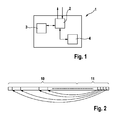
- Fig. 1 is a control unit 1, for example, shown for use in the automotive sector.
- the control unit 1 has a control unit 2.
- the control unit 2 performs procedures and calculations to perform control of vehicle systems such as engine control, control of other electrical systems in the motor vehicle and the like.
- the control unit 2 is coupled to a program and fixed data memory 3, are stored in the program instructions for performing the executed by the control unit 2 control method and fixed fixed data, such as constants, maps and the like.
- the fixed data memory 3 is preferably designed as a non-volatile memory which can not be written by the control unit 2 during normal operation, such as a ROM, flash memory, EPROM, EEPROM and the like.
- control unit 2 In the control of systems by the control unit 2, it is often necessary to acquire, detect and update information about the systems to be controlled, environmental conditions and the like as operation amount data and to keep the most recent operation size data permanently available, even over a period of time during which the control unit 1 is switched off for a certain time, ie not supplied with a supply voltage. Data which is then stored in any random access memory, such as memory. a volatile random access memory, e.g. RAM, are lost during such a period of time.
- a non-volatile memory 4 writable by the control unit 2, e.g. in the form of a flash memory and the like, to which the control unit 2 can access in order to store or read out certain operating variables.
- the size of the nonvolatile memory 4 is made larger than required for the storage of the operation quantities.
- this requires memory management.
- operation amount data to be stored is sequentially, i. in turn, written in the address area of the non-volatile memory 4.
- a non-volatile memory 4 is shown schematically.
- the memory area of the memory 4 has a data area 10 and a reference area 11.
- the data area is located at a lower end of the logical (or physical) addresses of the memory 4
- the reference area is located at an upper end of the logical (or physical) addresses of the memory 4. That is, consecutive operating area data is stored consecutively at consecutive address locations. while the respectively assigned reference data in the referencing area are stored in succession at decreasing addresses.
- the non-volatile memory 4 of one side with data and the other with reference information are stored consecutive operating area data.
- Referral information includes an indication of the type of operation size to be stored and an indication of an address, thereby defining the location of the associated operation size in the nonvolatile memory 4 storage area.
- a write start address indicating the next available free space (in the form of an address) in the nonvolatile memory 4 is determined.
- operation amount data is written to the obtained write start address.
- corresponding reference information is appended to the last written reference information.
- the reference information is stored sequentially in the same manner as the operating-size data, but in a different non-volatile memory storage area.
- the write start address at which the writing is to be started must be determined. This address can be determined in a particularly simple manner if the last written reference information is read out as reference information in the reference area 11 and the memory address specified therein can be used for the determination of the start address, without an indication of the size of the previously written operating data is needed.
- the reference information indicates the memory address most recently written by the previously written operation amount data, or the write start address for the memory range which can be described next.
- the position of the previously described data can nevertheless be determined, since the data area with the operating volume data is described in direct succession, ie the data sets of the operating volume data are immediately adjacent to one another.
- the specification of a start address for the writing of next operating variable data thus makes it possible, with knowledge of the data length of the previously written operating variable data, to determine its starting address for a possible read-out since the memory area adjacent to the write start address corresponds to the last byte of the previously-written operating-variable data.
- the method for operating a non-volatile memory is preferably carried out by the control unit 2.
- the method can be realized therein by a hardware implementation, an implementation by means of a software corresponding to a computer program, and a common implementation by hardware and software.
Landscapes
- Engineering & Computer Science (AREA)
- Theoretical Computer Science (AREA)
- Physics & Mathematics (AREA)
- General Engineering & Computer Science (AREA)
- General Physics & Mathematics (AREA)
- Techniques For Improving Reliability Of Storages (AREA)
- Combined Controls Of Internal Combustion Engines (AREA)
- Read Only Memory (AREA)
Abstract
Description
- Die Erfindung betrifft ein Verfahren und ein Steuergerät zum Betreiben von nichtflüchtigen Speichern, insbesondere Flash-Speichern, für den Einsatz z.B. im Automotiv-Bereich.
- Steuergeräte für den Automotiv-Bereich werden üblicherweise zur Steuerung und Überwachung von Funktionen des Fahrzeugmotors und/oder weiterer elektrischer Systeme im Kraftfahrzeug eingesetzt. Ein derartiges Steuergerät ist vorzugsweise mit einem nicht-flüchtigen Speicher ausgestattet, um verschiedene Betriebsgrößen und dgl. permanent, d.h. auch bei nicht anliegender Versorgungsspannung zu speichern, so dass das Steuergerät z.B. auch auf zurückliegende Daten zurückgreifen kann.
- Die Anforderung an die im Automotiv-Bereich eingesetzten Komponenten sind jedoch sehr hoch, und es wird im allgemeinen eine sehr hohe Zuverlässigkeit während der gesamten Lebensdauer des Kraftfahrzeugs gefordert. An die in Automotiv-Steuergeräten eingesetzten nichtflüchtigen Speicher werden daher ebenfalls hohe Anforderungen gestellt. Üblicherweise werden als nichtflüchtige Speicher für Automotiv-Steuergeräte Flash-Speicher eingesetzt. Aufgrund von Degradationseffekten der Flash-Speicherzellen ist die Lebensdauer einer Flash-Speicherzelle auf eine bestimmte Anzahl von Schreibzyklen beschränkt. Herstellerseitig wird üblicherweise für einen Flash-Speicher eine bestimmte Anzahl von Schreibzyklen für eine bestimmte Gesamt-Betriebsdauer des Kraftfahrzeugs, während der das betreffende Steuergerät betrieben wird, gewährleistet.
- Um die Häufigkeit, mit der in einem Steuergerät eine bestimmte Speicherzelle des nicht-flüchtigen Speichers überschrieben wird, zu reduzieren, wird die Größe des Speichers im Steuergerät erhöht und darin abzuspeichernde Betriebsgrößen in den Speicherbereich aufeinander folgend geschrieben. Dies erfordert die Implementierung eines Betriebsverfahrens, durch das die nächste freie, in Folge zu beschreibende Speicherposition in dem nicht-flüchtigen Speicher ermittelt wird, um anschließend dort die Betriebsgröße abzuspeichern.
- Bislang wird ein solches Betriebsverfahren durchgeführt, indem in dem nichtflüchtigen Speicher die Betriebsgrößendaten in einem Datenabschnitt und in einem Verweisungsteil des nichtflüchtigen Speichers eine Adressinformation gespeichert wird, der eine Angabe zu einem entsprechenden Typ der Betriebsgrößendaten zugeordnet ist. Die Adressinformation gibt in der Regel eine Anfangsadresse des Datenbereichs an, in dem der in der Verweisungsteil angegebenen Typ der Betriebsgrößendaten gespeichert ist. Zum Ermitteln einer Schreib-Startadresse des mit weiteren Betriebsgrößendaten zu beschreibenden Datenbereichs in dem nicht-flüchtigen Speicher wird die Adressinformationen des zuletzt geschriebenen Datenbereichs aus dem Verweisungsteil identifiziert und die Startadresse des entsprechenden zuletzt geschriebenen Datenabschnitts ermittelt. Durch ein nachfolgendes Abrufen der Datenlänge der zuletzt gespeicherten Betriebsgrößendaten kann gemeinsam mit der Startadresse die Schreib-Startadresse ermittelt werden, d.h. die Adressposition, ab der der nichtflüchtige Speicher noch nicht beschrieben worden ist. Sowohl das Abrufen der Datenlängeninformation als auch das Berechnen der Schreib-Startadresse als Startadresse für die nachfolgend zu schreibenden Daten erfordert eine zusätzliche Kommunikation innerhalb des Steuergeräts und kann daher eine nicht vernachlässigbare Verarbeitungslast darstellen.
- Es ist daher Aufgabe der vorliegenden Erfindung, ein Verfahren und ein Steuergerät zur Verfügung zu stellen, mit denen ein nicht-flüchtiger beschreibbarer Speicher in einfacher Weise betrieben werden kann.
- Diese Aufgabe wird durch das Verfahren nach Anspruch 1 sowie durch das Steuergerät gemäß dem nebengeordneten Anspruch gelöst.
- Weitere vorteilhafte Ausgestaltungen der Erfindung sind in den abhängigen Ansprüchen angegeben.
- Gemäß einem ersten Aspekt ist ein Verfahren zum aufeinander folgenden Beschreiben eines nicht-flüchtigen Speichers mit Betriebsgrößendaten, insbesondere in einem Steuergerät in einem Kraftfahrzeug, vorgesehen. Das Verfahren umfasst die Schritte des Ermittelns einer Schreibadresse, die einen Adressbereich zum Schreiben eines zu schreibenden Betriebsgrößendatums definiert, wobei sich der Adressbereich unmittelbar an einen mit einem zuvor geschriebenen Betriebsgrößendatum belegten Speicherbereich anschließt, sowie des Schreibens des zu schreibenden Betriebsgrößendatums in den durch die Schreibadresse definierten Adressbereich des nicht-flüchtigen Speichers. Beim Schritt des Ermittelns entspricht die Schreibadresse einer den zuletzt geschriebenen Betriebsgrößendaten zugeordneten Adressinformation, die in einer Verweisungsinformation in dem nicht-flüchtigen Speicher gespeichert ist, direkt oder wird daraus mit Hilfe eines von der Größe der zuvor geschriebenen Betriebsgrößendaten unabhängigen Adressversatzes ermittelt.
- Die vorgeschlagene Vorrichtung ermöglicht das Betreiben des Steuergeräts in verbesserter Weise, da das Feststellen des Adressbereichs zum nachfolgenden Beschreiben mit Betriebsgrößendaten ohne Verwendung einer Angabe einer Datenlänge der zuvor geschriebenen Betriebsgrößendaten durchgeführt werden kann. Es ist daher beim Schreibvorgang keine Verarbeitung bzw. Abrufen einer Datenlängeninformation notwendig, um den Adressbereich von nachfolgend zu schreibenden Daten zu bestimmen.
- Weiterhin kann eine Verweisungsinformation geschrieben werden, die eine Adressinformation über die geschriebenen Betriebsgrößendaten angibt, die sich auf die letzte beschriebene Adresse des Adressbereichs bezieht.
- Gemäß einer Ausführungsform kann die Adressinformation eine als letztes beschriebene Adressposition des Adressbereichs angeben, in den das Betriebsgrößendatum geschrieben worden ist.
- Die Schreibadresse kann einer Schreib-Startadresse entsprechen, die einer Adressposition des Adressbereichs für ein erstes Datenbyte des zu schreibenden Betriebsgrößendatums entspricht.
- Gemäß einem weiteren Aspekt ist ein Steuergerät, insbesondere zum Einsatz in einem Kraftfahrzeug, vorgesehen. Das Steuergerät umfasst eine Steuereinheit zum Bereitstellen von Betriebsgrößendaten und einen nicht-flüchtigen Speicher zum aufeinander folgenden Speichern der Betriebsgrößendaten. Die Steuereinheit ist ausgebildet, um eine Schreibadresse zu ermitteln, die einen Adressbereich zum Schreiben eines zu schreibenden Betriebsgrößendatums definiert, wobei sich der Adressbereich unmittelbar an einen mit einem zuvor geschriebenen Betriebsgrößendatum belegten Speicherbereich anschließt, und um das zu schreibende Betriebsgrößendatum in den durch die Schreibadresse definierten Adressbereich des nicht-flüchtigen Speichers zu schreiben. Beim Schritt des Ermittelns entspricht die Schreibadresse einer den zuletzt geschriebenen Betriebsgrößendaten zugeordneten Adressinformation, die in einer Verweisungsinformation in dem nicht-flüchtigen Speicher gespeichert ist, direkt, oder die Steuereinheit ist ausgebildet, um aus der Adressinformation mit Hilfe eines von der Größe der zuvor geschriebenen Betriebsgrößendaten unabhängigen Adressversatz zu ermitteln.
- Weiterhin kann die Steuereinheit ausgebildet sein, um eine Verweisungsinformation zu schreiben, die eine Adressinformation über die geschriebenen Betriebsgrößendaten angibt, die sich auf die letzte beschriebene Adresse des Adressbereichs bezieht.
- Bevorzugte Ausführungsformen der Erfindung werden nachfolgend anhand der beigefügten Zeichnungen näher erläutert. Es zeigen:
- Fig. 1
- eine Blockdarstellung eines Steuergeräts mit einer Steuereinheit gemäß einer Ausführungsform der Erfindung;
- Fig. 2
- eine veranschaulichende Darstellung der Datenstruktur in einem von der Steuereinheit verwendeten nicht-flüchtigen beschreibbaren Speicher.
- In
Fig. 1 ist ein Steuergerät 1 z.B. für den Einsatz im Automotiv-Bereich dargestellt. Das Steuergerät 1 weist eine Steuereinheit 2 auf. Die Steuereinheit 2 führt Verfahren und Berechnungen durch, um eine Steuerung von Fahrzeugsystemen, wie z.B. die Motorsteuerung, die Steuerung weiterer elektrischer Systeme im Kraftfahrzeug und dgl. durchzuführen. Die Steuereinheit 2 ist mit einem Programm- und Festdatenspeicher 3 gekoppelt, in dem Programmbefehle zum Durchführen des von der Steuereinheit 2 ausgeführten Steuerverfahrens sowie unveränderliche Festdaten, wie z.B. Konstanten, Kennfelder und dergleichen gespeichert sind. Der Festdatenspeicher 3 ist vorzugsweise als nicht-flüchtiger, durch die Steuereinheit 2 im Normalbetrieb nicht beschreibbarer Speicher, wie z.B. ein ROM, Flash-Speicher, EPROM, EEPROM und dgl. ausgeführt. - Bei der Steuerung von Systemen durch die Steuereinheit 2 ist es häufig notwendig, Informationen über die zu steuernden Systeme, über Umfeldbedingungen und dergleichen als Betriebsgrößendaten zu erfassen, zu ermitteln und zu aktualisieren und die jeweils aktuellsten Betriebsgrößendaten permanent verfügbar zu halten, auch über einen Zeitraum hinweg, während dem das Steuergerät 1 für eine bestimmte Zeit ausgeschaltet ist, d.h. nicht mit einer Versorgungsspannung versorgt wird. Daten, die dann in einem etwaigen Arbeitsspeicher, wie z.B. einem flüchtigen Schreib-/Lesespeicher, z.B. einem RAM, gespeichert sind, gehen während einer solchen Zeitdauer verloren. Zum dauerhaften Speichern von Betriebsgrößendaten wird in der Regel ein nicht-flüchtiger, durch die Steuereinheit 2 beschreibbarer Speicher 4, z.B. in Form eines Flash-Speichers und dergleichen, vorgesehen, auf den die Steuereinheit 2 zugreifen kann, um bestimmte Betriebsgrößen zu speichern bzw. auszulesen.
- Um die Belastung des nicht-flüchtigen Speichers 4 durch häufiges Beschreiben zu reduzieren, ist die Größe des nicht-flüchtigen Speichers 4 größer vorgesehen als für die Speicherung der Betriebsgrößen benötigt. Jedoch ist dazu ein Speichermanagement erforderlich. Im Detail werden zu speichernde Betriebsgrößendaten aufeinander folgend, d.h. der Reihe nach, in den Adressbereich des nicht-flüchtigen Speichers 4 geschrieben.
- In
Fig. 2 ist ein Beispiel eines nichtflüchtigen Speichers 4 schematisch dargestellt. Der Speicherbereich des Speichers 4 weist einen Datenbereich 10 und einen Verweisungsbereich 11 auf. Vorzugsweise befindet sich der Datenbereich an einem unteren Ende der logischen (oder physikalischen) Adressen des Speichers 4 und der Verweisungsbereich an einem oberen Ende der logischen (oder physikalischen) Adressen des Speichers 4. D.h. aufeinander folgende Betriebsgrößendaten werden zeitlich aufeinander folgend an fortlaufenden Adresspositionen gespeichert, während die jeweils zugeordneten Verweisungsdaten in dem Verweisungsbereich zeitlich nacheinander bei abnehmenden Adressen gespeichert werden. D.h. mit anderen Worten wird der nicht-flüchtige Speicher 4 von der einen Seite mit Daten und von der anderen Seite mit Verweisungsinformationen beschrieben. - Eine Verweisungsinformation enthält eine Angabe über den Typ der Betriebsgröße, die gespeichert werden soll, sowie eine Angabe über eine Adresse, womit die Position der zugeordneten Betriebsgröße in dem Speicherbereich des nichtflüchtigen Speichers 4 definiert wird. Beim Beschreiben des nicht-flüchtigen Speichers 4 durch die Steuereinheit 2 wird zunächst eine Schreib-Startadresse bestimmt, die den nächsten verfügbaren freien Speicherplatz (in Form einer Adresse) in dem nicht-flüchtigen Speicher 4 angibt. Anschließend werden Betriebsgrößendaten an die ermittelte Schreib-Startadresse geschrieben. Nach dem Schreiben der Betriebsgrößendaten wird in dem Verweisungsbereich 11 des nicht-flüchtigen Speichers eine entsprechende Verweisungsinformation an die zuletzt geschriebene Verweisungsinformation angehängt. In der Regel werden die Verweisungsinformationen in gleicher Weise wie die Betriebsgrößendaten aufeinander folgend gespeichert, jedoch in einem anderen Speicherbereich des nicht-flüchtigen Speichers.
- Da die Betriebsgrößendaten aufeinander folgend, z.B. Byte-weise oder Wort-weise (oder in anderen Datenblöcken mit geringer Bitanzahl =< 32), in den Speicherbereich geschrieben werden, d.h. bezüglich ihrer logischen (oder physikalischen) Adressen aufeinander folgend, muss zum Schreiben der Betriebsgrößendaten durch die Steuereinheit 2 die Schreib-Startadresse ermittelt werden, bei der das Schreiben begonnen werden soll. Diese Adresse kann in besonders einfacher Weise bestimmt werden, wenn als Verweisungsinformation im Verweisungsbereich 11 die zuletzt geschriebene Verweisungsinformation ausgelesen wird und die dort angegebene Speicheradresse für die Ermittlung der Anfangsadresse verwendet werden kann, ohne dass eine Angabe über die Größe der zuvor geschriebenen Betriebsgrößendaten benötigt wird. D.h. im Gegensatz zu Systemen gemäß dem Stand der Technik, bei dem eine Anfangsadresse der zuvor geschriebenen Betriebsgrößendaten nebst einer Datenlänge benötigt wird, um die Schreib-Startadresse für ein Schreiben von zu schreibenden Betriebsgrößendaten zu ermitteln, ist es bei dem durch die Steuereinheit 2 durchgeführten Verfahren möglich, die Schreib-Startadresse für das Schreiben der neuen Betriebsgrößendaten ohne eine Angabe über die Datenlänge der Betriebsgrößendaten zu ermitteln.
- Vorzugsweise gibt die Verweisungsinformation die zuletzt von den zuvor geschriebenen Betriebsgrößendaten geschriebene Speicheradresse an oder gleich die Schreib-Startadresse für den Speicherbereich, der als Nächstes beschrieben werden kann. In diesem Fall lässt sich die Position der zuvor beschriebenen Daten dennoch ermitteln, da der Datenbereich mit den Betriebsgrößendaten unmittelbar aufeinander folgend beschrieben wird, d.h. die Datensätze der Betriebsgrößendaten schließen sich unmittelbar aneinander an. Die Angabe einer Startadresse für das Schreiben von nächsten Betriebsgrößendaten ermöglicht es somit, in Kenntnis der Datenlänge der zuvor geschriebenen Betriebsgrößendaten deren Startadresse für ein eventuelles Auslesen zu ermitteln, da der der Schreib-Startadresse benachbarte Speicherbereich dem letzten Byte der zuvor geschriebenen Betriebsgrößendaten entspricht.
- Das Verfahren zum Betrieben eines nicht-flüchtigen Speichers wird vorzugsweise durch die Steuereinheit 2 ausgeführt. Das Verfahren kann darin durch eine Hardware-Implementierung, einer Implementierung mit Hilfe einer Software, die einem Computerprogramm entspricht, sowie durch eine gemeinsame Implementierung durch Hardware und Software realisiert werden.
- Im Allgemeinen wird also vorgeschlagen, in der Verweisungsinformation eine Adressinformation zu speichern, aus der sich ohne ein Abrufen oder Ermitteln der Datenlänge der zuvor beschriebenen Betriebsgrößendaten eine Schreib-Startadresse zum Schreiben der nächsten Betriebsgrößendaten ermitteln lässt. Trotzdem ist es mithilfe einer solchen Adressinformation möglich, in Kenntnis der Datenlänge der zuvor beschriebenen Betriebsgrößendaten die Startadresse der zuvor beschriebenen Betriebsgrößendaten zum Auslesen eindeutig zu ermitteln.
Claims (7)
- Verfahren zum aufeinander folgenden Beschreiben eines nicht-flüchtigen Speichers (4) mit Betriebsgrößendaten, insbesondere in einem Steuergerät (1) in einem Kraftfahrzeug, mit folgenden Schritten:- Ermitteln einer Schreibadresse, die einen Adressbereich zum Schreiben eines zu schreibenden Betriebsgrößendatums definiert, wobei sich der Adressbereich unmittelbar an einen mit einem zuvor geschriebenen Betriebsgrößendatum belegten Speicherbereich anschließt;- Schreiben des zu schreibenden Betriebsgrößendatums in den durch die Schreibadresse definierten Adressbereich des nicht-flüchtigen Speichers (4);dadurch gekennzeichnet, dass,- beim Schritt des Ermittelns, die Schreibadresse einer den zuletzt geschriebenen Betriebsgrößendaten zugeordneten Adressinformation, die in einer Verweisungsinformation in dem nicht-flüchtigen Speicher (4) gespeichert ist, direkt entspricht oder daraus mit Hilfe eines von der Größe der zuvor geschriebenen Betriebsgrößendaten unabhängigen Adressversatzes ermittelt wird.
- Verfahren nach Anspruch 1, wobei eine Verweisungsinformation geschrieben wird, die eine Adressinformation über die geschriebenen Betriebsgrößendaten angibt, die sich auf die letzte beschriebene Adresse des Adressbereichs bezieht.
- Verfahren nach Anspruch 1 oder 2, wobei die Adressinformation eine als letztes beschriebene Adressposition des Adressbereichs angibt, in den das Betriebsgrößendatum geschrieben worden ist.
- Verfahren nach einem der Ansprüche 1 bis 3, wobei die Schreibadresse einer Schreib-Startadresse entspricht, die einer Adressposition des Adressbereichs für eine erste Dateneinheit, insbesondere ein erstes Datenbyte oder ein erstes Datenwort, des zu schreibenden Betriebsgrößendatums entspricht.
- Steuergerät (1), insbesondere zum Einsatz in einem Kraftfahrzeug, umfassend:- eine Steuereinheit (2) zum Bereitstellen von Betriebsgrößendaten;- einen nicht-flüchtigen Speicher (4) zum aufeinander folgenden Speichern der Betriebsgrößendaten;- wobei die Steuereinheit (2) ausgebildet ist,- um eine Schreibadresse zu ermitteln, die einen Adressbereich zum Schreiben eines zu schreibenden Betriebsgrößendatums definiert, wobei sich der Adressbereich unmittelbar an einen mit einem zuvor geschriebenen Betriebsgrößendatum belegten Speicherbereich anschließt; und- um das zu schreibende Betriebsgrößendatum in den durch die Schreibadresse definierten Adressbereich des nicht-flüchtigen Speichers (4) zu schreiben;dadurch gekennzeichnet, dass- beim Schritt des Ermittelns, die Schreibadresse einer den zuletzt geschriebenen Betriebsgrößendaten zugeordneten Adressinformation, die in einer Verweisungsinformation in dem nicht-flüchtigen Speicher (4) gespeichert ist, direkt entspricht, oder die Steuereinheit (2) ausgebildet ist, um daraus mit Hilfe eines von der Größe der zuvor geschriebenen Betriebsgrößendaten unabhängigen Adressversatzes zu ermitteln.
- Steuergerät (1) nach Anspruch 5, wobei die Steuereinheit (2) ausgebildet ist, um eine Verweisungsinformation zu schreiben, die eine Adressinformation über die geschriebenen Betriebsgrößendaten angibt, die sich auf die letzte beschriebene Adresse des Adressbereichs bezieht.
- Computerprogrammprodukt mit darauf gespeichertem maschinenlesbaren Code, mit dem eine Steuereinheit (2) ansteuerbar ist, ein Verfahren gemäß einem der Ansprüche 1 bis 4 durchzuführen.
Applications Claiming Priority (1)
| Application Number | Priority Date | Filing Date | Title |
|---|---|---|---|
| DE102007026690A DE102007026690A1 (de) | 2007-06-08 | 2007-06-08 | Verfahren und Steuergerät zum Betreiben eines nichtflüchtigen Speichers, insbesondere zum Einsatz in Kraftfahrzeugen |
Publications (2)
| Publication Number | Publication Date |
|---|---|
| EP2017736A1 true EP2017736A1 (de) | 2009-01-21 |
| EP2017736B1 EP2017736B1 (de) | 2011-09-21 |
Family
ID=39717580
Family Applications (1)
| Application Number | Title | Priority Date | Filing Date |
|---|---|---|---|
| EP08104222A Not-in-force EP2017736B1 (de) | 2007-06-08 | 2008-06-02 | Verfahren und Steuergerät zum Betreiben eines nichtflüchtigen Speichers, insbesondere zum Einsatz in Kraftfahrzeugen |
Country Status (5)
| Country | Link |
|---|---|
| US (1) | US20080307159A1 (de) |
| EP (1) | EP2017736B1 (de) |
| AT (1) | ATE525697T1 (de) |
| DE (1) | DE102007026690A1 (de) |
| ES (1) | ES2371017T3 (de) |
Citations (2)
| Publication number | Priority date | Publication date | Assignee | Title |
|---|---|---|---|---|
| US5579502A (en) * | 1991-08-09 | 1996-11-26 | Kabushiki Kaisha Toshiba | Memory card apparatus using EEPROMS for storing data and an interface buffer for buffering data transfer between the EEPROMS and an external device |
| EP1187143A2 (de) | 2000-09-07 | 2002-03-13 | Nissan Motor Co., Ltd. | Elektronische Steuereinheit mit Flash-Speicher und Verfahren und Vorrichtung zum Speichern einer Steuerdatengruppe in einem Flash-Speicher |
Family Cites Families (5)
| Publication number | Priority date | Publication date | Assignee | Title |
|---|---|---|---|---|
| US5950231A (en) * | 1996-11-25 | 1999-09-07 | Northern Telecom Limited | Memory manager system |
| DE10048826B4 (de) * | 2000-09-29 | 2012-03-01 | Robert Bosch Gmbh | Verfahren und Vorrichtung zur Erfassung alterungsbedingter Veränderungen von technischen Systemen wie Elektromotoren |
| US6801994B2 (en) * | 2000-12-20 | 2004-10-05 | Microsoft Corporation | Software management systems and methods for automotive computing devices |
| JP4065790B2 (ja) * | 2003-01-17 | 2008-03-26 | 三菱電機株式会社 | 車載電子制御装置 |
| US7386655B2 (en) * | 2004-12-16 | 2008-06-10 | Sandisk Corporation | Non-volatile memory and method with improved indexing for scratch pad and update blocks |
-
2007
- 2007-06-08 DE DE102007026690A patent/DE102007026690A1/de not_active Ceased
-
2008
- 2008-06-02 ES ES08104222T patent/ES2371017T3/es active Active
- 2008-06-02 AT AT08104222T patent/ATE525697T1/de active
- 2008-06-02 EP EP08104222A patent/EP2017736B1/de not_active Not-in-force
- 2008-06-06 US US12/156,979 patent/US20080307159A1/en not_active Abandoned
Patent Citations (2)
| Publication number | Priority date | Publication date | Assignee | Title |
|---|---|---|---|---|
| US5579502A (en) * | 1991-08-09 | 1996-11-26 | Kabushiki Kaisha Toshiba | Memory card apparatus using EEPROMS for storing data and an interface buffer for buffering data transfer between the EEPROMS and an external device |
| EP1187143A2 (de) | 2000-09-07 | 2002-03-13 | Nissan Motor Co., Ltd. | Elektronische Steuereinheit mit Flash-Speicher und Verfahren und Vorrichtung zum Speichern einer Steuerdatengruppe in einem Flash-Speicher |
Also Published As
| Publication number | Publication date |
|---|---|
| DE102007026690A1 (de) | 2008-12-11 |
| US20080307159A1 (en) | 2008-12-11 |
| ATE525697T1 (de) | 2011-10-15 |
| ES2371017T3 (es) | 2011-12-26 |
| EP2017736B1 (de) | 2011-09-21 |
Similar Documents
| Publication | Publication Date | Title |
|---|---|---|
| DE19964013B4 (de) | Verfahren und Vorrichtung zur Steuerung von Betriebsabläufen in einem Fahrzeug | |
| DE19934191B4 (de) | Elektronische Steuerungseinheit und Steuerungsverfahren zum Speichern eines Neuschreibungszählwerts eines nichtflüchtigen Speichers | |
| EP0997347A2 (de) | Verfahren und Einrichtung zur Programmierung eines Steuergerätes, insbesondere eines Kraftfahrzeuges | |
| EP2608037B1 (de) | Verfahren zum Verwalten von Daten in einem Flash-Speicher, Fahrerassistenzeinrichtung und Kraftfahrzeug | |
| DE102004013493B4 (de) | Zugriffs-Verfahren für einen NAND-Flash-Speicherbaustein und ein entsprechender NAND-Flash-Speicherbaustein | |
| EP2017736B1 (de) | Verfahren und Steuergerät zum Betreiben eines nichtflüchtigen Speichers, insbesondere zum Einsatz in Kraftfahrzeugen | |
| DE602004008697T2 (de) | Abnutzungsausgleich in einem nicht flüchtigen Flash-Speicher ohne die Notwendigkeit freier Blöcke | |
| DE10321104B4 (de) | Verfahren zur Ablage von veränderlichen Daten | |
| EP1187011A2 (de) | Verfahren zur Programmierung eines Steuergerätes | |
| EP3797352B1 (de) | Verfahren zum austauschen eines ersten ausführbaren programm-codes und eines zweiten ausführbaren programm-codes und steuergerät | |
| DE4401891A1 (de) | Verfahren zum Ändern der Arbeitsweise eines Steuergeräts von Kraftfahrzeugen | |
| EP3602275B1 (de) | Verfahren und vorrichtung zum aktualisieren eines programmes | |
| EP2003566B1 (de) | Verfahren und Steuergerät zum Betreiben eines nichtflüchtigen Speichers, insbesondere zum Einsatz in Kraftfahrzeugen | |
| EP2102766A1 (de) | Verfahren zum auslesen von daten aus einem speichermedium | |
| DE10257861A1 (de) | Speichersystem mit einem nichtflüchtigen Speicherelement, das direkt ohne Redundanz überschreibt, sowie das dazugehörige Schreibverfahren | |
| EP2000914B1 (de) | Verfahren und Vorrichtung zum Umorganisieren von Daten in einem Speichersystem, insbesondere für Steuergeräte in Kraftfahrzeugen | |
| EP1625592A1 (de) | Vorrichtung und verfahren zum behandeln eines zustands eines speichers | |
| EP2601559B1 (de) | Dreistufige speicheranordnung | |
| DE10128752A1 (de) | Verfahren zur Ablage von Daten in einen Speicherbaustein | |
| DE10340010B4 (de) | Verfahren und Vorrichtung zum sicheren Speichern von Daten | |
| DE102004001285B4 (de) | Umprogrammierbare nichtflüchtige Halbleiter-Speichereinrichtung | |
| DE19744120C1 (de) | Verfahren zum wiederholten Speichern eines Vorgabewertes in einem einfach beschreibbaren Speicher | |
| DE4443065A1 (de) | Verfahren zur Programmierung eines elektrisch löschbaren, nichtflüchtigen Speichers in einem elektronischen Rechengerät sowie Steuergerät zur Verwendung bei dem Verfahren | |
| EP2002342A2 (de) | Verfahren und recheneinheit zum betreiben einer speichereinrichtung | |
| WO2022063773A1 (de) | Verfahren zum aktualisieren von software |
Legal Events
| Date | Code | Title | Description |
|---|---|---|---|
| PUAI | Public reference made under article 153(3) epc to a published international application that has entered the european phase |
Free format text: ORIGINAL CODE: 0009012 |
|
| PUAI | Public reference made under article 153(3) epc to a published international application that has entered the european phase |
Free format text: ORIGINAL CODE: 0009012 |
|
| AK | Designated contracting states |
Kind code of ref document: A1 Designated state(s): AT BE BG CH CY CZ DE DK EE ES FI FR GB GR HR HU IE IS IT LI LT LU LV MC MT NL NO PL PT RO SE SI SK TR |
|
| AX | Request for extension of the european patent |
Extension state: AL BA MK RS |
|
| 17P | Request for examination filed |
Effective date: 20090721 |
|
| 17Q | First examination report despatched |
Effective date: 20090821 |
|
| AKX | Designation fees paid |
Designated state(s): AT BE BG CH CY CZ DE DK EE ES FI FR GB GR HR HU IE IS IT LI LT LU LV MC MT NL NO PL PT RO SE SI SK TR |
|
| GRAJ | Information related to disapproval of communication of intention to grant by the applicant or resumption of examination proceedings by the epo deleted |
Free format text: ORIGINAL CODE: EPIDOSDIGR1 |
|
| GRAP | Despatch of communication of intention to grant a patent |
Free format text: ORIGINAL CODE: EPIDOSNIGR1 |
|
| GRAS | Grant fee paid |
Free format text: ORIGINAL CODE: EPIDOSNIGR3 |
|
| GRAA | (expected) grant |
Free format text: ORIGINAL CODE: 0009210 |
|
| AK | Designated contracting states |
Kind code of ref document: B1 Designated state(s): AT BE BG CH CY CZ DE DK EE ES FI FR GB GR HR HU IE IS IT LI LT LU LV MC MT NL NO PL PT RO SE SI SK TR |
|
| REG | Reference to a national code |
Ref country code: GB Ref legal event code: FG4D Free format text: NOT ENGLISH |
|
| REG | Reference to a national code |
Ref country code: CH Ref legal event code: EP |
|
| REG | Reference to a national code |
Ref country code: IE Ref legal event code: FG4D Free format text: LANGUAGE OF EP DOCUMENT: GERMAN |
|
| REG | Reference to a national code |
Ref country code: DE Ref legal event code: R096 Ref document number: 502008004943 Country of ref document: DE Effective date: 20111201 |
|
| REG | Reference to a national code |
Ref country code: ES Ref legal event code: FG2A Ref document number: 2371017 Country of ref document: ES Kind code of ref document: T3 Effective date: 20111226 |
|
| REG | Reference to a national code |
Ref country code: NL Ref legal event code: VDEP Effective date: 20110921 |
|
| PG25 | Lapsed in a contracting state [announced via postgrant information from national office to epo] |
Ref country code: LT Free format text: LAPSE BECAUSE OF FAILURE TO SUBMIT A TRANSLATION OF THE DESCRIPTION OR TO PAY THE FEE WITHIN THE PRESCRIBED TIME-LIMIT Effective date: 20110921 Ref country code: FI Free format text: LAPSE BECAUSE OF FAILURE TO SUBMIT A TRANSLATION OF THE DESCRIPTION OR TO PAY THE FEE WITHIN THE PRESCRIBED TIME-LIMIT Effective date: 20110921 Ref country code: SE Free format text: LAPSE BECAUSE OF FAILURE TO SUBMIT A TRANSLATION OF THE DESCRIPTION OR TO PAY THE FEE WITHIN THE PRESCRIBED TIME-LIMIT Effective date: 20110921 Ref country code: HR Free format text: LAPSE BECAUSE OF FAILURE TO SUBMIT A TRANSLATION OF THE DESCRIPTION OR TO PAY THE FEE WITHIN THE PRESCRIBED TIME-LIMIT Effective date: 20110921 Ref country code: NO Free format text: LAPSE BECAUSE OF FAILURE TO SUBMIT A TRANSLATION OF THE DESCRIPTION OR TO PAY THE FEE WITHIN THE PRESCRIBED TIME-LIMIT Effective date: 20111221 |
|
| LTIE | Lt: invalidation of european patent or patent extension |
Effective date: 20110921 |
|
| PG25 | Lapsed in a contracting state [announced via postgrant information from national office to epo] |
Ref country code: LV Free format text: LAPSE BECAUSE OF FAILURE TO SUBMIT A TRANSLATION OF THE DESCRIPTION OR TO PAY THE FEE WITHIN THE PRESCRIBED TIME-LIMIT Effective date: 20110921 Ref country code: SI Free format text: LAPSE BECAUSE OF FAILURE TO SUBMIT A TRANSLATION OF THE DESCRIPTION OR TO PAY THE FEE WITHIN THE PRESCRIBED TIME-LIMIT Effective date: 20110921 Ref country code: CY Free format text: LAPSE BECAUSE OF FAILURE TO SUBMIT A TRANSLATION OF THE DESCRIPTION OR TO PAY THE FEE WITHIN THE PRESCRIBED TIME-LIMIT Effective date: 20110921 Ref country code: GR Free format text: LAPSE BECAUSE OF FAILURE TO SUBMIT A TRANSLATION OF THE DESCRIPTION OR TO PAY THE FEE WITHIN THE PRESCRIBED TIME-LIMIT Effective date: 20111222 |
|
| REG | Reference to a national code |
Ref country code: IE Ref legal event code: FD4D |
|
| PG25 | Lapsed in a contracting state [announced via postgrant information from national office to epo] |
Ref country code: IS Free format text: LAPSE BECAUSE OF FAILURE TO SUBMIT A TRANSLATION OF THE DESCRIPTION OR TO PAY THE FEE WITHIN THE PRESCRIBED TIME-LIMIT Effective date: 20120121 Ref country code: CZ Free format text: LAPSE BECAUSE OF FAILURE TO SUBMIT A TRANSLATION OF THE DESCRIPTION OR TO PAY THE FEE WITHIN THE PRESCRIBED TIME-LIMIT Effective date: 20110921 Ref country code: IE Free format text: LAPSE BECAUSE OF FAILURE TO SUBMIT A TRANSLATION OF THE DESCRIPTION OR TO PAY THE FEE WITHIN THE PRESCRIBED TIME-LIMIT Effective date: 20110921 Ref country code: SK Free format text: LAPSE BECAUSE OF FAILURE TO SUBMIT A TRANSLATION OF THE DESCRIPTION OR TO PAY THE FEE WITHIN THE PRESCRIBED TIME-LIMIT Effective date: 20110921 |
|
| PG25 | Lapsed in a contracting state [announced via postgrant information from national office to epo] |
Ref country code: EE Free format text: LAPSE BECAUSE OF FAILURE TO SUBMIT A TRANSLATION OF THE DESCRIPTION OR TO PAY THE FEE WITHIN THE PRESCRIBED TIME-LIMIT Effective date: 20110921 Ref country code: NL Free format text: LAPSE BECAUSE OF FAILURE TO SUBMIT A TRANSLATION OF THE DESCRIPTION OR TO PAY THE FEE WITHIN THE PRESCRIBED TIME-LIMIT Effective date: 20110921 Ref country code: PT Free format text: LAPSE BECAUSE OF FAILURE TO SUBMIT A TRANSLATION OF THE DESCRIPTION OR TO PAY THE FEE WITHIN THE PRESCRIBED TIME-LIMIT Effective date: 20120123 Ref country code: PL Free format text: LAPSE BECAUSE OF FAILURE TO SUBMIT A TRANSLATION OF THE DESCRIPTION OR TO PAY THE FEE WITHIN THE PRESCRIBED TIME-LIMIT Effective date: 20110921 Ref country code: RO Free format text: LAPSE BECAUSE OF FAILURE TO SUBMIT A TRANSLATION OF THE DESCRIPTION OR TO PAY THE FEE WITHIN THE PRESCRIBED TIME-LIMIT Effective date: 20110921 |
|
| PLBE | No opposition filed within time limit |
Free format text: ORIGINAL CODE: 0009261 |
|
| STAA | Information on the status of an ep patent application or granted ep patent |
Free format text: STATUS: NO OPPOSITION FILED WITHIN TIME LIMIT |
|
| PG25 | Lapsed in a contracting state [announced via postgrant information from national office to epo] |
Ref country code: DK Free format text: LAPSE BECAUSE OF FAILURE TO SUBMIT A TRANSLATION OF THE DESCRIPTION OR TO PAY THE FEE WITHIN THE PRESCRIBED TIME-LIMIT Effective date: 20110921 |
|
| 26N | No opposition filed |
Effective date: 20120622 |
|
| REG | Reference to a national code |
Ref country code: DE Ref legal event code: R097 Ref document number: 502008004943 Country of ref document: DE Effective date: 20120622 |
|
| BERE | Be: lapsed |
Owner name: ROBERT BOSCH G.M.B.H. Effective date: 20120630 |
|
| PGFP | Annual fee paid to national office [announced via postgrant information from national office to epo] |
Ref country code: ES Payment date: 20120628 Year of fee payment: 5 |
|
| PG25 | Lapsed in a contracting state [announced via postgrant information from national office to epo] |
Ref country code: MC Free format text: LAPSE BECAUSE OF NON-PAYMENT OF DUE FEES Effective date: 20120630 |
|
| REG | Reference to a national code |
Ref country code: CH Ref legal event code: PL |
|
| REG | Reference to a national code |
Ref country code: CH Ref legal event code: PL |
|
| PG25 | Lapsed in a contracting state [announced via postgrant information from national office to epo] |
Ref country code: LI Free format text: LAPSE BECAUSE OF NON-PAYMENT OF DUE FEES Effective date: 20120630 Ref country code: BE Free format text: LAPSE BECAUSE OF NON-PAYMENT OF DUE FEES Effective date: 20120630 Ref country code: CH Free format text: LAPSE BECAUSE OF NON-PAYMENT OF DUE FEES Effective date: 20120630 |
|
| PG25 | Lapsed in a contracting state [announced via postgrant information from national office to epo] |
Ref country code: BG Free format text: LAPSE BECAUSE OF FAILURE TO SUBMIT A TRANSLATION OF THE DESCRIPTION OR TO PAY THE FEE WITHIN THE PRESCRIBED TIME-LIMIT Effective date: 20111221 |
|
| PG25 | Lapsed in a contracting state [announced via postgrant information from national office to epo] |
Ref country code: MT Free format text: LAPSE BECAUSE OF FAILURE TO SUBMIT A TRANSLATION OF THE DESCRIPTION OR TO PAY THE FEE WITHIN THE PRESCRIBED TIME-LIMIT Effective date: 20110921 |
|
| PGFP | Annual fee paid to national office [announced via postgrant information from national office to epo] |
Ref country code: GB Payment date: 20130620 Year of fee payment: 6 |
|
| PGFP | Annual fee paid to national office [announced via postgrant information from national office to epo] |
Ref country code: FR Payment date: 20130703 Year of fee payment: 6 |
|
| PGFP | Annual fee paid to national office [announced via postgrant information from national office to epo] |
Ref country code: DE Payment date: 20130828 Year of fee payment: 6 |
|
| PGFP | Annual fee paid to national office [announced via postgrant information from national office to epo] |
Ref country code: IT Payment date: 20130622 Year of fee payment: 6 |
|
| PG25 | Lapsed in a contracting state [announced via postgrant information from national office to epo] |
Ref country code: TR Free format text: LAPSE BECAUSE OF FAILURE TO SUBMIT A TRANSLATION OF THE DESCRIPTION OR TO PAY THE FEE WITHIN THE PRESCRIBED TIME-LIMIT Effective date: 20110921 |
|
| PG25 | Lapsed in a contracting state [announced via postgrant information from national office to epo] |
Ref country code: LU Free format text: LAPSE BECAUSE OF NON-PAYMENT OF DUE FEES Effective date: 20120602 |
|
| PG25 | Lapsed in a contracting state [announced via postgrant information from national office to epo] |
Ref country code: HU Free format text: LAPSE BECAUSE OF FAILURE TO SUBMIT A TRANSLATION OF THE DESCRIPTION OR TO PAY THE FEE WITHIN THE PRESCRIBED TIME-LIMIT Effective date: 20080602 |
|
| REG | Reference to a national code |
Ref country code: AT Ref legal event code: MM01 Ref document number: 525697 Country of ref document: AT Kind code of ref document: T Effective date: 20130602 |
|
| PG25 | Lapsed in a contracting state [announced via postgrant information from national office to epo] |
Ref country code: AT Free format text: LAPSE BECAUSE OF NON-PAYMENT OF DUE FEES Effective date: 20130602 |
|
| REG | Reference to a national code |
Ref country code: DE Ref legal event code: R119 Ref document number: 502008004943 Country of ref document: DE |
|
| GBPC | Gb: european patent ceased through non-payment of renewal fee |
Effective date: 20140602 |
|
| REG | Reference to a national code |
Ref country code: DE Ref legal event code: R119 Ref document number: 502008004943 Country of ref document: DE Effective date: 20150101 |
|
| REG | Reference to a national code |
Ref country code: FR Ref legal event code: ST Effective date: 20150227 |
|
| PG25 | Lapsed in a contracting state [announced via postgrant information from national office to epo] |
Ref country code: DE Free format text: LAPSE BECAUSE OF NON-PAYMENT OF DUE FEES Effective date: 20150101 Ref country code: IT Free format text: LAPSE BECAUSE OF NON-PAYMENT OF DUE FEES Effective date: 20140602 |
|
| PG25 | Lapsed in a contracting state [announced via postgrant information from national office to epo] |
Ref country code: FR Free format text: LAPSE BECAUSE OF NON-PAYMENT OF DUE FEES Effective date: 20140630 Ref country code: GB Free format text: LAPSE BECAUSE OF NON-PAYMENT OF DUE FEES Effective date: 20140602 |
|
| REG | Reference to a national code |
Ref country code: ES Ref legal event code: FD2A Effective date: 20151001 |
|
| PG25 | Lapsed in a contracting state [announced via postgrant information from national office to epo] |
Ref country code: ES Free format text: LAPSE BECAUSE OF NON-PAYMENT OF DUE FEES Effective date: 20140603 |