EP2017976A1 - Procédé et appareil de relais conjoint dans des réseaux de communication sans fil - Google Patents
Procédé et appareil de relais conjoint dans des réseaux de communication sans fil Download PDFInfo
- Publication number
- EP2017976A1 EP2017976A1 EP07720823A EP07720823A EP2017976A1 EP 2017976 A1 EP2017976 A1 EP 2017976A1 EP 07720823 A EP07720823 A EP 07720823A EP 07720823 A EP07720823 A EP 07720823A EP 2017976 A1 EP2017976 A1 EP 2017976A1
- Authority
- EP
- European Patent Office
- Prior art keywords
- relay
- signal
- level network
- signals
- network nodes
- Prior art date
- Legal status (The legal status is an assumption and is not a legal conclusion. Google has not performed a legal analysis and makes no representation as to the accuracy of the status listed.)
- Withdrawn
Links
- 238000000034 method Methods 0.000 title claims abstract description 128
- 238000004891 communication Methods 0.000 title claims description 7
- 230000008569 process Effects 0.000 claims description 92
- 108010076504 Protein Sorting Signals Proteins 0.000 claims description 79
- 230000008929 regeneration Effects 0.000 claims description 46
- 238000011069 regeneration method Methods 0.000 claims description 46
- 238000001514 detection method Methods 0.000 claims description 39
- 238000012545 processing Methods 0.000 claims description 26
- 238000003672 processing method Methods 0.000 claims description 18
- 238000006243 chemical reaction Methods 0.000 claims description 13
- 230000007480 spreading Effects 0.000 description 5
- 238000010586 diagram Methods 0.000 description 4
- 238000013507 mapping Methods 0.000 description 3
- 230000005540 biological transmission Effects 0.000 description 2
- 125000004122 cyclic group Chemical group 0.000 description 2
- 238000013461 design Methods 0.000 description 1
- 230000000694 effects Effects 0.000 description 1
- 238000005516 engineering process Methods 0.000 description 1
- 230000006872 improvement Effects 0.000 description 1
- 238000005259 measurement Methods 0.000 description 1
- 238000012986 modification Methods 0.000 description 1
- 230000004048 modification Effects 0.000 description 1
- 238000001228 spectrum Methods 0.000 description 1
Images



Classifications
-
- H—ELECTRICITY
- H04—ELECTRIC COMMUNICATION TECHNIQUE
- H04B—TRANSMISSION
- H04B7/00—Radio transmission systems, i.e. using radiation field
- H04B7/14—Relay systems
- H04B7/15—Active relay systems
- H04B7/155—Ground-based stations
- H04B7/15592—Adapting at the relay station communication parameters for supporting cooperative relaying, i.e. transmission of the same data via direct - and relayed path
-
- H—ELECTRICITY
- H04—ELECTRIC COMMUNICATION TECHNIQUE
- H04B—TRANSMISSION
- H04B7/00—Radio transmission systems, i.e. using radiation field
- H04B7/14—Relay systems
- H04B7/15—Active relay systems
- H04B7/155—Ground-based stations
-
- H—ELECTRICITY
- H04—ELECTRIC COMMUNICATION TECHNIQUE
- H04B—TRANSMISSION
- H04B7/00—Radio transmission systems, i.e. using radiation field
- H04B7/24—Radio transmission systems, i.e. using radiation field for communication between two or more posts
- H04B7/26—Radio transmission systems, i.e. using radiation field for communication between two or more posts at least one of which is mobile
- H04B7/2603—Arrangements for wireless physical layer control
- H04B7/2606—Arrangements for base station coverage control, e.g. by using relays in tunnels
-
- H—ELECTRICITY
- H04—ELECTRIC COMMUNICATION TECHNIQUE
- H04W—WIRELESS COMMUNICATION NETWORKS
- H04W28/00—Network traffic management; Network resource management
- H04W28/02—Traffic management, e.g. flow control or congestion control
- H04W28/06—Optimizing the usage of the radio link, e.g. header compression, information sizing, discarding information
-
- H—ELECTRICITY
- H04—ELECTRIC COMMUNICATION TECHNIQUE
- H04W—WIRELESS COMMUNICATION NETWORKS
- H04W24/00—Supervisory, monitoring or testing arrangements
-
- H—ELECTRICITY
- H04—ELECTRIC COMMUNICATION TECHNIQUE
- H04W—WIRELESS COMMUNICATION NETWORKS
- H04W88/00—Devices specially adapted for wireless communication networks, e.g. terminals, base stations or access point devices
- H04W88/02—Terminal devices
- H04W88/04—Terminal devices adapted for relaying to or from another terminal or user
Definitions
- the present invention relates to the telecommunication network, and particularly to the relay device, base station and method for implementing the cooperative relay with multiple relay devices.
- Cooperative relay as an emerging technology in the field of wireless telecommunication, has the basic idea of obtaining diversity effect via independent channels.
- the source node broadcasts the signals that it needs to transmit, and part of the relay devices deployed in the network can receive these signals, and consequently process and forward the signals.
- the signals forwarded by said relay devices will reach relay devices on the next hop, these relay devices will process and forward the signals again, at last, said signals reach the destination ( the signal destination ).
- the cooperative relay has limited solutions. As the cooperative relay needs to combine the signals from different relay stations, many solutions for cooperative relay require accurate synchronization and power match, which set high requirements for the real implementation of the system. Other solutions require specific channel conditions, such as the orthogonality between the channels, which increase the difficulty for design and measurement. In addition, the improvement of the performance obtained by cooperative relay is also subject to the channel condition.
- the object of the invention is to provide a relay device, base station and method for implementing the cooperative relay with multiple relay devices.
- a method, in a relay device in wireless telecommunication network, for performing the cooperative relay comprising the steps of: receiving the signals from the fore level network nodes; according to the indicating information from a base station , determining the situation of the fore level network nodes and/or the next level network nodes,; according to the determination result, performing normal relay process or cooperative relay process on said signals from the fore level network nodes, so as to generate the signals after relay process; sending the signals after relay process to the next level network nodes.
- a relay device in wireless telecommunication network for performing the cooperative relay, comprising: receiving means, for receiving the signals from the fore level network nodes; determining means, for according to the indicating information from a base station, determining the situations of the fore level network nodes and/or the next level network nodes; relay processing means for, according to the determination result, performing the normal relay process or cooperative relay process on the signals from the fore level network nodes, so as to generate the signals after relay process; sending means, for sending the signals after relay process to the next level network nodes.
- a method in the base station in wireless network, for supporting the cooperative relay with multiple relay devices, characterized in comprising the step of: performing cooperative detection and combination process on the branches of signals received from multiple relay devices, to generate a signal sequence after cooperative detection and combination process.
- a base station in wireless network for supporting the cooperative relay with multiple relay devices, characterized in comprising: a detecting and combining means, for performing cooperative detection and combination process on the branches of signals received from multiple relay devices, to generate a signal sequence after cooperative detection and combination process.
- space diversity gain or space multiplexing gain can be obtained effectively. Therefore, the performance of the signals received or the consumption of relay resources can be improved considerably.
- Fig. 1 shows the topology of a multi-hop cooperative relay network and the corresponding frame structure according to an embodiment of the invention.
- the multi-hop cooperative relay network comprises a base station (BS), multiple relay devices (relay stations, RS1-RS4) and multiple mobile stations (MS, i.e. user equipment such as mobile phone).
- BS base station
- RS1-RS4 relay devices
- MS mobile stations
- the present invention mainly concerns the communication issues when relay is necessary between MS and BS, therefore, the description will mostly focus on the MSs which need relay.
- uplink is taken as an example.
- MS sends signals to the next level network nodes (RS1 and RS2 in Fig. 1 ), before this, both RS1 and RS2 have got indicating information (such as the MAP information broadcasted by the BS on the downlink)from the BS directly or indirectly (forwarded by fore level relay devices level by level).
- the indicating information comprises the link structure of the network, from which the relay device knows the situation of its fore level network nodes and next level network nodes. More preferably, the indicating information further comprises the specific information sequence processing method of each network node for processing its signals to be sent.
- the network nodes in adjacent network levels can learn the specific information sequence processing method of each other, so as to perform corresponding process on the information from the other party.
- the detailed course thereof will be described referring to other drawings in below.
- the two relay devices independently process the signals received and forward the processed signals respectively.
- the relay processes will be different.
- the signals after relay processing and sent by RS1 and RS2 arrive at RS3 and RS4 via the second hop.
- RS3 and RS4 have already got indicating information from the BS directly or indirectly (forwarded by fore level relay devices level by level).According to this indicating information, RS3 and RS4 independently perform relay process on their received signals and then forward the processed signals respectively.
- the signals arrive at the BS at last.
- the BS then performs corresponding process on the signals from RS3 and RS4, such as cooperative detection and combination, so as to retrieve the original signals sent by the MS.
- the introduction of relay devices is transparent to the MSs, that is to say, MSs are not aware of the RSs. Therefore, in downlinks, RS 1 and RS2, whose next network node is an MS, should convert the format of the signals to be sent correspondingly, so that the MS can receive and identify the signals successfully.
- the format after the conversion is that of the signals that a BS sends to MSs before the introduction of any RS.
- Fig.1 shows the frame structure according to an embodiment of the invention.
- the BS allocates wireless resources (e.g. time and frequency resources) to the network nodes on different levels of the network.
- wireless resources e.g. time and frequency resources
- network nodes on the same level such as RS 1 and RS2 can share the same network resources.
- Fig. 2 shows the flowchart of the method, in a relay device, for implementing the cooperative relay in different circumstances according to an embodiment of the invention
- a cooperative relay network can be a single-hop network which has only one level of relay devices, or a multi-hop network which has two or more levels of relay devices.
- the relay device receives the signals from its fore level network nodes; then in the step S102, according to the indicating information from the base station, the relay device determines the situation of its fore or next level network nodes. With respect to different situation of fore or next level network nodes, there are four kinds of relay processes at the relay device:
- the fore level network node is a base station, the next level network node is a mobile station.
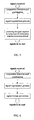
- the specific relay process in this situation is shown in Fig. 3 , and corresponds to the transmission of downlink signals with single-hop relay.
- This kind of relay process is also called normal relay process.
- the received signals are processed by using a processing method similar as the one in single-hop scheme in the prior art (saying, doing the normal relay process). Specifically, signal regeneration process are performed on the received signals, and a signal sequence after signal regeneration are generated; then, the signal format of the signal sequence after signal regeneration will be converted, so as to generate a signal sequence after signal format conversion. This is to satisfy the requirements of some standard so that the MSs will not sense the RSs.
- the format of the signal sequence after the conversion is the same as that of the signals that a BS sends to MSs before the introduction of any RS.
- the fore level network node is a BS or an MS, the next level network node are multiple relay devices.
- the specific relay process in this situation is shown in Fig. 4 , and corresponds to the relay device on the first hop in downlink or uplink of the multi-hop relay network. Since its fore level network nodes is determined as an MS or a BS, and according to an embodiment of the invention, the MS or BS will send signals according to the method for the direct communication between a BS and an MS in the prior art, hence, after receiving the signals (the original signals from the signal source), the relay device will perform cooperative relay process on them. Specifically, the relay device performs signal regeneration process on the original signals from the fore level network node, so as to generate a signal sequence after signal regeneration. And then, by using a specific information sequence processing method such as a specific bit-level interleaving method or scrambling method that differentiates from those of other relay devices, the signal sequence after signal regeneration is processed.
- a specific information sequence processing method such as a specific bit-level interleaving method or scrambling method that differentiates from those of other relay devices, the signal sequence after signal regeneration is processed
- the fore level network nodes are multiple relay devices, the next network nodes consist in multiple relay devices or a BS.
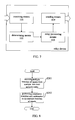
- the specific relay process in this situation is shown in Fig. 5 , and corresponds to the relay devices on any interim hop in the downlink or uplink, or to the relay devices on the last hop in the uplink of the multi-hop relay network.
- the signals sent from a relay device to other relay devices have undergone "processing using a specific information sequence processing method".
- the relay device after receiving each branch of signal sequence from other relay devices, the relay device will perform cooperative detection and combination on the arrived branches of signal sequences, so as to generate a branch of signal sequence after cooperative detection and combination.
- the relay station will perform signal regeneration process on the branch of signal sequence after cooperative detection and combination, so as to generate a signal sequence after signal regeneration. Consequently, the signal sequence after signal regeneration will be processed with a specific information sequence processing method.
- the fore level network nodes are multiple relay devices, the next level network nodes is an MS.
- the specific relay process in this situation is shown in Fig. 6 .
- the introduction of a RS is transparent to an MS. Therefore, a relay station on the last hop in downlink of the multi-hop relay network should perform cooperative detection and combination on the branches of signal sequences arrived to generate one branch of signal sequence after cooperative detection and combination. Then, the relay device will perform signal regeneration process on the branch of signal sequence after cooperative detection and combination so as to generate a signal sequence after signal regeneration. Different from the previous situation, the relay device will not process the signal sequence with a specific information sequence processing method, but convert the format of the signal sequence to generate a signal sequence after signal format conversion. The format of the signal sequence after the conversion is the same as that of the signals that a BS sends to a MS before the introduction of any RS.
- the relay processes in the aforesaid situations 2-4 can be collectively called cooperative relay process.
- the signals after one of the aforesaid four kinds of relay processes will be sent by the corresponding relay device to its next level network nodes in the step S103.
- the relay device After receiving the signals from the fore level network nodes, the relay device does a check such as Cyclic Redundancy Check (CRC) to judge if it is necessary to do some follow-up process to the signals and then forward them. This will help to improve the signal processing efficiency of the system.
- CRC Cyclic Redundancy Check
- Fig. 7 is the diagram of the relay device for cooperative relay according to an embodiment of the invention.
- the relay device comprises a receiving means 101, a determining means 102, a relay processing means 103 and a sending means 104.
- the receiving means 101 is for receiving the signals from the fore level network nodes; and the determining means 102 is for, according to the indicating information from the BS, determining the situation of the fore or next level network nodes.
- the relay processing means 103 in the relay devices is functioned as:
- the fore level network node is a base station, the next level network node is a mobile station.
- the situation corresponds to the transmission of downlink signals with single-hop relay, which is also called normal relay process.
- the signals received by the receiving means 101 are processed by the relay processing means 103 by using a processing method similar as the one in single-hop scheme in the prior art (saying, doing the normal relay process). Specifically, signal regeneration process are performed on the received signals, and a signal sequence after signal regeneration are generated; then, the format of the signal sequence after signal regeneration will be converted, so as to generate a signal sequence after format conversion. This is to satisfy the requirements of some standard so that the MSs will not sense the RSs.
- the format of the signal sequence after the conversion is the same as that of the signals that a BS sends to MSs before the introduction of any RS.
- the fore level network node is a BS or an MS, the next level network node are multiple relay devices.
- the situation corresponds to the relay device on the first hop in downlink or uplink of the multi-hop relay network. Since its fore level network nodes is determined as an MS or a BS, and according to an embodiment of the invention, the MS or BS will send signals according to the method for the direct communication between a BS and an MS in the prior art, hence, after the receiving means 101 receives the signals(the original signals from the signal source), the relay processing means 103 will perform cooperative relay process on them. Specifically, the relay device performs signal regeneration process on the original signals from the fore level network node, so as to generate a signal sequence after signal regeneration. And then, by using a specific information sequence processing method such as a specific bit-level interleaving method or scrambling method that differentiates from those of other relay devices" the signal sequence after signal regeneration is processed.
- a specific information sequence processing method such as a specific bit-level interleaving method or scrambling method that differentiates from those of other relay devices
- the fore level network nodes are multiple relay devices, the next network node(s) consist in multiple relay devices or a BS.
- the situation corresponds to the relay devices on any interim hop in the downlink or uplink, or to the relay devices on the last hop in the uplink of the multi-hop relay network.
- the signals sent from a relay device to other relay devices have undergone "processing using a specific information sequence processing method".
- the relay processing means 103 will perform cooperative detection and combination on the arrived branches of signal sequences, so as to generate a branch of signal sequence after cooperative detection and combination.
- the relay station will perform signal regeneration process on the branch of signal sequence after cooperative detection and combination, so as to generate a signal sequence after signal regeneration. Consequently, the signal sequence after signal regeneration will be processed with a specific information sequence processing method.
- the fore level network nodes are multiple relay devices, the next level network nodes is an MS.
- the introduction of a RS is transparent to an MS. Therefore, the relay processing means 103 of a relay station on the last hop in downlink of the multi-hop relay network should perform cooperative detection and combination on the branches of signal sequences arrived to generate a signal sequence after cooperative detection and combination. Then, the relay processing means 103 will perform a signal regeneration process on the signal sequence after cooperative detection and combination so as to generate a signal sequence after signal regeneration. Different from the previous situation, the relay processing means 103 will not process the signal sequence with a specific information sequence processing method, but convert the format of the signal sequence to generate a signal sequence after signal format conversion. The format of the signal sequence after the conversion is the same as that of the signals that BS sends to a MS before the introduction of any RS.
- the relay processes in the aforesaid situations 2-4 can be collectively called cooperative relay process.
- the signals after one of the aforesaid four kinds of relay processes will be sent by a sending means 104 in the corresponding relay device to its next level network node(s).
- the relay device further comprises a judging means, for performing a check such as Cyclic Redundancy Check (CRC) to judge if it is necessary to do some follow-up process to the signals and then forward them.
- CRC Cyclic Redundancy Check
- Fig. 8 shows the flowchart of the method, in the base station in wireless network, for supporting the cooperative relay with multiple relay devices, according to an embodiment of the invention.
- the method starts from the step S201.
- the BS receives the signals from its fore level network nodes. Since the present invention mainly concerns the circumstance in which relay is needed for the communication between an MS and a BS, the signals received by the BS belong to multiple relay devices, the method then enters the step S202.
- the BS performs cooperative detection and combination on the multiple branches of signals received from the multiple relay devices, so as to generate a signal sequence after cooperative detection and combination.
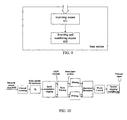
- Fig. 9 is the diagram of the base station in wireless network for supporting the cooperative relay with multiple relay devices, according to an embodiment of the invention.
- the BS comprises a receiving means 401 and a detecting and combining means 402.
- the receiving means 401 is for receiving the signals from the fore level network nodes. Since the present invention mainly concerns the circumstance in which relay is needed for the communication between a BS and an MS, the signals received by the BS belong to multiple relay devices.
- the receiving means 401 will convey the multiple branches of signals received to a detecting and combining means 402, the latter will perform cooperative detection and combination process on the multiple branches of signals, so as to generate a signal sequence after cooperative detection and combination.
- Fig. 10 shows the process before a relay device sending signals on the uplink according to an embodiment of the invention.
- a Relay-specific Bit interleaver in a relay device there is a Relay-specific Bit interleaver.
- the interleaving manner used by the interleaver is different from the interleaving manner used by the interleavers in other relay devices.
- the interleaver is responsible for interleaving the encoded bit stream.
- Symbol mapping/multiplexing module Before the transmitting antennas, there is a Symbol mapping/multiplexing module, which is for mapping the symbols to the transmitting antennas, or for performing spatial multiplexing and then mapping the signals to multiple transmitting antennas.
- the kind of the gain the system can finally obtain depends on whether the signals that multiple relay devices send by using the same resource block (e.g. time and frequency) are the same. According to an embodiment of the invention, there are diversity gain and multiplexing gain.
- the FEC a kind of channel coding
- the interleaving module it is possible to add a module for spectrum spreading between the FEC (a kind of channel coding) module and the interleaving module, so as to achieve the spreading gain and speed match.
- Fig. 11a and 11b show the course of, in the relay device or base station, processing the signals from multiple relay devices, according to an embodiment of the invention.
- each of the interleavers and de-interleavers are in correspondence with a corresponding relay device, that is to say they have the same interleaving manner.
- the signals after combination will experience channel decoding in the Channel Decoder, so that the original signal sequence can be retrieved for follow-up operation.
- channel decoder can be standardized soft-in-soft-out detector.
- a corresponding spreading (de-spreading) module can be added into the structure shown in the figure, for spreading gain and speed match.
- a relay device can be equipped with multiple transmitting antennas, two or more relay devices work cooperatively on the same level of the network by sharing radio resources.
Landscapes
- Engineering & Computer Science (AREA)
- Computer Networks & Wireless Communication (AREA)
- Signal Processing (AREA)
- Mobile Radio Communication Systems (AREA)
- Radio Relay Systems (AREA)
Applications Claiming Priority (2)
| Application Number | Priority Date | Filing Date | Title |
|---|---|---|---|
| CN2006100262601A CN101064914B (zh) | 2006-04-29 | 2006-04-29 | 在无线通信网络中用于进行联合中继的方法及装置 |
| PCT/CN2007/001250 WO2007124670A1 (fr) | 2006-04-29 | 2007-04-17 | Procédé et appareil de relais conjoint dans des réseaux de communication sans fil |
Publications (1)
| Publication Number | Publication Date |
|---|---|
| EP2017976A1 true EP2017976A1 (fr) | 2009-01-21 |
Family
ID=38655062
Family Applications (1)
| Application Number | Title | Priority Date | Filing Date |
|---|---|---|---|
| EP07720823A Withdrawn EP2017976A1 (fr) | 2006-04-29 | 2007-04-17 | Procédé et appareil de relais conjoint dans des réseaux de communication sans fil |
Country Status (5)
| Country | Link |
|---|---|
| US (1) | US20090116423A1 (fr) |
| EP (1) | EP2017976A1 (fr) |
| KR (1) | KR20080111109A (fr) |
| CN (1) | CN101064914B (fr) |
| WO (1) | WO2007124670A1 (fr) |
Cited By (1)
| Publication number | Priority date | Publication date | Assignee | Title |
|---|---|---|---|---|
| EP2472936A4 (fr) * | 2009-09-18 | 2015-11-11 | Sony Corp | Station relais, procédé de relais et dispositif de communication sans fil |
Families Citing this family (21)
| Publication number | Priority date | Publication date | Assignee | Title |
|---|---|---|---|---|
| CN101237278A (zh) * | 2007-01-30 | 2008-08-06 | 西门子通信技术(北京)有限公司 | 移动通信中传输数据的方法、系统、中继站及基站 |
| CN101878600B (zh) * | 2007-12-27 | 2013-03-13 | 上海贝尔股份有限公司 | 无线联合中继网络中控制信号传输的方法和装置 |
| KR20100035088A (ko) * | 2008-09-25 | 2010-04-02 | 한국전자통신연구원 | 협력 통신 방법 및 그 기지국 |
| US8170471B2 (en) * | 2008-12-04 | 2012-05-01 | Electronics And Telecommunications Research Institute | Cooperative communication method for vehicular communication |
| US8848594B2 (en) * | 2008-12-10 | 2014-09-30 | Blackberry Limited | Method and apparatus for discovery of relay nodes |
| US20100150022A1 (en) * | 2008-12-17 | 2010-06-17 | Research In Motion Corporation | System and Method for a Relay Protocol Stack |
| US8311061B2 (en) | 2008-12-17 | 2012-11-13 | Research In Motion Limited | System and method for multi-user multiplexing |
| US8355388B2 (en) * | 2008-12-17 | 2013-01-15 | Research In Motion Limited | System and method for initial access to relays |
| US8402334B2 (en) | 2008-12-17 | 2013-03-19 | Research In Motion Limited | System and method for hybrid automatic repeat request (HARQ) functionality in a relay node |
| US8040904B2 (en) * | 2008-12-17 | 2011-10-18 | Research In Motion Limited | System and method for autonomous combining |
| US8265128B2 (en) | 2008-12-19 | 2012-09-11 | Research In Motion Limited | Multiple-input multiple-output (MIMO) with relay nodes |
| US8446856B2 (en) | 2008-12-19 | 2013-05-21 | Research In Motion Limited | System and method for relay node selection |
| US8335466B2 (en) | 2008-12-19 | 2012-12-18 | Research In Motion Limited | System and method for resource allocation |
| CN101772029B (zh) * | 2009-01-05 | 2016-03-23 | 上海贝尔股份有限公司 | 频率资源分配方法和设备以及无线通信系统 |
| CN103596271B (zh) * | 2009-01-20 | 2017-04-12 | 富士通株式会社 | 无线通信系统及方法、中继站、移动台以及无线装置 |
| MX2011007655A (es) | 2009-01-20 | 2011-08-24 | Fujitsu Ltd | Sistema de radiocomunicacion. |
| KR101605325B1 (ko) * | 2009-08-28 | 2016-03-22 | 엘지전자 주식회사 | 인터리브 분할 다중접속 협력 다이버시티를 위한 수신기 및 그 전력할당 알고리즘 |
| JP2011091786A (ja) * | 2009-09-25 | 2011-05-06 | Sony Corp | 通信システム、中継装置、通信端末および基地局 |
| GB2491857B (en) * | 2011-06-14 | 2015-07-29 | Sca Ipla Holdings Inc | Wireless communications system and method |
| US9906290B2 (en) * | 2016-12-06 | 2018-02-27 | Mediatek Singapore Pte. Ltd. | Method for network merging and configuration sharing and associated apparatus |
| CN111970218B (zh) * | 2020-08-27 | 2021-09-14 | 泰山学院 | 基于深度多跳网络进行通信自动调制识别的方法 |
Family Cites Families (12)
| Publication number | Priority date | Publication date | Assignee | Title |
|---|---|---|---|---|
| JP4414618B2 (ja) * | 2001-09-26 | 2010-02-10 | 日本放送協会 | 無線中継システム及び無線装置 |
| CN1622658A (zh) * | 2003-11-28 | 2005-06-01 | 皇家飞利浦电子股份有限公司 | 用于提高移动通信体系的中继性能的方法和装置 |
| US7386036B2 (en) * | 2003-12-31 | 2008-06-10 | Spyder Navigations, L.L.C. | Wireless multi-hop system with macroscopic multiplexing |
| JP2005236752A (ja) * | 2004-02-20 | 2005-09-02 | Japan Science & Technology Agency | マルチホップ無線ネットワークシステム |
| JP4642384B2 (ja) * | 2004-06-03 | 2011-03-02 | パナソニック株式会社 | 無線網制御システム、無線網制御装置、および基地局 |
| US7944871B2 (en) * | 2005-04-28 | 2011-05-17 | Panasonic Corporation | Communication relay apparatus and communication relay method |
| US7406060B2 (en) * | 2005-07-06 | 2008-07-29 | Nortel Networks Limited | Coverage improvement in wireless systems with fixed infrastructure based relays |
| US7542439B2 (en) * | 2005-09-09 | 2009-06-02 | Intel Corporation | Methods and apparatus for providing a cooperative relay system associated with a broadband wireless access network |
| WO2007053954A1 (fr) * | 2005-11-10 | 2007-05-18 | Nortel Networks Limited | Zones de reseaux sans fil comportant des relais |
| US7684337B2 (en) * | 2006-01-17 | 2010-03-23 | Mitsubishi Electric Research Laboratories, Inc. | Method and system for communicating in cooperative relay networks |
| DE602007013878D1 (de) * | 2006-03-16 | 2011-05-26 | British Telecomm | Verfahren zur drahtlosen übertragung mit relais |
| CN101416465A (zh) * | 2006-03-29 | 2009-04-22 | 艾利森电话股份有限公司 | 使用中继的无线通信网络中的方法和装置 |
-
2006
- 2006-04-29 CN CN2006100262601A patent/CN101064914B/zh not_active Expired - Lifetime
-
2007
- 2007-04-17 KR KR1020087026367A patent/KR20080111109A/ko not_active Withdrawn
- 2007-04-17 WO PCT/CN2007/001250 patent/WO2007124670A1/fr not_active Ceased
- 2007-04-17 US US12/298,831 patent/US20090116423A1/en not_active Abandoned
- 2007-04-17 EP EP07720823A patent/EP2017976A1/fr not_active Withdrawn
Non-Patent Citations (1)
| Title |
|---|
| See references of WO2007124670A1 * |
Cited By (2)
| Publication number | Priority date | Publication date | Assignee | Title |
|---|---|---|---|---|
| EP2472936A4 (fr) * | 2009-09-18 | 2015-11-11 | Sony Corp | Station relais, procédé de relais et dispositif de communication sans fil |
| US9209890B2 (en) | 2009-09-18 | 2015-12-08 | Sony Corporation | Relay station, relay method, and wireless communication device |
Also Published As
| Publication number | Publication date |
|---|---|
| US20090116423A1 (en) | 2009-05-07 |
| KR20080111109A (ko) | 2008-12-22 |
| WO2007124670A1 (fr) | 2007-11-08 |
| CN101064914A (zh) | 2007-10-31 |
| CN101064914B (zh) | 2010-11-10 |
Similar Documents
| Publication | Publication Date | Title |
|---|---|---|
| EP2017976A1 (fr) | Procédé et appareil de relais conjoint dans des réseaux de communication sans fil | |
| KR101468882B1 (ko) | 무선 통신 네트워크들에서 다중 중계국들과 협동 중계를 위한 방법 및 디바이스 | |
| EP1852986B1 (fr) | Systeme de communication sans fil | |
| RU2549199C2 (ru) | Система связи, ретранслирующее устройство, терминал связи и базовая станция | |
| CN102185645B (zh) | 分布式同时收发中继系统 | |
| Nguyen et al. | Performance analysis of full-duplex decode-and-forward relay system with energy harvesting over Nakagami-m fading channels | |
| US12609757B2 (en) | Selection of decoding level at signal forwarding devices | |
| CN101527947A (zh) | 无线中继网络中为移动终端选择通信路径的方法和装置 | |
| US20100029285A1 (en) | Relay station in mobile communication system and relay transmission channel setting method | |
| KR20110079853A (ko) | 이동 전화 네트워크에서 데이터 전송 | |
| CN101141172A (zh) | 无线中继系统中的传输方法及传输系统 | |
| US7539516B2 (en) | Wireless base station apparatus | |
| CN103825658A (zh) | 一种利用光通信提升回传链路效率的lte-a中继系统 | |
| KR20080065206A (ko) | 다중 홉 중계방식의 광대역 무선접속 통신시스템에서프레임 정보 전송 장치 및 방법 | |
| KR20070087654A (ko) | 중계기를 사용하여 무선으로 메시지를 전송하기 위한 방법 | |
| KR101420726B1 (ko) | 멀티홉 릴레이 방식의 무선 통신 시스템에서의 간섭 신호 제거 시스템 및 방법 | |
| KR101365802B1 (ko) | 통신 시스템에서 데이터 송수신 방법 및 시스템 | |
| KR20120016216A (ko) | 중계국의 연관된 프로세싱 및 기지국의 대응하는 프로세싱을 위한 방법 및 장치 | |
| KR101396884B1 (ko) | 상향 링크에서의 통합 대역 할당 및 경로 선택 시스템 및 그 방법 | |
| Amin et al. | Performance enhancement of hybrid SWIPT protocol for cooperative NOMA downlink transmission | |
| KR101405498B1 (ko) | 중계 방식의 무선통신 시스템에서 시공간 부호화 장치 및방법 | |
| KR20080073454A (ko) | 중계 방식의 무선통신 시스템에서 양방향 전송을 위한 장치및 방법 | |
| JP2005175912A (ja) | セル型無線通信システム、セル型無線通信方法、レイク受信方法 | |
| KR20100074804A (ko) | 신호 중계 방법 |
Legal Events
| Date | Code | Title | Description |
|---|---|---|---|
| PUAI | Public reference made under article 153(3) epc to a published international application that has entered the european phase |
Free format text: ORIGINAL CODE: 0009012 |
|
| 17P | Request for examination filed |
Effective date: 20081201 |
|
| AK | Designated contracting states |
Kind code of ref document: A1 Designated state(s): AT BE BG CH CY CZ DE DK EE ES FI FR GB GR HU IE IS IT LI LT LU LV MC MT NL PL PT RO SE SI SK TR |
|
| AX | Request for extension of the european patent |
Extension state: AL BA HR MK RS |
|
| STAA | Information on the status of an ep patent application or granted ep patent |
Free format text: STATUS: THE APPLICATION HAS BEEN WITHDRAWN |
|
| 18W | Application withdrawn |
Effective date: 20110601 |