EP2018075A1 - Mobiles endgerät und mobilkommunikationssystem - Google Patents
Mobiles endgerät und mobilkommunikationssystem Download PDFInfo
- Publication number
- EP2018075A1 EP2018075A1 EP07742749A EP07742749A EP2018075A1 EP 2018075 A1 EP2018075 A1 EP 2018075A1 EP 07742749 A EP07742749 A EP 07742749A EP 07742749 A EP07742749 A EP 07742749A EP 2018075 A1 EP2018075 A1 EP 2018075A1
- Authority
- EP
- European Patent Office
- Prior art keywords
- emergency
- mobile terminal
- communication
- location registration
- registration process
- Prior art date
- Legal status (The legal status is an assumption and is not a legal conclusion. Google has not performed a legal analysis and makes no representation as to the accuracy of the status listed.)
- Withdrawn
Links
Images







Classifications
-
- H—ELECTRICITY
- H04—ELECTRIC COMMUNICATION TECHNIQUE
- H04L—TRANSMISSION OF DIGITAL INFORMATION, e.g. TELEGRAPHIC COMMUNICATION
- H04L65/00—Network arrangements, protocols or services for supporting real-time applications in data packet communication
- H04L65/10—Architectures or entities
- H04L65/1046—Call controllers; Call servers
-
- H—ELECTRICITY
- H04—ELECTRIC COMMUNICATION TECHNIQUE
- H04L—TRANSMISSION OF DIGITAL INFORMATION, e.g. TELEGRAPHIC COMMUNICATION
- H04L47/00—Traffic control in data switching networks
- H04L47/10—Flow control; Congestion control
-
- H—ELECTRICITY
- H04—ELECTRIC COMMUNICATION TECHNIQUE
- H04L—TRANSMISSION OF DIGITAL INFORMATION, e.g. TELEGRAPHIC COMMUNICATION
- H04L65/00—Network arrangements, protocols or services for supporting real-time applications in data packet communication
- H04L65/10—Architectures or entities
- H04L65/1045—Proxies, e.g. for session initiation protocol [SIP]
-
- H—ELECTRICITY
- H04—ELECTRIC COMMUNICATION TECHNIQUE
- H04L—TRANSMISSION OF DIGITAL INFORMATION, e.g. TELEGRAPHIC COMMUNICATION
- H04L65/00—Network arrangements, protocols or services for supporting real-time applications in data packet communication
- H04L65/1066—Session management
- H04L65/1073—Registration or de-registration
-
- H—ELECTRICITY
- H04—ELECTRIC COMMUNICATION TECHNIQUE
- H04W—WIRELESS COMMUNICATION NETWORKS
- H04W4/00—Services specially adapted for wireless communication networks; Facilities therefor
- H04W4/90—Services for handling of emergency or hazardous situations, e.g. earthquake and tsunami warning systems [ETWS]
-
- H—ELECTRICITY
- H04—ELECTRIC COMMUNICATION TECHNIQUE
- H04W—WIRELESS COMMUNICATION NETWORKS
- H04W76/00—Connection management
- H04W76/50—Connection management for emergency connections
-
- H—ELECTRICITY
- H04—ELECTRIC COMMUNICATION TECHNIQUE
- H04L—TRANSMISSION OF DIGITAL INFORMATION, e.g. TELEGRAPHIC COMMUNICATION
- H04L65/00—Network arrangements, protocols or services for supporting real-time applications in data packet communication
- H04L65/10—Architectures or entities
- H04L65/1016—IP multimedia subsystem [IMS]
-
- H—ELECTRICITY
- H04—ELECTRIC COMMUNICATION TECHNIQUE
- H04L—TRANSMISSION OF DIGITAL INFORMATION, e.g. TELEGRAPHIC COMMUNICATION
- H04L65/00—Network arrangements, protocols or services for supporting real-time applications in data packet communication
- H04L65/1066—Session management
- H04L65/1096—Supplementary features, e.g. call forwarding or call holding
-
- H—ELECTRICITY
- H04—ELECTRIC COMMUNICATION TECHNIQUE
- H04W—WIRELESS COMMUNICATION NETWORKS
- H04W80/00—Wireless network protocols or protocol adaptations to wireless operation
- H04W80/08—Upper layer protocols
- H04W80/10—Upper layer protocols adapted for application session management, e.g. SIP [Session Initiation Protocol]
Definitions
- the present invention relates to a mobile terminal and a mobile communication system, in which normal communications are performed between the mobile terminal and a normal communication terminal via a first call control apparatus and emergency-communications are performed between the mobile terminal and an emergency-communication terminal via a second call control apparatus, in an IP network including the first and second call control apparatus.
- the 3rd Generation Partnership Project (3GPP) which is an international standardization organization for the third generation mobile communication system, has proposed a mobile communication system capable of performing emergency-communications between a mobile terminal and an emergency-communication terminal via an IP network (see Non-patent Document 1).
- such mobile communication system includes an IP network configured of an IMS (IP Multimedia Subsystem) and an IP-CAN (GPRS/I-WLAN).
- IMS IP Multimedia Subsystem
- IP-CAN GPRS/I-WLAN
- IP-CAN is an acronym standing for "IP-Connectivity Access Network”
- GPRS is an acronym for "General Packet Radio Service”
- I-WLAN is an acronym standing for "Interworking Wireless Access Network.”
- the IMS is provided with a P-CSCF (Proxy-Call Sever Control Function), an S-CSCF (Serving-Call Server Control Function), an E-CSCF (Emergency-Call Server Control Function), and an HSS (Home Subscriber Server), while the IP-CAN (GPRS/I-WLAN) is provided with a function allowing the forwarding of IP data (SIP signals or VoIP packets).
- P-CSCF Proxy-Call Sever Control Function
- S-CSCF Server Control Function
- E-CSCF Ergency-Call Server Control Function
- HSS Home Subscriber Server
- IP-CAN GPRS/I-WLAN
- the S-CSCF, the E-CSCF and the P-CSCF are SIP (Session Initiation Protocol) servers (call control apparatus) for controlling a normal-communication session between a mobile terminal UE and a normal communication terminal or an emergency-communication session between the mobile terminal UE and an emergency-communication terminal (PSAP: Public Safety Answering Point).
- SIP Session Initiation Protocol
- the mobile terminal UE is configured to perform normal communications between the mobile terminal UE and a normal communication terminal (not shown in the drawings) via an S-CSCF#1 (first call control apparatus) and emergency-communications between the mobile terminal UE and the emergency-communication terminal PSAP, via an S-CSCF#2 (second call control apparatus) and an E-CSCF.
- S-CSCF#1 first call control apparatus
- S-CSCF#2 second call control apparatus
- E-CSCF E-CSCF
- step S7001 the mobile terminal UE transmits, to the P-CSCF, an "Normal Registration Request" for requesting that the S-CSCF#1 perform a normal-communication location registration process (Normal Registration process) for the mobile terminal UE, by using normal-communication user identifiers (IMPI: an IP Multimedia Private Identifier and a Normal IMPU: IP Multimedia Public Identity).
- IMPI an IP Multimedia Private Identifier
- IMPU IP Multimedia Public Identity
- step S7002 in response to the "Normal Registration Request," the normal-communication location registration process for the mobile terminal UE is performed between the mobile terminal UE and the S-CSCF#1 by referring to the HSS.
- step S7003 the mobile terminal UE transmits, to the P-CSCF, an "Emergency Registration Request" for requesting that the S-CSCF#2 perform an emergency-communication location registration process (Emergency Registration process) for the mobile terminal UE, by using an emergency-communication user identifier (Emergency IMPU).
- Emergency Registration process an emergency-communication location registration process for the mobile terminal UE, by using an emergency-communication user identifier (Emergency IMPU).
- step S7004 in response to the "Emergency Registration Request," the emergency-communication location registration process for the mobile terminal UE is performed between the mobile terminal UE and the S-CSCF#2 by referring to the HSS.
- step S7005 the mobile terminal UE transmits, to the P-CSCF, an "Emergency SIP Invite" for requesting that an emergency-communication session establishment process be performed between the mobile terminal UE and the PSAP, by using the emergency-communication user identifier.
- step S7006 the P-CSCF forwards the received "Emergency SIP Invite" to the E-CSCF.
- step S7007 in response to the "Emergency SIP Invite," the emergency-communication session establishment process (Emergency Session Establishment process) is performed between the mobile terminal UE and the PSAP.
- Emergency Session Establishment process Emergency Session Establishment process
- the mobile terminal UE can perform emergency-communications between the mobile terminal UE and the PSAP by using the emergency-communication session establishment process set as described above.
- an emergency-communication location registration process which is required only for performing emergency-communications, has to be performed, in addition to the normal-communication location registration process.
- the above-described mobile communication system requires to perform both of the normal-communication location registration process and the emergency-communication location registration process, since a normal-communication call control apparatus (S-CSCF#1) is different from an emergency-communication call control apparatus (S-CSCF#2) provided to a command station of, for example, police, fire, Japan Coast Guard services or the like.
- S-CSCF#1 normal-communication call control apparatus
- S-CSCF#2 emergency-communication call control apparatus
- Examples of the aforementioned example in which a normal-communication call control apparatus (S-CSCF#1) is different from an emergency-communication call control apparatus (S-CSCF#2) includes an example in which a mobile terminal UE performs an emergency-communication session establishment process from a network outside its home network.
- an object of the present invention is to provide a mobile terminal and a mobile communication system, which can shorten a time until starting an emergency-communication in an IP network.
- a first aspect of the invention is summarized as a mobile terminal that performs a normal communication between the mobile terminal and a normal communication terminal via a first call control apparatus, and an emergency-communication between the mobile terminal and an emergency-communication terminal via a second call control apparatus, in an IP network including the first call control apparatus and the second call control apparatus.
- the mobile terminal includes: an emergency-communication session establishment processing unit configured to perform an emergency-communication session establishment process between the mobile terminal and the emergency-communication terminal, without performing an emergency-communication location registration process for the mobile terminal in the second call control apparatus, when a normal-communication location registration process for the mobile terminal is completed in the first call control apparatus.
- the emergency-communication session establishment processing unit may be configured to perform the emergency-communication session establishment process between the mobile terminal and the emergency-communication terminal, without performing the emergency-communication location registration process for the mobile terminal in the second call control apparatus, when the normal-communication location registration process for the mobile terminal is completed in the first call control apparatus and when a determination is made that not both of the normal-communication location registration process for the mobile terminal and the emergency-communication location registration process for the mobile terminal need to be performed in performing the emergency communication in the IP network.
- the emergency-communication session establishment processing unit may be configured to make the determination based on information notified from the IP network in performing the normal-communication location registration process for the mobile terminal.
- the first aspect of the invention may be configured to further include an emergency-communication location registration processing unit configured to transmit an emergency-communication location registration request for requesting that the second call control apparatus perform the emergency-communication location registration process for the mobile terminal, when the normal-communication location registration process for the mobile terminal is not completed in the first call control apparatus, and the emergency-communication session establishment processing unit may be configured to perform the emergency-communication session establishment process between the mobile terminal and the emergency-communication terminal, without performing the normal-communication location registration process for the mobile terminal in the first call control apparatus, when the emergency-communication location registration process for the mobile terminal is completed in the second call control apparatus in response to the emergency-communication location registration request.
- an emergency-communication location registration processing unit configured to transmit an emergency-communication location registration request for requesting that the second call control apparatus perform the emergency-communication location registration process for the mobile terminal, when the normal-communication location registration process for the mobile terminal is not completed in the first call control apparatus
- the emergency-communication session establishment processing unit may be configured to perform the emergency-communication session establishment process between the mobile terminal and the emergency-communication terminal, without
- the first aspect of the invention may be configured to include an emergency-communication location registration processing unit configured to transmit an emergency-communication location registration request for requesting that the second call control apparatus perform the emergency-communication location registration process for the mobile terminal, when a UICC is not provided in the mobile terminal, and the emergency-communication session establishment processing unit may be configured to perform, the emergency-communication session establishment process between the mobile terminal and the emergency-communication terminal without performing the normal-communication location registration process for the mobile terminal in the first call control apparatus, when the emergency-communication location registration process for the mobile terminal is completed in the second call control apparatus in response to the emergency-communication location registration request.
- an emergency-communication location registration processing unit configured to transmit an emergency-communication location registration request for requesting that the second call control apparatus perform the emergency-communication location registration process for the mobile terminal, when a UICC is not provided in the mobile terminal
- the emergency-communication session establishment processing unit may be configured to perform, the emergency-communication session establishment process between the mobile terminal and the emergency-communication terminal without performing the normal-communication location registration process for the mobile terminal in the first call control apparatus,
- the emergency-communication session establishment processing unit may be configured to make the determination based on information notified from the IP network in performing a location registration process in the IP network.
- a second aspect of the invention is summarized as a mobile communication system in which a mobile terminal performs a normal communication between the mobile terminal and a normal communication terminal via a first call control apparatus, and performs an emergency-communication between the mobile terminal and an emergency-communication terminal via a second call control apparatus, the normal communication and the emergency-communication being performed via an IP network including the first call control apparatus and the second call control apparatus.
- the mobile terminal is configured to transmit an emergency-communication session establishment process request for requesting that an emergency-communication session establishment process be performed between the mobile terminal and the emergency-communication terminal, when a normal-communication location registration process for the mobile terminal is completed in the first call control apparatus, and the IP network is configured to perform the emergency-communication session establishment process between the mobile terminal and the emergency-communication terminal, when the emergency-communication location registration process for the mobile terminal is not performed in the second call control apparatus and when the normal-communication location registration process for the mobile terminal is completed in the first call control apparatus.
- a mobile communication system is configured so that a mobile terminal UE perform normal communications between the mobile terminal UE and a normal communication terminal via the S-CSCF#1; and emergency-communications between the mobile terminal UE and a PSAP (emergency-communication terminal) via the S-CSCF#2 and the E-CSCF, in the IP network including an S-CSCF#1 (first call control apparatus), an S-CSCF#2 (second call control apparatus), an E-CSCF, and a P-CSCF.
- S-CSCF#1 first call control apparatus
- S-CSCF#2 second call control apparatus
- E-CSCF E-CSCF
- P-CSCF P-CSCF
- such IP network is configured so that an emergency-communication session establishment process (Emergency Session Establishment process) between the mobile terminal UE and the PSAP would be performed even when an emergency-communication location registration process (Emergency Registration process) for the mobile terminal UE is not performed in the S-CSCS#2, as long as a normal-communication location registration process (Normal Registration process) for the mobile terminal UE is completed in the S-CSCS#1.
- Emergency Session Establishment process Emergency Session Establishment process
- the mobile terminal UE is configured so as to perform normal communications between the mobile terminal UE and a normal communication terminal via the S-CSCF#1; and emergency-communications between the mobile terminal UE and the PSAP via the S-CSCF#2 and the E-CSCF in the above-described IP network.
- the mobile terminal UE is provide with a UICC detecting unit 11, a Normal Registration processing unit 12, an Emergency Registration processing unit 13, and an Emergency Session Establishment processing unit 14.
- the UICC detecting unit 11 is configured to detect whether a UICC (Universal Integrated Circuit Card) is provided in the mobile terminal UE.
- UICC Universal Integrated Circuit Card
- the Normal Registration processing unit 12 is configured to perform a normal-communication location registration process (Normal Registration process) for the mobile terminal UE in the S-CSCF#1 when a predetermined condition, for example, at power-on of the mobile terminal UE is satisfied.
- a normal-communication location registration process Normal Registration process
- the Normal Registration processing unit 12 is configured to transmit, to the P-CSCF, a normal registration request for requesting that a normal-communication location registration process be performed by using normal-communication user identifiers.
- the Emergency Registration processing unit 13 is configured to perform an emergency-communication location registration process (Emergency Registration process) for the mobile terminal UE in the S-CSCF#2 when a predetermined condition is satisfied.
- Emergency Registration process an emergency-communication location registration process for the mobile terminal UE in the S-CSCF#2 when a predetermined condition is satisfied.
- the Emergency Registration processing unit 13 is configured to transmit, to the P-CSCF, an emergency registration request for requesting that an emergency-communication location registration process be performed by using emergency-communication user identifiers, in order to perform the emergency-communication location registration process.
- the Emergency Registration processing unit 13 is configured to transmit, to the P-CSCF, an emergency registration request for requesting that the S-CSCF#2 perform emergency-communication location registration process for the mobile terminal UE by using emergency-communication user identifiers.
- the Emergency Session Establishment processing unit 14 is configured to perform an emergency-communication session establishment process (Emergency Session Establishment process) for performing emergency-communications between the mobile terminal UE and the PSAP via the S-CSCF#2 and the E-CSCF.
- an emergency-communication session establishment process (Emergency Session Establishment process) for performing emergency-communications between the mobile terminal UE and the PSAP via the S-CSCF#2 and the E-CSCF.
- the Emergency Session Establishment processing unit 14 is configured to transmit an emergency-communication session establishment process request (Emergency SIP Invite) for requesting that an emergency-communication session establishment process be performed between the mobile terminal UE and the PSAP.
- Emergency SIP Invite an emergency-communication session establishment process request
- the Emergency Session Establishment processing unit 14 is configured to perform an emergency-communication session establishment process between the mobile terminal UE and the PSAP without performing an emergency-communication location registration process for the mobile terminal UE in the S-CSCF#2, when a normal-communication location registration process for the mobile terminal UE is completed in the S-CSCF#1, and when it is determined that not both of the normal-communication for the mobile terminal UE and emergency-communication location registration process for the mobile terminal UE need to be performed in order to perform the emergency-communications in the above-described IP network.
- the Emergency Session Establishment processing unit 14 may be configured to make the above-described determination based on information (determination key, for example) notified from the IP network in performing the normal-communication location registration process for the mobile terminal UE.
- the Emergency Session Establishment processing unit 14 is configured to perform an emergency-communication session establishment process between the mobile terminal UE and the PSAP without performing a normal-communication location registration process for the mobile terminal UE in the S-CSCF#1, when an emergency-communication location registration process for the mobile terminal UE is completed in the S-CSCF #1 in response to the above-mentioned emergency registration request.
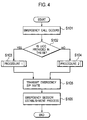
- the operations of the mobile terminal UE according to the present embodiment will be described by referring to Figs. 4 to 6 and the operations of the mobile communication system according to the present embodiment will be described by referring to Figs. 7 to 10 .
- step S101 an emergency call to be transmitted from the mobile terminal UE to the PSAP occurs.
- step S102 the mobile terminal UE determines whether a UICC is provided in the mobile terminal UE.
- step S103 When it is determined that a UICC is provided in the mobile terminal UE, the present operation proceeds to step S103 to execute the procedure 1 shown in Fig. 5 .
- step S104 When it is determined that a UICC is not provided in the mobile terminal UE, the present operation proceeds to step S104 to execute the procedure 2 shown in Fig. 6 .
- step S201 the mobile terminal UE determines whether a normal-communication location registration process for the mobile terminal UE is completed in the S-CSCF#1.
- step S202 When it is determined that the normal-communication location registration process is completed, the present operation proceeds to step S202.
- the procedure 2 shown in Fig. 6 is executed in the present operation.
- step S202 the mobile terminal UE determines whether an emergency-communication location registration process for the mobile terminal UE needs to be performed in the S-CSCF#2, based on information (determination key, for example) notified from the IP network in performing the normal-communication location registration process for the mobile terminal UE. In other words, the mobile terminal UE determines whether both of the normal-communication for the mobile terminal UE and the emergency-communication location registration process for the mobile terminal UE need to be performed in order to perform emergency-communications in the IP network.
- step S203 When it is determined that both of the normal-communication location registration process and the emergency-communication location registration process need to be performed, the present operation proceeds to step S203. When it is determined that not both of the normal-communication location registration process and the emergency-communication location registration process need to be performed, the present operation proceeds to step S105 in Fig. 4 .
- step S203 the mobile terminal UE transmits, to the P-CSCF, an emergency registration request for requesting that an emergency-communication location registration process be performed by using emergency-communication user identifiers, in order to perform the emergency-communication location registration process .
- step S204 the mobile terminal UE performs the emergency registration between the mobile terminal UE and the S-CSCF#2. Thereafter, the present operation proceeds to step S105 in Fig. 4 .
- step S301 the mobile terminal UE transmits, to the P-CSCF, an emergency registration request for requesting that the S-CSCF#2 perform an emergency-communication location registration process for the mobile terminal UE by using emergency-communication user identifiers.
- step S302 the mobile terminal UE determines whether a normal-communication location registration process for the mobile terminal UE needs to be performed in the S-CSCF#1, based on an instruction included in a response from the P-CSCF for the emergency registration request. In other words, the mobile terminal UE determines whether a normal-communication location registration process for the mobile terminal UE needs to be performed before an emergency-communication location registration process for the mobile terminal UE is performed in the IP network.
- step S303 When it is determined that the normal-communication location registration process needs to be performed, the present operation proceeds to step S303. When it is determined that the normal-communication location registration process does not need to be performed, the present operation proceeds to step S305.
- step S303 the mobile terminal UE transmits, to the P-CSCF, a normal registration request for requesting that a normal-communication location registration process be performed by using normal-communication user identifiers, in order to perform such normal-communication location registration process.
- step S304 the mobile terminal UE performs a normal-communication location registration process for the mobile terminal UE between the mobile terminal UE and the S-CSCF#1. Thereafter, the present operation proceeds to step S202 in Fig. 5 .
- the mobile terminal UE when a UICC is not provided in the mobile terminal UE, the mobile terminal UE cannot perform the normal-communication location registration process by using a normal-communication user identifier and thus cannot perform emergency-communications between the mobile terminal UE and the PSAP.
- step S305 the mobile terminal UE performs an emergency-communication location registration process for the mobile terminal UE between the mobile terminal UE and the S-CSCF#2. Thereafter, the present operation proceeds to step S105 in Fig. 4 .
- step S105 the mobile terminal UE transmits, to the P-CSCF, emergency-communication session establishment process request (Emergency SIP Invite) for requesting that an emergency-communication session establishment process be performed between the mobile terminal UE and the PSAP, in order to perform the emergency-communication session establishment process between the mobile terminal UE and the PSAP.
- emergency SIP Invite Emergency SIP Invite
- step S106 the mobile terminal UE performs the emergency-communication session establishment process between the mobile terminal UE and the PSAP, the emergency-communication session establishment process being used for emergency-communications.
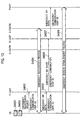
- the mobile terminal UE determines: that a UICC is provided in the mobile terminal UE in step S1001; that a normal-communication location registration process for the mobile terminal UE is completed in the S-CSCF#1 in step S1002; and that, in step S2003, not both of the normal-communication location registration process and the emergency-communication location registration process for the mobile terminal UE need to be performed, in performing the emergency-communications in the IP network.
- step S1004 the mobile terminal UE transmits, to the P-CSCF, an emergency-communication session establishment process request for requesting that an emergency-communication session establishment process (Emergency Session Establishment process) be performed between the mobile terminal UE and the PSAP by using normal-communication user identifiers, without performing an emergency-communication location registration process for the mobile terminal UE in the S-CSCF#2.
- an emergency-communication session establishment process (Emergency Session Establishment process) be performed between the mobile terminal UE and the PSAP by using normal-communication user identifiers, without performing an emergency-communication location registration process for the mobile terminal UE in the S-CSCF#2.
- step S1005 the P-CSCF forwards the received emergency-communication session establishment process request to the E-CSCF.
- step S1006 the E-CSCF forwards the received emergency-communication session establishment process request to the PSAP.
- step S1007 an emergency-communication location registration process for the mobile terminal UE is not performed in the S-CSCF#2. Nonetheless, the emergency-communication session establishment process between the mobile terminal UE and the PSAP is performed, since the normal-communication location registration process for the mobile terminal UE is completed in the S-CSCF#1.
- the mobile terminal UE can perform emergency-communications between the mobile terminal UE and the PSAP.
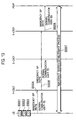
- the mobile terminal UE determines: that a UICC is provided in the mobile terminal UE in step S2001; that a normal-communication location registration process for the mobile terminal UE is completed in the S-CSCF in step S2002; and that, in step S2003, both of the normal-communication location registration process and the emergency-communication location registration process for the mobile terminal UE need to be performed in order to perform emergency-communications in the IP network.
- step S2004 the mobile terminal UE transmits, to the P-CSCF, an emergency registration request for requesting that the S-CSCF#2 perform an emergency-communication location registration process for the mobile terminal UE by using emergency-communication user identifiers.
- step S2005 in response to the emergency registration request, an emergency-communication location registration process for the mobile terminal UE is performed between the mobile terminal UE and the S-CSCF#2, by referring to the HSS.
- step S2006 the mobile terminal UE transmits, to the P-CSCF, an emergency-communication session establishment process request (Emergency SIP Invite) for requesting that an emergency-communication session establishment process be performed between the mobile terminal UE and the PSAP by using emergency-communication user identifiers, after the emergency-communication location registration process is completed.
- an emergency-communication session establishment process request (Emergency SIP Invite) for requesting that an emergency-communication session establishment process be performed between the mobile terminal UE and the PSAP by using emergency-communication user identifiers, after the emergency-communication location registration process is completed.
- step S2007 the P-CSCF forwards the received Emergency SIP Invite to the E-CSCF.
- step S2008 the E-CSCF forwards the received Emergency-communication session establishment process request to the PSAP.
- step S2009 in response to the Emergency SIP Invite, the emergency-communication session establishment process between the mobile terminal UE and the PSAP is performed between the mobile terminal UE and the PSAP.
- the mobile terminal UE can perform emergency-communications between the mobile terminal UE and the PSAP.
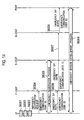
- the mobile terminal UE determines: that a UICC is provided in the mobile terminal UE in step S3001; and that a normal-communication location registration process for the mobile terminal UE is not completed in the S-CSCF#1 in step S3002.
- step S3003 the mobile terminal UE transmits, to the P-CSCF, an emergency registration request for requesting that the S-CSCF#2 perform an emergency-communication location registration process for the mobile terminal UE by using emergency-communication user identifiers.
- step S3004 in response to the emergency registration request, the P-CSCF transmits a response including an instruction indicating whether or not a normal-communication location registration process for the mobile terminal UE needs to be performed before performing an emergency-communication location registration process for the mobile terminal UE in the IP network.
- step S3005 the mobile terminal UE determines, based on the response from the P-CSCF, whether or not a normal-communication location registration process for the mobile terminal UE needs to be performed before performing an emergency-communication location registration process for the mobile terminal UE in the IP network.
- step S3006 the mobile terminal UE transmits, to the P-CSCF, a normal registration request for requesting that the S-CSCF#1 perform the normal-communication location registration process (Normal Registration process) for the mobile terminal UE by using normal-communication user identifiers.
- a normal registration request for requesting that the S-CSCF#1 perform the normal-communication location registration process (Normal Registration process) for the mobile terminal UE by using normal-communication user identifiers.
- step S3007 in response to the normal registration request, the normal-communication location registration process for the mobile terminal UE is performed between the mobile terminal UE and the S-CSCF#1 by referring to the HSS.
- step S3008 the mobile terminal UE determines whether an emergency-communication location registration process for the mobile terminal UE needs to be performed in the S-CSCF#2, based on information (determination key, for example) notified from the IP network in the normal-communication location registration process for the mobile terminal UE performed in step S3007. That is, the mobile terminal UE determines whether both of the normal-communication location registration process and the emergency-communication location registration process for the mobile terminal UE need to be performed, in performing emergency-communications in the IP network.
- step S3009 the mobile terminal UE transmits, to the P-CSCF, an Emergency-communication session establishment process request for requesting that an emergency-communication session establishment process be performed between the mobile terminal UE and the PSAP by using normal-communication user identifiers without performing an emergency-communication location registration process for the mobile terminal UE in the S-CSCF#2.
- step S3010 the P-CSCF forwards the received Emergency-communication session establishment process request to the E-CSCF.
- step S3011 the E-CSCF forwards the received Emergency-communication session establishment process request to the PSAP.
- step S3012 an emergency-communication location registration process for the mobile terminal UE is not performed in the S-CSCF#2. Nonetheless, an emergency-communication session establishment process between the mobile terminal UE and the PSAP is performed, since in the above-described IP network, the normal-communication location registration process for the mobile terminal UE is completed in the S-CSCF#1.
- the mobile terminal UE can perform emergency-communications between the mobile terminal UE and the PSAP.
- the mobile terminal UE determines: that a UICC is provided in the mobile terminal UE in step S4001; and that a normal-communication location registration process for the mobile terminal UE is not completed in the S-CSCF#1, in step S4002.
- the mobile terminal UE may determine that a UICC is not provided in the mobile terminal UE, as shown in Fig. 10 .
- step S4003 the mobile terminal UE transmits, to the P-CSCF, an emergency registration request for requesting that the S-CSCF#2 perform an emergency-communication location registration process for the mobile terminal UE by using emergency-communication user identifiers.
- step S4004 in response to the emergency registration request, the P-CSCF determines that a normal-communication location registration process for the mobile terminal UE does not need to be performed before the emergency-communication location registration process for the mobile terminal UE is performed in the IP network. Then, the emergency-communication location registration process for the mobile terminal UE is performed between the mobile terminal UE and the S-CSCF#2 by referring to the HSS.
- step S4005 the mobile terminal UE transmits, to the P-CSCF, an emergency-communication session establishment process request (Emergency SIP Invite) for requesting that an emergency-communication session establishment process be performed between the mobile terminal UE and the PSAP by using emergency-communication user identifiers after the above-described emergency-communication location registration process is completed.
- an emergency-communication session establishment process request (Emergency SIP Invite) for requesting that an emergency-communication session establishment process be performed between the mobile terminal UE and the PSAP by using emergency-communication user identifiers after the above-described emergency-communication location registration process is completed.
- step S4006 the P-CSCF forwards the received Emergency SIP Invite to the E-CSCF.
- step S4007 the E-CSCF forwards the received emergency-communication session establishment process request to the PSAP.
- step S4008 in response to the Emergency SIP Invite, the emergency-communication session establishment process between the mobile terminal UE and the PSAP is performed between the mobile terminal UE and the PSAP by referring to the HSS, although a normal-communication location registration process for the mobile terminal UE is not performed in the S-CSCF#1.
- the mobile terminal UE can perform emergency-communications between the mobile terminal UE and the PSAP.
- an emergency-communication session establishment process would be performed between the mobile terminal UE and the PSAP without performing an emergency-communication location registration process for the mobile terminal UE in the S-CSCF#2, when a normal-communication location registration process for the mobile terminal is completed in the S-CSCF#1 and it is determined that not both of the normal-communication location registration process and the emergency-communication location registration process for the mobile terminal UE need to be performed, in performing the emergency-communications in the IP network. Accordingly, time until starting emergency-communications in an IP network can be shortened.
- the mobile terminal and the mobile communication system when it is determined that both of the normal-communication location registration process and the emergency-communication location registration process for the mobile terminal UE need to be performed in performing the emergency-communications in the IP network and when a normal-communication location registration process for the mobile terminal UE is completed in the S-CSCF#1, an emergency-communication session establishment process is performed between the mobile terminal UE and the PSAP after an emergency-communication location registration process for the mobile terminal UE is performed in the S-CSCF#2.
- the mobile terminal and the mobile communication system according to the present embodiment are applicable to a conventional IP network in which both of the normal-communication location registration process and the emergency-communication location registration process for the mobile terminal UE need to be performed, in performing emergency-communications.
- the mobile terminal and the mobile communication system according to the present embodiment are applicable to the IP network according to the present invention in which not both of the normal-communication location registration process and the emergency-communication location registration process for the mobile terminal UE need to be performed in performing emergency-communications.
- the mobile terminal and mobile communication system are configured that an emergency-communication session establishment process would be performed between the mobile terminal UE and the PSAP without performing a normal-communication location registration process for the mobile terminal UE in the S-CSCF#1. Accordingly, time until starting emergency-communications in the IP network can be shortened.
- the above-described S-CSCF#1 (first call control apparatus) and the S-CSCF#2 (second call control apparatus) are provided in the same apparatus (S-CSCF).
- step S501 an emergency call to be performed from the mobile terminal UE to the PSAP occurs.
- step S102 the mobile terminal UE determines whether a UICC is provided in the mobile terminal UE.
- step S503 When it is determined that a UICC is provided in the mobile terminal UE, the present operation proceeds to step S503 to execute the procedure 1. When it is determined that a UICC is not provided in the mobile terminal UE, the present operation proceeds to step S504.
- the mobile terminal UE determines whether or not the mobile terminal UE is located in a Home network or in a visited network, by using information acquired from an IP network in performing, for example, a GPRS (General Packet Radio Service) attach process (registration process for GPRS) or I-WLAN attach process (registration process for I-WLAN), based on information notified from the IP network in performing a registration process in the IP network.
- GPRS General Packet Radio Service
- I-WLAN attach process registration process for I-WLAN
- step S602. When it is determined that the mobile terminal UE is located in the Home network, the present operation proceeds to step S603.
- step S602 the mobile terminal UE determines whether a normal-communication location registration process for the mobile terminal UE is completed in the S-CSCF#1.
- step S504 the normal-communication location registration process for the mobile terminal UE is completed.
- step S603 the mobile terminal UE transmits, to the P-CSCF, an emergency registration request for requesting that an emergency-communication location registration process be performed by using emergency-communication user identifiers, in order to perform the emergency-communication location registration process.
- step S604 after the mobile terminal UE performs the emergency registration between the mobile terminal UE and the S-CSCF#2, the present operation proceeds to step S504 in Fig. 11 .
- the mobile terminal UE determines whether an emergency-communication location registration process for the mobile terminal UE needs to be performed in the S-CSCF#2 based on information (determination key, for example) notified from the IP network in performing the registration process for the mobile terminal UE in the IP network. In other words, the mobile terminal UE determines whether both of the normal-communication location registration process and the emergency-communication location registration process for the mobile terminal UE need to be performed in performing the emergency-communications in the IP network.
- the mobile terminal UE determines that not both of the normal-communication location registration process and the emergency-communication location registration process for the mobile terminal UE need to be performed in performing the emergency-communications in the IP network.
- the mobile terminal UE determines that both of the normal-communication location registration process and the emergency-communication location registration process for the mobile terminal UE need to be performed in performing the emergency-communications in the IP network.
- step S504 the mobile terminal UE transmits, to the P-CSCF, an emergency-communication session establishment process request (Emergency SIP Invite) for requesting that an emergency-communication session establishment process be performed between the mobile terminal UE and the PSAP, in order to perform an emergency-communication session establishment process used for emergency-communications between the mobile terminal UE and the PSAP.
- an emergency-communication session establishment process request (Emergency SIP Invite) for requesting that an emergency-communication session establishment process be performed between the mobile terminal UE and the PSAP, in order to perform an emergency-communication session establishment process used for emergency-communications between the mobile terminal UE and the PSAP.
- step S505 the mobile terminal UE performs the emergency-communication session establishment process used for emergency-communications between the mobile terminal UE and the PSAP.
- the mobile terminal UE determines: that a UICC is provided in the mobile terminal UE in step S5001; that the mobile terminal UE is located in the Home network in step S5002; and that a normal-communication location registration process for the mobile terminal UE is completed in step S5003.
- step S5004 the mobile terminal UE transmits, to the P-CSCF, an emergency-communication session establishment process request (Emergency SIP Invite) for requesting that an emergency-communication session establishment process (Emergency Session Establishment process) be performed between the mobile terminal UE and the PSAP by using normal-communication user identifiers without performing an emergency-communication location registration process for the mobile terminal UE in the S-CSCF#2.
- an emergency-communication session establishment process request Emergency SIP Invite
- Emergency Session Establishment process Emergency Session Establishment process
- step S5005 the P-CSCF forwards the received Emergency-communication session establishment process request to the E-CSCF.
- step S5006 the E-CSCF forwards the received Emergency-communication session establishment process request to the PSAP.
- step S5007 an emergency-communication location registration process for the mobile terminal UE is not performed in the S-CSCF#2 in the above-described IP network. Nonetheless, an emergency-communication session establishment process between the mobile terminal UE and the PSAP is performed, since the normal-communication location registration process for the mobile terminal UE is completed in the S-CSCF#1.
- the mobile terminal UE can perform emergency-communications between the mobile terminal UE and the PSAP.
- the mobile terminal UE determines: that a UICC is provided in the mobile terminal UE in step S6001; that the mobile terminal UE is located in the Home network in step S6002; and that a normal-communication location registration process for the mobile terminal UE is not completed in step S6003.
- step S6004 the mobile terminal UE transmits, to the P-CSCF, an emergency registration request for requesting that the S-CSCF#2 perform an emergency-communication location registration process for the mobile terminal UE by using emergency-communication user identifiers.
- step S6005 in response to the emergency registration request, the emergency-communication location registration process for the mobile terminal UE is performed between the mobile terminal UE and the S-CSCF#2 by referring to the HSS.
- step S6006 the mobile terminal UE transmits, to the P-CSCF, an emergency-communication session establishment process request (Emergency SIP Invite) for requesting that an emergency-communication session establishment process be performed between the mobile terminal UE and the PSAP by using emergency-communication user identifier, after the emergency-communication location registration process is completed.
- an emergency-communication session establishment process request (Emergency SIP Invite) for requesting that an emergency-communication session establishment process be performed between the mobile terminal UE and the PSAP by using emergency-communication user identifier, after the emergency-communication location registration process is completed.
- step S6007 the P-CSCF forwards the received Emergency SIP Invite to the E-CSCF.
- step S6008 the E-CSCF forwards the received Emergency-communication session establishment process request to the PSAP.
- step S6009 in response to the Emergency SIP Invite, an emergency-communication session establishment process between the mobile terminal UE and the PSAP is performed between the mobile terminal UE and the PSAP.
- the mobile terminal UE can perform emergency-communications between the mobile terminal UE and the PSAP.
- the mobile terminal UE determines: that a UICC is provided in the mobile terminal UE in step S7001; and that the mobile terminal UE is not located in the Home network in step S7002.
- step S7003 the mobile terminal UE transmits, to the P-CSCF, an emergency registration request for requesting that the S-CSCF#2 perform an emergency-communication location registration process for the mobile terminal UE by using emergency-communication user identifiers.
- step S7004 in response to the emergency registration request, an emergency-communication location registration process for the mobile terminal UE is performed between the mobile terminal UE and S-CSCF#2 by referring to the HSS.
- step S7005 the mobile terminal UE transmits, to the P-CSCF, an Emergency-communication session establishment process request for requesting that an emergency-communication session establishment process be performed between the mobile terminal UE and the PSAP by using a user normal-communication user identifier without performing an emergency-communication location registration process for the mobile terminal UE in the S-CSCF#2.
- step S7006 the P-CSCF forwards the received Emergency-communication session establishment process request to the E-CSCF.
- step S7007 the E-CSCF forwards the received Emergency-communication session establishment process request to the PSAP.
- step S7008 in the above-described IP network, an emergency-communication location registration process for the mobile terminal UE is not performed in the S-CSCF#2. Nonetheless, an emergency-communication session establishment process between the mobile terminal UE and the PSAP is performed, since the normal-communication location registration process for the mobile terminal UE is completed in the S-CSCF#1.
- the mobile terminal UE can perform emergency-communications between the mobile terminal UE and the PSAP.
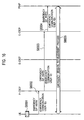
- the mobile terminal UE determines, in step S8001, that a UICC is not provided in the mobile terminal UE.
- step S8002 the mobile terminal UE transmits, to the P-CSCF, an emergency-communication session establishment process request (Emergency SIP Invite) for requesting that an emergency-communication session establishment process be performed between the mobile terminal UE and the PSAP by using emergency-communication user identifiers.
- an emergency-communication session establishment process request (Emergency SIP Invite) for requesting that an emergency-communication session establishment process be performed between the mobile terminal UE and the PSAP by using emergency-communication user identifiers.
- step S8003 the P-CSCF forwards the received Emergency SIP Invite to the E-CSCF.
- step S8004 the E-CSCF forwards the received Emergency-communication session establishment process request to the PSAP.
- step S8005 a normal-communication location registration process for the mobile terminal UE is not performed in the S-CSCF#1. Nonetheless, an emergency-communication session establishment process between the mobile terminal UE and the PSAP is performed between the mobile terminal UE and the PSAP by referring to the HSS in response to the Emergency SIP Invite.
- the mobile terminal UE can perform emergency-communications.
- the present invention can provide a mobile terminal and a mobile communication system, which can shorten a time until starting an emergency-communication in an IP network.
Landscapes
- Engineering & Computer Science (AREA)
- Computer Networks & Wireless Communication (AREA)
- Signal Processing (AREA)
- Multimedia (AREA)
- Business, Economics & Management (AREA)
- General Business, Economics & Management (AREA)
- Health & Medical Sciences (AREA)
- Emergency Management (AREA)
- Environmental & Geological Engineering (AREA)
- Public Health (AREA)
- Mobile Radio Communication Systems (AREA)
- Telephonic Communication Services (AREA)
Applications Claiming Priority (2)
| Application Number | Priority Date | Filing Date | Title |
|---|---|---|---|
| JP2006128714 | 2006-05-02 | ||
| PCT/JP2007/059314 WO2007126100A1 (ja) | 2006-05-02 | 2007-05-01 | 移動端末及び移動通信システム |
Publications (2)
| Publication Number | Publication Date |
|---|---|
| EP2018075A1 true EP2018075A1 (de) | 2009-01-21 |
| EP2018075A4 EP2018075A4 (de) | 2013-10-16 |
Family
ID=38655621
Family Applications (1)
| Application Number | Title | Priority Date | Filing Date |
|---|---|---|---|
| EP07742749.0A Withdrawn EP2018075A4 (de) | 2006-05-02 | 2007-05-01 | Mobiles endgerät und mobilkommunikationssystem |
Country Status (8)
| Country | Link |
|---|---|
| US (1) | US8150366B2 (de) |
| EP (1) | EP2018075A4 (de) |
| JP (1) | JP4744599B2 (de) |
| KR (1) | KR101016358B1 (de) |
| CN (1) | CN101444117B (de) |
| BR (1) | BRPI0711170A2 (de) |
| RU (2) | RU2423022C2 (de) |
| WO (1) | WO2007126100A1 (de) |
Cited By (1)
| Publication number | Priority date | Publication date | Assignee | Title |
|---|---|---|---|---|
| CN102055744A (zh) * | 2009-11-06 | 2011-05-11 | 中兴通讯股份有限公司 | 一种ip多媒体子系统紧急呼叫业务的实现系统及方法 |
Families Citing this family (13)
| Publication number | Priority date | Publication date | Assignee | Title |
|---|---|---|---|---|
| US8630644B2 (en) * | 2006-09-14 | 2014-01-14 | Apple Inc. | Circuit bearer control |
| JP4915268B2 (ja) | 2006-12-22 | 2012-04-11 | 株式会社エクォス・リサーチ | 車両用制御装置 |
| US7991382B1 (en) | 2007-11-08 | 2011-08-02 | Sprint Spectrum L.P. | Method for communicating indoor location to an emergency service system |
| CN101911773B (zh) * | 2008-01-16 | 2013-12-04 | 阿尔卡特朗讯美国公司 | 用于有限目的的接入网络 |
| US20090207843A1 (en) * | 2008-02-15 | 2009-08-20 | Andreasen Flemming S | System and method for providing network address translation control in a network environment |
| JP5251394B2 (ja) * | 2008-09-22 | 2013-07-31 | 日本電気株式会社 | 通信システムおよび呼制御方法 |
| US8661097B2 (en) * | 2008-10-10 | 2014-02-25 | Telefonaktiebolaget Lm Ericsson (Publ) | Service node, control method thereof, user node, and control method thereof |
| WO2010086012A1 (en) * | 2009-01-27 | 2010-08-05 | Telefonaktiebolaget Lm Ericsson (Publ) | Emergency call handling |
| US9215588B2 (en) | 2010-04-30 | 2015-12-15 | Cisco Technology, Inc. | System and method for providing selective bearer security in a network environment |
| JP5653714B2 (ja) * | 2010-10-27 | 2015-01-14 | 株式会社Nttドコモ | 移動通信端末 |
| US8923802B2 (en) | 2011-05-11 | 2014-12-30 | Qualcomm Incorporated | Home network roaming management for eCall-only subscribers |
| JP5681772B1 (ja) * | 2013-09-24 | 2015-03-11 | 株式会社Nttドコモ | Ipマルチメディアサブシステム、プロキシセッション制御装置及び通信制御方法 |
| WO2018194125A1 (ja) * | 2017-04-21 | 2018-10-25 | 京セラ株式会社 | 無線通信機器およびその制御方法 |
Family Cites Families (15)
| Publication number | Priority date | Publication date | Assignee | Title |
|---|---|---|---|---|
| US5864755A (en) * | 1996-06-11 | 1999-01-26 | Siemens Business Communication Systems, Inc. | Method for allowing a mobile phone to receive a call through a wireless network for which it is not registered, for emergency purposes |
| DE69819337T2 (de) * | 1997-08-19 | 2004-07-22 | Siemens Vdo Automotive Corp., Auburn Hills | Fahrzeuginformationssystem |
| US6240284B1 (en) * | 1998-11-06 | 2001-05-29 | Telefonaktiebolaget L M Ericsson (Publ) | System and method of handling emergency calls from roaming mobile stations in a radio telecommunications network |
| CN1381125A (zh) * | 1999-12-07 | 2002-11-20 | 诺基亚公司 | 在移动ip网络中根据主叫者位置进行呼叫路由选择的方法与系统 |
| WO2001072081A1 (en) * | 2000-03-23 | 2001-09-27 | Siemens Mobile Communications S.P.A. | Handover procedures in a radio communication system |
| US7623447B1 (en) * | 2000-04-10 | 2009-11-24 | Nokia Corporation | Telephony services in mobile IP networks |
| EP1386510B1 (de) * | 2001-04-27 | 2013-04-17 | Nokia Corporation | Verfahren und system zum aufbauen einer notfallsitzung in abnormalen fällen |
| PT1386509E (pt) * | 2001-04-27 | 2010-07-27 | Nokia Corp | TERMINAL DE UTILIZADOR, ELEMENTO DE REDE E MéTODO E SISTEMA DE COMUNICAÃO PARA O ESTABELECIMENTO DE UMA SESSO DE EMERGNCIA |
| CN1625914B (zh) * | 2002-05-06 | 2010-12-08 | 诺基亚公司 | 在通信网络中处理特定类型会话的系统和方法 |
| DE10394237D2 (de) * | 2003-02-25 | 2006-01-19 | Siemens Ag | Verfahren zur Sparierung von zu spezifischen Gruppen zuordenbaren IP-Paketen und das entsprechende IP-Paket |
| US7324801B2 (en) * | 2003-03-06 | 2008-01-29 | Motorola, Inc. | Emergency call-back for a wireless communication device equipped with a user removable module |
| WO2005039227A1 (en) * | 2003-10-17 | 2005-04-28 | Nortel Networks Limited | Method for obtaining location information for emergency services in wireless multimedia networks |
| WO2006078202A1 (en) * | 2005-01-19 | 2006-07-27 | Telefonktiebolaget Lm Ericsson (Publ) | A method and apparatus for handling emergency calls |
| US10178522B2 (en) * | 2005-08-02 | 2019-01-08 | Qualcomm Incorporated | VoIP emergency call support |
| DE102006019719A1 (de) | 2006-04-27 | 2007-10-31 | Siemens Ag | Vereinfachtes Verfahren zur IMS Registrierung bei Notrufen |
-
2007
- 2007-05-01 KR KR20087027787A patent/KR101016358B1/ko active Active
- 2007-05-01 US US12/299,402 patent/US8150366B2/en active Active
- 2007-05-01 WO PCT/JP2007/059314 patent/WO2007126100A1/ja not_active Ceased
- 2007-05-01 EP EP07742749.0A patent/EP2018075A4/de not_active Withdrawn
- 2007-05-01 JP JP2008513318A patent/JP4744599B2/ja active Active
- 2007-05-01 BR BRPI0711170-3A patent/BRPI0711170A2/pt not_active Application Discontinuation
- 2007-05-01 RU RU2008146847A patent/RU2423022C2/ru active
- 2007-05-01 CN CN2007800160742A patent/CN101444117B/zh active Active
-
2011
- 2011-03-21 RU RU2011110362/07A patent/RU2522998C2/ru active
Cited By (1)
| Publication number | Priority date | Publication date | Assignee | Title |
|---|---|---|---|---|
| CN102055744A (zh) * | 2009-11-06 | 2011-05-11 | 中兴通讯股份有限公司 | 一种ip多媒体子系统紧急呼叫业务的实现系统及方法 |
Also Published As
| Publication number | Publication date |
|---|---|
| RU2008146847A (ru) | 2010-06-10 |
| BRPI0711170A2 (pt) | 2011-08-23 |
| US8150366B2 (en) | 2012-04-03 |
| RU2522998C2 (ru) | 2014-07-20 |
| RU2423022C2 (ru) | 2011-06-27 |
| JP4744599B2 (ja) | 2011-08-10 |
| RU2011110362A (ru) | 2012-09-27 |
| WO2007126100A1 (ja) | 2007-11-08 |
| KR20090023568A (ko) | 2009-03-05 |
| US20090270066A1 (en) | 2009-10-29 |
| KR101016358B1 (ko) | 2011-02-21 |
| JPWO2007126100A1 (ja) | 2009-09-17 |
| CN101444117B (zh) | 2011-11-23 |
| CN101444117A (zh) | 2009-05-27 |
| EP2018075A4 (de) | 2013-10-16 |
Similar Documents
| Publication | Publication Date | Title |
|---|---|---|
| EP2018075A1 (de) | Mobiles endgerät und mobilkommunikationssystem | |
| AU2011374206B2 (en) | Methods and apparatuses for enabling an Single Radio Voice Call Continuity (SRVCC) access transfer of an emergency call back session | |
| EP2266282B1 (de) | Vorrichtung, verfahren, system und programm zur kommunikation | |
| US20100014508A1 (en) | Method And System For Emergency Call | |
| US20100208671A1 (en) | Communication system, user equipment registration method, switching device and user equipment registration system | |
| EP2677782A1 (de) | Mobilkommunikationsverfahren und anrufsitzungssteuerknoten | |
| EP2833656B1 (de) | Verfahren zur verarbeitung von notrufen und kommunikationsvorrichtungen damit | |
| US8335485B2 (en) | Call routing | |
| US8996673B2 (en) | Emergency signalling in an IP multimedia subsystem network | |
| EP2752039B1 (de) | Verfahren und vorrichtung zur bestimmung der netzwerkunterstützung für andere medien während ims-notrufsitzungen | |
| US12041200B2 (en) | Emergency call handling in a telecommunications network | |
| US20150215756A1 (en) | Mobile communication system, call control device, mobile station, and mobile communication method | |
| WO2013160465A2 (en) | Enhanced emergency service calls | |
| US9560509B2 (en) | Emergency signalling in an IP multimedia subsystem network |
Legal Events
| Date | Code | Title | Description |
|---|---|---|---|
| PUAI | Public reference made under article 153(3) epc to a published international application that has entered the european phase |
Free format text: ORIGINAL CODE: 0009012 |
|
| 17P | Request for examination filed |
Effective date: 20081118 |
|
| AK | Designated contracting states |
Kind code of ref document: A1 Designated state(s): AT BE BG CH CY CZ DE DK EE ES FI FR GB GR HU IE IS IT LI LT LU LV MC MT NL PL PT RO SE SI SK TR |
|
| AX | Request for extension of the european patent |
Extension state: AL BA HR MK RS |
|
| RAP1 | Party data changed (applicant data changed or rights of an application transferred) |
Owner name: NTT DOCOMO, INC. |
|
| RBV | Designated contracting states (corrected) |
Designated state(s): DE GB |
|
| DAX | Request for extension of the european patent (deleted) | ||
| A4 | Supplementary search report drawn up and despatched |
Effective date: 20130918 |
|
| RIC1 | Information provided on ipc code assigned before grant |
Ipc: H04W 4/22 20090101ALI20130912BHEP Ipc: H04W 76/02 20090101AFI20130912BHEP Ipc: H04L 29/06 20060101ALI20130912BHEP |
|
| 17Q | First examination report despatched |
Effective date: 20161108 |
|
| RIC1 | Information provided on ipc code assigned before grant |
Ipc: H04W 76/10 20180101AFI20180413BHEP Ipc: H04W 76/50 20180101ALI20180413BHEP |
|
| GRAP | Despatch of communication of intention to grant a patent |
Free format text: ORIGINAL CODE: EPIDOSNIGR1 |
|
| INTG | Intention to grant announced |
Effective date: 20180606 |
|
| STAA | Information on the status of an ep patent application or granted ep patent |
Free format text: STATUS: THE APPLICATION IS DEEMED TO BE WITHDRAWN |
|
| 18D | Application deemed to be withdrawn |
Effective date: 20181017 |