EP2018812A1 - Farine de poisson inhibant l'oxydation et son procédé de production - Google Patents
Farine de poisson inhibant l'oxydation et son procédé de production Download PDFInfo
- Publication number
- EP2018812A1 EP2018812A1 EP07742893A EP07742893A EP2018812A1 EP 2018812 A1 EP2018812 A1 EP 2018812A1 EP 07742893 A EP07742893 A EP 07742893A EP 07742893 A EP07742893 A EP 07742893A EP 2018812 A1 EP2018812 A1 EP 2018812A1
- Authority
- EP
- European Patent Office
- Prior art keywords
- fish meal
- distillate
- ascorbic acid
- vegetable oil
- oil distillation
- Prior art date
- Legal status (The legal status is an assumption and is not a legal conclusion. Google has not performed a legal analysis and makes no representation as to the accuracy of the status listed.)
- Withdrawn
Links
Images



Classifications
-
- A—HUMAN NECESSITIES
- A23—FOODS OR FOODSTUFFS; TREATMENT THEREOF, NOT COVERED BY OTHER CLASSES
- A23K—FODDER
- A23K20/00—Accessory food factors for animal feeding-stuffs
- A23K20/10—Organic substances
-
- A—HUMAN NECESSITIES
- A23—FOODS OR FOODSTUFFS; TREATMENT THEREOF, NOT COVERED BY OTHER CLASSES
- A23K—FODDER
- A23K10/00—Animal feeding-stuffs
- A23K10/20—Animal feeding-stuffs from material of animal origin
- A23K10/22—Animal feeding-stuffs from material of animal origin from fish
-
- A—HUMAN NECESSITIES
- A23—FOODS OR FOODSTUFFS; TREATMENT THEREOF, NOT COVERED BY OTHER CLASSES
- A23K—FODDER
- A23K20/00—Accessory food factors for animal feeding-stuffs
- A23K20/10—Organic substances
- A23K20/158—Fatty acids; Fats; Products containing oils or fats
-
- A—HUMAN NECESSITIES
- A23—FOODS OR FOODSTUFFS; TREATMENT THEREOF, NOT COVERED BY OTHER CLASSES
- A23K—FODDER
- A23K20/00—Accessory food factors for animal feeding-stuffs
- A23K20/10—Organic substances
- A23K20/174—Vitamins
-
- A—HUMAN NECESSITIES
- A23—FOODS OR FOODSTUFFS; TREATMENT THEREOF, NOT COVERED BY OTHER CLASSES
- A23L—FOODS, FOODSTUFFS OR NON-ALCOHOLIC BEVERAGES, NOT OTHERWISE PROVIDED FOR; PREPARATION OR TREATMENT THEREOF
- A23L17/00—Food-from-the-sea products; Fish products; Fish meal; Fish-egg substitutes; Preparation or treatment thereof
- A23L17/10—Fish meal or powder; Granules, agglomerates or flakes
Definitions
- the present invention relates to an antioxidation formulation for fish meal.
- the present invention relates to a fish meal having suppressed oxidation due to addition of an antioxidation composition.
- the rate of oxidation of fish meal increases at high temperatures. When this oxidation is severe, it is accompanied by heat generation, and such heat generation is said to result even in spontaneous combustion.
- international agreements actually require the addition of ethoxyquin to imported fish meal.
- the total added amount of effective ingredient in the final feed is less than or equal to 150 g/metric ton.
- the added amount in the fish meal and the like i.e. feed raw material
- the total amount of the respective effective ingredients must be indicated in percentage units.
- Vegetable oil distillation-deodorizing distillate is a distillate material that is generated by the deodorization process (steam distillation) of a vegetable oil such as soybean oil, rapeseed oil, and the like; and this material is also called oil sludge or oil dregs. Although this distillate is generated at a rate of about 0.15 to 0.45 percent relative to the oil, the amount of distillate and composition proportions vary according to deodorizing conditions.
- the general composition proportions of soybean distillate are shown in Table 1 (non-patent literature citation 1). Soybean distillate is used as a source of tocopherol, sterols, vitamin K1, and the like.
- the problem for the present invention is to provide an antioxidation formulation for fish meal that has high safety due to derivation from natural substances, that is inexpensive, and that has an effect at least equivalent to that of ethoxyquin.
- the gist of the present invention is the following:
- the antioxidation formulation of the present invention further combines ascorbic acid with the vegetable oil distillation-deodorizing distillate that is highly safe due to origination from natural substances.
- this antioxidation formulation is added to fish meal, an antioxidation effect is displayed that is at least equivalent to that of the synthetic antioxidant ethoxyquin. Oxidation of fish meal is suppressed by use of the antioxidation composition during preservation and distribution.
- Fish meal is produced by boiling of landed fish, separating out water and oil by use of a press, and then drying. This fish meal is generally called “fish meal” but alternatively is simply called “meal”. Normally fish meal is dried to a moisture content of less than or equal to 10%, and then the fish meal is distributed at room temperature.
- fish meal many fish species are used as the raw material of fish meal, such as horse mackerel (from Chile, Peru, or Russia), true sardine (from Peru or Chile), various other sardines (from Morocco, Chile, Peru, China, or South Africa), mackerel (from Peru or China), herring (from Norway, Russia, or Iceland), capelin smelt (from Iceland), sand eel (from Denmark), various types of codfish (from Norway, United States, or Russia), and Antarctic krill (from the Antarctic Ocean).
- fish meal was produced many years ago in Japan from sardines and the like, most fish meal now is imported, and fish meal from anchovies and mackerel caught in South America of Peru or Chile is being imported as a main raw material for feed.
- the vegetable oil distillation-deodorizing distillate used in the present invention is a residual material generated during the deodorizing process (steam distillation) of the production process of a vegetable oil such as soybean oil, rapeseed oil, and the like.
- Vegetable oil is oil that is extracted from an oil containing seed, and this vegetable oil is exemplified by soybean oil, rapeseed oil, sesame seed oil, cotton seed oil, olive oil, corn oil, rice bran oil, safflower oil, sunflower oil, and the like.
- the obtained soybean oil (raw oil) contains phospholipids, free fatty acid, pigment, vitamins, sterols, hydrocarbons, trace metals, odorous ingredients, and the like.
- the refining process is generally performed as degumming, deacidification, decoloration, and deodorization with the goal of removing these ingredients.
- the deodorization step is the final step. During the deodorization step, steam is blown into oil heated to a high temperature under a high vacuum to remove the odorous ingredients within the oil. Simultaneous with this step, other ingredients are also removed, such as free fatty acids, glycerides (monoacylglycerol and diacylglycerol), sterols, hydrocarbons, tocopherol, and the like.
- the deodorization conditions are 200°C to 260°C, 3 to 10 mm Hg vacuum pressure, and 1 to 5 percent steam feed.
- the distillate substance produced in this deodorization step is called the “distillate” (also called “sludge” or “oil dregs”).
- This distillate contains vitamin E (tocopherol), sterols, and fatty acids as main ingredients and additionally contains many trace ingredients distilled under the deodorization conditions of the oil.
- the main antioxidation substance of the distillate is tocopherol.
- joint use with ascorbic acid is not found to be effective when tocopherol is concentrated by removal of fatty acids and the like by steam distillation of the distillate. Other ingredients present in the distillate are needed, not tocopherol alone.
- the added amount of the distillate is preferably 10 to 10000 ppm in the fish meal, and this amount is more preferably 50 to 1000 ppm. Since the distillate is a natural material that is thought to be highly safe, except for the problem of cost, the upper limit of distillate content is substantially of no particular importance. The amount of distillate is adjusted appropriately according to storage time interval, storage conditions, and the like of the fish meal. The distillate may also be used as a blend of multiple types, such as soybean distillate and rapeseed distillate.
- the ascorbic acid, ascorbic acid salt, or ascorbic acid ester used in the present invention is exemplified by ascorbic acid, ascorbic acid esters (such as ascorbyl palmitate, ascorbyl stearate, and the like), and ascorbic acid salts (such as sodium ascorbate and the like).
- this added amount expressed as ascorbic acid, is preferably 10 to 10000 ppm (wt./wt.), and this added amount is particularly preferably 50 to 1000 ppm.
- any method may be used as the method of addition of the antioxidation composition of the present invention to the fish meal, such as a method of direct spraying on the fish meal during continuous production, or a method of addition into batches thereof, then stirring.
- An alternative method that may be used adds the antioxidation composition of the present invention dissolved in a solution of ethanol and the like, and thereafter dries the fish meal, and another method that may be used adds the antioxidation composition of the present invention directly or in the form of an emulsion after dissolving in an oily liquid.
- the time of addition may be during the meal production process and the like, generally the time of addition is before or after the drying step.
- other antioxidant substances may be further added to the antioxidation formulation of the present invention, use of the smallest amount of antioxidant possible is preferred from the standpoint of safety.
- feed in the present invention means a feed such as an aquaculture feed, farm animal feed, pet food, and the like that uses fish meal as a raw material.
- feeds that have a high fish meal content
- the content of fish meal-derived antioxidant becomes high in proportion to the amount of utilized fish meal, and thus supplying of a safe feed becomes possible by use of the antioxidation formulation of the present invention.
- the utilized soybean distillate had an acid value of 73.3 and a vitamin E content of 15.6%.
- the utilized ascorbyl palmitate (referred to hereinafter as AP) was special reagent grade (purity greater than or equal to 99%).
- the utilized ethoxyquin was a reagent of 75% purity (Sigma-Aldrich Corp. reagent grade).
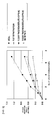
- Results of storage are shown in Table 1 for mackerel meal to which 100 ppm of ethoxyquin, 641 ppm soybean distillate (100 ppm VE as content), and 641 ppm soybean distillate (100 ppm as VE content) plus 100 ppm AP, respectively, had been added.
- FIG. 2 shows the results of performance of a storage experiment in the same manner as during working example 1 using a meal that contained 100 ppm (as VE content) of added soybean distillate refined product and 100 ppm of added AP. From these results, it is understood that the synergistic effect disappears due to combination of AP with tocopherol-concentrated refined soybean distillate. It is understood that the synergistic effect of combined use with AP is peculiar to the soybean distillate.
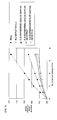
- FIG. 3 shows results of performance of storage experiments using meal prepared by addition of an antioxidation composition that combined soybean distillate and ascorbic acid by the same method as that of working example 1. From these results, it is understood that there is also a synergistic effect when soybean distillate is combined with ascorbic acid in place of AP.
- Antioxidant substance was added to fish oil (crude sardine oil), which is the substance that is most readily oxidized among the substances contained in meal, and storage testing was performed at 37°C. Results are shown in FIG. 4 . From these results, it is understood that the combination of soybean distillate and AP has no effect on fish oil, and it is understood that the synergistic effect of soybean distillate and AP is characteristic of meal.
- fish oil crude sardine oil
- meal was prepared by addition of an antioxidation composition combining rapeseed distillate and ascorbic acid or ascorbyl palmitate. Results of performance of storage testing are shown in FIG. 5 . From these results, it is understood that there is a synergistic effect also when using rapeseed distillate in place of soybean distillate.
- the present invention is capable of providing fish meal that has excellent oxidation stability without problems from the standpoint of safety.
- the present invention increases the oxidation stability of fish meal by combination with an inexpensive antioxidant substance. As a result, feed can be produced without use of a synthetic antioxidant that would have been undesirable from the standpoint of safety.
Landscapes
- Life Sciences & Earth Sciences (AREA)
- Chemical & Material Sciences (AREA)
- Polymers & Plastics (AREA)
- Engineering & Computer Science (AREA)
- Zoology (AREA)
- Food Science & Technology (AREA)
- Animal Husbandry (AREA)
- Marine Sciences & Fisheries (AREA)
- Health & Medical Sciences (AREA)
- Nutrition Science (AREA)
- Biomedical Technology (AREA)
- Biotechnology (AREA)
- Molecular Biology (AREA)
- Physiology (AREA)
- Fodder In General (AREA)
- Fats And Perfumes (AREA)
Applications Claiming Priority (3)
| Application Number | Priority Date | Filing Date | Title |
|---|---|---|---|
| JP2006134832 | 2006-05-15 | ||
| JP2006173610 | 2006-06-23 | ||
| PCT/JP2007/059458 WO2007132688A1 (fr) | 2006-05-15 | 2007-05-07 | Farine de poisson inhibant l'oxydation et son procédé de production |
Publications (2)
| Publication Number | Publication Date |
|---|---|
| EP2018812A1 true EP2018812A1 (fr) | 2009-01-28 |
| EP2018812A4 EP2018812A4 (fr) | 2011-01-19 |
Family
ID=38693786
Family Applications (1)
| Application Number | Title | Priority Date | Filing Date |
|---|---|---|---|
| EP07742893A Withdrawn EP2018812A4 (fr) | 2006-05-15 | 2007-05-07 | Farine de poisson inhibant l'oxydation et son procédé de production |
Country Status (3)
| Country | Link |
|---|---|
| EP (1) | EP2018812A4 (fr) |
| JP (1) | JPWO2007132688A1 (fr) |
| WO (1) | WO2007132688A1 (fr) |
Cited By (1)
| Publication number | Priority date | Publication date | Assignee | Title |
|---|---|---|---|---|
| WO2019038161A1 (fr) * | 2017-08-25 | 2019-02-28 | Dsm Ip Assets B.V. | Nouvelle formulation |
Families Citing this family (2)
| Publication number | Priority date | Publication date | Assignee | Title |
|---|---|---|---|---|
| WO2009102019A1 (fr) * | 2008-02-13 | 2009-08-20 | National University Corporation Tokyo University Of Marine Science And Technology | Composition antioxydante pour matière première |
| JP5662178B2 (ja) * | 2011-01-26 | 2015-01-28 | 築野食品工業株式会社 | 抗酸化組成物 |
Family Cites Families (5)
| Publication number | Priority date | Publication date | Assignee | Title |
|---|---|---|---|---|
| JPH066041B2 (ja) * | 1985-10-08 | 1994-01-26 | 理研ビタミン株式会社 | 冷凍すり身添加剤 |
| JP2568107B2 (ja) * | 1988-05-19 | 1996-12-25 | メルシャン株式会社 | 酸化しにくい魚粉、荒粕及び飼料 |
| JP2004018678A (ja) * | 2002-06-17 | 2004-01-22 | Ikeda Shokken Kk | ステロール脂肪酸エステル組成物及び該組成物を含有する食品 |
| CA2506611A1 (fr) * | 2002-11-22 | 2004-06-10 | Nippon Suisan Kaisha Ltd. | Composition d'application externe contenant un acide gras poly-insature ou son sel ou sa forme ester |
| JP2007022968A (ja) * | 2005-07-19 | 2007-02-01 | Oji Paper Co Ltd | 下痢改善剤および下痢予防剤 |
-
2007
- 2007-05-07 WO PCT/JP2007/059458 patent/WO2007132688A1/fr not_active Ceased
- 2007-05-07 EP EP07742893A patent/EP2018812A4/fr not_active Withdrawn
- 2007-05-07 JP JP2008515491A patent/JPWO2007132688A1/ja active Pending
Cited By (2)
| Publication number | Priority date | Publication date | Assignee | Title |
|---|---|---|---|---|
| WO2019038161A1 (fr) * | 2017-08-25 | 2019-02-28 | Dsm Ip Assets B.V. | Nouvelle formulation |
| CN111065279A (zh) * | 2017-08-25 | 2020-04-24 | 帝斯曼知识产权资产管理有限公司 | 新配方 |
Also Published As
| Publication number | Publication date |
|---|---|
| JPWO2007132688A1 (ja) | 2009-09-24 |
| WO2007132688A1 (fr) | 2007-11-22 |
| EP2018812A4 (fr) | 2011-01-19 |
Similar Documents
| Publication | Publication Date | Title |
|---|---|---|
| US5077069A (en) | Composition of natural antioxidants for the stabilization of polyunsaturated oils | |
| JP5726438B2 (ja) | 加熱調理用食用油脂およびその製造方法 | |
| Maqsood et al. | Extraction, processing, and stabilization of health-promoting fish oils | |
| US9301536B2 (en) | Antioxidant composition for marine oils comprising tocopherol, rosemary extract, ascorbic acid and green tea extract | |
| CA2854178C (fr) | Huile contenant un acide gras polyinsature stable vis-a-vis de l'oxydation | |
| EP3290499B1 (fr) | Procédé permettant de fabriquer une matière grasse contenant des acides gras polyinsaturés à longue chaîne | |
| JPWO2004048496A1 (ja) | 酸化安定性が向上された二重結合を有する有機物を含有する組成物 | |
| AU9178191A (en) | Composition of natural antioxidants for the stabilization of polyunsaturated oils | |
| Oterhals et al. | Impact of extraction, refining and concentration stages on the stability of fish oil | |
| EP4082350B1 (fr) | Méthode de fabrication d'une huile/graisse comestible à teneur réduite en glycidol et en esters d'acide gras de glycidol | |
| KR20140116482A (ko) | Dha 및 epa를 포함하는 유기 유화액 | |
| EP3213640B1 (fr) | Matière grasse contenant des acides gras polyinsaturés à longue chaîne et aliments en comprenant | |
| JP2006028466A (ja) | 油脂の精製方法 | |
| JPWO2007132688A1 (ja) | 酸化が抑制された魚粉及びその製造方法 | |
| JP5429750B2 (ja) | 飼料原料用抗酸化組成物 | |
| JP4209482B2 (ja) | 安定化油脂の製造方法、得られた油脂並びにその油脂を含有する食品 | |
| Jacobsen et al. | Antioxidative strategies to minimize oxidation in formulated food systems containing fish oils and omega‐3 fatty acids | |
| JP5710865B2 (ja) | 古い食用油を再生するための方法 | |
| JP6797269B2 (ja) | 油脂組成物 | |
| Lieu et al. | Effect of black and white sesame cake extracts on retarding lipid oxidation in catfish fat | |
| JPS5939279A (ja) | 油脂性食品の酸化防止方法 | |
| US20110300228A1 (en) | Composition, with/without at least one easily oxidised component, comprising an edible processed oil or fat mixture, for promoting growth in an animal, preventing oxidative stress, avoiding that fish develop enlarged liver and feed composition | |
| JP3543294B2 (ja) | 油脂含有食品 | |
| BE1026087B1 (nl) | Voederadditief voor het stabiliseren van vet en geherwaardeerde meelbronnen | |
| US20230348814A1 (en) | Oil composition having good stability |
Legal Events
| Date | Code | Title | Description |
|---|---|---|---|
| PUAI | Public reference made under article 153(3) epc to a published international application that has entered the european phase |
Free format text: ORIGINAL CODE: 0009012 |
|
| 17P | Request for examination filed |
Effective date: 20081114 |
|
| AK | Designated contracting states |
Kind code of ref document: A1 Designated state(s): AT BE BG CH CY CZ DE DK EE ES FI FR GB GR HU IE IS IT LI LT LU LV MC MT NL PL PT RO SE SI SK TR |
|
| AX | Request for extension of the european patent |
Extension state: AL BA HR MK RS |
|
| RIC1 | Information provided on ipc code assigned before grant |
Ipc: C11B 5/00 20060101ALI20101208BHEP Ipc: A23B 4/18 20060101ALI20101208BHEP Ipc: C09K 15/34 20060101ALI20101208BHEP Ipc: C09K 15/06 20060101ALI20101208BHEP Ipc: A23K 1/16 20060101ALI20101208BHEP Ipc: A23K 1/00 20060101ALI20101208BHEP Ipc: A23K 1/10 20060101AFI20080212BHEP |
|
| A4 | Supplementary search report drawn up and despatched |
Effective date: 20101216 |
|
| DAX | Request for extension of the european patent (deleted) | ||
| STAA | Information on the status of an ep patent application or granted ep patent |
Free format text: STATUS: THE APPLICATION IS DEEMED TO BE WITHDRAWN |
|
| 18D | Application deemed to be withdrawn |
Effective date: 20121201 |