EP2018835A2 - Pavé sortant d'agent actif - Google Patents
Pavé sortant d'agent actif Download PDFInfo
- Publication number
- EP2018835A2 EP2018835A2 EP08011985A EP08011985A EP2018835A2 EP 2018835 A2 EP2018835 A2 EP 2018835A2 EP 08011985 A EP08011985 A EP 08011985A EP 08011985 A EP08011985 A EP 08011985A EP 2018835 A2 EP2018835 A2 EP 2018835A2
- Authority
- EP
- European Patent Office
- Prior art keywords
- regions
- cavities
- wound
- plaster
- structures
- Prior art date
- Legal status (The legal status is an assumption and is not a legal conclusion. Google has not performed a legal analysis and makes no representation as to the accuracy of the status listed.)
- Granted
Links
Images



Classifications
-
- A—HUMAN NECESSITIES
- A61—MEDICAL OR VETERINARY SCIENCE; HYGIENE
- A61F—FILTERS IMPLANTABLE INTO BLOOD VESSELS; PROSTHESES; DEVICES PROVIDING PATENCY TO, OR PREVENTING COLLAPSING OF, TUBULAR STRUCTURES OF THE BODY, e.g. STENTS; ORTHOPAEDIC, NURSING OR CONTRACEPTIVE DEVICES; FOMENTATION; TREATMENT OR PROTECTION OF EYES OR EARS; BANDAGES, DRESSINGS OR ABSORBENT PADS; FIRST-AID KITS
- A61F13/00—Bandages or dressings; Absorbent pads
- A61F13/02—Adhesive bandages or dressings
- A61F13/0203—Adhesive bandages or dressings with fluid retention members
-
- A—HUMAN NECESSITIES
- A61—MEDICAL OR VETERINARY SCIENCE; HYGIENE
- A61F—FILTERS IMPLANTABLE INTO BLOOD VESSELS; PROSTHESES; DEVICES PROVIDING PATENCY TO, OR PREVENTING COLLAPSING OF, TUBULAR STRUCTURES OF THE BODY, e.g. STENTS; ORTHOPAEDIC, NURSING OR CONTRACEPTIVE DEVICES; FOMENTATION; TREATMENT OR PROTECTION OF EYES OR EARS; BANDAGES, DRESSINGS OR ABSORBENT PADS; FIRST-AID KITS
- A61F13/00—Bandages or dressings; Absorbent pads
- A61F13/00051—Accessories for dressings
- A61F13/00063—Accessories for dressings comprising medicaments or additives, e.g. odor control, PH control, debriding, antimicrobic
-
- A—HUMAN NECESSITIES
- A61—MEDICAL OR VETERINARY SCIENCE; HYGIENE
- A61K—PREPARATIONS FOR MEDICAL, DENTAL OR TOILETRY PURPOSES
- A61K9/00—Medicinal preparations characterised by special physical form
- A61K9/70—Web, sheet or filament bases ; Films; Fibres of the matrix type containing drug
- A61K9/7023—Transdermal patches and similar drug-containing composite devices, e.g. cataplasms
- A61K9/703—Transdermal patches and similar drug-containing composite devices, e.g. cataplasms characterised by shape or structure; Details concerning release liner or backing; Refillable patches; User-activated patches
- A61K9/7084—Transdermal patches having a drug layer or reservoir, and one or more separate drug-free skin-adhesive layers, e.g. between drug reservoir and skin, or surrounding the drug reservoir; Liquid-filled reservoir patches
-
- A—HUMAN NECESSITIES
- A61—MEDICAL OR VETERINARY SCIENCE; HYGIENE
- A61L—METHODS OR APPARATUS FOR STERILISING MATERIALS OR OBJECTS IN GENERAL; DISINFECTION, STERILISATION OR DEODORISATION OF AIR; CHEMICAL ASPECTS OF BANDAGES, DRESSINGS, ABSORBENT PADS OR SURGICAL ARTICLES; MATERIALS FOR BANDAGES, DRESSINGS, ABSORBENT PADS OR SURGICAL ARTICLES
- A61L15/00—Chemical aspects of, or use of materials for, bandages, dressings or absorbent pads
- A61L15/16—Bandages, dressings or absorbent pads for physiological fluids such as urine or blood, e.g. sanitary towels, tampons
- A61L15/42—Use of materials characterised by their function or physical properties
- A61L15/44—Medicaments
Definitions
- the plaster has novel constructional features which make it possible, in addition to conventional chemical substances such as, for example, Painkillers, nicotine, in particular protein- or peptide-containing drugs can exert their regenerative, in particular wound healing or wound healing promadening effect by delivery from the plaster, without being substantially inactivated or metabolized by substances occurring in the wound secretion.
- conventional chemical substances such as, for example, Painkillers, nicotine, in particular protein- or peptide-containing drugs can exert their regenerative, in particular wound healing or wound healing promadening effect by delivery from the plaster, without being substantially inactivated or metabolized by substances occurring in the wound secretion.
- the plasters according to the invention are particularly suitable for the delivery of proteins as active ingredient with a relatively short half-life, for example erythropoietin (EPO) in all its known variants and forms.
- EPO erythropoietin
- one is interested in its tissue protective or regenerative applications, bypassing the problem of administering erythropoietin with its undesirable, hematopoietic effect.
- Wound healing of, for example, injured skin or mucous membrane usually proceeds in three phases: the inflammatory phase, the proliferation phase and the reconstruction / remodeling phase.
- inflammatory processes take place within the first 24 hours, which mainly involve the infiltration of various individuals Inflammatory factors (such as fibronectin) and diverse cells, such as monocytes, phagocytes, polymorphic cells and macrophages, eventually lead to the formation of a fibrin matrix and vascular endothelial cells.
- Inflammatory factors such as fibronectin
- diverse cells such as monocytes, phagocytes, polymorphic cells and macrophages
- the resulting wound secretion also contains cell debris and a number of proteolytic enzymes as well as bacteria that have penetrated into the wound and contain substances acting in this way.
- Protein agents for use in such injuries as they can occur in excessive mechanical effects and irritation and in burns and scalding, are known in principle.
- growth factors such as EGF, TGF beta, GCSF, GM-CSF, HGH, CNTF, EPO or TPO in the healing of such conditions is discussed.
- EPO erythropoietin
- Haroon et al. (American J. Pathol., 2003, 163, 993 ) discuss the new role of EPO in fibrin-induced wound healing processes.
- EPO derivatives such as pegylated or dimerized EPO (eg WO 02/49673 or WO 01/02017 ), as well as presumably also correspondingly effective synthetic EPO peptide mimetics (as known, for example from WO 96/40749 . WO 96/40772 . WO 01/38342 . WO 01 091780 . WO 2004/101611 ; WO 2004/100997 . WO 2004/101600 .
- WO 2004/101606 and WO 2006/050959 So seem to be ideally suited to specifically initiate and control the regeneration of the affected tissue and ultimately promote healing in injuries to the skin, mucous membranes, open skin and flesh wounds or skin irritation caused by burns or scalds to accelerate.
- EPO EPO derivatives
- EPO peptide mimetics EPO peptide mimetics
- other similar or different acting protein or peptide drugs for these applications in the form of a topically applied preparation. Since the half-life of EPO in plasma is only about 48 hours, there is usually an insufficient or at least unsatisfactory effect on topical application, which does not significantly improve by pegylation or dimerization of the molecule and the associated prolongation of plasma half-lives can be.
- system can also be used for the supply of active ingredients for the whole organism, wherein the dosage can not be achieved as usual by changing the concentration of the active ingredient.
- the goal is to get increased security despite improvements in usability.
- the difficulty in the usual approach is that over- and under-dosing may occur due to concentration changes that are incomprehensible to the user. A visual check for the end user is not possible.
- the dangers of systemic administration are thereby reduced and the therapeutic range in terms of systemic side effects reduced.
- the therapeutic protein is degraded by regional proteases. This corresponds to the barrier function of the skin.
- the WO 2006/109325 describes a similar in principle patch, in which there is a liquid or flowable drug in a small container on the top of the patch.
- the container can be selectively opened, whereby the active ingredient reaches an underlying layer and is absorbed by this. This layer then delivers the drug to the underlying wound.
- the present invention is based on the finding that the half-life is created by the simultaneous release of active ingredient protein from the patch and removal or separation of proteolysis-promoting wound exudate, which forms continuously on the wound below the wound covering plaster during the healing process the efficacy of the protein on the wound, even in the smallest areas of the patch, is considerably increased and reaches levels which at least equal and often exceed even the half-life of the same protein that could be achieved in the plasma.
- the patch according to the invention is subdivided into microdomains of similar or identical geometry, the microdomains essentially comprising one or, as a rule, a plurality of closed cavities located in the carrier matrix of the patch which are mini-spots or clusters of minipots for the protein drug and comprise one or more open cavities, which are typically channels or channels with local extensions that are interconnected, and which contain the closed wells (containers / depots) or their Surrounded cluster.
- a depot structure adjoins a channel structure and vice versa.
- the active substance protein successively released from the depots is not or only to a limited extent subject to the proteolytic activity of the wound secretion enzymes, so that a sufficient effect in terms of the above-mentioned regeneration of vascular and especially tissue structures a longer period is observed.
- the wound secretion can or should be dissipated again and again, for example by suction using the provided connections. If this is not possible, or is poorly possible, for example in wounds in the oral cavity or in the jaw area (eg accident surgery, jaw operations or tooth transplantations, tooth extractions), the same effect can be achieved if the canal-like domains or structures alternatively contain drainage material that is continuously in the Microenvironment of each depot or mini-container containing the protein drug absorbs wound secretion and thus proteolytic enzymes and separates from the protein drug.
- the cavities or channels in the microenvironment of each depot in the plaster structure not only serve for the transport or absorption of wound secretions but also for the supply of air and / or other active substances and / or cells or cell components which promote healing as a whole ,
- the supply of such auxiliaries takes place as required and individually via one or preferably several ports or openings ("ports") which are arranged at certain, preferably regular intervals along the channel-like structure, preferably at points of intersection or widening.
- Such other agents may be other growth factors, disinfecting agents, antibiotics, proteinase inhibitors, collagen, and the like, which may be incorporated into the plaster structure through said ports.
- autologous cells such as fibroblasts, endothelial cells, macrophages, monocytes, collagen / elastin fiber cells or stem cells into the wound via these connections, which promote and accelerate tissue and vascular regeneration and thus wound healing.
- wounds of the skin or mucous membrane are all those which have arisen by mechanical, thermal, chemical influences, by radiation or by disease-related and / or inflammatory processes (for example eczema, abscesses, allergies, rashes of all kinds, etc.).
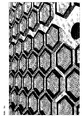
- the structures of the regions (i) which serve as containers or depots for the pharmaceutical product are trough-shaped, the open side of the troughs being aligned towards the wound, and the troughs of any irregular, but preferably regular, in particular rectangular, square, hexagonal / honeycomb or round base are. Preferably, they have a hexagonal / honeycomb base surface shape.
- a single mini-pot or container of the regions (i) according to the invention has a clear depth or thickness in the carrier structure of the plaster of 0.2 to 5 mm, preferably 0.3 to 3 mm and in particular 0.3 to 2.0 mm.
- Said thickness or depth of a single such mini-container depends on the desired depot effect of the active substance to be achieved: thicker patches can take up more active ingredient and the delivery to the wound takes longer. Deviations of the dimensions down into the nano range as well as up into the macro range are possible at any time with regard to the application and material requirements.
- the clear diameter of a single container or a single chamber in the carrier matrix of the patch can be between 0.2 and 5mm, preferably between 0.5 and 5mm, in particular between 1.0 and 3mm, and thus determines the area with which the drug depot has contact with a part of Wound. Surprisingly, it has been shown that in particular a clear diameter of a container between 1 and 3 mm, the effectiveness of the released or released to the wound protein active ingredient is higher than in cavities with significantly larger contact area to the wound.
- the cavities serving as a container or depot for the drug can be combined into clusters of 2 to 200 containers, which are separated from one another by thin webs.
- the cluster structures, as well as the individual depot structures formed by them can have various geometric base surface shapes.
- the latter may be rectangular, square, honeycomb (hexagonal) or round.
- the webs between the containers are expediently made of the material of the carrier matrix and have a thickness between 0.1 and 3 mm, preferably between 0.1 and 0.5 mm.
- the webs between the trough-shaped containers or mini-pots can themselves have channel-like structures (for example in the form of a hollow profile) which serve to remove the wound secretion and / or the ventilation and / or the delivery of further active substances / said cells.
- Webs having a hollow profile have a thickness preferably between 0.5 and 3mm and are particularly appropriate where individual depots have been grouped into larger clusters, and the area with which a cluster covers the wound is so large that the cluster domain surrounding canal structure is insufficient to carry away the accumulating under the large cluster domain in this case accumulating wound secretions.
- the area of the channel structures preferably corresponds to 2 to 30%, preferably 5 to 20% of the area of the depot structures.
- the ratio depends on the type and amount of secreting tissue and wound fluids.
- the canal-like structures of areas (ii) should occupy about 20-40% of the total effective area of the patch, while for wounds producing only little wound-secretion, a proportion of 2-10% is sufficient.
- the invention thus relates to a corresponding plaster in which the thickness of the medicament-containing structures (i) is 0.2 to 5.0 mm, preferably 0.3 to 2.0 mm.
- the invention further provides a corresponding plaster in which a single structure of the regions (i) has an average diameter or distance from their opposite edges of 0.5 to 5.0 mm.
- the subject of the invention is also a corresponding plaster, in which the individual structures of the regions (i) are combined in clusters which have an average diameter or distance from their opposite edges of 5.0 to 25.0 mm, preferably 10.0 to 15.0 mm.
- the subject matter of the invention is also a corresponding plaster in which the individual structures of the regions (i) containing the drug are combined in clusters, each cluster preferably having up to 200, in particular 25 to 100 trough-like individual structures of the regions (i).
- a patch according to the invention can have channels of different thickness or diameter in the form of main and secondary channels.
- the main channels may at regular or irregular intervals over a small area have a larger diameter, whereby in this area a small cavity in the form of a bubble, ball or dome is present with a diameter which is greater than the channel itself.
- Such widenings or thickenings are preferably provided in the crossing region of two intersecting or striking channels, but may also be provided independently thereof along a channel. In the intersection of two intersecting channels, these expansions cause a more rapid and continuous influx or drainage of wound exudate or the above-mentioned other agents, cells and other adjuvants.
- the invention thus also relates to a corresponding plaster in which the channel-like structures (ii) have a mean diameter of 0.3 to 3.0 mm, with main channels between 1.0 and 3.0mm and side channels between 0.3 and 1.0mm thick.
- the invention also provides a corresponding plaster in which the distance between two channel-like cavities of the areas or domains (ii) is at most 25 mm, preferably 5 to 25 mm.
- the invention also relates to a patch which has intersecting channel-like cavities of the regions / domains (ii) and the connection for a suction / delivery device in the crossing region of two such channel structures of the regions (ii) is attached.
- a suction / delivery device in the crossing region of two such channel structures of the regions (ii) is attached.
- at least some of these crossing regions are enlarged in a void-like manner to provide more space for accumulated wound exudate and the suction device, which in the simplest case is a connection nozzle or an opening for a syringe or suction pump.
- the invention further relates to a plaster which comprises cavities or channel-like structures of the regions (ii) which do not intersect or intersect, but are arranged in a ring or spiral or meander shape and are provided with rings, spirals or meanders alternate or adjacent to this, with two similar domains having a mean distance from each other of a maximum of 25mm, preferably 5 to 25 mm.
- the two cavities of the regions or domains (i) and (ii) can enclose each other in a ring, oval, elliptical or rectangular manner, i. a correspondingly shaped channel cavity adjoins a correspondingly shaped domain from depot cavities, the distance between two identical cavity domains being a maximum of 25 mm, preferably 5 to 25 mm.
- the individual channel-like cavities are not connected to one another. By creating, for example, a vertical and / or horizontal main channel which cuts through the respective ring-like domains, all channel-like cavities of the patch then communicate with each other.
- the two structures of the regions (i) and (ii) may enclose in a spiral or meander-like manner, the spacing of similar regions again being between about 5 and 25 mm.
- the two structures of the regions (i) and (ii) may enclose in a spiral or meander-like manner, the spacing of similar regions again being between about 5 and 25 mm.
- these structures preferably have bubble, dome or spherical flares or cavities on which ports are mounted or in which drainage material can be accommodated.
- the patch can be structured such that a single drug container is completely surrounded by channel-like structures.
- Such plaster arrangements have an overall area-related high proportion (20-40%) of channel structures and are particularly suitable if a large amount of wound secretion has to be removed uniformly ( Fig. 1c ).
- the area fraction of the channel structures in the plaster arrangement is relatively small (2 - 10%) ( Fig. 1a, b . d ).
- a particularly large amount of active ingredient per area can be made available.
- the individual parameters mentioned can be adjusted individually within a certain spectrum.
- the plaster of the invention may be provided with a self-adhesive or self-adhesive tape known per se, which is attached to the edges of the plaster, making it possible to seal the wound airtight. Furthermore, thereby the carrier matrix of the patch including its channel-like structures (ii) pressure-tight, so that in the presence of a connection for example, a syringe or a suction wound secretion can be sucked off to generate a negative pressure. The generation of a negative pressure also causes the active substance released from the depot more and can be introduced into the now wound secretion free wound so as to act there optimally pharmacological.
- pressure tightness z. B. be achieved by a separate tape, which is glued or fastened on the pavement or parts thereof.
- the plaster according to the invention should be used entirely without the use of an adhesive tape, as for example when applied to the mucous membrane, for. B. in the oral cavity is unavoidable, it should at least be equipped with drainage material instead of a connection for a suction device, so that wound secretions can be removed by the suction effect of the drainage.
- the patch according to the invention can also be inserted in wounds during dental procedures, tooth extractions, treatments of the tooth compartment and jaw operations in the form of trimmed strips and "pads".
- the drainage suitable for these but also other cases may consist for example in a collagen fleece or a gelatin sponge or other materials used in the prior art.
- Such a material can also be used to cover the wound with the paving element, whereby fibrin glue preparations can also be used.
- the mucosal wound may be sutured to reduce the fibrinolytic effect of the saliva.
- the active ingredient or the active ingredients can be introduced in a variety of ways.
- the active ingredient protein in solid form for example in lyophiliserter form or possibly also as a solid protein powder in the individual cavities are pressed. Due to the special geometry (e.g., honeycomb base) and size of the vault cavities in the carrier matrix, which results in a relatively large surface area compared to the volume, in the simplest case no additional carriers are needed.
- the invention thus relates to a corresponding plaster, which on the side facing the wound or skin has a protective film which is removed before use.
- the subject matter of the invention is also a corresponding patch which has a film or a membrane on the side facing the wound / skin which is permeable to the medicament and is optionally impermeable to proteolytic enzymes or other unwanted substances having relatively large molecular weights from the wound secretion.
- the invention also relates to a corresponding patch comprising a film or membrane of a biodegradable material.
- biocompatible or bioabsorbable carrier substances such as poly sugars, polyvinyl alcohols, polylactides, polylactic acid, polyvinylpyrrolidone. Poly-L-lysine or lactic acid-glycolic acid copolymer.
- the drug substances may also be incorporated in a collagen sponge, which is housed in the depot chambers.
- protein active ingredient in addition to the protein active ingredient, as already mentioned several times, other active substances and also cells which promote wound healing can additionally be present in the depot cavities of regions (i).
- proteinase inhibitors such as aprotinin, or antibiotics that are helpful in infected wounds may be useful.
- xenogeneic or autogenic, but especially autologous cell preparations which include, for example, fibroblasts, endothelial cells, macrophages, monocytes or even stem cells individually and mixture, support the initiated by the primary active protein wound healing.
- plaster materials As carrier matrix for the plaster according to the invention, in principle all known plaster materials are suitable which make possible the production of a microdomain structure as described. Particularly suitable are silicone materials or synthetic rubber, natural rubber or synthetic polymer material from the materials described in the prior art for these and similar purposes, as described in principle above for comparable materials.
- the materials used in each case should have the ability to allow corresponding deformations by casting or pressing of the material in order to obtain the mentioned microdomain structure. In addition, they should be relatively soft and cuddly.
- the invention thus relates to a corresponding plaster, which comprises a support matrix for the cavities of the regions (i) and (ii) and this support matrix is preferably made of a polymeric plastic, silicone or a natural elastomeric material which is suitable that the necessary Microdomain structures on or in the carrier matrix, for example by cutting, casting, pressing and similar processes can be produced.
- Such proteins are, for example, cytokines and growth factors such as EGF, TGF beta, GSF, GM-CSF, HGH, CNTF, EPO, TPO, interferons such as IFN alpha, IFN beta, INF gamma and interleukins such as IL-2, IL-7, IL6 , IL8, but also blood coagulation factors such as thrombin, hematin and the like.
- cytokines and growth factors such as EGF, TGF beta, GSF, GM-CSF, HGH, CNTF, EPO, TPO, interferons such as IFN alpha, IFN beta, INF gamma and interleukins such as IL-2, IL-7, IL6 , IL8, but also blood coagulation factors such as thrombin, hematin and the like.
- the patch according to the invention shows particularly good results with the active substance erythropoietin (EPO), its derivatives and fragments as well as peptide mimetics and peptide analogues with the biological hematopoietic and in particular non-hematopoietic biological activity of EPO.
- EPO active substance erythropoietin
- the wound healing of a skin, mucous membrane or flesh wound can be decisively favored.
- EPO in a weekly dose of more than 100, preferably 100-500 IU / kg body weight (1 ⁇ g recombinant human EPO equivalent to 130 IU) can provide for accelerated and wound healing in injuries, especially in the jaw and dental field, if it is applied topically via a plaster according to the invention, preferably in lyophiliserter form, wherein in addition also portions of lyophilized blood platelets may be present. Since such a patch should be changed between preferably 48 and 72 hours, it is necessary, but sufficient, for such a patch to contain about 25-175 IU / kg of EPO for a satisfactory effect to be achieved.
- the invention thus further provides a corresponding plaster in which the drug introduced into the cavities of regions (i) is a polypeptide or protein which preferably has a molecular weight of 10-50 kD and optionally is proteolysis sensitive, or is easily split by occurring in wounds enzymes and bacteria.
- the invention particularly relates to a corresponding patch which contains a growth factor or a cytokine, preferably EPO or a peptidic molecule having the biological activity of EPO, in particular EPO in lyophiliserter form.
- a growth factor or a cytokine preferably EPO or a peptidic molecule having the biological activity of EPO, in particular EPO in lyophiliserter form.
- the invention is finally the use of a patch as described above and in the claims, for wound covering and the use of EPO and other suitable growth factors and cytokines for the preparation of a patch, as described above and in the claims, for the regenerative healing of damaged skin, Mucous membrane or open wounds.
- a plaster is cut out of a larger plaster template of about 8 x 12 centimeters.
- the patch has a domain structure according to the Fig. 1d on with the following dimensions: honeycomb individual depots with a depth of 1 mm and a clear diameter of 2.5mm. Each 80 such individual depots are combined into clusters, which in turn are separated by channels of 1mm depth and 1.5mm width.
- the channels have lattice structure and have at some crossing points a closable opening to which a suction device can be connected.
- the individual depots contain a total of 13,000 IU EPO (equivalent to about 100 ⁇ g). The EPO was previously in soluble liquid form in the made of soft silicone support structure of
- Plaster introduced, or evenly distributed to the cluster structures.
- the lyophilization of the active ingredient took place on the plaster or in the depot containers.
- the plaster thus prepared was provided on the open side with a protective film, which was removed before application to the wound.
- the patch was applied to the fresh but no longer bleeding wound, and secured with a tape on the healthy skin and sealed airtight.
- wound secretions were extracted by means of a small syringe placed on one of the connectors on the plaster.
- the patch was changed.
- Aspiration of the wound secretion was then only 1-2 times within 24 hours.
- a renewed change of plaster was made after another three days, with only once sucked off. Each time the plaster was changed, the state of healing was checked and characterized.
- the so-called subpolycythaemic dosages of less than 90 U / KGW lose importance here, on the one hand not only the endothelial progenitor cells are to be stimulated, but especially the local tissue-specific progenitor cells for the skin with the shares, dermis, skin appendages and epidermis stimulated to a scar-free healing should be.
- the dosage can thus be calculated as units / per area. It has been shown that in particular the tissue-specific stem cells require a dosage significantly above the so-called subpolycythemic dosage in order to be optimally and clinically relevant stimulated.
- the proportion of vessels in the volume of the skin is only a few percent. However, more than 90-95% are specific tissue structures.
- second-degree burn wounds or donor skin post-split skin lesions For deep second-degree wounds, there are still stem cells in the skin that can be attributed to the direct application of EPO to a scar-free or scar-poor healing of the skin. After removal of split skin or even after the so-called dermal abrasion during cosmetic procedures for scar correction on the face, the cuddly patch can be applied directly to the initially slightly oozing wound.
- the silicone material of the patch allows moisture regulation with gentle removal of wound secretions.
- lyophilized EPO can combine directly with localized plasma and thus create an optimal, stem cell-activating wound environment. Prolonged release allows delays in dressing changes in these wounds.
- a split-skin removal can thus heal in 3-4 days instead of after 9-10 days.
- transparent materials for the patch for example silicone, PDMS or even soft Teflon compounds
- the healing process can even be observed directly without interfering with the sterile environment below the patch. By doing so, the doctor can quickly and non-invasively adjust his diagnosis to regional conditions and treat patients gently as well as conserving resources.
- stem cells can be supplied exogenously via the ports.
- the plaster is used here like a glued bioreactor.
- the microdomain EPO is slowly released and combines with the stem cells introduced from the bone marrow. These are collected via needle aspiration (10-50 ml) and reduced to 1-2 ml by centrifugation. This is slowly distributed over the ports in a drop-shaped manner over the wound surface.
- stem cells As a result, a high concentration of stem cells is introduced decentrally even over larger wound areas. Within 1-2 hours, these cells adhere and can then be led through the EPO exposure specifically into the regeneration process. The regional injury milieu further boosts this growth. About the oxygen availability of a then advantageously special thin silicone plaster / ca. 50-100 ⁇ material thickness, the cells can be oxygenated in the initial phase. Despite sterile wound closure, this leads to a polarized availability of atmospheric oxygen as in normal skin and thus favorable differentiation conditions of the precursor cells in the epidermis and dermis. The most severe injuries that can otherwise only be treated with split-thickness skin graft or foreign skin grafts now heal in 1-2 weeks.
- stem cells from the hair root can be injected into the ports with and without prior in vitro expansion.
- stem cells from adipose tissue and fat cells from other areas of the body can be injected.
- the Microstructuring of the patch is of secondary importance here if the active substance is injected with the stem cells or separately or is part of a carrier material for the stem cells (eg hyaluronic acid, hydrogels, fibrin, plasma).
- the channels we break points can be constructed in an advantageous form which allows a simple manual fragmentation as in a tablet.
- Difficult and variable drugs to be dosed such as antibiotics, sleeping pills, nicotine, morphine, ASA and the entire group of analgesics can be easily controlled for the patient to be dosed.
- these substances can be introduced into micelles in the depots.
- the carrier materials can liquefy or soften and controlled controlled as needed and area-appropriate release both regionally acting substances such as antibiotics in skin infections as well as substances with systemic effects.
- protease degradation does not play a significant role here, so that systemic effects are not hindered.
Landscapes
- Health & Medical Sciences (AREA)
- Engineering & Computer Science (AREA)
- General Health & Medical Sciences (AREA)
- Veterinary Medicine (AREA)
- Public Health (AREA)
- Life Sciences & Earth Sciences (AREA)
- Animal Behavior & Ethology (AREA)
- Chemical & Material Sciences (AREA)
- Bioinformatics & Cheminformatics (AREA)
- Heart & Thoracic Surgery (AREA)
- Vascular Medicine (AREA)
- Biomedical Technology (AREA)
- Medicinal Chemistry (AREA)
- Dermatology (AREA)
- Epidemiology (AREA)
- Pharmacology & Pharmacy (AREA)
- Hematology (AREA)
- Materials Engineering (AREA)
- Medicines That Contain Protein Lipid Enzymes And Other Medicines (AREA)
- Medicinal Preparation (AREA)
Priority Applications (1)
| Application Number | Priority Date | Filing Date | Title |
|---|---|---|---|
| EP08011985.2A EP2018835B1 (fr) | 2007-07-09 | 2008-07-03 | Pavé sortant d'agent actif |
Applications Claiming Priority (2)
| Application Number | Priority Date | Filing Date | Title |
|---|---|---|---|
| EP07013361 | 2007-07-09 | ||
| EP08011985.2A EP2018835B1 (fr) | 2007-07-09 | 2008-07-03 | Pavé sortant d'agent actif |
Publications (3)
| Publication Number | Publication Date |
|---|---|
| EP2018835A2 true EP2018835A2 (fr) | 2009-01-28 |
| EP2018835A3 EP2018835A3 (fr) | 2012-05-02 |
| EP2018835B1 EP2018835B1 (fr) | 2014-03-05 |
Family
ID=40120222
Family Applications (1)
| Application Number | Title | Priority Date | Filing Date |
|---|---|---|---|
| EP08011985.2A Active EP2018835B1 (fr) | 2007-07-09 | 2008-07-03 | Pavé sortant d'agent actif |
Country Status (3)
| Country | Link |
|---|---|
| US (1) | US8178745B2 (fr) |
| EP (1) | EP2018835B1 (fr) |
| RU (1) | RU2463078C2 (fr) |
Cited By (1)
| Publication number | Priority date | Publication date | Assignee | Title |
|---|---|---|---|---|
| WO2018224099A1 (fr) * | 2017-06-08 | 2018-12-13 | Jaeger Verena | Coussinet en silicone comprenant des principes actifs pour les soins de la peau et contre le vieillissement de la peau |
Families Citing this family (9)
| Publication number | Priority date | Publication date | Assignee | Title |
|---|---|---|---|---|
| US20110123481A1 (en) * | 2007-08-16 | 2011-05-26 | Remedor Biomed Ltd. | Erythropoietin and fibronectin compositions for therapeutic and cosmetic applications |
| US9554944B2 (en) | 2012-08-20 | 2017-01-31 | Alessandro Barberio | Medical protruded pads or dressings for wound care including use with orthopedic and prosthetic devices |
| EP2985013B1 (fr) * | 2012-08-20 | 2018-04-11 | Alessandro Barberio | Compresses ou pansements médicaux protubérants |
| US20140142522A1 (en) * | 2012-11-16 | 2014-05-22 | NU Technology, LLC | Moist dressing with honeycomb pattern and drain channels |
| WO2015103708A1 (fr) | 2014-01-10 | 2015-07-16 | Alessandro Barberio | Support orthopédique ou prosthétique poreux ayant des couches d'amortissement et d'échafaudage amovibles |
| US20170143103A1 (en) * | 2015-11-19 | 2017-05-25 | Giselle Howard | Anti-wrinkling pad and method |
| IT201600100376A1 (it) * | 2016-10-06 | 2018-04-06 | Mara Leonardi | Cerotto innovativo. |
| JP2019163217A (ja) * | 2018-03-19 | 2019-09-26 | 株式会社リコー | 中空構造体を有する可撓性構造体、医薬品、化粧品及び健康食品 |
| US20200158471A1 (en) * | 2018-11-19 | 2020-05-21 | Cubic Corporation | Artillery unit control panel emulator integration with training system |
Citations (16)
| Publication number | Priority date | Publication date | Assignee | Title |
|---|---|---|---|---|
| WO1996040772A2 (fr) | 1995-06-07 | 1996-12-19 | Ortho Pharmaceutical Corporation | Dimeres peptidiques d'agonistes |
| WO1996040749A1 (fr) | 1995-06-07 | 1996-12-19 | Johnson & Johnson Corporation | Composes et peptides se liant au recepteur de l'erythropoietine |
| WO2001002017A2 (fr) | 1999-07-02 | 2001-01-11 | F. Hoffmann-La Roche Ag | Derives de l'erythropoietine |
| WO2001038342A2 (fr) | 1999-11-24 | 2001-05-31 | Glaxo Group Limited | Nouveaux dimeres peptidiques utilises comme agonistes du recepteur d'erythropoietine (epo) et procedes correspondants de synthese et d'utilisation |
| WO2001091780A1 (fr) | 2000-05-26 | 2001-12-06 | Ortho-Mcneil Pharmaceutical, Inc. | Peptides neuroprotecteurs |
| WO2002049673A2 (fr) | 2000-12-20 | 2002-06-27 | F. Hoffmann-La Roche Ag | Conjugues d'erythropoietine |
| WO2003101361A1 (fr) | 2002-05-31 | 2003-12-11 | James Franklin Drake | Systeme d'administration de substance fluide medicinale ou therapeutique |
| WO2004001023A2 (fr) | 2002-06-20 | 2003-12-31 | Bionethos Holding Gmbh | Procede et dispositif de multiplication et de differenciation de cellules en presence de facteurs de croissance et d'une matrice ou d'une structure de support biologique |
| WO2004101611A2 (fr) | 2003-05-12 | 2004-11-25 | Affymax, Inc. | Nouveaux peptides se fixant au recepteur de l'erythropoietine |
| WO2004100997A2 (fr) | 2003-05-12 | 2004-11-25 | Affymax, Inc. | Nouveau fragment espaceur de composes peptidiques modifies par du poly(ethylene glycol) |
| WO2004101600A2 (fr) | 2003-05-12 | 2004-11-25 | Affymax, Inc. | Nouveaux composes modifies par du poly(ethylene glycol) et leurs utilisations |
| WO2004101606A2 (fr) | 2003-05-12 | 2004-11-25 | Affymax, Inc. | Nouveaux peptides se fixant au recepteur de l'erythropoietine |
| WO2005063965A1 (fr) | 2003-12-30 | 2005-07-14 | Bionethos Holding Gmbh | Procede de regeneration de tissus |
| WO2005070450A2 (fr) | 2004-01-23 | 2005-08-04 | Epoplus Gmbh & Co. Kg | Utilisation d'erythropoietine faiblement dosee pour la stimulation de cellules precurseurs, ainsi que pour la regeneration d'organes et le ralentissement de la progression des dommages aux organes terminaux |
| WO2006050959A2 (fr) | 2004-11-10 | 2006-05-18 | Aplagen Gmbh | Molecules favorisant l'hematopoiese |
| WO2006109325A1 (fr) | 2005-04-11 | 2006-10-19 | Roberto Vannucci | Pansement adhesif a emballage de desinfectant |
Family Cites Families (9)
| Publication number | Priority date | Publication date | Assignee | Title |
|---|---|---|---|---|
| US4360021A (en) * | 1981-05-06 | 1982-11-23 | Colgate-Palmolive Company | Absorbent article |
| GB8620227D0 (en) * | 1986-08-20 | 1986-10-01 | Smith & Nephew Ass | Wound dressing |
| DE3809978A1 (de) * | 1988-03-24 | 1989-10-05 | Lohmann Gmbh & Co Kg | Reservoir fuer gesteuerte wirkstoffabgabe, dieses enthaltende vorrichtung, sowie verfahren zu deren herstellung und verwendung der vorrichtung |
| AU662531B2 (en) * | 1991-06-12 | 1995-09-07 | Mcneil-Ppc, Inc. | Melt blown menstrual pad for application to the body |
| DK169711B1 (da) * | 1993-01-15 | 1995-01-23 | Coloplast As | Hudpladeprodukt |
| RU2272618C2 (ru) * | 2000-09-08 | 2006-03-27 | Алза Корпорейшн | Способы ингибирования уменьшения трансдермального движения лекарственного средства посредством ингибирования закрытия путей |
| EP1545644B2 (fr) * | 2002-08-21 | 2018-02-28 | KCI Medical Resources | Pansement permettant d'empecher une blessure de se refermer |
| GB2425115A (en) * | 2005-04-15 | 2006-10-18 | Vectura Group Plc | Blister pack |
| WO2007033678A2 (fr) * | 2005-09-26 | 2007-03-29 | Coloplast A/S | Pansement |
-
2008
- 2008-07-03 EP EP08011985.2A patent/EP2018835B1/fr active Active
- 2008-07-07 RU RU2008127228/15A patent/RU2463078C2/ru active
- 2008-07-08 US US12/168,938 patent/US8178745B2/en active Active
Patent Citations (16)
| Publication number | Priority date | Publication date | Assignee | Title |
|---|---|---|---|---|
| WO1996040772A2 (fr) | 1995-06-07 | 1996-12-19 | Ortho Pharmaceutical Corporation | Dimeres peptidiques d'agonistes |
| WO1996040749A1 (fr) | 1995-06-07 | 1996-12-19 | Johnson & Johnson Corporation | Composes et peptides se liant au recepteur de l'erythropoietine |
| WO2001002017A2 (fr) | 1999-07-02 | 2001-01-11 | F. Hoffmann-La Roche Ag | Derives de l'erythropoietine |
| WO2001038342A2 (fr) | 1999-11-24 | 2001-05-31 | Glaxo Group Limited | Nouveaux dimeres peptidiques utilises comme agonistes du recepteur d'erythropoietine (epo) et procedes correspondants de synthese et d'utilisation |
| WO2001091780A1 (fr) | 2000-05-26 | 2001-12-06 | Ortho-Mcneil Pharmaceutical, Inc. | Peptides neuroprotecteurs |
| WO2002049673A2 (fr) | 2000-12-20 | 2002-06-27 | F. Hoffmann-La Roche Ag | Conjugues d'erythropoietine |
| WO2003101361A1 (fr) | 2002-05-31 | 2003-12-11 | James Franklin Drake | Systeme d'administration de substance fluide medicinale ou therapeutique |
| WO2004001023A2 (fr) | 2002-06-20 | 2003-12-31 | Bionethos Holding Gmbh | Procede et dispositif de multiplication et de differenciation de cellules en presence de facteurs de croissance et d'une matrice ou d'une structure de support biologique |
| WO2004101611A2 (fr) | 2003-05-12 | 2004-11-25 | Affymax, Inc. | Nouveaux peptides se fixant au recepteur de l'erythropoietine |
| WO2004100997A2 (fr) | 2003-05-12 | 2004-11-25 | Affymax, Inc. | Nouveau fragment espaceur de composes peptidiques modifies par du poly(ethylene glycol) |
| WO2004101600A2 (fr) | 2003-05-12 | 2004-11-25 | Affymax, Inc. | Nouveaux composes modifies par du poly(ethylene glycol) et leurs utilisations |
| WO2004101606A2 (fr) | 2003-05-12 | 2004-11-25 | Affymax, Inc. | Nouveaux peptides se fixant au recepteur de l'erythropoietine |
| WO2005063965A1 (fr) | 2003-12-30 | 2005-07-14 | Bionethos Holding Gmbh | Procede de regeneration de tissus |
| WO2005070450A2 (fr) | 2004-01-23 | 2005-08-04 | Epoplus Gmbh & Co. Kg | Utilisation d'erythropoietine faiblement dosee pour la stimulation de cellules precurseurs, ainsi que pour la regeneration d'organes et le ralentissement de la progression des dommages aux organes terminaux |
| WO2006050959A2 (fr) | 2004-11-10 | 2006-05-18 | Aplagen Gmbh | Molecules favorisant l'hematopoiese |
| WO2006109325A1 (fr) | 2005-04-11 | 2006-10-19 | Roberto Vannucci | Pansement adhesif a emballage de desinfectant |
Non-Patent Citations (1)
| Title |
|---|
| HAROON, AMERICAN J. PATHOL., vol. 163, 2003, pages 993 |
Cited By (2)
| Publication number | Priority date | Publication date | Assignee | Title |
|---|---|---|---|---|
| WO2018224099A1 (fr) * | 2017-06-08 | 2018-12-13 | Jaeger Verena | Coussinet en silicone comprenant des principes actifs pour les soins de la peau et contre le vieillissement de la peau |
| EP3634342A1 (fr) * | 2017-06-08 | 2020-04-15 | Apricot Gmbh | Coussinet en silicone comprenant des principes actifs pour les soins de la peau et contre le vieillissement de la peau |
Also Published As
| Publication number | Publication date |
|---|---|
| EP2018835A3 (fr) | 2012-05-02 |
| US20090018481A1 (en) | 2009-01-15 |
| RU2008127228A (ru) | 2010-01-20 |
| US8178745B2 (en) | 2012-05-15 |
| RU2463078C2 (ru) | 2012-10-10 |
| EP2018835B1 (fr) | 2014-03-05 |
Similar Documents
| Publication | Publication Date | Title |
|---|---|---|
| EP2018835B1 (fr) | Pavé sortant d'agent actif | |
| Oliveira et al. | Therapeutic advances in wound healing | |
| DE69829690T2 (de) | Verbesserte wundauflagen | |
| Jorgensen et al. | Advances in skin tissue engineering and regenerative medicine | |
| EP2731635B1 (fr) | Matériau de traitement des plaies stratifié perforé | |
| DE19503336C2 (de) | Arzneiform zur Abgabe von Wirkstoffen an Wunden, Verfahren zu ihrer Herstellung und ihre Verwendung | |
| DE60126142T2 (de) | Bioabsorbierbare wundauflage | |
| JP5553769B2 (ja) | 皮膚創傷治癒のためのエリスロポエチンの局所適用および製剤 | |
| EP0804245B1 (fr) | Preparation de collagene pour la liberation controlee de principes actifs | |
| DE112017005025T5 (de) | Zusammensetzungen, enthaltend einstellbare Konzentrationen von Wachstumsfaktoren aus Blutsserum und Gerinnsel-Hypoxie-konditioniertem Medium und Verfahren zu ihrer Herstellung | |
| WO2016004212A1 (fr) | Hydrogels pour le traitement et l'amélioration des plaies, et procédés de fabrication et d'utilisation de ceux-ci | |
| CN107106492B (zh) | 用于治疗伤口的组合物 | |
| Claxton et al. | Healing the diabetic wound and keeping it healed: modalities for the early 21st century | |
| Ballard et al. | Developments in wound care for difficult to manage wounds | |
| Sehgal et al. | Drug delivery dressings | |
| MacEwan et al. | Comparison of a fully synthetic electrospun matrix to a bi-layered xenograft in healing full thickness cutaneous wounds in a porcine model | |
| Khorasani et al. | The effects of aloe vera cream on split-thickness skin graft donor site management: a randomized, blinded, placebo-controlled study | |
| Miranda et al. | Advanced trends in treatment of wounds | |
| Margolis et al. | A literature assessment of the use of miscellaneous topical agents, growth factors, and skin equivalents for the treatment of pressure ulcers | |
| Shukla et al. | Electrospun nanofibers for wound healing | |
| CN121398834A (zh) | 用于皮肤修复、恢复活性和舒适的方法和组合物 | |
| Milner et al. | Addressing full-thickness skin defects: A review of clinically available autologous skin replacements | |
| RU2657806C2 (ru) | Способ регионального лечения трофической язвы | |
| DE202008000101U1 (de) | Wundauflage | |
| Dias-Ferreira et al. | Applications of biomaterials in wound healing management: from fundamental physiology to advanced technology |
Legal Events
| Date | Code | Title | Description |
|---|---|---|---|
| PUAI | Public reference made under article 153(3) epc to a published international application that has entered the european phase |
Free format text: ORIGINAL CODE: 0009012 |
|
| AK | Designated contracting states |
Kind code of ref document: A2 Designated state(s): AT BE BG CH CY CZ DE DK EE ES FI FR GB GR HR HU IE IS IT LI LT LU LV MC MT NL NO PL PT RO SE SI SK TR |
|
| AX | Request for extension of the european patent |
Extension state: AL BA MK RS |
|
| PUAL | Search report despatched |
Free format text: ORIGINAL CODE: 0009013 |
|
| AK | Designated contracting states |
Kind code of ref document: A3 Designated state(s): AT BE BG CH CY CZ DE DK EE ES FI FR GB GR HR HU IE IS IT LI LT LU LV MC MT NL NO PL PT RO SE SI SK TR |
|
| AX | Request for extension of the european patent |
Extension state: AL BA MK RS |
|
| RIC1 | Information provided on ipc code assigned before grant |
Ipc: A61F 13/00 20060101AFI20120327BHEP |
|
| 17P | Request for examination filed |
Effective date: 20121024 |
|
| AKX | Designation fees paid |
Designated state(s): AT BE BG CH CY CZ DE DK EE ES FI FR GB GR HR HU IE IS IT LI LT LU LV MC MT NL NO PL PT RO SE SI SK TR |
|
| GRAP | Despatch of communication of intention to grant a patent |
Free format text: ORIGINAL CODE: EPIDOSNIGR1 |
|
| INTG | Intention to grant announced |
Effective date: 20130927 |
|
| GRAS | Grant fee paid |
Free format text: ORIGINAL CODE: EPIDOSNIGR3 |
|
| GRAA | (expected) grant |
Free format text: ORIGINAL CODE: 0009210 |
|
| AK | Designated contracting states |
Kind code of ref document: B1 Designated state(s): AT BE BG CH CY CZ DE DK EE ES FI FR GB GR HR HU IE IS IT LI LT LU LV MC MT NL NO PL PT RO SE SI SK TR |
|
| REG | Reference to a national code |
Ref country code: GB Ref legal event code: FG4D Free format text: NOT ENGLISH |
|
| REG | Reference to a national code |
Ref country code: CH Ref legal event code: EP |
|
| REG | Reference to a national code |
Ref country code: AT Ref legal event code: REF Ref document number: 654336 Country of ref document: AT Kind code of ref document: T Effective date: 20140315 |
|
| REG | Reference to a national code |
Ref country code: IE Ref legal event code: FG4D Free format text: LANGUAGE OF EP DOCUMENT: GERMAN |
|
| REG | Reference to a national code |
Ref country code: DE Ref legal event code: R096 Ref document number: 502008011380 Country of ref document: DE Effective date: 20140417 |
|
| REG | Reference to a national code |
Ref country code: NL Ref legal event code: VDEP Effective date: 20140305 |
|
| PG25 | Lapsed in a contracting state [announced via postgrant information from national office to epo] |
Ref country code: LT Free format text: LAPSE BECAUSE OF FAILURE TO SUBMIT A TRANSLATION OF THE DESCRIPTION OR TO PAY THE FEE WITHIN THE PRESCRIBED TIME-LIMIT Effective date: 20140305 Ref country code: NO Free format text: LAPSE BECAUSE OF FAILURE TO SUBMIT A TRANSLATION OF THE DESCRIPTION OR TO PAY THE FEE WITHIN THE PRESCRIBED TIME-LIMIT Effective date: 20140605 |
|
| REG | Reference to a national code |
Ref country code: LT Ref legal event code: MG4D |
|
| PG25 | Lapsed in a contracting state [announced via postgrant information from national office to epo] |
Ref country code: CY Free format text: LAPSE BECAUSE OF FAILURE TO SUBMIT A TRANSLATION OF THE DESCRIPTION OR TO PAY THE FEE WITHIN THE PRESCRIBED TIME-LIMIT Effective date: 20140305 Ref country code: SE Free format text: LAPSE BECAUSE OF FAILURE TO SUBMIT A TRANSLATION OF THE DESCRIPTION OR TO PAY THE FEE WITHIN THE PRESCRIBED TIME-LIMIT Effective date: 20140305 Ref country code: FI Free format text: LAPSE BECAUSE OF FAILURE TO SUBMIT A TRANSLATION OF THE DESCRIPTION OR TO PAY THE FEE WITHIN THE PRESCRIBED TIME-LIMIT Effective date: 20140305 |
|
| PG25 | Lapsed in a contracting state [announced via postgrant information from national office to epo] |
Ref country code: HR Free format text: LAPSE BECAUSE OF FAILURE TO SUBMIT A TRANSLATION OF THE DESCRIPTION OR TO PAY THE FEE WITHIN THE PRESCRIBED TIME-LIMIT Effective date: 20140305 Ref country code: LV Free format text: LAPSE BECAUSE OF FAILURE TO SUBMIT A TRANSLATION OF THE DESCRIPTION OR TO PAY THE FEE WITHIN THE PRESCRIBED TIME-LIMIT Effective date: 20140305 |
|
| PG25 | Lapsed in a contracting state [announced via postgrant information from national office to epo] |
Ref country code: CZ Free format text: LAPSE BECAUSE OF FAILURE TO SUBMIT A TRANSLATION OF THE DESCRIPTION OR TO PAY THE FEE WITHIN THE PRESCRIBED TIME-LIMIT Effective date: 20140305 Ref country code: RO Free format text: LAPSE BECAUSE OF FAILURE TO SUBMIT A TRANSLATION OF THE DESCRIPTION OR TO PAY THE FEE WITHIN THE PRESCRIBED TIME-LIMIT Effective date: 20140305 Ref country code: IS Free format text: LAPSE BECAUSE OF FAILURE TO SUBMIT A TRANSLATION OF THE DESCRIPTION OR TO PAY THE FEE WITHIN THE PRESCRIBED TIME-LIMIT Effective date: 20140705 Ref country code: EE Free format text: LAPSE BECAUSE OF FAILURE TO SUBMIT A TRANSLATION OF THE DESCRIPTION OR TO PAY THE FEE WITHIN THE PRESCRIBED TIME-LIMIT Effective date: 20140305 Ref country code: NL Free format text: LAPSE BECAUSE OF FAILURE TO SUBMIT A TRANSLATION OF THE DESCRIPTION OR TO PAY THE FEE WITHIN THE PRESCRIBED TIME-LIMIT Effective date: 20140305 Ref country code: BG Free format text: LAPSE BECAUSE OF FAILURE TO SUBMIT A TRANSLATION OF THE DESCRIPTION OR TO PAY THE FEE WITHIN THE PRESCRIBED TIME-LIMIT Effective date: 20140605 |
|
| PG25 | Lapsed in a contracting state [announced via postgrant information from national office to epo] |
Ref country code: SK Free format text: LAPSE BECAUSE OF FAILURE TO SUBMIT A TRANSLATION OF THE DESCRIPTION OR TO PAY THE FEE WITHIN THE PRESCRIBED TIME-LIMIT Effective date: 20140305 Ref country code: PL Free format text: LAPSE BECAUSE OF FAILURE TO SUBMIT A TRANSLATION OF THE DESCRIPTION OR TO PAY THE FEE WITHIN THE PRESCRIBED TIME-LIMIT Effective date: 20140305 Ref country code: ES Free format text: LAPSE BECAUSE OF FAILURE TO SUBMIT A TRANSLATION OF THE DESCRIPTION OR TO PAY THE FEE WITHIN THE PRESCRIBED TIME-LIMIT Effective date: 20140305 |
|
| REG | Reference to a national code |
Ref country code: DE Ref legal event code: R097 Ref document number: 502008011380 Country of ref document: DE |
|
| PG25 | Lapsed in a contracting state [announced via postgrant information from national office to epo] |
Ref country code: PT Free format text: LAPSE BECAUSE OF FAILURE TO SUBMIT A TRANSLATION OF THE DESCRIPTION OR TO PAY THE FEE WITHIN THE PRESCRIBED TIME-LIMIT Effective date: 20140707 |
|
| PLBE | No opposition filed within time limit |
Free format text: ORIGINAL CODE: 0009261 |
|
| STAA | Information on the status of an ep patent application or granted ep patent |
Free format text: STATUS: NO OPPOSITION FILED WITHIN TIME LIMIT |
|
| PG25 | Lapsed in a contracting state [announced via postgrant information from national office to epo] |
Ref country code: DK Free format text: LAPSE BECAUSE OF FAILURE TO SUBMIT A TRANSLATION OF THE DESCRIPTION OR TO PAY THE FEE WITHIN THE PRESCRIBED TIME-LIMIT Effective date: 20140305 |
|
| 26N | No opposition filed |
Effective date: 20141208 |
|
| PG25 | Lapsed in a contracting state [announced via postgrant information from national office to epo] |
Ref country code: LU Free format text: LAPSE BECAUSE OF FAILURE TO SUBMIT A TRANSLATION OF THE DESCRIPTION OR TO PAY THE FEE WITHIN THE PRESCRIBED TIME-LIMIT Effective date: 20140703 |
|
| REG | Reference to a national code |
Ref country code: DE Ref legal event code: R097 Ref document number: 502008011380 Country of ref document: DE Effective date: 20141208 |
|
| PG25 | Lapsed in a contracting state [announced via postgrant information from national office to epo] |
Ref country code: IT Free format text: LAPSE BECAUSE OF FAILURE TO SUBMIT A TRANSLATION OF THE DESCRIPTION OR TO PAY THE FEE WITHIN THE PRESCRIBED TIME-LIMIT Effective date: 20140305 |
|
| REG | Reference to a national code |
Ref country code: IE Ref legal event code: MM4A |
|
| PG25 | Lapsed in a contracting state [announced via postgrant information from national office to epo] |
Ref country code: SI Free format text: LAPSE BECAUSE OF FAILURE TO SUBMIT A TRANSLATION OF THE DESCRIPTION OR TO PAY THE FEE WITHIN THE PRESCRIBED TIME-LIMIT Effective date: 20140305 |
|
| REG | Reference to a national code |
Ref country code: FR Ref legal event code: PLFP Year of fee payment: 8 |
|
| PG25 | Lapsed in a contracting state [announced via postgrant information from national office to epo] |
Ref country code: IE Free format text: LAPSE BECAUSE OF NON-PAYMENT OF DUE FEES Effective date: 20140703 |
|
| PG25 | Lapsed in a contracting state [announced via postgrant information from national office to epo] |
Ref country code: MC Free format text: LAPSE BECAUSE OF FAILURE TO SUBMIT A TRANSLATION OF THE DESCRIPTION OR TO PAY THE FEE WITHIN THE PRESCRIBED TIME-LIMIT Effective date: 20140305 |
|
| PG25 | Lapsed in a contracting state [announced via postgrant information from national office to epo] |
Ref country code: GR Free format text: LAPSE BECAUSE OF FAILURE TO SUBMIT A TRANSLATION OF THE DESCRIPTION OR TO PAY THE FEE WITHIN THE PRESCRIBED TIME-LIMIT Effective date: 20140606 Ref country code: MT Free format text: LAPSE BECAUSE OF FAILURE TO SUBMIT A TRANSLATION OF THE DESCRIPTION OR TO PAY THE FEE WITHIN THE PRESCRIBED TIME-LIMIT Effective date: 20140305 |
|
| REG | Reference to a national code |
Ref country code: FR Ref legal event code: PLFP Year of fee payment: 9 |
|
| PG25 | Lapsed in a contracting state [announced via postgrant information from national office to epo] |
Ref country code: TR Free format text: LAPSE BECAUSE OF FAILURE TO SUBMIT A TRANSLATION OF THE DESCRIPTION OR TO PAY THE FEE WITHIN THE PRESCRIBED TIME-LIMIT Effective date: 20140305 Ref country code: HU Free format text: LAPSE BECAUSE OF FAILURE TO SUBMIT A TRANSLATION OF THE DESCRIPTION OR TO PAY THE FEE WITHIN THE PRESCRIBED TIME-LIMIT; INVALID AB INITIO Effective date: 20080703 Ref country code: BE Free format text: LAPSE BECAUSE OF FAILURE TO SUBMIT A TRANSLATION OF THE DESCRIPTION OR TO PAY THE FEE WITHIN THE PRESCRIBED TIME-LIMIT Effective date: 20140731 |
|
| REG | Reference to a national code |
Ref country code: FR Ref legal event code: PLFP Year of fee payment: 10 |
|
| REG | Reference to a national code |
Ref country code: FR Ref legal event code: PLFP Year of fee payment: 11 |
|
| PGFP | Annual fee paid to national office [announced via postgrant information from national office to epo] |
Ref country code: DE Payment date: 20250728 Year of fee payment: 18 |
|
| PGFP | Annual fee paid to national office [announced via postgrant information from national office to epo] |
Ref country code: GB Payment date: 20250722 Year of fee payment: 18 |
|
| PGFP | Annual fee paid to national office [announced via postgrant information from national office to epo] |
Ref country code: FR Payment date: 20250725 Year of fee payment: 18 Ref country code: AT Payment date: 20250718 Year of fee payment: 18 |
|
| PGFP | Annual fee paid to national office [announced via postgrant information from national office to epo] |
Ref country code: CH Payment date: 20250801 Year of fee payment: 18 |
|
| REG | Reference to a national code |
Ref country code: CH Ref legal event code: U11 Free format text: ST27 STATUS EVENT CODE: U-0-0-U10-U11 (AS PROVIDED BY THE NATIONAL OFFICE) Effective date: 20260801 |