EP2019836B1 - Verfahren, zusammensetzungen und kits für den nachweis von proteinaggregaten - Google Patents
Verfahren, zusammensetzungen und kits für den nachweis von proteinaggregaten Download PDFInfo
- Publication number
- EP2019836B1 EP2019836B1 EP07783116A EP07783116A EP2019836B1 EP 2019836 B1 EP2019836 B1 EP 2019836B1 EP 07783116 A EP07783116 A EP 07783116A EP 07783116 A EP07783116 A EP 07783116A EP 2019836 B1 EP2019836 B1 EP 2019836B1
- Authority
- EP
- European Patent Office
- Prior art keywords
- precursor molecule
- oligonucleotide
- protein
- precursor
- protein aggregate
- Prior art date
- Legal status (The legal status is an assumption and is not a legal conclusion. Google has not performed a legal analysis and makes no representation as to the accuracy of the status listed.)
- Active
Links
Images



Classifications
-
- C—CHEMISTRY; METALLURGY
- C12—BIOCHEMISTRY; BEER; SPIRITS; WINE; VINEGAR; MICROBIOLOGY; ENZYMOLOGY; MUTATION OR GENETIC ENGINEERING
- C12Q—MEASURING OR TESTING PROCESSES INVOLVING ENZYMES, NUCLEIC ACIDS OR MICROORGANISMS; COMPOSITIONS OR TEST PAPERS THEREFOR; PROCESSES OF PREPARING SUCH COMPOSITIONS; CONDITION-RESPONSIVE CONTROL IN MICROBIOLOGICAL OR ENZYMOLOGICAL PROCESSES
- C12Q1/00—Measuring or testing processes involving enzymes, nucleic acids or microorganisms; Compositions therefor; Processes of preparing such compositions
- C12Q1/68—Measuring or testing processes involving enzymes, nucleic acids or microorganisms; Compositions therefor; Processes of preparing such compositions involving nucleic acids
- C12Q1/6876—Nucleic acid products used in the analysis of nucleic acids, e.g. primers or probes
-
- C—CHEMISTRY; METALLURGY
- C07—ORGANIC CHEMISTRY
- C07K—PEPTIDES
- C07K14/00—Peptides having more than 20 amino acids; Gastrins; Somatostatins; Melanotropins; Derivatives thereof
- C07K14/435—Peptides having more than 20 amino acids; Gastrins; Somatostatins; Melanotropins; Derivatives thereof from animals; from humans
- C07K14/46—Peptides having more than 20 amino acids; Gastrins; Somatostatins; Melanotropins; Derivatives thereof from animals; from humans from vertebrates
- C07K14/47—Peptides having more than 20 amino acids; Gastrins; Somatostatins; Melanotropins; Derivatives thereof from animals; from humans from vertebrates from mammals
-
- C—CHEMISTRY; METALLURGY
- C07—ORGANIC CHEMISTRY
- C07K—PEPTIDES
- C07K14/00—Peptides having more than 20 amino acids; Gastrins; Somatostatins; Melanotropins; Derivatives thereof
- C07K14/435—Peptides having more than 20 amino acids; Gastrins; Somatostatins; Melanotropins; Derivatives thereof from animals; from humans
- C07K14/46—Peptides having more than 20 amino acids; Gastrins; Somatostatins; Melanotropins; Derivatives thereof from animals; from humans from vertebrates
- C07K14/47—Peptides having more than 20 amino acids; Gastrins; Somatostatins; Melanotropins; Derivatives thereof from animals; from humans from vertebrates from mammals
- C07K14/4701—Peptides having more than 20 amino acids; Gastrins; Somatostatins; Melanotropins; Derivatives thereof from animals; from humans from vertebrates from mammals not used
- C07K14/4711—Alzheimer's disease; Amyloid plaque core protein
-
- C—CHEMISTRY; METALLURGY
- C12—BIOCHEMISTRY; BEER; SPIRITS; WINE; VINEGAR; MICROBIOLOGY; ENZYMOLOGY; MUTATION OR GENETIC ENGINEERING
- C12Q—MEASURING OR TESTING PROCESSES INVOLVING ENZYMES, NUCLEIC ACIDS OR MICROORGANISMS; COMPOSITIONS OR TEST PAPERS THEREFOR; PROCESSES OF PREPARING SUCH COMPOSITIONS; CONDITION-RESPONSIVE CONTROL IN MICROBIOLOGICAL OR ENZYMOLOGICAL PROCESSES
- C12Q1/00—Measuring or testing processes involving enzymes, nucleic acids or microorganisms; Compositions therefor; Processes of preparing such compositions
- C12Q1/68—Measuring or testing processes involving enzymes, nucleic acids or microorganisms; Compositions therefor; Processes of preparing such compositions involving nucleic acids
- C12Q1/6813—Hybridisation assays
- C12Q1/6816—Hybridisation assays characterised by the detection means
Definitions
- the present teachings relate to methods, compositions, and kits for detecting protein aggregates.
- Self-assembling macromolecules are found throughout nature and are essential for normal cellular function. All classes of macromolecules, including nucleic acids, proteins, lipids and carbohydrates, are capable of higher order self-assembly. Proteins are capable of forming a diverse array of macromolecular complexes exemplified by actin/myosin filaments, cytoskeletal structures such as spectrin/ankyrin, and multimeric homo- and hetero- proteins such as TNF-alpha, PDGF, histones and transcription factor complexes at gene promoters (multi-protein/DNA assemblages).
- misfolded protein aggregates affiliated with neurodegenerative processes such as Alzheimer's, Huntington's, Parkinson's and mammalian prion-linked diseases (PrP scrapie related protein). See Verdile, G. et. al., Pharmacol Res. 2004 Oct; 50(4): 397-409 , Temussi, P.A. et. al., EMBO J 2003; 22(3): 355-361 , Moore, R.C. et.al., Am J Hum Genet. 2001 Dec; 69(6): 1385-8 , and Stoppini, M. et.al. Pharmacol Res. 2004 Oct; 50(4): 419-31 .
- Alzheimer's, Huntington's and Parkinson's diseases are consequences of complex events occurring in aging brain tissue.
- Alzheimer's patients possess two major pathological abnormalities in the brain: 1) amyloid plaques and 2) neurofibrillary tangles.
- Amyloid plaques consist of aggregated beta amyloid protein, which is derived from a precursor, amyloid precursor protein (APP).
- APP amyloid precursor protein
- Tangles contain aggregates of the tau protein, which normally plays a role in stabilizing microtubules.
- Alzheimer's disease There is much debate about whether these abnormal aggregate structures are the cause of the disease or simply a consequence. For instance, it is also known that other proteins are linked to the occurrence of Alzheimer's, including apolipoprotein E and presenilins, which normally process beta amyloid protein. These cellular agents, along with hereditary factors, remain targets of intense investigation into the pathology of Alzheimer's disease.
- Huntington's disease is caused by the aggregation of a ⁇ 350 Kdal cytoplasmic protein called huntingtin.
- the normal function of huntingtin is unknown, but some evidence links its function to iron metabolic regulation and cytoskeletal structure maintenance.
- the outcome of self-aggregation is neuronal cell death, particularly in the basal ganglia and frontal lobes, but the mechanism of cellular toxicity is unknown.
- huntingtin contains fewer than 37 glutamine (Q) residues encoded in exon I. In disease patients, extra Q residues are present at the amino terminus bringing the total Q content to over 40. Apparently, the excessive Q content facilitates protein aggregation.
- Huntington's disease has been shown to be an autosomal dominant disorder. If a person inherits the defective huntingtin gene, they will eventually develop Huntington's disease, typically after the age of 50-60.
- Parkinson's disease is characterized by structural anomalies in the substantial nigra region of the brain.
- the afflicted cells contain proteinaceous inclusion vesicles called Lewy Bodies, composed mainly of alpha-synuclein aggregates.
- the normal role of alpha-synuclein is not clear; however, some evidence indicates that it interacts with p53 and protects brain cells from apoptosis.
- Other evidence from transgenic mouse models has shown that overexpression or reduced clearance of alpha-synuclein leads to Parkinson's-like illness. Sharply reduced levels of the neurotransmitter dopamine in the brain have also been observed for Parkinson's patients.
- environmental toxin exposure may play a significant role in the development of Parkinson's disease.
- Prions are a particularly interesting type of aggregate. Prions are proteins that typically contain a Q/N-rich domain and can exist in two distinct conformations: an alpha-helical form, which is monomeric and soluble, and a beta-sheet, which naturally self-assembles into multimeric insoluble aggregrates. In almost all cases, the conversion of protein from the soluble monomeric alpha-helical type to the beta-sheet multimeric form is a one-way process and is essentially irreversible.
- prion proteinaceous infectious particle
- sheep also known as scrapie
- bovine Bovine Spongiform Encephalopathy
- humans Keru disease, variant and spontaneous Creutzfeld-Jakob disease.
- prion research field See for example Aguzzi, A. and Polymenidou, M., Cell 2004; 116: 313-327 ).
- Similar prion diseases have been discovered in other mammals: deer, elk and mink.
- prion proteins have also been discovered in non-mammalian organisms.
- Three different prion proteins have been discovered in yeast (see Wickner, R.B. et. al., CSH Symp Quant Biol. 2004; 69:489-96 and a poly-A binding prion protein in aplysia that accumulates at neuron synaptic sites ( Si, K., Lindquist, S. and Kandel, E.R., Cell 2003 Dec 26; 115(7): 879-91 , and Si, K. et.al., Cell 2003 Dec 26; 115(7): 893-904 .
- yeast Sacharomyces cerevisiae
- prion proteins there are three currently known prion proteins: Sup35, Ure2 and Rnq1.
- Sup35 is essential for proper translation termination by the ribosome at stop codons.
- Ure2 regulates nitrogen catabolism by forming a transcription factor complex with Gln3 and more recently shown to play a central role in cadmium and hydrogen peroxide detoxification via its glutathione S-transferase-like domain.
- Rnq1 is not an essential protein for yeast survival but is thought to mediate prion conversion of the other prions.
- Sup35 is composed of 685 amino acids and has a high Q/N content near the amino terminus that is essential for prion formation. It is interesting that Sup35 conformation status is mediated by molecular chaperones such as Hsp 104, Hsp70 and ubiquitin complexes. Sup35 is one of the best-characterized self-aggregating protein, and is a preferred prion model system for researchers because yeast are very amenable to biochemical manipulation by an array of molecular and cellular technologies and yeast prions do not pose an infection risk to lab personnel.
- PMCA proteinase K digestion of the amplified product followed by western blotting for prion detection.
- a 30-35 Kdal proteinase K resistant prion core is detected by this method.
- This process uses a cyclic procedure to amplify prion aggregrates from a biological test sample.
- PMCA utilizes a sonication step to disrupt larger less efficient "seeding" prion aggregates into more numerous and smaller higher efficiency "seeds”.
- brain homogenate from a healthy animal (containing the alpha-helical conformer of prion) is added and after a 30 minute incubation, if prion aggregrates are present, the soluble alpha-helical conformer domain is converted to beta- sheet form and incorporated into the misfolded beta-sheet aggregate.
- the sample is repeatedly subjected to this cyclic procedure for 144 cycles - taking some 3 days to complete.
- Proximity ligation assay is an approach for protein quantitation that can use two different binder molecules (proximity probes) to bind to a specific detection target (See for example Fredriksson, S. et al., Nat Biotechnol. 2002; 20(5): 473-77 , Gullberg, M., et. al., Proc Natl Acad Sci USA. 2004; 101(22): 8420-24 , Gullberg, M., et. al., Curr Opin Biotechnol. 2003; 14: 1-5 , Pai, S., Ellington, A.D. and Levy, M., Nuc Acids Res.
- Typical binders include polyclonal or monoclonal antibody pairs. Each binder molecule can be conjugated to a specific oligonucleotide. One binder's oligonucleotide can form the "left" side of a real-time PCR amplicon, while the other binder can form the "right" side. When the two binders find and attach to the same target, the left and right oligonucleotides are brought into close proximity.
- the left and right oligonucleotides can become ligated and thereby allow for the formation of a complete real-time PCR amplicon.
- Further addition of real-time PCR reaction components (e.g. TaqMan ®) followed by thermocycling generates real-time sequence detection data output.
- Other methods for detecting proximity of the left and right oligonucleotides include restriction digestion, and polymerase extension, as described in Published US Patent Application US20070026430 .
- the present teachings include new methods, reaction compositions, and kits for detecting prions and protein aggregates that improve upon and expand the applications for proximity-based assays such as PLA.
- the present teachings provide a method of detecting a protein aggregate in a sample of interest comprising; providing a first precursor molecule and a second precursor molecule, wherein the first precursor molecule comprises a first oligonucleotide, and wherein the second precursor molecule comprises a second oligonucleotide; contacting a sample suspected of containing the protein aggregate with the first precursor molecule and the second precursor molecule;
- the interacting comprises hybridizing the first oligonucleotide and the second oligonucleotide to a splint oligonucleotide and ligating the first oligonucleotide to the second oligonucleotide to form a ligation product, and wherein the precursor molecule is soluble and is a correctly folded protein capable of forming protein aggregates and that is not yet in the conformation present in a protein aggregate.
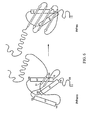
- Figure 1 depicts some embodiments of the present teachings for measuring an analyte.
- a cartoon of the soluble precursor form of yeast Sup 35 is shown, with oligonucleotide probes attached to the C-terminal region.
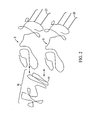
- Figure 2 depicts some embodiments of the present teachings for detecting a protein aggregate.
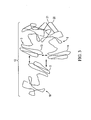
- Figure 3 depicts some embodiments of the present teachings for detecting a protein aggregate.
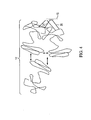
- Figure 4 depicts some embodiments of the present teachings for detecting a protein aggregate.
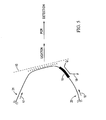
- Figure 5 depicts some embodiments of the present teachings for detecting a protein aggregate.
- FIG. 6 depicts an illustrative analyte, BSE, which the present teachings can be employed to detect.
- Figure 7 depicts some illustrative data according to some embodiments of the present teachings.
- Figure 8 depicts some illustrative data according to some embodiments of the present teachings.
- Figure 9 depicts some illustrative data according to some embodiments of the present teachings.
- soluble precursor molecule refers to a correctly folded protein that is not yet in the conformation present in a protein aggregate.
- left oligonucleotide refers to an oligonucleotide which can be present on a soluble precursor molecule, and is generally of a different nucleotide sequence than a right oligonucleotide.
- right oligonucleotide refers to an oligonucleotide which can be present on a soluble precursor molecule, and is generally of a different nucleotide sequence than a left oligonucleotide.
- label precursor refers to a correctly folded protein that is not in the conformation present in a protein aggregate, which contains a label such an oligonucleotide, fluorophore, etc.
- protein aggregate refers to a collection of proteins that are mis-folded and grouped together. Generally, the proteins in a protein aggregate can be, prior to their aggregation, soluble precursors.
- oligonucleotide- "labeled protein aggregate” refers to a collection of proteins that are mis-folded and grouped together, and that furthermore contain at least one protein that was, prior to its incorporation in the aggregate, a labeled precursor.
- the term "splint oligonucleotide” refers to a nucleotide sequence that functions to hybridize to an oligonucleotide of a labeled protein aggregate.
- the splint olignucleotide comprises a region complementary to a left oligonucleotide, and a region complementary to a right oligonucleotide, such that the hybridization of the left oligonucleotide and the right oligonucleotide to the splint oligonucleotide can result in a substrate suitable for ligation.
- the splint oligonucleotide can hybridize to an oligonucleotide, thus allowing for an extension reaction or a digestion reaction, as discussed for example in published US Patent Application US20070026430 .
- label refers to any of a variety of moieties that can identify a molecule and allow for its detection, examples including fluorophores, chemiluminescent molecules, radioactivity, quantum dots, etc.
- breaking-up refers to a step in which a protein aggregate is separated into a number of smaller protein aggregates, as can be achieved for example by sonication or heat.
- the present teachings provide a method of detecting protein aggregates.
- the method takes advantage of the close proximity of self-assembled molecules in aggregated prion particles (or other naturally occurring homo-multimeric protein complexes).
- An illustrative embodiment of the reagents used in one method according to the present teachings is depicted in Figure 1 .
- a soluble precursor molecule (1) yeast Sup35 molecule for example, is labeled with left oligonucleotides (2) to form a first labeled precursor (3)
- a second soluble precursor molecule (4) also for example another molecule of yeast Sup35, is labeled with right oligonucleotides (5), to form a second labeled precursor (6).
- Each of the yeast Sup35 precursors in Figure 1 comprise an N-terminal (8) and a C-terminal (9).
- the oligonucleotide labels (2 and 5) are shown attached to the two C-terminals (9, 9).
- a particular left oligonucleotide (21) and right oligonucleotide (20) is also shown, the relevance of which will become increasingly apparent as the figures proceed.
- Figure 2 depicts a reaction mixture comprising an protein aggregate (for example aggregated Sup35), here focusing on a single protein monomer in the protein aggregate (10), comprising a prion domain N-terminus (11).
- the reaction mixture further comprises the first labeled precursor (3) and the second labeled precursor (6), each bearing their respective oligonucleotides (21 and 20).
- Figure 3 depicts the result of the folding of the first labeled precursor (3) and the second labeled precursor (6) with the prion domain N-terminus (11) of the protein aggregate (10), resulting in the labeled precursors' incorporation into the protein aggregate to form an oligonucleotide- labeled protein aggregate (12).
- the oligonucleotide-labeled protein aggregate (12) comprises a misfolded N-terminus (13) of the first labeled precursor (3), and a misfolded N-terminus (14) of the second labeled precursor (6).
- Left oligonucleotide (21) and the right oligonucleotide (20) are now proximal to each other due to the incorporation of their corresponding precursors into the aggregate, and are now positioned to allow for their interaction.
- a splint oligonucleotide (dashed, 15) is shown hybridized to the left oligonucleotide (21) and the right oligonucleotide (22) of the labeled protein aggregate (12), thus providing a substrate suitable for a ligation reaction.
- a close-up depiction of the splint oligonucleotide (15) hybridized to the left oligonucleotide (21) and right oligonucleotide (20) is shown.
- the oligonucleotides can comprise sequence information against which PCR primers (16 and 17) can be designed.
- a PCR amplifiable molecule (a ligation product) is formed. That is, extension of a primer copies the ligation product, and is not interrupted by the gap between primer sites that was present prior to the aggregation-induced proximity of the left and right oligonucleotides.
- a ligation followed by PCR approach allows for the detection of the formation of the oligonucleotide-labeled protein aggregate, and hence for the detection of the protein aggregate in the sample (10, in Figure 2 ).
- the left oligonucleotide (21) and right oligonucleotide (20) can be ligated and the resulting ligation product can be detected in a real-time PCR such as TaqMan ®, wherein a 5' nuclease probe (a TaqMan probe, (19, comprising a fluorophore (F) and a quencher (Q))) is employed that queries sequence present in one or both of the oligonucleotide probes (for example, 18).
- a TaqMan probe (19, comprising a fluorophore (F) and a quencher (Q)
- the present teachings provide for the elimination of the need for antibodies or other heterologous binders. In their place, the present teachings can elegantly take advantage of the self-assembly properties of these misfolded proteins.
- the present teachings can be applied in a variety of contexts by derivatizing the corresponding precursor with an appropriate oligonucleotide. Such derivitized precursors can then be used to detect their aggregated counterparts in biological samples.
- the present teachings can be employed for the detection of the beta amyloid protein, the huntingtin protein, alpha-synuclein, and/or BSE.
- the present teachings provide a method of detecting a protein aggregate in a sample of interest comprising; providing a first precursor molecule and a second precursor molecule, wherein the first precursor molecule comprises a first oligonucleotide, and wherein the second precursor molecule comprises a second oligonucleotide; contacting a sample suspected of containing the protein aggregate with the first precursor molecule and the second precursor molecule;
- the first precursor molecule and the second precursor molecule into the protein aggregate, if present, to form an oligonucleotide-labeled protein aggregate; interacting the first oligonucleotide of the first precursor molecule with the second oligonucleotide of the second precursor molecule, to form an interaction composition; and, measuring the interaction composition to detect the presence of the protein aggregate in the sample of interest.
- the interacting comprises hybridizing the first oligonucleotide and the second oligonucleotide to a splint oligonucleotide and ligating the first oligonuceotide to the second oligonucleotide to form a ligation product.
- the first precursor molecule and the second precursor molecule are Sup35.
- the first precursor molecule and the second precursor molecule are beta amyloid protein.
- the first precursor molecule and the second precursor molecule are huntingtin.
- the first precursor molecule and the second precursor molecule are alpha-synuclein.
- the first precursor molecule and the second precursor molecule are BSE.
- the detecting comprises amplifying the ligation product in a PCR.
- the PCR is a real-time PCR.
- the present teachings also provide accompanying reaction compositions.
- the present teachings provide a reaction composition comprising; a protein aggregate, a first precursor molecule, a second precursor molecule, and a splint oligonucleotide wherein the first precursor molecule comprises a first oligonucleotide, and wherein the second precursor molecule comprises a second oligonucleotide.
- the first precursor molecule and the second precursor molecule are Sup35. In some embodiments, the first precursor molecule and the second precursor molecule are beta amyloid protein. In some embodiments, the first precursor molecule and the second precursor molecule are huntingtin. In some embodiments, the first precursor molecule and the second precursor molecule are alpha-synuclein. In some embodiments, the first precursor molecule and the second precursor molecule are BSE.
- Sup35 contains five cysteines in the carboxyl region - none of which are involved in disulfide bridges (see Figures 1-2 , as well as Chembiochem. 2006 May;7(5):757-65 , and Nat Cell Biol. 2005 Nov;7(11):1039-44 ). Since the amino terminus region is involved in misfolding, the cysteine-containing regions can be available to participate in an interaction, such as that which occurs in the proximity ligation assay (PLA). These cysteines offer a convenient means to attach labels to the Sup35 protein, for example thio-derivatized oligonucleotides.
- Sup35 One aliquot of Sup35 is conjugated with the left oligonucleotide, and the other aliquot is conjugated with the right oligonucleotide. Mixing these two reagents together is predicted to give little or no background signal in a PLA experiment. However, in the presence of the prion form of Sup35, the conjugated proteins would be predicted to become aggregated and therefore proximal ( Figures 3-4 ). After a ligation step, the complex can provide a positive real-time PCR signal. Of course, real-time PCR is not the only detection format possible for measuring self-assembly aggregates. For example, flourescence tagged monomers can be used for a proximal-based fluorescence increase or decrease.
- PCR amplified oligonucleotides can contain zipcode sequences, and the resulting amplicons hybridized to a microarray for an array-based readout. Any of a variety of other detection methods are readily available to one of ordinary skill in the art of molecular biology and can be employed following routine experimentation.
- the full-length open-reading frame for the wild-type SUP35 gene was amplified in two rounds of PCR from wild-type yeast cell lysate prepared by boiling cells in water.
- the first PCR used the primers SUP35_F1(SEQ ID NO: 1) and SUP35_R1 (SEQ ID NO: 2) in a 50uL reaction containing 10% cell lysate, 1X PCR buffer (Applied Biosystems), 3mM MgCl 2 , 2mM dNTPs, 2uM primer F1 and R1 and 12.5 units AmpliTaq Gold DNA polymerase.
- PCR conditions 95°C 10min, and 35 cycles of 95°C, 15sec, 50°C, 30sec, 68°C, 2min. 1 uL of PCR product was re-amplified in a second 50ul PCR as above except that the following primers were used: Sup35_F2 (SEQ ID NO: 3) and Sup35_R2 (SEQ ID NO: 4).
- BL21 (DE3) pLysS cells were transformed with expression construct pET30-Sup35-1.
- IPTG was then added to a final concentration of 0.5-1mM, and incubation continued for an additional 2-4hrs at 37°C with shaking. Cells were pelleted and frozen at -20°C until use for protein purification.
- the resin was then loaded into a column and washed once with 10ml of 1X binding buffer (300mM NaCl, 50mM sodium phosphate buffer, pH8.0) containing 20mM imidazole and once with 10ml of 1X binding buffer containing 50mM imidazole.
- the bound protein was eluted with 1X binding buffer containing 250mM imidazole.
- One 1.5ml fraction and three 1ml fractions were collected. The majority of bound protein is typically eluted in the first two fractions.
- Eluted protein was dialized into 0.1X PBS, pH7.4 containing 5mM EDTA and stored at 4°C.
- Recombinant SUP35 was biotinylated by adding 0.53 uL of 2mg/ml NHS-PEO 4 -Biotin reagent (Pierce) to 100 uL of SUP35 (100 ug/mL) protein, and incubating at room temperature for 30min. The reaction mixture was then dialyzed overnight in 0.1X PBS, pH7.4 containing 5 mM EDTA at 4°C.
- Biotinylated SUP35 was diluted to 200 nM in buffer C (1X PBS, pH7.4, 5nM EDTA, 0.1% BSA). 5 uL of biotinylated SUP35 was combined with either 5 uL of reagent A (200nM streptavidin-linked oligo A) or 5 uL of reagent B (200nM streptavidin-linked oligo B) and incubated at room temperature for 1 hour. Each proximity probe was diluted to 1nM in buffer D (1X PBS, pH7.4, 1% BSA, 16ug/ml poly A, 1mM biotin) and incubated at room temperature for 20 minutes. Probes were stored at 4°C.
- Wild-type Saccharomyces cerevisiae (ATCC #9763) and the SUP35 prion-positive strain 5V-H 19 psi+ (ATCC #201250) were streaked on separate YEPD plates, and grown at 30°C for 48 hours. 60 mg of cells were scraped off of each plate, and frozen overnight at -20°C. Cells were resuspended in 300 uL of lysis buffer (Y-PER [Pierce #78991] supplemented with 1X protease inhibitor cocktail [Calbiochem # 539131] and 5 mM DTT and incubated on a shaker at room temperature for 10 minutes. Cellular debris was removed by centrifugation at 500 x g for 10 minutes at 4°C. The supernatant (soluble fraction) from each sample was used for prion detection.
- lysis buffer Y-PER [Pierce #78991] supplemented with 1X protease inhibitor cocktail [Calbiochem # 539131] and 5 mM
- lysates Prior to PLA, lysates were diluted 1:100 by adding 1uL of soluble yeast lysate into 99 uL buffer D or buffer D + 5 mM MgCl 2 . Serial dilutions of 1:10 were subsequently prepared for PLA analysis.
- PLA was carried out by first adding 1 uL of each diluted yeast lysate sample to 4 uL SUP35 probe mix (A and B), which was prepared in buffer D (for a final probe concentration of 30 pM final concentration for each probe), and incubated at 37°C for 5 hours.
- Buffer D contained 1 X PBS, pH7.4, 1% BSA, 16ug/ml poly A, 1 mM biotin.
- PEG-3350 has been shown previously to partition self-aggregated prion protein complexes from protein monomers by precipitating the aggregates and leaving the monomers in solution. See Lee et al., WO 01/38354 . This property was used to partition the SUP35 prion form from soluble monomers in yeast cell lysates.
- lysates Prior to PLA, lysates were diluted 1:100 by adding 1 uL soluble yeast lysate into 99 uL buffer D or buffer D + 5 mM MgCl 2 . Serial dilutions of 1:5 were subsequently prepared for PLA analysis.
- PLA was carried out by first adding 1 uL of each diluted yeast lysate sample to 4 uL Sup35 probe mix (A and B), which was prepared in buffer D (for a final probe concentration of 30 pM final concentration for each probe), and incubated at 37°C for 4 hours.
- kits designed to expedite performing certain of the disclosed methods.
- Kits may serve to expedite the performance of certain disclosed methods by assembling two or more components required for carrying out the methods.
- kits contain components in pre-measured unit amounts to minimize the need for measurements by end-users.
- kits include instructions for performing one or more of the disclosed methods.
- the kit components are optimized to operate in conjunction with one another.
- the present teachings provide a kit for detecting a protein aggregate in a sample of interest comprising; a first precursor molecule, a second precursor molecule and a splint oligonucleotide, wherein the first precursor molecule comprises a first oligonucleotide, and wherein the second precursor molecule comprises a second oligonucleotide.
- the kit further comprises a ligase.
- the kit further comprises reagents for a PCR, wherein the reagents for the PCR comprise a first primer and a second primer, wherein the first primer corresponds to the first oligonucleotide of the first precursor molecule and wherein the second primer corresponds to the second oligonucleotide of the second precursor molecule.
- Futher disclosed is a kit for detecting a protein aggregate in a sample of interest comprising; a precursor molecule, wherein the precursor molecule comprises an oligonucleotide.
- the kit further comprises a polymerase.
- the kit further comprises reagents for a PCR, wherein the reagents for the PCR comprise a first primer and a second primer, wherein the first primer corresponds to a first region of the oligonucleotide of the first precursor molecule and wherein the second primer corresponds to a second region of the oligonucleotide of the first precursor molecule.
Landscapes
- Chemical & Material Sciences (AREA)
- Health & Medical Sciences (AREA)
- Life Sciences & Earth Sciences (AREA)
- Organic Chemistry (AREA)
- Proteomics, Peptides & Aminoacids (AREA)
- Zoology (AREA)
- Engineering & Computer Science (AREA)
- General Health & Medical Sciences (AREA)
- Genetics & Genomics (AREA)
- Molecular Biology (AREA)
- Biophysics (AREA)
- Biochemistry (AREA)
- Wood Science & Technology (AREA)
- Analytical Chemistry (AREA)
- Medicinal Chemistry (AREA)
- Gastroenterology & Hepatology (AREA)
- Toxicology (AREA)
- Physics & Mathematics (AREA)
- Immunology (AREA)
- Microbiology (AREA)
- Biotechnology (AREA)
- Bioinformatics & Cheminformatics (AREA)
- General Engineering & Computer Science (AREA)
- Biomedical Technology (AREA)
- Neurology (AREA)
- Measuring Or Testing Involving Enzymes Or Micro-Organisms (AREA)
- Peptides Or Proteins (AREA)
- Investigating Or Analysing Biological Materials (AREA)
Claims (17)
- Ein Verfahren zum Nachweis eines Proteinaggregats in einer Probe von Interesse umfassend:Bereitstellen eines ersten Vorläufermoleküls und eines zweiten Vorläufermoleküls, wobei das erste Vorläufermolekül ein erstes Oligonukleotid umfasst, und wobei das zweite Vorläufermolekül ein zweites Oligonukleotid umfasst;Kontaktieren einer Probe, von der vermutet wird, dass sie das Proteinaggregat enthält, mit dem ersten Vorläufermolekül und dem zweiten Vorläufermolekül;Einbau des ersten Vorläufermoleküls und des zweiten Vorläufermoleküls in das Proteinaggregat, sofern vorhanden, um ein Oligonukleotid-markiertes Proteinaggregat zu bilden;Wechselwirkenlassen des ersten Oligonukleotids des ersten Vorläufermoleküls mit dem zweiten Oligonukleotid des zweiten Vorläufermoleküls, um eine Wechelwirkungszusammensetzung zu bilden; undMessen der Wechelwirkungszusammensetzung, um das Vorliegen des Proteinaggregats in der Probe von Interesse nachzuweisen,wobei das Wechselwirkenlassen Hybridisieren des ersten Oligonukleotids und des zweiten Oligonukleotids an ein Splintoligonukleotid und Ligieren des ersten Oligonukleotids an das zweite Oligonukleotid, um ein Ligationsprodukt zu bilden, umfasst, undwobei das Vorläufermolekül löslich ist und ein korrekt gefaltetes Protein ist, das in der Lage ist, Proteinaggregate zu bilden, und das noch nicht in der in einem Proteinaggregat vorliegenden Form vorliegt.
- Das Verfahren gemäß Anspruch 1, wobei das erste Vorläufermolekül und das zweite Vorläufermolekül Sup35 sind.
- Das Verfahren gemäß Anspruch 1, wobei das erste Vorläufermolekül und das zweite Vorläufermolekül beta-Amyloid-Protein sind.
- Das Verfahren gemäß Anspruch 1, wobei das erste Vorläufermolekül und das zweite Vorläufermolekül Huntingtin sind.
- Das Verfahren gemäß Anspruch 1, wobei das erste Vorläufermolekül und das zweite Vorläufermolekül alpha-Synuclein sind.
- Das Verfahren gemäß Anspruch 1, wobei das erste Vorläufermolekül und das zweite Vorläufermolekül Rinderprionprotein sind.
- Das Verfahren gemäß Anspruch 1, wobei das Nachweisen Amplifizieren des Ligationsprodukts in einer PCR umfasst.
- Das Verfahren gemäß Anspruch 7, wobei die PCR eine Echtzeit-PCR ist.
- Ein Kit zum Nachweis eines Proteinaggregats in einer Probe von Interesse umfassend:ein erstes Vorläufermolekül und ein zweites Vorläufermolekül, wobei das erste Vorläufermolekül ein erstes Oligonukleotid umfasst, und wobei das zweite Vorläufermolekül ein zweites Oligonukleotid umfasst; undein Splintoligonukleotid,wobei das Vorläufermolekül löslich ist und ein korrekt gefaltetes Protein ist, das in der Lage ist, Proteinaggregate zu bilden, und das noch nicht in der in einem Proteinaggregat vorliegenden Form vorliegt.
- Das Kit gemäß Anspruch 9 weiter umfassend eine Ligase.
- Das Kit gemäß Anspruch 9 weiter umfassend Reagenzien für eine PCR, wobei die Reagenzien für die PCR einen ersten Primer und einen zweiten Primer umfassen, wobei der erste Primer dem ersten Oligonukleotid des ersten Vorläufermoleküls entspricht und wobei der zweite Primer dem zweiten Oligonukleotid des zweiten Vorläufermoleküls entspricht.
- Eine Reaktionszusammensetzung umfassend:ein Proteinaggregat, ein erstes Vorläufermolekül und ein zweites Vorläufermolekül, wobei das erste Vorläufermolekül ein erstes Oligonukleotid umfasst, und wobei das zweite Vorläufermolekül ein zweites Oligonukleotid umfasst, undein Splintoligonukleotid,wobei das Vorläufermolekül löslich ist und ein korrekt gefaltetes Protein ist, das in der Lage ist, Proteinaggregate zu bilden, und das noch nicht in der in einem Proteinaggregat vorliegenden Form vorliegt.
- Die Reaktionszusammensetzung gemäß Anspruch 12, wobei das erste Vorläufermolekül und das zweite Vorläufermolekül Sup35 sind.
- Die Reaktionszusammensetzung gemäß Anspruch 12, wobei das erste Vorläufermolekül und das zweite Vorläufermolekül beta-Amyloid-Protein sind.
- Die Reaktionszusammensetzung gemäß Anspruch 12, wobei das erste Vorläufermolekül und das zweite Vorläufermolekül Huntingtin sind.
- Die Reaktionszusammensetzung gemäß Anspruch 12, wobei das erste Vorläufermolekül und das zweite Vorläufermolekül alpha-Synuclein sind.
- Die Reaktionszusammensetzung gemäß Anspruch 12, wobei das erste Vorläufermolekül und das zweite Vorläufermolekül Rinderprionprotein sind.
Applications Claiming Priority (2)
| Application Number | Priority Date | Filing Date | Title |
|---|---|---|---|
| US79746006P | 2006-05-03 | 2006-05-03 | |
| PCT/US2007/068046 WO2007128004A2 (en) | 2006-05-03 | 2007-05-02 | Methods, compositions, and kits for detecting protein aggregates |
Publications (3)
| Publication Number | Publication Date |
|---|---|
| EP2019836A2 EP2019836A2 (de) | 2009-02-04 |
| EP2019836A4 EP2019836A4 (de) | 2010-06-16 |
| EP2019836B1 true EP2019836B1 (de) | 2012-07-11 |
Family
ID=38656462
Family Applications (1)
| Application Number | Title | Priority Date | Filing Date |
|---|---|---|---|
| EP07783116A Active EP2019836B1 (de) | 2006-05-03 | 2007-05-02 | Verfahren, zusammensetzungen und kits für den nachweis von proteinaggregaten |
Country Status (3)
| Country | Link |
|---|---|
| US (3) | US20070281367A1 (de) |
| EP (1) | EP2019836B1 (de) |
| WO (1) | WO2007128004A2 (de) |
Families Citing this family (14)
| Publication number | Priority date | Publication date | Assignee | Title |
|---|---|---|---|---|
| WO2007027796A2 (en) * | 2005-08-30 | 2007-03-08 | Board Of Regents, The University Of Texas System | Proximity ligation assays with peptide conjugate 'burrs' and aptamers for the sensitive detection of spores and cancer cells |
| US20080293051A1 (en) * | 2005-08-30 | 2008-11-27 | Board Of Regents, The University Of Texas System | proximity ligation assay |
| US20070281367A1 (en) | 2006-05-03 | 2007-12-06 | Applera Corporation | Methods, Compositions, and Kits for Quantitating Antibodies |
| AU2007281535A1 (en) * | 2006-08-01 | 2008-02-07 | Applied Biosystems, Llc. | Detection of analytes and nucleic acids |
| US8309306B2 (en) * | 2008-11-12 | 2012-11-13 | Nodality, Inc. | Detection composition |
| US20120277113A1 (en) * | 2009-11-18 | 2012-11-01 | Ruo-Pan Huang | Array-based proximity ligation association assays |
| US9910048B2 (en) | 2012-12-03 | 2018-03-06 | Washington University | Method for detection of aggregates in biological samples |
| US9765375B2 (en) * | 2013-06-28 | 2017-09-19 | General Electric Company | Methods for developing binding-elements and uses thereof |
| JP6822973B2 (ja) | 2015-04-17 | 2021-01-27 | ザ リージェンツ オブ ザ ユニバーシティ オブ カリフォルニア | 凝集の検出方法及びその方法を実施する際に使用する組成物 |
| US11713483B2 (en) | 2016-02-09 | 2023-08-01 | Children's Medical Center Corporation | Method for detection of analytes via polymer complexes |
| US12123869B2 (en) * | 2016-03-23 | 2024-10-22 | Children's Medical Center Corporation | Rapid and sensitive detection and quantification of analytes in complex samples using polymer-based methods |
| EP4069731A4 (de) | 2019-12-03 | 2024-05-29 | Alamar Biosciences, Inc. | Nukleinsäure-gekoppelter immun-sandwich-assay (nulisa) |
| WO2021174071A1 (en) | 2020-02-29 | 2021-09-02 | President And Fellows Of Harvard College | Nanoswitch caliper trains for high-throughput, high-resolution structural analysis of biomolecules |
| JP2024520422A (ja) | 2021-05-28 | 2024-05-24 | ガーダント ヘルス, インコーポレイテッド | 循環分子をアッセイするための組成物および方法 |
Family Cites Families (15)
| Publication number | Priority date | Publication date | Assignee | Title |
|---|---|---|---|---|
| US4774175A (en) * | 1985-03-01 | 1988-09-27 | Centocor, Inc. | Immunochemical methods for the detection of antibody against HTLV-III |
| GB9326238D0 (en) | 1993-12-23 | 1994-02-23 | Sinvent As | Method of assay |
| US7799535B1 (en) * | 1997-12-09 | 2010-09-21 | Arch Development Corporation | Methods for identifying factors that control the folding of amyloid proteins of diverse origin |
| US6437102B1 (en) | 1999-11-24 | 2002-08-20 | Bayer Corporation | Method of separating prions from biological materials |
| US7306904B2 (en) * | 2000-02-18 | 2007-12-11 | Olink Ab | Methods and kits for proximity probing |
| US6783934B1 (en) * | 2000-05-01 | 2004-08-31 | Cepheid, Inc. | Methods for quantitative analysis of nucleic acid amplification reaction |
| SK287768B6 (sk) | 2000-07-07 | 2011-09-05 | Laboratoires Serono Sa | Spôsob diagnostiky alebo detekcie konformačného ochorenia, testovanie markera konformačného ochorenia, diagnostický kit a zariadenie na vykonávanie tohto spôsobu |
| GB0016953D0 (en) * | 2000-07-11 | 2000-08-30 | Wilson Stuart M | A method for distinguishing aggregated or polymerised forms of a given molecule from the unaggregated or unpolymerised form |
| JP2005509444A (ja) * | 2001-11-23 | 2005-04-14 | シモン・フレデリックソン | 多価近接プローブにより近接プロービングするための方法およびキット |
| EP1333090A1 (de) * | 2002-02-01 | 2003-08-06 | NascaCell GmbH | Prionprotein-spezifische Aptamere |
| US6846640B2 (en) * | 2002-04-30 | 2005-01-25 | Pharmacia & Upjohn Company | Time-resolved fluorescence assay for the detection of multimeric forms of A-beta 1-40 |
| US7411113B2 (en) * | 2004-02-25 | 2008-08-12 | Pioneer Hi-Bred International, Inc. | Modulating myo-inositol catabolism in plants |
| US20070026430A1 (en) | 2005-06-30 | 2007-02-01 | Applera Corporation | Proximity probing of target proteins comprising restriction and/or extension |
| GB0605584D0 (en) | 2006-03-20 | 2006-04-26 | Olink Ab | Method for analyte detection using proximity probes |
| US20070281367A1 (en) | 2006-05-03 | 2007-12-06 | Applera Corporation | Methods, Compositions, and Kits for Quantitating Antibodies |
-
2007
- 2007-05-01 US US11/743,052 patent/US20070281367A1/en not_active Abandoned
- 2007-05-02 EP EP07783116A patent/EP2019836B1/de active Active
- 2007-05-02 WO PCT/US2007/068046 patent/WO2007128004A2/en not_active Ceased
- 2007-05-02 US US11/743,517 patent/US8535878B2/en not_active Expired - Fee Related
-
2013
- 2013-08-23 US US13/975,056 patent/US9518296B2/en active Active
Also Published As
| Publication number | Publication date |
|---|---|
| US20080003604A1 (en) | 2008-01-03 |
| US8535878B2 (en) | 2013-09-17 |
| WO2007128004A3 (en) | 2009-01-08 |
| US20140134624A1 (en) | 2014-05-15 |
| EP2019836A4 (de) | 2010-06-16 |
| US20070281367A1 (en) | 2007-12-06 |
| US9518296B2 (en) | 2016-12-13 |
| EP2019836A2 (de) | 2009-02-04 |
| WO2007128004A2 (en) | 2007-11-08 |
Similar Documents
| Publication | Publication Date | Title |
|---|---|---|
| EP2019836B1 (de) | Verfahren, zusammensetzungen und kits für den nachweis von proteinaggregaten | |
| Mivelaz et al. | Chromatin fiber invasion and nucleosome displacement by the Rap1 transcription factor | |
| JP4344138B2 (ja) | タンパク質の折り畳みに影響する薬剤の酵母スクリーニング | |
| Hunn et al. | Regulatory interactions between IRG resistance GTPases in the cellular response to Toxoplasma gondii | |
| JP6043901B2 (ja) | 遮断試薬及びその使用のための方法 | |
| JP2025166110A (ja) | 核酸結合免疫サンドイッチアッセイ(nulisa) | |
| US6451541B1 (en) | Chaperones capable of binding to prion proteins and distinguishing the isoforms PrPc and PrPsc | |
| Dohrmann et al. | The DNA polymerase III holoenzyme contains γ and is not a trimeric polymerase | |
| WO2013044792A1 (zh) | 烟酰胺腺嘌呤二核苷酸基因编码荧光探针及其制备方法和应用 | |
| Moustaqil et al. | Homodimerization regulates an endothelial specific signature of the SOX18 transcription factor | |
| CN101426927A (zh) | 鉴定lrrk2相互作用分子和纯化lrrk2的方法 | |
| US6982145B1 (en) | Isolation and identification of control sequences and genes modulated by transcription factors | |
| Park et al. | A split enhanced green fluorescent protein-based reporter in yeast two-hybrid system | |
| US20230313258A1 (en) | Cross-liniking methods | |
| JP2017007990A (ja) | アミロイド凝集性評価用汎用性量子ドットナノプローブ | |
| CN1914336B (zh) | 犬骨关节炎相关基因及相关的方法和组合物 | |
| JPH10267928A (ja) | 微量異常プリオン蛋白質もしくはその部分分解断片の検出方法 | |
| US20250236912A1 (en) | Novel crispr/cas13 systems and uses thereof | |
| Hotta et al. | Accessibility of the unstructured α-tubulin C-terminal tail is controlled by microtubule lattice conformation | |
| US8088574B2 (en) | Poly(A) polymerase | |
| JP2005506513A (ja) | アルファシヌクレイン凝集アッセイ | |
| Majumder et al. | Interactions of HIPPI, a molecular partner of Huntingtin interacting protein HIP1, with the specific motif present at the putative promoter sequence of the caspase‐1, caspase‐8 and caspase‐10 genes | |
| WO2013070167A1 (en) | The use of a synthetic dna-antibody complex as external reference for chromatin immunoprecipitation | |
| JP4395514B2 (ja) | Bcl−2ファミリーの抗アポトーシスタンパク質と相互作用する新規ペプチド | |
| CN111201322A (zh) | 使用聚合微管蛋白纯化核酸的方法和工具 |
Legal Events
| Date | Code | Title | Description |
|---|---|---|---|
| PUAI | Public reference made under article 153(3) epc to a published international application that has entered the european phase |
Free format text: ORIGINAL CODE: 0009012 |
|
| 17P | Request for examination filed |
Effective date: 20081201 |
|
| AK | Designated contracting states |
Kind code of ref document: A2 Designated state(s): AT BE BG CH CY CZ DE DK EE ES FI FR GB GR HU IE IS IT LI LT LU LV MC MT NL PL PT RO SE SI SK TR |
|
| AX | Request for extension of the european patent |
Extension state: AL BA HR MK RS |
|
| R17D | Deferred search report published (corrected) |
Effective date: 20090108 |
|
| RIC1 | Information provided on ipc code assigned before grant |
Ipc: C12P 19/34 20060101ALI20090212BHEP Ipc: C12Q 1/70 20060101ALI20090212BHEP Ipc: G01N 33/53 20060101ALI20090212BHEP Ipc: G01N 33/543 20060101ALI20090212BHEP Ipc: C12P 19/00 20060101AFI20090212BHEP Ipc: C12Q 1/68 20060101ALI20090212BHEP |
|
| RAP1 | Party data changed (applicant data changed or rights of an application transferred) |
Owner name: APPLIED BIOSYSTEMS, LLC |
|
| DAX | Request for extension of the european patent (deleted) | ||
| A4 | Supplementary search report drawn up and despatched |
Effective date: 20100518 |
|
| REG | Reference to a national code |
Ref country code: DE Ref legal event code: R079 Ref document number: 602007023958 Country of ref document: DE Free format text: PREVIOUS MAIN CLASS: C07H0021000000 Ipc: C12P0019000000 |
|
| RIC1 | Information provided on ipc code assigned before grant |
Ipc: G01N 33/543 20060101ALI20110303BHEP Ipc: C12Q 1/68 20060101ALI20110303BHEP Ipc: C12P 19/00 20060101AFI20110303BHEP Ipc: C12Q 1/70 20060101ALI20110303BHEP Ipc: G01N 33/53 20060101ALI20110303BHEP Ipc: C12P 19/34 20060101ALI20110303BHEP |
|
| 17Q | First examination report despatched |
Effective date: 20110329 |
|
| GRAP | Despatch of communication of intention to grant a patent |
Free format text: ORIGINAL CODE: EPIDOSNIGR1 |
|
| GRAS | Grant fee paid |
Free format text: ORIGINAL CODE: EPIDOSNIGR3 |
|
| GRAA | (expected) grant |
Free format text: ORIGINAL CODE: 0009210 |
|
| AK | Designated contracting states |
Kind code of ref document: B1 Designated state(s): AT BE BG CH CY CZ DE DK EE ES FI FR GB GR HU IE IS IT LI LT LU LV MC MT NL PL PT RO SE SI SK TR |
|
| REG | Reference to a national code |
Ref country code: GB Ref legal event code: FG4D |
|
| REG | Reference to a national code |
Ref country code: CH Ref legal event code: EP |
|
| REG | Reference to a national code |
Ref country code: AT Ref legal event code: REF Ref document number: 566176 Country of ref document: AT Kind code of ref document: T Effective date: 20120715 |
|
| REG | Reference to a national code |
Ref country code: IE Ref legal event code: FG4D |
|
| REG | Reference to a national code |
Ref country code: DE Ref legal event code: R096 Ref document number: 602007023958 Country of ref document: DE Effective date: 20120906 |
|
| REG | Reference to a national code |
Ref country code: NL Ref legal event code: VDEP Effective date: 20120711 |
|
| REG | Reference to a national code |
Ref country code: AT Ref legal event code: MK05 Ref document number: 566176 Country of ref document: AT Kind code of ref document: T Effective date: 20120711 |
|
| REG | Reference to a national code |
Ref country code: LT Ref legal event code: MG4D Effective date: 20120711 |
|
| PG25 | Lapsed in a contracting state [announced via postgrant information from national office to epo] |
Ref country code: IS Free format text: LAPSE BECAUSE OF FAILURE TO SUBMIT A TRANSLATION OF THE DESCRIPTION OR TO PAY THE FEE WITHIN THE PRESCRIBED TIME-LIMIT Effective date: 20121111 Ref country code: AT Free format text: LAPSE BECAUSE OF FAILURE TO SUBMIT A TRANSLATION OF THE DESCRIPTION OR TO PAY THE FEE WITHIN THE PRESCRIBED TIME-LIMIT Effective date: 20120711 Ref country code: BE Free format text: LAPSE BECAUSE OF FAILURE TO SUBMIT A TRANSLATION OF THE DESCRIPTION OR TO PAY THE FEE WITHIN THE PRESCRIBED TIME-LIMIT Effective date: 20120711 Ref country code: LT Free format text: LAPSE BECAUSE OF FAILURE TO SUBMIT A TRANSLATION OF THE DESCRIPTION OR TO PAY THE FEE WITHIN THE PRESCRIBED TIME-LIMIT Effective date: 20120711 Ref country code: FI Free format text: LAPSE BECAUSE OF FAILURE TO SUBMIT A TRANSLATION OF THE DESCRIPTION OR TO PAY THE FEE WITHIN THE PRESCRIBED TIME-LIMIT Effective date: 20120711 Ref country code: CY Free format text: LAPSE BECAUSE OF FAILURE TO SUBMIT A TRANSLATION OF THE DESCRIPTION OR TO PAY THE FEE WITHIN THE PRESCRIBED TIME-LIMIT Effective date: 20120711 |
|
| PG25 | Lapsed in a contracting state [announced via postgrant information from national office to epo] |
Ref country code: SI Free format text: LAPSE BECAUSE OF FAILURE TO SUBMIT A TRANSLATION OF THE DESCRIPTION OR TO PAY THE FEE WITHIN THE PRESCRIBED TIME-LIMIT Effective date: 20120711 Ref country code: SE Free format text: LAPSE BECAUSE OF FAILURE TO SUBMIT A TRANSLATION OF THE DESCRIPTION OR TO PAY THE FEE WITHIN THE PRESCRIBED TIME-LIMIT Effective date: 20120711 Ref country code: PL Free format text: LAPSE BECAUSE OF FAILURE TO SUBMIT A TRANSLATION OF THE DESCRIPTION OR TO PAY THE FEE WITHIN THE PRESCRIBED TIME-LIMIT Effective date: 20120711 Ref country code: GR Free format text: LAPSE BECAUSE OF FAILURE TO SUBMIT A TRANSLATION OF THE DESCRIPTION OR TO PAY THE FEE WITHIN THE PRESCRIBED TIME-LIMIT Effective date: 20121012 Ref country code: PT Free format text: LAPSE BECAUSE OF FAILURE TO SUBMIT A TRANSLATION OF THE DESCRIPTION OR TO PAY THE FEE WITHIN THE PRESCRIBED TIME-LIMIT Effective date: 20121112 Ref country code: LV Free format text: LAPSE BECAUSE OF FAILURE TO SUBMIT A TRANSLATION OF THE DESCRIPTION OR TO PAY THE FEE WITHIN THE PRESCRIBED TIME-LIMIT Effective date: 20120711 |
|
| PG25 | Lapsed in a contracting state [announced via postgrant information from national office to epo] |
Ref country code: NL Free format text: LAPSE BECAUSE OF FAILURE TO SUBMIT A TRANSLATION OF THE DESCRIPTION OR TO PAY THE FEE WITHIN THE PRESCRIBED TIME-LIMIT Effective date: 20120711 |
|
| PG25 | Lapsed in a contracting state [announced via postgrant information from national office to epo] |
Ref country code: CZ Free format text: LAPSE BECAUSE OF FAILURE TO SUBMIT A TRANSLATION OF THE DESCRIPTION OR TO PAY THE FEE WITHIN THE PRESCRIBED TIME-LIMIT Effective date: 20120711 Ref country code: DK Free format text: LAPSE BECAUSE OF FAILURE TO SUBMIT A TRANSLATION OF THE DESCRIPTION OR TO PAY THE FEE WITHIN THE PRESCRIBED TIME-LIMIT Effective date: 20120711 Ref country code: RO Free format text: LAPSE BECAUSE OF FAILURE TO SUBMIT A TRANSLATION OF THE DESCRIPTION OR TO PAY THE FEE WITHIN THE PRESCRIBED TIME-LIMIT Effective date: 20120711 Ref country code: ES Free format text: LAPSE BECAUSE OF FAILURE TO SUBMIT A TRANSLATION OF THE DESCRIPTION OR TO PAY THE FEE WITHIN THE PRESCRIBED TIME-LIMIT Effective date: 20121022 Ref country code: EE Free format text: LAPSE BECAUSE OF FAILURE TO SUBMIT A TRANSLATION OF THE DESCRIPTION OR TO PAY THE FEE WITHIN THE PRESCRIBED TIME-LIMIT Effective date: 20120711 |
|
| PLBE | No opposition filed within time limit |
Free format text: ORIGINAL CODE: 0009261 |
|
| STAA | Information on the status of an ep patent application or granted ep patent |
Free format text: STATUS: NO OPPOSITION FILED WITHIN TIME LIMIT |
|
| PG25 | Lapsed in a contracting state [announced via postgrant information from national office to epo] |
Ref country code: SK Free format text: LAPSE BECAUSE OF FAILURE TO SUBMIT A TRANSLATION OF THE DESCRIPTION OR TO PAY THE FEE WITHIN THE PRESCRIBED TIME-LIMIT Effective date: 20120711 Ref country code: IT Free format text: LAPSE BECAUSE OF FAILURE TO SUBMIT A TRANSLATION OF THE DESCRIPTION OR TO PAY THE FEE WITHIN THE PRESCRIBED TIME-LIMIT Effective date: 20120711 |
|
| 26N | No opposition filed |
Effective date: 20130412 |
|
| PG25 | Lapsed in a contracting state [announced via postgrant information from national office to epo] |
Ref country code: BG Free format text: LAPSE BECAUSE OF FAILURE TO SUBMIT A TRANSLATION OF THE DESCRIPTION OR TO PAY THE FEE WITHIN THE PRESCRIBED TIME-LIMIT Effective date: 20121011 |
|
| REG | Reference to a national code |
Ref country code: DE Ref legal event code: R097 Ref document number: 602007023958 Country of ref document: DE Effective date: 20130412 |
|
| PG25 | Lapsed in a contracting state [announced via postgrant information from national office to epo] |
Ref country code: MC Free format text: LAPSE BECAUSE OF FAILURE TO SUBMIT A TRANSLATION OF THE DESCRIPTION OR TO PAY THE FEE WITHIN THE PRESCRIBED TIME-LIMIT Effective date: 20120711 |
|
| REG | Reference to a national code |
Ref country code: CH Ref legal event code: PL |
|
| PG25 | Lapsed in a contracting state [announced via postgrant information from national office to epo] |
Ref country code: LI Free format text: LAPSE BECAUSE OF NON-PAYMENT OF DUE FEES Effective date: 20130531 Ref country code: CH Free format text: LAPSE BECAUSE OF NON-PAYMENT OF DUE FEES Effective date: 20130531 |
|
| REG | Reference to a national code |
Ref country code: IE Ref legal event code: MM4A |
|
| PG25 | Lapsed in a contracting state [announced via postgrant information from national office to epo] |
Ref country code: IE Free format text: LAPSE BECAUSE OF NON-PAYMENT OF DUE FEES Effective date: 20130502 |
|
| PG25 | Lapsed in a contracting state [announced via postgrant information from national office to epo] |
Ref country code: MT Free format text: LAPSE BECAUSE OF FAILURE TO SUBMIT A TRANSLATION OF THE DESCRIPTION OR TO PAY THE FEE WITHIN THE PRESCRIBED TIME-LIMIT Effective date: 20120711 |
|
| PG25 | Lapsed in a contracting state [announced via postgrant information from national office to epo] |
Ref country code: TR Free format text: LAPSE BECAUSE OF FAILURE TO SUBMIT A TRANSLATION OF THE DESCRIPTION OR TO PAY THE FEE WITHIN THE PRESCRIBED TIME-LIMIT Effective date: 20120711 |
|
| PG25 | Lapsed in a contracting state [announced via postgrant information from national office to epo] |
Ref country code: HU Free format text: LAPSE BECAUSE OF FAILURE TO SUBMIT A TRANSLATION OF THE DESCRIPTION OR TO PAY THE FEE WITHIN THE PRESCRIBED TIME-LIMIT; INVALID AB INITIO Effective date: 20070502 Ref country code: LU Free format text: LAPSE BECAUSE OF NON-PAYMENT OF DUE FEES Effective date: 20130502 |
|
| REG | Reference to a national code |
Ref country code: FR Ref legal event code: PLFP Year of fee payment: 10 |
|
| REG | Reference to a national code |
Ref country code: FR Ref legal event code: PLFP Year of fee payment: 11 |
|
| REG | Reference to a national code |
Ref country code: FR Ref legal event code: PLFP Year of fee payment: 12 |
|
| PGFP | Annual fee paid to national office [announced via postgrant information from national office to epo] |
Ref country code: DE Payment date: 20250417 Year of fee payment: 19 |
|
| PGFP | Annual fee paid to national office [announced via postgrant information from national office to epo] |
Ref country code: FR Payment date: 20250506 Year of fee payment: 19 |
|
| PGFP | Annual fee paid to national office [announced via postgrant information from national office to epo] |
Ref country code: GB Payment date: 20260316 Year of fee payment: 20 |