EP2020430B1 - Konvertierungsbeschichtungen mit leitfähigen Zusätzen, Auftragungsverfahren dafür und damit beschichtete Artikel - Google Patents
Konvertierungsbeschichtungen mit leitfähigen Zusätzen, Auftragungsverfahren dafür und damit beschichtete Artikel Download PDFInfo
- Publication number
- EP2020430B1 EP2020430B1 EP08252602.1A EP08252602A EP2020430B1 EP 2020430 B1 EP2020430 B1 EP 2020430B1 EP 08252602 A EP08252602 A EP 08252602A EP 2020430 B1 EP2020430 B1 EP 2020430B1
- Authority
- EP
- European Patent Office
- Prior art keywords
- conductive polymer
- conductive
- aluminum
- article
- contacting
- Prior art date
- Legal status (The legal status is an assumption and is not a legal conclusion. Google has not performed a legal analysis and makes no representation as to the accuracy of the status listed.)
- Ceased
Links
- 238000000034 method Methods 0.000 title claims description 34
- 230000008569 process Effects 0.000 title claims description 25
- 238000007739 conversion coating Methods 0.000 title description 7
- 239000002482 conductive additive Substances 0.000 title description 2
- 229920001940 conductive polymer Polymers 0.000 claims description 67
- 239000012811 non-conductive material Substances 0.000 claims description 20
- 229910052782 aluminium Inorganic materials 0.000 claims description 19
- XAGFODPZIPBFFR-UHFFFAOYSA-N aluminium Chemical compound [Al] XAGFODPZIPBFFR-UHFFFAOYSA-N 0.000 claims description 19
- 238000000576 coating method Methods 0.000 claims description 16
- 239000011248 coating agent Substances 0.000 claims description 15
- 230000009977 dual effect Effects 0.000 claims description 15
- 239000003112 inhibitor Substances 0.000 claims description 13
- 229910052751 metal Inorganic materials 0.000 claims description 12
- 239000002184 metal Substances 0.000 claims description 12
- 239000003795 chemical substances by application Substances 0.000 claims description 11
- 239000002245 particle Substances 0.000 claims description 11
- 239000002904 solvent Substances 0.000 claims description 10
- GWEVSGVZZGPLCZ-UHFFFAOYSA-N Titan oxide Chemical group O=[Ti]=O GWEVSGVZZGPLCZ-UHFFFAOYSA-N 0.000 claims description 9
- -1 poly(phenylene vinylene) Polymers 0.000 claims description 9
- 125000000524 functional group Chemical group 0.000 claims description 8
- 239000007822 coupling agent Substances 0.000 claims description 7
- 238000001035 drying Methods 0.000 claims description 7
- 239000004020 conductor Substances 0.000 claims description 6
- CJNBYAVZURUTKZ-UHFFFAOYSA-N hafnium(iv) oxide Chemical compound O=[Hf]=O CJNBYAVZURUTKZ-UHFFFAOYSA-N 0.000 claims description 6
- 229910052738 indium Inorganic materials 0.000 claims description 6
- APFVFJFRJDLVQX-UHFFFAOYSA-N indium atom Chemical compound [In] APFVFJFRJDLVQX-UHFFFAOYSA-N 0.000 claims description 6
- RVTZCBVAJQQJTK-UHFFFAOYSA-N oxygen(2-);zirconium(4+) Chemical compound [O-2].[O-2].[Zr+4] RVTZCBVAJQQJTK-UHFFFAOYSA-N 0.000 claims description 6
- XUIMIQQOPSSXEZ-UHFFFAOYSA-N Silicon Chemical compound [Si] XUIMIQQOPSSXEZ-UHFFFAOYSA-N 0.000 claims description 5
- 239000008199 coating composition Substances 0.000 claims description 5
- 229920000767 polyaniline Polymers 0.000 claims description 5
- 229910052710 silicon Inorganic materials 0.000 claims description 5
- 239000010703 silicon Substances 0.000 claims description 5
- ZOXJGFHDIHLPTG-UHFFFAOYSA-N Boron Chemical compound [B] ZOXJGFHDIHLPTG-UHFFFAOYSA-N 0.000 claims description 4
- GYHNNYVSQQEPJS-UHFFFAOYSA-N Gallium Chemical compound [Ga] GYHNNYVSQQEPJS-UHFFFAOYSA-N 0.000 claims description 4
- 229920002125 Sokalan® Polymers 0.000 claims description 4
- ATJFFYVFTNAWJD-UHFFFAOYSA-N Tin Chemical compound [Sn] ATJFFYVFTNAWJD-UHFFFAOYSA-N 0.000 claims description 4
- 239000002253 acid Substances 0.000 claims description 4
- HSFWRNGVRCDJHI-UHFFFAOYSA-N alpha-acetylene Natural products C#C HSFWRNGVRCDJHI-UHFFFAOYSA-N 0.000 claims description 4
- 229910052797 bismuth Inorganic materials 0.000 claims description 4
- JCXGWMGPZLAOME-UHFFFAOYSA-N bismuth atom Chemical compound [Bi] JCXGWMGPZLAOME-UHFFFAOYSA-N 0.000 claims description 4
- 229910052796 boron Inorganic materials 0.000 claims description 4
- 229910052733 gallium Inorganic materials 0.000 claims description 4
- 229910052732 germanium Inorganic materials 0.000 claims description 4
- GNPVGFCGXDBREM-UHFFFAOYSA-N germanium atom Chemical compound [Ge] GNPVGFCGXDBREM-UHFFFAOYSA-N 0.000 claims description 4
- 229920000553 poly(phenylenevinylene) Polymers 0.000 claims description 4
- 229920001197 polyacetylene Polymers 0.000 claims description 4
- 229920000447 polyanionic polymer Polymers 0.000 claims description 4
- 229920000128 polypyrrole Polymers 0.000 claims description 4
- 229920000123 polythiophene Polymers 0.000 claims description 4
- 229910052718 tin Inorganic materials 0.000 claims description 4
- MCMNRKCIXSYSNV-UHFFFAOYSA-N ZrO2 Inorganic materials O=[Zr]=O MCMNRKCIXSYSNV-UHFFFAOYSA-N 0.000 claims description 3
- 239000004411 aluminium Substances 0.000 claims description 3
- 150000001412 amines Chemical class 0.000 claims description 3
- IOJUPLGTWVMSFF-UHFFFAOYSA-N benzothiazole Chemical class C1=CC=C2SC=NC2=C1 IOJUPLGTWVMSFF-UHFFFAOYSA-N 0.000 claims description 3
- 150000001565 benzotriazoles Chemical class 0.000 claims description 3
- 150000001735 carboxylic acids Chemical class 0.000 claims description 3
- 229910000449 hafnium oxide Inorganic materials 0.000 claims description 3
- WIHZLLGSGQNAGK-UHFFFAOYSA-N hafnium(4+);oxygen(2-) Chemical compound [O-2].[O-2].[Hf+4] WIHZLLGSGQNAGK-UHFFFAOYSA-N 0.000 claims description 3
- 238000007654 immersion Methods 0.000 claims description 3
- 229910052747 lanthanoid Inorganic materials 0.000 claims description 3
- 150000002602 lanthanoids Chemical class 0.000 claims description 3
- 239000000203 mixture Substances 0.000 claims description 3
- 239000004408 titanium dioxide Substances 0.000 claims description 3
- OGIDPMRJRNCKJF-UHFFFAOYSA-N titanium oxide Inorganic materials [Ti]=O OGIDPMRJRNCKJF-UHFFFAOYSA-N 0.000 claims description 3
- 229910001928 zirconium oxide Inorganic materials 0.000 claims description 3
- 150000007513 acids Chemical class 0.000 claims description 2
- 230000001680 brushing effect Effects 0.000 claims description 2
- 229920003229 poly(methyl methacrylate) Polymers 0.000 claims description 2
- 229920000172 poly(styrenesulfonic acid) Polymers 0.000 claims description 2
- 239000004584 polyacrylic acid Substances 0.000 claims description 2
- 238000005507 spraying Methods 0.000 claims description 2
- 239000010410 layer Substances 0.000 description 15
- 239000000499 gel Substances 0.000 description 12
- 238000005260 corrosion Methods 0.000 description 6
- 230000007797 corrosion Effects 0.000 description 6
- 229910044991 metal oxide Inorganic materials 0.000 description 6
- 150000004706 metal oxides Chemical class 0.000 description 6
- 239000000126 substance Substances 0.000 description 5
- LFQSCWFLJHTTHZ-UHFFFAOYSA-N Ethanol Chemical compound CCO LFQSCWFLJHTTHZ-UHFFFAOYSA-N 0.000 description 4
- 239000011247 coating layer Substances 0.000 description 4
- 238000010438 heat treatment Methods 0.000 description 4
- 239000002131 composite material Substances 0.000 description 3
- 150000002739 metals Chemical class 0.000 description 3
- 229920000642 polymer Polymers 0.000 description 3
- XLYOFNOQVPJJNP-UHFFFAOYSA-N water Chemical compound O XLYOFNOQVPJJNP-UHFFFAOYSA-N 0.000 description 3
- 229910000838 Al alloy Inorganic materials 0.000 description 2
- VYZAMTAEIAYCRO-UHFFFAOYSA-N Chromium Chemical compound [Cr] VYZAMTAEIAYCRO-UHFFFAOYSA-N 0.000 description 2
- XEEYBQQBJWHFJM-UHFFFAOYSA-N Iron Chemical compound [Fe] XEEYBQQBJWHFJM-UHFFFAOYSA-N 0.000 description 2
- 239000000654 additive Substances 0.000 description 2
- 150000004703 alkoxides Chemical class 0.000 description 2
- 229910045601 alloy Inorganic materials 0.000 description 2
- 239000000956 alloy Substances 0.000 description 2
- 230000004888 barrier function Effects 0.000 description 2
- 238000006243 chemical reaction Methods 0.000 description 2
- 238000007744 chromate conversion coating Methods 0.000 description 2
- 229910052804 chromium Inorganic materials 0.000 description 2
- 239000011651 chromium Substances 0.000 description 2
- 238000007796 conventional method Methods 0.000 description 2
- 239000003599 detergent Substances 0.000 description 2
- 230000005764 inhibitory process Effects 0.000 description 2
- 230000000737 periodic effect Effects 0.000 description 2
- 239000002244 precipitate Substances 0.000 description 2
- 238000002360 preparation method Methods 0.000 description 2
- 239000007921 spray Substances 0.000 description 2
- PNEYBMLMFCGWSK-UHFFFAOYSA-N Alumina Chemical class [O-2].[O-2].[O-2].[Al+3].[Al+3] PNEYBMLMFCGWSK-UHFFFAOYSA-N 0.000 description 1
- RYGMFSIKBFXOCR-UHFFFAOYSA-N Copper Chemical compound [Cu] RYGMFSIKBFXOCR-UHFFFAOYSA-N 0.000 description 1
- FYYHWMGAXLPEAU-UHFFFAOYSA-N Magnesium Chemical compound [Mg] FYYHWMGAXLPEAU-UHFFFAOYSA-N 0.000 description 1
- 229940124639 Selective inhibitor Drugs 0.000 description 1
- RTAQQCXQSZGOHL-UHFFFAOYSA-N Titanium Chemical compound [Ti] RTAQQCXQSZGOHL-UHFFFAOYSA-N 0.000 description 1
- HCHKCACWOHOZIP-UHFFFAOYSA-N Zinc Chemical compound [Zn] HCHKCACWOHOZIP-UHFFFAOYSA-N 0.000 description 1
- 239000000853 adhesive Substances 0.000 description 1
- 230000001070 adhesive effect Effects 0.000 description 1
- 150000001298 alcohols Chemical class 0.000 description 1
- 239000006227 byproduct Substances 0.000 description 1
- 230000000711 cancerogenic effect Effects 0.000 description 1
- 239000002738 chelating agent Substances 0.000 description 1
- JOPOVCBBYLSVDA-UHFFFAOYSA-N chromium(6+) Chemical compound [Cr+6] JOPOVCBBYLSVDA-UHFFFAOYSA-N 0.000 description 1
- 238000004140 cleaning Methods 0.000 description 1
- 150000001875 compounds Chemical class 0.000 description 1
- 229920001577 copolymer Polymers 0.000 description 1
- 229910052802 copper Inorganic materials 0.000 description 1
- 239000010949 copper Substances 0.000 description 1
- 238000005238 degreasing Methods 0.000 description 1
- 239000008367 deionised water Substances 0.000 description 1
- 229910021641 deionized water Inorganic materials 0.000 description 1
- 239000012799 electrically-conductive coating Substances 0.000 description 1
- 238000004924 electrostatic deposition Methods 0.000 description 1
- 239000000839 emulsion Substances 0.000 description 1
- 230000003301 hydrolyzing effect Effects 0.000 description 1
- 238000011065 in-situ storage Methods 0.000 description 1
- 229910003437 indium oxide Inorganic materials 0.000 description 1
- PJXISJQVUVHSOJ-UHFFFAOYSA-N indium(iii) oxide Chemical class [O-2].[O-2].[O-2].[In+3].[In+3] PJXISJQVUVHSOJ-UHFFFAOYSA-N 0.000 description 1
- 230000002401 inhibitory effect Effects 0.000 description 1
- 229910052742 iron Inorganic materials 0.000 description 1
- 150000002576 ketones Chemical class 0.000 description 1
- 229910052749 magnesium Inorganic materials 0.000 description 1
- 239000011777 magnesium Substances 0.000 description 1
- WPBNNNQJVZRUHP-UHFFFAOYSA-L manganese(2+);methyl n-[[2-(methoxycarbonylcarbamothioylamino)phenyl]carbamothioyl]carbamate;n-[2-(sulfidocarbothioylamino)ethyl]carbamodithioate Chemical compound [Mn+2].[S-]C(=S)NCCNC([S-])=S.COC(=O)NC(=S)NC1=CC=CC=C1NC(=S)NC(=O)OC WPBNNNQJVZRUHP-UHFFFAOYSA-L 0.000 description 1
- 239000000463 material Substances 0.000 description 1
- 229910052752 metalloid Inorganic materials 0.000 description 1
- 150000002738 metalloids Chemical class 0.000 description 1
- 150000002894 organic compounds Chemical class 0.000 description 1
- 229920000620 organic polymer Polymers 0.000 description 1
- DHRLEVQXOMLTIM-UHFFFAOYSA-N phosphoric acid;trioxomolybdenum Chemical compound O=[Mo](=O)=O.O=[Mo](=O)=O.O=[Mo](=O)=O.O=[Mo](=O)=O.O=[Mo](=O)=O.O=[Mo](=O)=O.O=[Mo](=O)=O.O=[Mo](=O)=O.O=[Mo](=O)=O.O=[Mo](=O)=O.O=[Mo](=O)=O.O=[Mo](=O)=O.OP(O)(O)=O DHRLEVQXOMLTIM-UHFFFAOYSA-N 0.000 description 1
- 239000002861 polymer material Substances 0.000 description 1
- 238000006116 polymerization reaction Methods 0.000 description 1
- 230000000379 polymerizing effect Effects 0.000 description 1
- 239000002243 precursor Substances 0.000 description 1
- 230000001105 regulatory effect Effects 0.000 description 1
- 230000008439 repair process Effects 0.000 description 1
- 238000004544 sputter deposition Methods 0.000 description 1
- 239000007858 starting material Substances 0.000 description 1
- 239000000758 substrate Substances 0.000 description 1
- 238000004381 surface treatment Methods 0.000 description 1
- 239000004094 surface-active agent Substances 0.000 description 1
- 239000008399 tap water Substances 0.000 description 1
- 235000020679 tap water Nutrition 0.000 description 1
- 239000004634 thermosetting polymer Substances 0.000 description 1
- 229910001887 tin oxide Inorganic materials 0.000 description 1
- QHGNHLZPVBIIPX-UHFFFAOYSA-N tin(ii) oxide Chemical class [Sn]=O QHGNHLZPVBIIPX-UHFFFAOYSA-N 0.000 description 1
- 239000010936 titanium Substances 0.000 description 1
- 229910052719 titanium Inorganic materials 0.000 description 1
- 238000007740 vapor deposition Methods 0.000 description 1
- 238000005406 washing Methods 0.000 description 1
- 229910052725 zinc Inorganic materials 0.000 description 1
- 239000011701 zinc Substances 0.000 description 1
Images

Classifications
-
- H—ELECTRICITY
- H01—ELECTRIC ELEMENTS
- H01B—CABLES; CONDUCTORS; INSULATORS; SELECTION OF MATERIALS FOR THEIR CONDUCTIVE, INSULATING OR DIELECTRIC PROPERTIES
- H01B1/00—Conductors or conductive bodies characterised by the conductive materials; Selection of materials as conductors
- H01B1/06—Conductors or conductive bodies characterised by the conductive materials; Selection of materials as conductors mainly consisting of other non-metallic substances
- H01B1/12—Conductors or conductive bodies characterised by the conductive materials; Selection of materials as conductors mainly consisting of other non-metallic substances organic substances
- H01B1/124—Intrinsically conductive polymers
-
- C—CHEMISTRY; METALLURGY
- C09—DYES; PAINTS; POLISHES; NATURAL RESINS; ADHESIVES; COMPOSITIONS NOT OTHERWISE PROVIDED FOR; APPLICATIONS OF MATERIALS NOT OTHERWISE PROVIDED FOR
- C09D—COATING COMPOSITIONS, e.g. PAINTS, VARNISHES OR LACQUERS; FILLING PASTES; CHEMICAL PAINT OR INK REMOVERS; INKS; CORRECTING FLUIDS; WOODSTAINS; PASTES OR SOLIDS FOR COLOURING OR PRINTING; USE OF MATERIALS THEREFOR
- C09D5/00—Coating compositions, e.g. paints, varnishes or lacquers, characterised by their physical nature or the effects produced; Filling pastes
- C09D5/08—Anti-corrosive paints
-
- C—CHEMISTRY; METALLURGY
- C09—DYES; PAINTS; POLISHES; NATURAL RESINS; ADHESIVES; COMPOSITIONS NOT OTHERWISE PROVIDED FOR; APPLICATIONS OF MATERIALS NOT OTHERWISE PROVIDED FOR
- C09D—COATING COMPOSITIONS, e.g. PAINTS, VARNISHES OR LACQUERS; FILLING PASTES; CHEMICAL PAINT OR INK REMOVERS; INKS; CORRECTING FLUIDS; WOODSTAINS; PASTES OR SOLIDS FOR COLOURING OR PRINTING; USE OF MATERIALS THEREFOR
- C09D5/00—Coating compositions, e.g. paints, varnishes or lacquers, characterised by their physical nature or the effects produced; Filling pastes
- C09D5/08—Anti-corrosive paints
- C09D5/12—Wash primers
-
- C—CHEMISTRY; METALLURGY
- C09—DYES; PAINTS; POLISHES; NATURAL RESINS; ADHESIVES; COMPOSITIONS NOT OTHERWISE PROVIDED FOR; APPLICATIONS OF MATERIALS NOT OTHERWISE PROVIDED FOR
- C09D—COATING COMPOSITIONS, e.g. PAINTS, VARNISHES OR LACQUERS; FILLING PASTES; CHEMICAL PAINT OR INK REMOVERS; INKS; CORRECTING FLUIDS; WOODSTAINS; PASTES OR SOLIDS FOR COLOURING OR PRINTING; USE OF MATERIALS THEREFOR
- C09D5/00—Coating compositions, e.g. paints, varnishes or lacquers, characterised by their physical nature or the effects produced; Filling pastes
- C09D5/24—Electrically-conducting paints
-
- Y—GENERAL TAGGING OF NEW TECHNOLOGICAL DEVELOPMENTS; GENERAL TAGGING OF CROSS-SECTIONAL TECHNOLOGIES SPANNING OVER SEVERAL SECTIONS OF THE IPC; TECHNICAL SUBJECTS COVERED BY FORMER USPC CROSS-REFERENCE ART COLLECTIONS [XRACs] AND DIGESTS
- Y10—TECHNICAL SUBJECTS COVERED BY FORMER USPC
- Y10T—TECHNICAL SUBJECTS COVERED BY FORMER US CLASSIFICATION
- Y10T428/00—Stock material or miscellaneous articles
- Y10T428/31504—Composite [nonstructural laminate]
- Y10T428/31678—Of metal
-
- Y—GENERAL TAGGING OF NEW TECHNOLOGICAL DEVELOPMENTS; GENERAL TAGGING OF CROSS-SECTIONAL TECHNOLOGIES SPANNING OVER SEVERAL SECTIONS OF THE IPC; TECHNICAL SUBJECTS COVERED BY FORMER USPC CROSS-REFERENCE ART COLLECTIONS [XRACs] AND DIGESTS
- Y10—TECHNICAL SUBJECTS COVERED BY FORMER USPC
- Y10T—TECHNICAL SUBJECTS COVERED BY FORMER US CLASSIFICATION
- Y10T428/00—Stock material or miscellaneous articles
- Y10T428/31504—Composite [nonstructural laminate]
- Y10T428/31855—Of addition polymer from unsaturated monomers
Definitions
- the invention relates to conversion coatings and, more particularly, relates to conversion coatings with conductive additives.
- Aluminum alloy conversion coatings provide a combination of corrosion inhibition and apparent surface electrical conductivity.
- Current state-of-the art trivalent chromium conversion coatings do not demonstrate stable surface conductivity.
- the superb corrosion inhibition and passive film "self repair" provided by chromate conversion coatings permits them to be used in applications where surface conductivity is required. Due to their carcinogenic properties, however, hexavalent chromium coatings are heavily regulated and are thus to be avoided whenever possible. Alternatively, conductive polymers are used.
- US 2006/134339 A1 discloses a corrosion inhibitor comprising phosphomolybdic acid doped polyaniline and WO 97/03127 A discloses an anti-corrosive polymer material which comprises two or more strands of polymers, wherein one strand is a conductive polymer and the other strand is a copolymer comprising ionic functional groups A and non-ionic functional groups R that modify the chemical and physical characteristics of the polymeric material, and the corresponding coating.
- a coating composition according to claim 1 comprises a conductive polymer including at least one of the following: a single conductive polymer, a dual strand conductive polymer, or a combination of a single conductive polymer and a dual strand conductive polymer.
- a process for coating an article according to claim 4 broadly comprises contacting an aluminum-based article with a solution, said solution includes a solvent and a conductive polymer as defined in claim 1; and drying a coated aluminum-based part.
- a coated article according to claim in 10 is provided.
- the coated aticle broadly comprises an article which includes at least one surface having a coating disposed thereupon, wherein said is formed from the composition of claim 1 and includes at least one conductive polymer bonded to at least one intermetallic particle of said at least one surface, wherein said at least one conductive polymer includes at least one of the following: a single conductive polymer, a dual strand conductive polymer, or a combination of a single conductive polymer and a dual strand conductive.
- aluminum-based parts are not homogeneous throughout and contain intermetallic particles such as copper, manganese, iron, silicon, zinc, magnesium, chromium, titanium, and the like, depending upon the type of alloy, as known to one of ordinary skill in the art.
- Intermetallic particles exposed at the surface of an aluminum-based part serve as active corrosion site(s).
- the exemplary conversion coatings described herein contain a conductive phase capable of binding directly to the exposed intermetallic particles and preventing corrosion from occurring.
- An exemplary conversion coating described herein comprises a non-conductive phase and an electrically conductive phase.
- the non-conductive phase comprises one or more oxides of aluminium, gallium, germanium, indium, tin, lead, boron, silicon and bismuth, while the conductive phase comprises a conductive polymer including at least one of a single conductive polymer or a dual strand conductive polymer, combined with an inorganic inhibitor species or a film forming agent.
- the conductive phase may bond to the intermetallic particles and extend through a barrier phase to the free surface of the coating.
- non-conductive phase and “non-conductive material” may include any one or more of the following non-conductive materials: metal oxides; metal oxide mixture; metal oxides of an alloy(s) of an article; and the like.
- representative metal oxides may include a metal from the metalloids, also known as the "poor metals", of the Periodic Table of Elements as shown in the Handbook of Chemistry and Physics, CRC Press, 71st ed., p.
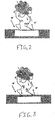
- conductive polymer means either a single conductive polymer, a dual strand conductive polymer, a combination of a single conductive polymer or a dual conductive polymer or an organic-inorganic composite hybrid composed of a conductive organic component and an inorganic component, where the conductive organic component may comprise an aforementioned conductive polymer and the inorganic component may comprise an inorganic inhibitor species (See FIG. 2 ) or a film forming agent (See FIG. 3 ).
- Suitable single conductive polymers may include polyaniline, polyacetylene, polypyrrole, polythiophene, poly(phenylene vinylene), and the like.
- Suitable dual strand conductive polymers may include at least one of the following polymers: polyaniline, polyacetylene, polypyrrole, polythiophene, and poly(phenylene vinylene), bonded to a polyanion, wherein the bond is not a covalent bond.
- Suitable polyanions comprise at least one of the following: polyacrylic acid, polysulfonic acid (such as poly(styrene sulfonic acid)) or polycarboxylic acids (such as poly(acrylic acid) or poly(methylmethacrylate)).
- the conductive polymer includes at least one terminal end having a coupling agent attached thereto.
- the term "coupling agent” means a functional group bonded to the terminal end of a conductive polymer.
- the terminal end functional group of the conductive polymer may include any one of the following: beta-diketones, mercaptoesters, benzotriazoles, benzothiazoles, amines, and carboxylic acids, combinations comprising at least one of the foregoing, and the like.
- these functional groups are recognized for their ability to enhance the adhesive bond strength of thermoset resins to metallic substrates.
- the resultant electrically conductive polymer film is covalently bonded to the article's surface, and bonded at a relatively high density to intermetallic particles on the article's surface.
- the molecular geometry of the conductive polymers may be branched or dendritic.
- inorganic inhibitor species means a selective inhibitor species that precipitates a layer of non-conductive material (Inh - shown in FIG. 2 ) upon a surface of an active corrosion site.
- Inorganic inhibitor species are generally known for their inhibitive and/or self-healing properties as known to one of ordinary skill in the art. Suitable inorganic inhibitor species for use herein are described and disclosed in U.S.P.N. 6,537,678 to Putnam et al. .
- inorganic inhibitor species may include metals of Groups V, VI and the lanthanide series of metals of the aforementioned Periodic Table of Elements as referenced above.
- film forming agent means a selective agent that precipitates a non-conductive material (Ag - shown in FIG. 3 ) to form a barrier film upon the entirety of a surface.
- Suitable film forming agents for use herein are titanium oxide, titanium dioxide, hafnium oxide, hafnium dioxide, zirconium oxide, and zirconium dioxide.
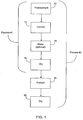
- process #1 may be utilized to form an exemplary embodiment of a coated article (See FIG. 4 ) as well as serve as precursor steps to performing process #2.
- Process #2 may be utilized to form another exemplary embodiment of another coated article (See FIG. 5 ).
- an article e.g., an aluminum-based part
- pretreatment such as an abrasive cleaning technique, e.g., deoxidizing, degreasing, and the like, followed by optional rinsing and drying steps as known to one of ordinary skill in the art.
- one or more surfaces to be coated may be abrasively treated.
- the abrasively cleaned article may be washed in a mild detergent, and then rinsed with tap water, deionized water or ethanol as known to one of ordinary skill in the art.
- a chemical etch or deoxidizing surface treatment step followed by a water rinse may also optionally be applied after washing in a mild detergent as known to one of ordinary skill in the art.
- the article may be contacted at step 12 with a solution comprising a solvent, a non-conductive material and a conductive polymer.
- a solution comprising a solvent, a non-conductive material and a conductive polymer.
- the conductive polymer has at least one coupling agent bonded thereto.
- suitable solvents may include any solvent that can dissolve the conductive polymer and non-conductive material.
- Suitable contacting techniques may include immersion, spraying, brushing, combinations comprising at least one of the foregoing processes, and the like.
- a contacting technique may adapt the contacting technique as recognized in order to form the electrically conductive material coating upon the surface of the article.
- the pH may fluctuate throughout the process due to the sensitive nature of the chemistries involved as known to one of ordinary skill in the art.
- the solution may be monitored to maintain a pH range of about 3.5 to about 10.5.
- the article may be immersed within the solution for a period of time of about 1 minute to about 10 minutes to form the electrically conductive coating.
- the layer of non-conductive material forms in situ, that is, a layer of a metal oxide, as a reaction byproduct of the contacting processes described above.
- the inorganic inhibitor species or film forming agent provide the starting material for the resultant non-conductive material layer.
- the conductive polymer with the use of a coupling agent, binds to the intermetallic particles present in the article's surface.
- the conductive polymer is in the form of strands such that at least one terminal end binds to an intermetallic particle while at least one other terminal end remains unattached.
- the unattached terminal end is able to settle at or proximate to the surface of the layer of metal oxide, or non-conductive material layer, in order to form and act as an electrically conductive conduit between the surface of the non-conductive material layer and the article's surface.
- the coated article may be rinsed at step 16 using any one of a number of techniques known to one of ordinary skill in the art and dried at step 18. Suitable drying techniques include conventional techniques such as by air, heating element, infrared element, combinations comprising at least one of the foregoing, and the like, as known to one of ordinary skill in the art.
- the coated article may be dried at a temperature of about 25°C (77°F) to about 125°C (257°F) for a period of time of about 0.5 to about 24 hours.
- a resultant coated article 30 of process #1 may comprise at least one surface 32 having disposed thereupon a non-conductive material layer 34 containing a plurality of electrically conductive polymer strands 36.
- the plurality of electrically conductive polymer strands 36 may be bonded to a plurality of intermetallic particles 37 present throughout the surface 32 and extending to and proximate to a surface 38 of the non-conductive material layer 34.
- the resulting non-conductive material layer 34 may have a thickness of about 50 nanometers to about 1000 nanometers.
- the coated article may undergo further steps to form yet another exemplary embodiment of an exemplary process, exemplary coating and exemplary coated article described herein.
- the coated article of FIG. 2 may again be contacted with a solution comprising a solvent and an electrically conductive material, to form an electrically conductive layer upon the non-conductive layer containing the veined network of conductive polymer strands described above.
- the electrically conductive material includes a coupling agent.
- Suitable contacting processes may include immersion, air spray, electrostatic deposition, brush application, flood coating, chemical conversion, sol gel, cold spray, sputtering, vapor deposition, combinations comprising at least one of the foregoing, and the like, as known to one of ordinary skill in the art.
- a sol gel overlay coating solution may be prepared from a group IV metal based organic compound with the addition of a conductive polymer in the presence or absence of an alcohol, ketone, or similar solvents.
- the group IV metal may be aluminum and the compound may be an aluminum isopropoxide compound.
- the gels are formed by processing metal alkoxides, first hydrolyzing and then polymerizing to form the gel as known to one of ordinary skill in the art.
- the group IV metal may comprise approximately 0 to approximately 90 weight % of the sol gel based upon the total atom % of the sol gel. During preparation, the pH of the sol gel is carefully controlled.
- Fracture of the non-conductive coating layer may be prevented through the addition of one or more chemical additives, such as surfactants, drying control chemical additives, and the like, and other processing techniques known to one of ordinary skill in the art.
- the sol gel may undergo an optional rinsing step (not shown) to thin the gel and displace any excess solvent present as known to one of ordinary skill in the art.
- the aluminum alloy articles may undergo a heat treatment at a temperature of up to about 125°C (257°F) to fully evaporate the gel and form a uniform coating. Heat treatment temperatures may be reduced by careful replacement of water with alcohols and other volatile solvents as known to one of ordinary skill in the art.
- the overlay coating solution may be formed through traditional polymerization techniques to form a polymer gel with the entrapped conductive material and group IV metal as known to one of ordinary skill in the art.
- multi-component oxides may be achieved by dissolving hydrous oxides or alkoxides together with polyhydroxy alcohol and a chelating agent. The introduction of this organic polymer component to the inorganic sol gel will lead to more flexible and functionalized films.
- the coated article may be optionally rinsed (not shown) using any one of a number of techniques known to one of ordinary skill in the art and dried at step 20. Suitable drying techniques include conventional techniques such as by air, heating element, infrared element, combinations comprising at least one of the foregoing, and the like, as known to one of ordinary skill in the art.
- the coated article may be dried at a temperature of about 25°C (77°F) to about 125°C (257°F) for a period of time of about 0.5 to about 24 hours.
- a resultant coated article 40 of process #2 may have at least one surface 42 having disposed thereupon a non-conductive material layer 44 containing the aforementioned veined network of electrically conductive polymer strands 46 whereupon an electrically conductive overlay coating layer 48 may be disposed.
- the plurality of electrically conductive polymer strands 46 may be bonded to a plurality of intermetallic particles 47 present throughout the surface 42 and extending to and proximate to a surface 50 of the non-conductive material layer 44 and in contact with the electrically conductive overlay coating layer 48.
- the resulting electrically overlay coating layer 48 and non-conductive material layer 44 may have a combined thickness of about 50 nanometers to about 5000 nanometers.
Landscapes
- Chemical & Material Sciences (AREA)
- Life Sciences & Earth Sciences (AREA)
- Engineering & Computer Science (AREA)
- Materials Engineering (AREA)
- Wood Science & Technology (AREA)
- Organic Chemistry (AREA)
- Physics & Mathematics (AREA)
- Spectroscopy & Molecular Physics (AREA)
- Laminated Bodies (AREA)
- Paints Or Removers (AREA)
- Application Of Or Painting With Fluid Materials (AREA)
- Chemically Coating (AREA)
- Other Surface Treatments For Metallic Materials (AREA)
Claims (10)
- Beschichtungszusammensetzung, umfassend:eine elektrisch leitfähige Phase und eine nicht-leitfähige Phase,wobei die leitfähige Phase ein leitfähiges Polymer kombiniert mit einer anorganischen Inhibitorspezies oder einem Filmbildungsmittel umfasst,das leitfähige Polymer mindestens eines der folgenden einschließt: ein einzelnes leitfähiges Polymer, ein zweisträngiges leitfähiges Polymer oder eine Kombination aus einem einzelnen leitfähigen Polymer und einem zweisträngigen leitfähigen Polymer, wobei das leitfähige Polymer mindestens ein endständiges Ende einschließt, an das ein Kupplungsmittel gebunden ist, das eine beliebige der folgenden funktionalen Gruppen umfasst: beta-Diketone, Mercaptoester, Benzotriazole, Benzothiazole, Amine und Carbonsäuren,die anorganische Inhibitorspezies mindestens ein Metall der Gruppe V, VI oder der Lanthanidreihen umfasst,das Filmbildungsmittel ausgewählt ist aus Titanoxid, Titandioxid, Hafniumoxid, Hafniumdioxid, Zirconiumoxid und Zirconiumdioxid, undwobei die nicht-leitfähige Phase ein oder mehrere Oxide von Aluminium, Gallium, Germanium, Indium, Indium, Zinn, Blei, Bor, Silicium und Bismut umfasst.
- Beschichtungszusammensetzung nach Anspruch 1, wobei das einzelne leitfähige Polymer mindestens eines der folgenden umfasst: Polyanilin, Polyacetylen, Polypyrrol, Polythiophen und Poly(phenylen-vinylen).
- Beschichtungszusammensetzung nach einem der vorhergehenden Ansprüche, wobei das zweisträngige leitfähige Polymer einen Komplex aus mindestens einem Polyanion und mindestens einem der folgenden umfasst: Polyanilin, Polyacetylen, Polypyrrol, Polythiophen und Poly(phenylen-vinylen), und/oder wobei das Polyanion mindestens eine der folgenden umfasst: Polyacrylsäure, Polysulfonsäure (wie Poly(styrolsulfonsäure)) oder Polycarbonsäuren (wie Poly(acrylsäure) oder Poly(methylmethacrylat)).
- Verfahren zum Beschichten eines Artikels, umfassend die Schritte:a) Kontaktieren eines Artikels auf Aluminiumbasis mit einer Lösung, um eine Schicht aus nicht-leitfähigem Material zu bilden, wobei die Lösung ein Lösungsmittel, eine nicht-leitfähige Phase und eine leitfähige Phase einschließt; undb) Trocknen eines beschichteten Teils auf Aluminiumbasis; wobeidie leitfähige Phase ein leitfähiges Polymer kombiniert mit einer anorganischen Inhibitorspezies oder einem Filmbildungsmittel umfasst,
das leitfähige Polymer mindestens eines der folgenden aufweist: ein einzelnes leitfähiges Polymer, ein zweisträngiges leitfähiges Polymer oder eine Kombination aus einem einzelnen leitfähigen Polymer und einem zweisträngigen leitfähigen Polymer, wobei das leitfähige Polymer mindestens ein endständiges Ende einschließt, an das ein Kupplungsmittel gebunden ist, welches eine beliebige der folgenden funktionalen Gruppen umfasst: beta-Diketone, Mercaptoester, Benzotriazole, Benzothiazole, Amine und Carbonsäuren,
die anorganische Inhibitorspezies mindestens ein Metall der Gruppe V, VI oder der Lanthanidreihen umfasst,
das Filmbildungsmittel ausgewählt ist aus Titanoxid, Titandioxid, Hafniumoxid, Hafniumdioxid, Zirconiumoxid und Zirconiumdioxid, und
die nicht-leitfähige Phase ein oder mehrere Oxide von Aluminium, Gallium, Germanium, Indium, Indium, Zinn, Blei, Bor, Silicium und Bismut umfasst. - Verfahren nach Anspruch 4, wobei das Kontaktieren das Kontaktieren des Artikels auf Aluminiumbasis mit einer Lösung umfasst, die in einem pH-Bereich von 3,5 bis 10,5 gehalten wird.
- Verfahren nach Anspruch 4 oder Anspruch 5, wobei das Kontaktieren das Kontaktieren des Artikels auf Aluminiumbasis mit der Lösung für einen Zeitraum von 1 Minute bis 10 Minuten umfasst.
- Verfahren nach einem der Ansprüche 4 bis 6, wobei das Kontaktieren ein beliebiges der folgenden Verfahren umfasst: Eintauchen, Sprühen oder Pinselauftrag.
- Verfahren nach einem der Ansprüche 4 bis 7, ferner umfassend die folgenden Schritte:Kontaktieren eines getrockneten beschichteten Teils auf Aluminiumbasis mit einer Lösung, um eine elektrisch leitfähige Materialschicht auf einer nicht-leitfähigen Materialschicht des getrockneten beschichteten Teils auf Aluminiumbasis zu bilden, wobei die Lösung ein Lösungsmittel und ein elektrisch leitfähiges Material einschließt; undTrocknen eines beschichteten Teils auf Aluminiumbasis.
- Verfahren nach einem der Ansprüche 5 bis 8, ferner umfassend Vorbehandeln eines zu beschichtenden Artikels auf Aluminiumbasis, bevor der Artikel auf Aluminiumbasis mit der Lösung kontaktiert wird.
- Beschichteter Artikel, der aus der Zusammensetzung nach Anspruch 1 gebildet ist, umfassend:einen Artikel, der mindestens eine Oberfläche mit einer darauf angeordneten Beschichtung einschließt,wobei die Beschichtung eine Schicht aus nicht-leitfähigem Material einschließt, die mindestens ein leitfähiges Polymer enthält,wobei das mindestens eine leitfähige Polymer mindestens eines der folgenden einschließt: ein einzelnes leitfähiges Polymer, ein zweisträngiges leitfähiges Polymer oder eine Kombination aus einem einzelnen leitfähigen Polymer und einem zweisträngigen leitfähigen Polymer, undwobei mindestens ein endständiges Ende des leitfähigen Polymers an mindestens ein intermetallisches Partikel der mindestens einen Oberfläche gebunden ist, während mindestens ein anderes endständiges Ende des leitfähigen Polymers ungebunden bleibt, wobei sich das ungebundene Ende zu der Oberfläche der nicht-leitfähigen Materialschicht hin und an diese annähernd erstreckt.
Applications Claiming Priority (1)
| Application Number | Priority Date | Filing Date | Title |
|---|---|---|---|
| US11/832,239 US8283044B2 (en) | 2007-08-01 | 2007-08-01 | Conversion coatings with conductive additives, processes for applying same and their coated articles |
Publications (2)
| Publication Number | Publication Date |
|---|---|
| EP2020430A1 EP2020430A1 (de) | 2009-02-04 |
| EP2020430B1 true EP2020430B1 (de) | 2017-06-21 |
Family
ID=39760915
Family Applications (1)
| Application Number | Title | Priority Date | Filing Date |
|---|---|---|---|
| EP08252602.1A Ceased EP2020430B1 (de) | 2007-08-01 | 2008-07-31 | Konvertierungsbeschichtungen mit leitfähigen Zusätzen, Auftragungsverfahren dafür und damit beschichtete Artikel |
Country Status (4)
| Country | Link |
|---|---|
| US (1) | US8283044B2 (de) |
| EP (1) | EP2020430B1 (de) |
| CN (1) | CN101358103B (de) |
| BR (1) | BRPI0801380A2 (de) |
Families Citing this family (10)
| Publication number | Priority date | Publication date | Assignee | Title |
|---|---|---|---|---|
| WO2013049927A1 (en) * | 2011-10-05 | 2013-04-11 | Maax Bath, Inc. | Decorative panel and method for manufacturing the same |
| WO2014039509A2 (en) | 2012-09-04 | 2014-03-13 | Ocv Intellectual Capital, Llc | Dispersion of carbon enhanced reinforcement fibers in aqueous or non-aqueous media |
| CN103729103B (zh) * | 2014-01-26 | 2016-09-14 | 南通中尧机电制造有限公司 | 一种有机电容触摸屏 |
| CN103744570B (zh) * | 2014-01-26 | 2016-09-14 | 南通中尧机电制造有限公司 | 一种有机电容触摸屏的制造方法 |
| CN103809827B (zh) * | 2014-01-26 | 2016-08-24 | 南通中尧机电制造有限公司 | 一种有机电容触摸屏的制造方法 |
| CN103729102B (zh) * | 2014-01-26 | 2016-09-14 | 南通中尧机电制造有限公司 | 一种有机电容触摸屏 |
| EP2940079B1 (de) * | 2014-04-30 | 2017-08-23 | Agfa-Gevaert | Nichtwässrige Dispersionen aus leitfähigem Polymer |
| US9732422B2 (en) | 2015-01-23 | 2017-08-15 | United Technologies Corporation | Method of coating metallic powder particles |
| CA3214343A1 (en) | 2021-03-30 | 2022-10-06 | Jean Sebastien CHAMPAGNE | Improved shower assembly with integrated water collection and dispersion |
| CN116356308B (zh) * | 2023-04-07 | 2023-08-18 | 国网安徽省电力有限公司亳州供电公司 | 一种提高耐候钢耐腐蚀性能的表面氟化处理方法 |
Citations (3)
| Publication number | Priority date | Publication date | Assignee | Title |
|---|---|---|---|---|
| EP0902103A1 (de) * | 1996-02-05 | 1999-03-17 | Nippon Steel Corporation | Oberflächenbehandeltes metallisches korrosionsbeständiges material und oberflächenbehandlung dafür |
| WO1999037829A1 (en) * | 1998-01-26 | 1999-07-29 | Natural Coating Systems, Llc | Group iv-a protective films for solid surfaces |
| US20030051773A1 (en) * | 2001-09-14 | 2003-03-20 | Dolan Shawn E. | Conversion coating compositions |
Family Cites Families (19)
| Publication number | Priority date | Publication date | Assignee | Title |
|---|---|---|---|---|
| US3330697A (en) | 1963-08-26 | 1967-07-11 | Sprague Electric Co | Method of preparing lead and alkaline earth titanates and niobates and coating method using the same to form a capacitor |
| US4812363A (en) | 1987-10-26 | 1989-03-14 | Bell James P | Polymeric coupling agent |
| JP3564130B2 (ja) * | 1992-09-14 | 2004-09-08 | サイテク・テクノロジー・コーポレーシヨン | ハイブリッド金属/複合構造体のガルバニック分解の減少 |
| US6150032A (en) * | 1995-07-13 | 2000-11-21 | The Board Of Governors For Higher Education, State Of Rhode Island And Providence Plantations | Electroactive polymer coatings for corrosion control |
| US6153022A (en) | 1995-10-13 | 2000-11-28 | Henkel Corporation | Composition and process for surface treatment of aluminum and its alloys |
| EP0837112A3 (de) | 1996-10-15 | 1998-11-11 | Nitto Chemical Industry Co., Ltd. | Vernetzbare, elektrisch leitfähige Zusammensetzung, elektrischer Leiter und Verfahren zur Herstellung derselben |
| WO2000020657A1 (en) | 1998-10-08 | 2000-04-13 | Henkel Corporation | Process and composition for conversion coating with improved heat stability |
| US6451443B1 (en) | 1999-02-19 | 2002-09-17 | University Of New Orleans Research And Technology Foundation, Inc. | Chromium-free conversion coating |
| US6222166B1 (en) | 1999-08-09 | 2001-04-24 | Watlow Electric Manufacturing Co. | Aluminum substrate thick film heater |
| US6972098B1 (en) | 2000-07-11 | 2005-12-06 | The United States Of America As Represented By The Administrator Of The National Aeronautics And Space Administration | Corrosion prevention of cold rolled steel using water dispersible lignosulfonic acid doped polyaniline |
| US6537678B1 (en) | 2000-09-20 | 2003-03-25 | United Technologies Corporation | Non-carcinogenic corrosion inhibiting additive |
| US6613390B2 (en) | 2000-12-19 | 2003-09-02 | United Technologies Corporation | Compound, non-chromium conversion coatings for aluminum alloys |
| EP1379581A4 (de) | 2001-03-08 | 2005-03-23 | Rhode Island Education | Leitfähiger polymer-anorganischer hybridverbund |
| KR100458498B1 (ko) * | 2001-03-23 | 2004-12-03 | 이석현 | 전기전도도와 현상성을 향상시키는 산반응 분해성작용기가 치환된 전도성 고분자 및 그의 조성물 |
| WO2003027203A2 (en) | 2001-09-27 | 2003-04-03 | The Board Of Governors For Higher Education, State Of Rhode Island And Providence Plantations | Conducting polymer for pretreatment of metallic and non-metallic surfaces |
| US6821633B2 (en) | 2002-05-17 | 2004-11-23 | Henkel Kommanditgesellschaft Auf Aktien (Henkel Kgaa) | Non-chromate conversion coating compositions, process for conversion coating metals, and articles so coated |
| DE10234363A1 (de) | 2002-07-27 | 2004-02-12 | Robert Bosch Gmbh | Korrosionsschutzlack für metallische Oberflächen |
| JP4526807B2 (ja) | 2002-12-24 | 2010-08-18 | 日本ペイント株式会社 | 塗装前処理方法 |
| US20060134339A1 (en) | 2004-12-21 | 2006-06-22 | Shengxian Wang | Coating compositions and methods of making and using them |
-
2007
- 2007-08-01 US US11/832,239 patent/US8283044B2/en active Active
-
2008
- 2008-04-30 BR BRPI0801380-2A patent/BRPI0801380A2/pt not_active IP Right Cessation
- 2008-07-31 EP EP08252602.1A patent/EP2020430B1/de not_active Ceased
- 2008-08-01 CN CN2008101447977A patent/CN101358103B/zh not_active Expired - Fee Related
Patent Citations (3)
| Publication number | Priority date | Publication date | Assignee | Title |
|---|---|---|---|---|
| EP0902103A1 (de) * | 1996-02-05 | 1999-03-17 | Nippon Steel Corporation | Oberflächenbehandeltes metallisches korrosionsbeständiges material und oberflächenbehandlung dafür |
| WO1999037829A1 (en) * | 1998-01-26 | 1999-07-29 | Natural Coating Systems, Llc | Group iv-a protective films for solid surfaces |
| US20030051773A1 (en) * | 2001-09-14 | 2003-03-20 | Dolan Shawn E. | Conversion coating compositions |
Also Published As
| Publication number | Publication date |
|---|---|
| CN101358103A (zh) | 2009-02-04 |
| US20090035473A1 (en) | 2009-02-05 |
| EP2020430A1 (de) | 2009-02-04 |
| CN101358103B (zh) | 2012-02-22 |
| US8283044B2 (en) | 2012-10-09 |
| BRPI0801380A2 (pt) | 2009-09-08 |
Similar Documents
| Publication | Publication Date | Title |
|---|---|---|
| US8283044B2 (en) | Conversion coatings with conductive additives, processes for applying same and their coated articles | |
| US9394613B2 (en) | Processes for applying a conversion coating with conductive additive(s) and the resultant coated articles | |
| US8298350B2 (en) | Chromium-free conversion coating | |
| Tallman et al. | Electroactive conducting polymers for corrosion control: Part 1. General introduction and a review of non-ferrous metals | |
| US5721056A (en) | Process for the production of corrosion-protected metallic materials and materials obtainable therewith | |
| CN101184867B (zh) | 金属用化学转换处理液及处理方法 | |
| JP3822638B2 (ja) | 腐食制御用電気活性ポリマー・コーティング | |
| JP6351512B2 (ja) | 基材の金属表面の被覆方法およびその方法により被覆される物品 | |
| JP5720521B2 (ja) | 亜鉛系めっき鋼板の製造方法および亜鉛系めっき鋼板 | |
| JP5663915B2 (ja) | 亜鉛系めっき鋼板 | |
| CN103797157B (zh) | 镀锌系钢板用表面处理液和镀锌系钢板及其制造方法 | |
| JP6461136B2 (ja) | 基材の金属表面を被覆する方法およびこの方法により被覆された物品 | |
| CA2892829A1 (en) | Method for coating metallic surfaces of substrates, and objects coated according to this method | |
| CA2510122A1 (en) | Article with a coating of electrically conductive polymer and process for production thereof | |
| CN103060791B (zh) | 一种含有钛酸四异丙酯的金属表面硅烷处理剂及其制备方法 | |
| JP5097940B2 (ja) | ドープ導電性ポリマーを含有する高耐食性皮膜の成膜方法 | |
| US5372853A (en) | Treatment to improve corrosion resistance of autodeposited coatings of metallic surfaces | |
| JP3680098B2 (ja) | 被膜形成組成物 | |
| JP2007190896A (ja) | 塗装後耐食性に優れた有機樹脂被覆鋼板 | |
| US20090087611A1 (en) | Steel sheet overlap structure, method for manufacturing same, and steel sheet for steel sheet overlap structure | |
| CN103087566B (zh) | 一种防腐蚀镀锌钢板表面硅烷化防护处理剂及其制备方法 | |
| KR101223879B1 (ko) | 도금액 조성물 및 상기를 이용한 피막 형성 방법 | |
| Subathira et al. | Anticorrosion behavior of polyaniline/polypyrrole composite coatings on stainless steel | |
| JP4528061B2 (ja) | 加工密着性を改善した有機樹脂被覆鋼板 | |
| JPH08243479A (ja) | 耐食性と塗料密着性の優れたクロメート/有機樹脂複合下地処理方法 |
Legal Events
| Date | Code | Title | Description |
|---|---|---|---|
| PUAI | Public reference made under article 153(3) epc to a published international application that has entered the european phase |
Free format text: ORIGINAL CODE: 0009012 |
|
| AK | Designated contracting states |
Kind code of ref document: A1 Designated state(s): AT BE BG CH CY CZ DE DK EE ES FI FR GB GR HR HU IE IS IT LI LT LU LV MC MT NL NO PL PT RO SE SI SK TR |
|
| AX | Request for extension of the european patent |
Extension state: AL BA MK RS |
|
| 17P | Request for examination filed |
Effective date: 20090623 |
|
| 17Q | First examination report despatched |
Effective date: 20090805 |
|
| AKX | Designation fees paid |
Designated state(s): DE GB |
|
| RIN1 | Information on inventor provided before grant (corrected) |
Inventor name: ARSENAULT-PREECE, SARAH Inventor name: BEALS, JAMES T. Inventor name: JAWOROWSKI, MARK R. |
|
| RAP1 | Party data changed (applicant data changed or rights of an application transferred) |
Owner name: UNITED TECHNOLOGIES CORPORATION |
|
| GRAP | Despatch of communication of intention to grant a patent |
Free format text: ORIGINAL CODE: EPIDOSNIGR1 |
|
| INTG | Intention to grant announced |
Effective date: 20170104 |
|
| GRAS | Grant fee paid |
Free format text: ORIGINAL CODE: EPIDOSNIGR3 |
|
| GRAA | (expected) grant |
Free format text: ORIGINAL CODE: 0009210 |
|
| AK | Designated contracting states |
Kind code of ref document: B1 Designated state(s): DE GB |
|
| REG | Reference to a national code |
Ref country code: GB Ref legal event code: FG4D |
|
| REG | Reference to a national code |
Ref country code: DE Ref legal event code: R096 Ref document number: 602008050750 Country of ref document: DE |
|
| REG | Reference to a national code |
Ref country code: DE Ref legal event code: R097 Ref document number: 602008050750 Country of ref document: DE |
|
| PLBE | No opposition filed within time limit |
Free format text: ORIGINAL CODE: 0009261 |
|
| STAA | Information on the status of an ep patent application or granted ep patent |
Free format text: STATUS: NO OPPOSITION FILED WITHIN TIME LIMIT |
|
| 26N | No opposition filed |
Effective date: 20180322 |
|
| PGFP | Annual fee paid to national office [announced via postgrant information from national office to epo] |
Ref country code: GB Payment date: 20190624 Year of fee payment: 12 Ref country code: DE Payment date: 20190620 Year of fee payment: 12 |
|
| REG | Reference to a national code |
Ref country code: DE Ref legal event code: R119 Ref document number: 602008050750 Country of ref document: DE |
|
| GBPC | Gb: european patent ceased through non-payment of renewal fee |
Effective date: 20200731 |
|
| PG25 | Lapsed in a contracting state [announced via postgrant information from national office to epo] |
Ref country code: GB Free format text: LAPSE BECAUSE OF NON-PAYMENT OF DUE FEES Effective date: 20200731 |
|
| PG25 | Lapsed in a contracting state [announced via postgrant information from national office to epo] |
Ref country code: DE Free format text: LAPSE BECAUSE OF NON-PAYMENT OF DUE FEES Effective date: 20210202 |