EP2020613A2 - Optisches System - Google Patents
Optisches System Download PDFInfo
- Publication number
- EP2020613A2 EP2020613A2 EP08252316A EP08252316A EP2020613A2 EP 2020613 A2 EP2020613 A2 EP 2020613A2 EP 08252316 A EP08252316 A EP 08252316A EP 08252316 A EP08252316 A EP 08252316A EP 2020613 A2 EP2020613 A2 EP 2020613A2
- Authority
- EP
- European Patent Office
- Prior art keywords
- lens group
- lens
- optical system
- refractive power
- end state
- Prior art date
- Legal status (The legal status is an assumption and is not a legal conclusion. Google has not performed a legal analysis and makes no representation as to the accuracy of the status listed.)
- Withdrawn
Links
- 230000003287 optical effect Effects 0.000 title claims abstract description 201
- 230000014509 gene expression Effects 0.000 claims abstract description 47
- 238000000034 method Methods 0.000 claims abstract description 16
- 238000003384 imaging method Methods 0.000 claims abstract description 13
- 230000004075 alteration Effects 0.000 description 65
- 230000005499 meniscus Effects 0.000 description 40
- 206010010071 Coma Diseases 0.000 description 25
- 239000011521 glass Substances 0.000 description 8
- 238000012937 correction Methods 0.000 description 7
- 230000000694 effects Effects 0.000 description 6
- 239000011347 resin Substances 0.000 description 6
- 229920005989 resin Polymers 0.000 description 6
- 230000007423 decrease Effects 0.000 description 5
- 239000000463 material Substances 0.000 description 4
- 201000009310 astigmatism Diseases 0.000 description 2
- 239000011248 coating agent Substances 0.000 description 1
- 238000000576 coating method Methods 0.000 description 1
- 150000001875 compounds Chemical class 0.000 description 1
- 238000010586 diagram Methods 0.000 description 1
- 238000000465 moulding Methods 0.000 description 1
- 230000011514 reflex Effects 0.000 description 1
- 238000002834 transmittance Methods 0.000 description 1
Images








Classifications
-
- G—PHYSICS
- G02—OPTICS
- G02B—OPTICAL ELEMENTS, SYSTEMS OR APPARATUS
- G02B15/00—Optical objectives with means for varying the magnification
- G02B15/14—Optical objectives with means for varying the magnification by axial movement of one or more lenses or groups of lenses relative to the image plane for continuously varying the equivalent focal length of the objective
- G02B15/16—Optical objectives with means for varying the magnification by axial movement of one or more lenses or groups of lenses relative to the image plane for continuously varying the equivalent focal length of the objective with interdependent non-linearly related movements between one lens or lens group, and another lens or lens group
- G02B15/177—Optical objectives with means for varying the magnification by axial movement of one or more lenses or groups of lenses relative to the image plane for continuously varying the equivalent focal length of the objective with interdependent non-linearly related movements between one lens or lens group, and another lens or lens group having a negative front lens or group of lenses
-
- G—PHYSICS
- G02—OPTICS
- G02B—OPTICAL ELEMENTS, SYSTEMS OR APPARATUS
- G02B15/00—Optical objectives with means for varying the magnification
- G02B15/14—Optical objectives with means for varying the magnification by axial movement of one or more lenses or groups of lenses relative to the image plane for continuously varying the equivalent focal length of the objective
- G02B15/144—Optical objectives with means for varying the magnification by axial movement of one or more lenses or groups of lenses relative to the image plane for continuously varying the equivalent focal length of the objective having four groups only
- G02B15/1445—Optical objectives with means for varying the magnification by axial movement of one or more lenses or groups of lenses relative to the image plane for continuously varying the equivalent focal length of the objective having four groups only the first group being negative
- G02B15/144511—Optical objectives with means for varying the magnification by axial movement of one or more lenses or groups of lenses relative to the image plane for continuously varying the equivalent focal length of the objective having four groups only the first group being negative arranged -+-+
-
- G—PHYSICS
- G02—OPTICS
- G02B—OPTICAL ELEMENTS, SYSTEMS OR APPARATUS
- G02B27/00—Optical systems or apparatus not provided for by any of the groups G02B1/00 - G02B26/00, G02B30/00
- G02B27/64—Imaging systems using optical elements for stabilisation of the lateral and angular position of the image
- G02B27/646—Imaging systems using optical elements for stabilisation of the lateral and angular position of the image compensating for small deviations, e.g. due to vibration or shake
-
- Y—GENERAL TAGGING OF NEW TECHNOLOGICAL DEVELOPMENTS; GENERAL TAGGING OF CROSS-SECTIONAL TECHNOLOGIES SPANNING OVER SEVERAL SECTIONS OF THE IPC; TECHNICAL SUBJECTS COVERED BY FORMER USPC CROSS-REFERENCE ART COLLECTIONS [XRACs] AND DIGESTS
- Y10—TECHNICAL SUBJECTS COVERED BY FORMER USPC
- Y10S—TECHNICAL SUBJECTS COVERED BY FORMER USPC CROSS-REFERENCE ART COLLECTIONS [XRACs] AND DIGESTS
- Y10S359/00—Optical: systems and elements
- Y10S359/90—Methods
Definitions
- the present invention relates to an optical system, an imaging apparatus, and a method for forming an image by the optical system.
- the present invention has made in view of above described problems and has an object to provide an optical system having excellent optical performance, an imaging apparatus, and a method for forming an image by the optical system.
- an imaging apparatus equipped with the optical system according to the first aspect.
- an imaging apparatus equipped with the optical system according to the third aspect.
- the present invention makes it possible to provide an optical system having excellent optical performance, an imaging apparatus, and a method for forming an image by the optical system.
- An optical system includes, in order from an object, a first lens group having negative refractive power, a second lens group having positive refractive power, a third lens group having negative refractive power, and a fourth lens group having positive refractive power. At least one of the first lens group, the second lens group, the third lens group, and the fourth lens group has at least one A lens.
- the A lens satisfies the following conditional expressions (1) and (2): 1.85000 ⁇ nA - 0.92 ⁇ fA / fG ⁇ - 0.10
- fA denotes a focal length of the A lens
- fG denotes a focal length of the lens group including the A lens.
- Conditional expression (1) defines a refractive index of the A lens in order to realize excellent optical performance of an optical system according to the present application.
- the radius of curvature of the A lens becomes small in order to keep refractive power of the A lens, so that it becomes difficult to excellently correct curvature of field and coma.
- an optical system according to the present application makes it possible to realize excellent optical performance.
- Conditional expression (2) defines a relation between the focal length of the A lens and that of the lens group including the A lens in order to realize excellent optical performance of an optical system according to the present application.
- an optical system according to the present application makes it possible to realize excellent optical performance.
- Conditional expression (4) defines a refractive index of the A lens in order to realize excellent optical performance of an optical system according to the present application.
- nA When the value nA is equal to or falls below the lower limit of conditional expression (4), in order to keep refractive power of the A lens, the radius of curvature of the A lens becomes small, so that it becomes difficult to excellently correct curvature of field and coma. In order to secure the effect of the present application, it is preferable to set the lower limit of conditional expression (4) to 1.88000.
- an optical system according to the present application makes it possible to realize excellent optical performance.
- Conditional expression (3) defines an Abbe number of the A lens in order to excellently correct longitudinal chromatic aberration and lateral chromatic aberration of the optical system according to the present application.
- the value ⁇ A is equal to or exceeds the upper limit of conditional expression (3), the Abbe number of the A lens becomes large, so that it becomes impossible to sufficiently correct chromatic aberration in the lens group including the A lens and in the optical system.
- an optical system according to the present application makes it possible to excellently correct longitudinal chromatic aberration and lateral chromatic aberration.
- An optical system carries out vibration reduction on the image plane upon generating a camera shake by shifting a lens group or a portion of a lens group in the optical system as a vibration reduction lens group in a direction perpendicular to the optical axis.
- the vibration reduction lens group preferably includes an A lens.
- the radius of curvature of the A lens in the vibration reduction lens group becomes large, so that generation of decentered coma upon sifting the vibration reduction lens group becomes small, and excellent optical performance can be maintained.
- the vibration reduction lens group is preferably the third lens group or a portion of the third lens group.
- an optical system according to the present application becomes possible to make correction of spherical aberration consistent with correction of an image blur upon vibration reduction.
- At least one of the A lens is preferably cemented with another lens.
- an optical system according to the present application makes it possible to excellently correct longitudinal chromatic aberration and lateral chromatic aberration, and to make the system insensitive to decentering.
- At least one lens group including the A lens is preferably composed of two lenses or less.
- an optical system according to the present application makes it possible to construct the system simple, and to make the system insensitive to decentering, so that decentering coma can be suppressed.
- varying focal length from the wide-angle end state to the telephoto end state is preferably carried out by varying a distance between the first lens group and the second lens group, a distance between the second lens group and the third lens group, and a distance between the third lens group and the fourth lens group.
- an optical system makes it possible to easily vary the focal length, and to excellently correct curvature of field and spherical aberration over entire focal length range from the wide-angle end state to the telephoto end state.
- the second lens group and the fourth lens group are preferably moved in a body upon varying a focal length from the wide-angle end state to the telephoto end state.
- an optical system according to the present application makes it possible to excellently correct curvature of field. Moreover, curvature of field and coma caused by a decentering error of the lens groups generated upon moving these lens groups can be suppressed.
- An imaging apparatus is equipped with the above-described optical system.
- Fig. 1 is a sectional view showing a lens configuration of an optical system according to Example 1 of the present application in a wide-angle end state.
- the optical system according to Example 1 is composed of, in order from an object, a first lens group G1 having negative refractive power, a second lens group G2 having positive refractive power, a third lens group G3 having negative refractive power, and a fourth lens group G4 having positive refractive power.
- the first lens group G1 is composed of, in order from the object, a negative meniscus lens L11 having a convex surface facing the object, a double concave negative lens L12, and a positive meniscus lens L13 having a convex surface facing the object.
- the negative meniscus lens L11 is an aspherical lens that a resin layer is applied on an image side glass surface and forming an aspherical surface thereon.
- the second lens group G2 is composed of, in order from the object, a cemented lens constructed by a negative meniscus lens L21 having a convex surface facing the object cemented with a double convex positive lens L22, and a positive meniscus lens L23 having a convex surface facing the object.
- the third lens group G3 is composed of a cemented lens constructed by, in order from the object, a positive meniscus lens L31 having a concave surface facing the object cemented with a double concave negative lens L32. As shown later in Table 1, the positive meniscus lens L31 satisfies the above-described conditional expressions (1), (2), (3) and (4).
- the fourth lens group G4 is composed of, in order from the object, a plano-convex positive lens L41 having a plane surface facing the object, and a cemented lens constructed by a double convex positive lens L42 cemented with a negative meniscus lens L43 having a convex surface facing the image.
- an aperture stop S is disposed between the second lens group G2 and the third lens group G3.
- a flare stopper FS is disposed between the third lens group G3 and the fourth lens group G4.
- the first lens group G1 upon varying a focal length from a wide-angle end state to a telephoto end state, the first lens group G1 is moved at first to the image and then to the object, the second lens group G2, the third lens group G3 and the fourth lens group G4 are moved to the object such that a distance between the second lens group G2 and the third lens group G3 increases, a distance between the third lens group G3 and the fourth lens group G4 decreases.
- the second lens group G2 and the fourth lens group G4 are moved in a body to the object.
- the aperture stop S is move together with the third lens group G3.
- an image blur caused by a camera shake is corrected by shifting the third lens group G3 as a vibration reduction lens group in a direction perpendicular to the optical axis
- f denotes a focal length
- Bf denotes a back focal length
- the left most column “i” shows the lens surface number counted in order from the object side
- the second column “r” shows a radius of curvature of the lens surface
- the third column “d” shows a distance to the next surface
- Bf denotes a back focal length. The position of an aspherical surface is expressed by attaching "*" to the right side of the surface number.
- h denotes a vertical height from the optical axis
- x denotes a sag amount which is a distance along the optical axis from the tangent surface at the vertex of the aspherical surface to the aspherical surface at the vertical height h from the optical axis
- r denotes a radius of curvature of a reference sphere (a paraxial radius of curvature)
- K denotes a conical coefficient
- FNO denotes an f-number
- 2 ⁇ denotes an angle of view in degrees
- Y denotes an image height
- TL denotes a total lens length
- W denotes a wide-angle end state
- M denotes an intermediate focal length state
- T denotes a telephoto end state.
- di denotes a variable distance at the surface number i where i is an integer, d0 denotes a distance between the object and the most object side lens surface.
- mm is generally used for the unit of length such as the focal length, the radius of curvature and the distance to the next lens surface.
- the unit is not necessarily to be limited to "mm", and any other suitable unit can be used.
- the explanation of reference symbols is the same in the other Examples, so that duplicated explanations are omitted.
- a vibration reduction coefficient which is a ratio of a moving amount of an image on the image plane to that of the moving lens group perpendicular to the optical axis upon correcting a camera shake, of k, in order to correct rotational camera shake of an angle of ⁇
- the moving lens group for correcting the camera shake may be moved by the amount of (f ⁇ tan ⁇ )/k perpendicularly to the optical axis.
- the vibration reduction coefficient k is 1.08, and the focal length is 18.5(mm), so that the moving amount of the third lens group G3 for correcting a rotational camera shake of 0.734 degrees is 0.219(mm).
- the vibration reduction coefficient k is 1.74, and the focal length is 53.4(mm), so that the moving amount of the third lens group G3 for correcting a rotational camera shake of 0.432 degrees is 0.231 (mm).
- Figs. 2A and 2B are graphs showing various aberrations of the optical system according to Example 1 in the wide-angle end state upon focusing on infinity, in which Fig. 2A shows various aberrations without performing vibration reduction, and Fig. 2B shows coma upon performing vibration reduction with respect to a rotational camera shake of 0.734 degrees.
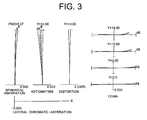
- Fig. 3 is a graph showing various aberrations of the optical system according to Example 1 in an intermediate focal length state upon focusing on infinity.
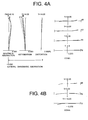
- Figs. 4A and 4B are graphs showing various aberrations of the optical system according to Example 1 in a telephoto end state upon focusing on infinity, in which Fig. 4A shows various aberrations without performing vibration reduction, and Fig. 4B shows coma upon performing vibration reduction with respect to a rotational camera shake of 0.432 degrees.
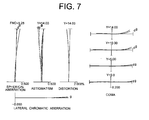
- FNO denotes an f-number
- Y denotes an image height.
- f-number with respect to the maximum aperture is shown.
- astigmatism and distortion the maximum value of the image height is shown.
- coma coma with respect to each image height is shown.
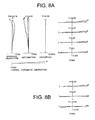
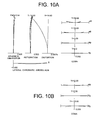
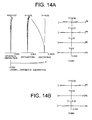
- astigmatism a solid line indicates a sagittal image plane, and a broken line indicates a meridional image plane.
- the optical system according to Example 1 shows superb optical performance as a result of good corrections to various aberrations in the wide-angle end state, in the intermediate focal length state, and in the telephoto end state.
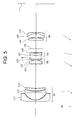
- Fig. 5 is a sectional view showing a lens configuration of an optical system according to Example 2 of the present application in a wide-angle end state.
- the optical system according to the present application is composed of, in order from the object, a first lens group G1 having negative refractive power, a second lens group G2 having positive refractive power, a third lens group G3 having negative refractive power, and a fourth lens group G4 having positive refractive power.
- the first lens group G1 is composed of, in order from the object, a negative meniscus lens L11 having a convex surface facing the object, a double concave negative lens L12, and a positive meniscus lens L13 having convex surface facing the object.
- the negative meniscus lens L11 is an aspherical lens that a resin layer is applied on an image side glass surface and forming an aspherical surface thereon.
- the second lens group G2 is composed of, in order from the object, a cemented lens constructed by a negative meniscus lens L21 having a convex surface facing the object cemented with a double convex positive lens L22, and a positive meniscus lens L23 having a convex surface facing the object.
- the third lens group G3 is composed of a cemented lens constructed by, in order from the object, a positive meniscus lens L31 having a concave surface facing the object cemented with a double concave negative lens L32. As shown later in Table 2, the positive meniscus lens L31 satisfies the above-described conditional expressions (1), (2), (3) and (4).
- the fourth lens group G4 is composed of, in order from the object, a plano-convex lens L41 having a plane surface facing the object, and a cemented lens constructed by a double convex positive lens L42 cemented with a negative meniscus lens L43 having a convex surface facing an image.
- an aperture stop S is disposed between the second lens group G2 and the third lens group G3.
- a flare stopper FS is disposed between the third lens group G3 and the fourth lens group G4.
- the first lens group G1 upon varying a focal length from a wide-angle end state to a telephoto end state, the first lens group G1 is moved at first to the image and then to the object, the second lens group G2, the third lens group G3 and the fourth lens group G4 are moved to the object such that a distance between the second lens group G2 and the third lens group G3 increases, a distance between the third lens group G3 and the fourth lens group G4 decreases.
- the second lens group G2 and the fourth lens group G4 are moved in a body to the object.
- the aperture stop S is move together with the third lens group G3.
- an image blur caused by a camera shake is corrected by shifting the third lens group G3 as a vibration reduction lens group in a direction perpendicular to the optical axis
- the vibration reduction coefficient ⁇ is 1.05, and the focal length is 18.5(mm), so that the moving amount of the third lens group G3 for correcting a rotational camera shake of 0.734 degrees is 0.226(mm).
- the vibration reduction coefficient ⁇ is 1.67, and the focal length is 53.2(mm), so that the moving amount of the third lens group G3 for correcting a rotational camera shake of 0.433 degrees is 0.242 (mm) .
- Figs. 6A and 6B are graphs showing various aberrations of the optical system according to Example 2 in the wide-angle end state upon focusing on infinity, in which Fig. 6A shows various aberrations without performing vibration reduction, and Fig. 6B shows coma upon performing vibration reduction with respect to a rotational camera shake of 0.734 degrees.
- Fig. 7 is a graph showing various aberrations of the optical system according to Example 2 in an intermediate focal length state upon focusing on infinity.
- Figs. 8A and 8B are graphs showing various aberrations of the optical system according to Example 2 in a telephoto end state upon focusing on infinity, in which Fig. 8A shows various aberrations without performing vibration reduction, and Fig. 8B shows coma upon performing vibration reduction with respect to a rotational camera shake of 0.43 degrees.
- the optical system according to Example 2 shows superb optical performance as a result of good corrections to various aberrations in the wide-angle end state, in the intermediate focal length state, and in the telephoto end state.
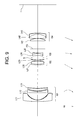
- Fig. 9 is a sectional view showing a lens configuration of an optical system according to Example 3 of the present application in a wide-angle end state.
- the optical system according to the present application is composed of, in order from the object, a first lens group G1 having negative refractive power, a second lens group G2 having positive refractive power, a third lens group G3 having negative refractive power, and a fourth lens group G4 having positive refractive power.
- the first lens group G1 is composed of, in order from the object, a negative meniscus lens L11 having a convex surface facing the object, a double concave negative lens L12, and a positive meniscus lens L13 having convex surface facing the object.
- the negative meniscus lens L11 is an aspherical lens that a resin layer is applied on an image side glass surface and forming an aspherical surface thereon.
- the second lens group G2 is composed of, in order from the object, a cemented lens constructed by a negative meniscus lens L21 having a convex surface facing the object cemented with a double convex positive lens L22, and a positive meniscus lens L23 having a convex surface facing the object.
- the third lens group G3 is composed of a cemented lens constructed by, in order from the object, a positive meniscus lens L31 having a concave surface facing the object cemented with a double concave negative lens L32. As shown later in Table 3, the positive meniscus lens L31 satisfies the above-described conditional expressions (1), (2), (3) and (4).
- the fourth lens group G4 is composed of, in order from the object, a plano-convex lens L41 having a plane surface facing the object, and a cemented lens constructed by a double convex positive lens L42 cemented with a negative meniscus lens L43 having a convex surface facing an image.
- an aperture stop S is disposed between the second lens group G2 and the third lens group G3.
- a flare stopper FS is disposed between the third lens group G3 and the fourth lens group G4.
- the first lens group G1 upon varying a focal length from a wide-angle end state to a telephoto end state, the first lens group G1 is moved at first to the image and then to the object, the second lens group G2, the third lens group G3 and the fourth lens group G4 are moved to the object such that a distance between the second lens group G2 and the third lens group G3 increases, a distance between the third lens group G3 and the fourth lens group G4 decreases.
- the second lens group G2 and the fourth lens group G4 are moved in a body to the object.
- the aperture stop S is move together with the third lens group G3.
- an image blur caused by a camera shake is corrected by shifting the third lens group G3 as a vibration reduction lens group in a direction perpendicular to the optical axis
- the vibration reduction coefficient ⁇ is 1.08, and the focal length is 18.5(mm), so that the moving amount of the third lens group G3 for correcting a rotational camera shake of 0.734 degrees is 0.219(mm).
- the vibration reduction coefficient ⁇ is 1.74, and the focal length is 53.4(mm), so that the moving amount of the third lens group G3 for correcting a rotational camera shake of 0.432 degrees is 0.231(mm).
- Figs. 10A and 10B are graphs showing various aberrations of the optical system according to Example 3 in the wide-angle end state upon focusing on infinity, in which Fig. 10A shows various aberrations without performing vibration reduction, and Fig. 10B shows coma upon performing vibration reduction with respect to a rotational camera shake of 0.734 degrees.
- Fig. 11 is a graph showing various aberrations of the optical system according to Example 3 in an intermediate focal length state upon focusing on infinity.
- Figs. 12A and 12B are graphs showing various aberrations of the optical system according to Example 3 in a telephoto end state upon focusing on infinity, in which Fig. 12A shows various aberrations without performing vibration reduction, and Fig. 12B shows coma upon performing vibration reduction with respect to a rotational camera shake of 0.432 degrees.
- the optical system according to Example 3 shows superb optical performance as a result of good corrections to various aberrations in the wide-angle end state, in the intermediate focal length state, and in the telephoto end state.
- Fig. 13 is a sectional view showing a lens configuration of an optical system according to Example 4 of the present application in a wide-angle end state.
- the optical system according to the present application is composed of, in order from the object, a first lens group G1 having negative refractive power, a second lens group G2 having positive refractive power, a third lens group G3 having negative refractive power, and a fourth lens group G4 having positive refractive power.
- the first lens group G1 is composed of, in order from the object, a negative meniscus lens L11 having a convex surface facing the object, a double concave negative lens L12, and a positive meniscus lens L13 having convex surface facing the object.
- the negative meniscus lens L11 is an aspherical lens that a resin layer is applied on an image side glass surface and forming an aspherical surface thereon.
- the second lens group G2 is composed of, in order from the object, a cemented lens constructed by a negative meniscus lens L21 having a convex surface facing the object cemented with a double convex positive lens L22, and a positive meniscus lens L23 having a convex surface facing the object.
- the third lens group G3 is composed of a cemented lens constructed by, in order from the object, a positive meniscus lens L31 having a concave surface facing the object cemented with a double concave negative lens L32. As shown later in Table 4, the positive meniscus lens L31 satisfies the above-described conditional expressions (1), (2), (3) and (4).
- the fourth lens group G4 is composed of, in order from the object, a plano-convex lens L41 having a plane surface facing the object, and a cemented lens constructed by a double convex positive lens L42 cemented with a negative meniscus lens L43 having a convex surface facing an image.
- an aperture stop S is disposed between the second lens group G2 and the third lens group G3.
- a flare stopper FS is disposed between the third lens group G3 and the fourth lens group G4.
- the first lens group G1 upon varying a focal length from a wide-angle end state to a telephoto end state, the first lens group G1 is moved at first to the image and then to the object, the second lens group G2, the third lens group G3 and the fourth lens group G4 are moved to the object such that a distance between the second lens group G2 and the third lens group G3 increases, a distance between the third lens group G3 and the fourth lens group G4 decreases.
- the second lens group G2 and the fourth lens group G4 are moved in a body to the object.
- the aperture stop S is move together with the third lens group G3.
- an image blur caused by a camera shake is corrected by shifting the third lens group G3 as a vibration reduction lens group in a direction perpendicular to the optical axis
- the vibration reduction coefficient ⁇ is 1.05, and the focal length is 18.5(mm), so that the moving amount of the third lens group G3 for correcting a rotational camera shake of 0.734 degrees is 0.226(mm).
- the vibration reduction coefficient ⁇ is 1.70, and the focal length is 53.4(mm), so that the moving amount of the third lens group G3 for correcting a rotational camera shake of 0.432 degrees is 0.237 (mm) .
- Figs. 14A and 14B are graphs showing various aberrations of the optical system according to Example 4 in the wide-angle end state upon focusing on infinity, in which Fig. 14A shows various aberrations without performing vibration reduction, and Fig. 14B shows coma upon performing vibration reduction with respect to a rotational camera shake of 0.734 degrees.
- Fig. 15 is a graph showing various aberrations of the optical system according to Example 4 in an intermediate focal length state upon focusing on infinity.
- Figs. 16A and 16B are graphs showing various aberrations of the optical system according to Example 4 in a telephoto end state upon focusing on infinity, in which Fig. 16A shows various aberrations without performing vibration reduction, and Fig. 16B shows coma upon performing vibration reduction with respect to a rotational camera shake of 0.432 degrees.
- the optical system according to Example 4 shows superb optical performance as a result of good corrections to various aberrations in the wide-angle end state, in the intermediate focal length state, and in the telephoto end state.
- Fig. 17 is a sectional view showing a lens configuration of an optical system according to Example 5 of the present application.
- the optical system according to the present application is composed of, in order from the object, a first lens group G1 having negative refractive power, a second lens group G2 having positive refractive power, a third lens group G3 having negative refractive power, and a fourth lens group G4 having positive refractive power.
- the first lens group G1 is composed of, in order from the object, a negative meniscus lens L11 having a convex surface facing the object, a double concave negative lens L12, and a positive meniscus lens L13 having convex surface facing the object.
- the negative meniscus lens L11 is an aspherical lens that a resin layer is applied on an image side glass surface and forming an aspherical surface thereon.
- the second lens group G2 is composed of, in order from the object, a cemented lens constructed by a negative meniscus lens L21 having a convex surface facing the object cemented with a double convex positive lens L22, and a positive meniscus lens L23 having a convex surface facing the object.
- the third lens group G3 is composed of a cemented lens constructed by, in order from the object, a positive meniscus lens L31 having a concave surface facing the object cemented with a double concave negative lens L32. As shown later in Table 5, the positive meniscus lens L31 satisfies the above-described conditional expressions (1), (2), (3) and (4).
- the fourth lens group G4 is composed of, in order from the object, a plano-convex lens L41 having a plane surface facing the object, and a cemented lens constructed by a double convex positive lens L42 cemented with a negative meniscus lens L43 having a convex surface facing an image.
- an aperture stop S is disposed between the second lens group G2 and the third lens group G3.
- a flare stopper FS is disposed between the third lens group G3 and the fourth lens group G4.
- the first lens group G1 upon varying a focal length from a wide-angle end state to a telephoto end state, the first lens group G1 is moved at first to the image and then to the object, the second lens group G2, the third lens group G3 and the fourth lens group G4 are moved to the object such that a distance between the second lens group G2 and the third lens group G3 increases, a distance between the third lens group G3 and the fourth lens group G4 decreases.
- the second lens group G2 and the fourth lens group G4 are moved in a body to the object.
- the aperture stop S is move together with the third lens group G3.
- an image blur caused by a camera shake is corrected by shifting the third lens group G3 as a vibration reduction lens group in a direction perpendicular to the optical axis
- the vibration reduction coefficient ⁇ is 1.05, and the focal length is 18.5(mm), so that the moving amount of the third lens group G3 for correcting a rotational camera shake of 0.734 degrees is 0.226(mm).
- the vibration reduction coefficient ⁇ is 1.70, and the focal length is 53.4(mm), so that the moving amount of the third lens group G3 for correcting a rotational camera shake of 0.432 degrees is 0.237(mm).
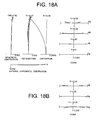
- Figs. 18A and 18B are graphs showing various aberrations of the optical system according to Example 5 upon focusing on infinity, in which Fig. 18A shows various aberrations without performing vibration reduction, and Fig. 18B shows coma upon performing vibration reduction with respect to a rotational camera shake of 0.734 degrees.
- the optical system according to Example 5 shows superb optical performance as a result of good corrections to various aberrations.
- each Example according to the present application makes it possible to provide an optical system having excellent optical performance with sufficiently correcting lateral chromatic aberration and curvature of field.
- Each Example makes it possible to reduce the number of lens elements.
- an optical system having an A lens (L31) satisfying all conditional expressions of the present invention disposed in the third lens group is shown.
- the present invention is not limited to this.
- the effect of the present invention can be achieved by introducing at least one A lens in at least one of the first lens group, the second lens group, the third lens group and the fourth lens group in the optical system.
- lens configuration of the optical system according to the present application is not limited to this, and other lens-group configurations such as a five-lens-group configuration can be applied.
- a portion of a lens group or a lens group may be moved along an optical axis as a focusing lens group.
- the focusing lens group may be used for an auto focus, and is suitable for being driven by a motor such as an ultrasonic motor.
- it is preferable that the first lens group or a portion of the first lens group is used as the focusing lens group.
- a lens group or a portion of a lens group of the other lens groups may be used as a vibration reduction lens group.
- it is particularly preferable that the third lens group or a portion of the third lens group is used as a vibration reduction lens group.
- any lens surface may be an aspherical surface.
- the aspherical surface may be fabricated by a fine grinding process, a glass molding process that a glass material is formed into an aspherical shape by a mold, or a compound type process that a resin material is formed into an aspherical shape on a glass surface.
- An antireflection coating having high transmittance over a broad wavelength range may be applied to each lens surface of an optical system according to the present application to reduce flare or ghost images, so that high optical performance with a high contrast can be attained.
- Fig. 19 is a schematic diagram showing a camera equipped with the optical system according to Example 1 of the present application.
- the camera 1 is a single-lens reflex digital camera equipped with the zoom lens system according to Example 1 as an image-taking lens 2.
- the camera 1 In the camera 1, light emitted from an object (not shown) is converged by the image-taking lens 2, and focused on a focusing screen 4 through a quick return mirror 3. The object image focused on the focusing screen 4 is reflected a plurality of times by a pentagonal roof prism 5, and led to an eyepiece 6. Therefore, a photographer can observe the object image as an erected image through the eyepiece 6.
- the quick return mirror 3 is removed from an optical path, and the light from the object (not shown) reaches an imaging device 7. Accordingly, light from the object is captured by the imaging device 7 and stored in a memory (not shown) as the object image. In this manner, the photographer can take a picture of the object by the camera 1.
- the optical system according to Example 1 of the present embodiment attached to the camera 1 as an image-taking lens 2 makes it possible to realize excellent optical performance by means of the specific lens configuration. Accordingly, the camera 1 makes it possible to realize excellent optical performance.
Landscapes
- Physics & Mathematics (AREA)
- General Physics & Mathematics (AREA)
- Optics & Photonics (AREA)
- Nonlinear Science (AREA)
- Lenses (AREA)
- Adjustment Of Camera Lenses (AREA)
Applications Claiming Priority (1)
| Application Number | Priority Date | Filing Date | Title |
|---|---|---|---|
| JP2007192369A JP5157295B2 (ja) | 2007-07-24 | 2007-07-24 | 光学系、撮像装置、光学系の結像方法 |
Publications (2)
| Publication Number | Publication Date |
|---|---|
| EP2020613A2 true EP2020613A2 (de) | 2009-02-04 |
| EP2020613A3 EP2020613A3 (de) | 2009-03-04 |
Family
ID=39874055
Family Applications (1)
| Application Number | Title | Priority Date | Filing Date |
|---|---|---|---|
| EP08252316A Withdrawn EP2020613A3 (de) | 2007-07-24 | 2008-07-07 | Optisches System |
Country Status (4)
| Country | Link |
|---|---|
| US (1) | US7920341B2 (de) |
| EP (1) | EP2020613A3 (de) |
| JP (1) | JP5157295B2 (de) |
| CN (2) | CN101354472B (de) |
Families Citing this family (8)
| Publication number | Priority date | Publication date | Assignee | Title |
|---|---|---|---|---|
| JP5416982B2 (ja) * | 2009-01-30 | 2014-02-12 | パナソニック株式会社 | ズームレンズ系、交換レンズ装置、及びカメラシステム |
| JP6260075B2 (ja) * | 2012-08-30 | 2018-01-17 | 株式会社ニコン | 変倍光学系、及び、この変倍光学系を有する光学装置 |
| JP6241141B2 (ja) * | 2013-08-29 | 2017-12-06 | 株式会社ニコン | 変倍光学系、光学装置、及び変倍光学系の製造方法 |
| JP2015212821A (ja) * | 2014-04-17 | 2015-11-26 | 株式会社ニコン | 光学系、該光学系を備えた撮像装置、光学系の製造方法 |
| JP6628240B2 (ja) | 2015-08-10 | 2020-01-08 | キヤノン株式会社 | ズームレンズ及びそれを有する撮像装置 |
| CN110716282B (zh) * | 2018-07-13 | 2022-05-13 | 江西晶超光学有限公司 | 成像光学系统、取像装置及电子装置 |
| CN111443471B (zh) * | 2020-05-09 | 2024-10-22 | 深圳市雷影光电科技有限公司 | 内合焦式成像镜头 |
| CN112612125B (zh) * | 2020-12-31 | 2025-09-09 | 江西欧菲光学有限公司 | 变焦光学系统、变焦取像模组及电子设备 |
Citations (2)
| Publication number | Priority date | Publication date | Assignee | Title |
|---|---|---|---|---|
| JP2004061910A (ja) | 2002-07-30 | 2004-02-26 | Canon Inc | 防振機能を備えたズームレンズ |
| JP2007192369A (ja) | 2006-01-20 | 2007-08-02 | Jtekt Corp | 動圧軸受の性能判定方法および動圧軸受 |
Family Cites Families (18)
| Publication number | Priority date | Publication date | Assignee | Title |
|---|---|---|---|---|
| JPH07152002A (ja) * | 1993-11-29 | 1995-06-16 | Nikon Corp | 防振機能を備えたズームレンズ |
| JPH09152552A (ja) * | 1995-11-28 | 1997-06-10 | Nikon Corp | ズームレンズ |
| JPH1039210A (ja) * | 1996-07-24 | 1998-02-13 | Nikon Corp | ズームレンズ |
| JPH11174329A (ja) | 1997-12-15 | 1999-07-02 | Canon Inc | 防振機能を有した変倍光学系 |
| JPH11211983A (ja) * | 1998-01-26 | 1999-08-06 | Nikon Corp | フィルターを内蔵した可変焦点距離レンズ |
| JP4325209B2 (ja) * | 2003-02-13 | 2009-09-02 | 株式会社ニコン | 可変焦点距離レンズ系 |
| JP4551669B2 (ja) | 2004-02-26 | 2010-09-29 | キヤノン株式会社 | ズームレンズ及びそれを有する撮像装置 |
| JP4289958B2 (ja) | 2003-09-19 | 2009-07-01 | キヤノン株式会社 | ズームレンズ及びそれを有する撮像装置 |
| JP4378188B2 (ja) | 2004-02-23 | 2009-12-02 | キヤノン株式会社 | ズームレンズ及びそれを有する撮像装置 |
| JP2005309124A (ja) | 2004-04-22 | 2005-11-04 | Canon Inc | ズームレンズ |
| JP4612810B2 (ja) * | 2004-06-11 | 2011-01-12 | キヤノン株式会社 | 光学系 |
| JP2006113573A (ja) | 2004-09-17 | 2006-04-27 | Pentax Corp | ズームレンズ系 |
| US7307794B2 (en) | 2004-09-17 | 2007-12-11 | Pentax Corporation | Zoom lens system |
| JP2006119193A (ja) * | 2004-10-19 | 2006-05-11 | Canon Inc | ズームレンズおよびそれを有する撮像装置 |
| JP4834360B2 (ja) * | 2005-09-12 | 2011-12-14 | キヤノン株式会社 | ズームレンズ及びそれを有する撮像装置 |
| JP2007193173A (ja) * | 2006-01-20 | 2007-08-02 | Konica Minolta Photo Imaging Inc | 撮像光学系および撮像装置 |
| JP4862433B2 (ja) * | 2006-02-28 | 2012-01-25 | コニカミノルタオプト株式会社 | 変倍光学系および撮像装置 |
| JP2008129457A (ja) * | 2006-11-22 | 2008-06-05 | Olympus Imaging Corp | ズーム光学系、及びそれを有する電子撮像装置 |
-
2007
- 2007-07-24 JP JP2007192369A patent/JP5157295B2/ja active Active
-
2008
- 2008-07-03 US US12/167,687 patent/US7920341B2/en not_active Expired - Fee Related
- 2008-07-07 EP EP08252316A patent/EP2020613A3/de not_active Withdrawn
- 2008-07-23 CN CN2008101440268A patent/CN101354472B/zh active Active
- 2008-07-23 CN CN201210199725.9A patent/CN102768399B/zh not_active Expired - Fee Related
Patent Citations (2)
| Publication number | Priority date | Publication date | Assignee | Title |
|---|---|---|---|---|
| JP2004061910A (ja) | 2002-07-30 | 2004-02-26 | Canon Inc | 防振機能を備えたズームレンズ |
| JP2007192369A (ja) | 2006-01-20 | 2007-08-02 | Jtekt Corp | 動圧軸受の性能判定方法および動圧軸受 |
Also Published As
| Publication number | Publication date |
|---|---|
| JP2009031358A (ja) | 2009-02-12 |
| CN101354472B (zh) | 2012-08-01 |
| CN102768399A (zh) | 2012-11-07 |
| US7920341B2 (en) | 2011-04-05 |
| CN101354472A (zh) | 2009-01-28 |
| EP2020613A3 (de) | 2009-03-04 |
| US20090034100A1 (en) | 2009-02-05 |
| CN102768399B (zh) | 2015-10-21 |
| JP5157295B2 (ja) | 2013-03-06 |
Similar Documents
| Publication | Publication Date | Title |
|---|---|---|
| EP2620796B1 (de) | Optisches System und Bildgebungsvorrichtung | |
| EP2397881B1 (de) | Retrofokus Zoomobjektiv mit vier Linsengruppen | |
| EP2360504B1 (de) | Zoomobjektivsystem, optische Vorrichtung und Verfahren zur Herstellung eines Zoomobjektivsystems | |
| EP2071379B1 (de) | Makro-Teleobjektiv mit drei Linsengruppen vom Frontfokus-Typ und Verfahren zu seiner Herstellung | |
| EP1881357B1 (de) | Vibrationsbeständiges Telezoomobjektiv mit vier Linsengruppen | |
| CN108490592B (zh) | 变焦光学系统 | |
| US7551367B2 (en) | Wide-angle lens, optical apparatus and method for focusing | |
| US8144403B2 (en) | Zoom lens system, optical apparatus, and method for zooming | |
| EP1998204B1 (de) | Vibrationsbeständiges Telezoomobjektiv mit vier Linsengruppen vom Hinterfokus-Typ | |
| US7924511B2 (en) | Optical system, method for focusing, and imaging apparatus equipped therewith | |
| EP2045639A1 (de) | Optisches system mit variabler leistung, abbildungsvorrichtung und verfahren zur variierung der vergrösserung eines optischen systems mit variabler leistung | |
| EP1970742B1 (de) | Nahaufnahmeobjektiv, Bildgebungsvorrichtung und Verfahren zum Fokussieren von Nahaufnahmeobjektiven | |
| EP1837693B1 (de) | Retrofokus-Linsensystem und Bildaufnahmevorrichtung | |
| EP1870760A1 (de) | Retrofokus Zoom Objektiv mit vier Linsengruppen | |
| US10095012B2 (en) | Zoom lens system, optical apparatus and method for manufacturing zoom lens system | |
| EP2020613A2 (de) | Optisches System | |
| US8259400B2 (en) | Zoom lens system, imaging apparatus, and method for manufacturing zoom lens system |
Legal Events
| Date | Code | Title | Description |
|---|---|---|---|
| PUAI | Public reference made under article 153(3) epc to a published international application that has entered the european phase |
Free format text: ORIGINAL CODE: 0009012 |
|
| PUAL | Search report despatched |
Free format text: ORIGINAL CODE: 0009013 |
|
| AK | Designated contracting states |
Kind code of ref document: A2 Designated state(s): AT BE BG CH CY CZ DE DK EE ES FI FR GB GR HR HU IE IS IT LI LT LU LV MC MT NL NO PL PT RO SE SI SK TR |
|
| AX | Request for extension of the european patent |
Extension state: AL BA MK RS |
|
| AK | Designated contracting states |
Kind code of ref document: A3 Designated state(s): AT BE BG CH CY CZ DE DK EE ES FI FR GB GR HR HU IE IS IT LI LT LU LV MC MT NL NO PL PT RO SE SI SK TR |
|
| AX | Request for extension of the european patent |
Extension state: AL BA MK RS |
|
| 17Q | First examination report despatched |
Effective date: 20090928 |
|
| 17P | Request for examination filed |
Effective date: 20090901 |
|
| AKX | Designation fees paid |
Designated state(s): AT BE BG CH CY CZ DE DK EE ES FI FR GB GR HR HU IE IS IT LI LT LU LV MC MT NL NO PL PT RO SE SI SK TR |
|
| RAP1 | Party data changed (applicant data changed or rights of an application transferred) |
Owner name: NIKON CORPORATION |
|
| RAP1 | Party data changed (applicant data changed or rights of an application transferred) |
Owner name: NIKON CORPORATION |
|
| STAA | Information on the status of an ep patent application or granted ep patent |
Free format text: STATUS: EXAMINATION IS IN PROGRESS |
|
| STAA | Information on the status of an ep patent application or granted ep patent |
Free format text: STATUS: THE APPLICATION IS DEEMED TO BE WITHDRAWN |
|
| 18D | Application deemed to be withdrawn |
Effective date: 20190718 |