EP2021302B1 - Verfahren zur herstellung von dichten ultrahochtemperatur-verbundprodukten - Google Patents
Verfahren zur herstellung von dichten ultrahochtemperatur-verbundprodukten Download PDFInfo
- Publication number
- EP2021302B1 EP2021302B1 EP06725672.7A EP06725672A EP2021302B1 EP 2021302 B1 EP2021302 B1 EP 2021302B1 EP 06725672 A EP06725672 A EP 06725672A EP 2021302 B1 EP2021302 B1 EP 2021302B1
- Authority
- EP
- European Patent Office
- Prior art keywords
- product
- technique
- ecas
- process according
- minutes
- Prior art date
- Legal status (The legal status is an assumption and is not a legal conclusion. Google has not performed a legal analysis and makes no representation as to the accuracy of the status listed.)
- Expired - Lifetime
Links
Images


Classifications
-
- C—CHEMISTRY; METALLURGY
- C04—CEMENTS; CONCRETE; ARTIFICIAL STONE; CERAMICS; REFRACTORIES
- C04B—LIME, MAGNESIA; SLAG; CEMENTS; COMPOSITIONS THEREOF, e.g. MORTARS, CONCRETE OR LIKE BUILDING MATERIALS; ARTIFICIAL STONE; CERAMICS; REFRACTORIES; TREATMENT OF NATURAL STONE
- C04B35/00—Shaped ceramic products characterised by their composition; Ceramics compositions; Processing powders of inorganic compounds preparatory to the manufacturing of ceramic products
- C04B35/515—Shaped ceramic products characterised by their composition; Ceramics compositions; Processing powders of inorganic compounds preparatory to the manufacturing of ceramic products based on non-oxide ceramics
- C04B35/58—Shaped ceramic products characterised by their composition; Ceramics compositions; Processing powders of inorganic compounds preparatory to the manufacturing of ceramic products based on non-oxide ceramics based on borides, nitrides, i.e. nitrides, oxynitrides, carbonitrides or oxycarbonitrides or silicides
- C04B35/5805—Shaped ceramic products characterised by their composition; Ceramics compositions; Processing powders of inorganic compounds preparatory to the manufacturing of ceramic products based on non-oxide ceramics based on borides, nitrides, i.e. nitrides, oxynitrides, carbonitrides or oxycarbonitrides or silicides based on borides
- C04B35/58064—Shaped ceramic products characterised by their composition; Ceramics compositions; Processing powders of inorganic compounds preparatory to the manufacturing of ceramic products based on non-oxide ceramics based on borides, nitrides, i.e. nitrides, oxynitrides, carbonitrides or oxycarbonitrides or silicides based on borides based on refractory borides
- C04B35/58078—Shaped ceramic products characterised by their composition; Ceramics compositions; Processing powders of inorganic compounds preparatory to the manufacturing of ceramic products based on non-oxide ceramics based on borides, nitrides, i.e. nitrides, oxynitrides, carbonitrides or oxycarbonitrides or silicides based on borides based on refractory borides based on zirconium or hafnium borides
-
- C—CHEMISTRY; METALLURGY
- C04—CEMENTS; CONCRETE; ARTIFICIAL STONE; CERAMICS; REFRACTORIES
- C04B—LIME, MAGNESIA; SLAG; CEMENTS; COMPOSITIONS THEREOF, e.g. MORTARS, CONCRETE OR LIKE BUILDING MATERIALS; ARTIFICIAL STONE; CERAMICS; REFRACTORIES; TREATMENT OF NATURAL STONE
- C04B35/00—Shaped ceramic products characterised by their composition; Ceramics compositions; Processing powders of inorganic compounds preparatory to the manufacturing of ceramic products
- C04B35/515—Shaped ceramic products characterised by their composition; Ceramics compositions; Processing powders of inorganic compounds preparatory to the manufacturing of ceramic products based on non-oxide ceramics
- C04B35/56—Shaped ceramic products characterised by their composition; Ceramics compositions; Processing powders of inorganic compounds preparatory to the manufacturing of ceramic products based on non-oxide ceramics based on carbides or oxycarbides
- C04B35/5607—Shaped ceramic products characterised by their composition; Ceramics compositions; Processing powders of inorganic compounds preparatory to the manufacturing of ceramic products based on non-oxide ceramics based on carbides or oxycarbides based on refractory metal carbides
- C04B35/5622—Shaped ceramic products characterised by their composition; Ceramics compositions; Processing powders of inorganic compounds preparatory to the manufacturing of ceramic products based on non-oxide ceramics based on carbides or oxycarbides based on refractory metal carbides based on zirconium or hafnium carbides
-
- C—CHEMISTRY; METALLURGY
- C04—CEMENTS; CONCRETE; ARTIFICIAL STONE; CERAMICS; REFRACTORIES
- C04B—LIME, MAGNESIA; SLAG; CEMENTS; COMPOSITIONS THEREOF, e.g. MORTARS, CONCRETE OR LIKE BUILDING MATERIALS; ARTIFICIAL STONE; CERAMICS; REFRACTORIES; TREATMENT OF NATURAL STONE
- C04B35/00—Shaped ceramic products characterised by their composition; Ceramics compositions; Processing powders of inorganic compounds preparatory to the manufacturing of ceramic products
- C04B35/622—Forming processes; Processing powders of inorganic compounds preparatory to the manufacturing of ceramic products
- C04B35/626—Preparing or treating the powders individually or as batches ; preparing or treating macroscopic reinforcing agents for ceramic products, e.g. fibres; mechanical aspects section B
- C04B35/62605—Treating the starting powders individually or as mixtures
- C04B35/6261—Milling
- C04B35/6262—Milling of calcined, sintered clinker or ceramics
-
- C—CHEMISTRY; METALLURGY
- C04—CEMENTS; CONCRETE; ARTIFICIAL STONE; CERAMICS; REFRACTORIES
- C04B—LIME, MAGNESIA; SLAG; CEMENTS; COMPOSITIONS THEREOF, e.g. MORTARS, CONCRETE OR LIKE BUILDING MATERIALS; ARTIFICIAL STONE; CERAMICS; REFRACTORIES; TREATMENT OF NATURAL STONE
- C04B35/00—Shaped ceramic products characterised by their composition; Ceramics compositions; Processing powders of inorganic compounds preparatory to the manufacturing of ceramic products
- C04B35/622—Forming processes; Processing powders of inorganic compounds preparatory to the manufacturing of ceramic products
- C04B35/626—Preparing or treating the powders individually or as batches ; preparing or treating macroscopic reinforcing agents for ceramic products, e.g. fibres; mechanical aspects section B
- C04B35/62605—Treating the starting powders individually or as mixtures
- C04B35/62645—Thermal treatment of powders or mixtures thereof other than sintering
- C04B35/6267—Pyrolysis, carbonisation or auto-combustion reactions
-
- C—CHEMISTRY; METALLURGY
- C04—CEMENTS; CONCRETE; ARTIFICIAL STONE; CERAMICS; REFRACTORIES
- C04B—LIME, MAGNESIA; SLAG; CEMENTS; COMPOSITIONS THEREOF, e.g. MORTARS, CONCRETE OR LIKE BUILDING MATERIALS; ARTIFICIAL STONE; CERAMICS; REFRACTORIES; TREATMENT OF NATURAL STONE
- C04B35/00—Shaped ceramic products characterised by their composition; Ceramics compositions; Processing powders of inorganic compounds preparatory to the manufacturing of ceramic products
- C04B35/622—Forming processes; Processing powders of inorganic compounds preparatory to the manufacturing of ceramic products
- C04B35/64—Burning or sintering processes
- C04B35/65—Reaction sintering of free metal- or free silicon-containing compositions
- C04B35/651—Thermite type sintering, e.g. combustion sintering
-
- C—CHEMISTRY; METALLURGY
- C04—CEMENTS; CONCRETE; ARTIFICIAL STONE; CERAMICS; REFRACTORIES
- C04B—LIME, MAGNESIA; SLAG; CEMENTS; COMPOSITIONS THEREOF, e.g. MORTARS, CONCRETE OR LIKE BUILDING MATERIALS; ARTIFICIAL STONE; CERAMICS; REFRACTORIES; TREATMENT OF NATURAL STONE
- C04B2235/00—Aspects relating to ceramic starting mixtures or sintered ceramic products
- C04B2235/02—Composition of constituents of the starting material or of secondary phases of the final product
- C04B2235/30—Constituents and secondary phases not being of a fibrous nature
- C04B2235/38—Non-oxide ceramic constituents or additives
- C04B2235/3804—Borides
- C04B2235/3813—Refractory metal borides
-
- C—CHEMISTRY; METALLURGY
- C04—CEMENTS; CONCRETE; ARTIFICIAL STONE; CERAMICS; REFRACTORIES
- C04B—LIME, MAGNESIA; SLAG; CEMENTS; COMPOSITIONS THEREOF, e.g. MORTARS, CONCRETE OR LIKE BUILDING MATERIALS; ARTIFICIAL STONE; CERAMICS; REFRACTORIES; TREATMENT OF NATURAL STONE
- C04B2235/00—Aspects relating to ceramic starting mixtures or sintered ceramic products
- C04B2235/02—Composition of constituents of the starting material or of secondary phases of the final product
- C04B2235/30—Constituents and secondary phases not being of a fibrous nature
- C04B2235/38—Non-oxide ceramic constituents or additives
- C04B2235/3817—Carbides
- C04B2235/3821—Boron carbides
-
- C—CHEMISTRY; METALLURGY
- C04—CEMENTS; CONCRETE; ARTIFICIAL STONE; CERAMICS; REFRACTORIES
- C04B—LIME, MAGNESIA; SLAG; CEMENTS; COMPOSITIONS THEREOF, e.g. MORTARS, CONCRETE OR LIKE BUILDING MATERIALS; ARTIFICIAL STONE; CERAMICS; REFRACTORIES; TREATMENT OF NATURAL STONE
- C04B2235/00—Aspects relating to ceramic starting mixtures or sintered ceramic products
- C04B2235/02—Composition of constituents of the starting material or of secondary phases of the final product
- C04B2235/30—Constituents and secondary phases not being of a fibrous nature
- C04B2235/38—Non-oxide ceramic constituents or additives
- C04B2235/3817—Carbides
- C04B2235/3826—Silicon carbides
-
- C—CHEMISTRY; METALLURGY
- C04—CEMENTS; CONCRETE; ARTIFICIAL STONE; CERAMICS; REFRACTORIES
- C04B—LIME, MAGNESIA; SLAG; CEMENTS; COMPOSITIONS THEREOF, e.g. MORTARS, CONCRETE OR LIKE BUILDING MATERIALS; ARTIFICIAL STONE; CERAMICS; REFRACTORIES; TREATMENT OF NATURAL STONE
- C04B2235/00—Aspects relating to ceramic starting mixtures or sintered ceramic products
- C04B2235/02—Composition of constituents of the starting material or of secondary phases of the final product
- C04B2235/30—Constituents and secondary phases not being of a fibrous nature
- C04B2235/40—Metallic constituents or additives not added as binding phase
- C04B2235/404—Refractory metals
-
- C—CHEMISTRY; METALLURGY
- C04—CEMENTS; CONCRETE; ARTIFICIAL STONE; CERAMICS; REFRACTORIES
- C04B—LIME, MAGNESIA; SLAG; CEMENTS; COMPOSITIONS THEREOF, e.g. MORTARS, CONCRETE OR LIKE BUILDING MATERIALS; ARTIFICIAL STONE; CERAMICS; REFRACTORIES; TREATMENT OF NATURAL STONE
- C04B2235/00—Aspects relating to ceramic starting mixtures or sintered ceramic products
- C04B2235/02—Composition of constituents of the starting material or of secondary phases of the final product
- C04B2235/30—Constituents and secondary phases not being of a fibrous nature
- C04B2235/42—Non metallic elements added as constituents or additives, e.g. sulfur, phosphor, selenium or tellurium
- C04B2235/422—Carbon
- C04B2235/425—Graphite
-
- C—CHEMISTRY; METALLURGY
- C04—CEMENTS; CONCRETE; ARTIFICIAL STONE; CERAMICS; REFRACTORIES
- C04B—LIME, MAGNESIA; SLAG; CEMENTS; COMPOSITIONS THEREOF, e.g. MORTARS, CONCRETE OR LIKE BUILDING MATERIALS; ARTIFICIAL STONE; CERAMICS; REFRACTORIES; TREATMENT OF NATURAL STONE
- C04B2235/00—Aspects relating to ceramic starting mixtures or sintered ceramic products
- C04B2235/02—Composition of constituents of the starting material or of secondary phases of the final product
- C04B2235/30—Constituents and secondary phases not being of a fibrous nature
- C04B2235/42—Non metallic elements added as constituents or additives, e.g. sulfur, phosphor, selenium or tellurium
- C04B2235/428—Silicon
-
- C—CHEMISTRY; METALLURGY
- C04—CEMENTS; CONCRETE; ARTIFICIAL STONE; CERAMICS; REFRACTORIES
- C04B—LIME, MAGNESIA; SLAG; CEMENTS; COMPOSITIONS THEREOF, e.g. MORTARS, CONCRETE OR LIKE BUILDING MATERIALS; ARTIFICIAL STONE; CERAMICS; REFRACTORIES; TREATMENT OF NATURAL STONE
- C04B2235/00—Aspects relating to ceramic starting mixtures or sintered ceramic products
- C04B2235/02—Composition of constituents of the starting material or of secondary phases of the final product
- C04B2235/50—Constituents or additives of the starting mixture chosen for their shape or used because of their shape or their physical appearance
- C04B2235/54—Particle size related information
- C04B2235/5418—Particle size related information expressed by the size of the particles or aggregates thereof
- C04B2235/5436—Particle size related information expressed by the size of the particles or aggregates thereof micrometer sized, i.e. from 1 to 100 micron
-
- C—CHEMISTRY; METALLURGY
- C04—CEMENTS; CONCRETE; ARTIFICIAL STONE; CERAMICS; REFRACTORIES
- C04B—LIME, MAGNESIA; SLAG; CEMENTS; COMPOSITIONS THEREOF, e.g. MORTARS, CONCRETE OR LIKE BUILDING MATERIALS; ARTIFICIAL STONE; CERAMICS; REFRACTORIES; TREATMENT OF NATURAL STONE
- C04B2235/00—Aspects relating to ceramic starting mixtures or sintered ceramic products
- C04B2235/60—Aspects relating to the preparation, properties or mechanical treatment of green bodies or pre-forms
- C04B2235/604—Pressing at temperatures other than sintering temperatures
-
- C—CHEMISTRY; METALLURGY
- C04—CEMENTS; CONCRETE; ARTIFICIAL STONE; CERAMICS; REFRACTORIES
- C04B—LIME, MAGNESIA; SLAG; CEMENTS; COMPOSITIONS THEREOF, e.g. MORTARS, CONCRETE OR LIKE BUILDING MATERIALS; ARTIFICIAL STONE; CERAMICS; REFRACTORIES; TREATMENT OF NATURAL STONE
- C04B2235/00—Aspects relating to ceramic starting mixtures or sintered ceramic products
- C04B2235/60—Aspects relating to the preparation, properties or mechanical treatment of green bodies or pre-forms
- C04B2235/608—Green bodies or pre-forms with well-defined density
-
- C—CHEMISTRY; METALLURGY
- C04—CEMENTS; CONCRETE; ARTIFICIAL STONE; CERAMICS; REFRACTORIES
- C04B—LIME, MAGNESIA; SLAG; CEMENTS; COMPOSITIONS THEREOF, e.g. MORTARS, CONCRETE OR LIKE BUILDING MATERIALS; ARTIFICIAL STONE; CERAMICS; REFRACTORIES; TREATMENT OF NATURAL STONE
- C04B2235/00—Aspects relating to ceramic starting mixtures or sintered ceramic products
- C04B2235/65—Aspects relating to heat treatments of ceramic bodies such as green ceramics or pre-sintered ceramics, e.g. burning, sintering or melting processes
- C04B2235/66—Specific sintering techniques, e.g. centrifugal sintering
- C04B2235/666—Applying a current during sintering, e.g. plasma sintering [SPS], electrical resistance heating or pulse electric current sintering [PECS]
-
- C—CHEMISTRY; METALLURGY
- C04—CEMENTS; CONCRETE; ARTIFICIAL STONE; CERAMICS; REFRACTORIES
- C04B—LIME, MAGNESIA; SLAG; CEMENTS; COMPOSITIONS THEREOF, e.g. MORTARS, CONCRETE OR LIKE BUILDING MATERIALS; ARTIFICIAL STONE; CERAMICS; REFRACTORIES; TREATMENT OF NATURAL STONE
- C04B2235/00—Aspects relating to ceramic starting mixtures or sintered ceramic products
- C04B2235/70—Aspects relating to sintered or melt-casted ceramic products
- C04B2235/74—Physical characteristics
- C04B2235/77—Density
-
- C—CHEMISTRY; METALLURGY
- C04—CEMENTS; CONCRETE; ARTIFICIAL STONE; CERAMICS; REFRACTORIES
- C04B—LIME, MAGNESIA; SLAG; CEMENTS; COMPOSITIONS THEREOF, e.g. MORTARS, CONCRETE OR LIKE BUILDING MATERIALS; ARTIFICIAL STONE; CERAMICS; REFRACTORIES; TREATMENT OF NATURAL STONE
- C04B2235/00—Aspects relating to ceramic starting mixtures or sintered ceramic products
- C04B2235/70—Aspects relating to sintered or melt-casted ceramic products
- C04B2235/80—Phases present in the sintered or melt-cast ceramic products other than the main phase
-
- C—CHEMISTRY; METALLURGY
- C04—CEMENTS; CONCRETE; ARTIFICIAL STONE; CERAMICS; REFRACTORIES
- C04B—LIME, MAGNESIA; SLAG; CEMENTS; COMPOSITIONS THEREOF, e.g. MORTARS, CONCRETE OR LIKE BUILDING MATERIALS; ARTIFICIAL STONE; CERAMICS; REFRACTORIES; TREATMENT OF NATURAL STONE
- C04B2235/00—Aspects relating to ceramic starting mixtures or sintered ceramic products
- C04B2235/70—Aspects relating to sintered or melt-casted ceramic products
- C04B2235/96—Properties of ceramic products, e.g. mechanical properties such as strength, toughness, wear resistance
- C04B2235/9669—Resistance against chemicals, e.g. against molten glass or molten salts
- C04B2235/9684—Oxidation resistance
Definitions
- the present invention relates to the field of the preparation processes of advanced materials, and in particular to a process for the preparation of Ultra High Temperature Composite materials in bulk form.
- Ultra High Temperature Ceramics/Composites are ceramic-based materials which possess extremely high melting points, i.e. higher that 3000°C, which make them suitable as Thermal Protection Systems (TPS).
- TPS Thermal Protection Systems
- metal refractory borides such as Zirconium diboride (ZrB 2 ) and Hafnium diboride (HfB 2 ), which are considered potential candidate materials as TPS for space vehicles [ Savino et al., Aerospace Science and Technology 9(2), 151-160, (2005 )].
- SiC Silicon carbide
- the reaction synthesis and densification in one step of the ZrB 2 -SiC composite (ZrB 2 /SiC molar ratio equal to 2) by reactive hot pressing (RHP) starting from Zirconium (Zr), Silicon tetraboride (SiB 4 ) and graphite (C) [ Opeka et a/., J. Eur. Ceram. Soc., 19, 2404-2414 (1999 )] or Zirconium (Zr), Boron carbide (B 4 C) and Silicon (Si) [ Zhang et al., J. Eur. Ceram. Soc., 24, 171-178 (2004 )], was also accomplished.
- RHP reactive hot pressing
- US 5,750,450 relates to high temperature ablation resistant ceramic compositions made by sintering a mixture of MB 2 , M'C and SiC wherein M and M' are the same or different metal and are selected from the group consisting essentially of zirconium, hafnium and mixture thereof.
- the starting materials to be sintered i.e. ZrB 2 , ZrC, SiC and HfB 2 , are commercially available.
- US 5,217,816 relates to a method whereby ceramic forming elements react in a solvent metal to form a finely-divided dispersion of the ceramic material in the solvent metal matrix.
- the ceramic-forming constituents most easily combine at or about the melting temperature of the solvent metal, and the exothermic nature of this reaction causes a very rapid temperature elevation or spike, which has the effect of melting additional metal, simultaneously causing the further reaction of the ceramic constituents.
- SHS Self-propagating High temperature Synthesis
- Simple apparatuses, low energy consumption, high combustion temperature (up to 4000 K) and front propagation velocities up to about 25 cm per second are the main characteristics of this technique.
- the SHS technique has never been used for preparing high density UHTC materials.
- SPS Spark Plasma Sintering
- the products obtainable by the present process have to be regarded as UHTC products because, when subjected to high-temperature oxidation resistance measurements, they show low and thermally stable oxidation rate up to 1400°C.
- the powders mixture coming from step i) may be subjected in step ii) to the SHS and/or ECAS techniques, i.e. the powders coming from step i) are subjected to the SHS and then to the ECAS technique, or to the ECAS technique only.
- the combustion synthesis of the powders mixture coming from step i) by SHS technique is carried out and the so obtained product is then subjected to densification by using the ECAS technique; before applying the ECAS technique, the product coming from SHS is subjected to dry milling to convert it in powder form.
- the powders mixture coming from step i) are subjected in step ii) to the ECAS technique, that performs both the product synthesis and densification in a single step.
- step ii) the powders mixture and the graphite die containing them are crossed by an electric current; this generates a rapid heating of the powder and, consequently, the final bulk UHTC product is obtained in a relatively faster manner as compared to conventional sintering techniques.
- the product consisting of ZrB 2 and SiC with ZrB 2 /SiC molar ratio equal to 2/1, which is equivalent to about ZrB 2 -25 vol. %SiC, i.e. the product of general formula (I) above reported, wherein x is 2, y is 1 and z is 0.
- the starting reacting powders for example Zirconium, Boron Carbide, Silicon and optionally graphite powders available on the market, are dry mixed under a stoichiometric ratio corresponding to the desired ZrB 2 -SiC-ZrC composite, before undergoing to the subsequent step ii).
- starting reactants in powder form are preferably Zirconium powder with purity greater than 98.5 % and particle size less than 44 ⁇ m, Boron Carbide powder with purity greater than 99.4 %, Silicon powder with purity greater than 99 % and particle size less than 44 ⁇ m, and graphite powder having particle size comprised between 1 and 2 ⁇ m.
- step i) of the present process when the desired UHTC product has general formula (I) in which z/x ratio is higher than 0.25, graphite powder is added in step i) of the present process in suitable amount following the stoichiometry of the desired UHTC product.
- the powders mixture coming from step i) is preferably uniaxially pressed to form cylindrical pellets having for example a diameter of about 16 mm, height of 30 mm, and a green density of about 50% of the theoretical value; the so obtained pellets are then positioned inside a stainless steel reaction chamber suitable for the application of the SHS technique.
- the combustion front is generated at one end of the sample by using a heated tungsten coil, which is immediately turned off as soon as the reaction was initiated. Then, the reaction self-propagates until reaches the opposite end of the sample in about 4-5 seconds.
- combustion-synthesised UHTC product is then converted in powder form by dry milling before being consolidated by ECAS technique; more preferably, the product is dry milled so that a powder with particles size less than 25 ⁇ m is obtained; for example, this result is obtained for 4 g of the above said product synthesised by SHS, by using a SPEX mixer mill 8000 with two steel balls (11.5 mm diameter, 6.5 g weight) for 20 minutes.
- the so obtained powder is then subjected to consolidation by ECAS technique, by placing the powder inside a cylindrical graphite mould equipped with two plungers, which is then inserted in an electric circuit.
- the powder sample is subjected to a pre-compaction step, consisting for example in the application for 30 min of 7 kN mechanical load through the plungers, equivalent to a mechanical pressure of 40 MPa, when considering the sample surface subjected to the external load equal to the cross section of the graphite cylindrical plungers with 14.7 mm diameter.
- the time necessary to bring the temperature from the room temperature to the value of at least 1800°C is 10 minutes and this value is maintained constant for further 10 minutes; therefore the total time required in this step to obtain a near-full dense UHTC product having a relative density greater than 99.9% of the theoretical value is 20 minutes.
- the internal surface of the mould is before hand lined through a graphite foil in order to preserve sample integrity and to facilitate sample release from the mould at the end of the process.
- a graphite foil is placed between the reacting mixture and the plungers surface in contact with it.
- the mould together with the two graphite plungers is placed inside the reaction chambers of the ECAS apparatus where the vacuum is achieved.
- the mechanical load applied and maintained constant during this step is at least equal to 3.5 kN, which is equivalent to a mechanical pressure of 20 MPa, when considering the sample surface subjected to the external load equal to the cross section of the graphite cylindrical plungers with 14.7 mm diameter.
- the rapid heating generated by the electric current flow provides energy in sufficient amount as to activate not only sintering phenomena but also the reaction synthesis for the formation of the desired UHTC product from Zr, B 4 C, Si and optionally graphite powders in the second embodiment of the present process, as described above, wherein the powders mixture is directly subjected to ECAS technique.
- the maximum temperature value to which the sample has to be brought during ECAS is preferably 1900°C, the total time required to obtain a near full dense ( ⁇ 99.9% of the theoretical density) product being preferably the same as said above, i.e. 20 minutes (10 minutes for bringing temperature from room value to the maximum value and 10 minutes in which the maximum value is maintained).
- the mechanical pressure is applied in both embodiments only through the lower electrode while the upper is maintained fixed; in particular, the lower electrode acts in the vertical direction due to hydraulic pump to which it is connected.
- the above said displacement is commonly considered as a densification degree of the compact powders placed inside the mould.
- the lower electrode free to move, tends to go up while the mechanical load is maintained.
- the displacement is not a unique index of the density level since it is affected also by the dimensional changes taking place in the graphite parts as well as in the electrodes, due to mechanical compression and thermal expansion.
- the exact degree of densification can be obtained only through density measurements of the sample obtained at the end of the ECAS process, as carried out in the following examples.
- the mould is allowed to cool while maintaining the applied mechanical load until room temperature is reached, then the reacting/sintering chamber is allowed to reach the atmospheric pressure, and finally the UHTC product is extracted from the mould.
- the UHTC products obtainable by the process of the invention can be prepared in any form and shape according to the shape of the mould used in the preparation process. These products possess relatively high temperature oxidation resistance properties and are useful in those applications where a thermal protection system at high temperature is required, for example they can be used for the manufacture of nose cap and wings leading edges of space vehicles.
- the SPS-515S apparatus from Sumitomo Coal Mining Co., Ltd. has been used: this apparatus combines an hydraulic press capable to provide a mechanical load up to 50 kN, with a DC pulse current generator (10 V, 1500 A, 300 Hz).
- the starting reactants consisting of Zirconium (Zr), boron carbide (B 4 C) and silicon (Si) in powder form, are the following commercial products:
- the three reactants in powder form have been previously dry mixed in a stoichiometric ratio corresponding to the 2ZrB 2 -SiC UHTC product (i.e. the product wherein the ZrB 2 /SiC molar ratio is equal to 2/1) using a SPEX shaker mill for about 30 min, then, once the mixture is ready, about 8 g of the mixture was uniaxially pressed to form cylindrical pellets with a diameter of 16 mm, height of 3 cm and a green density of 50 % of the theoretical value.
- the experimental set-up used to perform self-propagating combustion reactions consists of a reaction chamber, a power supply (Belotti Italy; output 0-100 V) which provides the energy required for the ignition of reaction, a video camera, a video recorder and a computer system equipped with a data acquisition board supported by a software package (Labview, National Instruments).
- the temperature during the reaction as well as the average velocity of the combustion wave were measured using thermocouples (W-Re, 127 ⁇ m diameter, Omega Engineering Inc.) embedded in the sample.
- the reaction chamber was first evacuated and then filled with argon (atmospheric pressure). This operation was repeated at least twice in order to ensure an inert environment during reaction evolution.
- the combustion front was generated at one sample end by using of a heated tungsten coil (mod. H2-040, R.D. Mathis Company, USA), placed between two electrodes across which a voltage of 20 Volts was applied, which was immediately turned off as soon as the reaction was initiated. Then, the reaction front travels spontaneously with an average velocity of about 10 mm/s until reaches the opposite end of the sample in about 4-5 s.
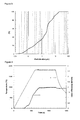
- Figure 1 shows a typical temperature profile, recorded during the self-propagating combustion synthesis of the 2ZrB 2 -SiC UHTC product by a thermocouple embedded in the pellet.
- the obtained product (4 g) is milled (SPEX mixer mill 8000) using 2 steel balls (11.5 mm diameter, 6.5 g weight) for 20 min milling time.
- the internal surface of the mould has been previously lined with a graphite foil (thickness 0.13 mm, purity 99.8%, Alfa Aesar) in order to preserve the mould integrity and to facilitate sample release at the end of the process. For the same reason a graphite foil has been put between the reacting mixture and the plungers surface in contact with it.
- Both the mould and plungers are made of AT101-type graphite and are supplied by Atal S.r.l.
- the powder sample Before the sintering process being commenced, the powder sample is subjected to a pre-compaction step, consisting in the application of 7 kN mechanical load through the plungers, equivalent to a mechanical pressure of 40 MPa, for 30 min. Then, the mechanical load applied and maintained constant during the sintering process, is decreased to 3.5 kN, which is equivalent to a mechanical pressure of 20 MPa.
- the densification of combustion synthesised 2ZrB 2 -SiC UHTC product by ECAS is performed by setting a temperature cycle as follows. The temperature is augmented from the room temperature to 1800°C in 10 min and this value is maintained constant for further 10 minutes. The intensity of the electric current was thus automatically adjusted by the controller of the SPS machine and reached its maximum value of approximately 1400 A in about 10 minutes.
- the mould After the sintering step, the mould is allowed to cool while maintaining the applied mechanical load until the room temperature is reached.
- the so obtained sample has shown a relative density greater that 99.9% of the theoretical value of 2ZrB 2 -SiC UHTC product, that is 5.37 g/cm 3 .
- the total time required for carrying out.sintering to obtain a near-full dense UHTC product is 20 min.
- Vickers hardness and fracture toughness of obtained sample were determined by Vickers indentation fracture toughness test, as disclosed in C.B. Ponton and R.D. Rawlings Materials Science and Technology, vol. 5, 865-872, (1989 ).
- the densification of combustion synthesised 2ZrB 2 -SiC UHTC product by ECAS is performed by setting a temperature cycle as follows. The temperature is augmented from the room to 1600°C in 10 min and this value is maintained constant for further 10 minutes.
- Example 2 differs therefore from Example 1 because the maximum temperature has been reduced from 1800°C to 1600°C. All the remaining operating conditions were on the contrary the same as those described above in Example 1.
- the densification of combustion synthesised "ZrB 2 -SiC UHTC product" by ECAS is performed by setting a temperature cycle as follows. The temperature is augmented from the room to 1600°C in 10 min and this value is maintained constant for further 20 minutes.
- Example 3 differs therefore from Example 2 because the total sintering time has been increased from 20 to 30 minutes. All the remaining operating conditions were on the contrary the same as those described above in Example 2.
- sample 2ZrB 2 -SiC UHTC product has shown a relative density equal to 99.8% of the theoretical value.
- the SPS-515S apparatus from Sumitomo Coal Mining Co., Ltd. is used. Moreover, the starting reactants mixture already described in Example 1 is used.
- the three reactants in powder form have been dry mixed in a stoichiometric ratio corresponding to 2ZrB 2 -SiC UHTC product (ZrB 2 /SiC molar ratio equal to 2/1), (see details in Example 1), then they are directly subjected to the ECAS process. About 3 g of the mixture were placed inside a cylindrical graphite mould.
- the powder sample Before the synthesis/densification process being started, the powder sample is subjected to a pre-compaction step, consisting in the application of 7 kN mechanical load through the plungers, equivalent to a mechanical pressure of 40 MPa, for 30 min. Then, the mechanical load applied and maintained constant during the sintering process, is decreased to 3.5 kN, which is equivalent to a mechanical pressure of 20 MPa.
- the synthesis and simultaneous densification of "ZrB 2 -SiC UHTC product" by ECAS is performed by setting a temperature cycle as follows.
- the temperature is augmented from the room to 1900°C in 10 min and this value is maintained constant for 10 additional minutes.
- the intensity of the electric current was thus automatically adjusted by the controller of the SPS machine and reached its maximum value of approximately 1450 A at about 10 minutes.
- the total shrinkage displacement along the vertical axis of the lower electrode from the initial position was equal to about 3 mm.
- the mould After the synthesis/densification step, the mould is allowed to cool while maintaining the applied mechanical load until the room temperature is reached.
- the so obtained sample has shown a relative density greater than 99.9% of the theoretical value.
- Vickers hardness and fracture toughness of obtained sample were also determined as described above in Example 1. It was found that Vickers hardness value measured by an indentation method using 1 kg load was about 15.9 ⁇ 0.4 GPa while fracture toughness was 5.0 ⁇ 0.8 MPa m 1/2 .
- the synthesis and simultaneous densification of 2ZrB 2 -SiC UHTC product by ECAS is performed by setting a temperature cycle as follows. The temperature is augmented from the room to 1900°C in 10 min and this value is maintained constant for 5 more minutes.
- Example 5 differs therefore from Example 4 because the total sintering time has been decreased from 20 to 15 minutes. All the remaining operating conditions were on the contrary the same as those described above in Example 4.
- the synthesis and simultaneous densification of 2ZrB 2 -SiC UHTC product by ECAS is performed by setting a temperature cycle as follows. The temperature is augmented from the room temperature to 1850°C in 10 min and this value is maintained constant for further 20 minutes.
- Example 6 differs therefore from Example 4 because the maximum temperature has been reduced from 1900°C to 1850°C and total sintering time has been increased from 20 to 30 minutes. All the remaining operating conditions were on the contrary the same as those described above in Example 4.
Landscapes
- Chemical & Material Sciences (AREA)
- Engineering & Computer Science (AREA)
- Ceramic Engineering (AREA)
- Manufacturing & Machinery (AREA)
- Organic Chemistry (AREA)
- Structural Engineering (AREA)
- Materials Engineering (AREA)
- Inorganic Chemistry (AREA)
- Combustion & Propulsion (AREA)
- Chemical Kinetics & Catalysis (AREA)
- Thermal Sciences (AREA)
- Physics & Mathematics (AREA)
- Ceramic Products (AREA)
Claims (13)
- Verfahren zum Herstellen eines UHTC-Produkts in Bulk-Form mit der allgemeinen Formel (I)
x ZrB2 - y SiC - z ZrC (I)
wobei x im Bereich zwischen 2 und 4 liegt,
y im Bereich zwischen 1 und 1,5 liegt und
z im Bereich zwischen 0 und 4 liegt,
wobei das Verfahren folgende Schritte umfasst:i) Trockenmischen von Zirkoniumpulver, das eine Reinheit von höher als 98,5 % und eine Partikelgröße von kleiner als 44 µm aufweist, Borcarbidpulver, das eine Reinheit von höher als 99,4 % aufweist, und Siliciumpulver, das eine Reinheit von höher als 99 % und eine Partikelgröße von kleiner als 44 µm aufweist, und, wenn das z/x-Verhältnis höher als 0,25 ist, Graphitpulver, das eine Partikelgröße im Bereich zwischen 1 und 2 µm aufweist, in stöchiometrischem Verhältnis entsprechend dem gewünschten Endprodukt der vorstehenden allgemeinen Formel (I), um so ein Pulvergemisch zu erhalten;ii) Verbrennungssynthetisieren und Verdichten des aus Schritt i) kommenden Pulvergemischs durch:um das vorstehend genannte UHTC-Produkt mit der allgemeinen Formel (I) zu erhalten.ii-a) elektrischer-Strom-aktiviertes-Sinter(ECAS)-Verfahren; oderii-b) selbstpropagierende Hochtemperatursynthese (SHS), Trockenmahlen des so erhaltenen verbrennungssynthetisierten Produkts, um das Produkt in Pulverform zu erhalten, und Verdichten des so erhaltenen Pulvers durch ein elektrischer-Strom-aktiviertes-Sinter(ECAS)-Verfahren, - Verfahren gemäß Anspruch 1, wobei das aus Schritt i) kommende Pulvergemisch in Schritt ii) der Verbrennungssynthese durch SHS-Verfahren unterzogen wird, um so ein Produkt zu erhalten, das in die Pulverform umgewandelt und dann dem ECAS-Verfahren unterzogen wird.
- Verfahren gemäß Anspruch 1, wobei das aus Schritt i) kommende Pulvergemisch in Schritt ii) der Synthese und gleichzeitigen Verdichtung durch ECAS-Verfahren unterzogen wird.
- Verfahren gemäß Anspruch 2, wobei das aus Schritt i) kommende Pulvergemisch, bevor es dem SHS-Verfahren unterzogen wird, uniaxial gepresst wird, um zylindrische Pellets zu bilden.
- Verfahren gemäß Anspruch 2, wobei das Produkt in Pulverform durch Trockenmahlen bis zum Erhalten einer Partikelgröße von weniger als 25 µm erhalten wird.
- Verfahren gemäß Anspruch 2, wobei das Produkt in Pulverform einem Vorkompaktierungsschritt vor dem Anwenden des ECAS-Verfahrens unterzogen wird.
- Verfahren gemäß Anspruch 6, wobei der Vorkompaktierungsschritt durchgeführt wird, indem das Produkt in Pulverform in einer zylindrischen Graphitform angeordnet wird, die mit zwei Stempeln mit einem Durchmesser von 14,7 mm und einer Höhe von 30 mm ausgestattet ist, und eine mechanische Last von 7 kN durch die Stempel 30 Minuten angewendet wird.
- Verfahren gemäß Anspruch 2 oder 3, wobei das ECAS-Verfahren in Schritt ii) durchgeführt wird, indem das Produkt in einem Formwerkzeug angeordnet wird, das mit zwei Graphitstempeln mit einem Durchmesser von 14,7 mm und einer Höhe von 30 mm ausgestattet ist, und eine mechanische Last von wenigstens 3,5 kN durch die Stempel angewendet wird, die während der Anwendung des ECAS-Verfahrens konstant gehalten wird.
- Verfahren gemäß Anspruch 2, wobei während der Anwendung des ECAS-Verfahrens in Schritt ii) die Temperatur innerhalb von 10 Minuten von Raumtemperatur auf den Wert von wenigstens 1600 °C gebracht und dieser Wert wenigstens weitere 10 Minuten konstant gehalten wird.
- Verfahren gemäß Anspruch 2, wobei während der Anwendung des ECAS-Verfahrens in Schritt ii) die Temperatur innerhalb von 10 Minuten von Raumtemperatur auf den Wert von wenigstens 1800 °C gebracht und dieser Wert weitere 10 Minuten konstant gehalten wird.
- Verfahren gemäß Anspruch 3, wobei während der Anwendung des ECAS-Verfahrens in Schritt ii) die Temperatur innerhalb von 10 Minuten von Raumtemperatur auf den Wert von wenigstens 1850 °C gebracht und dieser Wert wenigstens weitere 20 Minuten konstant gehalten wird.
- Verfahren gemäß Anspruch 3, wobei während der Anwendung des ECAS-Verfahrens in Schritt ii) die Temperatur innerhalb von 10 Minuten von Raumtemperatur auf den Wert von wenigstens 1900 °C gebracht und dieser Wert weitere 10 Minuten konstant gehalten wird.
- Verfahren gemäß einem der Ansprüche 1-12, wobei das UHTC-Produkt in Bulk-Form die allgemeine Formel (I) aufweist,
x ZrB2 - y SiC - z ZrC (I)
wobei x 2 ist, y 1 ist und z 0 ist.
Applications Claiming Priority (1)
| Application Number | Priority Date | Filing Date | Title |
|---|---|---|---|
| PCT/EP2006/061472 WO2007115592A1 (en) | 2006-04-10 | 2006-04-10 | Process for the preparation of dense ultra-high-temperature composite products |
Publications (2)
| Publication Number | Publication Date |
|---|---|
| EP2021302A1 EP2021302A1 (de) | 2009-02-11 |
| EP2021302B1 true EP2021302B1 (de) | 2013-10-30 |
Family
ID=37692467
Family Applications (1)
| Application Number | Title | Priority Date | Filing Date |
|---|---|---|---|
| EP06725672.7A Expired - Lifetime EP2021302B1 (de) | 2006-04-10 | 2006-04-10 | Verfahren zur herstellung von dichten ultrahochtemperatur-verbundprodukten |
Country Status (2)
| Country | Link |
|---|---|
| EP (1) | EP2021302B1 (de) |
| WO (1) | WO2007115592A1 (de) |
Cited By (4)
| Publication number | Priority date | Publication date | Assignee | Title |
|---|---|---|---|---|
| RU2588079C1 (ru) * | 2015-02-20 | 2016-06-27 | федеральное государственное бюджетное образовательное учреждение высшего образования "Пермский национальный исследовательский политехнический университет" | Ультравысокотемпературный керамический материал и способ его получения |
| RU2614006C1 (ru) * | 2015-12-14 | 2017-03-22 | Федеральное государственное автономное образовательное учреждение высшего образования "Национальный исследовательский технологический университет "МИСиС" | Способ получения нанокерамики методом совмещения самораспространяющегося высокотемпературного синтеза и искрового плазменного спекания |
| EP4056540A1 (de) | 2021-03-08 | 2022-09-14 | Akademia Gorniczo-Hutnicza im. Stanislawa Staszica w Krakowie | Verfahren zur herstellung eines hochfeuerfesten verbundwerkstoffs aus borcarbid und intermetallischer verbindung des ti-si-systems |
| EP4289805A1 (de) | 2022-06-06 | 2023-12-13 | Akademia Gorniczo-Hutnicza im. Stanislawa Staszica w Krakowie | Verfahren zur herstellung eines schneidwerkzeugs aus einem hochfeuerfesten verbundwerkstoff |
Families Citing this family (5)
| Publication number | Priority date | Publication date | Assignee | Title |
|---|---|---|---|---|
| ITVR20090153A1 (it) * | 2009-09-30 | 2011-04-01 | Eurocoating S P A | Procedimento per la realizzazione di materiale ceramico grezzo |
| CN107299343B (zh) * | 2017-08-14 | 2019-05-03 | 燕山大学 | 一种纯铜表面激光原位自生陶瓷增强熔覆层的制备方法 |
| CN108950535B (zh) * | 2018-06-29 | 2020-08-04 | 武汉科技大学 | 一种高频感应辅助自蔓延碳化钛基复合涂层的制备方法 |
| CN116253569B (zh) * | 2023-01-04 | 2023-12-01 | 河南省科学院碳基复合材料研究院 | 一种利用自蔓延辅助固溶体掺杂技术制备(Hf,Ta)B2-MoSi2阻氧涂层的方法 |
| CN119059819B (zh) * | 2024-11-07 | 2025-01-21 | 山东工业陶瓷研究设计院有限公司 | 一种抗烧蚀耐高温陶瓷材料的制备方法 |
Family Cites Families (2)
| Publication number | Priority date | Publication date | Assignee | Title |
|---|---|---|---|---|
| US5217816A (en) * | 1984-10-19 | 1993-06-08 | Martin Marietta Corporation | Metal-ceramic composites |
| US5750450A (en) * | 1996-01-08 | 1998-05-12 | The United States Of America As Represented By The Administrator Of The National Aeronautics And Space Administration | Ablation resistant zirconium and hafnium ceramics |
-
2006
- 2006-04-10 WO PCT/EP2006/061472 patent/WO2007115592A1/en not_active Ceased
- 2006-04-10 EP EP06725672.7A patent/EP2021302B1/de not_active Expired - Lifetime
Cited By (4)
| Publication number | Priority date | Publication date | Assignee | Title |
|---|---|---|---|---|
| RU2588079C1 (ru) * | 2015-02-20 | 2016-06-27 | федеральное государственное бюджетное образовательное учреждение высшего образования "Пермский национальный исследовательский политехнический университет" | Ультравысокотемпературный керамический материал и способ его получения |
| RU2614006C1 (ru) * | 2015-12-14 | 2017-03-22 | Федеральное государственное автономное образовательное учреждение высшего образования "Национальный исследовательский технологический университет "МИСиС" | Способ получения нанокерамики методом совмещения самораспространяющегося высокотемпературного синтеза и искрового плазменного спекания |
| EP4056540A1 (de) | 2021-03-08 | 2022-09-14 | Akademia Gorniczo-Hutnicza im. Stanislawa Staszica w Krakowie | Verfahren zur herstellung eines hochfeuerfesten verbundwerkstoffs aus borcarbid und intermetallischer verbindung des ti-si-systems |
| EP4289805A1 (de) | 2022-06-06 | 2023-12-13 | Akademia Gorniczo-Hutnicza im. Stanislawa Staszica w Krakowie | Verfahren zur herstellung eines schneidwerkzeugs aus einem hochfeuerfesten verbundwerkstoff |
Also Published As
| Publication number | Publication date |
|---|---|
| WO2007115592A1 (en) | 2007-10-18 |
| EP2021302A1 (de) | 2009-02-11 |
Similar Documents
| Publication | Publication Date | Title |
|---|---|---|
| Sahin et al. | Preparation of AlON ceramics via reactive spark plasma sintering | |
| Meyers et al. | Combustion synthesis/densification of an Al2O3–TiB2 composite | |
| Huang et al. | In situ synthesis and densification of submicrometer-grained B4C–TiB2 composites by pulsed electric current sintering | |
| Levashov et al. | Self-propagating high-temperature synthesis of advanced ceramics in the Mo–Si–B system: Kinetics and mechanism of combustion and structure formation | |
| Wu et al. | Synthesis and microstructural features of ZrB2–SiC-based composites by reactive spark plasma sintering and reactive hot pressing | |
| KR100307646B1 (ko) | 연소합성법으로제조된질화알루미늄,질화알루미늄함유고용체및질화알루미늄복합재 | |
| Shon et al. | Simultaneous synthesis and densification of MoSi2 by field‐activated combustion | |
| Turki et al. | SPS parameters influence on Ti3SiC2 formation from Si/TiC: Mechanical properties of the bulk materials | |
| Yeh et al. | Preparation of niobium borides NbB and NbB2 by self-propagating combustion synthesis | |
| Wang et al. | Synthesis, microstructure and properties of MoSi2–5 vol% Al2O3 composites | |
| Pourebrahim et al. | Effect of aluminum addition on the densification behavior and mechanical properties of synthesized high-purity nano-laminated Ti3SiC2 through spark plasma sintering | |
| Popov et al. | The influence of high pressure on TiC-B4C reaction kinetics | |
| EP2021302A1 (de) | Verfahren zur herstellung von dichten ultrahochtemperatur-verbundprodukten | |
| Oh et al. | Simultaneous synthesis and consolidation process of ultra-fine WSi2–SiC and its mechanical properties | |
| Zamharir et al. | Effect of co-addition of WC and MoSi2 on the microstructure of ZrB2–SiC–Si composites | |
| Licheri et al. | Efficient synthesis/sintering routes to obtain fully dense ultra-high-temperature ceramics (UHTCs) | |
| Michalski et al. | Ni3Al/diamond composites produced by pulse plasma sintering (PPS) with the participation of the SHS reaction | |
| Licheri et al. | Spark plasma sintering of ZrB2-and HfB2-based ultra high temperature ceramics prepared by SHS | |
| Adabi et al. | Effect of infiltration parameters on composition of W–ZrC composites produced by displacive compensation of porosity (DCP) method | |
| Mei et al. | Synthesis of high-purity Ti2AlC by spark plasma sintering (SPS) of the elemental powders | |
| Hashimoto et al. | Synthesis of Ti3SiC2 from powder blend of Ti, Si and TiC | |
| Choi et al. | Effect of precursors on the combustion synthesis of TiC-Al2O3 composite | |
| Yeh et al. | Preparation of Nb5Si3 intermetallic and Nb5Si3/Nb composite by self-propagating high-temperature synthesis | |
| Chelpanov et al. | Self-propagating high-temperature synthesis in a Ti− Al− C powder system using different carbon precursors | |
| Chanadee et al. | Effect of high-energy milling on magnesiothermic self-propagating high-temperature synthesis in a mixture of SiO2, C, and Mg reactant powders |
Legal Events
| Date | Code | Title | Description |
|---|---|---|---|
| PUAI | Public reference made under article 153(3) epc to a published international application that has entered the european phase |
Free format text: ORIGINAL CODE: 0009012 |
|
| 17P | Request for examination filed |
Effective date: 20081107 |
|
| AK | Designated contracting states |
Kind code of ref document: A1 Designated state(s): AT BE BG CH CY CZ DE DK EE ES FI FR GB GR HU IE IS IT LI LT LU LV MC NL PL PT RO SE SI SK TR |
|
| AX | Request for extension of the european patent |
Extension state: AL BA HR MK YU |
|
| 17Q | First examination report despatched |
Effective date: 20120306 |
|
| DAX | Request for extension of the european patent (deleted) | ||
| GRAP | Despatch of communication of intention to grant a patent |
Free format text: ORIGINAL CODE: EPIDOSNIGR1 |
|
| INTG | Intention to grant announced |
Effective date: 20130517 |
|
| GRAS | Grant fee paid |
Free format text: ORIGINAL CODE: EPIDOSNIGR3 |
|
| GRAA | (expected) grant |
Free format text: ORIGINAL CODE: 0009210 |
|
| AK | Designated contracting states |
Kind code of ref document: B1 Designated state(s): AT BE BG CH CY CZ DE DK EE ES FI FR GB GR HU IE IS IT LI LT LU LV MC NL PL PT RO SE SI SK TR |
|
| REG | Reference to a national code |
Ref country code: GB Ref legal event code: FG4D |
|
| REG | Reference to a national code |
Ref country code: CH Ref legal event code: EP |
|
| REG | Reference to a national code |
Ref country code: AT Ref legal event code: REF Ref document number: 638439 Country of ref document: AT Kind code of ref document: T Effective date: 20131115 |
|
| REG | Reference to a national code |
Ref country code: IE Ref legal event code: FG4D |
|
| REG | Reference to a national code |
Ref country code: DE Ref legal event code: R096 Ref document number: 602006039035 Country of ref document: DE Effective date: 20131219 |
|
| REG | Reference to a national code |
Ref country code: NL Ref legal event code: VDEP Effective date: 20131030 |
|
| REG | Reference to a national code |
Ref country code: DE Ref legal event code: R082 Ref document number: 602006039035 Country of ref document: DE Representative=s name: FROHWITTER PATENT- UND RECHTSANWAELTE, DE Effective date: 20140130 Ref country code: DE Ref legal event code: R081 Ref document number: 602006039035 Country of ref document: DE Owner name: I.M. INNOVATIVE MATERIALS S.R.L., IT Free format text: FORMER OWNER: UNIVERSITA DEGLI STUDI DI CAGLIARI, CAGLIARI, IT Effective date: 20140130 Ref country code: DE Ref legal event code: R081 Ref document number: 602006039035 Country of ref document: DE Owner name: I.M. INNOVATIVE MATERIALS S.R.L., SESTU, IT Free format text: FORMER OWNER: UNIVERSITA DEGLI STUDI DI CAGLIARI, CAGLIARI, IT Effective date: 20140130 |
|
| REG | Reference to a national code |
Ref country code: AT Ref legal event code: MK05 Ref document number: 638439 Country of ref document: AT Kind code of ref document: T Effective date: 20131030 |
|
| REG | Reference to a national code |
Ref country code: LT Ref legal event code: MG4D |
|
| PG25 | Lapsed in a contracting state [announced via postgrant information from national office to epo] |
Ref country code: LT Free format text: LAPSE BECAUSE OF FAILURE TO SUBMIT A TRANSLATION OF THE DESCRIPTION OR TO PAY THE FEE WITHIN THE PRESCRIBED TIME-LIMIT Effective date: 20131030 Ref country code: SE Free format text: LAPSE BECAUSE OF FAILURE TO SUBMIT A TRANSLATION OF THE DESCRIPTION OR TO PAY THE FEE WITHIN THE PRESCRIBED TIME-LIMIT Effective date: 20131030 Ref country code: NL Free format text: LAPSE BECAUSE OF FAILURE TO SUBMIT A TRANSLATION OF THE DESCRIPTION OR TO PAY THE FEE WITHIN THE PRESCRIBED TIME-LIMIT Effective date: 20131030 Ref country code: BE Free format text: LAPSE BECAUSE OF FAILURE TO SUBMIT A TRANSLATION OF THE DESCRIPTION OR TO PAY THE FEE WITHIN THE PRESCRIBED TIME-LIMIT Effective date: 20131030 Ref country code: FI Free format text: LAPSE BECAUSE OF FAILURE TO SUBMIT A TRANSLATION OF THE DESCRIPTION OR TO PAY THE FEE WITHIN THE PRESCRIBED TIME-LIMIT Effective date: 20131030 Ref country code: IS Free format text: LAPSE BECAUSE OF FAILURE TO SUBMIT A TRANSLATION OF THE DESCRIPTION OR TO PAY THE FEE WITHIN THE PRESCRIBED TIME-LIMIT Effective date: 20140228 |
|
| PG25 | Lapsed in a contracting state [announced via postgrant information from national office to epo] |
Ref country code: LV Free format text: LAPSE BECAUSE OF FAILURE TO SUBMIT A TRANSLATION OF THE DESCRIPTION OR TO PAY THE FEE WITHIN THE PRESCRIBED TIME-LIMIT Effective date: 20131030 Ref country code: CY Free format text: LAPSE BECAUSE OF FAILURE TO SUBMIT A TRANSLATION OF THE DESCRIPTION OR TO PAY THE FEE WITHIN THE PRESCRIBED TIME-LIMIT Effective date: 20131030 Ref country code: ES Free format text: LAPSE BECAUSE OF FAILURE TO SUBMIT A TRANSLATION OF THE DESCRIPTION OR TO PAY THE FEE WITHIN THE PRESCRIBED TIME-LIMIT Effective date: 20131030 Ref country code: AT Free format text: LAPSE BECAUSE OF FAILURE TO SUBMIT A TRANSLATION OF THE DESCRIPTION OR TO PAY THE FEE WITHIN THE PRESCRIBED TIME-LIMIT Effective date: 20131030 |
|
| PG25 | Lapsed in a contracting state [announced via postgrant information from national office to epo] |
Ref country code: PT Free format text: LAPSE BECAUSE OF FAILURE TO SUBMIT A TRANSLATION OF THE DESCRIPTION OR TO PAY THE FEE WITHIN THE PRESCRIBED TIME-LIMIT Effective date: 20140228 |
|
| PG25 | Lapsed in a contracting state [announced via postgrant information from national office to epo] |
Ref country code: EE Free format text: LAPSE BECAUSE OF FAILURE TO SUBMIT A TRANSLATION OF THE DESCRIPTION OR TO PAY THE FEE WITHIN THE PRESCRIBED TIME-LIMIT Effective date: 20131030 |
|
| REG | Reference to a national code |
Ref country code: DE Ref legal event code: R097 Ref document number: 602006039035 Country of ref document: DE |
|
| PG25 | Lapsed in a contracting state [announced via postgrant information from national office to epo] |
Ref country code: SK Free format text: LAPSE BECAUSE OF FAILURE TO SUBMIT A TRANSLATION OF THE DESCRIPTION OR TO PAY THE FEE WITHIN THE PRESCRIBED TIME-LIMIT Effective date: 20131030 Ref country code: IT Free format text: LAPSE BECAUSE OF FAILURE TO SUBMIT A TRANSLATION OF THE DESCRIPTION OR TO PAY THE FEE WITHIN THE PRESCRIBED TIME-LIMIT Effective date: 20131030 Ref country code: CZ Free format text: LAPSE BECAUSE OF FAILURE TO SUBMIT A TRANSLATION OF THE DESCRIPTION OR TO PAY THE FEE WITHIN THE PRESCRIBED TIME-LIMIT Effective date: 20131030 Ref country code: PL Free format text: LAPSE BECAUSE OF FAILURE TO SUBMIT A TRANSLATION OF THE DESCRIPTION OR TO PAY THE FEE WITHIN THE PRESCRIBED TIME-LIMIT Effective date: 20131030 Ref country code: RO Free format text: LAPSE BECAUSE OF FAILURE TO SUBMIT A TRANSLATION OF THE DESCRIPTION OR TO PAY THE FEE WITHIN THE PRESCRIBED TIME-LIMIT Effective date: 20131030 |
|
| PGFP | Annual fee paid to national office [announced via postgrant information from national office to epo] |
Ref country code: DE Payment date: 20140417 Year of fee payment: 9 |
|
| PLBE | No opposition filed within time limit |
Free format text: ORIGINAL CODE: 0009261 |
|
| STAA | Information on the status of an ep patent application or granted ep patent |
Free format text: STATUS: NO OPPOSITION FILED WITHIN TIME LIMIT |
|
| PG25 | Lapsed in a contracting state [announced via postgrant information from national office to epo] |
Ref country code: DK Free format text: LAPSE BECAUSE OF FAILURE TO SUBMIT A TRANSLATION OF THE DESCRIPTION OR TO PAY THE FEE WITHIN THE PRESCRIBED TIME-LIMIT Effective date: 20131030 |
|
| 26N | No opposition filed |
Effective date: 20140731 |
|
| REG | Reference to a national code |
Ref country code: DE Ref legal event code: R097 Ref document number: 602006039035 Country of ref document: DE Effective date: 20140731 |
|
| PG25 | Lapsed in a contracting state [announced via postgrant information from national office to epo] |
Ref country code: MC Free format text: LAPSE BECAUSE OF FAILURE TO SUBMIT A TRANSLATION OF THE DESCRIPTION OR TO PAY THE FEE WITHIN THE PRESCRIBED TIME-LIMIT Effective date: 20131030 Ref country code: LU Free format text: LAPSE BECAUSE OF FAILURE TO SUBMIT A TRANSLATION OF THE DESCRIPTION OR TO PAY THE FEE WITHIN THE PRESCRIBED TIME-LIMIT Effective date: 20140410 |
|
| REG | Reference to a national code |
Ref country code: CH Ref legal event code: PL |
|
| GBPC | Gb: european patent ceased through non-payment of renewal fee |
Effective date: 20140410 |
|
| REG | Reference to a national code |
Ref country code: FR Ref legal event code: ST Effective date: 20141231 |
|
| REG | Reference to a national code |
Ref country code: IE Ref legal event code: MM4A |
|
| PG25 | Lapsed in a contracting state [announced via postgrant information from national office to epo] |
Ref country code: CH Free format text: LAPSE BECAUSE OF NON-PAYMENT OF DUE FEES Effective date: 20140430 Ref country code: GB Free format text: LAPSE BECAUSE OF NON-PAYMENT OF DUE FEES Effective date: 20140410 Ref country code: LI Free format text: LAPSE BECAUSE OF NON-PAYMENT OF DUE FEES Effective date: 20140430 |
|
| PG25 | Lapsed in a contracting state [announced via postgrant information from national office to epo] |
Ref country code: FR Free format text: LAPSE BECAUSE OF NON-PAYMENT OF DUE FEES Effective date: 20140430 Ref country code: SI Free format text: LAPSE BECAUSE OF FAILURE TO SUBMIT A TRANSLATION OF THE DESCRIPTION OR TO PAY THE FEE WITHIN THE PRESCRIBED TIME-LIMIT Effective date: 20131030 |
|
| PG25 | Lapsed in a contracting state [announced via postgrant information from national office to epo] |
Ref country code: IE Free format text: LAPSE BECAUSE OF NON-PAYMENT OF DUE FEES Effective date: 20140410 |
|
| REG | Reference to a national code |
Ref country code: DE Ref legal event code: R119 Ref document number: 602006039035 Country of ref document: DE |
|
| PG25 | Lapsed in a contracting state [announced via postgrant information from national office to epo] |
Ref country code: DE Free format text: LAPSE BECAUSE OF NON-PAYMENT OF DUE FEES Effective date: 20151103 |
|
| PG25 | Lapsed in a contracting state [announced via postgrant information from national office to epo] |
Ref country code: BG Free format text: LAPSE BECAUSE OF FAILURE TO SUBMIT A TRANSLATION OF THE DESCRIPTION OR TO PAY THE FEE WITHIN THE PRESCRIBED TIME-LIMIT Effective date: 20131030 |
|
| PG25 | Lapsed in a contracting state [announced via postgrant information from national office to epo] |
Ref country code: GR Free format text: LAPSE BECAUSE OF FAILURE TO SUBMIT A TRANSLATION OF THE DESCRIPTION OR TO PAY THE FEE WITHIN THE PRESCRIBED TIME-LIMIT Effective date: 20140131 |
|
| PG25 | Lapsed in a contracting state [announced via postgrant information from national office to epo] |
Ref country code: TR Free format text: LAPSE BECAUSE OF FAILURE TO SUBMIT A TRANSLATION OF THE DESCRIPTION OR TO PAY THE FEE WITHIN THE PRESCRIBED TIME-LIMIT Effective date: 20131030 Ref country code: HU Free format text: LAPSE BECAUSE OF FAILURE TO SUBMIT A TRANSLATION OF THE DESCRIPTION OR TO PAY THE FEE WITHIN THE PRESCRIBED TIME-LIMIT; INVALID AB INITIO Effective date: 20060410 |