EP2022845A1 - Vorrichtung und verfahren zur beurteilung von zellablösung sowie zellkulturvorrichtung - Google Patents
Vorrichtung und verfahren zur beurteilung von zellablösung sowie zellkulturvorrichtung Download PDFInfo
- Publication number
- EP2022845A1 EP2022845A1 EP07743898A EP07743898A EP2022845A1 EP 2022845 A1 EP2022845 A1 EP 2022845A1 EP 07743898 A EP07743898 A EP 07743898A EP 07743898 A EP07743898 A EP 07743898A EP 2022845 A1 EP2022845 A1 EP 2022845A1
- Authority
- EP
- European Patent Office
- Prior art keywords
- cells
- detachment
- judging
- cell culture
- culture container
- Prior art date
- Legal status (The legal status is an assumption and is not a legal conclusion. Google has not performed a legal analysis and makes no representation as to the accuracy of the status listed.)
- Granted
Links
Images




Classifications
-
- C—CHEMISTRY; METALLURGY
- C12—BIOCHEMISTRY; BEER; SPIRITS; WINE; VINEGAR; MICROBIOLOGY; ENZYMOLOGY; MUTATION OR GENETIC ENGINEERING
- C12M—APPARATUS FOR ENZYMOLOGY OR MICROBIOLOGY; APPARATUS FOR CULTURING MICROORGANISMS FOR PRODUCING BIOMASS, FOR GROWING CELLS OR FOR OBTAINING FERMENTATION OR METABOLIC PRODUCTS, i.e. BIOREACTORS OR FERMENTERS
- C12M41/00—Means for regulation, monitoring, measurement or control, e.g. flow regulation
- C12M41/12—Means for regulation, monitoring, measurement or control, e.g. flow regulation of temperature
- C12M41/14—Incubators; Climatic chambers
-
- C—CHEMISTRY; METALLURGY
- C12—BIOCHEMISTRY; BEER; SPIRITS; WINE; VINEGAR; MICROBIOLOGY; ENZYMOLOGY; MUTATION OR GENETIC ENGINEERING
- C12M—APPARATUS FOR ENZYMOLOGY OR MICROBIOLOGY; APPARATUS FOR CULTURING MICROORGANISMS FOR PRODUCING BIOMASS, FOR GROWING CELLS OR FOR OBTAINING FERMENTATION OR METABOLIC PRODUCTS, i.e. BIOREACTORS OR FERMENTERS
- C12M41/00—Means for regulation, monitoring, measurement or control, e.g. flow regulation
- C12M41/46—Means for regulation, monitoring, measurement or control, e.g. flow regulation of cellular or enzymatic activity or functionality, e.g. cell viability
-
- C—CHEMISTRY; METALLURGY
- C12—BIOCHEMISTRY; BEER; SPIRITS; WINE; VINEGAR; MICROBIOLOGY; ENZYMOLOGY; MUTATION OR GENETIC ENGINEERING
- C12M—APPARATUS FOR ENZYMOLOGY OR MICROBIOLOGY; APPARATUS FOR CULTURING MICROORGANISMS FOR PRODUCING BIOMASS, FOR GROWING CELLS OR FOR OBTAINING FERMENTATION OR METABOLIC PRODUCTS, i.e. BIOREACTORS OR FERMENTERS
- C12M41/00—Means for regulation, monitoring, measurement or control, e.g. flow regulation
- C12M41/48—Automatic or computerized control
-
- C—CHEMISTRY; METALLURGY
- C12—BIOCHEMISTRY; BEER; SPIRITS; WINE; VINEGAR; MICROBIOLOGY; ENZYMOLOGY; MUTATION OR GENETIC ENGINEERING
- C12Q—MEASURING OR TESTING PROCESSES INVOLVING ENZYMES, NUCLEIC ACIDS OR MICROORGANISMS; COMPOSITIONS OR TEST PAPERS THEREFOR; PROCESSES OF PREPARING SUCH COMPOSITIONS; CONDITION-RESPONSIVE CONTROL IN MICROBIOLOGICAL OR ENZYMOLOGICAL PROCESSES
- C12Q1/00—Measuring or testing processes involving enzymes, nucleic acids or microorganisms; Compositions therefor; Processes of preparing such compositions
- C12Q1/02—Measuring or testing processes involving enzymes, nucleic acids or microorganisms; Compositions therefor; Processes of preparing such compositions involving viable microorganisms
Definitions
- the present invention relates to an apparatus for judging cell detachment for making a judgment as to the detachment of cell adhesion, to a method of judging cell detachment, and to a cell culture apparatus that is equipped with an apparatus for judging cell detachment.
- Patent Reference #1 Japanese Laid-Open Patent Publication 2003-235541 .
- an apparatus for judging cell detachment that judges a state of detachment of cells that have been cultured within a cell culture container (cultured cells), comprises: an image-capturing unit that captures an image of the cultured cells; and a detachment state judging unit that determines luminance information within the cell culture container based upon image capture data from the image-capturing unit, and judges that the culture cells are detached when the luminance information exceeds a predetermined luminance level.
- the luminance information is average luminance information for an entirety of the cell culture container, or a sum of luminance information for the cell culture container.
- an apparatus for judging cell detachment that judges a state of detachment of cells that have been cultured within a cell culture container (cultured cells), comprises: an image-capturing unit that repeats image capture at a predetermined interval, and captures images of the cultured cells; and a detachment state judging unit that determines change of image information of the cultured cells based upon image capture data repeatedly obtained by the image-capturing unit, and judges the state of detachment of the culture cells.
- the apparatus further comprises a release agent addition unit that adds release agent to within the cell culture container; and the detachment state judging unit judges that the cultured cells are detached when the change of the image information of the cultured cells drops below a predetermined level.
- the apparatus further comprises: an addition unit that adds a breakdown enzyme into the cell culture container; an information acquisition unit that acquires information specifying a state of culture of the cells within the cell culture container; and a threshold value calculation unit that calculates a threshold value for judging the state of detachment of the cells, based upon the information specifying the state of culture of the cells acquired by the information acquisition unit, and the detachment state judging unit judges the state of detachment of the cells based upon the area calculated by the area calculation unit, and upon the threshold value that has been calculated by the threshold value calculation unit.
- the image capture data for the cells is a phase contrast image obtained by a method of phase contrast observation.
- the apparatus further comprises a demand unit that, if it has been judged by the detachment state judging unit that the cells have been sufficiently detached from the cell culture container, invites neutralization of the breakdown enzyme in the cell culture container, or the elimination of the breakdown enzyme from within the cell culture container.
- a method of judging cell detachment for judging a state of detachment of cells that have been cultured within a cell culture container (cultured cells) comprises: capturing an image of the cultured cells; and obtaining luminance information within the cell culture container based upon image capture data to judge that the cultured cells have been detached when the luminance information exceeds a predetermined luminance level.
- the luminance information is average luminance information for an entirety of the cell culture container, or a sum of luminance information for the cell culture container.
- a method of judging cell detachment for judging a state of detachment of cells that have been cultured within a cell culture container (cultured cells) comprises: repeating image capture to capture images of the cultured cells at a predetermined interval; and obtaining a change of image information of the cultured cells based upon image data that has been repeatedly captured to judge the state of detachment of the cultured cells.
- the method further comprises adding a release agent into the cell culture container; and it is judged that the detachment of the cultured cells has been completed, when the change of the image information of the cultured cells drops below a predetermined level.
- a method of judging cell detachment for judging a state of detachment of cells within a cell culture container comprises : capturing an image of the cells within the cell culture container; extracting regions whose luminance values are greater than or equal to a predetermined value from image capture data of the cells that have been captured, to calculate a total area of the regions; and judging the state of detachment of the cells based upon the calculated area.
- the 14th aspect of the present invention in the method of judging cell detachment according to the 13th aspect, it is preferred that: information is acquired specifying a state of culture of the cells within the cell culture container; a threshold value for judging the state of detachment of the cells is calculated based upon the information specifying the state of culture of the cells that has been acquired; and the state of detachment of the cells is judged based upon the area and the threshold value that have been calculated.
- the image capture data of the cells is a phase contrast image obtained by a method of phase contrast observation.
- the method further comprises adding a breakdown enzyme into the cell culture container; and if it has been judged that the cells have been sufficiently detached from the cell culture container, neutralization of the breakdown enzyme in the cell culture container, or elimination of the breakdown enzyme from within the cell culture container, is invited.
- a cell culture apparatus comprises: an addition unit that adds a breakdown enzyme for detaching cells into a cell culture container; an apparatus for judging cell detachment according to the 8th aspect; and at least one of a neutralization unit that neutralizes the breakdown enzyme by adding the culture medium within the cell culture container when the neutralization of the breakdown enzyme has been invited from the apparatus for judging cell detachment, and an elimination unit that eliminates the breakdown enzyme from within the cell culture container when the elimination of the breakdown enzyme has been invited from the apparatus for judging cell detachment.
- an apparatus for judging cell detachment that judges a state of detachment of cells that have been cultured within a cell culture container (cultured cells), comprises: an image-capturing unit that repeatedly captures images of the cultured cells within the cell culture container; and a detachment state judging unit that judges that the cultured cells are detached, based upon the image information captured by the image-capturing unit.
- a method of judging cell detachment for judging a state of detachment of cells that have been cultured within a cell culture container (cultured cells) comprises: capturing images of the cultured cells within the cell culture container repeatedly; and judging that the cultured cells have become detached based upon information in the images that have been captured.
- the state of detachment of the cells is judged based upon an image of the cells within the cell culture container, it is possible to judge the state of detachment of the cell s with high accuracy, irrespective of the various conditions such as the type of the cells and so on.
- FIG. 1 is a block diagram showing the structure of an apparatus for judging cell detachment according to this embodiment.
- This apparatus for judging cell detachment 100 includes an incubator 101, a stage 102, an objective lens 103, a camera 104, a control device 105, an illumination device 106, actuation switches 107, a monitor 108, and an environment control device 109. It should be understood that the stage 102, the objective lens 103, the camera 104, the control device 105, and the illumination device 106 constitute a microscope.
- the interior of the incubator is sealed, and its internal environment is maintained by the environment control device 109 at an environment suitable for the culture of cells.
- the CO 2 density within the incubator 101 may be maintained at 5% by a CO 2 mixer 109a
- the humidity may be maintained at 95% or greater by a humidity regulator 109b
- the temperature may be maintained at 37° C by a temperature regulator 109c.
- the stage 102, the objective lens 103, the camera 104, and the illumination device 106 are installed within the incubator 101.
- a cell culture container A is mounted upon the stage 101, and constitutes the subject for judgment of the state of detachment (release) of cells, as will be described hereinafter.
- a 35 mm dish may be used for the cell culture container A.
- the illumination device 106 may include, for example, a LED as a light source, and illumination light (transmitted light) emitted by this LED is irradiated from above upon the cell culture container A.
- the microscope is able to observe the cells within the culture container A that has been set upon the stage 101 with light illuminated from the illumination device 106 and transmitted through the cell culture container A.
- the camera 104 includes an image sensor such as a CCD or the like, and captures an image of this light that is inputted via the objective lens 103, in other words an image of the light that has passed through the cell culture container A, and thereby the microscope image is captured (i.e. is photographed). By doing this, it is possible to acquire a phase contrast image.
- the control device 105 includes a CPU, memory, and other peripheral circuitry, and controls the entire apparatus for judging cell detachment 100. With this apparatus for judging cell detachment 100, the user can issue various commands for the control device 105 by actuating the actuation switches 107, and the control device 105 executes various types of processing according to these commands from the user.
- the cells When trypsin solution is added into the cell culture container A, the cells gradually proceed to detach from the bottom surface of the cell culture container A (the containerbottomsurface) , and, when the cells are sufficiently detached, the user retrieves the cells and performs sub-culture or freezing thereof. It is known that, if at this time the cell detachment time becomes long, then the protein breakdown enzyme not only detaches the adhesion surfaces of the cells, but also exerts a negative influence upon the cell membranes, so that the state of cellular activity becomes poor. Due to this, when retrieving the cells, it is necessary to neutralize the trypsin solution by injecting the culture medium within the cell culture container A at the optimum timing at which the cells are sufficiently detached from the bottom surface of the container.
- the time period from when the trypsin solution is added until the cells are sufficiently detached varies according to the circumstances at that time, such as the type of cells within the cell culture container A, the density of the cells, the type of the culture medium, the amount of trypsin that was added, the temperature and the humidity within the incubator 101, and the like. Due to this, in the prior art, it was necessary for the user to decide upon the retrieval timing while checking the state of detachment of the cells by using a microscope, so that substantial labor was required.
- the control device 105 controls the camera 104 and the illumination device 106, and photographs phase contrast images of the cell culture container A after addition of the trypsin solution repeatedly at a predetermined time interval, for example 10 seconds. And, as will be described hereinafter, these phase contrast images that have been photographed are image processed, and the state of detachment of the cells is judged by detecting changes of the image along with the lapse of time. It should be understood that it will be supposed that the addition of the trypsin solution into the cell culture container A is performed in advance by the user.
- control device 105 controls the camera 104 and the illumination device 106 in the following manner, in order to photograph the phase contrast images of the cells repeatedly as described above. That is, it controls the illumination device 106 to make the LED emit light, so as thereby to irradiate illumination light upon the cell culture container A from above. And it controls the camera 104 so as to photograph the image that is inputted through the objective lens 103 repeatedly at intervals of the predetermined time period, for example 10 seconds.
- the control device 105 analyzes these phase contrast images, and makes judgments as to the state of detachment of the cells based upon the change over time of the phase contrast images.
- the control device 105 judges the state of detachment of the cells by paying attention to the fact that a correlation relationship exists between the state of detachment of the cells and the areas of the regions within the phase contrast image in which the luminance values are high. And it can judge the optimum timing at which the cells are sufficiently detached from the bottom surface of the container and moreover the trypsin solution does not exert any negative influence upon the cells, and thereby can exhibit the optimum neutralization timing for the trypsin solution.
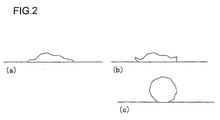
- Fig. 2 is a figure schematically showing the change of the cell state of detachment as seen from the side surface of the cell culture container A.
- Fig. 2 (a) shows the situation before the trypsin solution is added into the cell culture container A, in other words the normal state in which the cells are adhering to the bottom surface of the container
- Fig. 2(b) shows the state of detachment of the cells after a predetermined time period has elapsed from when the trypsin solution was added to the cell culture container A, for example after 30 seconds has elapsed from when the trypsin solution was added to the cell culture container A.
- Fig. 2 (c) shows the situation when a further time period has elapsed from the state shown in Fig. 2(b) , and the cells are in the state of being sufficiently detached from the bottom surface of the container.
- halos regions upon the phase contrast images where the phase contrast is large are termed halos, and it is known that the luminance values of the image become extremely large in these halo regions, as compared to the other regions.
- halo is meant a phenomenon in which a fringe of light is seen around an image.
- Fig. 4 (a) is a figure showing a concrete example of a phase contrast image that has been photographed when the state of detachment of the cells is in the state shown in Fig. 2(b) .
- this phase contrast image the regions whose luminance is high, in other words the white regions, correspond to the halo regions.
- a phase contrast image is photographed in which the area of the haloregions, in other words the area of the white regions, has become larger.
- a phase contrast image as shown in Fig. 4(c) is photographed, in which the area of the halo regions is yet further enlarged.
- Fig. 3 is a graph showing the relationship between the elapsed time (in seconds) from when trypsin is added to the cell culture container A, and the proportion (the area ratio in %) of the area within the base area of the cell culture container A that is occupied by the above described halo regions. It should be understood that, in this embodiment, it will be supposed that the regions for that the luminance values within the phase contrast image are greater than or equal to a predetermined value are extracted as these halo regions, and the proportion of the total of the areas of these extracted halo regions occupied within the base area of the cell culture container A is calculated as being the area ratio of the halo regions.
- the area ratio continues to increase during the interval until 170 seconds elapses from when the trypsin solution was added to the cell culture container A, and that accordingly the detachment of the cells is progressing.
- the area ratio of the halo regions becomes about 34% at the time point when 170 seconds has elapsed and thereafter this ratio becomes almost constant, accordingly it may be considered that after 170 seconds the detachment of the cells progresses no further, and that, if the trypsin solution is left alone during this period and is not neutralized, then a negative influence will come to be exerted upon the cells, as described above.
- the threshold value that is used for judging that the cells have been sufficiently detached changes according to the type of cells within the cell culture container A, the density of the cells, the type of the culture medium, the amount of trypsin that is added, the temperature and the humidity within the incubator 101, and so on. Accordingly, it is necessary for the control device 105, while judging the state of detachment of the cells, to acquire information that specifies the state of culture of these cells, and to calculate the threshold value according thereto.
- the information related to the type of cells within the cell culture container A, the density of the cells, the type of the culture medium, the amount of trypsin that is added is inputted by the user in advance for each cell culture container and is recorded, and this recorded information is read in by the control device 105. Furthermore, with regard to the temperature and the humidity within the incubator 101, this information is acquired from a thermometer and a humidity meter not shown in the figures, that are installed within the incubator 101.
- control device calculates the threshold value based upon this information that has been acquired and that specifies the state of the cell culture. At this time, for example, it would be acceptable to perform experiments in advance under various types of environmental conditions in which the conditions described above are combined and to calculate threshold values for these various different environments, and for the control device 105 to select that one, among the threshold values that have been obtained by these experiments, that agrees with the current conditions, and to set this as the threshold value.
- control device 105 Based upon the correlation relation ship explained above between the state of detachment of the cells and the area of the halo regions within the phase contrast image, the control device 105 performs judgment processing for the state of detachment of the cells, as will now be described. First, for each phase contrast image that is inputted in sequence, it extracts the halo regions for which the luminance value is greater than or equal to a predetermined value, and calculates the total area thereof.
- the control device 105 judges that the cells within the cell culture container A have reached a sufficiently detached state, and issues a command to the user to neutralize the trypsin solution. For example, a message may be displayed upon the monitor 108 inviting the user to neutralize the trypsin solution. By doing this, it is possible to judge the state of detachment of the cells within the cell culture container A with high accuracy, and moreover it is possible to present the optimum neutralization timing to the user.
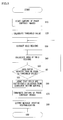
- Fig. 5 is a flow chart showing the processing performed by the apparatus for judging cell detachment 100 of this embodiment.
- This processing shown in Fig. 5 is executed by the control device 105 according to a program that starts when an actuation switch 107 is actuated by the user, and a command is issued to judge the state of detachment of the cells in a cell culture container A that is set upon the stage 101. It should be understood that it will be supposed that trypsin solution is added by the user into the cell culture container A that has been set upon the stage 101 directly before, or directly after, this command is issued.
- a step S10 repeated photography of the above described phase contrast images is started.
- the illumination device 106 is controlled so as to make the LED emit light to irradiate illumination light upon the cell culture container A from above, and the camera 104 is controlled so as to photograph images inputted through the objective lens 103 at this time at a predetermined time interval, for example 10 seconds.
- the flow of control proceeds to a step S20, and a threshold value for judging the state of detachment of the cells is calculated based upon the above described information that specifies the state of culture of the cells.
- the flow of control proceeds to a step S30.
- step S30 the first phase contrast image inputted from the camera 104 is read in, the halo regions within this phase contrast image in which the luminance value is greater than or equal to a predetermined value are extracted, and then the flow of control proceeds to a step S40.
- step S40 the total area of these halo regions that have been extracted from within the phase contrast image is calculated, and then the flow of control proceeds to a step S50.
- the ratio of the area of the halo regions with respect to the base area of the cell culture container A is calculated as being the area ratio of the halo regions, and this area ratio of the halo regions and the threshold value described above that has been calculated based upon the information specifying the state of culture of the cells are compared together. As a result, it is decided whether or not the area ratio of the halo regions has reached the threshold value. If it is decided that the area ratio of the halo regions has not reached the threshold value, then the flow of control returns to the step S30 and the processing of the steps S30 through S50 is performed for the next frame of phase contrast image. By contrast, if it is decided that the area ratio of the halo regions has reached the threshold value, then the flow of control proceeds to a step S60.
- step S60 a judgment is reached that the state of detachment of the cells in the cell culture container A has reached a sufficient state of detachment, and accordingly the flow of control proceeds to a step S70.
- step S70 the repeated photography of phase contrast images that was started in the step S10 is terminated, and then the flow of control proceeds to a step S80.
- step S80 a message is displayed upon the monitor 108 inviting the user to neutralize the trypsin solution, and then processing terminates.
- the area ratio of the halo regions with respect to the entire interior of the cell culture container A is calculated, and it is arranged to make the judgment that the cells within the cell culture container A have become sufficiently detached from the bottom surface of the container, at the time point that this area ratio reaches the predetermined threshold value. Due to this, the fact is taken into account that, in the phase contrast observation, the areas where the cells in the cell culture container A are detached from the container bottom surface appear as regions in the phase contrast image where the luminance values are high, in other words the halo regions, and accordingly it is possible to judge the state of detachment of the cells with high accuracy.
- the automatic culture device manages the timing for sub-culturing or freezing, and, after having automatically added trypsin solution to a cell culture container A for which a requirement for sub-culture or freezing has arisen, sets this cell culture container A upon the stage 102 within the incubator 101, and commands the apparatus for judging cell detachment 100 to execute the processing shown in Fig. 5 .
- the apparatus for judging cell detachment 100 executes the processing shown in Fig. 5 according to orders from the automatic culture device, judges the state of detachment of the cells within the cell culture container A, and judges the optimum neutralization timing for the trypsin solution according to the results of that judgment. And, at the time point that this optimum neutralization timing arrives, a signal to this effect is outputted to the automatic culture device.
- the automatic culture device performs processing for sub-culturing or freezing automatically, after having taken out the cell culture container A from within the incubator 101 based upon the output signal from the apparatus for judging cell detachment 100, and after having injected culture medium into the cell culture container A to neutralize the trypsin solution.
- Fig. 8 is a figure showing the structure of the automatic culture device 200 described above.
- This automatic culture device 200 includes the previously described apparatus for judging cell detachment 100, an addition device that adds trypsin solution to the cell culture container A, a transfer device 202 that sets the cell culture container A upon the stage 102 within the incubator 101 of the apparatus for judging cell detachment 100 and takes it out, a neutralization device 203 that adds culture medium to the cell culture container A and neutralizes the trypsin solution, a sub-culture device 204 that performs sub-culturing, and an automatic culture control device 205 that controls these units, and the like. It should be understood that, instead of the neutralization device 203, it would also be acceptable to arrange to provide a removal device 206 for removing the trypsin solution from the cell culture container A.
- the control device 105 estimates the time instant at which the area ratio of the halo regions will arrive at the threshold value. And it will be acceptable for the control device 105 to set, as a neutralization command timing, a time instant that is obtained by subtracting the preliminary time period that has been measured in advance from this estimated time instant, and to issue to the user the command for neutralization of the trypsin solution at the time point that this neutralization command timing arrives.
- some luminance information for the interior of the cell culture container after the addition of the trypsin solution for example the average luminance information over the entire cell culture container or the total luminance information for the cell culture container, and to judge that the detachment of the cells has been completed when this luminance information exceeds a predetermined luminance level (judgment based upon image luminance) .
- Fig. 6 is a figure illustrating a state of cell detachment.
- the detachment of the cultured cells starts when the trypsin is added to the cell culture container A, and, for the cells that have been detached, shown by the arrows, their luminance levels are higher than those of the cells that are still adhered to the cell container A (i.e. that have not yet been detached), while their shapes are deformed into circular shapes.
- the detachment of the cells is judged by taking these facts into account, and the timing for neutralizing the trypsin solution or for eliminating the culture solution (i.e. the timing for performing absorption processing) is determined accordingly.
- Fig. 7 is a flow chart showing the flow of processing for judgment based upon image luminance and for judgment based upon image shape.
- a step S120 an image of the cells in the cell culture container A is captured, and is stored as an initial image within the memory provided to the control device 105. Then the flow of control proceeds to a step S121, in which this initial image that has been acquired is analyzed, and the cells in the cell culture container A are classified based upon their contours, shapes, luminance, and size. In concrete terms, those cells that are of circular shapes, and those cells whose luminance is greater than a predetermined level, are extracted.
- step S122 in which the number of the cells of circular shape, and the area of the cells whose luminance is greater than the predetermined level, extracted in the step S121, are calculated. It should be understood that, in order to perform these measurements more accurately, the area of those cells that are of circular shape and also whose luminance is greater than the predetermined level may be calculated. Then the flow of control is transferred to a step S131 that will be described hereinafter.
- a step S140 when in a step S140 the trypsin solution is added into the cell culture container A, the detachment of the cells in the cell culture container A starts to proceed.
- images of the cells are sequentially acquired by intermittently photographing this state of detachment, and are stored in the memory provided to the control device 105.
- the flow of control proceeds to a step S124, in which it is decided which, of a judgment mode based upon image luminance and a judgment mode based upon image shape, is set as the cell detachment judgment mode. It should be understood that these modes are set by the user.
- step S125 the flow of control proceeds to a step S125, in which processing for the judgment mode based upon image luminance is started, and then the flow of control proceeds to a step S127.
- step S127 the area of cells whose luminance is greater than or equal to a predetermined luminance level is calculated from an image of the cells after the addition of the trypsin solution.
- the area of those cells that are of circular shape and also whose luminance is greater than the predetermined level may be calculated.
- the flow of control proceeds to a step S128, and the ratio of the area of the cells whose luminance is greater than or equal to the predetermined luminance level in the image of the cells after the addition of the trypsin solution, that was calculated in the step S127, and the area of the cells whose luminance is greater than or equal to the predetermined luminance level in the initial image, that was calculated in the step S122, in other words the area ratio, is calculated according to the following Equation (1).
- Area ratio ( area of the cells whose luminance is greater than or equal to the predetermined luminance level in the image of the cells after the addition of the trypsin solution / ( area of the cells whose luminance is greater than or equal to the predetermined luminance level in the initial image ) This processing is executed upon each image that is acquired in succession after the addition of the trypsin solution, and the increase proportion of the area ratio between the images is calculated. Then the flow of control is transferred to a step S132 that will be described hereinafter.
- step S126 processing for the judgment mode based upon image shape is started, and then the flow of control proceeds to a step S129.
- step S129 the cells of circular shape are extracted from the image of the cells after the addition of the trypsin solution, based upon the contour, the shape, the size, the luminance and so on of the cells. Then the flow of control proceeds to a step S130 in which the number of the cells of circular shape that have thus been extracted is calculated, and then the flow of control proceeds to a step S131.
- the ratio of the number of cells of circular shape in the image of the cells after the addition of the trypsin solution, that was calculated in the step S130, and the number of cells of circular shape in the initial image of the cells, that was calculated in the step S122, is calculated according to the following Equation (2) below.
- Cell number ratio ( number of cells of circular shape in the image of the cells after the addition of the trypsin solution ) / ( number of cells of circular shape in the initial image )
- step S132 the state of detachment of the cells is judged based upon either one of the increase proportion of the area ratio between the images, as calculated in the step S128, and the increase proportion of the number of cells of circular shape between the images, as calculated in the step S131. In other words it is judged that the detachment of the cells has proceeded sufficiently, at the time point that it is judged that the increase proportion of the area ratio between the images, or the increase proportion of the number of cells of circular shape between the images, has become smaller than a predetermined rate of change (i.e. a predetermined threshold value) .
- a predetermined rate of change i.e. a predetermined threshold value
- the apparatus for judging cell detachment it is arranged to judge the state of detachment of the cells based upon image information in the images that are captured by the camera 104.
- This image information may be, for example, luminance information for each pixel in the images. Based upon this luminance information, it is possible to obtain luminance values for the entire images or for predetermined regions, and it is possible to determine the state of detachment of the cells according to whether or not the luminance value is greater than a predetermined value, or according to whether or not the change of this luminance value is smaller than a predetermined value.
- the luminance information it is possible to obtain the areas (the halo areas) in which the luminance values are greater than or equal to a predetermined value, and it is possible to decide upon the state of detachment of the cells according to whether or not these areas are greater than or equal to a predetermined value.
- the present invention is not in any way limited to the structure of the embodiment described above, provided that the characteristic function of the present invention is not lost.
- Other modes are also included within the range of the present invention, provided that it is considered that these modes remain within the range of the technical concept of the present invention.
Landscapes
- Chemical & Material Sciences (AREA)
- Life Sciences & Earth Sciences (AREA)
- Organic Chemistry (AREA)
- Engineering & Computer Science (AREA)
- Wood Science & Technology (AREA)
- Zoology (AREA)
- Health & Medical Sciences (AREA)
- Bioinformatics & Cheminformatics (AREA)
- Analytical Chemistry (AREA)
- Microbiology (AREA)
- Genetics & Genomics (AREA)
- Biotechnology (AREA)
- General Health & Medical Sciences (AREA)
- Biochemistry (AREA)
- General Engineering & Computer Science (AREA)
- Biomedical Technology (AREA)
- Sustainable Development (AREA)
- Proteomics, Peptides & Aminoacids (AREA)
- Physics & Mathematics (AREA)
- Immunology (AREA)
- Biophysics (AREA)
- Thermal Sciences (AREA)
- Cell Biology (AREA)
- Molecular Biology (AREA)
- Computer Hardware Design (AREA)
- Apparatus Associated With Microorganisms And Enzymes (AREA)
- Measuring Or Testing Involving Enzymes Or Micro-Organisms (AREA)
- Investigating Or Analysing Materials By Optical Means (AREA)
- Investigating Or Analysing Biological Materials (AREA)
Applications Claiming Priority (2)
| Application Number | Priority Date | Filing Date | Title |
|---|---|---|---|
| JP2006141725 | 2006-05-22 | ||
| PCT/JP2007/060464 WO2007136073A1 (ja) | 2006-05-22 | 2007-05-22 | 細胞剥離判定装置、細胞剥離判定方法、および細胞培養装置 |
Publications (3)
| Publication Number | Publication Date |
|---|---|
| EP2022845A1 true EP2022845A1 (de) | 2009-02-11 |
| EP2022845A4 EP2022845A4 (de) | 2013-08-21 |
| EP2022845B1 EP2022845B1 (de) | 2018-06-27 |
Family
ID=38723387
Family Applications (1)
| Application Number | Title | Priority Date | Filing Date |
|---|---|---|---|
| EP07743898.4A Not-in-force EP2022845B1 (de) | 2006-05-22 | 2007-05-22 | Vorrichtung und verfahren zur beurteilung von zellablösung sowie zellkulturvorrichtung |
Country Status (4)
| Country | Link |
|---|---|
| US (1) | US8445266B2 (de) |
| EP (1) | EP2022845B1 (de) |
| JP (1) | JP5332610B2 (de) |
| WO (1) | WO2007136073A1 (de) |
Families Citing this family (17)
| Publication number | Priority date | Publication date | Assignee | Title |
|---|---|---|---|---|
| JP4937630B2 (ja) * | 2006-04-12 | 2012-05-23 | 川崎重工業株式会社 | 細胞剥離判断方法、培養細胞の剥離方法、細胞剥離判断装置及び自動細胞培養装置 |
| JP5152077B2 (ja) | 2009-04-01 | 2013-02-27 | ソニー株式会社 | 生体像提示装置、生体像提示方法及びプログラム並びに生体像提示システム |
| CN102482632B (zh) | 2009-09-03 | 2014-07-09 | 株式会社尼康 | 搅拌方法、细胞培养方法、搅拌装置及细胞培养装置 |
| JP5691009B2 (ja) | 2010-07-28 | 2015-04-01 | パナソニックヘルスケアホールディングス株式会社 | 撮像装置 |
| JP5917000B2 (ja) * | 2011-01-28 | 2016-05-11 | テルモ株式会社 | シート形成評価方法 |
| EP2690168B1 (de) * | 2011-03-24 | 2019-08-07 | Nikon Corporation | Kulturapparat, kulturapparatsystem, kulturbetriebsführungsverfahren und -programm |
| KR101293300B1 (ko) * | 2011-04-05 | 2013-08-09 | (주)로고스바이오시스템스 | 세포의 분리시기를 판정하는 방법과, 이를 이용한 세포의 계대 배양 방법 및 계대 배양 장치 |
| JP5821444B2 (ja) * | 2011-09-09 | 2015-11-24 | 大日本印刷株式会社 | 細胞画像解析装置、細胞画像解析方法、及び細胞画像解析プログラム |
| JP6465280B2 (ja) | 2014-10-31 | 2019-02-06 | 澁谷工業株式会社 | 細胞剥離認識装置および細胞剥離認識方法 |
| JP6609967B2 (ja) * | 2015-03-31 | 2019-11-27 | 株式会社ニコン | 判定装置、判定システム、判定プログラム、及び細胞の製造方法 |
| CN115044471B (zh) | 2016-08-27 | 2025-05-27 | 三维生物科技有限公司 | 生物反应器 |
| US11662296B2 (en) * | 2017-05-19 | 2023-05-30 | Thrive Bioscience, Inc. | Systems and methods for cell dissociation |
| US10988726B2 (en) | 2018-08-19 | 2021-04-27 | Cytera Cellworks Limited | Systems and methods for automated cell culturing |
| WO2021005801A1 (ja) * | 2019-07-11 | 2021-01-14 | オリンパス株式会社 | 接着性細胞の評価方法、プログラム、記録媒体、及び、接着性細胞の評価システム |
| JP2021185898A (ja) * | 2020-05-27 | 2021-12-13 | 株式会社リコー | 細胞含有容器提供システム |
| WO2023145797A1 (ja) | 2022-01-31 | 2023-08-03 | キヤノン株式会社 | 細胞剥離方法、細胞剥離システム及び情報処理装置 |
| JP2024077845A (ja) | 2022-11-29 | 2024-06-10 | キヤノン株式会社 | 細胞剥離方法、細胞剥離システム及び情報処理装置 |
Family Cites Families (14)
| Publication number | Priority date | Publication date | Assignee | Title |
|---|---|---|---|---|
| US5270173A (en) * | 1987-10-06 | 1993-12-14 | Sumitomo Electric Industries, Ltd. | Method of monitoring cell culture |
| GB2254414A (en) | 1991-03-21 | 1992-10-07 | Univ London | Volume measurement of microbial organisms. |
| US6271022B1 (en) * | 1999-03-12 | 2001-08-07 | Biolog, Inc. | Device for incubating and monitoring multiwell assays |
| US6743576B1 (en) * | 1999-05-14 | 2004-06-01 | Cytokinetics, Inc. | Database system for predictive cellular bioinformatics |
| US7015031B2 (en) * | 2002-01-24 | 2006-03-21 | Genx International, Inc. | Biological specimen-culturing system and method with onboard specimen development sensors |
| JP4095811B2 (ja) * | 2002-02-20 | 2008-06-04 | 正仁 田谷 | 剥離細胞選別装置、剥離細胞選別方法及びそのプログラム |
| JP4227339B2 (ja) | 2002-02-20 | 2009-02-18 | 正仁 田谷 | 剥離細胞回収装置、剥離細胞回収方法及びそのプログラム |
| JP4394376B2 (ja) * | 2003-05-21 | 2010-01-06 | 正仁 田谷 | 細胞増殖能評価装置及びその方法 |
| US7799559B2 (en) * | 2003-10-24 | 2010-09-21 | Olympus Corporation | Culture microscope apparatus |
| DE102005023855A1 (de) * | 2004-05-26 | 2006-01-26 | Olympus Corporation | Kulturmikroskop und Computerprogramm zur Steuerung des Kulturmikroskops |
| JP4754807B2 (ja) | 2004-11-19 | 2011-08-24 | オリンパス株式会社 | カプセル型医療システム |
| JP5459817B2 (ja) * | 2004-11-29 | 2014-04-02 | 川崎重工業株式会社 | 多関節型ロボットを備えた自動細胞培養装置 |
| JP2006271210A (ja) * | 2005-03-28 | 2006-10-12 | Olympus Corp | 自動細胞培養装置 |
| JP4744187B2 (ja) | 2005-05-10 | 2011-08-10 | オリンパス株式会社 | 細胞観察装置 |
-
2007
- 2007-05-22 WO PCT/JP2007/060464 patent/WO2007136073A1/ja not_active Ceased
- 2007-05-22 JP JP2008516709A patent/JP5332610B2/ja active Active
- 2007-05-22 EP EP07743898.4A patent/EP2022845B1/de not_active Not-in-force
-
2008
- 2008-10-30 US US12/289,595 patent/US8445266B2/en active Active
Also Published As
| Publication number | Publication date |
|---|---|
| EP2022845B1 (de) | 2018-06-27 |
| US8445266B2 (en) | 2013-05-21 |
| JPWO2007136073A1 (ja) | 2009-10-01 |
| EP2022845A4 (de) | 2013-08-21 |
| JP5332610B2 (ja) | 2013-11-06 |
| WO2007136073A1 (ja) | 2007-11-29 |
| US20090081769A1 (en) | 2009-03-26 |
Similar Documents
| Publication | Publication Date | Title |
|---|---|---|
| EP2022845A1 (de) | Vorrichtung und verfahren zur beurteilung von zellablösung sowie zellkulturvorrichtung | |
| CN101048492B (zh) | 细胞培养装置、图像处理装置和细胞检测系统 | |
| US20120122143A1 (en) | Technique for determining maturity of a cell aggregation, image processing program and image processing device using the technique, and method for producing a cell aggregation | |
| JP2008212017A (ja) | 細胞状態判定装置、および細胞状態判定方法 | |
| CN217616539U (zh) | 一种飞机口盖处涂层表面智能激光除残胶系统 | |
| US11971365B2 (en) | Wafer processing system and rework method thereof | |
| CN113554004A (zh) | 搅拌车溢料检测方法、检测系统、电子设备及搅拌站 | |
| US20170261424A1 (en) | Quantificational testing method for semen liquefaction ability | |
| JP4898828B2 (ja) | 凝集判定方法 | |
| CN108562548B (zh) | 智能尿检马桶的颜色识别方法及其系统 | |
| JP7079572B2 (ja) | 培養細胞解析システム、培養細胞解析方法、及び、プログラム | |
| CN118587212B (zh) | 一种显示面板搭边检测方法、系统及装置 | |
| JP5564960B2 (ja) | 湿潤検出装置及び湿潤検出方法 | |
| WO1997031240A1 (en) | Image recognition apparatus by optical cutting method | |
| JP3849781B2 (ja) | 押し込み型硬度計 | |
| KR101130209B1 (ko) | 기판 검사 장치 및 기판 검사 방법 | |
| CN114623601B (zh) | 自适应内胆融冰操作平台及方法 | |
| JPS63282653A (ja) | 細胞の活性度測定方法 | |
| CN113870242A (zh) | 一种检测盲孔的方法及设备 | |
| JP2009027251A (ja) | 監視装置 | |
| CN105450985A (zh) | 一种监控移动监测及图像边界检测软件 | |
| CN118314522B (zh) | 基于视觉识别的灌胶自动识别方法及装置 | |
| EP2196841B1 (de) | Mikroskopische Abbildungsvorrichtung und mikroskopisches Abbildungsverfahren | |
| JP4885646B2 (ja) | 細胞自動解析装置および細胞自動解析方法 | |
| JP5655608B2 (ja) | 観察装置及び画像補正プログラム |
Legal Events
| Date | Code | Title | Description |
|---|---|---|---|
| PUAI | Public reference made under article 153(3) epc to a published international application that has entered the european phase |
Free format text: ORIGINAL CODE: 0009012 |
|
| 17P | Request for examination filed |
Effective date: 20081031 |
|
| AK | Designated contracting states |
Kind code of ref document: A1 Designated state(s): AT BE BG CH CY CZ DE DK EE ES FI FR GB GR HU IE IS IT LI LT LU LV MC MT NL PL PT RO SE SI SK TR |
|
| AX | Request for extension of the european patent |
Extension state: AL BA HR MK RS |
|
| RAP1 | Party data changed (applicant data changed or rights of an application transferred) |
Owner name: NIKON CORPORATION |
|
| DAX | Request for extension of the european patent (deleted) | ||
| A4 | Supplementary search report drawn up and despatched |
Effective date: 20130723 |
|
| RIC1 | Information provided on ipc code assigned before grant |
Ipc: C12M 1/00 20060101ALI20130715BHEP Ipc: G06T 1/00 20060101ALI20130715BHEP Ipc: C12Q 1/02 20060101ALI20130715BHEP Ipc: C12M 3/00 20060101AFI20130715BHEP Ipc: C12M 1/34 20060101ALI20130715BHEP |
|
| 17Q | First examination report despatched |
Effective date: 20150730 |
|
| RAP1 | Party data changed (applicant data changed or rights of an application transferred) |
Owner name: NIKON CORPORATION |
|
| GRAP | Despatch of communication of intention to grant a patent |
Free format text: ORIGINAL CODE: EPIDOSNIGR1 |
|
| STAA | Information on the status of an ep patent application or granted ep patent |
Free format text: STATUS: GRANT OF PATENT IS INTENDED |
|
| INTG | Intention to grant announced |
Effective date: 20180219 |
|
| GRAS | Grant fee paid |
Free format text: ORIGINAL CODE: EPIDOSNIGR3 |
|
| GRAA | (expected) grant |
Free format text: ORIGINAL CODE: 0009210 |
|
| STAA | Information on the status of an ep patent application or granted ep patent |
Free format text: STATUS: THE PATENT HAS BEEN GRANTED |
|
| AK | Designated contracting states |
Kind code of ref document: B1 Designated state(s): AT BE BG CH CY CZ DE DK EE ES FI FR GB GR HU IE IS IT LI LT LU LV MC MT NL PL PT RO SE SI SK TR |
|
| REG | Reference to a national code |
Ref country code: GB Ref legal event code: FG4D |
|
| REG | Reference to a national code |
Ref country code: AT Ref legal event code: REF Ref document number: 1012357 Country of ref document: AT Kind code of ref document: T Effective date: 20180715 |
|
| REG | Reference to a national code |
Ref country code: DE Ref legal event code: R096 Ref document number: 602007055205 Country of ref document: DE |
|
| REG | Reference to a national code |
Ref country code: IE Ref legal event code: FG4D |
|
| PG25 | Lapsed in a contracting state [announced via postgrant information from national office to epo] |
Ref country code: SE Free format text: LAPSE BECAUSE OF FAILURE TO SUBMIT A TRANSLATION OF THE DESCRIPTION OR TO PAY THE FEE WITHIN THE PRESCRIBED TIME-LIMIT Effective date: 20180627 Ref country code: BG Free format text: LAPSE BECAUSE OF FAILURE TO SUBMIT A TRANSLATION OF THE DESCRIPTION OR TO PAY THE FEE WITHIN THE PRESCRIBED TIME-LIMIT Effective date: 20180927 Ref country code: FI Free format text: LAPSE BECAUSE OF FAILURE TO SUBMIT A TRANSLATION OF THE DESCRIPTION OR TO PAY THE FEE WITHIN THE PRESCRIBED TIME-LIMIT Effective date: 20180627 Ref country code: LT Free format text: LAPSE BECAUSE OF FAILURE TO SUBMIT A TRANSLATION OF THE DESCRIPTION OR TO PAY THE FEE WITHIN THE PRESCRIBED TIME-LIMIT Effective date: 20180627 |
|
| REG | Reference to a national code |
Ref country code: NL Ref legal event code: MP Effective date: 20180627 |
|
| REG | Reference to a national code |
Ref country code: LT Ref legal event code: MG4D |
|
| PG25 | Lapsed in a contracting state [announced via postgrant information from national office to epo] |
Ref country code: GR Free format text: LAPSE BECAUSE OF FAILURE TO SUBMIT A TRANSLATION OF THE DESCRIPTION OR TO PAY THE FEE WITHIN THE PRESCRIBED TIME-LIMIT Effective date: 20180928 Ref country code: LV Free format text: LAPSE BECAUSE OF FAILURE TO SUBMIT A TRANSLATION OF THE DESCRIPTION OR TO PAY THE FEE WITHIN THE PRESCRIBED TIME-LIMIT Effective date: 20180627 |
|
| REG | Reference to a national code |
Ref country code: AT Ref legal event code: MK05 Ref document number: 1012357 Country of ref document: AT Kind code of ref document: T Effective date: 20180627 |
|
| PG25 | Lapsed in a contracting state [announced via postgrant information from national office to epo] |
Ref country code: NL Free format text: LAPSE BECAUSE OF FAILURE TO SUBMIT A TRANSLATION OF THE DESCRIPTION OR TO PAY THE FEE WITHIN THE PRESCRIBED TIME-LIMIT Effective date: 20180627 |
|
| PG25 | Lapsed in a contracting state [announced via postgrant information from national office to epo] |
Ref country code: CZ Free format text: LAPSE BECAUSE OF FAILURE TO SUBMIT A TRANSLATION OF THE DESCRIPTION OR TO PAY THE FEE WITHIN THE PRESCRIBED TIME-LIMIT Effective date: 20180627 Ref country code: AT Free format text: LAPSE BECAUSE OF FAILURE TO SUBMIT A TRANSLATION OF THE DESCRIPTION OR TO PAY THE FEE WITHIN THE PRESCRIBED TIME-LIMIT Effective date: 20180627 Ref country code: RO Free format text: LAPSE BECAUSE OF FAILURE TO SUBMIT A TRANSLATION OF THE DESCRIPTION OR TO PAY THE FEE WITHIN THE PRESCRIBED TIME-LIMIT Effective date: 20180627 Ref country code: PL Free format text: LAPSE BECAUSE OF FAILURE TO SUBMIT A TRANSLATION OF THE DESCRIPTION OR TO PAY THE FEE WITHIN THE PRESCRIBED TIME-LIMIT Effective date: 20180627 Ref country code: EE Free format text: LAPSE BECAUSE OF FAILURE TO SUBMIT A TRANSLATION OF THE DESCRIPTION OR TO PAY THE FEE WITHIN THE PRESCRIBED TIME-LIMIT Effective date: 20180627 Ref country code: IS Free format text: LAPSE BECAUSE OF FAILURE TO SUBMIT A TRANSLATION OF THE DESCRIPTION OR TO PAY THE FEE WITHIN THE PRESCRIBED TIME-LIMIT Effective date: 20181027 Ref country code: SK Free format text: LAPSE BECAUSE OF FAILURE TO SUBMIT A TRANSLATION OF THE DESCRIPTION OR TO PAY THE FEE WITHIN THE PRESCRIBED TIME-LIMIT Effective date: 20180627 |
|
| PG25 | Lapsed in a contracting state [announced via postgrant information from national office to epo] |
Ref country code: ES Free format text: LAPSE BECAUSE OF FAILURE TO SUBMIT A TRANSLATION OF THE DESCRIPTION OR TO PAY THE FEE WITHIN THE PRESCRIBED TIME-LIMIT Effective date: 20180627 Ref country code: IT Free format text: LAPSE BECAUSE OF FAILURE TO SUBMIT A TRANSLATION OF THE DESCRIPTION OR TO PAY THE FEE WITHIN THE PRESCRIBED TIME-LIMIT Effective date: 20180627 |
|
| REG | Reference to a national code |
Ref country code: DE Ref legal event code: R097 Ref document number: 602007055205 Country of ref document: DE |
|
| PLBE | No opposition filed within time limit |
Free format text: ORIGINAL CODE: 0009261 |
|
| STAA | Information on the status of an ep patent application or granted ep patent |
Free format text: STATUS: NO OPPOSITION FILED WITHIN TIME LIMIT |
|
| PG25 | Lapsed in a contracting state [announced via postgrant information from national office to epo] |
Ref country code: DK Free format text: LAPSE BECAUSE OF FAILURE TO SUBMIT A TRANSLATION OF THE DESCRIPTION OR TO PAY THE FEE WITHIN THE PRESCRIBED TIME-LIMIT Effective date: 20180627 |
|
| 26N | No opposition filed |
Effective date: 20190328 |
|
| PG25 | Lapsed in a contracting state [announced via postgrant information from national office to epo] |
Ref country code: SI Free format text: LAPSE BECAUSE OF FAILURE TO SUBMIT A TRANSLATION OF THE DESCRIPTION OR TO PAY THE FEE WITHIN THE PRESCRIBED TIME-LIMIT Effective date: 20180627 |
|
| REG | Reference to a national code |
Ref country code: CH Ref legal event code: PL |
|
| PG25 | Lapsed in a contracting state [announced via postgrant information from national office to epo] |
Ref country code: MC Free format text: LAPSE BECAUSE OF FAILURE TO SUBMIT A TRANSLATION OF THE DESCRIPTION OR TO PAY THE FEE WITHIN THE PRESCRIBED TIME-LIMIT Effective date: 20180627 Ref country code: CH Free format text: LAPSE BECAUSE OF NON-PAYMENT OF DUE FEES Effective date: 20190531 Ref country code: LI Free format text: LAPSE BECAUSE OF NON-PAYMENT OF DUE FEES Effective date: 20190531 |
|
| REG | Reference to a national code |
Ref country code: BE Ref legal event code: MM Effective date: 20190531 |
|
| PG25 | Lapsed in a contracting state [announced via postgrant information from national office to epo] |
Ref country code: LU Free format text: LAPSE BECAUSE OF NON-PAYMENT OF DUE FEES Effective date: 20190522 |
|
| PG25 | Lapsed in a contracting state [announced via postgrant information from national office to epo] |
Ref country code: TR Free format text: LAPSE BECAUSE OF FAILURE TO SUBMIT A TRANSLATION OF THE DESCRIPTION OR TO PAY THE FEE WITHIN THE PRESCRIBED TIME-LIMIT Effective date: 20180627 |
|
| PG25 | Lapsed in a contracting state [announced via postgrant information from national office to epo] |
Ref country code: IE Free format text: LAPSE BECAUSE OF NON-PAYMENT OF DUE FEES Effective date: 20190522 |
|
| PG25 | Lapsed in a contracting state [announced via postgrant information from national office to epo] |
Ref country code: BE Free format text: LAPSE BECAUSE OF NON-PAYMENT OF DUE FEES Effective date: 20190531 |
|
| PG25 | Lapsed in a contracting state [announced via postgrant information from national office to epo] |
Ref country code: PT Free format text: LAPSE BECAUSE OF FAILURE TO SUBMIT A TRANSLATION OF THE DESCRIPTION OR TO PAY THE FEE WITHIN THE PRESCRIBED TIME-LIMIT Effective date: 20181029 Ref country code: FR Free format text: LAPSE BECAUSE OF NON-PAYMENT OF DUE FEES Effective date: 20190531 |
|
| REG | Reference to a national code |
Ref country code: DE Ref legal event code: R082 Ref document number: 602007055205 Country of ref document: DE Representative=s name: VENNER SHIPLEY GERMANY LLP, DE Ref country code: DE Ref legal event code: R082 Ref document number: 602007055205 Country of ref document: DE Representative=s name: VENNER SHIPLEY LLP, DE |
|
| PG25 | Lapsed in a contracting state [announced via postgrant information from national office to epo] |
Ref country code: CY Free format text: LAPSE BECAUSE OF FAILURE TO SUBMIT A TRANSLATION OF THE DESCRIPTION OR TO PAY THE FEE WITHIN THE PRESCRIBED TIME-LIMIT Effective date: 20180627 |
|
| PG25 | Lapsed in a contracting state [announced via postgrant information from national office to epo] |
Ref country code: HU Free format text: LAPSE BECAUSE OF FAILURE TO SUBMIT A TRANSLATION OF THE DESCRIPTION OR TO PAY THE FEE WITHIN THE PRESCRIBED TIME-LIMIT; INVALID AB INITIO Effective date: 20070522 Ref country code: MT Free format text: LAPSE BECAUSE OF FAILURE TO SUBMIT A TRANSLATION OF THE DESCRIPTION OR TO PAY THE FEE WITHIN THE PRESCRIBED TIME-LIMIT Effective date: 20180627 |
|
| PGFP | Annual fee paid to national office [announced via postgrant information from national office to epo] |
Ref country code: GB Payment date: 20220401 Year of fee payment: 16 Ref country code: DE Payment date: 20220329 Year of fee payment: 16 |
|
| REG | Reference to a national code |
Ref country code: DE Ref legal event code: R119 Ref document number: 602007055205 Country of ref document: DE |
|
| GBPC | Gb: european patent ceased through non-payment of renewal fee |
Effective date: 20230522 |
|
| PG25 | Lapsed in a contracting state [announced via postgrant information from national office to epo] |
Ref country code: DE Free format text: LAPSE BECAUSE OF NON-PAYMENT OF DUE FEES Effective date: 20231201 Ref country code: GB Free format text: LAPSE BECAUSE OF NON-PAYMENT OF DUE FEES Effective date: 20230522 |