EP2023362A2 - Überhitzungs-Auslösungsvorrichtung und Verfahren zur Einstellung der Überhitzungsempfindlichkeit - Google Patents
Überhitzungs-Auslösungsvorrichtung und Verfahren zur Einstellung der Überhitzungsempfindlichkeit Download PDFInfo
- Publication number
- EP2023362A2 EP2023362A2 EP08013323A EP08013323A EP2023362A2 EP 2023362 A2 EP2023362 A2 EP 2023362A2 EP 08013323 A EP08013323 A EP 08013323A EP 08013323 A EP08013323 A EP 08013323A EP 2023362 A2 EP2023362 A2 EP 2023362A2
- Authority
- EP
- European Patent Office
- Prior art keywords
- trip
- adjusting
- driving force
- release lever
- shifter
- Prior art date
- Legal status (The legal status is an assumption and is not a legal conclusion. Google has not performed a legal analysis and makes no representation as to the accuracy of the status listed.)
- Granted
Links
Images


Classifications
-
- H—ELECTRICITY
- H01—ELECTRIC ELEMENTS
- H01H—ELECTRIC SWITCHES; RELAYS; SELECTORS; EMERGENCY PROTECTIVE DEVICES
- H01H61/00—Electrothermal relays
- H01H61/01—Details
-
- H—ELECTRICITY
- H01—ELECTRIC ELEMENTS
- H01H—ELECTRIC SWITCHES; RELAYS; SELECTORS; EMERGENCY PROTECTIVE DEVICES
- H01H71/00—Details of the protective switches or relays covered by groups H01H73/00 - H01H83/00
- H01H71/74—Means for adjusting the conditions under which the device will function to provide protection
- H01H71/7427—Adjusting only the electrothermal mechanism
- H01H71/7445—Poly-phase adjustment
-
- H—ELECTRICITY
- H01—ELECTRIC ELEMENTS
- H01H—ELECTRIC SWITCHES; RELAYS; SELECTORS; EMERGENCY PROTECTIVE DEVICES
- H01H61/00—Electrothermal relays
-
- H—ELECTRICITY
- H01—ELECTRIC ELEMENTS
- H01H—ELECTRIC SWITCHES; RELAYS; SELECTORS; EMERGENCY PROTECTIVE DEVICES
- H01H71/00—Details of the protective switches or relays covered by groups H01H73/00 - H01H83/00
- H01H71/10—Operating or release mechanisms
- H01H71/12—Automatic release mechanisms with or without manual release
- H01H71/14—Electrothermal mechanisms
- H01H71/16—Electrothermal mechanisms with bimetal element
- H01H2071/167—Multiple bimetals working in parallel together, e.g. laminated together
-
- H—ELECTRICITY
- H01—ELECTRIC ELEMENTS
- H01H—ELECTRIC SWITCHES; RELAYS; SELECTORS; EMERGENCY PROTECTIVE DEVICES
- H01H71/00—Details of the protective switches or relays covered by groups H01H73/00 - H01H83/00
- H01H71/74—Means for adjusting the conditions under which the device will function to provide protection
- H01H71/7427—Adjusting only the electrothermal mechanism
- H01H2071/7454—Adjusting only the electrothermal mechanism with adjustable axis of transmission lever between bimetal element and trip lever
Definitions
- the present invention relates to a thermal overload trip apparatus which is applicable to an electrical device for protecting a motor and an electrical load device such as a thermal overload relay or a manual motor starter, more particularly, to a thermal overload trip apparatus which is capable of efficiently adjusting a sensitivity thereof using an adjusting screw without adjusting an adjusting knob and a method for adjusting a trip sensitivity thereof.
- An overload protecting function a basic function of a thermal overload trip apparatus, is implemented by performing a trip operation when an overload or overcurrent within a current range satisfying a pre-set condition for the trip operation is generated on an electric circuit.
- the current range may refer to a current range for the trip operation according to an IEC (International Electrotechnical Commission) standard specified as an international electrical standard.
- IEC International Electrotechnical Commission
- a condition for the trip operation is that the trip operation should be performed within two hours when a current corresponding to 1.2times of a rated current is conducted on a circuit and the trip operation should be performed more than two hours and within several hours when a current corresponding to 1.05times of the rated current is conducted.
- the thermal overload (overcurrent) trip apparatus generally includes a heater coil generating heat when an overcurrent is generated by being connected onto the circuit and bimetals winding the heater coil so as to provide a driving force for a trip operation by being bent when the heater coil generates heat, as a driving actuator.
- a heater coil generating heat when an overcurrent is generated by being connected onto the circuit
- bimetals winding the heater coil so as to provide a driving force for a trip operation by being bent when the heater coil generates heat, as a driving actuator.
- FIG. 1 is a diagram showing a configuration of a thermal overload trip apparatus in accordance with the related art
- FIG. 2 is a diagram showing a relation between an adjusting cam and a trip sensitivity adjusting range in the thermal overload trip apparatus in accordance with the related art.
- a reference numeral 1 designates bimetals.
- three bimetals are provided so as to be connected onto each circuit of three-phase Alternating Current.
- the bimetals are bent by heat from a heater coil (not shown) generating heat when an overcurrent is generated, and accordingly provide a driving force for a trip operation.
- a reference numeral 2 designates a shifter mechanism.
- the shifter mechanism 2 is a means for transferring the driving force for the trip operation from the bimetals 1 and is movable in a horizontal direction on the drawing by contacting the bimetals 1 in right and left directions so as to receive the driving force caused by the bent bimetals 1.
- a reference numeral 3 designates a trip mechanism.
- a reference numeral 4 designates a latch mechanism for releasing the trip mechanism 3 to be rotated in the direction of the trip operation or restricting the trip mechanism 3 not to be rotated in the direction of the trip operation.
- the latch mechanism 4 has one end portion installed to face a driving force transfer portion of the shifter mechanism 2 with each other so as to receive the driving force from the shifter mechanism 2, another end portion disposed on a rotation locus of the trip mechanism 3 so as to restrict or release the trip mechanism 3, and a middle portion therebetween supported by a rotation shaft (reference numeral not given) to be rotatable.
- a reference numeral 6 designates a contact point between the trip mechanism 3 and the latch mechanism 4 at the restriction position.
- an adjusting knob mechanism 5 is disposed to be rotatable so as to displace the latch mechanism 4 to be closer or to be distant to/from the shifter mechanism 2 resulting from changes of a contact pressure while contacting the latch mechanism 4.
- the adjusting knob mechanism 5 includes a cam portion 9 having a varying radius of curvature of its outer circumstance, and an adjusting knob 10 coupled to the cam portion 9 or integrally extended from the cam portion 9 so as to rotate the cam portion 9.
- a reference character y indicates a bending displacement (bending amount) of the bimetals and indicates a pre-set displacement amount (distance) of the bending bimetals 1 when a pre-set overcurrent is conducted on the circuit.
- a reference numeral ⁇ y indicates an allowance for trip operation and indicates a pre-set gap between the shifter mechanism 2 and the latch mechanism 4 when the shifter mechanism 2 is displaced by the pre-set bending amount y of the bimetals 1 caused by generation of the pre-set overcurrent.
- the allowance for trip operation is adjustable by the adjusting knob mechanism 5.
- a reference character a indicates a cam adjustable range covering angles between a maximum trip operation insensitive adjusting position 12 and a maximum trip operation sensitive adjusting position 13.
- a manufacturer of the thermal overload trip apparatus in the related art has adjusted an initial position of the cam portion 9 such as an initially-set position for the cam portion 11 by rotating the adjusting knob 10 of FIG. 1 during manufacturing, a range allowing a user to substantially adjust the rotation angle of the cam portion 9 is a substantially-adjustable range for the cam b.
- a reference character c indicates an initially-set adjusting range for the cam.
- the trip operation will be described.
- the heater coil (not shown) generates heat by the overcurrent on the circuit
- the bimetals 1 are bent and moved rightward on the drawing.
- the shifter mechanism 2 is moved rightward on FIG. 1 , that is in a shifter mechanism operating direction 7 applied when the overcurrent is generated by a value obtained by adding the allowance for trip operation ⁇ y to the bending amount y by the driving force of the bimetals 1 bent more than the value adding the allowance for trip operation ⁇ y to the bending amount y, accordingly the latch mechanism 4 is pressed rightward and then rotated in a counterclockwise direction on the drawing.
- the trip mechanism 3 restricted by the latch mechanism 4 is released and then rotated in the tripping direction, that is in the counterclockwise direction by an elastic force of a spring (reference numeral not given), and accordingly a succeeding switching mechanism (not shown) is operated into a trip (circuit-opening) position and then the circuit is tripped (broken), thereby protecting the circuit and a load device.
- the thermal overload trip apparatus in accordance with the related art has a configuration that the trip operation sensitivity is adjusted only by the cam portion and the latch mechanism, it is difficult to precisely specify relative positions between the cam portion and the latch mechanism and a driving force transfer structure thereof and relative positions between the latch mechanism and the shifter mechanism and a driving force transfer structure thereof and to install the apparatus based on a standard.
- the thermal overload trip apparatus in accordance with the related art may has a possibility to cause an defectiveness in manufacturing that there is no allowance for trip operation or the tripping operation is not performed even if the cam portion is rotated to the maximum sensitive position.
- the thermal overload trip apparatus in accordance with the related art has a structure requiring disassembling and re-adjusting the relative positions between the components and the driving force transfer structure thereof when the defectiveness occurs in the manufacturing processes, it may deteriorate productivity of manufacturing.
- the present invention is directed to providing a thermal overload trip apparatus which is capable of simply adjusting a trip operation sensitivity without disassembling and reassembling processes of components even if defectiveness occurs while adjusting the trip operation sensitivity.
- a thermal overload trip apparatus in the thermal overload trip apparatus having bimetals for providing mechanical displacement according to an overload on a circuit and a shifter mechanism for transferring the mechanical displacement of the bimetals as a driving force
- the apparatus comprising: a trip mechanism driven to a trip position by the driving force from the shifter mechanism when the overload is generated on the circuit; a release lever mechanism having one portion rotatably installed to contact the shifter mechanism so as to receive the driving force from the shifter mechanism and another portion installed to contact the trip mechanism, so that the release lever mechanism press the trip mechanism and drive the trip mechanism to the trip position when there is the driving force from the shifter mechanism, or the release lever mechanism release the trip mechanism when there is no driving force from the shifter mechanism, when the overload is generated on the circuit; an adjusting lever having a portion for rotatably supporting the release lever mechanism so as to operate the release lever mechanism to be horizontally moved by the rotation; an adjusting lever having a portion for rotatably supporting the release lever mechanism so as to operate the release lever mechanism to be horizontally moved by
- Another aspect of the present invention is to provide a method for adjusting a trip sensitivity of a thermal overload trip apparatus, in the thermal overload trip apparatus comprising bimetals for providing a mechanical displacement according to an overload on a circuit, a shifter mechanism for transferring the mechanical displacement of the bimetals as a driving force, a trip mechanism reversed to a trip position by the driving force from the shifter mechanism when the overload is generated on the circuit, a release lever mechanism having one portion rotatably installed to contact the shifter mechanism so as to receive the driving force from the shifter mechanism and another portion installed to contact the trip mechanism, so that the release lever mechanism presses the trip mechanism and drive the trip mechanism to the trip position when there is the driving force from the shifter mechanism, or the release lever mechanism releases the trip mechanism when there is no driving force from the shifter mechanism, when the overload is generated on the circuit, an adjusting lever having a portion for rotatably supporting the release lever mechanism so as to operate the release lever mechanism to be horizontally moved by the rotation, an adjusting knob having an upper surface provided with
- FIG. 3 is a diagram showing a configuration of a thermal overload trip apparatus in accordance with the present invention
- FIG. 4 is a planar view partially showing a relation between an adjusting cam and an adjusting screw for adjusting a trip sensitivity range in the thermal overload trip apparatus in accordance with the present invention.
- the thermal overload trip apparatus in accordance with the present invention includes bimetals 14.
- the bimetals 14 serve to provide a driving force for trip operation by winding a heater coil (not shown) generating heat when an overcurrent is generated and then being bent when the heater coil generates heat.
- a heater coil not shown
- three bimetals 14 are disposed to be connected onto each circuit of three-phase Alternating Current.
- a reference numeral 15 designates a shifter mechanism for transferring a mechanical displacement of the bimetals 14 as a driving force.
- the shifter mechanism 15 includes upper and lower shifter plates (reference numeral not given) movable in a horizontal direction by pressure caused by bending the bimetals 14, and a rotation lever (reference numeral not given) rotatably supported by the upper and lower shifter plates so as to be rotated in a clockwise direction when the upper shifter plate is moved rightward and the lower shifter plate is moved leftward and to be rotated in a counterclockwise direction when the upper shifter plate is moved leftward and the lower shifter plate is moved rightward.
- a reference numeral 17 designates a trip device driven to a trip position by the driving force from the shifter mechanism 15 when the overload is generated on the circuit.
- the trip device 17 includes a long leaf spring, a short leaf spring having a length half of the long leaf spring and having one end portion fixed with one end portion of the long leaf spring, and a coil spring having both end portions respectively supported by the long leaf spring and the short leaf spring. Accordingly, when a load is applied to the long leaf spring and the short leaf spring more than a pre-determined load, a free end portion of the long leaf spring is reversed to rise above a horizon from a state lower than the horizon. Here, the coil spring is bent. When the load applied to the trip device 17 is removed, the coil spring returns to the original state from the bent state. Accordingly, the long leaf spring is reversed to the state that the free end portion thereof is lower than the horizon.
- one side of the reversing trip mechanism 17, particularly, the free end portion of the long leaf spring is connected with interlock to a switching mechanism for breaking the circuit through a trip operation, and accordingly the free end portion of the long leaf spring is reversed to be upper than the horizon, thereby performing the trip operation.
- a release lever mechanism having one portion rotatably installed at a position contacting the shifter mechanism 15 so as to receive the driving force from the shifter mechanism 15 and another portion installed to contact the trip mechanism 17 is provided.
- the release lever mechanism when an overload is generated on the circuit, is operated to drive the trip mechanism 17 to the trip position by pressing the trip mechanism 17 when there is the driving force from the shifter mechanism 15, while releases the trip mechanism 17 when there is no the driving force from the shifter mechanism 15.
- an adjusting lever 19 having a portion rotatably supporting the release lever mechanism is provided to operate the release lever mechanism to be horizontally moved by rotation.
- the release lever mechanism includes a release lever 16 having one end rotatably supported by the adjusting lever 19 and another end contacting the trip mechanism 17, and a driving force transfer plate 21 having one end fixed to the release lever 16 and another end contacting the shifter mechanism 15 (more particularly, the rotation lever of the shifter mechanism 15).
- a reference numeral 22 is a fixing mechanism for fixing the driving force transfer plate 21 to the release lever 16.
- the fixing mechanism 22 may include a protrusion protruded from the release lever 16, a fixing plate fitted into the protrusion, and fixing screws for fixing the driving force transfer plate 21 to the fixing plate.
- the adjusting lever 19 is rotatable in a clockwise or counterclockwise direction centering a rotation shaft (reference numeral not given) coupled to a lower portion thereof. And, the adjusting lever 19 is provided with a portion rotatably supporting the release lever 16.
- the portion includes a supporting portion 19a extended from the upper portion thereof in a horizontal direction and a rotation shaft portion 19a-1 independently connected to the supporting portion 19a or integrated with the supporting portion 19a.
- the thermal overload trip apparatus in accordance with the present invention has a configuration to set a sensing degree for the overload (overcurrent) on the circuit to perform the trip operation and adjust the sensing degree.
- the configuration for rotatingly adjusting and setting a position for the trip operation according to a rated current includes an adjusting knob 18 having an upper surface provided with a setting groove 18b and a lower portion provided with a cam portion 18a, and a means connected to the adjusting lever 19 so as to rotate the adjusting lever 19 and independently adjustable a sensitivity of trip operation current regardless of manipulating of the adjusting knob 18.
- the means includes an adjusting screw 20 connected to the adjusting lever 19 by a screw so as to rotate the adjusting lever 19 and adjustable the sensitivity of trip operation current by independently adjusting a rotation angle of the release lever mechanism by the adjusting lever 19 regardless of manipulating of the adjusting knob 18.
- the adjusting screw 20 is a screw having a head portion provided with an manipulating groove to which a screw driver is connected and a body portion provided with a screw thread. An end portion of the body portion opposite to the head portion is installed to contact the cam portion 18a of the adjusting knob 18.
- the end portion of the body portion of the adjusting screw 20 comes into contact with the cam portion 18a provided with a cam surface having a changing radius of an outer circumference of itself. Accordingly, the adjusting screw 20 is displaced in the horizontal direction according to the variation of the radius of the cam surface. That is, when the adjusting screw 20 contacts a portion of the cam portion 18a having a small radius of the cam surface, the adjusting screw 20 is moved leftward in FIG. 3 . Accordingly, the adjusting lever 19 is rotated in the counterclockwise direction.
- the adjusting screw 20 When the adjusting screw 20 contacts a portion of the cam portion 18a having a large radius of the cam surface, the adjusting screw 20 is moved rightward in FIG. 3 . Accordingly, the adjusting lever 19 is rotated in the clockwise direction.
- the driving force transfer plate 21 When the adjusting lever 19 is rotated in the counterclockwise direction, the driving force transfer plate 21 is rotated in the counterclockwise direction through the release lever 16 interposed therebetween thus to be distant from the shifter mechanism 15. Accordingly, the trip operation set current is increased and the trip operation sensitivity comes to be insensitive.
- the driving force transfer plate 21 When the adjusting lever 19 is rotated in the clockwise direction, the driving force transfer plate 21 is rotated in the clockwise direction through the release lever 16 interposed therebetween thus to be closer to the shifter mechanism 15. Accordingly, the trip operation set current is decreased and the trip operation sensitivity comes to be sensitive.
- the thermal overload trip apparatus in accordance with the present invention includes the adjusting screw 20 as a means for independently adjusting the sensitivity of the trip operation current regardless of manipulation of the adjusting knob 18.
- the adjusting screw 20 is rotated in the clockwise direction by the screw driver, the adjusting screw 20 is rotated at its original position, but the upper portion of the adjusting lever 19 coupled to the adjusting screw 20 by a screw is horizontally moved rightward along the screw thread of the adjusting screw 20 in FIG. 3 . Accordingly, the adjusting lever 19 is rotated in the clockwise direction centering a rotation shaft (reference numeral not given) at the lower portion thereof.
- the adjusting screw 20 When the adjusting screw 20 is rotated in the counterclockwise direction by the screw driver, the adjusting screw 20 is rotated at its original position, but the upper portion of the adjusting lever 19 coupled to the adjusting screw 20 by a screw is horizontally moved leftward along the screw thread of the adjusting screw 20 in FIG. 3 . Accordingly, the adjusting lever 19 is rotated in the counterclockwise direction centering the rotation shaft (reference numeral not given) at the lower portion thereof.
- the driving force transfer plate 21 When the adjusting lever 19 is rotated in the counterclockwise direction, the driving force transfer plate 21 is rotated in the counterclockwise direction through the release lever 16 interposed therebetween thus to be distant from the shifter mechanism 15. Accordingly, the trip operation set current is increased and the trip operation sensitivity comes to be insensitive.
- the driving force transfer plate 21 is rotated in the clockwise direction through the release lever 16 interposed therebetween thus to be closer to the shifter mechanism 15. Accordingly, the trip operation set current is decreased and the trip operation sensitivity comes to be sensitive. Accordingly, it is capable of independently setting and adjusting the trip operation current by the adjusting screw 20 regardless of manipulation of the adjusting knob 18 in accordance with the present invention.
- the trip mechanism 17 At a moment that the trip mechanism 17 is pressed to be rotated more than a trip operation initiation rotation angle X 0 , the trip mechanism 17 is driven. Accordingly, the free end portion of the long leaf spring is moved up over the horizon. Thus, the switching mechanism (not shown) connected to the free end portion of the long leaf spring is operated to the trip position and then the circuit is broken, thereby protecting the circuit and the load device from the overcurrent.
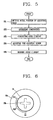
- FIG. 5 is a flow chart showing a configuration of the method for adjusting the trip sensitivity of the thermal overload trip apparatus in accordance with the present invention
- FIG. 6 is a planar view showing a graduation member installed at a periphery of the adjusting knob in the thermal overload trip apparatus in accordance with the present invention.
- the method for adjusting the trip sensitivity (hereafter, referred to as an adjusting method) of the thermal overload trip apparatus in accordance with the present invention may include, setting an initial position of the adjusting knob 18 (ST1); assembling components forming the thermal overload trip apparatus (ST2); conducting a predetermined over current to the thermal overload trip apparatus assembled in the assembling step (ST2) during a predetermined time (ST3); adjusting the adjusting screw 20 by rotating the adjusting screw 20 until tripping occurs under a state that the adjusting knob 18 remains at its initially set position(ST4).
- the setting step (ST1) for the initial position of the adjusting knob is implemented by determining the initially-set position (that is, initial rotation angle) of the adjusting knob 18 according to the trip operation current performing the trip operation to a predetermined position (angle).
- the assembling step (ST2) is implemented by forming an assembly of the thermal overload trip apparatus by assembling the bimetals 14, the shifter mechanism 15, the trip mechanism 17, the release lever mechanism 16, the adjusting lever 19, the adjusting knob 18, the adjusting screw 20 and the like, components of the thermal overload trip apparatus in accordance with the present invention.
- the overcurrent conducting step (ST3) is implemented by conducting the pre-determined overcurrent (trip operation current) having a predetermined magnification value with respect to a rated current (e.g., 5A, 10A, 15A) to the thermal overload trip apparatus of the present invention during an allowable conducting time (e.g., 2 hours) specified in an international electrical standard or an international electrical safety standard.
- the step is to conduct a predetermined value of a test current during a predetermined allowable conducting time.
- the adjusting screw adjusting step (ST4) is implemented by arbitrarily generating the trip operation by rotatingly adjusting the adjusting screw 20 thus to adjust the trip sensitivity under a state that the adjusting knob 18 remains at the initially-set position (initial rotation angle).
- the adjusting of the trip sensitivity is completed.
- the adjusting method of the thermal overload trip apparatus in accordance with the present invention further comprises marking the rated current at a periphery of the adjusting knob (ST5).
- the rated current marking step (ST5) is implemented by marking an additional rated current at the periphery of the adjusting knob under a state that the adjusting of the trip sensitivity is completed.
- the rated current may be directly marked at the periphery of the adjusting knob 18.
- the rated current (e.g., 5A, 10A, 15A) may be marked on a graduation member 18c installed at the periphery of the adjusting knob 18.
- the thermal overload trip apparatus and a method for adjusting the trip sensitivity thereof of the present invention it is not required to disassemble and reassemble the components even if inferiority occurs while adjusting the trip operation sensitivity. Accordingly, it is capable of simply adjusting the trip operation sensitivity.
- the thermal overload trip apparatus in accordance with the present invention includes the means for independently adjusting the sensitivity of the trip operation current regardless of the cam portion, accordingly it is capable of adjusting the sensitivity of the trip operation current without adjusting for the adjusting knob.
Landscapes
- Breakers (AREA)
Applications Claiming Priority (1)
| Application Number | Priority Date | Filing Date | Title |
|---|---|---|---|
| KR1020070079234A KR100905021B1 (ko) | 2007-08-07 | 2007-08-07 | 열동형 과부하 트립 장치 및 그의 트립 감도 조정 방법 |
Publications (3)
| Publication Number | Publication Date |
|---|---|
| EP2023362A2 true EP2023362A2 (de) | 2009-02-11 |
| EP2023362A3 EP2023362A3 (de) | 2009-12-16 |
| EP2023362B1 EP2023362B1 (de) | 2018-05-02 |
Family
ID=39769233
Family Applications (1)
| Application Number | Title | Priority Date | Filing Date |
|---|---|---|---|
| EP08013323.4A Active EP2023362B1 (de) | 2007-08-07 | 2008-07-24 | Thermische Auslösungsvorrichtung und Verfahren zur Einstellung derer Empfindlichkeit |
Country Status (6)
| Country | Link |
|---|---|
| US (1) | US7714692B2 (de) |
| EP (1) | EP2023362B1 (de) |
| JP (1) | JP2009043726A (de) |
| KR (1) | KR100905021B1 (de) |
| CN (1) | CN101364508B (de) |
| ES (1) | ES2682456T3 (de) |
Cited By (1)
| Publication number | Priority date | Publication date | Assignee | Title |
|---|---|---|---|---|
| CN101944460A (zh) * | 2009-07-07 | 2011-01-12 | 三菱电机株式会社 | 断路器 |
Families Citing this family (17)
| Publication number | Priority date | Publication date | Assignee | Title |
|---|---|---|---|---|
| DE102006003124A1 (de) * | 2006-01-23 | 2007-08-02 | Siemens Ag | Verfahren zur Realisierung eines verbesserten thermomechanischen Überlastschutzes und zugehörige Überlastschutzeinrichtung |
| JP2009224311A (ja) * | 2008-02-19 | 2009-10-01 | Fuji Electric Fa Components & Systems Co Ltd | 熱動形過負荷継電器 |
| JP4706772B2 (ja) * | 2009-03-27 | 2011-06-22 | 富士電機機器制御株式会社 | 熱動形過負荷継電器 |
| JP4906881B2 (ja) * | 2009-03-27 | 2012-03-28 | 富士電機機器制御株式会社 | 熱動形過負荷継電器 |
| JP4978681B2 (ja) * | 2009-10-23 | 2012-07-18 | 富士電機機器制御株式会社 | 熱動形過負荷継電器 |
| KR101122183B1 (ko) * | 2010-04-05 | 2012-03-20 | 김재현 | 순시장치가 구비된 누전차단기 및 배선용 차단기 |
| KR101721105B1 (ko) | 2011-06-24 | 2017-03-30 | 엘에스산전 주식회사 | 회로차단기의 간격 조정방법 |
| CN102360995B (zh) * | 2011-10-25 | 2012-10-10 | 常熟开关制造有限公司(原常熟开关厂) | 断路器的磁脱扣器 |
| CN103187213B (zh) * | 2011-12-29 | 2015-03-25 | 上海良信电器股份有限公司 | 热过载继电器的动作机构 |
| DE102014204026B4 (de) | 2014-03-05 | 2022-03-31 | Siemens Aktiengesellschaft | Thermische Auslösewelle und Verfahren zum Einstellen eines Abstandes zwischen einem Bimetallelement und der thermischen Auslösewelle |
| CN103871778A (zh) * | 2014-03-27 | 2014-06-18 | 福州大学 | 一种记忆合金在过载脱扣器上的应用 |
| CN104021999B (zh) * | 2014-05-20 | 2016-12-07 | 浙江正泰电器股份有限公司 | 热过载继电器的调节动作机构 |
| CZ307740B6 (cs) * | 2016-04-20 | 2019-04-10 | HavlĂk, Martin | Zařízení pro tlumení nárazu, zejména vozidla |
| KR101866222B1 (ko) | 2016-05-12 | 2018-06-15 | 변창규 | 누전 및 배선용 차단기의 과부하 보호장치 |
| CN205789807U (zh) * | 2016-06-27 | 2016-12-07 | 施耐德电器工业公司 | 一种热脱扣补偿结构 |
| DE102020216415B4 (de) * | 2020-12-21 | 2023-03-02 | Siemens Aktiengesellschaft | Elektrischer Schalter mit einer thermischen Auslöseeinheit und Verfahren zur Adaption einer thermischen Auslösekurve |
| CN115692046A (zh) * | 2021-07-26 | 2023-02-03 | 上海正泰智能科技有限公司 | 一种低压开关电器 |
Citations (2)
| Publication number | Priority date | Publication date | Assignee | Title |
|---|---|---|---|---|
| DE828745C (de) | 1948-10-20 | 1952-01-21 | Schiele Industriewerke G M B H | Justiereinrichtung fuer thermische Ausloeser von elektrischen Schaltgeraeten |
| GB1441350A (en) | 1973-08-22 | 1976-06-30 | Metzenauer & Jung Gmbh | Release device for bimetallic relay |
Family Cites Families (54)
| Publication number | Priority date | Publication date | Assignee | Title |
|---|---|---|---|---|
| US3038051A (en) * | 1959-08-07 | 1962-06-05 | Gen Electric Canada | Thermal device |
| US3015007A (en) * | 1959-11-19 | 1961-12-26 | Gen Electric Canada | Thermal device |
| US3162739A (en) * | 1962-06-25 | 1964-12-22 | Gen Electric | Electric circuit breaker with improved trip means |
| US3214535A (en) * | 1963-02-27 | 1965-10-26 | Cutler Hammer Inc | Electric circuit breaker with positive tripping means |
| US3183328A (en) * | 1963-04-08 | 1965-05-11 | Gen Electric | Electric switch with contact weld check means |
| US3251966A (en) * | 1963-08-29 | 1966-05-17 | Ite Circuit Breaker Ltd | Shock-proof overload relay with reversing link |
| GB1083650A (en) * | 1965-05-15 | 1967-09-20 | Gen Electric Canada | Thermal protective device |
| DE1984178U (de) | 1967-12-09 | 1968-04-25 | Siemens Ag | Ausloeseeinrichtung fuer bimetallrelais. |
| US3588761A (en) * | 1970-02-26 | 1971-06-28 | Gen Electric | Electric circuit interrupter with magnetic trip level adjusting means |
| DE2152002C2 (de) | 1971-10-19 | 1973-09-20 | Schiele Verwaltungsgesellschaft Mbh, 7746 Hornberg | Anordnung zur Zweipunkteichung eines thermischen Überstromschalters |
| US4313098A (en) * | 1980-01-16 | 1982-01-26 | Westinghouse Electric Corp. | Circuit interrupter trip unit |
| EP0164690B1 (de) * | 1984-06-06 | 1989-10-18 | Mitsubishi Denki Kabushiki Kaisha | Thermisch wirkendes Uberstromrelais |
| US4630019A (en) | 1984-09-28 | 1986-12-16 | Westinghouse Electric Corp. | Molded case circuit breaker with calibration adjusting means for a bimetal |
| US4603312A (en) * | 1985-03-21 | 1986-07-29 | Westinghouse Electric Corp. | Circuit breaker with adjustable trip unit |
| JPH0347242Y2 (de) * | 1985-03-26 | 1991-10-08 | ||
| DE3544989A1 (de) * | 1985-12-19 | 1987-07-02 | Daimler Benz Ag | Modulator zur beaufschlagung mindestens eines ueber- oder unterdruckbetaetigten verstellelementes |
| FR2602910A1 (fr) * | 1986-08-14 | 1988-02-19 | Telemecanique Electrique | Dispositif de reglage du courant thermique d'un declencheur thermique a bilame et interrupteur de protection comportant un tel dispositif |
| JPH069432Y2 (ja) * | 1986-10-17 | 1994-03-09 | 三菱電機株式会社 | 熱動式過電流継電器 |
| JPS6365938U (de) * | 1986-10-17 | 1988-04-30 | ||
| JPH071665B2 (ja) * | 1988-09-20 | 1995-01-11 | 富士電機株式会社 | 熱形過負荷継電器の反転ばね機構 |
| US4922220A (en) * | 1989-03-22 | 1990-05-01 | Westinghouse Electric Corp. | Adjustable circuit breaker thermal trip unit |
| US4983939A (en) * | 1989-10-05 | 1991-01-08 | Westinghouse Electric Corp. | Circuit breaker with adjustable low magnetic trip |
| JP2605792Y2 (ja) * | 1992-03-26 | 2000-08-07 | 松下電工株式会社 | サーマルリレーの動作点調節装置 |
| JPH06251685A (ja) * | 1993-02-26 | 1994-09-09 | Matsushita Electric Works Ltd | 過電流継電器 |
| GB2285886A (en) * | 1994-01-21 | 1995-07-26 | Square D Co | Circuit breaker |
| JPH0963449A (ja) * | 1995-08-21 | 1997-03-07 | Fuji Electric Co Ltd | 熱形過負荷継電器およびその組立方法 |
| JP3298389B2 (ja) * | 1995-11-30 | 2002-07-02 | 富士電機株式会社 | 熱形過負荷継電器 |
| CN1071050C (zh) * | 1996-09-30 | 2001-09-12 | 西门子公司 | 热过载断路器的调节方法和装置 |
| US5877670A (en) * | 1997-02-07 | 1999-03-02 | Sehlhorst; Scott B. | Heat motor operated load regulating switch assembly and knob attachment therefor |
| US5894259A (en) * | 1997-04-14 | 1999-04-13 | Eaton Corporation | Thermal trip unit with magnetic shield and circuit breaker incorporating same |
| US5793026A (en) * | 1997-04-14 | 1998-08-11 | Eaton Corporation | Magnetic trip assembly and circuit breaker incorporating same |
| US5831501A (en) * | 1997-04-14 | 1998-11-03 | Eaton Corporation | Adjustable trip unit and circuit breaker incorporating same |
| US5831509A (en) * | 1997-10-22 | 1998-11-03 | Eaton Corporation | Circuit breaker with sense bar to sense current from voltage drop across bimetal |
| DE19819242B4 (de) * | 1998-04-29 | 2005-11-10 | Ge Power Controls Polska Sp.Z.O.O. | Thermomagnetischer Leistungsschalter |
| FR2785717B1 (fr) * | 1998-11-05 | 2000-12-08 | Schneider Electric Sa | Relais thermique dote d'un mecanisme a lame-ressort |
| US6104273A (en) * | 1999-06-09 | 2000-08-15 | General Electric Company | Calibration assembly and process for use in a circuit protective device |
| US6496097B2 (en) * | 1999-09-21 | 2002-12-17 | General Electric Company | Dual circuit temperature controlled switch |
| JP3899754B2 (ja) * | 1999-12-01 | 2007-03-28 | 富士電機機器制御株式会社 | 熱動形過負荷継電器 |
| US6445274B1 (en) * | 2000-11-10 | 2002-09-03 | Eaton Corporation | Circuit interrupter with thermal trip adjustability |
| JP4186415B2 (ja) * | 2000-11-30 | 2008-11-26 | 富士電機機器制御株式会社 | 回路しゃ断器の過負荷引外し装置 |
| KR200226336Y1 (ko) * | 2000-12-29 | 2001-06-15 | 엘지산전주식회사 | 열동형 과부하 계전기의 트립장치 |
| ATE368935T1 (de) * | 2001-01-31 | 2007-08-15 | Siemens Ag | Justiervorrichtung für einen thermischen auslöser |
| ES2266548T3 (es) * | 2001-07-02 | 2007-03-01 | Siemens Aktiengesellschaft | Dispositivo de ajuste para un interruptor termico. |
| US6661329B1 (en) * | 2002-06-13 | 2003-12-09 | Eaton Corporation | Adjustable thermal trip assembly for a circuit breaker |
| US6720856B1 (en) * | 2002-12-18 | 2004-04-13 | Texas Instruments Incorporated | Calibration structure for circuit breakers having bimetallic trip member |
| WO2005104160A1 (de) | 2004-04-23 | 2005-11-03 | Siemens Aktiengesellschaft | Überlastauslöser und justierverfahren für denselben |
| KR100574788B1 (ko) | 2004-10-07 | 2006-04-27 | 엘에스산전 주식회사 | 배선용 차단기의 접촉자 어셈블리 |
| US7248140B2 (en) * | 2005-03-05 | 2007-07-24 | Tsung-Mou Yu | Adjustable safety switch |
| KR100662752B1 (ko) | 2005-10-04 | 2007-01-02 | 엘에스산전 주식회사 | 다극 배선용 차단기 |
| KR100689324B1 (ko) | 2005-10-05 | 2007-03-08 | 엘에스산전 주식회사 | 다극 배선용 차단기 |
| US7372356B2 (en) * | 2005-11-01 | 2008-05-13 | Homeease Industrial Co., Ltd. | Concealed adjustable temperature switch |
| KR200411507Y1 (ko) | 2005-12-28 | 2006-03-15 | 엘에스산전 주식회사 | 차단기용 트립 감도 조정 기구 |
| US20080122563A1 (en) * | 2006-08-28 | 2008-05-29 | Ls Industrial Systems Co., Ltd. | Instantaneous trip mechanism for mould cased circuit breaker |
| KR100881365B1 (ko) * | 2007-08-07 | 2009-02-02 | 엘에스산전 주식회사 | 열동형 과부하 보호장치의 트립 감도 조정 방법 |
-
2007
- 2007-08-07 KR KR1020070079234A patent/KR100905021B1/ko active Active
-
2008
- 2008-07-23 US US12/178,118 patent/US7714692B2/en active Active
- 2008-07-24 ES ES08013323.4T patent/ES2682456T3/es active Active
- 2008-07-24 EP EP08013323.4A patent/EP2023362B1/de active Active
- 2008-08-06 CN CN2008101458011A patent/CN101364508B/zh active Active
- 2008-08-06 JP JP2008203332A patent/JP2009043726A/ja active Pending
Patent Citations (2)
| Publication number | Priority date | Publication date | Assignee | Title |
|---|---|---|---|---|
| DE828745C (de) | 1948-10-20 | 1952-01-21 | Schiele Industriewerke G M B H | Justiereinrichtung fuer thermische Ausloeser von elektrischen Schaltgeraeten |
| GB1441350A (en) | 1973-08-22 | 1976-06-30 | Metzenauer & Jung Gmbh | Release device for bimetallic relay |
Cited By (1)
| Publication number | Priority date | Publication date | Assignee | Title |
|---|---|---|---|---|
| CN101944460A (zh) * | 2009-07-07 | 2011-01-12 | 三菱电机株式会社 | 断路器 |
Also Published As
| Publication number | Publication date |
|---|---|
| KR100905021B1 (ko) | 2009-06-30 |
| CN101364508A (zh) | 2009-02-11 |
| ES2682456T3 (es) | 2018-09-20 |
| US7714692B2 (en) | 2010-05-11 |
| JP2009043726A (ja) | 2009-02-26 |
| EP2023362A3 (de) | 2009-12-16 |
| EP2023362B1 (de) | 2018-05-02 |
| KR20090014904A (ko) | 2009-02-11 |
| US20090040004A1 (en) | 2009-02-12 |
| CN101364508B (zh) | 2012-01-25 |
Similar Documents
| Publication | Publication Date | Title |
|---|---|---|
| US7714692B2 (en) | Thermal overload trip apparatus and method for adjusting trip sensitivity thereof | |
| EP2023367B1 (de) | Verfahren zur Einstellung der Auslösungsempfindlichkeit durch eine Überhitzungsschutzvorrichtung | |
| KR200491965Y1 (ko) | 회로차단기의 가 조정 열동 트립 기구 | |
| EP2161732B1 (de) | Schaltmechanismus für einen Motorschutzschalter | |
| EP1420433A1 (de) | Termisches Überstromrelais | |
| US7859369B2 (en) | Method of bi-directional thermal calibration of a circuit interrupter frame and circuit interrupter test system including the same | |
| WO2017097191A1 (zh) | 过载长延时保护机构 | |
| JP2010232055A (ja) | 熱動形過負荷継電器 | |
| EP2863409B1 (de) | Spaltjustierendes Verfahren in einem Auslösemechanismus für einen Leistungsschalter mit gegossenem Gehäuse | |
| KR102081698B1 (ko) | 배선용 차단기 | |
| JP2010176906A (ja) | 回路遮断器 | |
| CN104867791B (zh) | 具有稳定器元件的热磁断路器的磁脱扣装置 | |
| CN100386838C (zh) | 电磁断路器 | |
| JP4154835B2 (ja) | 回路しゃ断器 | |
| CN106169399B (zh) | 一种联锁机构、具备该联锁机构的电控设备以及断路器 | |
| CN206059308U (zh) | 一种联锁机构、具备该联锁机构的电控设备以及断路器 | |
| JP5790908B2 (ja) | 回路遮断器の瞬時引外し装置 | |
| JP2013045668A (ja) | 回路遮断器の製造方法 | |
| JP5656899B2 (ja) | 熱動式引外し装置の製造方法及びその製造方法で製造された熱動式引外し装置を用いた回路遮断器 | |
| KR200343544Y1 (ko) | 모터 보호용 차단기의 조정 기구부 구조 | |
| CN104241055A (zh) | 断路器 | |
| EP2947673B1 (de) | Auslösemechanismus für Schaltvorrichtung für niedrige und mittlere Spannungen |
Legal Events
| Date | Code | Title | Description |
|---|---|---|---|
| PUAI | Public reference made under article 153(3) epc to a published international application that has entered the european phase |
Free format text: ORIGINAL CODE: 0009012 |
|
| AK | Designated contracting states |
Kind code of ref document: A2 Designated state(s): AT BE BG CH CY CZ DE DK EE ES FI FR GB GR HR HU IE IS IT LI LT LU LV MC MT NL NO PL PT RO SE SI SK TR |
|
| AX | Request for extension of the european patent |
Extension state: AL BA MK RS |
|
| PUAL | Search report despatched |
Free format text: ORIGINAL CODE: 0009013 |
|
| RIC1 | Information provided on ipc code assigned before grant |
Ipc: H01H 71/74 20060101AFI20091104BHEP |
|
| AK | Designated contracting states |
Kind code of ref document: A3 Designated state(s): AT BE BG CH CY CZ DE DK EE ES FI FR GB GR HR HU IE IS IT LI LT LU LV MC MT NL NO PL PT RO SE SI SK TR |
|
| AX | Request for extension of the european patent |
Extension state: AL BA MK RS |
|
| 17P | Request for examination filed |
Effective date: 20100317 |
|
| 17Q | First examination report despatched |
Effective date: 20100427 |
|
| AKX | Designation fees paid |
Designated state(s): DE ES FR GB IT |
|
| REG | Reference to a national code |
Ref country code: DE Ref legal event code: R079 Ref document number: 602008055065 Country of ref document: DE Free format text: PREVIOUS MAIN CLASS: H01H0037120000 Ipc: H01H0071740000 |
|
| GRAP | Despatch of communication of intention to grant a patent |
Free format text: ORIGINAL CODE: EPIDOSNIGR1 |
|
| RIC1 | Information provided on ipc code assigned before grant |
Ipc: H01H 71/16 20060101ALN20171018BHEP Ipc: H01H 71/74 20060101AFI20171018BHEP |
|
| INTG | Intention to grant announced |
Effective date: 20171116 |
|
| GRAS | Grant fee paid |
Free format text: ORIGINAL CODE: EPIDOSNIGR3 |
|
| GRAA | (expected) grant |
Free format text: ORIGINAL CODE: 0009210 |
|
| AK | Designated contracting states |
Kind code of ref document: B1 Designated state(s): DE ES FR GB IT |
|
| REG | Reference to a national code |
Ref country code: GB Ref legal event code: FG4D |
|
| REG | Reference to a national code |
Ref country code: DE Ref legal event code: R096 Ref document number: 602008055065 Country of ref document: DE |
|
| REG | Reference to a national code |
Ref country code: FR Ref legal event code: PLFP Year of fee payment: 11 |
|
| REG | Reference to a national code |
Ref country code: ES Ref legal event code: FG2A Ref document number: 2682456 Country of ref document: ES Kind code of ref document: T3 Effective date: 20180920 |
|
| REG | Reference to a national code |
Ref country code: DE Ref legal event code: R097 Ref document number: 602008055065 Country of ref document: DE |
|
| PLBE | No opposition filed within time limit |
Free format text: ORIGINAL CODE: 0009261 |
|
| STAA | Information on the status of an ep patent application or granted ep patent |
Free format text: STATUS: NO OPPOSITION FILED WITHIN TIME LIMIT |
|
| 26N | No opposition filed |
Effective date: 20190205 |
|
| P01 | Opt-out of the competence of the unified patent court (upc) registered |
Effective date: 20230625 |
|
| PGFP | Annual fee paid to national office [announced via postgrant information from national office to epo] |
Ref country code: GB Payment date: 20250610 Year of fee payment: 18 |
|
| PGFP | Annual fee paid to national office [announced via postgrant information from national office to epo] |
Ref country code: FR Payment date: 20250611 Year of fee payment: 18 |
|
| PGFP | Annual fee paid to national office [announced via postgrant information from national office to epo] |
Ref country code: ES Payment date: 20250822 Year of fee payment: 18 |
|
| PGFP | Annual fee paid to national office [announced via postgrant information from national office to epo] |
Ref country code: DE Payment date: 20250609 Year of fee payment: 18 |
|
| PGFP | Annual fee paid to national office [announced via postgrant information from national office to epo] |
Ref country code: IT Payment date: 20250610 Year of fee payment: 18 |