EP2023554A2 - Verfahren zur Informationsübertragung - Google Patents
Verfahren zur Informationsübertragung Download PDFInfo
- Publication number
- EP2023554A2 EP2023554A2 EP20080018253 EP08018253A EP2023554A2 EP 2023554 A2 EP2023554 A2 EP 2023554A2 EP 20080018253 EP20080018253 EP 20080018253 EP 08018253 A EP08018253 A EP 08018253A EP 2023554 A2 EP2023554 A2 EP 2023554A2
- Authority
- EP
- European Patent Office
- Prior art keywords
- sdu
- information
- pdu
- critical info
- processing
- Prior art date
- Legal status (The legal status is an assumption and is not a legal conclusion. Google has not performed a legal analysis and makes no representation as to the accuracy of the status listed.)
- Withdrawn
Links
- 238000000034 method Methods 0.000 title claims abstract description 93
- 230000005540 biological transmission Effects 0.000 title claims abstract description 68
- 238000012545 processing Methods 0.000 claims abstract description 133
- 230000011218 segmentation Effects 0.000 claims description 57
- 238000012544 monitoring process Methods 0.000 claims description 4
- 230000008569 process Effects 0.000 description 36
- 238000012986 modification Methods 0.000 description 35
- 230000004048 modification Effects 0.000 description 35
- 238000012546 transfer Methods 0.000 description 12
- 101100476985 Schizosaccharomyces pombe (strain 972 / ATCC 24843) sdu1 gene Proteins 0.000 description 11
- 239000012634 fragment Substances 0.000 description 10
- 238000010295 mobile communication Methods 0.000 description 8
- 238000013507 mapping Methods 0.000 description 3
- 238000004891 communication Methods 0.000 description 2
- 230000003111 delayed effect Effects 0.000 description 2
- 238000011161 development Methods 0.000 description 2
- 230000018109 developmental process Effects 0.000 description 2
- 238000010586 diagram Methods 0.000 description 2
- 238000005538 encapsulation Methods 0.000 description 2
- 230000000737 periodic effect Effects 0.000 description 2
- 108700026140 MAC combination Proteins 0.000 description 1
- 238000013459 approach Methods 0.000 description 1
- 238000013475 authorization Methods 0.000 description 1
- 230000003139 buffering effect Effects 0.000 description 1
- 230000008859 change Effects 0.000 description 1
- 230000000977 initiatory effect Effects 0.000 description 1
- 238000003780 insertion Methods 0.000 description 1
- 230000037431 insertion Effects 0.000 description 1
- 230000002452 interceptive effect Effects 0.000 description 1
- 230000007246 mechanism Effects 0.000 description 1
- 230000008520 organization Effects 0.000 description 1
- 230000035945 sensitivity Effects 0.000 description 1
- 238000006467 substitution reaction Methods 0.000 description 1
Images




Classifications
-
- H—ELECTRICITY
- H04—ELECTRIC COMMUNICATION TECHNIQUE
- H04W—WIRELESS COMMUNICATION NETWORKS
- H04W28/00—Network traffic management; Network resource management
- H04W28/02—Traffic management, e.g. flow control or congestion control
- H04W28/06—Optimizing the usage of the radio link, e.g. header compression, information sizing, discarding information
-
- H—ELECTRICITY
- H04—ELECTRIC COMMUNICATION TECHNIQUE
- H04L—TRANSMISSION OF DIGITAL INFORMATION, e.g. TELEGRAPHIC COMMUNICATION
- H04L47/00—Traffic control in data switching networks
- H04L47/10—Flow control; Congestion control
- H04L47/24—Traffic characterised by specific attributes, e.g. priority or QoS
- H04L47/245—Traffic characterised by specific attributes, e.g. priority or QoS using preemption
-
- H—ELECTRICITY
- H04—ELECTRIC COMMUNICATION TECHNIQUE
- H04L—TRANSMISSION OF DIGITAL INFORMATION, e.g. TELEGRAPHIC COMMUNICATION
- H04L12/00—Data switching networks
- H04L12/02—Details
- H04L12/16—Arrangements for providing special services to substations
- H04L12/18—Arrangements for providing special services to substations for broadcast or conference, e.g. multicast
- H04L12/189—Arrangements for providing special services to substations for broadcast or conference, e.g. multicast in combination with wireless systems
Definitions
- the present invention relates to techniques of information transmission, and more particularly, to methods for transferring the control information of Multimedia Broadcast/Multicast Service (MBMS).
- MBMS Multimedia Broadcast/Multicast Service
- multicast and broadcast are techniques for transferring data from one source to multiple destinations.
- the cell multicast service or the Cell Broadcast Service (CBS) allows low bit-rate data to be transferred to all users via a shared broadcasting channel of a cell, which is categorized as the message type service.
- CBS Cell Broadcast Service
- the 3 rd generation mobile communications global standardization organization (3GPP) has put forward the MBMS for mobile communication networks, thereby providing point-to-multipoint services of transferring data from one source to multiple users in a mobile network so as to share network resources and improve the utility rate thereof, especially the utility rate of resources of idle interface.
- MBMS defined by 3GPP can implement not only low-rate text multicast and broadcast of messages, but also multicast and broadcast of high-rate multimedia services, which is no doubt the trend of future development of mobile data transmission.
- Figure 1 shows the system architecture of MBMS.
- a new mobile network function - Broadcast Multicast-Service Centre (BM-SC) is added to a mobile network, which is the entrance of content providers for use in authorization and in initiating a MBMS bearer as well as transferring MBMS contents according to pre-defined schedule.
- BM-SC Broadcast Multicast-Service Centre
- UE User Equipment
- UMTS Universal Mobile Telecommunication System
- UTRAN Global System for Mobile Communications
- GSM Global System for Mobile Communications
- EDGE Enhanced Data Rates for GSM Evolution
- GERAN Serving General Packet Radio Service
- GPRS General Packet Radio Service Support Node
- SGSN Serving General Packet Radio Service Support Node
- GGSN GPRS Gateway Support Node
- MBMS includes the multicast mode and the broadcast mode.
- the multicast mode it is needed that a user subscribe to an appropriate multicast group, the service be activated, and appropriate accounting information be generated, while in the broadcast mode, the service can be activated without the user subscribing to join a group.
- the service procedures thereof are different.
- Figure 2 is the flowchart of MBMS multicast mode, including successively such procedures as Subscription, Service announcement, Subscriber Joining, Session Start, MBMS notification, Data transfer, Session Stop, and Subscriber Leaving.
- Figure 3 is the flowchart of MBMS broadcast mode, including successively such procedures as Service announcement, Subscriber Joining, Session Start, MBMS notification, Data transfer, and Session Stop.
- PTM Point to Multipoint
- PTP Point to Point
- MTCH MBMS PTM traffic channel
- DTCH dedicated traffic channel
- Radio Resource Control RRC
- RRC Radio Resource Control
- MCCH MBMS point-to-multipoint Control Channel
- RRC Radio Resource Control
- MCCH protocol units include successively from above to below: RRC layer, Radio Link Control (RLC) layer, Media Access Control (MAC) layer, and physical (PHY) layer.
- Figure 5 shows the mapping relation between the logical channel of the MAC layer and the Forward Access Channel (FACH) of the PHY layer.
- FACH Forward Access Channel
- Figure 6 shows the scheduling of transmission of MCCH information.
- MCCH information is transferred in a fixed scheduling mode. And in order to improve the reliability, UTRAN needs to transmit the MCCH information repeatedly.
- the period for transmitting the MCCH information repeatedly is referred to as repetition period.
- the complete MCCH information will be transmitted periodically based on the repetition period.
- Modification period is defined as an integral multiple of a repetition period.
- the MCCH information has to be modified within each modification period.
- the access information of MBMS can be periodically transmitted based on the period of access information and the period of access information is an integral division of a repetition period.
- MCCH information is further categorized into critical info and non-critical info.
- the critical info includes MBMS adjacent cell information, MBMS service information, and MBMS radio bearer information and is the information that needs to be transmitted repeatedly on a periodic basis.
- the contents of MCCH information transmitted in a repetition period remain unchanged while it can be modified only when being transmitted for the first time in a modification period.
- the non-critical info refers to the MBMS access information which is the information that need not to be transmitted repeatedly on a periodic basis and can be modified at any time.
- RLC transfers MCCH information in the unconfirmed mode (UM), and one RLC UM entity is used to transfer the criterion and non-critical info via one MCCH logical channel.
- Figure 7 is the diagram of the transmission mode of MBMS control information.
- the transmission mode of MBMS control information includes mainly the sending process of the RLC UM entity of the sender and the receiving process of the RLC UM entity of the receiver.
- PDU Protocol Data Units
- MAC decides the size and number of PDU within each transmission period.
- the sending process of an Unconfirmed Mode Data Protocol Data Unit includes: after receiving the transmission request from the higher layer for transferring UMD, the RLC UM entity of the sender schedules an RLC Service Data Unit (SDU) received from the higher layer to send the data. If there is one or multiple RLC SDU that have been scheduled to send the data, the RLC UM entity will first instruct the lower layer to receive the data including the number and size of SDU from the higher layer; and then fragment the SDU according to the size of PDU indicated by the lower layer and cascade the PDUs if possible. Thereafter, set the field of sequence number as VT(US), and set a field of length indication for each SDU that ends in a UMD PDU. Finally, submit the requested number of UMD PDUs to the lower layer, i.e. the MAC layer, and update VT(US) for each UMD PDU submitted to the lower layer while buffering the SDUs that have not been submitted to the lower layer.
- SDU RLC Service Data Unit
- the process of receiving UMD PDU includes: after receiving a group of UMD PDU from the lower layer, the RLC UM entity of the receiver updates VR(US) according to the received UMD PDU; if the updating step of VR(US) is not equal to 1, discard the SDU of which a fragment is in the lost UMD PDU, otherwise, reassemble the received UMD PDU into RLC SDU and submit the reassembled RLC SDU to the higher layer, i.e. the RRC layer.
- the sending procedure of the RLC UM entity of the sender after the start of the current modification period, includes the steps of:
- UMD PDU The format of UMD PDU is shown as Table 1:
- the Length Indicator marks the ending position of the RLC SDU in the PDU.
- LI indicates the number of bytes from the ending position of RLC header in the UMD PDU to the last byte of RLC SDU in this PDU.
- Table 2 and Table 3 The meaning of each special value of 7-bit and 15-bit LI are shown in Table 2 and Table 3, respectively, wherein Table 2 is the description of the meaning of each special value of 7-bit LI, and Table 3 is the description of the meaning of each special value of 15-bit LI.
- Table 2 Bit Description 0000000 The previous RLC PDU was exactly filled with the last segment of an RLC SDU and there is no "Length Indicator" that indicates the end of the RLC SDU in the previous RLC PDU. 1111100 UMD PDU: The first data octet in this RLC PDU is the first octet of an RLC SDU.
- AMD PDU Reserved (PDUs with this coding will be discarded by this version of the protocol).
- 1111101 Reserved (PDUs with this coding will be discarded by this version of the protocol).
- 1111110 AMD PDU The rest of the RLC PDU includes a piggybacked STATUS PDU.
- UMD PDU Reserved (PDUs with this coding will be discarded by this version of the protocol).
- 1111111 The rest of the RLC PDU is padding. The padding length can be zero. Table 3 Bit Description 000000000000000 The previous RLC PDU was exactly filled with the last segment of an RLC SDU and there is no "Length Indicator" that indicates the end of the RLC SDU in the previous RLC PDU.
- 111111111111011 The last segment of an RLC SDU was one octet short of exactly filling the previous RLC PDU and there is no "Length Indicator" that indicates the end of the RLC SDU in the previous RLC PDU. The remaining one octet in the previous RLC PDU is ignored.
- 111111111111100 UMD PDU The first data octet in this RLC PDU is the first octet of an RLC SDU.
- AMD PDU Reserved (PDUs with this coding will be discarded by this version of the protocol).
- 111111111111101 Reserved (PDUs with this coding will be discarded by this version of the protocol).
- 111111111111110 AMD PDU The rest of the RLC PDU includes a piggybacked STATUS PDU.
- UMD PDU Reserved (PDUs with this coding will be discarded by this version of the protocol).
- 111111111111111 The rest of the RLC PDU is padding. The padding length can be zero.
- the RLC UM entity differentiates in real time the information type of each received SDU and makes segmentation/concatenation processing according to the information type of SDU, i.e., making segmentation/concatenation processing of the SDU including critical info and reassembling into PDU including critical info while making segmentation/concatenation processing of the SDU including non-critical info and reassembling into PDU including non-critical info.
- Step A3 The RLC UM entity sets a sequence number for the reassembled PDU, sends the reassembled PDU to MAC via a MCCH logical channel, and decides whether the sent PDU includes critical info, if yes, save in the RLC UM entity the PDU including critical info, otherwise, do not save the PDU.
- PDU including critical info and PDU including non-critical info share one space of sequence number.
- a 7-bit space wherein the sequence number of one space includes 0 - 127.
- Step A4 the MAC layer conducts mapping of the MCCH logical channel on the FACH transmission channel of the PHY layer to send the PDU. At this time, one repetition period is over.
- Step A5 Decide whether the current modification period is over, if yes, perform Step A7; otherwise, take the next repetition period as the current repetition period, perform Step A6.
- Step A6 The RLC UM entity receives, within the current repetition period, the SDU transferred from RRC, differentiates the information type of the received SDU, if the information type is critical info, makes no processing of the SDU and just sends to the MAC layer the PDU including critical info saved in the RLC UM entity, and returns to Step A4; if the SDU includes non-critical info, makes segmentation/concatenation processing of the SDU, reassemble into PDU, sets a sequence number for the PDU, and sends the PDU to the MAC layer, and then returns to Step A4.
- the sequence number set for the PDU including non-critical info belongs to the same space of sequence number as that of the sequence number of the PDU in the previous repetition period, but has a different value.
- Step A7 Take the next modification period as the current modification period, reconstruct the RLC UM entity, i.e. delete the PDU saved in the above RLC UM entity, reset the status parameter to zero, and return to Step A1.
- the objective of this invention is to provide a method for information transmission so as to improve the reliability and flexibility of information transmission and the overall performance of the system.
- the step of interrupting the processing of the current SDU specifically includes: interrupting the segmentation/concatenation and transfer of the current SDU.
- the step of interrupting the processing of the current SDU specifically includes: interrupting only the transfer of the current SDU, and all the PDUs encapsulated with the current SDU possessing continuous sequence numbers.
- the SDU to be sent is encapsulated in PDUs with continuous sequence numbers, and the method further includes sending the PDUs in an out-of-sequence order.
- the SDU includes segments of SDU, or the indicator of the ending position of SDU, or a combination of the two.
- the SDU that needs to be processed with higher priority includes one or more than one SDU of the same type, or includes one or more than one SDU of different types.
- the step of handing the SDU includes: segmenting and concatenating the SDU into one or more than one PDU while the SDU that needs to be processed with higher priority and the SDU that need not be processed with higher priority can not be concatenated into one PDU, wherein the PDU includes the UMD PDU in the UM mode under the WCDMA/TD-SCDMA RLC protocol.
- SDU information of different types corresponds to different priorities, then whether the information needs to be processed with higher priority is decided by the priority level; alternatively, whether the information needs to be processed with higher priority depends on the features of SDU information of different types, or on the transmission demand.
- the SDU that needs to be processed with higher priority includes the non-critical info in the MBMS control information; the SDU of which the processing is interrupted includes the critical info in the MBMS control information.
- the method specifically includes the steps of:
- the method specifically includes the steps of:
- two RLC UM entities or two modules in one RLC UM entity are employed to conduct independent segmentation/concatenation processing of the control information of different information types, respectively.
- it is avoided to differentiate in real time the information type of each received SDU during segmentation/concatenation processing, thus reducing the calculating volume of the RLC UM entity, and improving the working efficiency of the RLC UM entity as well as the overall performance thereof.
- PDU including the information that needs to be periodically sent and PDU including the information that need not be periodically sent use two different spaces of sequence number, respectively, the restriction on the number of sequence number is reduced, and the number of bit of the space of sequence number is indirectly reduced, which further reduces the header overhead of PDU and raises the transmission efficiency.
- a special scheduling mechanism is employed to process first the SDU information that needs to be processed with higher priority, e.g. process and send the access information of the MBMS control information, i.e. the non-critical info, first, such that a delay of access information could be avoided, the accuracy of counting is raised, the process of counting is shortened, and the reliability and flexibility of information transmission as well as the overall system performance are improved.
- the core idea of the first method for information transmission in accordance with this invention is: conducting independent segmentation/concatenation and numbering operations during the transmission of service control information for the information that needs to be periodically sent and the information that need not be periodically sent, respectively, before sending the information while numbering the each kind information using independent spaces of sequence number and sending the information via different logical channels; and conducting the receiving reassembly of the information that needs to be periodically sent and the information that need not be periodically sent, respectively, at the receiver.
- critical info is information that needs to be periodically sent and the non-critical info is information that need not be periodically sent.
- two link-layer logic entities are configured in the logic entity RRC which produces service control messages for use in processing critical info and non-critical info, respectively.
- two logical channels are for use in transferring the information, and in the MAC layer, the two logical channels are multiplexed to one FACH for transferring information.
- the transmission method of MBMS control information includes mainly the sending process of the RLC UM entity of the sender and the receiving process of the RLC UM entity of the receiver.
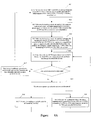
- Figure 8A is the performing flowchart of the method for transferring control information at the sender in accordance with the first embodiment of this invention. After the current modification period starts, the RLC UM entity at the sender performs the following steps:
- the C/T field in this invention may be implemented in other ways as well, e.g. 2 bits may be used as the C/T field for the sake of extension. The principle, however, is similar.
- the two MCCH logical channels are multiplexed to one FACH of the PHY layer, and the PDU is extended to the format of MAC PDU before being transferred to the receiver, wherein the format of MAC PDU is as shown in Table 4:
- Table 4 Contents Description TCTF Logical channel indicating the MCCH type C/T Number of logical channel for use in differentiating critical info/non-critical info MAC SDU Specific contents of SDU data
- the multiplexing of the two MCCH logical channels in the MAC layer may not be implemented with the C/T field, instead, two TCTF values may be used to differentiate different logical channels of the identical MCCH type, i.e. take two values from the TCTF code based on the prior art to indicate the MCCH logical channel for use in transferring critical info and the channel for transferring non-critical info, respectively.
- Table 5 Code value of TCTF Description 00 Indicating BCCH 01000000 Indicating CCCH 01000001-01111111 reserved (PDUs with this coding will be discarded by this version of the protocol) 10000000 Indicating CTCH 10000001-10111111 reserved (PDUs with this coding will be discarded by this version of the protocol) 11 Indicating DCCH or DTCH on FACH
- the TCTF code on FACH in this invention is as shown in Table 6: Table 6 Code value of TCTF Description 00 Indicating BCCH 01000000 Indicating CCCH 01000001 Indicating the number of MCCH logical channel transferring critical info 01000010 Indicating the number of MCCH logical channel transferring non-critical info 01000011-01111111 reserved (PDUs with this coding will be discarded by this version of the protocol) 10000000 Indicating CTCH 10000001-10111111 reserved (PDUs with this coding will be discarded by this version of the protocol) 11 Indicating DCCH or DTCH on FACH
- the MAC layer first schedules the data of the MCCH logical channel for transferring non-critical info.
- Step 8A5 Decide whether the current modification period is over, if yes, perform Step 8A7; otherwise, take the next repetition period as the current repetition period, perform Step 8A6.
- Step 8A6 in the current repetition period, RRC requests the RLC UM entity processing critical info to re-transfer the saved PDU including critical info, after receiving the request, the RLC UM entity processing critical info directly sends the self-saved PDU to the MAC layer, and return to Step 8A4; meanwhile RRC sends the SDU including non-critical info to the RLC UM entity processing non-critical info; the RLC UM entity processing non-critical info makes segmentation/concatenation processing of the received SDU, reassembles into PDUs including non-critical info, set sequence numbers for the PDU before sending the PDUs to the MAC layer, and return to Step 8A4.
- the sequence number set for the PDU including non-critical info belongs to the same space of sequence number as that of the sequence number of the PDU in the previous repetition period, but has a different value.
- Step 8A7 Take the next modification period as the current modification period, reconstruct the RLC UM entity, i.e. delete the PDU saved in the above RLC UM entity, reset the status parameter to zero, and return to Step 8A1.
- two RLC UM entities are employed to conduct segmentation/concatenation, numbering and reassembling for the critical info and non-critical info, respectively, and two logical channels are used to transfer the information.
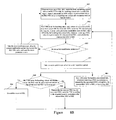
- Figure 9A is the performing flowchart of the method for transferring control information at the sender in accordance with the second embodiment of this invention.
- two processing modules are configured in the RLC UM entity for use in processing critical info and non-critical info, respectively.
- the sender After the current modification period starts, the sender performs the following steps:
- this invention discloses as well another method for information transmission.
- this method during the processing of the SDU information, if, when processing a certain type of SDU information, another type of SDU information is received and the newly received SDU information needs to be processed with higher priority, then interrupt the processing of the current SDU information, process first the newly received SDU information, and complete the processing of the newly received SDU before continuing the processing of the SDU information that has been interrupted.
- the SDU information includes all the segmentation of the SDU and the indicator of the ending position of SDU.
- the processing of the SDU information includes segmentation/concatenation and transmission operations.
- SDU information of different types will correspond to different priorities; or depend on the features of different types of SDU information, e.g. non-critical info needs to be sent before critical info; or depend on the sending demand at that time, e.g. SDU information of Type C may need to be sent before SDU information of Type A according to the requirement of service.
- SDU information of Type C may need to be sent before SDU information of Type A according to the requirement of service.
- SDU1 and SDU2 there are two types of SDU: SDU1 and SDU2, and according to the features of the two types of SDU, SDU2 needs to be processed before SDU1 is processed, then there are two cases in accordance with this invention of the segmentation/concatenation and sending process of SDU information:
- the PDU herein refers to UMD PDU in the UM mode under the WCDMA/TD-SCDMA RLC protocol.
- the SDU information refers to segments of SDU, or indicator of ending position of SDU, or a combination of the two. That is to say, it is not allowed to cascade the fragment of an SDU of non-critical info and the fragment of an SDU of critical info into one PDU. Likewise, it is not allowed, either, to cascade the indicator of the ending position of an SDU of non-critical info and the fragment of an SDU of critical info into one PDU, and vice versa.
- the basic idea of another method for information transmission in accordance with this invention is as follows:
- first SDU and second SDU herein do not always correspond to a certain type, i.e. it is not prescribed that the first SDU corresponds only to SDU information of Type A and the second SDU corresponds only to Type B.
- the first SDU and second SDU herein are relative to each other. For example, there are SDU information of Types A, B, and C, and the priority for processing is that Type C has precedence over Type B and Type B has precedence over Type A. Then, during the processing of SDU information of Type A, if SDU information of Type B is received, interrupt the processing of SDU information of Type A and process the SDU information of Type B first.
- the first SDU refers to SDU information of Type A while the second SDU refers to SDU information of Type B. If SDU information of Type C is received during the processing of SDU information of Type B, then interrupt the processing of SDU information of Type B and process the SDU information of Type C first.
- the first SDU at this time refers to the SDU information of Type B while the second SDU refers to the SDU information of Type C.
- the method for information transmission put forward by this invention includes the steps of:
- the interrupting of the processing may comprise interrupting the segmentation/concatenation and transmission operations, or comprise interrupting only the sending operation.
- SDU information of different types includes SDU of non-critical info and SDU of critical info
- another method for information transmission in accordance with this invention is implemented as follows, wherein SDU of non-critical info has precedence over SDU of critical info for being processed.
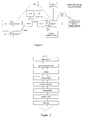
- the current SDU for which the UM sending entity is conducting segmentation/concatenation and transmission operations is SDU of critical info, and the PDU encapsulated with this SDU of critical info are shaded with dots in the figure.
- the SDU of critical info Before an SDU of non-critical info is received, the SDU of critical info has been encapsulated into 7 PDUs, with the sequence numbers of 1 to 7; After the SDU of non-critical info is received, the UM sending entity interrupts the segmentation/concatenation and transmission operations for the SDU of critical info while starting the segmentation/concatenation operation for the SDU of non-critical info, encapsulating into a PDU with the sequence number of 8, and then sending the PDU with the sequence number of 8; after the sending is completed, the UM sending entity conducts the segmentation/concatenation and transmission operations for the remaining part of the SDU of critical info, encapsulates into PDUs with the sequence numbers of 9 - 14, and sends the PDUs with the numbers of 9 -
- the current SDU for which the UM sending entity is conducting segmentation/concatenation and transmission operations is SDU of critical info, and the PDUs encapsulated with this SDU of critical info are shaded with dots in the figure.
- the SDU of critical info Before an SDU of non-critical info is received, the SDU of critical info has been encapsulated into 7 PDUs, with the sequence numbers of 1 to 7; after the SDU of non-critical info is received, the UM sending entity continues the segmentation/concatenation operation for the rest of the SDU of critical info and encapsulates into PDUs with the sequence numbers of 8 to 13 without, however, sending the PDUs with the numbers of 8 to 13, instead, the UM sending entity saves the PDUs with the numbers of 8 to 13; then, conduct segmentation/concatenation operation for the SDU of non-critical info, encapsulate into a PDU with the sequence number of 14, and immediately send the PDU with the number of 14 after encapsulation. After completing the sending of PDU
- a fixed size of PDU according to which to make encapsulation may be set in advance. Then, after receiving each SDU, the UM sending entity will conduct segmentation/concatenation operation for the received SDU according to the fixed size that has been set, and encapsulate each SDU into one or more than one PDU of fixed size. In this case, whenever there are PDUs to be sent, PDUs can be scheduled according to the demanded number.
- this method for information transmission can support scrambled transmission.
- PDUs can be sent in an out-of-sequence order.
- SDU1 is encapsulated into PDU1, 2, 3, 4, and 5
- SDU2 is encapsulated into PDU6 and SDU2 has a higher priority, e.g. SDU2 includes a message of MBMS access information
- PDU6 should be sent first after sending PDU1 and 2, and thereafter, PDU3, 4, and 5 are sent, which is the so-called sending PDU in an out-of-sequence order.
- the methods for information transmission put forward by this invention are applicable not only to MCCH control information, but to all the cases where SDU of different types should be sent in different sending orders as well as to all the cases where SDU information has different priorities.
Landscapes
- Engineering & Computer Science (AREA)
- Computer Networks & Wireless Communication (AREA)
- Signal Processing (AREA)
- Mobile Radio Communication Systems (AREA)
- Communication Control (AREA)
- Time-Division Multiplex Systems (AREA)
Applications Claiming Priority (2)
| Application Number | Priority Date | Filing Date | Title |
|---|---|---|---|
| CNB2005100073145A CN100355258C (zh) | 2004-09-28 | 2005-02-04 | 信息传输方法 |
| EP20060705565 EP1802053B1 (de) | 2005-02-04 | 2006-01-25 | Informationssendungsverfahren |
Related Parent Applications (1)
| Application Number | Title | Priority Date | Filing Date |
|---|---|---|---|
| EP20060705565 Division EP1802053B1 (de) | 2005-02-04 | 2006-01-25 | Informationssendungsverfahren |
Publications (2)
| Publication Number | Publication Date |
|---|---|
| EP2023554A2 true EP2023554A2 (de) | 2009-02-11 |
| EP2023554A3 EP2023554A3 (de) | 2009-05-20 |
Family
ID=36776961
Family Applications (2)
| Application Number | Title | Priority Date | Filing Date |
|---|---|---|---|
| EP20060705565 Expired - Lifetime EP1802053B1 (de) | 2005-02-04 | 2006-01-25 | Informationssendungsverfahren |
| EP20080018253 Withdrawn EP2023554A3 (de) | 2005-02-04 | 2006-01-25 | Verfahren zur Informationsübertragung |
Family Applications Before (1)
| Application Number | Title | Priority Date | Filing Date |
|---|---|---|---|
| EP20060705565 Expired - Lifetime EP1802053B1 (de) | 2005-02-04 | 2006-01-25 | Informationssendungsverfahren |
Country Status (5)
| Country | Link |
|---|---|
| US (1) | US20070230476A1 (de) |
| EP (2) | EP1802053B1 (de) |
| JP (1) | JP4546541B2 (de) |
| AT (1) | ATE536685T1 (de) |
| WO (1) | WO2006081757A1 (de) |
Families Citing this family (15)
| Publication number | Priority date | Publication date | Assignee | Title |
|---|---|---|---|---|
| US8005918B2 (en) | 2002-11-12 | 2011-08-23 | Rateze Remote Mgmt. L.L.C. | Data storage devices having IP capable partitions |
| US8819092B2 (en) | 2005-08-16 | 2014-08-26 | Rateze Remote Mgmt. L.L.C. | Disaggregated resources and access methods |
| PL1925142T3 (pl) * | 2005-08-23 | 2016-04-29 | Sisvel Int S A | Optymalizacja nagłówka sterowania łączem radiowym w trybie niepotwierdzonym |
| US7924881B2 (en) * | 2006-04-10 | 2011-04-12 | Rateze Remote Mgmt. L.L.C. | Datagram identifier management |
| ES2751715T3 (es) * | 2008-02-01 | 2020-04-01 | Optis Wireless Technology Llc | Terminal de comunicaciones y estación de base |
| US8498248B2 (en) * | 2008-06-17 | 2013-07-30 | Nokia Siemens Networks Oy | Medium access control protocol data unit overhead improvements |
| US8121129B2 (en) * | 2008-12-15 | 2012-02-21 | International Business Machines Corporation | Optimizing throughput of data in a communications network |
| US8254410B2 (en) * | 2009-04-30 | 2012-08-28 | Telefonaktiebolaget L M Ericsson (Publ) | Systems and methods for transmitting radio link control (RLC) data blocks |
| US20120201248A1 (en) * | 2009-10-14 | 2012-08-09 | Nec Corporation | Transmission control method for packet communication and packet communication system |
| KR101361270B1 (ko) * | 2009-12-23 | 2014-02-11 | 한국전자통신연구원 | 케이블 망에서의 iptv 수신 정보 제공 방법 및 장치 |
| US8612526B2 (en) * | 2010-07-21 | 2013-12-17 | At&T Intellectual Property I, L.P. | System and method for prioritizing message transcriptions |
| US8879695B2 (en) | 2010-08-06 | 2014-11-04 | At&T Intellectual Property I, L.P. | System and method for selective voicemail transcription |
| CN107925625B (zh) * | 2015-08-05 | 2021-03-26 | Lg 电子株式会社 | D2d通信系统中指示用于中继数据的优先级的方法及其设备 |
| US20180063854A1 (en) * | 2016-08-30 | 2018-03-01 | Qualcomm Incorporated | Acknowledgement message prioritization |
| CN110798818B (zh) * | 2019-07-26 | 2022-05-13 | 北京锦鸿希电信息技术股份有限公司 | 一种用于城市轨道交通的列车信息传输方法及系统 |
Family Cites Families (6)
| Publication number | Priority date | Publication date | Assignee | Title |
|---|---|---|---|---|
| AU6171598A (en) * | 1997-02-18 | 1998-09-08 | Cisco Technology, Inc. | Method and apparatus for multiplexing of multiple users on the same virtual circuit |
| EP1137225B1 (de) * | 2000-02-28 | 2008-04-09 | Alcatel Lucent | Vermittlungseinrichtung und Vermittlungsverfahren |
| KR20020014971A (ko) * | 2000-08-19 | 2002-02-27 | 윤종용 | 이동통신시스템에서 무선 링크 제어장치 및 방법 |
| EP1193938A1 (de) * | 2000-09-29 | 2002-04-03 | Telefonaktiebolaget L M Ericsson (Publ) | Verfahren und Vorrichtung zur Datenübertragung |
| CN1202643C (zh) * | 2000-10-07 | 2005-05-18 | Lg电子株式会社 | 具有无线电链路控制层的无线电通信系统和数据处理方法 |
| JP4083549B2 (ja) * | 2002-11-26 | 2008-04-30 | 株式会社エヌ・ティ・ティ・ドコモ | 無線アクセスネットワークシステム、無線アクセス方法及び制御装置 |
-
2006
- 2006-01-25 WO PCT/CN2006/000144 patent/WO2006081757A1/zh not_active Ceased
- 2006-01-25 JP JP2007545822A patent/JP4546541B2/ja not_active Expired - Lifetime
- 2006-01-25 AT AT06705565T patent/ATE536685T1/de active
- 2006-01-25 EP EP20060705565 patent/EP1802053B1/de not_active Expired - Lifetime
- 2006-01-25 EP EP20080018253 patent/EP2023554A3/de not_active Withdrawn
-
2007
- 2007-04-17 US US11/736,304 patent/US20070230476A1/en not_active Abandoned
Non-Patent Citations (1)
| Title |
|---|
| HUAWEI TECHNOLOGIES ET AL: "Out of Sequence Operations for MCCH", 3GPP DRAFT; R2-042336, 3RD GENERATION PARTNERSHIP PROJECT (3GPP), MOBILE COMPETENCE CENTRE ; 650, ROUTE DES LUCIOLES ; F-06921 SOPHIA-ANTIPOLIS CEDEX ; FRANCE, vol. RAN WG2, no. Yokohama, Japan; 20041112, 12 November 2004 (2004-11-12), XP050126922 * |
Also Published As
| Publication number | Publication date |
|---|---|
| ATE536685T1 (de) | 2011-12-15 |
| JP2008523741A (ja) | 2008-07-03 |
| US20070230476A1 (en) | 2007-10-04 |
| WO2006081757A1 (en) | 2006-08-10 |
| EP1802053B1 (de) | 2011-12-07 |
| EP1802053A1 (de) | 2007-06-27 |
| JP4546541B2 (ja) | 2010-09-15 |
| EP2023554A3 (de) | 2009-05-20 |
| EP1802053A4 (de) | 2008-02-06 |
Similar Documents
| Publication | Publication Date | Title |
|---|---|---|
| US20070230476A1 (en) | Method for Information Transmission | |
| EP2675135B1 (de) | Verfahren zur Durchführung einer Datensegmentierungskaskade und Datenrekombination sowie Transmitter | |
| KR100608842B1 (ko) | 이동통신 시스템의 데이터 수신정보 전송방법 | |
| US8023454B2 (en) | Apparatus and method for enhanced UM RLC data handling | |
| KR101120255B1 (ko) | 상위 계층 패킷/프레임 경계 정보를 gre 프레임 내에제공 | |
| JP4982545B2 (ja) | 移動通信システムのmbmsサービスのためのpdcp構造及び動作方法 | |
| AU2005253495B2 (en) | Transmitting and receiving control protocol data unit having processing time information | |
| RU2422999C2 (ru) | Способ работы улучшенных модуля управления радиоканалом (rlc) и модуля управления радиосетью (rnc) для множественного доступа с кодовым разделением каналов и система для его осуществления | |
| US20050074024A1 (en) | Method and apparatus for configuring protocols for a multimedia broadcast/multicast service | |
| EP2203990B1 (de) | Speicher zur bereitstellung eines leitungsvermittelten bzw. cs-dienstes unter verwendung von hsdpa (high-speed-downlink-packet-access) oder hsupa (high-speed-uplink-packet-access) | |
| US8433346B2 (en) | Method of processing control information messages for point-to-multipoint services | |
| CN101115231B (zh) | 信息传输方法 | |
| CN100355258C (zh) | 信息传输方法 | |
| CN100433701C (zh) | 多媒体广播/组播业务信息的传输方法 | |
| CN1780291B (zh) | 一种数据分段级联和重组的方法 | |
| HK40034912A (en) | Method for transmitting pdcp status report | |
| CN102056084A (zh) | 多媒体广播组播业务系统及其同步方法 | |
| KR20090096784A (ko) | 이동 통신 시스템에서의 셀 방송 서비스 메시지 전송 방법및 그것을 이용한 이동 통신 시스템, 및 그 인터페이스프로토콜 구조 | |
| HK1077424B (en) | Providing multicast services in a point-to-multipoint manner for a radio communication system |
Legal Events
| Date | Code | Title | Description |
|---|---|---|---|
| PUAI | Public reference made under article 153(3) epc to a published international application that has entered the european phase |
Free format text: ORIGINAL CODE: 0009012 |
|
| 17P | Request for examination filed |
Effective date: 20081017 |
|
| AC | Divisional application: reference to earlier application |
Ref document number: 1802053 Country of ref document: EP Kind code of ref document: P |
|
| AK | Designated contracting states |
Kind code of ref document: A2 Designated state(s): AT BE BG CH CY CZ DE DK EE ES FI FR GB GR HU IE IS IT LI LT LU LV MC NL PL PT RO SE SI SK TR |
|
| PUAL | Search report despatched |
Free format text: ORIGINAL CODE: 0009013 |
|
| AK | Designated contracting states |
Kind code of ref document: A3 Designated state(s): AT BE BG CH CY CZ DE DK EE ES FI FR GB GR HU IE IS IT LI LT LU LV MC NL PL PT RO SE SI SK TR |
|
| 17Q | First examination report despatched |
Effective date: 20091120 |
|
| AKX | Designation fees paid |
Designated state(s): AT BE BG CH CY CZ DE DK EE ES FI FR GB GR HU IE IS IT LI LT LU LV MC NL PL PT RO SE SI SK TR |
|
| STAA | Information on the status of an ep patent application or granted ep patent |
Free format text: STATUS: THE APPLICATION HAS BEEN WITHDRAWN |
|
| 18W | Application withdrawn |
Effective date: 20101013 |