EP2023622A1 - Procédé pour la sélection de programmes de télévision - Google Patents
Procédé pour la sélection de programmes de télévision Download PDFInfo
- Publication number
- EP2023622A1 EP2023622A1 EP07015523A EP07015523A EP2023622A1 EP 2023622 A1 EP2023622 A1 EP 2023622A1 EP 07015523 A EP07015523 A EP 07015523A EP 07015523 A EP07015523 A EP 07015523A EP 2023622 A1 EP2023622 A1 EP 2023622A1
- Authority
- EP
- European Patent Office
- Prior art keywords
- content
- program content
- program
- category identifier
- preferred
- Prior art date
- Legal status (The legal status is an assumption and is not a legal conclusion. Google has not performed a legal analysis and makes no representation as to the accuracy of the status listed.)
- Ceased
Links
Images








Classifications
-
- H—ELECTRICITY
- H04—ELECTRIC COMMUNICATION TECHNIQUE
- H04N—PICTORIAL COMMUNICATION, e.g. TELEVISION
- H04N5/00—Details of television systems
- H04N5/44—Receiver circuitry for the reception of television signals according to analogue transmission standards
- H04N5/50—Tuning indicators; Automatic tuning control
-
- H—ELECTRICITY
- H04—ELECTRIC COMMUNICATION TECHNIQUE
- H04N—PICTORIAL COMMUNICATION, e.g. TELEVISION
- H04N21/00—Selective content distribution, e.g. interactive television or video on demand [VOD]
- H04N21/40—Client devices specifically adapted for the reception of or interaction with content, e.g. set-top-box [STB]; Operations thereof
- H04N21/45—Management operations performed by the client for facilitating the reception of or the interaction with the content or administrating data related to the end-user or to the client device itself, e.g. learning user preferences for recommending movies, resolving scheduling conflicts
- H04N21/4508—Management of client data or end-user data
- H04N21/4532—Management of client data or end-user data involving end-user characteristics, e.g. viewer profile, preferences
-
- H—ELECTRICITY
- H04—ELECTRIC COMMUNICATION TECHNIQUE
- H04N—PICTORIAL COMMUNICATION, e.g. TELEVISION
- H04N21/00—Selective content distribution, e.g. interactive television or video on demand [VOD]
- H04N21/40—Client devices specifically adapted for the reception of or interaction with content, e.g. set-top-box [STB]; Operations thereof
- H04N21/47—End-user applications
- H04N21/482—End-user interface for programme selection
- H04N21/4826—End-user interface for programme selection using recommendation lists, e.g. of programmes or channels sorted out according to their score
-
- H—ELECTRICITY
- H04—ELECTRIC COMMUNICATION TECHNIQUE
- H04N—PICTORIAL COMMUNICATION, e.g. TELEVISION
- H04N21/00—Selective content distribution, e.g. interactive television or video on demand [VOD]
- H04N21/40—Client devices specifically adapted for the reception of or interaction with content, e.g. set-top-box [STB]; Operations thereof
- H04N21/47—End-user applications
- H04N21/482—End-user interface for programme selection
Definitions
- the present invention relates to the field of television (TV) systems and more particularly to an assistance system for facilitating an optimized selection of television programs and/or television channels.
- TV television
- Broadcast media provide written and online TV-guides, such as an Electronic Program Guide (EPG), with the programs scheduled for a specific period.
- EPG Electronic Program Guide
- short flashes are inserted advertising the scheduled programs for the next hours.
- broadcast media the consumer is receiving information about which channel will deliver what content.
- this content is interleaved with other information blocks that may contain mainly commercial advertising messages, but also news flashes, broadcast program announcement, weather forecasts, etc.
- the consumer has currently no possibility to know what will be distributed in these added information slots.
- the content is often interrupted by these blocks.
- One way how consumers adapt to this reality is recording of the program to view it at a later time (Time Shifting). If additional information about the respective program category of each transmitted program block is available, such information allows a fast (automatic) skipping of the blocks. Thus a less interrupted viewing experience may be facilitated. Many of the systems designed for this purpose rely on prior marking or coding of the information for subsequent identification.
- the mark i.e. designation of the content category, will typically include a start- and an end-mark, as well as additional information, such as program category and title.
- the additional information may be included when the signal is originally broadcasted, but it is typically added by an annotation service.
- a second way how consumers handle program interruption is the "channel surfing” or “zapping” behavior, wherein a consumer zaps away when content is interrupted and tunes in shortly to another channel. The consumer has to take care to return in time if he wants to continue viewing the content on the first channel after the ad-break.
- a consumer watching a TV channel may want to be alerted when a broadcast of specific content starts on another channel (e.g. when the news report starts on channel 1).
- a method using the EPG may be employed.
- the EPG data is neither accurate nor detailed enough.
- an EPG does not mention start or finish of advertisement blocks, news flashes, weather reports, etc. Consequently, there may be a need for a method and for a corresponding device for facilitating an improved program selection and/or an improved channel selection, responding more precisely to the specific demand of each individual consumer.
- a method for selection of television programs comprises following steps: Initially, a first content category identifier for a first program content is created.
- the first content category identifier designates a first content category and comprises a first time designation.
- a second program content is transmitted to a subscriber device.
- the second program content is played back for perception by a consumer.
- the first content category identifier of the first program content is compared with a first preferred-content category identifier. If the first content category identifier of the first program content is matching the first preferred-content category identifier, the consumer receives a first notification.
- a first change from the first playback of the second program content to a second playback of the first program content is performed.
- the first time designation may specify explicitly or implicitly a first begin time for the first content category within the first program content.
- following additional method step is performed after the first change. If the content category identifier of the first program content is no longer matching the first preferred-content category identifier the consumer receives a second notification.
- a second change from the second playback of the first program content to a third playback of the second program content is performed.
- the first or second change is performed at an event which is dependent on the first program content.
- the first or second change is performed at an event which is dependent on the second program content.
- At least one of the first notification and the first change is disabled if a second content category identifier of the second program content is matching a second preferred-content category identifier.
- a manual change of a program being played back is only enabled within a first predetermined period, wherein the first predetermined period starts with a begin of the program content (and is disabled afterwards), in particular wherein the program content is designated with a third preferred-content category identifier.
- the method comprises following steps in addition: A second content category identifier for the second program content is created.
- the second content category identifier designates a second content category and comprises a second time designation.
- a third program content is transmitted to the subscriber device. Using the subscriber device the second program content is played back for perception by the consumer.
- the second content category identifier of the second program content is compared with a fourth preferred-content category identifier. If the second content category identifier of the second program content is not matching the fourth preferred-content category identifier the consumer receives a third notification.
- a third change from the fourth playback of the second program content to a fifth playback of the third program content is performed.
- the second time designation may specify explicitly or implicitly a second begin time for the second content category within the second program content.
- the third change is performed at an event which is dependent at least on one of the second and third program content.
- following additional method step is performed after the third change, if the second content category identifier of the second program content is no longer not matching the fourth preferred-content category identifier.
- the consumer receives a fourth notification.
- a fourth change to the sixth playback of the second program content is performed.
- the fourth change is performed at an event which is dependent on the second program content.
- the fourth change is performed at an event which is dependent on the third program content.
- the method also includes a fourth transmission of a fourth program content to the subscriber device.
- an additional method step is performed, if a third content category identifier of a fourth program content is matching a fourth preferred-content category identifier.
- the consumer receives a fifth notification.
- the fifth playback of the third program content is changed to a sixth playback of the fourth program content.
- the fifth change is performed at an event which is dependent on at least on one of the third and fourth program content.
- At least one of the first, second, third and fourth notifications will not be performed if the content category identifier assigned to the program content being currently played back, has been predetermined as a first preferred-content category identifier.
- At least one of the first, second, third and fourth changes will not be performed if the content category identifier assigned to the program content being currently played back, has been predetermined as a first preferred-content category identifier.
- the first notification of the consumer notifies the consumer about one of a first begin time and a first resumption time of the first program content.
- the first notification of the consumer comprises an explicit or an implicit designation of a time span corresponding to a temporal difference between the time designated by the content category designation of the first program content and a current time.
- the consumer may designate the first program content as a preferred program content by a precedent selecting of a portion of the first program content for playback for a longer time than corresponds to a second predefined period length.
- the first predefined period length may be settable at the subscriber device.
- At least one of the first and the second content category identifiers is added to information, which comprises at least the corresponding program content. Then the content category identifier is transmitted together with this information to the subscriber device.
- the first program content is transmitted via a first transmission channel, whereas the second program content is transmitted via a second transmission channel.
- the first change is only performed, if the first program content is transmitted via a preferred transmission channel.
- the first notification is only performed, if the first program content is transmitted via a preferred transmission channel.
- the first change is not performed, if the second transmission channel has been determined as a preferred transmission channel before.
- the first notification is not performed, if the second transmission channel has been determined as a preferred transmission channel before.
- a consumer predetermines a transmission channel as preferred transmission channel by selecting the transmission channel for playback for a longer time than corresponds to a length of a third predefined period.
- the length of the third predefined period may be settable at the subscriber device.
- the first change to the first program content takes place at a predetermined time. In a further preferred embodiment the first change to the first program content takes place not before expiry of a fourth predefined period after the last change. In a further preferred embodiment the first change is delayed until the expiry of a fourth predefined period. The length of the fourth predefined period may be settable at the subscriber device.
- the content category identifier of the first program content is transmitted to the subscriber device.
- the subscriber device compares the content category identifier of the first program content with the first preferred-content category identifier.
- the subscriber device generates at least one of the first, second, third, fourth, and fifth notifications. In a further preferred embodiment the subscriber device performs at least one of the first, second, third, fourth, and fifth changes.
- At least one of the first, second, third, fourth, and fifth changes may be performed directly without subscriber action.
- At least one of the first, second, third, fourth, and fifth changes can be activated and deactivated via an input by the subscriber.
- at least one of the first, second, third, fourth, and fifth notifications can be activated and deactivated via an input by the subscriber.
- more than one first content category identifier may simultaneously designate the content category of the first program content.
- more than one second content category identifier may simultaneously designate the content category of the second program content.
- more than one first preferred-content category identifier is simultaneously predefined by the subscriber device or by the consumer. In a further preferred embodiment more than one second preferred-content category identifier is simultaneously predefined by the subscriber device or by the consumer.
- each subscriber device one or more transmission channels may be predetermined as preferred transmission channels. In a further preferred embodiment for each consumer one or more transmission channels may be predetermined as preferred transmission channels.
- the consumer may set the predetermined time via an input at the subscriber device.
- a subscriber device for one or more consumers may be provided which is designed to perform the method according to one of the embodiments described before.
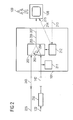
- Fig. 1 illustrates a basic arrangement of devices performing the method according to a first aspect of the invention.
- a first television program 121 is fed to an identifier generator 131 for generating content category identifiers.
- the content category identifiers of identifier generator 131 designate in real-time the current type of the content of the first television program 121.
- a second television program 122 is transmitted via a communication link 142 to a first switch 102.
- the first switch 102 passes through the second television program 122 for a first playback 105, using a television set 108 to display the second television program 122 for perception by a consumer 109.
- the identifier generator 131 may be realized by employing an annotation service.
- the first television program 121 is transmitted together with the relating content category identifiers from the identifier generator 131 via a communication link 141 to first switch 102.
- An extractor 111 within set-top box 101 extracts the content category identifiers from the information received via communication link 141.
- a comparator 112 within set-top box 101 receives from extractor 111 the extracted content category identifiers. The comparator 112 steadily compares the extracted content category identifiers with first preferred-content category identifiers.
- the consumer 109 may set one or more of the first preferred-content category identifiers at a user interface 113.
- comparator 112 issues a first notification 114 to the consumer 109 via the television set 108.
- the comparator 112 may control a toggle 103 of the first switch 102. Then, instead of second television program 122, the first television program 121 is passed through the first switch 102 and displayed to the consumer 109 (second playback 106).
- the comparator 112 continues comparing the extracted content category identifiers with the first preferred-content category identifiers. If the extracted content category identifiers are not longer matching the first preferred-content category identifier, comparator 112 issues a second notification 115 to the consumer 109 via the television set 108. As an alternative or in addition, the comparator 112 may toggle back 104 the first switch 102. Then, instead of the first television program 121, the second television program 122 is passed through again (reference sign 106) and displayed to the consumer 109 (third playback 107).
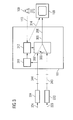
- FIG. 2 As a further aspect of the invention, or as a preferred embodiment, following method, as illustrated by Fig. 2 , may be employed. To retain clarity, many parts of figure 1 are not repeated in figure 2 ; nevertheless the embodiment of figure 2 typically comprises all parts and functions of the arrangement of figure 1 .
- the third television program 223 is transmitted via the communication link 243 to a second switch 202.
- the second television program 122 is fed to an identifier generator 232 for generating content category identifiers.
- the content category identifiers of identifier generator 232 designate in real-time the current type of the content of a second television program 122.
- the identifier generator 232 may be realized by employing an annotation service.
- the second switch 202 passes through the second television program 122 for a fourth playback 205, using a television set 108 to display the second television program 122 for reception by consumer 109.
- the second television program 122 is transmitted together with the relating content category identifiers from the identifier generator 232 via communication link 142 to the second switch 202.
- An extractor 211 within set-top box 101 extracts the content category identifiers from the information received via communication link 142.
- a comparator 212 within set-top box 101 receives from extractor 211 the extracted content category identifiers. The comparator 212 steadily compares the extracted content category identifiers with fourth preferred-content category identifiers.
- the consumer 109 may set one or more of the second predefined content category identifiers at a user interface 213. If the extracted content category identifiers are not matching any one of the fourth preferred-content category identifiers, comparator 212 issues a third notification 214 to consumer 109 via television set 108.
- the comparator 212 may toggle 203 the second switch 202. Then, instead of the second television program 122, the third television program 223 is passed through and displayed to the consumer 109 (fifth playback 206).
- the comparator 212 continues to compare the extracted content category identifiers with the fourth preferred-content category identifiers. If the extracted content category identifiers are no longer not match any (i.e. matches again one) of the fourth preferred-content category identifiers, comparator 212 issues a fourth notification 215 to the consumer 109 via the television set 108. As an alternative or in addition, the comparator 112 may toggle back 204 the second switch 202. Then, instead of the first television program 121, the second television program 122 is passed through again and displayed to the consumer 109 (sixth playback 207).
- Fig. 3 illustrates a basic arrangement of devices performing a further preferred embodiment of the method according to figure 1 and/or figure 2 .
- the third switch 302 passes through the third television program 223 for the fifth playback 206, using the television set 108 to display the third television program 223 for perception by the consumer 109.
- a fourth television program 324 is fed to an identifier generator 334 for generating content category identifiers.
- the content category identifiers of identifier generator 334 designate in real-time the current type of the content of the fourth television program 324.
- the third television program 223 is transmitted via the communication link 243 to a third switch 302.
- the identifier generator 334 may be realized by employing an annotation service.
- the fourth television program 324 is transmitted together with the relating content category identifiers from the identifier generator 334 via a communication link 344 to the third switch 302.
- An extractor 311 within the set-top box 101 extracts the content category identifiers from the information received via communication link 344.
- a comparator 312 within the set-top box 101 receives from extractor 311 the extracted content category identifiers. The comparator 312 steadily compares the extracted content category identifiers with fifth preferred-content category identifiers.
- the consumer 109 may set one or more of the fifth preferred-content category identifiers at the user interface 113. If the extracted content category identifier is matching one of the fifth preferred-content category identifiers, comparator 312 issues a fifth notification 314 to the consumer 109 via the television set 108. As an alternative or in addition, the comparator 312 may control a toggle 303 of the third switch 302. Then, instead of third television program 223, the fourth television program 324 is passed through the switch 302 and displayed to the consumer 109 (seventh playback 305).
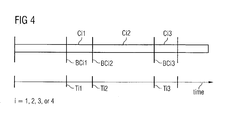
- Fig. 4 illustrates a sequence and allocation of content category identifiers and time designations in relation to corresponding program content.
- Program content Ci1, Ci2, Ci3, ... is temporally stringed together.
- Each of the content category identifiers BCi1, BCi2, BCi3, ... designates a content category of the temporally following corresponding program content Ci1, Ci2, Ci3, ...
- Each of the content category identifiers BCi1, BCi2, BCi3 ... comprises an explicit or an implicit time designation Ti1, Ti2, Ti3 for the begin time of the corresponding program content Ci1, Ci2, Ci3, ...
- the method of the present invention uses marking or coding information that marks the beginning and/or the end of content of information blocks. This information is typically made available by an annotation service, but may also be included by the broadcaster.
- the invention allows the consumer to zap away from a currently visited program or channel.
- the method includes a saving of a reference to the channel or a reference to the content block being broadcasted at the channel change.
- a portion or the entire content block may be saved. This allows for return to the original channel at a specified moment, typically at the end of the information or the content block carrying the inserted program content.
- the system is independent from a fixed 30 second period and can be used to zap away from ongoing advertisements as well as short news flashes or even unwanted content.
- the invention can also be used to trigger a notification or a channel change, when specific content is starting at start of news on a primary channel or on one of a number of specified channels.
- the system is activated - automatically (after tuning in on a specific channel for more than a preset time which is changeable by the consumer, the system considers this channel to be the primary channel) - or manually (the consumer indicates which channel will be the primary channel, this channel remains the primary channel, even if the consumer tunes in on another channel for a longer period of time).
- the system allows for specification of assistance for all or only for specific categories. If assistance is selected only for advertisement blocks, this function will only be executed when a zapping occurs during advertisement blocks on the primary channel. Numerous categories can be included.
- the system allows for specification of an alert (sound, text, blinking, etc.).
- the system allows for manual decision (give alert signal before return) or automatic return.
- the system allows for specification of the return point (end of ongoing content/information block, specified relative time e.g. 10 min., specified absolute time e.g. 20:00 hours or any combination, start of specific category program, etc.)
- Fig. 34 shows a flow diagram of the procedure when "zapping" away from the primary channel occurs. If after activation, the consumer zaps to another channel, the system remembers the original channel and the information about the ongoing broadcast, e.g. the movie title, the start mark, and the category (movie, advertisement, etc.). Depending on the settings, the assistance function will be activated.
- the assistance function will monitor the annotation service for the start/end-block marker(s) and/or relative or absolute time and inform the viewer in case that manual return is activated. The consumer will thus be able to return to the primary channel just in time to continue watching the movie after zapping to other channels during the advertising interrupt.
- Content search mode The system continuously monitors the available triggers for the specified channels and compares them with the requested content / keywords. If a match is detected, the system will notify the consumer and allow for manual/automatic changeover to this channel. After end of the content block, the system will change back manually/automatically to the original channel.
- the inventive step in this method is the use and interpretation of mark / trigger signals that are related to the programs for real-time assistance to the consumer. This allows the implementation of a method that provides an accurate "zapping" assistance and an accurate “content search” assistance.
- the set-top box is equipped with user menus to allow the consumer to enable various functions and options.
- the user interface contains at least following configurable items:
- Configuration parameters can be changed via normal menu options.
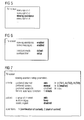
- An example of a menu layout is illustrated in Fig. 5 .
- the consumer By selecting the "viewing assistance", the consumer will be able to enter the menu ( Fig. 6 ). There he can enable or disable the viewing assistance function and relating sub-functions. Besides enabling or disabling the viewing assistance, the consumer can enable/disable status messages, choose the assistant mode (default/ auto/ manual), or enter the configuration screen, where more parameters can be specified.
- the status messages will provide indications for a few seconds about the actions the assistant is executing.
- the assistant mode "default" means that default values are used for some parameters to enable following simple viewing assistance: If the consumer zaps away during a break/ commercial, the system will return automatically to the channel when the original program continues. For this purpose the system will determine the return-channel automatically, will monitor the zapping-behavior of the consumer, will remember the original channel and the original program, when the consumer zaps to another channel, will monitor the triggering for continuation of this original program, and will automatically return to the original channel, when the triggering indicates that the program continues. The system will hereby generate an audible "beep" signal.
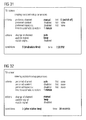
- FIG. 7 A typical layout of the configuration screen is illustrated by Fig. 7 .
- the assistant On meeting one of the conditions the assistant issues a beep.
- the assistant will not display a visible signal and will change automatically to the preferred channel that meets the condition.
- the conditions are "continuation of content” and "start of content”.
- the system is active ( Fig. 8 ).
- the assistant is enabled. It will start immediately by monitoring the available triggers for the fixed channels. If the consumer stays on one channel for more than one minute, then this channel will be added to the channels to be monitored.
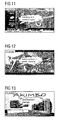
- the channel will beep and change automatically to the channel ( Fig.9 ) with the preferred content (here a weather content block) and afterwards change back to the original channel ( Fig. 10 ).
- Monitoring of triggers detects start of weather report on channel 6. A beep is issued, and a change of channel and a a status message is displayed for some seconds ( Fig. 11 ). If, during this weather report, another weather report starts on a different preferred channel, the system will not change but indicate the start of this preferred content block and allow for manual changeover ( Fig. 11 ). After the end of the weather report, the system changes back to the original content ( Fig. 12 ), and displays a short message for some seconds.
- the movie content id will be added as preferred content.
- the system may remember that this zapping away is a zapping away from an already started content. It thus looks out for re-appearance of this content (condition: continuation of content - also used in messages).
- the marks or triggers might - but need not - be different for beginning of a program/movie and continuation of a program/movie.
- the system may handle both at the same time and thus watch out for continuation of specific content while at the same time watching out for start of (other) content.
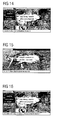
- Fig. 33 shows a flow diagram for detection of a preferred channel. If the interrupt is long (> 1 minute) and the consumer stays on a different channel, the consumer will be prompted to change the auto preferred channel ( Fig. 16 ). If the consumer does not accept a change to the auto preferred channel, the preferred channel stays as it is and the auto feature for detection of the preferred channel is disabled until the next change back to the preferred channel.
- the functions can be enabled/ disabled via short key combinations. If e.g. the consumer does not want to be interrupted for specific content during the movie, a short key combination disables the preferred content criteria. After the movie the consumer can enable this function again.
- the system can combine the various options. For example: The consumer is watching a movie which is interrupted. Then, the consumer zaps away. The system monitors for continuation of this movie and at the same time for broadcast of a weather report. If a weather report starts, the channel changes to the weather report. If during this weather report (which is preferred content) the movie restarts (which is also preferred content), the system will notify the consumer and ask for confirmation of change.
- the entries in the configuration screen are not used.
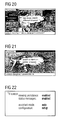
- the system After leaving the menu, the system is active. It will start immediately with detection of the preferred channel. If the consumer stays on one channel for more than one minute, this channel becomes the preferred channel to be monitored. Since status messages are enabled, the system will shortly display a message indicating its choice of preferred channel ( Fig. 18 ). It will start immediately by monitoring the available triggers for this channel.
- the original channel will be monitored for continuation of the movie (actual content block) after at least one other content block. This is useful in cases where the consumer can already see from the movie that a break is coming up, e.g. when a message like "to be continued after the news" appears. In general, the consumer may not wait for the break to start but may zap away to another channel before the break starts.
- the consumer will be prompted to change the auto preferred channel ( Fig. 20 , Fig. 33 ). If the consumer does not accept a change of the preferred channel, the preferred channel stays as it is, and the auto feature for detection of the preferred channel is disabled until the next change back to the preferred channel.
- the consumer may setup exactly the same behavior as in the default mode: For this purpose the consumer selects the assistance mode "auto" to enable an automatic change of the viewed channel:
- Status messages can also be enabled or disabled, even if this is no part of the default setup.
- the consumer selects "auto” detection of preferred channel, time to automatic selection set to "1 minute”, “beep” as signal, "auto” change of channel, and "continuation of content” as condition.
- the consumer wants to be assisted only for specific channels.
- the consumer wants to be assisted for automatic return when the program continues.
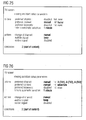
- the preferred channel is set to "manual" and a list of channels is entered ( Fig. 24 ). This disables the auto selection of the "preferred channel”.
- the system monitors triggers for the channels of the list. Whenever zapping occurs, while watching one of these channels, the assistance will check for continuation of the ongoing program. No assistance will be provided for zapping from other channels. The "time to automatic selection" is not used in this case.
- the consumer wants to be assisted only for specific content. He wants to be informed when the movie starts.
- the preferred content parameter is used and set to "manual", in the list the content category is entered ("horror"), as condition "2 (start of content)" is used, and change of channel is set to "manual" ( Fig. 25 ). i.e., the consumer wants to be informed and wants to decide for himself whether to change.
- the system will monitor all available triggering information and inform the consumer via a short message when such a movie is about to start.
- the consumer wants to be assisted only for specific content. He wants to be informed when the movie starts.
- the preferred content parameter is used and set to "manual", in the list the content category is entered ("adventure"), as condition "2 (start of content)” is used, and change of channel is set to "manual” ( Fig. 26 ). I.e., the consumer wants to be informed and wants to decide for himself whether to change. Since only specific channels are to be monitored, also the list of channels is entered.
- the consumer might be watching an adventure movie and zap away during a break. The consumer then wants to be informed when the movie continues. The consumer will be informed and will be allowed for manual change whenever on the listed channels an adventure movie starts or continues ( Fig. 27 ).
- the triggering messages must contain enough information to distinguish between start of an adventure movie (first content block of the movie) and a continuation of an adventure movie (subsequent blocks of information).
- the consumer knows that program content of a same category (e.g. news) overlaps temporarily on two channels. He wants to start watching the first news but changeover to the later broadcast when this starts. For this purpose the consumer uses the auto preferred content feature which will - after one minute of watching the first news - set the preferred content to the category "news”. From then on the indicated channels will be monitored for start of such content ( Fig. 28 ). As soon as such content starts, the change of channel will be proposed.
- a same category e.g. news
- the consumer setup in this case includes, besides the condition "continuation of content”, also the condition “no change of channel” ( Fig. 29 ).
- the assistant When leaving the setup, the assistant is active.
- the preferred channel is set to channel 3.
- the assistant starts monitoring. From this point in time on, the assistant will not allow a change of channel during a content block. Only in the first 30 seconds of a content block, the consumer will be allowed to zap away. When zapping away, the system will monitor for continuation and return automatically to channel 3 after generation of a beep signal.
- the consumer enters his keyword(s) in the list ( Fig. 30 ).
- the system monitors the available keywords in the triggering. When a match is found, the system will inform the consumer and allow for manual change to that channel. Again the monitoring can be limited to a number of channels by including these channels in the list of channels. The monitoring can even be further restricted by also including specific categories into the list of categories.
- the consumer wants to be informed when on channel 3 a news program has announced via the triggering that it will report on "bush USA”. The information will be accompanied with a sound 1.
- the available audible signals can contain a large list of sounds, which may be similar to the ring tones in a mobile phone.
- the consumer selects the appropriate condition and selects an automatic change of channel to a special channel, i.e. the switch-off channel ( Fig. 31 ).
- a special channel i.e. the switch-off channel ( Fig. 31 ).
- a variant to this use case is the use of the condition 3 (end of content).
- the consumer might allow for watching a specific program till the end. But once the end is reached, the broadcast is stopped.
- the consumer selects the appropriate condition and selects manual change of channel ( Fig. 32 ).
- the system will determine the preferred channel (see first use cases). When zapping occurs, the system will inform the consumer after the relative time has passed. As long as the consumer does not agree to return the system will restart at the relative time and remind the consumer again, when the times elapses a second time.
- the method and the corresponding device for selection of television programs employ a content category identifier, which designates a current first content category of a first program content.
- a second program content is transmitted to a subscriber device and played back for perception by a consumer.
- the content category identifier is compared with a preferred-content category identifier. On a matching of both identifiers the consumer receives a notification.
- a change from the first playback of the second program content to a second playback of the first program content is triggered on a matching of both identifiers.
Landscapes
- Engineering & Computer Science (AREA)
- Multimedia (AREA)
- Signal Processing (AREA)
- Databases & Information Systems (AREA)
- Software Systems (AREA)
- Human Computer Interaction (AREA)
- Two-Way Televisions, Distribution Of Moving Picture Or The Like (AREA)
Priority Applications (1)
| Application Number | Priority Date | Filing Date | Title |
|---|---|---|---|
| EP07015523A EP2023622A1 (fr) | 2007-08-07 | 2007-08-07 | Procédé pour la sélection de programmes de télévision |
Applications Claiming Priority (1)
| Application Number | Priority Date | Filing Date | Title |
|---|---|---|---|
| EP07015523A EP2023622A1 (fr) | 2007-08-07 | 2007-08-07 | Procédé pour la sélection de programmes de télévision |
Publications (1)
| Publication Number | Publication Date |
|---|---|
| EP2023622A1 true EP2023622A1 (fr) | 2009-02-11 |
Family
ID=38963080
Family Applications (1)
| Application Number | Title | Priority Date | Filing Date |
|---|---|---|---|
| EP07015523A Ceased EP2023622A1 (fr) | 2007-08-07 | 2007-08-07 | Procédé pour la sélection de programmes de télévision |
Country Status (1)
| Country | Link |
|---|---|
| EP (1) | EP2023622A1 (fr) |
Citations (7)
| Publication number | Priority date | Publication date | Assignee | Title |
|---|---|---|---|---|
| KR930010180B1 (ko) | 1991-05-30 | 1993-10-15 | 삼성전자 주식회사 | Tv의 자동 채널 절환장치와 그 방법 |
| US5585865A (en) | 1994-03-01 | 1996-12-17 | Sony Corporation | Television broadcast receiver which selects programs by genre and past viewing habits |
| US20020108113A1 (en) * | 2000-12-06 | 2002-08-08 | Philips Electronics North America Corporation | Recommender system using "fuzzy-now" for real-time events |
| US6438752B1 (en) | 1999-06-22 | 2002-08-20 | Mediaone Group, Inc. | Method and system for selecting television programs based on the past selection history of an identified user |
| US6452611B1 (en) | 1998-02-04 | 2002-09-17 | Corporate Media Partners | Method and system for providing dynamically changing programming categories |
| US20030063224A1 (en) | 2001-09-06 | 2003-04-03 | Fujitsu Ten Limited | Digital broadcasting receiver |
| JP2003134408A (ja) | 2001-10-24 | 2003-05-09 | Nippon Telegr & Teleph Corp <Ntt> | ディジタル放送システムと送信装置および受信装置ならびにディジタル放送方法 |
-
2007
- 2007-08-07 EP EP07015523A patent/EP2023622A1/fr not_active Ceased
Patent Citations (7)
| Publication number | Priority date | Publication date | Assignee | Title |
|---|---|---|---|---|
| KR930010180B1 (ko) | 1991-05-30 | 1993-10-15 | 삼성전자 주식회사 | Tv의 자동 채널 절환장치와 그 방법 |
| US5585865A (en) | 1994-03-01 | 1996-12-17 | Sony Corporation | Television broadcast receiver which selects programs by genre and past viewing habits |
| US6452611B1 (en) | 1998-02-04 | 2002-09-17 | Corporate Media Partners | Method and system for providing dynamically changing programming categories |
| US6438752B1 (en) | 1999-06-22 | 2002-08-20 | Mediaone Group, Inc. | Method and system for selecting television programs based on the past selection history of an identified user |
| US20020108113A1 (en) * | 2000-12-06 | 2002-08-08 | Philips Electronics North America Corporation | Recommender system using "fuzzy-now" for real-time events |
| US20030063224A1 (en) | 2001-09-06 | 2003-04-03 | Fujitsu Ten Limited | Digital broadcasting receiver |
| JP2003134408A (ja) | 2001-10-24 | 2003-05-09 | Nippon Telegr & Teleph Corp <Ntt> | ディジタル放送システムと送信装置および受信装置ならびにディジタル放送方法 |
Similar Documents
| Publication | Publication Date | Title |
|---|---|---|
| US7199842B2 (en) | Television system | |
| US7227583B2 (en) | Digital TV method for switching channel automatically | |
| US8181199B2 (en) | Method for displaying internet television information of broadcasting receiver and broadcasting receiver enabling the method | |
| KR20040034488A (ko) | 신호수신장치 및 신호기록방법 | |
| EP2023622A1 (fr) | Procédé pour la sélection de programmes de télévision | |
| EP2001150B1 (fr) | Procédé d'accès à une URL et terminal mobile correspondant | |
| EP1187470A2 (fr) | Dispositif de sélection de programme de télévision | |
| JP2013175862A (ja) | 立体映像表示装置 | |
| JP5008301B2 (ja) | コンテンツ再生装置 | |
| JP5432570B2 (ja) | 番組情報検索装置及びそれを用いたテレビジョン受信装置 | |
| KR100964661B1 (ko) | 디지털 방송 수신기에서의 방송 스케줄 알람 구현 방법 | |
| JP2006180121A (ja) | ディスク装置内蔵型テレビジョン受像機及びその視聴制限レベル設定方法 | |
| KR101087102B1 (ko) | 디지털 방송 수신기의 프로그램 알림 방법 | |
| KR100502004B1 (ko) | 방송 프로그램 시청 제한 방법 | |
| KR101486355B1 (ko) | 방송 수신기의 차기 방송 알림 방법 | |
| KR100782568B1 (ko) | 방송 프로그램의 관심사건 예약 시스템 및 그 방법 | |
| KR100635007B1 (ko) | 방송프로그램의 예약시청방법 및 그 장치 | |
| JP2010193210A (ja) | 番組切替制御装置、番組切替制御方法及びプログラム | |
| KR20090075264A (ko) | 디지털 텔레비전의 시청 이력 표시 방법 | |
| KR100698176B1 (ko) | 이동통신단말기 및 그의 방송 프로그램 중복시청 알림 방법 | |
| KR101276809B1 (ko) | 방송용 단말기 및 방송용 단말기의 방송 프로그램 알림방법 | |
| KR20050037667A (ko) | 방송 프로그램의 예약 시청 방법 및 시스템 | |
| JP2011254534A (ja) | コンテンツ再生装置 | |
| KR100781286B1 (ko) | 방송 수신기 및 이를 이용한 방송 프로그램의 예약시청방법 | |
| JP2008104006A (ja) | 記録装置 |
Legal Events
| Date | Code | Title | Description |
|---|---|---|---|
| PUAI | Public reference made under article 153(3) epc to a published international application that has entered the european phase |
Free format text: ORIGINAL CODE: 0009012 |
|
| AK | Designated contracting states |
Kind code of ref document: A1 Designated state(s): AT BE BG CH CY CZ DE DK EE ES FI FR GB GR HU IE IS IT LI LT LU LV MC MT NL PL PT RO SE SI SK TR |
|
| AX | Request for extension of the european patent |
Extension state: AL BA HR MK RS |
|
| RIN1 | Information on inventor provided before grant (corrected) |
Inventor name: VERHELST, HENK |
|
| RIN1 | Information on inventor provided before grant (corrected) |
Inventor name: VERHELST, HENK |
|
| AKX | Designation fees paid | ||
| 17P | Request for examination filed |
Effective date: 20091127 |
|
| RBV | Designated contracting states (corrected) |
Designated state(s): AT BE BG CH CY CZ DE DK EE ES FI FR GB GR HU IE IS IT LI LT LU LV MC MT NL PL PT RO SE SI SK TR |
|
| 17Q | First examination report despatched |
Effective date: 20100506 |
|
| RAP1 | Party data changed (applicant data changed or rights of an application transferred) |
Owner name: NOKIA SOLUTIONS AND NETWORKS OY |
|
| STAA | Information on the status of an ep patent application or granted ep patent |
Free format text: STATUS: THE APPLICATION HAS BEEN REFUSED |
|
| RAP1 | Party data changed (applicant data changed or rights of an application transferred) |
Owner name: NOKIA SOLUTIONS AND NETWORKS OY |
|
| 18R | Application refused |
Effective date: 20190321 |