EP2025105B1 - Rufzulassungssteuerverfahren - Google Patents
Rufzulassungssteuerverfahren Download PDFInfo
- Publication number
- EP2025105B1 EP2025105B1 EP06742898.7A EP06742898A EP2025105B1 EP 2025105 B1 EP2025105 B1 EP 2025105B1 EP 06742898 A EP06742898 A EP 06742898A EP 2025105 B1 EP2025105 B1 EP 2025105B1
- Authority
- EP
- European Patent Office
- Prior art keywords
- load
- path
- restriction factor
- level
- calls
- Prior art date
- Legal status (The legal status is an assumption and is not a legal conclusion. Google has not performed a legal analysis and makes no representation as to the accuracy of the status listed.)
- Expired - Lifetime
Links
Images


Classifications
-
- H—ELECTRICITY
- H04—ELECTRIC COMMUNICATION TECHNIQUE
- H04L—TRANSMISSION OF DIGITAL INFORMATION, e.g. TELEGRAPHIC COMMUNICATION
- H04L47/00—Traffic control in data switching networks
- H04L47/70—Admission control; Resource allocation
- H04L47/76—Admission control; Resource allocation using dynamic resource allocation, e.g. in-call renegotiation requested by the user or requested by the network in response to changing network conditions
- H04L47/762—Admission control; Resource allocation using dynamic resource allocation, e.g. in-call renegotiation requested by the user or requested by the network in response to changing network conditions triggered by the network
-
- H—ELECTRICITY
- H04—ELECTRIC COMMUNICATION TECHNIQUE
- H04L—TRANSMISSION OF DIGITAL INFORMATION, e.g. TELEGRAPHIC COMMUNICATION
- H04L47/00—Traffic control in data switching networks
- H04L47/10—Flow control; Congestion control
- H04L47/11—Identifying congestion
-
- H—ELECTRICITY
- H04—ELECTRIC COMMUNICATION TECHNIQUE
- H04L—TRANSMISSION OF DIGITAL INFORMATION, e.g. TELEGRAPHIC COMMUNICATION
- H04L47/00—Traffic control in data switching networks
- H04L47/10—Flow control; Congestion control
- H04L47/12—Avoiding congestion; Recovering from congestion
- H04L47/125—Avoiding congestion; Recovering from congestion by balancing the load, e.g. traffic engineering
-
- H—ELECTRICITY
- H04—ELECTRIC COMMUNICATION TECHNIQUE
- H04L—TRANSMISSION OF DIGITAL INFORMATION, e.g. TELEGRAPHIC COMMUNICATION
- H04L47/00—Traffic control in data switching networks
- H04L47/10—Flow control; Congestion control
- H04L47/15—Flow control; Congestion control in relation to multipoint traffic
-
- H—ELECTRICITY
- H04—ELECTRIC COMMUNICATION TECHNIQUE
- H04L—TRANSMISSION OF DIGITAL INFORMATION, e.g. TELEGRAPHIC COMMUNICATION
- H04L47/00—Traffic control in data switching networks
- H04L47/70—Admission control; Resource allocation
-
- H—ELECTRICITY
- H04—ELECTRIC COMMUNICATION TECHNIQUE
- H04L—TRANSMISSION OF DIGITAL INFORMATION, e.g. TELEGRAPHIC COMMUNICATION
- H04L47/00—Traffic control in data switching networks
- H04L47/70—Admission control; Resource allocation
- H04L47/82—Miscellaneous aspects
- H04L47/822—Collecting or measuring resource availability data
Definitions
- the present invention relates to the admission control of voice and multimedia calls onto packet-switched internet protocol (IP) networks in order to maintain call quality.
- IP internet protocol
- IP internet protocol
- a packet-switched core network such as an internet protocol (IP) based network or a pure L2 Ethernet
- IP internet protocol
- voice or multimedia data must be broken up into discrete packets, which may travel over different network paths to the final destination before being reassembled in the correct sequence.
- the transmission speed between any two end points can vary enormously depending on the amount and type of traffic carried at any one time by the network, as well as the network design and capabilities.
- IP networks could offer only a "best effort" quality of service, where no differentiation was made between traffic types within a network element and packets were routinely dropped in the event of congestion.
- DiffServ Differentiated Services scheme
- IETF Internet Engineering Task Force
- RSVP resource reservation Protocol
- IntServ Internet Integrated Services framework
- a third form of admission control utilises transmission quality information obtained for specific links within a packet switched internet protocol (IP) network to decide whether a call should proceed across this link.
- IP internet protocol
- EP-A-0 999 674 describes a mechanism wherein bandwidth is allocated to specific classes of traffic to ensure the required quality of service.
- bandwidth is allocated to specific classes of traffic to ensure the required quality of service.
- the available bandwidth for a path is monitored and for each new voice or other delay sensitive call received, a signalling gateway determines whether the remaining bandwidth is sufficient to permit the call to proceed. While this method offers good quality of service for delay sensitive traffic, the ongoing bandwidth monitoring for specific paths and specific traffic classes involves a high level of data processing and signalling, which causes delays.
- the allocation of bandwidth to specific traffic classes may also lead to the under-utilisation of a link.
- WO 99/66682 describes an arrangement for controlling the connection of telephone calls over an IP network or over an alternative network.
- Quality of service statistics obtained from a network monitor are consulted using the destination of a call to be routed over the IP network. These statistics are obtained using test packets routed to the same destination. If these statistics match those desired for the call, the call is allowed to proceed over the IP network, otherwise it is routed over an alternative network.
- the transmission of a test packet delays call establishment because the test packet must travel through the network and back again before the decision to admit the call can be made.
- each core network router needs to be aware of the mechanism and be adapted to act accordingly.
- EP-A-1 168 755 describes a call control mechanism that uses a monitoring mechanism to measures statistics for specific performance indicators over a link, such as packet loss and jitter.
- the monitoring mechanism proposed is the real time control protocol RTCP, which is used in conjunction with the real time protocol (RTP) for carrying real time traffic over an IP network.
- the statistics are obtained for a number of ongoing calls and averaged.
- the obtained statistics relating to one or a combination of performance indicators are compared with a threshold level, and the call is routed over the IP network only when the measured performance indicators are below the threshold level.
- This approach leads to a fast response time, but this comes at the expense of instability, as the utilisation of the controlled link will oscillate heavily. Specifically, when a link enters the blocked state all calls are transferred to alternative unrestricted links. When the link is no longer congested, all incoming calls are again accepted until the link quality becomes unacceptable.
- EP 1 641 232 A describes a call control arrangement wherein a fraction of new calls are permitted depending on the measured link utilisation.
- the link utilisation is compared with two threshold levels and the allowed fraction of new calls set or changed in dependence on whether the link utilisation is above or below the two thresholds. In particular, if the link utilisation is between the thresholds, it is determined whether the link utilisation is rising or falling by comparison with a previous link utilisation. If falling, the fraction of new calls is increased by a fixed additive factor, if it is rising, the fraction of new calls is unchanged. When the link utilisation is above the high threshold, the fraction of new calls is reduced by a fixed multiplicative factor if the link utilisation is increasing, otherwise it is left unchanged. When the link utilisation is below the low threshold, all new calls are admitted.
- Adapting the restriction factor in dependence on the difference between the current load condition and the first or previous load condition as determined by the performance indicators allows any change in call admission to be implemented at a level that best suits the rate of change of congestion. Accordingly, a dramatic change from a very low load condition to a very high load condition will result in a different updated restriction factor from a change from a moderate load condition to a very high load condition.
- the system is thus inherently stable, yet able to react rapidly to changes in load on a network path while optimising the utilisation of the path.
- the load on a path is classified into load categories on the basis of the measured transmission performance indicators.
- each load level is expressed as a category rather than a single performance indicator value.
- the useful range of performance indicators is divided into sub-ranges, each sub-range corresponding to a single load category. The restriction factor adjustment is thus dependent on the difference between a current load category and a load category applied just previously.
- restriction factor adjustment values each of which is addressable with the current load level or category and the previous load level, or category.
- the performance indicators used are jitter and packet loss.
- jitter or packet loss is used as a transmission performance indicator, and preferably wherein jitter and packet loss are used as transmission performance indicators and wherein jitter is used to determine the traffic load level when packet loss is below a predetermined level.
- Jitter has been found to be an effective early indicator of traffic load before packet loss becomes significant. Accordingly, utilising jitter measurements to determine the traffic load and control the call admission at these early stages of path congestion allows the system to respond rapidly and proactively to any change in the load condition before a significant degradation of call quality can be perceived.
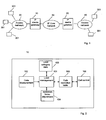
- Fig. 1 shows an exemplary arrangement for providing multimedia communication over an internet protocol (IP) or other packet switched network.
- IP internet protocol
- a plurality of subscribers 301 are connected to a first access network 30, which provides access to an IP core network 50 using an IP media gateway 10, which acts as an IP network edge node.
- Another IP media gateway 20 connects a second access network 40 to the IP core network 50.
- This second access network 40 also is connected to a plurality of subscribers 401.
- the subscribers 301 and 401 may include fixed line telephones, cellular telephones, PCs or other multimedia equipment.
- the arrangement and specifically the media gateways 10, 20 are capable of handling delay sensitive traffic, such as voice and video as well as non-delay sensitive data.
- the system operates a differentiated services scheme (DiffServ) to enable such traffic to be identified and handled in a separate manner from non-delay-sensitive traffic.
- DiffServ differentiated services scheme
- the differentiated services scheme is described in S. Blake et al., "An Architecture for Differentiated Services", RFC 2475, December 1998 .
- Such traffic is typically carried using the real time protocol RTP with the added mechanism provided by the real time control protocol (RTCP).
- RTCP real time control protocol
- RTP and the RTCP mechanism is described in H. Schulzrinne et al., "RTP: A transport protocol for real-time applications", RFC 1889, January 1996 .
- FIG. 2 there are shown various functional elements of the IP media gateway 10 of Fig. 1 .
- the figure does not illustrate all elements of such an IP media gateway, but simply shows those elements relevant for the present invention.
- the figure is not intended to provide a representation of the fixed structural relationship between these elements nor to limit the manner in which these functions can be implemented.
- the depiction of the various elements as separate entities is simply to facility the explanation of the invention. It will be understood by those skilled in the art that the various functions may be combined in a different manner or further separated without changing the nature of the operation.
- the system illustrated in Fig. 2 takes measurements on various quality related measurements on ongoing active calls and uses these measurements to influence future routing decisions. More specifically, if the improvement or degradation of the load condition of a specific link is detected based on measurements taken on ongoing calls using this link in conjunction with previous load condition data, the number of new calls allowed to proceed over the link is restricted to a greater or lesser degree depending on the change in traffic load.
- two elements are central to the handling and routing of delay sensitive calls over the IP network 50. These elements are a load management processing module 101 and a call control module 106. These elements are depicted as separate and distinct elements, however, this is not intended to limit the implementation of these functions. The processing function of these elements may well be performed in the same central processing device with access to a storage medium.
- the load management processing module 101 determines the load on each path utilised by delay sensitive traffic over the IP core network 50 and allocates a restriction to be applied to each path.
- the call control processing module 106 fetches the relevant restriction factor allocated to the path required by the call and makes a decision on whether to allow call establishment to proceed based on this restriction factor.
- the restriction applied to the supervised paths is a percentage restriction, whereby n out of every 100 calls over the link is permitted to proceed. This is expressed by a restriction factor r, which has a value from 0 up to and including 100. The percentage restriction on a specific path is then represented by 100 -r.
- restriction include restrictions on the traffic level or on the traffic rate.
- traffic level restriction the traffic level on the supervised path will only be allowed to reach a certain level based on the measured load.
- traffic rate restriction the number of calls that may be set up within a certain period is limited to a specific value based on the measured load condition.
- the load management processing module 101 is in communication with a data measurement module 102.
- the data measurement module collects data relating to the quality of service (QoS) of ongoing calls. It will be understood that this module may also be combined in a single processing device together with the load management processing module 101.
- the QoS data is separated into specific paths, identified by the source and destination IP application addresses used for the calls. More specifically, the path is determined using the IP addresses of interfaces in the edge devices 10, 20 of the core network 50.
- the QoS data is obtained using the real time control protocol RTCP, which enables the gathering of statistics on various quality or load indicators, such as jitter and packet loss, of an RTP session, but also on an individual call basis.
- the load indicators used are jitter and packet loss.
- Jitter is the small or random variation in time of phase of a transmitted signal. It is expressed in time and represents the difference in the spacing between packets at the sending node to the spacing between packets at the receiving node.
- Packet loss data is derived from packet sequence numbers. It is expressed as a percentage value. Data relating to jitter and packet loss is derived from RTP counters.
- the data measurement module 102 samples jitter and packet loss data on all or a proportion of ongoing calls on supervised paths over a certain measurement period. At the end of this measurement period the data is sent to the load management processing module 101.
- Each measurement period lasts for around 5 seconds, but may be more or less depending on the load on the network and the processing delay that can be tolerated.
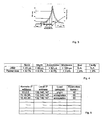
- the load management processing module 101 classifies the monitored path according to specific load categories using information from load category data module 103. This is illustrated in Figs. 3 and 4 .
- Packet loss is very low up to this point and then suddenly increases. Jitter can thus provide an effective early warning of impending path quality degradation enabling the call control system to operate proactively before significant packet loss occurs and call quality deteriorates. More specifically, when the percentage packet loss is below a predetermined level, namely below 0.5 %, and preferably below 0.1 %, jitter can be used alone to determine the load conditions on the monitored path. Moreover, simulations have demonstrated that jitter is essentially independent of node parameters, at least for buffer sizes of 64kB (around 500 packets, depending on packet length) and over.
- the load has been divided into six categories, starting from “none”, through “slight”, “acc” (acceptable), “mod” (moderate), “bad” to “faulty”.
- the lower load categories from “none” to “moderate” are defined primarily by the jitter levels because the packet loss levels are essentially unchanged or negligible at these levels of load. Above this load level, the jitter is no longer reliable as sole indicator and packet loss is used to define the two highest load categories.
- the table in Fig. 4 shows the classification of a path into a specific load category on the basis of jitter and packet loss levels. The entry N/A indicates that the data is not applicable for this category of load. As already mentioned, all measurements are performed on a number of ongoing calls and the results averaged. In addition, it is possible to determine the load category according to jitter and packet loss measurements separately, and if they differ, to select the worst category.
- the load category data module 103 of Fig. 2 contains the information of the table in Fig. 3 .
- the load management processing module 101 uses this load category data to classify the supervised paths on the basis of the measured data relating to packet loss and jitter received. Using this load category, the load management processing module 101 determines the restriction factor, r, applicable to the supervised path and updates the current values of restriction factor and load category in a path restriction table 105.
- This table is illustrated in Fig. 5 .
- This table provides a mapping between the remote and local IP application addresses, which define specific paths, and the current load category and restriction factor.
- the IP application address information may be the complete address or address prefixes that can be defined by operators. This information could also be grouped according to source and destination edge nodes in the IP core network.
- the call control processing module 106 uses the current restriction factor applied to a specific path in the IP core network to decide whether ran incoming call should be allowed to proceed. More specifically, when an incoming call that requires routing over the IP core network is received by the call control processing module 106, this module 106 accesses the path restriction table 105 to retrieve the current restriction factor applicable to the link defined by the local and remote IP application addresses for the received call. This restriction factor is then used to determine a percentage probability that the call will be allowed to proceed using the relationship 100(1-r)%. For example, if a path has a restriction factor of 20, the call would have an 80% chance of being processed. The decision on whether to allow the call to proceed may be made by the call control processing module 105 simply by generating a random number between 1 and 100 and granting the call establishment if the generated number is over 20, for example.
- a current restriction factor is determined on the basis of the last obtained load indicators for the link, i.e. the jitter and/or packet loss, but also on the basis of the last applied load category.
- a restriction factor is adjusted based on a new load category and the last applied load category.
- the adjustment values ADJ for the restriction factor is given in a table in Fig. 7 .
- the columns in Fig. 7 relate to the new load category and the rows relate to the previous or old load category.
- the adjustment values ADJ in the table are added to the last applied (old) restriction factor to obtain a new restriction factor. It can be seen from the table that the adjustment values ADJ in the diagonal from top left to bottom right are small. These relate to the cases where the load category is unchanged. However, only when the load categories "acceptable" and "moderate” are sustained is the restriction factor also unchanged.
- Fig. 6 is a flow diagram representing the process of adjusting the restriction factor for each specific path.
- This process starts at step 500 with the load management processing module 101 fetching the old restriction factor applied to the specific path from the path restriction table 105 ( Fig. 5 ).
- the load management processing module 101 fetches or receives the new measurement data relating to jitter and packet loss over the selected path from the data measurement module 102.
- the load management processing module 101 determines the new load category from the measurement data using the data in table 103 ( Fig. 4 ), and then selects the column of restriction factor adjustment table 104 ( Fig. 7 ).
- the load management processing module 101 fetches the old load category from the path restriction table 105 and uses this to select the appropriate row of the restriction factor adjustment table 104 ( Fig. 7 ) to obtain the adjustment value ADJ.
- the restriction factor adjustment algorithm illustrated in Fig. 6 is repeated after each measurement period for each supervised path.
- load category or restriction factor When a path is used for the first time, and no previous measurements, load category or restriction factor is available, it is assigned a default restriction factor of "0" permitting 100% of incoming calls to be routed over the path. In addition, the load category assigned to the path is "none". This path as defined by the local and remote IP application addresses is also entered in the path restriction table 105 for use in the next measurement period.
- load categories are defined. It will be understood, however, that more or fewer categories may be used depending on the available processing capability and reaction requirements of the system.
Landscapes
- Engineering & Computer Science (AREA)
- Computer Networks & Wireless Communication (AREA)
- Signal Processing (AREA)
- Data Exchanges In Wide-Area Networks (AREA)
Claims (12)
- Verfahren zum Steuern des Zulassens von Anrufen auf mindestens einen Pfad in einem paketvermittelten Netzwerk, wobei das Verfahren die folgenden Schritte beinhaltet:Anwenden eines Einschränkungsfaktors auf Anrufe, die den Pfad benutzen, wobei der Einschränkungsfaktor einen Bereich von mindestens drei möglichen Werten aufweist und die Anzahl an neuen Anrufen, die den Pfad benutzen dürfen, auf einen ersten vorbestimmten Level beschränkt, und auf der Basis eines ersten Levels von Verkehrslast auf dem Pfad eingestellt ist;Messen der Übertragungsleistungsindikatoren für laufende Anrufe auf dem Pfad, um einen aktuellen Level der Verkehrslast auf dem Pfad zu bestimmen;Bestimmen eines aktualisierten Einschränkungsfaktors auf der Basis des bestimmten aktuellen Verkehrslastlevels und Anwenden des aktualisierten Einschränkungsfaktors auf Anrufe, die den Pfad benutzen, wobei der aktualisierte Einschränkungsfaktor die Anzahl von neuen Anrufen, die den neuen Pfad benutzen dürfen, auf einen zweiten vorbestimmten Level beschränkt, wobei der zweite vorbestimmte Level sich von dem ersten vorbestimmten Level unterscheidet, dadurch gekennzeichnet, dass der Schritt des Bestimmens eines aktualisierten Einschränkungsfaktors des Weiteren den Schritt des Anpassens des Einschränkungsfaktors durch Hinzufügen eines Anpassungswertes beinhaltet, um den aktualisierten Einschränkungsfaktor zu erhalten, wobei der Anpassungswert von dem Unterschied zwischen dem ersten Verkehrslastlevel und dem aktuellen Verkehrslastlevel abhängt.
- Verfahren nach Anspruch 1, wobei der Schritt des Messens der Übertragungsleistungsindikatoren für laufende Anrufe auf dem Pfad das Messen der Übertragungsleistungsindikatoren für laufende Anrufe über einen vorbestimmten Zeitraum und das Bestimmen des aktuellen Verkehrslastlevels am Ende des vorbestimmten Zeitraumes beinhaltet.
- Verfahren nach Anspruch 1, wobei der Schritt des Anpassens des Einschränkungsfaktors beinhaltet:Verwenden einer Tabelle, die Anpassungswerte des Einschränkungsfaktors enthält, wobei jeder Wert in der Tabelle mit dem ersten Verkehrslastlevel und dem aktuellen Verkehrslastlevel adressierbar ist, und Hinzufügen des Anpassungswertes zu dem Einschränkungsfaktor, um den aktualisierten Einschränkungsfaktor zu erhalten.
- Verfahren nach einem der Ansprüche 1 bis 3, wobei Jitter oder Paketverlust als ein Übertragungsleistungsindikator verwendet wird, und vorzugsweise, wobei Jitter und Paketverlust als Übertragungsleistungsindikatoren verwendet werden, und wobei Jitter verwendet wird, um den Verkehrslastlevel zu bestimmen, wenn Paketverlust unter einem vorbestimmten Level liegt.
- Verfahren nach einem vorhergehenden Anspruch, wobei der Verkehrslastlevel als eine einer Vielzahl von Lastkategorien ausgedrückt wird, wobei jede Lastkategorie durch einen Bereich von Übertragungsleistungsindikatorwerten definiert ist und einen Verkehrslastzustand angibt, und wobei vorzugsweise die Lastkategorie des Pfades unter Verwendung von Jitter- und Paketverlustmessungen getrennt bestimmt wird, und die schlechteste Lastkategorie als die Lastkategorie ausgewählt wird.
- Verfahren nach einem vorhergehenden Anspruch, wobei der Einschränkungsfaktor ein Prozentsatz-Einschränkungsfaktor ist, welcher den Prozentsatz von Anrufen bestimmt, die den Übertragungspfad benutzen dürfen, und wobei vorzugsweise der Einschränkungsfaktor einen Wert von 0 bis zu 100 aufweist, und wobei ein Durchschnitt von 100-r neuen eingehenden Anrufen von 100 den überwachten Pfad benutzen dürfen, oder wobei der Einschränkungsfaktor ein Verkehrslast-Einschränkungsfaktor ist, der die maximale Anzahl an Anrufen bestimmt, die den überwachten Pfad zu jeder Zeit benutzen dürfen, oder wobei der Einschränkungsfaktor ein maximaler Verkehrslastinkrement-Einschränkungsfaktor ist, welcher die Anzahl an Anrufen bestimmt, die in einem gewissen Zeitraum aufgebaut werden dürfen.
- Anordnung zum Steuern des Zulassens von Anrufen auf mindestens einen Pfad in einem paketvermittelten Netzwerk, wobei das Verfahren Folgendes beinhaltet:einen Lastverwaltungsprozessor (101), der dazu eingerichtet ist, einen Einschränkungsfaktor für Anrufe, die den Pfad benutzen, zuzuweisen, wobei der Einschränkungsfaktor sich auf einen ersten Übertragungslastlevel auf dem Pfad bezieht und einen Bereich von mindestens drei möglichen Werten aufweist,einen Anrufsteuerungsprozessor (106), der dazu eingerichtet ist, die Anzahl an neuen Anrufen, die den Pfad benutzen dürfen, auf einen ersten vorbestimmten Level zu beschränken, der durch den Einschränkungsfaktor definiert ist; undein Datenmessungsmodul (102) in Kommunikation mit dem Lastverwaltungsprozessor zum Messen der Übertragungsleistungsindikatoren für laufende Anrufe,wobei der Lastverwaltungsprozessor (101) dazu eingerichtet ist, einen aktuellen Übertragungslastlevel auf dem Pfad auf der Basis der gemessenen Übertragungsleistungsindikatoren zu bestimmen und den Einschränkungsfaktor für den Pfad zu aktualisieren, wobei der aktualisierte Einschränkungsfaktor die Anzahl von neuen Anrufen, die den Pfad benutzen dürfen, auf einen zweiten vorbestimmten Level beschränkt, der sich von dem ersten vorbestimmten Level unterscheidet, dadurch gekennzeichnet, dass der Lastverwaltungsprozessor dazu eingerichtet ist, den Einschränkungsfaktor durch Hinzufügen eines Anpassungswertes zu aktualisieren, der von dem Unterschied zwischen dem ersten Verkehrslastlevel und dem aktuellen Verkehrslastlevel abhängt.
- Anordnung nach Anspruch 7, des Weiteren ein erstes Speichermedium (104) in Kommunikation mit dem Lastverwaltungsprozessor (101) des ersten Speichermediums aufweisend, das Daten enthält, die sich auf den Einschränkungsfaktor beziehen, wobei der Lastverwaltungsprozessor dazu eingerichtet ist, auf das erste Speichermedium (104) unter Verwendung des aktuellen Verkehrslastlevels und des ersten Übertragungslastlevels zuzugreifen und den aktualisierten Einschränkungsfaktor unter Verwendung von Daten zu erzeugen, die in dem Speichermedium enthalten sind, wobei vorzugsweise das erste Speichermedium eine Tabelle (104) umfasst, welche die Einschränkungsfaktor-Anpassungswerte enthält, wobei der Lastverwaltungsprozessor (101) auf die Tabelle zugreifen kann, und der Lastverwaltungsprozessor (101) dazu eingerichtet ist, die Tabelle unter Verwendung der aktuellen Lastkategorie und der vorhergehenden Lastkategorie zu adressieren.
- Anordnung nach Anspruch 7 oder 8, des Weiteren beinhaltend ein zweites Speichermedium zum Speichern einer Tabelle (105), welches Einschränkungsfaktorwerte für jeden überwachten Pfad enthält, wobei der Lastverwaltungsprozessor (101) und der Rufsteuerungsprozessor (106) auf die Pfadeinschränkungstabelle zugreifen können, wobei der Lastverwaltungsprozessor (101) dazu eingerichtet ist, die Tabelle durch Ersetzen des Einschränkungsfaktorwertes mit dem aktualisierten Einschränkungsfaktorwert zu aktualisieren, und wobei der Anrufsteuerungsprozessor (106) dazu eingerichtet ist, die Tabelle bei Empfang eines eingehenden Anrufs zu konsultieren, um den Einschränkungsfaktor für den Pfad zu erhalten, den der Anruf anfordert, und wobei vorzugsweise der Lastverwaltungsprozessor (101) des Weiteren dazu eingerichtet ist, einen aktuellen Übertragungslastlevel für jeden Pfad in die Pfadeinschränkungstabelle (105) zu schreiben.
- Anordnung nach einem der Ansprüche 7 bis 9, wobei der Lastverwaltungsprozessor und der Anrufsteuerungsprozessor in einer einzelnen Verarbeitungsvorrichtung ausgebildet sind und wobei vorzugsweise das Datenmessungsmodul innerhalb der einzelnen Verarbeitungsvorrichtung enthalten ist.
- Anordnung nach einem der Ansprüche 7 bis 10, wobei ein Übertragungslastlevel als eine einer Vielzahl von Lastkategorien ausgedrückt wird, wobei jede Lastkategorie einen Lastzustand auf dem Pfad angibt und durch einen Bereich von Übertragungsleistungsindikatorwerten definiert ist.
- Anordnung nach einem der Ansprüche 7 bis 11, wobei das Datenmessungsmodul (102) dazu eingerichtet ist, Jitter und Paketverlust für laufende Anrufe zu messen, und wobei der Lastverwaltungsprozessor (101) dazu eingerichtet ist, zu bestätigen, ob Paketverlust unterhalb eines vorbestimmten Levels liegt, und einen aktuellen Übertragungslastlevel auf dem Pfad allein auf der Basis des gemessenen Jitter zu bestimmen, wenn Paketverlust unterhalb des vordefinierten Levels liegt.
Applications Claiming Priority (1)
| Application Number | Priority Date | Filing Date | Title |
|---|---|---|---|
| PCT/EP2006/004486 WO2007131518A1 (en) | 2006-05-12 | 2006-05-12 | Call admission control method |
Publications (2)
| Publication Number | Publication Date |
|---|---|
| EP2025105A1 EP2025105A1 (de) | 2009-02-18 |
| EP2025105B1 true EP2025105B1 (de) | 2015-12-23 |
Family
ID=36593659
Family Applications (1)
| Application Number | Title | Priority Date | Filing Date |
|---|---|---|---|
| EP06742898.7A Expired - Lifetime EP2025105B1 (de) | 2006-05-12 | 2006-05-12 | Rufzulassungssteuerverfahren |
Country Status (4)
| Country | Link |
|---|---|
| US (1) | US20090245129A1 (de) |
| EP (1) | EP2025105B1 (de) |
| CN (1) | CN101438540A (de) |
| WO (1) | WO2007131518A1 (de) |
Families Citing this family (6)
| Publication number | Priority date | Publication date | Assignee | Title |
|---|---|---|---|---|
| US8144587B2 (en) * | 2006-08-22 | 2012-03-27 | Embarq Holdings Company, Llc | System and method for load balancing network resources using a connection admission control engine |
| CN101796775B (zh) * | 2007-09-07 | 2014-03-12 | 爱立信电话股份有限公司 | 用于媒体网关的动态准许控制 |
| US20090161668A1 (en) * | 2007-12-20 | 2009-06-25 | John Joseph Mullooly | Dynamic classification of internet protocol packets based on measured characteristics and internet protocol address prefix |
| ATE543295T1 (de) * | 2008-06-05 | 2012-02-15 | Ericsson Telefon Ab L M | Verkehrsüberwachung durch markierung der niedrigsten übertragungsschicht |
| US8495205B2 (en) * | 2010-05-03 | 2013-07-23 | At&T Intellectual Property I, L.P. | Method and apparatus for mitigating an overload in a network |
| US9137733B2 (en) | 2011-03-15 | 2015-09-15 | At&T Mobility Ii Llc | Dynamic control of cell reselection parameters |
Citations (1)
| Publication number | Priority date | Publication date | Assignee | Title |
|---|---|---|---|---|
| EP1641232A1 (de) * | 2004-09-28 | 2006-03-29 | Lucent Technologies Inc. | Rufzugangskontrolle in einem VoIP Netzwerk |
Family Cites Families (6)
| Publication number | Priority date | Publication date | Assignee | Title |
|---|---|---|---|---|
| JPH10150686A (ja) * | 1996-09-17 | 1998-06-02 | Fujitsu Ltd | トラヒック過負荷制御システム |
| EP1450514A1 (de) * | 2003-02-18 | 2004-08-25 | Matsushita Electric Industrial Co., Ltd. | Serverbasierte Datenratensteuerung in einer Multimedia-Streaming-Umgebung |
| WO2004092927A2 (en) * | 2003-03-31 | 2004-10-28 | General Dynamics-C4 Systems, Inc. | Call admission control/session management based on n source to destination severity levels for ip networks |
| US20050052996A1 (en) * | 2003-09-09 | 2005-03-10 | Lucent Technologies Inc. | Method and apparatus for management of voice-over IP communications |
| SE526346C2 (sv) * | 2003-12-22 | 2005-08-30 | Operax Ab | Metod för kontrollera vidarebefordringskvaliteten i ett datanät |
| DE102004038475A1 (de) * | 2004-08-07 | 2006-03-16 | Technische Universität Darmstadt | Verfahren und System zur Zugangskontrolle für einen Datenstrom zu einem klassenbasierten paketvermittelnden Netzwerk |
-
2006
- 2006-05-12 EP EP06742898.7A patent/EP2025105B1/de not_active Expired - Lifetime
- 2006-05-12 US US12/299,724 patent/US20090245129A1/en not_active Abandoned
- 2006-05-12 WO PCT/EP2006/004486 patent/WO2007131518A1/en not_active Ceased
- 2006-05-12 CN CNA2006800545295A patent/CN101438540A/zh active Pending
Patent Citations (1)
| Publication number | Priority date | Publication date | Assignee | Title |
|---|---|---|---|---|
| EP1641232A1 (de) * | 2004-09-28 | 2006-03-29 | Lucent Technologies Inc. | Rufzugangskontrolle in einem VoIP Netzwerk |
Also Published As
| Publication number | Publication date |
|---|---|
| WO2007131518A1 (en) | 2007-11-22 |
| US20090245129A1 (en) | 2009-10-01 |
| CN101438540A (zh) | 2009-05-20 |
| EP2025105A1 (de) | 2009-02-18 |
Similar Documents
| Publication | Publication Date | Title |
|---|---|---|
| US8127013B2 (en) | Method and apparatus for a software programmable intelligent network | |
| US8879561B2 (en) | Dynamic bandwidth queue allocation | |
| US9948561B2 (en) | Setting delay precedence on queues before a bottleneck link based on flow characteristics | |
| US6665273B1 (en) | Dynamically adjusting multiprotocol label switching (MPLS) traffic engineering tunnel bandwidth | |
| US7139281B1 (en) | Method, system and router providing active queue management in packet transmission systems | |
| US6385170B1 (en) | Method and system for dynamically triggering flow-based quality of service shortcuts through a router | |
| US8861358B2 (en) | Applying router quality of service on a cable modem interface on a per-service-flow basis | |
| US8780710B2 (en) | Priority flow handling in stateless domains | |
| CN1758693B (zh) | 管理ip话音通信的方法 | |
| US20080037552A1 (en) | Methods And Systems For Providing Quality Of Service In Packet-Based Core Transport Networks | |
| US10355974B2 (en) | Admission control in a packet network | |
| KR20090034320A (ko) | 리소스 허용 제어를 제공하는 방법 | |
| JP2005513917A (ja) | 異なる品質を有するアプリケーションのデータの伝送方法 | |
| US7092359B2 (en) | Method for distributing the data-traffic load on a communication network and a communication network for implementing this method | |
| WO2004092927A2 (en) | Call admission control/session management based on n source to destination severity levels for ip networks | |
| JP2008529398A (ja) | 電気通信ネットワークの帯域幅割り当て | |
| US20060233183A1 (en) | Methods, systems, and computer program products for dynamic blocking and unblocking of media over packet resources | |
| EP1927217B1 (de) | Zusammengefasste betriebsmittelreservierung für datenflüsse | |
| US20090245129A1 (en) | Call Admission Control Method | |
| Wang et al. | Distributed Disaggregated Communications via Reinforcement Learning and Backpressure (D2CRaB) | |
| EP2134030B1 (de) | System und Verfahren für dynamische Verwaltung von Dienstgüte-Multimediaverkehr in Echtzeit in paketbasierten Mesh-Netzwerken | |
| Gopalakrishnan et al. | Robust router congestion control using acceptance and departure rate measures | |
| Alcuri et al. | Differentiated Service Queuing Strategies for Internet Telephony |
Legal Events
| Date | Code | Title | Description |
|---|---|---|---|
| PUAI | Public reference made under article 153(3) epc to a published international application that has entered the european phase |
Free format text: ORIGINAL CODE: 0009012 |
|
| 17P | Request for examination filed |
Effective date: 20081209 |
|
| AK | Designated contracting states |
Kind code of ref document: A1 Designated state(s): AT BE BG CH CY CZ DE DK EE ES FI FR GB GR HU IE IS IT LI LT LU LV MC NL PL PT RO SE SI SK TR |
|
| AX | Request for extension of the european patent |
Extension state: AL BA HR MK YU |
|
| 17Q | First examination report despatched |
Effective date: 20090512 |
|
| DAX | Request for extension of the european patent (deleted) | ||
| REG | Reference to a national code |
Ref country code: DE Ref legal event code: R079 Ref document number: 602006047541 Country of ref document: DE Free format text: PREVIOUS MAIN CLASS: H04L0012560000 Ipc: H04L0012801000 |
|
| RIC1 | Information provided on ipc code assigned before grant |
Ipc: H04L 12/803 20130101ALI20150513BHEP Ipc: H04L 12/911 20130101ALI20150513BHEP Ipc: H04L 12/801 20130101AFI20150513BHEP Ipc: H04L 12/923 20130101ALI20150513BHEP |
|
| GRAP | Despatch of communication of intention to grant a patent |
Free format text: ORIGINAL CODE: EPIDOSNIGR1 |
|
| INTG | Intention to grant announced |
Effective date: 20150708 |
|
| RAP1 | Party data changed (applicant data changed or rights of an application transferred) |
Owner name: TELEFONAKTIEBOLAGET L M ERICSSON (PUBL) |
|
| GRAS | Grant fee paid |
Free format text: ORIGINAL CODE: EPIDOSNIGR3 |
|
| GRAA | (expected) grant |
Free format text: ORIGINAL CODE: 0009210 |
|
| AK | Designated contracting states |
Kind code of ref document: B1 Designated state(s): AT BE BG CH CY CZ DE DK EE ES FI FR GB GR HU IE IS IT LI LT LU LV MC NL PL PT RO SE SI SK TR |
|
| REG | Reference to a national code |
Ref country code: GB Ref legal event code: FG4D |
|
| REG | Reference to a national code |
Ref country code: CH Ref legal event code: EP |
|
| REG | Reference to a national code |
Ref country code: IE Ref legal event code: FG4D |
|
| REG | Reference to a national code |
Ref country code: AT Ref legal event code: REF Ref document number: 766962 Country of ref document: AT Kind code of ref document: T Effective date: 20160115 |
|
| REG | Reference to a national code |
Ref country code: DE Ref legal event code: R096 Ref document number: 602006047541 Country of ref document: DE |
|
| REG | Reference to a national code |
Ref country code: LT Ref legal event code: MG4D |
|
| REG | Reference to a national code |
Ref country code: NL Ref legal event code: MP Effective date: 20151223 |
|
| PG25 | Lapsed in a contracting state [announced via postgrant information from national office to epo] |
Ref country code: LT Free format text: LAPSE BECAUSE OF FAILURE TO SUBMIT A TRANSLATION OF THE DESCRIPTION OR TO PAY THE FEE WITHIN THE PRESCRIBED TIME-LIMIT Effective date: 20151223 |
|
| REG | Reference to a national code |
Ref country code: AT Ref legal event code: MK05 Ref document number: 766962 Country of ref document: AT Kind code of ref document: T Effective date: 20151223 |
|
| PG25 | Lapsed in a contracting state [announced via postgrant information from national office to epo] |
Ref country code: NL Free format text: LAPSE BECAUSE OF FAILURE TO SUBMIT A TRANSLATION OF THE DESCRIPTION OR TO PAY THE FEE WITHIN THE PRESCRIBED TIME-LIMIT Effective date: 20151223 Ref country code: SE Free format text: LAPSE BECAUSE OF FAILURE TO SUBMIT A TRANSLATION OF THE DESCRIPTION OR TO PAY THE FEE WITHIN THE PRESCRIBED TIME-LIMIT Effective date: 20151223 Ref country code: GR Free format text: LAPSE BECAUSE OF FAILURE TO SUBMIT A TRANSLATION OF THE DESCRIPTION OR TO PAY THE FEE WITHIN THE PRESCRIBED TIME-LIMIT Effective date: 20160324 Ref country code: LV Free format text: LAPSE BECAUSE OF FAILURE TO SUBMIT A TRANSLATION OF THE DESCRIPTION OR TO PAY THE FEE WITHIN THE PRESCRIBED TIME-LIMIT Effective date: 20151223 Ref country code: FI Free format text: LAPSE BECAUSE OF FAILURE TO SUBMIT A TRANSLATION OF THE DESCRIPTION OR TO PAY THE FEE WITHIN THE PRESCRIBED TIME-LIMIT Effective date: 20151223 |
|
| PG25 | Lapsed in a contracting state [announced via postgrant information from national office to epo] |
Ref country code: ES Free format text: LAPSE BECAUSE OF FAILURE TO SUBMIT A TRANSLATION OF THE DESCRIPTION OR TO PAY THE FEE WITHIN THE PRESCRIBED TIME-LIMIT Effective date: 20151223 Ref country code: IT Free format text: LAPSE BECAUSE OF FAILURE TO SUBMIT A TRANSLATION OF THE DESCRIPTION OR TO PAY THE FEE WITHIN THE PRESCRIBED TIME-LIMIT Effective date: 20151223 Ref country code: CZ Free format text: LAPSE BECAUSE OF FAILURE TO SUBMIT A TRANSLATION OF THE DESCRIPTION OR TO PAY THE FEE WITHIN THE PRESCRIBED TIME-LIMIT Effective date: 20151223 |
|
| PG25 | Lapsed in a contracting state [announced via postgrant information from national office to epo] |
Ref country code: RO Free format text: LAPSE BECAUSE OF FAILURE TO SUBMIT A TRANSLATION OF THE DESCRIPTION OR TO PAY THE FEE WITHIN THE PRESCRIBED TIME-LIMIT Effective date: 20151223 Ref country code: PT Free format text: LAPSE BECAUSE OF FAILURE TO SUBMIT A TRANSLATION OF THE DESCRIPTION OR TO PAY THE FEE WITHIN THE PRESCRIBED TIME-LIMIT Effective date: 20160426 Ref country code: PL Free format text: LAPSE BECAUSE OF FAILURE TO SUBMIT A TRANSLATION OF THE DESCRIPTION OR TO PAY THE FEE WITHIN THE PRESCRIBED TIME-LIMIT Effective date: 20151223 Ref country code: EE Free format text: LAPSE BECAUSE OF FAILURE TO SUBMIT A TRANSLATION OF THE DESCRIPTION OR TO PAY THE FEE WITHIN THE PRESCRIBED TIME-LIMIT Effective date: 20151223 Ref country code: SK Free format text: LAPSE BECAUSE OF FAILURE TO SUBMIT A TRANSLATION OF THE DESCRIPTION OR TO PAY THE FEE WITHIN THE PRESCRIBED TIME-LIMIT Effective date: 20151223 Ref country code: IS Free format text: LAPSE BECAUSE OF FAILURE TO SUBMIT A TRANSLATION OF THE DESCRIPTION OR TO PAY THE FEE WITHIN THE PRESCRIBED TIME-LIMIT Effective date: 20160423 Ref country code: AT Free format text: LAPSE BECAUSE OF FAILURE TO SUBMIT A TRANSLATION OF THE DESCRIPTION OR TO PAY THE FEE WITHIN THE PRESCRIBED TIME-LIMIT Effective date: 20151223 Ref country code: BE Free format text: LAPSE BECAUSE OF NON-PAYMENT OF DUE FEES Effective date: 20160531 |
|
| REG | Reference to a national code |
Ref country code: DE Ref legal event code: R097 Ref document number: 602006047541 Country of ref document: DE |
|
| PLBE | No opposition filed within time limit |
Free format text: ORIGINAL CODE: 0009261 |
|
| STAA | Information on the status of an ep patent application or granted ep patent |
Free format text: STATUS: NO OPPOSITION FILED WITHIN TIME LIMIT |
|
| PG25 | Lapsed in a contracting state [announced via postgrant information from national office to epo] |
Ref country code: DK Free format text: LAPSE BECAUSE OF FAILURE TO SUBMIT A TRANSLATION OF THE DESCRIPTION OR TO PAY THE FEE WITHIN THE PRESCRIBED TIME-LIMIT Effective date: 20151223 |
|
| 26N | No opposition filed |
Effective date: 20160926 |
|
| PG25 | Lapsed in a contracting state [announced via postgrant information from national office to epo] |
Ref country code: LU Free format text: LAPSE BECAUSE OF FAILURE TO SUBMIT A TRANSLATION OF THE DESCRIPTION OR TO PAY THE FEE WITHIN THE PRESCRIBED TIME-LIMIT Effective date: 20160512 Ref country code: BE Free format text: LAPSE BECAUSE OF FAILURE TO SUBMIT A TRANSLATION OF THE DESCRIPTION OR TO PAY THE FEE WITHIN THE PRESCRIBED TIME-LIMIT Effective date: 20151223 |
|
| REG | Reference to a national code |
Ref country code: CH Ref legal event code: PL |
|
| PG25 | Lapsed in a contracting state [announced via postgrant information from national office to epo] |
Ref country code: LI Free format text: LAPSE BECAUSE OF NON-PAYMENT OF DUE FEES Effective date: 20160531 Ref country code: CH Free format text: LAPSE BECAUSE OF NON-PAYMENT OF DUE FEES Effective date: 20160531 |
|
| REG | Reference to a national code |
Ref country code: IE Ref legal event code: MM4A |
|
| PG25 | Lapsed in a contracting state [announced via postgrant information from national office to epo] |
Ref country code: SI Free format text: LAPSE BECAUSE OF FAILURE TO SUBMIT A TRANSLATION OF THE DESCRIPTION OR TO PAY THE FEE WITHIN THE PRESCRIBED TIME-LIMIT Effective date: 20151223 |
|
| REG | Reference to a national code |
Ref country code: FR Ref legal event code: ST Effective date: 20170131 |
|
| PG25 | Lapsed in a contracting state [announced via postgrant information from national office to epo] |
Ref country code: FR Free format text: LAPSE BECAUSE OF NON-PAYMENT OF DUE FEES Effective date: 20160531 |
|
| PG25 | Lapsed in a contracting state [announced via postgrant information from national office to epo] |
Ref country code: IE Free format text: LAPSE BECAUSE OF NON-PAYMENT OF DUE FEES Effective date: 20160512 |
|
| PG25 | Lapsed in a contracting state [announced via postgrant information from national office to epo] |
Ref country code: CY Free format text: LAPSE BECAUSE OF FAILURE TO SUBMIT A TRANSLATION OF THE DESCRIPTION OR TO PAY THE FEE WITHIN THE PRESCRIBED TIME-LIMIT Effective date: 20151223 Ref country code: HU Free format text: LAPSE BECAUSE OF FAILURE TO SUBMIT A TRANSLATION OF THE DESCRIPTION OR TO PAY THE FEE WITHIN THE PRESCRIBED TIME-LIMIT; INVALID AB INITIO Effective date: 20060512 |
|
| PG25 | Lapsed in a contracting state [announced via postgrant information from national office to epo] |
Ref country code: TR Free format text: LAPSE BECAUSE OF FAILURE TO SUBMIT A TRANSLATION OF THE DESCRIPTION OR TO PAY THE FEE WITHIN THE PRESCRIBED TIME-LIMIT Effective date: 20151223 Ref country code: MC Free format text: LAPSE BECAUSE OF FAILURE TO SUBMIT A TRANSLATION OF THE DESCRIPTION OR TO PAY THE FEE WITHIN THE PRESCRIBED TIME-LIMIT Effective date: 20151223 |
|
| PG25 | Lapsed in a contracting state [announced via postgrant information from national office to epo] |
Ref country code: BG Free format text: LAPSE BECAUSE OF FAILURE TO SUBMIT A TRANSLATION OF THE DESCRIPTION OR TO PAY THE FEE WITHIN THE PRESCRIBED TIME-LIMIT Effective date: 20151223 |
|
| PGFP | Annual fee paid to national office [announced via postgrant information from national office to epo] |
Ref country code: DE Payment date: 20180529 Year of fee payment: 13 |
|
| PGFP | Annual fee paid to national office [announced via postgrant information from national office to epo] |
Ref country code: GB Payment date: 20180529 Year of fee payment: 13 |
|
| REG | Reference to a national code |
Ref country code: DE Ref legal event code: R119 Ref document number: 602006047541 Country of ref document: DE |
|
| GBPC | Gb: european patent ceased through non-payment of renewal fee |
Effective date: 20190512 |
|
| PG25 | Lapsed in a contracting state [announced via postgrant information from national office to epo] |
Ref country code: DE Free format text: LAPSE BECAUSE OF NON-PAYMENT OF DUE FEES Effective date: 20191203 Ref country code: GB Free format text: LAPSE BECAUSE OF NON-PAYMENT OF DUE FEES Effective date: 20190512 |