EP2026064A2 - Rauchgasanalysiervorrichtung enthaltend einen elektrochemischen Sauerstoffsensor - Google Patents
Rauchgasanalysiervorrichtung enthaltend einen elektrochemischen Sauerstoffsensor Download PDFInfo
- Publication number
- EP2026064A2 EP2026064A2 EP08161506A EP08161506A EP2026064A2 EP 2026064 A2 EP2026064 A2 EP 2026064A2 EP 08161506 A EP08161506 A EP 08161506A EP 08161506 A EP08161506 A EP 08161506A EP 2026064 A2 EP2026064 A2 EP 2026064A2
- Authority
- EP
- European Patent Office
- Prior art keywords
- gas
- nitrogen
- removing means
- flue gas
- water vapour
- Prior art date
- Legal status (The legal status is an assumption and is not a legal conclusion. Google has not performed a legal analysis and makes no representation as to the accuracy of the status listed.)
- Granted
Links
Images



Classifications
-
- G—PHYSICS
- G01—MEASURING; TESTING
- G01N—INVESTIGATING OR ANALYSING MATERIALS BY DETERMINING THEIR CHEMICAL OR PHYSICAL PROPERTIES
- G01N27/00—Investigating or analysing materials by the use of electric, electrochemical, or magnetic means
- G01N27/26—Investigating or analysing materials by the use of electric, electrochemical, or magnetic means by investigating electrochemical variables; by using electrolysis or electrophoresis
- G01N27/403—Cells and electrode assemblies
- G01N27/404—Cells with anode, cathode and cell electrolyte on the same side of a permeable membrane which separates them from the sample fluid, e.g. Clark-type oxygen sensors
-
- G—PHYSICS
- G01—MEASURING; TESTING
- G01N—INVESTIGATING OR ANALYSING MATERIALS BY DETERMINING THEIR CHEMICAL OR PHYSICAL PROPERTIES
- G01N33/00—Investigating or analysing materials by specific methods not covered by groups G01N1/00 - G01N31/00
- G01N33/0004—Gaseous mixtures, e.g. polluted air
- G01N33/0009—General constructional details of gas analysers, e.g. portable test equipment
- G01N33/0011—Sample conditioning
- G01N33/0014—Sample conditioning by eliminating a gas
Definitions
- the present invention relates to the field of flue gas analysers for measuring the concentration of oxygen in flue gas.
- Electrochemical oxygen sensors are in common use at the present time for measuring the concentration of oxygen in gas samples. Electrochemical oxygen sensors are used in flue gas analysers for measuring the concentration of oxygen in flue gas. Flue gas is the combustion product which exits through the flues of industrial or domestic boilers for heating water or generating power which burn fossil fuels, such as oil, gas and coal, or other plant derived fuels, such as wood or other biofuels.
- fossil fuels such as oil, gas and coal, or other plant derived fuels, such as wood or other biofuels.
- electrochemical gas sensors sometimes fail when measuring the concentration of oxygen in flue gas emitted by some boiler installations. This failure usually occurs within a few days to months of installation. Sometimes the failure is irreversible; sometimes the failure is reversible and the sensors recover after 1 to 3 days without exposure to flue gas.
- the present invention aims to provide flue gas analysers comprising electrochemical oxygen sensors, which are suitable for prolonged use in installations where conventional flue gas analysers comprising electrochemical oxygen sensors fail.
- nitrogen dioxide includes its dimer dinitrogen tetroxide with which nitrogen dioxide is in equilibrium in the gaseous phase.
- a flue gas analyser for measuring the concentration of oxygen in flue gas, comprising an inlet for receiving gas for analysis, an electrochemical oxygen sensor, and water vapour removing means for reducing the relative humidity of received gas and/or nitrogen-containing-gas removing means for removing from received gas one or more gaseous species comprising nitrogen and oxygen which are either nitrogen dioxide, or formed from nitrogen dioxide in the presence of sufficient water vapour, which would otherwise lead to damage of the electrochemical oxygen sensor.
- electrochemical oxygen sensors fail in the presence of a combination of both nitrogen dioxide and a sufficiently high concentration of water vapour, typically at least 80% relative humidity. Accordingly, by providing a flue gas analyser including an electrochemical oxygen sensor, and water vapour removing means and/or nitrogen-containing-gas removing means for removing from received gas one or more gaseous species comprising nitrogen and oxygen which are either nitrogen dioxide, or formed from nitrogen dioxide in the presence of sufficient water vapour, which would otherwise lead to damage of the electrochemical oxygen sensor, we have provided a flue gas analyser comprising an electrochemical oxygen sensor which is suitable for prolonged use in installations where conventional flue gas analysers comprising electrochemical oxygen sensors fail.
- the flue gas analyser may comprise water vapour removing means for removing water vapour from received gas, such as a dehumidifying element.
- Suitable dehumidifying elements include water absorbing filters and water permeable membranes, such as NAFION brand sulfonated tetrafluorethylene copolymer, (NAFION is a trade mark of E.I. du Pont de Nemours and Company).
- Water vapour removing means need not remove the majority of water vapour.
- the water vapour removing means need only remove a proportion of water vapour from the received flue gas sufficient to mitigate damage to the electrochemical oxygen sensor in the presence of both nitrogen dioxide and a high concentration of water vapour.
- the flue gas analyser comprises nitrogen-containing-gas removing means for removing from received gas one or more gaseous species comprising nitrogen and oxygen which are either nitrogen dioxide, or formed from nitrogen dioxide in the presence of sufficient water vapour, which would otherwise lead to damage of the electrochemical oxygen sensor.
- the nitrogen-containing gas removing means should remove the substantial majority of the gaseous species.
- gaseous species formed from nitrogen dioxide in the presence of sufficient water vapour which would otherwise lead to damage of the electrochemical oxygen sensor
- gaseous species formed from nitrogen dioxide in the presence of sufficient water vapour typically at least 80%, and preferably at least 90% relative humidity
- nitrogen monoxide e.g. in the presence of 1,000ppm nitrogen monoxide at 90% relative humidity
- the nitrogen-containing-gas removing means may remove a gaseous species which would not in itself damage the electrochemical oxygen sensor but which is part of a series of chemical reactions leading to the formation of a species which would otherwise damage the electrochemical oxygen sensor.
- the gaseous species formed from nitrogen dioxide in the presence of sufficient water vapour, which would otherwise lead to damage of the electrochemical oxygen sensor may be one or more of nitric acid (HNO 3 ), nitrous acid (HNO 2 ) and dinitrogen pentoxide (N 2 O 5 ).
- the nitrogen-containing-gas removing means may be nitric acid removing means for removing nitric acid from received gas.
- the nitrogen-containing-gas removing means may be nitrous acid removing means for removing nitrous acid from received gas.
- the nitrogen-containing-gas removing means may be dinitrogen pentoxide removing means for removing nitrogen pentoxide from received gas.
- the nitrogen-containing-gas removing means may be means for removing nitrogen dioxide from received gas.
- the nitrogen-containing-gas removing means may remove nitrogen monoxide from received gas, as well as nitrogen dioxide.
- the nitrogen-containing-gas removing means for removing from received gas one or more gaseous species comprising nitrogen and oxygen which are either nitrogen dioxide, or formed from nitrogen dioxide in the presence of sufficient water vapour, which would otherwise lead to damage of the electrochemical oxygen sensor, but not remove nitrogen monoxide.
- the nitrogen-containing-gas removing means may remove a range of acid gases including nitrogen dioxide and nitrogen monoxide from received gas.
- the nitrogen-containing-gas removing means may remove a range of acid gases including nitrogen dioxide, nitrogen monoxide and sulfur dioxide from received gas. Although we have shown that the removal of nitrogen monoxide and/or sulfur dioxide is not required, it can be more cost effective in some circumstances to use a nitrogen-containing-gas removing means which removes a range of acid gases from received gas in preference to a nitrogen-containing-gas removing means which removes only a specific gaseous species from received gas.
- the nitrogen-containing-gas removing means may be a filter.
- the filter may be a filter which removes nitrogen dioxide from received gas.
- the filter may be a filter which removes a plurality of acid gases including nitrogen dioxide and nitrogen monoxide from received gas.
- the nitrogen-containing-gas removing means may be a catalyst for converting one or more of nitrogen dioxide, or another gaseous species formed from nitrogen dioxide in the presence of sufficient water vapour, which would otherwise lead to damage of the electrochemical oxygen sensor, to a gaseous species which would not damage the electrochemical sensor.
- the nitrogen-containing-gas removing means may comprise a permanganate salt, such as potassium permanganate.
- a permanganate salt such as potassium permanganate.
- the use of nitrogen-containing-gas removing means which, like potassium permanganate, changes visual properties (e.g. colour) when it removes gas provides a visual indicator when the nitrogen-containing-gas removing means is coming towards the end of its operational life.
- the nitrogen-containing-gas removing means may comprise a nitrogen-containing-gas removing filter material, such as a sheet of nitrogen dioxide adsorbing activated carbon.
- the nitrogen-containing gas removing filter material may be configured to provide a tortuous path for gas to diffuse through the filter material. This enables a high surface area of filter material to be provided in a compact volume.
- the nitrogen-containing-gas removing means may comprise a plurality of sheets of nitrogen dioxide adsorbing activated carbon spaced apart by gas impermeable members configured to provide a tortuous path for received gas to diffuse through the sheets of nitrogen dioxide adsorbing activated carbon.
- the electrochemical oxygen sensor typically comprises a cathode which is operable to reduce oxygen.
- the electrochemical oxygen sensor comprises a mass flow control member which restricts diffusion of gas to the cathode.
- the mass flow control member is selected such that the reduction of oxygen at the cathode is mass flow limited. Accordingly, the electrochemical oxygen sensor is preferably a mass flow controlled electrochemical oxygen sensor.
- partial pressure electrochemical oxygen sensors are not mass flow controlled electrochemical oxygen sensors.
- the mass flow control member is preferably a narrow tube, such as a narrow tube which extends through a block of solid material.
- the narrow tube typically has a diameter of 100 microns or less.
- the water removing means or nitrogen-containing-gas removing means could be gas permeable and function as the mass flow control member.
- the mass flow control member is typically made from a plastics material, preferably a thermoplastics material, such as acrylonitrile butadiene styrene (ABS), or polycarbonate.
- a plastics material preferably a thermoplastics material, such as acrylonitrile butadiene styrene (ABS), or polycarbonate.
- the nitrogen-containing-gas removing means and/or water vapour removing means may be located within the mass flow control member.
- the nitrogen-containing-gas removing means and/or water vapour removing means may be located intermediate the inlet and the mass flow control member.
- the nitrogen-containing-gas removing means and/or water vapour removing means are typically located intermediate the inlet and the cathode.
- the nitrogen-containing-gas removing means and/or water vapour removing means may be in gaseous communication with a gas pathway which conducts analyte gas from the inlet to the cathode.
- the inlet may be a surface of the nitrogen-containing-gas removing means and/or water vapour removing means.
- a gas space is provided between the mass flow control member and the cathode.
- the gas space may be arranged to facilitate diffusion of oxygen from the mass flow control member across the whole surface of the cathode.
- the nitrogen-containing-gas removing means and/or water vapour removing means may be located within the gas space.
- the cathode is typically covered by a gas permeable liquid impermeable barrier, such as a layer of hydrophobic microporous polytetralfluoroethylene (PTFE), which facilitates the conduction of oxygen to the cathode while retaining electrolyte.
- the gas space is typically intermediate the mass flow control member and the gas permeable liquid impermeable barrier.
- the gas permeable liquid impermeable barrier may be susceptible to damage in the presence of both nitrogen dioxide and a sufficiently high concentration of water vapour.
- the flue gas analyser may further comprise a nitrogen oxide sensor which is operable to measure the concentration of a specific nitrogen oxide, such as nitrogen monoxide, or nitrogen dioxide, or the concentration of a range of nitrogen oxides (referred to in the art as a NO x sensor).
- a nitrogen oxide sensor which is operable to measure nitrogen dioxide and nitrogen-containing-gas removing means
- the nitrogen oxide sensor is located intermediate the inlet and the nitrogen-containing-gas removing means or in gaseous communication with the inlet other than through the nitrogen-containing-gas removing means.
- a nitrogen dioxide sensor which removes the majority of nitrogen dioxide which contacts an inlet of the nitrogen dioxide sensor may function as the nitrogen-containing-gas removing means.
- the flue gas analyser is typically operable to measure carbon monoxide concentration as well as oxygen concentration.
- the flue gas analyser includes carbon monoxide sensing apparatus, in addition to the oxygen sensing apparatus.
- both the carbon monoxide sensing apparatus and the oxygen sensing apparatus are in gaseous communication with the same gas inlet of the flue gas analyser.
- the flue gas analyser calculates carbon dioxide concentration from the dilution of oxygen by carbon dioxide.
- the flue gas analyser may also measure the concentration of other gases, for example sulfur and nitrogen oxide concentrations.
- the electrochemical oxygen sensor is preferably based on the oxidation of anode material.
- the electrochemical oxygen sensor may comprise a lead anode.
- the invention extends in a second aspect to a flue in gaseous communication with a flue gas analyser according to a first aspect of the present invention.
- the flue conducts flue gas which, were it not for the presence of the nitrogen-containing-gas removing means and/or water vapour removing means, would cause the flue gas analyser to be damaged.
- the flue conducts flue gas which, were it not for the presence of gas removing means and/or water vapour removing means, would reduce the operational lifetime of the flue gas analyser by at least a factor of ten.
- the gas within the flue typically comprises water vapour with a relative humidity of at least 80%, preferably at least 90% and more preferably at least 95%.
- the gas within the flue typically comprises nitrogen dioxide at a concentration of at least 5 parts per million (ppm). By at least 5ppm, we mean that for each million gas molecules, at least 5 are nitrogen dioxide.
- the invention also extends to a condensing boiler including a said flue.
- the nitrogen-containing-gas removing means and/or water vapour removing means may be integrated with or separate to the electrochemical oxygen sensor.
- the invention extends in a third aspect to the use of a flue gas analyser according to a first aspect of the present invention to measure the concentration of oxygen in a flue gas which, were it not for the presence of the nitrogen-containing-gas removing means and/or water vapour removing means, would cause the flue gas analyser to be damaged.
- the flue gas would reduce the operational lifetime of the flue gas analyser by at least a factor of ten.
- the flue gas typically comprises water vapour with a relative humidity of at least 80%, preferably at least 90% and more preferably at least 95%.
- the flue gas typically comprises nitrogen dioxide at a concentration of at least 5 ppm.
- a method of measuring the concentration of oxygen in a received flue gas comprising nitrogen dioxide and water vapour using an electrochemical oxygen sensor comprising providing, intermediate an inlet from which the received flue gas is received and a component of the electrochemical oxygen sensor which can be damaged in the presence of nitrogen dioxide and sufficient water vapour, water vapour removing means for reducing the relative humidity of received gas and/or nitrogen-containing-gas removing means for removing from received gas one or more gaseous species comprising nitrogen and oxygen which are either nitrogen dioxide, or formed from nitrogen dioxide in the presence of sufficient water vapour, which would damage the component of the electrochemical oxygen sensor if they were not removed.
- the electrochemical oxygen sensor is typically part of a flue gas analyzer.
- Optional features of the flue gas analyser, electrochemical oxygen sensor, flue gas, nitrogen-containing-gas removing means and/or water vapour removing means correspond to those discussed above in relation to the first three aspects.
- a method of developing a flue gas analyser which has an improved operational lifetime in the presence of nitrogen dioxide and water vapour with a relative humidity of at least 80% (preferably at least 90%, or at least 95%), comprising comparing the operational lifetime of a flue gas analyser including water vapour removing means for reducing the relative humidity of received gas and/or nitrogen-containing-gas removing means for removing from received gas one or more gaseous species comprising nitrogen and oxygen which are either nitrogen dioxide, or formed from nitrogen dioxide in the presence of sufficient water vapour, which would otherwise lead to damage of the electrochemical oxygen sensor and a flue gas analyser lacking said nitrogen-containing-gas and/or water vapour removing means in a gas sample comprising at least 5ppm of nitrogen dioxide (preferably, at least 100ppm of nitrogen dioxide) and having a relative humidity of at least 80% (preferably at least 90%, or at least 95%).
- a method of developing a flue gas analyser which has an improved operational lifetime in the presence of nitrogen dioxide and a high concentration of water vapour comprising comparing the operational lifetime of a first flue gas analyser and a second flue gas analyser including at least one part which is made from a different material to a corresponding part in the first flue gas analyzer in the presence of gas samples comprising at least 5ppm of nitrogen dioxide (preferably, at least 100ppm of nitrogen dioxide) and having a relative humidity of at least 80% (preferably 90% and more preferably at least 95%).
- a method of monitoring the concentration of oxygen in a flue comprising measuring the relative humidity of gas within the flue and, if the relative humidity exceeds a predetermined amount (e.g. 80%, 90% or 95%) bringing a flue gas analyser according to the first aspect of the present invention into gaseous communication with the gas within the flue to monitor the concentration of oxygen within the flue.
- a predetermined amount e.g. 80%, 90% or 958%
- a flue gas analyser may be desirable to select a flue gas analyser according to the first aspect of the present invention irrespective of whether nitrogen dioxide is present in flue gas in a concentration in excess of a predetermined amount (e.g. 5ppm) because nitrogen dioxide may only be produced intermittently or may be produced in the future.
- a predetermined amount e.g. 5ppm
- a method of monitoring the concentration of oxygen in a flue comprising measuring the relative humidity of gas within the flue and the concentration of nitrogen dioxide in the gas within the flue and, if the relative humidity exceeds a predetermined amount (e.g. 80%, 90% or 95%) and the concentration of nitrogen dioxide exceeds a predetermined amount, bringing a flue gas analyser according to the first aspect of the present invention into gaseous communication with gas within the flue to monitor the concentration of oxygen within the flue.
- a predetermined amount e.g. 80%, 90% or 95
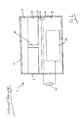
- Figure 1 illustrates oxygen sensing apparatus shown generally as 1, within a flue gas analyser.
- the flue gas analyser also includes carbon monoxide sensing apparatus for measuring the concentration of carbon monoxide and optionally other gas sensing apparatus for measuring additional gases.
- the oxygen sensing apparatus includes a housing 2 and an inlet 4 defined by holes through which a gas sample can penetrate the housing. Crystals of potassium permanganate 6 (functioning as nitrogen-containing-gas removing means) are located in a chamber intermediate the inlet and a mass flow control member 8 which takes the form of a block of ABS through the middle of which a narrow ( ⁇ 100 micron diameter) capillary tube 10 extends.
- the opposite end of the capillary tube opens into a gas space 12 bounded by the mass flow control member and a hydrophobic PTFE membrane 14, which functions as liquid permeable electrolyte retaining means.
- the gas space typically has a depth of only a few microns to minimise its volume.
- the hydrophobic PTFE membrane supports a catalyst 16 in the form of a cake of platinum, graphite and binder particles, which functions as the cathode. Gas permeates the catalyst cake through the hydrophobic PTFE membrane and hydrophobic binder particles. Electrolyte permeates the catalyst cake through the gaps between particles forming a three phase interface between analyte gas, electrolyte and catalyst within the cake.
- the cathode is in gaseous communication with the gas space through the hydrophobic PTFE membrane and is in direct contact with electrolyte 18, based on potassium hydroxide, within an electrolyte chamber.
- a lead anode 20 is located within the electrolyte chamber, in direct contact with the electrolyte.
- a load resistor 22 completes a circuit between the anode and cathode.
- the electrolyte chamber, mass flow control member, gas space, hydrophobic PTFE membrane, cathode, anode, electrolyte and circuitry function as an electrochemical oxygen sensor.
- flue gas diffuses through the inlet into the potassium permanganate filled chamber.
- a range of gaseous species including nitrogen and oxygen, including nitrogen dioxide, is removed from the received gas by the potassium permanganate.
- the substantial majority of the nitrogen dioxide is removed before the received gas reaches the capillary.
- the scrubbed gas diffuses through the capillary, gas space and PTFE membrane where oxygen is reduced by the cathode.
- lead is oxidised to lead oxide at the anode and the resulting current is measured.
- the output current depends on the rate of diffusion of oxygen through the capillary.
- the output current depends on the oxygen concentration of gas received by the sensor rather than the partial pressure of oxygen outside the sensor.
- nitrogen-containing-gas removing means for removing from received gas one or more gaseous species comprising nitrogen and oxygen which are either nitrogen dioxide, or formed from nitrogen dioxide in the presence of sufficient water vapour, which would otherwise lead to damage of the electrochemical oxygen sensor, the lifetime of the flue gas analyser is restored to normal, or near normal, when measuring the concentration of oxygen in flue gases which comprise nitrogen dioxide and which are saturated, or nearly saturated with water vapour.
- the sensors include a cathode comprising platinum, graphite and binder particles, a lead anode, a hydrophobic PTFE membrane covering and supporting the cathode and a mass flow control member comprising a capillary extending through a block of ABS.
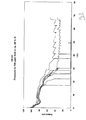
- Figure 2 is a graph of the output current with time from the eight sensors. Although the 02-A2 sensors have a two year working life, the sensors failed catastrophically after 10 to 15 hours.
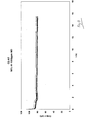
- Figure 3 is a graph of output current during an experiment with conditions which correspond to the previous experiments except that the nitrogen dioxide concentration was 100ppm and the relative humidity was 98%. In this case, 6 of the 8 sensors failed in 18 to 41 hours.
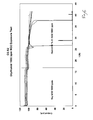
- Figure 6 illustrates an experiment in which eight oxygen sensors were exposed to dry atmospheric air including 1,000ppm nitrogen dioxide for 17 hours, followed by atmospheric air including 1,000ppm nitrogen dioxide at a relative humidity of 90%, at room temperature and pressure throughout. The results of the experiment demonstrate that the sensors were not affected by 1,000ppm nitrogen dioxide, but that they were damaged in the presence of both nitrogen dioxide and a relatively high concentration of water vapour.
- Figure 7 illustrate the results of an experiment in which the output current from eight oxygen sensors was monitored in the presence of gas comprising atmospheric air to which had been introduced 1,000 ppm nitrogen dioxide and water vapour to give a relative humidity of 95% which was continuously filtered through a Purafil brand filter from Purafil, Inc. of Doraville, USA. (Purafil is a trade mark).
- the Purafil brand filter includes potassium permanganate and is operable to chemisorb nitrogen dioxide, thereby functioning as the nitrogen-containing-gas removing means.
- the inclusion of the filter enabled the oxygen sensors to perform as normal.
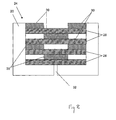
- FIG 8 illustrates an alternative filter 24 comprising a filter housing 26 which replaces inlet 4 and potassium permanganate filled chamber 6 of the apparatus illustrated in Figure 1 to filter received gas before it reaches the capillary tube 10.
- the filter housing employs four sheets of activated carbon cloth 28 (type 150SL, available from Calgon Carbon Corporation of Pittsburgh, USA).
- the activated carbon cloth is arranged in layers spaced apart by intermediate gas-impermeable polymer spacers 30 which are configured to create a tortuous path for gas to diffuse through the sensor.
- the gas-impermeable polymer members can be alternatively annular (having a central hole) and circular members which do not overlap significantly so that gas must diffuse alternately radially outwards and radially inwards in order to pass through the filter.
- the provision of a tortuous gas diffusion pathway maximises the surface area of carbon which is available to adsorb nitrogen dioxide from the received gas and increases the residence time of received gas within the filter.
- the configuration of the gas diffusion pathway and the internal surface area of the activated carbon cloth have been selected so that the filter adsorbs substantially all of the received nitrogen dioxide.
- a passage 32 forms an outlet to the filter housing which communicates with the capillary tube.
- the passage 32 is much broader than the capillary tube so that it is not diffusion limiting.
- the passage may have a diameter of around 2mm.
- electrochemical oxygen sensors are degraded in the presence of even a low concentration of nitrogen dioxide, in air which is saturated, or nearly saturated, with water vapour and demonstrated that this degradation can be prevented using nitrogen-containing-gas removing means (such as a gas removing filter) which removes from received gas one or more gaseous species including nitrogen and oxygen, which is either nitrogen dioxide or formed from nitrogen dioxide in the presence of sufficient water vapour, which would otherwise lead to damage of the electrochemical oxygen sensor.
- nitrogen-containing-gas removing means such as a gas removing filter
- water vapour removing means such as a water vapour removing filter, could be employed to remove water vapour from received air.
- nitrogen-containing-gas removing means for removing from received gas one or more gaseous species comprising nitrogen and oxygen which are either nitrogen dioxide, or formed from nitrogen dioxide in the presence of sufficient water vapour, which would otherwise lead to damage of the electrochemical oxygen sensor, is preferred.
- NOx nitric oxides
- flue gas including nitrogen dioxide (NO 2 ), nitric oxide (NO), nitrous oxide (N 2 O), the nitrate radical (NO 3 ), nitric acid (HNO 3 ), nitrous acid (HNO 2 ) and dinitrogen pentoxide (N 2 O 5 ).
- Nitric oxides are formed by a number of different routes. Thermal NOx are formed at high temperatures (>1,600°C), where molecular oxygen and nitrogen disassociate into their atomic states.
- Fuel NOx results from the combustion of fossil fuels, such as coal, gas and oil, and biofuels, such as wood, where nitrogen contained within the fuel is released as a free radical which forms nitric oxide. Fuel NOx forms up to 50% of NOx when combusting oil and 80% of NOx when combusting coal.
- fossil fuels such as coal, gas and oil
- biofuels such as wood
- nitric oxide In boilers, the majority of NOx is in the form of nitric oxide. However, there are a number of different mechanisms by which nitric oxide can be converted to nitrogen dioxide. Nitrogen dioxide is generated by the reaction between nitric oxide and certain hydrocarbons, such as ethylene, at low temperatures; nitrogen dioxide is generated by the reaction between nitric oxide and peroxy radicals or HO 2 ; nitrogen dioxide is rapidly generated by the reaction between nitric oxide and ozone. Nitrogen dioxide is also generated by the reaction between nitric oxide and oxygen. The rate of this reaction is generally slow, but it can be accelerated by water, particulates (giving heterogenous catalytic sites) and some others materials which could be found inside boilers.
- the nitrate radical is formed rapidly from the reaction between ozone and nitrogen dioxide. Ozone can be formed from the reaction between nitrogen dioxide and oxygen. Nitrogen dioxide and the nitrate radical react to form dinitrogen pentoxide, which is very soluble in water. In a humid environment, almost all nitrate radicals will be converted to dinitrogen pentoxide. Dinitrogen pentoxide is known to be converted to nitric acid when dissolved in water droplets. Accordingly, concentrated nitric acid may be formed from nitrogen dioxide in very humid conditions, for example the conditions found in condensing boilers.
- the provision of means to remove one or more of nitrogen dioxide, dinitrogen pentoxide or nitric acid gas and/or water vapour removing means could prevent damage to electrochemical oxygen sensors in which the mass flow control member or gas permeable liquid impermeable barrier is made from a material (typically a plastics material) which is damaged in the presence of nitrogen dioxide and a sufficient concentration of water vapour, perhaps due to the formation of nitric acid.
- mass flow control members made from plastics materials, such as ABS or polycarbonate, could be damaged. This damage could be prevented by providing the nitrogen-containing-gas removing means and/or or water vapour removing means, upstream of the mass flow control member, or within the mass flow control member, for example within the capillary.
- gas permeable liquid impermeable barriers made from plastics materials, such as PTFE could be damaged, for example their surface energy might change enabling electrolyte to penetrate the barrier, causing the gas space to be flooded.
- This damage could be prevented by providing nitrogen-containing-gas removing means and/or water removing means upstream of the gas permeable liquid impermeable barrier, for example, before the mass flow control member, within the mass flow control member, or within the gas space between the mass flow control member and the gas permeable liquid impermeable barrier.
Landscapes
- Chemical & Material Sciences (AREA)
- Life Sciences & Earth Sciences (AREA)
- Health & Medical Sciences (AREA)
- Immunology (AREA)
- Engineering & Computer Science (AREA)
- Pathology (AREA)
- Physics & Mathematics (AREA)
- Analytical Chemistry (AREA)
- Biochemistry (AREA)
- General Health & Medical Sciences (AREA)
- General Physics & Mathematics (AREA)
- Electrochemistry (AREA)
- Chemical Kinetics & Catalysis (AREA)
- Molecular Biology (AREA)
- Combustion & Propulsion (AREA)
- Food Science & Technology (AREA)
- Medicinal Chemistry (AREA)
- Measuring Oxygen Concentration In Cells (AREA)
- Investigating Or Analyzing Non-Biological Materials By The Use Of Chemical Means (AREA)
- Sampling And Sample Adjustment (AREA)
Applications Claiming Priority (1)
| Application Number | Priority Date | Filing Date | Title |
|---|---|---|---|
| GBGB0714788.7A GB0714788D0 (en) | 2007-07-30 | 2007-07-30 | Flue gas analyser |
Publications (3)
| Publication Number | Publication Date |
|---|---|
| EP2026064A2 true EP2026064A2 (de) | 2009-02-18 |
| EP2026064A3 EP2026064A3 (de) | 2010-04-28 |
| EP2026064B1 EP2026064B1 (de) | 2019-10-09 |
Family
ID=38528963
Family Applications (1)
| Application Number | Title | Priority Date | Filing Date |
|---|---|---|---|
| EP08161506.4A Active EP2026064B1 (de) | 2007-07-30 | 2008-07-30 | Verwendung von Mitteln zur Entfernung von Stickstoff enthaltenden Gasen zur Vermeidung von Fehlern in elektrochemischen Sauerstoffsensoren für Rauchgase |
Country Status (3)
| Country | Link |
|---|---|
| US (1) | US20100065442A9 (de) |
| EP (1) | EP2026064B1 (de) |
| GB (1) | GB0714788D0 (de) |
Cited By (1)
| Publication number | Priority date | Publication date | Assignee | Title |
|---|---|---|---|---|
| GB2490601A (en) * | 2011-05-05 | 2012-11-07 | Crowcon Detection Instr Ltd | Portable flue gas analysing unit with water-removing tube located in handle |
Families Citing this family (7)
| Publication number | Priority date | Publication date | Assignee | Title |
|---|---|---|---|---|
| US8591628B2 (en) * | 2008-02-19 | 2013-11-26 | Gas Technology Institute | Waterless humidifier for residential and commercial furnaces |
| US20100292934A1 (en) * | 2009-05-15 | 2010-11-18 | Baker Hughes Incorporated | Emissions analyzer and methods of using same |
| CN104968438A (zh) * | 2012-09-14 | 2015-10-07 | 普莱梅克斯处理专家股份有限公司 | 湿度感测系统 |
| US20140295356A1 (en) * | 2013-03-29 | 2014-10-02 | Rosemount Analytical, Inc. | In situ flue gas analyzer with improved process communication |
| US10406513B2 (en) * | 2016-06-03 | 2019-09-10 | Memorial University Of Newfoundland | Method for the conversion of nitrous acid to dinitrogen gas |
| US20210048406A1 (en) * | 2019-08-13 | 2021-02-18 | Analog Devices International Unlimited Company | Electrochemical sensor and method of forming thereof |
| US12372507B2 (en) * | 2022-12-27 | 2025-07-29 | Scott A. Elrod | Input control based on atmospheric oxygen |
Family Cites Families (21)
| Publication number | Priority date | Publication date | Assignee | Title |
|---|---|---|---|---|
| DE2335403C3 (de) * | 1973-07-12 | 1982-01-07 | Robert Bosch Gmbh, 7000 Stuttgart | Verfahren zur Überwachung des Gehaltes an Stickoxiden in Abgasen, insbesondere in Kfz.-Abgasen, sowie Sensor zur Durchführung des Verfahrens |
| GB1571282A (en) * | 1976-03-11 | 1980-07-09 | City Tech | Gas sensor |
| DE2711880C2 (de) * | 1977-03-18 | 1985-01-17 | Robert Bosch Gmbh, 7000 Stuttgart | Polarographischer Meßfühler zum Messen der Sauerstoffkonzentration und Verfahren zu seiner Herstellung |
| US4265714A (en) * | 1980-03-24 | 1981-05-05 | General Electric Company | Gas sensing and measuring device and process using catalytic graphite sensing electrode |
| GB8712582D0 (en) * | 1987-05-28 | 1987-07-01 | Neotronics Ltd | Acidic gas sensors |
| US4769122A (en) * | 1987-07-10 | 1988-09-06 | Bacharach, Inc. | Compact electrochemical cell for gas detection |
| US4900405A (en) * | 1987-07-15 | 1990-02-13 | Sri International | Surface type microelectronic gas and vapor sensor |
| US4812221A (en) * | 1987-07-15 | 1989-03-14 | Sri International | Fast response time microsensors for gaseous and vaporous species |
| US4820386A (en) * | 1988-02-03 | 1989-04-11 | Giner, Inc. | Diffusion-type sensor cell containing sensing and counter electrodes in intimate contact with the same side of a proton-conducting membrane and method of use |
| US5331310A (en) * | 1992-04-06 | 1994-07-19 | Transducer Research, Inc. | Amperometric carbon monoxide sensor module for residential alarms |
| US6399391B1 (en) * | 1994-10-25 | 2002-06-04 | Robert L. Tomlin | Low cost total reduced sulfur analysis system |
| US6428684B1 (en) * | 2000-08-02 | 2002-08-06 | Industrial Scientific Corporation | Method and apparatus for diagnosing the condition of a gas sensor |
| US6895805B2 (en) * | 2000-12-05 | 2005-05-24 | William Hoagland | Hydrogen gas indicator system |
| JP2002174620A (ja) * | 2000-12-07 | 2002-06-21 | Denso Corp | ガスセンサ素子及びガスセンサ |
| US6401669B1 (en) * | 2001-04-19 | 2002-06-11 | Ibc Technologies | Condensing boiler |
| US6808618B2 (en) * | 2001-07-25 | 2004-10-26 | Joseph Robert Stetter | Chemical sensing apparatus and methods |
| US6629444B2 (en) * | 2001-08-08 | 2003-10-07 | Industrial Scientific Corporation | Method and apparatus for diagnosing gas sensors |
| US7258773B2 (en) * | 2003-08-12 | 2007-08-21 | Rae Systems, Inc. | Solid polymer electrolyte oxygen sensor |
| US20050189239A1 (en) * | 2004-02-26 | 2005-09-01 | Land Instruments International, Inc. | Advanced dual sensor technology for a continuous emission monitoring system |
| EP2078191A2 (de) * | 2006-11-01 | 2009-07-15 | Sensorcon, Inc. | Sensoren und verfahren zu deren herstellung |
| GB201107492D0 (en) * | 2011-05-05 | 2011-06-22 | Crowcon Detection Instr Ltd | Water removal in gas sensing equipment |
-
2007
- 2007-07-30 GB GBGB0714788.7A patent/GB0714788D0/en not_active Ceased
-
2008
- 2008-07-30 EP EP08161506.4A patent/EP2026064B1/de active Active
- 2008-07-30 US US12/182,573 patent/US20100065442A9/en not_active Abandoned
Cited By (2)
| Publication number | Priority date | Publication date | Assignee | Title |
|---|---|---|---|---|
| GB2490601A (en) * | 2011-05-05 | 2012-11-07 | Crowcon Detection Instr Ltd | Portable flue gas analysing unit with water-removing tube located in handle |
| GB2490601B (en) * | 2011-05-05 | 2013-05-22 | Crowcon Detection Instr Ltd | Water removal in gas sensing equipment |
Also Published As
| Publication number | Publication date |
|---|---|
| GB0714788D0 (en) | 2007-09-12 |
| US20090038962A1 (en) | 2009-02-12 |
| US20100065442A9 (en) | 2010-03-18 |
| EP2026064A3 (de) | 2010-04-28 |
| EP2026064B1 (de) | 2019-10-09 |
Similar Documents
| Publication | Publication Date | Title |
|---|---|---|
| EP2026064B1 (de) | Verwendung von Mitteln zur Entfernung von Stickstoff enthaltenden Gasen zur Vermeidung von Fehlern in elektrochemischen Sauerstoffsensoren für Rauchgase | |
| US8584505B2 (en) | Measuring instrument and method for detecting the content of oil, hydrocarbons and oxidizable gases in air or compressed air | |
| Palmisano et al. | Selectivity and resistance to poisons of commercial hydrogen sensors | |
| Yamazoe | Toward innovations of gas sensor technology | |
| US5879948A (en) | Determination of total mercury in exhaust gases | |
| US5841021A (en) | Solid state gas sensor and filter assembly | |
| EP1992945B1 (de) | Selbstkalibrierender Gasspurensensor | |
| EP1466167B1 (de) | Verfahren und detektor zur erfassung von gasen | |
| US10295517B2 (en) | Heated graphite scrubber to reduce interferences in ozone monitors | |
| EP0095277A2 (de) | Gasfühler | |
| CN112666238A (zh) | 具有分隔过滤器的气体传感器 | |
| US20090065370A1 (en) | Ammonia gas sensor method and device | |
| US7442555B2 (en) | Ammonia gas sensor method and device | |
| CN206772932U (zh) | 一种在线检测混合气体浓度的装置 | |
| WO1999017110A1 (en) | Combustible gas sensor with integral hydrogen generator | |
| Bates et al. | Atmospheric volatile organic compound monitoring. Ozone induced artefact formation | |
| Eiceman et al. | Negative ion mobility spectrometry for selected inorganic pollutant gases and gas mixtures in air | |
| US20060257288A1 (en) | Hydrogen sulfide tolerant oxygen gas sensing device | |
| US20060118416A1 (en) | Electrochemical sensor system | |
| Pugh et al. | Zeolite modified vanadium pentoxide sensors for the selective detection of volatile organic compounds | |
| CA2613430C (en) | Method and device for the detection of hydrogen | |
| RU2857087C1 (ru) | Электрохимический первичный преобразователь для измерения концентрации паров амила (тетраоксида азота, N2O4) | |
| Fitz et al. | Evaluation of diffusion denuder coatings for removing acid gases from ambient air | |
| Ghasemi | Evaluation of Physical and Chemical Parameters Effects on Different Ozone Monitoring Technologies | |
| JP3613915B2 (ja) | 一酸化炭素センサの制御装置 |
Legal Events
| Date | Code | Title | Description |
|---|---|---|---|
| PUAI | Public reference made under article 153(3) epc to a published international application that has entered the european phase |
Free format text: ORIGINAL CODE: 0009012 |
|
| AK | Designated contracting states |
Kind code of ref document: A2 Designated state(s): AT BE BG CH CY CZ DE DK EE ES FI FR GB GR HR HU IE IS IT LI LT LU LV MC MT NL NO PL PT RO SE SI SK TR |
|
| AX | Request for extension of the european patent |
Extension state: AL BA MK RS |
|
| 17P | Request for examination filed |
Effective date: 20090731 |
|
| PUAL | Search report despatched |
Free format text: ORIGINAL CODE: 0009013 |
|
| AK | Designated contracting states |
Kind code of ref document: A3 Designated state(s): AT BE BG CH CY CZ DE DK EE ES FI FR GB GR HR HU IE IS IT LI LT LU LV MC MT NL NO PL PT RO SE SI SK TR |
|
| AX | Request for extension of the european patent |
Extension state: AL BA MK RS |
|
| AKX | Designation fees paid |
Designated state(s): AT BE BG CH CY CZ DE DK EE ES FI FR GB GR HR HU IE IS IT LI LT LU LV MC MT NL NO PL PT RO SE SI SK TR |
|
| 17Q | First examination report despatched |
Effective date: 20140620 |
|
| STAA | Information on the status of an ep patent application or granted ep patent |
Free format text: STATUS: EXAMINATION IS IN PROGRESS |
|
| REG | Reference to a national code |
Ref country code: DE Ref legal event code: R079 Ref document number: 602008061361 Country of ref document: DE Free format text: PREVIOUS MAIN CLASS: G01N0027490000 Ipc: G01N0027404000 |
|
| RIC1 | Information provided on ipc code assigned before grant |
Ipc: G01N 27/404 20060101AFI20180928BHEP Ipc: G01N 33/00 20060101ALI20180928BHEP |
|
| GRAP | Despatch of communication of intention to grant a patent |
Free format text: ORIGINAL CODE: EPIDOSNIGR1 |
|
| STAA | Information on the status of an ep patent application or granted ep patent |
Free format text: STATUS: GRANT OF PATENT IS INTENDED |
|
| INTG | Intention to grant announced |
Effective date: 20181121 |
|
| GRAJ | Information related to disapproval of communication of intention to grant by the applicant or resumption of examination proceedings by the epo deleted |
Free format text: ORIGINAL CODE: EPIDOSDIGR1 |
|
| STAA | Information on the status of an ep patent application or granted ep patent |
Free format text: STATUS: EXAMINATION IS IN PROGRESS |
|
| INTC | Intention to grant announced (deleted) | ||
| GRAP | Despatch of communication of intention to grant a patent |
Free format text: ORIGINAL CODE: EPIDOSNIGR1 |
|
| STAA | Information on the status of an ep patent application or granted ep patent |
Free format text: STATUS: GRANT OF PATENT IS INTENDED |
|
| INTG | Intention to grant announced |
Effective date: 20190617 |
|
| GRAS | Grant fee paid |
Free format text: ORIGINAL CODE: EPIDOSNIGR3 |
|
| GRAA | (expected) grant |
Free format text: ORIGINAL CODE: 0009210 |
|
| STAA | Information on the status of an ep patent application or granted ep patent |
Free format text: STATUS: THE PATENT HAS BEEN GRANTED |
|
| AK | Designated contracting states |
Kind code of ref document: B1 Designated state(s): AT BE BG CH CY CZ DE DK EE ES FI FR GB GR HR HU IE IS IT LI LT LU LV MC MT NL NO PL PT RO SE SI SK TR |
|
| REG | Reference to a national code |
Ref country code: GB Ref legal event code: FG4D |
|
| REG | Reference to a national code |
Ref country code: CH Ref legal event code: EP |
|
| REG | Reference to a national code |
Ref country code: DE Ref legal event code: R096 Ref document number: 602008061361 Country of ref document: DE |
|
| REG | Reference to a national code |
Ref country code: IE Ref legal event code: FG4D |
|
| REG | Reference to a national code |
Ref country code: AT Ref legal event code: REF Ref document number: 1189415 Country of ref document: AT Kind code of ref document: T Effective date: 20191115 |
|
| REG | Reference to a national code |
Ref country code: NL Ref legal event code: MP Effective date: 20191009 |
|
| REG | Reference to a national code |
Ref country code: LT Ref legal event code: MG4D |
|
| REG | Reference to a national code |
Ref country code: AT Ref legal event code: MK05 Ref document number: 1189415 Country of ref document: AT Kind code of ref document: T Effective date: 20191009 |
|
| PG25 | Lapsed in a contracting state [announced via postgrant information from national office to epo] |
Ref country code: SE Free format text: LAPSE BECAUSE OF FAILURE TO SUBMIT A TRANSLATION OF THE DESCRIPTION OR TO PAY THE FEE WITHIN THE PRESCRIBED TIME-LIMIT Effective date: 20191009 Ref country code: LV Free format text: LAPSE BECAUSE OF FAILURE TO SUBMIT A TRANSLATION OF THE DESCRIPTION OR TO PAY THE FEE WITHIN THE PRESCRIBED TIME-LIMIT Effective date: 20191009 Ref country code: AT Free format text: LAPSE BECAUSE OF FAILURE TO SUBMIT A TRANSLATION OF THE DESCRIPTION OR TO PAY THE FEE WITHIN THE PRESCRIBED TIME-LIMIT Effective date: 20191009 Ref country code: NL Free format text: LAPSE BECAUSE OF FAILURE TO SUBMIT A TRANSLATION OF THE DESCRIPTION OR TO PAY THE FEE WITHIN THE PRESCRIBED TIME-LIMIT Effective date: 20191009 Ref country code: PL Free format text: LAPSE BECAUSE OF FAILURE TO SUBMIT A TRANSLATION OF THE DESCRIPTION OR TO PAY THE FEE WITHIN THE PRESCRIBED TIME-LIMIT Effective date: 20191009 Ref country code: NO Free format text: LAPSE BECAUSE OF FAILURE TO SUBMIT A TRANSLATION OF THE DESCRIPTION OR TO PAY THE FEE WITHIN THE PRESCRIBED TIME-LIMIT Effective date: 20200109 Ref country code: BG Free format text: LAPSE BECAUSE OF FAILURE TO SUBMIT A TRANSLATION OF THE DESCRIPTION OR TO PAY THE FEE WITHIN THE PRESCRIBED TIME-LIMIT Effective date: 20200109 Ref country code: FI Free format text: LAPSE BECAUSE OF FAILURE TO SUBMIT A TRANSLATION OF THE DESCRIPTION OR TO PAY THE FEE WITHIN THE PRESCRIBED TIME-LIMIT Effective date: 20191009 Ref country code: GR Free format text: LAPSE BECAUSE OF FAILURE TO SUBMIT A TRANSLATION OF THE DESCRIPTION OR TO PAY THE FEE WITHIN THE PRESCRIBED TIME-LIMIT Effective date: 20200110 Ref country code: LT Free format text: LAPSE BECAUSE OF FAILURE TO SUBMIT A TRANSLATION OF THE DESCRIPTION OR TO PAY THE FEE WITHIN THE PRESCRIBED TIME-LIMIT Effective date: 20191009 Ref country code: ES Free format text: LAPSE BECAUSE OF FAILURE TO SUBMIT A TRANSLATION OF THE DESCRIPTION OR TO PAY THE FEE WITHIN THE PRESCRIBED TIME-LIMIT Effective date: 20191009 Ref country code: PT Free format text: LAPSE BECAUSE OF FAILURE TO SUBMIT A TRANSLATION OF THE DESCRIPTION OR TO PAY THE FEE WITHIN THE PRESCRIBED TIME-LIMIT Effective date: 20200210 |
|
| PG25 | Lapsed in a contracting state [announced via postgrant information from national office to epo] |
Ref country code: HR Free format text: LAPSE BECAUSE OF FAILURE TO SUBMIT A TRANSLATION OF THE DESCRIPTION OR TO PAY THE FEE WITHIN THE PRESCRIBED TIME-LIMIT Effective date: 20191009 Ref country code: IS Free format text: LAPSE BECAUSE OF FAILURE TO SUBMIT A TRANSLATION OF THE DESCRIPTION OR TO PAY THE FEE WITHIN THE PRESCRIBED TIME-LIMIT Effective date: 20200224 |
|
| REG | Reference to a national code |
Ref country code: DE Ref legal event code: R097 Ref document number: 602008061361 Country of ref document: DE |
|
| PG2D | Information on lapse in contracting state deleted |
Ref country code: IS |
|
| PG25 | Lapsed in a contracting state [announced via postgrant information from national office to epo] |
Ref country code: CZ Free format text: LAPSE BECAUSE OF FAILURE TO SUBMIT A TRANSLATION OF THE DESCRIPTION OR TO PAY THE FEE WITHIN THE PRESCRIBED TIME-LIMIT Effective date: 20191009 Ref country code: RO Free format text: LAPSE BECAUSE OF FAILURE TO SUBMIT A TRANSLATION OF THE DESCRIPTION OR TO PAY THE FEE WITHIN THE PRESCRIBED TIME-LIMIT Effective date: 20191009 Ref country code: EE Free format text: LAPSE BECAUSE OF FAILURE TO SUBMIT A TRANSLATION OF THE DESCRIPTION OR TO PAY THE FEE WITHIN THE PRESCRIBED TIME-LIMIT Effective date: 20191009 Ref country code: DK Free format text: LAPSE BECAUSE OF FAILURE TO SUBMIT A TRANSLATION OF THE DESCRIPTION OR TO PAY THE FEE WITHIN THE PRESCRIBED TIME-LIMIT Effective date: 20191009 Ref country code: IS Free format text: LAPSE BECAUSE OF FAILURE TO SUBMIT A TRANSLATION OF THE DESCRIPTION OR TO PAY THE FEE WITHIN THE PRESCRIBED TIME-LIMIT Effective date: 20200209 |
|
| PLBE | No opposition filed within time limit |
Free format text: ORIGINAL CODE: 0009261 |
|
| STAA | Information on the status of an ep patent application or granted ep patent |
Free format text: STATUS: NO OPPOSITION FILED WITHIN TIME LIMIT |
|
| PG25 | Lapsed in a contracting state [announced via postgrant information from national office to epo] |
Ref country code: IT Free format text: LAPSE BECAUSE OF FAILURE TO SUBMIT A TRANSLATION OF THE DESCRIPTION OR TO PAY THE FEE WITHIN THE PRESCRIBED TIME-LIMIT Effective date: 20191009 Ref country code: SK Free format text: LAPSE BECAUSE OF FAILURE TO SUBMIT A TRANSLATION OF THE DESCRIPTION OR TO PAY THE FEE WITHIN THE PRESCRIBED TIME-LIMIT Effective date: 20191009 |
|
| 26N | No opposition filed |
Effective date: 20200710 |
|
| PG25 | Lapsed in a contracting state [announced via postgrant information from national office to epo] |
Ref country code: SI Free format text: LAPSE BECAUSE OF FAILURE TO SUBMIT A TRANSLATION OF THE DESCRIPTION OR TO PAY THE FEE WITHIN THE PRESCRIBED TIME-LIMIT Effective date: 20191009 |
|
| PG25 | Lapsed in a contracting state [announced via postgrant information from national office to epo] |
Ref country code: MC Free format text: LAPSE BECAUSE OF FAILURE TO SUBMIT A TRANSLATION OF THE DESCRIPTION OR TO PAY THE FEE WITHIN THE PRESCRIBED TIME-LIMIT Effective date: 20191009 |
|
| REG | Reference to a national code |
Ref country code: CH Ref legal event code: PL |
|
| REG | Reference to a national code |
Ref country code: BE Ref legal event code: MM Effective date: 20200731 |
|
| PG25 | Lapsed in a contracting state [announced via postgrant information from national office to epo] |
Ref country code: LU Free format text: LAPSE BECAUSE OF NON-PAYMENT OF DUE FEES Effective date: 20200730 Ref country code: CH Free format text: LAPSE BECAUSE OF NON-PAYMENT OF DUE FEES Effective date: 20200731 Ref country code: LI Free format text: LAPSE BECAUSE OF NON-PAYMENT OF DUE FEES Effective date: 20200731 |
|
| PG25 | Lapsed in a contracting state [announced via postgrant information from national office to epo] |
Ref country code: BE Free format text: LAPSE BECAUSE OF NON-PAYMENT OF DUE FEES Effective date: 20200731 |
|
| PG25 | Lapsed in a contracting state [announced via postgrant information from national office to epo] |
Ref country code: IE Free format text: LAPSE BECAUSE OF NON-PAYMENT OF DUE FEES Effective date: 20200730 |
|
| PGFP | Annual fee paid to national office [announced via postgrant information from national office to epo] |
Ref country code: FR Payment date: 20210716 Year of fee payment: 14 |
|
| PG25 | Lapsed in a contracting state [announced via postgrant information from national office to epo] |
Ref country code: TR Free format text: LAPSE BECAUSE OF FAILURE TO SUBMIT A TRANSLATION OF THE DESCRIPTION OR TO PAY THE FEE WITHIN THE PRESCRIBED TIME-LIMIT Effective date: 20191009 Ref country code: MT Free format text: LAPSE BECAUSE OF FAILURE TO SUBMIT A TRANSLATION OF THE DESCRIPTION OR TO PAY THE FEE WITHIN THE PRESCRIBED TIME-LIMIT Effective date: 20191009 Ref country code: CY Free format text: LAPSE BECAUSE OF FAILURE TO SUBMIT A TRANSLATION OF THE DESCRIPTION OR TO PAY THE FEE WITHIN THE PRESCRIBED TIME-LIMIT Effective date: 20191009 |
|
| PGFP | Annual fee paid to national office [announced via postgrant information from national office to epo] |
Ref country code: DE Payment date: 20220519 Year of fee payment: 15 |
|
| PG25 | Lapsed in a contracting state [announced via postgrant information from national office to epo] |
Ref country code: FR Free format text: LAPSE BECAUSE OF NON-PAYMENT OF DUE FEES Effective date: 20220731 |
|
| REG | Reference to a national code |
Ref country code: DE Ref legal event code: R119 Ref document number: 602008061361 Country of ref document: DE |
|
| PG25 | Lapsed in a contracting state [announced via postgrant information from national office to epo] |
Ref country code: DE Free format text: LAPSE BECAUSE OF NON-PAYMENT OF DUE FEES Effective date: 20240201 |
|
| PGFP | Annual fee paid to national office [announced via postgrant information from national office to epo] |
Ref country code: GB Payment date: 20260501 Year of fee payment: 19 |