EP2029751B1 - Système d'expression inductible basé sur les phytovirus - Google Patents
Système d'expression inductible basé sur les phytovirus Download PDFInfo
- Publication number
- EP2029751B1 EP2029751B1 EP07725584A EP07725584A EP2029751B1 EP 2029751 B1 EP2029751 B1 EP 2029751B1 EP 07725584 A EP07725584 A EP 07725584A EP 07725584 A EP07725584 A EP 07725584A EP 2029751 B1 EP2029751 B1 EP 2029751B1
- Authority
- EP
- European Patent Office
- Prior art keywords
- rna replicon
- plant
- cell
- protein
- nucleotide sequence
- Prior art date
- Legal status (The legal status is an assumption and is not a legal conclusion. Google has not performed a legal analysis and makes no representation as to the accuracy of the status listed.)
- Active
Links
Images








Classifications
-
- C—CHEMISTRY; METALLURGY
- C12—BIOCHEMISTRY; BEER; SPIRITS; WINE; VINEGAR; MICROBIOLOGY; ENZYMOLOGY; MUTATION OR GENETIC ENGINEERING
- C12N—MICROORGANISMS OR ENZYMES; COMPOSITIONS THEREOF; PROPAGATING, PRESERVING, OR MAINTAINING MICROORGANISMS; MUTATION OR GENETIC ENGINEERING; CULTURE MEDIA
- C12N15/00—Mutation or genetic engineering; DNA or RNA concerning genetic engineering, vectors, e.g. plasmids, or their isolation, preparation or purification; Use of hosts therefor
- C12N15/09—Recombinant DNA-technology
- C12N15/63—Introduction of foreign genetic material using vectors; Vectors; Use of hosts therefor; Regulation of expression
- C12N15/79—Vectors or expression systems specially adapted for eukaryotic hosts
- C12N15/82—Vectors or expression systems specially adapted for eukaryotic hosts for plant cells, e.g. plant artificial chromosomes (PACs)
-
- C—CHEMISTRY; METALLURGY
- C12—BIOCHEMISTRY; BEER; SPIRITS; WINE; VINEGAR; MICROBIOLOGY; ENZYMOLOGY; MUTATION OR GENETIC ENGINEERING
- C12N—MICROORGANISMS OR ENZYMES; COMPOSITIONS THEREOF; PROPAGATING, PRESERVING, OR MAINTAINING MICROORGANISMS; MUTATION OR GENETIC ENGINEERING; CULTURE MEDIA
- C12N15/00—Mutation or genetic engineering; DNA or RNA concerning genetic engineering, vectors, e.g. plasmids, or their isolation, preparation or purification; Use of hosts therefor
- C12N15/09—Recombinant DNA-technology
- C12N15/63—Introduction of foreign genetic material using vectors; Vectors; Use of hosts therefor; Regulation of expression
- C12N15/79—Vectors or expression systems specially adapted for eukaryotic hosts
- C12N15/82—Vectors or expression systems specially adapted for eukaryotic hosts for plant cells, e.g. plant artificial chromosomes (PACs)
- C12N15/8216—Methods for controlling, regulating or enhancing expression of transgenes in plant cells
- C12N15/8237—Externally regulated expression systems
- C12N15/8238—Externally regulated expression systems chemically inducible, e.g. tetracycline
-
- C—CHEMISTRY; METALLURGY
- C12—BIOCHEMISTRY; BEER; SPIRITS; WINE; VINEGAR; MICROBIOLOGY; ENZYMOLOGY; MUTATION OR GENETIC ENGINEERING
- C12N—MICROORGANISMS OR ENZYMES; COMPOSITIONS THEREOF; PROPAGATING, PRESERVING, OR MAINTAINING MICROORGANISMS; MUTATION OR GENETIC ENGINEERING; CULTURE MEDIA
- C12N15/00—Mutation or genetic engineering; DNA or RNA concerning genetic engineering, vectors, e.g. plasmids, or their isolation, preparation or purification; Use of hosts therefor
- C12N15/02—Preparation of hybrid cells by fusion of two or more cells, e.g. protoplast fusion
-
- C—CHEMISTRY; METALLURGY
- C12—BIOCHEMISTRY; BEER; SPIRITS; WINE; VINEGAR; MICROBIOLOGY; ENZYMOLOGY; MUTATION OR GENETIC ENGINEERING
- C12N—MICROORGANISMS OR ENZYMES; COMPOSITIONS THEREOF; PROPAGATING, PRESERVING, OR MAINTAINING MICROORGANISMS; MUTATION OR GENETIC ENGINEERING; CULTURE MEDIA
- C12N15/00—Mutation or genetic engineering; DNA or RNA concerning genetic engineering, vectors, e.g. plasmids, or their isolation, preparation or purification; Use of hosts therefor
- C12N15/09—Recombinant DNA-technology
-
- C—CHEMISTRY; METALLURGY
- C12—BIOCHEMISTRY; BEER; SPIRITS; WINE; VINEGAR; MICROBIOLOGY; ENZYMOLOGY; MUTATION OR GENETIC ENGINEERING
- C12N—MICROORGANISMS OR ENZYMES; COMPOSITIONS THEREOF; PROPAGATING, PRESERVING, OR MAINTAINING MICROORGANISMS; MUTATION OR GENETIC ENGINEERING; CULTURE MEDIA
- C12N15/00—Mutation or genetic engineering; DNA or RNA concerning genetic engineering, vectors, e.g. plasmids, or their isolation, preparation or purification; Use of hosts therefor
- C12N15/09—Recombinant DNA-technology
- C12N15/11—DNA or RNA fragments; Modified forms thereof; Non-coding nucleic acids having a biological activity
- C12N15/52—Genes encoding for enzymes or proenzymes
Definitions
- the present invention relates to a process of producing or expressing one or more than one protein of interest in plants or plant cells using a viral expression system.
- the invention further relates to plants or plant cells, notably transgenic plants or plants cells, for this process.
- the invention also provides a process of producing the plants or plant cells of the invention.
- transient plant virus-based expression systems are generally restricted to specific hosts which may not be suitable for large scale cultivation due to their susceptibility to environmental factors. Moreover, they are generally restricted to certain parts of a plant host, thus excluding most of the plant biomass from the production process and as a result minimizes the relative yield of recombinant product per unit of plant biomass down to a level comparable to that achievable using conventional transcription promoters in a transgenic plant;
- transgenic versions of viral vector-based expression systems could be an advantage in many other applications.
- this is an issue for the production of recombinant proteins required in large quantities and at relatively low cost (e.g. different cellulases and other technical enzymes), where transient expression system based on agro-infiltration ( WO2005/049839 ) could not be economically viable.
- Expression of a viral vector in transgenic plant hosts is usually detrimental for plant growth and development. Also, such expression will eventually lead to transgene silencing.
- the protein or product of interest accumulates in each cell producing said product or protein up to a certain point.
- degradative processes frequently set on that tend to reduce the yield or quality of the protein or product of interest. Therefore, there is an optimal point in time, where the product or protein of interest should be harvested. This optimal point in time should be reachable in all tissues or cells of a plant and in all plants of a selected lot at the same time in order to make the overall process efficient and profitable.
- the invention provides a process of producing one or more than one protein of interest, comprising:
- the invention further provides a process of producing one or more than one protein of interest, comprising:
- the invention further provides plants or plant cells provided in steps (a) of the above processes.
- the invention further provides a process of producing a plant or plant cell of the invention, comprising introducing into a plant nuclear chromosome said first heterologous nucleotide sequence and optionally said second heterologous nucleotide sequence, followed by regenerating a transformed plant containing said first and, optionally, said second heterologous nucleotide sequence.
- the inventors of the present invention have surprisingly found a process of producing one or more than one protein of interest in plants or plant cells that achieves expression levels that have not been attainable in the prior art.
- the process of the invention is biologically safe and scalable to an industrial level.
- the exceptional expression levels of the invention are attained by a viral expression system that avoids anti-viral responses by the plant or plant cells such as transgene silencing to an extent hitherto unknown.
- release of the RNA replicon from the nucleotide sequence encoding the RNA replicon and expression of said protein enabling cell-to-cell movement of said RNA replicon are controlled by inducible promoters.
- RNA replicon due to leaky transcription of the RNA replicon from the nucleotide sequence encoding the RNA replicon is confined to those cells in which such leaky transcription has occurred, since said RNA replicon is not capable of cell-to-cell movement in said plant or in said plant cells in the absence of said protein providing for cell-to-cell movement.
- no viral sequences are expressed in the uninduced state at a level capable of triggering transgene silencing. Therefore, transgene silencing is unlikely to occur.
- RNA replicon by omitting a protein providing for cell-to-cell movement of said RNA replicon in said plant is compensated by providing a sequence encoding a protein enabling cell-to-cell movement of said RNA replicon in trans to said RNA replicon.
- Said protein providing for cell-to-cell movement of said RNA replicon is expressed under the control of an inducible promoter. This preserves confinement of a leaky expression of said viral replicon to cells wherein such leaky expression has occurred and avoids gene silencing, but allows high expression levels of said protein of interest in the induced state.
- the deleterious effects of gene silencing on the yield of a protein of interest are essentially absent.
- the inventors have surprisingly found that the transformation efficiency when plant cells are transformed with said first heterologous nucleotide sequence of the invention is higher than in a case where an RNA replicon codes for a protein providing for cell-to-cell movement. In some cases, it was not possible at all to obtain primary transformants with said first heterologous nucleotide sequence, if an RNA replicon coded for a protein providing for cell-to-cell movement. This effect of the invention to improve the transformation efficiency may be due to the incapability of the RNA replicon of the invention for cell-to-cell movement.
- said plant or plant cells contain a second heterologous nucleotide sequence comprising a nucleotide sequence encoding a protein enabling cell-to-cell movement of said RNA replicon, wherein said second heterologous nucleotide sequence comprises a second inducible promoter operably linked to said nucleotide sequence encoding said protein enabling cell-to-cell movement of said RNA replicon.
- This embodiment of the invention allows to further increase the yield of production of said one or more than one protein of interest.
- a plant or plant cells are provided with said first heterologous nucleotide sequence.
- Said plant or plant cells are provided with said first heterologous nucleotide sequence such that a transgenic plant or transgenic plant cells are obtained.
- said transgenic plant or said transgenic plant cells contain said first heterologous nucleotide sequence in a nuclear chromosome.
- Said plant or plant cells may also be provided with said second heterologous nucleotide sequence such that a transgenic plant or transgenic plant cells are obtained.
- said transgenic plant or said transgenic plant cells contain said second heterologous nucleotide sequence in a nuclear chromosome.
- transgenic plants containing a heterologous nucleotide sequence stably integrated into a nuclear chromosome or episomally is known in the art.
- said heterologous nucleotide sequence will contain a selectable marker gene for selecting of plant cells or plant tissue having integrated said heterologous nucleotide sequence.
- Whole transgenic plants containing said heterologous nucleotide sequence in cells of said transgenic plant may then be regenerated from transformed cells or tissue using standard procedures in the art of plant biotechnology.
- Said heterologous nucleotide sequences of the invention are typically DNA.
- said first and said second heterologous nucleotide sequence may be part of one large heterologous nucleotide sequence that is used for transforming plant cells or plants.
- said large heterologous nucleotide sequence comprises said first and said second heterologous nucleotide sequence.
- a first plant containing said first heterologous nucleotide sequence and a second plant containing said second heterologous nucleotide sequence may be generated independently. Said first and said second plant may then be crossed (e.g. by sexual crossing or by cell fusion) to obtain a plant comprising said first and said second heterologous nucleotide sequence.
- a transgenic plant or plant cells containing said first heterologous nucleotide sequence may be retransformed with said second heterologous nucleotide sequence for producing plants or plant cells containing said first and said second heterologous nucleotide sequence; or a transgenic plant or plant cells containing said second heterologous nucleotide sequence may be retransformed with said first heterologous nucleotide sequence for producing plants or plant cells containing said second and said first heterologous nucleotide sequence.
- heterologous means heterologous with respect to said plant.
- Said first heterologous nucleotide sequence comprises a nucleotide sequence segment encoding said RNA replicon.
- Said first heterologous nucleotide sequence further comprises a first inducible promoter operably linked to said nucleotide sequence segment encoding said RNA replicon.
- Said inducible promoter allows to induce transcription of said nucleotide sequence segment encoding said RNA replicon in step (b) of the process of the invention. Transcription releases said RNA replicon from said nucleotide sequence segment encoding said RNA replicon.
- Said RNA replicon is a replicon on the RNA level. Said RNA replicon produced in nuclei of plant cells may then migrate into the cytosol where the proteins encoded by said RNA replicon may be produced and where the RNA replicon may be replicated.
- RNA replicon encodes proteins that may be expressed after said RNA replicon has been released by inducing said inducible promoter.
- said first RNA replicon encoded by said first heterologous nucleotide sequence is an RNA sequence encoding a polymerase for replicating said RNA sequence, whereby said RNA sequence is adapted to be replicated by the polymerase encoded thereon.
- Said polymerase thus is an RNA-dependent RNA polymerase that is also referred to herein as "replicase”.
- Said RNA replicon preferably has sequences for translating said polymerase and sequences for binding said polymerase for allowing replication of said RNA replicon in cells of said plant or said plant cells.
- Said RNA replicon further encodes said one or more than one protein of interest to be expressed as well as sequences required for expressing said one or more proteins of interest such as subgenomic promoters, transcription enhancers or translation enhancers.
- said RNA replicon is derived from an RNA virus, such as a monopartite RNA virus.
- RNA virus such as a monopartite RNA virus.
- "Monopartite” means that the monopartite virus has a genome that consists of one nucleic acid molecule.
- said RNA replicon of the invention is peferably a monopartite RNA replicon, i.e. it consists of a single type of RNA molecule.
- said RNA replicon is derived from a plus-sense single-stranded RNA virus, since such viruses contain the genetic elements required for replication and expression and are optimized by evolution for the purpose of the invention.
- said RNA replicon is a plus-sense single-stranded RNA replicon.
- is derived means that those genetic elements of RNA viruses required for the invention are used, whereas others may be deleted or rendered dysfunctional.
- a sequence coding for said protein providing for cell-to-cell movement of said virus will be deleted or rendered dysfunctional, e.g. by partial deletion or mutation of sequence portions essential for cell-to-cell movement.
- a sequence coding for a protein of interest may replace a sequence coding for said protein for cell-to-cell movement fully or partly.
- Is derived implies that sequences of said RNA replicon taken from a plant virus do not have to be identical to corresponding RNA sequence of said RNA virus, but may e.g.
- RNA virus from which said RNA replicon is derived Suitable plus-sense single-stranded RNA viruses from which said RNA replicon of the invention, or the polymerase thereof, may be derived are tobacco mosaic virus (TMV) or potato virus X. Further plant viruses from which said RNA replicon may be derived are given below.
- TMV tobacco mosaic virus
- potato virus X Further plant viruses from which said RNA replicon may be derived are given below.
- RNA replicon or a cDNA coding therefore, artificially, whereby genetic elements of natural viruses may or may not be used.
- RNA replicon of the invention does not have to be encoded by one continuous nucleotide sequence segment of said first heterologous nucleotide sequence.
- said first heterologous nucleotide sequence may have two or more sequence segments that together encode said RNA replicon. Two or more such sequence segments may be contiguous or may be interrupted by another sequence portion. Formation of said RNA replicon in cells of said plant may then involve site-specific DNA or RNA recombination. In case of DNA recombination, said RNA replicon may be formed via excision of a sequence portion that blocks said RNA replicon from being expressed.
- one of two or more sequence segments encoding said RNA replicon discontinuously may be flipped by recombination, thereby forming a single continuous sequence segment encoding said RNA replicon.
- said RNA replicon may be formed by recombination between two replicon precursors, neither of which is an RNA replicon. Such recombination may be ribozyme-mediated trans-splicing as described in WO02/097080 .
- RNA replicon of the invention does not encode a protein providing for cell-to-cell movement of said RNA replicon in said plant. This feature of the invention allows to confine any leaky release of said RNA replicon to the plant cell of said leaky release.
- a protein providing cell-to-cell movement of said RNA replicon in said plant is generally referred to as "movement protein”.
- Plant viruses usually code for and express one or more proteins for allowing spread of the virus or of genomic RNA of said virus from cell-to-cell.
- the RNA replicon of the invention must not be able to express a movement protein that would allow said RNA replicon to spread significantly from cell-to-cell in said plant.
- RNA replicon may contain a part of a movement protein of a natural RNA virus, provided said part of a movement protein does not allow said RNA replicon to spread significantly from cell-to-cell in said plant.
- said plant comprises a second heterologous nucleotide sequence comprising a nucleotide sequence encoding a protein enabling cell-to-cell movement of said RNA replicon, wherein said second heterologous nucleotide sequence comprises a second inducible promoter operably linked to said nucleotide sequence encoding said protein enabling cell-to-cell movement of said RNA replicon.
- Said protein may be derived from the same plant RNA virus from which the polymerase of said RNA replicon is derived or from another RNA virus.
- Said nucleotide sequence encoding an RNA replicon and said nucleotide sequence encoding a protein enabling cell-to-cell movement are under the control of separate inducible promoters for avoiding that leaky expression from one inducible promoter leads to expression of a movement protein and to formation of said RNA replicon.
- said nucleotide sequence encoding an RNA replicon and said nucleotide sequence encoding a protein enabling cell-to-cell movement are present in said plant or plant cells in different expression cassettes.
- these separate inducible promoters need not be different types of inducible promoters.
- Said separate inducible promoters may be of the same type and may have the same sequence.
- Said inducible promoter of said first, said second or any further inducible promoter may be inducible by the same or by different inducing signal or agents.
- Inducible promoters that can be used in the present invention are given below.
- the inducible promoter of said first and/or said second heterologous nucleotide sequences are chemically inducible.
- the inducible promoter of said first and/or said second heterologous nucleotide sequences (and optionally of further heterologous nucleotide sequences) are inducible by the same inducing agent such as by IPTG, ethanol, tetracyclin or glucocorticoids.
- step (b) of the process of the invention said inducible promoter in said plant or plant cells of step (a) is induced, thereby starting expression of said one or more than one protein of interest, thereby producing said one or more than one protein of interest in said plant or plant cells.
- the mode of induction depends on the type of the inducible promoter. If the inducible promoter is chemically inducible, a chemical agent capable of inducing the promoter is provided to said plant or said plant cells. If different inducible promoters are used for said first and said second heterologous nucleotide sequence, the different chemical agents may be applied concomitantly to said plant or said plant cells, e.g. as a mixture of different inducing agents.
- the inducing agents may be added to the culture medium. If said process is carried out in a plant, said inducing agents may be applied to said plant by spraying said plant(s) with a solution or suspension of said inducing agents.
- the process of the invention can be used for producing one protein of interest or more than one protein of interest. If one protein of interest is to be produced, a nucleotide sequence coding for said protein of interest may be included in said nucleotide sequence encoding said RNA replicon. In one embodiment, a nucleotide sequence encoding said protein of interest may replace a movement protein gene of a plant RNA virus from which said RNA replicon is derived. Alternatively, it is possible to replace a coat protein gene of an RNA virus from which said RNA replicon is derived by a nucleotide sequence encoding a protein of interest. If two proteins of interest are to be expressed, it is possible to replace (fully or partly) both a movement protein gene and a coat protein gene by a nucleotide sequence encoding a protein of interest.
- said plant or plant cells may comprise a third heterologous nucleotide sequence comprising a nucleotide sequence encoding a further RNA replicon and a third inducible promoter operably linked to said sequence encoding said further RNA replicon.
- Said further RNA replicon does preferably not encode a protein providing for cell-to-cell movement of said RNA replicon nor of said further RNA replicon in said plant.
- Said further RNA replicon may then encode one or more further proteins of interest.
- a protein enabling cell-to-cell movement of said RNA replicon may also enable cell-to-cell movement of said further RNA replicon.
- cell-to-cell movement of said further RNA replicon may be enabled by another protein enabling cell-to-cell movement of said further RNA replicon, expression of which may be under the control of a further inducible promoter.
- Said further RNA replicon may be replicable by said polymerase encoded by said RNA replicon encoded by said first heterologous nucleotide sequence.
- said further RNA replicon encodes a further polymerase for replicating said further RNA replicon, whereby said further polymerase may be different from that of said RNA replicon.
- said RNA replicon and said further RNA replicon are non-competing RNA replicons. Protein production from non-competing RNA replicons or non-competing viral vectors is described in WO 2006/79546 ( PCT/EP2006/000721 ).
- Said one or more than one protein of interest may be purified after production in said plant or plant cells from non-desired cell components. Methods or purifying proteins from plants or plant cells are known in the art. In one method, a protein of interest may be directed to the plant apoplast as described in WO 03/020938 .
- the present invention may in principle be applied to any plants for which infectious RNA viruses exist and for which viral vector systems were established.
- dicotyledonous plants are used for practicing the invention.
- Solanaceae plants are used.
- Preferred plants are Nicotiana species like Nicotiana benthamiana and Nicotiana tabacum; preferred plant species other than Nicotiana species are Petunia hybrida, Brassica campestris, B. juncea, cress, arugula, mustard, strawberry, spinach, Chenopodium capitatum, alfalfa, lettuce, sunflower, and cucumber.
- the production process of the invention may also be performed in cells of the plants mentioned herein.
- Said cells by be part of a plant tissue such as leaves or said cells may be present in cell culture such as a suspension culture.
- RNA replicons may be derived from the list of RNA viruses given below.
- the invention can be applied to monopartite plant RNA viruses.
- the most preferred plant RNA viruses the invention may be based on are tobamoviruses, notably tobacco mosaic virus, and Potexviruses such as potato virus X.
- tobacco mosaic virus it will generally be the movement protein ORF that is replaced by an ORF of said protein of interest to be expressed.
- the coat protein ORF may also be removed or replaced by an ORF of a protein of interest.
- the major application of the present invention is the production of a protein of interest in plants, plant leaves or plant tissue or cell culture. If the process of the invention is performed in plants, plants that do not enter the human or animal food chain are preferred, like Nicotiana species. Plants that do not enter a human or animal food chain can be cultivated in an open field and harvested within certain period after induction of said RNA replicon release, when the expression level of one or more than one protein of interest in plant tissue reaches its peak. Preferably, whole plants or plant parts shall be confined to a closed environment, e.g. a glasshouse or a specially designed chamber for the incubation period necessary to provide for desired level of expression.
- a closed environment e.g. a glasshouse or a specially designed chamber for the incubation period necessary to provide for desired level of expression.
- the efficiency of the production process of the present invention is such that a new dimension in plant expression systems is attained.
- the expression levels achievable with the present invention are such that expenditures for downstream processing (including separation and purification of the protein of interest) are low enough to make the process of the invention competitive with other large-scale expression systems.
- the expression level is low, since leakiness of these system allows replicons to be produced even in an uninduced state, thus trigerring mechanisms of PTGS that compromise the yield.
- RNA replicons that are capable of cell-to-cell movement compromise production of stably transformed plant cells carrying said replicons stably incorporated into plant chromosomal DNA.
- the invention provides the first high-yield inducible plant expression system that can be used on a large scale.
- This invention describes an inducible expression system for high-yield, large-scale production of a protein of interest using RNA replicons that may be derived from monopartite RNA viruses. Said RNA replicons are capable of expressing one or more than one protein of interest in a plant.
- the process of the invention has biosafety features, provides for tight control of RNA replicon release and prevents said RNA replicon from infecting other plants due to its inability for short distance (cell-to-cell) movement and, optionally, also from long-distance movement.
- RNA viral vectors facilitates selection and regeneration of stably transformed plants encoding said RNA replicon in chromosomal DNA of a plant or plant cells.
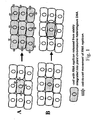
- the basic principle of the invention is shown in Figure 1 .
- the leakiness of an inducible system causes viral vector release into the cytosol and further spread to neighboring cells ( Fig. 1A ).
- Fig. 1A neighboring cells
- RNA replicon of the invention is deficient in cell-to-cell movement, whereby PTGS is practically negligible.
- Said RNA replicon is essentially confined to the cell it was released due to leakiness of the promoter ( Fig. 1B ), thus improving control over undesired expression of a protein of interest and decreasing potential negative effect of PTGS on productivity of the system.
- inducible and tissue-specific promoters can be used to trigger production of a protein of interest in plants or plant cells.
- Inducible promoters can be divided into two categories according to their induction conditions: those inducible by abiotic factors (temperature, light, chemical substances) and those that can be induced by biotic factors, for example, pathogen or pest attack. Examples of the first category include, but are not limited, heat-inducible ( US 05187287 ) and cold-inducible ( US05847102 ) promoters, a copper-inducible system ( Mett et al., 1993, Proc. Natl. Acad.
- RNA replicon release and production of a protein of interest we use an IPTG-inducible system for controlling RNA replicon release and production of a protein of interest.
- the design of exemplary constructs is described in example 1.
- a bacterial gene encoding the lacI repressor was cloned under the control of the strong constitutive 35S promoter.
- Duplicate lac operator sequences were inserted into the arabidopsis actin2 promoter that drives transcription of the RNA replicon of the invention. This system was tested using a transient expression assay as described in example 2.
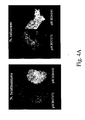
- RNA replicon release in another embodiment of the invention (example 3), we tested the ability of transgenic plants stably transformed with a construct providing for lacI repressor to repress release of an RNA replicon from a transiently delivered first heterologous nucleotide sequence under control of a promoter with lac operator sequences. It is evident from Fig. 4A that agroinfiltration of construct pICH17171 containing lac operator sequences does not give efficient RNA replicon release in contrast to a control experiment with construct pICH16141 lacking such sequences. Coinfiltration of said transgenic plants with the same constructs and 1 mM IPTG led to the induction of RNA replicon release in case of pICH17171 ( Fig.
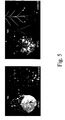
- Constructs containing a functional MP show severe background expression in the uninduced state (pICH17424, Fig. 3 , top right; Fig. 5 , control). Also, primary transformants with said constructs eventually get silenced for trangene expression, thus becoming useless for high-yield expression of a protein of interest.
- an ethanol-inducible system was used to control RNA replicon release in transgenic plants.
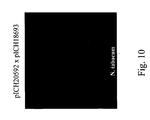
- the design of constructs is described in example 5 and a schematic presentation of the constructs is shown in Fig. 2B . Results of transient expression experiments of said constructs are shown in Fig. 6 . It is evident that the ethanol-inducible system provides for tight control over RNA replicon release, as GFP expression can be observed only in experiments where constructs with aIcR activator was coinfiltrated. Practically no background expression was observed in the absence of aIcR construct and/or the chemical inducer ethanol (negligible expression was observed in the presence of aIcR construct). Agroinfiltration of N.
- RNA replicon formation reported by strong GFP expression ( Fig. 8 ).
- no primary transformants (not even with leakiness of control over RNA replicon release) were obtained with viral constructs containing a functional MP (Example 5). This can be explained by the leakiness of the system in plant callus/cell culture ( Roberts et al., 2005, Plant Physiol., 138:1259-1267 ) due to cell-to cell movement of the RNA replicon.
- RNA virus-based vectors In the examples, we use TMV-based RNA replicons. However, many different viruses belonging to different taxonomic groups can be used for the construction of RNA virus-based vectors according to the present invention. Names of orders, families and genera are in italic script, if they are approved by the ICTV. Taxa names in quotes (and not in italic script) indicate that this taxon does not have an ICTV international approved name. Species (vernacular) names are given in regular script. Viruses with no formal assignment to genus or family are indicated):
- RNA viruses have one or more viral proteins for cell-to-cell or short distance movement.
- one protein MP
- BMV tripartite Brome Mosaic Virus
- BMV tripartite Brome Mosaic Virus
- the monopartite RNA virus potato virus X has four proteins responsible for cell-to-cell movement: proteins encoded by triple gene block (TGB) and coat protein (CP).
- TGB triple gene block
- CP coat protein
- a deficiency in one of two or more proteins required for cell-to-cell movement is enough to block efficient short distance movement of a viral vector.
- WJ Lucas 2006, Virology, 344 :169-184.
- said first heterologous nucleotide sequence has a sequence segment encoding said RNA replicon.
- said first heterologous nucleotide sequence may have more than one sequence segments that code together for said RNA replicon, i.e. said RNA replicon is not encoded by one continuous DNA.
- said RNA replicon is encoded discontinuously by two or more sequence segments, whereby said segments may be present contiguous to each other. Formation of said RNA replicon may then require rearrangement of said segments, e.g. by recombination.
- a recombinase for said recombination may be provided by an engineered plant host, thus confining the inducible expression of said viral replicon to a plant host capable of expressing said recombinase.
- a sequence segment may code for a part of said polymerase of said RNA replicon, and another sequence segment coding for another part of said polymerase may be present in said first heterologous nucleotide sequence in a flipped orientation relative to the first sequence segment.
- the flipped part may be flanked by recombination sites (see WO2004/108934 ).
- the transcript of the first heterologous nucleotide sequence or a sequence segment thereof will not be an RNA replicon, since no functional polymerase can be translated from the transcript.
- Providing a site-specific recombinase recognizing the recombination sites allows to flip one of said segments such that a replicon is encoded continuously.
- providing the recombinase may function as a switch for switching on RNA replicon formation and expression of a sequence of interest in the induced state and contributes to a high biological safety.
- said recombinase is under control of an inducible promoter.
- a recombinase may be provided to said plant or plant leaves transiently, whereby said providing may act as a switch for expressing said one or more than one protein of interest.
- a recombinase may be stably encoded in plant cells, and expressing of the recombinase under control of a constitutive or inducible promoter. Inducing recombinase expression by inducing said promoter may then cause expression of said sequence of interest.
- the recombinase will be encoded by said first heterologous nucleotide sequence and expression of the recombinase will be under the control of the inducible promoter of said first heterologous nucleotide sequence.
- both segments may be present on different T-DNAs stably incorporated in different plant chromosomes. Formation of an RNA replicon will then require transcription of both segments and trans-splicing of both transcripts for assembling said RNA replicon.
- This embodiment may be used for quickly segregating the segments that encode together said RNA replicon in progeny plants or cells as described in WO02/097080 , thus contributing to the biological safety of the system.
- transgenic plants encoding one type of RNA replicon derived from a plant virus.
- two or more different RNA replicons may be used in a transgenic plant or plant cells, whereby such different RNA replicons are preferably derived from different plant viruses.
- Such different plant viruses from which said different RNA replicons may be derived are preferably synergistic or non-competing viruses. "Synergistic" and “non-competing" are used herein synonymously. Synergistic viruses can coexist and efficiently amplify in the same plant cells.
- RNA replicons derived from synergistic RNA viruses can co-exist and efficiently amplify in the same plant cells.
- An example of such a synergistic pair of RNA replicons is a pair of RNA replicons, whereby one RNA replicon is derived from TMV and the other RNA replicon is derived from PVX.
- Such synergistic RNA replicons can be released from different expression cassettes utilising the same or different inducible promoters.
- Synergistic RNA replicons may be used for the expression of two or more proteins or protein subunits of interest, such as the heavy and the light chain of a monoclonal antibody, in the same plant cell. Processes of expressing two or more proteins of interest in the same plant or in the same plant cells using different (non-competing) viral vectors is described in WO 2006/79546 ( PCT/EP2006/000721 ).
- T-DNA contains said first and/or said second heterologous nucleotide sequence.
- Various methods may be used for the delivery of vectors into plant cells such as direct introduction of a heterologous nucleotide sequence into cells by means of microprojectile bombardment, electroporation or PEG-mediated transformation of protoplasts. Agrobacterium -mediated plant transformation is preferred.
- a heterologous nucleotide sequence may be transformed into plant cells by various technologies such as by a Ti-plasmid vector carried by Agrobacterium ( US 5,591,616 ; US 4,940,838 ; US 5,464,763 ), particle or microprojectile bombardment ( US 05100792 ; EP 00444882B1 ; EP 00434616B1 ).
- other plant transformation methods can also be used e.g. microinjection ( WO 09209696 ; WO 09400583A1 ; EP 175966B1 ), electroporation ( EP00564595B1 ; EP00290395B1 ; WO 08706614A1 ), etc.
- the choice of the transformation method depends inter alia on the plant species to be transformed. For example, microprojectile bombardment may be preferred for monocot transformation, while for dicots, Agrobacterium-mediated transformation gives generally better results.
- the present invention is preferably carried out with higher, multi-cellular plants.
- Preferred plants for the use in this invention include any plant species with preference given to agronomically and horticulturally important species.
- Common crop plants for the use in the present invention include alfalfa, barley, beans, canola, cowpeas, cotton, corn, clover, lotus, lentils, lupine, millet, oats, peas, peanuts, rice, rye, sweet clover, sunflower, sweetpea, soybean, sorghum triticale, yam beans, velvet beans, vetch, wheat, wisteria, and nut plants.
- Plant species preferred for practicing this invention include but not restricted to:
- Graminae Representatives of Graminae, Compositae, Solanacea and Rosaceae. Additionally, preferred species for use in the invention, as well as those specified above, plants from the genera: Arabidopsis, Agrostis, Allium, Antirrhinum, Apium, Arachis, Asparagus, Atropa, Avena, Bambusa, Brassica, Bromus, Browaalia, Camellia, Cannabis, Capsicum, Cicer, Chenopodium, Chichorium, Citrus, Coffea, Coix, Cucumis, Curcubita, Cynodon, Dactylis, Datura, Daucus, Digitalis, Dioscorea, Elaeis, Eleusine, Festuca, Fragaria, Geranium, Glycine, Helianthus, Heterocallis, Hevea, Hordeum, Hyoscyamus, Ipomoea, Lactuca, Lens, Lilium, Linum, Lolium, Lotus, Lycopersicon,
- RNA replicons derived from TMV are used with Nicotiana plants.
- RNA replicons derived from PVX are used with Nicotiana plants.
- Proteins of interest, or fragments thereof, that can be expressed, in sense or antisense orientation, using the invention include: starch modifying enzymes (starch synthase, starch phosphorylation enzyme, debranching enzyme, starch branching enzyme, starch branching enzyme II, granule bound starch synthase), sucrose phosphate synthase, sucrose phosphorylase, polygalacturonase, polyfructan sucrase, ADP glucose pyrophosphorylase, cyclodextrin glycosyltransferase, fructosyl transferase, glycogen synthase, pectin esterase, aprotinin, avidin, bacterial levansucrase, E .
- starch modifying enzymes starch synthase, starch phosphorylation enzyme, debranching enzyme, starch branching enzyme, starch branching enzyme II, granule bound starch synthase
- sucrose phosphate synthase suc
- coli gIgA protein MAPK4 and orthologues, nitrogen assimilation/methabolism enzyme, glutamine synthase, plant osmotin, 2S albumin, thaumatin, site-specific recombinase/integrase (FLP, Cre, R recombinase, Int, SSVI Integrase R, Integrase phiC31, or an active fragment or variant thereof), isopentenyl transferase, Sca M5 (soybean calmodulin), coleopteran type toxin or an insecticidally active fragment, ubiquitin conjugating enzyme (E2) fusion proteins, enzymes that metabolise lipids, amino acids, sugars, nucleic acids and polysaccharides, superoxide dismutase, inactive proenzyme form of a protease, plant protein toxins, traits altering fiber in fiber producing plants, Coleopteran active toxin from Bacillus thuringiensis (Bt2
- coli inorganic pyrophosphatase seed storage protein, Erwinia herbicola lycopen synthase, ACC oxidase, pTOM36 encoded protein, phytase, ketohydrolase, acetoacetyl CoA reductase, PHB (polyhydroxybutanoate) synthase, acyl carrier protein, napin, EA9, non-higher plant phytoene synthase, pTOM5 encoded protein, ETR (ethylene receptor), plastidic pyruvate phosphate dikinase, nematode-inducible transmembrane pore protein, trait enhancing photosynthetic or plastid function of the plant cell, stilbene synthase, an enzyme capable of hydroxylating phenols, catechol dioxygenase, catechol 2,3-dioxygenase, chloromuconate cycloisomerase, anthranilate synthase, Brassica A
- any human or animal protein can be expressed using the system of the invention.
- proteins of interest include inter alia the following proteins (pharmaceutical proteins): immune response proteins (monoclonal antibodies, single chain antibodies, T cell receptors etc.), antigens, colony stimulating factors, relaxins, polypeptide hormones, cytokines and their receptors, interferons, growth factors and coagulation factors, enzymatically active lysosomal enzyme, fibrinolytic polypeptides, blood clotting factors, trypsinogen, 1-antitrypsin (AAT), as well as function-conservative proteins like fusions, mutant versions and synthetic derivatives of the above proteins.
- pharmaceutical proteins include inter alia the following proteins (pharmaceutical proteins): immune response proteins (monoclonal antibodies, single chain antibodies, T cell receptors etc.), antigens, colony stimulating factors, relaxins, polypeptide hormones, cytokines and their receptors, interferons, growth factors and coagulation factors, enzymatic
- the lac repressor (Iacl, Acc. J01636) was amplified by PCR using primers IacIpr1 (SEQ ID NO: 1) (5'-gat cca tgg aac cag taa cgt tat ac-3') and laclpr2 (SEQ ID NO: 2) (5'- tc tgg ate ctc act gcc cgc ttt cca gtc g -3') and cloned as NcoI-BamHI fragment into standard binary vector pICBV1 giving construct pICH17155 ( Fig. 2A ).
- a nuclear localization signal was introduced to the N-terminus by using primer laclpr5 (SEQ ID NO: 3) (5'- cgc cat ggg ccc taa gaa gaa gag gaa ggt tga acc agt aac gtt ata cga tgt c -3') instead of IacIpr1 giving construct pICH17401 ( Fig 2A ).
- This construct was stably transformed into Nicotiana tabacum and N. benthamiana plants using standard transformation techniques ( Horsh et al., 1985, Science, 227, 1229-1231 ).
- a synthetic lac operator sequence (SEQ ID NO: 4) (aat tgt gag cgc tca caa tt) was introduced between the TATA-box and the transcriptional start of the actin2-promoter ( An et al., 1996, Plant J., 10: 107-121 ) of several viral vectors.
- primers A brb4nosph (SEQ ID NO: 5) (5'- gga acc ctg tgg ttg gca cat -3') and IacOact2pr2 (SEQ ID NO: 6) (5'- cga att gtg agc gct cac aat tta tat agg cgg gtt tat ctc -3') and primers B: lacOactpr1 (SEQ ID NO: 7) (5'- taa att gtg agc gct cac aat tcg ctt tga agt ttt agt ttt att g -3') and rdrppr4 (SEQ ID NO: 8) (5'- ttt ctgcag gaa atg aaa ggc
- the resulting product was cloned as Kpn1-SphI fragment into viral vector pICH16141 resulting in vector pICH17171.
- Additional viral vectors were derived from pICH17171 by subcloning the promoter using convenient restriction enzymes. These vectors were optimized for expression ( Marillonnet et al., 2005, Nat Biotechnol., 23:718-723 ) and contain either full MP (pICH18867) or a deletion of MP (pICH17171). Additionally, a 5'-provector ( Marillonnet et al., 2004, Proc Natl Acad Sci USA, 101:6852-6857 ) was constructed (pICH17424) that proved to be useful for transient tests (see Example 2).
- the repressor construct pICH17401 ( Fig. 2A ) was stably transformed in N. tabacum and N. benthamiana plants using standard transformation techniques ( Horsh et al., 1985, Science, 227, 1229-1231 ). Repressor-activity was demonstrated by agroinfiltration of transformed plants with lacO-containing viral constructs ( Fig. 4A ). Inducibility was tested similarly by agroinfiltration with the same constructs and including IPTG in the infiltration buffer ( Fig. 4B ).
- N. tabacum plants carrying the lacI-repressor recombinant DNA (pICH17401, Fig. 2A ) stably integrated in their genome were transformed a second time with a full viral vector construct containing the lac operator (pICH18867, Fig. 2A ).
- Several plants could be regenerated, but all of them showed more or less severe background expression of the viral vector.
- alcA promoter was amplified by PCR using primers alcApr1 (SEQ ID NO: 9) (5'- cat gaa ttc tag gat tgg atg cat gcg g -3') and alcApr2 (SEQ ID NO: 10) (5'- cag ctc gag gtc gtc ctc tcc aaa tga aat g -3') and fused as EcoRI-Xho1 fragment to TMV-based viral vectors with (pICH18969, Fig. 2B ) or without (pICH18951, Fig. 2B ) functional MP and separately to the functional viral MP (pICH19940, Fig. 2B ).
- constructs pICH18951 and pICH19940 were combined into one vector (pICH20592, Fig. 2B ). All these constructs, except pICH18969, were transformed both into N. tabacum and N. benthamiana using standard transformation techniques. It was not possible to obtain primary transformants with constructs encoding an RNA replicon with a functional MP.
- alcA promoter was also amplified using primers alcApr4 (SEQ ID NO: 11) (5'-cgc gca tgc tac tag gat tgg ata cat gcg gaa c -3') and alcApr5 (SEQ ID NO: 12) (5'- ttt ggt ctc atc aac tcc aaa tga aat gaa ctt cc -3') and cloned as SphI-BsaI fragment into the PVX-based viral vector pICH25233 replacing 35S promoter and giving construct pICH26022 ( Fig. 2C ).
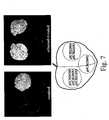
- the alcA-CP construct (pICH26356) was co-infiltrated with alcR (pICH18693) and a CP-deficient viral vector (pICH21692). Cell-to-cell movement can be detected only on plants treated with ethanol and no difference can be seen to a 35S promoter-CP construct ( Fig. 7 ).
- N. benthamiana and N. tabacum plants were transformed according to standard protocols ( Horsch et al., 1985, Science, 227, 1229-1231 ). Regenerated plants were analysed for the presence of the transgene by agroinfiltration with the alcR construct (pICH18693) and ethanol treatment. Indeed, most plants showed GFP-expression in the infiltrated part of the leaves and no background in other parts ( Fig. 8 )
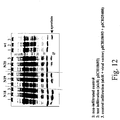
- Plasmid pICH25408 ( Fig. 11 ) was designed in the way similar to plasmid pICH20592 (see EXAMPLE 5). N. benthamiana plants were transformed with pICH25408 according to standard protocols ( Horsh et al., 1985, Science, 227, 1229-1231 ). Regenerated plants were analysed for the presence of the transgene by agroinfiltration with the alcR construct (pICH18693) and ethanol treatment followed by the analysis of recombinant protein expression by polyacrylamide gel (PAAG) electrophoresis.
- PAAG polyacrylamide gel
Landscapes
- Genetics & Genomics (AREA)
- Health & Medical Sciences (AREA)
- Life Sciences & Earth Sciences (AREA)
- Engineering & Computer Science (AREA)
- Chemical & Material Sciences (AREA)
- Biomedical Technology (AREA)
- Organic Chemistry (AREA)
- Biotechnology (AREA)
- General Engineering & Computer Science (AREA)
- Wood Science & Technology (AREA)
- Zoology (AREA)
- Bioinformatics & Cheminformatics (AREA)
- Molecular Biology (AREA)
- Biophysics (AREA)
- Microbiology (AREA)
- Plant Pathology (AREA)
- Physics & Mathematics (AREA)
- Biochemistry (AREA)
- General Health & Medical Sciences (AREA)
- Cell Biology (AREA)
- General Chemical & Material Sciences (AREA)
- Micro-Organisms Or Cultivation Processes Thereof (AREA)
- Breeding Of Plants And Reproduction By Means Of Culturing (AREA)
- Preparation Of Compounds By Using Micro-Organisms (AREA)
Abstract
Claims (15)
- Procédé pour produire une ou plusieurs protéines présentant un intérêt, comprenant les étapes consistant à :(a) se procurer une plante ou une cellule de plante comprenant(i) dans un chromosome nucléaire, une première séquence de nucléotides hétérologue comprenant :une séquence de nucléotides codant un réplicon d'ARN, etun premier promoteur inductible lié de manière fonctionnelle à ladite séquence de nucléotides codant ledit réplicon d'ARN ;ledit réplicon d'ARN ne codant pas une protéine permettant le mouvement de cellule à cellule dudit réplicon d'ARN dans ladite plante ;ledit réplicon d'ARN codant une polymérase pour la réplication dudit réplicon d'ARN et lesdites une ou plusieurs protéines présentant un intérêt ; et(ii) une deuxième séquence de nucléotides hétérologue comprenant une séquence codant une protéine permettant le mouvement de cellule à cellule dudit réplicon d'ARN, ladite deuxième séquence de nucléotides hétérologue comprenant un deuxième promoteur inductible lié de manière fonctionnelle à ladite séquence codant ladite protéine permettant un mouvement de cellule à cellule dudit réplicon d'ARN ; et(b) induire, dans ladite plante ou cellule de plante de l'étape (a), lesdits premier et deuxième promoteurs inductibles, en produisant ainsi lesdites une ou plusieurs protéines présentant un intérêt dans ladite plante ou dans ladite cellule de plante, respectivement.
- Procédé selon la revendication 1, dans lequel lesdits premier et deuxième promoteurs inductibles sont inductibles par le même signal inducteur.
- Procédé selon la revendication 1 ou 2, dans lequel ledit premier ou ledit deuxième promoteur inductible est un promoteur inductible chimiquement.
- Procédé selon la revendication 3, dans lequel ledit promoteur inductible chimiquement est choisi dans l'ensemble constitué par un promoteur inductible par l'éthanol, un promoteur inductible par l'IPTG, et un promoteur inductible par la tétracycline.
- Procédé selon l'une quelconque des revendications 1 à 4, dans lequel ledit promoteur inductible est un promoteur inductible par un choc thermique.
- Procédé selon l'une quelconque des revendications 1 à 5, dans lequel ledit réplicon d'ARN est issu d'un virus à ARN simple brin positif.
- Procédé selon la revendication 6, dans lequel ledit virus à ARN simple brin positif est le virus de la mosaïque du tabac ou le virus X de la pomme de terre.
- Procédé selon l'une quelconque des revendications 1 à 7, dans lequel ladite plante comprend une troisième séquence de nucléotides hétérologue comprenant une séquence de nucléotides codant un autre réplicon d'ARN et un troisième promoteur inductible lié de manière fonctionnelle à ladite séquence codant ledit autre réplicon d'ARN, ledit autre réplicon d'ARN ne codant pas une protéine permettant le mouvement de cellule à cellule dudit réplicon d'ARN ou dudit autre réplicon d'ARN dans ladite plante, ledit autre réplicon d'ARN codant une protéine présentant un intérêt.
- Procédé selon la revendication 8, dans lequel ladite plante comprend une séquence de nucléotides hétérologue comprenant une séquence de nucléotides codant une protéine permettant le mouvement de cellule à cellule dudit autre réplicon d'ARN lié de manière fonctionnelle à une séquence de nucléotides codant ladite protéine permettant le mouvement de cellule à cellule dudit réplicon d'ARN.
- Procédé selon la revendication 9, dans lequel ladite protéine permettant le mouvement de cellule à cellule dudit réplicon d'ARN et ladite protéine permettant le mouvement de cellule à cellule dudit autre réplicon d'ARN sont les mêmes protéines ou sont des protéines différentes.
- Procédé selon l'une quelconque des revendications 8 à 10, dans lequel ledit troisième promoteur inductible est inductible par le même agent inducteur que ledit premier promoteur inductible.
- Procédé selon l'une quelconque des revendications 8 à 11, dans lequel ledit réplicon d'ARN et ledit autre réplicon d'ARN sont des réplicons non compétitifs.
- Procédé selon la revendication 12, dans lequel lesdits réplicons non compétitifs sont des réplicons de virus de plante issus de virus de plante de différents genres viraux.
- Procédé selon l'une quelconque des revendications 1 à 13, dans lequel l'étape (a) comprend l'opération consistant à faire pousser une plante à partir d'une semence comprenant ladite première séquence de nucléotides hétérologue et éventuellement lesdites deuxième et/ou troisième séquences de nucléotides hétérologues.
- Plante ou cellule de plante comprenant(i) dans un chromosome nucléaire, une première séquence de nucléotides hétérologue comprenant une séquence de nucléotides codant un réplicon d'ARN, et un premier promoteur inductible lié de manière fonctionnelle à ladite séquence de nucléotides codant ledit réplicon d' ARN ;
ledit réplicon d'ARN ne codant pas une protéine permettant le mouvement de cellule à cellule dudit réplicon d'ARN dans ladite plante ;
ledit réplicon d'ARN codant une polymérase pour la réplication dudit réplicon d'ARN ; et(ii) une deuxième séquence de nucléotides hétérologue comprenant une séquence codant une protéine permettant le mouvement de cellule à cellule dudit réplicon d'ARN, ladite deuxième séquence de nucléotides hétérologue comprenant un deuxième promoteur inductible lié de manière fonctionnelle à ladite séquence codant ladite protéine permettant un mouvement de cellule à cellule dudit réplicon d'ARN.
Priority Applications (1)
| Application Number | Priority Date | Filing Date | Title |
|---|---|---|---|
| EP07725584A EP2029751B1 (fr) | 2006-05-29 | 2007-05-25 | Système d'expression inductible basé sur les phytovirus |
Applications Claiming Priority (4)
| Application Number | Priority Date | Filing Date | Title |
|---|---|---|---|
| EP06011002 | 2006-05-29 | ||
| US81039806P | 2006-06-02 | 2006-06-02 | |
| PCT/EP2007/004688 WO2007137788A1 (fr) | 2006-05-29 | 2007-05-25 | Système d'expression inductible basé sur les phytovirus |
| EP07725584A EP2029751B1 (fr) | 2006-05-29 | 2007-05-25 | Système d'expression inductible basé sur les phytovirus |
Publications (2)
| Publication Number | Publication Date |
|---|---|
| EP2029751A1 EP2029751A1 (fr) | 2009-03-04 |
| EP2029751B1 true EP2029751B1 (fr) | 2012-02-22 |
Family
ID=38323897
Family Applications (1)
| Application Number | Title | Priority Date | Filing Date |
|---|---|---|---|
| EP07725584A Active EP2029751B1 (fr) | 2006-05-29 | 2007-05-25 | Système d'expression inductible basé sur les phytovirus |
Country Status (9)
| Country | Link |
|---|---|
| US (1) | US8624080B2 (fr) |
| EP (1) | EP2029751B1 (fr) |
| JP (1) | JP5172828B2 (fr) |
| KR (1) | KR101515044B1 (fr) |
| AU (1) | AU2007267359B2 (fr) |
| CA (1) | CA2648886C (fr) |
| IL (1) | IL194479A (fr) |
| MX (1) | MX2008015182A (fr) |
| WO (1) | WO2007137788A1 (fr) |
Families Citing this family (26)
| Publication number | Priority date | Publication date | Assignee | Title |
|---|---|---|---|---|
| US7683238B2 (en) | 2002-11-12 | 2010-03-23 | iBio, Inc. and Fraunhofer USA, Inc. | Production of pharmaceutically active proteins in sprouted seedlings |
| US7692063B2 (en) | 2002-11-12 | 2010-04-06 | Ibio, Inc. | Production of foreign nucleic acids and polypeptides in sprout systems |
| ES2531125T3 (es) | 2003-02-03 | 2015-03-10 | Ibio Inc | Sistema para la expresión de genes en plantas |
| EP1769068B1 (fr) | 2004-02-20 | 2014-12-31 | iBio, Inc. | Systemes et methodes d'expression clonale dans des plantes |
| EP2100961A1 (fr) | 2008-03-04 | 2009-09-16 | Icon Genetics GmbH | Procédé de production de protéase dans les plantes |
| AU2009239333A1 (en) * | 2008-04-21 | 2009-10-29 | Danziger Innovations Ltd. | Plant viral expression vectors and use of same for generating genotypic variations in plant genomes |
| NO2358882T3 (fr) | 2008-11-18 | 2017-12-23 | ||
| WO2011048600A1 (fr) | 2009-10-21 | 2011-04-28 | Danziger Innovations Ltd. | Génération de variations génotypiques dans des génomes de plantes par infection d'un gamète |
| SI23374A (sl) | 2010-05-24 | 2011-11-30 | Nacionalni@inštitut@za@biologijo | Uporaba glikozidaz in glikoziltransferaz za povečano proizvodnjo proteinov |
| EP2418283A1 (fr) | 2010-08-07 | 2012-02-15 | Nomad Bioscience GmbH | Procédé de transfection de plantes |
| EP2584042A1 (fr) | 2011-10-17 | 2013-04-24 | Nomad Bioscience GmbH | Production, stockage et utilisation d'enzymes dégradant la paroi cellulaire |
| EP2647715A1 (fr) | 2012-04-03 | 2013-10-09 | Nomad Bioscience GmbH | Agrobacterium pour transfection transitoire de plantes entières |
| PL2861059T3 (pl) | 2012-06-15 | 2017-10-31 | Commw Scient Ind Res Org | Wytwarzanie długołańcuchowych wielonienasyconych kwasów tłuszczowych w komórkach roślinnych |
| CA2913068C (fr) | 2013-05-23 | 2023-01-10 | Nomad Bioscience Gmbh | Procede de production de plantes a resistance au stress abiotique |
| NZ721036A (en) | 2013-12-18 | 2023-07-28 | Grains Res & Dev Corp | Lipid comprising long chain polyunsaturated fatty acids |
| PH12016502586B1 (en) | 2014-06-27 | 2023-07-19 | Commw Scient Ind Res Org | Lipid comprising docosapentaenoic acid |
| KR20170081268A (ko) | 2014-11-27 | 2017-07-11 | 단지거 이노베이션즈 엘티디. | 게놈 편집용 핵산 구조체 |
| EP3097783B1 (fr) | 2015-05-26 | 2019-11-13 | Nomad Bioscience GmbH | Colicine m pour le contrôle de ehec |
| EP3372091A1 (fr) | 2017-03-07 | 2018-09-12 | Nomad Bioscience GmbH | Procédé de réduction de la contamination d'un objet par clostridium |
| EP3378485A1 (fr) | 2017-03-24 | 2018-09-26 | Nomad Bioscience GmbH | Bactériocines pour le contrôle de salmonella enterica |
| EP3456829A1 (fr) | 2017-09-18 | 2019-03-20 | Nomad Bioscience GmbH | Procédé d'amélioration de stabilité de vecteur potexviral |
| US11633467B2 (en) | 2018-02-15 | 2023-04-25 | Icon Genetics Gmbh | Immunogenic composition and vaccine for generating an immune response to norovirus |
| MX2021011059A (es) | 2019-03-12 | 2021-10-13 | Icon Genetics Gmbh | Particulas tipo norovirus con estabilidad mejorada. |
| JP2022536068A (ja) | 2019-06-06 | 2022-08-12 | ノマド バイオサイエンス ゲゼルシャフト ミット ベシュレンクテル ハフツング | クレブシエラの制御のためのクレビシン |
| US20230270145A1 (en) | 2020-07-16 | 2023-08-31 | Nomad Bioscience Gmbh | Products for oral consumption with reduced sugar content |
| EP4248987A1 (fr) | 2022-03-21 | 2023-09-27 | Nomad Bioscience GmbH | Bactériocines chimériques et procédé de lutte contre les pseudomonas |
Family Cites Families (4)
| Publication number | Priority date | Publication date | Assignee | Title |
|---|---|---|---|---|
| DE10121283B4 (de) * | 2001-04-30 | 2011-08-11 | Icon Genetics GmbH, 80333 | Verfahren und Vektoren zur Amplifikation oder Expression von gewünschten Nucleinsäuresequenzen in Pflanzen |
| EP1682667B1 (fr) | 2003-11-10 | 2010-05-26 | Icon Genetics GmbH | Systeme d'expression dans les vegetaux derive d'un virus à arn |
| EP1564295A1 (fr) | 2004-01-23 | 2005-08-17 | Icon Genetics AG | Système d'expression derivé des virus à ARN |
| EP1616959A1 (fr) * | 2004-07-07 | 2006-01-18 | Icon Genetics AG | Procédé d'expression transitoire de protéines dans les plantes biologiquement sur |
-
2007
- 2007-05-25 AU AU2007267359A patent/AU2007267359B2/en active Active
- 2007-05-25 JP JP2009512470A patent/JP5172828B2/ja active Active
- 2007-05-25 US US12/301,156 patent/US8624080B2/en active Active
- 2007-05-25 MX MX2008015182A patent/MX2008015182A/es active IP Right Grant
- 2007-05-25 CA CA2648886A patent/CA2648886C/fr active Active
- 2007-05-25 EP EP07725584A patent/EP2029751B1/fr active Active
- 2007-05-25 KR KR1020087027008A patent/KR101515044B1/ko active Active
- 2007-05-25 WO PCT/EP2007/004688 patent/WO2007137788A1/fr not_active Ceased
-
2008
- 2008-10-02 IL IL194479A patent/IL194479A/en active IP Right Grant
Non-Patent Citations (2)
| Title |
|---|
| ANGELL S.M.; BAULCOMBE D.C.: "Consistent gene silencing in transgenic plants expressing a replicating potato virus X RNA", THE EMBO JOURNAL, vol. 16, no. 12, 1997, pages 3675 - 3684 * |
| WERNER S. ET AL: "High-level recombinant protein expression in transgenic plants by using a double-inducible viral vector", PNAS, vol. 108, no. 34, 23 August 2011 (2011-08-23), pages 14061 - 14066 * |
Also Published As
| Publication number | Publication date |
|---|---|
| US20090282579A1 (en) | 2009-11-12 |
| KR20090029180A (ko) | 2009-03-20 |
| AU2007267359A1 (en) | 2007-12-06 |
| KR101515044B1 (ko) | 2015-05-19 |
| CA2648886A1 (fr) | 2007-12-06 |
| AU2007267359B2 (en) | 2013-03-14 |
| EP2029751A1 (fr) | 2009-03-04 |
| US8624080B2 (en) | 2014-01-07 |
| IL194479A0 (en) | 2011-08-01 |
| CA2648886C (fr) | 2015-10-20 |
| JP5172828B2 (ja) | 2013-03-27 |
| MX2008015182A (es) | 2008-12-12 |
| JP2009538606A (ja) | 2009-11-12 |
| IL194479A (en) | 2013-03-24 |
| WO2007137788A1 (fr) | 2007-12-06 |
Similar Documents
| Publication | Publication Date | Title |
|---|---|---|
| EP2029751B1 (fr) | Système d'expression inductible basé sur les phytovirus | |
| US10287602B2 (en) | RNA virus-derived plant expression system | |
| US8093458B2 (en) | Biologically safe transient protein expression in plants | |
| AU2004291658B2 (en) | RNA virus-derived plant expression system | |
| EP2976428B1 (fr) | Kits comprenant des vecteurs viraux arn simple brin positif signifiant et procédés de production de polypeptides utilisant les kits | |
| US9267143B2 (en) | RNA virus-derived plant expression system | |
| AU2004245686B2 (en) | Safe production of a product of interest in hybrid seeds | |
| CN101454456B (zh) | 植物基于病毒的诱导型表达系统 |
Legal Events
| Date | Code | Title | Description |
|---|---|---|---|
| PUAI | Public reference made under article 153(3) epc to a published international application that has entered the european phase |
Free format text: ORIGINAL CODE: 0009012 |
|
| 17P | Request for examination filed |
Effective date: 20080916 |
|
| AK | Designated contracting states |
Kind code of ref document: A1 Designated state(s): AT BE BG CH CY CZ DE DK EE ES FI FR GB GR HU IE IS IT LI LT LU LV MC MT NL PL PT RO SE SI SK TR |
|
| AX | Request for extension of the european patent |
Extension state: AL BA HR MK RS |
|
| 17Q | First examination report despatched |
Effective date: 20091126 |
|
| GRAP | Despatch of communication of intention to grant a patent |
Free format text: ORIGINAL CODE: EPIDOSNIGR1 |
|
| DAX | Request for extension of the european patent (deleted) | ||
| GRAS | Grant fee paid |
Free format text: ORIGINAL CODE: EPIDOSNIGR3 |
|
| GRAA | (expected) grant |
Free format text: ORIGINAL CODE: 0009210 |
|
| AK | Designated contracting states |
Kind code of ref document: B1 Designated state(s): AT BE BG CH CY CZ DE DK EE ES FI FR GB GR HU IE IS IT LI LT LU LV MC MT NL PL PT RO SE SI SK TR |
|
| REG | Reference to a national code |
Ref country code: GB Ref legal event code: FG4D |
|
| REG | Reference to a national code |
Ref country code: CH Ref legal event code: EP Ref country code: CH Ref legal event code: NV Representative=s name: BOHEST AG |
|
| REG | Reference to a national code |
Ref country code: AT Ref legal event code: REF Ref document number: 546538 Country of ref document: AT Kind code of ref document: T Effective date: 20120315 |
|
| REG | Reference to a national code |
Ref country code: IE Ref legal event code: FG4D |
|
| REG | Reference to a national code |
Ref country code: DK Ref legal event code: T3 |
|
| REG | Reference to a national code |
Ref country code: DE Ref legal event code: R096 Ref document number: 602007020847 Country of ref document: DE Effective date: 20120419 |
|
| REG | Reference to a national code |
Ref country code: NL Ref legal event code: T3 |
|
| REG | Reference to a national code |
Ref country code: ES Ref legal event code: FG2A Ref document number: 2382179 Country of ref document: ES Kind code of ref document: T3 Effective date: 20120606 |
|
| REG | Reference to a national code |
Ref country code: SE Ref legal event code: TRGR |
|
| LTIE | Lt: invalidation of european patent or patent extension |
Effective date: 20120222 |
|
| PG25 | Lapsed in a contracting state [announced via postgrant information from national office to epo] |
Ref country code: IS Free format text: LAPSE BECAUSE OF FAILURE TO SUBMIT A TRANSLATION OF THE DESCRIPTION OR TO PAY THE FEE WITHIN THE PRESCRIBED TIME-LIMIT Effective date: 20120622 Ref country code: LT Free format text: LAPSE BECAUSE OF FAILURE TO SUBMIT A TRANSLATION OF THE DESCRIPTION OR TO PAY THE FEE WITHIN THE PRESCRIBED TIME-LIMIT Effective date: 20120222 |
|
| PG25 | Lapsed in a contracting state [announced via postgrant information from national office to epo] |
Ref country code: LV Free format text: LAPSE BECAUSE OF FAILURE TO SUBMIT A TRANSLATION OF THE DESCRIPTION OR TO PAY THE FEE WITHIN THE PRESCRIBED TIME-LIMIT Effective date: 20120222 Ref country code: GR Free format text: LAPSE BECAUSE OF FAILURE TO SUBMIT A TRANSLATION OF THE DESCRIPTION OR TO PAY THE FEE WITHIN THE PRESCRIBED TIME-LIMIT Effective date: 20120523 Ref country code: PT Free format text: LAPSE BECAUSE OF FAILURE TO SUBMIT A TRANSLATION OF THE DESCRIPTION OR TO PAY THE FEE WITHIN THE PRESCRIBED TIME-LIMIT Effective date: 20120622 |
|
| PG25 | Lapsed in a contracting state [announced via postgrant information from national office to epo] |
Ref country code: CY Free format text: LAPSE BECAUSE OF FAILURE TO SUBMIT A TRANSLATION OF THE DESCRIPTION OR TO PAY THE FEE WITHIN THE PRESCRIBED TIME-LIMIT Effective date: 20120222 |
|
| PG25 | Lapsed in a contracting state [announced via postgrant information from national office to epo] |
Ref country code: PL Free format text: LAPSE BECAUSE OF FAILURE TO SUBMIT A TRANSLATION OF THE DESCRIPTION OR TO PAY THE FEE WITHIN THE PRESCRIBED TIME-LIMIT Effective date: 20120222 Ref country code: CZ Free format text: LAPSE BECAUSE OF FAILURE TO SUBMIT A TRANSLATION OF THE DESCRIPTION OR TO PAY THE FEE WITHIN THE PRESCRIBED TIME-LIMIT Effective date: 20120222 Ref country code: RO Free format text: LAPSE BECAUSE OF FAILURE TO SUBMIT A TRANSLATION OF THE DESCRIPTION OR TO PAY THE FEE WITHIN THE PRESCRIBED TIME-LIMIT Effective date: 20120222 Ref country code: EE Free format text: LAPSE BECAUSE OF FAILURE TO SUBMIT A TRANSLATION OF THE DESCRIPTION OR TO PAY THE FEE WITHIN THE PRESCRIBED TIME-LIMIT Effective date: 20120222 Ref country code: SI Free format text: LAPSE BECAUSE OF FAILURE TO SUBMIT A TRANSLATION OF THE DESCRIPTION OR TO PAY THE FEE WITHIN THE PRESCRIBED TIME-LIMIT Effective date: 20120222 |
|
| PG25 | Lapsed in a contracting state [announced via postgrant information from national office to epo] |
Ref country code: SK Free format text: LAPSE BECAUSE OF FAILURE TO SUBMIT A TRANSLATION OF THE DESCRIPTION OR TO PAY THE FEE WITHIN THE PRESCRIBED TIME-LIMIT Effective date: 20120222 |
|
| PLBE | No opposition filed within time limit |
Free format text: ORIGINAL CODE: 0009261 |
|
| STAA | Information on the status of an ep patent application or granted ep patent |
Free format text: STATUS: NO OPPOSITION FILED WITHIN TIME LIMIT |
|
| PG25 | Lapsed in a contracting state [announced via postgrant information from national office to epo] |
Ref country code: MC Free format text: LAPSE BECAUSE OF NON-PAYMENT OF DUE FEES Effective date: 20120531 |
|
| PGFP | Annual fee paid to national office [announced via postgrant information from national office to epo] |
Ref country code: ES Payment date: 20120525 Year of fee payment: 6 |
|
| 26N | No opposition filed |
Effective date: 20121123 |
|
| REG | Reference to a national code |
Ref country code: DE Ref legal event code: R097 Ref document number: 602007020847 Country of ref document: DE Effective date: 20121123 |
|
| PGFP | Annual fee paid to national office [announced via postgrant information from national office to epo] |
Ref country code: AT Payment date: 20120521 Year of fee payment: 6 |
|
| PG25 | Lapsed in a contracting state [announced via postgrant information from national office to epo] |
Ref country code: MT Free format text: LAPSE BECAUSE OF FAILURE TO SUBMIT A TRANSLATION OF THE DESCRIPTION OR TO PAY THE FEE WITHIN THE PRESCRIBED TIME-LIMIT Effective date: 20120222 Ref country code: BG Free format text: LAPSE BECAUSE OF FAILURE TO SUBMIT A TRANSLATION OF THE DESCRIPTION OR TO PAY THE FEE WITHIN THE PRESCRIBED TIME-LIMIT Effective date: 20120522 |
|
| PGFP | Annual fee paid to national office [announced via postgrant information from national office to epo] |
Ref country code: SE Payment date: 20130521 Year of fee payment: 7 Ref country code: DK Payment date: 20130522 Year of fee payment: 7 Ref country code: LU Payment date: 20130528 Year of fee payment: 7 Ref country code: IE Payment date: 20130521 Year of fee payment: 7 |
|
| PGFP | Annual fee paid to national office [announced via postgrant information from national office to epo] |
Ref country code: FI Payment date: 20130520 Year of fee payment: 7 Ref country code: BE Payment date: 20130521 Year of fee payment: 7 Ref country code: IT Payment date: 20130525 Year of fee payment: 7 Ref country code: NL Payment date: 20130523 Year of fee payment: 7 |
|
| PG25 | Lapsed in a contracting state [announced via postgrant information from national office to epo] |
Ref country code: TR Free format text: LAPSE BECAUSE OF FAILURE TO SUBMIT A TRANSLATION OF THE DESCRIPTION OR TO PAY THE FEE WITHIN THE PRESCRIBED TIME-LIMIT Effective date: 20120222 |
|
| REG | Reference to a national code |
Ref country code: CH Ref legal event code: PCAR Free format text: NEW ADDRESS: HOLBEINSTRASSE 36-38, 4051 BASEL (CH) |
|
| PG25 | Lapsed in a contracting state [announced via postgrant information from national office to epo] |
Ref country code: HU Free format text: LAPSE BECAUSE OF FAILURE TO SUBMIT A TRANSLATION OF THE DESCRIPTION OR TO PAY THE FEE WITHIN THE PRESCRIBED TIME-LIMIT Effective date: 20070525 |
|
| REG | Reference to a national code |
Ref country code: NL Ref legal event code: V1 Effective date: 20141201 |
|
| PG25 | Lapsed in a contracting state [announced via postgrant information from national office to epo] |
Ref country code: LU Free format text: LAPSE BECAUSE OF NON-PAYMENT OF DUE FEES Effective date: 20140525 |
|
| REG | Reference to a national code |
Ref country code: DK Ref legal event code: EBP Effective date: 20140531 |
|
| REG | Reference to a national code |
Ref country code: AT Ref legal event code: MM01 Ref document number: 546538 Country of ref document: AT Kind code of ref document: T Effective date: 20140525 |
|
| PG25 | Lapsed in a contracting state [announced via postgrant information from national office to epo] |
Ref country code: FI Free format text: LAPSE BECAUSE OF NON-PAYMENT OF DUE FEES Effective date: 20140525 Ref country code: SE Free format text: LAPSE BECAUSE OF NON-PAYMENT OF DUE FEES Effective date: 20140526 |
|
| REG | Reference to a national code |
Ref country code: SE Ref legal event code: EUG |
|
| REG | Reference to a national code |
Ref country code: IE Ref legal event code: MM4A |
|
| PG25 | Lapsed in a contracting state [announced via postgrant information from national office to epo] |
Ref country code: NL Free format text: LAPSE BECAUSE OF NON-PAYMENT OF DUE FEES Effective date: 20141201 Ref country code: AT Free format text: LAPSE BECAUSE OF NON-PAYMENT OF DUE FEES Effective date: 20140525 |
|
| PG25 | Lapsed in a contracting state [announced via postgrant information from national office to epo] |
Ref country code: IE Free format text: LAPSE BECAUSE OF NON-PAYMENT OF DUE FEES Effective date: 20140525 Ref country code: DK Free format text: LAPSE BECAUSE OF NON-PAYMENT OF DUE FEES Effective date: 20140531 Ref country code: IT Free format text: LAPSE BECAUSE OF NON-PAYMENT OF DUE FEES Effective date: 20140525 |
|
| REG | Reference to a national code |
Ref country code: ES Ref legal event code: FD2A Effective date: 20160204 |
|
| PG25 | Lapsed in a contracting state [announced via postgrant information from national office to epo] |
Ref country code: ES Free format text: LAPSE BECAUSE OF NON-PAYMENT OF DUE FEES Effective date: 20140526 |
|
| REG | Reference to a national code |
Ref country code: FR Ref legal event code: PLFP Year of fee payment: 10 |
|
| REG | Reference to a national code |
Ref country code: FR Ref legal event code: PLFP Year of fee payment: 11 |
|
| PG25 | Lapsed in a contracting state [announced via postgrant information from national office to epo] |
Ref country code: BE Free format text: LAPSE BECAUSE OF NON-PAYMENT OF DUE FEES Effective date: 20140531 |
|
| REG | Reference to a national code |
Ref country code: FR Ref legal event code: PLFP Year of fee payment: 12 |
|
| PGFP | Annual fee paid to national office [announced via postgrant information from national office to epo] |
Ref country code: DE Payment date: 20250530 Year of fee payment: 19 |
|
| PGFP | Annual fee paid to national office [announced via postgrant information from national office to epo] |
Ref country code: GB Payment date: 20250522 Year of fee payment: 19 |
|
| PGFP | Annual fee paid to national office [announced via postgrant information from national office to epo] |
Ref country code: FR Payment date: 20250521 Year of fee payment: 19 |
|
| PGFP | Annual fee paid to national office [announced via postgrant information from national office to epo] |
Ref country code: CH Payment date: 20250601 Year of fee payment: 19 |