EP2030481B1 - Herstellungsverfahren für ein organisches elektronisches bauelement - Google Patents
Herstellungsverfahren für ein organisches elektronisches bauelement Download PDFInfo
- Publication number
- EP2030481B1 EP2030481B1 EP07746468.3A EP07746468A EP2030481B1 EP 2030481 B1 EP2030481 B1 EP 2030481B1 EP 07746468 A EP07746468 A EP 07746468A EP 2030481 B1 EP2030481 B1 EP 2030481B1
- Authority
- EP
- European Patent Office
- Prior art keywords
- electrode
- layer
- metal
- electronic device
- organic
- Prior art date
- Legal status (The legal status is an assumption and is not a legal conclusion. Google has not performed a legal analysis and makes no representation as to the accuracy of the status listed.)
- Active
Links
Images



Classifications
-
- H—ELECTRICITY
- H05—ELECTRIC TECHNIQUES NOT OTHERWISE PROVIDED FOR
- H05B—ELECTRIC HEATING; ELECTRIC LIGHT SOURCES NOT OTHERWISE PROVIDED FOR; CIRCUIT ARRANGEMENTS FOR ELECTRIC LIGHT SOURCES, IN GENERAL
- H05B33/00—Electroluminescent light sources
- H05B33/10—Apparatus or processes specially adapted to the manufacture of electroluminescent light sources
-
- H—ELECTRICITY
- H10—SEMICONDUCTOR DEVICES; ELECTRIC SOLID-STATE DEVICES NOT OTHERWISE PROVIDED FOR
- H10K—ORGANIC ELECTRIC SOLID-STATE DEVICES
- H10K10/00—Organic devices specially adapted for rectifying, amplifying, oscillating or switching; Organic capacitors or resistors having potential barriers
- H10K10/80—Constructional details
- H10K10/82—Electrodes
- H10K10/84—Ohmic electrodes, e.g. source or drain electrodes
-
- H—ELECTRICITY
- H10—SEMICONDUCTOR DEVICES; ELECTRIC SOLID-STATE DEVICES NOT OTHERWISE PROVIDED FOR
- H10K—ORGANIC ELECTRIC SOLID-STATE DEVICES
- H10K50/00—Organic light-emitting devices
- H10K50/80—Constructional details
- H10K50/805—Electrodes
- H10K50/82—Cathodes
-
- H—ELECTRICITY
- H10—SEMICONDUCTOR DEVICES; ELECTRIC SOLID-STATE DEVICES NOT OTHERWISE PROVIDED FOR
- H10K—ORGANIC ELECTRIC SOLID-STATE DEVICES
- H10K59/00—Integrated devices, or assemblies of multiple devices, comprising at least one organic light-emitting element covered by group H10K50/00
- H10K59/80—Constructional details
- H10K59/805—Electrodes
- H10K59/8052—Cathodes
-
- H—ELECTRICITY
- H10—SEMICONDUCTOR DEVICES; ELECTRIC SOLID-STATE DEVICES NOT OTHERWISE PROVIDED FOR
- H10K—ORGANIC ELECTRIC SOLID-STATE DEVICES
- H10K2102/00—Constructional details relating to the organic devices covered by this subclass
- H10K2102/301—Details of OLEDs
- H10K2102/302—Details of OLEDs of OLED structures
- H10K2102/3023—Direction of light emission
- H10K2102/3026—Top emission
-
- H—ELECTRICITY
- H10—SEMICONDUCTOR DEVICES; ELECTRIC SOLID-STATE DEVICES NOT OTHERWISE PROVIDED FOR
- H10K—ORGANIC ELECTRIC SOLID-STATE DEVICES
- H10K2102/00—Constructional details relating to the organic devices covered by this subclass
- H10K2102/301—Details of OLEDs
- H10K2102/302—Details of OLEDs of OLED structures
- H10K2102/3023—Direction of light emission
- H10K2102/3031—Two-side emission, e.g. transparent OLEDs [TOLED]
Definitions
- the present invention relates to a fabrication method for an organic electronic device. More particularly, the present invention relates to a fabrication method for an organic electronic device capable of improving the electron or hole injection efficiency, and the electron or hole extracting efficiency, and the properties such as a life time by removing a native oxide layer, which is provided on the surface of an electrode made of a metal during the fabrication of the organic electronic device.
- EP 1 980 141 A1 is a late published document that falls under Art. 54(3) EPC and describes a fabrication method for an organic light emitting device and an organic light emitting device fabricated by the same method.
- JP 2004-158199 A describes a substrate for an organic EL display device and a manufacturing method of an organic EL display device.
- the organic electronic device refers to a device which requires charge exchange between an electrode and an organic material using holes and electrons.
- the organic electronic device can be largely classified into two types according to its operation principle as follows.
- One type is an electronic device having a configuration in which an exciton is formed in an organic material layer by photons flown from an external light source into the device and the exciton is separated into an electron and a hole, the formed electron and hole are transported to a different electrode, respectively and used as a current source (voltage source), and the other type is an electronic device having a configuration in which a hole and/or electron are/is injected into an organic material semiconductor forming an interface with an electrode by applying a voltage or current to two or more electrodes to allow the device to operate by means of the injected electron and hole.
- Examples of the organic electronic device include an organic light emitting device, an organic solar cell, and an organic thin film transistor, which all require a hole injecting, hole extracting or hole transporting material, an electron injecting, electron extracting or electron transporting material, or a light emitting material for driving the device.
- the organic light emitting device will be mainly and specifically described, but in the above-mentioned organic electronic devices, the hole injecting hole extracting or hole transporting material, the electron injecting, electron extracting or electron transporting material, or the light emitting material functions according to a similar principle.
- organic light emission means that electric energy is converted to light energy by using an organic material.
- the organic light emitting device (OLED) by the organic light emission has a structure usually comprising an anode, a cathode and an organic material layer interposed therebetween.
- the organic material 1 ayer may be mostly formed in a multilayer structure comprising layers of different materials, for example, the hole injecting layer, the hole transporting layer, the light emitting layer, the electron transporting layer, the electron injecting layer and the like, in order to improve efficiency and stability of the organic light emitting device.
- the organic light emitting device having such a structure, when a voltage is applied between two electrodes, holes from the anode and electrons from a cathode are injected into the organic material layer, the holes and the electrons injected are combined together to form excitons. Further, when the excitons drop to a ground state, lights are emitted.
- Such the organic light emitting device is known to have characteristics such as self-luminescence, high brightness, high efficiency, low drive voltage, wide viewing angle, high contrast and high-speed response.
- organic light emitting devices Various types are known in the related art and they may be used for different applications. Examples of an organic light emitting device include a top light emitting OLED, a bottom light emitting OLED, and a dual-sided light emitting OLED.
- bottom light emitting OLEDs are used in active matrix displays, thin film transistors (TFT) are provided in front of the source of light emission, thereby reducing the ratio of the effective display area (aperture ratio). This problem is significant in the case when sophisticated displays having many TFTs are manufactured. With respect to a bottom light emitting OLED having an aperture ratio of less than 40%, an estimated aperture ratio of a WXGA type display that includes a TFT for 14" grade is less than 20%. Such small aperture ratio negatively affects the driving power consumption and life-time of the OLED.
- a top light emitting OLED an electrode that is not in contact with a lower substrate, that is, an upper electrode, is substantially transparent in a visible ray region.
- a transparent electrode that is used to form the upper electrode of the top light emitting OLED is formed of a conductive oxide, such as IZO (indium zinc oxide) or ITO (indium tin oxide).
- IZO indium zinc oxide
- ITO indium tin oxide
- an electrode that is in contact with the substrate is typically made of metal.
- the dual-sided light emitting OLED includes a transparent upper electrode.
- the top light emitting OLED When fabricating the top light emitting OLED, after a metal electrode is deposited on a substrate, an undesirable native oxide layer is formed on the surface of the metal electrode.
- the metal electrode when the metal electrode is patterned by using photolithography and etching processes during the fabrication of an organic light emitting device, the metal electrode is exposed to moisture and oxygen, causing the native oxide layer to be formed on the metal electrode.
- the native oxide layer reduces properties of the metal electrode, that is, inhibits the electron injecting or the hole injecting, thus reducing efficiency and luminance of the organic light emitting device.
- One process to prevent the native oxide layer from being formed on the metal electrode is to form an organic material layer on the deposited metal electrode in situ. During the process, since the metal electrode is not exposed to air, the oxide layer is not formed on the surface of the metal electrode. However, it is costly and difficult to perform the process under vacuum. A raw material supplier sometimes supplies a substrate, on the surface of which a metal electrode is layered, while the substrate is exposed to air before an organic material is deposited.
- a layer is formed on an electrode made of a metal using a metal having a higher oxidation rate than the electrode and then treated with plasma, effectively to remove a native oxide layer formed on the metal electrode, thereby improving electron or hole injecting and extracting property of the electrode to improve the properties such as electron injecting efficiency, low driving voltage and life-time.
- the present invention provides a method of fabricating an organic electronic device by sequentially stacking a first electrode made of a metal, one or more organic material layers, and a second electrode on a substrate, wherein the method comprises the steps of:
- the method of fabricating an organic electronic device comprises a step of stacking sequentially a first electrode made of a metal, one or more organic material layers, and a second electrode on a substrate, wherein the method further comprises the steps of: forming a layer on the first electrode using a metal having a higher oxidation rate than the first electrode before forming the organic material layer, and treating the layer with plasma.
- the material forming the layer is a metal itself having a higher oxidation rate than the first electrode, regardless of a change in the state of the layer due to an oxidation-reduction reaction even after its forming.
- a first electrode Upon fabricating the organic electronic device, a first electrode can be exposed to air during patterning process, resulting in a native oxide layer, for example, aluminum oxide film (Al 2 O 3 ) layer on its surface.
- the native oxide layer prevents the electron or hole injecting and extracting properties of the first electrode. Consequently, it becomes difficult to operate the organic electronic device.
- a layer formed on the first electrode using a metal having a higher oxidation rate than the first electrode before forming the organic material layer can be treated with plasma, in order to remove the native oxide layer formed on the first electrode in the production process of a device. It will be more specifically described as follows.
- the "oxidation rate” means the degree of increase in the oxygen content after reacting with oxygen, relative to that before reacting with oxygen.
- the layer is substantially formed on a native oxide layer formed on the first electrode.
- an oxidation-reduction reaction is occurred as following: [Reaction Formula 1] M x O y +yR ⁇ xM+yRO
- M is the type of metal used for forming a first electrode
- R is the type of metal used for forming a layer on the first electrode, which is the metal having a higher oxidation rate than the metal used for forming the layer on the first electrode
- x and y are each a molar ratio.
- a layer is formed on a native oxide layer on the first electrode using a metal having a higher oxidation rate than the first electrode, the native oxide layer reacts with the metal having a higher oxidation rate than the metal forming the first electrode.
- a metal layer is newly formed, instead of a native oxide layer associated with the first electrode formed on the first electrode, and the metal oxide layer is formed of a metal having a higher oxidation rate than the first electrode thereon, instead of a metal layer having a higher oxidation rate than the first electrode.
- a native oxide layer formed on the first electrode is aluminum oxide (Al 2 O 3 ).
- a thin film is deposited on the aluminum oxide layer using Ca.
- the thin film formed using Ca is preferably 1 to 10 nm.
- the Ca reacts with Al 2 O 3 as follows: [Reaction Formula 2] Al 2 O 3 + Ca ⁇ 2Al + 3CaO
- the two layers are newly formed by the reaction between the two materials, thereby improving an electron injecting property of an organic light emitting device.
- the organic electronic device according to the invention has excellent electron or hole injecting efficiency, and electron or hole extracting efficiency, as well as an excellent light emitting property, life-time characteristics, and the like.
- a metal having a higher oxidation rate than the first electrode has, but not limited thereto, an oxide formation energy ( ⁇ f H°), which is no less than the MgO formation energy, -635.09 kJ/mol.
- Examples of the metal having a higher oxidation rate than the first electrode include alkali metals, alkaline earth metals, and a mixture thereof, in particular, Ca, Mg, Ca/ Ag, and Mg/Ag. Since Li is unstable in air, it is difficult to deposit. However, in the case of using a method to permit stable deposition of Li, Li can be used.
- the alkali metals, the alkaline earth metals, or a mixture thereof can prevent the formation of a native oxide layer by taking oxygen on the surface of a first electrode formed of the metal due to its strong oxidizing power, as well as reduce or remove the native oxide layer by reacting with the native oxide layer already formed.
- a layer formed by using a metal having a higher oxidation rate than the first electrode can be formed by using a method such as a thermal evaporation, a sputtering, an e-beam evaporation, an ion beam evaporation, but are not limited thereto.
- a layer formed by using a metal having a higher oxidation rate than the first electrode can be formed by a vacuum thermal evaporation at about 10 -7 torr and a temperature in the range of 600°C to 900°C for about 10 to 20 seconds. But, in this case, the electrode on which the metal is deposited maintains preferably at normal temperature.
- the material forming the layer has to be the metal itself having a higher oxidation rate than the first electrode. If the layer is formed by using a metal oxide, the effects according to the above principles cannot be obtained.
- the layer formed by using a metal having a higher oxidation rate than the first electrode can include at least one sub-layer.
- the layer formed by using a metal having a higher oxidation rate than the first electrode is formed in a thin thickness, preferably 1 to 10 nm.
- a native oxide layer which prevents an electron or hole injection and extraction, can be effectively reduced or removed.
- a metal having a higher oxidation rate than the first electrode forming a layer with a thickness of several nanometers may react partially or entirely with a native oxide layer on the first electrode formed of the metal, or may form an oxide by reacting with the surrounding air or moisture.
- the layer formed on the native oxide layer of the first electrode by using a metal having a higher oxidation rate than the first electrode is treated with oxygen plasma to form a metal oxide layer.
- oxygen plasma treatment promotes the reaction of the native oxide layer with a metal having a higher oxidation rate than the first electrode to lower the binding energy of the native oxide layer.
- the native oxide layer changes to be the form of the metal oxide layer (for example, aluminum calcium oxide (AlCaO x )) having lower binding energy than the known oxide (for example, aluminum oxide (Al 2 O 3 )).
- the condition of the oxygen plasma treatment is preferably an RF power of 60 to 100 W, an oxygen flow rate of 20 to 50 sccm (Standard Cubic Centimeter per Minute), a pressure of 10 to 20 mtorr, and a time 30 to 100 seconds.
- the oxide layer on the first electrode is treated by plasma etching with an inert gas, preferably an inert gas with higher ion mass, using the effect of ion bombardment. Subsequently, the oxide layer can be easily separated to remove completely. In the case of using dry etching instead of ion bombardment etching, the oxide layer is not removed to remain.
- an inert gas preferably an inert gas with higher ion mass
- the inert gas having high ion mass examples include argon (Ar), krypton (Kr), xenon (Xe), and radon (Rn) (Ar ⁇ Kr ⁇ Xe ⁇ Rn) are preferable and argon is more preferable.
- the condition of the inert gas plasma treatment is preferably an RF power of 300 to 600 W, an inert gas flow rate of 5 to 20 seem (Standard Cubic Centimeter per Minute), a pressure of 5 to 20 mtorr, and a time of 200 to 500 seconds.
- the reaction of the native oxide layer on the first electrode of the organic electronic device with a metal having a higher oxidation rate than the first electrode is promoted so as to lower the binding energy of the native oxide layer by oxygen plasma treatment, and plasma etching is performed using an inert gas with higher ion mass by the effect of ion bombardment to separate the oxide layer easily, thereby effectively removing the native oxide layer on the first electrode of the organic light emitting device.
- a metal having a higher oxidation rate than the first electrode functions to change an energy level of the surface of the first electrode, thereby making an electron or hole injection and extraction easy by tunneling.
- a layer formed by using a metal having a higher oxidation rate than the first electrode is formed only on the selective region of the first electrode using a shadow mask, the layer connected to a pixel not to connect with the adjacent pixels, thereby avoiding the current leakage from the side.
- pixels can be separated to the side by the insulation.
- the layer is not extended over the side insulation between the adjacent pixels, thereby avoiding the current leakage from the side.
- An organic electronic device fabricated by a method according to the invention may be similar to an organic electronic device fabricated by a known method in the related art, with a first electrode, one or more organic material layers and a second electrode using the known materials, except that a layer formed by using a metal having a higher oxidation rate than a first electrode is placed between the first electrode and an organic material layer.
- the first electrode may be formed of at least one metal layer.
- the metal used for forming the first electrode include aluminum, molybdenum, chromium, magnesium, calcium, sodium, potassium, titanium, indium, yttrium, lithium, gadolinium, silver, tin, lead, and an alloy thereof, but are not limited thereto.
- an aluminum electrode with a relatively high reflectivity (>50%) is more preferable.
- the metal materials may be deposited on a substrate by a deposition method such as thermal evaporation or sputtering. And also, it may be formed to be an electrode by patterning by the known method in the related art, such as photolithography and etching.
- An organic electronic device fabricated by a method according to one embodiment of the invention may be an organic light emitting device having the structure of Fig. 11 . That is, the anode (2) is formed on the substrate (1), the organic material layer such as the hole injecting layer (3), the hole transporting layer (4), the light emitting layer (5), or the electron transporting layer (6), is formed thereon, and then the cathode (7) can be deposited thereon.
- the organic light emitting device may be applied to a top emission type, a bottom emission type, or a dual emission type, in particular, preferably a top emission type or a dual emission type.
- the organic light emitting device may have a forward structure, in which a first electrode is an anode, and a second electrode is a cathode. At this time, the hole injecting property of the device can be improved by a layer formed between the first electrode and the organic material layer. Further, the organic light emitting device according to the invention may have a reverse structure, in which a first electrode is a cathode, and a second electrode is an anode. At this time, the electron injecting property of the device can be improved by a layer formed between the first electrode and the organic material layer.
- the second electrode may be formed of transparent conductive materials. Likewise in the first electrode, the second electrode may be formed of at least one layer. In the case where the organic light emitting device according to the invention is a top emission type or a dual emission type, the second electrode has to transmit light, whereby transparent materials with a low reflectivity, for example, indium tin oxide (ITO) or indium zinc oxide (IZO), are generally used as the materials for the second electrode.
- transparent materials with a low reflectivity for example, indium tin oxide (ITO) or indium zinc oxide (IZO) are generally used as the materials for the second electrode.
- the organic material layer may be a monolayered structure or a multilayered structure comprising at least two layers, depending on the type of an organic material. That is, in the case of using an organic material having a hole and electron transporting property, as well as a light emitting property, the organic material layer may be formed in a monolayered structure. Meanwhile, at least two organic material layers formed of an organic material having at least one property of a hole injecting, a hole transporting, a light emitting, an electron transporting, and an electron injecting property is deposited to produce a multilayered structure.
- the organic material layer may further comprise an electron injecting layer or a hole injecting layer, in addition to a light emitting layer. Among these layers, one layer may be formed on the layer formed by using a metal having a higher oxidation rate than the first electrode.
- the organic material layers may be formed of an organic material including imidazole, oxazole and thiazole.
- the organic material layer may be formed by depositing an organic material with a metal having a low work function, such as Li, Cs, Na, Mg, Sc, Ca, K, Ce, Eu.
- Alkali metal fluoride may be effectively employable for the electron injecting layer. Lithium fluoride (LiF) is more preferable because of its excellent electron injecting property.
- the organic material layer can be prepared using spin coating, dip coating, doctor blading, screen printing, ink jet printing, and heat transfer processes other than a deposit process.
- a cathode is formed by depositing aluminum on a transparent glass substrate using sputtering or thermal evaporation. And then, a native oxide (Al 2 O 3 ) layer is formed on the aluminum electrode during a photoresistor process and an etching process, whereby electron injecting efficiency is decreased.
- a metal having a higher oxidation rate than the first electrode such as alkali metal, alkaline earth metal or a mixture thereof, is deposited by sputtering or thermal evaporation or the like, and then treated with oxygen plasma and inert gas plasma.
- An organic material layer such as an electron injecting layer, an electron transporting layer, a light emitting layer, a hole transporting layer, and a hole injecting layer, is formed thereon.
- a transparent anode material in addition to IZO (Indium Zinc Oxide) used as the second electrode, is deposited thereon to produce an organic light emitting device.
- an organic light emitting device can be fabricated in a reverse structure (inverted structure; top emission), in which on a substrate, a cathode, an organic material layer and an anode are staked in this order.
- an organic light emitting device can be also fabricated in a forward structure, in which on a substrate, an anode, an organic material layer and a cathode are staked in this order.
- the organic electronic device fabricated by a method according to one embodiment of the present invention is an organic thin film transistor
- its structure may be a structure of Fig. 12 or Fig. 13 . That is, the structure may be a structure comprising an insulating layer (9), a gate electrode (10), a source electrode (11), a drain electrode (12), and an organic material layer (13).
- the organic electronic device fabricated by a method according to one embodiment of the present invention is an organic solar cell
- its structure may be a structure of Fig. 14 . That is, the structure may a structure which an anode (15), an electron donor layer (16), an electron acceptor layer (17), and cathode (18) are sequentially stacked.
- the native oxide on the first electrode of the substrate is effectively removed, whereby the final product does not contain the native oxide layer between the first electrode and the organic material layer. Accordingly, the organic electronic device fabricated by the method according to the present invention has excellent electron or hole injecting and extracting property, and excellent properties of the device such as light emitting or life-time, as compared with the conventional organic electronic device.
- an aluminum electrode layer was formed to a thickness of 150 nm by a photoresist and etching, and on the formed electrode layer, calcium (Ca) was coated by thermal vacuum deposition under 10 -7 torr and inert gas (N 2 or Ar) atmosphere at 700°C for 10 seconds to form a layer having a thicknesses of 2 nm.
- the deposited layer formed is treated with oxygen plasma with the following treatment condition.
- the native oxide layer changed into a metal oxide layer (for example, aluminum calcium oxide (Al 2 CaO 4 )) having a lower binding energy than a known oxide (for example, aluminum oxide) by the oxygen plasma treatment.
- a metal oxide layer for example, aluminum calcium oxide (Al 2 CaO 4 )
- Al 2 CaO 4 aluminum calcium oxide
- a known oxide for example, aluminum oxide
- the aluminum calcium oxide was performed with the argon plasma treatment.
- the condition of the argon plasma treatment is preferably an RF power of 500 W, an argon flow rate of 10 sccm (Standard Cubic Centimeter per Minute), a pressure of 10 mtorr, and a time of 300 seconds.
- a LiF layone in the form ofer as an electron injecting material was formed on the layer to a thickness of 1.5 nm and an electron transporting layer (the following electron transporting material), a light emitting layer(Alq 3 ), a hole transporting layer (NPB; 4,4'-bis[N-(1-naphtyl)-N-phenylamino]biphenyl), and a hole injecting layer (the following hole injecting material (hexanitrile hexaazatriphenylene, HAT)) as an organic material layer can be sequentially stacked thereon in a thickness of 20 nm, 30 nm, 40 nm, and 50 nm, respectively.
- a transparent IZO electrode as a hole injecting electrode is formed on the above organic material layer by sputtering to a thickness of 150 nm to fabricate an organic light emitting device.
- An organic light emitting device was fabricated in the same manner as in Example 1, except that a layer was formed with a thickness of 3.0 nm using magnesium (Mg) instead of Ca.
- An organic light emitting device was fabricated in the same manner as in Example 1, except that a layer was formed with a thickness of 3.0 nm using cesium (Cs) instead of Ca.
- Cs cesium
- Comparative Example 1 Fabrication of organic light emitting device without electron injecting layer
- An organic light emitting device was fabricated in the same manner as in Example 1, except that the deposited layer was formed using Ca on the aluminum electrode and then treated with oxygen plasma and argon plasma, without the electron injecting layer. The electron injecting property of the fabricated organic light emitting device was confirmed.
- An organic light emitting device was fabricated in the same manner as in Example 1, except that the deposited layer was not formed using Ca on the aluminum electrode, the oxygen plasma treatment and argon plasma treatment were not performed, and the electron injecting layer was not inserted. The electron injecting property of the fabricated organic light emitting device was confirmed.
- An organic light emitting device was fabricated in the same manner as in Example 1, except that the deposited layer was not formed using Ca on the aluminum electrode, and the oxygen plasma treatment and argon plasma treatment were performed.
- An organic light emitting device was fabricated in the same manner as in Example 1, except that the deposited layer was not formed using Ca on the aluminum electrode, and oxygen plasma treatment was performed without treating with argon plasma.
- An organic light emitting device was fabricated in the same manner as in Example 1, except that the deposited layer was not formed using Ca on the aluminum electrode, and MgO was directly deposited on the aluminum electrode to form a layer.
- Comparative Example 6 Fabrication of organic light emitting device in which plasma treatment is not performed after deposition of alkali metal
- An organic light emitting device was fabricated in the same manner as in Example 1, except that the deposited layer was formed using Ca on the aluminum electrode, and the oxygen and argon plasma treatment were not performed.
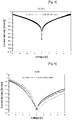
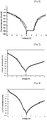
- the electron injecting layer (LiF) is omitted. Therefore, the electron injecting efficiency of the organic light emitting device was found to be asymmetric. That is, upon treating as the above mentioned, it was found that the oxide layer was removed but the electron injecting effect is reduced.
- the efficiency of removing the native oxide layer was found to be reduced, as compared to the case of depositing the alkali metal oxide or alkaline earth metal oxide.
Landscapes
- Physics & Mathematics (AREA)
- Optics & Photonics (AREA)
- Engineering & Computer Science (AREA)
- Manufacturing & Machinery (AREA)
- Electroluminescent Light Sources (AREA)
- Thin Film Transistor (AREA)
Claims (13)
- Ein Verfahren zur Herstellung einer organischen elektronischen Vorrichtung durch sequentielles Übereinanderanordnen einer ersten aus einem Metall gemachten Elektrode, einer oder mehrerer Organisches-Material-Schichten und einer zweiten Elektrode auf einem Substrat, wobei das Verfahren aufweist die Schritte:1) Ausbilden einer Schicht auf einer Natürliches-Oxid-Schicht auf der ersten Elektrode unter Verwendung eines Metalls, das eine höhere Oxidationsrate als die erste Elektrode hat, vor dem Ausbilden der Organisches-Material-Schicht,2) Behandeln der Schicht, die durch die Verwendung eines Metalls ausgebildet wird, das eine höhere Oxidationsrate als die erste Elektrode hat, mit Sauerstoffplasma, um die Natürliches-Oxid-Schicht in eine Metalloxid-Schicht zu wandeln,
und wobei das Verfahren gekennzeichnet ist durch3) Behandeln der Metalloxid-Schicht mit Inertgasplasma, um die Metalloxid-Schicht auf der ersten Elektrode zu entfernen. - Das Verfahren zur Herstellung der organischen elektronischen Vorrichtung gemäß Anspruch 1, wobei die erste Elektrode aus einem Material ausgebildet wird, das aus der Gruppe ausgewählt wird, die aus Aluminium, Molybdän, Chrom, Magnesium, Calcium, Natrium, Kalium, Titan, Indium, Yttrium, Lithium, Gadolinium, Silber, Zinn, Blei und einer Legierung davon besteht.
- Das Verfahren zur Herstellung der organischen elektronischen Vorrichtung gemäß Anspruch 1, wobei das Metall, das eine höhere Oxidationsrate als die erste Elektrode hat, aus Alkalimetall, Erdalkalimetall und einer Mischung davon ausgewählt wird.
- Das Verfahren zur Herstellung der organischen elektronischen Vorrichtung gemäß Anspruch 1, wobei die Schicht, die durch die Verwendung des Metalls ausgebildet wird, das eine höhere Oxidationsrate als die erste Elektrode hat, bis zu einer Dicke von 1 bis 10 nm ausgebildet wird.
- Das Verfahren zur Herstellung der organischen elektronischen Vorrichtung gemäß Anspruch 1, wobei die Schicht, die durch die Verwendung eines Metalls ausgebildet wird, das eine höhere Oxidationsrate als die erste Elektrode hat, nur auf dem ausgewählten Bereich der Oberfläche der ersten Elektrode durch die Verwendung einer Schattenmaske ausgebildet wird.
- Das Verfahren zur Herstellung der organischen elektronischen Vorrichtung gemäß Anspruch 1, wobei das Inertgas Argon (Ar), Krypton (Kr), Xenon (Xe) oder Radon (Rn) ist.
- Das Verfahren zur Herstellung der organischen elektronischen Vorrichtung gemäß Anspruch 1, wobei die Bedingung für die Sauerstoffplasma-Behandlung eine HF-Leistung von 60 bis 100 W, eine Inertgas-Strömungsrate von 20 bis 50 sccm, ein Druck von 10 bis 20 mTorr und eine Zeit von 30 bis 100 Sekunden ist.
- Das Verfahren zur Herstellung der organischen elektronischen Vorrichtung gemäß Anspruch 1, wobei die Bedingung der Inertgasplasma-Behandlung eine HF-Leistung von 300 bis 600 W, eine Inertgas-Strömungsrate von 5 bis 20 sccm, ein Druck von 5 bis 20 mTorr und eine Zeit von 200 bis 500 Sekunden ist.
- Das Verfahren zur Herstellung der organischen elektronischen Vorrichtung gemäß Anspruch 1, wobei die organische elektronische Vorrichtung eine organische lichtemittierende Vorrichtung, ein organischer Dünnschichttransistor oder eine organische Solarzelle ist.
- Das Verfahren zur Herstellung der organischen elektronischen Vorrichtung gemäß Anspruch 9, wobei die erste Elektrode eine Anode ist und die zweite Elektrode eine Kathode ist.
- Das Verfahren zur Herstellung der organischen elektronischen Vorrichtung gemäß Anspruch 9, wobei die erste Elektrode eine Kathode ist und die zweite Elektrode eine Anode ist.
- Das Verfahren zur Herstellung der organischen elektronischen Vorrichtung gemäß Anspruch 9, wobei von den Organisches-Material-Schichten eine Schicht, die Kontakt mit der Schicht hat, die durch die Verwendung von Metall ausgebildet wird, das eine höhere Oxidationsrate als die erste Elektrode hat, eine Elektronen-Injektionsschicht oder eine Loch-Injektionsschicht ist.
- Das Verfahren zur Herstellung der organischen elektronischen Vorrichtung gemäß Anspruch 9, wobei die organische lichtemittierende Vorrichtung von einem toplichtemittierendem Typ oder einem duallichtemittierendem Typ ist.
Applications Claiming Priority (2)
| Application Number | Priority Date | Filing Date | Title |
|---|---|---|---|
| KR20060041872 | 2006-05-10 | ||
| PCT/KR2007/002315 WO2007129874A1 (en) | 2006-05-10 | 2007-05-10 | Fabrication method for organic electronic device and organic electronic device fabricated by the same method |
Publications (3)
| Publication Number | Publication Date |
|---|---|
| EP2030481A1 EP2030481A1 (de) | 2009-03-04 |
| EP2030481A4 EP2030481A4 (de) | 2011-06-01 |
| EP2030481B1 true EP2030481B1 (de) | 2019-03-06 |
Family
ID=38667937
Family Applications (1)
| Application Number | Title | Priority Date | Filing Date |
|---|---|---|---|
| EP07746468.3A Active EP2030481B1 (de) | 2006-05-10 | 2007-05-10 | Herstellungsverfahren für ein organisches elektronisches bauelement |
Country Status (6)
| Country | Link |
|---|---|
| US (2) | US8338223B2 (de) |
| EP (1) | EP2030481B1 (de) |
| JP (1) | JP4908583B2 (de) |
| KR (1) | KR100865445B1 (de) |
| CN (1) | CN101438627B (de) |
| WO (1) | WO2007129874A1 (de) |
Families Citing this family (12)
| Publication number | Priority date | Publication date | Assignee | Title |
|---|---|---|---|---|
| KR101352237B1 (ko) * | 2008-08-13 | 2014-01-16 | 엘지디스플레이 주식회사 | 유기전계발광표시장치의 제조방법 |
| JP2010153365A (ja) * | 2008-11-19 | 2010-07-08 | Semiconductor Energy Lab Co Ltd | 発光素子、発光装置、電子機器及び照明装置 |
| GB2467357B (en) * | 2009-01-30 | 2011-09-21 | Cambridge Display Tech Ltd | Organic thin film transistors |
| US8598020B2 (en) * | 2010-06-25 | 2013-12-03 | Applied Materials, Inc. | Plasma-enhanced chemical vapor deposition of crystalline germanium |
| WO2012086609A1 (ja) * | 2010-12-22 | 2012-06-28 | 三菱化学株式会社 | 電界効果トランジスタ、その製造方法及びそれを有する電子デバイス |
| JP5969216B2 (ja) | 2011-02-11 | 2016-08-17 | 株式会社半導体エネルギー研究所 | 発光素子、表示装置、照明装置、及びこれらの作製方法 |
| US9865690B2 (en) * | 2012-04-10 | 2018-01-09 | Qorvo Us, Inc. | Methods for fabricating a metal structure for a semiconductor device |
| CN107946477B (zh) * | 2013-05-21 | 2020-09-25 | Lg化学株式会社 | 包封薄膜和使用该包封薄膜包封有机电子装置的方法 |
| KR102045374B1 (ko) * | 2013-07-31 | 2019-12-02 | 엘지디스플레이 주식회사 | 상부 발광형 유기 발광 소자 및 그의 제조방법 |
| US9530853B2 (en) | 2014-03-10 | 2016-12-27 | Qorvo Us, Inc. | Semiconductor device with reduced leakage current and method for making the same |
| KR102887192B1 (ko) | 2020-11-10 | 2025-11-17 | 삼성디스플레이 주식회사 | 표시 장치 및 표시 장치의 제조 방법 |
| CN115241322A (zh) * | 2022-06-22 | 2022-10-25 | 通威太阳能(安徽)有限公司 | 电极的去氧化方法、电池的制备方法、电池和电子产品 |
Citations (1)
| Publication number | Priority date | Publication date | Assignee | Title |
|---|---|---|---|---|
| JP2004158199A (ja) * | 2002-11-01 | 2004-06-03 | Tohoku Pioneer Corp | 有機el表示デバイス用基板および有機el表示デバイスの製造方法 |
Family Cites Families (16)
| Publication number | Priority date | Publication date | Assignee | Title |
|---|---|---|---|---|
| US4736229A (en) * | 1983-05-11 | 1988-04-05 | Alphasil Incorporated | Method of manufacturing flat panel backplanes, display transistors and displays made thereby |
| US5559399A (en) | 1992-06-11 | 1996-09-24 | Norden Systems, Inc. | Low resistance, thermally stable electrode structure for electroluminescent displays |
| JPH08185973A (ja) * | 1994-12-27 | 1996-07-16 | Fuji Xerox Co Ltd | 有機電界発光素子およびその製造方法 |
| ATE247372T1 (de) * | 1996-09-04 | 2003-08-15 | Cambridge Display Tech Ltd | Lichtemittierende organische vorrichtungen mit verbesserter kathode |
| JPH1126169A (ja) * | 1997-07-04 | 1999-01-29 | Tdk Corp | 有機el素子およびその製造方法 |
| US6016033A (en) * | 1997-07-11 | 2000-01-18 | Fed Corporation | Electrode structure for high resolution organic light-emitting diode displays and method for making the same |
| US6277726B1 (en) * | 1998-12-09 | 2001-08-21 | National Semiconductor Corporation | Method for decreasing contact resistance of an electrode positioned inside a misaligned via for multilevel interconnects |
| KR100341536B1 (ko) | 1999-05-17 | 2002-06-22 | 포만 제프리 엘 | 유기물 발광 디바이스 및 그 제조 방법 |
| US20030022438A1 (en) * | 2001-07-24 | 2003-01-30 | Motorola, Inc. | Dynamic threshold-voltage field effect transistors and methods |
| US7161291B2 (en) * | 2002-09-24 | 2007-01-09 | Dai Nippon Printing Co., Ltd | Display element and method for producing the same |
| US6946319B2 (en) | 2003-05-29 | 2005-09-20 | Osram Opto Semiconductors Gmbh | Electrode for an electronic device |
| EP1713136B1 (de) * | 2005-04-13 | 2007-12-12 | Novaled AG | Anordnung für eine organische Leuchtdiode vom pin-Typ und Verfahren zum Herstellen |
| KR100693610B1 (ko) * | 2005-06-30 | 2007-03-14 | 현대자동차주식회사 | 엘피아이 엔진의 연료 공급 장치 |
| CN100387101C (zh) * | 2005-07-01 | 2008-05-07 | 中山大学 | 一种提高有机电致发光器件寿命的方法 |
| KR100761112B1 (ko) | 2006-01-13 | 2007-09-21 | 엘지전자 주식회사 | 전계발광소자의 제조방법 |
| KR100844788B1 (ko) | 2006-02-03 | 2008-07-07 | 주식회사 엘지화학 | 유기발광소자의 제조방법 및 이에 의하여 제조된유기발광소자 |
-
2007
- 2007-05-10 KR KR1020070045681A patent/KR100865445B1/ko active Active
- 2007-05-10 US US12/227,144 patent/US8338223B2/en active Active
- 2007-05-10 EP EP07746468.3A patent/EP2030481B1/de active Active
- 2007-05-10 CN CN2007800165820A patent/CN101438627B/zh active Active
- 2007-05-10 WO PCT/KR2007/002315 patent/WO2007129874A1/en not_active Ceased
- 2007-05-10 JP JP2009509436A patent/JP4908583B2/ja active Active
-
2012
- 2012-07-18 US US13/552,112 patent/US20120280222A1/en not_active Abandoned
Patent Citations (1)
| Publication number | Priority date | Publication date | Assignee | Title |
|---|---|---|---|---|
| JP2004158199A (ja) * | 2002-11-01 | 2004-06-03 | Tohoku Pioneer Corp | 有機el表示デバイス用基板および有機el表示デバイスの製造方法 |
Also Published As
| Publication number | Publication date |
|---|---|
| US20120280222A1 (en) | 2012-11-08 |
| KR20070109925A (ko) | 2007-11-15 |
| JP4908583B2 (ja) | 2012-04-04 |
| WO2007129874A1 (en) | 2007-11-15 |
| EP2030481A1 (de) | 2009-03-04 |
| JP2009536439A (ja) | 2009-10-08 |
| CN101438627A (zh) | 2009-05-20 |
| US8338223B2 (en) | 2012-12-25 |
| EP2030481A4 (de) | 2011-06-01 |
| KR100865445B1 (ko) | 2008-10-28 |
| US20090108254A1 (en) | 2009-04-30 |
| CN101438627B (zh) | 2010-09-08 |
Similar Documents
| Publication | Publication Date | Title |
|---|---|---|
| EP2030481B1 (de) | Herstellungsverfahren für ein organisches elektronisches bauelement | |
| CN100493288C (zh) | 发光装置及其制作方法 | |
| KR100975780B1 (ko) | 전계발광 소자 및 그를 이용한 발광 장치 | |
| US8962382B2 (en) | Fabrication method for organic light emitting device and organic light emitting device fabricated by the same method | |
| CN103081159B (zh) | 有机发光器件及其制备方法 | |
| JP2010050095A (ja) | 有機発光素子 | |
| US20040239239A1 (en) | Electroluminescent device and method for manufacturing the same | |
| US20090167169A1 (en) | Organic light emitting diode and method for manufacturing the same | |
| CN101405366B (zh) | 有机发光器件的制备方法及使用该方法制备的有机发光器件 | |
| JP6387547B2 (ja) | 有機el素子とその製造方法、および金属酸化物膜の成膜方法 | |
| US8502205B2 (en) | Organic light emitting diode device and method of manufacturing the same | |
| CN101379885B (zh) | 有机发光器件的制备方法及由该方法制备的有机发光器件 | |
| CN100544529C (zh) | 有机电致发光显示装置及其制造方法 | |
| JPH1145780A (ja) | 有機el素子 | |
| KR100907132B1 (ko) | 유기 전기 발광 소자의 제조방법 | |
| JP2006040583A (ja) | 有機エレクトロルミネセンス素子及びその製造方法、並びに、有機エレクトロルミネセンス表示装置 | |
| CN114203927A (zh) | 一种柔性黄光有机发光二极管及其制备方法 | |
| JP2004335142A (ja) | 有機発光素子 | |
| JP2010073548A (ja) | 有機el素子及びその製造方法、並びに有機el表示装置 |
Legal Events
| Date | Code | Title | Description |
|---|---|---|---|
| PUAI | Public reference made under article 153(3) epc to a published international application that has entered the european phase |
Free format text: ORIGINAL CODE: 0009012 |
|
| 17P | Request for examination filed |
Effective date: 20081110 |
|
| AK | Designated contracting states |
Kind code of ref document: A1 Designated state(s): AT BE BG CH CY CZ DE DK EE ES FI FR GB GR HU IE IS IT LI LT LU LV MC MT NL PL PT RO SE SI SK TR |
|
| AX | Request for extension of the european patent |
Extension state: AL BA HR MK RS |
|
| RIN1 | Information on inventor provided before grant (corrected) |
Inventor name: KIM, JUNG-BUM RESEARCH PARK Inventor name: LEE, JUNG-HYOUNG |
|
| RIN1 | Information on inventor provided before grant (corrected) |
Inventor name: KIM, JUNG-BUM RESEARCH PARK Inventor name: LEE, JUNG-HYOUNGC/O LG CHEM, LTD. |
|
| A4 | Supplementary search report drawn up and despatched |
Effective date: 20110504 |
|
| DAX | Request for extension of the european patent (deleted) | ||
| 17Q | First examination report despatched |
Effective date: 20121219 |
|
| RAP1 | Party data changed (applicant data changed or rights of an application transferred) |
Owner name: LG DISPLAY CO., LTD. |
|
| STAA | Information on the status of an ep patent application or granted ep patent |
Free format text: STATUS: EXAMINATION IS IN PROGRESS |
|
| REG | Reference to a national code |
Ref country code: DE Ref legal event code: R079 Ref document number: 602007057777 Country of ref document: DE Free format text: PREVIOUS MAIN CLASS: H05B0033100000 Ipc: H01L0051100000 |
|
| GRAP | Despatch of communication of intention to grant a patent |
Free format text: ORIGINAL CODE: EPIDOSNIGR1 |
|
| STAA | Information on the status of an ep patent application or granted ep patent |
Free format text: STATUS: GRANT OF PATENT IS INTENDED |
|
| RIC1 | Information provided on ipc code assigned before grant |
Ipc: H01L 51/10 20060101AFI20180830BHEP Ipc: H01L 51/56 20060101ALI20180830BHEP Ipc: H01L 51/52 20060101ALI20180830BHEP |
|
| INTG | Intention to grant announced |
Effective date: 20180920 |
|
| GRAS | Grant fee paid |
Free format text: ORIGINAL CODE: EPIDOSNIGR3 |
|
| GRAA | (expected) grant |
Free format text: ORIGINAL CODE: 0009210 |
|
| STAA | Information on the status of an ep patent application or granted ep patent |
Free format text: STATUS: THE PATENT HAS BEEN GRANTED |
|
| AK | Designated contracting states |
Kind code of ref document: B1 Designated state(s): AT BE BG CH CY CZ DE DK EE ES FI FR GB GR HU IE IS IT LI LT LU LV MC MT NL PL PT RO SE SI SK TR |
|
| REG | Reference to a national code |
Ref country code: GB Ref legal event code: FG4D |
|
| REG | Reference to a national code |
Ref country code: CH Ref legal event code: EP Ref country code: AT Ref legal event code: REF Ref document number: 1105733 Country of ref document: AT Kind code of ref document: T Effective date: 20190315 |
|
| REG | Reference to a national code |
Ref country code: DE Ref legal event code: R096 Ref document number: 602007057777 Country of ref document: DE |
|
| REG | Reference to a national code |
Ref country code: IE Ref legal event code: FG4D |
|
| REG | Reference to a national code |
Ref country code: NL Ref legal event code: FP |
|
| REG | Reference to a national code |
Ref country code: LT Ref legal event code: MG4D |
|
| PG25 | Lapsed in a contracting state [announced via postgrant information from national office to epo] |
Ref country code: LT Free format text: LAPSE BECAUSE OF FAILURE TO SUBMIT A TRANSLATION OF THE DESCRIPTION OR TO PAY THE FEE WITHIN THE PRESCRIBED TIME-LIMIT Effective date: 20190306 Ref country code: FI Free format text: LAPSE BECAUSE OF FAILURE TO SUBMIT A TRANSLATION OF THE DESCRIPTION OR TO PAY THE FEE WITHIN THE PRESCRIBED TIME-LIMIT Effective date: 20190306 Ref country code: SE Free format text: LAPSE BECAUSE OF FAILURE TO SUBMIT A TRANSLATION OF THE DESCRIPTION OR TO PAY THE FEE WITHIN THE PRESCRIBED TIME-LIMIT Effective date: 20190306 |
|
| PG25 | Lapsed in a contracting state [announced via postgrant information from national office to epo] |
Ref country code: BG Free format text: LAPSE BECAUSE OF FAILURE TO SUBMIT A TRANSLATION OF THE DESCRIPTION OR TO PAY THE FEE WITHIN THE PRESCRIBED TIME-LIMIT Effective date: 20190606 Ref country code: LV Free format text: LAPSE BECAUSE OF FAILURE TO SUBMIT A TRANSLATION OF THE DESCRIPTION OR TO PAY THE FEE WITHIN THE PRESCRIBED TIME-LIMIT Effective date: 20190306 Ref country code: GR Free format text: LAPSE BECAUSE OF FAILURE TO SUBMIT A TRANSLATION OF THE DESCRIPTION OR TO PAY THE FEE WITHIN THE PRESCRIBED TIME-LIMIT Effective date: 20190607 |
|
| REG | Reference to a national code |
Ref country code: AT Ref legal event code: MK05 Ref document number: 1105733 Country of ref document: AT Kind code of ref document: T Effective date: 20190306 |
|
| PG25 | Lapsed in a contracting state [announced via postgrant information from national office to epo] |
Ref country code: SK Free format text: LAPSE BECAUSE OF FAILURE TO SUBMIT A TRANSLATION OF THE DESCRIPTION OR TO PAY THE FEE WITHIN THE PRESCRIBED TIME-LIMIT Effective date: 20190306 Ref country code: IT Free format text: LAPSE BECAUSE OF FAILURE TO SUBMIT A TRANSLATION OF THE DESCRIPTION OR TO PAY THE FEE WITHIN THE PRESCRIBED TIME-LIMIT Effective date: 20190306 Ref country code: EE Free format text: LAPSE BECAUSE OF FAILURE TO SUBMIT A TRANSLATION OF THE DESCRIPTION OR TO PAY THE FEE WITHIN THE PRESCRIBED TIME-LIMIT Effective date: 20190306 Ref country code: RO Free format text: LAPSE BECAUSE OF FAILURE TO SUBMIT A TRANSLATION OF THE DESCRIPTION OR TO PAY THE FEE WITHIN THE PRESCRIBED TIME-LIMIT Effective date: 20190306 Ref country code: CZ Free format text: LAPSE BECAUSE OF FAILURE TO SUBMIT A TRANSLATION OF THE DESCRIPTION OR TO PAY THE FEE WITHIN THE PRESCRIBED TIME-LIMIT Effective date: 20190306 Ref country code: ES Free format text: LAPSE BECAUSE OF FAILURE TO SUBMIT A TRANSLATION OF THE DESCRIPTION OR TO PAY THE FEE WITHIN THE PRESCRIBED TIME-LIMIT Effective date: 20190306 Ref country code: PT Free format text: LAPSE BECAUSE OF FAILURE TO SUBMIT A TRANSLATION OF THE DESCRIPTION OR TO PAY THE FEE WITHIN THE PRESCRIBED TIME-LIMIT Effective date: 20190706 |
|
| PG25 | Lapsed in a contracting state [announced via postgrant information from national office to epo] |
Ref country code: PL Free format text: LAPSE BECAUSE OF FAILURE TO SUBMIT A TRANSLATION OF THE DESCRIPTION OR TO PAY THE FEE WITHIN THE PRESCRIBED TIME-LIMIT Effective date: 20190306 |
|
| REG | Reference to a national code |
Ref country code: DE Ref legal event code: R097 Ref document number: 602007057777 Country of ref document: DE |
|
| REG | Reference to a national code |
Ref country code: CH Ref legal event code: PL |
|
| PG25 | Lapsed in a contracting state [announced via postgrant information from national office to epo] |
Ref country code: AT Free format text: LAPSE BECAUSE OF FAILURE TO SUBMIT A TRANSLATION OF THE DESCRIPTION OR TO PAY THE FEE WITHIN THE PRESCRIBED TIME-LIMIT Effective date: 20190306 Ref country code: IS Free format text: LAPSE BECAUSE OF FAILURE TO SUBMIT A TRANSLATION OF THE DESCRIPTION OR TO PAY THE FEE WITHIN THE PRESCRIBED TIME-LIMIT Effective date: 20190706 |
|
| PLBE | No opposition filed within time limit |
Free format text: ORIGINAL CODE: 0009261 |
|
| STAA | Information on the status of an ep patent application or granted ep patent |
Free format text: STATUS: NO OPPOSITION FILED WITHIN TIME LIMIT |
|
| PG25 | Lapsed in a contracting state [announced via postgrant information from national office to epo] |
Ref country code: CH Free format text: LAPSE BECAUSE OF NON-PAYMENT OF DUE FEES Effective date: 20190531 Ref country code: LI Free format text: LAPSE BECAUSE OF NON-PAYMENT OF DUE FEES Effective date: 20190531 Ref country code: MC Free format text: LAPSE BECAUSE OF FAILURE TO SUBMIT A TRANSLATION OF THE DESCRIPTION OR TO PAY THE FEE WITHIN THE PRESCRIBED TIME-LIMIT Effective date: 20190306 Ref country code: DK Free format text: LAPSE BECAUSE OF FAILURE TO SUBMIT A TRANSLATION OF THE DESCRIPTION OR TO PAY THE FEE WITHIN THE PRESCRIBED TIME-LIMIT Effective date: 20190306 |
|
| REG | Reference to a national code |
Ref country code: BE Ref legal event code: MM Effective date: 20190531 |
|
| 26N | No opposition filed |
Effective date: 20191209 |
|
| PG25 | Lapsed in a contracting state [announced via postgrant information from national office to epo] |
Ref country code: SI Free format text: LAPSE BECAUSE OF FAILURE TO SUBMIT A TRANSLATION OF THE DESCRIPTION OR TO PAY THE FEE WITHIN THE PRESCRIBED TIME-LIMIT Effective date: 20190306 Ref country code: LU Free format text: LAPSE BECAUSE OF NON-PAYMENT OF DUE FEES Effective date: 20190510 |
|
| PG25 | Lapsed in a contracting state [announced via postgrant information from national office to epo] |
Ref country code: TR Free format text: LAPSE BECAUSE OF FAILURE TO SUBMIT A TRANSLATION OF THE DESCRIPTION OR TO PAY THE FEE WITHIN THE PRESCRIBED TIME-LIMIT Effective date: 20190306 |
|
| PG25 | Lapsed in a contracting state [announced via postgrant information from national office to epo] |
Ref country code: IE Free format text: LAPSE BECAUSE OF NON-PAYMENT OF DUE FEES Effective date: 20190510 |
|
| PG25 | Lapsed in a contracting state [announced via postgrant information from national office to epo] |
Ref country code: BE Free format text: LAPSE BECAUSE OF NON-PAYMENT OF DUE FEES Effective date: 20190531 |
|
| PG25 | Lapsed in a contracting state [announced via postgrant information from national office to epo] |
Ref country code: CY Free format text: LAPSE BECAUSE OF FAILURE TO SUBMIT A TRANSLATION OF THE DESCRIPTION OR TO PAY THE FEE WITHIN THE PRESCRIBED TIME-LIMIT Effective date: 20190306 |
|
| PG25 | Lapsed in a contracting state [announced via postgrant information from national office to epo] |
Ref country code: MT Free format text: LAPSE BECAUSE OF FAILURE TO SUBMIT A TRANSLATION OF THE DESCRIPTION OR TO PAY THE FEE WITHIN THE PRESCRIBED TIME-LIMIT Effective date: 20190306 Ref country code: HU Free format text: LAPSE BECAUSE OF FAILURE TO SUBMIT A TRANSLATION OF THE DESCRIPTION OR TO PAY THE FEE WITHIN THE PRESCRIBED TIME-LIMIT; INVALID AB INITIO Effective date: 20070510 |
|
| REG | Reference to a national code |
Ref country code: DE Ref legal event code: R079 Ref document number: 602007057777 Country of ref document: DE Free format text: PREVIOUS MAIN CLASS: H01L0051100000 Ipc: H10K0010800000 |
|
| PGFP | Annual fee paid to national office [announced via postgrant information from national office to epo] |
Ref country code: DE Payment date: 20250320 Year of fee payment: 19 |
|
| PGFP | Annual fee paid to national office [announced via postgrant information from national office to epo] |
Ref country code: GB Payment date: 20260324 Year of fee payment: 20 |
|
| PGFP | Annual fee paid to national office [announced via postgrant information from national office to epo] |
Ref country code: NL Payment date: 20260324 Year of fee payment: 20 |
|
| PGFP | Annual fee paid to national office [announced via postgrant information from national office to epo] |
Ref country code: FR Payment date: 20260323 Year of fee payment: 20 |