EP2034716A2 - Verfahren zur Bestimmung der Reichweite mithilfe von Ausgabesignalen - Google Patents
Verfahren zur Bestimmung der Reichweite mithilfe von Ausgabesignalen Download PDFInfo
- Publication number
- EP2034716A2 EP2034716A2 EP08252975A EP08252975A EP2034716A2 EP 2034716 A2 EP2034716 A2 EP 2034716A2 EP 08252975 A EP08252975 A EP 08252975A EP 08252975 A EP08252975 A EP 08252975A EP 2034716 A2 EP2034716 A2 EP 2034716A2
- Authority
- EP
- European Patent Office
- Prior art keywords
- gain
- ccd
- signals
- output signal
- multiplication
- Prior art date
- Legal status (The legal status is an assumption and is not a legal conclusion. Google has not performed a legal analysis and makes no representation as to the accuracy of the status listed.)
- Withdrawn
Links
Images




Classifications
-
- H—ELECTRICITY
- H04—ELECTRIC COMMUNICATION TECHNIQUE
- H04N—PICTORIAL COMMUNICATION, e.g. TELEVISION
- H04N17/00—Diagnosis, testing or measuring for television systems or their details
- H04N17/002—Diagnosis, testing or measuring for television systems or their details for television cameras
-
- H—ELECTRICITY
- H04—ELECTRIC COMMUNICATION TECHNIQUE
- H04N—PICTORIAL COMMUNICATION, e.g. TELEVISION
- H04N25/00—Circuitry of solid-state image sensors [SSIS]; Control thereof
- H04N25/50—Control of the SSIS exposure
- H04N25/51—Control of the gain
-
- H—ELECTRICITY
- H04—ELECTRIC COMMUNICATION TECHNIQUE
- H04N—PICTORIAL COMMUNICATION, e.g. TELEVISION
- H04N25/00—Circuitry of solid-state image sensors [SSIS]; Control thereof
- H04N25/70—SSIS architectures; Circuits associated therewith
- H04N25/71—Charge-coupled device [CCD] sensors; Charge-transfer registers specially adapted for CCD sensors
- H04N25/713—Transfer or readout registers; Split readout registers or multiple readout registers
-
- H—ELECTRICITY
- H04—ELECTRIC COMMUNICATION TECHNIQUE
- H04N—PICTORIAL COMMUNICATION, e.g. TELEVISION
- H04N25/00—Circuitry of solid-state image sensors [SSIS]; Control thereof
- H04N25/70—SSIS architectures; Circuits associated therewith
- H04N25/71—Charge-coupled device [CCD] sensors; Charge-transfer registers specially adapted for CCD sensors
- H04N25/72—Charge-coupled device [CCD] sensors; Charge-transfer registers specially adapted for CCD sensors using frame transfer [FT]
-
- H—ELECTRICITY
- H04—ELECTRIC COMMUNICATION TECHNIQUE
- H04N—PICTORIAL COMMUNICATION, e.g. TELEVISION
- H04N25/00—Circuitry of solid-state image sensors [SSIS]; Control thereof
- H04N25/70—SSIS architectures; Circuits associated therewith
- H04N25/71—Charge-coupled device [CCD] sensors; Charge-transfer registers specially adapted for CCD sensors
- H04N25/75—Circuitry for providing, modifying or processing image signals from the pixel array
Definitions
- the present invention relates to a CCD device, and in particular to a CCD which provides gain within the charge domain.
- signal charge representative of incident radiation is accumulated in an array of pixels in an image area. Following an integration period, signal charge is transferred to a store section and then to an output register by applying appropriate clocking or drive pulses to control electrodes. The signal charge is then read out from the output register and applied to a charge detection circuit to produce a voltage that is representative of the amount of signal charge.
- the sensitivity of such a device is limited by the noise of the charge to voltage conversion process and that introduced by the subsequent video chain electronics.
- a CCD imager 1 comprises an image area 2, a store section 3 and an output or read-out register 4, each of these components being found in a conventional CCD imager.
- the output register 4 is extended serially to give a multiplication register 5, the output of which is connected to a charge detection circuit 6.
- incident radiation is converted at the image area 2 into signal charge which is representative of the intensity of the radiation impinging on the array of pixels making up the image array.
- drive pulses are applied to control electrodes 7 to transfer the charge accumulated at the pixels of the image area 2 to the store section 3.
- drive signals are also applied to control electrodes 8 at the store section 3 to cause charge to be transferred from row to row as indicated by the arrow, the last row of charge held in elements in row 3 being transferred in parallel to the output register 4.
- the multiplication register is of similar architecture to the output register in so far as doping is concerned with the addition of an electrode for multiplication.
- the output of the charge detection circuit 6 is also applied to an automatic gain control circuit 11 that adjusts the voltages applied to the multiplication register 5 to control the gain. In other embodiments, this feedback arrangement is omitted. Gain may then be controlled manually if desired.
- the gain control circuit can vary the gain provided by varying the voltages applied to the multiplication register, we have appreciated the need to determine the actual level of gain provided by such a CCD charge multiplication arrangement.
- One way to measure the gain is to inject a known amount of signal into the multiplication register and monitor the output. The difficulty with this approach is knowing what the input signal is. Typically this signal will be below the noise floor of the video chain if multiplication gain is not applied. Therefore measuring the signal with and without gain is not a practical proposition.
- the approach usually taken to measure the gain is to illuminate the device and to measure the output with no multiplication gain.
- the light level is then reduced by a known fraction (by reducing the aperture of the optics or using neutral density filters for example).
- the reduction of light level will be of the same order as the gain to be measured.
- Multiplication gain is then applied and the output signal is measured.
- the multiplication gain can be calculated knowing the output signal and the reduction in light level. This method can give accurate results but is cumbersome and not particularly suitable for automatic measurements within a camera system.
- the invention provides a method and a CCD device in which a plurality of multiplication elements provide charge multiplication.
- the method operates by measuring two or more samples of an output signal from the CCD from which the gain at given settings of the CCD is derived.
- the method and device do not require any determination of the illumination level incident on the CCD, or determination of a charge input to the CCD.
- the present embodiment comprises a CCD device such as a CCD imager operated in a manner that allows derivation of the gain using output signals without requiring knowledge of the illumination level incident upon the CCD, or knowledge of an input signal level.
- a CCD device such as a CCD imager operated in a manner that allows derivation of the gain using output signals without requiring knowledge of the illumination level incident upon the CCD, or knowledge of an input signal level.
- the invention is embodied in a method of operating a CCD device or operating an apparatus incorporating a CCD device, such as a camera.
- the invention is also embodied in an apparatus, such as a camera, configurable by hardware or software to operate the gain calibration method.
- the embodying method and apparatus derive the gain of an electron multiplying CCD by two or more measurements of an output signal and also measurements of parameters such as drive voltages or temperature, which may be referred to as operational parameters of the CCD device.
- a known device is shown and has been described in relation to Figure 1 .
- the invention may be embodied in such a device, and in an imager or camera including such a device.
- the arrangement of a multiplication register and elements within that register to which the invention may be applied will first be described with reference to figures 1 to 3 .
- an image area 2 accumulates charge in CCD elements and transfers charge under control of clocked drive pulses on electrodes 7, 8 to a store area 3 and from the store area to an output register 4 and subsequently to a multiplication register 5.
- a store area 3 accumulates charge in CCD elements and transfers charge under control of clocked drive pulses on electrodes 7, 8 to a store area 3 and from the store area to an output register 4 and subsequently to a multiplication register 5.
- an output register 4 Although shown as a straight-line extension of the output register 4, in reality it will probably be bent around the imager for packaging reasons.
- a multiplication element of known type is shown in Figure 2 .
- the element comprises a base 20 of p-type silicon, an n-type layer 22 and a gate dielectric layer 24 which may, as an example, comprise a layer of Si3N4 over SiO2 or SiO2 only.
- a gate dielectric layer 24 which may, as an example, comprise a layer of Si3N4 over SiO2 or SiO2 only.
- each element has four electrodes shown as normal clocked electrodes ⁇ 1 26 and ⁇ 3 28, a DC electrode ⁇ DC 30 and a high voltage electrode ⁇ 2HV 32.
- the element provides gain by clocking voltages at the electrodes such that a relatively high voltage at electrode ⁇ HV 32 causes impact ionisation of charge.
- FIG. 3 A schematic cross section of a single multiplication element is given in Figure 3 .
- the multiplication element of the multiplication register is made up of four phases although other configurations could be possible.
- ⁇ 1 and ⁇ 3 are clocked as normal readout register phases.
- ⁇ DC is a DC phase that separates ⁇ 1 from ⁇ 2.
- the high voltage electrode ⁇ 2, the multiplication phase is a clocked phase but using a much greater amplitude than ⁇ 1 and ⁇ 3.
- the signal originally under ⁇ 1 will drift to ⁇ 2.
- the potential on ⁇ 2 is set high enough so that the fields experienced by the electron signal will cause impact ionisation to take place.
- the total amplified signal can then be transferred to ⁇ by switching ⁇ 2 low and ⁇ high.
- the process is repeated through all the gain (multiplication) elements in the multiplication register.
- each multiplication element is dependent on the potential applied between the high voltage electrode ( ⁇ 2) and the preceding DC phase ( ⁇ dc) as shown in Figure 4 .
- any number of these elements can be employed in sequence so that when charge leaves one element it enters the next.
- the fraction of signal added for each multiplication element is the same (ignoring statistical variations).
- N will be between 400 and 600. For an N of 600 and an ⁇ of 1.2% the total gain is 1283.
- the gain from the sensor could be estimated by knowing the characteristics of the sensor (such as shown in Figure 4 ). Knowing the clock amplitudes and DC biases the gain can then be calculated. However, the gain characteristics vary with temperature as shown in Figure 4 . Also the characteristics can change with operational time. The multiplication gain drops as the device is used and increasing ⁇ 2 amplitude is required to maintain the gain. This is known as ageing. The rate of ageing depends on many factors including the total signal passing through the multiplication register and the multiplication gain being employed. Fortunately the rate of ageing decreases with operating time enabling useful operation over many years. However, the temperature dependence and ageing means that the gain cannot sensibly be assumed and if the value of gain is required it will have to be measured.
- the method of the present invention enables a convenient measurement of gain that can be easily implemented within an existing system.
- the measurement can take place whilst viewing a scene with light incident on the device.
- Equation 1 can be rewritten as G ⁇ 1 + N ⁇ ⁇ ⁇ exp cV N ⁇ is independent of V but dependent on temperature and time.
- equation 2 can be simplified to give G ⁇ exp N ⁇ ⁇ ⁇ exp cV
- the mean signal out of the device is S 1 for a signal, S in , prior to multiplication and the difference between high level of ⁇ 2 pulse and the ⁇ DC phase is V 1 .
- the multiplication gain can be calculated without needing to know the exact temperature of the device or how much it has aged.
- V 2 would be chosen so that S 2 is roughly 10% of S 1 . Equation (6) becomes obvious if V 2 is so low that close to unity gain is achieved.
- V 2 should be set so that the multiplication gain is greater than unity and S 2 is above the noise floor of the video chain.
- the value of S 1 or S 2 may be obtained by averaging a number of frames, either on-chip or off chip.
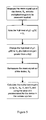
- a chart summarising the method for measuring gain embodying the invention is given in Figure 5 .
- the mean signal S 1 from the CCD sensor is measured with the voltage applied to the multiplication stage set to provide the desired output level. This can be done while the CCD is imaging a scene.
- the mean signal S 1 may be the sum of signal derived from all pixels of a given line, frame or even multiple frames. The choice of how the signal S 1 is derived will depend upon factors such as the amount of noise, rate of change of the scene being imaged and so on.
- the key point is that the signal S 1 should be representative of the signal gain provided by the CCD with the first voltage setting V 1 .
- the voltage level V 1 is noted either by detecting the voltage applied or by knowing the voltage applied by the control circuitry at a second step.
- the drive voltage applied is then changed to a second voltage V 2 , in a third step, and then in a fourth step the mean signal out of the CCD S 2 is measured with the second voltage setting.
- the mean signal S 2 is measured on the same basis, such as the average signal level from pixels of a whole frame.
- the CCD continues to image the same scene.
- the sample mean output signals are taken in quick succession, such as from consecutive frames such that there will be very little variation in the mean signal level. This assumes that the scene being viewed does not change mean illumination level rapidly.
- the gain is calculated using the values obtained for V 1 V 2 S 1 and S 2 and the value c which is a predetermined constant for the device.
- c should be determined either at the operating temperature, or over the range of expected operating temperatures. The value of c does not change with time.
- a system that incorporates the method would comprise the usual EMCCD drive and output circuits shown in Figure 1 .
- the recording of the output signal preferably a mean output signal (temporally and spatially filtered), along with a measurement or recording of the applied potential difference between the high level of the ⁇ 2 pulse and the ⁇ DC phase can be achieve with purpose designed hardware or a more general purpose processor and software.
- Such hardware or processor and software can include a method for (i) changing the bias voltage applied (ii) for storing the value or values of c (iii) for calculating the multiplication gain using the signal and potential values.
- the calculation will be undertaken within a DSP or FPGA but it could be envisaged that the calculation be performed using analogue techniques.
- the method is also ideally suited to a computer controlled camera system where all the calculations can be undertaken within the computer.
- Equation 1 can thus be rewritten as G ⁇ 1 + ⁇ ⁇ b - T N where ⁇ is independent of T but is a function of applied bias and time.
- Equation 7 can be simplified to give G ⁇ exp N ⁇ ⁇ b - T
- Equation (9) can be used to calculate the gain at the operating temperature if the output signal at this temperature and the output signal at a different temperature are known.
- G output signal, S out , divided by the input signal we have from equation (10)
- the gain can be calculated using (12) with a knowledge of the constant c.
- the gain can be calculated using (13) with a knowledge of the constant b.
- a device embodying the invention is shown in schematic form in figure 7 and comprises a CCD 1, a charge detection circuit 6 and an automatic gain control circuit 11 as previously described.
- the automatic gain control circuit provides a feedback signal to the CCD drive circuitry to control the drive voltage such that the required level of output signal is given.
- the absolute level of gain would not be known.
- the device incorporates a processor 40 arranged to receive an output signal from the CCD 1 via the charge detection circuit 6. In this mode the processor governs the CCD operation and the automatic gain control does not control the gain.
- the processor includes memory and logic so as to sample the output signal from output 44 and to store the sample for a given setting of the operational parameters such as drive voltage or at a given temperature.
- the CCD is then operated with different operational parameters. Typically this is by the processor instructing the CCD drive circuitry to apply a different drive voltage or by causing a change of temperature and the processor takes a second sample signal from output signal line 44.
- the processor then computes the gain as previously described.
- the processor 40 is arranged to produce at least first and second signals with the two different settings of operational parameters.
- the first and second signals are derived from at least a plurality of pixels, more likely from multiple lines of pixels and preferably from whole frames of pixels.
- the gain at a given setting of operational parameters may be derived from the rate of charge of the output signal with the operational parameter (Voltage or temperature). Accordingly, the output signal may be sampled at multiple settings of the operational parameters to derive the rate of charge of signal with operational parameter.
- a particularly efficient method is to sample the output signal as the CCD device is cooled from ambient temperature to an operational temperature.
- part of the start sequence each time the device is used is to accurately determine the gain at given voltage and temperature settings.
- the processor may be implemented as a programmed DSP or could be a general purpose PC running appropriate software.
- the implementation as a DSP is particularly applicable to application in a camera in which the DSP could automatically determine the gain periodically during operation of the camera.
- the implementation as a PC is applicable to applications such as scientific applications. In such scientific applications, the alternative of varying the temperature may be particularly useful.
- the technique could be implemented by sampling the output signal as the CCD is cooled to its normal operating temperature so that a number of samples at different temperatures are taken. From these samples and measurements of the temperature the gain can be calculated. Similarly, if using variation of voltage, a range of different drive voltages could be scanned and an output sample taken at each from which the gain is determined.
Landscapes
- Engineering & Computer Science (AREA)
- Multimedia (AREA)
- Signal Processing (AREA)
- Health & Medical Sciences (AREA)
- Biomedical Technology (AREA)
- General Health & Medical Sciences (AREA)
- Transforming Light Signals Into Electric Signals (AREA)
- Solid State Image Pick-Up Elements (AREA)
Applications Claiming Priority (1)
| Application Number | Priority Date | Filing Date | Title |
|---|---|---|---|
| GBGB0717484.0A GB0717484D0 (en) | 2007-09-07 | 2007-09-07 | Gain measurement method |
Publications (2)
| Publication Number | Publication Date |
|---|---|
| EP2034716A2 true EP2034716A2 (de) | 2009-03-11 |
| EP2034716A3 EP2034716A3 (de) | 2012-10-24 |
Family
ID=38640446
Family Applications (1)
| Application Number | Title | Priority Date | Filing Date |
|---|---|---|---|
| EP08252975A Withdrawn EP2034716A3 (de) | 2007-09-07 | 2008-09-08 | Verfahren zur Bestimmung der Reichweite mithilfe von Ausgabesignalen |
Country Status (4)
| Country | Link |
|---|---|
| US (1) | US8054363B2 (de) |
| EP (1) | EP2034716A3 (de) |
| JP (1) | JP2009105891A (de) |
| GB (1) | GB0717484D0 (de) |
Families Citing this family (14)
| Publication number | Priority date | Publication date | Assignee | Title |
|---|---|---|---|---|
| JP5330001B2 (ja) * | 2009-01-30 | 2013-10-30 | 浜松ホトニクス株式会社 | 固体撮像装置 |
| JP5698036B2 (ja) * | 2010-04-21 | 2015-04-08 | 株式会社日立国際電気 | 撮像システム、撮像装置および感度制御方法 |
| US8493492B2 (en) | 2010-12-14 | 2013-07-23 | Truesense Imaging, Inc. | Method of producing an image with pixel signals produced by an image sensor that includes multiple output channels |
| US8553126B2 (en) | 2010-12-14 | 2013-10-08 | Truesense Imaging, Inc. | Image sensor with charge multiplication |
| US8773564B2 (en) | 2010-12-14 | 2014-07-08 | Truesense Imaging, Inc. | Image sensor with charge multiplication |
| US8479374B2 (en) | 2010-12-14 | 2013-07-09 | Truesense Imaging, Inc. | Method of producing an image sensor having multiple output channels |
| US8493491B2 (en) | 2010-12-14 | 2013-07-23 | Truesense Imaging, Inc. | Methods for processing an image captured by an image sensor having multiple output channels |
| CN103683963B (zh) * | 2013-11-19 | 2016-06-15 | 浙江大学 | 采用三绕组高频变压器程控调幅的emccd驱动电路 |
| GB201516701D0 (en) * | 2015-09-21 | 2015-11-04 | Innovation & Business Dev Solutions Ltd | Time of flight distance sensor |
| US9930276B2 (en) | 2016-01-14 | 2018-03-27 | Semiconductor Components Industries, Llc | Methods for clocking an image sensor |
| US9905608B1 (en) | 2017-01-11 | 2018-02-27 | Semiconductor Components Industries, Llc | EMCCD image sensor with stable charge multiplication gain |
| GB201704452D0 (en) | 2017-03-21 | 2017-05-03 | Photonic Vision Ltd | Time of flight sensor |
| CN110687423B (zh) * | 2019-10-10 | 2021-11-23 | 华东光电集成器件研究所 | 一种emccd倍增增益测试方法 |
| CN113452937B (zh) * | 2021-05-24 | 2023-12-08 | 中国科学院西安光学精密机械研究所 | 自适应驱动信号星载ccd高光谱成像电路及方法 |
Citations (1)
| Publication number | Priority date | Publication date | Assignee | Title |
|---|---|---|---|---|
| GB2371403A (en) | 2001-01-18 | 2002-07-24 | Marconi Applied Techn Ltd | CCD imager charge multiplication register |
Family Cites Families (22)
| Publication number | Priority date | Publication date | Assignee | Title |
|---|---|---|---|---|
| US4585934A (en) * | 1979-03-05 | 1986-04-29 | Hughes Aircraft Company | Self-calibration technique for charge-coupled device imagers |
| KR100298039B1 (ko) * | 1991-07-11 | 2001-10-24 | 윌리엄 비. 켐플러 | 전하증배장치및그제조방법 |
| GB2323471B (en) | 1997-03-22 | 2002-04-17 | Eev Ltd | CCd imagers |
| GB9828166D0 (en) * | 1998-12-22 | 1999-02-17 | Eev Ltd | Imaging apparatus |
| US7265397B1 (en) * | 2000-08-30 | 2007-09-04 | Sarnoff Corporation | CCD imager constructed with CMOS fabrication techniques and back illuminated imager with improved light capture |
| US7420605B2 (en) * | 2001-01-18 | 2008-09-02 | E2V Technologies (Uk) Limited | Solid state imager arrangements |
| JP2003009000A (ja) | 2001-06-21 | 2003-01-10 | Fuji Photo Film Co Ltd | 撮像装置 |
| US7184085B2 (en) * | 2001-08-20 | 2007-02-27 | Fuji Photo Film Co., Ltd. | Charge multiplying solid-state electronic image sensing device and method of controlling same |
| JP3689866B2 (ja) * | 2002-05-30 | 2005-08-31 | 日本テキサス・インスツルメンツ株式会社 | Cmd及びcmd搭載ccd装置 |
| GB0316994D0 (en) | 2003-07-21 | 2003-08-27 | E2V Tech Uk Ltd | Smear reduction in CCD images |
| JP2005134820A (ja) * | 2003-10-31 | 2005-05-26 | Canon Inc | 自動焦点調整装置及びプログラム |
| US7250595B2 (en) * | 2004-01-14 | 2007-07-31 | Searete, Llc | Photo-detector filter having a cascaded low noise amplifier |
| JP2005236550A (ja) * | 2004-02-18 | 2005-09-02 | Mitsubishi Electric Corp | 赤外線カメラ |
| GB2413007A (en) | 2004-04-07 | 2005-10-12 | E2V Tech Uk Ltd | Multiplication register for amplifying signal charge |
| GB0501149D0 (en) * | 2005-01-20 | 2005-02-23 | Andor Technology Plc | Automatic calibration of electron multiplying CCds |
| GB2424758A (en) | 2005-03-31 | 2006-10-04 | E2V Tech | CCD device |
| JP4663448B2 (ja) * | 2005-08-24 | 2011-04-06 | オリンパスメディカルシステムズ株式会社 | 内視鏡用信号処理装置及び電子内視鏡装置の作動方法 |
| GB2431538B (en) * | 2005-10-24 | 2010-12-22 | E2V Tech | CCD device |
| DE102006000976A1 (de) * | 2006-01-07 | 2007-07-12 | Leica Microsystems Cms Gmbh | Vorrichtung, Mikroskop mit Vorrichtung und Verfahren zum Kalibrieren eines Photosensor-Chips |
| GB2435126A (en) * | 2006-02-14 | 2007-08-15 | E2V Tech | EMCCD device with multiplication register gain measurement allowing realtime calibration of a camera in use. |
| US7796171B2 (en) * | 2007-02-16 | 2010-09-14 | Flir Advanced Imaging Systems, Inc. | Sensor-based gamma correction of a digital camera |
| US7755685B2 (en) * | 2007-09-28 | 2010-07-13 | Sarnoff Corporation | Electron multiplication CMOS imager |
-
2007
- 2007-09-07 GB GBGB0717484.0A patent/GB0717484D0/en not_active Ceased
-
2008
- 2008-09-05 JP JP2008260126A patent/JP2009105891A/ja active Pending
- 2008-09-05 US US12/205,176 patent/US8054363B2/en not_active Expired - Fee Related
- 2008-09-08 EP EP08252975A patent/EP2034716A3/de not_active Withdrawn
Patent Citations (1)
| Publication number | Priority date | Publication date | Assignee | Title |
|---|---|---|---|---|
| GB2371403A (en) | 2001-01-18 | 2002-07-24 | Marconi Applied Techn Ltd | CCD imager charge multiplication register |
Also Published As
| Publication number | Publication date |
|---|---|
| JP2009105891A (ja) | 2009-05-14 |
| EP2034716A3 (de) | 2012-10-24 |
| US20090231456A1 (en) | 2009-09-17 |
| GB0717484D0 (en) | 2007-10-17 |
| US8054363B2 (en) | 2011-11-08 |
Similar Documents
| Publication | Publication Date | Title |
|---|---|---|
| US8054363B2 (en) | Determining the multiplication of EMCCD sensor | |
| JP5319872B2 (ja) | 電子増倍ccdの自動較正 | |
| US7807952B2 (en) | Gain calibration in EMCCD cameras | |
| US9609243B2 (en) | Systems and methods for providing low-noise readout of an optical sensor | |
| KR100718404B1 (ko) | 능동 픽셀 센서 | |
| JP7583905B2 (ja) | 装置および方法 | |
| US8004579B2 (en) | Gain measurement structure | |
| US20050001914A1 (en) | Apparatus and method for enhancing dynamic range of charge coupled device-based spectrograph | |
| KR20120108951A (ko) | 고 동적 범위를 갖는 영상 센서 | |
| Pain et al. | An enhanced-performance CMOS imager with a flushed-reset photodiode pixel | |
| Finger et al. | Interpixel capacitance in large format CMOS hybrid arrays | |
| EP1552279B1 (de) | System und verfahren zur erweiterung des dynamikumfangs durch verwendung von abtastung mit integrationszeit variabler länge | |
| US7176970B2 (en) | Light sensing pixel sensor and method | |
| Daigle et al. | The darkest EMCCD ever | |
| Plakhotnik et al. | Statistics of single-electron signals in electron-multiplying charge-coupled devices | |
| US20040135913A1 (en) | Output-compensating device and method of an image sensor | |
| US20100141263A1 (en) | System and method for testing an image sensor using gradation image capture | |
| US6521880B1 (en) | Image processing with modified ramp signal | |
| Leach | Optimizing charge-coupled-device detector operation for optical astronomy | |
| EP2037675B1 (de) | Sensorvorrichtung | |
| Prytherch | Characterization of a CCD and camera system for atomic emission spectroscopy | |
| Barrelet et al. | Testing Megacam with SNDICE | |
| Hunt et al. | The Commissioning of the Arcetri Near-Infrared Camera ARNICA: I. Characterization of the Detector | |
| Ramirez et al. | SYSTEM TEST OF ELECTRON MULTIPLYING CCD CHARACTERIZATION | |
| Morel et al. | Capabilities of a new spatiotemporal CMOS imager for nanosecond low power pulse detection |
Legal Events
| Date | Code | Title | Description |
|---|---|---|---|
| PUAI | Public reference made under article 153(3) epc to a published international application that has entered the european phase |
Free format text: ORIGINAL CODE: 0009012 |
|
| AK | Designated contracting states |
Kind code of ref document: A2 Designated state(s): AT BE BG CH CY CZ DE DK EE ES FI FR GB GR HR HU IE IS IT LI LT LU LV MC MT NL NO PL PT RO SE SI SK TR |
|
| AX | Request for extension of the european patent |
Extension state: AL BA MK RS |
|
| PUAL | Search report despatched |
Free format text: ORIGINAL CODE: 0009013 |
|
| AK | Designated contracting states |
Kind code of ref document: A3 Designated state(s): AT BE BG CH CY CZ DE DK EE ES FI FR GB GR HR HU IE IS IT LI LT LU LV MC MT NL NO PL PT RO SE SI SK TR |
|
| AX | Request for extension of the european patent |
Extension state: AL BA MK RS |
|
| AKY | No designation fees paid | ||
| REG | Reference to a national code |
Ref country code: DE Ref legal event code: R108 |
|
| REG | Reference to a national code |
Ref country code: DE Ref legal event code: R108 Effective date: 20130703 |
|
| STAA | Information on the status of an ep patent application or granted ep patent |
Free format text: STATUS: THE APPLICATION IS DEEMED TO BE WITHDRAWN |
|
| 18D | Application deemed to be withdrawn |
Effective date: 20130425 |