EP2039082B1 - Drahtloses kommunikationsverfahren zur auswahl einer erweiterten uplink-transportformatkombination mittels einstellung von ablaufsteuerungsnutzdaten auf die höchste übertragbare nutzdatenmenge - Google Patents
Drahtloses kommunikationsverfahren zur auswahl einer erweiterten uplink-transportformatkombination mittels einstellung von ablaufsteuerungsnutzdaten auf die höchste übertragbare nutzdatenmenge Download PDFInfo
- Publication number
- EP2039082B1 EP2039082B1 EP07796698A EP07796698A EP2039082B1 EP 2039082 B1 EP2039082 B1 EP 2039082B1 EP 07796698 A EP07796698 A EP 07796698A EP 07796698 A EP07796698 A EP 07796698A EP 2039082 B1 EP2039082 B1 EP 2039082B1
- Authority
- EP
- European Patent Office
- Prior art keywords
- ref
- tfc
- payload
- mac
- harq
- Prior art date
- Legal status (The legal status is an assumption and is not a legal conclusion. Google has not performed a legal analysis and makes no representation as to the accuracy of the status listed.)
- Not-in-force
Links
Images





Classifications
-
- H—ELECTRICITY
- H04—ELECTRIC COMMUNICATION TECHNIQUE
- H04L—TRANSMISSION OF DIGITAL INFORMATION, e.g. TELEGRAPHIC COMMUNICATION
- H04L47/00—Traffic control in data switching networks
- H04L47/10—Flow control; Congestion control
- H04L47/36—Flow control; Congestion control by determining packet size, e.g. maximum transfer unit [MTU]
-
- H—ELECTRICITY
- H04—ELECTRIC COMMUNICATION TECHNIQUE
- H04W—WIRELESS COMMUNICATION NETWORKS
- H04W72/00—Local resource management
- H04W72/12—Wireless traffic scheduling
- H04W72/1263—Mapping of traffic onto schedule, e.g. scheduled allocation or multiplexing of flows
- H04W72/1268—Mapping of traffic onto schedule, e.g. scheduled allocation or multiplexing of flows of uplink data flows
-
- H—ELECTRICITY
- H04—ELECTRIC COMMUNICATION TECHNIQUE
- H04L—TRANSMISSION OF DIGITAL INFORMATION, e.g. TELEGRAPHIC COMMUNICATION
- H04L1/00—Arrangements for detecting or preventing errors in the information received
- H04L1/12—Arrangements for detecting or preventing errors in the information received by using return channel
- H04L1/16—Arrangements for detecting or preventing errors in the information received by using return channel in which the return channel carries supervisory signals, e.g. repetition request signals
- H04L1/18—Automatic repetition systems, e.g. Van Duuren systems
- H04L1/1812—Hybrid protocols; Hybrid automatic repeat request [HARQ]
-
- H—ELECTRICITY
- H04—ELECTRIC COMMUNICATION TECHNIQUE
- H04W—WIRELESS COMMUNICATION NETWORKS
- H04W28/00—Network traffic management; Network resource management
- H04W28/02—Traffic management, e.g. flow control or congestion control
-
- H—ELECTRICITY
- H04—ELECTRIC COMMUNICATION TECHNIQUE
- H04W—WIRELESS COMMUNICATION NETWORKS
- H04W52/00—Power management, e.g. Transmission Power Control [TPC] or power classes
- H04W52/04—Transmission power control [TPC]
- H04W52/06—TPC algorithms
- H04W52/14—Separate analysis of uplink or downlink
- H04W52/146—Uplink power control
-
- H—ELECTRICITY
- H04—ELECTRIC COMMUNICATION TECHNIQUE
- H04W—WIRELESS COMMUNICATION NETWORKS
- H04W52/00—Power management, e.g. Transmission Power Control [TPC] or power classes
- H04W52/04—Transmission power control [TPC]
- H04W52/18—TPC being performed according to specific parameters
-
- H—ELECTRICITY
- H04—ELECTRIC COMMUNICATION TECHNIQUE
- H04W—WIRELESS COMMUNICATION NETWORKS
- H04W52/00—Power management, e.g. Transmission Power Control [TPC] or power classes
- H04W52/04—Transmission power control [TPC]
- H04W52/18—TPC being performed according to specific parameters
- H04W52/26—TPC being performed according to specific parameters using transmission rate or quality of service QoS [Quality of Service]
-
- H—ELECTRICITY
- H04—ELECTRIC COMMUNICATION TECHNIQUE
- H04W—WIRELESS COMMUNICATION NETWORKS
- H04W52/00—Power management, e.g. Transmission Power Control [TPC] or power classes
- H04W52/04—Transmission power control [TPC]
- H04W52/18—TPC being performed according to specific parameters
- H04W52/26—TPC being performed according to specific parameters using transmission rate or quality of service QoS [Quality of Service]
- H04W52/265—TPC being performed according to specific parameters using transmission rate or quality of service QoS [Quality of Service] taking into account the quality of service QoS
-
- H—ELECTRICITY
- H04—ELECTRIC COMMUNICATION TECHNIQUE
- H04W—WIRELESS COMMUNICATION NETWORKS
- H04W52/00—Power management, e.g. Transmission Power Control [TPC] or power classes
- H04W52/04—Transmission power control [TPC]
- H04W52/30—Transmission power control [TPC] using constraints in the total amount of available transmission power
- H04W52/36—Transmission power control [TPC] using constraints in the total amount of available transmission power with a discrete range or set of values, e.g. step size, ramping or offsets
-
- H—ELECTRICITY
- H04—ELECTRIC COMMUNICATION TECHNIQUE
- H04W—WIRELESS COMMUNICATION NETWORKS
- H04W72/00—Local resource management
- H04W72/20—Control channels or signalling for resource management
- H04W72/23—Control channels or signalling for resource management in the downlink direction of a wireless link, i.e. towards a terminal
- H04W72/231—Control channels or signalling for resource management in the downlink direction of a wireless link, i.e. towards a terminal the control data signalling from the layers above the physical layer, e.g. RRC or MAC-CE signalling
-
- H—ELECTRICITY
- H04—ELECTRIC COMMUNICATION TECHNIQUE
- H04W—WIRELESS COMMUNICATION NETWORKS
- H04W72/00—Local resource management
- H04W72/50—Allocation or scheduling criteria for wireless resources
- H04W72/535—Allocation or scheduling criteria for wireless resources based on resource usage policies
-
- H—ELECTRICITY
- H04—ELECTRIC COMMUNICATION TECHNIQUE
- H04W—WIRELESS COMMUNICATION NETWORKS
- H04W8/00—Network data management
- H04W8/02—Processing of mobility data, e.g. registration information at HLR [Home Location Register] or VLR [Visitor Location Register]; Transfer of mobility data, e.g. between HLR, VLR or external networks
- H04W8/04—Registration at HLR or HSS [Home Subscriber Server]
-
- H—ELECTRICITY
- H04—ELECTRIC COMMUNICATION TECHNIQUE
- H04L—TRANSMISSION OF DIGITAL INFORMATION, e.g. TELEGRAPHIC COMMUNICATION
- H04L1/00—Arrangements for detecting or preventing errors in the information received
- H04L1/12—Arrangements for detecting or preventing errors in the information received by using return channel
- H04L1/16—Arrangements for detecting or preventing errors in the information received by using return channel in which the return channel carries supervisory signals, e.g. repetition request signals
- H04L1/18—Automatic repetition systems, e.g. Van Duuren systems
- H04L1/1867—Arrangements specially adapted for the transmitter end
-
- H—ELECTRICITY
- H04—ELECTRIC COMMUNICATION TECHNIQUE
- H04W—WIRELESS COMMUNICATION NETWORKS
- H04W72/00—Local resource management
- H04W72/20—Control channels or signalling for resource management
- H04W72/23—Control channels or signalling for resource management in the downlink direction of a wireless link, i.e. towards a terminal
Definitions
- the present invention is related to wireless communication systems. More particularly, the present invention is related to a method of determining a scheduling grant payload (SGP) for a serving grant (SG) and selecting enhanced uplink (EU) transport format combinations (E-TFCs).
- SGP scheduling grant payload
- EU enhanced uplink
- EU provides improvements to uplink (UL) data throughput and transmission latency.
- the system 100 includes a Node-B 102, a radio network controller (RNC) 104 and a wireless transmit/receive unit (WTRU) 106.
- RNC radio network controller
- WTRU wireless transmit/receive unit
- the WTRU 106 includes a protocol architecture 200 which includes higher layers 202 and an EU medium access control (MAC), (MAC-e) 206, used to support EU operation between a dedicated channel MAC, (MAC-d) 204, and a physical layer (PHY) 208.
- the MAC-e 206 receives data for EU transmission from channels known as MAC-d flows.
- the MAC-e 206 is responsible for multiplexing data from MAC-d flows into MAC-e protocol data units (PDUs) for transmission, and for selecting proper EU transport format combinations (E-TFCs) for EU transmissions.
- PDUs MAC-e protocol data units
- E-TFCs EU transport format combinations
- WTRU UL data channels that require fast dynamic channel allocations are provided with fast "scheduled" grants provided by the Node-B 102, and channels that require continuous allocations are provided with "non-scheduled” grants by the RNC 104.
- the MAC-d flows provide data for UL transmission to the MAC-e 206.
- the MAC-d flows are either configured as scheduled or non-scheduled MAC-d flows.
- An SG is the grant for scheduled data, (i.e., a "scheduled grant”).
- a “non-scheduled grant” is the grant for non-scheduled data.
- the SG is the power ratio that is converted to a corresponding amount of scheduled data that can be multiplexed, thus resulting in the scheduled data grant.
- the RNC 104 configures non-scheduled grants for each MAC-d flow using radio resource control (RRC) procedures. Multiple non-scheduled MAC-d flows can be configured simultaneously in the WTRU 106. This configuration is typically performed upon radio access bearer (RAB) establishment, but may be reconfigured when necessary.
- RRC radio resource control
- the non-scheduled grant for each MAC-d flow specifies the number of bits that can be multiplexed into a MAC-e PDU.
- the WTRU 106 is then allowed to transmit non-scheduled transmissions up to the sum of non-scheduled grants, if multiplexed in the same transmission time interval (TTI).
- TTI transmission time interval
- the Node-B 102 Based on scheduling information sent in rate requests from the WTRU 106, the Node-B 102 dynamically generates scheduling grants for scheduled MAC-d flows. Signaling between the WTRU 106 and the Node-B 102 is performed by fast MAC layer signaling.
- the scheduling grant generated by the Node-B 102 specifies the maximum allowed EU dedicated physical data channel (E-DPDCH) / dedicated physical control channel (DPCCH) power ratio.
- E-DPDCH EU dedicated physical data channel
- DPCCH dedicated physical control channel
- Scheduled grants are "on top of” and mutually exclusive of non-scheduled grants.
- Scheduled MAC-d flows can not transmit data using a non-scheduled grant, and non-scheduled MAC-d flows can not transmit data using a scheduled grant.
- the EU transport format combination set comprising all possible E-TFCs is known to the WTRU 106.
- an E-TFC is selected from a set of supported E-TFCs within the E-TFCS.
- E-DPDCH EU dedicated physical control channel
- Each E-TFC corresponds to a number of MAC layer data bits that can be transmitted in an EU TTI. Since there is only one MAC-e PDU per E-TFC that is transmitted in each EU TTI, the largest E-TFC that is supported by the remaining power defines the maximum amount of data, (i.e., the number of bits), that can be transmitted within a MAC-e PDU.
- Multiple scheduled and/or non-scheduled MAC-d flows may be multiplexed within each MAC-e PDU based on absolute priority.
- the amount of data multiplexed from each MAC-d flow is the minimum of the current scheduled or non-scheduled grant, the available MAC-e PDU payload from the largest supported TFC, and the data available for transmission on the MAC-d flow.
- the WTRU 106 selects the smallest E-TFC that maximizes the transmission of data according to the scheduled and non-scheduled grants.
- scheduled and non-scheduled grants are fully utilized, available MAC-e PDU payload is fully utilized, or the WTRU 106 has no more data available and allowed to be transmitted, MAC-e PDUs are padded to match the next largest E-TFC size. This multiplexed MAC-e PDU and corresponding TFC are passed to the physical layer for transmission.
- the SGs and non-SGs specify the maximum amount of data that can be multiplexed from specific MAC-d flows into MAC-e PDUs each EU TTI. Since the scheduled grants are based on the E-DPDCH/DPCCH ratio, the number of data bits allowed to be multiplexed per MAC-e PDU can not be explicitly controlled only to allow certain sizes which match the limited number of data sizes of the supported E-TFCs within the E-TFCS.
- the remaining transmit power for EU data transmission determines the list of supported E-TFCs within the E-TFCS. Since the supported E-TFCs are determined from a limited number of E-TFCs in the TFCS, the granularity of allowed MAC-e PDU sizes will not allow for all possible MAC-d flow and MAC-e header combinations. Therefore, since the amount of MAC-d flow data allowed by the grants to be multiplexed into a MAC-e PDU will frequently not match the size of one of the supported E-TFCs, padding will be applied to the MAC-e PDU to match the smallest possible E-TFC size within the list of supported E-TFCs.
- the MAC-e PDU multiplexing is frequently limited by the SGs and non-SGs, and not limited by the largest supported E-TFC or the WTRU EU data available for transmission.
- the granularity of specified E-TFCs within the E-TFCS padding required to match the selected E-TFC may exceed the multiplexing block size ofMAC-d flow data including associated MAC-e header information.
- the effective data rate is unnecessarily reduced from what is allowed by the selected E-TFC and the physical resources required for its transmission.
- FIG. 3 illustrates a MAC-e PDU 300.
- a MAC-e PDU header 302 and MAC-d flow data 304 allowed by scheduling and non-scheduling grants are multiplexed.
- the WTRU 106 selects the smallest E-TFC from a list of supported E-TFCs that is larger than MAC-e PDU header 302 and MAC-d flow data 304.
- Padding 306 is then applied to the MAC-e PDU to match the selected E-TFC size.
- the padding 306 may exceed the multiplexing block size of MAC-d flow data. In this case, physical resources used in the EU transmission are under utilized and the effective WTRU data rate is unnecessarily reduced.
- MAC-e PDU multiplexing logic provides more efficient data multiplexing and improved radio resource utilization for the cases where MAC-e PDU multiplexing is limited by scheduled and/or non-scheduled grants, and not limited by the largest supported E-TFC or available EU data for transmission.
- the amount of data allowed to be multiplexed from MAC-d flows into MAC-e PDUs according to the scheduled and non-scheduled grants is either increased or decreased to more closely match the next smaller or next larger E-TFC size relative to the amount of data allowed to be multiplexed by the scheduled and non-scheduled grants
- FIG. 4 is a flow diagram of a process 400 for generating MAC-e PDUs.
- a WTRU receives a scheduled data grant from a Node-B and/or non-scheduled grants from an RNC.
- an E-TFC transport block size is selected based on the amount of data allowed to be multiplexed according to the scheduled and non-scheduled grants.
- the maximum amount of scheduled and/or non-scheduled data allowed to be transmitted according to the scheduled and non-scheduled grants is quantized so that the amount of data multiplexed into each MAC-e PDU more closely matches the selected E-TFC transport block size.
- FIG. 5 is a flow diagram of a process 500 for generating MAC-e PDUs.
- a WTRU receives a scheduled data grant from a Node-B and/or non-scheduled grants from an RNC.
- an E-TFC transport block size is selected based on the amount of data allowed to be multiplexed according to the scheduled and non-scheduled grants.
- the amount of buffered WTRU data allowed to be multiplexed by the at least one grant is quantized so that the sum of scheduled and non-scheduled data (including MAC header and control information) multiplexed into each EU MAC-e PDU more closely matches the selected E-TFC transport block size.
- E-TFC sizes are defined within the E-TFCS so that the difference between E-TFC sizes is not greater than one MAC-d PDU and the associated MAC-e header overhead.
- E-TFCs are defined for each possible MAC-d flow multiplexing combination and associated MAC-e header overhead.
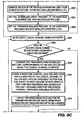
- FIG. 6 is a flow diagram of a process 600 for generating a MAC-e PDU.
- a largest E-TFC is selected from a set of supported E-TFCs that is smaller than the size ofMAC-d flow data and MAC-e control signaling allowed by current grants 602.
- the selected E-TFC permits a decreased amount of data to be multiplexed onto the MAC-e PDU relative to the amount allowed by the grants, to more closely match the largest E-TFC size that is smaller than the amount required by scheduled and non-scheduled grants.
- the MAC-d flow data (scheduled and/or non scheduled) is multiplexed into a MAC-e PDU in accordance with an absolute priority until no more MAC-d flow data blocks can be added within the limit of the selected E-TFC 604.
- the MAC-e PDU is padded to match the selected E-TFC size 606.
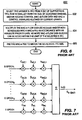
- FIG 7 shows conventional uplink spreading and gain factor usage for high speed uplink power access (HSUPA).
- the power of the E-DPCCH and the E-DPDCH(s) is set relative to the DPCCH, such that gain factors are used for scaling the uplink channels relative to each other.
- the gain factors are applied individually for E-DPCCH and each E-DPDCH.
- ⁇ ec is the gain factor for the E-DPCCH
- ⁇ ed,k is the gain factor for the E-DPDCH(s).
- the WTRU derives these gain factors from higher layer signaling.
- ⁇ c is either signaled by higher layers to the WTRU, or is computed.
- the ratio A ec is derived from the parameter ⁇ E-DPCCH signaled by higher layers, (e.g., at call setup).
- Table 1 shows the meaning of the signaled values for ⁇ E-DPCCH.
- the WTRU will scale the E-DPCCH in relation to the DPCCH according to the quantized amplitude ratio.
- the E-DPCCH gain factor ⁇ ec needs to be scaled. This is performed in order to avoid that the E-DPCCH power is increased by the offset that is applied to the DPCCH during compressed frames.
- the uplink DPCCH slot formats that have TFCI bits contain fewer pilot bits than the formats for normal (non-compressed) mode. The reason for this is that the number of TFCI bits is always the same during a frame to ensure robust transport format detection. Therefore, in order to keep the same channel quality, the energy of the pilot must be kept equal, and the power of the DPCCH is therefore increased by the following factor:
- ⁇ ec ⁇ c , C , j ⁇ A ec ⁇ N pilot , C N pilot , N ;
- the E-DPCCH gain factor ⁇ ec is additionally scaled (increased) to take into account that less slots are available for transmission during this frame.
- E-DPDCH there can be one or more E-DPDCH(s), and each of them is scaled with its own gain factor.
- the gain factors may vary on radio frame basis or sub-frame basis depending on whether the E-DCH TTI is 10 ms or 2 ms, respectively.
- the gain factor ⁇ ed,k for the kth E-DPCCH is determined by the transport format combination on E-DCH (E-TFC) carried in this TTI, and depending on the hybrid automatic repeat request (HARQ) profile for the data carried in this TTI.
- E-TFC describes the size of the transport block carried in a TTI. This parameter therefore influences the required transmission power.
- the HARQ profile includes the power offset and maximum number of HARQ retransmissions to use for this AMC-d flow. This can be used to fine-tune operating points for different data flows.
- the WTRU determines the gain factor ⁇ ed,k based on parameters signaled by higher layers, (e.g., at call setup).
- a "reference E-TFC" needs to be determined in the WTRU for the E-TFC carried in the regarded TTI.
- a list of reference E-TFCs containing up to 8 reference E-TFCs is signaled by higher layers.
- the reference E-TFC is selected as close as possible to the regarded E-TFC.
- the ratio A ed,ref is derived from the parameter ⁇ E-DPDCH signaled by higher layers for the selected reference E-TFC.
- Table 2 shows the meaning of the signaled values for ⁇ E-DPDCH.
- the reference E-TFC concept is used in order to avoid the signaling overhead which would result from signaling a ⁇ E-DPDCH value for all possible E-TFC values.
- this reference gain factor cannot directly be used for scaling the E-DPDCHs, since the reference E-TFC does not reflect the actual E-TFC in terms of number of data bits contained and number of E-DPDCHs required for transmission. Furthermore, the HARQ profile needs to be considered.
- ⁇ ed,j,harq ⁇ ed , ref ⁇ L e , ref L e , j ⁇ K e , j K e , ref ⁇ 10 ⁇ ⁇ harq / 20 ;
- L e,ref is the number of E-DPDCHs used for the reference E-TFC
- L e,j is the number of E-DPDCHs used for the j th E-TFC
- K e,ref is the number of data bits of the reference E-TFC
- K e,j is the number of data bits of the j th E-TFC
- ⁇ harq is the HARQ offset for the specific data flow to be transmitted (so called "MAC-d flow”) as signaled by higher layers (see Table 3).
- the unquantized gain factor ⁇ ed,k,j,uq is set to 2 ⁇ ⁇ ed , j , harq for E-DPDCHs using spreading factor 2 and equal to ⁇ ed,j,harq otherwise.
- the ratio ⁇ ed,k,j,uq / ⁇ c is now quantized according to Table 4 to obtain the ratio ⁇ ed,k, / ⁇ c .
- the E-DPDCH gain factor ⁇ ed,k needs to be scaled as follows.
- the factors applied for the scaling the E-DPDCH have been introduced already in the E-DPCCH section above.
- N pilot,C is the number of pilot bits per slot on DPCCH in compressed frames
- N pilot,N is the number of pilot bits per slot in non-compressed frames
- N slots,C is the number of DTX slots in this compressed frame.
- N pilot,C is the number of pilot bits per slot on DPCCH in compressed frames
- N pilot,N is the number of pilot bits per slot in non-compressed frames
- N slots,I is the number of non-DTX slots in the first frame used for transmitting the data.
- the present invention is related to a method of selecting an E-TFC.
- An SGP is set to the highest payload that may be transmitted.
- Figure 1 shows a 3G cellular system
- Figure 2 shows an EU protocol architecture in a WTRU
- Figure 3 illustrates a MAC-e PDU generation
- Figure 4 is a flow diagram of a process for generating MAC-e PDUs by quantizing the maximum amount of scheduled and/or non-scheduled data allowed to be transmitted;
- Figure 5 is a block diagram of a process for generating MAC-e PDUs by quantizing the maximum amount of non-scheduled data allowed to be multiplexed;
- Figure 6 is a flow diagram of a process for generating a MAC-e PDU by reducing multiplexed data
- Figure 7 shows conventional uplink spreading and gain factor usage for HSUPA
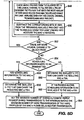
- FIGS 8A-8D taken together, are a flow diagram of a process for data transmission in accordance with the present invention.
- Figure 9 is a flow diagram of a process for scheduling information without data in accordance with the present invention.
- WTRU includes but is not limited to a user equipment (UE), a mobile station, a fixed or mobile subscriber unit, a pager, or any other type of device capable of operating in a wireless environment.
- base station includes but is not limited to a Node-B, a site controller, an access point or any other type of interfacing device in a wireless environment.
- the present invention provides a method and apparatus for determining the payload for a specific SG. Furthermore, the present invention chooses a protocol data unit (PDU) size by checking all sizes in order to maximize high priority data transmissions.
- PDU protocol data unit
- the maximum PDU is the maximum supported transport block (TB) size (or EU medium access control (MAC-e) PDU size) in the set of allowed E-TFCs.
- TB transport block
- MAC-e EU medium access control
- the remaining available payload is the remaining amount of data that fits in the maximum PDU.
- the SGP size is the highest payload that may be transmitted according to the SG and a selected power offset (PO).
- the remaining non-scheduled payload is the remaining non-scheduled grant value (per MAC-d flow).
- the non-scheduled payload is the sum, for all non-scheduled dedicated MAC (MAC-d) flows, of MIN ("remaining non-scheduled payload", non-scheduled available payload), (i.e., the smallest one of the remaining non-scheduled payload and the non-scheduled available payload).
- MIN main non-scheduled payload
- non-scheduled available payload i.e., the smallest one of the remaining non-scheduled payload and the non-scheduled available payload.
- the scheduled payload is the amount of data in the radio link control (RLC) buffer of all scheduled MAC-d flows that is allowed to be multiplexed with the highest priority selected MAC-d flow.
- RLC radio link control
- Power offset attribute (in frequency division duplex (FDD)) is signaled to a WTRU.
- the power offset attribute represents the power offset between one or more E-DPDCHs and a reference E-DPDCH power level for a given E-TFC.
- the power offset attribute is set to achieve the required quality of service (QoS) in this MAC-d flow when carried alone in a MAC-e PDU and subsequently in the corresponding coded composite transport channel (CCTrCh) of an EU dedicated channel (E-DCH) type.
- QoS quality of service
- the reference E-DPDCH power offset is signaled to the WTRU for at least one reference E-TFC.
- the SG is simply an indication of the maximum E-DPDCH to DPCCH power ratio that the WTRU is allowed to use for scheduled data in the following transmission.
- the SG is provided to the E-TFC selection function to support the selection of the "best" format for the upcoming transmission.
- the primary goal of the present invention is to select all possible power setting combinations for a given E-TFC, (depending on which data is available), and find the one combination that would result in "most" data sent,
- FIGS 8A-8D taken together, are a flow diagram of a data transmission procedure 800 in accordance with the present invention.
- a MAC-d flow with a PO is selected that allows highest-priority data to be transmitted.
- the selection of the MAC-d flow may be performed randomly.
- the MAC-d flow(s) that can be multiplexed are identified and the MAC-d flow(s) that cannot be multiplexed are ignored.
- step 806 based on the PO selected, E-TFC restriction is performed and the maximum supported payload, (i.e., maximum MAC-e PDU size), that can be sent in the next transmission timing interval (TTI) is determined.
- the "Remaining Available Payload” is set to the maximum supported payload.
- step 810 if the upcoming transmission overlaps with a compressed mode (CM) gap on 10ms TTI, the current SG is scaled down.
- CM compressed mode
- CM is special in that parts of the frame are sent at a higher power, as compared to normal uncompressed frames. Therefore, the SG must be "scaled” to take the presence of CM into account, by serving as a numerical adjustment.
- the DPCCH power assumed for the SG in a compressed frame is the actual DPCCH power in the compressed frame minus the "pilot power".
- the SG MIN(SGP, TBsize ).
- ⁇ c is the gain factor of the DPCCH.
- ⁇ c 2 ⁇ ed , j , harq 2 1 A ed , ref 2 ⁇ L e , j L e , ref ⁇ K e , ref K e , j ⁇ 1 10 ⁇ ⁇ harq / 10 ;
- L e,j is the number of E-DPDCHs used for the j th E-TFC as described earlier.
- L e,j 1 in the case of HSUPA WTRU Category 1 where only 1 E-DPDCH with an SF not smaller than 4 is possible. Because K e,j is the number of data bits of the j th E-TFC under consideration, the factor that maximizes the throughput as described is when the factor TBSize / K e,j is the closest possible quantized value to 1 as a function of the configured E-TFCSs.
- Equations (15) and (16) will yield values that do not exceed a transport block size, (i.e., TBSize), that corresponds to a higher reference E-TFC and that is not lower than the specific reference E-TFC used in the computation, unless the specific reference E-TFC is the smallest one.
- TBSize transport block size
- step 814 for each MAC-d flow with a non-scheduled grant, the "remaining Non-scheduled Payload” is set to the value of the grant.
- step 816 the "Non scheduled Payload” is set to the sum of MIN ("Remaining Non-scheduled Payload", non-scheduled available payload) for all non scheduled MAC-d flow(s).
- step 818 If it is determined in step 818 that scheduling information needs to be transmitted, and if in step 820 the "Remaining Available Payload" is determined to be greater than the sum of the "Scheduled Grant Payload", the "Non-scheduled Payload” and the size of the scheduling information, (i.e., the TB size can carry all of the data the WTRU can possibly send), the sum of the "Scheduled Grant Payload” + “Non-scheduled Payload”+ size of the scheduling information is quantized to the next smaller supported E-TFC (step 822). In step 824, the "Scheduled Grant Payload” is set to the quantized sum minus the "Non-scheduled Payload” and the size of the scheduling information. In step 826, the "Remaining Available Payload” is set to the supported payload in the next smaller supported E-TFC. In step 828, the size of the Scheduling Information is subtracted from the "Remaining Available Payload".
- step 818 If it is determined in step 818 that scheduling information does not need to be transmitted, and if the "Remaining Available Payload" is determined in step 830 to be greater than the sum of the "Scheduled Grant Payload" and the "Non-scheduled Payload” (i.e., the TB size can carry all of the data the WTRU can possibly send), the sum of the "Scheduled Grant Payload” and the "Non-scheduled Payload” is quantized to the next smaller supported E-TFC (step 832), the "Scheduled Grant Payload” is set to the quantized sum minus the "Non-scheduled Payload” (step 834) and the "Remaining Available Payload” is set to the supported payload in the next smaller supported E-TFC (step 836).
- one of a plurality of logical channels is selected based on an order of priority (step 838), and then steps 840-850 are performed for the selected logical channel before looping back to step 838 if it is determined in step 852 that there is at least one more logical channel from which to select.
- step 840 a determination is made as to whether the selected logical channel belongs to a MAC-d flow with a non-scheduled grant
- step 840 the "Remaining Non-scheduled Payload" corresponding to the MAC-d flow on which this logical channel is mapped is considered (step 842), and an RLC PDU size is chosen from the allowed set in the selected logical channel to fill the MAC-e PDU by choosing the PDU size that gives the most amount of data which is less than MIN("Remaining Non-scheduled Payload", Available Data for this logical channel, "Remaining Available Payload") (step 844). In order to check which PDU size provides the largest amount of data, it is necessary to check for every size allowed. In step 846, the corresponding bits if any are subtracted from the "Remaining Available Payload" and the "Remaining Non-scheduled Payload” (taking into account the MAC-e headers).
- step 840 an RLC PDU size is chosen from the allowed set in the selected logical channel to fill the MAC-e PDU by choosing the PDU size that gives the most amount of data which is less than MIN ("Scheduled Grant Payload", Available Data for this logical channel, "Remaining Available Payload") (step 848).
- MIN Service Grant Payload
- Available Data available Data for this logical channel
- Remaining Available Payload MIN
- step 850 the corresponding bits if any are subtracted from the "Remaining Available Payload” and the "Scheduled Grant Payload” (taking into account the MAC- headers).
- step 852 If it is determined in step 852 that there are no more logical channels to select from, and if it is determined in step 854 that scheduling information needs to be transmitted, scheduling information is added to the MAC-e PDU (step 856) and the smallest E-TFC that can carry the resulting MAC-e PDU is determined (step 858).
- step 854 If it is determined in step 854 that scheduling information does not need to be transmitted, the smallest E-TFC that can carry the resulting MAC-e PDU is determined (step 860) and if the padding allows scheduling information to be sent, it is added to the MAC-e PDU (step 862). Finally, in step 864, the maximum number of hybrid automatic repeat request (HARQ) transmissions is set to the maximum among the maximum number ofHARQ transmissions of the HARQ profiles of the MAC-d flows selected for transmissions.
- HARQ hybrid automatic repeat request
- FIG. 9 is a flow diagram of a data-less scheduling information transmission procedure 900 in accordance with the present invention. If in step 905 it is determined that scheduling information is to be transmitted without data, the "control-only" HARQ profile is selected (step 910), the MAC-e PDU is filled with the scheduling information (step 915) and the smallest E-TFC is selected (step 920).
- the scheduling information is sent alone (no data)
- the PO to be used is the one configured by an RRC in the information element (IE) "Power Offset for Scheduling Information" in the "E-DPDCH Info.” This is part of an RRC-layer signaled configuration information for enhanced UL, whereby the RNC signals parameters to the WTRU for setting up and running the e-MAC.
- IE information element
- ROM read only memory
- RAM random access memory
- register cache memory
- semiconductor memory devices magnetic media such as internal hard disks and removable disks, magnetooptical media, and optical media such as CD-ROM disks, and digital versatile disks (DVDs).
- Suitable processors include, by way of example, a general purpose processor, a special purpose processor, a conventional processor, a digital signal processor (DSP), a plurality of microprocessors, one or more microprocessors in association with a DSP core, a controller, a microcontroller, Application Specific Integrated Circuits (ASICs), Field Programmable Gate Arrays (FPGAs) circuits, any other type of integrated circuit (IC), and/or a state machine.
- DSP digital signal processor
- ASICs Application Specific Integrated Circuits
- FPGAs Field Programmable Gate Arrays
- a processor in association with software may be used to implement a radio frequency transceiver for use in a wireless transmit receive unit (WTRU), user equipment (UE), terminal, base station, radio network controller (RNC), or any host computer.
- the WTRU may be used in conjunction with modules, implemented in hardware and/or software, such as a camera, a video camera module, a videophone, a speakerphone, a vibration device, a speaker, a microphone, a television transceiver, a hands free headset, a keyboard, a Bluetooth ® module, a frequency modulated (FM) radio unit, a liquid crystal display (LCD) display unit, an organic light-emitting diode (OLED) display unit, a digital music player, a media player, a video game player module, an Internet browser, and/or any wireless local area network (WLAN) module.
- modules implemented in hardware and/or software, such as a camera, a video camera module, a videophone, a speakerphone, a vibration device, a speaker
Landscapes
- Engineering & Computer Science (AREA)
- Computer Networks & Wireless Communication (AREA)
- Signal Processing (AREA)
- Quality & Reliability (AREA)
- Databases & Information Systems (AREA)
- Mobile Radio Communication Systems (AREA)
- Detection And Prevention Of Errors In Transmission (AREA)
- Time-Division Multiplex Systems (AREA)
- Communication Control (AREA)
- Toys (AREA)
Claims (15)
- Verfahren zur Auswahl einer erweiterten Uplink-, EU-Transportformatkombination E-TFC, wobei das Verfahren aufweist:Einstellen von Ablaufsteuerungsnutzdaten SGP auf die höchste übertragbare Nutzdatenmenge (806), dadurch gekennzeichnet, daß die SGP wie folgt berechnet wird:


- Verfahren nach Anspruch 1 , wobei β ed,ref = β c ·Aed,ref, wobei Aed, ref ein Verhältnis ist, das von einem Parameter ΔE-DPDCH abgeleitet wird, der von höheren Schichten für die ausgewählte Referenz-E-TFC signalisiert wird.
- Verfahren nach Anspruch 2, wobei

- Verfahren nach Anspruch 3, wobei

- Verfahren nach Anspruch 1, wobei SG = MIN(SGP, TBgröße).
- Verfahren nach Anspruch 1, das ferner aufweist:Auswählen eines dedizierten Kanalmedienzugriffssteuerungs-, MAC-d-Stroms mit einem Leistungsversatz PO, der zuläßt, daß Daten mit höchster Priorität übertragen werden.
- Verfahren nach Anspruch 6, wobei die Auswahl des MAC-d-Stroms zufällig durchgeführt wird, wenn mehr als ein MAC-d-Strom zuläßt, daß Daten mit der gleichen höchsten Priorität übertragen werden.
- Verfahren nach Anspruch 6, das ferner aufweist:Bestimmen des MAC-d-Stroms/der MAC-d-Ströme, der/die gemultiplext werden kann/können, basierend auf dem ausgewählten MAC-d-Strom; undIgnorieren des MAC-d-Stroms/der MAC-d-Ströme, die nicht gemultiplext werden können.
- Verfahren nach Anspruch 8, das ferner aufweist:Durchführen einer E-TFC-Beschränkung; undBestimmen der maximal unterstützen Nutzlastdaten, die in einem nächsten Sendezeitintervall TTI gesendet werden können.
- Verfahren nach Anspruch 8 oder 9, wobei die Nutzlastdaten auf eine maximale EU-Medienzugriffssteuerungs-, MAC-Größe eingestellt werden.
- Drahtlose Sende-/Empfangseinheit WTRU (106) zur Auswahl einer erweiterten Uplink-, EU-Transportformatkombination E-TFC, wobei die WTRU Einrichtungen aufweist, die konfiguriert sind, um Ablaufsteuerungsnutzdaten SGP auf die höchste übertragbare Nutzdatenmenge einzustellen, dadurch gekennzeichnet, daß die SGP wie folgt berechnet wird:


- Verfahren zur Auswahl einer erweiterten Uplink-, EU-Transportformatkombination E-TFC, wobei das Verfahren aufweist:Einstellen von Ablaufsteuerungsnutzdaten SGP auf die höchste übertragbare Nutzdatenmenge (806), dadurch gekennzeichnet, daß die SGP wie folgt berechnet wird:

- Verfahren nach Anspruch 12, wobei SG = MIN(SGP, TBgröße) ist, wobei TBgröße eine Transportblockgröße ist, die maximale unterstützte Nutdaten bereitstellt.
- Verfahren nach Anspruch 12, das ferner aufweist:Auswählen eines dedizierten Kanalmedienzugriffssteuerungs-, MAC-d-Stroms mit einem Leistungsversatz PO, der zuläßt, daß Daten mit höchster Priorität übertragen werden.
- Drahtlose Sende-/Empfangseinheit WTRU (106) zur Auswahl einer erweiterten Uplink-, EU-Transportformatkombination E-TFC, wobei die WTRU Einrichtungen aufweist, die konfiguriert sind, um Ablaufsteuerungsnutzdaten SGP auf die höchste übertragbare Nutzdatenmenge einzustellen, dadurch gekennzeichnet, daß die SGP wie folgt berechnet wird:

Priority Applications (2)
| Application Number | Priority Date | Filing Date | Title |
|---|---|---|---|
| EP12164160A EP2523406A1 (de) | 2006-07-06 | 2007-07-05 | Drahtloses Kommunikationsverfahren zur Auswahl einer erweiterten Aufwärtsstrecken-Transportformatkombination mittels Einstellung von Ablaufsteuerungsnutzdaten auf die höchste übertragbare Nutzdatenmenge |
| EP10191419A EP2293499A1 (de) | 2006-07-06 | 2007-07-05 | Drahtloses Kommunikationsverfahren zur Aauswahl einer erweiterten Uplink-Transportformatkombination mittels Einstellung von Ablaufsteuerungsnutzdaten auf die höchste übertragbare Nutzdatenmenge |
Applications Claiming Priority (2)
| Application Number | Priority Date | Filing Date | Title |
|---|---|---|---|
| US81884806P | 2006-07-06 | 2006-07-06 | |
| PCT/US2007/015496 WO2008005503A2 (en) | 2006-07-06 | 2007-07-05 | Wireless communication method of selecting an enhanced uplink transport format combination by setting a scheduling grant payload to the highest payload that can be transmitted |
Publications (2)
| Publication Number | Publication Date |
|---|---|
| EP2039082A2 EP2039082A2 (de) | 2009-03-25 |
| EP2039082B1 true EP2039082B1 (de) | 2010-11-17 |
Family
ID=38721453
Family Applications (3)
| Application Number | Title | Priority Date | Filing Date |
|---|---|---|---|
| EP12164160A Withdrawn EP2523406A1 (de) | 2006-07-06 | 2007-07-05 | Drahtloses Kommunikationsverfahren zur Auswahl einer erweiterten Aufwärtsstrecken-Transportformatkombination mittels Einstellung von Ablaufsteuerungsnutzdaten auf die höchste übertragbare Nutzdatenmenge |
| EP07796698A Not-in-force EP2039082B1 (de) | 2006-07-06 | 2007-07-05 | Drahtloses kommunikationsverfahren zur auswahl einer erweiterten uplink-transportformatkombination mittels einstellung von ablaufsteuerungsnutzdaten auf die höchste übertragbare nutzdatenmenge |
| EP10191419A Withdrawn EP2293499A1 (de) | 2006-07-06 | 2007-07-05 | Drahtloses Kommunikationsverfahren zur Aauswahl einer erweiterten Uplink-Transportformatkombination mittels Einstellung von Ablaufsteuerungsnutzdaten auf die höchste übertragbare Nutzdatenmenge |
Family Applications Before (1)
| Application Number | Title | Priority Date | Filing Date |
|---|---|---|---|
| EP12164160A Withdrawn EP2523406A1 (de) | 2006-07-06 | 2007-07-05 | Drahtloses Kommunikationsverfahren zur Auswahl einer erweiterten Aufwärtsstrecken-Transportformatkombination mittels Einstellung von Ablaufsteuerungsnutzdaten auf die höchste übertragbare Nutzdatenmenge |
Family Applications After (1)
| Application Number | Title | Priority Date | Filing Date |
|---|---|---|---|
| EP10191419A Withdrawn EP2293499A1 (de) | 2006-07-06 | 2007-07-05 | Drahtloses Kommunikationsverfahren zur Aauswahl einer erweiterten Uplink-Transportformatkombination mittels Einstellung von Ablaufsteuerungsnutzdaten auf die höchste übertragbare Nutzdatenmenge |
Country Status (16)
| Country | Link |
|---|---|
| US (3) | US8000291B2 (de) |
| EP (3) | EP2523406A1 (de) |
| JP (2) | JP4913869B2 (de) |
| KR (2) | KR101297564B1 (de) |
| CN (7) | CN101536426B (de) |
| AT (1) | ATE488933T1 (de) |
| AU (1) | AU2007269598C1 (de) |
| BR (1) | BRPI0713224A2 (de) |
| CA (1) | CA2657404C (de) |
| DE (1) | DE602007010631D1 (de) |
| ES (1) | ES2356692T3 (de) |
| IL (1) | IL196195A (de) |
| MX (1) | MX2009000252A (de) |
| RU (1) | RU2406243C2 (de) |
| TW (2) | TWI437854B (de) |
| WO (1) | WO2008005503A2 (de) |
Families Citing this family (31)
| Publication number | Priority date | Publication date | Assignee | Title |
|---|---|---|---|---|
| BRPI0412056A (pt) * | 2003-09-26 | 2006-08-15 | Interdigital Tech Corp | determinação de fatores de ganho para potência de comunicação sem fio |
| JP4538357B2 (ja) * | 2005-03-29 | 2010-09-08 | 株式会社エヌ・ティ・ティ・ドコモ | 伝送速度制御方法、移動局、無線基地局及び無線回線制御局 |
| GB0511058D0 (en) * | 2005-05-31 | 2005-07-06 | Nokia Corp | A method of controlling power |
| TWI388151B (zh) * | 2005-08-10 | 2013-03-01 | Koninkl Philips Electronics Nv | 操作一通信裝置與系統的方法,通信裝置及包含該通信裝置之系統 |
| CN101536426B (zh) * | 2006-07-06 | 2012-09-26 | 北京新岸线移动通信技术有限公司 | 通过对可传送的最高有效载荷设置调度许可有效载荷来选择增强型上行链路传输格式组合的无线通信方法 |
| PT2095529T (pt) * | 2006-12-21 | 2018-07-23 | Ericsson Telefon Ab L M | Método e aparelho de transmissão de símbolos de canal de controlo |
| TW201251496A (en) * | 2006-12-28 | 2012-12-16 | Interdigital Tech Corp | Efficient uplink operation with high instantaneous data rates |
| TWI521927B (zh) | 2007-01-09 | 2016-02-11 | 皇家飛利浦電子股份有限公司 | 無線通信系統 |
| CN101689982B (zh) * | 2007-05-01 | 2013-06-05 | 诺基亚公司 | 上行链路传输格式选择 |
| AR067822A1 (es) * | 2007-08-06 | 2009-10-21 | Interdigital Tech Corp | Definiciones de medicion lte para medicion de tecnologia inter - radio con acceso de radio no-3gpp |
| KR101415201B1 (ko) * | 2007-08-28 | 2014-07-04 | 삼성전자주식회사 | 통신 시스템에서 고속의 비디오 스트림 서비스를 위한스케줄링 방법 및 장치 |
| CN103490853B (zh) * | 2007-09-28 | 2017-06-27 | 交互数字专利控股公司 | 一种用于产生和传送rlc pdu的方法和无线发射/接收单元 |
| TWI514809B (zh) * | 2007-09-28 | 2015-12-21 | Interdigital Patent Holdings | 無線通信中增強傳輸格式組合選擇方法及裝置 |
| JP4999724B2 (ja) * | 2008-02-18 | 2012-08-15 | 株式会社エヌ・ティ・ティ・ドコモ | 移動通信方法、移動通信システム及び無線基地局 |
| RU2475978C2 (ru) * | 2008-04-30 | 2013-02-20 | Самсунг Электроникс Ко., Лтд. | Система и способ для адаптации размера данных в пользовательском оборудовании |
| AR073833A1 (es) | 2008-10-20 | 2010-12-01 | Interdigital Patent Holdings | Metodos para el control ascendente de transmision de informacion para agregar ona portadora |
| EP3060023B1 (de) | 2008-10-31 | 2019-05-01 | Interdigital Patent Holdings, Inc. | Handhabung e-dch uplink-übertragungen unter verwendung mehrerer uplink träger |
| CN101741431B (zh) * | 2008-11-04 | 2012-08-08 | 华为技术有限公司 | 一种发射功率的确定方法和装置 |
| CN104902513A (zh) | 2009-04-24 | 2015-09-09 | 交互数字专利控股公司 | 一种生成rlc pdu的方法及生成可变大小的rlc pdu的wtru |
| PL2908585T3 (pl) * | 2009-06-19 | 2017-12-29 | Interdigital Patent Holdings, Inc. | Sygnalizowanie informacji sterującej łączem wysyłania w LTE-A |
| WO2011025434A1 (en) * | 2009-08-31 | 2011-03-03 | Telefonaktiebolaget Lm Ericsson (Publ) | Method and arrangement in a wireless communication system |
| EP2484163A2 (de) * | 2009-10-02 | 2012-08-08 | InterDigital Patent Holdings, Inc. | Verfahren und vorrichtung zur übertragungsleistungssteuerung für mehrfachantennenübertragungen in der uplink-verbindung |
| US20110250918A1 (en) * | 2010-04-07 | 2011-10-13 | Yu-Chih Jen | Communication device and method thereof |
| CN101860919B (zh) * | 2010-05-28 | 2012-12-12 | 中国科学院计算技术研究所 | 无线通信系统中的传输资源调度方法 |
| JP5147898B2 (ja) * | 2010-06-10 | 2013-02-20 | 株式会社エヌ・ティ・ティ・ドコモ | 無線制御装置及び通信制御方法 |
| WO2012162353A1 (en) | 2011-05-23 | 2012-11-29 | Interdigital Patent Holdings, Inc. | Apparatus and methods for group wireless transmit/receive unit (wtru) handover |
| CN102833841A (zh) * | 2011-06-13 | 2012-12-19 | 中兴通讯股份有限公司 | 一种调度授权的方法、用户设备及基站 |
| WO2013115690A1 (en) * | 2012-01-30 | 2013-08-08 | Telefonaktiebolaget L M Ericsson (Publ) | Methods and network nodes for scheduling transmission |
| GB2500287B (en) | 2012-11-02 | 2014-04-16 | Broadcom Corp | Method and apparatus for improving transmission resource utilization |
| US9414407B2 (en) * | 2013-09-27 | 2016-08-09 | Broadcom Corporation | Enhanced scheduling information transmission in a heterogeneous network |
| US10512065B2 (en) * | 2016-05-31 | 2019-12-17 | Qualcomm Incorporated | Flexible control information reporting |
Family Cites Families (40)
| Publication number | Priority date | Publication date | Assignee | Title |
|---|---|---|---|---|
| US6850540B1 (en) * | 1999-10-28 | 2005-02-01 | Telefonaktiebolaget Lm Ericsson (Publ) | Packet scheduling in a communications system |
| IL100213A (en) | 1990-12-07 | 1995-03-30 | Qualcomm Inc | CDMA microcellular telephone system and distributed antenna system therefor |
| EP1058975B1 (de) | 1998-02-27 | 2003-08-20 | Siemens Aktiengesellschaft | Tdd-telekommunikationssysteme mit drahtloser, auf code- und zeitmultiplex basierender telekommunikation |
| US6625650B2 (en) | 1998-06-27 | 2003-09-23 | Intel Corporation | System for multi-layer broadband provisioning in computer networks |
| KR100382470B1 (ko) | 1999-04-08 | 2003-05-01 | 엘지전자 주식회사 | Imt-2000 이동 통신 시스템의 무선 프로토콜 |
| AU2001236304A1 (en) | 2000-02-25 | 2001-09-03 | Telefonaktiebolaget Lm Ericsson (Publ) | Overload handling in a communications system |
| US7227851B1 (en) * | 2000-11-17 | 2007-06-05 | Lucent Technologies Inc. | Transport channel multiplexing system and method |
| US6813284B2 (en) | 2001-01-17 | 2004-11-02 | Qualcomm Incorporated | Method and apparatus for allocating data streams given transmission time interval (TTI) constraints |
| KR100842654B1 (ko) * | 2002-09-19 | 2008-06-30 | 삼성전자주식회사 | 이동 통신 시스템에서 멀티캐스트 멀티미디어 방송서비스를 송신하는 송신 방식 결정 방법 |
| US7155236B2 (en) | 2003-02-18 | 2006-12-26 | Qualcomm Incorporated | Scheduled and autonomous transmission and acknowledgement |
| US7321780B2 (en) | 2003-04-30 | 2008-01-22 | Motorola, Inc. | Enhanced uplink rate selection by a communication device during soft handoff |
| KR100539930B1 (ko) * | 2003-12-22 | 2005-12-28 | 삼성전자주식회사 | 부호분할다중접속 이동통신시스템에서 데이터 전송 최적화를 위한 전송 포맷 선택 방법 |
| KR100827105B1 (ko) | 2004-02-13 | 2008-05-02 | 삼성전자주식회사 | 광대역 무선 통신 시스템에서 고속 레인징을 통한 빠른핸드오버 수행 방법 및 장치 |
| KR100713442B1 (ko) | 2004-02-14 | 2007-05-02 | 삼성전자주식회사 | 이동통신 시스템에서 향상된 역방향 전용채널을 통한 스케쥴링 정보의 전송방법 |
| KR100819256B1 (ko) * | 2004-05-06 | 2008-04-02 | 삼성전자주식회사 | 향상된 상향링크 전용 채널을 통해 시그널링 정보를전송하기 위한 전력의 설정 방법 및 장치 |
| US8259752B2 (en) | 2004-05-07 | 2012-09-04 | Interdigital Technology Corporation | Medium access control layer architecture for supporting enhanced uplink |
| US7580388B2 (en) | 2004-06-01 | 2009-08-25 | Lg Electronics Inc. | Method and apparatus for providing enhanced messages on common control channel in wireless communication system |
| CN100583718C (zh) * | 2004-06-09 | 2010-01-20 | 三星电子株式会社 | 移动电信系统中用于数据传输的方法和设备 |
| CN1710829A (zh) * | 2004-06-18 | 2005-12-21 | 北京三星通信技术研究有限公司 | 在wcdma系统的增强上行专用信道中支持低数据速率的方法 |
| US7885245B2 (en) | 2004-07-19 | 2011-02-08 | Interdigital Technology Corporation | Method and apparatus for enhanced uplink multiplexing |
| US7804850B2 (en) | 2004-10-01 | 2010-09-28 | Nokia Corporation | Slow MAC-e for autonomous transmission in high speed uplink packet access (HSUPA) along with service specific transmission time control |
| EP1643690B1 (de) * | 2004-10-01 | 2008-04-02 | Matsushita Electric Industrial Co., Ltd. | Dienstgüte-bewusste Ablaufsteuerung für Aufwärtsübertragungen über zugeordneten Kanälen |
| KR100651548B1 (ko) * | 2004-11-05 | 2006-11-29 | 삼성전자주식회사 | 상향링크 패킷 데이터 서비스를 지원하는 이동통신시스템에서 단말 식별자를 이용하여 상향링크 데이터전송을 스케쥴링하는 방법 및 장치 |
| DE602004015333D1 (de) * | 2004-12-15 | 2008-09-04 | Matsushita Electric Industrial Co Ltd | Unterstützung für garantierten Bitratenverkehr für Uplink Übertragungen |
| US8189615B2 (en) | 2004-12-23 | 2012-05-29 | Nokia Corporation | Method and apparatus for communicating scheduling information from a UE to a radio access network |
| CN1794623A (zh) * | 2004-12-24 | 2006-06-28 | 北京三星通信技术研究有限公司 | 基于QoS的MAC-e PDU的重传功率偏移量削减值的设置方法 |
| JP2006191320A (ja) | 2005-01-05 | 2006-07-20 | Ntt Docomo Inc | 伝送速度制御方法及び移動局 |
| KR100918761B1 (ko) * | 2005-01-06 | 2009-09-24 | 삼성전자주식회사 | 무선통신 시스템에서 상향링크 서비스를 위한 이득인자 설정 방법 |
| WO2006082627A1 (ja) | 2005-02-01 | 2006-08-10 | Mitsubishi Denki Kabushiki Kaisha | 送信制御方法、移動局および通信システム |
| KR100678192B1 (ko) * | 2005-02-04 | 2007-02-02 | 삼성전자주식회사 | 이동통신 시스템에서 전용 물리 채널들의 이득인자 설정방법 및 장치 |
| EP1847074B1 (de) * | 2005-02-07 | 2016-03-30 | Telefonaktiebolaget LM Ericsson (publ) | Verfahren und anordnungen zur abwicklung von unzuverlässigen ablaufplanungsgewährungen in einem telekommunikationsnetz |
| DE602005011101D1 (de) | 2005-04-01 | 2009-01-02 | Panasonic Corp | Zeitliche Planung von Endgeräten in einem Funkkommunikationssystem |
| CN100544226C (zh) * | 2005-04-19 | 2009-09-23 | 华为技术有限公司 | 一种上行增强专用物理数据信道增益因子获取方法 |
| US7408895B2 (en) | 2005-04-20 | 2008-08-05 | Interdigital Technology Corporation | Method and apparatus for scheduling transmissions via an enhanced dedicated channel |
| US8179836B2 (en) * | 2005-04-20 | 2012-05-15 | Interdigital Technology Corporation | Method and apparatus for controlling transmissions via an enhanced dedicated channel |
| US8116292B2 (en) * | 2005-04-29 | 2012-02-14 | Interdigital Technology Corporation | MAC multiplexing and TFC selection procedure for enhanced uplink |
| FI1929826T7 (fi) * | 2005-09-29 | 2024-03-08 | Nokia Technologies Oy | Laite, menetelmä ja tietokoneohjelmatuote datanopeuden nostamisen pyytämiseksi ainakin yhden valitun lisädatayksikön lähetyskyvyn perusteella |
| US7729715B2 (en) * | 2005-12-30 | 2010-06-01 | Motorola, Inc. | Method and apparatus for power reduction for E-TFC selection |
| CN101536426B (zh) * | 2006-07-06 | 2012-09-26 | 北京新岸线移动通信技术有限公司 | 通过对可传送的最高有效载荷设置调度许可有效载荷来选择增强型上行链路传输格式组合的无线通信方法 |
| US7692638B2 (en) | 2007-01-03 | 2010-04-06 | Apple Inc. | Error compensation for multi-touch surfaces |
-
2007
- 2007-07-05 CN CN2007800251879A patent/CN101536426B/zh active Active
- 2007-07-05 CN CN201210276472.0A patent/CN102891729B/zh active Active
- 2007-07-05 JP JP2009518370A patent/JP4913869B2/ja not_active Expired - Fee Related
- 2007-07-05 MX MX2009000252A patent/MX2009000252A/es active IP Right Grant
- 2007-07-05 DE DE602007010631T patent/DE602007010631D1/de active Active
- 2007-07-05 ES ES07796698T patent/ES2356692T3/es active Active
- 2007-07-05 EP EP12164160A patent/EP2523406A1/de not_active Withdrawn
- 2007-07-05 CN CN201210276172.2A patent/CN102883369B/zh active Active
- 2007-07-05 CN CN201210276474XA patent/CN102801510B/zh active Active
- 2007-07-05 EP EP07796698A patent/EP2039082B1/de not_active Not-in-force
- 2007-07-05 CA CA2657404A patent/CA2657404C/en not_active Expired - Fee Related
- 2007-07-05 KR KR1020097002900A patent/KR101297564B1/ko not_active Expired - Fee Related
- 2007-07-05 US US11/773,579 patent/US8000291B2/en active Active
- 2007-07-05 KR KR1020097002213A patent/KR101159606B1/ko not_active Expired - Fee Related
- 2007-07-05 BR BRPI0713224-7A patent/BRPI0713224A2/pt not_active Application Discontinuation
- 2007-07-05 RU RU2009103921/09A patent/RU2406243C2/ru active
- 2007-07-05 CN CN2012102764792A patent/CN102801512B/zh active Active
- 2007-07-05 CN CN2012102764788A patent/CN102801511B/zh active Active
- 2007-07-05 EP EP10191419A patent/EP2293499A1/de not_active Withdrawn
- 2007-07-05 WO PCT/US2007/015496 patent/WO2008005503A2/en not_active Ceased
- 2007-07-05 AT AT07796698T patent/ATE488933T1/de not_active IP Right Cessation
- 2007-07-05 AU AU2007269598A patent/AU2007269598C1/en not_active Ceased
- 2007-07-05 CN CN201210276473.5A patent/CN102821451B/zh active Active
- 2007-07-06 TW TW097105093A patent/TWI437854B/zh not_active IP Right Cessation
- 2007-07-06 TW TW096124829A patent/TWI401929B/zh not_active IP Right Cessation
-
2008
- 2008-12-25 IL IL196195A patent/IL196195A/en not_active IP Right Cessation
-
2011
- 2011-08-15 US US13/210,049 patent/US8243676B2/en not_active Expired - Fee Related
-
2012
- 2012-01-19 JP JP2012008997A patent/JP5363597B2/ja not_active Expired - Fee Related
- 2012-07-11 US US13/546,849 patent/US20120281660A1/en not_active Abandoned
Also Published As
Similar Documents
| Publication | Publication Date | Title |
|---|---|---|
| US8000291B2 (en) | Wireless communication method of selecting an enhanced uplink transport format combination by setting a scheduling grant payload to the highest payload that can be transmitted | |
| CN101080882B (zh) | 无线通信系统、移动站、基站以及其中使用的无线通信系统控制方法及其程序 | |
| JP4976377B2 (ja) | 容量を改善するためにul dpcch開閉と強化ul dchとを結合する方法,装置及びソフトウェア製品 | |
| JP2005328525A (ja) | 上りリンクパケット伝送システムにおけるソフトハンドオーバー端末機の最適のスケジューリングセルを選択するための方法及び装置 | |
| RU2315426C1 (ru) | Способ управления скоростью передачи, мобильная станция и базовая радиостанция | |
| KR101174934B1 (ko) | 이동통신 시스템에서 역방향 데이터 전송을 제어하기 위한스케쥴링 그랜트의 송수신 방법 및 장치 | |
| HK1155299A (en) | Wireless communication method of selecting an enhanced uplink transport format combination by setting a scheduling grant payload to the highest payload that can be transmitted | |
| HK1133504B (en) | Wireless communication method of selecting an enhanced uplink transport format combination by setting a scheduling grant payload to the highest payload that can be transmitted |
Legal Events
| Date | Code | Title | Description |
|---|---|---|---|
| PUAI | Public reference made under article 153(3) epc to a published international application that has entered the european phase |
Free format text: ORIGINAL CODE: 0009012 |
|
| 17P | Request for examination filed |
Effective date: 20090120 |
|
| AK | Designated contracting states |
Kind code of ref document: A2 Designated state(s): AT BE BG CH CY CZ DE DK EE ES FI FR GB GR HU IE IS IT LI LT LU LV MC MT NL PL PT RO SE SI SK TR |
|
| AX | Request for extension of the european patent |
Extension state: AL BA HR MK RS |
|
| DAX | Request for extension of the european patent (deleted) | ||
| GRAP | Despatch of communication of intention to grant a patent |
Free format text: ORIGINAL CODE: EPIDOSNIGR1 |
|
| GRAS | Grant fee paid |
Free format text: ORIGINAL CODE: EPIDOSNIGR3 |
|
| GRAA | (expected) grant |
Free format text: ORIGINAL CODE: 0009210 |
|
| AK | Designated contracting states |
Kind code of ref document: B1 Designated state(s): AT BE BG CH CY CZ DE DK EE ES FI FR GB GR HU IE IS IT LI LT LU LV MC MT NL PL PT RO SE SI SK TR |
|
| REG | Reference to a national code |
Ref country code: GB Ref legal event code: FG4D |
|
| REG | Reference to a national code |
Ref country code: CH Ref legal event code: EP |
|
| REG | Reference to a national code |
Ref country code: IE Ref legal event code: FG4D |
|
| REF | Corresponds to: |
Ref document number: 602007010631 Country of ref document: DE Date of ref document: 20101230 Kind code of ref document: P |
|
| REG | Reference to a national code |
Ref country code: SE Ref legal event code: TRGR |
|
| REG | Reference to a national code |
Ref country code: NL Ref legal event code: T3 |
|
| REG | Reference to a national code |
Ref country code: ES Ref legal event code: FG2A Ref document number: 2356692 Country of ref document: ES Kind code of ref document: T3 Effective date: 20110412 |
|
| LTIE | Lt: invalidation of european patent or patent extension |
Effective date: 20101117 |
|
| PG25 | Lapsed in a contracting state [announced via postgrant information from national office to epo] |
Ref country code: LT Free format text: LAPSE BECAUSE OF FAILURE TO SUBMIT A TRANSLATION OF THE DESCRIPTION OR TO PAY THE FEE WITHIN THE PRESCRIBED TIME-LIMIT Effective date: 20101117 |
|
| PG25 | Lapsed in a contracting state [announced via postgrant information from national office to epo] |
Ref country code: FI Free format text: LAPSE BECAUSE OF FAILURE TO SUBMIT A TRANSLATION OF THE DESCRIPTION OR TO PAY THE FEE WITHIN THE PRESCRIBED TIME-LIMIT Effective date: 20101117 Ref country code: SI Free format text: LAPSE BECAUSE OF FAILURE TO SUBMIT A TRANSLATION OF THE DESCRIPTION OR TO PAY THE FEE WITHIN THE PRESCRIBED TIME-LIMIT Effective date: 20101117 Ref country code: BG Free format text: LAPSE BECAUSE OF FAILURE TO SUBMIT A TRANSLATION OF THE DESCRIPTION OR TO PAY THE FEE WITHIN THE PRESCRIBED TIME-LIMIT Effective date: 20110217 Ref country code: CY Free format text: LAPSE BECAUSE OF FAILURE TO SUBMIT A TRANSLATION OF THE DESCRIPTION OR TO PAY THE FEE WITHIN THE PRESCRIBED TIME-LIMIT Effective date: 20101117 Ref country code: LV Free format text: LAPSE BECAUSE OF FAILURE TO SUBMIT A TRANSLATION OF THE DESCRIPTION OR TO PAY THE FEE WITHIN THE PRESCRIBED TIME-LIMIT Effective date: 20101117 Ref country code: AT Free format text: LAPSE BECAUSE OF FAILURE TO SUBMIT A TRANSLATION OF THE DESCRIPTION OR TO PAY THE FEE WITHIN THE PRESCRIBED TIME-LIMIT Effective date: 20101117 Ref country code: PT Free format text: LAPSE BECAUSE OF FAILURE TO SUBMIT A TRANSLATION OF THE DESCRIPTION OR TO PAY THE FEE WITHIN THE PRESCRIBED TIME-LIMIT Effective date: 20110317 Ref country code: IS Free format text: LAPSE BECAUSE OF FAILURE TO SUBMIT A TRANSLATION OF THE DESCRIPTION OR TO PAY THE FEE WITHIN THE PRESCRIBED TIME-LIMIT Effective date: 20110317 |
|
| PG25 | Lapsed in a contracting state [announced via postgrant information from national office to epo] |
Ref country code: GR Free format text: LAPSE BECAUSE OF FAILURE TO SUBMIT A TRANSLATION OF THE DESCRIPTION OR TO PAY THE FEE WITHIN THE PRESCRIBED TIME-LIMIT Effective date: 20110218 |
|
| PG25 | Lapsed in a contracting state [announced via postgrant information from national office to epo] |
Ref country code: CZ Free format text: LAPSE BECAUSE OF FAILURE TO SUBMIT A TRANSLATION OF THE DESCRIPTION OR TO PAY THE FEE WITHIN THE PRESCRIBED TIME-LIMIT Effective date: 20101117 Ref country code: EE Free format text: LAPSE BECAUSE OF FAILURE TO SUBMIT A TRANSLATION OF THE DESCRIPTION OR TO PAY THE FEE WITHIN THE PRESCRIBED TIME-LIMIT Effective date: 20101117 Ref country code: BE Free format text: LAPSE BECAUSE OF FAILURE TO SUBMIT A TRANSLATION OF THE DESCRIPTION OR TO PAY THE FEE WITHIN THE PRESCRIBED TIME-LIMIT Effective date: 20101117 |
|
| PG25 | Lapsed in a contracting state [announced via postgrant information from national office to epo] |
Ref country code: SK Free format text: LAPSE BECAUSE OF FAILURE TO SUBMIT A TRANSLATION OF THE DESCRIPTION OR TO PAY THE FEE WITHIN THE PRESCRIBED TIME-LIMIT Effective date: 20101117 Ref country code: PL Free format text: LAPSE BECAUSE OF FAILURE TO SUBMIT A TRANSLATION OF THE DESCRIPTION OR TO PAY THE FEE WITHIN THE PRESCRIBED TIME-LIMIT Effective date: 20101117 Ref country code: DK Free format text: LAPSE BECAUSE OF FAILURE TO SUBMIT A TRANSLATION OF THE DESCRIPTION OR TO PAY THE FEE WITHIN THE PRESCRIBED TIME-LIMIT Effective date: 20101117 Ref country code: RO Free format text: LAPSE BECAUSE OF FAILURE TO SUBMIT A TRANSLATION OF THE DESCRIPTION OR TO PAY THE FEE WITHIN THE PRESCRIBED TIME-LIMIT Effective date: 20101117 |
|
| PLBE | No opposition filed within time limit |
Free format text: ORIGINAL CODE: 0009261 |
|
| 26N | No opposition filed |
Effective date: 20110818 |
|
| REG | Reference to a national code |
Ref country code: DE Ref legal event code: R097 Ref document number: 602007010631 Country of ref document: DE Effective date: 20110818 |
|
| PG25 | Lapsed in a contracting state [announced via postgrant information from national office to epo] |
Ref country code: MT Free format text: LAPSE BECAUSE OF FAILURE TO SUBMIT A TRANSLATION OF THE DESCRIPTION OR TO PAY THE FEE WITHIN THE PRESCRIBED TIME-LIMIT Effective date: 20101117 Ref country code: IT Free format text: LAPSE BECAUSE OF FAILURE TO SUBMIT A TRANSLATION OF THE DESCRIPTION OR TO PAY THE FEE WITHIN THE PRESCRIBED TIME-LIMIT Effective date: 20101117 |
|
| PG25 | Lapsed in a contracting state [announced via postgrant information from national office to epo] |
Ref country code: MC Free format text: LAPSE BECAUSE OF NON-PAYMENT OF DUE FEES Effective date: 20110731 |
|
| REG | Reference to a national code |
Ref country code: CH Ref legal event code: PL |
|
| REG | Reference to a national code |
Ref country code: IE Ref legal event code: MM4A |
|
| PG25 | Lapsed in a contracting state [announced via postgrant information from national office to epo] |
Ref country code: CH Free format text: LAPSE BECAUSE OF NON-PAYMENT OF DUE FEES Effective date: 20110731 Ref country code: LI Free format text: LAPSE BECAUSE OF NON-PAYMENT OF DUE FEES Effective date: 20110731 |
|
| PG25 | Lapsed in a contracting state [announced via postgrant information from national office to epo] |
Ref country code: IE Free format text: LAPSE BECAUSE OF NON-PAYMENT OF DUE FEES Effective date: 20110705 |
|
| REG | Reference to a national code |
Ref country code: GB Ref legal event code: 732E Free format text: REGISTERED BETWEEN 20120816 AND 20120822 |
|
| REG | Reference to a national code |
Ref country code: ES Ref legal event code: PC2A Owner name: NUFRONT MOBILE COMMUNICATIONS TECHNOLOGY, CO. LTD Effective date: 20130111 Ref country code: NL Ref legal event code: SD Effective date: 20130115 |
|
| PG25 | Lapsed in a contracting state [announced via postgrant information from national office to epo] |
Ref country code: LU Free format text: LAPSE BECAUSE OF NON-PAYMENT OF DUE FEES Effective date: 20110705 |
|
| REG | Reference to a national code |
Ref country code: DE Ref legal event code: R082 Ref document number: 602007010631 Country of ref document: DE Representative=s name: VOSSIUS & PARTNER, DE |
|
| REG | Reference to a national code |
Ref country code: DE Ref legal event code: R081 Ref document number: 602007010631 Country of ref document: DE Owner name: GUANGDONG NUFRONT COMPUTER SYSTEM CHIP CO., LT, CN Free format text: FORMER OWNER: INTERDIGITAL TECHNOLOGY CORP., WILMINGTON, DEL., US Effective date: 20130710 Ref country code: DE Ref legal event code: R082 Ref document number: 602007010631 Country of ref document: DE Representative=s name: VOSSIUS & PARTNER PATENTANWAELTE RECHTSANWAELT, DE Effective date: 20130710 Ref country code: DE Ref legal event code: R081 Ref document number: 602007010631 Country of ref document: DE Owner name: GUANGDONG NUFRONT COMPUTER SYSTEM CHIP CO., LT, CN Free format text: FORMER OWNER: INTERDIGITAL TECHNOLOGY CORP., WILMINGTON, US Effective date: 20130710 Ref country code: DE Ref legal event code: R082 Ref document number: 602007010631 Country of ref document: DE Representative=s name: VOSSIUS & PARTNER, DE Effective date: 20130710 |
|
| PG25 | Lapsed in a contracting state [announced via postgrant information from national office to epo] |
Ref country code: TR Free format text: LAPSE BECAUSE OF FAILURE TO SUBMIT A TRANSLATION OF THE DESCRIPTION OR TO PAY THE FEE WITHIN THE PRESCRIBED TIME-LIMIT Effective date: 20101117 |
|
| PG25 | Lapsed in a contracting state [announced via postgrant information from national office to epo] |
Ref country code: HU Free format text: LAPSE BECAUSE OF FAILURE TO SUBMIT A TRANSLATION OF THE DESCRIPTION OR TO PAY THE FEE WITHIN THE PRESCRIBED TIME-LIMIT Effective date: 20101117 |
|
| REG | Reference to a national code |
Ref country code: NL Ref legal event code: SD Effective date: 20140109 |
|
| REG | Reference to a national code |
Ref country code: FR Ref legal event code: TP Owner name: GUANGDONG NUFRONT COMPUTER SYSTEM CHIP CO.LTD, CN Effective date: 20131230 |
|
| REG | Reference to a national code |
Ref country code: GB Ref legal event code: 732E Free format text: REGISTERED BETWEEN 20140206 AND 20140212 |
|
| PLAA | Information modified related to event that no opposition was filed |
Free format text: ORIGINAL CODE: 0009299DELT |
|
| PLBE | No opposition filed within time limit |
Free format text: ORIGINAL CODE: 0009261 |
|
| STAA | Information on the status of an ep patent application or granted ep patent |
Free format text: STATUS: NO OPPOSITION FILED WITHIN TIME LIMIT |
|
| R26N | No opposition filed (corrected) |
Effective date: 20110818 |
|
| RIN2 | Information on inventor provided after grant (corrected) |
Inventor name: HAIM, JOHN, W. Inventor name: RUDOLF, MARIAN Inventor name: PINHEIRO, ANA LUCIA |
|
| REG | Reference to a national code |
Ref country code: FR Ref legal event code: PLFP Year of fee payment: 10 |
|
| REG | Reference to a national code |
Ref country code: FR Ref legal event code: PLFP Year of fee payment: 11 |
|
| REG | Reference to a national code |
Ref country code: FR Ref legal event code: PLFP Year of fee payment: 12 |
|
| PGFP | Annual fee paid to national office [announced via postgrant information from national office to epo] |
Ref country code: NL Payment date: 20230726 Year of fee payment: 17 |
|
| PGFP | Annual fee paid to national office [announced via postgrant information from national office to epo] |
Ref country code: GB Payment date: 20230725 Year of fee payment: 17 Ref country code: ES Payment date: 20230807 Year of fee payment: 17 |
|
| PGFP | Annual fee paid to national office [announced via postgrant information from national office to epo] |
Ref country code: SE Payment date: 20230721 Year of fee payment: 17 Ref country code: FR Payment date: 20230729 Year of fee payment: 17 Ref country code: DE Payment date: 20230712 Year of fee payment: 17 |
|
| REG | Reference to a national code |
Ref country code: DE Ref legal event code: R119 Ref document number: 602007010631 Country of ref document: DE |
|
| REG | Reference to a national code |
Ref country code: SE Ref legal event code: EUG |
|
| REG | Reference to a national code |
Ref country code: NL Ref legal event code: MM Effective date: 20240801 |
|
| GBPC | Gb: european patent ceased through non-payment of renewal fee |
Effective date: 20240705 |
|
| PG25 | Lapsed in a contracting state [announced via postgrant information from national office to epo] |
Ref country code: DE Free format text: LAPSE BECAUSE OF NON-PAYMENT OF DUE FEES Effective date: 20250201 |
|
| PG25 | Lapsed in a contracting state [announced via postgrant information from national office to epo] |
Ref country code: NL Free format text: LAPSE BECAUSE OF NON-PAYMENT OF DUE FEES Effective date: 20240801 |
|
| PG25 | Lapsed in a contracting state [announced via postgrant information from national office to epo] |
Ref country code: FR Free format text: LAPSE BECAUSE OF NON-PAYMENT OF DUE FEES Effective date: 20240731 |
|
| PG25 | Lapsed in a contracting state [announced via postgrant information from national office to epo] |
Ref country code: GB Free format text: LAPSE BECAUSE OF NON-PAYMENT OF DUE FEES Effective date: 20240705 |
|
| REG | Reference to a national code |
Ref country code: ES Ref legal event code: FD2A Effective date: 20250827 |
|
| PG25 | Lapsed in a contracting state [announced via postgrant information from national office to epo] |
Ref country code: ES Free format text: LAPSE BECAUSE OF NON-PAYMENT OF DUE FEES Effective date: 20240706 |
|
| PG25 | Lapsed in a contracting state [announced via postgrant information from national office to epo] |
Ref country code: SE Free format text: LAPSE BECAUSE OF NON-PAYMENT OF DUE FEES Effective date: 20240706 |