EP2039775A2 - Appareil et procédé pour la production de méthane - Google Patents
Appareil et procédé pour la production de méthane Download PDFInfo
- Publication number
- EP2039775A2 EP2039775A2 EP08014934A EP08014934A EP2039775A2 EP 2039775 A2 EP2039775 A2 EP 2039775A2 EP 08014934 A EP08014934 A EP 08014934A EP 08014934 A EP08014934 A EP 08014934A EP 2039775 A2 EP2039775 A2 EP 2039775A2
- Authority
- EP
- European Patent Office
- Prior art keywords
- ammonia
- fermenter
- fermentation
- fermentation material
- methane
- Prior art date
- Legal status (The legal status is an assumption and is not a legal conclusion. Google has not performed a legal analysis and makes no representation as to the accuracy of the status listed.)
- Withdrawn
Links
Images


Classifications
-
- C—CHEMISTRY; METALLURGY
- C12—BIOCHEMISTRY; BEER; SPIRITS; WINE; VINEGAR; MICROBIOLOGY; ENZYMOLOGY; MUTATION OR GENETIC ENGINEERING
- C12P—FERMENTATION OR ENZYME-USING PROCESSES TO SYNTHESISE A DESIRED CHEMICAL COMPOUND OR COMPOSITION OR TO SEPARATE OPTICAL ISOMERS FROM A RACEMIC MIXTURE
- C12P5/00—Preparation of hydrocarbons or halogenated hydrocarbons
- C12P5/02—Preparation of hydrocarbons or halogenated hydrocarbons acyclic
- C12P5/023—Methane
-
- C—CHEMISTRY; METALLURGY
- C02—TREATMENT OF WATER, WASTE WATER, SEWAGE, OR SLUDGE
- C02F—TREATMENT OF WATER, WASTE WATER, SEWAGE, OR SLUDGE
- C02F11/00—Treatment of sludge; Devices therefor
- C02F11/02—Biological treatment
- C02F11/04—Anaerobic treatment; Production of methane by such processes
-
- C—CHEMISTRY; METALLURGY
- C02—TREATMENT OF WATER, WASTE WATER, SEWAGE, OR SLUDGE
- C02F—TREATMENT OF WATER, WASTE WATER, SEWAGE, OR SLUDGE
- C02F3/00—Biological treatment of water, waste water, or sewage
- C02F3/34—Biological treatment of water, waste water, or sewage characterised by the microorganisms used
-
- C—CHEMISTRY; METALLURGY
- C12—BIOCHEMISTRY; BEER; SPIRITS; WINE; VINEGAR; MICROBIOLOGY; ENZYMOLOGY; MUTATION OR GENETIC ENGINEERING
- C12M—APPARATUS FOR ENZYMOLOGY OR MICROBIOLOGY; APPARATUS FOR CULTURING MICROORGANISMS FOR PRODUCING BIOMASS, FOR GROWING CELLS OR FOR OBTAINING FERMENTATION OR METABOLIC PRODUCTS, i.e. BIOREACTORS OR FERMENTERS
- C12M21/00—Bioreactors or fermenters specially adapted for specific uses
- C12M21/04—Bioreactors or fermenters specially adapted for specific uses for producing gas, e.g. biogas
-
- C—CHEMISTRY; METALLURGY
- C12—BIOCHEMISTRY; BEER; SPIRITS; WINE; VINEGAR; MICROBIOLOGY; ENZYMOLOGY; MUTATION OR GENETIC ENGINEERING
- C12M—APPARATUS FOR ENZYMOLOGY OR MICROBIOLOGY; APPARATUS FOR CULTURING MICROORGANISMS FOR PRODUCING BIOMASS, FOR GROWING CELLS OR FOR OBTAINING FERMENTATION OR METABOLIC PRODUCTS, i.e. BIOREACTORS OR FERMENTERS
- C12M23/00—Constructional details, e.g. recesses, hinges
- C12M23/34—Internal compartments or partitions
-
- C—CHEMISTRY; METALLURGY
- C12—BIOCHEMISTRY; BEER; SPIRITS; WINE; VINEGAR; MICROBIOLOGY; ENZYMOLOGY; MUTATION OR GENETIC ENGINEERING
- C12M—APPARATUS FOR ENZYMOLOGY OR MICROBIOLOGY; APPARATUS FOR CULTURING MICROORGANISMS FOR PRODUCING BIOMASS, FOR GROWING CELLS OR FOR OBTAINING FERMENTATION OR METABOLIC PRODUCTS, i.e. BIOREACTORS OR FERMENTERS
- C12M29/00—Means for introduction, extraction or recirculation of materials, e.g. pumps
- C12M29/18—External loop; Means for reintroduction of fermented biomass or liquid percolate
-
- C—CHEMISTRY; METALLURGY
- C12—BIOCHEMISTRY; BEER; SPIRITS; WINE; VINEGAR; MICROBIOLOGY; ENZYMOLOGY; MUTATION OR GENETIC ENGINEERING
- C12M—APPARATUS FOR ENZYMOLOGY OR MICROBIOLOGY; APPARATUS FOR CULTURING MICROORGANISMS FOR PRODUCING BIOMASS, FOR GROWING CELLS OR FOR OBTAINING FERMENTATION OR METABOLIC PRODUCTS, i.e. BIOREACTORS OR FERMENTERS
- C12M43/00—Combinations of bioreactors or fermenters with other apparatus
- C12M43/04—Bioreactors or fermenters combined with combustion devices or plants, e.g. for carbon dioxide removal
-
- C—CHEMISTRY; METALLURGY
- C12—BIOCHEMISTRY; BEER; SPIRITS; WINE; VINEGAR; MICROBIOLOGY; ENZYMOLOGY; MUTATION OR GENETIC ENGINEERING
- C12M—APPARATUS FOR ENZYMOLOGY OR MICROBIOLOGY; APPARATUS FOR CULTURING MICROORGANISMS FOR PRODUCING BIOMASS, FOR GROWING CELLS OR FOR OBTAINING FERMENTATION OR METABOLIC PRODUCTS, i.e. BIOREACTORS OR FERMENTERS
- C12M47/00—Means for after-treatment of the produced biomass or of the fermentation or metabolic products, e.g. storage of biomass
- C12M47/14—Drying
-
- C—CHEMISTRY; METALLURGY
- C12—BIOCHEMISTRY; BEER; SPIRITS; WINE; VINEGAR; MICROBIOLOGY; ENZYMOLOGY; MUTATION OR GENETIC ENGINEERING
- C12P—FERMENTATION OR ENZYME-USING PROCESSES TO SYNTHESISE A DESIRED CHEMICAL COMPOUND OR COMPOSITION OR TO SEPARATE OPTICAL ISOMERS FROM A RACEMIC MIXTURE
- C12P3/00—Preparation of elements or inorganic compounds except carbon dioxide
-
- Y—GENERAL TAGGING OF NEW TECHNOLOGICAL DEVELOPMENTS; GENERAL TAGGING OF CROSS-SECTIONAL TECHNOLOGIES SPANNING OVER SEVERAL SECTIONS OF THE IPC; TECHNICAL SUBJECTS COVERED BY FORMER USPC CROSS-REFERENCE ART COLLECTIONS [XRACs] AND DIGESTS
- Y02—TECHNOLOGIES OR APPLICATIONS FOR MITIGATION OR ADAPTATION AGAINST CLIMATE CHANGE
- Y02E—REDUCTION OF GREENHOUSE GAS [GHG] EMISSIONS, RELATED TO ENERGY GENERATION, TRANSMISSION OR DISTRIBUTION
- Y02E50/00—Technologies for the production of fuel of non-fossil origin
- Y02E50/10—Biofuels, e.g. bio-diesel
-
- Y—GENERAL TAGGING OF NEW TECHNOLOGICAL DEVELOPMENTS; GENERAL TAGGING OF CROSS-SECTIONAL TECHNOLOGIES SPANNING OVER SEVERAL SECTIONS OF THE IPC; TECHNICAL SUBJECTS COVERED BY FORMER USPC CROSS-REFERENCE ART COLLECTIONS [XRACs] AND DIGESTS
- Y02—TECHNOLOGIES OR APPLICATIONS FOR MITIGATION OR ADAPTATION AGAINST CLIMATE CHANGE
- Y02E—REDUCTION OF GREENHOUSE GAS [GHG] EMISSIONS, RELATED TO ENERGY GENERATION, TRANSMISSION OR DISTRIBUTION
- Y02E50/00—Technologies for the production of fuel of non-fossil origin
- Y02E50/30—Fuel from waste, e.g. synthetic alcohol or diesel
-
- Y—GENERAL TAGGING OF NEW TECHNOLOGICAL DEVELOPMENTS; GENERAL TAGGING OF CROSS-SECTIONAL TECHNOLOGIES SPANNING OVER SEVERAL SECTIONS OF THE IPC; TECHNICAL SUBJECTS COVERED BY FORMER USPC CROSS-REFERENCE ART COLLECTIONS [XRACs] AND DIGESTS
- Y02—TECHNOLOGIES OR APPLICATIONS FOR MITIGATION OR ADAPTATION AGAINST CLIMATE CHANGE
- Y02W—CLIMATE CHANGE MITIGATION TECHNOLOGIES RELATED TO WASTEWATER TREATMENT OR WASTE MANAGEMENT
- Y02W10/00—Technologies for wastewater treatment
- Y02W10/20—Sludge processing
Definitions
- the present invention relates to an ammonia fermenter that utilizes reaction by microorganisms, an apparatus for manufacturing a flammable gas and a method for operating the same.
- biogases including methane gas by fermenting sewage sludge, livestock excreta, food wastes, plants, or other organic substances and the utilization of the biogas energy have been increasing.
- a gas generated from a fermentation material such as organic wastes does not always activate microorganisms and for example ammonia is predisposed to kill so-called methane bacteria that produce a methane gas.
- an amount of generated ammonia depends on an amount of a nitrogen component existing in a fermentation material.
- the nitrogen component existing in a fermentation material is decomposed by a function of microorganisms and transforms into ammonium ions that are ammonia nitrogen.
- the ammonium ions transform into nitrite ions or nitrate ions by the function of microorganisms such as ammonia oxidizing bacteria and the ions transform into nitric oxide, nitrous oxide, and finally nitrogen gas and are discharged.
- the ammonia generated in the process adversely affects microorganisms that conduct a methane fermentation.
- Patent Document 1 Japanese Patent Laid-open No. 2006-205017 discloses a method for processing organic wastes by anaerobic fermentation, which is characterized by including a first fermentation process for solubilizing the organic wastes and producing ammonia and hydrogen in order to prevent ammonia or the like from hindering a methane fermentation, a process for removing the produced hydrogen and ammonia, and a second fermentation process for subjecting the solubilized organic wastes from which the ammonia and the hydrogen are removed to the methane fermentation.
- Patent Document 1 describes that, in the process of removing ammonia from a fermentation material, an alkaline material such as calcium hydroxide is added in large quantities and heated and thereby ammonia is discharged as a gas. In the method therefore, an alkaline material has to be added continuously.
- Patent Document 2 Japanese Patent Laid-open No. 2006-150159 discloses a methane fermentation processing system that has an energy converter to ferment organic wastes, to produce methane gas and to obtain thermal energy and electric energy from the methane gas and that utilizes the energy obtained with the energy converter.
- non-Patent Document 1 Biotechnology Vol. 85, No. 4, pp.171-173 (2007 ) discloses a dry type methane fermentation process for dehydrated sludge, the process including an ammonia fermenter, a deammoniation tank, and a dry type methane fermenter.
- Patent Document 1 Japanese Patent Laid-open No. 2006-205017
- Patent Document 2 Japanese Patent Laid-open No. 2006-150159
- Non-Patent Document 1 Biotechnology Vol. 85, No. 4, pp.171-173 (2007 )
- Patent Document 1 As described in Patent Document 1 and non-Patent Document 1, it is effective to apply two-step processing comprising an ammonia fermentation and a methane fermentation to fermentation processing of organic wastes, and to apply deammoniation processing after the ammonia fermentation in order to prevent ammonia or the like from hindering the methane fermentation.
- Patent Document 1 has difficulty in practical application because of a labor and a running cost required for the addition of an alkaline material. Further, the method described in non-Patent Document 1 is required to additionally install a deammoniation tank and an increase of an operation cost is a concern.
- An object of the present invention is to provide at a low cost an apparatus and a method for controlling a concentration of ammonia contained in a fermentation material processed in an ammonia fermenter in the ammonia fermenter of an apparatus to produce a flammable gas through two-step fermentation processing comprising the ammonia fermentation and a flammable gas fermentation (a methane fermentation or the like) when a fermentation material such as organic wastes is fermented.
- the present invention is characterized by being prepared so as to contain at least one kind of bacteria selected from among Tepidimicrobium ferriphilum, Clostridium ultunense, Peptostreptococcaceae bacterium 19gly, Clostridium sp.
- NPMD Patent Microorganisms Depositary
- the present invention it is possible to apply the ammonia fermentation by using the specific bacteria without solubilizing the fermentation material and to discharge the ammonia generated in the ammonia fermenter as ammonia gas outside the ammonia fermenter. Consequently, it is possible to remove ammonia generated in an ammonia fermenter at a low cost without requiring the addition of the alkaline material and the deammoniation tank. As a result, it is possible to prevent ammonia from hindering methane bacteria, to stabilize the methane fermentation and to produce methane gas efficiently, when the flammable gas such as methane gas is obtained by fermenting the fermentation material in the flammable gas fermenter at the second step.
- the present invention is designed so as to use specific bacteria that can process the ammonia fermentation efficiently and to set conditions that can allow the bacteria to function most effectively.
- heat of reaction of the fermentation material itself is not used for the heat-retention of the fermentation material to the utmost in an ammonia fermenter and the fermentation material is maintained at a prescribed temperature by a temperature control means that uses an external heat.
- organic substances called biomass are livestock excreta, food residues, agricultural products, plants, and others. Such organic substances are hydrolyzed under prescribed conditions and acid such as butyric acid is produced. When methane bacteria acts on the acid, methane gas is produced.
- the process requires a relatively long time and ammonia harmful to the methane fermentation is generated from the nitrogen component contained in the biomass.
- the ammonia has the function of killing the methane bacteria in the fermenter and prevents methane gas from being produced.
- any of those means causes the charged amount of the fermentation material to be processed to reduce and a large drawback thereof is that a desired amount of the flammable gas is not produced.
- the adjustment of the nitrogen concentration with dilution water causes the amount of the digestive juice in the residues discharged from the flammable gas fermenter to increase and thus the problems are that the amount of the processed digestive juice increases and both the process cost and the operation cost increase considerably.
- a dry type methane fermentation process does not use dilution water in order to adjust an ammonia concentration in the fermenter and is different from a wet type methane fermentation process that uses dilution water.
- a denitrification dry type methane two-step fermentation system wherein an anaerobic ammonia fermenter is installed on the upstream side of an anaerobic dry type methane fermenter, the nitrogen component included in a fermentation material is removed in the state of ammonia in the ammonia fermenter, that is, denitrification is applied, and the amount of the ammonia generated afterward in the dry type methane fermenter is reduced.
- the system enables it possible to optimize pH in the dry type methane fermenter and to prevent ammonia from hindering methane bacteria at a low cost.
- the flammable gas production apparatus is configured by connecting the ammonia fermenter to the flammable gas fermenter in order to ferment sewage sludge, livestock excreta, food wastes, plants, or other organic substances efficiently and to stabilize the amount of the produced flammable gas.
- the ammonia fermenter is installed on the upstream side from the flammable gas fermenter and anaerobic fermentation is carried out.
- the nitrogen component included in organic substances is included in the form of protein or uric acid in many cases and the protein and the uric acid are predisposed to be hydrolyzed by an enzyme and to be formed into ammonia. It is known that ammonia hinders methane bacteria necessary for the methane fermentation and thus methane gas is produced more stably as the concentration of ammonia in the fermentation material reduces.
- the concentration of ammonia in the fermentation material suitable for the methane fermentation is 3500 mg/kg or less.
- the ammonia component in the fermentation material is removed as an ammonia state and the retention time in the ammonia fermenter is adjusted so that the ammonia concentration may be 3500 mg/kg or less, namely 0.35% or less, in the succeeding flammable gas fermenter.
- the retention time is adjusted and the fermentation material is deammoniated. It is desirable however to adjust the rate and the amount of the deammoniated fermentation material charged into the flammable gas fermenter so that the fermentation material may be fermented into methane under desirable conditions even in the flammable gas fermenter as it will be described later.
- bacteria suitable for the ammonia fermentation are specified.
- two kinds of bacteria are found to be suitable.
- the two kinds of bacteria are named Tepidimicrobium sp. strain HUT8118 and Tepidimicrobium sp. strain HUT8119, respectively.
- the two kinds of bacteria are deposited at Patent Microorganisms Depositary in Incorporated Administrative Agency National Institute of Technology and Evaluation and obtain the reference number NITE AP-390 and the reference number NITE AP-391, respectively.
- Those are bacteria derived from poultry manure and digestive sludge.
- the accession numbers are NITE P-390 and NITE P-391 at NPMD.
- Bacteria suitable for the ammonia fermentation according to the present invention are not limited to the above two kinds but Tepidimicrobium, ferriphilum related to the above two kinds of bacteria, Clostridium ultunense, Peptostreptococcaceae bacterium 19gly, Clostridium sp. PO, Sporanaerobacter acetigenes Lup33, and Acetanaerobacter sp. are also effective. Those bacteria live also in poultry manure and digestive sludge in many cases.
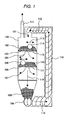
- FIG. 1 A schematic configuration view of an ammonia fermenter according to the present invention is shown in Fig. 1 .
- the interior of an ammonia fermenter main body 120 is divided into plural stages in the vertical direction. In the embodiment shown in Fig. 1 , the interior is divided into two stages. Then, the ammonia fermenter is provided with an agitating and conveying means 109 for mixing fermentation materials 102 and 116 at the lower part of the ammonia fermenter main body 120 and for conveying the fermentation materials 102 and 116 to the exterior of the ammonia fermenter main body 120, and conveying means 110, 119, and 112 for conveying the agitated fermentation material 108 to the upper stage of the ammonia fermenter main body 120.
- the first stage of the ammonia fermenter main body 120 is formed with floor faces 103 and 115 and the second stage thereof is formed with floor faces 106 and 117.
- rollers 114 and 105 to evenly pile up the contained fermentation materials 102 and 116 are installed, respectively. Furthermore, an exhaust port 111 to discharge generated ammonia gas outside the ammonia fermenter is installed at the upper part of the ammonia fermenter main body 120.
- the fermentation materials 102 and 116 are retained at the stages respectively as shown in Fig. 1 .
- the fermentation materials 102 and 116 at the respective stages are dropped to and gathered at the lower part of the ammonia fermenter main body 120 as shown with the arrow 118 and agitated and mixed by the agitating and conveying means 109.
- the agitated and mixed fermentation material 108 is lifted up to an inlet 101 of the ammonia fermenter main body 120 again through the conveying means 110, 119, and 112.
- the fermentation material lifted up to the inlet 101 is distributed to the stages again.
- the fermentation materials 102 and 116 are gathered at the lower part of the ammonia fermenter main body 120 again, mixed and conveyed, and lifted up to the uppermost part of the ammonia fermenter main body 120 again.
- the nitrogen components in the fermentation materials 102, 116, and 108 are evenly transformed into ammonia and discharged from the exhaust port 111 outside the ammonia fermenter.
- the fermentation materials 102, 116, and 108 the nitrogen components of which are reduced in the ammonia fermenter are conveyed to a methane fermenter of the next fermentation step.
- the floor faces 103, 115, 106, and 117 at the respective stages open downward as shown with the reference numerals 104 and 107 and the fermentation materials 102 and 116 fall free.
- the fermentation material 108 is lifted up to the uppermost part of the ammonia fermenter main body 120 again and charged into the ammonia fermenter main body 120 through the inlet 101.
- the fermentation materials 102 and 116 may be flattened with the rollers 114 and 105 in order to make the thickness uniform.
- a means for free-falling a fermentation material is called a free-falling means and the agitating and conveying means 109 and the conveying means 110, 119, and 112 are called a mechanical agitating means.
- Those means constitute a means for mixing fermentation materials.
- an inlet for a fermentation material a means for conveying the fermentation material to a methane fermenter, a means for controlling (adjusting) the temperature of the ammonia fermenter, a temperature measuring means, an ammonia concentration measuring means, and a pH measuring means are installed in the ammonia fermenter.
- the means for conveying the fermentation material to a methane fermenter is branched from the conveying means 119 and conveys the deammoniated fermentation material to the methane fermenter as shown in Fig. 2 .
- organic matters in a fermentation material also react simultaneously with the ammonia fermentation.
- the reaction of organic matters causes the volume of flammable gas produced in the methane fermentation that is carried out after the ammonia fermentation to reduce, and thus does not conform to the purpose, namely the production of the flammable gas by the methane fermentation.
- the anaerobic fermentation is employed, microorganisms suitable for the anaerobic ammonia fermentation are surveyed in order to mostly carry out the only ammonia fermentation, and bacteria shown in the dendrogram of Fig. 4 are specified.
- the specified bacteria are two kinds of bacteria suitable for the ammonia fermentation having a homology of 93% at a cultivation temperature of 65°C and a homology of 92% at a cultivation temperature of 55°C in comparison with 16S rDNA base sequence of Tepidimicrobium ferriphilum sp.91.
- the former bacterium is hereunder referred to as our bacterium 2 ( Tepidimicrobium sp. strain HUT8118) and the latter bacterium is referred to as our bacterium 1 ( Tepidimicrobium sp. strain HUT8119).
- ammonia fermenter 120 may contain, for example, Tepidimicrobium ferriphilum, Clostridium ultunense, Peptostreptococcaceae bacterium 19gly, Clostridium sp. PO, Sporanaerobacter acetigenes Lup33, and Acetanaerobacter sp. and others.
- Fig. 5-1 shows the variation of pH in an ammonia fermenter at various fermentation temperatures.
- the horizontal axis shows the number of days and the vertical axis shows a pH (a hydrogen-ion concentration).
- the pH suitable for the ammonia fermentation in a fermenter is in the alkaline region and desirably in the range of pH 8 to pH 8.5.
- pH is nearly in the desirable range when the fermentation temperature is controlled to 55°C and 65°C but pH lowers and approaches neutrality after seventh day when the fermentation temperature is raised to 75°C or higher.
- the fermentation temperature at which the pH is nearly in the range of pH 8 to pH 8.5 may vary in accordance with the kind (the difference in the content of organic nitrogen and the amount of water) and the charged amount of a fermentation material and the like. Consequently, it is desirable to confirm beforehand the fermentation temperature at which pH is nearly in the range of pH 8 to pH 8.5 by a test or the like. According to our test results, it is known that the range of pH 8 to pH 8.5 can be maintained at least at a temperature close to 55°C or 65°C as shown in Fig. 5-1 .
- pH can be maintained nearly in the range of pH 8 to pH 8.5 even at the fermentation temperature of 75°C or 85°C as shown in Fig. 5-1 , but after the seventh day, pH approaches the neutral region particularly at the fermentation temperature of 75°C or 85°C, and hence a desirable retention time of the fermentation material in the ammonia fermenter is 6 days.
- the present invention is very advantageous from the viewpoints of labor and a running cost because a deammoniation tank is not used basically and continuous charge of chemicals such as an alkaline material is not required.
- a deammoniation tank is not used basically and continuous charge of chemicals such as an alkaline material is not required.
- the pH in the ammonia fermenter suddenly lowers to less than 7.5 however, it is effective to raise the pH to an appropriate level by charging an alkaline material into the ammonia fermenter.
- Fig. 5-2 shows the results of the fermentation tests when poultry manure is used as the fermentation material and bacteria according to the present invention are used.
- the horizontal axis shows the number of days and the vertical axis shows a total produced gas volume per one gram of poultry manure.
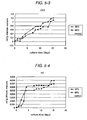
- Figs. 5-3 and 5-4 show the variations of the volumes of the produced CO 2 and H 2 in the fermentation tests respectively when poultry manure is used as the fermentation material and bacteria according to the present invention are used.
- the horizontal axis shows the number of days and the vertical axis shows a produced gas volume per one gram of poultry manure.
- gas is generated markedly at the fermentation temperature of 55°C or 65°C. That is, it has been found that preferable fermentation temperatures includes 55°C and 65°C and a temperature lower than 75°C.
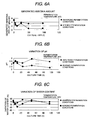
- Figs. 6A to 6C show the results of ammonia generation tests carried out under anaerobic fermentation conditions and aerobic fermentation conditions when poultry manure is used as the fermentation material and the bacteria according to the present invention are used.
- the fermentation temperature is set at 55°C.
- Figs. 6A, 6B and 6C show the variations of the generated ammonia amount, the pH, and the water content, respectively.
- the vertical axis of the graph in Fig. 6A shows the generated ammonia amount per one kg of wet poultry manure. Further, the horizontal axis shows the culture time in each of Figs. 6A, 6B and 6C .
- An object of the present invention is to remove ammonia by applying a pretreatment to the ammonia fermentation to the extent of preventing ammonia from hindering methane bacteria in the methane fermentation. Further, it is desirable to generate ammonia as much as possible for as short a time as possible in the ammonia fermentation from the viewpoint of the processing speed of the fermentation material and the methanation of organic substances.
- the pH tends to shift from an alkaline region to a neutral region in the case of the anaerobic fermentation when the fermentation time is long. It is preferable that a fermentation material is neutral in the methane fermentation and thus the results shown in the figure are desirable ones.
- anaerobic fermentation is suitable for the ammonia fermentation. It is understood that a preferable fermentation time is 6 days or less from the viewpoint of the pH and in particular about 4 days from the viewpoint of the water content.
- Fig. 2 is a view showing a schematic configuration of a flammable gas production system according to the present invention.
- the figure shows a case of using a produced flammable gas as the fuel in a combustion apparatus.
- a so-called methane fermenter that produces methane as a representative flammable gas is exemplified here, the present invention is not limited to the methane fermentation.
- the methane gas produced here contains nonflammable gases, such as carbon dioxide gas, that are discharged by microorganisms during fermentation.
- the present system comprises an ammonia fermenter 2 into which a fermentation material 1 is charged first, a methane fermenter 4 into which the fermentation material 1 is charged after the nitrogen component is removed in the ammonia fermenter 2, a heating means 5 for heating the fermentation material 1 in the ammonia fermenter 2 and the methane fermenter 4, a solid-liquid separator 7 to separate fermentation residues 6 discharged from the methane fermenter 4 after the methane fermentation into a digestive juice 8 and a solid component 9, a digestive juice purifying means 10 for purifying the digestive juice 8, a solid component drying means 12 for drying the solid component 9, a carbonizing furnace 13 to carbonize the dried solid component, a combustion apparatus 15 to combust the carbonized gas produced during the carbonizing process, a heat recovery boiler 16 to recover heat of a combustion gas, and a methane gas storage tank 17 to store fermented methane gas.
- anaerobic fermentation is applied in both the ammonia fermenter and the methane fermenter in the present embodiment.
- an ammonia fermenter having the structure shown in Fig. 1 is used as the ammonia fermenter 2.
- the methane fermenter 4 is a dry type fermenter.
- the system has a combustion apparatus 18 and an exhaust heat recovery apparatus 19 as a means for using the produced methane gas, and the exhaust gas is discharged through an exhaust stack 20.
- the ammonia fermenter 2 and the methane fermenter 4 have temperature control means for controlling the temperatures of the fermentation material 1.
- the temperature control means includes the heating means 5 for heating the fermentation material 1.
- combustion apparatuses 15 and 18 are energy converters in the broad sense of the term and the thermal energy generated there can be used as heat sources of the temperature control means in the ammonia fermenter 2 and the methane fermenter 4, respectively.
- steam is generated in the heat recovery boiler 16 with the combustion gas supplied from the combustion apparatus 15 and used as the heat source of the heating means 5.
- An exhaust port 3 is installed at the upper part of the ammonia fermenter 2 and the generated ammonia gas is discharged. It is also possible to connect the exhaust port 3 to the combustion apparatus 15 or 18, to introduce ammonia gas into the combustion apparatus 15 or 18, and to incinerate and decompose the ammonia gas. By so doing, it is possible to prevent bad odor from being generated.
- ammonia gas generated in the ammonia fermenter 2 as a hydrogen source and use the ammonia gas as an energy source in a hydrogen energy system.
- a hazardous material may be contained in methane gas produced by fermentation and may damage apparatuses.
- a means for refining the methane gas produced by fermentation and removing the hazardous material may be installed.
- a digestive juice purifying means 10 comprises a water tunnel. Batch-type activated sludge aeration treatment is applied here.
- the digestive juice purifying means 10 is aimed at purifying the digestive juice 8 after the methane fermentation treatment by simple operations at a low cost, is provided with two aeration means 51 and processes the digestive juice batch-wise once a day.
- a sand filter bed 11 to remove residues of the digestive juice 8 and a dilution tank (not shown in the figure) to dilute wastewater may be attached to the digestive juice purifying means 10.
- a conventional sewage treatment tank has a complicated structure because sewage contains a nitrogen component and the complexity of the structure has caused both the initial and the running costs to increase.
- the present system facilitates the purification of the digestive juice 8 and makes it possible to purify the digestive juice 8 with only one digestive juice purifying means 10 since the nitrogen component contained in a fermentation material 1 is removed in the ammonia fermenter 2 beforehand and the fermentation residues 6 discharged from the methane fermenter 4 are separated into the digestive juice 8 and the solid component 9.
- the water content of the solid component 9 produced after the fermentation residues 6 discharged from the dry type methane fermenter 4 is subjected to solid-liquid separation is about 50% to 60%.
- the solid component drying means 12 dries the solid component 9 of a high water content in the atmosphere of 300°C or higher and facilitates the succeeding carbonization.
- the water vapor 55 generated from the solid component 9 is discharged outside the solid component drying means 12. Further, dust generated from the solid component 9 is recovered with a cyclone 56.
- the carbonizing furnace 13 is of an internal self-heating type.
- the atmospheric temperature is 600 to 900°C and the solid component 9 is carbonized after dried by the solid component drying means 12.
- the carbonized gases (CO, H 2 O, CH 4 , etc.) generated here and products 52 containing carbide
- the carbonized gases burn in the combustion apparatus 15.
- the heat generated at the time is recovered with the heat recovery boiler 16 and used as the heat source of the heating means 5.
- the heat of the heating means 5 can be used for heating in the ammonia fermenter 2 and the methane fermenter 4.
- a part 53 of the carbonized gases generated in the carbonizing furnace 13 flows back to the solid component drying means 12 and is used as the heat source.
- An ash component 14 is the final product generated from the present system, which can be used as a valuable resource such as a snow-melting agent and is very easy to handle.
- An exhaust gas 54 from which heat is recovered with the heat recovery boiler 16 is discharged from the exhaust stack 20.
- the fermentation residues 6 discharged from the methane fermenter 4 are separated into the digestive juice 8 and the solid component 9, and the digestive juice 8 is purified by the batch-type activated sludge aeration method in the digestive juice purifying means 10.
- Whether or not the digestive juice 8 is suitable for biological treatment is judged by a biochemical oxygen demand (BOD), a chemical oxygen demand (COD), or a total organic carbon (TOC) and, when the concentration of the BOD is high, the digestive juice 8 is judged to be suitable for the biological treatment.
- BOD biochemical oxygen demand
- COD chemical oxygen demand
- TOC total organic carbon
- the price of the converted material per unit energy tends to increase. For that reason, there is a need to construct a system to recover energy as much as possible from the fermentation material 1 as a biomass.
- the present system makes it possible to recover energy from the solid component 9 derived from the fermentation residues 6 and also to reduce the volume.
- the fermentation material food waste or livestock excreta containing an organic nitrogen component abundantly may also be used.
- the present invention is very effective also for, among the livestock excreta in particular, poultry manure that has heretofore been regarded as hardly fermented.
- a technological feature of the present system is that it is possible to decompose various organic substances efficiently and to produce a flammable gas stably since the organic nitrogen component can be removed beforehand in an ammonia fermenter according to the present invention at a low cost regardless of the amount of the nitrogen component included in the fermentation material 1.
- the fermentation residues 6 extracted from the methane fermenter 4 are separated into a digestive juice 8 and a solid component 9.
- the digestive juice 8 is discharged in the manner of satisfying the regulation stipulated by the Water Pollution Prevention Law after subjected to biological treatment in a batch-type activated sludge aeration tank of the digestive juice purifying means 10.
- the solid component 9 is subjected to additional recovery of energy and volume reduction with the carbonizing furnace 13 and the remaining carbide can be used as a valuable resource such as a snow-melting agent.
- the ammonia fermenter 2 is an anaerobic fermenter and a vertical type.
- the ammonia fermenter 2 is divided into three stages of an upper stage, a middle stage, and a lower stage.
- the fermentation material 1 is dropped to respective stages at prescribed intervals and is mixed.
- the fermentation material 1 in the ammonia fermenter 2 is heated by an external heat source, for example, heat obtained from a carbonized gas combustion apparatus 15 and the fermentation temperature is controlled to a constant temperature.
- the fermentation material 1 is retained in the ammonia fermenter 2 for four days and thereby 70% to 80% of the nitrogen component in the fermentation material 1 is converted into ammonia and denitrified.
- Microorganism groups involved in the ammonia fermentation are analyzed and the structure of the ammonia fermenter 2 is studied in order to make the ammonia fermentation efficient. As a result, an ammonia yield of 85% and a carbon class reduction ratio of 15% can be obtained when the retention time of the fermentation material 1 is four days.
- Methane fermentation is applied after the ammonia fermentation is applied under the conditions, and resultantly a fermented methane gas of 80 to 100 m 3 per one ton of the fermentation material is obtained.
- the ammonia concentration in the methane fermenter 4 of the succeeding step is 0.35% or less and ammonia can be prevented from hindering methane bacteria.
- the methane fermenter 4 is an anaerobic dry type.
- a paddle type agitator is incorporated into the methane fermenter 4.
- a part of the fermentation material 1 is transferred from the methane fermenter 4 to the heating means 5, heat exchange is carried out, and the temperature in the methane fermenter 4 is controlled to a constant temperature.
- the fermentation material 1 in the methane fermenter 4 is analyzed at prescribed intervals, the charging rate and the charging amount of the fermentation material 1 supplied to the methane fermenter 4 are controlled so that the fermentation material 1 in the methane fermenter 4 may be under desirable conditions, namely so that the pH may be around 8 and the ammonia concentration may be 3500 mg/kg or less, and methane gas is produced efficiently. By so doing, a very high-energy conversion efficiency of 75% or more is realized on the basis of an enthalpy charged to the methane fermenter 4.
- the energy conversion efficiency here is the ratio of the sum of the enthalpy of the flammable gas obtained in the methane fermentation and the enthalpy obtained by carbonizing the residues to the total enthalpy of the fermentation material 1.
- An anaerobic ammonia fermenter according to the present invention is described hereunder.
- the fermentation material 1 is sent to the anaerobic ammonia fermenter 2 and retained in the ammonia fermenter 2 for several days. During this period, the fermentation material 1 is heated to a prescribed temperature by heat supplied from the heating means 5 or the like in order to obtain a temperature environment most suitable for the ammonia fermentation, and the ammonia fermentation is accelerated.
- a means for conveying the fermentation material 1 from the ammonia fermenter 2 to the methane fermenter 4 or exterior is called a fermentation material conveying means.
- the discharged amount of a digestive juice 8 reduces considerably
- the capacity of the digestive juice purifying means 10 prepared thereafter also reduces considerably, and it is estimated that the economic effect is very large and the operation is simple in commercial use and tends to be prevalent.
- Fig. 3 shows another example of an energy converter used in a flammable gas production system according to the present invention.
- the difference from the energy converter used in the embodiment shown in Fig. 2 is that the methane gas produced from a methane fermenter 4 is used as a fuel for a gas engine 21.
- mechanical energy can be obtained with the gas engine 21.
- electricity can be generated by using the mechanical energy and electric energy 25 can be obtained.
- thermal energy 24 can also be obtained by the combustion of methane gas.
- a device that can obtain mechanical energy, electric energy and thermal energy from methane gas as stated above is called an energy converter.
- an exhaust heat recovery device 22 for recovering heat from the exhaust gas of the gas engine 21. It is also possible to use the exhaust heat for heating the ammonia fermenter 2 and the methane fermenter 4. Furthermore, it is also possible to use the exhaust gas of the gas engine 21 as the heat source of a greenhouse 23 or a carbon dioxide source.
- the energy converter using the gas engine 21 is explained in the present embodiment, the similar energy conversion can be carried out even when a fuel cell is used instead of the gas engine 21.
- Arrangement number 1 Base arrangement (1457bp) of 16s rDNA of Tepidimicrobium sp. strain HUT8118:
Landscapes
- Life Sciences & Earth Sciences (AREA)
- Chemical & Material Sciences (AREA)
- Engineering & Computer Science (AREA)
- Organic Chemistry (AREA)
- Health & Medical Sciences (AREA)
- Wood Science & Technology (AREA)
- Zoology (AREA)
- Bioinformatics & Cheminformatics (AREA)
- Microbiology (AREA)
- Biotechnology (AREA)
- Genetics & Genomics (AREA)
- General Health & Medical Sciences (AREA)
- General Engineering & Computer Science (AREA)
- Biochemistry (AREA)
- Sustainable Development (AREA)
- Biomedical Technology (AREA)
- General Chemical & Material Sciences (AREA)
- Chemical Kinetics & Catalysis (AREA)
- Molecular Biology (AREA)
- Hydrology & Water Resources (AREA)
- Environmental & Geological Engineering (AREA)
- Water Supply & Treatment (AREA)
- Oil, Petroleum & Natural Gas (AREA)
- Biodiversity & Conservation Biology (AREA)
- Combustion & Propulsion (AREA)
- Clinical Laboratory Science (AREA)
- Processing Of Solid Wastes (AREA)
- Treatment Of Sludge (AREA)
- Apparatus Associated With Microorganisms And Enzymes (AREA)
- Coke Industry (AREA)
Applications Claiming Priority (1)
| Application Number | Priority Date | Filing Date | Title |
|---|---|---|---|
| JP2007217301A JP2009050170A (ja) | 2007-08-23 | 2007-08-23 | アンモニア発酵槽、可燃性ガス製造装置およびそれらの運転方法 |
Publications (2)
| Publication Number | Publication Date |
|---|---|
| EP2039775A2 true EP2039775A2 (fr) | 2009-03-25 |
| EP2039775A3 EP2039775A3 (fr) | 2009-04-01 |
Family
ID=40330251
Family Applications (1)
| Application Number | Title | Priority Date | Filing Date |
|---|---|---|---|
| EP08014934A Withdrawn EP2039775A3 (fr) | 2007-08-23 | 2008-08-22 | Appareil et procédé pour la production de méthane |
Country Status (2)
| Country | Link |
|---|---|
| EP (1) | EP2039775A3 (fr) |
| JP (1) | JP2009050170A (fr) |
Cited By (5)
| Publication number | Priority date | Publication date | Assignee | Title |
|---|---|---|---|---|
| US8329455B2 (en) | 2011-07-08 | 2012-12-11 | Aikan North America, Inc. | Systems and methods for digestion of solid waste |
| US20140271438A1 (en) * | 2013-03-15 | 2014-09-18 | Ductor Oy | Extraction of nitrogen from organic materials through ammonification by mixed bacterial populations |
| WO2015151036A1 (fr) | 2014-04-01 | 2015-10-08 | Ductor Oy | Procédé de production de biogaz au moyen de récupération de substances nutritives |
| WO2024062163A1 (fr) * | 2022-09-22 | 2024-03-28 | Ductor Oy | Procédé de récupération d'ammoniac dans une installation de biogaz et installation de biogaz |
| CN119351260A (zh) * | 2024-11-11 | 2025-01-24 | 浙江大学 | 提升甲烷产量、缓解氨抑制的中高温厌氧菌及其应用 |
Families Citing this family (1)
| Publication number | Priority date | Publication date | Assignee | Title |
|---|---|---|---|---|
| JP7744292B2 (ja) * | 2022-05-09 | 2025-09-25 | ダイハツ工業株式会社 | バイオガスエンジンシステム |
Citations (2)
| Publication number | Priority date | Publication date | Assignee | Title |
|---|---|---|---|---|
| JP2006150159A (ja) | 2004-11-25 | 2006-06-15 | Okawara Mfg Co Ltd | 畜産廃棄物等の有機廃棄物のメタン醗酵処理システム並びにその運転方法 |
| JP2006205017A (ja) | 2005-01-26 | 2006-08-10 | Hiroshima Univ | 有機性廃棄物の処理方法および処理システム |
Family Cites Families (2)
| Publication number | Priority date | Publication date | Assignee | Title |
|---|---|---|---|---|
| US6299774B1 (en) * | 2000-06-26 | 2001-10-09 | Jack L. Ainsworth | Anaerobic digester system |
| WO2006119052A2 (fr) * | 2005-05-03 | 2006-11-09 | Anaerobe Systems | Production anaerobie d'hydrogene et d'autres produits chimiques |
-
2007
- 2007-08-23 JP JP2007217301A patent/JP2009050170A/ja active Pending
-
2008
- 2008-08-22 EP EP08014934A patent/EP2039775A3/fr not_active Withdrawn
Patent Citations (2)
| Publication number | Priority date | Publication date | Assignee | Title |
|---|---|---|---|---|
| JP2006150159A (ja) | 2004-11-25 | 2006-06-15 | Okawara Mfg Co Ltd | 畜産廃棄物等の有機廃棄物のメタン醗酵処理システム並びにその運転方法 |
| JP2006205017A (ja) | 2005-01-26 | 2006-08-10 | Hiroshima Univ | 有機性廃棄物の処理方法および処理システム |
Non-Patent Citations (1)
| Title |
|---|
| BIOTECHNOLOGY, vol. 85, no. 4, 2007, pages 171 - 173 |
Cited By (14)
| Publication number | Priority date | Publication date | Assignee | Title |
|---|---|---|---|---|
| US8329455B2 (en) | 2011-07-08 | 2012-12-11 | Aikan North America, Inc. | Systems and methods for digestion of solid waste |
| US8492134B2 (en) | 2011-07-08 | 2013-07-23 | Aikan North America, Inc. | Systems and methods for digestion of solid waste |
| US9328323B2 (en) | 2011-07-08 | 2016-05-03 | Aikan North America, Inc. | Systems and methods for digestion of solid waste |
| EP2971025A1 (fr) * | 2013-03-15 | 2016-01-20 | Ductor Oy | Extraction d'azote à partir de matières organiques par l'intermédiaire de l'ammonification par des populations bactériennes mixtes |
| KR20160004259A (ko) * | 2013-03-15 | 2016-01-12 | 둑토르 오이 | 혼합된 박테리아 개체군에 의한 암모니아화를 통한 유기물로부터의 질소의 추출 |
| US9090914B2 (en) * | 2013-03-15 | 2015-07-28 | Ductor Oy | Extraction of nitrogen from organic materials through ammonification by mixed bacterial populations |
| US20140271438A1 (en) * | 2013-03-15 | 2014-09-18 | Ductor Oy | Extraction of nitrogen from organic materials through ammonification by mixed bacterial populations |
| US9809795B2 (en) | 2013-03-15 | 2017-11-07 | Ductor Oy | Extraction of nitrogen from organic materials through ammonification by mixed bacterial populations |
| CN105264082B (zh) * | 2013-03-15 | 2021-02-19 | 芬兰达特有限公司 | 通过由混合细菌种群进行的氨化从有机材料提取氮 |
| WO2015151036A1 (fr) | 2014-04-01 | 2015-10-08 | Ductor Oy | Procédé de production de biogaz au moyen de récupération de substances nutritives |
| US9670508B2 (en) | 2014-04-01 | 2017-06-06 | Ductor Oy | Biogas process with nutrient recovery |
| EP3960866A1 (fr) | 2014-04-01 | 2022-03-02 | Ductor Oy | Procédé de biogaz avec récupération de nutriments |
| WO2024062163A1 (fr) * | 2022-09-22 | 2024-03-28 | Ductor Oy | Procédé de récupération d'ammoniac dans une installation de biogaz et installation de biogaz |
| CN119351260A (zh) * | 2024-11-11 | 2025-01-24 | 浙江大学 | 提升甲烷产量、缓解氨抑制的中高温厌氧菌及其应用 |
Also Published As
| Publication number | Publication date |
|---|---|
| JP2009050170A (ja) | 2009-03-12 |
| EP2039775A3 (fr) | 2009-04-01 |
Similar Documents
| Publication | Publication Date | Title |
|---|---|---|
| US8568591B2 (en) | System and method for thermophilic anaerobic digester process | |
| KR100260541B1 (ko) | 유기물 분해 방법 | |
| US4442006A (en) | Anaerobic digestion process | |
| US5076927A (en) | Biocatalyzed partial demineralization of acidic metal sulfate solutions | |
| US6342378B1 (en) | Biogasification of solid waste with an anaerobic-phased solids-digester system | |
| US7854840B2 (en) | Method for decomposing biogenic material | |
| KR20220073015A (ko) | 고농도유기물 처리를 위한 고효율 열분해반응조가 구비된 순환과 혼합교차교반운전 혐기소화시스템 | |
| CN102950137A (zh) | 一种餐厨垃圾的协同处理方法 | |
| US9409806B2 (en) | System and method for thermophilic anaerobic digester process | |
| CA2754100A1 (fr) | procede d'obtention de boues imputrescibles et d'energie et installation correspondante | |
| EP2039775A2 (fr) | Appareil et procédé pour la production de méthane | |
| CN114378105B (zh) | 一种餐厨垃圾与纤维素生物质协同的多级处理系统及方法 | |
| US20110020862A1 (en) | Biological solids processing system and method | |
| Wadchasit et al. | Development of a novel reactor for simultaneous production of biogas from oil-palm empty fruit bunches (EFB) and palm oil mill effluents (POME) | |
| CN112673078A (zh) | 用于由生物质生产生物油和生物气的方法 | |
| KR101565503B1 (ko) | 가축분뇨 액비화 방법 | |
| KR101548295B1 (ko) | 분뇨의 건조화 및 바이오가스화 시설 | |
| CN102154373B (zh) | 一种衣康酸废渣的处理方法 | |
| JP4543504B2 (ja) | 有機性廃棄物の乾式メタン発酵方法 | |
| CN119731122A (zh) | 利用生物化学过程的用于处理流体的集成热水解和真空消化 | |
| JP2006205017A (ja) | 有機性廃棄物の処理方法および処理システム | |
| JP2020157261A (ja) | 有機性汚泥の処理方法及び処理装置 | |
| JP3873114B2 (ja) | 有機性固形廃棄物の処理方法 | |
| CN218860712U (zh) | 一种厌氧发酵系统 | |
| CN114853163B (zh) | 一种高稻壳含量的白酒酒糟和高浓度酿酒废水协同处理方法 |
Legal Events
| Date | Code | Title | Description |
|---|---|---|---|
| PUAI | Public reference made under article 153(3) epc to a published international application that has entered the european phase |
Free format text: ORIGINAL CODE: 0009012 |
|
| PUAL | Search report despatched |
Free format text: ORIGINAL CODE: 0009013 |
|
| AK | Designated contracting states |
Kind code of ref document: A2 Designated state(s): AT BE BG CH CY CZ DE DK EE ES FI FR GB GR HR HU IE IS IT LI LT LU LV MC MT NL NO PL PT RO SE SI SK TR |
|
| AX | Request for extension of the european patent |
Extension state: AL BA MK RS |
|
| AK | Designated contracting states |
Kind code of ref document: A3 Designated state(s): AT BE BG CH CY CZ DE DK EE ES FI FR GB GR HR HU IE IS IT LI LT LU LV MC MT NL NO PL PT RO SE SI SK TR |
|
| AX | Request for extension of the european patent |
Extension state: AL BA MK RS |
|
| 17P | Request for examination filed |
Effective date: 20090407 |
|
| 17Q | First examination report despatched |
Effective date: 20090529 |
|
| AKX | Designation fees paid |
Designated state(s): AT BE BG CH CY CZ DE DK EE ES FI FR GB GR HR HU IE IS IT LI LT LU LV MC MT NL NO PL PT RO SE SI SK TR |
|
| GRAP | Despatch of communication of intention to grant a patent |
Free format text: ORIGINAL CODE: EPIDOSNIGR1 |
|
| RTI1 | Title (correction) |
Free format text: METHOD FOR PRODUCING METHANE IN A TWO-STAGE FERMENTATION PROCESS |
|
| STAA | Information on the status of an ep patent application or granted ep patent |
Free format text: STATUS: THE APPLICATION IS DEEMED TO BE WITHDRAWN |
|
| 18D | Application deemed to be withdrawn |
Effective date: 20101027 |