EP2040215A2 - Système de garant avec composition de modèle dynamique ad hoc - Google Patents
Système de garant avec composition de modèle dynamique ad hoc Download PDFInfo
- Publication number
- EP2040215A2 EP2040215A2 EP20080102441 EP08102441A EP2040215A2 EP 2040215 A2 EP2040215 A2 EP 2040215A2 EP 20080102441 EP20080102441 EP 20080102441 EP 08102441 A EP08102441 A EP 08102441A EP 2040215 A2 EP2040215 A2 EP 2040215A2
- Authority
- EP
- European Patent Office
- Prior art keywords
- item
- utility
- weight function
- utility models
- user
- Prior art date
- Legal status (The legal status is an assumption and is not a legal conclusion. Google has not performed a legal analysis and makes no representation as to the accuracy of the status listed.)
- Ceased
Links
Images

Classifications
-
- G—PHYSICS
- G06—COMPUTING OR CALCULATING; COUNTING
- G06Q—INFORMATION AND COMMUNICATION TECHNOLOGY [ICT] SPECIALLY ADAPTED FOR ADMINISTRATIVE, COMMERCIAL, FINANCIAL, MANAGERIAL OR SUPERVISORY PURPOSES; SYSTEMS OR METHODS SPECIALLY ADAPTED FOR ADMINISTRATIVE, COMMERCIAL, FINANCIAL, MANAGERIAL OR SUPERVISORY PURPOSES, NOT OTHERWISE PROVIDED FOR
- G06Q30/00—Commerce
- G06Q30/02—Marketing; Price estimation or determination; Fundraising
Definitions
- the present disclosure relates to a recommender system. More specifically, the present disclosure relates to a comprehensive recommender system that facilitates ad-hoc, dynamic model composition to recommend one or more items.
- a recommender system provides a user with personalized suggestions that facilitate his decision making. These individualized recommendations allow the user to rely on the recommender system when performing a wide variety of tasks, from purchasing a book, to renting a movie, and even to choosing a school.
- One embodiment of the present invention provides recommender system for generating a recommendation of an item by combining a set of utility models adaptively to facilitate a decision-making process.
- the system includes a utility model database containing the set of utility models and a query module for receiving at least one query about the item from a querying entity.
- the system also includes a rule engine to specify a subset of utility models to be applied to the item and to specify a weight function of the specified utility models.
- a set generator coupled to the utility model database, the query module, and the rule engine.
- the set generator computes a set of ratings by applying each of the utility model in the subset to the item and generates an overall rating for the item based on the weight function.
- the system further a communication module to return the overall rating.
- the rule engine includes a user context module to receive contextual and/or preferential information associated with the querying entity.
- the contextual information includes at least one of: a current time of day; a current weather condition; a location associated with the querying entity; a movement associated with the querying entity; a calendar entry reflecting a user's past, current, and/or future schedule; a set of messaging data comprised of text extracted from, among others, emails and/or instant messages, where one or more users discuss interests and/or plans; and a reading history which involves content extracted from web pages or other sources a user has accessed, which content reflects the user's interests and/or tastes.
- the rule engine selects the subset of utility models based on the contextual and/or preferential information received by the user context module.
- the rule engine associates a decision made by the querying entity with the weight function to adjust the weight function adaptively.
- the weight function of the specified utility models is constructed by employing a heuristic approach.
- the weight function of the specified utility models is constructed by employing a statistical approach.
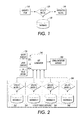
- FIG.1 illustrates an architecture diagram of a conventional single-model recommender system.
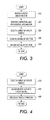
- FIG. 2 illustrates an exemplary architecture for a recommender system that facilitates ad-hoc, dynamic model composition in accordance with one embodiment of the present invention.
- FIG. 3 presents a flow diagram illustrating an exemplary process of computing ratings for an item based on utility models in accordance with one embodiment of the present invention.
- FIG. 4 presents a flow diagram illustrating an exemplary sequence of operations of a rule engine and a set generator in accordance with one embodiment of the present invention.
- FIG. 5 illustrates an exemplary computer-based recommender system that facilitates ad-hoc, dynamic model composition in accordance with one embodiment of the present invention.
- a computer-readable storage medium which may be any device or medium that can store code and/or data for use by a computer system.
- a recommendation is typically based on the ratings of items in one particular aspect according to a user's input and feedback.
- conventional recommender systems only use one utility model to compute the ratings of items.
- a utility model also referred to as a "model” in this description, is a model which can be applied to an item to generate a utility value, or rating, for that item, which can then be used to make recommendations.
- a commonly used utility model is "collaborative filtering," where statistical techniques such as “nearest-neighbor computation" are used to group users and items into similar profiled groups. Given a user and an item he has not rated, the recommender system uses the similarity model to predict a score for the item. The highest scored items are then recommended to the user.
- FIG.1 illustrates an architecture diagram of a conventional single-model recommender system.
- a conventional recommender system includes a utility model 120 and a rating database 130.
- the system receives an unrated item 110.
- the system applies utility model 120 to unrated item 110 based on information stored in ratings database 130.
- utility model 120 can be a collaborative filter model, and ratings database 130 can store information about similar items as well as user-profiling information.
- ratings database 130 can store information about similar items as well as user-profiling information.
- the system can compute a predicted rating 140 for the item.
- Embodiments of the present invention provide a comprehensive recommender system that utilizes more than one utility model to compute the ratings of items.
- This recommender system includes a utility model database containing a set of utility models which can be dynamically updated according to the need of a querying entity, which can be a user or another computer system.
- the recommender system selects a subset of utility models from the utility model database on a per-query basis, optionally based on the contextual and preferential information pertinent to the querying entity.
- the system further applies a weight function to the subset of the utility models to compute an overall score or rating for the item.
- Contextual information e.g., spatial and temporal information
- preferential information e.g., taste
- this recommender system is significantly more flexible and extensible than existing systems.
- application developers can plug in or remove models at will.
- the system can also be adaptable and evolve over time based on user behavior, a feature not available in existing systems.
- the comprehensive recommender system can adaptively adjust the weight of each utility model in the weight function according to the contextual and preferential information about the querying entity. As a result, the accuracy of the rating is greatly improved. In addition, the recommender system retains the information about the user's behavior after the recommendation is made and is thus able to adapt to changes in user behavior to better predict his or her preferences in the future.
- the system can select an arbitrary number of models from the model database, and the selection of models can depend on the type of item to be rated, and/or characteristics of the querying entity.
- the selection of models can be performed in an ad-hoc or dynamic fashion, depending on inputs from the user and/or inputs from other modules of the system.
- the way models are combined can be specified in a set of rules, or can be inferred from the current user's context. It is also possible that the system can learn over time which models are more appropriate for which user in a given context.
- FIG. 2 illustrates an exemplary architecture for a recommender system that facilitates ad-hoc, dynamic model composition in accordance with one embodiment of the present invention.
- a recommender system 200 comprises a query module 210, a user context module 220, a rule engine 230, a set generator 240, a utility model database 260, and a communication module 280.
- rule engine 230 can dynamically select a subset of utility models from utility model database 260 based on information obtained from user context module 220.
- user context module 220 can obtain a variety of user context information, such as the current time, weather condition, the user's location, the user's movements, a calendar entry reflecting a user's past, current, and/or future schedule; a set of messaging data comprised of text extracted from, among others, emails and/or instant messages, where one or more users discuss interests and/or plans; and a reading history which involves content extracted from web pages or other sources a user has accessed, which content reflects the user's interests and/or tastes.
- Other environmental, social, and behavioral parameters can also be included in the user context information.
- Rule engine 230 generates a weight function of the subset of utility models which is used to compute the ratings of items in that particular category.
- the weight of each utility model can be dynamically determined based on contextual and preferential information obtained from user context module 220.
- the preferential information can be associated with any aspect of an item type. For example, it could be a film genre, a type of books, a type of cuisine, a music genre, and so on.
- Utility model database 260 contains a set of utility models 262-268. Each utility model can be applied to an item in order to rate that item. For example, in order to decide which book a bookstore should recommend to a user, a collaborative filtering model collects information about the user, fits the user to a group profile, and recommend the books also purchased by other members of the same profile group. By using statistical information of the books and users dynamically collected in the past, the collaborative filtering model computes the ratings of books and recommends a set of books with the highest rating to the querying user. Aside from collaborative filtering, other utility models can also be included in the utility model database.
- each utility model may also include an associated database which stores pertinent data to be used by the respective model.
- Set generator 220 selects a set of utility models and the associated databases associated.
- a rating database can be associated with a collaborative filtering model
- a cost function database can be associated with a user preference model.
- a content preference database can be associated with a content-preference utility model which evaluates an item's rating based on contents of a user's past behaviors, such as web-search or email keywords.
- Set generator 220 generates the weighted ratings for an item by employing a predetermined formula using the weight function specified by rule engine 230. Subsequently, communication module 280 returns the predicated rating for the item.
- FIG. 3 presents a flow diagram illustrating an exemplary process of computing ratings for an item based on utility models in accordance with one embodiment of the present invention.
- a query module receives a query about an unrated item (operation 310).
- a rule engine checks with the user context module and retrieves contextual and/or user preferential information about the querying entity (operation 320). After the retrieval of such information, the rule engine selects a subset of utility models from a utility model database and constructs a weight function of the selected utility models (operation 330). In one embodiment, the selection of the subset of utility models as well as the weight function of the selected utility models are dynamically determined based on the contextual and preferential information retrieved from the user context module on a per-query basis.
- the rule engine can learn over time which utility models are most appropriate for a user in a given context by observing a user's actual selection of the recommended items.
- the learning mechanism of the rule engine can adjust the weight of each utility model dynamically.
- the set generator computes an overall rating for the item by applying the weight function specified by the rule engine.
- a predetermined set of rules determines how the subset of models can be combined.
- a response containing the items with the highest rating is returned to the querying entity via a communication module in operation 350.
- FIG. 4 presents a flow diagram illustrating an exemplary sequence of operations of a rule engine and a set generator in accordance with one embodiment of the present invention.
- the rule engine could be configured to select a specific subset of utility models to construct a weight function according to the type of the item indicated in the query. It could also employ statistical methods or heuristics to select the constituents of a weight function using the contextual and preferential information about the querying entity (operation 410).
- the rule engine can use a Bayesian network or logistic regression to construct the weight function.
- the rule engine observes the behaviors of the user and selects the constituents of a weight function adaptively. For example, the user can submit a query for a suggestion on an activity for a particular occasion. Based on the information about the occasion, the rule engine selects two utility models - a collaborative filtering model and a soft query model.
- the collaborative filtering model computes the ratings of different activities by taking the preferences of a group of people while the soft query model computes the ratings of different activities based on the preferences provided by the user.
- the rule engine determines the weight of each utility model by using contextual information associated with the query. For example, if the query is related to an activity for a group of people, the rule engine can assign a higher weight to the collaborative filtering model. If, however, the query is related to an activity for an individual, the rule engine can assign a higher weight to the soft query model.
- the weight function of the two utility models is constructed using a machine learning mechanism, which extracts information from data automatically by computational and statistical methods.
- the set generator generates the different ratings for an item using the selected utility models separately. Subsequently, a weighted rating is computed by combining the ratings corresponding to each utility model.
- FIG. 5 illustrates an exemplary computer-based recommender system that facilitates ad-hoc, dynamic model composition in accordance with one embodiment of the present invention.
- a computer and communication system 500 includes a processor 510, a memory 520, a storage device 530, and a communication module 540.
- Storage device 530 stores applications, including a query module 532, a rule engine 532 which containing a user context module 536, a set generator 538, and a utility model database 540.
- all applications except utility model database 540 are loaded from storage device 530 into memory 520 and then executed by processor 510. While executing the applications, processor 510 performs one or more functions described above.
Landscapes
- Business, Economics & Management (AREA)
- Strategic Management (AREA)
- Engineering & Computer Science (AREA)
- Accounting & Taxation (AREA)
- Development Economics (AREA)
- Finance (AREA)
- Economics (AREA)
- Game Theory and Decision Science (AREA)
- Entrepreneurship & Innovation (AREA)
- Marketing (AREA)
- Physics & Mathematics (AREA)
- General Business, Economics & Management (AREA)
- General Physics & Mathematics (AREA)
- Theoretical Computer Science (AREA)
- Information Retrieval, Db Structures And Fs Structures Therefor (AREA)
- Management, Administration, Business Operations System, And Electronic Commerce (AREA)
Applications Claiming Priority (1)
| Application Number | Priority Date | Filing Date | Title |
|---|---|---|---|
| US11/855,547 US7836001B2 (en) | 2007-09-14 | 2007-09-14 | Recommender system with AD-HOC, dynamic model composition |
Publications (2)
| Publication Number | Publication Date |
|---|---|
| EP2040215A2 true EP2040215A2 (fr) | 2009-03-25 |
| EP2040215A3 EP2040215A3 (fr) | 2010-02-17 |
Family
ID=39869492
Family Applications (1)
| Application Number | Title | Priority Date | Filing Date |
|---|---|---|---|
| EP20080102441 Ceased EP2040215A3 (fr) | 2007-09-14 | 2008-03-10 | Système de garant avec composition de modèle dynamique ad hoc |
Country Status (4)
| Country | Link |
|---|---|
| US (1) | US7836001B2 (fr) |
| EP (1) | EP2040215A3 (fr) |
| JP (1) | JP5700906B2 (fr) |
| KR (1) | KR101608697B1 (fr) |
Cited By (3)
| Publication number | Priority date | Publication date | Assignee | Title |
|---|---|---|---|---|
| WO2011005157A1 (fr) * | 2009-07-09 | 2011-01-13 | Telefonaktiebolaget Lm Ericsson (Publ) | Notation et déclin de nouveauté |
| KR101110030B1 (ko) | 2009-11-30 | 2012-02-29 | 전남대학교산학협력단 | 이동통신 단말기에서 컨텍스트를 이용한 추천검색어 제공 시스템 및 방법 |
| EP2608121A1 (fr) * | 2011-12-22 | 2013-06-26 | Accenture Global Services Limited | Gestion de scores de réputations |
Families Citing this family (20)
| Publication number | Priority date | Publication date | Assignee | Title |
|---|---|---|---|---|
| US8504621B2 (en) * | 2007-10-26 | 2013-08-06 | Microsoft Corporation | Facilitating a decision-making process |
| US8954867B2 (en) | 2008-02-26 | 2015-02-10 | Biz360 Inc. | System and method for gathering product, service, entity and/or feature opinions |
| US8117207B2 (en) * | 2008-04-18 | 2012-02-14 | Biz360 Inc. | System and methods for evaluating feature opinions for products, services, and entities |
| CN101814068A (zh) * | 2009-02-24 | 2010-08-25 | 日电(中国)有限公司 | 时序控制的基于评分预测的项目推荐方法和系统 |
| KR20100127036A (ko) * | 2009-05-25 | 2010-12-03 | 엘지전자 주식회사 | 관점분류를 이용한 관점별 특허맵 제공 방법 |
| JP5235940B2 (ja) * | 2010-05-20 | 2013-07-10 | 日本電信電話株式会社 | 番組推薦装置及び方法及びプログラム |
| US20120150772A1 (en) * | 2010-12-10 | 2012-06-14 | Microsoft Corporation | Social Newsfeed Triage |
| US8170925B1 (en) * | 2011-07-18 | 2012-05-01 | Nor1, Inc. | Computer-implemented methods and systems for automatic merchandising |
| US11727249B2 (en) * | 2011-09-28 | 2023-08-15 | Nara Logics, Inc. | Methods for constructing and applying synaptic networks |
| US12387246B2 (en) | 2011-09-28 | 2025-08-12 | Nara Logics, Inc. | Systems and methods for providing results based on nodal interrelationships and updating nodal interrelationship strengths based on feedback regarding the results |
| US10467677B2 (en) | 2011-09-28 | 2019-11-05 | Nara Logics, Inc. | Systems and methods for providing recommendations based on collaborative and/or content-based nodal interrelationships |
| US10789526B2 (en) * | 2012-03-09 | 2020-09-29 | Nara Logics, Inc. | Method, system, and non-transitory computer-readable medium for constructing and applying synaptic networks |
| US9230212B2 (en) * | 2012-02-02 | 2016-01-05 | Peel Technologies, Inc. | Content based recommendation system |
| US20140143012A1 (en) * | 2012-11-21 | 2014-05-22 | Insightera Ltd. | Method and system for predictive marketing campigns based on users online behavior and profile |
| US9483730B2 (en) | 2012-12-07 | 2016-11-01 | At&T Intellectual Property I, L.P. | Hybrid review synthesis |
| US9906608B2 (en) * | 2013-04-30 | 2018-02-27 | International Business Machines Corporation | Intelligent adaptation of mobile applications based on constraints and contexts |
| US20150170038A1 (en) * | 2013-12-17 | 2015-06-18 | Industrial Technology Research Institute | Method And System For Generating Item Recommendation |
| US20150363543A1 (en) * | 2014-06-13 | 2015-12-17 | Rockwell Automation Technologies, Inc. | Systems and methods for designing an industrial automation system |
| US11200504B2 (en) * | 2015-10-27 | 2021-12-14 | International Business Machines Corporation | System and method for identifying composition preferences |
| KR20180026153A (ko) * | 2016-09-02 | 2018-03-12 | 에스케이플래닛 주식회사 | 사용자의 스케줄을 이용한 대여 아이템 추천 장치 및 이를 이용한 방법 |
Family Cites Families (14)
| Publication number | Priority date | Publication date | Assignee | Title |
|---|---|---|---|---|
| US6234964B1 (en) * | 1997-03-13 | 2001-05-22 | First Opinion Corporation | Disease management system and method |
| JP2001273326A (ja) * | 2000-03-27 | 2001-10-05 | Yamaha Corp | 情報抽出方法および嗜好情報作成装置 |
| JP2001282847A (ja) * | 2000-04-03 | 2001-10-12 | Nec Corp | 感性適応型情報提示装置及びプログラムを記録した機械読み取り可能な記録媒体 |
| US7373325B1 (en) * | 2000-10-13 | 2008-05-13 | Nortel Networks Limited | Automated trading for e-markets |
| US7092929B1 (en) * | 2000-11-08 | 2006-08-15 | Bluefire Systems, Inc. | Method and apparatus for planning analysis |
| US7412202B2 (en) * | 2001-04-03 | 2008-08-12 | Koninklijke Philips Electronics N.V. | Method and apparatus for generating recommendations based on user preferences and environmental characteristics |
| US6922680B2 (en) * | 2002-03-19 | 2005-07-26 | Koninklijke Philips Electronics N.V. | Method and apparatus for recommending an item of interest using a radial basis function to fuse a plurality of recommendation scores |
| US7676034B1 (en) * | 2003-03-07 | 2010-03-09 | Wai Wu | Method and system for matching entities in an auction |
| JP2005078497A (ja) * | 2003-09-02 | 2005-03-24 | Nippon Yunishisu Kk | サーバ装置および広告配信方法 |
| US7720720B1 (en) * | 2004-08-05 | 2010-05-18 | Versata Development Group, Inc. | System and method for generating effective recommendations |
| US7698170B1 (en) * | 2004-08-05 | 2010-04-13 | Versata Development Group, Inc. | Retail recommendation domain model |
| US7672865B2 (en) * | 2005-10-21 | 2010-03-02 | Fair Isaac Corporation | Method and apparatus for retail data mining using pair-wise co-occurrence consistency |
| US7640224B2 (en) * | 2007-03-26 | 2009-12-29 | International Business Machines Corporation | Active sampling collaborative prediction method for end-to-end performance prediction |
| US7743067B2 (en) * | 2007-09-18 | 2010-06-22 | Palo Alto Research Center Incorporated | Mixed-model recommender for leisure activities |
-
2007
- 2007-09-14 US US11/855,547 patent/US7836001B2/en active Active
-
2008
- 2008-03-10 EP EP20080102441 patent/EP2040215A3/fr not_active Ceased
- 2008-06-06 JP JP2008149679A patent/JP5700906B2/ja not_active Expired - Fee Related
- 2008-09-11 KR KR1020080089599A patent/KR101608697B1/ko not_active Expired - Fee Related
Non-Patent Citations (1)
| Title |
|---|
| "STATEMENT IN ACCORDANCE WITH THE NOTICE FROM THE EUROPEAN PATENT OFFICE DATED 1 OCTOBER 2007 CONCERNING BUSINESS METHODS - EPC / ERKLAERUNG GEMAESS DER MITTEILUNG DES EUROPAEISCHEN PATENTAMTS VOM 1.OKTOBER 2007 UEBER GESCHAEFTSMETHODEN - EPU / DECLARATION CONFORMEMENT AU COMMUNIQUE DE L'OFFICE EUROP" JOURNAL OFFICIEL DE L'OFFICE EUROPEEN DES BREVETS.OFFICIAL JOURNAL OF THE EUROPEAN PATENT OFFICE.AMTSBLATTT DES EUROPAEISCHEN PATENTAMTS, OEB, MUNCHEN, DE, 1 November 2007 (2007-11-01), pages 592-593, XP002456252 ISSN: 0170-9291 * |
Cited By (5)
| Publication number | Priority date | Publication date | Assignee | Title |
|---|---|---|---|---|
| WO2011005157A1 (fr) * | 2009-07-09 | 2011-01-13 | Telefonaktiebolaget Lm Ericsson (Publ) | Notation et déclin de nouveauté |
| US9098860B2 (en) | 2009-07-09 | 2015-08-04 | Telefonaktiebolaget L M Ericsson (Publ) | Rating and novelty decay |
| KR101110030B1 (ko) | 2009-11-30 | 2012-02-29 | 전남대학교산학협력단 | 이동통신 단말기에서 컨텍스트를 이용한 추천검색어 제공 시스템 및 방법 |
| EP2608121A1 (fr) * | 2011-12-22 | 2013-06-26 | Accenture Global Services Limited | Gestion de scores de réputations |
| US9384501B2 (en) | 2011-12-22 | 2016-07-05 | Accenture Global Services Limited | Managing reputations |
Also Published As
| Publication number | Publication date |
|---|---|
| US20090076997A1 (en) | 2009-03-19 |
| JP5700906B2 (ja) | 2015-04-15 |
| KR20090028438A (ko) | 2009-03-18 |
| US7836001B2 (en) | 2010-11-16 |
| EP2040215A3 (fr) | 2010-02-17 |
| KR101608697B1 (ko) | 2016-04-05 |
| JP2009070364A (ja) | 2009-04-02 |
Similar Documents
| Publication | Publication Date | Title |
|---|---|---|
| US7836001B2 (en) | Recommender system with AD-HOC, dynamic model composition | |
| AU2019201001B2 (en) | Intelligent content recommender for groups of users | |
| Smyth | Case-based recommendation | |
| US10762161B2 (en) | Intelligent humanoid interactive content recommender | |
| Adomavicius et al. | Context-aware recommender systems | |
| Zheng et al. | A tourism destination recommender system using users’ sentiment and temporal dynamics | |
| Jameson et al. | Recommendation to groups | |
| US20210097374A1 (en) | Predicting search intent | |
| JP5336105B2 (ja) | メッセージから活動関連のコンテキスト情報を推測するための方法 | |
| US9292580B2 (en) | User behavior model for contextual personalized recommendation | |
| US20100235343A1 (en) | Predicting Interestingness of Questions in Community Question Answering | |
| US20210142293A1 (en) | Feedback-based update of candidate recommendations | |
| Beel | Towards effective research-paper recommender systems and user modeling based on mind maps | |
| Roshchina et al. | Twin: Personality-based intelligent recommender system | |
| US20200151672A1 (en) | Ranking job recommendations based on title preferences | |
| Furner | On recommending | |
| CN114117202B (zh) | 一种预测模型的训练方法、信息推荐的方法及装置 | |
| US11443255B2 (en) | Activity-based inference of title preferences | |
| US20200034795A1 (en) | Recommending related services | |
| Danso et al. | Ranking social media utilization among tourists to improve marketing innovation using Bayesian posterior probability and maximum posterior probability procedure (MAP): evidence from the hospitality industry in Ghana | |
| Palacio-Vera | Popper's ‘Rationality Principle’and ‘Epistemic’Rationality: an Attempt at Reconciliation | |
| Wang | Session aware recommender system in e-commerce | |
| Ru et al. | An Interpretable Preference Learning Model Admitting Dynamic and Context-Dependent Preferences | |
| Das et al. | Movie Recommendation System based on Genres using SinSage. | |
| Hertz et al. | Investigating the Relationship Between User Preferences, Previous Ratings and User Judgments Related to Serendipity |
Legal Events
| Date | Code | Title | Description |
|---|---|---|---|
| PUAI | Public reference made under article 153(3) epc to a published international application that has entered the european phase |
Free format text: ORIGINAL CODE: 0009012 |
|
| AK | Designated contracting states |
Kind code of ref document: A2 Designated state(s): AT BE BG CH CY CZ DE DK EE ES FI FR GB GR HR HU IE IS IT LI LT LU LV MC MT NL NO PL PT RO SE SI SK TR |
|
| AX | Request for extension of the european patent |
Extension state: AL BA MK RS |
|
| PUAL | Search report despatched |
Free format text: ORIGINAL CODE: 0009013 |
|
| AK | Designated contracting states |
Kind code of ref document: A3 Designated state(s): AT BE BG CH CY CZ DE DK EE ES FI FR GB GR HR HU IE IS IT LI LT LU LV MC MT NL NO PL PT RO SE SI SK TR |
|
| AX | Request for extension of the european patent |
Extension state: AL BA MK RS |
|
| 17P | Request for examination filed |
Effective date: 20100817 |
|
| 17Q | First examination report despatched |
Effective date: 20100914 |
|
| AKX | Designation fees paid |
Designated state(s): DE FR GB |
|
| STAA | Information on the status of an ep patent application or granted ep patent |
Free format text: STATUS: THE APPLICATION HAS BEEN REFUSED |
|
| 18R | Application refused |
Effective date: 20150405 |