EP2041923B1 - Procédé et système pour mettre en place des réseaux d'accès à un réseau public - Google Patents
Procédé et système pour mettre en place des réseaux d'accès à un réseau public Download PDFInfo
- Publication number
- EP2041923B1 EP2041923B1 EP07787479A EP07787479A EP2041923B1 EP 2041923 B1 EP2041923 B1 EP 2041923B1 EP 07787479 A EP07787479 A EP 07787479A EP 07787479 A EP07787479 A EP 07787479A EP 2041923 B1 EP2041923 B1 EP 2041923B1
- Authority
- EP
- European Patent Office
- Prior art keywords
- cap
- environment
- party
- resources
- access point
- Prior art date
- Legal status (The legal status is an assumption and is not a legal conclusion. Google has not performed a legal analysis and makes no representation as to the accuracy of the status listed.)
- Active
Links
Images
Classifications
-
- H—ELECTRICITY
- H04—ELECTRIC COMMUNICATION TECHNIQUE
- H04L—TRANSMISSION OF DIGITAL INFORMATION, e.g. TELEGRAPHIC COMMUNICATION
- H04L12/00—Data switching networks
- H04L12/28—Data switching networks characterised by path configuration, e.g. LAN [Local Area Networks] or WAN [Wide Area Networks]
- H04L12/2854—Wide area networks, e.g. public data networks
- H04L12/2856—Access arrangements, e.g. Internet access
- H04L12/2869—Operational details of access network equipments
- H04L12/2878—Access multiplexer, e.g. DSLAM
- H04L12/2887—Access multiplexer, e.g. DSLAM characterised by the offered subscriber services
- H04L12/2889—Multiservice, e.g. MSAN
-
- H—ELECTRICITY
- H04—ELECTRIC COMMUNICATION TECHNIQUE
- H04L—TRANSMISSION OF DIGITAL INFORMATION, e.g. TELEGRAPHIC COMMUNICATION
- H04L63/00—Network architectures or network communication protocols for network security
- H04L63/10—Network architectures or network communication protocols for network security for controlling access to devices or network resources
-
- H—ELECTRICITY
- H04—ELECTRIC COMMUNICATION TECHNIQUE
- H04L—TRANSMISSION OF DIGITAL INFORMATION, e.g. TELEGRAPHIC COMMUNICATION
- H04L41/00—Arrangements for maintenance, administration or management of data switching networks, e.g. of packet switching networks
- H04L41/50—Network service management, e.g. ensuring proper service fulfilment according to agreements
- H04L41/5003—Managing SLA; Interaction between SLA and QoS
-
- H—ELECTRICITY
- H04—ELECTRIC COMMUNICATION TECHNIQUE
- H04L—TRANSMISSION OF DIGITAL INFORMATION, e.g. TELEGRAPHIC COMMUNICATION
- H04L41/00—Arrangements for maintenance, administration or management of data switching networks, e.g. of packet switching networks
- H04L41/50—Network service management, e.g. ensuring proper service fulfilment according to agreements
- H04L41/5003—Managing SLA; Interaction between SLA and QoS
- H04L41/5006—Creating or negotiating SLA contracts, guarantees or penalties
Definitions
- the present invention relates to a method and an arrangement for the realization of access networks to a public network. It implements flexible and cost-efficient wireless networks in geographically large areas (cities, commercial areas) by sharing and managing existing network infrastructure on an equal footing with multiple administrators (e.g., providers).
- Access networks connect network-capable terminals (mobile phones, PDAs, laptops, computers) or local (eg private) networks with each other wirelessly or by wire, or with a global (eg public) network.
- network-capable terminals mobile phones, PDAs, laptops, computers
- local (eg private) networks with each other wirelessly or by wire, or with a global (eg public) network.
- US 2005/0237985 A1 describes such a method wherein, in forming an access network, the resources are allocated based on the rights set for each provider.
- the classical method for establishing and operating access networks can be referred to as a provider-based method.
- a provider offers, for example, network-capable terminals or local (eg private) networks for a fee access points (in the network: access network) to a global (eg public) network or services of a global (eg public) network ( FIG. 1 ).
- the access points are set up and installed by the provider. Provisioning, management and support for the access points are also provided by the provider alone.
- a provider can thus guarantee its customers a uniform service management, compatibility of the access points of its network and a high level of support quality.
- a Infrastructure is repeatedly shared by different parties (30, 31) (eg multiple providers or a private person and a provider).
- Such methods make it possible, for example, to provide several access networks of different providers via an infrastructure, or to release already existing infrastructures of an owner for the provision of access networks by third parties, or to expand them for the provision of access networks by third parties.
- the "manager-controlled approach” describes all procedures and arrangements in which the control of infrastructure is completely subject to the manager (e.g., provider) of the infrastructure (manager-owned infrastructure as well as infrastructure owned by third parties but managed by the manager).
- the control may include economic parameters (eg accounting and billing of users (30, 31)) and configuration options of technical parameters (eg QoS and bandwidth management, management of network settings). Owners who partially or fully cede their infrastructure for sharing will be completely deprived of the administrative authority over their infrastructure and transferred to the Manager. The manager becomes a supervisor.
- the "manager-controlled approach” can clearly be subordinated to the classic provider-based methods.
- the "owner-controlled approach” includes all procedures and orders in which the owner has complete control of their own infrastructure and their own infrastructure used for use by third parties. Third parties may use this ceded infrastructure for their own purposes, but have no influence on the parameter settings of this infrastructure. The owner remains supervisor. Of the "Owner-controlled approach” is recognizable in community-based procedures.
- each participant in the community can also be a provider of services, for example a provider of a public access point to the Internet for the community, this participant can legally be classified as a provider according to the legal situation of a country.
- this participant is subject to the regulatory and legal guidelines of a provider.
- the participant who is mostly a private person in communities, is at increased risk. For example, he or she could be held responsible for the activities performed by other community participants through their provided public access point. Or this subscriber must comply with the regulatory guidelines that apply to providers and, for example, provide access interfaces to the country's authorities to their access point.
- the "manager controlled approach” and the “owner controlled approach” assume that there is an absolute relationship of trust between the supervisor (manager or owner) and the other parties to the shared infrastructure. All parties (30, 31) of the shared infrastructure are fully committed to the decisions of the supervisor and are restricted to the use of the technologies and services provided by the supervisor be specified. This trust relationship between the supervisor and the parties to a shared infrastructure, which is necessary for both approaches, is unrealistic in practical application. Therefore, there are no commercial access networks built with a common, multi-party infrastructure.
- the method according to the invention (referred to below as the Cuckoo-based method) combines the advantages of the "manager-controlled approach” and the “owner-controlled approach” without assuming the respective disadvantages and, on the other hand, eliminates the previously required supervisor.
- the invention enables common management of infrastructure by a plurality of parties, with particular attention to safety requirements. There must be no direct relationship of trust between these parties. The relationship of trust
- Owners of infrastructure may grant usage rights to the resources (6, 7) of their infrastructure (bandwidths of network interfaces, CPU usage, Memory usage, etc.) to other parties (30, 31).
- the rights of use provided are encapsulated in an independent and flexible user environment (4), while the unused rights of use remain in the encapsulated user environment of the owner (3).
- the infrastructure then contains at least two user environments (3, 4) to which only the respective party (30, 31) has access.
- a negotiation process is defined by the fact that parties (30, 31) within this process come together through negotiation procedures, which are determined by the arrangement or by the procedure, to a decision about changes of shared infrastructure.
- the inventive arrangement or the method according to the invention contains a party-neutral, machine-based unit - the basic environment (5) - which controls the joint negotiation process and monitors compliance with the negotiated settings.
- a party-neutral, machine-based unit the basic environment (5) - which controls the joint negotiation process and monitors compliance with the negotiated settings.
- each party (30, 31) may arbitrarily design their demarcated user environment (3, 4), such as installing software, making configurations, and any services (eg, services starting from the provision of network access to application services such as telephony) or IPTV).
- their demarcated user environment (3, 4) such as installing software, making configurations, and any services (eg, services starting from the provision of network access to application services such as telephony) or IPTV).
- their logical user environment (3, 4) presents itself as providing a completely separate physical infrastructure used only by that party (30, 31).
- the Cuckoo-based method allows, for example, the establishment of access networks to a public network with infrastructure shared by multiple parties (30, 31), each of these access networks having the characteristics of a traditional provider network can offer.
- These features are consistent service management, access point compatibility, and high end-to-end support quality by the service provider (e.g., provider) to the end user.
- different independent access networks can be operated in parallel via an infrastructure by several parties (30, 31).
- the investment costs and the operating costs are distributed between the parties (30, 31) (eg owners, providers).
- Each owner is responsible for the installation and maintenance of their own infrastructure, but not for the management of resources (6, 7, 8) or resource shares (6, 7, 8) of infrastructure whose rights of use have been assigned.
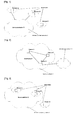
- FIG. 1 Principle of a provider-based arrangement (separation of the infrastructure of private and public networks with connection points between the private and public networks according to the prior art)
- FIG. 2 Principle of a community-based arrangement (person C offers the community an access point to a public network according to the state of the art)
- FIG. 3 Principle of the Cuckoo-based arrangement (integration of private infrastructure into a public network - person C has not released their resources (6, 7, 8))
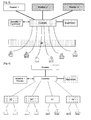
- FIG. 4 Principle of an "owner controlled approach” according to the state of the art technology
- FIG. 5 Principle of a manager-controlled approach "according to the prior art
- FIG. 6 Principle of a Cuckoo-based administration
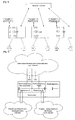
- FIG. 7 Cuckoo-based arrangement, implemented as a Cuckoo Access Point (CAP) using the example of a public WLAN network of a service provider and a private network of a person
- CAP Cuckoo Access Point
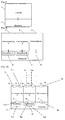
- FIG. 8 known from the prior art access point
- FIG. 9 Cuckoo Access Point for two parties (30, 31) A and B
- FIG. 10 Interface definition of the CAP using the example of two parties (30, 31) A and B
- FIG. 11 State-controlled management of shared resources (6, 7, 8)
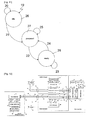
- FIG. 12 Technical representation of the arrangement
- the term person is synonymous with a natural or legal person (e.g., a company).
- a person is classified by having an infrastructure that includes at least one access point for access to a network and connectivity to another network (eg, public network, Internet).
- a person uses the infrastructure primarily for his own purposes.
- a person does not seek to provide services accessible to third parties.
- a service provider uses the infrastructure of one or more persons and offers its own services, such as telephony, or third-party services via this infrastructure.
- Parties (30, 31) are those persons and service providers who jointly use infrastructure based on the method according to the invention or the arrangement according to the invention.
- More and more people and businesses have infrastructure in the form of broadband access and a private, local, wireless network, e.g. WLAN, wherein the existing resources (6, 7, 8) of the respective broadband access and the private, local wireless networks are not fully utilized by the personal needs of the persons.
- a private, local, wireless network e.g. WLAN
- WLAN - based wireless networks are small (up to 100 meters in diameter), many wireless LAN access points are required for geographic coverage, such as a city or commercial area. This involves high costs.
- the small part of the invention lies in the use of the unused resources (6, 7, 8) of the infrastructures of persons by service providers for the provision of services.
- a nationwide WLAN network can be set up in a short space of time with low installation costs and with distributed operating costs.
- People can make their infrastructures available to service providers in return for compensation.
- the service providers can use the provided capacities of the broadband accesses or the resources (6, 7, 8) of the access points of the persons, for example to their customers at the locations of the access points wireless accesses to the Internet (eg public WLAN cells) or other services to offer, for example, telephony, video streaming or information services via WLAN.
- the access points are thus part of the private, local network of the person and in parallel part of the public network of the service provider ( FIG. 7 ).
- the Cuckoo-based method realizes a new method of sharing network access (e.g., radio access, broadband access) and resources (6, 7, 8) (e.g., device resources of a network access point) between individuals and service providers
- a person has an infrastructure consisting of at least one access to a network (eg local, private network) and access via a broadband connection to another network (eg public network, internet).
- the access can be provided, among other things, by an access point.
- the access point may include one or more radio modules for providing one or more wireless networks. These wireless modules can support wireless networks of any current and future technologies and standards, such as WLAN, WIMAX, UMTS, CDMA-2000, Wi-Fi, GSM, Bluetooth.
- the broadband connection can be implemented by wireless or wired technologies, such as ADSL, SDSL, VDSL, WIMAX, WLAN, UMTS, WiBRO.
- the person is responsible for providing the location for the infrastructure, powering the infrastructure, connecting the infrastructure to the grid, and maintaining and maintaining the infrastructure.
- the person may make these unused portions of his own infrastructure available to one or more service providers of his choice for free use, the attractiveness of the infrastructure offered by a person being dependent on the infrastructure offer in the more immediate geographical area Environment, the demand for infrastructure and strategic and tactical decisions of a service provider.
- the person may freely use the unclaimed portions of the infrastructure for his own purposes for sole use. The sole use of the unused portion of the infrastructure is guaranteed to the person.
- the person negotiates with one or more potential service providers a right of use of their own infrastructure to be assigned to the potential service providers.
- the usage rights can be recorded, for example, in the form of service level agreements (SLA).
- SLA service level agreements
- the person transfers a negotiated share of the infrastructure to the service provider (s). If permitted by the legal framework (contractual agreements between the person and the service provider), the person can take back the assigned infrastructure shares, for example, to use them for his own purposes or to transfer them to other service providers.
- the person receives compensation for the assigned rights of use from the service provider or the service providers.
- This compensation can be of a different nature, such as ongoing contraception (price per minute of use or price per amount of transmitted information (eg network packets) about the ceded infrastructure) or one-off prevention (infrastructure is partly or fully funded by a service provider or cost-effective or free use of the network of the service provider is offered, or in the form of a basic fee).
- Service providers can flexibly choose personal infrastructure for their own use.
- Service provider networks can be quickly and efficiently adapted to environmental changes by simply integrating and removing infrastructure assets from different people.
- Environmental changes describe all network-external and network-internal changes that have effects on the network, such as the function or the utilization of the network (for example, by changes in user behavior of end customers or by changing the strategy of the service provider).
- a service provider who has a right to use a share of a Infrastructure has been granted or chosen by him (contractual negotiation with the person who owns the infrastructure), may use this infrastructure portion for their own purposes or purposes of third parties for their sole use. The sole use of this infrastructure share is guaranteed to the service provider.
- Infrastructure shares of one or more persons assigned to a service provider are managed by the service provider from a single source.
- the service provider is the central point of contact to its end customers and assumes full support functions for the infrastructure shares it manages.
- the end customer customers of the service provider
- the Cuckoo-based process can be easily integrated into existing networks, while adhering to the legal framework for public telecommunications networks and the security requirements of the individuals and service providers.
- the Cuckoo-based method provides sufficient trustworthiness to establish the sharing of infrastructures by different parties (30, 31) in practice. With this procedure, the exclusive use of the respective infrastructure shares of all parties (30, 31) is contractually precisely defined and technically guaranteed.
- the Cuckoo-based process enables new markets to be developed, existing markets redesigned, and the pace of adoption of new services and technologies significantly accelerated.
- a CAP can be realized as a unit in one device, but also distributed over several devices.
- a device describes a self-contained functional unit with delimited resources (6, 7, 8) and defined interfaces.
- the resources (6, 7, 8) of a CAP can be used by a party (30, 31) completely or by several parties (30, 31) partially and independently of each other, for example with these resources (6, 7, 8) to operate an access point to a network.
- a CAP uses the term environment.
- the CAP further supports functions that allow one or more parties (30, 31) to freely, partially or completely use the resources (6, 7, 8) of the CAP independently of each other, according to contractually established usage rights.
- Usage rights agreed between parties (30, 31) are technically mapped into a defined set of rules (78), for example in policies, which allow access to the resources (6, 7, 8) of the CAP for all Parties (30, 31) of the CAP. If the resources (6, 7, 8) of a CAP are used by several parties (30, 31), then the resources (6, 7, 8) can be software based (e.g.
- the usage rights to resources (6, 7, 8), the data, data units and functions of a party (30, 31) are encapsulated for parties (30, 31) in user environments (3, 4).
- the usage rights encapsulated in a user environment (3, 4) guarantee the respective party (30, 31) sole access to the resources (6, 7) or resource shares (6, 7) specified by the usage rights.
- no party (30, 31) accesses the resources (6, 7, 8), data and data units of another party (30, 31) of the CAP or in the surroundings of other parties (30, 31) can penetrate.
- the previously known access points have an environment (1) that it exactly a party can make configurations at the access point and control the resources (2) of the access point ( FIG. 8 ). This party is thus supervisor of the access point.
- the Cuckoo Access Point according to the invention extends this principle by making it possible to divide the environment into several parties ( FIG. 9 ) and the elimination of the supervisor.
- the distribution is not limited only to the bandwidth of the wireless (for example, by providing multiple virtual wireless networks by broadcasting multiple ESSIDs) or the wired network connection (through VLAN technologies and QoS mechanisms), but it can also be the other Resources (6, 7, 8), for example, interfaces, memory and CPU capacities are divided.
- the environment (1) of the previously known access points in the Cuckoo access point is subdivided into a basic environment (5) and at least one or even several user environments (3, 4). All functions for decision making and management of resources (6, 7, 8), which concern all user environments (3, 4) of a CAP, are encapsulated in the base environment (5).
- the basic environment (5) contains at least one set of rules (78), a security module (79), a communication module (76) and a control module (77).
- the regulations (78) contain the contractually negotiated restrictions (eg service level agreements) in the form of a technical specification.
- a technical specification can be defined in different ways, for example by policies or by configuration variables whose attributes define dedicated access rights to resources (6, 7, 8).
- the communication module (76) manages the interfaces (16) between the base environment (5) and user environments (3, 4), or the interfaces (11) between the base environment (5) and resources (6, 7, 8).
- the communication path is protected by the security module (79) against unauthorized access.
- the security module (79) supports identification, authentication and authorization mechanisms as well as encryption technologies.
- the security module (79) contains further basic security functions such that the base environment (5) is able, inter alia, to create, delete, enable identifications (eg certificates, keys or the like) to parties (30, 31) and user environments (3, 4) to bind or decouple, if necessary to verify and to use for authentication and authorization.
- Identification options may include party-specific information, such as details of the one negotiated for a party (30, 31) Rights of use of resources (6, 7, 8).
- the security functions are an essential part of the process of allocating access rights to resources (6, 7, 8) or resource shares (6, 7, 8) to parties (30, 31) and securing user environments (3, 4) and the base environment (5).
- control module (77), together with the rules (78), replaces the supervisor previously required in such systems.
- the control module (77) monitors compliance with the specifications of the regulations (78). It determines the negotiation process through a state-controlled process flow ( FIG. 11 ). According to the result of negotiations, the control module (77) adapts the rules (78). Thus, new restrictions are not determined by a supervisor, but are negotiable through a technical process between the parties (30, 31). In addition, the control module (77) implements the agreed changes in the infrastructure. It generates, manages and deletes user environments (3, 4) and configures the resources (6, 7, 8) shared, used in parallel by multiple parties (30, 31). Thus, the control module (77) completely replaces the supervisor with a technical component that is completely neutral towards the parties (30, 31) of the shared infrastructure and implements their jointly negotiated restrictions with the rules (78). The control module (77) itself is not subject to higher-level administration by a supervisor. Its behavior is determined by all parties (30, 31) of the CAP together and on an equal footing.
- the basic environment (5) can no longer be functionally changed, deleted, replaced or expanded by the parties (30, 31) after the delivery of the CAP by the manufacturer. This ensures the neutrality of the basic environment (5) (especially of the control module (77) connected to the set of rules (78)).
- the direct access to the basic functions of the basic environment (5) is not possible, but only limited via defined interfaces (13, 15, 16) that exist between the basic environment (5) and the user environment (s) ( FIG. 10 ) and by the communication module (76), the control module (77) and the rules (78) are fixed.
- the basic functions are only accessible from user environments (3, 4). There are no interfaces from the base environment (5) directly to communication points outside the CAP, or from communication points outside the CAP to the base environment (5). This will be prevents the basic environment (5) from being influenced in any way by external disruptive factors or from being compromised by external attackers.
- Basic functions are generally distinguishable into configurable basic functions and fixed basic functions. Configurable basic functions can be adapted by changing function-specific parameters via defined interfaces. Fixed basic functions have no changeable parameters.
- a base environment (5) may contain configurable or fixed basic functions or a combination of configurable and fixed basic configurations. Basic configurations can be realized by software technology, hardware or by a combination of software and hardware.
- a user environment (3, 4) distinguishes the contractually negotiated rights of use of resources (6, 7, 8) of the CAP and the data, and data units and functions of one party (30, 31) from other user environments (3, 4).
- a user environment (3, 4) is set up on the CAP ( FIG. 9 ).
- the user environments (3, 4) are completely decoupled from one another. There are no interfaces between the individual user environments (3, 4). This prevents one party (30, 31) from penetrating into the user environments (3, 4) of other parties (30, 31) or rights of use of resources (6, 7, 8) or resource portions of user environments (3, 4) of other parties (30, 31).
- the access to user environments (3, 4) is uniquely specified by the framework (78) of the basic environment (5) and secured and monitored via the security functions of the user environment (3, 4).
- a party (30, 31) checked by the security functions can access a user environment (3, 4).
- the sole use of resources specified by the usage rights (6, 7, 8) by the control module (77) and the rule set (78) and the securing of the data and data units of their user environment (3 , 4) guaranteed.
- the respective user environment (3, 4) appears completely independent usable.
- the party (30, 31) has full administrative rights for its user environment (3, 4).
- the configurability of the user environment (3, 4) is subject exclusively to the restrictions imposed on the party (30, 31) by the framework (78) of the base environment (5) and monitored by the control environment (77) of the base environment (5).
- This free configurability of the user environment (3, 4) is an economic advantage over currently known systems.
- service providers can move services from their core network to the access points, making them much more flexible in the service delivery and manageability of their networks.
- the user environments (3, 4) of a CAP can be used, for example, for the provision of different access networks and as access points to networks of different service providers.
- Each party (30, 31) can adapt the security mechanisms of the access network to their own security mechanisms by the free configurability of their user environment (3, 4).
- the party (30, 31) is completely independent of the security mechanisms used by other parties (30, 31) in their access networks provided via the same CAP.
- the network traffic of the different access networks provided is decoupled from each other by the user environment (3, 4) and secured against unauthorized access (eavesdropping, falsification of information).
- the user environments (3, 4) of the other parties (30, 31) are not apparent to the respective party (30, 31).
- the resources (6, 7) available to the respective party (30, 31) are defined by their clearly defined rights of use of resources (6, 7) or resource shares (6, 7) and the guarantee of sole use of these resources (6, 7). or resource shares (6, 7) can be accurately estimated.
- the party (30, 31) may plan to use these resources (6, 7).
- a user environment (3, 4) contains at least one communication module (74, 75, 81), a security module (73, 80, 83), and a management module (72, 82).
- the management module (72, 82) manages the interactions between the user environment (3, 4) and the base environment (5), and between the user environment (3, 4) and the corresponding party (30, 31).
- change requests to settings of the user environment (3, 4) can be accepted and implemented by the party (30, 31).
- the management module (72, 82) interacts with the control module (77) of the base environment (5), if the usage rights encapsulated in the user environment (3, 4) are insufficient for the implementation of the change requests and therefore, if necessary, negotiation processes with other parties (30, 31) of the CAP are required before the change requests can be implemented.
- the management module (72, 82) informs the party (30, 31) if change requests from other parties (30, 31) of the CAP require the consent of the party (30, 31).
- the management module (72) can be within the user environment (3, 4), or the management module (82) can also be integrated outside the CAP in a stand-alone management system (84). If the management module (82) is integrated outside the CAP, in a management system (84), then the management system (84) also has a communication module (81) and a security module (80).
- the communication module (74, 75, 81) forms the interfaces between the user environment (3, 4) and the base environment (5) and between the user environment (3, 4) and its party (30, 31) or to the management module ( 82) in an external management system (84) of the party (30, 31).
- the communication path is thereby protected from unauthorized access by the security module (73, 80, 83).
- the security module (73, 80, 83) supports identification, authentication and authorization mechanisms as well as encryption technologies. Identification options may include party (30, 31) -specific information, such as information about the rights of use of resources (6, 7, 8) negotiated for a party (30, 31).
- the security functions are an essential part of the process of allocating access rights to resources (6, 7, 8) or resource shares to parties (30, 31) and securing user environments (3, 4) and the base environment (5).
- FIG. 10 For accessing the base environment (5) and the user environment (s) (3, 4) of a CAP or for accessing resources (6, 7, 8) of a CAP, various interfaces ( FIG. 10 ) needed.
- the interfaces are through the Communication modules (74, 75, 81) of the user environments (3, 4), or defined by the communication module (76) of the base environment (5). Interactions via these interfaces are secured by functions of the security modules (73, 79, 80, 83) of the user environments (3, 4) and the base environment (5).
- FIG. 10 shows the necessary interfaces using the example of two parties (30, 31) (A and B) of a CAP. This presentation does not limit that one party or more than two parties can use a CAP.
- the interface definition defines the access possibilities, but not the way of accessing environments (3, 4, 5) or resources (6, 7, 8).
- the manner of access can be achieved, for example, by any protocols, e.g. SSH, HTTP, Telnet, FTP, TFTP, DHCP, SOAP, SNMP, TR069 through local or remote function calls, e.g. CORBA, RMI, RPC, web services through agent-based principles, e.g. mobile agents, or other methods are specified.
- the negotiation of rights of use between parties (30, 31) can be realized state-controlled.
- the three states idle (26), prepared (27), and ready (28) are defined by way of example ( FIG. 11 ).
- the CAP After delivery by the manufacturer, the CAP can be in one of the two basic states (19) idle (26) or ready (28).
- the CAP contains the base environment (5) and a User environment (3) for a party A (30).
- Party A (30) has already been issued a valid identification facility for accessing its user environment (3) by the security module (79) of the base environment (5).
- Party A (30) will be notified of this possibility of identification when the CAP is delivered by the manufacturer, for example in writing.
- Party A (30) is the owner of the CAP in this case.
- the rights of use of the resources (6) of the CAP are fully allocated to the party A (30) or are fully contained in their user environment (3).
- the framework (78) of the basic environment (5) is configured accordingly.
- Case (1) occurs when one party (30, 31) (eg party A (30)) partially or completely transfers the usage rights to resources (6, 7) of a CAP (eg party B (31 )).
- a CAP eg party B (31 )
- Party A selects a corresponding portion of its resources (6) on the CAP for a cession, in this example a potential party B (31).
- the selection of the resources (6, 7) represents an interaction of the party (30, 31) with their user environment (3, 4). It accordingly takes place via the interface I NA (12).
- a request by the party A (30) for determining information about available own resources (6) from the party A (30) is first transmitted to the communication module (74) via the security module (73) to the management module (72) ,
- the transmission path runs for this Interaction according to the identifier in FIG. 12
- the management module (72) is placed within the user environment A (3).
- the security module (73) checks the identification possibility of the party A (30). Only after successful authentication, the request will pass to the management module (72).
- the management module (72) determines the information about the available resources (6), in which it via the security module (73) and via the communication module (74) of the user environment A (3) a request via the interfaces (13,16) over the communication module (76) and via the security module (79) to the control module (77) of the base environment (5) transmits.
- the transmission path for this interaction follows the identifier in FIG. 12 thus: 35->36->37->38-> 39.
- the security module (79) checks the identification possibility of the party A (30) or the user environment A (3). Only after successful authentication, the request is passed to the control module (77) (39).
- the control module (77) determines from the set of rules (78) the requested information and transmits the information via the security module (79), the communication module (76) of the base environment (5), the interfaces (16, 13), the communication module (74) , the security module (73) to the management module (72) of the user environment A (3).
- the transmission path for this interaction follows the identifier in FIG. 12 thus: 40->57->58->59-> 60.
- the management module (72) provides the information to the party A (30) via the security module (73), the communication module (74) and the interface I NA (12).
- the transmission path for this interaction follows the identifier in FIG. 12 thus: 61->62-> 63.
- the management module (72) of User environment A (3) creates a change request.
- This change request can be specified with different machine-evaluable languages (eg XML).
- the change request is sent via the security module (73), the communication module (74) of the user environment A (3), the interface I NAB (13) and the interface I BN (16), via the communication module (76), the security module (79). to the control module (77) of the base environment (5).
- the transmission path for this interaction follows the identifier in FIG. 12 thus: 35->36->37->38-> 39.
- the security module (79) of the basic environment (5) first checks the identity of the party A (30) or of the user environment A (3) during the transfer. Only if the identity has been successfully confirmed via the identification possibility of the user A, the reception of the change order from the basic environment (5) is accepted, or transmitted from the security module (79) to the control module (77).
- the identity of the user A can also be assumed to be valid by a successfully verified identification possibility of the user environment A (3) relative to the base environment (5), if the party A (30) has previously successfully identified itself with its user environment A (3) ,
- the control module (77) checks the information contained in the amendment request with the help of the rules (78).
- the selection of resources desired in the change request contains shares for which the client of the change request - in this case party A (30) - has no access authorization, for example for resources according to (7,8).
- the security module (79) of the base environment (5) generates, if necessary, a new identification option for the party A (30) and a new identification option for the potential party B (31).
- This identification option may contain user-specific information or be associated with user-specific information in some way.
- User-specific information describes, for example, the maximum usage rights to resources that the new party B (31) can request and the value for the maximum useful life for the requested usage rights to resources. These maximum selectable usage rights and the maximum selectable useful life correspond to the information defined by party A (30) for the assignment in the amendment.
- the control module (77) of the base environment (5) generates from the change request a resource offer for the potential party B (31) containing at least the information corresponding to the change request of the party A (30), ie the resource selection and the time period for the assignment. In addition, further information can be integrated into this resource offer by the base environment (5), for example a generated identification option for the party B (31).
- the resource offering is a technical specification that is available in various specification languages, such as XML or can be defined using configuration variables.
- the base environment (5) transmits the resource offer to the potential party B (31).
- Party B (31) in this embodiment has a CAP external management system (84) without limiting its generality.
- the resource supply is indirectly distributed via the user environment A (3) - ie via the security module (79), the communication module (76) of the base environment (5 ), via the interfaces beginning at I BN (16) followed by I NAB (13) and from there via the communication module (74) checked by the security module (73) of the user environment A (3) via the interface I NA (12) to the interface (29) of the management system and from there via the communication module (80) and the security module (81) - to the management module (82) of the party B (31).
- the indirect transmission is additionally secured by the security module (79) of the base environment (5), so that changes to the content of the resource offer can be detected during the communication process and the content of the resource offer only by the control module (77) of the base environment (5) and recognizable by the management module (82) of the potential party B (31). If changes to the resource offer are detected, the resource offer will be immediately invalidated.
- the supply of resources is received by the management module (82) of the potential party B (31).
- the management module presents the resource offer via the security module (81), the communication module (80) and the interface (29) of the management system (84) of the party B (31).
- the transmission path for this interaction follows the identifier in FIG. 12 thus: 69->70-> 71.
- the potential party B (31) can choose for which resources from the resource offer they would like to acquire usage rights over what period of time. The rights of use and the duration of use can be chosen as maximum as they are specified in the resource offer. If the party B (31) has decided to accept or reject the offer, appropriate information is sent from the party B (31) via the interface (29) of the management system (84) the communication module (80), the security module (81) to the management module (82) of the management system (84). The security module (81) checks the possibility of identification of the party B (31). Only after successful verification of the possibility of identification is the information transmitted to the management module (82).
- the control module (77) of the base environment (5) requests the status of the resource offer indirectly via the user environment A (3) at intervals - ie via the security module (79), the communication module (76) of the base environment (5), starting from the interfaces at I BN (16) followed by I NAB (13) and from there via the communication module (74) of the user environment A (3) via the interface I NA (12) to the interface (29) of the management system and from there via the communication module ( 80) and the security module (81) - at the management module (82) of the party B (31).
- the indirect transmission is additionally protected by the security module (79) of the base environment (5), so that the request can only be recognized by the control module (77) of the base environment (5) and the management module (82) of the potential party B (31).
- the response to this status request is via the transfer path, according to the identifier in FIG. 12 , (69->70->85->38-> 39) from the management module (82) of the management system (84) indirectly via the user environment A (3) to the control module (77) of the base environment (5) transmitted.
- the indirect transmission is additionally protected by the security module (81) of the management system (84), so that the request is recognizable only for the control module (77) of the base environment (5) and the management module (82) of the potential party B (31) ,
- the security module (79) checks the possibility of identification of the management system (84). Only after successful authentication is the response transmitted to the control module (77).
- the answer contains information about the resource shares and the usage time that the party B (31) has selected from the resource offer.
- the following technical process is performed by the base environment (5):
- the base environment (5) generates for the new party B (31) a new user environment B (4) on the CAP, which is subject to the restrictions of the selected usage rights and the chosen service life from the response received for the resource offer.
- the user environment A (3) becomes the party A (30) adjusted accordingly. That is, the party A (30) is deprived of the usage rights, and the user environment A (3) the resources for the resources assigned to the party B (31).
- the control module (77) of the base environment (5) signals the party A (30) and the party B (31) that the change request has been executed.
- the security module (81) checks the identification possibility of the basic environment (5). Only after successful verification of the possibility of identification is the information transmitted to the management module (82).
- the CAP is now configured for two parties (30,31).
- the CAP changes (22) to the ready state (28).
- the base environment (5) executes the following technical processes:
- the resource offer is withdrawn and deleted by the control environment (77) of the base environment (5).
- the control module (77) returns the CAP to the original setting in which the CAP found itself prior to the received change request. This means that possibly generated identification options for the potential party B (31) are deleted. moreover is sent to the management module (72) of the party A (30) from the control environment (77) of the base environment (5) via the interfaces starting at I BN (16) followed by I NAB (13) and from there via the communication module (74) and Security module (73) signals that the change request has been rejected and thus is not implemented by the control module (77) of the base environment (5).
- the security module (73) checks the identification possibility of the basic environment (5). Only after successful verification of the possibility of identification is the information transmitted to the management module (72).
- the transmission path for this interaction follows the identifier in FIG. 12 thus: 56->57->58->59-> 60.
- the party A (30) is informed accordingly by the management module (72).
- the CAP is still configured for only one party A (30). All rights of use granted prior to the change order of party A (30) remain with party A (30) or all resources (6) that were encapsulated prior to the change order in user environment A (3) remain in user environment A ( 3).
- the specification of the framework (78) of the base environment (5) is not changed by the control module (77) of the base environment (5), it remains in exactly the same configuration that it had before the change request.
- the CAP changes (22) to the ready state (28).
- party (30, 31) wishes party A (30) of CAP to change the settings of their user environment without limiting the generality below to user environment A (3).
- the selection of the settings to be changed represents an interaction of the party A (30) with its management module (72) of the user environment A (3). It accordingly takes place via the interface I NA (12), the communication module (74) and the Security module (73) to the management module (72) of the user environment A (3).
- the security module (73) checks the possibility of identification of the party A (30). Only after successful verification of the possibility of identification is the information transmitted to the management module (72).
- the transmission path for this interaction follows the identifier in FIG. 12 as follows: 32->33-> 34.
- the changes can have a direct impact on the settings of other user environments of a CAP. Whether or not the changes affect other user environments is through the use of the party recognizable. Changes that can not be implemented solely with the rights of use of a party, but also affect resources that are not in the sphere of rights of use of the party, but, for example, rights of use of these resources by other parties require the consent of these parties before the changes are implemented , Therefore, a change order is created from the information about the selected changes by the management module (72) of the party A (30). This change request can be specified with different machine-evaluable languages (eg XML).
- machine-evaluable languages eg XML
- the change request is transmitted via the security module (73) and the communication module (74) of the user environment A (3), via the interface I NAB (13) and the interface I BN (16), the communication module (76) and the security module (79). passed to the control module (77) of the base environment (5).
- the security module (79) checks the identification possibility of the user environment A (3). Only after successful verification of the possibility of identification is the information transmitted to the control module (77).
- the Party-Neutral Control Module (77) examines the information contained in the amendment by means of the Rulebook (78).
- control module (77) knows what influence the implementation of the setting changes, defined in the amendment, have on the existing user environments (3, 4).
- the control module (77) transmits a change request to all parties (30, 31) of the CAP whose user environment is influenced by the party A (30) recruitment requests contained in the amendment.
- the user environment B (4) is influenced by the implementation of the setting requests of the party A (30).
- the base environment control module (77) transmits a change request to the management module (82) of the party B (31) via the security module (79) and the base environment communication module (76) via the interfaces I BN (FIG. 16), I NBB (15) and I NB (14) to the interface (29) and there via the communication module (80) and the security module (81) of the management system (84).
- the base environment (5) first identifies itself to the security module (81) of the management system (84) of the party B (31). with their identification option. Only after the successful identification, the management system of the party B (31) accepts the receipt of the change request.
- the security (79) of the base environment (5) additionally safeguards the transmission, so that the change order can only be recognized by the control module (77) of the base environment (5) and by the management module (82) of the management system (84).
- the management module (82) signals the party B (31) a new change request via the security module (81), the communication module (80) and the interface (29) of the management system (84).
- Party B (31) now has the option to approve the change request or reject it.
- the changes of the settings are implemented according to the change order of the party A (30) by the control environment (77) of the basic environment (5). If necessary, the set of rules (78) of the basic environment (5) is adapted accordingly. All parties whose user environment is affected by these attitude changes, if necessary by the security module (79) of the base environment (5) each generate a new identification option - in this example thus the party A (30) and the party B (31). All games whose user environments are from These changes in attitude are affected, the implementation of the attitude changes is signaled - in this example thus the party A (30) and the party B (31).
- an acknowledgment of the implemented change request is transmitted from the control environment (77) of the base environment (5) to the management module (72) of the party A (30) via the security module (79) and the communication module (77) of the base environment (5). , via the interfaces I BN (16), I NAB (13), the communication module (74) and the security module (73) of the user environment A (3).
- the security module (73) checks the identification possibility of the basic environment (5). Only after successful verification of the possibility of identification is the information transmitted to the management module (72).
- party A (30) will also transmit a newly generated identification option via this same transfer path.
- the party A (30) is informed by the management module (72) of the user environment A (3) - either by signaling from the management module (72) to the party A (30) or by a request of the party A (30) to the management module (72 ) - at least via the security module (73), the communication module (74) and the interface I NA (12).
- an acknowledgment of the performed change order is transmitted from the base environment control module (77) to the management module Party B (31) via the security module (79) and the base environment communication module (76) via the interfaces 1 BN (16), I NBB (15) and I NB (14) to the interface (29) and there via the communication module (80) and the security module (81) of the management system (84).
- the basic environment (5) initially identifies itself to the security module (81) of the management system (84) of the party B (31) with its possibility of identification. Only after the successful identification, the management system of the party B (31) accepts the receipt of the information.
- the security (79) of the basic environment (5) additionally safeguards the transmission so that the information can only be recognized by the control module (77) of the base environment (5) and by the management module (82) of the management system (84).
- the management module (82) signals the party B (31) a new change request via the security module (81), the communication module (80) and the interface (29) of the management system (84).
- the transmission path for this interaction follows the identifier in FIG. 12 thus: 69->70-> 71. If necessary, the party B (31) will transmit a newly generated identification option.
- the CAP changes (22) from the state "prepared (27)" to the state "ready (28)".
- control module (77) completes the base environment (5) the following technical process:
- the change request is not converted by the control module (77) of the basic environment (5). No changes are made to settings. All parties (30, 31) who were informed about the change request with a change request are signaled that the change request has not been implemented - in this example, party A (30) and party B (31).
- the security module (73) checks the identification possibility of the basic environment (5). Only after successful verification of the possibility of identification is the rejection transmitted to the management module (72).
- a cancellation of the change request from the control environment (77) is transmitted to the management module (82) of the party B (31) via the security module (79) and the communication module (76) of the base environment (5) via the Interfaces I BN (16), I NBB (15) and I NB (14) to the interface (29) and there via the communication module (80) and the security module (81) of the management system (84).
- the basic environment (5) initially identifies itself to the security module (81) of the management system (84) of the party B (31) with its possibility of identification. Only after the successful identification, the management system of the party B (31) accepts the receipt of the revocation.
- the security module (79) of the base environment (5) the transmission is additionally secured, so that the revocation is recognizable only by the control module (77) of the base environment (5) and by the management module (82) of the management system (84).
- the CAP changes (22) from the state “prepared (27)" to the state “ready” (28).
- the deletion of a user environment may be due to a change order - according to the case (3) - by the expiration of an agreed restriction (eg expiration of the useful life of rights) or by unauthorized behavior of the party of a user environment.
- an agreed restriction eg expiration of the useful life of rights
- the deletion of a user environment is initiated by the control module (77) of the base environment (5).
- the user environment B (4) is revoked.
- the identification possibility of the party B (31) is deleted by the control module (77) of the basic environment (5).
- the resources (7) encapsulated in the user environment B (4) are released by the basic environment control module (77) (5).
- the released resources (7) or the withdrawn rights of use can now be transferred to other parties (or another party). For example, the usage rights may again pass to the owner of the CAP (in this case Party A (30)).
- a new identification option created by the security module (79) of the base environment (5) is provided via the security module (79) and the communication module (77) of the base environment (5), via the interfaces I BN (16), I NAB (13), the communication module (74) and the security module (73) of the user environment A (3) to the management module (72) of the party A (30) transmitted.
- the security module (73) checks the identification possibility of the basic environment (5). Only after successful verification of the possibility of identification is the information transmitted to the management module (72).
- the transmission path for this interaction follows the identifier in FIG. 12 thus: 56->57->58->59-> 60.
- the user-specific information possibly contained in the identification option corresponds to the changed restrictions (new usage rights).
- Party A is informed of the extension by the management module (72) of the user environment A (3).
- the management module (82) of the management system (84) of the party B (31) is informed of the deprivation of their usage rights and the deletion of the user environment B from the control environment (77) of the base environment (5).
- the control module (77) transmits to the base environment (5) before the deletion of the user environment B corresponding information to the management module (82) of the party B (31), via the security module (79) and the communication module (76) of the base environment (5 ), via the interfaces I BN (16), I NBB (15) and I NB (14) to the interface (29) and there via the communication module (80) and the security module (81) of the management system (84).
- the basic environment (5) first identifies itself to the security module (881) of the management system (84) of the party B (31) with its possibility of identification. Only after the successful identification, the management system of the party B (31) accepts the receipt of the information.
- the security (79) of the basic environment (5) additionally safeguards the transmission so that the information can only be recognized by the control module (77) of the base environment (5) and by the management module (82) of the management system (84).
- the transmission path for this interaction follows the identifier in FIG. 12 thus: 56->64>65->43->44>66->67-> 68.
- the CAP changes (22) from the state "prepared (27)" to the state "ready” (28).
- finite expiry times for the state prepared (27) can be defined.
- An expiry time determines how long a change request may remain unactivated. After the expiration time has been exceeded, the change request is rejected or revoked as unconfirmed by the base environment (5).
- the changes are not implemented by the base environment (5), the specification of the rules (78) is not changed.
- the control module (77) For all management modules of the parties (30, 31), which have confirmed the change order within the expiration time, the control module (77) transmits the base environment (5) via the interface I BN and the corresponding interfaces of the user environments (3, 4) of these games (30 , 31) a revocation secured via the security modules of the base environment (5) and the corresponding user environments (3, 4), as already described (see process flow in the event that a party has rejected a change request). The management module of the party who issued the change order is notified of the rejection by the control environment (77) of the base environment (5).
- the control module (77) of the base environment (5) transmits to the management module of this party a rejection for the change request via the interface I BN (16) and the corresponding interfaces of the user environment of this party (30, 31), secured via the security modules of the base environment (5) and this user environment as described above (see process flow in case a party has rejected a change request).
- the CAP changes (22) to the ready state (28).
- a change in the restrictions may only be achieved through joint negotiation with the parties (30, 31) whose user environments (3, 4) are affected by the change.
- a change of restrictions desired by a party (30, 31) of the CAP can therefore only be initiated by a change order.
- the party (30, 31) wishing to change their restrictions must transmit such a change request to the control environment (77) of the base environment (5). If a change request is successfully initiated, the CAP changes (24) to the prepared state (27) and remains there (25) until the change request has been processed or canceled.
- this party (30, 31) may be deprived of their rights of use.
- the control module (77) of the basic environment (5) itself causes a change in the restrictions.
- Restrictions may have a finite validity period. After the expiration of this period of validity for restrictions, the control module (77) of the base environment (5) of the CAP itself can bring about a change in the restrictions. The CAP changes (24) to the state prepared (27).
- the aim of the invention is to allow multiple parties (30, 31) to use an access point or a network of such access points in parallel.
- two or more providers use one and the same access point at a locality to offer their respective wireless network.
- no party (30, 31) has the upper power over the respective access point, but only over defined shares of this access point.
- the access point is divided into several environments. Each party (30, 31) has the upper hand only within its environment, but not over the entire access point.
- no party (30, 31) may have a power over the entire access point.
- this "supervisor" is eliminated and all changes affecting more than one environment are decided jointly by the parties concerned (30, 31).
- the invention describes a method and an arrangement as to how this joint decision-making process can be technically implemented.
- a privileged environment (the base environment (5)) has the actual rights of the supervisor to which, however, no party (30, 31) has access but is managed by a party-neutral control module (77) and a specified policy (78) .
- the parties (30, 31) communicate with change requests that exceed their own rights with this control module (77), which now communicates with the other parties (30, 31) and thus controls the negotiation process as a neutral element. Only if all parties (30, 31) signal their consent to the change request of the order-giving party (30, 31) to the control module (77), the change is implemented by the control module (77), otherwise rejected.
Landscapes
- Engineering & Computer Science (AREA)
- Computer Networks & Wireless Communication (AREA)
- Signal Processing (AREA)
- Computer Hardware Design (AREA)
- Computer Security & Cryptography (AREA)
- Computing Systems (AREA)
- General Engineering & Computer Science (AREA)
- Mobile Radio Communication Systems (AREA)
- Data Exchanges In Wide-Area Networks (AREA)
Claims (15)
- Procédé pour mettre en place un réseau d'accès à un réseau public basé sur différentes topologies au moyen d'une infrastructure mise à disposition par un ou plusieurs fournisseurs pour une utilisation commune et parallèle par plusieurs parties à égalité d'accès, laquelle infrastructure est composée d'au moins un point d'accès au réseau (CAP)
caractérisé en ce que- le point d'accès au réseau (CAP) comprend au moins un environnement utilisateur et un environnement de base,- les droits d'utilisation des ressources, les données, les unités de données ainsi que les fonctions d'un utilisateur de ce point d'accès au réseau (CAP) sont encapsulés dans un environnement utilisateur, et en ce que l'environnement utilisateur comprend au moins un module de communication, un module de sécurité et un module de gestion ;- en outre, les fonctions de base sont encapsulées dans l'environnement de base, lesquelles fonctions de base opèrent au-delà des limites des environnements utilisateurs délimités des points d'accès au réseau (CAP), et l'environnement de base (5) comprend au minimum un module de communication, un module de sécurité, un module de contrôle et un dispositif de régulation comprenant les étapes suivantes :répartition des droits d'utilisation des ressources d'un point d'accès au réseau (CAP) entre plusieurs utilisateurs jouissant des mêmes droits selon un dispositif de régulation à négocier, l'utilisation des ressources par la partie concernée se limitant au cadre fixé par cette répartition et ladite partie n'ayant pas accès aux ressources de l'autre partie,répartition des droits d'utilisation des ressources du point d'accès au réseau (CAP) soumise à un accord mutuel entre toutes les parties dont l'environnement utilisateur est affecté par la modification via un processus de négociation sécurisé, ladite répartition étant uniquement mise en oeuvre par le biais de fonctions de base de l'environnement de base. - Procédé selon la revendication 1
caractérisé en ce que
les fonctions de base encapsulées dans l'environnement de base d'un point d'accès au réseau (CAP) comprennent :- un dispositif de régulation qui comprend des restrictions ou Service Level Agreements négociées par contrat entre les utilisateurs du point d'accès au réseau (CAP) jouissant des mêmes droits d'utilisation,- des fonctions qui supportent le déroulement du processus de génération, d'administration, de modification et de suppression des environnements utilisateurs conformément aux spécifications du dispositif de régulation,- des fonctions pour surveiller le respect des spécifications du dispositif de régulation, en particulier pour surveiller l'accès aux ressources du point d'accès au réseau (CAP),- des fonctions de sécurité comme une instance d'identification, l'authentification, l'autorisation, la surveillance de l'intégrité, l'encodage, la détection des erreurs et la réaction suite aux erreurs,- des fonctions de gestion pour les systèmes de fichiers, et- des fonctions de système d'exploitation incluant la mise à disposition d'interfaces pour l'accès aux ressources matérielles du point d'accès au réseau (CAP). - Procédé selon la revendication 1 ou 2
caractérisé en ce que
il n'est possible d'accéder aux fonctions de base de l'environnement utilisateur de base qu'à partir des environnements utilisateur d'un même point d'accès au réseau (CAP) par le biais de différentes technologies d'accès et uniquement via des interfaces définies reposant sur les spécifications du dispositif de régulation et après la vérification réussie d'un moyen d'identification de l'utilisateur souhaitant avoir l'accès. - Procédé selon l'une quelconque des revendications 1 à 3
caractérisé en ce que
les fonctions de base de l'environnement de base sont soit configurables, soit fixes, et sont mises en oeuvre au moyen d'un procédé technique matériel ou d'une combinaison de procédés matériels et logiciels. - Procédé selon l'une quelconque des revendications 1 à 4
caractérisé en ce que
les droits d'utilisation des ressources d'un point d'accès au réseau (CAP) sont partagés, un partage basé sur l'aspect matériel nécessitant au moins un système matériel doublé physiquement avec un composant de gestion commun. - Procédé selon l'une quelconque des revendications 1 à 5
caractérisé en ce que
les droits d'utilisation des ressources d'un point d'accès au réseau (CAP) sont partagés de manière relative ou absolue. - Procédé selon l'une quelconque des revendications 1 à 6
caractérisé en ce que
une partie ne peut accéder à son environnement utilisateur que par le biais d'interfaces définies et au moyen de technologies d'accès, et uniquement après vérification d'un moyen d'identification appartenant à cet environnement utilisateur. - Procédé selon l'une quelconque des revendications 1 à 7
caractérisé en ce que
le processus de négociation est contrôlé par l'état et qu'il existe, au minimum, les états idle, prepared et ready. - Procédé selon l'une quelconque des revendications 1 à 8
caractérisé en ce que
un ordre de modification adressé par un utilisateur n'est accepté par le point d'accès au réseau (CAP) qu'après l'authentification réussie de la partie concernée par le biais de son moyen d'identification et qu'après son autorisation déclarée. - Procédé selon l'une quelconque des revendications 1 à 9
caractérisé en ce que
un ordre de modification comporte des informations spécifiques à l'utilisateur qui décrivent les restrictions à modifier, les nouvelles restrictions ou les restrictions à supprimer. - Système de point d'accès au réseau pour réaliser le procédé décrit par l'une quelconque des revendications 1 à 10, le système comprenant un point d'accès au réseau (CAP) et les ressources du point d'accès au réseau (CAP) comprenant :- au moins une interface réseau sans fil qui supporte des technologies sans fil pour l'accès à un réseau sans fil,- au moins une interface réseau filaire ou sans fil pour la connexion à un autre réseau via un accès à bande large,- du matériel de base comprenant au moins un processeur et au moins une unité de stockage,- au moins un système d'exploitation, et- au moins un système de fichiers.
- Système selon la revendication 11
caractérisé en ce que
un CAP présente plusieurs interfaces réseau sans fil qui supportent les technologies sans fil pour l'accès à un réseau sans fil, et en ce que les interfaces réseau supportent des technologies identiques ou différentes pour l'accès à un réseau sans fil ainsi que la possibilité d'une gestion dynamique et autonome de la configuration de la transmission. - Système selon la revendication 11 ou 12
caractérisé en ce que
l'interface réseau filaire ou sans fil du point d'accès au réseau (CAP) supporte des technologies sans fil ou filaires quelconques pour la connexion à un autre réseau via un accès à bande large. - Système selon l'une quelconque des revendications 11 à 13
caractérisé en ce que
les ressources d'un point d'accès au réseau (CAP) sont regroupées dans un seul et même appareil. - Système selon l'une quelconque des revendications 11 à 13
caractérisé en ce que
les ressources d'un point d'accès au réseau (CAP) sont réparties sur plusieurs appareils, chaque appareil formant une unité de fonction fermée avec des ressources et des interfaces définies.
Applications Claiming Priority (2)
| Application Number | Priority Date | Filing Date | Title |
|---|---|---|---|
| DE102006033830A DE102006033830A1 (de) | 2006-07-14 | 2006-07-14 | Verfahren und Anordnung zur Realisierung von Zugangsnetzwerken zu einem öffentlichen Netzwerk |
| PCT/EP2007/057208 WO2008006889A2 (fr) | 2006-07-14 | 2007-07-12 | Procédé et système pour mettre en place des réseaux d'accès à un réseau public |
Publications (2)
| Publication Number | Publication Date |
|---|---|
| EP2041923A2 EP2041923A2 (fr) | 2009-04-01 |
| EP2041923B1 true EP2041923B1 (fr) | 2011-12-28 |
Family
ID=38777682
Family Applications (1)
| Application Number | Title | Priority Date | Filing Date |
|---|---|---|---|
| EP07787479A Active EP2041923B1 (fr) | 2006-07-14 | 2007-07-12 | Procédé et système pour mettre en place des réseaux d'accès à un réseau public |
Country Status (5)
| Country | Link |
|---|---|
| EP (1) | EP2041923B1 (fr) |
| AT (1) | ATE539523T1 (fr) |
| DE (1) | DE102006033830A1 (fr) |
| ES (1) | ES2379790T3 (fr) |
| WO (1) | WO2008006889A2 (fr) |
Families Citing this family (3)
| Publication number | Priority date | Publication date | Assignee | Title |
|---|---|---|---|---|
| EP2104347A1 (fr) * | 2008-03-17 | 2009-09-23 | Alcatel Lucent | Procédé pour la fourniture d'IPTV à deux groupes de clients au moins |
| CN111614639A (zh) * | 2020-05-09 | 2020-09-01 | 深圳市云盾科技有限公司 | 一种基于边界理论的网络安全分析方法 |
| CN114268559B (zh) * | 2021-12-27 | 2024-02-20 | 天翼物联科技有限公司 | 基于tf-idf算法的定向网络检测方法、装置、设备及介质 |
Family Cites Families (3)
| Publication number | Priority date | Publication date | Assignee | Title |
|---|---|---|---|---|
| AU773884B2 (en) * | 1999-11-03 | 2004-06-10 | Cisco Technology, Inc. | Distributed network communication system which enables multiple network providers to use a common distributed network infrastructure |
| AU2001234691A1 (en) * | 2000-01-31 | 2001-08-07 | Aeptec Microsystems, Inc. | Broadband communications access device |
| GB2418323A (en) * | 2004-08-25 | 2006-03-22 | Levi Russell | Increasing the geographical coverage of public wlan access points |
-
2006
- 2006-07-14 DE DE102006033830A patent/DE102006033830A1/de not_active Ceased
-
2007
- 2007-07-12 EP EP07787479A patent/EP2041923B1/fr active Active
- 2007-07-12 ES ES07787479T patent/ES2379790T3/es active Active
- 2007-07-12 WO PCT/EP2007/057208 patent/WO2008006889A2/fr not_active Ceased
- 2007-07-12 AT AT07787479T patent/ATE539523T1/de active
Also Published As
| Publication number | Publication date |
|---|---|
| ES2379790T3 (es) | 2012-05-03 |
| DE102006033830A1 (de) | 2008-01-17 |
| EP2041923A2 (fr) | 2009-04-01 |
| WO2008006889A3 (fr) | 2008-03-06 |
| ATE539523T1 (de) | 2012-01-15 |
| WO2008006889A2 (fr) | 2008-01-17 |
Similar Documents
| Publication | Publication Date | Title |
|---|---|---|
| DE60102367T2 (de) | Netzoptimierungsmethode | |
| DE60212289T2 (de) | Verwaltung privater virtueller Netze (VPN) | |
| DE60109809T2 (de) | Verfahren und system für betriebsmittelreservierungen in einem multicast-netzwerk | |
| DE69827351T2 (de) | Mehrfach-virtuelle Wegsucher | |
| DE10296804T5 (de) | Verfahren und System zum Autorisieren des Zugriffs auf Betriebsmittel auf einem Server | |
| DE112011101729T5 (de) | Verwaltung von Ressourcenzugriff | |
| DE60121755T2 (de) | Ipsec-verarbeitung | |
| DE60303691T2 (de) | Verfahren und System zu richtliniengestützten Steuerung in einem verteilten Netzwerk | |
| DE112008003966T5 (de) | Selektives Um-Abbilden einer Netzwerktopologie | |
| EP3125492A1 (fr) | Procede et systeme de fabrication d'un canal de communication sur pour des terminaux | |
| WO2009130007A1 (fr) | Concept pour la distribution efficace d'une information d'autorisation d'accès | |
| EP1241847A1 (fr) | Transmission d'informations avec un QoS vérifiée dans un réseau de communications | |
| DE112021006008B4 (de) | Sichere übertragung grosser datenmengen | |
| EP4179758B1 (fr) | Authentification d'un partenaire de communication sur un appareil | |
| EP3158695A1 (fr) | Procédé de transmission de données et noeud de réseau associé et réseau associé | |
| DE112021005979T5 (de) | Sichere gemeinsame nutzung von speicher | |
| WO2013017394A1 (fr) | Régulation d'accès pour des données ou des applications d'un réseau | |
| EP2041923B1 (fr) | Procédé et système pour mettre en place des réseaux d'accès à un réseau public | |
| EP1668860A1 (fr) | Procede pour fournir des caracteristiques de puissance en cas de besoin | |
| EP3881486B1 (fr) | Procédé de fourniture d'un élément de preuve du lieu d'origine pour un couple de clé numérique | |
| DE102011080676A1 (de) | Konfiguration eines Kommunikationsnetzwerks | |
| WO2023274678A1 (fr) | Gestion de clés pour une communication sécurisée entre des abonnés de communication par l'intermédiaire d'un canal de communication séparé | |
| DE102006012655A1 (de) | Verfahren zum Bereitstellen einer Dienstqualität in einem WiMAX-Kommunikationsnetzwerk und Verfahren zum Auswählen einer Zugangs-Transportressourcenkontrollfunktion durch eine Richtlinienentscheidungsfunktion in einem Kommunikationsnetzwerk | |
| EP1722534A1 (fr) | Allocation des ressources aux domaines de sécurité fondée sur des attributs | |
| EP4300877A1 (fr) | Procédé de commande des applications reparties des réseaux hétérogènes et commande système de réseau |
Legal Events
| Date | Code | Title | Description |
|---|---|---|---|
| PUAI | Public reference made under article 153(3) epc to a published international application that has entered the european phase |
Free format text: ORIGINAL CODE: 0009012 |
|
| 17P | Request for examination filed |
Effective date: 20081218 |
|
| AK | Designated contracting states |
Kind code of ref document: A2 Designated state(s): AT BE BG CH CY CZ DE DK EE ES FI FR GB GR HU IE IS IT LI LT LU LV MC MT NL PL PT RO SE SI SK TR |
|
| AX | Request for extension of the european patent |
Extension state: AL BA HR MK RS |
|
| RIN1 | Information on inventor provided before grant (corrected) |
Inventor name: SCHARFE, GUNNAR Inventor name: BOERINGER, RENE Inventor name: KAERST, HOLGER |
|
| DAX | Request for extension of the european patent (deleted) | ||
| GRAP | Despatch of communication of intention to grant a patent |
Free format text: ORIGINAL CODE: EPIDOSNIGR1 |
|
| GRAS | Grant fee paid |
Free format text: ORIGINAL CODE: EPIDOSNIGR3 |
|
| GRAA | (expected) grant |
Free format text: ORIGINAL CODE: 0009210 |
|
| AK | Designated contracting states |
Kind code of ref document: B1 Designated state(s): AT BE BG CH CY CZ DE DK EE ES FI FR GB GR HU IE IS IT LI LT LU LV MC MT NL PL PT RO SE SI SK TR |
|
| REG | Reference to a national code |
Ref country code: GB Ref legal event code: FG4D Free format text: NOT ENGLISH |
|
| REG | Reference to a national code |
Ref country code: CH Ref legal event code: EP |
|
| REG | Reference to a national code |
Ref country code: AT Ref legal event code: REF Ref document number: 539523 Country of ref document: AT Kind code of ref document: T Effective date: 20120115 |
|
| REG | Reference to a national code |
Ref country code: IE Ref legal event code: FG4D |
|
| REG | Reference to a national code |
Ref country code: CH Ref legal event code: NV Representative=s name: ISLER & PEDRAZZINI AG |
|
| REG | Reference to a national code |
Ref country code: DE Ref legal event code: R096 Ref document number: 502007008971 Country of ref document: DE Effective date: 20120322 |
|
| REG | Reference to a national code |
Ref country code: NL Ref legal event code: T3 |
|
| PG25 | Lapsed in a contracting state [announced via postgrant information from national office to epo] |
Ref country code: LT Free format text: LAPSE BECAUSE OF FAILURE TO SUBMIT A TRANSLATION OF THE DESCRIPTION OR TO PAY THE FEE WITHIN THE PRESCRIBED TIME-LIMIT Effective date: 20111228 |
|
| REG | Reference to a national code |
Ref country code: ES Ref legal event code: FG2A Ref document number: 2379790 Country of ref document: ES Kind code of ref document: T3 Effective date: 20120503 |
|
| LTIE | Lt: invalidation of european patent or patent extension |
Effective date: 20111228 |
|
| PG25 | Lapsed in a contracting state [announced via postgrant information from national office to epo] |
Ref country code: SI Free format text: LAPSE BECAUSE OF FAILURE TO SUBMIT A TRANSLATION OF THE DESCRIPTION OR TO PAY THE FEE WITHIN THE PRESCRIBED TIME-LIMIT Effective date: 20111228 Ref country code: GR Free format text: LAPSE BECAUSE OF FAILURE TO SUBMIT A TRANSLATION OF THE DESCRIPTION OR TO PAY THE FEE WITHIN THE PRESCRIBED TIME-LIMIT Effective date: 20120329 Ref country code: SE Free format text: LAPSE BECAUSE OF FAILURE TO SUBMIT A TRANSLATION OF THE DESCRIPTION OR TO PAY THE FEE WITHIN THE PRESCRIBED TIME-LIMIT Effective date: 20111228 Ref country code: LV Free format text: LAPSE BECAUSE OF FAILURE TO SUBMIT A TRANSLATION OF THE DESCRIPTION OR TO PAY THE FEE WITHIN THE PRESCRIBED TIME-LIMIT Effective date: 20111228 |
|
| PG25 | Lapsed in a contracting state [announced via postgrant information from national office to epo] |
Ref country code: CY Free format text: LAPSE BECAUSE OF FAILURE TO SUBMIT A TRANSLATION OF THE DESCRIPTION OR TO PAY THE FEE WITHIN THE PRESCRIBED TIME-LIMIT Effective date: 20111228 |
|
| REG | Reference to a national code |
Ref country code: IE Ref legal event code: FD4D |
|
| PG25 | Lapsed in a contracting state [announced via postgrant information from national office to epo] |
Ref country code: IS Free format text: LAPSE BECAUSE OF FAILURE TO SUBMIT A TRANSLATION OF THE DESCRIPTION OR TO PAY THE FEE WITHIN THE PRESCRIBED TIME-LIMIT Effective date: 20120428 Ref country code: IE Free format text: LAPSE BECAUSE OF FAILURE TO SUBMIT A TRANSLATION OF THE DESCRIPTION OR TO PAY THE FEE WITHIN THE PRESCRIBED TIME-LIMIT Effective date: 20111228 Ref country code: EE Free format text: LAPSE BECAUSE OF FAILURE TO SUBMIT A TRANSLATION OF THE DESCRIPTION OR TO PAY THE FEE WITHIN THE PRESCRIBED TIME-LIMIT Effective date: 20111228 Ref country code: SK Free format text: LAPSE BECAUSE OF FAILURE TO SUBMIT A TRANSLATION OF THE DESCRIPTION OR TO PAY THE FEE WITHIN THE PRESCRIBED TIME-LIMIT Effective date: 20111228 Ref country code: CZ Free format text: LAPSE BECAUSE OF FAILURE TO SUBMIT A TRANSLATION OF THE DESCRIPTION OR TO PAY THE FEE WITHIN THE PRESCRIBED TIME-LIMIT Effective date: 20111228 Ref country code: BG Free format text: LAPSE BECAUSE OF FAILURE TO SUBMIT A TRANSLATION OF THE DESCRIPTION OR TO PAY THE FEE WITHIN THE PRESCRIBED TIME-LIMIT Effective date: 20120328 |
|
| PG25 | Lapsed in a contracting state [announced via postgrant information from national office to epo] |
Ref country code: RO Free format text: LAPSE BECAUSE OF FAILURE TO SUBMIT A TRANSLATION OF THE DESCRIPTION OR TO PAY THE FEE WITHIN THE PRESCRIBED TIME-LIMIT Effective date: 20111228 Ref country code: PT Free format text: LAPSE BECAUSE OF FAILURE TO SUBMIT A TRANSLATION OF THE DESCRIPTION OR TO PAY THE FEE WITHIN THE PRESCRIBED TIME-LIMIT Effective date: 20120430 Ref country code: PL Free format text: LAPSE BECAUSE OF FAILURE TO SUBMIT A TRANSLATION OF THE DESCRIPTION OR TO PAY THE FEE WITHIN THE PRESCRIBED TIME-LIMIT Effective date: 20111228 |
|
| PG25 | Lapsed in a contracting state [announced via postgrant information from national office to epo] |
Ref country code: DK Free format text: LAPSE BECAUSE OF FAILURE TO SUBMIT A TRANSLATION OF THE DESCRIPTION OR TO PAY THE FEE WITHIN THE PRESCRIBED TIME-LIMIT Effective date: 20111228 |
|
| PLBE | No opposition filed within time limit |
Free format text: ORIGINAL CODE: 0009261 |
|
| STAA | Information on the status of an ep patent application or granted ep patent |
Free format text: STATUS: NO OPPOSITION FILED WITHIN TIME LIMIT |
|
| 26N | No opposition filed |
Effective date: 20121001 |
|
| REG | Reference to a national code |
Ref country code: DE Ref legal event code: R097 Ref document number: 502007008971 Country of ref document: DE Effective date: 20121001 |
|
| BERE | Be: lapsed |
Owner name: CUCULUS G.M.B.H. Effective date: 20120731 |
|
| PG25 | Lapsed in a contracting state [announced via postgrant information from national office to epo] |
Ref country code: MC Free format text: LAPSE BECAUSE OF NON-PAYMENT OF DUE FEES Effective date: 20120731 |
|
| PG25 | Lapsed in a contracting state [announced via postgrant information from national office to epo] |
Ref country code: BE Free format text: LAPSE BECAUSE OF NON-PAYMENT OF DUE FEES Effective date: 20120731 |
|
| PG25 | Lapsed in a contracting state [announced via postgrant information from national office to epo] |
Ref country code: FI Free format text: LAPSE BECAUSE OF FAILURE TO SUBMIT A TRANSLATION OF THE DESCRIPTION OR TO PAY THE FEE WITHIN THE PRESCRIBED TIME-LIMIT Effective date: 20111228 |
|
| PG25 | Lapsed in a contracting state [announced via postgrant information from national office to epo] |
Ref country code: MT Free format text: LAPSE BECAUSE OF FAILURE TO SUBMIT A TRANSLATION OF THE DESCRIPTION OR TO PAY THE FEE WITHIN THE PRESCRIBED TIME-LIMIT Effective date: 20111228 |
|
| PG25 | Lapsed in a contracting state [announced via postgrant information from national office to epo] |
Ref country code: LU Free format text: LAPSE BECAUSE OF NON-PAYMENT OF DUE FEES Effective date: 20120712 |
|
| PG25 | Lapsed in a contracting state [announced via postgrant information from national office to epo] |
Ref country code: HU Free format text: LAPSE BECAUSE OF FAILURE TO SUBMIT A TRANSLATION OF THE DESCRIPTION OR TO PAY THE FEE WITHIN THE PRESCRIBED TIME-LIMIT Effective date: 20070712 |
|
| REG | Reference to a national code |
Ref country code: FR Ref legal event code: PLFP Year of fee payment: 10 |
|
| REG | Reference to a national code |
Ref country code: FR Ref legal event code: PLFP Year of fee payment: 11 |
|
| REG | Reference to a national code |
Ref country code: FR Ref legal event code: PLFP Year of fee payment: 12 |
|
| PGFP | Annual fee paid to national office [announced via postgrant information from national office to epo] |
Ref country code: TR Payment date: 20240625 Year of fee payment: 18 |
|
| PGFP | Annual fee paid to national office [announced via postgrant information from national office to epo] |
Ref country code: NL Payment date: 20240725 Year of fee payment: 18 |
|
| PGFP | Annual fee paid to national office [announced via postgrant information from national office to epo] |
Ref country code: DE Payment date: 20240731 Year of fee payment: 18 |
|
| PGFP | Annual fee paid to national office [announced via postgrant information from national office to epo] |
Ref country code: GB Payment date: 20240724 Year of fee payment: 18 |
|
| PGFP | Annual fee paid to national office [announced via postgrant information from national office to epo] |
Ref country code: FR Payment date: 20240725 Year of fee payment: 18 |
|
| PGFP | Annual fee paid to national office [announced via postgrant information from national office to epo] |
Ref country code: ES Payment date: 20240806 Year of fee payment: 18 Ref country code: CH Payment date: 20240801 Year of fee payment: 18 |
|
| PGFP | Annual fee paid to national office [announced via postgrant information from national office to epo] |
Ref country code: AT Payment date: 20240718 Year of fee payment: 18 |
|
| PGFP | Annual fee paid to national office [announced via postgrant information from national office to epo] |
Ref country code: IT Payment date: 20240722 Year of fee payment: 18 |
|
| REG | Reference to a national code |
Ref country code: DE Ref legal event code: R119 Ref document number: 502007008971 Country of ref document: DE |
|
| REG | Reference to a national code |
Ref country code: CH Ref legal event code: H13 Free format text: ST27 STATUS EVENT CODE: U-0-0-H10-H13 (AS PROVIDED BY THE NATIONAL OFFICE) Effective date: 20260224 |
|
| REG | Reference to a national code |
Ref country code: NL Ref legal event code: MM Effective date: 20250801 |
|
| REG | Reference to a national code |
Ref country code: AT Ref legal event code: MM01 Ref document number: 539523 Country of ref document: AT Kind code of ref document: T Effective date: 20250712 |
|
| GBPC | Gb: european patent ceased through non-payment of renewal fee |
Effective date: 20250712 |
|
| PG25 | Lapsed in a contracting state [announced via postgrant information from national office to epo] |
Ref country code: GB Free format text: LAPSE BECAUSE OF NON-PAYMENT OF DUE FEES Effective date: 20250712 |
|
| PG25 | Lapsed in a contracting state [announced via postgrant information from national office to epo] |
Ref country code: DE Free format text: LAPSE BECAUSE OF NON-PAYMENT OF DUE FEES Effective date: 20260203 |
|
| PG25 | Lapsed in a contracting state [announced via postgrant information from national office to epo] |
Ref country code: AT Free format text: LAPSE BECAUSE OF NON-PAYMENT OF DUE FEES Effective date: 20250712 |
|
| PG25 | Lapsed in a contracting state [announced via postgrant information from national office to epo] |
Ref country code: NL Free format text: LAPSE BECAUSE OF NON-PAYMENT OF DUE FEES Effective date: 20250801 |
|
| PG25 | Lapsed in a contracting state [announced via postgrant information from national office to epo] |
Ref country code: FR Free format text: LAPSE BECAUSE OF NON-PAYMENT OF DUE FEES Effective date: 20250731 |
|
| PG25 | Lapsed in a contracting state [announced via postgrant information from national office to epo] |
Ref country code: CH Free format text: LAPSE BECAUSE OF NON-PAYMENT OF DUE FEES Effective date: 20250731 |