EP2042425A1 - Boat mooring and unmooring system without any ashore backing - Google Patents
Boat mooring and unmooring system without any ashore backing Download PDFInfo
- Publication number
- EP2042425A1 EP2042425A1 EP07425599A EP07425599A EP2042425A1 EP 2042425 A1 EP2042425 A1 EP 2042425A1 EP 07425599 A EP07425599 A EP 07425599A EP 07425599 A EP07425599 A EP 07425599A EP 2042425 A1 EP2042425 A1 EP 2042425A1
- Authority
- EP
- European Patent Office
- Prior art keywords
- mooring system
- rope
- channel
- chain
- piece
- Prior art date
- Legal status (The legal status is an assumption and is not a legal conclusion. Google has not performed a legal analysis and makes no representation as to the accuracy of the status listed.)
- Withdrawn
Links
- 230000005484 gravity Effects 0.000 claims description 3
- 238000010276 construction Methods 0.000 description 2
- 230000037431 insertion Effects 0.000 description 2
- 238000003780 insertion Methods 0.000 description 2
- 241000380131 Ammophila arenaria Species 0.000 description 1
- 229910001208 Crucible steel Inorganic materials 0.000 description 1
- 230000009977 dual effect Effects 0.000 description 1
- 230000009191 jumping Effects 0.000 description 1
- 239000000463 material Substances 0.000 description 1
- 239000002184 metal Substances 0.000 description 1
- 238000011084 recovery Methods 0.000 description 1
Images


Classifications
-
- B—PERFORMING OPERATIONS; TRANSPORTING
- B63—SHIPS OR OTHER WATERBORNE VESSELS; RELATED EQUIPMENT
- B63B—SHIPS OR OTHER WATERBORNE VESSELS; EQUIPMENT FOR SHIPPING
- B63B21/00—Tying-up; Shifting, towing, or pushing equipment; Anchoring
- B63B21/04—Fastening or guiding equipment for chains, ropes, hawsers, or the like
-
- B—PERFORMING OPERATIONS; TRANSPORTING
- B63—SHIPS OR OTHER WATERBORNE VESSELS; RELATED EQUIPMENT
- B63B—SHIPS OR OTHER WATERBORNE VESSELS; EQUIPMENT FOR SHIPPING
- B63B21/00—Tying-up; Shifting, towing, or pushing equipment; Anchoring
-
- B—PERFORMING OPERATIONS; TRANSPORTING
- B63—SHIPS OR OTHER WATERBORNE VESSELS; RELATED EQUIPMENT
- B63B—SHIPS OR OTHER WATERBORNE VESSELS; EQUIPMENT FOR SHIPPING
- B63B21/00—Tying-up; Shifting, towing, or pushing equipment; Anchoring
- B63B21/54—Boat-hooks or the like, e.g. hooks detachably mounted to a pole
Definitions
- the present patent application for industrial invention seeks to provide a system which allows the ropes to be secured to and released from suitable little columns by a simple operation that can be performed staying on board at a distance from the pier without any ashore backing.
- the solution consists of providing two separate parts consisting of a ball or other suitable end-piece to be secured to the end of the mooring rope as well as a little column installed on a pier and provided with a conical mouth and a channel which is such shaped as to receive the ball-shaped end-pieces of the ropes, thus allowing the balls to slide up or down keeping the ropes outside of a suitable groove formed longitudinally along the channel.
- the sailor on the boat will engage the ball at the end of the rope with a suitable rod (boat hook) and will enter it into the conical mouth of the little column causing it to go down into the channel by gravity and to secure it to the column automatically.
- Both operations can be performed from the boat even from the helm of the boat without hauling the pier or ashore backing.
- Little column 1 consists of a funnel 2 with a neck or channel 3 directed downwards and preferably inclined to the outside to provide a greater shoulder angle in case the boat is lifted by the backwash.
- Such neck is partially closed at its one end and is crossed vertically by a slot 4 with both rounded edges 5 to reduce the wiping wear of the rope or chain passing through the slot.
- the upper edge of the slot is suitably saddle-shaped at 6 to fit the rope or chain upon its release, thus helping its recovery.
- the little column has the slot directed to the sea.
- the inside of neck is shaped to receive even two balls from the same boat to strengthen the mooring, if necessary.
- the ball will be positioned in the lowest portion of the funnel's neck by gravity so that the rope or chain will come out of the frontal slot such as to be secured to the bollard of the boat.
- the system can be provided with a covering plate 9 if the little column is embodied in the wharf.
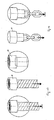
- Ball 7 as shown in table III, can be formed of two hemispheres 10 and 11 separated by a bush 12 and held together by a crossing pin 13.
- Ball 7 will be rung about by the rope or chain 8 or connected thereto by a snap-hook 14 or suitable metal ring 15.
- ball 7 can also be secured to a chain or rope, as shown in table IV, by providing the ball with a shaped housing 16 in which a spigot 17 fastened to the chain or rope is forced.
- the system disclosed reduces considerably the times and the difficulties connected to mooring and unmooring and needs nobody who moors the boat ashore.
- the system has been conceived to be used with a rope or chain provided with an end ball, and the channel in the little column is adapted and shaped to receive said ball, however, it can be assumed that the system is provided with other end-pieces and suitable channels to receive them.
- the system has further been conceived to be used in boating, however, it can also be applied wherever a quick hooking/release system between two fixed or moving members is required.
Landscapes
- Chemical & Material Sciences (AREA)
- Engineering & Computer Science (AREA)
- Combustion & Propulsion (AREA)
- Mechanical Engineering (AREA)
- Ocean & Marine Engineering (AREA)
- Revetment (AREA)
Abstract
This is achieved by providing the ends of the ropes with a preferably ball-shaped end-piece as well as by installing ashore a little column provided with a channel with conical mouth and frontal slot into which the ball secured to the end of the rope can slide downwards together with the rope running along the slot.
Description
- As boats are drawing in to wharfs or piers for landing, they have to be moored by securing ropes to suitable bollards or rings installed ashore.
- While in offshore coasting sailing such operation are committed to special sailors or ashore workers, in coasting boating the same are performed by someone on board who goes ashore after hauling the pier to secure the ropes to bollards or rings, and upon sailing performs the reverse operation by releasing the ropes and jumping on board while the boat is still close to the pier.
- In case of little boats such operations are often performed by the sole sailor on board who should manoeuvre acrobatically on a boat's side for mooring and unmooring operations.
- The present patent application for industrial invention seeks to provide a system which allows the ropes to be secured to and released from suitable little columns by a simple operation that can be performed staying on board at a distance from the pier without any ashore backing.
- The solution consists of providing two separate parts consisting of a ball or other suitable end-piece to be secured to the end of the mooring rope as well as a little column installed on a pier and provided with a conical mouth and a channel which is such shaped as to receive the ball-shaped end-pieces of the ropes, thus allowing the balls to slide up or down keeping the ropes outside of a suitable groove formed longitudinally along the channel.
- Thus, the sailor on the boat will engage the ball at the end of the rope with a suitable rod (boat hook) and will enter it into the conical mouth of the little column causing it to go down into the channel by gravity and to secure it to the column automatically.
- Upon unmooring the sailor will operate reversely lifting the ball upwards along the channel by means of the boat hook and causing it to come out of the conical mouth.
- Both operations can be performed from the boat even from the helm of the boat without hauling the pier or ashore backing.
- This solution will be better understood referring to the accompanying sheets of drawings in which an indicative, not limiting embodiment is shown. In the drawings:
-
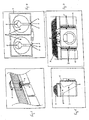
Fig. 1 of sheet I shows schematically a sailor who draws the ball at the end of the mooring rope close to the mouth of the little column while staying on board of the boat. -
Fig. 2 shows a longitudinal section view of a little column with a conical mouth and a sliding channel for the ball. -
Fig. 3 shows the insertion of a rope with the spherical end-piece inside the little column in the final locking position. -
Fig. 4 shows the insertion of two balls at the ends of respective ropes inside the sliding channel. -
Fig. 5 shows three boats moored by the system of the invention. -
Fig. 6 of sheet II shows a side view of a little column, andFig. 7 shows the same little column installed on a floating wharf. -
Figs. 8 and 9 show side and front views of a little column provided with a dual channel to allow two boats to be moored, respectively. -
Figs. 10, 11 and 12 of sheet III show solutions to secure the rope or chain to the ball. -
Figs. 13 and 14 of sheet IV show other solutions to secure the rope or chain to the ball. - Referring to the figures a little column which can be made of die-cast steel or any other suitable material is secured to the pier or wharf or installed on a floating wharf.
- By the sake of simplicity a little column with only one element is disclosed, however, there can also be provided two or more identical constructions which are put side by side or integrated in one body to be used at the same time by one or more boats.
- Little column 1 consists of a
funnel 2 with a neck orchannel 3 directed downwards and preferably inclined to the outside to provide a greater shoulder angle in case the boat is lifted by the backwash. - Such neck is partially closed at its one end and is crossed vertically by a
slot 4 with bothrounded edges 5 to reduce the wiping wear of the rope or chain passing through the slot. - The upper edge of the slot is suitably saddle-shaped at 6 to fit the rope or chain upon its release, thus helping its recovery.
- The little column has the slot directed to the sea.
- The inside of neck is shaped to receive even two balls from the same boat to strengthen the mooring, if necessary.
- From the foregoing the operation of the system as disclosed and illustrated is self-evident.
- After hauling at a distance from the little column it is sufficient to draw
ball end 7 ofrope 8 near tofunnel 2 on the top of the little column by a boat hook and to put it down therein. - Now the ball will be positioned in the lowest portion of the funnel's neck by gravity so that the rope or chain will come out of the frontal slot such as to be secured to the bollard of the boat.
- The system can be provided with a
covering plate 9 if the little column is embodied in the wharf. -
Ball 7, as shown in table III, can be formed of twohemispheres -
Ball 7 will be rung about by the rope orchain 8 or connected thereto by a snap-hook 14 or suitable metal ring 15. - According to a variation,
ball 7 can also be secured to a chain or rope, as shown in table IV, by providing the ball with ashaped housing 16 in which aspigot 17 fastened to the chain or rope is forced. - The system disclosed reduces considerably the times and the difficulties connected to mooring and unmooring and needs nobody who moors the boat ashore.
- The system has been conceived to be used with a rope or chain provided with an end ball, and the channel in the little column is adapted and shaped to receive said ball, however, it can be assumed that the system is provided with other end-pieces and suitable channels to receive them.
- The system has further been conceived to be used in boating, however, it can also be applied wherever a quick hooking/release system between two fixed or moving members is required.
- Shape and construction variations can be made both as far as the little column and the connection of the ball to the rope or chain is concerned without departing from the scope of the invention as defined by the appended claims.
Claims (14)
- A boat mooring and unmooring system without any ashore backing to secure and release the mooring ropes, characterized in that it consists of at least one end-piece (7) secured to a rope or chain (8), and a little column (1) located ashore, said end-piece being able to be inserted and to slide into a suitable channel (3) by gravity so that the rope or chain can come out of a slot (4) formed along said channel and directed to the sea.
- The mooring system of the preceding claim, wherein the end-piece secured to the rope or chain is a ball.
- The mooring system of the preceding claims, characterized in that the end-piece connected to the rope or chain can also not be spherical.
- The mooring system of the preceding claims, characterized in that the ball end-piece secured to the rope or chain consists of two hemispheres with a central bush connected by a crossing pin.
- The mooring system of the preceding claims, characterized in that the chain or rope is secured to the ball end-piece through a shaped spigot connected thereto and forced into a shaped housing of the ball.
- The mooring system of the preceding claims, characterized in that the channel is shaped as a funnel (2) with its neck directed downwards and shaped to receive the end-piece.
- The mooring system of the preceding claims, characterized in that the channel or funnel's neck is partially opened at the bottom.
- The mooring system of the preceding claims, characterized in that the channel or funnel's neck is inclined to the outside.
- The mooring system of the preceding claims, characterized in that the channel or funnel's neck has a longitudinal slot (4) opened to the sea.
- The mooring system of the preceding claims, characterized in that the channel or funnel's neck (2) can receive two or more end-pieces at the same time.
- The mooring system of the preceding claims, characterized in that slot (4) of claim 9 has rounded edges (5).
- The mooring system of the preceding claims, characterized in that several little columns can be disposed side by side or inserted in only one block.
- The mooring system of the preceding claims, characterized in that the little column can be embodied into a wharf.
- The mooring system of the preceding claims, characterized in that it can not only be used in boating but also where a quick hooking and release between two fixed or moving members is required.
Priority Applications (1)
| Application Number | Priority Date | Filing Date | Title |
|---|---|---|---|
| EP07425599A EP2042425A1 (en) | 2007-09-27 | 2007-09-27 | Boat mooring and unmooring system without any ashore backing |
Applications Claiming Priority (1)
| Application Number | Priority Date | Filing Date | Title |
|---|---|---|---|
| EP07425599A EP2042425A1 (en) | 2007-09-27 | 2007-09-27 | Boat mooring and unmooring system without any ashore backing |
Publications (1)
| Publication Number | Publication Date |
|---|---|
| EP2042425A1 true EP2042425A1 (en) | 2009-04-01 |
Family
ID=39223051
Family Applications (1)
| Application Number | Title | Priority Date | Filing Date |
|---|---|---|---|
| EP07425599A Withdrawn EP2042425A1 (en) | 2007-09-27 | 2007-09-27 | Boat mooring and unmooring system without any ashore backing |
Country Status (1)
| Country | Link |
|---|---|
| EP (1) | EP2042425A1 (en) |
Cited By (1)
| Publication number | Priority date | Publication date | Assignee | Title |
|---|---|---|---|---|
| IT201600124563A1 (en) * | 2016-12-09 | 2018-06-09 | Danilo Sapio | QUICK RELEASE AND RELEASE SYSTEM BETWEEN A BOAT AND AN ANCHORED FLOATING BODY |
Citations (3)
| Publication number | Priority date | Publication date | Assignee | Title |
|---|---|---|---|---|
| US4114553A (en) | 1977-07-18 | 1978-09-19 | Zidek Charles E | Mooring device and cleat |
| US4190011A (en) * | 1976-10-20 | 1980-02-26 | Guthmann Stephen F | Boat mooring apparatus |
| US4667617A (en) * | 1984-08-20 | 1987-05-26 | Molitor Jerome A | Rope-holding boat hook |
-
2007
- 2007-09-27 EP EP07425599A patent/EP2042425A1/en not_active Withdrawn
Patent Citations (3)
| Publication number | Priority date | Publication date | Assignee | Title |
|---|---|---|---|---|
| US4190011A (en) * | 1976-10-20 | 1980-02-26 | Guthmann Stephen F | Boat mooring apparatus |
| US4114553A (en) | 1977-07-18 | 1978-09-19 | Zidek Charles E | Mooring device and cleat |
| US4667617A (en) * | 1984-08-20 | 1987-05-26 | Molitor Jerome A | Rope-holding boat hook |
Cited By (1)
| Publication number | Priority date | Publication date | Assignee | Title |
|---|---|---|---|---|
| IT201600124563A1 (en) * | 2016-12-09 | 2018-06-09 | Danilo Sapio | QUICK RELEASE AND RELEASE SYSTEM BETWEEN A BOAT AND AN ANCHORED FLOATING BODY |
Similar Documents
| Publication | Publication Date | Title |
|---|---|---|
| EP1291278B1 (en) | Telescopic gangway for boats | |
| US5944448A (en) | Oil field installation with mooring and flowline system | |
| US9926046B2 (en) | Device for mooring a water craft to a mooring berth of a pontoon, and corresponding pontoon | |
| US20100107957A1 (en) | Mooring system | |
| CA2474299A1 (en) | Swing mooring pontoon | |
| KR102111988B1 (en) | Movable mooring system and the ship having it | |
| US20160059935A1 (en) | Water anchors | |
| CN1081982A (en) | Rotatable bollard for a wire-tied cable | |
| NO158266B (en) | VALVE FOR SUPPLYING GAS INTO A ROOM AND SUBSEQUENT BRAKE EMPTYING THIS ROOM. | |
| US20170066507A1 (en) | Equipment protection sleeves | |
| GB2514091A (en) | Mooring equipment | |
| EP3330169A1 (en) | Automatic mooring device for vessels | |
| CN102556283B (en) | Hawse plug and guardrail device for marine use | |
| CA1069773A (en) | Anchor retrieving apparatus and method | |
| US6907837B2 (en) | Mooring assembly | |
| US20020078872A1 (en) | Boat stability and directional-control device | |
| EP2658770A1 (en) | Fairlead for nautical use | |
| KR101699961B1 (en) | the multipurpose anchor connector in pontoon and the mooring anchor connecting structure of pontoon using the same | |
| WO2021198109A1 (en) | Mooring aid device | |
| WO2002030735A1 (en) | Automatic mooring hook | |
| US6196149B1 (en) | Sail device | |
| EP1861309B1 (en) | Mooring pull-in system | |
| IT202300015930A1 (en) | MOORING SYSTEM FOR BOATS | |
| KR102151601B1 (en) | Rigid fixation apparatus and fixed offshore installations | |
| KR101310171B1 (en) | Ballast structure of dinghy boat |
Legal Events
| Date | Code | Title | Description |
|---|---|---|---|
| PUAI | Public reference made under article 153(3) epc to a published international application that has entered the european phase |
Free format text: ORIGINAL CODE: 0009012 |
|
| AK | Designated contracting states |
Kind code of ref document: A1 Designated state(s): AT BE BG CH CY CZ DE DK EE ES FI FR GB GR HU IE IS IT LI LT LU LV MC MT NL PL PT RO SE SI SK TR |
|
| AX | Request for extension of the european patent |
Extension state: AL BA HR MK RS |
|
| 17P | Request for examination filed |
Effective date: 20090717 |
|
| 17Q | First examination report despatched |
Effective date: 20091009 |
|
| AKX | Designation fees paid |
Designated state(s): AT BE BG CH CY CZ DE DK EE ES FI FR GB GR HU IE IS IT LI LT LU LV MC MT NL PL PT RO SE SI SK TR |
|
| GRAP | Despatch of communication of intention to grant a patent |
Free format text: ORIGINAL CODE: EPIDOSNIGR1 |
|
| STAA | Information on the status of an ep patent application or granted ep patent |
Free format text: STATUS: THE APPLICATION IS DEEMED TO BE WITHDRAWN |
|
| 18D | Application deemed to be withdrawn |
Effective date: 20130103 |