EP2042902A1 - Verteilungskompensierung eines Polarisationsmodus mithilfe von als Array angeordnete Wellenleitergitter - Google Patents
Verteilungskompensierung eines Polarisationsmodus mithilfe von als Array angeordnete Wellenleitergitter Download PDFInfo
- Publication number
- EP2042902A1 EP2042902A1 EP08163481A EP08163481A EP2042902A1 EP 2042902 A1 EP2042902 A1 EP 2042902A1 EP 08163481 A EP08163481 A EP 08163481A EP 08163481 A EP08163481 A EP 08163481A EP 2042902 A1 EP2042902 A1 EP 2042902A1
- Authority
- EP
- European Patent Office
- Prior art keywords
- polarization
- light beam
- correction module
- phase
- lens
- Prior art date
- Legal status (The legal status is an assumption and is not a legal conclusion. Google has not performed a legal analysis and makes no representation as to the accuracy of the status listed.)
- Withdrawn
Links
Images

Classifications
-
- G—PHYSICS
- G02—OPTICS
- G02B—OPTICAL ELEMENTS, SYSTEMS OR APPARATUS
- G02B6/00—Light guides; Structural details of arrangements comprising light guides and other optical elements, e.g. couplings
- G02B6/24—Coupling light guides
- G02B6/26—Optical coupling means
- G02B6/27—Optical coupling means with polarisation selective and adjusting means
- G02B6/2753—Optical coupling means with polarisation selective and adjusting means characterised by their function or use, i.e. of the complete device
- G02B6/278—Controlling polarisation mode dispersion [PMD], e.g. PMD compensation or emulation
-
- G—PHYSICS
- G02—OPTICS
- G02B—OPTICAL ELEMENTS, SYSTEMS OR APPARATUS
- G02B6/00—Light guides; Structural details of arrangements comprising light guides and other optical elements, e.g. couplings
- G02B6/10—Light guides; Structural details of arrangements comprising light guides and other optical elements, e.g. couplings of the optical waveguide type
- G02B6/12—Light guides; Structural details of arrangements comprising light guides and other optical elements, e.g. couplings of the optical waveguide type of the integrated circuit kind
- G02B6/12007—Light guides; Structural details of arrangements comprising light guides and other optical elements, e.g. couplings of the optical waveguide type of the integrated circuit kind forming wavelength selective elements, e.g. multiplexer, demultiplexer
- G02B6/12009—Light guides; Structural details of arrangements comprising light guides and other optical elements, e.g. couplings of the optical waveguide type of the integrated circuit kind forming wavelength selective elements, e.g. multiplexer, demultiplexer comprising arrayed waveguide grating [AWG] devices, i.e. with a phased array of waveguides
- G02B6/12019—Light guides; Structural details of arrangements comprising light guides and other optical elements, e.g. couplings of the optical waveguide type of the integrated circuit kind forming wavelength selective elements, e.g. multiplexer, demultiplexer comprising arrayed waveguide grating [AWG] devices, i.e. with a phased array of waveguides characterised by the optical interconnection to or from the AWG devices, e.g. integration or coupling with lasers or photodiodes
-
- G—PHYSICS
- G02—OPTICS
- G02B—OPTICAL ELEMENTS, SYSTEMS OR APPARATUS
- G02B6/00—Light guides; Structural details of arrangements comprising light guides and other optical elements, e.g. couplings
- G02B6/24—Coupling light guides
- G02B6/26—Optical coupling means
- G02B6/27—Optical coupling means with polarisation selective and adjusting means
- G02B6/2706—Optical coupling means with polarisation selective and adjusting means as bulk elements, i.e. free space arrangements external to a light guide, e.g. polarising beam splitters
- G02B6/2713—Optical coupling means with polarisation selective and adjusting means as bulk elements, i.e. free space arrangements external to a light guide, e.g. polarising beam splitters cascade of polarisation selective or adjusting operations
-
- H—ELECTRICITY
- H04—ELECTRIC COMMUNICATION TECHNIQUE
- H04B—TRANSMISSION
- H04B10/00—Transmission systems employing electromagnetic waves other than radio-waves, e.g. infrared, visible or ultraviolet light, or employing corpuscular radiation, e.g. quantum communication
- H04B10/25—Arrangements specific to fibre transmission
- H04B10/2507—Arrangements specific to fibre transmission for the reduction or elimination of distortion or dispersion
- H04B10/2569—Arrangements specific to fibre transmission for the reduction or elimination of distortion or dispersion due to polarisation mode dispersion [PMD]
Definitions
- Embodiments of the present invention generally relate to high-speed optical communications and, more specifically, to polarization mode dispersion compensation using an arrayed waveguide grating.
- PMD Polarization mode dispersion
- One problem with broadband all-order PMD compensation systems is that they typically are implemented in free-space optics configurations, specifically using a bulk grating as a wavelength dispersing element.
- free-space optics has several drawbacks. First, aligning free-space optics components, especially gratings, is tedious, time-consuming and oftentimes error-prone. Second, the resulting alignments of free-space optical components are typically unstable due to, among other things, the mechanical properties of the materials used to make gratings. Finally, manufacturing gratings in large volumes using standard industry equipment is difficult, making free-space configurations expensive.
- the system comprises a polarization correction module configured to produce a polarization-corrected signal that includes a first circulator configured to receive an optical input signal comprised of multiple wavelengths and route the optical input signal to one or more optical components, a first arrayed waveguide grating chip configured to receive the optical input signal from the first circulator and separate the optical input signal into a plurality of light beams, each light beam having a different wavelength, and a first lens configured to collimate light beams received from the first arrayed waveguide chip.
- a polarization correction module configured to produce a polarization-corrected signal that includes a first circulator configured to receive an optical input signal comprised of multiple wavelengths and route the optical input signal to one or more optical components, a first arrayed waveguide grating chip configured to receive the optical input signal from the first circulator and separate the optical input signal into a plurality of light beams, each light beam having a different wavelength, and a first lens configured to collimate light beams received from the first arrayed wave
- the polarization correction module includes an AWG chip as a wavelength dispersing element, as opposed to a bulk optic grating.
- aligning the optical components used to separate light beams of different wavelengths within the system is simpler, and the size of the overall system is reduced.
- the AWG chip may be more easily aligned with the other optical components within the system, with the alignment being more robust, both mechanically and thermally, relative to prior art systems that include bulk optics.
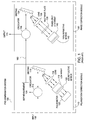
- Figure 1 is a conceptual diagram of an all-order PMD compensation system, according to prior art
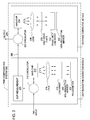
- Figure 2 is a conceptual diagram of an all-order PMD compensation system, according to one embodiment of the invention.
- Figure 3 is a conceptual diagram of the AWG chip of Figure 2 , according to one embodiment of the invention.
- FIG. 1 is a conceptual diagram of an all-order PMD compensation system 100, according to prior art.
- the PMD compensation system 100 includes, without limitation, a polarization correction module 110 connected to a phase correction module 130 to create a two-stage PMD compensation scheme.
- the polarization correction module 110 receives an input signal 150 consisting of multiple wavelengths having different states of polarization (SOP) and different phases and produces a polarization-corrected signal 160.
- SOP states of polarization
- the phase correction module 130 receives the polarization-corrected signal 160 and produces a polarization- and phase-corrected output signal 170.
- the polarization correction module 110 includes, without limitation, a circulator 112, a grating 114, a lens 116, a liquid crystal modulator (LCM) array 118, a 90% reflective mirror 120, a polarimeter 122 and an SOP measurement system 124.
- the input signal 150 is first received by the circulator 112, which is configured to receive multiple input signals and route them in different directions. This functionality is used to route the uncompensated input signal 150 towards the grating 114 and the polarization-corrected signal 160 towards the phase-correction module 130.
- the grating 114 acts as a wavelength-dispersing element, spatially separating the input signal 150 into beams of different individual wavelengths as a result of diffraction.
- the beams of different individual wavelengths are collimated by the lens 116 and received by the LCM array 118, which corrects the wavelength-dependent polarization state of each beam to a fixed wavelength-independent polarization state by rotating the polarization states of the beams in a wavelength-by-wavelength fashion.
- the 90% reflective mirror 120 allows 10% of the polarization-corrected light to reach the polarimeter 122, which measures and records the polarization rotations of the different beams of light passed through the LCM array 118.
- the other 90% of the polarization-corrected light is reflected back to the lens 116, which focuses the beams of different individual wavelengths onto the grating 114, which then multiplexes the individual beams into one signal consisting of multiple wavelengths.
- This signal is received by the circulator 112 and is transmitted as the polarization-corrected signal 160, through the SOP measurement system 124, to the phase correction module 130.
- the phase correction module 130 includes, without limitation, a circulator 132, a grating 134, a lens 136, a half-wave plate 138, a phase-only LCM array 140 and a 100% reflective mirror 142.
- the polarization-corrected signal 160 which again consists of multiple wavelengths with different phases, is received by the circulator 132 and passed to the grating 134, which, again acts as a wavelength-dispersing element by spatially separating the polarization-corrected signal 160 into beams of different individual wavelengths.
- the beams of different individual wavelengths are collimated by the lens 136 and are incident on the half-wave plate 138, which rotates the fixed horizontal polarization of each beam transmitted from the grating 134 to a fixed vertical polarization, as required by the phase-only LCM array 140.
- the phase-only LCM array 140 corrects the wavelength-dependent phase of each beam received from the half-wave plate 138 to a fixed phase in a wavelength-by-wavelength fashion.
- the 100% reflective mirror 142 reflects all of the phase-corrected light back to the lens 136, which focuses the beams of different individual wavelengths back onto the grating 134, which multiplexes the individual beams into one signal consisting of multiple wavelengths.
- the one signal of multiple wavelengths is received by the circulator 134, which produces the polarization- and phase-corrected output signal 170.
- FIG. 2 is a conceptual diagram of an all-order PMD compensation system 200, according to one embodiment of the invention.
- the PMD compensation system 200 includes, without limitation, a polarization correction module 210 connected to a phase correction module 230 to create a two-stage PMD compensation scheme.
- the polarization correction module 210 receives an input signal 250 consisting of multiple wavelengths having different SOP and different phases and produces a polarization-corrected signal 260.
- the phase correction module 230 receives the polarization-corrected signal 260 and produces a polarization- and phase-corrected output signal 270.
- the polarization correction module 210 includes, without limitation, a circulator 212, an arrayed waveguide grating (AWG) chip 214, a lens 216, an LCM array 218, a 90% reflective mirror 220, a polarimeter 222 and an SOP measurement system 224.
- the input signal 250 is first received by the circulator 212, which is configured to receive multiple input signals and route them in different directions, similar to the circulator 112 of Figure 1 . This functionality is used to route the uncompensated input signal 250 towards the AWG chip 214 and the polarization-corrected signal 260 towards the phase-correction module 230.
- the AWG chip 214 Upon receiving the input signal 250, the AWG chip 214 acts as a wavelength-dispersing element, spatially separating the input signal 250 into beams of different individual wavelengths as a result of each of the wavelengths undergoing a different phase shift while traveling through the AWG chip 214.
- the beams of different individual wavelengths are collimated by the lens 216 and received by the LCM array 218, which corrects the wavelength-dependent polarization state of each beam to a fixed wavelength-independent polarization state (for example, to a fixed horizontal polarization state) by rotating the polarization states of the different beams in a wavelength-by-wavelength fashion.
- the 90% reflective mirror 220 allows 10% of the polarization-corrected light to reach the polarimeter 222, which measures and records the polarization rotations of the different beams of light passed through the LCM array 218.
- the other 90% of the polarization-corrected light is reflected back to the lens 216, which focuses the beams of individual wavelengths onto the AWG chip 214, which then multiplexes the individual beams into one signal consisting of multiple wavelengths.
- This signal is received by the circulator 212 and is transmitted as the polarization-corrected signal 260, through the SOP measurement system 224 (where the polarization of the signal 260 can be measured), to the phase correction module 230.
- the phase correction module 230 includes, without limitation, a circulator 232, an AWG chip 234, a lens 236, a half-wave plate 238, a phase-only LCM array 240 and a 100% reflective mirror 242.
- the polarization-corrected signal 260 which again consists of multiple wavelengths with different phases, is received by the circulator 232 and passed to the AWG chip 234, which, again acts as a wavelength-dispersing element by spatially separating the polarization-corrected signal 260 into beams of different wavelengths.
- the beams of different individual wavelengths are collimated by the lens 236 and are incident on the half-wave plate 238, which rotates the fixed polarization of each beam transmitted from the AWG chip 234 by ninety degrees (for example, a fixed horizontal polarization is rotated to a fixed vertical polarization), as required by the phase-only LCM array 240.
- the phase-only LCM array 240 corrects the wavelength-dependent phase of each beam received from the half-wave plate 238 to a fixed phase in a wavelength-by-wavelength fashion.
- the 100% reflective mirror 242 reflects all of the phase-corrected light back to the lens 236, which focuses the beams of individual wavelengths back onto the AWG chip 234, which multiplexes the individual beams into one signal consisting of multiple wavelengths. Finally, the one signal of multiple wavelengths is received by the circulator 234, which produces the polarization- and phase-corrected output signal 270.
- the first difference relates to the physical phenomena used to separate the beams of different individual wavelengths. Since the grating relies on a phenomenon of diffraction, the overall system requires the presence of extended free space and additional components to collimate the light beams dispersed while traveling through that space.
- the functionality of the AWG chip is not based on diffraction. Rather, the beams of different individual wavelengths undergo different phase shifts as they travel through an array of waveguides of different lengths within the AWG chip, thereby separating the beams according to the individual wavelengths.
- the AWG chip does not require the presence of extended free space in the overall system or any additional collimating components.
- aligning the optical components in the overall system is far easier compared to the complicated alignment issues that exist in a system using bulk optics because the arrayed waveguides are already aligned within the AWG chip. The only alignment necessary is between the input and output of the AWG chip, which substantially simplifies the assembly of the overall system.
- the second difference between using an AWG chip and a grating is that the AWG chip may be implemented on silicon, which improves the mechanical and thermal stability of the final alignment within the overall system relative to a system using bulk optics because the mechanical and thermal properties of silicon are superior to the mechanical and thermal properties of the materials used to make gratings.
- AWG chips may be reproduced in volume using a mask, which enables the alignment of the optical components (e.g., the arrayed waveguides) within each AWG chip to be repeated consistently from chip to chip.
- the AWG chips are not only easier to manufacture than gratings, but the repeatability of the fabrication process reduces variations in the optical alignments between the different components in a PMD compensation system from system to system.
- an AWG chip requires much less space than a grating in the overall system since the AWG chip is small and thinner than the grating and, again, the AWG chip does not need any extended free space in the system for diffraction.
- FIG 3 is a conceptual diagram of the AWG chip 214 or 234 of Figure 2 , according to one embodiment of the invention.
- the AWG chip 214 or 234 includes multiple arrayed waveguides 318.
- the waveguides 318 are aligned with an input axis 350 of an external system, such as the circulators 212, 232 of Figure 2 , and, on the other side, the waveguides 318 are aligned with an output axis 370 of an external system, such as the lenses 216, 236 of Figure 2 .
- each of the waveguides 318 has a different length.
- the number of arrayed waveguides 318 on the AWG chip 214 or 234 may be modified to ensure that a beam of each wavelength included in the input signal is able to travel through an individual channel.
- An accurate and precise alignment between an input signal of multiple wavelengths and multiple output signals, each consisting of a spatially separated beam of a different individual wavelength can be easily achieved by aligning the input axis 360 and the output axis 380 of the AWG chip 214 or 234 with the input axis 350 and the output axis 370, respectively, of the external systems.
- the lens 216 or 236 may be included within the AWG chip 214 or 234, respectively, as also shown on Figure 3 , to collimate the beams of individual wavelengths exiting the waveguides 318.
Landscapes
- Physics & Mathematics (AREA)
- General Physics & Mathematics (AREA)
- Optics & Photonics (AREA)
- Engineering & Computer Science (AREA)
- Chemical & Material Sciences (AREA)
- Dispersion Chemistry (AREA)
- Electromagnetism (AREA)
- Computer Networks & Wireless Communication (AREA)
- Signal Processing (AREA)
- Microelectronics & Electronic Packaging (AREA)
- Optical Communication System (AREA)
- Optical Integrated Circuits (AREA)
Applications Claiming Priority (1)
| Application Number | Priority Date | Filing Date | Title |
|---|---|---|---|
| US11/862,116 US20090080072A1 (en) | 2007-09-26 | 2007-09-26 | Polarization mode dispersion compensation using an arrayed waveguide grating |
Publications (1)
| Publication Number | Publication Date |
|---|---|
| EP2042902A1 true EP2042902A1 (de) | 2009-04-01 |
Family
ID=40090407
Family Applications (1)
| Application Number | Title | Priority Date | Filing Date |
|---|---|---|---|
| EP08163481A Withdrawn EP2042902A1 (de) | 2007-09-26 | 2008-09-02 | Verteilungskompensierung eines Polarisationsmodus mithilfe von als Array angeordnete Wellenleitergitter |
Country Status (2)
| Country | Link |
|---|---|
| US (1) | US20090080072A1 (de) |
| EP (1) | EP2042902A1 (de) |
Cited By (1)
| Publication number | Priority date | Publication date | Assignee | Title |
|---|---|---|---|---|
| CN103091782A (zh) * | 2013-01-23 | 2013-05-08 | 浙江大学 | 一种带有偏振控制的阵列波导光栅模块 |
Families Citing this family (1)
| Publication number | Priority date | Publication date | Assignee | Title |
|---|---|---|---|---|
| US8140934B2 (en) * | 2008-03-13 | 2012-03-20 | Nec Laboratories America, Inc. | LDPC-coded multilevel modulation scheme |
Citations (4)
| Publication number | Priority date | Publication date | Assignee | Title |
|---|---|---|---|---|
| EP0826989A2 (de) * | 1996-09-02 | 1998-03-04 | Nippon Telegraph And Telephone Corporation | Optische Signalverarbeitungsvorrichtung und optisches Signalverarbeitungsverfahren |
| US20020060760A1 (en) * | 2000-05-24 | 2002-05-23 | Weiner Andrew M. | Methods and systems for polarization control and polarization mode dispersion compensation for wideband optical signals |
| US20020102052A1 (en) * | 2000-12-15 | 2002-08-01 | Thompson Greorge H. B. | Planar waveguide dispersion compensator |
| WO2002080411A1 (en) * | 2001-03-19 | 2002-10-10 | Terapulse, Inc. | Polarization mode dispersion compensation in optical transmission media |
Family Cites Families (2)
| Publication number | Priority date | Publication date | Assignee | Title |
|---|---|---|---|---|
| US7006719B2 (en) * | 2002-03-08 | 2006-02-28 | Infinera Corporation | In-wafer testing of integrated optical components in photonic integrated circuits (PICs) |
| US7333688B2 (en) * | 2004-02-20 | 2008-02-19 | Lucent Technologies Inc. | Method and apparatus for free-space optical switching |
-
2007
- 2007-09-26 US US11/862,116 patent/US20090080072A1/en not_active Abandoned
-
2008
- 2008-09-02 EP EP08163481A patent/EP2042902A1/de not_active Withdrawn
Patent Citations (4)
| Publication number | Priority date | Publication date | Assignee | Title |
|---|---|---|---|---|
| EP0826989A2 (de) * | 1996-09-02 | 1998-03-04 | Nippon Telegraph And Telephone Corporation | Optische Signalverarbeitungsvorrichtung und optisches Signalverarbeitungsverfahren |
| US20020060760A1 (en) * | 2000-05-24 | 2002-05-23 | Weiner Andrew M. | Methods and systems for polarization control and polarization mode dispersion compensation for wideband optical signals |
| US20020102052A1 (en) * | 2000-12-15 | 2002-08-01 | Thompson Greorge H. B. | Planar waveguide dispersion compensator |
| WO2002080411A1 (en) * | 2001-03-19 | 2002-10-10 | Terapulse, Inc. | Polarization mode dispersion compensation in optical transmission media |
Cited By (1)
| Publication number | Priority date | Publication date | Assignee | Title |
|---|---|---|---|---|
| CN103091782A (zh) * | 2013-01-23 | 2013-05-08 | 浙江大学 | 一种带有偏振控制的阵列波导光栅模块 |
Also Published As
| Publication number | Publication date |
|---|---|
| US20090080072A1 (en) | 2009-03-26 |
Similar Documents
| Publication | Publication Date | Title |
|---|---|---|
| US10917190B2 (en) | Method and system for CWDM MUX/DEMUX designs for silicon photonics interposers | |
| US6169604B1 (en) | Nonlinear interferometer for fiber optic dense wavelength division multiplexer utilizing a phase bias element to separate wavelengths in an optical signal | |
| CN101156098B (zh) | 具有基于mems的衰减或功率管理的优化的可重构光分插复用器结构 | |
| US6108471A (en) | Compact double-pass wavelength multiplexer-demultiplexer having an increased number of channels | |
| US7720329B2 (en) | Segmented prism element and associated methods for manifold fiberoptic switches | |
| US8855502B2 (en) | Demodulator and optical transceiver | |
| US7826697B2 (en) | System and method for asymmetrical fiber spacing for wavelength selective switches | |
| US7873246B2 (en) | Beam steering element and associated methods for manifold fiberoptic switches and monitoring | |
| US10892845B2 (en) | Method and system for a free space CWDM MUX/DEMUX for integration with a grating coupler based silicon photonics platform | |
| US6753960B1 (en) | Optical spectral power monitors employing frequency-division-multiplexing detection schemes | |
| US7676125B2 (en) | Method and apparatus to provide multi-channel bulk fiber optical power detection | |
| US20070104418A1 (en) | Wavelength selective optical switch | |
| US20090110349A1 (en) | Beam steering element and associated methods for mixed manifold fiberoptic switches | |
| US20080298738A1 (en) | Waveguide type wavelength domain optical switch | |
| US20190052362A1 (en) | Method And System For A Free Space CWDM MUX/DEMUX For Integration With A Grating Coupler Based Silicon Photonics Platform | |
| JPS6343110A (ja) | 光伝送装置 | |
| CN104678515A (zh) | 用于单纤双向的光器件光路结构 | |
| US8873898B2 (en) | Polarization independent wavelength converter and polarization independent wavelength conversion method | |
| US20040125374A1 (en) | Tunable optical filter, optical apparatus for use therewith and method utilizing same | |
| EP2042902A1 (de) | Verteilungskompensierung eines Polarisationsmodus mithilfe von als Array angeordnete Wellenleitergitter | |
| JP5669140B2 (ja) | 光パフォーマンスモニタ | |
| US8204347B2 (en) | Optical signal processing device | |
| US6018603A (en) | Optical demultiplexing/multiplexing device having a wavelength dependent element | |
| US20030091276A1 (en) | Grating-based MUX/DMUX with expanded waveguides | |
| US20070154142A1 (en) | Mechanism to spectrally combine and divide optical I/O |
Legal Events
| Date | Code | Title | Description |
|---|---|---|---|
| PUAI | Public reference made under article 153(3) epc to a published international application that has entered the european phase |
Free format text: ORIGINAL CODE: 0009012 |
|
| AK | Designated contracting states |
Kind code of ref document: A1 Designated state(s): AT BE BG CH CY CZ DE DK EE ES FI FR GB GR HR HU IE IS IT LI LT LU LV MC MT NL NO PL PT RO SE SI SK TR |
|
| AX | Request for extension of the european patent |
Extension state: AL BA MK RS |
|
| AKX | Designation fees paid | ||
| REG | Reference to a national code |
Ref country code: DE Ref legal event code: 8566 |
|
| STAA | Information on the status of an ep patent application or granted ep patent |
Free format text: STATUS: THE APPLICATION IS DEEMED TO BE WITHDRAWN |
|
| 18D | Application deemed to be withdrawn |
Effective date: 20091002 |