EP2043460B1 - Würzmittel und verfahren zum würzen eines lebensmittelprodukts bei reduktion der natriumaufnahme - Google Patents
Würzmittel und verfahren zum würzen eines lebensmittelprodukts bei reduktion der natriumaufnahme Download PDFInfo
- Publication number
- EP2043460B1 EP2043460B1 EP07809894.4A EP07809894A EP2043460B1 EP 2043460 B1 EP2043460 B1 EP 2043460B1 EP 07809894 A EP07809894 A EP 07809894A EP 2043460 B1 EP2043460 B1 EP 2043460B1
- Authority
- EP
- European Patent Office
- Prior art keywords
- salt
- oil
- seasoning
- food product
- fat
- Prior art date
- Legal status (The legal status is an assumption and is not a legal conclusion. Google has not performed a legal analysis and makes no representation as to the accuracy of the status listed.)
- Revoked
Links
- 235000011194 food seasoning agent Nutrition 0.000 title claims description 152
- 235000013305 food Nutrition 0.000 title claims description 84
- 235000005911 diet Nutrition 0.000 title claims description 10
- 230000000378 dietary effect Effects 0.000 title claims description 10
- 235000021023 sodium intake Nutrition 0.000 title claims description 6
- 238000000034 method Methods 0.000 title description 43
- 235000002639 sodium chloride Nutrition 0.000 claims description 460
- FAPWRFPIFSIZLT-UHFFFAOYSA-M Sodium chloride Chemical compound [Na+].[Cl-] FAPWRFPIFSIZLT-UHFFFAOYSA-M 0.000 claims description 311
- 239000002245 particle Substances 0.000 claims description 211
- 239000003921 oil Substances 0.000 claims description 175
- 235000019198 oils Nutrition 0.000 claims description 175
- 239000011780 sodium chloride Substances 0.000 claims description 167
- 235000002017 Zea mays subsp mays Nutrition 0.000 claims description 139
- 241000482268 Zea mays subsp. mays Species 0.000 claims description 139
- WCUXLLCKKVVCTQ-UHFFFAOYSA-M Potassium chloride Chemical compound [Cl-].[K+] WCUXLLCKKVVCTQ-UHFFFAOYSA-M 0.000 claims description 124
- 239000000203 mixture Substances 0.000 claims description 118
- 239000000796 flavoring agent Substances 0.000 claims description 104
- 239000011734 sodium Substances 0.000 claims description 59
- 229910052708 sodium Inorganic materials 0.000 claims description 59
- DGAQECJNVWCQMB-PUAWFVPOSA-M Ilexoside XXIX Chemical compound C[C@@H]1CC[C@@]2(CC[C@@]3(C(=CC[C@H]4[C@]3(CC[C@@H]5[C@@]4(CC[C@@H](C5(C)C)OS(=O)(=O)[O-])C)C)[C@@H]2[C@]1(C)O)C)C(=O)O[C@H]6[C@@H]([C@H]([C@@H]([C@H](O6)CO)O)O)O.[Na+] DGAQECJNVWCQMB-PUAWFVPOSA-M 0.000 claims description 58
- 235000014121 butter Nutrition 0.000 claims description 34
- 235000010469 Glycine max Nutrition 0.000 claims description 19
- 229920002472 Starch Polymers 0.000 claims description 18
- 235000019698 starch Nutrition 0.000 claims description 18
- 239000008107 starch Substances 0.000 claims description 18
- 239000007900 aqueous suspension Substances 0.000 claims description 17
- 239000008162 cooking oil Substances 0.000 claims description 17
- 239000004067 bulking agent Substances 0.000 claims description 14
- 235000011888 snacks Nutrition 0.000 claims description 13
- 239000003795 chemical substances by application Substances 0.000 claims description 12
- 235000014571 nuts Nutrition 0.000 claims description 11
- 239000011248 coating agent Substances 0.000 claims description 10
- 238000000576 coating method Methods 0.000 claims description 10
- 235000021264 seasoned food Nutrition 0.000 claims description 10
- 235000019596 Masking bitterness Nutrition 0.000 claims description 8
- 235000013355 food flavoring agent Nutrition 0.000 claims description 8
- WQZGKKKJIJFFOK-GASJEMHNSA-N Glucose Natural products OC[C@H]1OC(O)[C@H](O)[C@@H](O)[C@@H]1O WQZGKKKJIJFFOK-GASJEMHNSA-N 0.000 claims description 7
- 235000012434 pretzels Nutrition 0.000 claims description 7
- 239000000443 aerosol Substances 0.000 claims description 6
- 235000010675 chips/crisps Nutrition 0.000 claims description 6
- 239000003086 colorant Substances 0.000 claims description 6
- 240000007594 Oryza sativa Species 0.000 claims description 5
- 235000007164 Oryza sativa Nutrition 0.000 claims description 5
- 235000009566 rice Nutrition 0.000 claims description 5
- 239000005913 Maltodextrin Substances 0.000 claims description 4
- 229920002774 Maltodextrin Polymers 0.000 claims description 4
- 229940035034 maltodextrin Drugs 0.000 claims description 4
- 235000015277 pork Nutrition 0.000 claims description 4
- 241000283690 Bos taurus Species 0.000 claims description 3
- LFQSCWFLJHTTHZ-UHFFFAOYSA-N Ethanol Chemical compound CCO LFQSCWFLJHTTHZ-UHFFFAOYSA-N 0.000 claims description 3
- 235000012495 crackers Nutrition 0.000 claims description 3
- 239000008121 dextrose Substances 0.000 claims description 3
- 235000015177 dried meat Nutrition 0.000 claims description 3
- 230000000050 nutritive effect Effects 0.000 claims description 2
- 235000015112 vegetable and seed oil Nutrition 0.000 claims description 2
- 239000008158 vegetable oil Substances 0.000 claims description 2
- 150000003839 salts Chemical class 0.000 description 289
- 239000000306 component Substances 0.000 description 146
- 239000003925 fat Substances 0.000 description 125
- 235000019197 fats Nutrition 0.000 description 125
- 235000019634 flavors Nutrition 0.000 description 96
- 235000019640 taste Nutrition 0.000 description 66
- 235000011164 potassium chloride Nutrition 0.000 description 57
- 239000001103 potassium chloride Substances 0.000 description 57
- 239000000463 material Substances 0.000 description 39
- CKQVRZJOMJRTOY-UHFFFAOYSA-N octadecanoic acid;propane-1,2,3-triol Chemical compound OCC(O)CO.CCCCCCCCCCCCCCCCCC(O)=O CKQVRZJOMJRTOY-UHFFFAOYSA-N 0.000 description 37
- 235000019482 Palm oil Nutrition 0.000 description 31
- 239000002540 palm oil Substances 0.000 description 31
- 239000000243 solution Substances 0.000 description 28
- 239000007787 solid Substances 0.000 description 27
- 230000008447 perception Effects 0.000 description 26
- 239000007788 liquid Substances 0.000 description 25
- 239000002002 slurry Substances 0.000 description 22
- 238000009884 interesterification Methods 0.000 description 21
- 239000000126 substance Substances 0.000 description 20
- 238000006243 chemical reaction Methods 0.000 description 19
- 238000009826 distribution Methods 0.000 description 19
- 230000008569 process Effects 0.000 description 19
- 235000021003 saturated fats Nutrition 0.000 description 18
- 238000012360 testing method Methods 0.000 description 18
- 235000013399 edible fruits Nutrition 0.000 description 17
- 235000004213 low-fat Nutrition 0.000 description 17
- 230000002829 reductive effect Effects 0.000 description 17
- 235000002595 Solanum tuberosum Nutrition 0.000 description 16
- 244000061456 Solanum tuberosum Species 0.000 description 16
- 244000068988 Glycine max Species 0.000 description 15
- 230000000694 effects Effects 0.000 description 14
- 239000004615 ingredient Substances 0.000 description 14
- 108020003175 receptors Proteins 0.000 description 14
- 102000005962 receptors Human genes 0.000 description 14
- 108091005708 gustatory receptors Proteins 0.000 description 13
- 235000013351 cheese Nutrition 0.000 description 12
- 239000002904 solvent Substances 0.000 description 12
- 238000002844 melting Methods 0.000 description 11
- 230000008018 melting Effects 0.000 description 11
- 230000004044 response Effects 0.000 description 11
- 235000019608 salt taste sensations Nutrition 0.000 description 11
- 238000010411 cooking Methods 0.000 description 10
- 230000007423 decrease Effects 0.000 description 10
- 238000004090 dissolution Methods 0.000 description 10
- XLYOFNOQVPJJNP-UHFFFAOYSA-N water Substances O XLYOFNOQVPJJNP-UHFFFAOYSA-N 0.000 description 10
- 235000005824 Zea mays ssp. parviglumis Nutrition 0.000 description 9
- 239000002671 adjuvant Substances 0.000 description 9
- 235000005822 corn Nutrition 0.000 description 9
- 239000013078 crystal Substances 0.000 description 9
- 230000009467 reduction Effects 0.000 description 9
- 239000000194 fatty acid Substances 0.000 description 8
- 235000021374 legumes Nutrition 0.000 description 8
- 238000004806 packaging method and process Methods 0.000 description 8
- 235000013606 potato chips Nutrition 0.000 description 8
- 235000019600 saltiness Nutrition 0.000 description 8
- 235000019643 salty taste Nutrition 0.000 description 8
- 210000001779 taste bud Anatomy 0.000 description 8
- 235000021307 Triticum Nutrition 0.000 description 7
- 241000209140 Triticum Species 0.000 description 7
- 235000009499 Vanilla fragrans Nutrition 0.000 description 7
- 244000263375 Vanilla tahitensis Species 0.000 description 7
- 235000012036 Vanilla tahitensis Nutrition 0.000 description 7
- 235000019658 bitter taste Nutrition 0.000 description 7
- 235000012343 cottonseed oil Nutrition 0.000 description 7
- 235000014113 dietary fatty acids Nutrition 0.000 description 7
- 239000003995 emulsifying agent Substances 0.000 description 7
- 238000011156 evaluation Methods 0.000 description 7
- 238000001704 evaporation Methods 0.000 description 7
- 229930195729 fatty acid Natural products 0.000 description 7
- 150000004665 fatty acids Chemical class 0.000 description 7
- 235000012020 french fries Nutrition 0.000 description 7
- 230000000699 topical effect Effects 0.000 description 7
- 235000013311 vegetables Nutrition 0.000 description 7
- 230000008901 benefit Effects 0.000 description 6
- 235000013339 cereals Nutrition 0.000 description 6
- 238000000151 deposition Methods 0.000 description 6
- 230000003993 interaction Effects 0.000 description 6
- 238000002156 mixing Methods 0.000 description 6
- 206010039509 Scab Diseases 0.000 description 5
- 235000020971 citrus fruits Nutrition 0.000 description 5
- 235000005687 corn oil Nutrition 0.000 description 5
- 230000001419 dependent effect Effects 0.000 description 5
- 150000002148 esters Chemical class 0.000 description 5
- 230000008020 evaporation Effects 0.000 description 5
- 238000011049 filling Methods 0.000 description 5
- 235000013312 flour Nutrition 0.000 description 5
- WTEVQBCEXWBHNA-JXMROGBWSA-N geranial Chemical compound CC(C)=CCC\C(C)=C\C=O WTEVQBCEXWBHNA-JXMROGBWSA-N 0.000 description 5
- 229910052740 iodine Inorganic materials 0.000 description 5
- 239000000155 melt Substances 0.000 description 5
- 210000003370 receptor cell Anatomy 0.000 description 5
- 210000003296 saliva Anatomy 0.000 description 5
- -1 sea salts (e.g. Chemical class 0.000 description 5
- 229910001415 sodium ion Inorganic materials 0.000 description 5
- 239000007921 spray Substances 0.000 description 5
- 238000003860 storage Methods 0.000 description 5
- ZCYVEMRRCGMTRW-UHFFFAOYSA-N 7553-56-2 Chemical compound [I] ZCYVEMRRCGMTRW-UHFFFAOYSA-N 0.000 description 4
- 241000251468 Actinopterygii Species 0.000 description 4
- 241000167854 Bourreria succulenta Species 0.000 description 4
- 235000005979 Citrus limon Nutrition 0.000 description 4
- 244000131522 Citrus pyriformis Species 0.000 description 4
- 108090001060 Lipase Proteins 0.000 description 4
- 102000004882 Lipase Human genes 0.000 description 4
- 239000004367 Lipase Substances 0.000 description 4
- 240000002129 Malva sylvestris Species 0.000 description 4
- 235000006770 Malva sylvestris Nutrition 0.000 description 4
- 229920000881 Modified starch Polymers 0.000 description 4
- 235000019484 Rapeseed oil Nutrition 0.000 description 4
- 235000019486 Sunflower oil Nutrition 0.000 description 4
- 238000004458 analytical method Methods 0.000 description 4
- OGBUMNBNEWYMNJ-UHFFFAOYSA-N batilol Chemical class CCCCCCCCCCCCCCCCCCOCC(O)CO OGBUMNBNEWYMNJ-UHFFFAOYSA-N 0.000 description 4
- 239000003054 catalyst Substances 0.000 description 4
- 210000004027 cell Anatomy 0.000 description 4
- 235000019693 cherries Nutrition 0.000 description 4
- 239000002285 corn oil Substances 0.000 description 4
- 239000002385 cottonseed oil Substances 0.000 description 4
- 239000006071 cream Substances 0.000 description 4
- KSMVZQYAVGTKIV-UHFFFAOYSA-N decanal Chemical compound CCCCCCCCCC=O KSMVZQYAVGTKIV-UHFFFAOYSA-N 0.000 description 4
- 230000003247 decreasing effect Effects 0.000 description 4
- 230000008021 deposition Effects 0.000 description 4
- 231100000673 dose–response relationship Toxicity 0.000 description 4
- 239000000975 dye Substances 0.000 description 4
- 235000019688 fish Nutrition 0.000 description 4
- 239000011630 iodine Substances 0.000 description 4
- 235000019421 lipase Nutrition 0.000 description 4
- 230000007246 mechanism Effects 0.000 description 4
- 238000001000 micrograph Methods 0.000 description 4
- 235000019426 modified starch Nutrition 0.000 description 4
- 235000016709 nutrition Nutrition 0.000 description 4
- 244000144977 poultry Species 0.000 description 4
- 235000013594 poultry meat Nutrition 0.000 description 4
- 238000002360 preparation method Methods 0.000 description 4
- 239000002600 sunflower oil Substances 0.000 description 4
- 239000000725 suspension Substances 0.000 description 4
- 241000234282 Allium Species 0.000 description 3
- 235000002732 Allium cepa var. cepa Nutrition 0.000 description 3
- 235000007319 Avena orientalis Nutrition 0.000 description 3
- 244000075850 Avena orientalis Species 0.000 description 3
- 244000223760 Cinnamomum zeylanicum Species 0.000 description 3
- 235000008733 Citrus aurantifolia Nutrition 0.000 description 3
- 239000004278 EU approved seasoning Substances 0.000 description 3
- 208000004262 Food Hypersensitivity Diseases 0.000 description 3
- PEDCQBHIVMGVHV-UHFFFAOYSA-N Glycerine Chemical compound OCC(O)CO PEDCQBHIVMGVHV-UHFFFAOYSA-N 0.000 description 3
- 206010036790 Productive cough Diseases 0.000 description 3
- 235000019485 Safflower oil Nutrition 0.000 description 3
- 241000209056 Secale Species 0.000 description 3
- 235000007238 Secale cereale Nutrition 0.000 description 3
- FKNQFGJONOIPTF-UHFFFAOYSA-N Sodium cation Chemical compound [Na+] FKNQFGJONOIPTF-UHFFFAOYSA-N 0.000 description 3
- 244000062793 Sorghum vulgare Species 0.000 description 3
- 235000011941 Tilia x europaea Nutrition 0.000 description 3
- 238000005054 agglomeration Methods 0.000 description 3
- 230000002776 aggregation Effects 0.000 description 3
- 238000000540 analysis of variance Methods 0.000 description 3
- 239000003963 antioxidant agent Substances 0.000 description 3
- 235000006708 antioxidants Nutrition 0.000 description 3
- 235000015173 baked goods and baking mixes Nutrition 0.000 description 3
- 239000012267 brine Substances 0.000 description 3
- 235000012182 cereal bars Nutrition 0.000 description 3
- 238000009885 chemical interesterification Methods 0.000 description 3
- 235000017803 cinnamon Nutrition 0.000 description 3
- 238000010276 construction Methods 0.000 description 3
- 235000014510 cooky Nutrition 0.000 description 3
- 238000001035 drying Methods 0.000 description 3
- 230000002708 enhancing effect Effects 0.000 description 3
- 238000009886 enzymatic interesterification Methods 0.000 description 3
- 235000020932 food allergy Nutrition 0.000 description 3
- 235000019264 food flavour enhancer Nutrition 0.000 description 3
- 230000002452 interceptive effect Effects 0.000 description 3
- 239000004571 lime Substances 0.000 description 3
- 150000002632 lipids Chemical class 0.000 description 3
- 235000019713 millet Nutrition 0.000 description 3
- 210000005036 nerve Anatomy 0.000 description 3
- 235000015097 nutrients Nutrition 0.000 description 3
- 239000000123 paper Substances 0.000 description 3
- 230000036961 partial effect Effects 0.000 description 3
- 238000003921 particle size analysis Methods 0.000 description 3
- 235000013573 potato product Nutrition 0.000 description 3
- 235000012015 potatoes Nutrition 0.000 description 3
- 230000003389 potentiating effect Effects 0.000 description 3
- 235000020989 red meat Nutrition 0.000 description 3
- 238000011160 research Methods 0.000 description 3
- 235000005713 safflower oil Nutrition 0.000 description 3
- 239000003813 safflower oil Substances 0.000 description 3
- 230000035807 sensation Effects 0.000 description 3
- 235000019615 sensations Nutrition 0.000 description 3
- HPALAKNZSZLMCH-UHFFFAOYSA-M sodium;chloride;hydrate Chemical compound O.[Na+].[Cl-] HPALAKNZSZLMCH-UHFFFAOYSA-M 0.000 description 3
- 235000012424 soybean oil Nutrition 0.000 description 3
- 239000003549 soybean oil Substances 0.000 description 3
- PHYFQTYBJUILEZ-IUPFWZBJSA-N triolein Chemical compound CCCCCCCC\C=C/CCCCCCCC(=O)OCC(OC(=O)CCCCCCC\C=C/CCCCCCCC)COC(=O)CCCCCCC\C=C/CCCCCCCC PHYFQTYBJUILEZ-IUPFWZBJSA-N 0.000 description 3
- DCXXMTOCNZCJGO-UHFFFAOYSA-N tristearoylglycerol Chemical compound CCCCCCCCCCCCCCCCCC(=O)OCC(OC(=O)CCCCCCCCCCCCCCCCC)COC(=O)CCCCCCCCCCCCCCCCC DCXXMTOCNZCJGO-UHFFFAOYSA-N 0.000 description 3
- HDTRYLNUVZCQOY-UHFFFAOYSA-N α-D-glucopyranosyl-α-D-glucopyranoside Natural products OC1C(O)C(O)C(CO)OC1OC1C(O)C(O)C(O)C(CO)O1 HDTRYLNUVZCQOY-UHFFFAOYSA-N 0.000 description 2
- YGFGZTXGYTUXBA-UHFFFAOYSA-N (±)-2,6-dimethyl-5-heptenal Chemical compound O=CC(C)CCC=C(C)C YGFGZTXGYTUXBA-UHFFFAOYSA-N 0.000 description 2
- IKHGUXGNUITLKF-UHFFFAOYSA-N Acetaldehyde Chemical compound CC=O IKHGUXGNUITLKF-UHFFFAOYSA-N 0.000 description 2
- 244000144725 Amygdalus communis Species 0.000 description 2
- 235000011437 Amygdalus communis Nutrition 0.000 description 2
- 244000105624 Arachis hypogaea Species 0.000 description 2
- ZTQSAGDEMFDKMZ-UHFFFAOYSA-N Butyraldehyde Chemical compound CCCC=O ZTQSAGDEMFDKMZ-UHFFFAOYSA-N 0.000 description 2
- WTEVQBCEXWBHNA-UHFFFAOYSA-N Citral Natural products CC(C)=CCCC(C)=CC=O WTEVQBCEXWBHNA-UHFFFAOYSA-N 0.000 description 2
- 239000004097 EU approved flavor enhancer Substances 0.000 description 2
- 241000196324 Embryophyta Species 0.000 description 2
- 235000016623 Fragaria vesca Nutrition 0.000 description 2
- 240000009088 Fragaria x ananassa Species 0.000 description 2
- 235000011363 Fragaria x ananassa Nutrition 0.000 description 2
- 241000287828 Gallus gallus Species 0.000 description 2
- 241000282412 Homo Species 0.000 description 2
- 206010020772 Hypertension Diseases 0.000 description 2
- 235000011430 Malus pumila Nutrition 0.000 description 2
- 235000015103 Malus silvestris Nutrition 0.000 description 2
- WQDUMFSSJAZKTM-UHFFFAOYSA-N Sodium methoxide Chemical compound [Na+].[O-]C WQDUMFSSJAZKTM-UHFFFAOYSA-N 0.000 description 2
- 208000007107 Stomach Ulcer Diseases 0.000 description 2
- HDTRYLNUVZCQOY-WSWWMNSNSA-N Trehalose Natural products O[C@@H]1[C@@H](O)[C@@H](O)[C@@H](CO)O[C@@H]1O[C@@H]1[C@H](O)[C@@H](O)[C@@H](O)[C@@H](CO)O1 HDTRYLNUVZCQOY-WSWWMNSNSA-N 0.000 description 2
- 235000009754 Vitis X bourquina Nutrition 0.000 description 2
- 235000012333 Vitis X labruscana Nutrition 0.000 description 2
- 240000006365 Vitis vinifera Species 0.000 description 2
- 235000014787 Vitis vinifera Nutrition 0.000 description 2
- 125000002252 acyl group Chemical group 0.000 description 2
- 239000000654 additive Substances 0.000 description 2
- 230000000996 additive effect Effects 0.000 description 2
- 239000000853 adhesive Substances 0.000 description 2
- 230000001070 adhesive effect Effects 0.000 description 2
- 230000002411 adverse Effects 0.000 description 2
- 150000001299 aldehydes Chemical class 0.000 description 2
- 235000020224 almond Nutrition 0.000 description 2
- 230000003078 antioxidant effect Effects 0.000 description 2
- 238000013459 approach Methods 0.000 description 2
- 235000015241 bacon Nutrition 0.000 description 2
- 235000015278 beef Nutrition 0.000 description 2
- HUMNYLRZRPPJDN-UHFFFAOYSA-N benzaldehyde Chemical compound O=CC1=CC=CC=C1 HUMNYLRZRPPJDN-UHFFFAOYSA-N 0.000 description 2
- 235000021028 berry Nutrition 0.000 description 2
- 230000000595 bitter masking effect Effects 0.000 description 2
- 235000008429 bread Nutrition 0.000 description 2
- 238000004364 calculation method Methods 0.000 description 2
- 235000019519 canola oil Nutrition 0.000 description 2
- 239000000828 canola oil Substances 0.000 description 2
- WTEVQBCEXWBHNA-YFHOEESVSA-N citral B Natural products CC(C)=CCC\C(C)=C/C=O WTEVQBCEXWBHNA-YFHOEESVSA-N 0.000 description 2
- NEHNMFOYXAPHSD-UHFFFAOYSA-N citronellal Chemical compound O=CCC(C)CCC=C(C)C NEHNMFOYXAPHSD-UHFFFAOYSA-N 0.000 description 2
- 238000004040 coloring Methods 0.000 description 2
- 230000000295 complement effect Effects 0.000 description 2
- 239000008358 core component Substances 0.000 description 2
- 239000002537 cosmetic Substances 0.000 description 2
- 238000010494 dissociation reaction Methods 0.000 description 2
- 230000005593 dissociations Effects 0.000 description 2
- SSNZFFBDIMUILS-UHFFFAOYSA-N dodec-2-enal Chemical compound CCCCCCCCCC=CC=O SSNZFFBDIMUILS-UHFFFAOYSA-N 0.000 description 2
- 239000003814 drug Substances 0.000 description 2
- 229940079593 drug Drugs 0.000 description 2
- 239000008157 edible vegetable oil Substances 0.000 description 2
- 239000000839 emulsion Substances 0.000 description 2
- 230000002255 enzymatic effect Effects 0.000 description 2
- CBOQJANXLMLOSS-UHFFFAOYSA-N ethyl vanillin Chemical compound CCOC1=CC(C=O)=CC=C1O CBOQJANXLMLOSS-UHFFFAOYSA-N 0.000 description 2
- 210000003722 extracellular fluid Anatomy 0.000 description 2
- 239000000284 extract Substances 0.000 description 2
- 238000001125 extrusion Methods 0.000 description 2
- 235000013861 fat-free Nutrition 0.000 description 2
- 235000002864 food coloring agent Nutrition 0.000 description 2
- 238000009472 formulation Methods 0.000 description 2
- 239000003205 fragrance Substances 0.000 description 2
- 230000006870 function Effects 0.000 description 2
- 239000008103 glucose Substances 0.000 description 2
- 230000036541 health Effects 0.000 description 2
- 238000010438 heat treatment Methods 0.000 description 2
- 230000006872 improvement Effects 0.000 description 2
- 230000001788 irregular Effects 0.000 description 2
- 210000003734 kidney Anatomy 0.000 description 2
- 239000002655 kraft paper Substances 0.000 description 2
- 238000004519 manufacturing process Methods 0.000 description 2
- 230000018984 mastication Effects 0.000 description 2
- 238000010077 mastication Methods 0.000 description 2
- 239000011159 matrix material Substances 0.000 description 2
- 235000013622 meat product Nutrition 0.000 description 2
- 229910052751 metal Inorganic materials 0.000 description 2
- 239000002184 metal Substances 0.000 description 2
- 238000005065 mining Methods 0.000 description 2
- 230000035764 nutrition Effects 0.000 description 2
- 239000008601 oleoresin Substances 0.000 description 2
- 235000021453 onion ring Nutrition 0.000 description 2
- 230000003204 osmotic effect Effects 0.000 description 2
- 235000014594 pastries Nutrition 0.000 description 2
- 235000020232 peanut Nutrition 0.000 description 2
- 239000002304 perfume Substances 0.000 description 2
- SATCULPHIDQDRE-UHFFFAOYSA-N piperonal Chemical compound O=CC1=CC=C2OCOC2=C1 SATCULPHIDQDRE-UHFFFAOYSA-N 0.000 description 2
- 230000001007 puffing effect Effects 0.000 description 2
- 238000001878 scanning electron micrograph Methods 0.000 description 2
- 230000035945 sensitivity Effects 0.000 description 2
- 230000001953 sensory effect Effects 0.000 description 2
- 239000007790 solid phase Substances 0.000 description 2
- 239000000758 substrate Substances 0.000 description 2
- 235000020238 sunflower seed Nutrition 0.000 description 2
- UFTFJSFQGQCHQW-UHFFFAOYSA-N triformin Chemical compound O=COCC(OC=O)COC=O UFTFJSFQGQCHQW-UHFFFAOYSA-N 0.000 description 2
- HGBOYTHUEUWSSQ-UHFFFAOYSA-N valeric aldehyde Natural products CCCCC=O HGBOYTHUEUWSSQ-UHFFFAOYSA-N 0.000 description 2
- WJUFSDZVCOTFON-UHFFFAOYSA-N veratraldehyde Chemical compound COC1=CC=C(C=O)C=C1OC WJUFSDZVCOTFON-UHFFFAOYSA-N 0.000 description 2
- NOOLISFMXDJSKH-UTLUCORTSA-N (+)-Neomenthol Chemical compound CC(C)[C@@H]1CC[C@@H](C)C[C@@H]1O NOOLISFMXDJSKH-UTLUCORTSA-N 0.000 description 1
- KJPRLNWUNMBNBZ-QPJJXVBHSA-N (E)-cinnamaldehyde Chemical compound O=C\C=C\C1=CC=CC=C1 KJPRLNWUNMBNBZ-QPJJXVBHSA-N 0.000 description 1
- IIZPXYDJLKNOIY-JXPKJXOSSA-N 1-palmitoyl-2-arachidonoyl-sn-glycero-3-phosphocholine Chemical compound CCCCCCCCCCCCCCCC(=O)OC[C@H](COP([O-])(=O)OCC[N+](C)(C)C)OC(=O)CCC\C=C/C\C=C/C\C=C/C\C=C/CCCCC IIZPXYDJLKNOIY-JXPKJXOSSA-N 0.000 description 1
- CBOBADCVMLMQRW-UHFFFAOYSA-N 2,6-dimethyloctanal Chemical compound CCC(C)CCCC(C)C=O CBOBADCVMLMQRW-UHFFFAOYSA-N 0.000 description 1
- HMKKIXGYKWDQSV-SDNWHVSQSA-N 2-Pentyl-3-phenyl-2-propenal Chemical compound CCCCC\C(C=O)=C/C1=CC=CC=C1 HMKKIXGYKWDQSV-SDNWHVSQSA-N 0.000 description 1
- MIDXCONKKJTLDX-UHFFFAOYSA-N 3,5-dimethylcyclopentane-1,2-dione Chemical compound CC1CC(C)C(=O)C1=O MIDXCONKKJTLDX-UHFFFAOYSA-N 0.000 description 1
- 241000208140 Acer Species 0.000 description 1
- 235000001674 Agaricus brunnescens Nutrition 0.000 description 1
- 244000208874 Althaea officinalis Species 0.000 description 1
- 235000006576 Althaea officinalis Nutrition 0.000 description 1
- KLSJWNVTNUYHDU-UHFFFAOYSA-N Amitrole Chemical compound NC1=NC=NN1 KLSJWNVTNUYHDU-UHFFFAOYSA-N 0.000 description 1
- 244000144730 Amygdalus persica Species 0.000 description 1
- 244000099147 Ananas comosus Species 0.000 description 1
- 235000007119 Ananas comosus Nutrition 0.000 description 1
- 235000007558 Avena sp Nutrition 0.000 description 1
- DPUOLQHDNGRHBS-UHFFFAOYSA-N Brassidinsaeure Natural products CCCCCCCCC=CCCCCCCCCCCCC(O)=O DPUOLQHDNGRHBS-UHFFFAOYSA-N 0.000 description 1
- OYPRJOBELJOOCE-UHFFFAOYSA-N Calcium Chemical compound [Ca] OYPRJOBELJOOCE-UHFFFAOYSA-N 0.000 description 1
- OKTJSMMVPCPJKN-UHFFFAOYSA-N Carbon Chemical compound [C] OKTJSMMVPCPJKN-UHFFFAOYSA-N 0.000 description 1
- 229920000298 Cellophane Polymers 0.000 description 1
- 241000207199 Citrus Species 0.000 description 1
- 235000019499 Citrus oil Nutrition 0.000 description 1
- 241001672694 Citrus reticulata Species 0.000 description 1
- 240000000560 Citrus x paradisi Species 0.000 description 1
- 240000009226 Corylus americana Species 0.000 description 1
- 235000001543 Corylus americana Nutrition 0.000 description 1
- 235000007466 Corylus avellana Nutrition 0.000 description 1
- 244000241257 Cucumis melo Species 0.000 description 1
- 235000015510 Cucumis melo subsp melo Nutrition 0.000 description 1
- 241000219130 Cucurbita pepo subsp. pepo Species 0.000 description 1
- 235000003954 Cucurbita pepo var melopepo Nutrition 0.000 description 1
- NOOLISFMXDJSKH-UHFFFAOYSA-N DL-menthol Natural products CC(C)C1CCC(C)CC1O NOOLISFMXDJSKH-UHFFFAOYSA-N 0.000 description 1
- QXNVGIXVLWOKEQ-UHFFFAOYSA-N Disodium Chemical class [Na][Na] QXNVGIXVLWOKEQ-UHFFFAOYSA-N 0.000 description 1
- 108090000790 Enzymes Proteins 0.000 description 1
- 102000004190 Enzymes Human genes 0.000 description 1
- URXZXNYJPAJJOQ-UHFFFAOYSA-N Erucic acid Natural products CCCCCCC=CCCCCCCCCCCCC(O)=O URXZXNYJPAJJOQ-UHFFFAOYSA-N 0.000 description 1
- 240000004670 Glycyrrhiza echinata Species 0.000 description 1
- 235000001453 Glycyrrhiza echinata Nutrition 0.000 description 1
- 235000006200 Glycyrrhiza glabra Nutrition 0.000 description 1
- 235000017382 Glycyrrhiza lepidota Nutrition 0.000 description 1
- 240000008892 Helianthus tuberosus Species 0.000 description 1
- 244000215562 Heliotropium arborescens Species 0.000 description 1
- 102000004310 Ion Channels Human genes 0.000 description 1
- 108010048733 Lipozyme Proteins 0.000 description 1
- FYYHWMGAXLPEAU-UHFFFAOYSA-N Magnesium Chemical compound [Mg] FYYHWMGAXLPEAU-UHFFFAOYSA-N 0.000 description 1
- 241000220225 Malus Species 0.000 description 1
- 235000014435 Mentha Nutrition 0.000 description 1
- 241001072983 Mentha Species 0.000 description 1
- 244000246386 Mentha pulegium Species 0.000 description 1
- 235000016257 Mentha pulegium Nutrition 0.000 description 1
- 235000004357 Mentha x piperita Nutrition 0.000 description 1
- 240000009023 Myrrhis odorata Species 0.000 description 1
- 235000007265 Myrrhis odorata Nutrition 0.000 description 1
- 239000004384 Neotame Substances 0.000 description 1
- 241000353355 Oreosoma atlanticum Species 0.000 description 1
- 235000019483 Peanut oil Nutrition 0.000 description 1
- 235000012550 Pimpinella anisum Nutrition 0.000 description 1
- 239000004793 Polystyrene Substances 0.000 description 1
- ZLMJMSJWJFRBEC-UHFFFAOYSA-N Potassium Chemical compound [K] ZLMJMSJWJFRBEC-UHFFFAOYSA-N 0.000 description 1
- DNIAPMSPPWPWGF-UHFFFAOYSA-N Propylene glycol Chemical class CC(O)CO DNIAPMSPPWPWGF-UHFFFAOYSA-N 0.000 description 1
- 235000009827 Prunus armeniaca Nutrition 0.000 description 1
- 244000018633 Prunus armeniaca Species 0.000 description 1
- 235000006040 Prunus persica var persica Nutrition 0.000 description 1
- 235000014443 Pyrus communis Nutrition 0.000 description 1
- 240000001987 Pyrus communis Species 0.000 description 1
- 240000007651 Rubus glaucus Species 0.000 description 1
- 235000011034 Rubus glaucus Nutrition 0.000 description 1
- 235000009122 Rubus idaeus Nutrition 0.000 description 1
- 206010039424 Salivary hypersecretion Diseases 0.000 description 1
- KEAYESYHFKHZAL-UHFFFAOYSA-N Sodium Chemical class [Na] KEAYESYHFKHZAL-UHFFFAOYSA-N 0.000 description 1
- 239000004376 Sucralose Substances 0.000 description 1
- BGNXCDMCOKJUMV-UHFFFAOYSA-N Tert-Butylhydroquinone Chemical compound CC(C)(C)C1=CC(O)=CC=C1O BGNXCDMCOKJUMV-UHFFFAOYSA-N 0.000 description 1
- 102100029613 Transient receptor potential cation channel subfamily V member 1 Human genes 0.000 description 1
- 108050004388 Transient receptor potential cation channel subfamily V member 1 Proteins 0.000 description 1
- AXMVYSVVTMKQSL-UHFFFAOYSA-N UNPD142122 Natural products OC1=CC=C(C=CC=O)C=C1O AXMVYSVVTMKQSL-UHFFFAOYSA-N 0.000 description 1
- FJJCIZWZNKZHII-UHFFFAOYSA-N [4,6-bis(cyanoamino)-1,3,5-triazin-2-yl]cyanamide Chemical compound N#CNC1=NC(NC#N)=NC(NC#N)=N1 FJJCIZWZNKZHII-UHFFFAOYSA-N 0.000 description 1
- 238000006136 alcoholysis reaction Methods 0.000 description 1
- HDTRYLNUVZCQOY-LIZSDCNHSA-N alpha,alpha-trehalose Chemical compound O[C@@H]1[C@@H](O)[C@H](O)[C@@H](CO)O[C@@H]1O[C@@H]1[C@H](O)[C@@H](O)[C@H](O)[C@@H](CO)O1 HDTRYLNUVZCQOY-LIZSDCNHSA-N 0.000 description 1
- 229910052782 aluminium Inorganic materials 0.000 description 1
- XAGFODPZIPBFFR-UHFFFAOYSA-N aluminium Chemical compound [Al] XAGFODPZIPBFFR-UHFFFAOYSA-N 0.000 description 1
- 239000007961 artificial flavoring substance Substances 0.000 description 1
- 239000008122 artificial sweetener Substances 0.000 description 1
- 235000021311 artificial sweeteners Nutrition 0.000 description 1
- 125000003118 aryl group Chemical group 0.000 description 1
- 235000012791 bagels Nutrition 0.000 description 1
- 230000004888 barrier function Effects 0.000 description 1
- YNKMHABLMGIIFX-UHFFFAOYSA-N benzaldehyde;methane Chemical compound C.O=CC1=CC=CC=C1 YNKMHABLMGIIFX-UHFFFAOYSA-N 0.000 description 1
- 235000013361 beverage Nutrition 0.000 description 1
- 235000019636 bitter flavor Nutrition 0.000 description 1
- 230000036760 body temperature Effects 0.000 description 1
- 210000000476 body water Anatomy 0.000 description 1
- 235000012813 breadcrumbs Nutrition 0.000 description 1
- 235000015496 breakfast cereal Nutrition 0.000 description 1
- 239000011575 calcium Substances 0.000 description 1
- 229910052791 calcium Inorganic materials 0.000 description 1
- 235000001465 calcium Nutrition 0.000 description 1
- 235000013736 caramel Nutrition 0.000 description 1
- 229910052799 carbon Inorganic materials 0.000 description 1
- 210000000170 cell membrane Anatomy 0.000 description 1
- 230000001413 cellular effect Effects 0.000 description 1
- 230000008859 change Effects 0.000 description 1
- 238000005229 chemical vapour deposition Methods 0.000 description 1
- 230000001055 chewing effect Effects 0.000 description 1
- 229940112822 chewing gum Drugs 0.000 description 1
- 235000015218 chewing gum Nutrition 0.000 description 1
- 235000015111 chews Nutrition 0.000 description 1
- 229940117916 cinnamic aldehyde Drugs 0.000 description 1
- KJPRLNWUNMBNBZ-UHFFFAOYSA-N cinnamic aldehyde Natural products O=CC=CC1=CC=CC=C1 KJPRLNWUNMBNBZ-UHFFFAOYSA-N 0.000 description 1
- 238000007697 cis-trans-isomerization reaction Methods 0.000 description 1
- 229940043350 citral Drugs 0.000 description 1
- 229930003633 citronellal Natural products 0.000 description 1
- 235000000983 citronellal Nutrition 0.000 description 1
- 239000010500 citrus oil Substances 0.000 description 1
- 238000005354 coacervation Methods 0.000 description 1
- 239000002131 composite material Substances 0.000 description 1
- 230000001143 conditioned effect Effects 0.000 description 1
- 239000000470 constituent Substances 0.000 description 1
- 230000008602 contraction Effects 0.000 description 1
- 238000001816 cooling Methods 0.000 description 1
- 238000002425 crystallisation Methods 0.000 description 1
- 230000008025 crystallization Effects 0.000 description 1
- 238000005520 cutting process Methods 0.000 description 1
- 230000001627 detrimental effect Effects 0.000 description 1
- 235000018823 dietary intake Nutrition 0.000 description 1
- 230000004069 differentiation Effects 0.000 description 1
- 235000021158 dinner Nutrition 0.000 description 1
- 239000003792 electrolyte Substances 0.000 description 1
- 238000005516 engineering process Methods 0.000 description 1
- 239000003623 enhancer Substances 0.000 description 1
- DPUOLQHDNGRHBS-KTKRTIGZSA-N erucic acid Chemical compound CCCCCCCC\C=C/CCCCCCCCCCCC(O)=O DPUOLQHDNGRHBS-KTKRTIGZSA-N 0.000 description 1
- 239000000686 essence Substances 0.000 description 1
- 235000020774 essential nutrients Nutrition 0.000 description 1
- 230000032050 esterification Effects 0.000 description 1
- 238000005886 esterification reaction Methods 0.000 description 1
- 229940073505 ethyl vanillin Drugs 0.000 description 1
- 125000005313 fatty acid group Chemical group 0.000 description 1
- 230000009969 flowable effect Effects 0.000 description 1
- 239000012530 fluid Substances 0.000 description 1
- NBVXSUQYWXRMNV-UHFFFAOYSA-N fluoromethane Chemical compound FC NBVXSUQYWXRMNV-UHFFFAOYSA-N 0.000 description 1
- 235000012041 food component Nutrition 0.000 description 1
- 239000005428 food component Substances 0.000 description 1
- 235000003599 food sweetener Nutrition 0.000 description 1
- 239000010794 food waste Substances 0.000 description 1
- 235000019869 fractionated palm oil Nutrition 0.000 description 1
- 238000005194 fractionation Methods 0.000 description 1
- 239000008369 fruit flavor Substances 0.000 description 1
- 238000009478 high shear granulation Methods 0.000 description 1
- 235000012907 honey Nutrition 0.000 description 1
- 235000001050 hortel pimenta Nutrition 0.000 description 1
- 239000008173 hydrogenated soybean oil Substances 0.000 description 1
- 238000005984 hydrogenation reaction Methods 0.000 description 1
- 238000010348 incorporation Methods 0.000 description 1
- 229940005632 indigotindisulfonic acid Drugs 0.000 description 1
- 230000002401 inhibitory effect Effects 0.000 description 1
- 150000002500 ions Chemical class 0.000 description 1
- 230000002045 lasting effect Effects 0.000 description 1
- 239000000787 lecithin Substances 0.000 description 1
- 235000010445 lecithin Nutrition 0.000 description 1
- 229940067606 lecithin Drugs 0.000 description 1
- 229940010454 licorice Drugs 0.000 description 1
- 230000000670 limiting effect Effects 0.000 description 1
- 235000021388 linseed oil Nutrition 0.000 description 1
- 239000000944 linseed oil Substances 0.000 description 1
- FCCDDURTIIUXBY-UHFFFAOYSA-N lipoamide Chemical compound NC(=O)CCCCC1CCSS1 FCCDDURTIIUXBY-UHFFFAOYSA-N 0.000 description 1
- 239000011344 liquid material Substances 0.000 description 1
- 239000007791 liquid phase Substances 0.000 description 1
- 239000011777 magnesium Substances 0.000 description 1
- 229910052749 magnesium Inorganic materials 0.000 description 1
- 235000001055 magnesium Nutrition 0.000 description 1
- 235000013310 margarine Nutrition 0.000 description 1
- 239000003264 margarine Substances 0.000 description 1
- 235000001035 marshmallow Nutrition 0.000 description 1
- 238000005259 measurement Methods 0.000 description 1
- 235000013372 meat Nutrition 0.000 description 1
- 230000001404 mediated effect Effects 0.000 description 1
- 239000012528 membrane Substances 0.000 description 1
- 229940041616 menthol Drugs 0.000 description 1
- 229910044991 metal oxide Inorganic materials 0.000 description 1
- 150000004706 metal oxides Chemical class 0.000 description 1
- 235000013336 milk Nutrition 0.000 description 1
- 239000008267 milk Substances 0.000 description 1
- 210000004080 milk Anatomy 0.000 description 1
- 230000003278 mimic effect Effects 0.000 description 1
- 235000014569 mints Nutrition 0.000 description 1
- 210000003205 muscle Anatomy 0.000 description 1
- 230000004220 muscle function Effects 0.000 description 1
- HLIAVLHNDJUHFG-HOTGVXAUSA-N neotame Chemical compound CC(C)(C)CCN[C@@H](CC(O)=O)C(=O)N[C@H](C(=O)OC)CC1=CC=CC=C1 HLIAVLHNDJUHFG-HOTGVXAUSA-N 0.000 description 1
- 235000019412 neotame Nutrition 0.000 description 1
- 108010070257 neotame Proteins 0.000 description 1
- 239000012454 non-polar solvent Substances 0.000 description 1
- GYHFUZHODSMOHU-UHFFFAOYSA-N nonanal Chemical compound CCCCCCCCC=O GYHFUZHODSMOHU-UHFFFAOYSA-N 0.000 description 1
- 235000015816 nutrient absorption Nutrition 0.000 description 1
- NUJGJRNETVAIRJ-UHFFFAOYSA-N octanal Chemical compound CCCCCCCC=O NUJGJRNETVAIRJ-UHFFFAOYSA-N 0.000 description 1
- ZQPPMHVWECSIRJ-KTKRTIGZSA-N oleic acid group Chemical group C(CCCCCCC\C=C/CCCCCCCC)(=O)O ZQPPMHVWECSIRJ-KTKRTIGZSA-N 0.000 description 1
- 230000003287 optical effect Effects 0.000 description 1
- ZRSNZINYAWTAHE-UHFFFAOYSA-N p-methoxybenzaldehyde Chemical compound COC1=CC=C(C=O)C=C1 ZRSNZINYAWTAHE-UHFFFAOYSA-N 0.000 description 1
- AZQWKYJCGOJGHM-UHFFFAOYSA-N para-benzoquinone Natural products O=C1C=CC(=O)C=C1 AZQWKYJCGOJGHM-UHFFFAOYSA-N 0.000 description 1
- QNGNSVIICDLXHT-UHFFFAOYSA-N para-ethylbenzaldehyde Natural products CCC1=CC=C(C=O)C=C1 QNGNSVIICDLXHT-UHFFFAOYSA-N 0.000 description 1
- 235000021116 parmesan Nutrition 0.000 description 1
- 235000015927 pasta Nutrition 0.000 description 1
- 235000021400 peanut butter Nutrition 0.000 description 1
- 239000000312 peanut oil Substances 0.000 description 1
- XMGMFRIEKMMMSU-UHFFFAOYSA-N phenylmethylbenzene Chemical group C=1C=CC=CC=1[C]C1=CC=CC=C1 XMGMFRIEKMMMSU-UHFFFAOYSA-N 0.000 description 1
- 238000005240 physical vapour deposition Methods 0.000 description 1
- 230000035479 physiological effects, processes and functions Effects 0.000 description 1
- 229940081310 piperonal Drugs 0.000 description 1
- 235000013550 pizza Nutrition 0.000 description 1
- 239000004033 plastic Substances 0.000 description 1
- 229920003023 plastic Polymers 0.000 description 1
- 229920006267 polyester film Polymers 0.000 description 1
- 229920000223 polyglycerol Polymers 0.000 description 1
- 229920002223 polystyrene Polymers 0.000 description 1
- 239000011148 porous material Substances 0.000 description 1
- 230000008092 positive effect Effects 0.000 description 1
- 239000011591 potassium Substances 0.000 description 1
- 229910052700 potassium Inorganic materials 0.000 description 1
- 239000003755 preservative agent Substances 0.000 description 1
- 230000002335 preservative effect Effects 0.000 description 1
- 235000019699 ravioli Nutrition 0.000 description 1
- 230000008707 rearrangement Effects 0.000 description 1
- 235000021067 refined food Nutrition 0.000 description 1
- 230000002040 relaxant effect Effects 0.000 description 1
- 230000000284 resting effect Effects 0.000 description 1
- 208000026451 salivation Diseases 0.000 description 1
- 238000009938 salting Methods 0.000 description 1
- 235000021491 salty snack Nutrition 0.000 description 1
- 239000012047 saturated solution Substances 0.000 description 1
- 238000004626 scanning electron microscopy Methods 0.000 description 1
- 239000013535 sea water Substances 0.000 description 1
- 238000007789 sealing Methods 0.000 description 1
- 230000030883 sensory perception of salty taste Effects 0.000 description 1
- 230000014860 sensory perception of taste Effects 0.000 description 1
- 235000019613 sensory perceptions of taste Nutrition 0.000 description 1
- 238000000926 separation method Methods 0.000 description 1
- 238000007493 shaping process Methods 0.000 description 1
- 238000004904 shortening Methods 0.000 description 1
- 238000005029 sieve analysis Methods 0.000 description 1
- 239000008247 solid mixture Substances 0.000 description 1
- 235000013599 spices Nutrition 0.000 description 1
- 238000001694 spray drying Methods 0.000 description 1
- 238000004544 sputter deposition Methods 0.000 description 1
- 239000007858 starting material Substances 0.000 description 1
- 230000000707 stereoselective effect Effects 0.000 description 1
- 235000019408 sucralose Nutrition 0.000 description 1
- BAQAVOSOZGMPRM-QBMZZYIRSA-N sucralose Chemical compound O[C@@H]1[C@@H](O)[C@@H](Cl)[C@@H](CO)O[C@@H]1O[C@@]1(CCl)[C@@H](O)[C@H](O)[C@@H](CCl)O1 BAQAVOSOZGMPRM-QBMZZYIRSA-N 0.000 description 1
- 150000003467 sulfuric acid derivatives Chemical class 0.000 description 1
- 235000019605 sweet taste sensations Nutrition 0.000 description 1
- 239000003765 sweetening agent Substances 0.000 description 1
- 230000035923 taste sensation Effects 0.000 description 1
- 238000005496 tempering Methods 0.000 description 1
- 229930003799 tocopherol Natural products 0.000 description 1
- 239000011732 tocopherol Substances 0.000 description 1
- 235000019149 tocopherols Nutrition 0.000 description 1
- 235000008371 tortilla/corn chips Nutrition 0.000 description 1
- 235000010692 trans-unsaturated fatty acids Nutrition 0.000 description 1
- 230000026683 transduction Effects 0.000 description 1
- 238000010361 transduction Methods 0.000 description 1
- 238000005809 transesterification reaction Methods 0.000 description 1
- 125000000647 trehalose group Chemical group 0.000 description 1
- 150000003626 triacylglycerols Chemical class 0.000 description 1
- 235000019583 umami taste Nutrition 0.000 description 1
- 238000009827 uniform distribution Methods 0.000 description 1
- MWOOGOJBHIARFG-UHFFFAOYSA-N vanillin Chemical compound COC1=CC(C=O)=CC=C1O MWOOGOJBHIARFG-UHFFFAOYSA-N 0.000 description 1
- FGQOOHJZONJGDT-UHFFFAOYSA-N vanillin Natural products COC1=CC(O)=CC(C=O)=C1 FGQOOHJZONJGDT-UHFFFAOYSA-N 0.000 description 1
- 235000012141 vanillin Nutrition 0.000 description 1
- QUEDXNHFTDJVIY-UHFFFAOYSA-N γ-tocopherol Chemical class OC1=C(C)C(C)=C2OC(CCCC(C)CCCC(C)CCCC(C)C)(C)CCC2=C1 QUEDXNHFTDJVIY-UHFFFAOYSA-N 0.000 description 1
Images




Classifications
-
- A—HUMAN NECESSITIES
- A23—FOODS OR FOODSTUFFS; TREATMENT THEREOF, NOT COVERED BY OTHER CLASSES
- A23L—FOODS, FOODSTUFFS OR NON-ALCOHOLIC BEVERAGES, NOT OTHERWISE PROVIDED FOR; PREPARATION OR TREATMENT THEREOF
- A23L13/00—Meat products; Meat meal; Preparation or treatment thereof
- A23L13/40—Meat products; Meat meal; Preparation or treatment thereof containing additives
- A23L13/42—Additives other than enzymes or microorganisms in meat products or meat meals
- A23L13/428—Addition of flavours, spices, colours, amino acids or their salts, peptides, vitamins, yeast extract or autolysate, nucleic acid or derivatives, organic acidifying agents or their salts or acidogens, sweeteners, e.g. sugars or sugar alcohols; Addition of alcohol-containing products
-
- A—HUMAN NECESSITIES
- A23—FOODS OR FOODSTUFFS; TREATMENT THEREOF, NOT COVERED BY OTHER CLASSES
- A23L—FOODS, FOODSTUFFS OR NON-ALCOHOLIC BEVERAGES, NOT OTHERWISE PROVIDED FOR; PREPARATION OR TREATMENT THEREOF
- A23L27/00—Spices; Flavouring agents or condiments; Artificial sweetening agents; Table salts; Dietetic salt substitutes; Preparation or treatment thereof
- A23L27/40—Table salts; Dietetic salt substitutes
-
- A—HUMAN NECESSITIES
- A23—FOODS OR FOODSTUFFS; TREATMENT THEREOF, NOT COVERED BY OTHER CLASSES
- A23L—FOODS, FOODSTUFFS OR NON-ALCOHOLIC BEVERAGES, NOT OTHERWISE PROVIDED FOR; PREPARATION OR TREATMENT THEREOF
- A23L27/00—Spices; Flavouring agents or condiments; Artificial sweetening agents; Table salts; Dietetic salt substitutes; Preparation or treatment thereof
- A23L27/86—Addition of bitterness inhibitors
-
- A—HUMAN NECESSITIES
- A23—FOODS OR FOODSTUFFS; TREATMENT THEREOF, NOT COVERED BY OTHER CLASSES
- A23L—FOODS, FOODSTUFFS OR NON-ALCOHOLIC BEVERAGES, NOT OTHERWISE PROVIDED FOR; PREPARATION OR TREATMENT THEREOF
- A23L7/00—Cereal-derived products; Malt products; Preparation or treatment thereof
- A23L7/10—Cereal-derived products
- A23L7/161—Puffed cereals, e.g. popcorn or puffed rice
- A23L7/174—Preparation of puffed cereals from wholegrain or grain pieces without preparation of meal or dough
-
- A—HUMAN NECESSITIES
- A23—FOODS OR FOODSTUFFS; TREATMENT THEREOF, NOT COVERED BY OTHER CLASSES
- A23V—INDEXING SCHEME RELATING TO FOODS, FOODSTUFFS OR NON-ALCOHOLIC BEVERAGES AND LACTIC OR PROPIONIC ACID BACTERIA USED IN FOODSTUFFS OR FOOD PREPARATION
- A23V2002/00—Food compositions, function of food ingredients or processes for food or foodstuffs
Definitions
- the present invention generally relates to the field of seasoning technologies, and more particularly to a seasoning utilized to maintain taste impact while reducing seasoning amount for a desired taste.
- Salt has a rich history as a preservative, spice, flavor enhancer, and chemical feedstock.
- Salt is an essential nutrient which acts to maintain: (1) concentration and volume of extracellular fluid, (2) osmotic pressure and body water balance, (3) acid-base equilibrium, (4) nerve and muscle function, and (5) glucose and other nutrient absorption.
- sodium plays an important roll in maintaining concentration and volume of extracellular fluid. It acts with other electrolytes, such as potassium, to regulate osmotic pressure and maintain water balance within the body. Additionally, sodium is a major factor in maintaining cellular acid-base equilibrium, transmitting nerve impulses, relaxing muscles after contraction, absorbing glucose, and nutrient transport across cell membranes.
- Salt plays an important role and is highly sedirable in seasoning, enhancing, and potentiating flavor in foods and beverages. More particularly, sodium chloride, a salt, enhances the organoleptic potential, taste, and flavor of food. Several theories exist as to how flavor enhancers and potentiators work. It is believed by some that flavor potentiators increase the sensitivity of the taste buds, and flavor enhancers act as solvents and free more flavors from foods. More flavor is then available to penetrate the taste buds. Flavor is the quality produced by the sensation of taste. Saltiness is one of the five basic tastes. Other basic tastes include sourness, bitterness, sweetness, and umami (savoriness). Sodium chloride is a major source of salty taste and provides important nutrients for the body.
- salt is known to potentiate sweetness, decreases bitterness, and add "roundness" to foods. As a result, salt is routinely added to processed foods. Prior, attempts to decrease salt or sodium content have resulted in reduced flavor (both salt and "food" flavors). Since salt enhances a desired food flavor, a decrease in salt or sodium content will generally require food flavor fortification. Typically done with salty-tasting substitutes, however, no true substitute has been found for saltiness.
- a seasoning for flavoring a food product and/or reducing the amount of dietary sodium is described in accordance with exemplary embodiments of the present invention. Also described is a method for seasoning food products, whereby a second seasoning component is selected for at least one of complementing a first seasoning component and reducing the amount of the first seasoning component required for producing a desirably flavored food product.
- a snack food utilizes less sodium chloride, with a mean particle size less than 20 microns, as a component in a seasoning or as a separate seasoning while retaining the desirable salty flavor associated with sodium chloride when combined with other salts and/or flavorings.
- a salty snack product such as microwave popcorn, ready-to-eat popcorn, crackers, and cookies, including a seasoning with a mean particle size less than 20 microns.
- a seasoning including a first seasoning component and a second seasoning component selected for at least one of complementing the first seasoning component and reducing the amount of the first seasoning component required for producing a desirably flavored food product wherein the second seasoning component is potassium chloride and/or sea salt.
- the first seasoning component has a mean particle size less than or equal to 20 microns.
- particle size generally refers to the size of a single particle, an agglomerated particle, the core of a coated or partially coated particle, and the like.
- the term "particle” may refer to a crystalline or lattice structure, regular three-dimensional shapes (referring to coordination geometry), and irregular shapes having no predefined or specific particle orientation or geometry.
- the particle size may be evaluated through use of a particle analyzer. For example, a Malvern Laser Particle Size Analyzer or an optical particle image analyzer may be used to obtain a particle size. The mean particle size may then be determined from the particle size distribution.
- particle size refers to mean particle size on a distribution curve, and not a sieve analysis.
- mean particle size refers to particle size as valued on a distribution curve constructed or plotted utilizing, for example: (1) number of objects, (2) percent by number, (3) percent by mass, or (4) percent by volume (most preferred).
- mean distribution particle size may be determined dry or in a solvent.
- median particle size may be calculated and utilized herein (mean is preferred). In any case, the mean is preferred herein.
- particle size is particle size measured by utilizing a laser particle size analyzer.
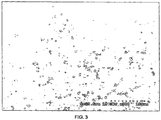
- small particle sodium chloride was distributed over popped popcorn (as an example of seasoned food). Illustrated in FIGS. 3 through 6 , the small particle sodium chloride is evenly and randomly distributed over the popped popcorn surface. The sodium chloride generally adheres to the peaks and the valleys of the popped popcorn surface providing uniform sodium chloride coverage to the whole popped popcorn surface.
- SEM Variable-pressure scanning electron microscopy
- microwave popcorn samples were prepared in duplicate within 7 days of analysis.
- the duplicate samples were popped using a common household-type microwave for 2 1 ⁇ 2 minutes and cooled for 5 minutes.
- Three kernels from each bag were randomly selected and tempered overnight (-18 hr) at 58°C. After tempering, a small portion of each kernel was removed and placed onto a microscope stage. The samples were subsequently observed at 300 ⁇ , 1000 ⁇ , 2000 ⁇ , and 5000 ⁇ magnification. Images were collected in an entirely random manner. Representative images from samples containing salts with different mean particle sizes were then compared. Shown in FIGS. 3 through 6 , the resulting SEM images illustrate that the smaller sodium chloride particles give a more uniform distribution than the larger sodium chloride particles.
- Salt particles on the surface of seasoned and popped popcorn illustrated in FIGS. 3 through 6 were counted for determining salt particle distribution.
- the method for determining the distribution of salt on the surface of the popcorn included counting the number of starch open-cells on each image and counting the number of salt particles on each image.
- the salt particles counted included the white or light colored particles that were clearly separated.
- the number of salt particles was divided by the average number of starch open-cells resulting in a ratio representing the number of salt particles to the number of starch open-cells.
- results indicate that a smaller salt particle size provides a better distribution than a larger salt particle size of the same weight on the surface of popped popcorn.
- a salt mean particle size of 5 microns resulted in approximately 5.19 salt particles per starch open-cell for compared to approximately 0.83 salt particles per starch open-cell for a salt mean particle size of 20 microns.
- the results of the particle count illustrate that a smaller size salt particle gives a better particle distribution for the same weight of salt. The results are shown in Table 1 below.
- Table 1 - Approximate number of salt particles per starch open-cell Salt mean particle size Number of Particles Starch Open-cells Salt Particles/ Starch Open-cells 20 97 115 0.83 15 213 104 1.82 10 256 N/A 2.19 5 607 132 5.19
- Taste tests evaluated the use of smaller size salt particles on popped popcorn (as an example of a seasoned food). The methodology of each taste test is strictly followed to ensure consistent results.
- a panel technician pops the popcorn in a microwave according to established parameters. Immediately after popping, the popcorn is transferred into a large bowl for a 2 minute wait. After that time, the technician scoops popcorn from the main container using a 3.25 ounce translucent polystyrene soufflé cup, filling the cup. The sample portions are immediately presented to the trained panelists. Due to the nature of the sample and its preparation, samples are presented in a sequential monadic manner.
- Each trained panelist selects four popped kernels from the sample portion and is instructed to choose pieces that best represent the sample presented. For example, if the trained panelist's sample is evenly mixed with highly coated yellow pieces and less coated white pieces, the trained panelist would choose 2 yellow & 2 white pieces for evaluation. All four pieces are put into the mouth. The trained panelist evaluates salt impact immediately after putting the pieces into the mouth, defined as within the first two chews, and at the highest point in chewdown, defined as the highest salt impact observed during chewdown.
- the trained panelist is next instructed to collect the sample into a bolus in the center of the mouth and to forcefully expectorate the sample after evaluation. Expectoration is used to ensure that the majority of sample is removed from mouth. Using an individual timer, each trained panelist starts the timer and further evaluates salt impact immediately after expectoration and thirty seconds after expectoration. Each trained panelist records the data using a paper ballot with the evaluation attributes preprinted on the ballot as well as places to record the date, trained panelist number, sample number, and attribute intensities by sample.
- the trained panelists are instructed not to lick their lips during evaluation, to rinse the mouth thoroughly with room temperature spring water after evaluations, and to wipe their lips between evaluations.
- the samples are staggered for evaluation at least five minutes apart.
- the strength of each attribute is rated on a zero to fifteen point intensity scale or salt perception scale with zero being no strength and fifteen being high strength. This scale incorporates the ability to use tenths of a point and has the potential of 150 scale differentiations. If needed, intensities may be rated greater than fifteen using the same scaling criteria.
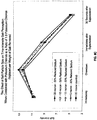
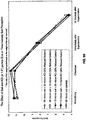
- FIG. 8A illustrates the effect of salt mean particle size on the intensity of salt perception at four different predetermined times.
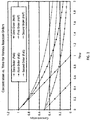
- a control salt is compared to reduced sodium amounts of salt with varying particle sizes according to a panel of trained taste testers. The results show that even with a 30% reduced amount of sodium chloride, the salt intensity is within approximately 2 salt intensity points of the control salt, which represents a full amount of sodium chloride. As is shown in FIG.
- the salt intensity moves closer to the intensity of the control salt when half of the sodium chloride removed is replaced with potassium chloride.
- the salt intensity as measured by a trained taste panel for a reduced salt amount closely resembles that for a control salt when all of the sodium chloride removed is replaced with potassium chloride.
- utilization of a sodium chloride mean particle size less than 20 microns results in a salt perception within two salt intensity points of the control salt.
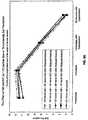
- a smaller particle potassium chloride is generally more effective for maintaining salt perception than larger particle potassium chloride when combined with a reduced amount of sodium chloride.
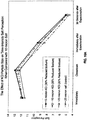
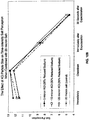
- five micron potassium chloride is generally more effective when combined with ten micron salt, although all sizes of potassium chloride deliver a salt perception within one point of the 20 micron control salt.
- Similar results are shown in FIG. 10B with different mean particle sizes of potassium chloride being combined with 20 micron salt.
- smaller sized particle sodium chloride alone and when combined with varying sizes of potassium chloride, deliver a greater salt perception than sodium chloride with a mean particle size greater than 20 microns.
- potassium chloride was tested for bitterness intensity. Similar to the taste tests previously discussed, the methodology of each taste test utilizing potassium chloride was strictly followed to ensure consistent results. There was no indication in the results of the potassium chloride taste test for bitterness intensity that a reduction in potassium chloride mean particle size affected bitterness intensity.
- seasoning 20 microns or less including sodium chloride, potassium chloride, sea salt, and combinations thereof were tested on consumers. The methodology and results of the test are discussed below.
- N 152.
- Intensity measures A 10-cm line scale was used. Intensity scales measure the degree to which consumers rate products as different or not different in amount or intensity of specific attributes. It does not indicate liking. *KCl amounts defined as the ratio of KCl added/NaCl removed.
- N 102.
- Intensity measures A 10-cm line scale was used. Intensity scales measure the degree to which consumers rate products as different or not different in amount or intensity of specific attributes. It does not indicate liking. *KCl amounts defined as the ratio of KCl added/NaCl removed.
- Intensity measures A 10-cm line scale was used. Intensity scales measure the degree to which consumers rate products as different or not different in amount or intensity of specific attributes. It does not indicate liking. *2:1 10 ⁇ m Sea Salt to 20 ⁇ m Salt ratio
- a seasoning for at least one of flavoring and preserving a food product is described in accordance with exemplary embodiments of the present invention.
- the present invention includes compositions useful in the seasoning arts, food products seasoned in accordance with the compositions of the present invention, and methods for enhancing and potentiating food flavors by utilizing the compositions of the present invention.
- a seasoning consisting essentially of salt having a mean particle size of between five and 20 microns.
- the salt may be particles containing other ingredients, as part of a process of collection or manufacture, such as from mining, evaporation, and the like.
- such salt will include essentially sodium chloride (NaCl) molecules.
- the food product may include seasoned snack foods, such as peanuts, pretzels, popcorn, and potato chips; meat products, such as beef, pork, and poultry; cheese products in liquid, solid, and semi-solid states, and the like.
- the food product is a charge of popcorn kernels disposed within a bag configured for microwave cooking.
- the seasoning may be introduced to the food product before the food product is in a ready to eat state, such as before microwave cooking. Additionally, the seasoning may be introduced after the food product is cooked, much like how table salt (i.e., sodium chloride) is frequently used.
- the overall salt component of the food product may be comprised of any salt fit for human consumption, preferably microfine sodium chloride, or "salt", microfine natural sea salts or sea salt blends, alone or in various combinations with microfine potassium chloride.
- Microfine salt, natural sea salts, or sea salt blends may have a mean particle size between 5 and 20 microns when determined by Malvern Laser Particle Size Analysis, preferably 10 microns.
- the particle size distribution curve may display a d90-value of less than 75 microns, preferably less than 25 microns.
- Potassium chloride may have a mean particle size between 5 and 150 microns when determined by the aforementioned method of analysis, preferably 10 microns.
- the particle size distribution curve may display a d90-value of less than 200 microns, preferably less than 25 microns.
- the overall salt component of the food product may be comprised entirely of microfine salt, microfine natural sea salts, or sea salt blends alone to improve the salty flavor of the food product while reducing the amount of sodium.
- the addition of microfine potassium chloride to the salt component of the food product may complement and improve the desired salty flavor while maintaining a reduction in sodium content.
- Small particle potassium chloride may be a component of the overall salt component at a value of 5% to 75%, by weight, preferably 30 to 40% when a bitter masking agent is included, such as trehalose, neotame, or other ingredients used for this purpose. Higher percentages of potassium chloride may be used when a bitter masking agent is included.
- a bulking agent such as starch, maltodextrin, dextrose, other starch derivatives, or other suitable bulking agents, which will not adversely affect the flavor or organoleptic properties of the salt seasoning component, may be added as needed.
- sea salt is utilized as a seasoning on a food product.
- Sea salt may contain sodium chloride, potassium chloride, magnesium, calcium, sulfates, and/or other constituents.
- Sea salt also includes both natural and manufactured or man-made salt.
- Natural sea salt is generally sea salt procured from seawater utilizing the natural processes of drying and evaporating by the sun and wind and gathered by hand. Manufactured or man-made salt is generally harvested utilizing machinery or produced using other non-natural techniques.
- the taste of sea salt often depends on the source. Sources of sea salt may include Cape Cod, the Cayman Islands, France, Ireland, Italy, and Hawaii, as well as many other locations.
- the flavor, mouthfeel, and color may vary from each source and is advantageous to a consumer base with differing tastes.
- the sea salt has a mean particle size between 5 and 20 microns.
- the present invention is a seasoning for at least one of flavoring and preserving a food product, comprising a first seasoning component including a salt and a second seasoning component selected for at least one of complementing the first seasoning component and reducing the amount of the first seasoning component required for producing a desired flavor of the food product.
- the desired flavor may be a true salty flavor, such as from sodium chloride.
- the first seasoning component and the second seasoning component have a mean particle size of less than 20 microns. In another embodiment, the first seasoning component has mean particle size between five and 20 microns, and the second seasoning component has a mean particle size of greater than or equal to 20 microns.
- the first seasoning component includes at least one of sodium chloride and potassium chloride.
- the first seasoning component is sodium chloride having a mean particle size such that when included with the second seasoning component, the mean particle size of each seasoning is less than 20 microns.
- the food seasoning may further comprise a second seasoning component selected for complementing the taste impact of the first seasoning component and/or reducing the amount of the first seasoning component required for producing the desired taste impact.
- the second seasoning component includes potassium chloride, a bulking agent, and/or a bitterness masking agent.
- the second seasoning component is potassium chloride, which may additionally include a bitterness masking agent commonly used in the art.
- the bitterness masking agent may be any additive commonly used in the art to at least one of mask, inhibit, and mitigate the bitter sensation associated with potassium chloride.
- An exemplary bitterness masking agent is trehalose, as disclosed in U.S. Patent Publication No. 2006/0088649 and U.S. Patent No. 6,159,529 . While only sodium chloride elicits a true salt taste, it is foreseeable that an amount of potassium chloride may be used to complement the flavor of sodium chloride, while reducing the dietary intake of sodium. Because the potassium chloride may impart a bitter flavor to the mixture, however, a bitterness masking agent may be utilized to mitigate this bitter sensation as needed.
- the second seasoning component may include a bulking agent.
- the bulking agent may be utilized to further reduce the amount of the first seasoning component required to impart the desired flavor.
- the bulking agent may comprise starch, maltodextrin, dextrose, other starch derivatives, or other suitable bulking agents which should not adversely affect the flavor and organoleptic properties of the first seasoning component.
- the bulking agent may further be necessary when applied to a surface with moisture for minimizing salt dissociation.
- a first seasoning component is delivered to the product in a non-aqueous suspension.
- the first seasoning component is sodium chloride comprising a mean particle size such that when included in the non-aqueous suspension the mean particle size is less than 20 microns, and the non-aqueous suspension is cooking oil.
- the sodium chloride in the cooking oil may be sprayed onto a food product such as ready-to-eat popcorn or chicken dinners.
- the non-aqueous suspension may include seasoned oil, butter, margarine, and other non-aqueous suspensions as required.
- a non-aqueous suspension is necessary to prevent the sodium chloride from dissolving and becoming less concentrated.
- Non-aqueous suspension may include a cookware release composition suitable for dispensing from an aerosol container.
- a seasoning is be applied to a product using adhesion.
- a coating such as cooking oil, butter, or a non-nutritive oil
- Sodium chloride which is the first seasoning, may then be applied to the coating.
- the sodium chloride with a mean particle size less than 20 microns, may be included in the aerosol spray.
- the sodium chloride may be delivered as a suspension not only in cooking oil, but also in alcohol or some other non-polar solvent.
- One serving amount of sodium chloride from a salt shaker may contain approximately 1500 to 2000 mg of sodium chloride, while one serving amount of a sodium chloride suspension applied as an aerosol may contain approximately 300 to 400 mg of sodium chloride. It is necessary that the coating be non-aqueous so that the sodium chloride does not dissociate. Dissociation of the sodium chloride reduces the seasoning concentration, which in turn reduces the flavor impact. If sodium chloride is applied to a food with an aqueous surface, soy oil, maltodextrin, or other seasonings or ingredients may be utilized to prevent the sodium chloride from dissociating.
- a seasoning of salt having a mean particle size less than 20 microns, is surrounded, or encapsulated, by a non-aqueous coating.
- a particle of sodium chloride less than 20 microns may be encapsulated by cooking oil or fat.
- the layer of cooking oil or fat prevents the salt from dissociating and preserves the concentration of the salt particle as a tastant. During consumption, the oil or fat layer is ruptured and the salt is available for use.
- the first seasoning component is deposited at least partially around the second seasoning component.
- Deposition may occur via high shear granulation; fluid bed coating; spray drying; coacervation; physical vapor deposition, including plasma deposition and sputtering; chemical vapor deposition; or another suitable deposition technique.
- the second seasoning component may be fully encapsulated by the first seasoning component, or in the alternative, only a portion of the second seasoning component surface area is covered by the first seasoning component.
- starch may act as a core component upon which sodium chloride is deposited. While sodium chloride is located around the perimeter of the seasoning particle, saliva may quickly dissolve the salt into solution so that it may be tasted.
- starch comprises the core of the seasoning particle in this embodiment, less sodium chloride is ingested per seasoning particle compared to a seasoning particle solely comprised of sodium chloride. Even though the core may not impart a salty flavor, the rapid dissolution of the salt may result in a relatively high perceived salt taste.
- starch and sodium chloride may be admixed or agglomerated into a discrete particle. In this manner, the saltiness perception may be lengthened or extended due to a separation of sodium chloride units by the starch. Rather than a rapid dissolution, the sodium chloride may be dissolved upon agglomeration or admixture break-up, resulting in a lengthened dissolution process and a longer lasting sodium chloride taste.
- sodium chloride less than 20 microns in size acts as the core component while cooking oil or fat is deposited on the surface of the sodium chloride. This is useful when the seasoning is to be deposited on an aqueous or partial aqueous surface.
- the cooking oil or fat layer on the perimeter of the sodium chloride may prevent the sodium chloride from dissociating on the aqueous surface and in turn maintaining the concentration of the seasoning, which acts as a flavor potentiator and enhancer.
- the outer perimeter may be ruptured during the chewing process and the sodium chloride may be available to the taste buds in concentrated form for flavor potentiation and enhancement.
- cooking oil is deposited on the surface of a sodium chloride particle, and dispersed on a meat product, which has an aqueous layer on its surface upon which the cooking oil or fat layer prevents the sodium chloride from dissociating. Because the sodium chloride does not dissociate and remains more concentrated, the flavor of the turkey is potentiated and enhanced and the same flavor impact requires less sodium chloride.
- sodium chloride particle structures other than a cubic crystal lattice may be utilized in the present invention.
- dendritic salt or salt produced from the Alberger process may be used.
- Dendritic salt may be produced in vacuum pans from chemically purified brine to which a crystal modifying agent is added.
- the resultant crystals are porous, star-shaped modified cubes. This structure ensures an even greater solvent exposed area, and thus better solubility than regular cubic crystalline structure.
- the Alberger process produces salt through mechanical evaporation and may use an open evaporating pan and steam energy.
- the resultant crystals are stairstep-like flakes with very low bulk density. This structure increases the solvent exposed area, and thus, has better solubility characteristics than regular cubic crystalline structure.
- the salt utilized may be obtained from direct mining, solar evaporation of natural brines, and mechanical evaporation of artificial brines. Mechanical evaporation may occur in vacuum or in open-pan crystallizers.
- the charge of seasoning may include sodium chloride and/or potassium chloride.
- the charge of seasoning is sodium chloride with a mean particle size of less than 20 microns.
- the charge of seasoning may include sodium chloride, potassium chloride, and a bitterness masking agent, the combination of which may consist of mean particle sizes less than 20 microns.
- the charge of seasoning may include a bulking agent, such as starch or a starch derivative, to further decrease the amount of dietary sodium in the microwave popcorn product.
- the charge of seasoning may comprise an admixture, core and coating, agglomeration, or other configuration of particles.
- seasoning may include sodium chloride and/or potassium chloride containing salts, such as sea salts (e.g., natural or manufactured sea salts) and other variously flavored salts and flavorings.
- a seasoning of salt having a mean particle size less than 20 microns, is surrounded, or encapsulated, by a non-aqueous coating.
- a particle of sodium chloride less than 20 microns may be encapsulated by cooking oil or fat.
- the layer of cooking oil or fat prevents the salt from dissociating and preserves the concentration of the salt particle as a tastant. During consumption, the oil or fat layer is ruptured and the salt is available for use.
- a seasoning including salt having a mean particle size less than 20 microns, is delivered to a food product by a vacuum brine system.
- a vacuum brine system For example, sunflower seeds may be placed in a container that suctions out the air. A suspension of sodium chloride particles less than 20 microns in a non-aqueous material is introduced into the container with the seeds. The vacuum causes the salt suspension to enter the shell and season the sunflower seed.
- a microwave popcorn product in an additional embodiment, includes a charge of popcorn kernels, a charge of seasoning for flavoring the charge of popcorn kernels, and a bag for containing the charge of popcorn kernels and the charge of seasoning, wherein the charge of seasoning has a mean particle size of less than 20 microns.
- the microwave popcorn product also may include an edible oil, fat, or adhesive configured to adhere the charge of seasoning to the charge of popcorn kernels. Additionally, the edible oil or fat may cover popped popcorn kernels such that the charge of seasoning adheres to the popcorn during microwave cooking. Alternatively, the charge of seasoning may be deposited onto the charge of popcorn kernels prior to microwave cooking. Deposition of the charge of seasoning may replace the need for an adhesive prior to microwave cooking, since deposition methods result in direct adherence of the charge of seasoning to the charge of popcorn kernels.
- a seasoning of sodium chloride having a mean particle size greater than or equal to 5 microns and less than or equal to twenty microns, is utilized for seasoning a popcorn product that is 94% fat free.
- the seasoning may further include potassium chloride, bitterness maskers, bulking agents, and flavorings and colorings as required.
- the seasoning of sodium chloride may be utilized on other fat free or reduced fat products as required, including microwave popcorn.
- the range of reduced fat may be significantly lower than 94%, such as 50%, without departing from the scope and spirit of the invention.
- the charge of seasoning discussed in the previous paragraph may include sodium chloride and/or potassium chloride.
- the charge of seasoning is sodium chloride with a mean particle size of less than 20 microns.
- the charge of seasoning includes sodium chloride, potassium chloride, and a bitterness masking agent with the sodium chloride having a mean particle size less than 20 microns.
- the charge of seasoning may include a bulking agent, such as starch or a starch derivative, to further decrease the amount of sodium in the microwave popcorn product.
- the charge of seasoning may comprise an admixture, core and coating, agglomeration, or other configuration of particles.
- seasoning may include sodium chloride and/or potassium chloride combined with other salts, such as natural or manufactured sea salts and other variously flavored salts and flavorings.
- the microwave popcorn charge of seasoning comprises a water/oil emulsion.
- the seasoning may be included as a component of a stable water/oil emulsion, and upon heating in a microwave oven or similar cooking device, the water at least partially vaporizes.
- a sodium chloride saline solution is emulsified with a cooking oil commonly used in the art, such as palm oil, for example.
- a cooking oil commonly used in the art, such as palm oil, for example.
- sodium chloride is deposited onto both popped and unpopped popcorn kernels via the steam.
- the cooking oil may provide adequate adhesion characteristics to the kernels for deposition of the seasoning.
- sodium chloride having a mean particle size less than 20 microns, is emulsified with a cooking oil and applied as an aerosol to a final food product such as pizza crust, french fries, ready-to-eat popcorn and the like.
- a microwaveable popcorn product is seasoned utilizing seasoning with a mean particle size less than 20 microns.
- the product includes a closed microwave popcorn package, such as a tub or bag. Unpopped popcorn kernels and a slurry are placed inside the package.
- the term "slurry" as used herein, unless otherwise stated, is meant to describe all food components included within the package not including the unpopped popcorn kernels.
- a typical component in a microwave popcorn slurry is an oil/fat material.
- the oil/fat material generally has a melting point (Mettler drop point) of at least 90°F (32°C) and preferably not greater than 145°F (62.8°C).
- the Mettler drop point for the oil/fat material is at least 95°F (35°C) and preferably not greater than 140°F (60°C).
- the Mettler drop point is within the range of 100° - 135°F (37.8° - 57.2°C), often at least 110°F.
- Current preferred oil/fat materials often have Mettler drop points between 110° F - 135°F (43.3° 57.2°C).
- the slurry may include a variety of materials in addition to the oil/fat material. It may include salt, sweetener, various flavorants, antioxidants, lecithin and/or coloring.
- the oil component is preferably in the form of a slurry at elevated temperatures, e.g., around 120°C and generally in a solid form at room temperature.
- Oils suitable for use in the present invention include partially hydrogenated oils, such vegetable oil, sunflower oil, safflower oil, rapeseed oil, low erucic acid rapeseed oil, cottonseed oil, maize oil, linseed oil, varieties of high oleic acid residue, groundnut oil, and/or other mixtures.
- the oil component enhances the flavor of the microwaved popcorn product.
- the oil component may include an artificial sweetener.
- a particularly preferred composition for the oil component comprises partially hydrogenated soybean oil, salt, color, butter flavor and sucralose.
- the oil/fat material may comprise a mixture of oil/fat components, having the overall Mettler drop points discussed above.
- the oil/fat material may include a first oil/fat component comprising at least 32% by weight of the oil/fat material, typically at least 80% by weight of the oil/fat material and usually at least 90% by weight of the oil/fat material.
- the first oil/fat component may be present within the microwaveable popcorn package at least 3% by weight of the unpopped popcorn kernels, more preferably at least 8% by weight of the unpopped popcorn kernels and typically and preferably at least 10% by weight of the unpopped popcorn kernels.
- Typical applications will involve use of the first oil/fat component in the slurry at a level corresponding to 20%-70% by weight of the unpopped popcorn kernels.
- the oil component may further include a flavoring agent and/or a coloring agent.
- Suitable flavoring agents may include natural and artificial flavors, such as synthetic flavor oils and flavoring aromatics and/or oils, oleoresins and extracts derived from plants, leaves, flowers, fruits, and so forth, and combinations thereof.
- Particularly useful flavorings include artificial, natural and synthetic fruit flavors such as vanilla, citrus oils including lemon, orange, lime, grapefruit, and fruit essences including apple, pear, peach, grape, strawberry, raspberry, cherry, plum, pineapple, and apricot.
- the flavoring agents may be in liquid or solid form.
- Commonly used flavors include mints such as peppermint, menthol, artificial vanilla, cinnamon derivatives, and various fruit favors.
- aldehyde flavorings such as acetaldehyde (apple), benzaldehyde (cherry, almond), anisic aldehyde (licorice, anise), cinnamic aldehyde (cinnamon), citral, i.e., alpha-citral (lemon, lime), neral, i.e., beta-citral (lemon, lime), decanal (orange, lemon), ethyl vanillin (vanilla, cream), heliotrope, i.e., piperonal (vanilla, cream), vanillin (vanilla, cream), alpha-amyl cinnamaldehyde (spicy fruity flavors), butyraldehyde (butter, cheese), valeraldehyde (butter, cheese), citronellal (modifies, many types), decanal (citrus fruits), aldehyde C-8 (cit
- flavoring agents include butter, brown sugar, caramel, cooked milk, maple, vanilla, cream, pastry, marshmallow, cheese, cinnamon, and honey.
- suitable flavoring agents are described in S. Arctander, Perfume and Flavor Chemicals (1969 ) and Allure Publishing Corporation's Flavor and Fragrance Materials (1993).
- the amount of flavoring agent used should be in an amount effective to provide the desired or acceptable taste to the consumer.
- Coloring agents may be included in an amount up to about 10% by weight, preferably no more than about 6% by weight, of the microwaveable popcorn composition.
- Suitable coloring agents may include natural food colors and dyes suitable for food, drug and cosmetic applications, which are preferably oil-dispersible, including the indigoid dye known as F.D. & C. Blue No. 2, the disodium salt of 5,5-indigotindisulfonic acid), and the dye known as F.D. & C. Green No.
- the oil component preferably also includes salt.
- Any suitable type of salt can be used, including coarse, fine, extra fine salt, and salt less than 20 microns in size.
- the salt is preferably present in an amount up to about 10%, more preferably from about 0.5% to about 6% by weight, based on the total weight of the composition.
- the precise amount of salt used may depend on the presence, size and shape of the susceptor, and amount of sugar utilized in the packaging, discussed further below.
- the three general types of oil/fat components are described as usable for the first oil/fat component referenced in the previous paragraphs.
- the three general types are: certain types of oil blends including an interesterified oil component; selected physical melt blends of oils, typically with an emulsifier; and, selected physical palm oil melt blends.
- the general objective is to develop a relatively stable first oil/fat material with respect to problematic levels of undesirable flow (wicking) within the microwaveable popcorn package or undesirable levels of flow from the microwaveable popcorn package despite the fact the first oil/fat material includes a substantial amount of an oil component with the characteristic of being relatively flowable or pourable under typical conditions of storage, such as room temperature.
- Low trans oils are typically liquid at room temperature, possibly with some solid content. If the low trans oils are not modified, the oils will tend to wick undesirably from the package during storage.
- the first oil/fat component includes an interesterified oil/fat material
- it is generally an oil/fat resulting from an interesterification of a mixture including a first stearine component and an oil having a saturated fat content no greater than 50% and a Mettler drop point no greater than 110°F (43.3°C), typically no greater than 100°F (37.8°C).
- this oil/fat resulting from interesterification comprises the result of interesterification of a mixture including at least 5%, and not more than 50% by weight, of a) the first stearine component, typically having a Mettler drop point of at least 130°F (54.4°C) and not greater than 170°F (76.7°C), usually not greater than 165°F (73.9°C), and b) an oil component having a saturated fat content no greater than 40% and a Mettler drop point no greater than 100°F (37.8°C).
- the oil used in interesterification has a saturated fat content no greater than 35% and a Mettler drop point no greater than 90°F (32°C).
- the oil used in the interesterification will be one which has a Mettler drop point of no greater than 70°F (21 °C).
- the component resulting from interesterification comprises at least 10% and not more than 40% by weight of a first stearine component, and b) the oil component as defined.
- the blend subjected to interesterification comprises 15% to 30% by weight stearine.
- the component resulting from interesterification preferably the first stearine component, may be soybean stearine, cottonseed stearine, corn stearine, palm stearine and various mixtures of the components.
- the component is soybean stearine.
- the interesterification process may be a directed interesterification.
- the first oil/fat component may be a result of an interesterification of a mixture of a non-hydrogenated oil and stearine component.
- Various techniques for interesterification both chemical and enzymatic, are known and may be utilized in microwave popcorn applications. There is no preference with respect to whether a chemical or enzymatic interesterification is used in the preferred embodiments discussed above.
- Interesterification is a reaction that involves the exchange of acyl groups among triglycerides.
- the reaction may include the interchange of acyl groups between a fatty acid and a triacylglycerol (acidolysis), an alcohol and triacylglycerol (alcoholysis), and an ester with another ester, referred to as interesterification, ester interchange, proper esterification, rearrangement, or transesterification.
- fatty acids are rearranged both within triacylglycerol molecules (intramolecular) and between different molecules (intermolecular).
- the reaction is performed in order to modify the functional properties of lipids and not the specific fatty acids. Only the positions of fatty acid groups are changed, not their properties.
- Unsaturation levels remain the same and there is no cis-trans isomerization, such as that in hydrogenation.
- Interesterification may be used to change the physical melting and crystallization properties of lipids. The final resulting properties are dependent on the composition of the starting materials.
- Interesterification may be performed using either a chemical or enzymatic catalyst.
- Alkaline catalysts such as sodium methoxide, are generally preferred for chemical interesterification.
- Lipases are used as the catalyst for enzymatic interesterification. Lipases vary in their specificity. They may be specific according to the following: substrate, fatty acid, positional esters, and stereospecific (for example, random and sn-1,3specific). Most lipases preferentially hydrolyze at the 1- and 3-positions on the triglyceride, although some may react at all three positions.
- An example of an industrial application of this process is used in providing the NovaLipidTM line of oils supplied by Archer Daniels Midland (ADM), Decatur, IL, in which an immobilized 1,3-specific lipase from Thermoces languinosus , named Lipozyme TL IM (Novozyme A/M Bagsvaerd, Denmark), is used as the catalyst (Reference: Cowan, D and TL Husum, Enzymatic Interesterification: Process Advantage and Product Benefits, Inform, March 2004, Vol 15(3), p. 150-151 ).
- an interesterified oil consistent with the parameters defined herein may be obtained by order from a food oil supplier such as ADM.
- the oil component from which the interesterified oil is formed has a saturated fat content no greater than 50% (typically no greater than 40% and usually no greater than 30%), and b) a Mettler drop point of no greater than 110°F (43.3°C), typically no greater than 100°F (37.7°C), and usually no greater than 90°F (32°C).
- the oil component is typically and preferably selected from the group consisting essentially of soybean oil, canola oil, sunflower oil, corn oil, rapeseed oil, cottonseed oil, mid-oleic sunflower oil, safflower oil, one of the identified oils partially hydrogenated, or mixtures of one or more of the identified oils and/or one or more of the identified partially hydrogenated oils.
- any partially hydrogenated oil that is used has an iodine value of at least 90.
- this oil component for use in interesterification, comprises soybean oil that has not been hydrogenated at all or which has an iodine value of at least 110, typically within the range of 120-145.
- the first oil/fat component of the oil/fat in the slurry may comprise 100% of the result of the interesterification.
- the first oil/fat component will comprise a mixture of the result of the interesterification and a second stearine component.
- this type of mixture or blend is used as the first oil/fat component, preferably it is made with at least 1%, typically at least 2% and usually no more than 10% by weight of the second stearine component.
- no more than 5% by weight of the second stearine is used, while the remainder comprises the result of the interesterification.
- the second stearine typically has a Mettler drop point of at least 130°F (54.4°C) and typically not greater than 170° F (76.7°C).
- the Mettler drop point is no greater than 165°F (73.9°C).
- the second stearine is typically selected from the group consisting essentially of cottonseed stearine, soybean stearine, corn stearine, palm stearine, or mixtures thereof, usually soybean stearine.
- the first stearine component and the second stearine component may be independently selected.
- the same stearine may be used for both components if desired.
- the interesterified blends generally result in a microwave popcorn product including an oil/fat material with a relatively low trans content.
- the low trans content is a result of the oil/fat material being developed from oil material low in trans content, yet showing a melting point profile or Mettler drop point profile more acceptable for incorporation in package microwave popcorn products on a substantial basis with respect to storage stability and heat characteristics.
- the first oil/fat material is a physical oil blend, it is often a result of melt blending, with an overall saturated fat content no greater than 50%, preferably no greater than 44% and most preferably no greater than 38%, and an overall Mettler drop point no greater than 145°F (62.8°C), more preferably no greater than 140°F (60°C), and most preferably no greater than 135°F (57.2°C).
- the physical oil blends typically result from melt blending a liquid oil component and a solid fat component.
- the Mettler drop point of the blend is at least 100°F, usually at least 110°F (43.3°C), and often 115°F (46.1 °C) or more.
- a Mettler drop point of 125°-135°F (51.7°-57.2°C) may be obtained by melt blending corn oil (85% by wt.), soybean stearine (10% by wt.), and mono-glycerides (5% by wt.).
- the liquid oil component generally possesses liquid properties at room temperature. For example, it is pourable at room temperature (70° F for 21.1 °C). Oils which meet this definition typically have either a solid fat content ("SFC") no greater than 30% at 70°F (21.1 °F) and/or a Mettler drop point of no greater than 90°F. Although palm oil (palm fruit oil) does not necessarily meet both of these criteria, other liquid oils may.
- the liquid oil component generally has a Mettler drop point no greater than 106°F (41.1 °C), typically no greater than 90°F (32.2°C), and often a Mettler drop point of (70° F or 21.1 °C) or below.
- the solid fat component usually exhibits the properties of a solid at room temperature.
- the solid fat component typically has a Mettler drop point of at least 130°F (54.4°C) and not more than 170°F (76.7°C). Usually it has a Mettler drop point no more than 165°F (73.9°C).
- the liquid oil component is often selected from the group consisting essentially of soybean oil, canola oil, sunflower oil, corn oil, rapeseed oil, cottonseed oil, safflower oil, partially hydrogenated oils, mixtures of one or more of the identified oils, mixtures of one or more of the partially hydrogenated oils, mixtures of one or more of the identified oils and/or identified hydrogenated oils, and/or mixtures of one or more of the identified oils and/or hydrogenated oil, optionally including up to 49%, by weight palm oil, sometimes called palm fruit oil.
- the liquid oil component may contain up to 49%, by weight palm oil, although in some instances it may be preferred to include no palm oil for nutritional reasons.
- the oil component preferably has an iodine value of at least 90.
- the oil component includes an oil which contains less than 3% linolenic, such as cottonseed and/or corn oil that has not been hydrogenated, or which has an iodine value of at least 110, typically within the range of 120-145.
- the solid fat component may be soybean stearine, cottonseed stearine, corn stearine, palm stearine, hydrogenated palm stearine, hydrogenated palm fruit oil, and mixtures thereof.
- the solid fat component is often soybean stearine.
- the melt blend will further include an additional mouth feel adjuvant for providing assistance with wicking control or flow of the liquid oil component and helping improve mouth feel of the resulting product.
- Materials for operating as adjuvants typically include materials solid at room temperature that may be melt blended.
- the adjuvant material is not a triglyceride.
- Edible materials marketed as emulsifiers are often useable despite the fact they are not selected, at least with respect to the steps of melt blending, for their characteristics as emulsifiers. When present, this adjuvant is typically present at a level sufficient to provide an effective amount of improvement in mouth feel relative to its absence in the composition.
- this amount will be on the order of at least 0.5% by weight of the liquid oil component, solid fat component, and mouth feel adjuvant together in the melt blend.
- this adjuvant will be present no more than 7% by weight of the melt blend (oil, solid fat component, and adjuvant component for improvement of mouth feel).
- a typical amount may be on the order of 1%-6% by weight.
- the mouth feel adjuvant is typically and preferably mono-glycerides, di-glycerides, mixtures of mono and di-glycerides, polyglycerol esters of fatty acids, partially hydrogenated monoglycerides, propyleneglycol esters of fatty acids, and mixtures thereof.
- mixtures of fully hydrogenated mono-glycerides usually sold as emulsifiers, may be used.
- this type of mixture is melt blended for use in a packaged microwaveable popcorn product as the first oil/fat component, it is preferably made with at least 80% and no more than 95% by weight of the liquid oil component, at least 5% and no more than 15% by weight of the solid fat component, and, if present, 0.5% - 7% by weight mouth feel adjuvant.
- Selected palm oils blends may be utilized for providing satisfactory performance with respect to wicking characteristics in packaged microwave popcorn products. Palm oil blends are often higher in saturated fat than the other physical oil blends. If the first oil/fat component is a palm oil blend, it is often a palm oil blend having a saturated fat content no greater than 60% (preferably no greater than 55 % and most preferably no greater than 53%), and a Mettler drop point of at least 100°F (37.8°C), typically at least 110° F (43.3°C) and no greater than 125°F (51.7°C), typically no greater than 120°F (48.9°C) and often no greater than 118°F (47.8°C).
- the palm oil blend is often a melt blend of a first liquid palm oil component with a Mettler drop point no greater than 106°F (41.1°C) and a second solid palm oil/fat component having a Mettler drop point of at least 120°F (48.9°C), typically at least 130°F (54.4°C), and usually not greater than 145°F (62.8°C).
- the second, solid, palm oil/fat component is often selected from palm stearine, fractionated palm stearine, hydrogenated palm oil, or mixtures thereof.
- the second solid palm oil/fat component is typically palm stearine.
- the first liquid palm oil component typically is selected from palm fruit oil (sometimes refered to as palm oil), palm olein, and mixtures thereof. Typically it comprises palm fruit oil.
- An oil/fat component made with palm oil is preferably made with at least 10% and no more than 60% by weight of the second solid palm oil/fat component, more preferably at least 15% and no more than 50% by weight, with the remainder 40% to 90%, typically 50%-85% by weight comprising the first liquid palm oil component as defined.
- the typical preferred melt blends of the second solid palm oil/fat component and first liquid palm oil component may yield a Mettler Drop Point of between 110°F (43.3°C) to 120°F (48.9°C) with a saturated fat level between 60% and 50%.
- the oil/fat material of the oil/fat slurry may comprise 100% of the first oil/fat component without regard to which of the above three types of oil/fat materials is used. It may be advantageous in certain applications for the oil/fat material of the oil/fat slurry to include at least 80% by weight of the first oil/fat component as defined, more preferably at least 95% by weight of the first oil/fat component, and most preferably at least 99% of the first oil/fat component, as defined.
- the first oil/fat component in the form of a material having low saturated fat content.
- the material may typically be chosen from the interesterified oil blends and physical oil blends discussed earlier and not the palm oil blends or blends including liquid palm oil.
- the oil/fat material may include an effective amount of anti-oxidant when made or when blended into a slurry for inclusion of microwave popcorn packaging.
- a typical antioxidant may be TBHQ (tert-butyl hydroxy quinone) utilized at 200 ppm.
- TBHQ is available in tenox 20 from Amerol, Farmingdale, New York 11735.
- Various alternatives are possible, such as mixed tocopherols.
- Preferred nutritional compositions may be formulated with respect to selection of an oil/fat component in a microwaveable popcorn composition slurry. Even though the overall microwave popcorn slurry typically contains at least 10% by weight oil/fat material, the total trans fatty acid presence may be no greater than 5% by weight of the oil/fat component. Preferred oil/fat components that meet this definition may be utilized in amounts allowing less than 0.5 grams of trans fatty acids per popcorn serving, even when used in amounts on the order of at least about 32 grams (per package in a microwave popcorn product) and with at least 60 grams of unpopped popcorn kernels in the package.
- compositions may provide for low total saturated fat content.
- a total saturated fat content may be obtained with no greater than 40%, preferably no greater than 35%, based on total oil/fat weight in the popcorn composition when evaluated by GLC analysis, even though the composition includes stearine/fully hydrogenated oil.
- Some compositions may be achieved with saturated fat content no greater than 14%, and preferably no greater than 12%, based on total food product composition, and a saturated fat content no more than 5 grams per serving, preferably no more than 4 grams per serving. This may be accomplished by selecting the first oil/fat component from either the interesterified blend or the physical oil blends discussed above. When one of the physical oil blends is utilized, it may be preferable to avoid those that may include palm oil above a minimal level.
- the saturated fat content may be higher. If palm oil blends are utilized, the methods and principles discussed above may be used to provide a total saturated fat content no greater than 60% and preferably no greater than 55% based on total oil/fat weight in the popcorn composition when evaluated by GLC analysis. Utilizing the palm oil blends, a saturated fat content no more than 19%, preferably no greater than 17%, based on total food product composition and a saturated fat content no greater than 7 grams per serving, typically no greater than 6 grams per serving may be achieved.
- compositions may be formulated to have acceptable and desirable mouth feel characteristics for a typical consumer. Mouthfeel typically relates to such factors as the melting point range and the highest melting or softening point.
- the first oil/fat component may formulated to possess a Mettler drop point (melting point) within the range of 110°F - 145°F (43.3° - 62.8°C), typically 115°F - 135°F (46.1 - 57.2°C), while at the same time imparting an acceptably low level of mouthcoat.
- Mouthfeel refers to the texture of food sensed by the mouth during consumption of a food item. Mouthfeel is an important characteristic in determining consumer acceptance of a food item. Mouthfeel may encompass many characteristics such as crispness, hardness, graininess and mouthcoat.
- Mouthcoat refers to the food residue left on the surfaces of the mouth, especially the roof of the mouth and the tongue. Certain aspects of mouthcoat include the perceived amount of residue (i.e. a thick or thin layer), the texture of residue (i.e. slippery, waxy, and/or sticky), and the duration of residue (whether it quickly disappears or lingers). Consumption of microwave popcorn may leave a mouthcoat often due in large part to the slurry component of the microwave popcorn. Oil is often a major component in the slurry and may impact the mouthfeel. For example, a pure liquid oil or an oil system containing emulsifiers often leaves a slippery mouthfeel. Oil with a melt point above body temperature often leaves a waxy mouthfeel. A waxy mouthfeel is often considered an undesirable characteristic of microwave popcorn.
- slurry in a microwave popcorn bag may be formulated to less likely exhibit undesirable levels of wicking through popcorn packaging at typical handling storage temperatures than liquid oils.
- compositions of microwave popcorn may be used in a variety of popcorn bags found in prior art, such as those constructed using fluorocarbon treated paper. Examples of useable constructions are described in U.S. patents 5,044,777 ; 5,081,330 ; 6,049,072 ; 5,195,829 ; and 6,396,036 , all incorporated herein by reference.
- the compositions can also be incorporated into tub products, such as those described in U.S. patents 5,008,024 ; 5,097,107 ; and 5,834,046 .
- compositions may be used in recently developed packaging. Examples include those described in U.S. provisional application 60/544,873, filed February 13, 2004 ; U.S. Provisional application 60/588,713, filed July 15, 2004 ; U.S. Provisional application 60/647,637, filed January 26, 2005 ; PCT US 05/04249, filed February 11, 2005 ; and U.S. Provisional application 60/574,703, filed May 25, 2004 , filed as PCT US 05/08257, filed March 11, 2015 .
- the first oil/fat component is a physical oil blend as described above, it is typically produced by physically blending fully melted components, such as a liquid oil component, a solid fat component, and, if present, an emulsifier, as previously defined.
- the first oil/fat component is a palm oil blend, it is typically prepared by blending the fully melted whole or fractionated palm oils together, without an emulsifier.
- the term "palm fruit oil” may refer to the whole or non-fractionated oil derived from the palm fruit. Fractionation is a physical process that separates oil based on melting point.
- the lower melting point fraction is commonly referred to as the olein fraction while the higher melting point fraction is commonly referred to as the stearine fraction.
- the olein fraction has a lower saturated fat content than the stearine fraction.
- Microwave popcorn compositions contained in bags generally involve a collapsed package having a microwave interactive sheet or susceptor with a microwaveable popcorn charge positioned in a covering relation or thermoconductive relation to the microwave interactive construction or susceptor.
- the package is generally folded into a tri-fold configuration during storage and prior to use.
- the tri-fold is typically positioned in a moisture barrier overwrap to enhance shelf life.
- the microwave popcorn charge may often include at least 50 grams of unpopped popcorn kernels and at least 20 grams of oil/fat, typically having a melting point (Mettler drop point) of at least 100°F (37.8°C), usually at least 110°F (43.3°C) and typically under 145°F (62.8°C), usually under 135° F (57.2°C).
- the popcorn charge contains at least 60 grams of unpopped popcorn kernels and at least 25 grams (in non-light oil products) of oil/fat.
- the microwave package includes a susceptor for enhancing the popping of the kernels.
- the packaging containing the susceptor often reaches temperatures in excess of 300°F.
- the microwave susceptor is positioned between two plies of the bag on the bag's bottom surface.
- the susceptor is preferably provided in a location over which the unpopped corn kernels rest when the bag arrangement is unfolded and placed in a microwave oven for cooking.
- the susceptor may comprise any of a variety of microwave interactive materials including a thin layer of metal, such as vapor deposited metal, metal oxide, carbon and similar materials.
- the susceptor may be applied directly to the interior of the bag, preferably between the two plies, or may be supported on a sheet of paper or plastic that is subsequently bonded to the packaging.
- the susceptor preferably comprises a metallized polymeric film, such as Hoechst Celanise polyester film (typically 48-92 gauge) vacuum metallized with aluminum to give a density of 0.2-0.3 as measured by a Tobias densitometer.
- the microwave popcorn products of the invention may be quickly and conveniently prepared by the consumer in a single step.
- the consumer may remove any cellophane overwrap from the microwaveable bag and may place the bag in the microwave oven with the bottom surface of the bag resting on the inner surface of the microwave oven.
- initially only the bottom surface of the middle region may rest on the surface of the microwave oven.
- Suitable microwaving times for the products of the invention range from about 1.5 minutes to about 4 minutes, and may vary based on a number of variables, including the power of the microwave being used and the presence and size of the susceptor in the microwaveable container.
- microwave popcorn formulations may be found in U.S. application 10/475,284, PCT filed on March 29, 2002 , and U.S. publication number 2005 023233 .
- Salt may be added to a bag of microwave popcorn in a slurry comprising oil, fat, salt, flavorings, and/or other ingredients.
- the microwave bags may have an unsealed open end and are advanced to a first kernel popcorn filling station. The open end of the microwave bag is charged with the desired amount of popcorn kernels. Subsequently, the bags are advanced to a second filling station where the fat/salt slurry is added to the bag. Often, the slurry is added in the form of a vertically dispensed pencil jet for confining the slurry stream, such as in U.S. Pat. No. 4,604,854, issued Aug. 12, 1986 .
- a seasoning having a mean particle size less than twenty microns is utilized on potato food products.
- the potato food products may include french fries, potato chips, and other similar potato derivatives.
- the potato food products may be baked, fried, or cooked utilizing other methods.
- Potato chips or french fries may be prepared utilizing a variety of methods.
- the initial step is generally prepared by initially slicing or cutting the potato into the desired shape. Shapes may include simple slicing, such as for a potato chip, or batons, as in the case for French fries.
- the potato pieces are generally cooked utilizing various frying or baking methods. Subsequent to cooking, the potato may be seasoned with various seasonings, including sodium chloride having a mean particle size less than 20 microns.
- a seasoning having a mean particle size less than 20 microns is utilized for seasoning pretzels.
- a pretzel may be a baked snack formed into a twisted shape, a straight stick, or various other shapes and sizes.
- the pretzel may be hard or soft.
- An explanation of a method for making pretzels is U.S. Pat. No. 5,955,118 , entitled "Apparatus and Method for Manufacturing Twisted Pretzels.
- the popcorn used in the following examples may be hulled or dehulled, flavored or colored, and/or any size kernel with an internal moisture level of 12-14.5 %.
- the oil used in the following examples may be primarily tri-fatty acid esters of glycerol. Fat is a natural lipid material that is generally solid at room temperature. The oil used is similar to fat but is liquid at room temperature. The term “oil/fat” is meant to refer to oils, natural or modified fats, and/or any semi-solid mixtures at room temperature.
- Suitable flavoring agents may include natural, artificial, and synthetic flavors, such as synthetic flavor oils, aromatic flavorings and/or oils, oleoresins and extracts derived from plants, leaves, flowers, fruits, nuts, and so forth.
- suitable flavorings agents may be found in Arctander, S., Perfume and Flavor Chemicals (Aroma Chemicals), Montclair, NJ, 1969 , and Allured's Flavor and Fragrance Materials, Carol Stream, IL, 1993 .
- Coloring agents may be included in an amount up to 3% by weight, but preferably no more than 1% of the microwave popcorn composition. Suitable coloring agents may further include natural food colors and dyes suitable for food, drug, and cosmetic applications, which are preferably oil dispersible and/or soluble.
- Table 5 Orville Redenbacher's® Smart Pop! Gourmet®, Butter Ingredient Typical wt.% Low fat or Light fat Wt.% in preferred composition
- Low fat or Light fat Example (grams per bag) Low fat or Light fat Unpopped popcorn 75-90 80-88 67.8 Oil/fat 7-15 9-13 10.5 NaCl 0.5-3 1-2.5 1.53 KCl 0-2 0.5-1.5 0.81 Flavor .05-3 0.05-3 0.28 Color .01-2 0.01-2 0.04
- Table 6 Orville Redenbacher's® Light Gourmet®, Butter Ingredient Typical wt.% Ultra low fat Wt.% I preferred composition Ultra low fat Example (grams per bag) Ultra low fat Unpopped popcorn 93-97 93-95 76.3 Oil/fat 1.5-4 1.5-3 2.13 NaCl 0.5-3 1-2.5 1.39 KCl 0-2 0.5-1.5 0.74
- Table 7 Table 7:
- Table 9 Orville Redenbacher's® Smart Pop! Gourmet®, Butter Ingredient Typical Wt.% Low fat or light fat Wt.% in preferred composition Low fat or light fat Example (grams per bag) Low fat or light fat Unpopped Popcorn 75-90 80-88 67.8 Oil/Fat 7-15 9-13 10.5 Sea Salt 1-6 1-2 1.5 Salt 0-3 0.25-1.5 0.75 Flavor 0.05-0.3 0.05-3 0.28 Color 0.01-2 0.01-2 0.04 Table 10: Orville Redenbacher's® Light Gourmet®, Butter Ingredient Typical Wt.% Ultra low fat Wt.% in preferred composition Ultra low fat Example (grams per bag) Ultra low fat Unpopped Popcorn 93-97 93-95 76.3 Oil/Fat 1.5-4 1.5-3 2.13 Sea Salt 1-6 1-2.5 1.66 Salt 0-3 0.5-1.25 0.83 Flavor 0.05-3 0.05-1 0.37 Color 0.01-2 0.01-1 0.02 Table 11: Orville Redenbacher's® Smart Pop! Gourmet®, Butter Ingredient Typical Wt.% Low fat or light
- microfine salt as a component of breadings or toppings for frozen or refrigerated foods. Further in the following example, after removing the desired amount of sodium, the remaining salt may be replaced with microfine salt to achieve a saltier flavor than using the industry-standard salt.
- the microfine salt can be applied in a non-aqueous suspension utilizing adhesion or added directly into the breading or topping.
- the food products may include poultry, red meat, fish, baked goods, vegetables, or other appetizers including potatoes, onions, or cheeses, and may contain seasoning, flour, wheat, cornmeal, nuts (tree or legumes), and/or soybeans. Processes may include frying, baking, roasting, partial or fully cooking, or extrusion. Specific examples may include breaded zucchini, mozzarella, mushrooms, or chicken, flavored or unflavored onion rings, potato products (i.e., french fries), pastry pie crumb topping, or breaded pasta (i.e., toasted ravioli).
- microfine salt as a component for dry mix breadings for the covering of food products. Further in the following example, after removing the desired amount of sodium, the remaining salt may be replaced with microfine salt to achieve a saltier flavor than using the industry-standard salt.
- the microfine salt can be applied directly as a part of the breading.
- the food products may include poultry, red meat, fish, baked goods, vegetables, or other appetizers including potatoes, onions, or cheeses, and may contain seasoning, flour, wheat, cornmeal, nuts (tree or legumes), or soybeans. Processes may include frying, baking, roasting, partial or fully cooking, or extrusion.
- a specific example includes SHAKE 'N BAKE®, manufactured by Kraft Foods, Inc.
- This example presents an application of microfine salt as a component in a seasoning blend for a topical application. Further in the following example, after removing the desired amount of sodium, the remaining salt may be replaced with microfine salt to achieve a saltier flavor than using the industry-standard salt.
- the seasoning can be added to the food as part of a non-aqueous suspension using adhesion principles.
- the food products may include poultry, red meat, fish, baked goods, vegetables, or other appetizers including potatoes, onions, or cheeses (topical or non-aqueous).
- the topical application may include seasonings or bulking agents. A specific example may include seasoning salt.
- This example presents an application of microfine salt as a component in cured and non-cured dried meats as a topical additive. Further in the following example, after removing the desired amount of sodium, the remaining salt may be replaced with microfine salt to achieve a saltier flavor than using the industry-standard salt.
- the seasoning can be added to the food as part of a non-aqueous suspension using adhesion principles.
- the meats may include beef, bacon, or bacon-flavored mimics.
- the dried meats may be dried, freeze-dried, extruded or baked. A specific example includes bacon bits.
- microfine salt as a component in non-snack, cereal-based food compliments. Further in the following example, after removing the desired amount of sodium, the remaining salt may be replaced with microfine salt to achieve a saltier flavor than using the industry-standard salt.
- the microfine salt can be added as part of a non-aqueous suspension or directly to the cereal-based food.
- the cereal-based food compliments may include bread, wheat, corn, oats, millet, rye, soybeans, cornmeal, seasoning, nuts (tree or legumes), or rice, and may be processed by baking, frying, extruding, puffing, drying, or may be left unprocessed. Specific examples may include croutons or bread crumbs.
- microfine salt as a direct addition to natural and artificial spreads. Further in the following example, after removing the desired amount of sodium, the remaining salt may be replaced with microfine salt to achieve a saltier flavor than using the industry-standard salt.
- the natural or artificial spreads may contain nuts (tree or legumes), nut ingredients, soybeans, or seeds. Specific examples may include hazelnut spread, soy butter, or peanut butter.
- microfine salt for use as a direct addition or part of articles in non-aqueous batters. Further in the following example, after removing the desired amount of sodium, the remaining salt may be replaced with microfine salt to achieve a saltier flavor than using the industry-standard salt.
- the microfine salt may be encapsulated if the batter is aqueous.
- the batters may include edible fats and oils, flour, salt, seasoning, wheat, corn, cornmeal, nuts (tree or legume), or soybeans. Specific examples include potato wedges, onion rings, fish, and cheese sticks.
- microfine salt for use as a direct addition to prepared pie crusts. Further in the following example, after removing the desired amount of sodium, the remaining salt may be replaced with microfine salt to achieve a saltier flavor than using the industry-standard salt.
- the microfine salt may be added directly to the pie crust mix as part of a non-aqueous suspension.
- the pie crusts may contain seasoning, flour, wheat, corn, cornmeal, nuts (trees or legumes), or soybeans. A specific example is a graham cracker pie crust.
- microfine salt added to a dried, grated, or shredded cheese for topical use. Further in the following example, after removing the desired amount of sodium, the remaining salt may be replaced with microfine salt to achieve a saltier flavor than using the industry-standard salt.
- the microfine salt may be directly added to the cheese or as a part of a non-aqueous suspension.
- the cheese may be dried or dehydrated. Specific examples include parmesan, romano, asiago, or other dried, grated or, shredded cheeses with salt and other ingredients.
- microfine salt may be added as a component in a non-aqueous suspension.
- the oil or fat based products may be natural, conditioned, de-gummed, stabilized, deodorized, homogenized, bleached, or winterized.
- the oil or fat products may contain partially or fully hydrogenated oil and fat based products. Uses may include confectionary non-aqueous fillings, sprays, liquid or solid flavored edible cooking oils or fats.
- Oreo filling manufactured by Nabisco
- PAM spray manufactured by ConAgra
- butter flavored vegetable shortening may include Oreo filling, manufactured by ConAgra, or butter flavored vegetable shortening.
- An oil based slurry such as PAM with microfine salt, may be topically applied to French fries, potato chips, or the like.
- microfine salt as an application for cereals and cereal bars. Further in the following example, after removing the desired amount of sodium, the remaining salt may be replaced with microfine salt to achieve a saltier flavor than using the industry-standard salt.
- the microfine salt may be added directly to the cereal or cereal bars or as a part of a non-aqueous suspension.
- the cereal or cereal bars may include bread, wheat, corn, oat, millet, rye, soybeans, cornmeal, seasoning, nuts (tree or legumes), rice, or granola processed by baking, extruding, roasting, toasting, frying, drying, or puffing. Specific examples may include any type of breakfast cereal, or any type of granola bar that is non-aqueous, pressed, and formed.
- microfine salt for vegetables and fruits. Further in the following example, after removing the desired amount of sodium, the remaining salt may be replaced with microfine salt to achieve a saltier flavor than using the industry-standard salt.
- the microfine salt is added directly to the vegetables and fruits.
- the vegetables and fruits may be freeze-dried or processed other ways. A specific example is Gerber freeze-dried sweet corn for babies, manufactured by the Gerber Products Company.
- microfine salt for snack foods. Further in the following example, after removing the desired amount of sodium, the remaining salt may be replaced with microfine salt to achieve a saltier flavor than using the industry-standard salt.
- the microfine salt may be added directly to the snack food or as a part of a non-aqueous suspension.
- the snack foods can contain rice, oats, corn, soybeans, wheat, cornmeal, flour, seasoning, potato, rye, millet, or nuts (tree and legumes).
- the snack foods can be flavored and unflavored snack crackers, crisps, cakes, mixes, chips, shells, cookies, crackers, pork rinds, and can be toasted, roasted, baked, fried, extruded, puffed, and the like.
- Specific examples include potato chips (i.e. Pringles, manufactured by Procter & Gamble), Chex mix, manufactured by General Mills, Inc., pork rinds, corn chips, popcorn, soy or rice cakes, popcorn that is microwavable or ready-to-eat, saltines, Chips Ahoy cookies, manufactured by Nabisco, bagel chips, pita chips, Planters peanuts, manufactured by Kraft Foods Global, Inc., and other similar examples.
- a mean particle size of less than 20 microns is essential to maximizing the taste impact of the seasoning. While many theories about the mechanism by which chemicals elicit a specific taste sensation exist, most of these theories agree that tastants must be water soluble to be tasted.
- Taste cell receptors exist within taste buds grouped together on the human tongue. These receptors allow humans to detect differences in varying concentrations of materials. For example, taste cell receptors enable an individual to differentiate between a highly concentrated or saturated solution of sodium chloride dissolved in water and a significantly lesser amount of sodium chloride fully dissolved in water. A weight of sodium chloride comprising a small mean particle size provides more surface area than the same weight of sodium chloride comprising a larger mean particle size and the same crystal structure.
- the rate at which a substance is dissolved into solution is dependent on multiple factors.
- One such factor is the surface area of the substance.
- the surface area in contact with the solvent may be termed the solvent exposed area.
- the greater the solvent exposed area the faster the dissolution of the substance.
- the present invention utilizes this particular dissolution property combined with the function of taste receptors to maximize taste impact of seasoning, and particularly sodium chloride introduced with a second seasoning component.
- the present invention utilizes small mean particle sizes to increase the solvent exposed area of the seasoning components.
- a particular weight of sodium chloride having a mean particle size of 10 microns will dissolve into a given volume of saliva more rapidly than an identical weight of sodium chloride having a mean particle size of 250 microns, comprising the same crystal structure, and in an identical volume of saliva.
- the 10 micron solution will have a higher concentration of dissolved sodium chloride than the 250 micron solution.
- Tasting response to sensory stimuli is rapid, usually occurring within 50 milliseconds. Thus, only a short amount of time is allotted before a tastant elicits a response on the taste receptors. Therefore, by using a smaller mean particle size, the seasoning dissolves into solution more rapidly and elicits a larger taste impact than seasoning comprising a larger mean particle size.
- the present invention utilizes a smaller mean particle size to elicit a larger taste impact of seasoning.
- Relative taste impact primarily is a function of tastant dissolution rate.
- the amount of tastant required for a desired taste becomes less critical for producing the desired taste.
- a large amount of coarse salt may produce a highly concentrated solution, it may take a significant portion of time, relative to the short time required for tasting, to achieve this high concentration.
- a smaller amount of fine salt may not produce as concentrated a solution after the significant portion of time, it may achieve a higher concentration after a short period of time, due to the enhanced solubility.
- Less fine salt is required to produce a desired taste impact. Therefore, utilizing smaller mean particle size sodium chloride enhances and potentiates the food flavor and results in the same taste impact while requiring less dietary sodium.
- particle dissolution rate is a key to salt taste perception and food flavor potentiation.
- One way to affect this rate is to control salt mean particle size and the resultant solvent exposed area. Additionally, decreasing the mean particle size of salt increases the number of salt particles per unit weight increasing the distribution of the seasoning on the food product and improves distribution over salt sensing areas (i.e. taste bud receptors).
- Salt taste perception is dependent upon the sodium ion concentration at the proper location on the tongue. Smaller particle salt compared to larger particle salt, at the same unit weight has a greater surface area, and thus will go into solution more quickly.
- Table 13 below was used to construct FIG. 8 .
- the first column displays the salt mean particle size as calculated by Malvern Laser Diffraction techniques
- column 2 displays the surface area per particle
- column 3 displays the volume per particle
- column 4 displays the relationship between number of particles for a given weight for salt for different sizes
- column 5 displays the relationship between the surface area for a given weight for salt at different sizes. This shows that when the mean particle size is cut in half, the surface area per unit weight doubles.
- the dissolution rate is thought to play a role in the perception of salty taste.
- Dissolution rate is affected by surface area. A greater concentration of sodium ions will be present at the taste receptor site when using smaller particle salt. This will deliver a larger, initial salt perception compared to that of larger particle salt because the dissolution rate may be affected by surface area of the solute. In other words, the smaller the particle, the greater the surface area per unit weight. For example, 10 grams of 10 micron salt will have a larger surface area than 10 grams of 20 micron salt. The greater the surface area of the salt, the quicker it dissolves. The quicker the salt dissolves at the desired site, the quicker salt is perceived by taste receptors. It may be advantageous to use lower salt amounts for achieving similar salt perception, or the same amount of salt and increase salt perception.
- decreasing the mean particle size of salt increases the number of salt particles per unit weight, thereby increasing the distribution of the seasoning on the food product.
- Table 13 demonstrates that decreasing the mean particle size by half results in 8 times the number of particles when the weight is kept constant.
- the information in Table 13, along with the images shown in FIGS. 3-6 demonstrates that salt coverage on the food product can be enhanced by decreasing mean particle size. This allows more particles to be presented to taste bud receptors. For example, a food that contains salt with a mean particle size of 10 microns will deliver more salt particles to a given number of taste receptors than when using 20 micron salt.
- salt taste perception depends on sodium ion concentration at the proper location on the tongue (within operable range of a suitable taste bud receptor cell).
- To efficiently produce the desired salt taste impact it is necessary to rapidly increase sodium ion concentration near as great a number of receptor cells as possible.
- a greater concentration of sodium ions is present at sites of recently dissolved particles, when using smaller particle salt. This delivers a larger initial salt perception compared to that of larger particle salt (where comparable dose weights are employed).
- a higher available ion concentration near receptor cells act to increase receptor sensitivity and act as solvents to free more food and other none salt based flavors.
- Five micron salt may be less effective because these particles may have a greater chance of fitting between areas in which do not contain taste receptors and dissolve in an undesirable area. Additionally, if salt were to dissolve too quickly, the initial salty impact would be less significant given that the amounts of sodium in solution become more similar over time, regardless of particle size.
- a starch snack for example, having a surface area of 32.0 cm 2 (such as a potato chip), which is seasoned with 10 mg of NaCl having a mean particle size of 10 ⁇ m (reasonably distributed) will taste saltier than an equally sized chip (32.0 cm 2 ) seasoned with 10 mg of NaCl having a mean particle size of 25 ⁇ m (reasonably distributed). It is currently believed, but not theoretically relied upon, that by increasing the number of salt particles per unit weight, acts to increase the density (particles per unit volume) of distributed particles on a seasoned food product, so as to increase the number of receptors receiving a salt particle at least one of before, during, and after mastication.
- a preferred embodiment of the present invention utilizes a seasoning having a mean particle size of between 5 and 20 ⁇ m (with 10 ⁇ m most currently preferred).
- This result of reduced dietary sodium intake while retaining the desired impact may be supported by multiple views of the mechanism by which tastants elicit taste. For instance, this result may be supported by the lock and key view or the shallow contour view, which are similar to an enzyme/substrate relationship.
- the relationship between the amount of seasoning consumed and the taste impact may be approximated by a simplified dose-response curve, as depicted in FIG. 1 .
- a normalized response may be of the form response ⁇ 1 1 + e ⁇ A where A is the concentration of a tastant.
- a given response such as taste impact on a taste receptor, is dependent upon the concentration of a tastant.
- a small particle size tastant such as sodium chloride, will dissolve into saliva quickly, resulting in a more concentrated solution after a short period of time.
- a larger particle size of sodium chloride will dissolve into saliva more slowly and may result in a lower concentration solution in the same period of time.
- the simplified dose-response curve the response will be higher for the smaller particle size solution after this short period of time.
- Response increases for increasing concentration on the simplified dose-response curve.
- taste impact increases for increasing concentration of tastant, according to these models.
- Retaining a desired impact may also be approximated by the chemical tastant-receptor interaction model.
- tastes are differentiated by the symmetrical nature of the interactions, in which no chemical products are formed.
- the interactions of this model may be approximated by chemical reaction equations solely dependent upon the concentration of the tastant.
- FIG. 2 approximate concentration versus time curves for three reaction orders and two initial concentrations are depicted.
- FIG. 2 is a theoretical graph, where the units for concentration and time are dependant on a theoretical rate constant k, which differs for each reaction order. While no products are formed, the interaction between the chemical tastant and the receptor can be approximated as a product for the purposes of modeling.
- FIG. 2 displays three possible reaction rates: zero order (rate is constant), first order (rate ⁇ [A]), and second order (rate ⁇ [A] 2 ), where [A] is the concentration of a chemical tastant, such as sodium chloride.
- the tastants are given a short time to dissolve before interacting with taste receptors, where no additional tastants are allowed to dissolve.
- smaller particle size seasoning such as sodium chloride
- the higher initial concentration remains at a higher level throughout the "reaction.”
- Taste cell receptors can distinguish between varying concentrated solutions and may recognize this difference as a difference in taste impact.
- the tastants are allowed to fully dissolve before interacting with the taste receptors.
- the initial concentration would remain the same if the same mass of tastants is used. There would be no difference in the concentrations of the two solutions over time. However, suppose less mass was used for the smaller particle size solution. In this case, the initial concentration would be less. For reaction orders greater than zero, the difference in concentrations between the smaller mean particle solution and the larger mean particle solution becomes smaller as time progresses. Therefore, the taste impact difference becomes less apparent to an individual with time.
- These two alternative ways to view this model support using less seasoning with smaller particle size.
- the smaller particle size will allow a higher concentration solution after a short period of time, and, with regard to total concentration, the difference between a higher concentration and a lower concentration becomes less evident over time (for reaction orders greater than zero). Therefore, less sodium chloride of a smaller mean particle size (e.g. 10 microns) may be used as a seasoning component, while maintaining the desired taste impact.
- the present invention allows 25 to 75% sodium reduction without reducing salt flavor or taste impact when utilized in salting desirable consumer snacks.
- a thirty percent reduction in salt use by the assignee of this invention would remove approximately 4 million pounds of sodium from its annual output of microwave popcorn packages.
Landscapes
- Health & Medical Sciences (AREA)
- Life Sciences & Earth Sciences (AREA)
- Chemical & Material Sciences (AREA)
- Nutrition Science (AREA)
- Engineering & Computer Science (AREA)
- Food Science & Technology (AREA)
- Polymers & Plastics (AREA)
- Biochemistry (AREA)
- Molecular Biology (AREA)
- Mycology (AREA)
- Proteomics, Peptides & Aminoacids (AREA)
- Seasonings (AREA)
Claims (16)
- Verwendung einer Würzzusammensetzung, umfassend kleinpartikuläres Natriumchloridsalz mit einer mittleren Partikelgröße größer als oder gleich 5 µm und kleiner als oder gleich 20 µm zur Reduktion der diätetischen Natriumaufnahme.
- Verwendung der Würzzusammensetzung nach Anspruch 1, wobei die Würzzusammensetzung Seesalz umfasst und das Natriumchloridsalz eine Komponente des Seesalzes ist.
- Verwendung der Würzzusammensetzung nach Anspruch 1 oder Anspruch 2, wobei die Würze ein oder mehr Kaliumchloridsalze(e), einen Füllstoff, ein die Bitterkeit maskierendes Mittel, einen Aromastoff oder einen Farbstoff umfasst.
- Verwendung der Würzzusammensetzung nach Anspruch 3, wobei das Kaliumchloridsalz eine mittlere Partikelgröße zwischen 5 µm und 20 µm umfasst.
- Verwendung der Würzzusammensetzung nach Anspruch 4, wobei die mittlere Partikelgröße des Kaliumchloridsalzes 20 µm, 10 µm oder 5 µm beträgt.
- Verwendung der Würzzusammensetzung nach einem der Ansprüche 1 bis 5, wobei das kleinpartikuläre Natriumchlorid eine mittlere Partikelgröße von 15 µm, 10 µm oder 5 µm aufweist.
- Verwendung der Würzzusammensetzung nach einem der Ansprüche 3 bis 6, wobei der Füllstoff Stärke, Maltodextrin oder Dextrose umfasst.
- Verwendung der Würzzusammensetzung nach einem der Ansprüche 1 bis 7, wobei die Würzzusammensetzung auf die Oberfläche eines Lebensmittelprodukts aufgetragen ist.
- Verwendung eines gewürzten Lebensmittelprodukts, umfassend ein Lebensmittelprodukt und eine Würzzusammensetzung nach einem der Ansprüche 1 bis 7, aufgetragen auf eine Oberfläche des Lebensmittelprodukts, zur Reduktion der diätetischen Natriumaufnahme.
- Verwendung des gewürzten Lebensmittelprodukts nach Anspruch 9, wobei die Natriummenge in der Würze von 25 % bis 75 % kleiner als die Natriummenge in dem Lebensmittelprodukt ist, das mit einer Würze gewürzt ist, umfassend Natriumchloridsalz mit einer mittleren Partikelgröße größer als 20 µm.
- Verwendung des gewürzten Lebensmittelprodukts nach Anspruch 9 oder Anspruch 10, wobei die Würzzusammensetzung mittels eines nichtwässrigen Überzugs an der Oberfläche des Lebensmittelprodukts festhaftet.
- Verwendung des gewürzten Lebensmittelprodukts nach Anspruch 11, wobei der nichtwässrige Überzug mindestens einen von Speiseöl, Pflanzenöl, einem gewürzten Öl, Butter, einem nichtnutritiven Öl oder Alkohol umfasst.
- Verwendung des gewürzten Lebensmittelprodukts nach einem der Ansprüche 9 bis 12, wobei das Lebensmittelprodukt ein Snack-Lebensmittelprodukt ist.
- Verwendung des gewürzten Lebensmittelprodukts nach Anspruch 13, wobei das Snack-Lebensmittelprodukt ein genießbares Nuss oder Samen, Pretzel, Popcorn, Cracker, Chips, Crisps, Brat, Schweineschwarten, Popcorn, Soja oder Reiskuchen, geräuchertes oder ungeräuchertes getrocknetes Fleischprodukt ist.
- Verwendung des gewürzten Lebensmittelprodukts nach einem der Ansprüche 9 bis 14, wobei das Lebensmittelprodukt eines von einem oder mehr getoasteten, gerösteten, gebackenen, gebratenen, extrudierten und gepufften Lebensmittelprodukt(en) ist.
- Verwendung der Würzzusammensetzung nach Anspruch 8, wobei eine nichtwässrige Suspension des kleinpartikulären Natriumchloridsalzes auf die Oberfläche des Lebensmittelprodukts als ein Aerosol aufgetragen ist.
Applications Claiming Priority (7)
| Application Number | Priority Date | Filing Date | Title |
|---|---|---|---|
| US81799306P | 2006-06-30 | 2006-06-30 | |
| US84772406P | 2006-09-27 | 2006-09-27 | |
| US84773906P | 2006-09-27 | 2006-09-27 | |
| US84772506P | 2006-09-27 | 2006-09-27 | |
| US84773406P | 2006-09-27 | 2006-09-27 | |
| US11/708,667 US7923047B2 (en) | 2006-06-30 | 2007-02-20 | Seasoning and method for seasoning a food product while reducing dietary sodium intake |
| PCT/US2007/014801 WO2008005237A2 (en) | 2006-06-30 | 2007-06-26 | Seasoning and method for seasoning a food product while reducing dietary sodium intake |
Publications (4)
| Publication Number | Publication Date |
|---|---|
| EP2043460A2 EP2043460A2 (de) | 2009-04-08 |
| EP2043460A4 EP2043460A4 (de) | 2011-04-27 |
| EP2043460B1 true EP2043460B1 (de) | 2017-07-26 |
| EP2043460B8 EP2043460B8 (de) | 2017-08-30 |
Family
ID=38876972
Family Applications (1)
| Application Number | Title | Priority Date | Filing Date |
|---|---|---|---|
| EP07809894.4A Revoked EP2043460B8 (de) | 2006-06-30 | 2007-06-26 | Würzmittel und verfahren zum würzen eines lebensmittelprodukts bei reduktion der natriumaufnahme |
Country Status (7)
| Country | Link |
|---|---|
| US (1) | US7923047B2 (de) |
| EP (1) | EP2043460B8 (de) |
| AU (1) | AU2007269893B2 (de) |
| CA (1) | CA2656783C (de) |
| MX (1) | MX2009000203A (de) |
| NZ (1) | NZ574469A (de) |
| WO (1) | WO2008005237A2 (de) |
Families Citing this family (27)
| Publication number | Priority date | Publication date | Assignee | Title |
|---|---|---|---|---|
| US20070059428A1 (en) * | 2005-09-14 | 2007-03-15 | Chigurupati Sambasiva R | Low-sodium salt composition |
| US9629384B2 (en) | 2005-09-14 | 2017-04-25 | S & P Ingredient Development, Llc | Low sodium salt composition |
| US20080003339A1 (en) * | 2006-06-30 | 2008-01-03 | Clinton Johnson | Seasoning and method for seasoning a food product utilizing small particle sea salt |
| US20110097449A1 (en) * | 2006-06-30 | 2011-04-28 | Conagra Foods Rdm, Inc. | Seasoning and method for seasoning a food product while reducing dietary sodium intake |
| US7923047B2 (en) | 2006-06-30 | 2011-04-12 | Conagra Foods Rdm, Inc. | Seasoning and method for seasoning a food product while reducing dietary sodium intake |
| CA2664585C (en) * | 2006-09-27 | 2015-04-14 | Conagra Foods Rdm, Inc. | Seasoning and method for enhancing and potentiating food flavor utilizing microencapsulation while reducing dietary sodium intake |
| US8802181B2 (en) | 2006-10-05 | 2014-08-12 | S & P Ingredient Development, Llc | Low sodium salt composition |
| US7989016B2 (en) * | 2006-10-05 | 2011-08-02 | Sambasiva Rao Chigurupati | Method for producing a low sodium salt composition |
| GB0807919D0 (de) * | 2008-05-01 | 2008-06-04 | Moorlodge Biotech Ventures Ltd | |
| JP2011521650A (ja) * | 2008-05-30 | 2011-07-28 | カーギル・インコーポレイテッド | 塩組成物および塩の製造方法 |
| AU2010243862B2 (en) * | 2009-04-29 | 2014-11-20 | Salins du Midi Participations S.A.S. | Process to prepare a low-sodium salt product, product obtainable thereby and the use thereof |
| US20120114805A1 (en) * | 2010-11-10 | 2012-05-10 | Frito-Lay North America, Inc. | Salted food product |
| MX350838B (es) * | 2011-02-11 | 2017-09-18 | Grain Proc Corporation * | Composicion de sal. |
| US20120244263A1 (en) * | 2011-03-22 | 2012-09-27 | The Smith's Snackfood Company Limited | Reduced sodium salt composition |
| EP2551669A1 (de) * | 2011-07-29 | 2013-01-30 | Nestec S.A. | System und Verfahren zur Anpassung von Lebensmittel- und Getränkeprodukten an die Verbraucherbedürfnisse |
| SG11201401268RA (en) * | 2011-10-20 | 2014-05-29 | Chromocell Corp | Assays for identifying compounds that modulate bitter taste |
| WO2014081968A1 (en) * | 2012-11-21 | 2014-05-30 | S&P Ingredient Development Llc | Compostions of low sodium salt and methods of making and using |
| US9927424B2 (en) | 2013-04-24 | 2018-03-27 | Chromocell Corporation | Assays for identifying compounds that modulate bitter taste |
| WO2015042679A1 (pt) * | 2013-09-26 | 2015-04-02 | Ultrapan Ind. E Com. Ltda | Nanosal, processo de criomoagem, aerossol e uso do aerossol |
| RU2016129367A (ru) * | 2013-12-19 | 2018-01-24 | Нестек С.А. | Пастообразный или жидкий кулинарный вкусоароматический концентрат |
| GB2520370B (en) * | 2014-05-01 | 2016-09-14 | Frito Lay Trading Co Gmbh | Snack food seasoning |
| US11553729B1 (en) | 2014-07-09 | 2023-01-17 | Ken Hantman | Non-chemical named, saltiness enhancing mixture for use in ketchup and other foods, designed for marketing |
| US9247762B1 (en) | 2014-09-09 | 2016-02-02 | S & P Ingredient Development, Llc | Salt substitute with plant tissue carrier |
| US12501905B2 (en) | 2016-03-24 | 2025-12-23 | General Mills, Inc. | Dough-based food product and method of preparing |
| CN110785231B (zh) * | 2017-04-28 | 2022-09-23 | 优美科触媒日本有限公司 | 废气净化用催化剂及使用其的废气净化方法 |
| CA3075623C (en) | 2017-09-18 | 2023-11-14 | S & P Ingredient Development, Llc | Low sodium salt substitute with potassium chloride |
| WO2021226176A1 (en) * | 2020-05-05 | 2021-11-11 | Conagra Foods Rdm, Inc. | Liquid oil-based fat system composition for microwave popcorn |
Citations (7)
| Publication number | Priority date | Publication date | Assignee | Title |
|---|---|---|---|---|
| US4375483A (en) | 1981-04-23 | 1983-03-01 | The Procter & Gamble Company | Fat composition containing salt, lecithin and hydrophilic silica |
| US5094862A (en) | 1989-08-25 | 1992-03-10 | Warner-Lambert Company | Salt substitute granule and method of making same |
| EP0518507A1 (de) | 1991-06-13 | 1992-12-16 | Richard Seal | Verfahren zum Gewürzen von Snacksprodukten |
| WO1998009540A1 (en) | 1996-09-05 | 1998-03-12 | The Procter & Gamble Company | Separately milling nut solids and particulate water soluble solids to reduce stickiness and improve flavor intensity of nut spreads |
| US5866608A (en) | 1990-06-01 | 1999-02-02 | Bioresearch, Inc. | Specific eatable taste modifiers |
| GB2351647A (en) | 1999-07-07 | 2001-01-10 | Shade Foods Inc | Shelf-stable food products with an average particle size of 15-31 microns |
| US20060286239A1 (en) | 2005-05-20 | 2006-12-21 | Philip Morris Usa Inc. | Nanoscale materials |
Family Cites Families (63)
| Publication number | Priority date | Publication date | Assignee | Title |
|---|---|---|---|---|
| US3097952A (en) | 1961-02-09 | 1963-07-16 | Pauline Lobb Parrish | Process for purifying salt and product thereof |
| US3758311A (en) * | 1970-11-27 | 1973-09-11 | Pennwalt Corp | Preparing of baked goods with coated salt |
| US4096281A (en) | 1973-06-13 | 1978-06-20 | Young Robert W | Method and composition for producing flavored popcorn |
| US4068006A (en) | 1976-10-07 | 1978-01-10 | Akzona Incorporated | Salt seasoning mixture |
| US4220667A (en) * | 1978-08-04 | 1980-09-02 | The Procter & Gamble Company | Zinc containing condiments |
| DE3066481D1 (en) | 1979-06-13 | 1984-03-15 | Procter & Gamble | Flavor-enhancing composition and method of preparation thereof |
| US4385076A (en) | 1979-06-13 | 1983-05-24 | The Procter & Gamble Company | Fat or oil composition containing microfine particles of flavor enhancer |
| FR2502627A1 (fr) | 1981-02-02 | 1982-10-01 | Refarmed Sa | Derives thioliques de l'erythromycine a activite therapeutique, procede de preparation et produits pharmaceutiques dans lesquels ils apparaissent |
| US4515769A (en) | 1981-12-01 | 1985-05-07 | Borden, Inc. | Encapsulated flavorant material, method for its preparation, and food and other compositions incorporating same |
| DE3270810D1 (en) | 1981-12-07 | 1986-05-28 | Ajinomoto Kk | A compound seasoning composition, a process for its production and its use as a food component |
| US4473595A (en) | 1982-01-04 | 1984-09-25 | Rood Robert P | Low-sodium salt substitute |
| US4434187A (en) | 1982-03-16 | 1984-02-28 | Diamond Crystal Salt Company | Meat curing composition |
| US4560574A (en) | 1983-06-30 | 1985-12-24 | Mallinckrodt, Inc. | Salt substitute containing potassium chloride, maltodextrin and sodium chloride and method of preparation |
| US4789558A (en) | 1986-02-27 | 1988-12-06 | Oscar Mayer Foods Corporation | Method for producing sweet pickles |
| US5139794A (en) | 1989-04-19 | 1992-08-18 | Wm. Wrigley Jr. Company | Use of encapsulated salts in chewing gum |
| US5098723A (en) | 1989-09-15 | 1992-03-24 | Dubois Grant E | Low sodium salt composition and method of preparing |
| US5631038A (en) | 1990-06-01 | 1997-05-20 | Bioresearch, Inc. | Specific eatable taste modifiers |
| US5230915A (en) | 1990-10-24 | 1993-07-27 | Fereidoon Shahidi | Process for preparing a powdered cooked cured-meat pigment |
| JP3514260B2 (ja) | 1992-07-22 | 2004-03-31 | 味の素株式会社 | 新規調味料素材 |
| US5843514A (en) | 1992-07-22 | 1998-12-01 | Ajinomoto Co., Inc. | Seasoning material |
| US5298268A (en) | 1992-08-21 | 1994-03-29 | Beatreme Foods Inc. | Seasoned snack foods and methods for production thereof |
| US5370882A (en) | 1993-01-26 | 1994-12-06 | Nestec S.A. | Taste-enhancement of sodium chloride-reduced compositions |
| US6149953A (en) | 1993-11-08 | 2000-11-21 | Delta Food Group, Inc. | Seeded microcapsules |
| ATE201306T1 (de) | 1994-04-15 | 2001-06-15 | Nestle Sa | Durch salz verbesserte lebensmittel |
| US5631387A (en) * | 1995-03-20 | 1997-05-20 | Huntsman Petrochemical Corporation | Process for the preparation and recovery of maleic anhydride |
| CA2223102A1 (en) | 1995-06-06 | 1996-12-12 | Campbell Soup Company | Therapeutic system for dietary health management |
| US6090419A (en) | 1996-05-02 | 2000-07-18 | Mccormick & Company, Inc. | Salt compositions and method of preparation |
| US5919505A (en) | 1997-01-15 | 1999-07-06 | General Mills, Inc. | Shelf-stable butter containing microwave popcorn article and method of preparation |
| US5958488A (en) | 1997-04-25 | 1999-09-28 | Nestec S.A. | Process for preparing shelf stable pasta |
| US5871803A (en) | 1997-05-30 | 1999-02-16 | Campbell Soup Company | Salt flavor enhancing compositions, food products including such compositions, and methods for preparing such products |
| US6129942A (en) | 1997-09-11 | 2000-10-10 | The Nutrasweet Company | Sweetener salts of N-[N-(3,3-dimethylbutyl)-L-α-aspartyl]-L-phenylalanine 1-methyl ester |
| US6180156B1 (en) | 1997-09-11 | 2001-01-30 | The Nutrasweet Company | Acid salts of N-[N-(3,3-dimethylbutyl)-L-α-aspartyl]-L-phenylalanine 1-methyl ester |
| US6146680A (en) | 1997-09-11 | 2000-11-14 | The Nutrasweet Company | Metal complexes of N-[N-(3,3-dimethylbutyl)-L-α-aspartyl]-L-phenylalanine 1-methyl ester |
| US6291004B1 (en) | 1997-09-11 | 2001-09-18 | The Nutrasweet Company | Basic salts of n-[n-(3,3-dimethylbutyl)-l-α-aspartyl]-l-phenylalanine 1-methyl ester |
| US5897894A (en) | 1997-12-29 | 1999-04-27 | General Mills, Inc. | Microwave popcorn with coarse salt crystals and method of preparation |
| EP0948902A1 (de) | 1998-03-13 | 1999-10-13 | Societe Des Produits Nestle S.A. | Nahrungsmittel enthaltend eine mesomorphe Phase aus Monoglyceride |
| US5997916A (en) | 1998-03-16 | 1999-12-07 | General Mills, Inc. | Microwave popcorn fortified with calcium and method of preparation |
| US6214402B1 (en) | 1998-09-17 | 2001-04-10 | The Nutrasweet Company | Co-crystallization of sugar and n-[n-(3,3-dimethylbutyl)-l αaspartyl]-l-phenylalanine 1-methyl ester |
| US6541050B1 (en) | 1998-11-27 | 2003-04-01 | Campbell Soup Company | Salt flavor enhancing compositions, food products including such compositions, and methods for preparing such products |
| DE19856680C1 (de) | 1998-12-09 | 2000-08-17 | Effem Gmbh | Verfahren zum Vakuumbeschichten eines extrudierten Nahrungsmittels |
| US20030008046A1 (en) | 1998-12-18 | 2003-01-09 | Paula A. Gerlat | Use of n-neohexyl-a-aspartyl-l-phenylalanine methyl ester as a flavor modifier |
| US6083552A (en) | 1999-02-23 | 2000-07-04 | Smtm Group | Microwaveable popcorn product and method |
| US6207205B1 (en) | 1999-03-22 | 2001-03-27 | Kiritkumar J. Patel | Spicy popcorn with natural ingredients |
| GB9916698D0 (en) | 1999-07-16 | 1999-09-15 | Kerry Ingredients Uk Limited | Food composition |
| ATE252844T1 (de) | 1999-09-06 | 2003-11-15 | Soremartec Sa | Zusammengesetztes, essbares produkt aus mindestens drei getrennten teilen |
| US6259079B1 (en) | 2000-01-18 | 2001-07-10 | General Mills, Inc. | Microwave food package and method |
| US6887493B2 (en) | 2000-10-25 | 2005-05-03 | Adi Shefer | Multi component controlled release system for oral care, food products, nutraceutical, and beverages |
| US6534102B2 (en) * | 2001-03-05 | 2003-03-18 | Massoud Kazemzadeh | Method of making high protein savory seasoning bits |
| JP2003304839A (ja) * | 2002-04-12 | 2003-10-28 | Marumata:Kk | 緑茶の色調を保持した焼き抜き蒲鉾及びその製造方法 |
| US7435436B2 (en) | 2002-11-18 | 2008-10-14 | Conagra Foods Pdm, Inc. | Microwave popcorn package |
| EP1617736A1 (de) | 2003-05-01 | 2006-01-25 | Cargill, Incorporated | Verwendung von trehalose zur gewährleistung des verbleibs von flüssigkeit in fleisch während des garens |
| ZA200508355B (en) | 2003-05-28 | 2007-03-28 | Unilever Plc | Satiety enhancing food products |
| WO2005006881A2 (en) | 2003-07-09 | 2005-01-27 | Virginia Commonwealth University | Salt taste modification |
| WO2005076902A2 (en) | 2004-02-06 | 2005-08-25 | Mccormick & Company, Inc. | Flavoring matrix compositions, methods for preparing the same, methods for using the same, and food prepared from the same |
| US7455865B2 (en) | 2004-04-22 | 2008-11-25 | Wynn Starr Flavors, Inc. | Shelf-stable flavored oil encapsulated salt |
| US20060088648A1 (en) | 2004-10-15 | 2006-04-27 | Teoh Heidi M | Microwave popcorn with thaumatin and method of preparation |
| JP4351611B2 (ja) * | 2004-11-16 | 2009-10-28 | 花王株式会社 | 液体調味料 |
| US7452563B2 (en) | 2005-06-20 | 2008-11-18 | Redpoint Bio Corporation | Compositions and methods for producing flavored seasonings that contain reduced quantities of common salt |
| US20070292592A1 (en) * | 2006-06-15 | 2007-12-20 | Mccormick & Company | Salt replacing composition, process for its preparation and food systems containing such composition |
| US7923047B2 (en) | 2006-06-30 | 2011-04-12 | Conagra Foods Rdm, Inc. | Seasoning and method for seasoning a food product while reducing dietary sodium intake |
| US20080003339A1 (en) * | 2006-06-30 | 2008-01-03 | Clinton Johnson | Seasoning and method for seasoning a food product utilizing small particle sea salt |
| CA2664585C (en) | 2006-09-27 | 2015-04-14 | Conagra Foods Rdm, Inc. | Seasoning and method for enhancing and potentiating food flavor utilizing microencapsulation while reducing dietary sodium intake |
| JP4960161B2 (ja) | 2006-10-11 | 2012-06-27 | 日東電工株式会社 | 検査データ処理装置及び検査データ処理方法 |
-
2007
- 2007-02-20 US US11/708,667 patent/US7923047B2/en not_active Expired - Fee Related
- 2007-06-26 AU AU2007269893A patent/AU2007269893B2/en not_active Ceased
- 2007-06-26 CA CA2656783A patent/CA2656783C/en not_active Expired - Fee Related
- 2007-06-26 NZ NZ574469A patent/NZ574469A/en not_active IP Right Cessation
- 2007-06-26 MX MX2009000203A patent/MX2009000203A/es active IP Right Grant
- 2007-06-26 WO PCT/US2007/014801 patent/WO2008005237A2/en not_active Ceased
- 2007-06-26 EP EP07809894.4A patent/EP2043460B8/de not_active Revoked
Patent Citations (7)
| Publication number | Priority date | Publication date | Assignee | Title |
|---|---|---|---|---|
| US4375483A (en) | 1981-04-23 | 1983-03-01 | The Procter & Gamble Company | Fat composition containing salt, lecithin and hydrophilic silica |
| US5094862A (en) | 1989-08-25 | 1992-03-10 | Warner-Lambert Company | Salt substitute granule and method of making same |
| US5866608A (en) | 1990-06-01 | 1999-02-02 | Bioresearch, Inc. | Specific eatable taste modifiers |
| EP0518507A1 (de) | 1991-06-13 | 1992-12-16 | Richard Seal | Verfahren zum Gewürzen von Snacksprodukten |
| WO1998009540A1 (en) | 1996-09-05 | 1998-03-12 | The Procter & Gamble Company | Separately milling nut solids and particulate water soluble solids to reduce stickiness and improve flavor intensity of nut spreads |
| GB2351647A (en) | 1999-07-07 | 2001-01-10 | Shade Foods Inc | Shelf-stable food products with an average particle size of 15-31 microns |
| US20060286239A1 (en) | 2005-05-20 | 2006-12-21 | Philip Morris Usa Inc. | Nanoscale materials |
Non-Patent Citations (3)
| Title |
|---|
| "Particle size analysis", WIKIPEDIA, 18 April 2018 (2018-04-18), XP055484554, Retrieved from the Internet <URL:https://en.wikipedia.org/wiki/Particle_size_analysis> |
| KILCAST ET AL.: "Reducing salt in foods", 2007, article DAVID KILCAST, C. DEN RIDDER: "10 – Sensory issues in reducing salt in food products", pages: 201 - 220, XP055484542 |
| R. SHEPHERD ET AL.: "The effect of a surface coating of table salt of varying grain size on perceived saltiness and liking for paté", INTERNATIONAL JOURNAL OF FOOD SCIENCE AND TECHNOLOGY, vol. 24, no. 3, 1989, pages 333 - 340, XP055484548 |
Also Published As
| Publication number | Publication date |
|---|---|
| NZ574469A (en) | 2012-04-27 |
| MX2009000203A (es) | 2009-05-01 |
| AU2007269893B2 (en) | 2013-04-18 |
| AU2007269893A1 (en) | 2008-01-10 |
| US7923047B2 (en) | 2011-04-12 |
| EP2043460B8 (de) | 2017-08-30 |
| WO2008005237A3 (en) | 2008-08-21 |
| US20080003344A1 (en) | 2008-01-03 |
| CA2656783A1 (en) | 2008-01-10 |
| EP2043460A4 (de) | 2011-04-27 |
| EP2043460A2 (de) | 2009-04-08 |
| WO2008005237A2 (en) | 2008-01-10 |
| CA2656783C (en) | 2014-10-07 |
Similar Documents
| Publication | Publication Date | Title |
|---|---|---|
| EP2043460B1 (de) | Würzmittel und verfahren zum würzen eines lebensmittelprodukts bei reduktion der natriumaufnahme | |
| US20080008790A1 (en) | Seasoned food, seasoning, and method for seasoning a food product | |
| US20080038411A1 (en) | Seasoning and method for enhancing and potentiating food flavor | |
| US20140093628A1 (en) | Seasoning and method for seasoning a food product while reducing dietary sodium intake | |
| EP2083640B1 (de) | Würze und würzverfahren für ein nahrungsmittel unter verwendung von kleinen meersalzteilchen | |
| JP2004500075A (ja) | 食用油の濃化油組成物 | |
| AU2341399A (en) | Food particulate | |
| CN101175409A (zh) | 营养制品 | |
| CN102458154A (zh) | 富含ω-3的谷物、麦片和快餐 | |
| CA2760990A1 (en) | Omega-3 fatty acid enriched baked foods and bar compositions | |
| MX2009001957A (es) | Barra de cereal formada en frio fortificada con acidos grasos omega-3 y procesos para elaborarla. | |
| EP1681944A1 (de) | Essbares produkt mit geschmacks-mikrokapseln | |
| US20140154395A1 (en) | Crunchy egg product and manufacturing apparatus and process | |
| Ranhotra et al. | Food uses of oats | |
| Fife | The coconut ketogenic diet: supercharge your metabolism, revitalize thyroid function, and lose excess weight | |
| EP2689674B1 (de) | Mikroverkapseltes tierisches proteinkonzentrat | |
| Van Bockstaele et al. | Functionality of natural waxes in hybrid fat crystal networks | |
| US12588695B2 (en) | Salt carrier compositions for preparing low fat, low calorie and low sodium microwave popcorn | |
| US20080171128A1 (en) | Storage stable creme filling fortified with omega-3 fatty acids | |
| JPH08173083A (ja) | 辛味抑制剤及び辛味が抑制された食品 | |
| HEMBRAM | DEVELOPMENT AND EVALUATION OF READY-TO-EAT VEGETABLE SOY SNACK | |
| Ross | Allergy Cuisine: Step by Step | |
| SINDHU SINGH | MASTER OF SCIENCE (Agriculture) | |
| CH515686A (fr) | Procédé de préparation de produits alimentaires à base de jaune d'oeufs, et leur utilisation |
Legal Events
| Date | Code | Title | Description |
|---|---|---|---|
| PUAI | Public reference made under article 153(3) epc to a published international application that has entered the european phase |
Free format text: ORIGINAL CODE: 0009012 |
|
| 17P | Request for examination filed |
Effective date: 20090121 |
|
| AK | Designated contracting states |
Kind code of ref document: A2 Designated state(s): AT BE BG CH CY CZ DE DK EE ES FI FR GB GR HU IE IS IT LI LT LU LV MC MT NL PL PT RO SE SI SK TR |
|
| AX | Request for extension of the european patent |
Extension state: AL BA HR MK RS |
|
| RAP1 | Party data changed (applicant data changed or rights of an application transferred) |
Owner name: CONAGRA FOODS RDM, INC. |
|
| DAX | Request for extension of the european patent (deleted) | ||
| A4 | Supplementary search report drawn up and despatched |
Effective date: 20110330 |
|
| REG | Reference to a national code |
Ref country code: DE Ref legal event code: R079 Ref document number: 602007051773 Country of ref document: DE Free format text: PREVIOUS MAIN CLASS: A23L0001220000 Ipc: A23L0027000000 |
|
| RIC1 | Information provided on ipc code assigned before grant |
Ipc: A23L 27/00 20160101AFI20160906BHEP Ipc: A23L 33/00 20160101ALI20160906BHEP Ipc: A23L 27/40 20160101ALI20160906BHEP Ipc: A23L 33/16 20160101ALI20160906BHEP Ipc: A23L 27/10 20160101ALI20160906BHEP Ipc: A23L 13/40 20160101ALI20160906BHEP |
|
| GRAP | Despatch of communication of intention to grant a patent |
Free format text: ORIGINAL CODE: EPIDOSNIGR1 |
|
| GRAJ | Information related to disapproval of communication of intention to grant by the applicant or resumption of examination proceedings by the epo deleted |
Free format text: ORIGINAL CODE: EPIDOSDIGR1 |
|
| STAA | Information on the status of an ep patent application or granted ep patent |
Free format text: STATUS: GRANT OF PATENT IS INTENDED |
|
| INTG | Intention to grant announced |
Effective date: 20161014 |
|
| GRAJ | Information related to disapproval of communication of intention to grant by the applicant or resumption of examination proceedings by the epo deleted |
Free format text: ORIGINAL CODE: EPIDOSDIGR1 |
|
| GRAP | Despatch of communication of intention to grant a patent |
Free format text: ORIGINAL CODE: EPIDOSNIGR1 |
|
| STAA | Information on the status of an ep patent application or granted ep patent |
Free format text: STATUS: REQUEST FOR EXAMINATION WAS MADE |
|
| INTG | Intention to grant announced |
Effective date: 20161021 |
|
| GRAJ | Information related to disapproval of communication of intention to grant by the applicant or resumption of examination proceedings by the epo deleted |
Free format text: ORIGINAL CODE: EPIDOSDIGR1 |
|
| GRAP | Despatch of communication of intention to grant a patent |
Free format text: ORIGINAL CODE: EPIDOSNIGR1 |
|
| GRAJ | Information related to disapproval of communication of intention to grant by the applicant or resumption of examination proceedings by the epo deleted |
Free format text: ORIGINAL CODE: EPIDOSDIGR1 |
|
| GRAP | Despatch of communication of intention to grant a patent |
Free format text: ORIGINAL CODE: EPIDOSNIGR1 |
|
| INTG | Intention to grant announced |
Effective date: 20161116 |
|
| INTC | Intention to grant announced (deleted) | ||
| GRAP | Despatch of communication of intention to grant a patent |
Free format text: ORIGINAL CODE: EPIDOSNIGR1 |
|
| STAA | Information on the status of an ep patent application or granted ep patent |
Free format text: STATUS: GRANT OF PATENT IS INTENDED |
|
| INTG | Intention to grant announced |
Effective date: 20170118 |
|
| GRAS | Grant fee paid |
Free format text: ORIGINAL CODE: EPIDOSNIGR3 |
|
| GRAA | (expected) grant |
Free format text: ORIGINAL CODE: 0009210 |
|
| STAA | Information on the status of an ep patent application or granted ep patent |
Free format text: STATUS: THE PATENT HAS BEEN GRANTED |
|
| AK | Designated contracting states |
Kind code of ref document: B1 Designated state(s): AT BE BG CH CY CZ DE DK EE ES FI FR GB GR HU IE IS IT LI LT LU LV MC MT NL PL PT RO SE SI SK TR |
|
| REG | Reference to a national code |
Ref country code: GB Ref legal event code: FG4D |
|
| REG | Reference to a national code |
Ref country code: CH Ref legal event code: EP |
|
| REG | Reference to a national code |
Ref country code: DE Ref legal event code: R026 Ref document number: 602007051773 Country of ref document: DE |
|
| RAP2 | Party data changed (patent owner data changed or rights of a patent transferred) |
Owner name: GIVAUDAN SA |
|
| PLBI | Opposition filed |
Free format text: ORIGINAL CODE: 0009260 |
|
| REG | Reference to a national code |
Ref country code: AT Ref legal event code: REF Ref document number: 911646 Country of ref document: AT Kind code of ref document: T Effective date: 20170815 |
|
| REG | Reference to a national code |
Ref country code: IE Ref legal event code: FG4D |
|
| REG | Reference to a national code |
Ref country code: DE Ref legal event code: R096 Ref document number: 602007051773 Country of ref document: DE |
|
| 26 | Opposition filed |
Opponent name: OMEGA PHYTONUTRITION UG (HAFTUNGSBESCHR.) Effective date: 20170801 |
|
| REG | Reference to a national code |
Ref country code: CH Ref legal event code: NV Representative=s name: GIVAUDAN INTERNATIONAL SA GLOBAL PATENTS, CH |
|
| REG | Reference to a national code |
Ref country code: NL Ref legal event code: FP |
|
| REG | Reference to a national code |
Ref country code: LT Ref legal event code: MG4D |
|
| REG | Reference to a national code |
Ref country code: AT Ref legal event code: MK05 Ref document number: 911646 Country of ref document: AT Kind code of ref document: T Effective date: 20170726 |
|
| PG25 | Lapsed in a contracting state [announced via postgrant information from national office to epo] |
Ref country code: FI Free format text: LAPSE BECAUSE OF FAILURE TO SUBMIT A TRANSLATION OF THE DESCRIPTION OR TO PAY THE FEE WITHIN THE PRESCRIBED TIME-LIMIT Effective date: 20170726 Ref country code: AT Free format text: LAPSE BECAUSE OF FAILURE TO SUBMIT A TRANSLATION OF THE DESCRIPTION OR TO PAY THE FEE WITHIN THE PRESCRIBED TIME-LIMIT Effective date: 20170726 Ref country code: SE Free format text: LAPSE BECAUSE OF FAILURE TO SUBMIT A TRANSLATION OF THE DESCRIPTION OR TO PAY THE FEE WITHIN THE PRESCRIBED TIME-LIMIT Effective date: 20170726 Ref country code: LT Free format text: LAPSE BECAUSE OF FAILURE TO SUBMIT A TRANSLATION OF THE DESCRIPTION OR TO PAY THE FEE WITHIN THE PRESCRIBED TIME-LIMIT Effective date: 20170726 |
|
| PG25 | Lapsed in a contracting state [announced via postgrant information from national office to epo] |
Ref country code: LV Free format text: LAPSE BECAUSE OF FAILURE TO SUBMIT A TRANSLATION OF THE DESCRIPTION OR TO PAY THE FEE WITHIN THE PRESCRIBED TIME-LIMIT Effective date: 20170726 Ref country code: PL Free format text: LAPSE BECAUSE OF FAILURE TO SUBMIT A TRANSLATION OF THE DESCRIPTION OR TO PAY THE FEE WITHIN THE PRESCRIBED TIME-LIMIT Effective date: 20170726 Ref country code: BG Free format text: LAPSE BECAUSE OF FAILURE TO SUBMIT A TRANSLATION OF THE DESCRIPTION OR TO PAY THE FEE WITHIN THE PRESCRIBED TIME-LIMIT Effective date: 20171026 Ref country code: IS Free format text: LAPSE BECAUSE OF FAILURE TO SUBMIT A TRANSLATION OF THE DESCRIPTION OR TO PAY THE FEE WITHIN THE PRESCRIBED TIME-LIMIT Effective date: 20171126 Ref country code: GR Free format text: LAPSE BECAUSE OF FAILURE TO SUBMIT A TRANSLATION OF THE DESCRIPTION OR TO PAY THE FEE WITHIN THE PRESCRIBED TIME-LIMIT Effective date: 20171027 |
|
| PLBI | Opposition filed |
Free format text: ORIGINAL CODE: 0009260 |
|
| PG25 | Lapsed in a contracting state [announced via postgrant information from national office to epo] |
Ref country code: CZ Free format text: LAPSE BECAUSE OF FAILURE TO SUBMIT A TRANSLATION OF THE DESCRIPTION OR TO PAY THE FEE WITHIN THE PRESCRIBED TIME-LIMIT Effective date: 20170726 Ref country code: DK Free format text: LAPSE BECAUSE OF FAILURE TO SUBMIT A TRANSLATION OF THE DESCRIPTION OR TO PAY THE FEE WITHIN THE PRESCRIBED TIME-LIMIT Effective date: 20170726 Ref country code: RO Free format text: LAPSE BECAUSE OF FAILURE TO SUBMIT A TRANSLATION OF THE DESCRIPTION OR TO PAY THE FEE WITHIN THE PRESCRIBED TIME-LIMIT Effective date: 20170726 |
|
| PLAZ | Examination of admissibility of opposition: despatch of communication + time limit |
Free format text: ORIGINAL CODE: EPIDOSNOPE2 |
|
| PLAX | Notice of opposition and request to file observation + time limit sent |
Free format text: ORIGINAL CODE: EPIDOSNOBS2 |
|
| 26 | Opposition filed |
Opponent name: PEPSICO, INC. Effective date: 20180425 |
|
| PG25 | Lapsed in a contracting state [announced via postgrant information from national office to epo] |
Ref country code: IT Free format text: LAPSE BECAUSE OF FAILURE TO SUBMIT A TRANSLATION OF THE DESCRIPTION OR TO PAY THE FEE WITHIN THE PRESCRIBED TIME-LIMIT Effective date: 20170726 Ref country code: SK Free format text: LAPSE BECAUSE OF FAILURE TO SUBMIT A TRANSLATION OF THE DESCRIPTION OR TO PAY THE FEE WITHIN THE PRESCRIBED TIME-LIMIT Effective date: 20170726 Ref country code: EE Free format text: LAPSE BECAUSE OF FAILURE TO SUBMIT A TRANSLATION OF THE DESCRIPTION OR TO PAY THE FEE WITHIN THE PRESCRIBED TIME-LIMIT Effective date: 20170726 |
|
| REG | Reference to a national code |
Ref country code: FR Ref legal event code: PLFP Year of fee payment: 12 |
|
| PG25 | Lapsed in a contracting state [announced via postgrant information from national office to epo] |
Ref country code: SI Free format text: LAPSE BECAUSE OF FAILURE TO SUBMIT A TRANSLATION OF THE DESCRIPTION OR TO PAY THE FEE WITHIN THE PRESCRIBED TIME-LIMIT Effective date: 20170726 |
|
| PLBG | Opposition deemed not to have been filed |
Free format text: ORIGINAL CODE: 0009274 |
|
| PLBB | Reply of patent proprietor to notice(s) of opposition received |
Free format text: ORIGINAL CODE: EPIDOSNOBS3 |
|
| PLAQ | Examination of admissibility of opposition: information related to despatch of communication + time limit deleted |
Free format text: ORIGINAL CODE: EPIDOSDOPE2 |
|
| 26D | Opposition deemed not to have been filed |
Opponent name: OMEGA PHYTONUTRITION UG (HAFTUNGSBESCHR.) Effective date: 20180525 |
|
| REG | Reference to a national code |
Ref country code: BE Ref legal event code: MM Effective date: 20180630 |
|
| REG | Reference to a national code |
Ref country code: IE Ref legal event code: MM4A |
|
| PG25 | Lapsed in a contracting state [announced via postgrant information from national office to epo] |
Ref country code: MC Free format text: LAPSE BECAUSE OF FAILURE TO SUBMIT A TRANSLATION OF THE DESCRIPTION OR TO PAY THE FEE WITHIN THE PRESCRIBED TIME-LIMIT Effective date: 20170726 Ref country code: LU Free format text: LAPSE BECAUSE OF NON-PAYMENT OF DUE FEES Effective date: 20180626 |
|
| PG25 | Lapsed in a contracting state [announced via postgrant information from national office to epo] |
Ref country code: IE Free format text: LAPSE BECAUSE OF NON-PAYMENT OF DUE FEES Effective date: 20180626 |
|
| PG25 | Lapsed in a contracting state [announced via postgrant information from national office to epo] |
Ref country code: BE Free format text: LAPSE BECAUSE OF NON-PAYMENT OF DUE FEES Effective date: 20180630 |
|
| REG | Reference to a national code |
Ref country code: DE Ref legal event code: R064 Ref document number: 602007051773 Country of ref document: DE Ref country code: DE Ref legal event code: R103 Ref document number: 602007051773 Country of ref document: DE |
|
| PG25 | Lapsed in a contracting state [announced via postgrant information from national office to epo] |
Ref country code: ES Free format text: LAPSE BECAUSE OF FAILURE TO SUBMIT A TRANSLATION OF THE DESCRIPTION OR TO PAY THE FEE WITHIN THE PRESCRIBED TIME-LIMIT Effective date: 20170726 |
|
| PGFP | Annual fee paid to national office [announced via postgrant information from national office to epo] |
Ref country code: NL Payment date: 20190619 Year of fee payment: 13 Ref country code: DE Payment date: 20190619 Year of fee payment: 13 |
|
| PGFP | Annual fee paid to national office [announced via postgrant information from national office to epo] |
Ref country code: FR Payment date: 20190619 Year of fee payment: 13 |
|
| REG | Reference to a national code |
Ref country code: CH Ref legal event code: PCAR Free format text: NEW ADDRESS: KEMPTPARK 50, 8310 KEMPTTHAL (CH) |
|
| RDAF | Communication despatched that patent is revoked |
Free format text: ORIGINAL CODE: EPIDOSNREV1 |
|
| PGFP | Annual fee paid to national office [announced via postgrant information from national office to epo] |
Ref country code: CH Payment date: 20190619 Year of fee payment: 13 |
|
| PGFP | Annual fee paid to national office [announced via postgrant information from national office to epo] |
Ref country code: GB Payment date: 20190619 Year of fee payment: 13 |
|
| RDAG | Patent revoked |
Free format text: ORIGINAL CODE: 0009271 |
|
| STAA | Information on the status of an ep patent application or granted ep patent |
Free format text: STATUS: PATENT REVOKED |
|
| REG | Reference to a national code |
Ref country code: CH Ref legal event code: PL |
|
| 27W | Patent revoked |
Effective date: 20190717 |
|
| GBPR | Gb: patent revoked under art. 102 of the ep convention designating the uk as contracting state |
Effective date: 20190717 |
|
| REG | Reference to a national code |
Ref country code: FI Ref legal event code: MGE |
|
| PG25 | Lapsed in a contracting state [announced via postgrant information from national office to epo] |
Ref country code: PT Free format text: LAPSE BECAUSE OF FAILURE TO SUBMIT A TRANSLATION OF THE DESCRIPTION OR TO PAY THE FEE WITHIN THE PRESCRIBED TIME-LIMIT Effective date: 20170726 Ref country code: CY Free format text: LAPSE BECAUSE OF FAILURE TO SUBMIT A TRANSLATION OF THE DESCRIPTION OR TO PAY THE FEE WITHIN THE PRESCRIBED TIME-LIMIT Effective date: 20170726 |
|
| PG25 | Lapsed in a contracting state [announced via postgrant information from national office to epo] |
Ref country code: TR Free format text: LAPSE BECAUSE OF FAILURE TO SUBMIT A TRANSLATION OF THE DESCRIPTION OR TO PAY THE FEE WITHIN THE PRESCRIBED TIME-LIMIT Effective date: 20170726 Ref country code: MT Free format text: LAPSE BECAUSE OF FAILURE TO SUBMIT A TRANSLATION OF THE DESCRIPTION OR TO PAY THE FEE WITHIN THE PRESCRIBED TIME-LIMIT Effective date: 20170726 |