EP2045798B1 - Schlüsselwortextraktionsvorrichtung - Google Patents
Schlüsselwortextraktionsvorrichtung Download PDFInfo
- Publication number
- EP2045798B1 EP2045798B1 EP08720485.5A EP08720485A EP2045798B1 EP 2045798 B1 EP2045798 B1 EP 2045798B1 EP 08720485 A EP08720485 A EP 08720485A EP 2045798 B1 EP2045798 B1 EP 2045798B1
- Authority
- EP
- European Patent Office
- Prior art keywords
- speech
- keyword
- segment
- speech segment
- section
- Prior art date
- Legal status (The legal status is an assumption and is not a legal conclusion. Google has not performed a legal analysis and makes no representation as to the accuracy of the status listed.)
- Not-in-force
Links
Images






Classifications
-
- G—PHYSICS
- G10—MUSICAL INSTRUMENTS; ACOUSTICS
- G10L—SPEECH ANALYSIS TECHNIQUES OR SPEECH SYNTHESIS; SPEECH RECOGNITION; SPEECH OR VOICE PROCESSING TECHNIQUES; SPEECH OR AUDIO CODING OR DECODING
- G10L15/00—Speech recognition
- G10L15/04—Segmentation; Word boundary detection
-
- G—PHYSICS
- G10—MUSICAL INSTRUMENTS; ACOUSTICS
- G10L—SPEECH ANALYSIS TECHNIQUES OR SPEECH SYNTHESIS; SPEECH RECOGNITION; SPEECH OR VOICE PROCESSING TECHNIQUES; SPEECH OR AUDIO CODING OR DECODING
- G10L17/00—Speaker identification or verification techniques
-
- G—PHYSICS
- G10—MUSICAL INSTRUMENTS; ACOUSTICS
- G10L—SPEECH ANALYSIS TECHNIQUES OR SPEECH SYNTHESIS; SPEECH RECOGNITION; SPEECH OR VOICE PROCESSING TECHNIQUES; SPEECH OR AUDIO CODING OR DECODING
- G10L15/00—Speech recognition
- G10L15/08—Speech classification or search
- G10L2015/088—Word spotting
Definitions
- the present invention relates to a keyword extracting device and more particularly to a keyword extracting device that extracts a keyword of conversation.
- a related-art keyword extracting device previously retains correspondence data showing a correlation between a keyword, such as a microwave oven, and action information, such as an access to a URL.
- the keyword extracting device detects a keyword from a certain conversation in accordance with the correspondence data and performs processing based on action information corresponding to the keyword.
- speech recognition e.g., Patent Document s 1 and 2 .
- the present invention has been conceived to cope with the situation and aims at providing a keyword extracting device capable of extracting a keyword of conversation without advanced prediction and preparation of keywords for conversation.
- a keyword of conversation can be extracted without advanced, anticipated preparation of keywords for conversation.
- Fig. 1 is a block diagram showing an example configuration of an overall system including a keyword extracting device of a first embodiment of the present invention.
- a keyword extracting device 100 is an information terminal of a certain speaker A and configured so as to enable establishment of a connection with a network 400, such as the Internet.
- the network 400 is configured in such a way that an information terminal 200 of another speaker B and a search server 300 are connected to the network.
- the keyword extracting device 100 and the information terminal 200 are information terminals, such as a portable cellular phone, a notebook computer, and a portable information terminal.
- the search server 300 is a server equipped with a known search engine.
- the keyword extracting device 100 has an audio input section 101, a speech segment determination section 102, a speech recognition section 103, an interrupt detection section 104, a keyword extraction section 105, a keyword search section 106, and a display section 107.
- the audio input section 101 is for inputting voice (hereinafter called a "speech sound") of a speaker.
- the audio input section 101 corresponds to a communications interface with; for instance, a microphone, a network 400, and the like.
- the speech segment determination section102 determines a speech segment for each speaker in connection with the input speech sound.
- the speech segment refers to a segment from when the speaker starts an utterance until when the speaker ends the utterance.
- the speech segment determination section 102 determines a segment from a start time ts1 to an end time te1 of an utterance of the speaker A; namely, ts1-te1, as a speech segment 1 of the speaker A. Further, the speech segment determination section 102 determines a segment from a start time ts2 to an end time te2 of an utterance of the speaker B; namely, ts2-te2, as a speech.segment 2 of the speaker B.
- the speech recognition section 103 recognizes a speech sound in the thus-determined speech segment for each speaker. Specifically, the speech recognition section 103 converts conversational speech of all speakers into texts by means of a known speech recognition technique. Further, the speech recognition section 103 brings a start time (a start point) and an end time (an end point) into correspondence with an utterance of an individual speaker.
- the interrupt detection section 104 detects a feature of a speech; namely, an interrupt where a preceding speech and a subsequent speech overlap each other, on the basis of speech sounds of respective speakers in connection with the determined speech segment. For instance, when a conversation made between the speaker A and the speaker B is a conversation shown in Fig. 2B , the interrupt detection section 104 detects an interrupt, because a subsequent speech of the speaker B is commenced in the middle of a preceding speech of the speaker A; namely, at ts1, A detection method is as follows.
- the keyword extraction section 105 extracts, from the speech sound recognized by the speech recognition section 102, a word (hereinafter called a "keyword") that is the topic of conversation of the speech sound on the basis of the extracted feature of the speech; namely, an interrupt where a preceding speech and a subsequent speech overlap each other.
- the keyword extraction section 105 acquires, from the speech recognition section 102, an utterance recognized by the speech recognition section 102. The utterance is brought into correspondence with the start time and the end time of each of the speakers.
- the keyword extraction section 105 acquires, from the interrupt detection section 104, a speech segment where the interrupt detection section 104 has detected an interrupt (e.g., the speech segment 2 of the speaker B shown in Fig. 2B ) and an interrupted speech segment (e.g., the speech segment 1 of the speaker A shown in Fig. 2B ).
- the speech segments are brought into correspondence with each other by means of the start time and the end time.
- the keyword extraction section 105 extracts; for instance, a constituent element (e.g., a noun) at the end (the last) of an interrupted preceding speech as a keyword.
- the end of the preceding speech means the inside of a speech segment (e.g., ts1-ts2 in Fig. 2B ) before an interrupt (e.g., the time ts2 in Fig. 2B ).
- the keyword extraction section 105 first selects a speech segment (e.g., the speech segment 1 in Fig. 2B ) that started earlier from the acquired speech segments (e.g., the speech segments 1, 2 shown in Fig. 2B ) of the respective speakers. Next, the keyword extraction section 105 detects a constituent element (e.g., a noun) of the selected speech segment (e.g., the speech segment 1 in Fig. 2B ) located immediately before a start time (i.e., an interrupt time; for instance, ts2 in Fig. 2B ) of the acquired another speech segment. The keyword extraction section 105 extracts the thus-detected constituent element (e.g., a noun) as a keyword.
- a constituent element e.g., a noun
- the keyword search section 106 conducts a search for a keyword by use of the extracted keyword. Specifically, the keyword search section 106 first makes a connection to the search server 300 by way of the network 400. Upon receipt of a request for searching the keyword from the keyword search section 106, the search server 300 returns a result of search of the keyword to the keyword search section 106 of the keyword extracting device 100 by way of the network 400. By means of the return, the keyword search section 106 receives the result of search of the keyword from the search server 300.
- the display section 107 displays a result of search performed by the keyword search section 106; namely, a result of search performed by the search server 300.
- the display section 107 is a display device, such as a display and a display panel.
- the speech segment determination section 102, the speech recognition section 103, the interrupt detection section 104, the keyword extraction section 105, and the keyword search section 106 correspond to a processor, such as a CPU.
- the keyword extracting device 100 is assumed to have a known configuration including a storage device (not shown), such as memory.
- Fig. 3 Operation of the keyword extracting device 100 will now be described by reference to Fig. 3 .
- Fig. 3 an explanation is provided on the assumption that the two speakers A, B are carrying on a conversation by use of the keyword extracting device 100 and the information terminal 200.
- the keyword extracting device 100 determines a speech segment for each speaker in connection with speech sounds input from the Audio input section 101 and the information terminal 200 (step S101).
- the speech segment determination section 102 determines whether or not a volume level of the speech sound of each speaker is greater than a threshold value and evaluates, as a speech segment, a segment where a sound level is greater than the threshold value.
- the speech segment determination section 102 determines a segment from a start time ts1 to an end time te1 of the utterance of the speaker A; namely, ts1-te2, as the speech segment 1 of the speaker A. Further, the speech segment determination section 103 determines a segment of the utterance of the speaker B from a start time ts2 to an end time te2; namely, ts2-te2, as the speech segment 2 of the speaker B.
- the keyword extracting device 100 (the speech recognition section 103) recognizes a speech sound of the determined speech segment for each speaker (step S102). Recognition is assumed to be carried out by means of analysis of; for instance, a feature on the basis of a frequency band. Further, when performing recognition, the speech recognition section 103 converts speech sounds of all speakers into texts by means of a known speech recognition technique.
- the keyword extracting device 100 extracts and determines a keyword in the detected conversational speech (a conversational speech recognized in step S102) in which the interrupt has occurred (step S104). Specifically, the keyword extraction section 105 extracts a noun in the speech immediately preceding the subsequent speech and determines the noun as a keyword in the speech.
- the keyword extractions section 105 determines a noun "Tokyo Sky Tree", which consists of a phrase but is frequently treated as one word entry in the lexicon for speech recognition , uttered by the speaker A immediately before ts2 as a keyword.
- the keyword extraction section 105 can determine the word "Tokyo Sky Tree” as a word that is the topic of conversation without extracting a keyword "Tokyo Sky Tree” from a database where previously-anticipated keywords are registered.
- the keyword extraction section 105 determines that a keyword is not included in the utterance and does not extract any keyword.
- the keyword extracting device 100 (the keyword search section 106) performs a search for the thus-determined keyword (step S105). Specifically, the keyword search section 106 requests the search server 300 to search the keyword by way of the network 400. The search server 300 performs the requested search for the keyword and transmits a result of search to the keyword search section 106. The keyword search section 106 receives the search result transmitted from the search server 300.
- the keyword search section 106 displays the received search result on the display section 107 (step S106).
- a search result e.g., Tokyo Sky Tree
- Activating, in place of the interrupt detection section 104, a silence detection section that detects silence of a threshold value (e.g., three seconds) or greater previously set by the speech interval is also useful for extracting a feature of a speech response suggesting presence of a keyword.
- a threshold value e.g., three seconds
- the keyword extracting device 100 detects an interrupt, which is a feature of a speech response suggesting presence of a keyword, and extracts a keyword of conversation. Therefore, the keyword extracting device 100 can extract a keyword of conversation on the basis of occurrence or nonoccurrence of a speaker's interrupt without advanced anticipation of a keyword of conversation and registering the anticipated keyword in a database, and the like.
- the first embodiment has described the case where the keyword extracting device 100 sequentially performs processing pertaining to steps S101 to S106 in Fig. 3 , but processing is not limited to the sequence.
- the keyword extracting device 100 may perform processing pertaining to the steps shown in Fig. 3 by means of changing the sequence shown in Fig. 3 or perform processing pertaining to the respective steps in parallel.
- a keyword extracting device of a second embodiment extracts a keyword of conversation on the basis of a pattern of a pitch (the degree of height of a tone) that is a feature of a speech response.
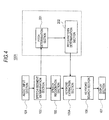
- Fig. 4 is a block diagram showing an example configuration of a keyword extracting device of the second embodiment of the present invention.
- elements which are the same as those of the first embodiment are assigned the same reference numerals and terms that are identical with those used in the first embodiment, and their repeated explanations are omitted.
- a keyword extracting device 100A has a pitch determination section 201 and a pitch pattern determination section 202 in lieu of the interrupt detection section 104 of the first embodiment shown in Fig. 1 . Further, the keyword extracting device 1004A is different from its counterpart of the first embodiment in having a keyword extraction section 105A in lieu of the keyword extraction section 105 of the first embodiment shown in Fig. 1 .
- the pitch determination section 201, the pitch pattern determination section 202, and the keyword extraction section 105A correspond to a processor, such as a CPU. In other respects, the configuration of an overall system including the information terminal 200 is analogous to that of the system shown in Fig. 1 .
- the pitch determination section 201 and the pitch pattern determination section 202 (both of which are also called a "speech response feature extraction section") extract a pitch pattern, which is a feature of a speech, on the basis of speech sounds of respective speakers.
- the pitch determination section 201 determines a pitch of the speech sound.
- the pitch determination section 201 of the present embodiment divides a speech sound at; for instance, every 10 ms, thereby determining a pitch.
- the pitch pattern determination section 202 determines a pitch pattern (a feature of a speech response) including a descending pitch (see the segment tc1-te1 in Fig. 5 ) at the end of a preceding speech and an ascending pitch (see the segment tc2-te2 in Fig. 5 ) of a speech immediately following the preceding speech.
- Fig.5 shows an example determination.
- a horizontal-axis represents a time
- a vertical axis represents a frequency.
- a preceding speech "Tokyo Sky Tree will be” is present in the speech segment ts1-te1 in Fig. 5 , and a subsequent speech “Will it be ...?" is present in the speech segment ts2-te2.
- a descending pitch is determined to be present at the end of the preceding speech "Tokyo Sky Tree will be,” and an ascending pitch is determined to be present in the subsequent speech "Will it be ...?"
- the reason why such a determination is made is that the pitch pattern determination section 202 has made a determination as follows.
- the pitch pattern determination section 202 determines the ascending pitch, because a frequency "f" of the last of the speech segment (an end time)is higher than a frequency "f" of a middle point tc1 in the speech segment ts1-te1 of "Tokyo Sky Tree will” in Fig. 5 .
- the pitch pattern determination section 202 determines the descending pitch, because the frequency "f" of the last of the speech segment (the end time)is lower than the frequency "f" of a middle point tc2 in the speech segment ts2-te2 of the "Will it be " in Fig. 5 .
- the pitch pattern determination section 202 of the present embodiment determines an ascending pitch or a descending pitch with reference to a frequency of a middle point of the speech segment, but the pitch pattern determination section is not limited to the case.
- the pitch determination section 201 may also make a determination with reference to a point in time that goes back from an end time (e.g., te1 or te2 in Fig. 5 ) of a speech segment by a predetermined segment (e.g., a time T).
- the keyword extraction section 105A extracts a keyword from the preceding speech indicated by the determined pitch pattern. At the time of extraction operation, the keyword extraction section 105A extracts, as a keyword, a constituent element (e.g., a noun) at the end of a preceding speech indicated by the pitch pattern.
- a constituent element e.g., a noun
- Fig. 6 Operation of the keyword extracting device 100A will now be described by reference to Fig. 6 .
- Fig. 6 an explanation is provided; for instance, on the assumption that the speaker B will say “Will it be ...?" by use of the information terminal 200 after the speaker A has told "Tokyo Sky Tree will be ... in future" by use of the keyword extracting device 100A.
- Processing pertaining to steps S101 to S102 and S105 to S106 in Fig. 7 is analogous to processing pertaining to steps S101 to S102 and S105 to S106 in Fig. 3 , and hence their explanations are discretionarily omitted.
- the keyword extracting device 100A determines a speech segment (see the speech segment 1 in Fig. 2A and the speech segment 2 in Fig. 2B ) for each speaker in connection with speech sounds input from the speech input section 100 and the information terminal 200 (step S101).
- the keyword extracting device 100A (the speech recognition section 103) recognizes speech sound of the determined speech segment for each speaker (step S102).
- the keyword extracting device 100A determines a pitch of the speech sound on the basis of; for instance, speech sound of the speech segment 1 (see Fig. 2A ) of the preceding speech of the speaker A and speech sound of the speech segment 2 (see Fig. 2B ) of the subsequent speech of the speaker B (step S103A).
- the keyword extracting device 100A determines, on the basis of the thus-determined pitch, whether or not there is a pitch pattern that changes from a descending pitch to an ascending pitch (step S103B). Specifically, the pitch pattern determination section 202 determines a pitch pattern including a descending pitch (see a segment tc1-te1 in Fig. 5 ) at the end of the preceding speech and an ascending pitch (see the segment tc2-te2 in Fig. 5 ) in the speech immediately subsequent to the preceding speech.
- the keyword extracting device 100A extracts a keyword from the preceding speech (e.g., "Tokyo Sky Tree will” in Fig. 5 ) of the speech sound (recognized in step S102) indicated by the thus-determined pitch pattern (step S104A).
- the keyword extraction section 105A extracts; for instance, "Tokyo Sky Tree” that is a noun at the end of the preceding speech indicated by the pitch pattern, as a keyword.
- the keyword extracting device 100A causes the search server 300 to search the thus-determined keyword, by way of the network 400 (step S 105).
- the keyword search section 106 displays a received search result on the display section 107 (step S106).
- the speaker can grasp information (a search result) pertaining to a word that is the topic (e.g., "Tokyo Sky Tree").
- the keyword extracting device 100A determines a pitch pattern, which is a feature of a speech response suggesting presence of a keyword, thereby extracting a keyword of conversation. Therefore, the keyword extracting device 100A can extract a keyword of conversation on the basis of presence or absence of a pitch pattern without preparations; namely, advanced anticipation of a keyword, which will be used in conversation, and registration of the anticipated keyword in a database, and the like.
- the second embodiment has described the case where the keyword extracting device 100A sequentially performs processing pertaining to steps S101 to S102, S103A to S103B, S104A, and S105 to S106 in Fig. 7 ; however, processing is not limited to the sequence.
- the keyword extracting device 100A may also perform processing by means of changing the sequence of processing pertaining to the respective steps shown in Fig. 7 or perform processing pertaining to the respective steps in parallel.
- a keyword extracting device of a third embodiment extracts a keyword of conversation on the basis of a functional phrase that is a feature of a speech response.
- Fig. 7 is a block diagram showing an example configuration of the keyword extracting device of the third embodiment of the present invention.
- elements which are the same as those of the first embodiment are assigned the same reference numerals and terms as those used in the first embodiment, and.their repeated explanations are omitted.
- a keyword extracting device 100B has a functional phrase extraction section 301 (a speech response feature extraction section) in lieu of the interrupt detection section 104 of the first embodiment shown in Fig. 1 .
- the keyword extracting device 100B further has a functional phrase storage section 302.
- the keyword extracting device 100B differs from its counterpart of the first embodiment in having a keyword extraction section 105B in place of the keyword extraction section 105 of the first embodiment shown in Fig. 1 .
- the functional phrase extraction section 301 is a processor such as a CPU
- the functional phrase storage section 302 is a storage device, such as memory.
- the configuration of an overall system including the information terminal 200 is analogous to that of the system shown in Fig. 1 .
- the functional phrase storage section 302 stores a previously-defined functional phrase.
- the functional phrase is a word showing the type of a response and used commonly in conversations regardless of contents of various different conversations.
- the functional phrase corresponds to an interrogative sentence, such as "Is it ...?"; a sentence of agreement, such as "Good,” “I see,” and “That's it”; a negative sentence, such as "No”; a sentence of a request, such as "Please”; an exclamatory sentence, such as "Well”; and a feeding sentence, such as "Why?”; and the like.
- the functional phrase extraction section 301 extracts the functional phrase, which is the feature of the speech sound, from the speech sound. Specifically, the functional phrase extraction section 301 compares the line of words included in the speech sound, which is to become a target of extraction, with functional phrases in the functional phrase storage section 302, thereby extracting the functional phrase included in the speech sound.
- Fig. 8 an explanation is provided; for instance, on the assumption that the speaker B will say "Where will it be constructed?" by use of the information terminal 200 after the speaker A has told "Tokyo Sky Tree will be constructed in future" by use of the keyword extracting device 100B.
- Processing pertaining to steps S101 to S102 and S105 to S106 in Fig. 8 is analogous to processing pertaining to steps S101 to S102 and S105 to S106 in Fig. 3 , and hence their explanations are discretionarily omitted.
- the keyword extracting device 100B determines a speech segment (see the speech segment 1 in Fig. 2A and the speech segment 2 in Fig. 2B ) for each speaker in connection with speech sounds input from the speech input section 100 and the information terminal 200 (step S101).
- the keyword extracting device 100B (the speech recognition section 103) recognizes speech sound of the determined speech segment for each speaker (step S102).
- the keyword extracting device 100B extracts a functional phrase expressing an interrogative sentence, and the like, from; for instance, the speech sound of the speech segment 1 (see Fig. 2A ) of the preceding speech of the speaker A and the speech sound of the speech segment 2 (see Fig. 2B ) of the subsequence speech of the speaker B.
- the functional phrase extraction section 301 compares the line of words included in the speech sound, which is to become a target of extraction, with functional phrases in the functional phrase storage section 302, thereby extracting a functional phrase included in the speech sound.
- the functional phrase extraction section 301 extracts a functional phrase of an interrogative sentence "where" from speech sound of "Oh, where will it be constructed?".
- a result of recognition of the sound may also be utilized as the line of a word included in the speech sound.
- the keyword extracting device 100B extracts a keyword from among the speech sound (recognized in step S102) immediately preceding the speech including the extracted functional phrase (step S104B).
- the keyword extraction section 105B extracts "Tokyo Sky Tree" that is a noun (achieved immediately before occurrence of an interrupt) at the end of the immediately-preceding speech as a keyword from the immediately-preceding speech "I heard that Tokyo Sky Tree will be constructed in future.”
- the keyword extracting device 100B causes the search server 300 to perform a search for the thus-extracted keyword by way of the network 400 (step S105).
- the keyword search section 106 displays the received search result on the display section 107 (step S106).
- a search result pertaining to the keyword (e.g., Tokyo Sky Tree) that is the topic of conversation.
- the keyword extraction section 105B can also be activated so as to extract a keyword (“Tokyo Sky Tree") from an immediately-subsequent speech.
- switching can be made as follow between extraction of a keyword from an immediately-preceding speech sound and extraction of a keyword from an immediately-subsequent speech sound.
- switching can be made such that a keyword is extracted from an immediately-preceding speech when a demonstrative pronoun "it” is included; that a keyword is extracted from an immediately-subsequent speech when a demonstrative pronoun "that” is included; and that a keyword is extracted from an immediately-subsequent speech in other cases.
- a feature of a speech response may also be grasped by utilization (combined use) of a pitch pattern including an ascending pitch in a preceding speech and a descending pitch in a subsequent speech under a method analogous to that described in connection with the second embodiment.
- the keyword extracting device 100B extracts a functional phrase (an interrogative sentence, and the like) commonly used irrespective of contents of conversation (a genre), thereby extracting a keyword of conversation. Therefore, the keyword extracting device 100B can extract, from conversation, a commonly-used functional phrase, thereby extracting a keyword. Therefore, the keyword extracting device 100B can extract a keyword without preparations namely, advanced anticipation of keywords responsive to conversation of respective genres and registration of the anticipated keywords in a database, and the like; hence, the extractor is useful.
- a functional phrase an interrogative sentence, and the like
- the third embodiment has described the case where the keyword extracting device 100B sequentially performs processing pertaining to steps S101 to S102, S103C, S1048, and S105 to S106 in Fig. 8 ; however, processing is hot limited to the sequence.
- the keyword extracting device 100B may also perform processing by means of changing the sequence of processing pertaining to the respective steps shown in Fig. 9 or perform processing pertaining to the respective steps in parallel.
- a keyword extracting device of a fourth embodiment extracts a keyword of conversation on the basis of a change in the facial expression of a person who heard the speech sound.
- Fig. 9 is a block diagram showing an example configuration of a keyword extracting device of the fourth embodiment of the present invention.
- elements which are the same as those of the first embodiment are assigned the same reference numerals and terms that are identical with those used in the first embodiment, and their repeated explanations are omitted.
- a keyword extracting device 100C has a video input section 401 and a facial expression recognition section 402 (both of which will also be called in combination a "speech response feature extraction section") in lieu of the interrupt detection section 104 of the first embodiment shown in Fig. 1 . Further, the keyword extracting device 100C is different from its counterpart of the first embodiment in having a keyword extraction section 105C in lieu of the keyword extraction section 105 of the first embodiment shown in Fig. 1 .
- the video input section 401 is a camera
- the facial expression recognition section 402 is a processor, such as a CPU.
- the configuration of an overall system including the information terminal 200 is analogous to that of the system shown in Fig. 1 .
- the video input section 401 is for inputting image data including a user's face.
- the facial expression recognition section 402 converts the image data into original image data of digital data that enable performance of processing for estimating a user's facial expression; extracts a user's face region included in the original image data; and extracts the position of a contour of at least one or more face organs constituting the user's face, such as eyes and a mouth, from the extracted face region.
- the facial expression recognition section 402 extracts the contours of upper and lower ends of the face organ acquired over a plurality of video frames and recognizes the user's facial expression (e.g., neutrality, surprise, joy, anger, and the like) from the degree of opening or the degree of curve of the contour of the face organ.
- the facial expression recognition section 402 connects a time in a speech segment acquired from the speech segment determination section 102 for each speaker with a result of recognition of a person's facial expression other than the speakers. Further, the facial expression recognition section 402 extracts points of changes in the facial expression from the result of recognition of the facial expression.
- the facial expression recognition section 402 recognizes, in a linked manner, facial expressions of the speaker B acquired at times t10, t11, and t12 and facial expressions of the speaker A acquired at times t20, t21, and t22.
- the facial expression of the speaker B achieved at time t11 is a surprised facial expression, and neutral facial expressions are acquired at other times regardless of the speakers.
- the facial expression recognition section 402 extracts time t11 as a point of change in facial expression.
- the keyword extraction section 105C extracts a word uttered at a time corresponding to the point of change in facial expression as a keyword.
- the keyword extraction section 105C may also seek a word acquired at a time corresponding to a facial expression from segment information for each word in speech recognition results or may estimate a word from the number of syllables included in speech sound.
- a corresponding time referred to herein is a time when the end of the action for speaking a word and the facial expression are associated with each other, in consideration of a time lag (e.g. 0.1 second) from when a word is perceived until when a reaction appears in facial expression.
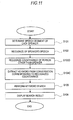
- Fig. 11 an explanation is provided on the assumption that the speaker B will say "What's that?" by use of the information terminal 200 after the speaker A has talked "Tokyo Sky Tree will be constructed in future" by use of the keyword extracting device 100C.
- Processing pertaining to steps S101 to S102 and S105 to S106 in Fig. 11 is analogous to processing pertaining to steps S101 to S102 and S105 to S106 in Fig. 3 , and hence their explanations are discretionarily omitted.
- voice and an image of the speaker B are input by use of the information terminal 200, an explanation is provided on the premise that the voice and image will be input from the audio input section 101 and the video input section 401 as with the speaker A.
- the keyword extracting device 100C determines a speech segment (see the speech segment 1 and the speech segment 2 in Fig. 10 ) for each speaker in connection with the speech audio input from the audio input section 101 (step S101).
- the keyword extracting device 100C (the speech recognition section 103) recognizes speech sounds of the thus-determined speech segments for each speaker (step S102).
- the keyword extracting device 100C (the video input section 401 and the facial expression recognition section 402) recognizes; for instance, the facial expression of the speaker B acquired at a time corresponding to the speech sound (see Fig. 10 ) of the speech segment 1 that is a preceding speech talked by the speaker A and the facial expression of the speaker A acquired at a time corresponding to the speech sound (see Fig. 10 ) of the speech segment 2 that is a subsequent speech talked by the speaker B.
- the facial expression of a person who is listening to speech sound namely, the facial expression of another person responsive to speech sound of a speaker, rather than the facial expression of the speaker (step S103D).
- the keyword extracting device 100A extracts a word uttered at a time corresponding to a point of change in facial expression as a keyword (step S104C).
- the word "Tokyo Sky Tree” is extracted as a word corresponding to the time when the facial expression changed from a neutral facial expression to a surprised facial expression.
- the keyword extracting device 100C causes the search server 300 to perform a search for the thus-determined keyword by way of the network 400 (step S105). Subsequently, the keyword search section 106 displays the received search result on the display section 107 (step S106). As a result, it becomes possible for the speaker to grasp information (a search result) pertaining to the word (e.g., Tokyo Sky Tree) that is the topic of conversation.
- a search result pertaining to the word (e.g., Tokyo Sky Tree) that is the topic of conversation.
- the keyword extracting device 100C extracts a keyword of conversation on the basis of a result of recognition of a facial expression of another person who is listing to speech sound. Therefore, the keyword extracting device 100C can extract a keyword of conversation on the basis of a characteristic of the speech response grasped as a change in facial expression without preparations; namely, advanced anticipation of a keywords employed in conversation and registration of the anticipated keywords in a database, and the like.
- the fourth embodiment has described the case where the keyword extracting device 100C sequentially performs processing pertaining to steps S101 to S102, S103D, S104C, and S105 to S106 in Fig. 11 ; however, processing is not limited to the sequence.
- the keyword extracting device 100C may also perform processing by means of changing the sequence of processing pertaining to the respective steps shown in Fig. 11 or perform processing pertaining to the respective steps in parallel.
- a keyword extracting device of a fifth embodiment extracts a keyword of conversation on the basis of an exciting reaction of a person who listened to speech sound.
- Fig. 12 is a block diagram showing an example configuration of a keyword extracting device of the fifth embodiment of the present invention.
- elements which are the same as those of the first embodiment are assigned the same reference numerals and terms that are identical with those used in the first embodiment, and their repeated explanations are omitted.
- a keyword extracting device 100D has an exciting reaction detection section 501 (which will also be called a "speech response feature extraction section") in lieu of the interrupt detection section 104 of the first embodiment shown in Fig. 1 . Further, the keyword extracting device 100D is different from its counterpart of the first embodiment in having a keyword extraction section 105D in lieu of the keyword extraction section 105 of the first embodiment shown in Fig. 1 .
- the exciting reaction detection section 501 is a processor, such as a CPU. In other respects, the configuration of an overall system including the information terminal 200 is analogous to that of the system shown in Fig. 1 .
- the exciting reaction detection section 501 detects exciting reaction from voice or sound. Specifically, exciting reaction is detected by detection of a laughing voice, sound with a high degree of excitement, sound caused by clapping the hands or slapping the knee, and the like.
- the exciting reaction detection section 501 prepares in advance learning samples in relation to a laughing voice, a clap of the hands, and the slap on the knee, to thus prepare a GMM (Gamma Mixture Model), and performs threshold processing by determining a likelihood for an input, thereby performing detection.
- the exciting reaction detection section 501 detects a voice with a high degree of excitement by means of linearly connecting values, which have been determined as a result of normalization of a sound volume level, a pitch level, and the speed of speech by means of an average for a speaker, to thus convert the values into a numeral, and subjecting the numeral to threshold processing.
- the exciting reaction detection section 501 regards, as exciting reaction responsive to speech, exciting reaction detected in the vicinity of an end of the speech segment determined by the speech segment determination section 102.
- the keyword detection section 105D extracts a keyword from the speech corresponding to the exciting reaction.
- Fig. 13 Operation of the keyword extracting device 100D will now be described by reference to Fig. 13 .
- Fig. 13 an explanation is provided on the assumption that the speaker B will laugh "ha-ha-ha” by use of the information terminal 200 after the speaker A has talked "Tokyo Sky Tree will be ... in future" by use of the keyword extracting device 100DC.
- Processing pertaining to steps S101 to S102 and S105 to S106 in Fig. 13 is analogous to processing pertaining to steps S101 to S102 and S105 to S106 in Fig. 3 , and hence their explanations are discretionarily omitted.
- the keyword extracting device 100D (the speech segment determination section 102) first determines a speech segment for each speaker in connection with the speech audio input from the audio input section 101 and the information terminal 200 (step S101).
- the keyword extracting device 100D (the speech recognition section 103) recognizes speech sounds of the thus determined speech segments for each speaker (step S102).
- the keyword extracting device 100D detects; for instance, presence of exciting reaction in the vicinity of a segment of speech uttered by the speaker A (step S103E).
- GMM of a laughing voice is verified at a high likelihood immediately after the segment of the speech made by the speaker A, and hence the voice is detected as an exciting reaction.
- the keyword extracting device 100D (the keyword extraction section 105D) next extracts, as a keyword, a word (e.g., "Tokyo Sky Tree") uttered in the segment of speech corresponding to the exciting reaction (step S104D).
- a word e.g., "Tokyo Sky Tree”
- the keyword extracting device 100D (the keyword search section 106) then causes the search server 300 to perform a search for the thus-determined keyword by way of the network 400 (step S105). Subsequently, the keyword search section 106 displays the received search result on the display section 107 (step S106). As a result, it becomes possible for the speaker to grasp information (a search result) pertaining to the word (e.g., Tokyo Sky Tree) that is the topic of conversation.
- a search result pertaining to the word (e.g., Tokyo Sky Tree) that is the topic of conversation.
- the keyword extracting device 100D extracts a keyword of conversation by detecting exciting reaction of a person who listened to speech sound.
- the keyword extracting device 100D can extract a keyword of conversation by means of a feature of speech response captured as excitement, such as a laughing voice or a clap of the hands, without preparations; namely, advanced anticipation of a keyword used in conversation and registration of the anticipated keywords in a database, and the like.
- the fifth embodiment has described the case where the keyword extracting device 100D sequentially performs processing pertaining to steps S101 to S102, S103E, S104D, and S105 to S106 in Fig. 13 ; however, processing is not limited to the sequence.
- the keyword extracting device 100D may also perform processing by means of changing the sequence of processing pertaining to the respective steps shown in Fig. 13 or perform processing pertaining to the respective steps in parallel.
- the keyword extracting device extracts, as a keyword, a noun at the end of a speech segment (at a point immediately before an interrupt), but the keyword is not limited to the noun.
- the keyword extraction section may also perform a search while taking, as a keyword, a noun of the conceptually-lowest level among a plurality of nouns included in a preceding speech that is a target of search.
- the keyword extracting device is additionally provided with a dictionary information storage section (not shown), such as memory, and the dictionary information storage section stores dictionary information including nouns of conceptually-high levels (e.g., Italian dishes) and nouns of conceptually-low levels (e.g., a pasta) that are classified and structured in a system.
- the keyword extraction section extracts, as a keyword, a noun of the conceptually-lowest level included in the dictionary information of the dictionary information storage section (not shown) from nouns included in speech that is a target of extraction.
- the noun of conceptually-low level is extracted as a keyword.
- the keyword extraction section may also extract, as a keyword, a noun of the highest pitch among nouns included in a speech that is a target of extraction or extract, as a keyword, a noun that is most frequently used.
- the keyword extraction section may also extract, as a keyword, a noun involving an optimum combination of a pitch of a noun with a parameter showing the number of times the noun is used (a previously-determined parameter pattern) from nouns included in a speech that is a target of extraction.
- a keyword extracting device of the present invention is useful for extracting an important keyword included in conversation.
- the keyword extracting device can be applied to fields of application, such as a telephone, a vehicle-mounted terminal, a TV set, a conference system, a call center system, and a personal computer.
Landscapes
- Engineering & Computer Science (AREA)
- Health & Medical Sciences (AREA)
- Audiology, Speech & Language Pathology (AREA)
- Human Computer Interaction (AREA)
- Physics & Mathematics (AREA)
- Acoustics & Sound (AREA)
- Multimedia (AREA)
- Computational Linguistics (AREA)
- Information Retrieval, Db Structures And Fs Structures Therefor (AREA)
- Document Processing Apparatus (AREA)
Claims (8)
- Schlüsselwort-Extrahiervorrichtung, die umfasst:einen Audio-Eingabeabschnitt (101), der zum Eingeben von Sprach-Ton eines ersten Sprechers (Sprecher A) und eines zweiten Sprechers (Sprecher B) eingerichtet ist, wobei wenigstens der Anfang des Sprach-Tons des ersten Sprechers (Sprecher A) dem Anfang des Sprach-Tons des zweiten Sprechers (Sprecher B) vorangeht;einen Sprachsegment-Bestimmungsabschnitt (102), der so eingerichtet ist, dass er ein erstes Sprachsegment für den ersten Sprecher (Sprecher A) und ein zweites Sprachsegment für den Sprecher (Sprecher B) in Verbindung mit dem eingegebenen Sprach-Ton bestimmt; undeinen Spracherkennungs-Abschnitt (103), der so eingerichtet ist, dass er den Sprach-Ton des bestimmten ersten und des bestimmten zweiten Sprachsegmentes für den ersten bzw. den zweiten Sprecher erkennt;wobei die Schlüsselwort-Extrahiervorrichtung dadurch gekennzeichnet ist, dass sie des Weiteren umfasst:einen Abschnitt (104; 201; 202; 301; 401; 402) für Extraktion eines Sprachantwort-Merkmals, der so eingerichtet ist, dass er ein Sprachantwort-Merkmal auf Basis des ersten Sprachsegments und des zweiten Sprachsegments erfasst, wobei das Sprachantwort-Merkmal darauf hinweist, dass das zweite Sprachsegment auf das erste Sprachsegment antwortet, und dass das zweite Sprachsegment oder das zweite Sprachsegment ein Schlüsselwort enthält; undeinen Schlüsselwort-Extraktionsabschnitt (105), der so eingerichtet ist, dass er ein Schlüsselwort aus dem Sprach-Ton des ersten Sprachsegments oder des zweiten Sprachsegments auf Basis des extrahierten Sprachantwort-Merkmals extrahiert.
- Schlüsselwort-Extrahiervorrichtung nach Anspruch 1, wobei
der Abschnitt (104; 201; 202; 301; 401; 402) für Extraktion eines Sprachantwort-Merkmals einen Unterbrechungs-Erfassungsabschnitt (104) enthält, der so eingerichtet ist, dass er auf Basis des Sprach-Tons des ersten Sprachsegmentes und des Sprach-Tons des zweiten Sprachsegmentes eine Unterbrechung erfasst, bei der das erste Sprachsegment und das zweite Sprachsegment einander überlappen, wenn das zweite Sprachsegment während des ersten Sprachsegments beginnt; und
der Schlüsselwort-Extraktionsabschnitt (105) so eingerichtet ist, dass er das Schlüsselwort aus dem Sprach-Ton des ersten Sprachsegments extrahiert, das auf Basis der erfassten Unterbrechung bestimmt wird und das das zweite Sprachsegment überlappt. - Schlüsselwort-Extrahiervorrichtung nach Anspruch 1, wobei
der Abschnitt (104; 201; 202; 301; 401; 402) für Extraktion eines Sprachantwort-Merkmals enthält:einen Tonhöhen-Bestimmungsabschnitt (201), der so eingerichtet ist, dass er eine Tonhöhe (pitch) des Sprach-Tons auf Basis des Sprach-Tons des ersten Sprachsegments und des Sprach-Tons des zweiten Sprachsegments bestimmt; undeinen Tonhöhenmuster-Bestimmungsabschnitt (202), der so eingerichtet ist, dass er anhand der bestimmten Tonhöhe bestimmt, ob ein Tonhöhenmuster, das eine absteigende Tonhöhe an einem Ende des ersten Sprachsegments und eine ansteigende Tonhöhe in dem zweiten Sprachsegment unmittelbar auf das erste Sprachsegment folgend enthält, in dem ersten und dem zweiten Sprachsegment vorhanden ist, wobei der Schlüsselwort-Extraktionsabschnitt (105) so eingerichtet ist, das er das Schlüsselwort aus dem Sprach-Ton des ersten Sprachsegmentes extrahiert, wenn das Tonhöhenmuster durch den Tonhöhenmuster-Bestimmungsabschnitt (202) bestimmt wird. - Schlüsselwort-Extrahiervorrichtung nach Anspruch 1, wobei:der Abschnitt (104; 201; 202; 301; 401; 402) für Extraktion eines Sprachantwort-Merkmals so eingerichtet ist, dass er eine funktionale Phrase eines vorgegebenen Typs aus dem Sprach-Ton des zweiten Sprachsegmentes auf Basis des Sprach-Tons des ersten Sprachsegmentes und des Sprach-Tons des zweiten Sprachsegmentes extrahiert; undder Schlüsselwort-Extraktionsabschnitt (105) so eingerichtet ist, dass er das Schlüsselwort aus dem Sprach-Ton des ersten Sprachsegmentes extrahiert, das dem zweiten Sprachsegment unmittelbar vorangeht, das die extrahierte funktionale Phrase enthält.
- Schlüsselwort-Extrahiervorrichtung nach Anspruch 1, wobei:das Sprachantwort-Merkmal auf eine erregte Reaktion des Sprechers (Sprecher B) hinweist;der Abschnitt (104; 201; 202; 301; 401; 402) für Extraktion eines Sprachantwort-Merkmals so eingerichtet ist, dass er das Sprachantwort-Merkmal in dem zweiten Sprachsegment erfasst, das zeitlich in der Nähe des ersten Sprachsegments liegt; undder Schlüsselwort-Extraktionsabschnitt (105) so eingerichtet ist, dass er das Schlüsselwort aus dem Sprach-Ton des ersten Sprachsegmentes extrahiert, das der erregten Reaktion entspricht.
- Schlüsselwort-Extrahiervorrichtung nach einem der Ansprüche 2 bis 5, wobei:der Spracherkennungs-Abschnitt (103) so eingerichtet ist, dass er das erste Sprachsegment in Text umwandelt; undder Schlüsselwort-Extraktionsabschnitt (105) so eingerichtet ist, dass er ein Element des Textes des ersten Sprachsegments, das dem Sprachantwort-Merkmal zeitlich vorangeht,als das Schlüsselwort extrahiert, wobei sich das Element am Ende des ersten Sprachsegmentes befindet, das der vorhergehenden Sprache vor dem Sprachantwort-Merkmal entspricht.
- Schlüsselwort-Extrahiervorrichtung nach Anspruch 1, wobei:der Abschnitt (104; 201; 202; 301; 401; 402) für Extraktion eines Sprachantwort-Merkmals so eingerichtet ist, dass er eine funktionale Phrase eines vorgegebenen Typs aus dem Sprach-Ton des ersten Sprachsegmentes auf Basis des Sprach-Tons des ersten Sprachsegmentes und des Sprach-Tons des zweiten Sprachsegmentes extrahiert; undder Schlüsselwort-Extraktionsabschnitt (105) so eingerichtet ist, dass er das Schlüsselwort aus dem Sprach-Ton des zweiten Sprachsegmentes extrahiert, das unmittelbar auf das erste Sprachsegment folgt, das die extrahierte funktionale Phrase enthält.
- Schlüsselwort-Extrahiervorrichtung nach Anspruch 1, wobei:der Spracherkennungs-Abschnitt (103) so eingerichtet ist, dass er das erste Sprachsegment in Text umwandelt;der Abschnitt (104; 201; 202; 301; 401; 402) für Extraktion eines Sprachantwort-Merkmals so eingerichtet ist, dass er den Gesichtsausdruck eines Sprechers erkennt und einen Punkt extrahiert, an dem sich der erkannte Gesichtsausdruck ändert; undder Schlüsselwort-Extraktionsabschnitt (105) so eingerichtet ist, dass er ein Element des Textes in dem Sprachsegment extrahiert, das dem extrahierten Punkt entspricht, an dem sich der Gesichtsausdruck ändert.
Applications Claiming Priority (2)
| Application Number | Priority Date | Filing Date | Title |
|---|---|---|---|
| JP2007088321 | 2007-03-29 | ||
| PCT/JP2008/000599 WO2008126355A1 (ja) | 2007-03-29 | 2008-03-14 | キーワード抽出装置 |
Publications (3)
| Publication Number | Publication Date |
|---|---|
| EP2045798A1 EP2045798A1 (de) | 2009-04-08 |
| EP2045798A4 EP2045798A4 (de) | 2012-12-26 |
| EP2045798B1 true EP2045798B1 (de) | 2014-12-03 |
Family
ID=39863515
Family Applications (1)
| Application Number | Title | Priority Date | Filing Date |
|---|---|---|---|
| EP08720485.5A Not-in-force EP2045798B1 (de) | 2007-03-29 | 2008-03-14 | Schlüsselwortextraktionsvorrichtung |
Country Status (5)
| Country | Link |
|---|---|
| US (1) | US8370145B2 (de) |
| EP (1) | EP2045798B1 (de) |
| JP (1) | JP4838351B2 (de) |
| CN (1) | CN101542592A (de) |
| WO (1) | WO2008126355A1 (de) |
Families Citing this family (162)
| Publication number | Priority date | Publication date | Assignee | Title |
|---|---|---|---|---|
| US8677377B2 (en) | 2005-09-08 | 2014-03-18 | Apple Inc. | Method and apparatus for building an intelligent automated assistant |
| US9318108B2 (en) | 2010-01-18 | 2016-04-19 | Apple Inc. | Intelligent automated assistant |
| US8977255B2 (en) | 2007-04-03 | 2015-03-10 | Apple Inc. | Method and system for operating a multi-function portable electronic device using voice-activation |
| US10002189B2 (en) | 2007-12-20 | 2018-06-19 | Apple Inc. | Method and apparatus for searching using an active ontology |
| US9330720B2 (en) | 2008-01-03 | 2016-05-03 | Apple Inc. | Methods and apparatus for altering audio output signals |
| US8996376B2 (en) | 2008-04-05 | 2015-03-31 | Apple Inc. | Intelligent text-to-speech conversion |
| US20100030549A1 (en) | 2008-07-31 | 2010-02-04 | Lee Michael M | Mobile device having human language translation capability with positional feedback |
| US8676904B2 (en) | 2008-10-02 | 2014-03-18 | Apple Inc. | Electronic devices with voice command and contextual data processing capabilities |
| US10255566B2 (en) | 2011-06-03 | 2019-04-09 | Apple Inc. | Generating and processing task items that represent tasks to perform |
| US10241752B2 (en) | 2011-09-30 | 2019-03-26 | Apple Inc. | Interface for a virtual digital assistant |
| US8909683B1 (en) | 2009-07-17 | 2014-12-09 | Open Invention Network, Llc | Method and system for communicating with internet resources to identify and supply content for webpage construction |
| JP5471274B2 (ja) * | 2009-10-14 | 2014-04-16 | 日本電気株式会社 | 携帯端末装置及び情報記録方法 |
| JP5715390B2 (ja) * | 2009-12-03 | 2015-05-07 | パナソニック インテレクチュアル プロパティ コーポレーション オブアメリカPanasonic Intellectual Property Corporation of America | 視聴端末装置、視聴統計装置、視聴統計処理システムおよび視聴統計処理方法 |
| CN102117614B (zh) * | 2010-01-05 | 2013-01-02 | 索尼爱立信移动通讯有限公司 | 个性化文本语音合成和个性化语音特征提取 |
| US10276170B2 (en) | 2010-01-18 | 2019-04-30 | Apple Inc. | Intelligent automated assistant |
| US8682667B2 (en) | 2010-02-25 | 2014-03-25 | Apple Inc. | User profiling for selecting user specific voice input processing information |
| US9645996B1 (en) * | 2010-03-25 | 2017-05-09 | Open Invention Network Llc | Method and device for automatically generating a tag from a conversation in a social networking website |
| US8543403B1 (en) * | 2010-04-26 | 2013-09-24 | Sprint Communication Company L.P. | Intelligent information supplements to calls |
| US10019995B1 (en) * | 2011-03-01 | 2018-07-10 | Alice J. Stiebel | Methods and systems for language learning based on a series of pitch patterns |
| US9262612B2 (en) | 2011-03-21 | 2016-02-16 | Apple Inc. | Device access using voice authentication |
| US10057736B2 (en) | 2011-06-03 | 2018-08-21 | Apple Inc. | Active transport based notifications |
| US9443518B1 (en) | 2011-08-31 | 2016-09-13 | Google Inc. | Text transcript generation from a communication session |
| US8798995B1 (en) | 2011-09-23 | 2014-08-05 | Amazon Technologies, Inc. | Key word determinations from voice data |
| JP2013109635A (ja) * | 2011-11-22 | 2013-06-06 | Nippon Telegr & Teleph Corp <Ntt> | 単語重要度算出装置とその方法とプログラム |
| KR20220002750A (ko) * | 2011-12-07 | 2022-01-06 | 퀄컴 인코포레이티드 | 디지털화된 오디오 스트림을 분석하는 저전력 집적 회로 |
| US10134385B2 (en) | 2012-03-02 | 2018-11-20 | Apple Inc. | Systems and methods for name pronunciation |
| US10417037B2 (en) | 2012-05-15 | 2019-09-17 | Apple Inc. | Systems and methods for integrating third party services with a digital assistant |
| US9721563B2 (en) | 2012-06-08 | 2017-08-01 | Apple Inc. | Name recognition system |
| WO2013191599A1 (en) * | 2012-06-18 | 2013-12-27 | Telefonaktiebolaget Lm Ericsson (Publ) | Methods and nodes for enabling and producing input to an application |
| US8612211B1 (en) | 2012-09-10 | 2013-12-17 | Google Inc. | Speech recognition and summarization |
| DE112014000709B4 (de) | 2013-02-07 | 2021-12-30 | Apple Inc. | Verfahren und vorrichtung zum betrieb eines sprachtriggers für einen digitalen assistenten |
| US10652394B2 (en) | 2013-03-14 | 2020-05-12 | Apple Inc. | System and method for processing voicemail |
| US10748529B1 (en) | 2013-03-15 | 2020-08-18 | Apple Inc. | Voice activated device for use with a voice-based digital assistant |
| KR101370539B1 (ko) * | 2013-03-15 | 2014-03-06 | 포항공과대학교 산학협력단 | 지시 표현 처리에 기반한 대화 처리 방법 및 장치 |
| JP6064718B2 (ja) * | 2013-03-21 | 2017-01-25 | 富士ゼロックス株式会社 | 情報処理装置及びプログラム |
| US9064495B1 (en) * | 2013-05-07 | 2015-06-23 | Amazon Technologies, Inc. | Measurement of user perceived latency in a cloud based speech application |
| KR20140143034A (ko) * | 2013-06-05 | 2014-12-15 | 삼성전자주식회사 | 다양한 입력 기반의 서비스 제공 방법 및 그 전자 장치 |
| WO2014197334A2 (en) | 2013-06-07 | 2014-12-11 | Apple Inc. | System and method for user-specified pronunciation of words for speech synthesis and recognition |
| WO2014197335A1 (en) | 2013-06-08 | 2014-12-11 | Apple Inc. | Interpreting and acting upon commands that involve sharing information with remote devices |
| KR101959188B1 (ko) | 2013-06-09 | 2019-07-02 | 애플 인크. | 디지털 어시스턴트의 둘 이상의 인스턴스들에 걸친 대화 지속성을 가능하게 하기 위한 디바이스, 방법 및 그래픽 사용자 인터페이스 |
| US10176167B2 (en) | 2013-06-09 | 2019-01-08 | Apple Inc. | System and method for inferring user intent from speech inputs |
| KR101749009B1 (ko) | 2013-08-06 | 2017-06-19 | 애플 인크. | 원격 디바이스로부터의 활동에 기초한 스마트 응답의 자동 활성화 |
| US10296160B2 (en) | 2013-12-06 | 2019-05-21 | Apple Inc. | Method for extracting salient dialog usage from live data |
| US10170123B2 (en) | 2014-05-30 | 2019-01-01 | Apple Inc. | Intelligent assistant for home automation |
| US9715875B2 (en) | 2014-05-30 | 2017-07-25 | Apple Inc. | Reducing the need for manual start/end-pointing and trigger phrases |
| US9430463B2 (en) | 2014-05-30 | 2016-08-30 | Apple Inc. | Exemplar-based natural language processing |
| WO2015184186A1 (en) | 2014-05-30 | 2015-12-03 | Apple Inc. | Multi-command single utterance input method |
| US9633004B2 (en) | 2014-05-30 | 2017-04-25 | Apple Inc. | Better resolution when referencing to concepts |
| US9338493B2 (en) | 2014-06-30 | 2016-05-10 | Apple Inc. | Intelligent automated assistant for TV user interactions |
| KR101870849B1 (ko) * | 2014-07-02 | 2018-06-25 | 후아웨이 테크놀러지 컴퍼니 리미티드 | 정보 전송 방법 및 전송 장치 |
| JP6081966B2 (ja) * | 2014-07-18 | 2017-02-15 | キャンバスマップル株式会社 | 情報検索装置、情報検索プログラム、および情報検索システム |
| US9818400B2 (en) | 2014-09-11 | 2017-11-14 | Apple Inc. | Method and apparatus for discovering trending terms in speech requests |
| US10074360B2 (en) | 2014-09-30 | 2018-09-11 | Apple Inc. | Providing an indication of the suitability of speech recognition |
| US10127911B2 (en) | 2014-09-30 | 2018-11-13 | Apple Inc. | Speaker identification and unsupervised speaker adaptation techniques |
| US9668121B2 (en) | 2014-09-30 | 2017-05-30 | Apple Inc. | Social reminders |
| JP6387287B2 (ja) * | 2014-11-14 | 2018-09-05 | 株式会社デンソーテン | 不明事項解消処理システム |
| US10152299B2 (en) | 2015-03-06 | 2018-12-11 | Apple Inc. | Reducing response latency of intelligent automated assistants |
| US9886953B2 (en) | 2015-03-08 | 2018-02-06 | Apple Inc. | Virtual assistant activation |
| US9721566B2 (en) | 2015-03-08 | 2017-08-01 | Apple Inc. | Competing devices responding to voice triggers |
| US10567477B2 (en) | 2015-03-08 | 2020-02-18 | Apple Inc. | Virtual assistant continuity |
| US9576190B2 (en) * | 2015-03-18 | 2017-02-21 | Snap Inc. | Emotion recognition in video conferencing |
| US10460227B2 (en) | 2015-05-15 | 2019-10-29 | Apple Inc. | Virtual assistant in a communication session |
| US10504509B2 (en) | 2015-05-27 | 2019-12-10 | Google Llc | Providing suggested voice-based action queries |
| US10083688B2 (en) | 2015-05-27 | 2018-09-25 | Apple Inc. | Device voice control for selecting a displayed affordance |
| US10200824B2 (en) | 2015-05-27 | 2019-02-05 | Apple Inc. | Systems and methods for proactively identifying and surfacing relevant content on a touch-sensitive device |
| US9578173B2 (en) | 2015-06-05 | 2017-02-21 | Apple Inc. | Virtual assistant aided communication with 3rd party service in a communication session |
| US11025565B2 (en) | 2015-06-07 | 2021-06-01 | Apple Inc. | Personalized prediction of responses for instant messaging |
| US20160378747A1 (en) | 2015-06-29 | 2016-12-29 | Apple Inc. | Virtual assistant for media playback |
| US10671428B2 (en) | 2015-09-08 | 2020-06-02 | Apple Inc. | Distributed personal assistant |
| US10331312B2 (en) | 2015-09-08 | 2019-06-25 | Apple Inc. | Intelligent automated assistant in a media environment |
| US10740384B2 (en) | 2015-09-08 | 2020-08-11 | Apple Inc. | Intelligent automated assistant for media search and playback |
| US10747498B2 (en) | 2015-09-08 | 2020-08-18 | Apple Inc. | Zero latency digital assistant |
| US11587559B2 (en) | 2015-09-30 | 2023-02-21 | Apple Inc. | Intelligent device identification |
| US10691473B2 (en) | 2015-11-06 | 2020-06-23 | Apple Inc. | Intelligent automated assistant in a messaging environment |
| US10956666B2 (en) | 2015-11-09 | 2021-03-23 | Apple Inc. | Unconventional virtual assistant interactions |
| CN105516472A (zh) * | 2015-11-30 | 2016-04-20 | 联想(北京)有限公司 | 一种信息处理方法及电子设备 |
| US10049668B2 (en) | 2015-12-02 | 2018-08-14 | Apple Inc. | Applying neural network language models to weighted finite state transducers for automatic speech recognition |
| US10223066B2 (en) | 2015-12-23 | 2019-03-05 | Apple Inc. | Proactive assistance based on dialog communication between devices |
| US11227589B2 (en) | 2016-06-06 | 2022-01-18 | Apple Inc. | Intelligent list reading |
| US10049663B2 (en) | 2016-06-08 | 2018-08-14 | Apple, Inc. | Intelligent automated assistant for media exploration |
| US12223282B2 (en) | 2016-06-09 | 2025-02-11 | Apple Inc. | Intelligent automated assistant in a home environment |
| US10586535B2 (en) | 2016-06-10 | 2020-03-10 | Apple Inc. | Intelligent digital assistant in a multi-tasking environment |
| DK179415B1 (en) | 2016-06-11 | 2018-06-14 | Apple Inc | Intelligent device arbitration and control |
| US12197817B2 (en) | 2016-06-11 | 2025-01-14 | Apple Inc. | Intelligent device arbitration and control |
| DK201670540A1 (en) | 2016-06-11 | 2018-01-08 | Apple Inc | Application integration with a digital assistant |
| US11490232B2 (en) | 2016-08-01 | 2022-11-01 | Microsoft Technology Licensing, Llc | Location-based conversation identifier |
| US10474753B2 (en) | 2016-09-07 | 2019-11-12 | Apple Inc. | Language identification using recurrent neural networks |
| US10043516B2 (en) | 2016-09-23 | 2018-08-07 | Apple Inc. | Intelligent automated assistant |
| JP6612707B2 (ja) * | 2016-09-30 | 2019-11-27 | 本田技研工業株式会社 | 情報提供装置 |
| US10531227B2 (en) | 2016-10-19 | 2020-01-07 | Google Llc | Time-delimited action suggestion system |
| US20180158462A1 (en) * | 2016-12-02 | 2018-06-07 | Cirrus Logic International Semiconductor Ltd. | Speaker identification |
| US11281993B2 (en) | 2016-12-05 | 2022-03-22 | Apple Inc. | Model and ensemble compression for metric learning |
| US10593346B2 (en) | 2016-12-22 | 2020-03-17 | Apple Inc. | Rank-reduced token representation for automatic speech recognition |
| US11204787B2 (en) | 2017-01-09 | 2021-12-21 | Apple Inc. | Application integration with a digital assistant |
| JP6737398B2 (ja) * | 2017-03-24 | 2020-08-05 | ヤマハ株式会社 | 重要単語抽出装置、関連会議抽出システム、及び重要単語抽出方法 |
| DK201770383A1 (en) | 2017-05-09 | 2018-12-14 | Apple Inc. | USER INTERFACE FOR CORRECTING RECOGNITION ERRORS |
| US10417266B2 (en) | 2017-05-09 | 2019-09-17 | Apple Inc. | Context-aware ranking of intelligent response suggestions |
| DK201770439A1 (en) | 2017-05-11 | 2018-12-13 | Apple Inc. | Offline personal assistant |
| DK180048B1 (en) | 2017-05-11 | 2020-02-04 | Apple Inc. | MAINTAINING THE DATA PROTECTION OF PERSONAL INFORMATION |
| US10726832B2 (en) | 2017-05-11 | 2020-07-28 | Apple Inc. | Maintaining privacy of personal information |
| US10395654B2 (en) | 2017-05-11 | 2019-08-27 | Apple Inc. | Text normalization based on a data-driven learning network |
| DK179496B1 (en) | 2017-05-12 | 2019-01-15 | Apple Inc. | USER-SPECIFIC Acoustic Models |
| DK201770428A1 (en) | 2017-05-12 | 2019-02-18 | Apple Inc. | LOW-LATENCY INTELLIGENT AUTOMATED ASSISTANT |
| DK179745B1 (en) | 2017-05-12 | 2019-05-01 | Apple Inc. | SYNCHRONIZATION AND TASK DELEGATION OF A DIGITAL ASSISTANT |
| US11301477B2 (en) | 2017-05-12 | 2022-04-12 | Apple Inc. | Feedback analysis of a digital assistant |
| DK201770432A1 (en) | 2017-05-15 | 2018-12-21 | Apple Inc. | Hierarchical belief states for digital assistants |
| DK201770411A1 (en) | 2017-05-15 | 2018-12-20 | Apple Inc. | Multi-modal interfaces |
| DK201770431A1 (en) | 2017-05-15 | 2018-12-20 | Apple Inc. | Optimizing dialogue policy decisions for digital assistants using implicit feedback |
| US10403278B2 (en) | 2017-05-16 | 2019-09-03 | Apple Inc. | Methods and systems for phonetic matching in digital assistant services |
| US20180336892A1 (en) | 2017-05-16 | 2018-11-22 | Apple Inc. | Detecting a trigger of a digital assistant |
| US10303715B2 (en) | 2017-05-16 | 2019-05-28 | Apple Inc. | Intelligent automated assistant for media exploration |
| US10311144B2 (en) | 2017-05-16 | 2019-06-04 | Apple Inc. | Emoji word sense disambiguation |
| DK179560B1 (en) | 2017-05-16 | 2019-02-18 | Apple Inc. | FAR-FIELD EXTENSION FOR DIGITAL ASSISTANT SERVICES |
| US10657328B2 (en) | 2017-06-02 | 2020-05-19 | Apple Inc. | Multi-task recurrent neural network architecture for efficient morphology handling in neural language modeling |
| US10445429B2 (en) | 2017-09-21 | 2019-10-15 | Apple Inc. | Natural language understanding using vocabularies with compressed serialized tries |
| US10755051B2 (en) | 2017-09-29 | 2020-08-25 | Apple Inc. | Rule-based natural language processing |
| JP7035476B2 (ja) * | 2017-11-20 | 2022-03-15 | 富士通株式会社 | 音声処理プログラム、音声処理装置、及び音声処理方法 |
| JP6943158B2 (ja) * | 2017-11-28 | 2021-09-29 | トヨタ自動車株式会社 | 応答文生成装置、方法及びプログラム並びに音声対話システム |
| US10636424B2 (en) | 2017-11-30 | 2020-04-28 | Apple Inc. | Multi-turn canned dialog |
| JP2019101385A (ja) * | 2017-12-08 | 2019-06-24 | 富士通株式会社 | 音声処理装置、音声処理方法及び音声処理用コンピュータプログラム |
| US10733982B2 (en) | 2018-01-08 | 2020-08-04 | Apple Inc. | Multi-directional dialog |
| US10733375B2 (en) | 2018-01-31 | 2020-08-04 | Apple Inc. | Knowledge-based framework for improving natural language understanding |
| US10789959B2 (en) | 2018-03-02 | 2020-09-29 | Apple Inc. | Training speaker recognition models for digital assistants |
| US10592604B2 (en) | 2018-03-12 | 2020-03-17 | Apple Inc. | Inverse text normalization for automatic speech recognition |
| US10818288B2 (en) | 2018-03-26 | 2020-10-27 | Apple Inc. | Natural assistant interaction |
| US10909331B2 (en) | 2018-03-30 | 2021-02-02 | Apple Inc. | Implicit identification of translation payload with neural machine translation |
| US11145294B2 (en) | 2018-05-07 | 2021-10-12 | Apple Inc. | Intelligent automated assistant for delivering content from user experiences |
| US10928918B2 (en) | 2018-05-07 | 2021-02-23 | Apple Inc. | Raise to speak |
| US10984780B2 (en) | 2018-05-21 | 2021-04-20 | Apple Inc. | Global semantic word embeddings using bi-directional recurrent neural networks |
| DK180639B1 (en) | 2018-06-01 | 2021-11-04 | Apple Inc | DISABILITY OF ATTENTION-ATTENTIVE VIRTUAL ASSISTANT |
| US11386266B2 (en) | 2018-06-01 | 2022-07-12 | Apple Inc. | Text correction |
| DK201870355A1 (en) | 2018-06-01 | 2019-12-16 | Apple Inc. | VIRTUAL ASSISTANT OPERATION IN MULTI-DEVICE ENVIRONMENTS |
| US10892996B2 (en) | 2018-06-01 | 2021-01-12 | Apple Inc. | Variable latency device coordination |
| DK179822B1 (da) | 2018-06-01 | 2019-07-12 | Apple Inc. | Voice interaction at a primary device to access call functionality of a companion device |
| US10504518B1 (en) | 2018-06-03 | 2019-12-10 | Apple Inc. | Accelerated task performance |
| WO2020044543A1 (ja) * | 2018-08-31 | 2020-03-05 | 三菱電機株式会社 | 情報処理装置、情報処理方法及びプログラム |
| US11010561B2 (en) | 2018-09-27 | 2021-05-18 | Apple Inc. | Sentiment prediction from textual data |
| US11462215B2 (en) | 2018-09-28 | 2022-10-04 | Apple Inc. | Multi-modal inputs for voice commands |
| US10839159B2 (en) | 2018-09-28 | 2020-11-17 | Apple Inc. | Named entity normalization in a spoken dialog system |
| US11170166B2 (en) | 2018-09-28 | 2021-11-09 | Apple Inc. | Neural typographical error modeling via generative adversarial networks |
| US11475898B2 (en) | 2018-10-26 | 2022-10-18 | Apple Inc. | Low-latency multi-speaker speech recognition |
| US11638059B2 (en) | 2019-01-04 | 2023-04-25 | Apple Inc. | Content playback on multiple devices |
| US11348573B2 (en) | 2019-03-18 | 2022-05-31 | Apple Inc. | Multimodality in digital assistant systems |
| US11475884B2 (en) | 2019-05-06 | 2022-10-18 | Apple Inc. | Reducing digital assistant latency when a language is incorrectly determined |
| DK201970509A1 (en) | 2019-05-06 | 2021-01-15 | Apple Inc | Spoken notifications |
| US11423908B2 (en) | 2019-05-06 | 2022-08-23 | Apple Inc. | Interpreting spoken requests |
| US11307752B2 (en) | 2019-05-06 | 2022-04-19 | Apple Inc. | User configurable task triggers |
| US11140099B2 (en) | 2019-05-21 | 2021-10-05 | Apple Inc. | Providing message response suggestions |
| US11496600B2 (en) | 2019-05-31 | 2022-11-08 | Apple Inc. | Remote execution of machine-learned models |
| DK201970510A1 (en) | 2019-05-31 | 2021-02-11 | Apple Inc | Voice identification in digital assistant systems |
| US11289073B2 (en) | 2019-05-31 | 2022-03-29 | Apple Inc. | Device text to speech |
| DK180129B1 (en) | 2019-05-31 | 2020-06-02 | Apple Inc. | User activity shortcut suggestions |
| US11227599B2 (en) | 2019-06-01 | 2022-01-18 | Apple Inc. | Methods and user interfaces for voice-based control of electronic devices |
| US11360641B2 (en) | 2019-06-01 | 2022-06-14 | Apple Inc. | Increasing the relevance of new available information |
| US11488406B2 (en) | 2019-09-25 | 2022-11-01 | Apple Inc. | Text detection using global geometry estimators |
| US11061543B1 (en) | 2020-05-11 | 2021-07-13 | Apple Inc. | Providing relevant data items based on context |
| US11183193B1 (en) | 2020-05-11 | 2021-11-23 | Apple Inc. | Digital assistant hardware abstraction |
| US11490204B2 (en) | 2020-07-20 | 2022-11-01 | Apple Inc. | Multi-device audio adjustment coordination |
| US11438683B2 (en) | 2020-07-21 | 2022-09-06 | Apple Inc. | User identification using headphones |
| CN112562687B (zh) * | 2020-12-11 | 2023-08-04 | 天津讯飞极智科技有限公司 | 音视频处理方法、装置、录音笔和存储介质 |
| US20220300560A1 (en) * | 2021-03-18 | 2022-09-22 | Amazon Technologies, Inc. | Voice search refinement resolution |
| US11854544B1 (en) | 2021-06-11 | 2023-12-26 | Amazon Technologies, Inc. | Entity resolution of product search filters |
Family Cites Families (16)
| Publication number | Priority date | Publication date | Assignee | Title |
|---|---|---|---|---|
| JP3398401B2 (ja) * | 1992-03-16 | 2003-04-21 | 株式会社東芝 | 音声認識方法及び音声対話装置 |
| JPH08286693A (ja) * | 1995-04-13 | 1996-11-01 | Toshiba Corp | 情報処理装置 |
| US6850609B1 (en) * | 1997-10-28 | 2005-02-01 | Verizon Services Corp. | Methods and apparatus for providing speech recording and speech transcription services |
| US6714909B1 (en) * | 1998-08-13 | 2004-03-30 | At&T Corp. | System and method for automated multimedia content indexing and retrieval |
| JP3597398B2 (ja) | 1998-10-15 | 2004-12-08 | 株式会社リコー | 音声認識装置 |
| US6665644B1 (en) | 1999-08-10 | 2003-12-16 | International Business Machines Corporation | Conversational data mining |
| JP3533371B2 (ja) | 2000-12-01 | 2004-05-31 | 株式会社ナムコ | 模擬会話システム、模擬会話方法、および情報記憶媒体 |
| GB0108603D0 (en) * | 2001-04-05 | 2001-05-23 | Moores Toby | Voice recording methods and systems |
| JP3892302B2 (ja) * | 2002-01-11 | 2007-03-14 | 松下電器産業株式会社 | 音声対話方法および装置 |
| JP3788793B2 (ja) * | 2003-04-25 | 2006-06-21 | 日本電信電話株式会社 | 音声対話制御方法、音声対話制御装置、音声対話制御プログラム |
| JP2005157494A (ja) * | 2003-11-20 | 2005-06-16 | Aruze Corp | 会話制御装置及び会話制御方法 |
| JP2005215726A (ja) | 2004-01-27 | 2005-08-11 | Advanced Media Inc | 話者に対する情報提示システム及びプログラム |
| JP2005293539A (ja) | 2004-03-08 | 2005-10-20 | Matsushita Electric Works Ltd | 表情認識装置 |
| JP5025932B2 (ja) | 2005-09-26 | 2012-09-12 | 昭和電工株式会社 | 窒化物半導体発光素子の製造方法 |
| US7991128B2 (en) * | 2006-11-01 | 2011-08-02 | International Business Machines Corporation | Mirroring of conversation stubs |
| US20080300872A1 (en) * | 2007-05-31 | 2008-12-04 | Microsoft Corporation | Scalable summaries of audio or visual content |
-
2008
- 2008-03-14 WO PCT/JP2008/000599 patent/WO2008126355A1/ja not_active Ceased
- 2008-03-14 US US12/302,633 patent/US8370145B2/en not_active Expired - Fee Related
- 2008-03-14 CN CN200880000290.2A patent/CN101542592A/zh active Pending
- 2008-03-14 EP EP08720485.5A patent/EP2045798B1/de not_active Not-in-force
- 2008-03-14 JP JP2009508884A patent/JP4838351B2/ja not_active Expired - Fee Related
Also Published As
| Publication number | Publication date |
|---|---|
| US20090150155A1 (en) | 2009-06-11 |
| WO2008126355A1 (ja) | 2008-10-23 |
| JPWO2008126355A1 (ja) | 2010-07-22 |
| US8370145B2 (en) | 2013-02-05 |
| EP2045798A1 (de) | 2009-04-08 |
| JP4838351B2 (ja) | 2011-12-14 |
| CN101542592A (zh) | 2009-09-23 |
| EP2045798A4 (de) | 2012-12-26 |
Similar Documents
| Publication | Publication Date | Title |
|---|---|---|
| EP2045798B1 (de) | Schlüsselwortextraktionsvorrichtung | |
| US9967382B2 (en) | Enabling voice control of telephone device | |
| US10580405B1 (en) | Voice control of remote device | |
| CN102254556B (zh) | 基于听者和说者的讲话风格比较估计听者理解说者的能力 | |
| JP5311348B2 (ja) | 音声データ内の音声キーワード照合システム、その方法及び音声データ内の音声キーワード照合プログラム | |
| CN111540349A (zh) | 一种语音的打断方法和装置 | |
| US20030120486A1 (en) | Speech recognition system and method | |
| KR950015199A (ko) | 음성 인식 방법 및 장치 | |
| JP2018523156A (ja) | 言語モデルスピーチエンドポインティング | |
| CN109064720B (zh) | 位置提示方法、装置、存储介质及电子设备 | |
| CN119132298B (zh) | 一种基于智能眼镜的互动式播客的交互方法 | |
| KR19980076309A (ko) | 음성인식 방법 및 그 장치 | |
| CN110125946B (zh) | 自动通话方法、装置、电子设备及计算机可读介质 | |
| KR20180127020A (ko) | 자연어 대화체 음성 인식 방법 및 장치 | |
| JPH11352986A (ja) | 音声認識利用装置の誤認識緩和方法 | |
| CN114242053A (zh) | 一种语音控制方法及装置、存储介质 | |
| CN116564273A (zh) | 语音合成方法、语音合成系统、电子设备及存储介质 | |
| CN116798408A (zh) | 语音识别方法、终端设备及计算机可读存储介质 | |
| KR100622019B1 (ko) | 음성 인터페이스 시스템 및 방법 | |
| Haritha et al. | A Study on Speech Emotion Prediction using Deep Learning Algorithm | |
| JP2000122678A (ja) | 音声認識機器制御装置 | |
| KR102957344B1 (ko) | 대화형 ai 음성 응답의 발화 중단 제어 장치 및 이를 포함하는 대화형 ai 음성 응답 시스템 | |
| KR100304788B1 (ko) | 연속 음성 인식을 이용한 전화번호 안내 방법 | |
| CN121936479A (zh) | 同传翻译方法、装置、设备、存储介质及程序产品 | |
| JP2001142485A (ja) | 音声認識方法および装置ならびに携帯電話機 |
Legal Events
| Date | Code | Title | Description |
|---|---|---|---|
| PUAI | Public reference made under article 153(3) epc to a published international application that has entered the european phase |
Free format text: ORIGINAL CODE: 0009012 |
|
| 17P | Request for examination filed |
Effective date: 20081126 |
|
| AK | Designated contracting states |
Kind code of ref document: A1 Designated state(s): AT BE BG CH CY CZ DE DK EE ES FI FR GB GR HR HU IE IS IT LI LT LU LV MC MT NL NO PL PT RO SE SI SK TR |
|
| AX | Request for extension of the european patent |
Extension state: AL BA MK RS |
|
| DAX | Request for extension of the european patent (deleted) | ||
| RBV | Designated contracting states (corrected) |
Designated state(s): DE FR GB IT |
|
| RIC1 | Information provided on ipc code assigned before grant |
Ipc: G10L 15/02 20060101ALI20121115BHEP Ipc: G06F 17/30 20060101ALI20121115BHEP Ipc: G10L 17/00 20060101ALI20121115BHEP Ipc: G10L 15/10 20060101AFI20121115BHEP Ipc: G10L 15/04 20060101ALI20121115BHEP |
|
| A4 | Supplementary search report drawn up and despatched |
Effective date: 20121122 |
|
| RIC1 | Information provided on ipc code assigned before grant |
Ipc: G10L 15/02 20060101ALI20121116BHEP Ipc: G10L 17/00 20060101ALI20121116BHEP Ipc: G06F 17/30 20060101ALI20121116BHEP Ipc: G10L 15/04 20060101ALI20121116BHEP Ipc: G10L 15/10 20060101AFI20121116BHEP |
|
| 17Q | First examination report despatched |
Effective date: 20130920 |
|
| GRAP | Despatch of communication of intention to grant a patent |
Free format text: ORIGINAL CODE: EPIDOSNIGR1 |
|
| RAP1 | Party data changed (applicant data changed or rights of an application transferred) |
Owner name: PANASONIC INTELLECTUAL PROPERTY CORPORATION OF AME |
|
| INTG | Intention to grant announced |
Effective date: 20140703 |
|
| GRAS | Grant fee paid |
Free format text: ORIGINAL CODE: EPIDOSNIGR3 |
|
| GRAA | (expected) grant |
Free format text: ORIGINAL CODE: 0009210 |
|
| AK | Designated contracting states |
Kind code of ref document: B1 Designated state(s): DE FR GB IT |
|
| REG | Reference to a national code |
Ref country code: GB Ref legal event code: FG4D |
|
| REG | Reference to a national code |
Ref country code: DE Ref legal event code: R096 Ref document number: 602008035669 Country of ref document: DE Effective date: 20150115 |
|
| REG | Reference to a national code |
Ref country code: DE Ref legal event code: R097 Ref document number: 602008035669 Country of ref document: DE |
|
| PLBE | No opposition filed within time limit |
Free format text: ORIGINAL CODE: 0009261 |
|
| STAA | Information on the status of an ep patent application or granted ep patent |
Free format text: STATUS: NO OPPOSITION FILED WITHIN TIME LIMIT |
|
| 26N | No opposition filed |
Effective date: 20150904 |
|
| GBPC | Gb: european patent ceased through non-payment of renewal fee |
Effective date: 20150314 |
|
| PG25 | Lapsed in a contracting state [announced via postgrant information from national office to epo] |
Ref country code: IT Free format text: LAPSE BECAUSE OF FAILURE TO SUBMIT A TRANSLATION OF THE DESCRIPTION OR TO PAY THE FEE WITHIN THE PRESCRIBED TIME-LIMIT Effective date: 20141203 |
|
| REG | Reference to a national code |
Ref country code: FR Ref legal event code: ST Effective date: 20151130 |
|
| PG25 | Lapsed in a contracting state [announced via postgrant information from national office to epo] |
Ref country code: GB Free format text: LAPSE BECAUSE OF NON-PAYMENT OF DUE FEES Effective date: 20150314 |
|
| PG25 | Lapsed in a contracting state [announced via postgrant information from national office to epo] |
Ref country code: FR Free format text: LAPSE BECAUSE OF NON-PAYMENT OF DUE FEES Effective date: 20150331 |
|
| PGFP | Annual fee paid to national office [announced via postgrant information from national office to epo] |
Ref country code: DE Payment date: 20190321 Year of fee payment: 12 |
|
| REG | Reference to a national code |
Ref country code: DE Ref legal event code: R119 Ref document number: 602008035669 Country of ref document: DE |
|
| PG25 | Lapsed in a contracting state [announced via postgrant information from national office to epo] |
Ref country code: DE Free format text: LAPSE BECAUSE OF NON-PAYMENT OF DUE FEES Effective date: 20201001 |