EP2046015A2 - Appareil de réception de diffusion numérique, circuit intégré à semi-conducteur, et procédé de réception de diffusion numérique - Google Patents
Appareil de réception de diffusion numérique, circuit intégré à semi-conducteur, et procédé de réception de diffusion numérique Download PDFInfo
- Publication number
- EP2046015A2 EP2046015A2 EP20080162203 EP08162203A EP2046015A2 EP 2046015 A2 EP2046015 A2 EP 2046015A2 EP 20080162203 EP20080162203 EP 20080162203 EP 08162203 A EP08162203 A EP 08162203A EP 2046015 A2 EP2046015 A2 EP 2046015A2
- Authority
- EP
- European Patent Office
- Prior art keywords
- video data
- digital broadcast
- unit
- decoding
- picture
- Prior art date
- Legal status (The legal status is an assumption and is not a legal conclusion. Google has not performed a legal analysis and makes no representation as to the accuracy of the status listed.)
- Withdrawn
Links
Images


Classifications
-
- H—ELECTRICITY
- H04—ELECTRIC COMMUNICATION TECHNIQUE
- H04N—PICTORIAL COMMUNICATION, e.g. TELEVISION
- H04N21/00—Selective content distribution, e.g. interactive television or video on demand [VOD]
- H04N21/20—Servers specifically adapted for the distribution of content, e.g. VOD servers; Operations thereof
- H04N21/25—Management operations performed by the server for facilitating the content distribution or administrating data related to end-users or client devices, e.g. end-user or client device authentication, learning user preferences for recommending movies
- H04N21/266—Channel or content management, e.g. generation and management of keys and entitlement messages in a conditional access system, merging a VOD unicast channel into a multicast channel
- H04N21/2662—Controlling the complexity of the video stream, e.g. by scaling the resolution or bitrate of the video stream based on the client capabilities
-
- H—ELECTRICITY
- H04—ELECTRIC COMMUNICATION TECHNIQUE
- H04N—PICTORIAL COMMUNICATION, e.g. TELEVISION
- H04N21/00—Selective content distribution, e.g. interactive television or video on demand [VOD]
- H04N21/20—Servers specifically adapted for the distribution of content, e.g. VOD servers; Operations thereof
- H04N21/25—Management operations performed by the server for facilitating the content distribution or administrating data related to end-users or client devices, e.g. end-user or client device authentication, learning user preferences for recommending movies
- H04N21/258—Client or end-user data management, e.g. managing client capabilities, user preferences or demographics, processing of multiple end-users preferences to derive collaborative data
- H04N21/25808—Management of client data
-
- H—ELECTRICITY
- H04—ELECTRIC COMMUNICATION TECHNIQUE
- H04N—PICTORIAL COMMUNICATION, e.g. TELEVISION
- H04N21/00—Selective content distribution, e.g. interactive television or video on demand [VOD]
- H04N21/40—Client devices specifically adapted for the reception of or interaction with content, e.g. set-top-box [STB]; Operations thereof
- H04N21/43—Processing of content or additional data, e.g. demultiplexing additional data from a digital video stream; Elementary client operations, e.g. monitoring of home network or synchronising decoder's clock; Client middleware
- H04N21/438—Interfacing the downstream path of the transmission network originating from a server, e.g. retrieving encoded video stream packets from an IP network
- H04N21/4382—Demodulation or channel decoding, e.g. QPSK demodulation
-
- H—ELECTRICITY
- H04—ELECTRIC COMMUNICATION TECHNIQUE
- H04N—PICTORIAL COMMUNICATION, e.g. TELEVISION
- H04N21/00—Selective content distribution, e.g. interactive television or video on demand [VOD]
- H04N21/40—Client devices specifically adapted for the reception of or interaction with content, e.g. set-top-box [STB]; Operations thereof
- H04N21/45—Management operations performed by the client for facilitating the reception of or the interaction with the content or administrating data related to the end-user or to the client device itself, e.g. learning user preferences for recommending movies, resolving scheduling conflicts
- H04N21/462—Content or additional data management e.g. creating a master electronic programme guide from data received from the Internet and a Head-end or controlling the complexity of a video stream by scaling the resolution or bit-rate based on the client capabilities
- H04N21/4621—Controlling the complexity of the content stream or additional data, e.g. lowering the resolution or bit-rate of the video stream for a mobile client with a small screen
Definitions
- the present invention relates to a digital broadcast receiving apparatus, a semiconductor integrated circuit, and a digital broadcast receiving method, and particularly to a digital broadcast receiving apparatus which receives a digital broadcast radio wave in which a first digital broadcast and a second digital broadcast are hierarchized and broadcast in one channel, and which outputs the video data of the first digital broadcast or the video data of the second digital broadcast.
- a full-segment broadcast (hereinafter, Full Seg) for stationary apparatuses and a one-segment broadcast (hereinafter, One Seg) for portable apparatuses and mobile objects are broadcast simultaneously in plural segments in each channel.
- Full Seg for stationary apparatuses
- One Seg for portable apparatuses and mobile objects are broadcast simultaneously in plural segments in each channel.
- an identical content is simultaneously broadcast in plural segments of each channel.
- a digital broadcast receiving apparatus which: receives Full Seg and One Seg; determines automatically the target segment to be viewed according to the receiving status of digital broadcast signals, a decompression status of the digital data, and other various conditions; and switches video and audio seamlessly.
- high-definition Full Seg is the target of viewing when the receiving status is good, and One Seg which allows easier reception, though definition is low, is the target of viewing when the receiving status is poor.
- the digital broadcast receiving apparatus processes the video data and the audio data in each segment simultaneously, and switches to the video data and the audio data to be outputted at the moment when a switching condition is satisfied.
- Patent Reference 1 For example, for a digital broadcast receiving apparatus which switches broadcasts seamlessly, a digital broadcast receiving apparatus described in Patent Reference 1 is known.
- Patent Reference 1 Japanese Unexamined Patent Application Publication No. 2006-166035
- the present invention solves these problems and has an object to provide a digital broadcast receiving apparatus, a semiconductor integrated circuit, and a digital broadcast receiving method that allow switching of broadcast segments without an interruption of video and audio as well as allowing reduction of power consumption.
- a digital broadcast receiving apparatus is a digital broadcast receiving apparatus which receives a radio wave of a digital broadcast in which a first digital broadcast and a second digital broadcast are hierarchized and broadcast in one channel, and which outputs one of first video data of the first digital broadcast and second video data of the second digital broadcast
- the digital broadcast receiving apparatus includes: a receiving unit which receives the radio wave; a demodulating unit which demodulates, into a digital signal, the radio wave received by the receiving unit; a first decoding unit which decodes first data that is the first video data compressed and included in the digital signal; a second decoding unit which decodes second data that is the second video data compressed and included in the digital signal; a selection unit which selects one of the first video data and the second video data, the first video data resulting from the decoding performed by the first decoding unit and the second video data resulting from the decoding performed by the second decoding unit; an output unit which outputs one of the first video data and the second video data selected by
- the digital broadcast receiving apparatus can decode the video data of the first digital broadcast and the video data of the second digital broadcast in parallel by the first decoding unit and the second decoding unit. With this, the digital broadcast receiving apparatus according to the present invention can switch between the first digital broadcast and the second digital broadcast without an interruption of video and audio.
- the digital broadcast receiving apparatus omits a part of the decoding process for the second digital broadcast during a period when the video data of the first digital broadcast is outputted. With this, it is possible to reduce the power consumption of the digital broadcast receiving apparatus.
- the second decoding unit may include: an analysis unit which separates the second data into per-picture data and judges whether the separated per-picture data is data of an intra-picture predictive-coded picture or data of an inter-picture predictive-coded picture, the intra-picture predictive-coded picture being decodable by using only the intra-picture predictive-coded picture and the inter-picture predictive-coded picture being a picture to be decoded by referring to another picture; an intra-picture predictive-coded picture decoding unit which generates the second video data by decoding the data of the intra-picture predictive-coded picture; and an inter-picture predictive-coded picture decoding unit which generates the second video data by decoding the data of the inter-picture predictive-coded picture, and the control unit may cause the inter-picture predictive-coded picture decoding unit to omit the decoding process for the data of the inter-picture predictive-coded picture when the selection unit selects the first video data.
- the configuration it is possible to reduce the power consumption of the digital broadcast receiving apparatus by omitting the decoding process for the inter-picture predictive-coded picture.
- the second decoding unit may further include a holding unit which holds and continuously outputs the second video data that is decoded last by the intra-picture predictive-coded picture decoding unit, during a period when the decoding process for the data of the inter-picture predictive-coded picture, which the inter-picture predictive-coded picture decoding unit performs, is omitted according to the control by the control unit, and the selection unit may select one of the first video data and the second video data, the first video data resulting from the decoding performed by the first decoding unit and the second video data being outputted by the holding unit.
- the Intra-picture predictive-coded video data that is decoded last is continuously outputted by the decoding-result holding unit. With this, it is possible to switch from the first digital broadcast to the second digital broadcast without an interruption of video and audio.
- the second decoding unit may include a deblocking filtering unit which performs a deblocking filtering process for reducing noise generated on a boundary between units to be decoded within a picture, and the control unit may cause the deblocking filtering unit to omit the deblocking filtering process when the selection unit selects the first video data.
- the second digital broadcast may be lower-definition and easier to receive than the first digital broadcast
- the selection unit may select the first video data in the case where, in the first decoding unit, the first data can be decompressed into the first video data to a predetermined level, and to select the second video data in the case where the first data cannot be decompressed into the first video data to the predetermined level.
- the configuration when the reception of the high-definition first digital broadcast is difficult, it is possible to reduce, in the digital broadcast receiving apparatus which switches the target of viewing to the low-definition second digital broadcast, power consumption during a period when the high-definition first digital broadcast is viewed.
- the demodulating unit may convert the radio wave received by the receiving unit into a transport stream that is the digital signal.
- the digital broadcast receiving apparatus can generate video data by decoding a video stream and an audio stream included in a transport stream.
- the first decoding unit may perform decoding in accordance with MPEG-2
- the second decoding unit may perform decoding in accordance with H. 264.
- the digital broadcast receiving apparatus can decode video data compressed in accordance with MPEG-2 and H. 264, respectively.
- the first digital broadcast may be a full-segment broadcast in digital terrestrial broadcasting
- the second digital broadcast may be a one-segment broadcast in digital terrestrial broadcasting.
- the first digital broadcast may be a weak-layer broadcast in digital satellite broadcasting
- the second digital broadcast may be a strong-layer broadcast in digital satellite broadcasting
- the configuration it is possible to realize a digital broadcast receiving apparatus which decodes the weak layer and the strong layer in digital satellite broadcasting, and which can switch broadcast segments without an interruption of video and audio as well as allowing reduction of power consumption.
- a semiconductor integrated circuit is a semiconductor integrated circuit which generates one of first video data of a first digital broadcast and second video data of a second digital broadcast, from a radio wave of a digital broadcast in which the first digital broadcast and the second digital broadcast are hierarchized and broadcast in one channel, and which outputs the one of the first video data and the second video data
- the semiconductor integrated circuit includes: a demodulating unit which demodulates the radio wave into a digital signal; a first decoding unit which decodes first data that is the first video data compressed and included in the digital signal; a second decoding unit which decodes second data that is the second video data compressed and included in the digital signal; a selection unit which selects one of the first video data and the second video data, the first video data resulting from the decoding performed by the first decoding unit and the second video data resulting from the decoding performed by the second decoding unit; an output unit which outputs one of the first video data and the second video data selected by the selection unit; and a control unit which causes the second decoding unit
- the semiconductor integrated circuit according to the present invention can decode the video data of the first digital broadcast and the video data of the second digital broadcast in parallel by the first decoding unit and the second decoding unit. With this, the semiconductor integrated circuit according to the present invention can switch between the first digital broadcast and the second digital' broadcast without an interruption of video and audio.
- the semiconductor integrated circuit according to the present invention omits a part of the decoding process for the second digital broadcast during a period when the video data of the first digital broadcast is outputted.
- the present invention can be realized not only as such a digital broadcast receiving apparatus but also as a digital broadcast receiving method which includes, as steps, characteristic units included in such a digital broadcast receiving apparatus, and as a program which causes a computer to execute these steps. Furthermore, it goes without saying that such a program can be distributed through recording media such as CD-ROMs and transmission media such as the Internet.
- the present invention can provide a digital broadcast receiving apparatus, a semiconductor integrated circuit, and a digital broadcast receiving method that allow switching of broadcast segments without an interruption of video and audio as well as a reduction of power consumption.
- one channel is divided into 13 segments. Of the 13 segments, 12 segments are assigned to Full Seg (high-resolution digital broadcasting), and one segment is assigned to One Seg. In addition, four segments are assigned to broadcasting in ordinary definition.
- One Seg is lower-definition as compared to Full Seg, but easier to receive even in a poor receiving status.
- an identical content is broadcast in One Seg and Full Seg.
- compressed video data is transmitted.
- the compression format is MPEG-2 for Full Seg and H. 264 for One Seg.
- the digital broadcast receiving apparatus is a digital broadcast receiving apparatus equipped on a car navigation system or an in-vehicle television.
- the digital broadcast receiving apparatus according to an embodiment of the present invention may also be applied to a portable television, a note-type personal computer equipped with a television function, a personal digital assistant (PDA), a cellular phone, and so on.
- PDA personal digital assistant
- FIG. 1 is a block diagram showing a functional configuration of a digital broadcast receiving apparatus according to an embodiment of the present invention.
- a digital broadcast receiving apparatus 100 shown in FIG. 1 receives a radio wave of digital terrestrial broadcasting in which One Seg and Full Seg are hierarchized and transmitted in one channel.
- the digital broadcast receiving apparatus 100 decodes Full-Seg and One-Seg video data from the received radio waves, and outputs, selectively, the Full-Seg or One-Seg video data.
- the digital broadcast receiving apparatus 100 includes: a receiving antenna 101, a tuner 102, a demodulating unit 103, a Transport Stream (TS) processing unit 104, a Full-Seg decoding unit 105, a One-Seg decoding unit 106, a switching unit 107, a control unit 108, and an output unit 109.
- TS Transport Stream
- the receiving antenna 101 is an antenna which receives radio waves of digital terrestrial broadcasting.
- the tuner 102 receives radio waves of digital terrestrial broadcasting through the receiving antenna 101.
- the tuner 102 extracts a radio wave of a specific frequency band from the radio waves received by the receiving antenna 101.
- the tuner 102 selects a predetermined channel for digital terrestrial broadcasting, and extracts the radio wave for the predetermined channel.
- the demodulating unit 103 demodulates the radio waves, having been extracted by the tuner 102, into a digital signal. Specifically, the demodulating unit 103 converts the radio wave extracted by the tuner 102 into a transport stream made up of transport stream packets (TS packets).
- TS packets transport stream packets
- the TS processing unit 104 separates the data included in the digital signal demodulated by the demodulating unit 103. Specifically, each of the TS packets corresponds to the video data, broadcasting information, or the like. The TS processing unit 104 separates the TS packets demodulated by the demodulating unit 103 and included in the transport stream, into video data and broadcasting information.
- the Full-Seg decoding unit 105 decodes data to be used for Full Seg from among the plural data having been separated by the TS processing unit 104. In other words, the Full-Seg decoding unit 105 decodes the data of compressed Full-Seg video data, from among the plural data having been separated by the TS processing unit 104.
- the Full-Seg decoding unit 105 performs decoding in accordance with MPEG-2.
- the Full-Seg decoding unit 105 : generates a quantized orthogonal transform coefficient through variable length decoding of the separated data; generates a difference pixel value by performing an inverse quantization process and an inverse orthogonal transform process on the quantization orthogonal transform coefficient; generates predictive image data from a reference image; and generates video data from the difference pixel value and the predictive image data.
- the One-Seg decoding unit 106 decodes, into video data, the data to be used for One Seg from among plural data having been separated by the TS processing unit 104. In other words, the One-Seg decoding unit 106 decodes compressed One-Seg video data, from among the plural data having been separated by the TS processing unit 104.
- the One-Seg decoding unit 106 performs decoding in accordance with H. 264. Note that the specific process of the One-Seg decoding unit is the same as the process of the Full-Seg unit 105. Note that the One-Seg decoding unit 106 further performs a deblocking filtering process as specified in H. 264.
- the deblocking filtering process is a filtering process for reducing noise generated on a boundary of a macroblock that is a unit of processing for decoding within a picture.
- the decoding of Full-Seg video data by the Full-Seg decoding unit 105 and the decoding of One-Seg video data by the One-Seg decoding unit 106 are performed in parallel.
- the switching unit 107 switches the video data to be outputted, from among the video data having been generated by the Full-Seg decoding unit 105 and the One-Seg decoding unit 106.
- the switching unit 107 selects the video data having been generated by the Full-Seg decoding unit 105 or the One-Seg decoding unit 106, and outputs the selected video data to the output unit 109. In other words, through the switching unit 107, it is possible to switch the target broadcast between Full Seg and One Seg.
- the control unit 108 instructs the switching unit 107 to switch between Full Seg and One Seg, according to the receiving status of the digital broadcast signal, the decompression status of the digital data, and so on. Specifically, the control unit 108 causes the switching unit 107 to select Full Seg in the case where the receiving status of the digital broadcast signal is good and where the Full-Seg video data can be decompressed to a predetermined level in the Full-Seg decoding unit 105. The control unit 108 causes the switching unit 107 to select One Seg in the case where the receiving status of the digital broadcast signal is poor and where the Full-Seg video data cannot be decompressed to a predetermined level.
- control unit 108 performs control so as to cause the One-Seg decoding unit 106 to omit a part of the decoding process when the switching unit 107 selects the video data decoded by the Full-Seg decoding unit 105.
- control unit 108 causes the One-Seg decoding unit 106 to omit a part of the decoding process when the Full Seg is the target of viewing.
- the output unit 109 outputs the video data selected by the switching unit 107.
- the video data outputted by the output unit 109 is displayed, for example, in an in-vehicle display unit (display).
- the digital broadcast receiving apparatus 100 can decode the Full-Seg and the One-Seg video data at the same time by using the Full-Seg decoding unit 105 and the One-Seg decoding unit 106. With this, the digital broadcast receiving apparatus 100 can perform seamless switching from Full Seg to One Seg.
- the digital broadcast receiving apparatus 100 omits a part of the decoding process for the One-Seg video data during a period when the Full-Seg video data is outputted. With this, it is possible to reduce the power consumption of the digital broadcast receiving apparatus 100.
- the tuner 102, the demodulating unit 103, the TS processing unit 104, the Full-Seg decoding unit 105, the One-Seg decoding unit 106, the switching unit 107, the control unit 108, and the output unit 109 are formed as a semiconductor integrated circuit including a single chip or plural chips.
- the function to be realized by each of the processing units may be implemented through a dedicated circuit (hardware) formed in the semiconductor integrated circuit, and may also be implemented through execution of a program (software) by a CPU or the like.
- FIG. 2 is a block diagram showing the detailed configuration of the One-Seg decoding unit 106.
- the One-Seg decoding unit 106 includes: a header analysis unit 201, an I-picture decoding unit 202, a P-picture decoding unit 203, a decoding-result holding unit 204, and a decoding control unit 205.
- the header analysis unit 201 analyzes data having been separated by the TS processing unit 104 and to be used for One Seg. Specifically, the header analysis unit 201 further separates the data, which has been separated by the TS processing unit, into per-picture data. The header analysis unit 201 judges whether the separated per-picture data is Intra-Picture (I-picture) data or Predictive-Picture (P-Picture) data. The header analysis unit 201 outputs, among from the separated pictures, I-picture data to the I-picture decoding unit 202, and P-picture data to the P-picture decoding unit 203.
- I-picture Intra-Picture
- P-Picture Predictive-Picture
- an I-picture is a picture that allows decoding by using only the I-picture, and specifically is an intra-picture predictive-coded picture for performing predictive coding within a picture (or a frame).
- a P-picture is a picture that performs decoding with reference to another picture, and specifically is an inter-picture predictive-coded picture for performing predictive coding between pictures.
- inter-picture predictive-coded pictures including what is known as a P-picture and a B-picture in MPEG-2 and H. 264 are expressed as P-pictures.
- the I-picture decoding unit 202 decodes the I-picture data outputted by the header analysis unit 201 and outputs the video data.
- the P-picture decoding unit 203 decodes the P-picture data outputted by the header analysis unit 201 and outputs the video data.
- the decoding control unit 205 causes the I-picture decoding unit 202 to operate when the per-picture data having been outputted by the header analysis unit 201 is I-picture, and causes the P-picture decoding unit 203 in the case of P-picture.
- the decoding control unit 205 judges whether the per-picture data outputted by the header analysis unit 201 is I-picture or P-picture, based on the information obtained from the header analysis unit 201.
- the decoding control unit 205 causes the P-picture decoding unit 203 to omit the decoding process of the P-picture data, when instructed by the control unit 108 to omit a part of the decoding process performed by the One-Seg decoding unit 106. In other words, the decoding control unit 205 performs control so that the P-picture decoding unit 203 does not operate in the case where the per-picture data outputted by the header analysis unit 201 is P-picture.
- the decoding-result holding unit 204 holds video data outputted from the I-picture decoding unit 202 and the P-picture decoding unit 203.
- the decoding-result holding unit 204 continues holding the video data until new video data is inputted by the I-picture decoding unit 202 and the P-picture decoding unit 203.
- the decoding-result holding unit 204 holds the data that is decoded last by the I-picture decoding unit 202 and continues output, during a period when the decoding process of P-picture data by the P-picture decoding unit 203 is omitted.
- the digital broadcast receiving unit 100 omits the P-picture decoding process during a period when the Full Seg is selected. With this, it is possible to reduce the power consumption of the digital broadcast receiving apparatus 100.
- the I-picture video data that is decoded last is continuously outputted by the decoding-result holding unit 204. With this, it is possible to switch the target broadcast from Full Seg to One Seg without an interruption of video and audio.
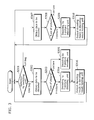
- FIG. 3 is a flowchart showing a flow of the process performed by the One-Seg decoding unit 106.
- the flowchart shown in FIG. 3 shows a status in which the digital broadcast receiving apparatus 100 has already been receiving a broadcast.
- control unit 108 judges which of Full Seg and One Seg is selected by the switching unit 107 (S301).
- the header analysis unit 201 obtains the data to be decoded from the TS processing unit 104 (S302). The header analysis unit 201 extracts data equivalent to one picture from the obtained data.
- the header analysis unit 201 judges the type of the extracted picture (S303). For example, the header analysis unit 201 judges the type of the picture by referring to the header portion of the obtained data.
- the header analysis unit 201 When the extracted picture is an I-picture (I-picture in S303), the header analysis unit 201 outputs the I-picture to the I-picture decoding unit 202.
- the I-picture decoding unit 202 decodes the I-picture outputted by the header analysis unit 201 and generates video data (S304).
- the I-picture decoding unit 202 outputs the decoded video data to the decoding-result holding unit 204 (S306).
- the header 201 outputs the P-picture to the P-picture decoding unit 203.
- the P-picture decoding unit 203 decodes the P-picture outputted by the header analysis unit 201 and generates video data (S305).
- the P-picture decoding unit 203 outputs the decoded video data to the decoding-result holding unit 204 (S306).
- the header analysis unit 201 obtains the data to be decoded from the TS processing unit 104 (S307).
- the header analysis unit 201 extracts data of one picture from among the obtained data.
- the header analysis unit 201 judges the type of the extracted picture (S308).
- the header analysis unit 201 When the extracted picture is an I-picture (I-picture in S308), the header analysis unit 201 outputs the I-picture to the I-picture decoding unit 202.
- the I-picture decoding unit 202 decodes the I-picture outputted by the header analysis unit 201 and generates video data (S309).
- the I-picture decoding unit 202 outputs the decoded video data to the decoding-result holding unit 204 (S310).
- the P-picture decoding unit 203 does not decode the P-picture.
- Steps S306 and S310 after the decoded video data is held by the decoding-result holding unit 204, the operation after Step S301 is repeatedly performed on a succeeding picture. In addition, in the case where the judgment result is P-picture in Step S308, the operation after Step S301 is repeatedly performed on a succeeding picture.
- control of the process shown in FIG. 3 is implemented by the control unit 108 and the decoding control unit 205.
- a specific operation of the digital broadcast receiving apparatus 100 shall be described below with reference to FIG. 4 .
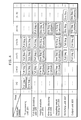
- FIG. 4 is a sequence diagram of the reception process of the digital broadcast receiving apparatus 100.
- the TS processing unit 104 In the column, the TS processing unit 104, the Full-Seg decoding unit 105, the header analysis unit 201, the One-Seg decoding unit 106, the decoding-result holding unit 204, the switching unit 107, and the output unit 109 are described, and in the row, time is described.
- each interval between n+1, n+2, n+3, n+4, and n+5 corresponds to a time period in which the digital broadcast receiving apparatus 100 performs decoding process on one picture.
- the point at each column-row intersection indicates whether each processing unit performs processing on or holds the One-Seg data or Full-Seg data.
- Full Segs from 1 to 4 and One Segs from 1 to 4 correspond to data of a Full-Seg or One-Seg picture, respectively.
- the TS processing unit 104 separates Full Seg 1 from One Seg 1. Note that the TS processing unit 104 separates, at Time n+1 to Time n+3, Full Segs 2 to 4 from One Segs 2 to 4, respectively. (Time n+1)
- the Full-Seg decoding unit 105 decodes the Full-Seg-1 data having been separated by the TS processing unit at Time n. After this, the Full-Seg decoding unit 105 decodes, at Time n+2 to n+4, the Full Segs having been separated at just-by-one-point-preceding Time n+1 to n+3, respectively.
- the header analysis unit 201 judges whether the One-Seg-1 data having been separated by the TS processing unit 104 at Time n is an I-picture or a P-picture.
- the One-Seg decoding unit 106 since the judgment result by the header analysis unit 201 is I-picture, the One-Seg decoding unit 106 generates video data by decoding the One-Seg-1 data.
- the decoding-result holding unit 204 holds the One-Seg-1 video data. (Time n+2)
- the switching unit 107 selects Full Seg, and the One-Seg-2 data is judged as P-picture in the header analysis unit 201; therefore, the One-Seg decoding unit 106 does not perform decoding. Thus, the decoding-result holding unit 204 continues holding the One-Seg-1 video data.
- the output unit 109 outputs the Full-Seg-1 video data at Time n+1. (Time n+3)
- the switching unit 107 selects Full Seg, and the One-Seg-3 data is judged as P-picture in the header analysis unit 201; therefore, the One-Seg decoding unit 106 does not perform decoding. Thus, the decoding-result holding unit 204 continues holding the One-Seg-1 video data.
- the output unit 109 outputs the Full-Seg-2 video data at Time n+2. (Time n+4)
- the One-Seg decoding unit 106 decodes the One-Seg-4 data.
- the decoding-result holding unit 204 holds the decoded One-Seg-4 video data.
- the output unit 109 outputs the One-Seg-1 video data held by the decoding-result holding unit 204 at Time n+3. (Time n+5)
- the output unit 109 outputs the One-Seg-4 video data held by the decoding-result holding unit 204 at Time n+4.
- the digital broadcast receiving unit 100 does not decode One-Seg-2 and One-Seg-3 P-pictures at Times n+2 and n+3. With this, the digital broadcast receiving apparatus 100 can reduce power consumption further as compared to the case where One-Seg decoding is constantly performed.
- the digital broadcast receiving apparatus 100 decodes an I-picture and holds the decoded I-picture in the decoding-result holding unit 204. With this, even when the switching unit 107 switches the target broadcast from Full Seg to One Seg, the One-Seg-1 video data can be outputted at Time n+4 since the decoding-result holding unit 204 continuously holds the One-Seg-1 video data having been decoded last. Therefore, the digital broadcast receiving unit 100 can continuously output video without generating a blackout.
- the present invention is not limited to this.
- the present invention can also be applied to the case where two layers, that is, a weak layer and a strong layer of digital satellite broadcasting are received. Note that the strong layer is lower-definition as compared to the weak layer but easier to receive even when the radio wave status is poor.
- the deblocking filtering process that is a part of the decoding process of H.264 can be omitted. That is, the control unit 108 may cause the One-Seg decoding unit 106 to omit the deblocking filtering process when the switching unit 107 selects Full Seg.
- the One-Seg decoding unit 106 does not have to include the decoding-result holding unit 204.
- One-Seg decoding unit 106 may omit both the P-picture decoding process and deblocking filtering process for the I-picture in the case where Full Seg is selected.
- control unit 108 confirms the selection by the switching unit 107 (S301) for each picture, but the confirmation may also be performed in units of a predetermined number of pictures.
- the present invention is applicable to a digital broadcast receiving apparatus for digital terrestrial broadcasting, digital satellite broadcasting, and so on. Specifically, the present invention is applicable to a digital broadcast receiving apparatus equipped on a mobile apparatus and a mobile body, such as an in-vehicle television, a portable television, a car navigation system, a note-type personal computer, a PDA, and a cellular phone.
- a mobile apparatus and a mobile body such as an in-vehicle television, a portable television, a car navigation system, a note-type personal computer, a PDA, and a cellular phone.
Landscapes
- Engineering & Computer Science (AREA)
- Databases & Information Systems (AREA)
- Multimedia (AREA)
- Signal Processing (AREA)
- Computer Graphics (AREA)
- Two-Way Televisions, Distribution Of Moving Picture Or The Like (AREA)
- Circuits Of Receivers In General (AREA)
- Compression Or Coding Systems Of Tv Signals (AREA)
Applications Claiming Priority (1)
| Application Number | Priority Date | Filing Date | Title |
|---|---|---|---|
| JP2007242461A JP2009077039A (ja) | 2007-09-19 | 2007-09-19 | デジタル放送受信装置、半導体集積回路及びデジタル放送受信方法 |
Publications (2)
| Publication Number | Publication Date |
|---|---|
| EP2046015A2 true EP2046015A2 (fr) | 2009-04-08 |
| EP2046015A3 EP2046015A3 (fr) | 2009-09-02 |
Family
ID=40377242
Family Applications (1)
| Application Number | Title | Priority Date | Filing Date |
|---|---|---|---|
| EP20080162203 Withdrawn EP2046015A3 (fr) | 2007-09-19 | 2008-08-12 | Appareil de réception de diffusion numérique, circuit intégré à semi-conducteur, et procédé de réception de diffusion numérique |
Country Status (3)
| Country | Link |
|---|---|
| EP (1) | EP2046015A3 (fr) |
| JP (1) | JP2009077039A (fr) |
| CN (1) | CN101394502A (fr) |
Families Citing this family (3)
| Publication number | Priority date | Publication date | Assignee | Title |
|---|---|---|---|---|
| JP5299866B2 (ja) * | 2009-05-19 | 2013-09-25 | 日立コンシューマエレクトロニクス株式会社 | 映像表示装置 |
| JP2011234108A (ja) * | 2010-04-27 | 2011-11-17 | Panasonic Corp | 放送受信装置および放送受信方法 |
| JP5854899B2 (ja) * | 2012-03-15 | 2016-02-09 | ルネサスエレクトロニクス株式会社 | 半導体装置、及びその信号処理方法 |
Citations (1)
| Publication number | Priority date | Publication date | Assignee | Title |
|---|---|---|---|---|
| JP2006166035A (ja) | 2004-12-07 | 2006-06-22 | Sanyo Electric Co Ltd | ディジタル放送受信装置 |
Family Cites Families (10)
| Publication number | Priority date | Publication date | Assignee | Title |
|---|---|---|---|---|
| US7016412B1 (en) * | 2000-08-29 | 2006-03-21 | Koninklijke Philips Electronics N.V. | System and method for dynamic adaptive decoding of scalable video to balance CPU load |
| US6618445B1 (en) * | 2000-11-09 | 2003-09-09 | Koninklijke Philips Electronics N.V. | Scalable MPEG-2 video decoder |
| JP3862143B2 (ja) * | 2001-01-19 | 2006-12-27 | 株式会社リコー | 復号化装置及びその制御方法、プログラム |
| JP2003152546A (ja) * | 2001-11-15 | 2003-05-23 | Matsushita Electric Ind Co Ltd | マルチフォーマットストリーム復号化装置及びマルチフォーマットストリーム送出装置 |
| JP3920861B2 (ja) * | 2004-03-03 | 2007-05-30 | 三洋電機株式会社 | ディジタル放送受信装置 |
| JP4615958B2 (ja) * | 2004-10-15 | 2011-01-19 | クラリオン株式会社 | デジタル放送の送出装置、受信装置およびデジタル放送システム |
| JP2006180067A (ja) * | 2004-12-21 | 2006-07-06 | Matsushita Electric Ind Co Ltd | デジタル放送受信装置、デジタル放送受信方法およびデジタル放送受信プログラム |
| JP4583300B2 (ja) * | 2005-12-21 | 2010-11-17 | 株式会社日立製作所 | デジタル放送受信装置 |
| JP4643453B2 (ja) * | 2006-01-10 | 2011-03-02 | 株式会社東芝 | 情報処理装置及び情報処理装置の動画像復号方法 |
| JP4828950B2 (ja) * | 2006-01-31 | 2011-11-30 | 株式会社東芝 | 動画像復号装置 |
-
2007
- 2007-09-19 JP JP2007242461A patent/JP2009077039A/ja active Pending
-
2008
- 2008-08-12 EP EP20080162203 patent/EP2046015A3/fr not_active Withdrawn
- 2008-09-18 CN CNA2008102150898A patent/CN101394502A/zh active Pending
Patent Citations (1)
| Publication number | Priority date | Publication date | Assignee | Title |
|---|---|---|---|---|
| JP2006166035A (ja) | 2004-12-07 | 2006-06-22 | Sanyo Electric Co Ltd | ディジタル放送受信装置 |
Also Published As
| Publication number | Publication date |
|---|---|
| JP2009077039A (ja) | 2009-04-09 |
| EP2046015A3 (fr) | 2009-09-02 |
| CN101394502A (zh) | 2009-03-25 |
Similar Documents
| Publication | Publication Date | Title |
|---|---|---|
| KR100768058B1 (ko) | 부호화 스트림 재생 장치 | |
| EP1202575A2 (fr) | Décodage vidéo avec affichage de fenêtres multiples | |
| CN101207749A (zh) | 多画面动态显示多路电视节目内容的装置与方法 | |
| US8213522B2 (en) | Digital broadcast receiving apparatus, semiconductor integrated circuit, and digital broadcast receiving method | |
| JP2001285736A (ja) | テレビジョン放送受信装置、テレビジョン放送受信システム、テレビジョン放送受信方法、及び記憶媒体 | |
| EP2046015A2 (fr) | Appareil de réception de diffusion numérique, circuit intégré à semi-conducteur, et procédé de réception de diffusion numérique | |
| JP2010034994A (ja) | デジタル放送受信装置およびデジタル放送受信方法 | |
| US8681272B2 (en) | Digital broadcast receiver | |
| JP2005333593A (ja) | ディジタル放送受信装置 | |
| JP4982097B2 (ja) | 放送受信装置 | |
| US9036093B2 (en) | Semiconductor device and signal processing method thereof | |
| KR20060113522A (ko) | 디지털 방송수신기의 비디오복호기 초기화장치 및 방법 | |
| JP3920861B2 (ja) | ディジタル放送受信装置 | |
| JP2007068020A (ja) | デジタル放送受信装置 | |
| JP2004072153A (ja) | 復号化装置及び方法、並びにディジタル放送受信装置 | |
| US8374251B2 (en) | Video decoder system for movable application | |
| JP4683908B2 (ja) | 映像音声出力装置 | |
| JP4635317B2 (ja) | ディジタル放送用受信機 | |
| KR100745287B1 (ko) | 디지털 티브이의 음성 출력 제어 장치 및 방법. | |
| JP4518823B2 (ja) | ディジタル放送受信装置 | |
| KR101666897B1 (ko) | 화질 개선 방법 및 그에 따른 영상 표시 장치 | |
| KR101376812B1 (ko) | 2입력 1출력 수신기 | |
| KR100896094B1 (ko) | 디지털 방송 수신장치 | |
| JP2005323278A (ja) | ディジタル放送受信装置 | |
| JP2007013820A (ja) | チューナモジュール |
Legal Events
| Date | Code | Title | Description |
|---|---|---|---|
| PUAI | Public reference made under article 153(3) epc to a published international application that has entered the european phase |
Free format text: ORIGINAL CODE: 0009012 |
|
| AK | Designated contracting states |
Kind code of ref document: A2 Designated state(s): AT BE BG CH CY CZ DE DK EE ES FI FR GB GR HR HU IE IS IT LI LT LU LV MC MT NL NO PL PT RO SE SI SK TR |
|
| AX | Request for extension of the european patent |
Extension state: AL BA MK RS |
|
| PUAL | Search report despatched |
Free format text: ORIGINAL CODE: 0009013 |
|
| RIC1 | Information provided on ipc code assigned before grant |
Ipc: H04N 7/24 20060101ALI20090722BHEP Ipc: H04N 5/00 20060101AFI20090304BHEP |
|
| AK | Designated contracting states |
Kind code of ref document: A3 Designated state(s): AT BE BG CH CY CZ DE DK EE ES FI FR GB GR HR HU IE IS IT LI LT LU LV MC MT NL NO PL PT RO SE SI SK TR |
|
| AX | Request for extension of the european patent |
Extension state: AL BA MK RS |
|
| AKX | Designation fees paid | ||
| REG | Reference to a national code |
Ref country code: DE Ref legal event code: 8566 |
|
| STAA | Information on the status of an ep patent application or granted ep patent |
Free format text: STATUS: THE APPLICATION IS DEEMED TO BE WITHDRAWN |
|
| 18D | Application deemed to be withdrawn |
Effective date: 20100303 |