EP2046090A1 - Gestion de signalisation de contrôle de session pour services de multidiffusion/radiodiffusion - Google Patents
Gestion de signalisation de contrôle de session pour services de multidiffusion/radiodiffusion Download PDFInfo
- Publication number
- EP2046090A1 EP2046090A1 EP07019366A EP07019366A EP2046090A1 EP 2046090 A1 EP2046090 A1 EP 2046090A1 EP 07019366 A EP07019366 A EP 07019366A EP 07019366 A EP07019366 A EP 07019366A EP 2046090 A1 EP2046090 A1 EP 2046090A1
- Authority
- EP
- European Patent Office
- Prior art keywords
- service
- multicast
- base station
- broadcast service
- mobile terminal
- Prior art date
- Legal status (The legal status is an assumption and is not a legal conclusion. Google has not performed a legal analysis and makes no representation as to the accuracy of the status listed.)
- Withdrawn
Links
- 230000011664 signaling Effects 0.000 title claims abstract description 90
- 238000010295 mobile communication Methods 0.000 claims abstract description 48
- 238000009826 distribution Methods 0.000 claims abstract description 42
- 238000000034 method Methods 0.000 claims abstract description 39
- 230000004044 response Effects 0.000 claims abstract description 22
- 238000004891 communication Methods 0.000 claims abstract description 8
- 238000011144 upstream manufacturing Methods 0.000 claims description 5
- 241000760358 Enodes Species 0.000 description 92
- 230000005540 biological transmission Effects 0.000 description 43
- 230000006870 function Effects 0.000 description 15
- 230000000977 initiatory effect Effects 0.000 description 4
- 230000001960 triggered effect Effects 0.000 description 4
- 230000007246 mechanism Effects 0.000 description 3
- 238000013475 authorization Methods 0.000 description 2
- 230000001419 dependent effect Effects 0.000 description 2
- 238000005457 optimization Methods 0.000 description 2
- 230000004913 activation Effects 0.000 description 1
- 238000003491 array Methods 0.000 description 1
- 230000008859 change Effects 0.000 description 1
- 230000003111 delayed effect Effects 0.000 description 1
- 238000005516 engineering process Methods 0.000 description 1
- 238000005304 joining Methods 0.000 description 1
- 238000012423 maintenance Methods 0.000 description 1
- 238000012986 modification Methods 0.000 description 1
- 230000004048 modification Effects 0.000 description 1
- 230000008569 process Effects 0.000 description 1
- 238000003860 storage Methods 0.000 description 1
- 230000001360 synchronised effect Effects 0.000 description 1
- 239000002699 waste material Substances 0.000 description 1
Images



Classifications
-
- H—ELECTRICITY
- H04—ELECTRIC COMMUNICATION TECHNIQUE
- H04W—WIRELESS COMMUNICATION NETWORKS
- H04W72/00—Local resource management
- H04W72/30—Resource management for broadcast services
Definitions
- the invention relates to a method for distributing control signaling for session control of a multicast or broadcast service within a mobile communication network. Furthermore the invention also provides a base station, mobile terminal and communication system to perform the proposed method.
- MBMS Multicast/Broadcast Services
- an E-MBMS service might be available in a certain area, which is usually referred to as the MBMS Service Area.
- This service area might span the entire Public Land Mobile Network (PLMN) of an operator, but might also cover only subset of same, depending on operator's configuration.
- PLMN Public Land Mobile Network
- An example for a PLMN-wide service is news broadcast.
- services like traffic information are typical examples of services that might be only of local interest and therefore appropriate MBMS Service Areas might only cover subsets of the PLMN.
- E-MBMS Transmission of E-MBMS in E-UTRAN is either a single-cell transmission or a multi-cell transmission as currently specified in 3GPP TS 36.300, "Evolved Universal Terrestrial Radio Access (E-UTRA) and Evolved Universal Terrestrial Radio Access (E-UTRAN); Overall description; Stage 2", version 8.2.0 (available at http://www.3gpp.org and incorporated herein by reference).
- E-UTRA Evolved Universal Terrestrial Radio Access
- E-UTRAN Evolved Universal Terrestrial Radio Access
- Multi-cell PTM supports combining of MBMS transmission from multiple cells. These types of transmissions are also referred to as Single Frequency Network (SFN) transmissions. Multi-cell transmission is available for cells that support the specific SFN requirements, like a strict time synchronization, in order to transmit the same data at exactly the same time and frequency. All cells that fulfill these requirements are part of the so-called MBSFN Area, which will typically cover parts of the MBMS Service Area with high user density, e.g. city centers.
- single-cell PTM Single cell transmission
- Single-cell PTM is transmitted only on the coverage of a specific cell. It is used outside the MBSFN Area typically experiencing a low user density. Usually this might be the larger part of the MBMS Service Area.
- E-MBMS services can be provided in one of two modes:
- E-MBMS Evolved Universal Terrestrial Radio Access Network
- 3GPP TS 23.401 "General Packet Radio Service (GPRS) enhancements for Evolved Universal Terrestrial Radio Access Network (E-UTRAN) access" version 1.2.1 (available at http://www.3gpp.org and incorporated herein by reference) and specifies several logical entities each fulfilling specific functions related to MBMS service provision.
- GPRS General Packet Radio Service
- E-UTRAN Evolved Universal Terrestrial Radio Access Network
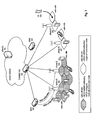
- An exemplary E-MBMS architecture will be described below with respect to Fig. 1 .
- BM-SC Broadcast/Multicast Service Centre
- the eBM-SC constitutes the entry point or source for content provider E-MBMS transmissions.
- Other main functions of the eBM-SC comprise authorization and control of E-MBMS services, for example sending of Session Start or Session Stop indications. Further it may also provide service announcement information to the interested users.
- the eBM-SC may also be part of a service provider's network that is different from the mobile network provider. In such a case there would typically exist some special contract relation between the two providers where the service provider provides the content and the mobile network provider provides the means for distribution of the content.
- Mobile communications networks are typically separated on a logical level into a core network (CN) and a radio access network (RAN).
- the core network hosts common functions like authentication, authorization, and accounting (AAA) while the radio access network provides technology-dependent functions like the air interface.
- AAA authentication, authorization, and accounting
- E-MBMS gateway An entity in the core network responsible for handling E-MBMS services might be called E-MBMS gateway (E-MBMS GW). Its main function is the termination of the interface to the eBM-SC and the distribution of the user plane (U-plane) packets for the E-MBMS service in the mobile communications network. With respect to the above-mentioned SFN transmission mode, this might also include the provision of a protocol allowing synchronized transmission on the air interface by the radio access network (SYNC protocol).
- SYNC protocol radio access network
- the E-MBMS GW might also comprise control planet (C-plane) functions related to E-MBMS services.
- C-plane control planet
- the E-MBMS GW might handle session control signaling between the core network and the radio network like e.g. Session Start or Session Stop signaling.
- the E-MBMS GW is a logical entity and the described U-plane and C-plane functionality might be integrated into the same node or it might be separated into different nodes, which are connected by a logical interface.
- 3GPP TS 23.401 refers to the MBMS 1 and MBMS 2 entity, providing the C-plane and U-plane functions described above, respectively.
- MME mobility management entity
- RRM radio resource management
- MCE Multi-cell Coordination Entity
- eNodeBs eNodeBs
- C-plane C-plane
- U-plane functions related to E-MBMS services.
- the main function regarding the U-plane is of course the transmission of the E-MBMS service data into the cell.
- the service data is typically transmitted on a logical channel, like the MBMS Transport Channel (MTCH).
- MTCH MBMS Transport Channel
- synchronization and RRM information exchange between the eNode Bs and the MCE may be provided to achieve SFN transmission or the Node Bs may schedule transmissions on their own in case of single-cell transmission.
- a further function of the eNodeBs is the termination of the U-plane interface towards the network (for example E-MBMS GW). The interface towards the network may utilize unicast or multicast in order to distribute the service data to the eNBs.
- the U-plane is controlled and configured by the C-plane functions.
- the handling of Session Start signaling is one example of C-plane function.
- the Session Start signaling might inform the eNode Bs which IP multicast address is used for the service data so they can join the transmission.
- Other C-plane functions that might be comprised in the base stations are to support E-MBMS service reception at IDLE mode UEs. As already discussed above, IDLE mode UEs are usually not known to the eNode Bs.
- the base station may transmit some kind of notification on the available services on a common logical channel within their service area (radio cell(s)).
- this common logical channel is the Multicast Control Channel (MCCH).
- MCCH Multicast Control Channel
- an eNode B might try to find out whether there is at least one user present in its cell that is interested in the E-MBMS service. For example in the LTE system the procedure is called counting (or polling).
- UEs are provided to finally receive the distributed MBMS service data. Unlike for unicast services, there is no direct signaling between the individual UEs and the eNode Bs controlling the respective cells required. As described above, it may be possible for a UE to receive a MBMS service in an IDLE state.
- the basic information required in order to receive a MBMS service is typically called a service announcement.
- the service announcement is used to distribute to users service related parameters, e.g. service identifiers like Temporary Mobile Group Identity (TMGI).
- service identifiers like Temporary Mobile Group Identity (TMGI).
- TMGI Temporary Mobile Group Identity
- the UEs are able to detect notification of the availability of a desired service in their current cells e.g. on MCCH. For example, if a notified service identifier matches with one contained in one of the stored service announcements at the UE, it will read the details of the notification including the configuration of the corresponding radio bearer allowing the UE to receive the service data in the cell.
- the service announcements may be obtained by the UE in several ways.
- the service announcement information may be provided in a standardized format.
- 3GPP Release 6 defines a MBMS User Service Description for this purpose.
- One possibility for providing service announcements is that a user is subscribed to some services provided by the mobile operator (either directly or indirectly from some 3 rd party content provider). In this case the mobile operator would also provide an appropriate service announcement.
- the service announcement information is available from some well-know location, e.g. on a web site.
- Other options might comprise receiving service announcements via Email or messaging services like SMS (Short Message Service) or MMS (Multimedia Messaging Service).
- service announcements are part of the contents of a MBMS service, for example a dedicated announcement channel for other MBMS services.
- Fig. 2 shows an exemplary, conventional signaling flow in the network to initiate service provision.
- the E-MBMS GW 102 When receiving Session Start indication from the eBM-SC 101, the E-MBMS GW 102 provides a Session Start message to all eNode Bs 105-108 in the MBMS Service Area (in the example in Fig. 2 , the MBMS Service Area corresponds to the radio cells served by eNode Bs 105-108).
- the Session Start Message may also be sent to the MCE(s) 103 responsible for MBSFN Area(s) (exemplified by the shaded radio cells controlled by eNode Bs 105 and 106) that are part of the MBMS Service Area.
- the Session Start message would include required information, e.g. IP multicast address for the service and its TMGI, allowing the receiving eNode Bs to join the E-MBMS service data transmission in the network.
- the eNode Bs 105, 106 located in the MBSFN Area might join the multicast distribution tree in any case.
- the eNode Bs 105, 106 of the MBSFN Area also allocate/reserve the physical resources for transmission of the MBMS data on the MTCH in their radio cells and indicate the MTCH configuration for the MBMS service to potential recipients in their radio cells by a MBMS notification.
- the eNBs 107, 108 outside the MBSFN Area might only join if they host interested users.
- the eNode Bs might perform a counting procedure. For example they might send a MBMS Counting Request on the MCCH in their cells. UEs in IDLE state receiving this request might send a MBMS Counting Response to the sending eNode B.
- the eNode Bs 105-108 will broadcast a MBMS notification in their radio cells that indicates the MBMS service being available. Accordingly, the mobile terminals, such as for example UE 109 moving into the coverage area of eNode B 108, would only request the service, if a MBMS notification in the radio cell(s) of eNode B 108 indicate that the MBMS service is available, but no downlink resources (MTCH configuration) is indicated in the notification.
- MTCH configuration downlink resources
- the E-MBMS GW 102 has to distribute Session Start signaling to each eNode B 105-108 in the entire MBMS Service Area. Depending on the size of this area it might comprise many eNode Bs. For example considering E-MBMS services like Mobile TV, the MBMS Service Area might be equal to the entire PLMN of an operator.
- Stream Control Transmission Protocol SCTP ensuring reliable, in-sequence transport of signaling messages with congestion control.
- E-MBMS GW 102 Being able to exchange signaling messages between an E-MBMS GW 102 and an eNode B means that there exists an interface between them.
- the need to provide Session Start signaling to all eNode Bs 105-108 in the MBMS Service Area may require the E-MBMS GW 102 to terminate a high number of interfaces.
- this means E-MBMS GW 102 may have to terminate a high number of connections, e.g. an SCTP connection to each eNode B in the MBMS Service Area.
- the MBMS Service Area might comprise one or more MBSFN Areas, which typically experience a high user density, like in city centers. However, the MBSFN Areas typically cover only a small part of the entire MBMS Service Area. Further, the area outside the MBSFN Areas, which covers the larger part of the MBMS Service Area, usually experience a low density of interested users. Otherwise, the operator would most likely have configured it to be part of a MBSFN Area. In any case the E-MBMS GW 102 has to transmit Session Start signaling also to the eNBs outside the MBSFN Areas, as they are also part of the MBMS Service Area. But as there are most likely only few users present, this may lead to the unnecessary transmission of many Session Start messages to these eNBs. Considering for example E-MBMS service like Mobile TV, the required Session Start messages might further increase with the number of provided TV channels.
- One main aspect of the invention is to initially avoid the distribution of session control signaling in the entire mobile communications network or service area. Rather than providing service related control signaling connections upon session start (e.g. the eBM-SC sending the session start message), the control signaling connections are set up in response to service requests of the mobile terminals requesting the service. According to one further aspect, the mobile terminals send the service requests based on service announcements available at the mobile terminals, i.e. in contrast to conventional implementations, the mobile terminals do not await a notification of the access network on the availability of the service within the cell.
- another aspect of the invention is the distribution of session control signaling via a mobility management entity, which allows reducing the number of session control signaling connections that have to be terminated by the hierarchically higher network entities (e.g. the E-MBMS gateway towards the service network comprising the service provider, e.g. eBM-SC).
- the hierarchically higher network entities e.g. the E-MBMS gateway towards the service network comprising the service provider, e.g. eBM-SC.
- the session control signaling connections towards the service area parts that do not need to be constantly served are relayed via one or more mobility management entities, while the session control signaling connections towards the network portions in which the service is to be constantly provided are not relayed. Accordingly, depending on the desired availability of the service in different network parts/tracking areas, single-cell transmissions or multi-cell transmission may be used.
- one embodiment of the invention provides a method for distributing control signaling for session control of a multicast or broadcast service within a mobile communication network.
- a base station receives a service request for the multicast or broadcast service from a mobile terminal.
- the base station is thereby associated to a tracking area (or pool area, which is used as a synonym herein) of the mobile communication network.
- This service request is used as a trigger for the distribution of control signaling for session control (session control signaling) to at least one base station of the tracking area including the base station receiving the service request.
- the service request is transmitted by the mobile terminal based on a session announcement for the multicast or broadcast service available to the mobile terminal.
- the distribution of the control information for session control is triggered by transmitting a service request from the base station receiving the service request to a mobility management entity in the core network of the mobile communication system.
- the mobility management entity registers for the multicast or broadcast service at a gateway connecting the core network of the mobile communication system to a service network in which the source of the multicast or broadcast service is located.
- This gateway may for example be the MBMS gateway discussed previously herein.
- the gateway could for example maintain a list of mobility management entities registered at the gateway for the multicast or broadcast service to keep track of the mobility management entities that have registered for a service.
- the control signaling for session control is transmitted by the gateway via the registered mobility management entity to at least one base station that has received the service request from the mobile terminal.
- the session control signaling is provided to all base stations in the tracking area to which the base station that has received the service request from the mobile terminal belongs or to all base stations of the tracking areas in which the mobile terminal has registered.
- the service request indicates the at least one tracking area the mobile terminal is registered and the service request transmitted by the base station indicates said at least one tracking area to the mobility management entity.
- the mobile communication network may contain one or more tracking areas in which the multicast or broadcast service is to be provided independent from user request or presence.
- the control signaling for session control is therefore distributed to all base stations in these one or more tracking areas.
- it may be optionally foreseen to realize SFN transmissions in these one or more tracking areas, e.g. by utilizing multi-cell transmissions as previously outlined herein.
- the gateway connecting the core network of the mobile communication system to a service network in which the source of the multicast or broadcast service is located may for example address the control signaling for session control to the respective base stations in the one or more tracking areas in which the multicast or broadcast service is to be provided independent from user request or presence, i.e. the gateway may utilize individual session control signaling connections to the base stations (instead of relaying the session control signaling via an intermediate network entity).
- the control signaling for session control of the multicast or broadcast service may (inter alia) comprise for example a session start message.
- the base station having received the session start message from the mobile terminal may send a join message to an upstream router of the core network to join the multicast distribution tree of the multicast or broadcast service. This join message may be for example transmitted by the base station in response to the reception of a session start message for the multicast or broadcast service.
- the base station may send a notification on a multicast or broadcast service related control channel within its radio cell to indicate the radio resource on the downlink on which the multicast or broadcast service is provided to potential service recipients in its service area, i.e. radio cell(s).
- the mobile terminals may send a service request based on a respective corresponding service announcement, it may happen that service requests are sent for services that have not been started yet, i.e. no session start has been yet performed for the service.
- the gateway may respond to the registration with a message indicating that the multicast or broadcast service for which the registration has been sent by the mobility management entity has not been started yet.
- the mobility management entity may further inform the base station from which the service request has been received that the multicast or broadcast service has not been started yet.
- the mobility management entity may also inform all base stations in the tracking area to which the base station from which the service request has been received belongs to or to all base stations in all tracking areas the mobile terminal is registered.
- the respective base stations receiving this indication of the service not having been started yet may for example send a notification in their respective service area (radio cell(s)) to indicate that the multicast or broadcast service has not been started yet. This could for example prevent mobile terminals interested in the multicast or broadcast service to send a service registration (although the respective service announcement available to these mobile terminals indicates the service to be available in their present tracking area).
- This notification by the base station(s) may for example only be provided for a predetermined period of time.
- the notification is transmitted on a multicast or broadcast service related broadcast control channel, such as the MCCH in the E-UTRAN.
- the service request identifies the multicast or broadcast service by means of an identifier, such as for example a TMGI or IP multicast address of the service.
- an identifier such as for example a TMGI or IP multicast address of the service.
- the service request may for example comprise an indication of the at least one tracking area the mobile terminal is registered, for example by means of respective tracking area identifiers (TAIs).
- TAIs tracking area identifiers
- the service request could optionally also identify the entity sending the request, i.e. the mobile terminal or the base station. In case no tracking area is indicated in the service request, this information may be for example used to resolve the tracking area so as to distribute the session control signaling appropriately therein.
- the base station for use in a mobile communication network.
- the base station is associated to a tracking area of the mobile communication network and a multicast or broadcast service is provided in the communication network.
- the base station comprises a receiver for receiving a service request for the multicast or broadcast service from a mobile terminal, and a transmitter for transmitting, in response to the service request of a mobile terminal, a service request triggering the distribution of control signaling for session control to the base station and optionally to further base stations of the tracking area.
- the transmitter transmits the service request to a mobility management entity in the core network of the mobile communication system.
- the receiver is capable of receiving the control signaling for session control from the mobility management entity.
- control signaling for session control of the multicast or broadcast service comprises a session start message
- the transmitter of the base station is adapted to transmit, in response to receiving a session start message, a join message to an upstream router of the core network to join the multicast distribution tree of the multicast or broadcast service.
- the transmitter of the base station may transmit a notification on a multicast or broadcast service related control channel within its radio cell to indicate the radio resource on the downlink on which multicast or broadcast service is provided to potential service recipients.
- the base station receives, in response to the service request, an indication on the multicast or broadcast service not having been started yet.
- the base station's the transmitter may transmit a notification in its radio cell indicating that the multicast or broadcast service has not been started yet.
- the mobile terminal for use within a mobile communication network.
- the mobile terminal comprises a transmitter for transmitting a service request for a multicast or broadcast service to a base station.
- the mobile terminal is adapted to transmit the service request based on a session announcement for the multicast or broadcast service available to the mobile terminal that is announcing the multicast or broadcast service being available.
- the mobile terminal is not transmitting a service request, if a notification being received by a receiver of the mobile terminal indicates that the multicast or broadcast service has not been started yet.
- the mobile communication system comprises a base station and/or a mobile terminal according to one of the different embodiments described herein.
- the communication may also further comprise a mobility management entity serving the base station, and a gateway connecting the core network of the mobile communication system to a service network in which the source of the multicast or broadcast service is located, and the system may be adapted to perform the steps of the method for distributing control signaling for session control of a multicast or broadcast service within a mobile communication network according to one of the various embodiments described herein.
- the invention also provides a computer readable medium which, according to another embodiment, is storing instructions that, when executed by a processor of a base station, cause the base station, being associated to a tracking area of a mobile communication network, to receive a service request for a multicast or broadcast service being provided on the mobile communication network from a mobile terminal, and transmit, in response to the service request of a mobile terminal, a service request triggering the distribution of control signaling for session control to the base station and optionally to further base stations of the tracking area.
- a further embodiment of the invention is related to a computer readable medium that is storing instructions that, when executed by a processor of a mobile terminal, cause the mobile terminal to transmit a service request for a multicast or broadcast service to a base station, wherein the instructions cause the mobile terminal to transmit the service request based on a session announcement for the multicast or broadcast service available to the mobile terminal that is announcing the multicast or broadcast service being available.
- This computer readable medium may optionally further store instructions that, when executed by the processor of the mobile terminal, prohibit the mobile terminal to transmit a service request, if a notification being received the mobile terminal indicates that the multicast or broadcast service has not been started yet.
- one main aspect of the invention is to establish session control signaling for a multicast or broadcast service within (at least a part of) the typically wired network (e.g. RAN and CN) of a mobile communication network upon request of a user for the multicast or broadcast service.
- the typically wired network e.g. RAN and CN
- the presumption in conventional MBMS and E-MBMS architectures of the mobile terminals only requesting a MBMS service if the MBMS service is notified to be available in a radio cell may be surrendered, and the mobile terminals may send service requests for a specific multicast or broadcast service based on service announcement information available at the mobile terminals, to their current base station thereby notifying the network about their interest in the service.
- the receiving base station may trigger the network to provide session control signaling to the base station receiving the request message or to one or more logical radio access network parts, so-called tracking areas, in which the mobile terminal sending the service request is registered or to which the base station receiving the service request belongs.
- the provision of the session control signaling may be for example realized by a base station triggering their respective associated mobility management entity to register for the multicast or broadcast service at a gateway responsible for inter-connecting the mobile communication network with a service network in which the source of the requested multicast or broadcast service is located.
- the gateway e.g. the E-MBMS GW
- the mobility management entities further distribute the session start message to the base stations.
- a mobility management entity may for example distribute the session start message to base stations from which it initially received a trigger, but also other options might be possible, e.g.
- the gateway may be responsible of assigning a multicast address (e.g. a multicast IP address) to the multicast or broadcast service that is utilized within the core network and radio access network for the distribution of the multicast or broadcast service data.
- a multicast address e.g. a multicast IP address
- the gateway interfaces only with registered mobility management entities, while the mobility management entities interface only with base stations of the service area that initially send a trigger or are contained in the same tracking area or pool area of a base station that initially send a trigger. Therefore, the number of required signaling connections towards the base stations in the service area can be distributed across several nodes.
- E-UTRAN an exemplary implementation of a mobile communication system
- E-MBMS service an example for a multicast or broadcast service.
- UE user equipment
- eNode B and base station are respectively used as synonyms herein.
- a service area typically consists of a group of eNode Bs spanning a certain geographical area.
- the MBMS Service Area could span the entire PLMN of a mobile operator.
- the operator may configure one or more MBSFN Areas in order to gain from utilizing SFN radio transmission in these areas. This may be of particular interest for areas with a dense user distribution like city centers as it may be assumed that there are always interested users present in these areas so that it is always required to distribute the MBMS service in such an area.
- a certain part of the service area is configured to provide the multicast or broadcast service irrespective of the user request or presence, e.g. by means of providing SFN transmission.
- the eNode Bs to distribute a multicast or broadcast service require the reception of session control signaling in order to obtain the necessary parameters for the service distribution. Accordingly, the eNode Bs may be informed on these parameters by means of a Session Start message which may for example inform the eNode Bs on the multicast (IP) address that is utilized in the wired part of the mobile communication network to distribute the service data and a service identifier (e.g. TMGI) that is utilized in the network to identify the respective service.
- IP multicast
- TMGI service identifier
- a Session Start message is always provided to the eNode Bs contained in the MBSFN Area independent of an active service request from any user.
- the eNode Bs contained in the MBSFN Area receive a Session Start message, allowing them to join the service distribution in the network between the core network and the eNode Bs (using for example the IP multicast address assigned to the service), and to provide the service on their radio interface into the cell, e.g. on MTCH.
- these eNode Bs might also provide a notification of the available service on their radio interface into the cell, e.g. on MCCH.
- a UE located in or moving into such a cell may read the notification information, e.g. on MCCH, and subsequently receive the radio transmission of the MBMS service, e.g. on MTCH.
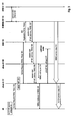
- Fig. 3 shows an exemplary signaling flow of a mobile terminal requesting a multicast or broadcast service (MBMS service) and the triggering of the distribution of session control signaling for the service according to an embodiment of the invention.
- a MBMS Service Area might also comprise areas with a rather low user density, e.g. rural areas.
- these non-MBSFN Areas might form the larger part of the MBMS Service Area, possibly containing many eNode Bs.
- a UE is aware about its desired services, for example because it previously subscribed to them or received service announcements advertising interesting services. Having this information, a UE may assume the service to be generally available within the network even if no notification is broadcast in its current cell and may thus try to receive these services. In case the UE is located in a cell (which is not belonging to a MBSFN Area of a particular service i.e. single-cell transmission is to be used), the UE might detect 301 the lack of service notification or radio bearer for this service in the cell.
- This MBMS Service Request may include a service identifier, e.g. TMGI and/or IP Multicast address of the service and optionally the tracking area or tracking areas (e.g. by means of a respective tracking area identifier TAI) to which the UE is registered.
- a service request for a particular service from a UE at eNode B 107 eNode B 107 selects 303 a mobility management entity and sends 304 a service request for the respective service to the selected mobility management entity MME 104.
- the MME selection may be for example based on the requested service, e.g. a pre-configured mobility management entity might be handling all MBMS services in the network. This mobility management entity may be also different to the mobility management entity to which the requesting UE is currently attached.
- the trigger message i.e. the Service Request of eNode B 107 in this example, may identify the requested service by means of TMGI and/or IP Multicast address of the service. Further, the trigger message may optionally contain the tracking area or tracking areas to which the UE is registered. The tracking area(s) of the UE may have been included in the service request from the UE. Alternatively, e.g.
- eNode B 107 may be aware of the tracking area it belongs to and may indicate same in the service request to MME 104 or no tracking area information are included to the service request to MME 104, but MME 104 could derive the tracking area from an identifier of the eNode B in the service request of the eNode B.
- MME 104 receiving the trigger (in form of the MBMS service request) from eNode B 107 registers 305 for the service at the E-MBMS GW 102 in order to receive the session control signaling for the requested service, in particular the Session Start message.
- the registration may for example include a service identifier, TMGI and/or IP Multicast address of the service.
- the E-MBMS GW 102 might be selected by MME 104 based on the MBMS service.
- the E-MBMS GW 102 might be pre-configured in the network.
- E-MBMS GW 102 has already received 306 and indication of service start from the eBM-SC 101, i.e. the session for which MME 104 is sending 305 its registration is already ongoing. Accordingly, E-MBMS GW 102 sends 307 a session start message to MME 104 which identifies the service and also includes a multicast address, e.g an IP multicast (MC) address used for the distribution of the service data (this IP multicast address may be for example selected and configured by E-MBMS GW 102 upon session start).
- MC IP multicast
- MME 104 may for example derive the tracking area of eNode B 107 from which it originally received 304 the service request for the MBMS service from an eNode B identifier, if no tracking area is indicated therein.
- the service request message from eNode B 107 may indicate the tracking area of eNode B 107 or the tracking area(s) in which the UE is registered.
- MME 104 may send 308 a session start to all eNode Bs contained in this/these derived/indicated tracking area(s).
- the eNode B(s) that are provided with the session start message from MME 104 are informed on the required information to start providing 309, 310 a service notification in their cells (e.g. on a common control channel like the MCCH) and/or the service.
- At least the eNode B 107 that received the service request from the UE might subsequently join 311 the IP Multicast transmission in the transport network layer (TNL) by sending a join message to an upstream router.
- TNL transport network layer
- all eNode Bs that sent a join message will receive 312 the service data and may provide 313 the service data within their cells, e.g. on the MTCH.
- the eNode Bs that receive 308 the session start without having received a corresponding service request from a UE may for example perform a counting procedure (as exemplified in Fig. 1 ) to decide, whether to already join the multicast distribution of the service, allocate MTCH resources and to start sending the service data in their cells or whether to await a service request from a user before doing so.
- a counting procedure as exemplified in Fig. 1
- the mobility management entity being triggered by the eNode B receiving the service request from the UE may for example derive the tracking area(s) of the triggering eNode B from the the trigger message (including an identifier of the eNode B) and may subsequently send a session start message to all eNode Bs contained in this tracking area(s).
- this allows that only one service request for a multicast or broadcast service needs to be sent from a UE per tracking area.
- a UE might be assigned to several tracking areas at the same time. Especially in these situations, it may be advantageous if the UE includes all its assigned tracking areas in the service request to the eNode B (it should be noted that the eNode Bs are not necessarily aware of the UEs in their coverage area, if the UEs are using IDLE mode mobility to move through the network). Further, the eNode B receiving this service request may forward this information to its selected MME, which may then send the session start message to all eNode Bs contained in all tracking areas to which the requesting UE is assigned. This way the number of required service requests from a UE may always be limited to one for the entire ILDE mode mobility area of that UE.
- the exemplary embodiments of the invention described above with respect to Fig. 3 have focuses on the distribution of the session start messages (as part of the session control signaling) and the establishment of service provisioning.
- session stop is the counterpart for this control message typically also being part of the session control signaling.
- E-MBMS GW 102 E-MBMS GW 102 will send a session stop message to all the registered MMEs, which will forward this message to all eNode Bs to which they have previously sent a session start message.
- the receiving eNode Bs may release allocated radio resources for transmission of service data and may no longer indicate the service to be available in the service notification in their cells.
- sending of service requests from the UE may be limited to one service request per IDLE mode mobility area of the UE, e.g. current tracking area(s). However, crossing the border of the current IDLE mode mobility area, the UE might need to send a service request. Depending on the UE mobility many changes of IDLE mode mobility area may happen. For example considering a UE moving along the border between two tracking areas, it may frequently happen that a cell of the other tracking area than the currently selected provides better signal strength, so the UE will select that cell causing a change of the tracking area (IDLE mode mobility area).
- a UE may send a service request at any time before an actual service transmission.
- an indication of session start is not available at the E-MBMS GW 102 yet, which might cause the E-MBMS GW 102 to reject the registration of the triggered mobility management entity.
- a service request from a UE may be sent based on service announcement information available at the UE.
- the service announcement may include information on start time of the service session. This may subsequently be considered by the UEs in the decision when to send a service request.
- many UEs e.g. all UEs interested in the service; receive the same service announcement for a particular multicast or broadcast service. This may result in a situation where many UEs simultaneously send a service request to an eNode B, which may lead to congestion of uplink radio resources.
- the service announcement might additionally include parameters to randomize the transmission of service request.
- the session announcement may comprise a service description (e.g. a MBMS User Service Description) which contains an Initiation Randomization element comprising a parameter for randomizing the time instance at which a respective UE is allowed to send its service request.
- a possible example when such a situation may arise is when a scheduled service is delayed.
- a service e.g. live event, may be scheduled at 7 pm, but actual start of the service might be postponed for 30 minutes.
- the service announcement may instruct the UEs to send service request shortly before 7 pm (e.g. 10 seconds earlier).
- the service announcement information is stored in the UEs and may not be possible to be updated in case of changes.
- the network is not aware about the changes, as there is no service context established until an indication of session start is sent from the service provider, eBM-SC 101.
- the UEs adhering to outdated service announcement information expect provisioning of the service and therefore may send a service request prior to the session start of the service. Depending on the mobility this might happen frequently, as the service won't be provided at any eNode B, which might result in waste of UE resources like battery power.
- another embodiment of the invention suggests the network utilizing different types of session start indications depending on the time when a service request is sent.
- This idea is exemplarily outlined in connection with the exemplary signaling flow according to an embodiment of the invention shown in Fig. 4 .
- the network might use a provisional session start in order to achieve notification of other UEs about the service activation of an UE.
- This provisional session start message may only contain the service identifier, e.g. TMGI, but no other service parameters, as these are not known to the network yet.
- a UE #1 may detect 301 a service not being available in a radio cell, though its availability may be assumed by the UE #1 based on a corresponding service announcement.
- UE #1 sends 302 a service request to eNode B 107, which transmits 304 a trigger message to selected MME 104.
- MME 104 tries to register 305 at E-MBMS GW 102, as described earlier herein.
- E-MBMS GW 102 sends 401 a registration reject message indicating the cause of the rejection to MME 104.
- This reject message does not mean that the E-MBMS GW 102 has not registered MME 104 for the service but merely indicates the session start not having occurred yet.
- MME 104 distributes 402 a provisional session start to the eNode Bs of the tracking area of requesting eNode B, when its registration at the gateway (e.g. E-MBMS GW 102) is rejected by means of a reject message, because the service is not started yet.
- All eNode Bs receiving the provisional session start message (including eNode B 107) start providing 403 a provisional MBMS notification (e.g. by means of respective signaling information on the MCCH) within their cells.
- the UEs e.g. UE #1 and UE #2
- this provisional MBMS notification (including a service identifier, e.g. TMGI) know that service provision has been already requested and may thus refrain from sending additional service requests.
- E.g. UE #2 is not sending a service request. This way, only a single UE (UE #1) has to send a service request in the entire tracking area.
- the network distributes 307, 308 a session start message containing all required information for providing the service to the eNode Bs as described earlier.
- all eNode Bs that receive the session start may decide whether or not to join 311 the multicast distribution tree of the service and whether to notify 309 and provide 312,313 the service to their cells.
- the "normal" session start message will additionally contain necessary service parameters and information required information for establishment of the (MBMS) bearer in the network, e.g. IP Multicast address used for distributing the service data in the network between the E-MBMS GW 102 and the eNode Bs.
- a session stop of the service may be indicated from eBM-SC 101 to the E-MBMS GW 102, which will distribute a session stop message to all the registered MMEs, which in turn forward this message to all eNode Bs they previously sent a session start message.
- the eNode Bs received only a provisional session start message, they will release possibly allocated radio resources for transmission of provisional service notification. All eNode Bs that received a session start message may release possibly allocated radio resources for transmission of service data and service notification in their cells.
- the UEs may send a service request at any time prior to the actual start of the service. Until the time of session start the UEs might have moved to a different location within the network belonging to a different tracking area. Depending on the mobility of the UEs, this might be a completely different location compared to the one from which they initially sent the service request.
- the embodiments related to Fig. 4 above relate to the problem of limiting the required signaling from the UE in these situations in order to save UE resources. Another problem that may result from UE mobility is concerned with the resource in the network.
- a UE sends a service request for a particular multicast or broadcast service to its current eNode B. If the service is not started yet, this might result in the transmission of a provisional session start in all cells of the current tracking area. However, it may happen that the UE sending the service request moves out of this tracking area. It may further happen, that also no other UE interested in this service is present. Hence, the network unnecessarily provides a provisional MBMS notification in the cells and it will unnecessarily provide the service once it is started, e.g. by the eBM-SC 101.
- the UE that moved into the next tracking area will again send a service request, as it is assumed that the mobility happens prior to service start. Consequently, depending on the time before the actual service start and UE mobility, there may be many registered tracking areas that actually do not contain any interested UEs, resulting in unnecessary signaling in the network and unnecessary allocation of network and radio resources.
- the network bases the provisional service notification on a timer, e.g. in the mobility management entity.
- a timer e.g. in the mobility management entity.
- This solution is exemplified in the signaling flow of Fig. 5 .
- UE #1 sends a service request for a service for which no session start has been performed. Accordingly, this leads to the MME 104's registration (see step 306) to be "rejected" 401 by E-MBMS GW 102.
- MME 104 may for example start 501 a timer upon sending 402 the provisional session start message to the eNode Bs after receiving a reject message from the E-MBMS GW 102.
- MME 104 sends 503 a stop provisional notification to all eNode Bs to which it previously sent a the provisional session start message.
- the receiving eNode Bs will stop their provisional MBMS service notification and may optionally free associated resources.
- MME 104 may also distribute a timer value in the provisional session start message to the eNode Bs, which run a timer themselves. Upon expiry of the timer at the eNode Bs, the eNode Bs stop providing the provisional MBMS service notification, so that a stop provisional notification message (see 503) from MME 104 is not required in this alternative implementation.
- the timer expires (in the MME or in the eNode Bs) and transmission 403 of the provisional MBMS service notification is stopped by the eNode Bs, the following situations may occur.
- MME 104 may only be distribute the session control signaling to tracking areas actually containing interested UEs.
- MME 104 may also deregister itself form E-MBMS GW 102.
- a stop provisional notification indication is sent 503 to the eNode Bs, including eNode B 107, that previously received a provisional session start message, causing the eNode Bs to stop the provisional MBMS service notification.
- UE #2 might detect 504 the lack of a service notification (provisional or non-provisional) and may therefore send 505 a service request for the service. Similar to the situation in Fig. 3 and Fig. 4 (see steps 301 to 305) this may again lead to MME 104 registering for the service at E-MBMS GW 102, and the subsequent steps following the registration at the E-MBMS GW 102 will depend on whether the requested service is started or not.
- the network may decide whether a particular service needs to be distributed by default to the entire service area or not. According to this decision, it may be further decided how to handle the distribution of session control signaling, i.e. whether to provide the session control signaling to all eNode Bs in the entire service area or whether to utilize a distribution scheme for the session control signaling based on UE service requests, as described above. Furthermore, the network entities and UEs should be informed on the handling of the session control signaling distribution, i.e. whether session start optimization as discussed herein is utilized or not.
- One possible option to decide on the utilization of the optimized procedure discussed herein is to make the decision based on service configuration, i.e. depending on the service parameters or service type.
- the MBMS services are configured at the eBM-SC 101 being the source of the service in the mobile communications network. It provides the service announcement information to the UEs and also indicates start of a service session to the network.
- the UE behavior i.e. sending of service request
- the session start time announced in the service announcement may be taken into account by the UE in its decision when to send a service request.
- the service announcement information may additionally indicate to the UEs whether an optimized session control signaling distribution is utilized or not. For example, for services that require distribution of session start to the entire service area, the service announcement indicates that optimization is not used.
- UEs may send service requests only when receiving a MBMS Notification in a cell where no MBMS radio bearer is provided.
- the session start message sent by the eBM-SC 101 may for example carry a flag indicating the desired session control signaling handling to E-MBMS GW 102.
- the session start message contains an identifier, e.g. of the service or the service type that correlates to a desired handling.
- E-MBMS GW 102 may decide based on the information comprised in the session start message how to handle session control signaling distribution. For example, if E-MBMS GW 102 decides not to utilize optimized session control signaling distribution, E-MBMS GW 102 may for example distribute session start messages to all eNode Bs in the entire service area.
- a computing device or processor may for example be general purpose processors, digital signal processors (DSP), application specific integrated circuits (ASIC), field programmable gate arrays (FPGA) or other programmable logic devices, etc.
- DSP digital signal processors
- ASIC application specific integrated circuits
- FPGA field programmable gate arrays
- the various embodiments of the invention may also be performed or embodied by a combination of these devices.
- the various embodiments of the invention may also be implemented by means of software modules, which are executed by a processor or directly in hardware. Also a combination of software modules and a hardware implementation may be possible.
- the software modules may be stored on any kind of computer readable storage media, for example RAM, EPROM, EEPROM, flash memory, registers, hard disks, CD-ROM, DVD, etc.
Landscapes
- Engineering & Computer Science (AREA)
- Computer Networks & Wireless Communication (AREA)
- Signal Processing (AREA)
- Mobile Radio Communication Systems (AREA)
- Data Exchanges In Wide-Area Networks (AREA)
Priority Applications (8)
| Application Number | Priority Date | Filing Date | Title |
|---|---|---|---|
| EP07019366A EP2046090A1 (fr) | 2007-10-02 | 2007-10-02 | Gestion de signalisation de contrôle de session pour services de multidiffusion/radiodiffusion |
| JP2010527332A JP5134087B2 (ja) | 2007-10-02 | 2008-03-11 | マルチキャストサービス/ブロードキャストサービスのセッション制御シグナリングの管理 |
| AT08716439T ATE541418T1 (de) | 2007-10-02 | 2008-03-11 | Verwaltung der sitzungssteuersignalisierung für multicast/broadcast-dienste |
| CN2008801188523A CN101884230B (zh) | 2007-10-02 | 2008-03-11 | 用于多播/广播服务的会话控制信令的管理 |
| PCT/EP2008/001932 WO2009043389A1 (fr) | 2007-10-02 | 2008-03-11 | Gestion de signalisation de commande de session pour des services de diffusion/multidiffusion |
| US12/680,180 US8472377B2 (en) | 2007-10-02 | 2008-03-11 | Management of session control signaling for multicast/broadcast services |
| EP11176463.5A EP2385712B1 (fr) | 2007-10-02 | 2008-03-11 | Sélection d'un mécanisme de transport approprié pour fournir des services de multidiffusion/radiodiffusion dans des femtocellules |
| EP08716439A EP2208389B1 (fr) | 2007-10-02 | 2008-03-11 | Gestion de signalisation de commande de session pour des services de diffusion/multidiffusion |
Applications Claiming Priority (1)
| Application Number | Priority Date | Filing Date | Title |
|---|---|---|---|
| EP07019366A EP2046090A1 (fr) | 2007-10-02 | 2007-10-02 | Gestion de signalisation de contrôle de session pour services de multidiffusion/radiodiffusion |
Publications (1)
| Publication Number | Publication Date |
|---|---|
| EP2046090A1 true EP2046090A1 (fr) | 2009-04-08 |
Family
ID=39277002
Family Applications (3)
| Application Number | Title | Priority Date | Filing Date |
|---|---|---|---|
| EP07019366A Withdrawn EP2046090A1 (fr) | 2007-10-02 | 2007-10-02 | Gestion de signalisation de contrôle de session pour services de multidiffusion/radiodiffusion |
| EP08716439A Not-in-force EP2208389B1 (fr) | 2007-10-02 | 2008-03-11 | Gestion de signalisation de commande de session pour des services de diffusion/multidiffusion |
| EP11176463.5A Not-in-force EP2385712B1 (fr) | 2007-10-02 | 2008-03-11 | Sélection d'un mécanisme de transport approprié pour fournir des services de multidiffusion/radiodiffusion dans des femtocellules |
Family Applications After (2)
| Application Number | Title | Priority Date | Filing Date |
|---|---|---|---|
| EP08716439A Not-in-force EP2208389B1 (fr) | 2007-10-02 | 2008-03-11 | Gestion de signalisation de commande de session pour des services de diffusion/multidiffusion |
| EP11176463.5A Not-in-force EP2385712B1 (fr) | 2007-10-02 | 2008-03-11 | Sélection d'un mécanisme de transport approprié pour fournir des services de multidiffusion/radiodiffusion dans des femtocellules |
Country Status (6)
| Country | Link |
|---|---|
| US (1) | US8472377B2 (fr) |
| EP (3) | EP2046090A1 (fr) |
| JP (1) | JP5134087B2 (fr) |
| CN (1) | CN101884230B (fr) |
| AT (1) | ATE541418T1 (fr) |
| WO (1) | WO2009043389A1 (fr) |
Cited By (6)
| Publication number | Priority date | Publication date | Assignee | Title |
|---|---|---|---|---|
| WO2011026499A1 (fr) * | 2009-09-01 | 2011-03-10 | Telefonaktiebolaget Lm Ericsson (Publ) | Procédé de commande de transmission de service ptm |
| CN101998578A (zh) * | 2009-08-17 | 2011-03-30 | 中兴通讯股份有限公司 | 家庭基站网络共享的实现方法及系统 |
| CN101860976B (zh) * | 2009-04-10 | 2012-10-10 | 电信科学技术研究院 | 实现用户设备本地ip接入的方法、设备及系统 |
| CN103428641A (zh) * | 2012-05-25 | 2013-12-04 | 中兴通讯股份有限公司 | 广播业务的资源分配方法、资源管理中心及mme |
| EP2373069A3 (fr) * | 2010-03-29 | 2014-09-17 | Fujitsu Limited | Appareil de station de base et procédé de fourniture de signal de multidiffusion |
| CN113810858A (zh) * | 2020-06-17 | 2021-12-17 | 海能达通信股份有限公司 | 用于广播多播的通信方法、系统及装置 |
Families Citing this family (115)
| Publication number | Priority date | Publication date | Assignee | Title |
|---|---|---|---|---|
| GB0711833D0 (en) * | 2007-06-18 | 2007-07-25 | Nokia Siemens Networks Oy | A method for providing a plurality of services |
| DK2179621T3 (da) * | 2007-08-17 | 2019-11-04 | Ericsson Telefon Ab L M | Nummerering af radiofrekvenskanaler |
| CN101400160B (zh) * | 2007-09-29 | 2013-04-10 | 北京三星通信技术研究有限公司 | Hnb建立连接的方法 |
| US20090264126A1 (en) * | 2008-04-18 | 2009-10-22 | Amit Khetawat | Method and Apparatus for Support of Closed Subscriber Group Services in a Home Node B System |
| US8626162B2 (en) * | 2008-06-06 | 2014-01-07 | Qualcomm Incorporated | Registration and access control in femto cell deployments |
| CN101605391A (zh) * | 2008-06-12 | 2009-12-16 | 三星电子株式会社 | 清除家用基站网关中无效信息的方法 |
| US8599733B2 (en) | 2008-07-08 | 2013-12-03 | Intellectual Ventures Holding 81 Llc | Method and apparatus for providing cell configuration information to a network element |
| US8428016B2 (en) * | 2008-07-11 | 2013-04-23 | Qualcomm Incorporated | Method and apparatus for communicating in a dominant interference scenario |
| KR101029113B1 (ko) * | 2008-10-09 | 2011-04-13 | 한국전자통신연구원 | 3gpp 기반 차세대 이동통신망에서의 sctp 시그널링을 이용한 ip 이동성 제공 방법 |
| US9300708B2 (en) * | 2009-02-05 | 2016-03-29 | Google Technology Holdings LLC | Connecting to a multimedia broadcast/multicast service channel |
| US8855048B2 (en) * | 2009-02-27 | 2014-10-07 | Broadcom Corporation | Method and system for peer-to-peer cellular communications |
| US9338811B2 (en) * | 2009-03-06 | 2016-05-10 | Apple Inc. | Methods and apparatus for providing selective access to wireless network resources using detailed information |
| EP2434785B1 (fr) * | 2009-04-28 | 2015-09-23 | Alcatel Lucent | Procédé et dispositif pour réaliser une transmission de signalisation de commande mbms par l'intermédiaire d'un mbsfn |
| CN102334369B (zh) * | 2009-04-30 | 2013-12-25 | 上海贝尔股份有限公司 | 消息传输方法及其设备 |
| CN101888696B (zh) * | 2009-05-15 | 2012-08-15 | 电信科学技术研究院 | 组播单频网中的信道同步方法、系统及设备 |
| US8700051B2 (en) | 2009-05-22 | 2014-04-15 | Qualcomm Incorporated | Positioning of a wireless device served by a femto cell |
| US9668237B2 (en) * | 2009-06-29 | 2017-05-30 | Telefonaktiebolaget Lm Ericsson (Publ) | Notification mechanism that allows a user equipment to distinguish between different MBSFN areas |
| CN101938697A (zh) * | 2009-06-29 | 2011-01-05 | 大唐移动通信设备有限公司 | 一种同步调度方法、装置和系统 |
| CN101945429B (zh) * | 2009-07-08 | 2014-09-17 | 华为技术有限公司 | 移动网络用户面数据路由的方法、装置和系统 |
| US20110030035A1 (en) | 2009-07-31 | 2011-02-03 | Chih-Hsiang Wu | Method of managing authorization of private node b in a wireless communication system and related device |
| EP2482567B1 (fr) * | 2009-09-27 | 2016-05-04 | ZTE Corporation | Procede et appareil pour la transition de statut |
| KR101538523B1 (ko) * | 2009-10-05 | 2015-07-22 | 삼성전자주식회사 | 무선 통신 시스템에서 m2m 통신을 수행하는 단말의 지역 기반 접근 제어 방법 |
| TWI388165B (zh) * | 2009-11-02 | 2013-03-01 | Ind Tech Res Inst | 無線通訊系統、其封包交換的繞送方法、使用該繞送方法的室內基地台 |
| KR101333848B1 (ko) | 2009-12-16 | 2013-11-27 | 한국전자통신연구원 | 멀티캐스트 및 브로드캐스트 단일 주파수 네트워크에서의 방송 서비스를 제공하는 방법 |
| JP5517199B2 (ja) * | 2010-01-19 | 2014-06-11 | 日本電気株式会社 | 同報配信制御装置、コール状態制御装置、フェムトセル用基地局、通信システム、方法および装置のプログラム |
| CN102754406B (zh) * | 2010-02-08 | 2015-08-05 | 上海贝尔股份有限公司 | 在机器类通信中基于mbms的内容传送方法和装置 |
| BR112012020138B1 (pt) * | 2010-02-12 | 2021-02-02 | Alcatel Lucent | método para processamento de atualização de sessão de serviço mbms de serviço de transmissão/multidifusão de multimidia em uma rede de acesso por rádio ran |
| CN101867906B (zh) * | 2010-05-25 | 2012-12-12 | 中国科学院计算技术研究所 | 一种基于无线资源控制的信令交互管理方法 |
| CN102387471B (zh) * | 2010-08-31 | 2016-06-15 | 中兴通讯股份有限公司 | 一种mbms业务控制方法及系统 |
| US20130279394A1 (en) * | 2010-11-08 | 2013-10-24 | Sharp Kabushiki Kaisha | Mobile communication system, mobile station device, base station device, sgsn, ggsn, mme, mbms gw and mobile communication method |
| CN102469550B (zh) * | 2010-11-16 | 2016-04-20 | 华为技术有限公司 | 信令拥塞的处理方法和设备 |
| KR20120071217A (ko) * | 2010-12-22 | 2012-07-02 | 한국전자통신연구원 | 사물통신 서비스를 위한 데이터 전송 방법 및 이를 이용하는 이동통신 시스템 |
| US9392576B2 (en) | 2010-12-29 | 2016-07-12 | Motorola Solutions, Inc. | Methods for tranporting a plurality of media streams over a shared MBMS bearer in a 3GPP compliant communication system |
| US9042291B2 (en) * | 2010-12-29 | 2015-05-26 | Motorola Solutions, Inc. | Methods for assigning a plethora of group communications among a limited number of pre-established MBMS bearers in a communication system |
| US8861419B2 (en) | 2010-12-29 | 2014-10-14 | Motorola Solutions, Inc. | Methods for binding and unbinding a MBMS bearer to a communication group in a 3GPP compliant system |
| CN102595327A (zh) * | 2011-01-12 | 2012-07-18 | 中兴通讯股份有限公司 | 一种mbms触发方法及系统 |
| JP5636995B2 (ja) * | 2011-02-07 | 2014-12-10 | セイコーエプソン株式会社 | ネットワーク通信装置、方法、及びプログラム |
| US9936472B2 (en) * | 2011-02-08 | 2018-04-03 | Qualcomm Incorporated | Method and apparatus for counting devices related to broadcast data services |
| US9615338B2 (en) | 2011-02-15 | 2017-04-04 | Samsung Electronics Co., Ltd. | Power headroom report method and apparatus of UE |
| PL2500869T3 (pl) * | 2011-03-11 | 2015-11-30 | Kapsch Trafficcom Ag | Sposób udostępniania usług danych związanych z miejscem |
| US10660108B2 (en) | 2011-04-11 | 2020-05-19 | Samsung Electronics Co., Ltd. | Method and apparatus for efficiently transmitting information acquired by a terminal to a base station |
| KR101948801B1 (ko) | 2011-04-11 | 2019-02-18 | 삼성전자주식회사 | Mbms 지원 사용자 장치의 데이터 수신 방법 및 장치 |
| KR101929307B1 (ko) | 2011-04-11 | 2018-12-17 | 삼성전자 주식회사 | Csg 셀에서 단말이 셀 재선택 우선 순위를 효율적으로 제어하는 방법 및 장치 |
| US20120276945A1 (en) * | 2011-04-26 | 2012-11-01 | Nokia Siemens Networks Oy | Cell selection techniques for idle mode for wireless networks |
| KR20120123914A (ko) * | 2011-05-02 | 2012-11-12 | 주식회사 팬택 | Mbms 서비스의 연속성을 위한 제어정보의 전송장치 및 방법 |
| EP3079273B1 (fr) | 2011-05-03 | 2019-01-09 | Samsung Electronics Co., Ltd. | Procédé et appareil de réception d'équipement utilisateur recevant un service mbms traitant une planification semi-permanente en provenance d'une sous-trame mbsfn dans un système de communication sans fil |
| CN103733682A (zh) * | 2011-06-01 | 2014-04-16 | 株式会社Ntt都科摩 | 使用小节点设备的移动通信中的增强的本地接入 |
| US8693397B2 (en) | 2011-07-29 | 2014-04-08 | At&T Mobility Ii Llc | Macro network optimization with assistance from Femto cells |
| KR101990134B1 (ko) | 2011-08-10 | 2019-06-17 | 삼성전자주식회사 | 듀얼 모드 단말의 성능 정보 보고 방법 및 장치 |
| EP2744239B1 (fr) | 2011-08-12 | 2018-10-10 | Kyocera Corporation | Procédé de communication entre mobiles, terminal mobile, station de base radio et programme |
| JP5329723B2 (ja) * | 2011-08-12 | 2013-10-30 | 京セラ株式会社 | 移動通信方法、移動端末、無線基地局及びプログラム |
| KR101935785B1 (ko) | 2011-08-16 | 2019-04-03 | 삼성전자 주식회사 | 무선통신시스템에서 멀티미디어 방송 서비스를 수신하는 방법 및 장치 |
| EP2756726A4 (fr) | 2011-09-12 | 2015-11-11 | Ntt Docomo Inc | Procédé et appareil au niveau des couches physiques et liaisons pour communications mobiles |
| EP2756623B1 (fr) | 2011-09-12 | 2018-04-04 | Ntt Docomo, Inc. | Accès local amélioré dans des communications mobiles avec allocation de ressources fdd |
| US8934423B2 (en) | 2011-09-13 | 2015-01-13 | Motorola Solutions, Inc. | Methods for managing at least one broadcast/multicast service bearer |
| WO2013042913A1 (fr) * | 2011-09-20 | 2013-03-28 | Lg Electronics Inc. | Procédé et appareil pour réaliser une connexion réseau dans un système de communication sans fil |
| CN103828402B (zh) * | 2011-09-29 | 2017-05-24 | 诺基亚技术有限公司 | 改进lte中的mbms计数的方法和装置 |
| CN103999516B (zh) * | 2011-10-11 | 2019-01-01 | 瑞典爱立信有限公司 | 用于传递mbms用户服务的调度信息的技术 |
| WO2013069707A1 (fr) * | 2011-11-07 | 2013-05-16 | 京セラ株式会社 | Terminal mobile et processeur |
| FR2982726B1 (fr) | 2011-11-10 | 2019-03-15 | Sigfox | Reseau d'acces de systeme de telecommunications numeriques et procede de telecommunications numeriques |
| US8867388B2 (en) | 2011-11-19 | 2014-10-21 | Motorola Solutions, Inc. | Distributing content to a plurality of mobile stations using a downlink point-to-multipoint (PTM) bearers and downlink point-to-point (PTP) bearers |
| JP5895496B2 (ja) * | 2011-12-09 | 2016-03-30 | 富士通株式会社 | 無線通信装置、データ配信装置、データ更新方法及びデータ配信方法 |
| CN103503489B (zh) * | 2012-01-05 | 2017-03-15 | 华为技术有限公司 | 会话控制的方法、设备及通信系统 |
| ES2628462T3 (es) | 2012-03-12 | 2017-08-02 | Verisure Sàrl | Método y aparato para el control de un sistema inalámbrico doméstico |
| US9686654B2 (en) | 2012-06-29 | 2017-06-20 | Alcatel Lucent | Method and apparatus for providing broadcast or multicast service to obstructed user equipment |
| US9693372B2 (en) * | 2012-07-03 | 2017-06-27 | Telefonaktiebolaget Lm Ericsson (Publ) | eMBMS control plane synchronization |
| US8744464B2 (en) * | 2012-09-12 | 2014-06-03 | Verizon Patent And Licensing Inc. | Interference coordination in heterogeneous networks |
| US9338726B2 (en) * | 2012-10-15 | 2016-05-10 | Qualcomm Incorporated | Cooperative data mules |
| US9042223B2 (en) | 2012-12-21 | 2015-05-26 | Motorola Solutions, Inc. | Method and apparatus for multimedia broadcast multicast service |
| US8867425B2 (en) | 2012-12-21 | 2014-10-21 | Motorola Solutions, Inc. | Method and apparatus multimedia broadcast/multicast service coverage boost |
| KR20150120348A (ko) * | 2013-02-28 | 2015-10-27 | 엘지전자 주식회사 | 근접 서비스 제공을 위한 그룹 통신 방법 및 장치 |
| US10484838B2 (en) | 2013-02-28 | 2019-11-19 | Lg Electronics Inc. | Group communication method and device for providing proximity service |
| US9167479B2 (en) | 2013-03-15 | 2015-10-20 | Motorola Solutions, Inc. | Method and apparatus for queued admissions control in a wireless communication system |
| US9807574B2 (en) * | 2013-10-03 | 2017-10-31 | Parallel Wireless, Inc. | Multicast and broadcast services over a mesh network |
| US9622049B2 (en) * | 2014-07-10 | 2017-04-11 | Alcatel Lucent | Method and apparatus for providing dual protocol MBMS for facilitating IPV4 to IPV6 migration in E-UTRAN |
| US10117219B2 (en) | 2014-08-22 | 2018-10-30 | Qualcomm Incorporated | Wireless network page transmission and response |
| KR102153586B1 (ko) * | 2014-10-20 | 2020-09-09 | 한국전자통신연구원 | 단말간 직접 통신에서의 멀티캐스트 서비스 제공 방법 및 장치, 그리고 멀티캐스트 서비스 자원 할당 방법 및 장치 |
| WO2016076623A1 (fr) | 2014-11-12 | 2016-05-19 | 엘지전자 주식회사 | Dispositif d'émission de signal de diffusion, dispositif de réception de signal de diffusion, procédé d'émission de signal de diffusion et procédé de réception de signal de diffusion |
| US9848332B2 (en) * | 2014-11-21 | 2017-12-19 | Apple Inc. | Method and apparatus for providing wireless service groups |
| WO2016186415A1 (fr) * | 2015-05-15 | 2016-11-24 | 엘지전자 주식회사 | Procédé permettant de fournir un service de diffusion dans un système de communication sans fil, et appareil associé |
| US20170005909A1 (en) * | 2015-07-01 | 2017-01-05 | Linearedge Technologies, Llc | Wireless underground communication system |
| CN109450863B (zh) * | 2015-07-28 | 2021-06-22 | 上海华为技术有限公司 | 一种边缘mbms业务的数据传输方法及相关设备 |
| US9979604B2 (en) * | 2015-08-12 | 2018-05-22 | At&T Intellectual Property I, L.P. | Network management for content broadcast |
| US10015640B2 (en) * | 2015-08-12 | 2018-07-03 | At&T Intellectual Property I, L.P. | Network device selection for broadcast content |
| US10805217B2 (en) | 2015-11-10 | 2020-10-13 | At&T Intellectual Property I, L.P. | Control plane device selection for broadcast session exchange |
| KR102542303B1 (ko) * | 2015-12-10 | 2023-06-12 | 삼성전자 주식회사 | 무선 통신 시스템에서 자원 운용 방법 및 장치 |
| CN105592494B (zh) * | 2015-12-24 | 2020-02-04 | 吉林吉大通信设计院股份有限公司 | 一种均衡移动性管理设备池容量的方法 |
| KR101712774B1 (ko) * | 2016-05-09 | 2017-03-06 | 라인 비즈플러스 피티이. 엘티디. | 서로 다른 사용자 식별 체계를 이용하여 등록된 사용자를 식별하는 서버들간의 서비스 연동 방법 및 시스템 |
| CN112770266B (zh) * | 2017-03-21 | 2022-05-17 | 华为技术有限公司 | 一种移动性管理的处理方法及装置 |
| US20210058748A1 (en) * | 2017-03-24 | 2021-02-25 | Apple Inc. | Systems and methods for group based services provisioning |
| JP6823207B2 (ja) * | 2017-06-06 | 2021-01-27 | エルジー エレクトロニクス インコーポレイティド | Pduセッションのハンドオーバを決定する方法及びセル |
| EP3639612B1 (fr) * | 2017-06-16 | 2023-09-20 | IPLA Holdings Inc. | Transfert de petites données, mise en tampon de données, et gestion de données en tant que service dans un réseau de communications |
| JP6781675B2 (ja) * | 2017-07-04 | 2020-11-04 | Kddi株式会社 | コンテンツ配信システム、mmeおよびコンテンツ配信サーバ |
| CN107241755B (zh) * | 2017-07-12 | 2021-03-30 | 华为技术有限公司 | 通信方法、网络服务器和计算机可读存储介质 |
| US10863351B2 (en) * | 2017-07-31 | 2020-12-08 | Qualcomm Incorporated | Distribution network support |
| US11700508B2 (en) | 2018-01-03 | 2023-07-11 | Interdigital Patent Holdings, Inc. | Multicast and broadcast services in 5G networks for IoT applications |
| CN111989871A (zh) * | 2018-02-23 | 2020-11-24 | 诺基亚技术有限公司 | 用于集成接入和回程节点的多目的地控制消息 |
| CN112313922B (zh) * | 2018-06-26 | 2022-01-07 | 华为技术有限公司 | 用于在5g网络中提供多播/广播服务的实体和方法 |
| EP3831098B1 (fr) * | 2018-08-13 | 2025-01-01 | Huawei Technologies Co., Ltd. | Fourniture de services de multidiffusion/diffusion dans des réseaux 5g |
| JP7265875B2 (ja) * | 2019-01-31 | 2023-04-27 | 日本無線株式会社 | マルチキャスト配信システム |
| US11601805B2 (en) | 2019-08-26 | 2023-03-07 | Qualcomm Incorporated | 5G broadcast/multicast security |
| KR20210027976A (ko) * | 2019-09-03 | 2021-03-11 | 삼성전자주식회사 | 이동통신망에서 멀티캐스트 및 브로드캐스트 서비스를 제공하기 위한 방법 및 장치 |
| WO2021060885A1 (fr) * | 2019-09-24 | 2021-04-01 | Samsung Electronics Co.,Ltd. | Procédés et systèmes pour partager des actifs aériens parmi des opérateurs de réseau terrestre |
| US12395817B2 (en) | 2020-01-31 | 2025-08-19 | Interdigital Patent Holdings, Inc. | Systems and methods related to enhanced broadcast services in a multi-acces point system |
| CN113301509B (zh) * | 2020-02-21 | 2022-10-21 | 维沃移动通信有限公司 | 一种通信方法及相关设备 |
| KR102210410B1 (ko) * | 2020-05-11 | 2021-01-29 | 에스케이텔레콤 주식회사 | 콘텐츠 동기화 방법 및 이를 위한 장치 |
| CN111866756B (zh) * | 2020-07-17 | 2023-05-12 | 腾讯科技(深圳)有限公司 | 多播广播业务的通信方法、装置、计算机可读介质及设备 |
| CN114071374B (zh) * | 2020-08-07 | 2023-06-20 | 华为技术有限公司 | 通信方法、装置及系统 |
| JP7454744B2 (ja) * | 2020-08-13 | 2024-03-22 | テレフオンアクチーボラゲット エルエム エリクソン(パブル) | ローカルサービスエリアにおいてマルチキャスト放送サービスを提供するための方法および装置 |
| CN112165688A (zh) * | 2020-09-09 | 2021-01-01 | 博泰车联网(南京)有限公司 | 一种聊天室构建方法、系统及计算机可读存储介质 |
| WO2022065534A1 (fr) * | 2020-09-23 | 2022-03-31 | 엘지전자 주식회사 | Dispositif et serveur pour service de multidiffusion |
| KR20230117234A (ko) | 2020-12-31 | 2023-08-07 | 후아웨이 테크놀러지 컴퍼니 리미티드 | 통신 방법 및 통신 장치 |
| EP4125281A1 (fr) * | 2021-07-30 | 2023-02-01 | Nokia Technologies Oy | Procédé et appareil pour système de distribution de services de diffusion groupée |
| GB2640506A (en) * | 2024-04-22 | 2025-10-29 | Nokia Technologies Oy | Multicast-broadcast broadcast session to outbound roaming user equipment |
| WO2025234923A1 (fr) * | 2024-05-07 | 2025-11-13 | Telefonaktiebolaget Lm Ericsson (Publ) | Ue, nœud de réseau et procédés de gestion d'une session de diffusion mbs |
Citations (2)
| Publication number | Priority date | Publication date | Assignee | Title |
|---|---|---|---|---|
| US20040229629A1 (en) * | 2003-05-13 | 2004-11-18 | Lg Electronics Inc. | Apparatus and method for supporting mobility of wireless terminal in wireless communication network |
| EP1742413A1 (fr) * | 2004-04-14 | 2007-01-10 | Huawei Technologies Co., Ltd. | Procede de demarrage de session d'un service de multiplexage de programmes de diffusion multimedia |
Family Cites Families (6)
| Publication number | Priority date | Publication date | Assignee | Title |
|---|---|---|---|---|
| KR100548344B1 (ko) | 2003-05-13 | 2006-02-02 | 엘지전자 주식회사 | 이동통신 시스템에서의 rrc연결방법 |
| BRPI0406406B1 (pt) * | 2003-09-16 | 2018-03-13 | Samsung Electronics Co., Ltd. | Método e sistema para fornecer informação de situação para o serviço de difusão/multicast em um sistema de comunicação móvel |
| KR20050101006A (ko) * | 2004-04-16 | 2005-10-20 | 삼성전자주식회사 | 멀티캐스트 멀티미디어 방송 서비스를 지원하는 이동통신시스템에서 제어 정보를 효율적으로 전송하는 방법 |
| CN100454819C (zh) * | 2006-06-19 | 2009-01-21 | 华为技术有限公司 | 一种多播服务实现方法 |
| US8780777B2 (en) * | 2007-04-20 | 2014-07-15 | Blackberry Limited | Method and apparatus for user equipment for long term evolution multimedia broadcast multicast services |
| AU2008247881A1 (en) * | 2007-04-30 | 2008-11-13 | Interdigital Technology Corporation | Cell reselection and handover with multimedia broadcast/multicast service |
-
2007
- 2007-10-02 EP EP07019366A patent/EP2046090A1/fr not_active Withdrawn
-
2008
- 2008-03-11 US US12/680,180 patent/US8472377B2/en not_active Expired - Fee Related
- 2008-03-11 WO PCT/EP2008/001932 patent/WO2009043389A1/fr not_active Ceased
- 2008-03-11 AT AT08716439T patent/ATE541418T1/de active
- 2008-03-11 CN CN2008801188523A patent/CN101884230B/zh not_active Expired - Fee Related
- 2008-03-11 EP EP08716439A patent/EP2208389B1/fr not_active Not-in-force
- 2008-03-11 JP JP2010527332A patent/JP5134087B2/ja not_active Expired - Fee Related
- 2008-03-11 EP EP11176463.5A patent/EP2385712B1/fr not_active Not-in-force
Patent Citations (2)
| Publication number | Priority date | Publication date | Assignee | Title |
|---|---|---|---|---|
| US20040229629A1 (en) * | 2003-05-13 | 2004-11-18 | Lg Electronics Inc. | Apparatus and method for supporting mobility of wireless terminal in wireless communication network |
| EP1742413A1 (fr) * | 2004-04-14 | 2007-01-10 | Huawei Technologies Co., Ltd. | Procede de demarrage de session d'un service de multiplexage de programmes de diffusion multimedia |
Non-Patent Citations (1)
| Title |
|---|
| "Universal Mobile Telecommunications System (UMTS); Multimedia Broadcast/Multicast Service (MBMS); Architecture and functional description (3GPP TS 23.246 version 7.3.0 Release 7); ETSI TS 123 246", ETSI STANDARDS, EUROPEAN TELECOMMUNICATIONS STANDARDS INSTITUTE, SOPHIA-ANTIPO, FR, vol. 3-SA2, no. V730, June 2007 (2007-06-01), XP014037766, ISSN: 0000-0001 * |
Cited By (13)
| Publication number | Priority date | Publication date | Assignee | Title |
|---|---|---|---|---|
| CN101860976B (zh) * | 2009-04-10 | 2012-10-10 | 电信科学技术研究院 | 实现用户设备本地ip接入的方法、设备及系统 |
| CN101998578A (zh) * | 2009-08-17 | 2011-03-30 | 中兴通讯股份有限公司 | 家庭基站网络共享的实现方法及系统 |
| CN101998578B (zh) * | 2009-08-17 | 2015-05-20 | 中兴通讯股份有限公司 | 家庭基站网络共享的实现方法及系统 |
| US8988996B2 (en) | 2009-09-01 | 2015-03-24 | Telefonaktiebolaget L M Ericsson (Publ) | Method for controlling PTM service transmission |
| WO2011026499A1 (fr) * | 2009-09-01 | 2011-03-10 | Telefonaktiebolaget Lm Ericsson (Publ) | Procédé de commande de transmission de service ptm |
| US9749989B2 (en) | 2010-03-29 | 2017-08-29 | Fujitsu Limited | Base station apparatus and method for delivering multicast signal |
| EP2373069A3 (fr) * | 2010-03-29 | 2014-09-17 | Fujitsu Limited | Appareil de station de base et procédé de fourniture de signal de multidiffusion |
| EP2843977A4 (fr) * | 2012-05-25 | 2015-05-27 | Zte Corp | Procédé d'allocation de ressources pour service de diffusion, centre de gestion de ressources et mme |
| US9661608B2 (en) | 2012-05-25 | 2017-05-23 | Zte Corporation | Broadcast service resource allocation method, resource management center and MME |
| CN103428641A (zh) * | 2012-05-25 | 2013-12-04 | 中兴通讯股份有限公司 | 广播业务的资源分配方法、资源管理中心及mme |
| CN103428641B (zh) * | 2012-05-25 | 2018-07-06 | 中兴通讯股份有限公司 | 广播业务的资源分配方法、资源管理中心及mme |
| CN113810858A (zh) * | 2020-06-17 | 2021-12-17 | 海能达通信股份有限公司 | 用于广播多播的通信方法、系统及装置 |
| CN113810858B (zh) * | 2020-06-17 | 2022-11-18 | 海能达通信股份有限公司 | 用于广播多播的通信方法、系统及装置 |
Also Published As
| Publication number | Publication date |
|---|---|
| EP2208389A1 (fr) | 2010-07-21 |
| US8472377B2 (en) | 2013-06-25 |
| EP2385712B1 (fr) | 2013-05-08 |
| EP2208389B1 (fr) | 2012-01-11 |
| WO2009043389A1 (fr) | 2009-04-09 |
| ATE541418T1 (de) | 2012-01-15 |
| JP5134087B2 (ja) | 2013-01-30 |
| CN101884230A (zh) | 2010-11-10 |
| CN101884230B (zh) | 2013-04-17 |
| EP2385712A1 (fr) | 2011-11-09 |
| JP2010541434A (ja) | 2010-12-24 |
| US20100265867A1 (en) | 2010-10-21 |
Similar Documents
| Publication | Publication Date | Title |
|---|---|---|
| EP2208389B1 (fr) | Gestion de signalisation de commande de session pour des services de diffusion/multidiffusion | |
| US8472364B2 (en) | Evolved multimedia broadcast/multicast service base station, user equipment and methods thereof | |
| US10531375B2 (en) | Transmission mechanism selection for point to multipoint (PTM) compatible services using serving cell information | |
| EP1521492B1 (fr) | Procédés pour la transmission d'information de disponibilité de service en combinaison avec une indication point à multipoint pour un service broadcast/multicast multimédia | |
| CN104871570B (zh) | 基于lte增强型多媒体广播多播业务的群组通信的业务连续性方法以及用户设备 | |
| RU2357369C2 (ru) | Способ и устройство для передачи и приема пакетных данных и информации управления mbms | |
| US10834540B2 (en) | Method for providing broadcast service in wireless communication system, and apparatus therefor | |
| EP2523477A1 (fr) | Dispositif de gestion de mobilité, dispositif de distribution de service de multidiffusion, système de communication mobile, dispositif de station mobile et procédé de communication mobile | |
| US12225434B2 (en) | Method and apparatus for transmitting and receiving data in wireless communication system | |
| WO2008110097A1 (fr) | Procédé et station de base permettant d'activer un service multimédia de diffusion multicast d'une communauté cible | |
| EP2074743A1 (fr) | Sélection d'entité de plan utilisateur dans un système de communication mobile présentant des zones de réserve chevauchantes | |
| US10021709B2 (en) | Method for determining priorities of services and wireless equipment thereof | |
| CN108781479B (zh) | 多播传输方法、基站和用户设备 | |
| US20080031245A1 (en) | Uplink signaling for multicast transmission | |
| EP1914928A1 (fr) | Enregistrement d'un service de multidiffusion par des entités de gestion de la mobilité | |
| CN113498138B (zh) | 通信方法和通信装置 | |
| US20040190469A1 (en) | Wireless data communications | |
| US20190274011A1 (en) | Communication system | |
| US20250344288A1 (en) | Multicast session management | |
| EP1914929A1 (fr) | Enregistrement au service de multidiffusion par des entités de gestion de la mobilité | |
| CN100435595C (zh) | 支持MBMS QoS候选集的网络设备、用户设备及方法 | |
| WO2007102060A2 (fr) | Signalisation montante pour une transmission multidiffusion |
Legal Events
| Date | Code | Title | Description |
|---|---|---|---|
| PUAI | Public reference made under article 153(3) epc to a published international application that has entered the european phase |
Free format text: ORIGINAL CODE: 0009012 |
|
| AK | Designated contracting states |
Kind code of ref document: A1 Designated state(s): AT BE BG CH CY CZ DE DK EE ES FI FR GB GR HU IE IS IT LI LT LU LV MC MT NL PL PT RO SE SI SK TR |
|
| AX | Request for extension of the european patent |
Extension state: AL BA HR MK RS |
|
| AKX | Designation fees paid | ||
| STAA | Information on the status of an ep patent application or granted ep patent |
Free format text: STATUS: THE APPLICATION IS DEEMED TO BE WITHDRAWN |
|
| 18D | Application deemed to be withdrawn |
Effective date: 20091009 |
|
| REG | Reference to a national code |
Ref country code: DE Ref legal event code: 8566 |