EP2047272B1 - Elektrochemisches bestimmungssystem glykierter proteine - Google Patents
Elektrochemisches bestimmungssystem glykierter proteine Download PDFInfo
- Publication number
- EP2047272B1 EP2047272B1 EP06783451.5A EP06783451A EP2047272B1 EP 2047272 B1 EP2047272 B1 EP 2047272B1 EP 06783451 A EP06783451 A EP 06783451A EP 2047272 B1 EP2047272 B1 EP 2047272B1
- Authority
- EP
- European Patent Office
- Prior art keywords
- glycated proteins
- glycated
- proteins
- labeling compounds
- sample
- Prior art date
- Legal status (The legal status is an assumption and is not a legal conclusion. Google has not performed a legal analysis and makes no representation as to the accuracy of the status listed.)
- Not-in-force
Links
- 108091005996 glycated proteins Proteins 0.000 title claims description 128
- 238000000034 method Methods 0.000 claims description 65
- 150000001875 compounds Chemical class 0.000 claims description 62
- 238000002372 labelling Methods 0.000 claims description 40
- 102000004169 proteins and genes Human genes 0.000 claims description 24
- 108090000623 proteins and genes Proteins 0.000 claims description 24
- 150000001642 boronic acid derivatives Chemical class 0.000 claims description 19
- 238000001914 filtration Methods 0.000 claims description 17
- RLFWWDJHLFCNIJ-UHFFFAOYSA-N 4-aminoantipyrine Chemical compound CN1C(C)=C(N)C(=O)N1C1=CC=CC=C1 RLFWWDJHLFCNIJ-UHFFFAOYSA-N 0.000 claims description 12
- 239000000758 substrate Substances 0.000 claims description 11
- QIGBRXMKCJKVMJ-UHFFFAOYSA-N Hydroquinone Chemical compound OC1=CC=C(O)C=C1 QIGBRXMKCJKVMJ-UHFFFAOYSA-N 0.000 claims description 8
- LOUPRKONTZGTKE-WZBLMQSHSA-N Quinine Chemical compound C([C@H]([C@H](C1)C=C)C2)C[N@@]1[C@@H]2[C@H](O)C1=CC=NC2=CC=C(OC)C=C21 LOUPRKONTZGTKE-WZBLMQSHSA-N 0.000 claims description 8
- 230000027455 binding Effects 0.000 claims description 8
- RRAFCDWBNXTKKO-UHFFFAOYSA-N eugenol Chemical compound COC1=CC(CC=C)=CC=C1O RRAFCDWBNXTKKO-UHFFFAOYSA-N 0.000 claims description 8
- KYMNSBSWJPFUJH-UHFFFAOYSA-N iron;5-methylcyclopenta-1,3-diene;methylcyclopentane Chemical compound [Fe].C[C-]1C=CC=C1.C[C-]1[CH-][CH-][CH-][CH-]1 KYMNSBSWJPFUJH-UHFFFAOYSA-N 0.000 claims description 8
- RNVCVTLRINQCPJ-UHFFFAOYSA-N o-toluidine Chemical compound CC1=CC=CC=C1N RNVCVTLRINQCPJ-UHFFFAOYSA-N 0.000 claims description 8
- FHCPAXDKURNIOZ-UHFFFAOYSA-N tetrathiafulvalene Chemical compound S1C=CSC1=C1SC=CS1 FHCPAXDKURNIOZ-UHFFFAOYSA-N 0.000 claims description 8
- -1 ferricinium Chemical compound 0.000 claims description 7
- AZQWKYJCGOJGHM-UHFFFAOYSA-N 1,4-benzoquinone Chemical compound O=C1C=CC(=O)C=C1 AZQWKYJCGOJGHM-UHFFFAOYSA-N 0.000 claims description 6
- 125000001424 substituent group Chemical group 0.000 claims description 6
- 102000004190 Enzymes Human genes 0.000 claims description 5
- 108090000790 Enzymes Proteins 0.000 claims description 5
- HFZWRUODUSTPEG-UHFFFAOYSA-N 2,4-dichlorophenol Chemical compound OC1=CC=C(Cl)C=C1Cl HFZWRUODUSTPEG-UHFFFAOYSA-N 0.000 claims description 4
- UAIUNKRWKOVEES-UHFFFAOYSA-N 3,3',5,5'-tetramethylbenzidine Chemical compound CC1=C(N)C(C)=CC(C=2C=C(C)C(N)=C(C)C=2)=C1 UAIUNKRWKOVEES-UHFFFAOYSA-N 0.000 claims description 4
- JRBJSXQPQWSCCF-UHFFFAOYSA-N 3,3'-Dimethoxybenzidine Chemical compound C1=C(N)C(OC)=CC(C=2C=C(OC)C(N)=CC=2)=C1 JRBJSXQPQWSCCF-UHFFFAOYSA-N 0.000 claims description 4
- NEGFNJRAUMCZMY-UHFFFAOYSA-N 3-(dimethylamino)benzoic acid Chemical compound CN(C)C1=CC=CC(C(O)=O)=C1 NEGFNJRAUMCZMY-UHFFFAOYSA-N 0.000 claims description 4
- IITIZHOBOIBGBW-UHFFFAOYSA-N 3-ethyl-2h-1,3-benzothiazole Chemical compound C1=CC=C2N(CC)CSC2=C1 IITIZHOBOIBGBW-UHFFFAOYSA-N 0.000 claims description 4
- BOTGCZBEERTTDQ-UHFFFAOYSA-N 4-Methoxy-1-naphthol Chemical compound C1=CC=C2C(OC)=CC=C(O)C2=C1 BOTGCZBEERTTDQ-UHFFFAOYSA-N 0.000 claims description 4
- KBZALDXXIMXRBJ-UHFFFAOYSA-N 5-methylphenazin-5-ium Chemical compound C1=CC=C2[N+](C)=C(C=CC=C3)C3=NC2=C1 KBZALDXXIMXRBJ-UHFFFAOYSA-N 0.000 claims description 4
- ZIUYHTQZEPDUCZ-UHFFFAOYSA-N 7h-pyrrolo[2,3-h]quinoline Chemical compound C1=CN=C2C(C=CN3)=C3C=CC2=C1 ZIUYHTQZEPDUCZ-UHFFFAOYSA-N 0.000 claims description 4
- NLZUEZXRPGMBCV-UHFFFAOYSA-N Butylhydroxytoluene Chemical compound CC1=CC(C(C)(C)C)=C(O)C(C(C)(C)C)=C1 NLZUEZXRPGMBCV-UHFFFAOYSA-N 0.000 claims description 4
- 235000001258 Cinchona calisaya Nutrition 0.000 claims description 4
- JLTDJTHDQAWBAV-UHFFFAOYSA-N N,N-dimethylaniline Chemical compound CN(C)C1=CC=CC=C1 JLTDJTHDQAWBAV-UHFFFAOYSA-N 0.000 claims description 4
- PYKYMHQGRFAEBM-UHFFFAOYSA-N anthraquinone Natural products CCC(=O)c1c(O)c2C(=O)C3C(C=CC=C3O)C(=O)c2cc1CC(=O)OC PYKYMHQGRFAEBM-UHFFFAOYSA-N 0.000 claims description 4
- 150000004056 anthraquinones Chemical class 0.000 claims description 4
- HFACYLZERDEVSX-UHFFFAOYSA-N benzidine Chemical compound C1=CC(N)=CC=C1C1=CC=C(N)C=C1 HFACYLZERDEVSX-UHFFFAOYSA-N 0.000 claims description 4
- LOUPRKONTZGTKE-UHFFFAOYSA-N cinchonine Natural products C1C(C(C2)C=C)CCN2C1C(O)C1=CC=NC2=CC=C(OC)C=C21 LOUPRKONTZGTKE-UHFFFAOYSA-N 0.000 claims description 4
- GPRSOIDYHMXAGW-UHFFFAOYSA-N cyclopenta-1,3-diene cyclopentanecarboxylic acid iron Chemical compound [CH-]1[CH-][CH-][C-]([CH-]1)C(=O)O.[CH-]1C=CC=C1.[Fe] GPRSOIDYHMXAGW-UHFFFAOYSA-N 0.000 claims description 4
- KTWOOEGAPBSYNW-UHFFFAOYSA-N ferrocene Chemical class [Fe+2].C=1C=C[CH-]C=1.C=1C=C[CH-]C=1 KTWOOEGAPBSYNW-UHFFFAOYSA-N 0.000 claims description 4
- 150000007857 hydrazones Chemical class 0.000 claims description 4
- 229960000948 quinine Drugs 0.000 claims description 4
- 150000003839 salts Chemical class 0.000 claims description 4
- PCCVSPMFGIFTHU-UHFFFAOYSA-N tetracyanoquinodimethane Chemical compound N#CC(C#N)=C1C=CC(=C(C#N)C#N)C=C1 PCCVSPMFGIFTHU-UHFFFAOYSA-N 0.000 claims description 4
- 239000001913 cellulose Substances 0.000 claims description 3
- 229920002678 cellulose Polymers 0.000 claims description 3
- 229920006284 nylon film Polymers 0.000 claims description 2
- 125000000524 functional group Chemical group 0.000 claims 2
- 230000033116 oxidation-reduction process Effects 0.000 claims 1
- 239000000523 sample Substances 0.000 description 63
- 102000017011 Glycated Hemoglobin A Human genes 0.000 description 28
- 108010014663 Glycated Hemoglobin A Proteins 0.000 description 20
- 210000004369 blood Anatomy 0.000 description 17
- 239000008280 blood Substances 0.000 description 17
- 239000000243 solution Substances 0.000 description 17
- WQZGKKKJIJFFOK-GASJEMHNSA-N Glucose Natural products OC[C@H]1OC(O)[C@H](O)[C@@H](O)[C@@H]1O WQZGKKKJIJFFOK-GASJEMHNSA-N 0.000 description 12
- 239000008103 glucose Substances 0.000 description 12
- 238000005259 measurement Methods 0.000 description 12
- 102000001554 Hemoglobins Human genes 0.000 description 9
- 108091005995 glycated hemoglobin Proteins 0.000 description 9
- 108010054147 Hemoglobins Proteins 0.000 description 8
- 238000002347 injection Methods 0.000 description 7
- 239000007924 injection Substances 0.000 description 7
- 238000010521 absorption reaction Methods 0.000 description 6
- 230000008569 process Effects 0.000 description 6
- 239000000376 reactant Substances 0.000 description 6
- 238000004458 analytical method Methods 0.000 description 5
- 230000008878 coupling Effects 0.000 description 5
- 238000010168 coupling process Methods 0.000 description 5
- 238000005859 coupling reaction Methods 0.000 description 5
- 238000002848 electrochemical method Methods 0.000 description 5
- 238000004519 manufacturing process Methods 0.000 description 5
- INGWEZCOABYORO-UHFFFAOYSA-N 2-(furan-2-yl)-7-methyl-1h-1,8-naphthyridin-4-one Chemical compound N=1C2=NC(C)=CC=C2C(O)=CC=1C1=CC=CO1 INGWEZCOABYORO-UHFFFAOYSA-N 0.000 description 4
- 206010012601 diabetes mellitus Diseases 0.000 description 4
- 238000010586 diagram Methods 0.000 description 4
- 238000009413 insulation Methods 0.000 description 4
- 102000003886 Glycoproteins Human genes 0.000 description 3
- 108090000288 Glycoproteins Proteins 0.000 description 3
- 239000004698 Polyethylene Substances 0.000 description 3
- 230000008901 benefit Effects 0.000 description 3
- 230000002949 hemolytic effect Effects 0.000 description 3
- 239000007788 liquid Substances 0.000 description 3
- 229920000573 polyethylene Polymers 0.000 description 3
- 239000011541 reaction mixture Substances 0.000 description 3
- 238000006479 redox reaction Methods 0.000 description 3
- 238000007650 screen-printing Methods 0.000 description 3
- 238000000018 DNA microarray Methods 0.000 description 2
- MHAJPDPJQMAIIY-UHFFFAOYSA-N Hydrogen peroxide Chemical compound OO MHAJPDPJQMAIIY-UHFFFAOYSA-N 0.000 description 2
- 239000004677 Nylon Substances 0.000 description 2
- ZADPBFCGQRWHPN-UHFFFAOYSA-N boronic acid Chemical compound OBO ZADPBFCGQRWHPN-UHFFFAOYSA-N 0.000 description 2
- 210000004027 cell Anatomy 0.000 description 2
- 239000003153 chemical reaction reagent Substances 0.000 description 2
- 238000004587 chromatography analysis Methods 0.000 description 2
- HHGAJIKAUQWFKH-UHFFFAOYSA-N cyclopentane;cyclopentylboronic acid;iron Chemical compound [Fe].[CH]1[CH][CH][CH][CH]1.OB(O)[C]1[CH][CH][CH][CH]1 HHGAJIKAUQWFKH-UHFFFAOYSA-N 0.000 description 2
- 230000003247 decreasing effect Effects 0.000 description 2
- 230000000694 effects Effects 0.000 description 2
- 238000003348 filter assay Methods 0.000 description 2
- 102000035122 glycosylated proteins Human genes 0.000 description 2
- 108091005608 glycosylated proteins Proteins 0.000 description 2
- 230000003100 immobilizing effect Effects 0.000 description 2
- 239000010410 layer Substances 0.000 description 2
- 238000002156 mixing Methods 0.000 description 2
- 229920001778 nylon Polymers 0.000 description 2
- HXITXNWTGFUOAU-UHFFFAOYSA-N phenylboronic acid Chemical compound OB(O)C1=CC=CC=C1 HXITXNWTGFUOAU-UHFFFAOYSA-N 0.000 description 2
- 239000000047 product Substances 0.000 description 2
- 239000012488 sample solution Substances 0.000 description 2
- 239000007790 solid phase Substances 0.000 description 2
- 230000009870 specific binding Effects 0.000 description 2
- 238000010998 test method Methods 0.000 description 2
- 238000012546 transfer Methods 0.000 description 2
- 238000007738 vacuum evaporation Methods 0.000 description 2
- 238000003691 Amadori rearrangement reaction Methods 0.000 description 1
- 229920002799 BoPET Polymers 0.000 description 1
- NAVJNPDLSKEXSP-UHFFFAOYSA-N Fe(CN)2 Chemical class N#C[Fe]C#N NAVJNPDLSKEXSP-UHFFFAOYSA-N 0.000 description 1
- 102000004316 Oxidoreductases Human genes 0.000 description 1
- 108090000854 Oxidoreductases Proteins 0.000 description 1
- 230000003213 activating effect Effects 0.000 description 1
- 239000012790 adhesive layer Substances 0.000 description 1
- 150000001412 amines Chemical class 0.000 description 1
- 230000000712 assembly Effects 0.000 description 1
- 238000000429 assembly Methods 0.000 description 1
- 239000000872 buffer Substances 0.000 description 1
- 125000002915 carbonyl group Chemical group [*:2]C([*:1])=O 0.000 description 1
- 230000003197 catalytic effect Effects 0.000 description 1
- 239000000919 ceramic Substances 0.000 description 1
- 238000006243 chemical reaction Methods 0.000 description 1
- 239000003795 chemical substances by application Substances 0.000 description 1
- 238000005229 chemical vapour deposition Methods 0.000 description 1
- 238000004040 coloring Methods 0.000 description 1
- 230000037213 diet Effects 0.000 description 1
- 235000005911 diet Nutrition 0.000 description 1
- 238000007812 electrochemical assay Methods 0.000 description 1
- 238000000605 extraction Methods 0.000 description 1
- 230000036252 glycation Effects 0.000 description 1
- PCHJSUWPFVWCPO-UHFFFAOYSA-N gold Chemical compound [Au] PCHJSUWPFVWCPO-UHFFFAOYSA-N 0.000 description 1
- 230000003862 health status Effects 0.000 description 1
- 210000003677 hemocyte Anatomy 0.000 description 1
- 238000004128 high performance liquid chromatography Methods 0.000 description 1
- 229940127121 immunoconjugate Drugs 0.000 description 1
- 238000003780 insertion Methods 0.000 description 1
- 230000037431 insertion Effects 0.000 description 1
- 238000002032 lab-on-a-chip Methods 0.000 description 1
- 230000007774 longterm Effects 0.000 description 1
- 239000002184 metal Substances 0.000 description 1
- 229910052751 metal Inorganic materials 0.000 description 1
- 102000035118 modified proteins Human genes 0.000 description 1
- 108091005573 modified proteins Proteins 0.000 description 1
- 230000003647 oxidation Effects 0.000 description 1
- 238000007254 oxidation reaction Methods 0.000 description 1
- 239000008363 phosphate buffer Substances 0.000 description 1
- 238000000206 photolithography Methods 0.000 description 1
- 239000004033 plastic Substances 0.000 description 1
- 229920003023 plastic Polymers 0.000 description 1
- 239000011148 porous material Substances 0.000 description 1
- 239000002244 precipitate Substances 0.000 description 1
- 230000001376 precipitating effect Effects 0.000 description 1
- 125000002924 primary amino group Chemical group [H]N([H])* 0.000 description 1
- 238000003908 quality control method Methods 0.000 description 1
- 239000010453 quartz Substances 0.000 description 1
- 230000035484 reaction time Effects 0.000 description 1
- 230000009467 reduction Effects 0.000 description 1
- 238000006722 reduction reaction Methods 0.000 description 1
- 238000011160 research Methods 0.000 description 1
- 238000000926 separation method Methods 0.000 description 1
- 239000010703 silicon Substances 0.000 description 1
- 229910052710 silicon Inorganic materials 0.000 description 1
- VYPSYNLAJGMNEJ-UHFFFAOYSA-N silicon dioxide Inorganic materials O=[Si]=O VYPSYNLAJGMNEJ-UHFFFAOYSA-N 0.000 description 1
- 241000894007 species Species 0.000 description 1
- 239000012086 standard solution Substances 0.000 description 1
- 239000000126 substance Substances 0.000 description 1
- 239000004094 surface-active agent Substances 0.000 description 1
- 238000012360 testing method Methods 0.000 description 1
- GPRLSGONYQIRFK-MNYXATJNSA-N triton Chemical compound [3H+] GPRLSGONYQIRFK-MNYXATJNSA-N 0.000 description 1
- 238000009423 ventilation Methods 0.000 description 1
- 238000005406 washing Methods 0.000 description 1
Images




Classifications
-
- G—PHYSICS
- G01—MEASURING; TESTING
- G01N—INVESTIGATING OR ANALYSING MATERIALS BY DETERMINING THEIR CHEMICAL OR PHYSICAL PROPERTIES
- G01N33/00—Investigating or analysing materials by specific methods not covered by groups G01N1/00 - G01N31/00
- G01N33/48—Biological material, e.g. blood, urine; Haemocytometers
- G01N33/50—Chemical analysis of biological material, e.g. blood, urine; Testing involving biospecific ligand binding methods; Immunological testing
- G01N33/72—Chemical analysis of biological material, e.g. blood, urine; Testing involving biospecific ligand binding methods; Immunological testing involving blood pigments, e.g. haemoglobin, bilirubin or other porphyrins; involving occult blood
- G01N33/721—Haemoglobin
- G01N33/723—Glycosylated haemoglobin
-
- G—PHYSICS
- G01—MEASURING; TESTING
- G01N—INVESTIGATING OR ANALYSING MATERIALS BY DETERMINING THEIR CHEMICAL OR PHYSICAL PROPERTIES
- G01N33/00—Investigating or analysing materials by specific methods not covered by groups G01N1/00 - G01N31/00
- G01N33/48—Biological material, e.g. blood, urine; Haemocytometers
- G01N33/50—Chemical analysis of biological material, e.g. blood, urine; Testing involving biospecific ligand binding methods; Immunological testing
- G01N33/53—Immunoassay; Biospecific binding assay; Materials therefor
- G01N33/5308—Immunoassay; Biospecific binding assay; Materials therefor for analytes not provided for elsewhere, e.g. nucleic acids, uric acid, worms, mites
-
- G—PHYSICS
- G01—MEASURING; TESTING
- G01N—INVESTIGATING OR ANALYSING MATERIALS BY DETERMINING THEIR CHEMICAL OR PHYSICAL PROPERTIES
- G01N33/00—Investigating or analysing materials by specific methods not covered by groups G01N1/00 - G01N31/00
- G01N33/48—Biological material, e.g. blood, urine; Haemocytometers
- G01N33/50—Chemical analysis of biological material, e.g. blood, urine; Testing involving biospecific ligand binding methods; Immunological testing
- G01N33/53—Immunoassay; Biospecific binding assay; Materials therefor
- G01N33/543—Immunoassay; Biospecific binding assay; Materials therefor with an insoluble carrier for immobilising immunochemicals
- G01N33/54366—Apparatus specially adapted for solid-phase testing
- G01N33/54373—Apparatus specially adapted for solid-phase testing involving physiochemical end-point determination, e.g. wave-guides, FETS, gratings
- G01N33/5438—Electrodes
Definitions
- the present invention relates to a method for measuring glycated proteins and, more particularly, to a method comprising: a filtering means for filtering labeled compounds, bound to glycated proteins, and non-glycated proteins, after adding labeling compounds capable of selectively binding to the glycated proteins to a solution, in which glycated/non-glycated proteins coexist, to be bound all to the glycated proteins; and a quantifying means for quantifying the filtered labeling compounds, not bound to the glycated proteins.
- blood glucose blood glucose
- Such blood glucose measurement may be carried out readily using a palm portable glucose meter and, more particularly, using a biosensor of test strip form for measuring blood glucose individually.
- the blood glucose varies considerably according to the diet status and body status of a patient and the process of extracting blood necessary for the measurement is accompanied with pain, it is difficult for the patient to measure the blood glucose in conformity with its prescriptions exactly.
- Glycated proteins particularly, glycated hemoglobins are modified proteins produced through an Amadori rearrangement by reacting upon the glucose in blood for many hours. It has been well known that such glycated proteins are closely associated with an average level of blood glucose of a diabetic for two to three months. Accordingly, ordinary measurements of the blood glucose are important for the diabetic to confirm the daily health status and take necessary steps and, furthermore, the measurement of glycated proteins/hemoglobins is necessary to analyze the long term blood glucose and make an appropriate treatment, if necessary.
- Standard measurement of glycated proteins is carried out in such a manner that the blood sample collected is mixed with an appropriate sample, e.g., a surfactant such as triton x-100, to be hemolyzed; the resulting sample is passed through a high performance liquid chromatography charged with boronic acid derivatives to be divided from normal proteins; and specific wavelengths of the proteins divided by visible rays are measured, thus calculating the glycation ratio.
- an appropriate sample e.g., a surfactant such as triton x-100
- U.S. Patent No. 5,541,117 has disclosed a method for determining glycated hemoglobin in blood comprising: treating a blood sample which contains the glycated hemoglobin to be hemolyzed; contacting the hemolyzed blood sample with a first immune reactant that specifically binds to glycated hemoglobin and a second immune reactant which binds to the first immune reactant; and determining binding of the first immune reactant to the second immune reactant as a determination of glycated hemoglobin in the blood sample.
- 6,677,158 has disclosed a method, similar to the former, for measurement of glycated hemoglobin by a rapid strip test procedure, in which boronic acid derivatives as a compound capable of coupling with glycated proteins selectively, instead of the immune reactants, are charged into a porous pad.
- boronic acid derivatives as a compound capable of coupling with glycated proteins selectively, instead of the immune reactants, are charged into a porous pad.
- Such immune chromatography method using the rapid test procedure can determine the ratio of glycated hemoglobin with ease, whereas, it has some drawbacks in that it should use expensive antibodies; it is difficult to manufacture the products having a regular quality due to the non-uniformity of the porous pad itself, used as a developing sheet; and its result is semi-quantitative.
- U.S. Patent No. 5,242,842 has disclosed a method of assessing glycosylated hemoglobin in a sample containing both glycosylated and non-glycosylated hemoglobin in solution, in which the sample solution is contacted with signal-forming molecules to form a reaction mixture containing glycosylated hemoglobin having the signal-forming molecule; glycosylated hemoglobin having the signal-forming molecule is precipitated from the reaction mixture by a non-immobilized precipitating agent; and the precipitate is separated from the reaction mixture, thus assessing the signal-forming molecules which are bound to the separated hemoglobin and assessing the separated glycosylated and non-glycosylated hemoglobin.
- European Patent No. EP0194084 has disclosed a method an electrochemical assay for electrochemically assaying the mount of glycosylated proteins using ferrocene boronic acid or its derivative as a mediator for a wide range of oxido-reductases.
- U.S. Patent No. 6,054,039 has disclosed a method of determining the concentration of glycoproteins and glycosylated hemoglobin, in which porous films impregnated with compounds that cause oxidation-reduction reactions with glycoproteins are laminated to a sensing electrode having a mediator and a reference electrode is arranged faced with the sensing electrode.
- the arrangement of the electrode sensors is complicated and it is difficult to estimate the relative amount of glycoproteins.
- 20030073243 has disclosed a method for quantitative determination of glycated hemoglobin, in which glycated hemoglobins are separated from non-glycated hemoglobins to determine the amount of glycated hemoglobins coupled with a solid phase surface via coloring method using catalytic properties of glycated hemoglobins for hydrogen peroxide.
- the inventors of the present invention have learned that it is possible to determine the amount of glycated proteins by measuring the amount of remaining markers separated after coupling with glycated proteins and completed the present invention.
- An object of the present invention is to provide a method for measuring glycated proteins that minimizes the influence on color and turbidity of a sample by proteins in a spectroscopic measurement and also minimizes the interference that the proteins are absorbed on the surface of electrodes in an electrochemical measurement.
- the method for measuring glycated proteins that filters residual markers can carry out the determination only with general electrodes, not with electrodes comprising enzymes and specific mediators.
- a method for measuring glycated proteins comprising a filtering means for filtering labeled compounds, bound to glycated proteins, and non-glycated proteins, after adding labeling compounds capable of selectively binding to the glycated proteins to a solution, in which glycated/non-glycated proteins coexist, to be bound all to the glycated proteins; and a quantifying means for quantifying the filtered labeling compounds, not bound to the glycated proteins.
- a method for measuring glycated proteins filters the residual labeled compounds left after binding to glycated proteins to quantify, instead of directly quantifying glycated proteins via the known glycated protein determination methods, thus simplifying the configuration of the system that can provide exact determinations with a low cost.
- Another advantageous effect of the method for measuring glycated proteins is to minimize the interference that the proteins are absorbed to an analysis device and a sensor in the system, not using immune antibodies that are expensive and have limited lives and, furthermore, not modifying the electrodes of the electrode sensor with antibodies or enzymes, thus facilitating mass production, quality control and circulation of the products.
- the present invention provides a method for measuring glycated proteins in a solution in which glycated/non-glycated proteins coexist comprising:
- the present invention provides a method for measuring glycated proteins in a solution in which glycated/non-glycated proteins coexist.
- the present document describes an electrochemical determination system of glycated proteins suitable to implement the method according to the present invention.
- the method according to the present invention comprises the steps of:
- the method of the present invention involves the use of a filtering means for filtering labeled compounds, bound to glycated proteins, and non-glycated proteins, after adding labeling compounds having a relatively small molecular weight and capable of selectively binding to the glycated proteins to a sample solution, in which glycated/non-glycated proteins coexist, to be bound to the glycated proteins.
- Glycated proteins having a large molecular weight and the other interference species are separated from the labeled compound of small molecular weight and filtered by the filtering means.
- the labeled compounds contained in the filtered sample are determined by an analyzer or a sensor, which can recognize the labeled compounds and is generally used in the field related to the present invention, thus measuring the amount of glycated proteins existing.
- the labeling compounds used include ferrocene derivatives, anthraquinone and its derivatives, organic conductive salt, etc. as the labeling compounds and, preferably, it may use boronic acid derivatives including a substituent having at least one compound selected from the group consisting of viologen, dimethylferrocene (DMF), ferricinium, ferrocene monocarboxylic acid (FCOOH), 7,7,8,8-tetracyanoquino-dimethane (TCNQ), Pyrroloquinoline quinine (PQQ), tetrathiafulvalene (TTF), N-methyl acidinium (NMA+), tetrathiatetracene (TTT), N-methylphenazinium (NMP+), hydroquinone, 3-dimethylaminobenzoic acid (MBTHDMAB), 3-methyl-2-benzothio-zolinone hydrazone, 2-methoxy-4-allylphenol, 4-aminoantipyrin (AAP), dimethylaniline
- a preferred embodiment of the electrochemical determination system of glycated proteins may be materialized preferably by an electrode sensor for determining glycated proteins.
- the preferred embodiment of the electrode sensor for determining glycated proteins comprises an electrode body including a working electrode and a counter electrode arranged symmetrically on both ends of a microporous film.
- a protein removal filter is arranged in front of the working electrode spaced a predetermined distance apart and an absorption pad is established on the surface of the counter electrode in order for the sample containing the labeled compounds, in which proteins are removed, to flow smoothly in one direction.
- the absorption pad absorbs the sample added to one surface of the porous electrode to transfer the absorbed sample easily to the opposite side of the electrode. With the porous electrode having no sufficient hydrophile property, the sample transfer is not made uniformly, thus resulting in a serious error in the analysis.
- the absorption pad is to solve such problem.
- the protein-removed sample flows in one direction and the labeled compound contained the protein-removed sample are determined via a spectroscopical analyzing method or an electrochemical analyzing method. That is, it is possible to measure the amount of existing glycated proteins by coupling the electrode sensor of the invention with a device that can read current produced after applying voltage or pulse voltage to the electrode sensor for a predetermined period.
- the electrode sensor for determining glycated proteins comprises: a sample inlet established on an insulation substrate; a protein removal filter provided in the sample inlet; an electrode body including a working electrode, a counter electrode and, selectively, a reference electrode mounted on one or two insulation substrates; and a capillary flow path or a microfluidic path arranged from the sample inlet to the electrode sensor, the upper plates of the insulation substrates being processed to have a hydrophile property, thus making the sample flow along with the flow path easily.
- the protein-removed sample flows in one direction and the labeled compounds contained the protein-removed sample are determined via an electrochemical analyzing method or a spectroscopical analyzing method. That is, it is possible to measure the amount of existing glycated proteins by coupling the electrode sensor of the invention to a device that can read currents produced after applying voltage or pulse voltage to the electrode sensor for a predetermined period.
- the amount of glycated proteins is determined from a difference between the total concentration of the labeled compounds and the detected concentration of the labeled compounds.
- the present invention also concerns a method for determining a relative amount between non-glycated proteins and glycated proteins.
- the relative amount between non-glycated proteins and glycated proteins can be determined by measuring the labeled compounds contained in the protein-removed sample via an electrochemical method or a spectroscopical determination method.
- the amount of the labeled compounds contained in the protein-removed sample may be determined by measuring the absorbancy, or the amount of fluorescence, phosphorescence or chemiluminescence.
- such means is designed to make the sample mixed with non-glycated proteins and glycated proteins flow through two individual microfluidic paths, in which the labeling compounds bound to non-glycated proteins flows through one flow path continuously and the labeling compounds bound to glycated proteins flows through the other flow path continuously, the insides of both flow paths including a means for filtrating glycated proteins and non-glycated proteins as well by establishing a modified surface after chemically or physically immobilizing immune antibodies capable of a specific binding to the proteins for analysis or an insert, having immune antibodies, which makes the liquid sample flow continuously; and a means for determining a relative amount between glycated proteins and non-glycated proteins via an electrochemical method or a spectroscopical method, in which only the labeled compounds flow to the end of the microfluidic path.
- electrochemical determination system further comprises a sample-pretreatment dispenser suitable for the electrochemical determination system of glycated proteins.
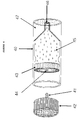
- the sample-pretreatment dispenser desirably comprises a capillary tube for sample extraction; a sample injection plunger having a capillary tube insertion hole for inserting the extracted sample; and a vessel of injector type, in which the sample injection plunger is mounted on an end thereof and a sample dispensing hole for dispensing the sample is formed on the other end.
- the sample-pretreatment may be carried out desirably by mixing the injected sample with hemolytic and labeling compounds in the vessel of injector type of the sample-pretreatment dispenser.
- the sample-pretreatment dispenser may further comprises a protein removal filter layer additionally, which substitutes for a filter mounted in a sensor to play the same role, thus simplifying the configuration of the sensor and providing an advantage of mass production.
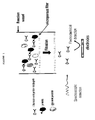
- Fig. 1 is a conceptual diagram depicting an electrochemical determination system of glycated proteins, in which the measurement is carried out comprising adding boronic acid derivatives to a solution, in which glycated and non-glycated proteins coexists, to be bound all to the glycated proteins; removing proteins having large molecular weights; and subtracting the detected concentration of boronic acid derivatives from the total concentration of boronic acid derivatives using an appropriate method for determining the boronic acid derivatives, i.e., using a spectroscopical method or an electrochemical method, thus measuring the amount of glycated proteins.
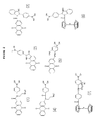
- Fig. 2 shows examples of boronic acid derivatives suitable for the determination of glycated proteins, for which electrochemical activating groups are substituted.
- chemical formula (1) denotes 4-[2-aminoethyl-(2-anthra-5,10-dioxo-carbonyl)amino]-phenyl boronic acid monohydrochloride
- formula (2) denotes 4-[11H-anthra ⁇ 1,2-d ⁇ imidazole-5,10-dioxo]-phenyl boronic acid monohydrochloride
- formula (3) denotes 4-[N- ⁇ anthraquinone-1-carbonyl ⁇ -benzoimidazole]-phenyl boronic acid monohydrochloride
- formula (4) denotes 4-[2-aminoethyl-(2-anthra-5,10-dioxo-amino)carbonyl]-phenyl boronic acid monohydrochloride
- formula (5) 3-amino-4-[
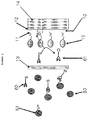
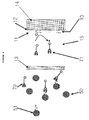
- Figs. 3 and 4 depict examples of electrochemical determination system of glycated proteins in accordance with a preferred embodiment, in which the systems are designed to configure a working electrode 11 and a counter electrode 12 faced with each other on the front and back sides of a porous film 10, preferably, a nylon or cellulose film having pores of micrometer sizes, via a plasma chemical vapor deposition process or a metal paste and provide a protein removal filter 13 in front of the working electrode 11 and an absorption pad 14 in front of the counter electrode 12 to make the sample containing protein-removed boronic acid derivative markers flow in one direction.
- a porous film 10 preferably, a nylon or cellulose film having pores of micrometer sizes
- the surface of the working electrode 11 is modified to enzymes 15 corresponding to the markers to determine the amount of markers, as shown in Fig. 3 and 4 ; and when the markers are general electrochemical ones, the surface of the working electrode is not modified but used as it is, as shown in Fig. 6 and 7 .
- Fig. 6 and 7 depict an example of a glycated protein determination sensor in accordance with another preferred embodiment, in which a working electrode 21, a counter electrode 22 and a reference electrode 23 are formed on an insulation substrate 20 made of plastic, silicon or ceramic via a method such as vacuum evaporation, screen-printing or photolithography process.
- the glycated protein determination sensor comprises adhesive layers 24 of double-sided tape or of a predetermined thickness having a flow path for leading the flow of the sample on the electrode substrate, a protein removal pad 26 contacting with a sample injection hole 25 and an upper plate 28 treated with an appropriate hydrophilic process in order for the injected sample to flow easily along with a capillary tube flow path 27, thus materializing the concept of the present invention proposed in Fig. 1 .
- an electrode for measuring the amount of non-glycated proteins or the total amount of proteins may be used at the same time.
- a reagent containing ferricyanides (Fe 3+ ) that cause oxidation-reduction reactions with hemoglobins or with a sample layer, in which such reagent is immobilized prior to the filter 13 or the pad 26, the resulting sample is passed through the protein removal filter 26 to measure the amount of reduced Fe 2+ , thus determining the total amount of hemoglobins.
- the determination of Fe 2+ /Fe 3+ contained in the filtrated sample can be carried out exactly using a double pulse of oxidation and reduction.
- Fig. 8 depicts one of the major elements of the electrochemical determination system of glycated proteins in accordance with other embodiments, in which an example of a sample-pretreatment dispenser 40 exactly adopts a necessary amount of a liquid sample extracted from a living body to take an appropriate pretreatment and couple the pretreated sample with labeling compounds.
- a capillary tube cap 42 is inserted into a sample injection hole 44 provided in a plunger 43 and the dispenser 40 is shaken to mix the sample injected with hemolytic and labeling compounds 45 filled in advance.
- a sample outlet cap 47 is opened to make the sample get out of the dispenser 40 through a sample outlet 46 by pushing the plunger 43 coupled with the capillary tube cap 42, thus injecting the appropriate amount of sample to an electrode sensor or a spectroscopic cell prepared.
- the sample-pretreatment dispenser 40 has an advantage in that it can take an appropriate pretreatment of sample and then inject the resulting sample to a measurement sensor without using a separate pipet or a vessel.
- Fig. 9 depicts another example of the sample-pretreatment dispenser, in which a protein removal filter 48 is established in the region of the sample outlet to play the same role of the filter 13 or the pad 26.
- the configuration of the glycated protein determination sensor can by simplified to facilitate the mass production of the sensor.
- Fig. 8 is a flow diagram showing the overall process materialized with a microfluidic lab-on-a-chip, in which the microfluidic chip uses immune antibodies capable of a specific binding to the proteins for analysis instead of the protein removal filter to remove glycated/non-glycated proteins, thus detecting the markers only.
- HbAlc 0.16 mM of hemolyzed HbAlc arranged by mixing 200 ⁇ l of 10% HbAlc control standard solution supplied by Bio-Rad Laboratories with 800 ⁇ l of hemolytic was mixed with 500 ⁇ l of phosphate buffer of pH 10.5 to arrange samples of 0.128, 0.096, 0.064, 0.032 and 0.0032 mM of 500 ⁇ l each. Then, the samples were mixed with p-phenylboronic amine (PBA) dissolved in 500 ⁇ l of the same buffer and left them for ten minutes. Subsequently, the samples were put into Ultra-4 Centrifugal Filter Device manufactured by Amicon Inc. to separate hemoglobin proteins. Next, UV absorbancy of PBA contained in the separated solutions was obtained in quartz cells and absorbancy of PBA corresponding to the respective concentrations of HbAlc was measured at 240 nm.
- PBA p-phenylboronic amine
- Fig. 9 depicts the results of measurement, from which it can be understood that the absorbancy of PBA contained in the separated solution is decreased as much as the concentration of HbAlc is increased.
- An electrode sensor suitable for materializing the concept of the present invention was configured as depicted in Fig. 10 .
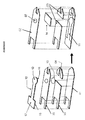
- a tape 03 having a sample injection path 04 was laminated on a lower substrate 01 of polyethylene (PET), a cellulose film or a nylon film 13 for removing hemocytes and proteins was put thereon and a middle substrate 05 were arranged to fix the film 13.
- An electrode body 10 including a working electrode 11 and a counter electrode 12 formed with nylon deposited with aurum via vacuum evaporation was put thereon and a middle substrate 06 of double-sided tape fixed the electrode body 10.
- An absorption pad 14 was fixed on the counter electrode 12 and an upper substrate 02 of PET was provided finally to protect the whole electrode sensor.
- Example 2 via the method proposed in Example 1 was injected to the electrode sensor configured as described above and a voltage of +400 mV was applied thereto to measure currents. As a result, it was learned that current signals were decreased as much as the amount of HbAlc was increased.
- the electrode sensors materialized in the manner of Example 2 were coupled in parallel with each other to configure an electrode sensor assembly as shown in Fig. 11 .
- a sample arranged in the same manner as Example 2 was injected to one electrode sensor and a sample processed with ferricyanides was injected to the other electrode sensor. Then, a voltage of +400 mV was applied thereto to measure currents, thus obtaining signals in proportion to the total amount of hemoglobin. From the ratio of the current signals obtained from the two electrode bodies, abundance ratio of glycated hemoglobin was calculated using the electrode sensor assembly depicted in Fig. 11 .
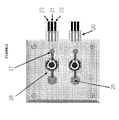
- Electrodes were formed via screen-printing on PET film and the electrode assemblies were coupled in parallel with each other as shown in Fig. 12 , in which ventilation (28) is provided for facilitating the injection of sample through a sample injection hole 25.
- a sample arranged in the same manner as Example 2 was injected to one electrode sensor and a sample processed with ferricyanides was injected to the other electrode sensor. Then, a voltage of +400 mV was applied thereto to measure currents, thus obtaining signals in proportion to the total amount of hemoglobin. From the ratio of the current signals obtained from the two electrode bodies, abundance ratio of glycated hemoglobin was calculated and the results well corresponded to those obtained by standard equipment of Bio-Rad Laboratories.
Landscapes
- Health & Medical Sciences (AREA)
- Life Sciences & Earth Sciences (AREA)
- Engineering & Computer Science (AREA)
- Immunology (AREA)
- Molecular Biology (AREA)
- Hematology (AREA)
- Biomedical Technology (AREA)
- Chemical & Material Sciences (AREA)
- Urology & Nephrology (AREA)
- Biotechnology (AREA)
- Microbiology (AREA)
- Cell Biology (AREA)
- Food Science & Technology (AREA)
- Medicinal Chemistry (AREA)
- Physics & Mathematics (AREA)
- Analytical Chemistry (AREA)
- Biochemistry (AREA)
- General Health & Medical Sciences (AREA)
- General Physics & Mathematics (AREA)
- Pathology (AREA)
- Tropical Medicine & Parasitology (AREA)
- Investigating Or Analysing Biological Materials (AREA)
Claims (5)
- Verfahren zum Messen glykierter Proteine in einer Lösung, in der glykierte/nicht-glykierte Proteine nebeneinander bestehen, das Folgendes umfasst:- Hinzufügen von Markierungsverbindungen, die in der Lage sind, sich gezielt an die glykierten Proteine zu binden, zu einer Lösung, in der glykierte/nicht-glykierte Proteine nebeneinander bestehen;- Filtern der Lösung, zu der Markierungsverbindungen hinzugefügt wurden, um glykierte Proteine, die an Markierungsverbindungen gebunden sind, und nicht-glykierte Proteine aus der Lösung durch ein Filtermittel zu entfernen; und- Quantifizieren der gefilterten Markierungsverbindungen, die nicht an die glykierten Proteine gebunden sind, in der gefilterten Lösung, die das Filtermittel durchläuft;wobei die Menge der glykierten Proteine anhand einer Differenz zwischen einer im Hinzufügeschritt hinzugefügten Konzentration der Markierungsverbindungen und einer im Quantifizierungsschritt quantifizierten Konzentration der Markierungsverbindungen bestimmt wird; und
wobei die Markierungsverbindungen Ferrocenderivate, Anthraquinon, Quinon und dessen Derivate und organische leitfähige Salze enthalten, oder wobei die Markierungsverbindungen ein Borsäurederivat sind, das einen Substituenten enthält, der mindestens eine Verbindung aufweist, die aus folgender Gruppe ausgewählt ist: Viologen, Dimethylferrocen (DMF), Ferricinium, Ferrocenmonocarboxylsäure (FCOOH), 7,7,8,8-Tetracyanoquino-dimethan (TCNQ), Pyrroloquinolinquinin (PQQ), Tetrathiafulvalen (TTF), N-methylacidinium (NMA+), Tetrathiatetracen (TTT), N-methylphenazinium (NMP+), Hydroquinon, 3-Dimethylaminobenzoesäure (MBTHDMAB), 3-Methyl-2-benzothio-zolinonhydrazon, 2-Methoxy-4-allylphenol, 4-Aminoantipyrin (AAP), Dimethylanilin, 4-Aminoantipyren, 4-Methoxynaphthol, 3,3',5,5'-Tetramethylbenzidin (TMB), 2,2-Aminodi-[3-ethyl-benzthiazolinsulfonat], Odianisidin, o-Toluidin, 2,4-Dichlorphenol, 4-Aminophenazon und Benzidin. - Verfahren zum Bestimmen einer relativen Menge zwischen nichtglykierten Proteinen und glykierten Proteinen, das Folgendes umfasst:- Durchführen des Verfahrens nach Anspruch 1,- Messen der Gesamtmenge der Proteine in der Lösung zum Messen nach dem Quantifizierungsschritt,- Bestimmen einer relativen Menge zwischen nicht-glykierten Proteinen und glykierten Proteinen.
- Verfahren zum Messen glykierter Proteine nach Anspruch 1,
wobei die Menge der gefilterten Markierungsverbindungen durch Messen des Absorptionsvermögens oder des Betrages an Fluoreszenz, Phosphoreszenz oder Chemilumineszenz bestimmt wird. - Verfahren nach einem der Ansprüche 1 bis 3, wobei die Markierungsverbindung eine funktionelle Gruppe eines elektrochemischen Oxidations-Reduktions-Paares, eine spektroskopische chromophorische Gruppe oder eine funktionelle Substratgruppe aus Enzym enthält.
- Verfahren nach einem der Ansprüche 1 bis 4, wobei das Filtermittel ein Proteinaustragsfilter, vorzugsweise einen Cellulosefilm oder einen Nylonfilm, umfasst.
Applications Claiming Priority (1)
| Application Number | Priority Date | Filing Date | Title |
|---|---|---|---|
| PCT/KR2006/002990 WO2008016193A1 (en) | 2006-07-29 | 2006-07-29 | Electrochemical determination system of glycated proteins |
Publications (3)
| Publication Number | Publication Date |
|---|---|
| EP2047272A1 EP2047272A1 (de) | 2009-04-15 |
| EP2047272A4 EP2047272A4 (de) | 2010-05-26 |
| EP2047272B1 true EP2047272B1 (de) | 2014-10-22 |
Family
ID=38997357
Family Applications (1)
| Application Number | Title | Priority Date | Filing Date |
|---|---|---|---|
| EP06783451.5A Not-in-force EP2047272B1 (de) | 2006-07-29 | 2006-07-29 | Elektrochemisches bestimmungssystem glykierter proteine |
Country Status (3)
| Country | Link |
|---|---|
| US (1) | US8338183B2 (de) |
| EP (1) | EP2047272B1 (de) |
| WO (1) | WO2008016193A1 (de) |
Families Citing this family (7)
| Publication number | Priority date | Publication date | Assignee | Title |
|---|---|---|---|---|
| JP5712129B2 (ja) * | 2008-09-02 | 2015-05-07 | ザ ガバニング カウンシル オブ ザ ユニバーシティ オブ トロント | ナノ構造化微小電極およびそれを組み込んだバイオセンシング装置 |
| ES2704685T3 (es) | 2011-01-11 | 2019-03-19 | Governing Council Univ Toronto | Método para la detección de proteínas |
| US9580742B2 (en) | 2011-03-10 | 2017-02-28 | Shana O. Kelley | Diagnostic and sample preparation devices and methods |
| EP2690435B1 (de) * | 2011-03-22 | 2022-10-05 | Sekisui Medical Co., Ltd. | Säule für flüssigchromatographie und verfahren zur analyse von hämoglobin |
| WO2013039362A2 (ko) * | 2011-09-15 | 2013-03-21 | 주식회사 엔디디 | 당화 단백질 측정센서 및 이를 포함하는 휴대용 당화 단백질 측정장치 |
| JP7068822B2 (ja) * | 2014-09-08 | 2022-05-17 | インディアン インスティテゥート オブ サイエンス | 電気化学的バイオセンサ及びアルブミンとその複合体の検出方法 |
| US11703513B2 (en) * | 2017-08-07 | 2023-07-18 | Polymer Technology Systems, Inc. | Systems and methods for enzymatic A1C detection and quantification |
Citations (1)
| Publication number | Priority date | Publication date | Assignee | Title |
|---|---|---|---|---|
| EP0194084B1 (de) * | 1985-02-21 | 1991-06-12 | MediSense, Inc. | Elektrochemischer Nachweis von Cis-Diolen |
Family Cites Families (12)
| Publication number | Priority date | Publication date | Assignee | Title |
|---|---|---|---|---|
| NO890029D0 (no) * | 1989-01-04 | 1989-01-04 | Axis Research | Nye modifiserte peptider og proteiner for in vitro diagnoser (diabetes). |
| EP0455225B1 (de) | 1990-05-01 | 1995-03-29 | Nacalai Tesque, Inc. | Verfahren zur Bestimmung des Glykationsprozentsatzes eines bestimmten Proteins |
| DE4206932A1 (de) * | 1992-03-05 | 1993-09-09 | Boehringer Mannheim Gmbh | Immunologische methode zur bestimmung eines haemoglobinderivates |
| US5631364A (en) | 1994-03-31 | 1997-05-20 | Axis Biochemicals Asa | Labelled boronic acid derivatives |
| US6162645A (en) * | 1997-03-13 | 2000-12-19 | Abbott Laboratories | Determination of % glycated hemoglobin |
| US6054039A (en) * | 1997-08-18 | 2000-04-25 | Shieh; Paul | Determination of glycoprotein and glycosylated hemoglobin in blood |
| US6174734B1 (en) | 1997-10-24 | 2001-01-16 | Abbott Laboratories | Measurement of glycated hemoglobin |
| WO2001053831A1 (en) | 2000-01-17 | 2001-07-26 | Unitec Co., Ltd. | Integrated support, integrated micro-container and permeable membrane, and method for production thereof and use thereof |
| EP1360505B1 (de) * | 2001-01-31 | 2008-04-16 | Scripps Laboratories, Inc. | Verfahren zur quantifizierung von glykiertem protein |
| US6677158B2 (en) | 2001-03-14 | 2004-01-13 | Exocell Inc. | Method for measurement of glycated hemoglobin by a rapid strip test procedure |
| DE60236429D1 (en) * | 2001-05-30 | 2010-07-01 | I Sens Inc | Biosensor |
| US6562581B2 (en) | 2001-08-31 | 2003-05-13 | Portascience | Method for quantitative determination of glycated hemoglobin |
-
2006
- 2006-07-29 EP EP06783451.5A patent/EP2047272B1/de not_active Not-in-force
- 2006-07-29 US US12/375,635 patent/US8338183B2/en not_active Expired - Fee Related
- 2006-07-29 WO PCT/KR2006/002990 patent/WO2008016193A1/en not_active Ceased
Patent Citations (1)
| Publication number | Priority date | Publication date | Assignee | Title |
|---|---|---|---|---|
| EP0194084B1 (de) * | 1985-02-21 | 1991-06-12 | MediSense, Inc. | Elektrochemischer Nachweis von Cis-Diolen |
Also Published As
| Publication number | Publication date |
|---|---|
| US20090308744A1 (en) | 2009-12-17 |
| US8338183B2 (en) | 2012-12-25 |
| EP2047272A1 (de) | 2009-04-15 |
| EP2047272A4 (de) | 2010-05-26 |
| WO2008016193A1 (en) | 2008-02-07 |
Similar Documents
| Publication | Publication Date | Title |
|---|---|---|
| EP2267150B1 (de) | Oxidierbare Verbindung als innere Referenz in einer Kontrolllösung für Biosensoren | |
| Wang et al. | Gold nano-flowers (Au NFs) modified screen-printed carbon electrode electrochemical biosensor for label-free and quantitative detection of glycated hemoglobin | |
| US8895258B2 (en) | Device for measuring proteins using biosensor | |
| JP6646579B2 (ja) | 高アンモニア血症の検出のためのデバイス及びデバイスを使用する方法 | |
| EP2284526B1 (de) | Biosensorsystem und verfahren zur messung einer analytkonzentration in einer blutprobe | |
| CN101622532A (zh) | 分析芯片以及分析装置 | |
| EP2047272B1 (de) | Elektrochemisches bestimmungssystem glykierter proteine | |
| EP3813666B1 (de) | Gestapelte sensoranordnung für einen flüssigkeitsanalysator | |
| KR100778889B1 (ko) | 전기화학적 당화단백질 검출 시스템 | |
| KR100816019B1 (ko) | 당화단백질 검출 시스템에 적합한 시료전처리 분주 기구 | |
| CN111315894B (zh) | 用酶组合物检测肌酸水平 | |
| CN113075142A (zh) | 一种肌酐测试试条及其应用 | |
| KR100611510B1 (ko) | 혈구를 포함하는 생리적 샘플내의 분석물의 농도를측정하기 위한 전기화학적 바이오센서용 테스트스트립 및시약 | |
| Pugia | Technology behind diagnostic reagent strips | |
| Nerurkar et al. | Insulin receptor assay in human erythrocytes as an index to insulin sensitivity of body tissues. | |
| D’Orazio | Electrochemical sensors: a review of techniques and applications in point of care testing | |
| Jesadabundit et al. | DNase I-based signal amplification on sequential flow microfluidic platform for electrochemical detection of alpha-fetoprotein using ruthenium (III)-methylene blue redox cycling | |
| EP4655582B1 (de) | Verfahren zur detektion und/oder quantifizierung einer platte von hämatologischen parametern in einer blut- oder derivat-bioflüssigkeit | |
| Sheikholeslam et al. | Electrochemical biosensor for glycated hemoglobin (HbA1c) | |
| IES80556B2 (en) | Electrochemical diagnostic detection device | |
| KR100591246B1 (ko) | 전기화학적 바이오센서용 테스트스트립 | |
| JPS63144245A (ja) | バイオセンサの製造方法およびバイオセンサ用電極板の製造方法 |
Legal Events
| Date | Code | Title | Description |
|---|---|---|---|
| PUAI | Public reference made under article 153(3) epc to a published international application that has entered the european phase |
Free format text: ORIGINAL CODE: 0009012 |
|
| 17P | Request for examination filed |
Effective date: 20090204 |
|
| AK | Designated contracting states |
Kind code of ref document: A1 Designated state(s): AT BE BG CH CY CZ DE DK EE ES FI FR GB GR HU IE IS IT LI LT LU LV MC NL PL PT RO SE SI SK TR |
|
| AX | Request for extension of the european patent |
Extension state: AL BA HR MK RS |
|
| RIC1 | Information provided on ipc code assigned before grant |
Ipc: G01N 33/50 20060101ALI20100414BHEP Ipc: G01N 33/72 20060101ALI20100414BHEP Ipc: G01N 33/68 20060101AFI20080401BHEP Ipc: G01N 33/58 20060101ALI20100414BHEP |
|
| A4 | Supplementary search report drawn up and despatched |
Effective date: 20100426 |
|
| 17Q | First examination report despatched |
Effective date: 20110512 |
|
| DAX | Request for extension of the european patent (deleted) | ||
| GRAJ | Information related to disapproval of communication of intention to grant by the applicant or resumption of examination proceedings by the epo deleted |
Free format text: ORIGINAL CODE: EPIDOSDIGR1 |
|
| GRAP | Despatch of communication of intention to grant a patent |
Free format text: ORIGINAL CODE: EPIDOSNIGR1 |
|
| INTG | Intention to grant announced |
Effective date: 20140520 |
|
| GRAS | Grant fee paid |
Free format text: ORIGINAL CODE: EPIDOSNIGR3 |
|
| GRAA | (expected) grant |
Free format text: ORIGINAL CODE: 0009210 |
|
| AK | Designated contracting states |
Kind code of ref document: B1 Designated state(s): AT BE BG CH CY CZ DE DK EE ES FI FR GB GR HU IE IS IT LI LT LU LV MC NL PL PT RO SE SI SK TR |
|
| REG | Reference to a national code |
Ref country code: GB Ref legal event code: FG4D |
|
| REG | Reference to a national code |
Ref country code: CH Ref legal event code: EP |
|
| REG | Reference to a national code |
Ref country code: AT Ref legal event code: REF Ref document number: 692894 Country of ref document: AT Kind code of ref document: T Effective date: 20141115 |
|
| REG | Reference to a national code |
Ref country code: IE Ref legal event code: FG4D |
|
| REG | Reference to a national code |
Ref country code: DE Ref legal event code: R096 Ref document number: 602006043452 Country of ref document: DE Effective date: 20141204 |
|
| REG | Reference to a national code |
Ref country code: NL Ref legal event code: VDEP Effective date: 20141022 |
|
| REG | Reference to a national code |
Ref country code: AT Ref legal event code: MK05 Ref document number: 692894 Country of ref document: AT Kind code of ref document: T Effective date: 20141022 |
|
| REG | Reference to a national code |
Ref country code: LT Ref legal event code: MG4D |
|
| PG25 | Lapsed in a contracting state [announced via postgrant information from national office to epo] |
Ref country code: ES Free format text: LAPSE BECAUSE OF FAILURE TO SUBMIT A TRANSLATION OF THE DESCRIPTION OR TO PAY THE FEE WITHIN THE PRESCRIBED TIME-LIMIT Effective date: 20141022 Ref country code: FI Free format text: LAPSE BECAUSE OF FAILURE TO SUBMIT A TRANSLATION OF THE DESCRIPTION OR TO PAY THE FEE WITHIN THE PRESCRIBED TIME-LIMIT Effective date: 20141022 Ref country code: LT Free format text: LAPSE BECAUSE OF FAILURE TO SUBMIT A TRANSLATION OF THE DESCRIPTION OR TO PAY THE FEE WITHIN THE PRESCRIBED TIME-LIMIT Effective date: 20141022 Ref country code: IS Free format text: LAPSE BECAUSE OF FAILURE TO SUBMIT A TRANSLATION OF THE DESCRIPTION OR TO PAY THE FEE WITHIN THE PRESCRIBED TIME-LIMIT Effective date: 20150222 Ref country code: NL Free format text: LAPSE BECAUSE OF FAILURE TO SUBMIT A TRANSLATION OF THE DESCRIPTION OR TO PAY THE FEE WITHIN THE PRESCRIBED TIME-LIMIT Effective date: 20141022 Ref country code: PT Free format text: LAPSE BECAUSE OF FAILURE TO SUBMIT A TRANSLATION OF THE DESCRIPTION OR TO PAY THE FEE WITHIN THE PRESCRIBED TIME-LIMIT Effective date: 20150223 |
|
| PG25 | Lapsed in a contracting state [announced via postgrant information from national office to epo] |
Ref country code: PL Free format text: LAPSE BECAUSE OF FAILURE TO SUBMIT A TRANSLATION OF THE DESCRIPTION OR TO PAY THE FEE WITHIN THE PRESCRIBED TIME-LIMIT Effective date: 20141022 Ref country code: SE Free format text: LAPSE BECAUSE OF FAILURE TO SUBMIT A TRANSLATION OF THE DESCRIPTION OR TO PAY THE FEE WITHIN THE PRESCRIBED TIME-LIMIT Effective date: 20141022 Ref country code: CY Free format text: LAPSE BECAUSE OF FAILURE TO SUBMIT A TRANSLATION OF THE DESCRIPTION OR TO PAY THE FEE WITHIN THE PRESCRIBED TIME-LIMIT Effective date: 20141022 Ref country code: AT Free format text: LAPSE BECAUSE OF FAILURE TO SUBMIT A TRANSLATION OF THE DESCRIPTION OR TO PAY THE FEE WITHIN THE PRESCRIBED TIME-LIMIT Effective date: 20141022 Ref country code: LV Free format text: LAPSE BECAUSE OF FAILURE TO SUBMIT A TRANSLATION OF THE DESCRIPTION OR TO PAY THE FEE WITHIN THE PRESCRIBED TIME-LIMIT Effective date: 20141022 Ref country code: GR Free format text: LAPSE BECAUSE OF FAILURE TO SUBMIT A TRANSLATION OF THE DESCRIPTION OR TO PAY THE FEE WITHIN THE PRESCRIBED TIME-LIMIT Effective date: 20150123 |
|
| REG | Reference to a national code |
Ref country code: DE Ref legal event code: R097 Ref document number: 602006043452 Country of ref document: DE |
|
| PG25 | Lapsed in a contracting state [announced via postgrant information from national office to epo] |
Ref country code: SK Free format text: LAPSE BECAUSE OF FAILURE TO SUBMIT A TRANSLATION OF THE DESCRIPTION OR TO PAY THE FEE WITHIN THE PRESCRIBED TIME-LIMIT Effective date: 20141022 Ref country code: CZ Free format text: LAPSE BECAUSE OF FAILURE TO SUBMIT A TRANSLATION OF THE DESCRIPTION OR TO PAY THE FEE WITHIN THE PRESCRIBED TIME-LIMIT Effective date: 20141022 Ref country code: EE Free format text: LAPSE BECAUSE OF FAILURE TO SUBMIT A TRANSLATION OF THE DESCRIPTION OR TO PAY THE FEE WITHIN THE PRESCRIBED TIME-LIMIT Effective date: 20141022 Ref country code: RO Free format text: LAPSE BECAUSE OF FAILURE TO SUBMIT A TRANSLATION OF THE DESCRIPTION OR TO PAY THE FEE WITHIN THE PRESCRIBED TIME-LIMIT Effective date: 20141022 Ref country code: DK Free format text: LAPSE BECAUSE OF FAILURE TO SUBMIT A TRANSLATION OF THE DESCRIPTION OR TO PAY THE FEE WITHIN THE PRESCRIBED TIME-LIMIT Effective date: 20141022 |
|
| PLBE | No opposition filed within time limit |
Free format text: ORIGINAL CODE: 0009261 |
|
| STAA | Information on the status of an ep patent application or granted ep patent |
Free format text: STATUS: NO OPPOSITION FILED WITHIN TIME LIMIT |
|
| PG25 | Lapsed in a contracting state [announced via postgrant information from national office to epo] |
Ref country code: IT Free format text: LAPSE BECAUSE OF FAILURE TO SUBMIT A TRANSLATION OF THE DESCRIPTION OR TO PAY THE FEE WITHIN THE PRESCRIBED TIME-LIMIT Effective date: 20141022 |
|
| 26N | No opposition filed |
Effective date: 20150723 |
|
| PG25 | Lapsed in a contracting state [announced via postgrant information from national office to epo] |
Ref country code: SI Free format text: LAPSE BECAUSE OF FAILURE TO SUBMIT A TRANSLATION OF THE DESCRIPTION OR TO PAY THE FEE WITHIN THE PRESCRIBED TIME-LIMIT Effective date: 20141022 Ref country code: MC Free format text: LAPSE BECAUSE OF FAILURE TO SUBMIT A TRANSLATION OF THE DESCRIPTION OR TO PAY THE FEE WITHIN THE PRESCRIBED TIME-LIMIT Effective date: 20141022 |
|
| REG | Reference to a national code |
Ref country code: CH Ref legal event code: PL |
|
| GBPC | Gb: european patent ceased through non-payment of renewal fee |
Effective date: 20150729 |
|
| PG25 | Lapsed in a contracting state [announced via postgrant information from national office to epo] |
Ref country code: LU Free format text: LAPSE BECAUSE OF FAILURE TO SUBMIT A TRANSLATION OF THE DESCRIPTION OR TO PAY THE FEE WITHIN THE PRESCRIBED TIME-LIMIT Effective date: 20150729 |
|
| REG | Reference to a national code |
Ref country code: IE Ref legal event code: MM4A |
|
| PG25 | Lapsed in a contracting state [announced via postgrant information from national office to epo] |
Ref country code: CH Free format text: LAPSE BECAUSE OF NON-PAYMENT OF DUE FEES Effective date: 20150731 Ref country code: LI Free format text: LAPSE BECAUSE OF NON-PAYMENT OF DUE FEES Effective date: 20150731 Ref country code: GB Free format text: LAPSE BECAUSE OF NON-PAYMENT OF DUE FEES Effective date: 20150729 |
|
| REG | Reference to a national code |
Ref country code: FR Ref legal event code: ST Effective date: 20160331 |
|
| PG25 | Lapsed in a contracting state [announced via postgrant information from national office to epo] |
Ref country code: FR Free format text: LAPSE BECAUSE OF NON-PAYMENT OF DUE FEES Effective date: 20150731 |
|
| PG25 | Lapsed in a contracting state [announced via postgrant information from national office to epo] |
Ref country code: IE Free format text: LAPSE BECAUSE OF NON-PAYMENT OF DUE FEES Effective date: 20150729 |
|
| PG25 | Lapsed in a contracting state [announced via postgrant information from national office to epo] |
Ref country code: HU Free format text: LAPSE BECAUSE OF FAILURE TO SUBMIT A TRANSLATION OF THE DESCRIPTION OR TO PAY THE FEE WITHIN THE PRESCRIBED TIME-LIMIT; INVALID AB INITIO Effective date: 20060729 Ref country code: BG Free format text: LAPSE BECAUSE OF FAILURE TO SUBMIT A TRANSLATION OF THE DESCRIPTION OR TO PAY THE FEE WITHIN THE PRESCRIBED TIME-LIMIT Effective date: 20141022 |
|
| PG25 | Lapsed in a contracting state [announced via postgrant information from national office to epo] |
Ref country code: TR Free format text: LAPSE BECAUSE OF FAILURE TO SUBMIT A TRANSLATION OF THE DESCRIPTION OR TO PAY THE FEE WITHIN THE PRESCRIBED TIME-LIMIT Effective date: 20141022 |
|
| PG25 | Lapsed in a contracting state [announced via postgrant information from national office to epo] |
Ref country code: BE Free format text: LAPSE BECAUSE OF FAILURE TO SUBMIT A TRANSLATION OF THE DESCRIPTION OR TO PAY THE FEE WITHIN THE PRESCRIBED TIME-LIMIT Effective date: 20141022 |
|
| PGFP | Annual fee paid to national office [announced via postgrant information from national office to epo] |
Ref country code: DE Payment date: 20170725 Year of fee payment: 12 |
|
| REG | Reference to a national code |
Ref country code: DE Ref legal event code: R119 Ref document number: 602006043452 Country of ref document: DE |
|
| PG25 | Lapsed in a contracting state [announced via postgrant information from national office to epo] |
Ref country code: DE Free format text: LAPSE BECAUSE OF NON-PAYMENT OF DUE FEES Effective date: 20190201 |