EP2048227B1 - Verfahren zur proliferation von stammzellen - Google Patents
Verfahren zur proliferation von stammzellen Download PDFInfo
- Publication number
- EP2048227B1 EP2048227B1 EP09001019.0A EP09001019A EP2048227B1 EP 2048227 B1 EP2048227 B1 EP 2048227B1 EP 09001019 A EP09001019 A EP 09001019A EP 2048227 B1 EP2048227 B1 EP 2048227B1
- Authority
- EP
- European Patent Office
- Prior art keywords
- cells
- stem cells
- heparan sulfate
- mesenchymal stem
- fgf
- Prior art date
- Legal status (The legal status is an assumption and is not a legal conclusion. Google has not performed a legal analysis and makes no representation as to the accuracy of the status listed.)
- Expired - Lifetime
Links
Images




Classifications
-
- C—CHEMISTRY; METALLURGY
- C12—BIOCHEMISTRY; BEER; SPIRITS; WINE; VINEGAR; MICROBIOLOGY; ENZYMOLOGY; MUTATION OR GENETIC ENGINEERING
- C12N—MICROORGANISMS OR ENZYMES; COMPOSITIONS THEREOF; PROPAGATING, PRESERVING, OR MAINTAINING MICROORGANISMS; MUTATION OR GENETIC ENGINEERING; CULTURE MEDIA
- C12N5/00—Undifferentiated human, animal or plant cells, e.g. cell lines; Tissues; Cultivation or maintenance thereof; Culture media therefor
- C12N5/06—Animal cells or tissues; Human cells or tissues
- C12N5/0602—Vertebrate cells
- C12N5/0652—Cells of skeletal and connective tissues; Mesenchyme
- C12N5/0662—Stem cells
- C12N5/0663—Bone marrow mesenchymal stem cells (BM-MSC)
-
- A—HUMAN NECESSITIES
- A61—MEDICAL OR VETERINARY SCIENCE; HYGIENE
- A61P—SPECIFIC THERAPEUTIC ACTIVITY OF CHEMICAL COMPOUNDS OR MEDICINAL PREPARATIONS
- A61P43/00—Drugs for specific purposes, not provided for in groups A61P1/00-A61P41/00
-
- C—CHEMISTRY; METALLURGY
- C12—BIOCHEMISTRY; BEER; SPIRITS; WINE; VINEGAR; MICROBIOLOGY; ENZYMOLOGY; MUTATION OR GENETIC ENGINEERING
- C12N—MICROORGANISMS OR ENZYMES; COMPOSITIONS THEREOF; PROPAGATING, PRESERVING, OR MAINTAINING MICROORGANISMS; MUTATION OR GENETIC ENGINEERING; CULTURE MEDIA
- C12N2501/00—Active agents used in cell culture processes, e.g. differentation
- C12N2501/90—Polysaccharides
- C12N2501/91—Heparin
Definitions
- the invention relates to methods of proliferating stem cells. More particularly, the invention relates to the use of glycosaminoglycans or proteoglycans to promote the growth of stem cells in ex vivo culture, while preserving their multipotentiality.
- human mesenchymal stem cells constitute an exciting prospect for cell-based therapy in regenerating diseased or injured tissues.
- These adult stem cells can be readily purified from a small volume of bone marrow aspirates, and expanded in vitro for a limited number of population doublings (PD) ( ⁇ 30) before they reach replicative senescence. It is likely that this growth arrest is linked to telomere shortening as over-expression of the catalytic subunit of the telomerase (hTERT) is sufficient to increase the life span to several hundred population doublings.
- PD population doublings
- hTERT catalytic subunit of the telomerase
- telomerized cells retain their ability to assume phenotypes of mesenchymal tissues, thus providing a useful tool for the study of hMSCs. However, it does not address the issue of attaining a therapeutic number of multipotent stem cells in culture without severely affecting their regenerative potential.
- the spontaneous differentiation of stem cells in culture is a result of a change in the microenvironment from that normally found in the naive stem cell niche.
- the stem cell niche is a sum of signals from interactions with specific components of the extracellular matrix (ECM) and neighboring cells, and the hormonal status of the microenvironment.
- ECM extracellular matrix
- Colter et al. (2000) Proc. Natl. Acad. Sci. 97:3213-3218 disclose a method for culturing and expanding mesenchymal stem cells from bone marrow.
- Qian et al. (2004) Biomaterials 25:1331-1337 provide a method for the expansion and neuronal differentiation of mesenchymal stem cells on Matrigel-coated dishes.
- Contact of the mesenchymal stem cell cultures with heparan sulphate 2 is not referred to in Colter et al. (supra) and Qian et al. (supra).
- Brickman et al. (1998) J. Biol. Chem.
- a first aspect of the invention relates to an in vitro culture of mesenchymal stem cells, in contact with isolated heparan sulphate 2 (HS2).
- HS2 isolated heparan sulphate 2
- proteoglycans generally represent a special class of glycoproteins that are heavily glycosylated. They consist of a core protein with one or more covalently attached glycosaminoglycan (GAG) chain(s). These glycosaminoglycan chains are long, linear carbohydrate polymers that are negatively charged under physiological conditions, due to the occurrence of sulfate and uronic acid groups. Proteoglycans are a major component of the animal extracellular matrix. Therein, proteoglycans form large complexes, both to other proteoglycans and also to fibrous matrix proteins (such as collagen).
- GAG glycosaminoglycan
- proteoglycans can be attributed to either the protein core or the attached GAG chain.
- HSPGs heparan sulfate proteoglycans
- the core protein can exist in three forms: a secreted form known as perlecan, a form anchored in the plasma membrane known as glypican, and a transmembrane form known as syndecan. They are uniquitous constituents of mammalian cell surfaces and most extracellular matrices.
- the heparan sulfate side chains consist of alternately arranged D-glucuronic acid or L-iduronic acid and D-glucosamine, linked via (1 ⁇ 4) glycosidic bonds.
- the glucosamine is often N-acetylated or N-sulfated and both the uronic acid and the glucosamine may be additionally O-sulfated.
- the specificity of a particular HSPG for a particular binding partner is created by the specific pattern of carboxyl, acetyl and sulfate groups attached to the glucosamine and the uronic acid. In contrast to heparin, heparan sulfate contains less N- and O-sulfate groups and more N-acetyl groups.
- the heparan sulfate side chains are linked to a serine residue of the core protein through a tetrasaccharide linkage (-glucuronosyl- ⁇ -(1 ⁇ 3)-galactosyl- ⁇ -(1 ⁇ 3)-galactosyl- ⁇ -(1 ⁇ 4)-xylosyl- ⁇ -1-O-(Serine)) region.
- N-acetylglucosamine to N-sulfoglucosamine creates a focus for other modifications, including epimerization of glucuronic acid to iduronic acid and a complex pattern of O-sulfations on glucosamine or iduronic acids.
- the hexuronate residues remain as glucuronate, whereas in the highly sulfated N-sulfated regions, the C-5 epimer iduronate predominates. This limits the number of potential disaccharide variants possible in any given chain but not the abundance of each.
- heparan sulfate chains play key roles in the modulation of the action of a large number of extracellular ligands, including regulation and presentation of growth and adhesion factors to the cell, via a complicated combination of autocrine, juxtacrinc and paracrine feedback loops, so controlling intracellular signaling and thereby the differentiation of stem cells.
- heparan sulfate glycosaminoglycans may be generically described (Alberts et al. (1989) Garland Publishing, Inc, New York & London, pp. 804 and 805), heparan sulfate glycosaminoglycan species isolated from a single source may differ in biological activity.
- heparan sulfate glycosaminoglycans obtained from neuroepithelial cells could specifically activate either FGF-1 or FGF-2, depending on mitogenic status.
- a heparan sulfate (HS) to interact with either FGF-1 or FGF-2 is described in WO 96/23003 .
- a respective HS capable of interacting with FGF-1 is obtainable from murine cells at embryonic day from about 11 to about 13
- a HS capable of interacting with FGF-2 is obtainable at embryonic day from about 8 to about 10.
- the heparan sulfate is heparan sulfate 2 (HS2).
- HS2 denominates the sugar chains of a HSPG, which have been found to have affinity for FGF-2.
- HS2 has a molecular weight of approximately 25 kDa and thus, assuming an average molecular mass of 400 Da per disaccharide, consists of about 60 disaccharides.
- the disaccharide composition of HS2 is set forth in Brickman et al. (supra).
- the stem cells are preferably adult mesenchymal stem cells, wherein the adult stem cells can be applied for therapeutic use.
- the stem cells are preferably human mesenchymal stem cells, and most preferably human adult mesenchymal stem cells.
- Figure 1 shows the effect of different heparan sulfate 2 concentrations on human mesenchymal stem cell proliferation.
- Human mesenchymal stem cells were plated at 3300 cells/cm 2 in 96 well plates (NUNC) and cultured for 9 days in the presence of different concentrations of heparan sulfate 2. The metabolic activity was determined after 1, 3, 6 and 9 days of culture by WST-1 assay (Roche).
- Figure 2 illustrates the effect of heparan sulfate 2 on human mesenchymal stem cell proliferation in short term cultures.
- hMSC (Cambrex) were seeded in control media (DMEM, 1000mg/l glucose, 10% fetal calf serum (Hyclone), penicillin / streptomycin, 2 mM L-Glutamine), serum starved for 48 hours in media containing 0.2% FCS and changed to control media (dotted line and open bars) or media containing 160 ng/ml HS2 (solid line and grey bars) or heparin (striped line and black bars) the day after (day 0).
- DMEM 1000mg/l glucose, 10% fetal calf serum (Hyclone), penicillin / streptomycin, 2 mM L-Glutamine
- hMSC Heparan sulfate 2 increases the cell cycle numbers of human mesenchymal stem cells.
- hMSC were plated at 5000 cells/cm 2 and analyzed for DNA content after 1, 2, 3, 4 and 7 days. Cells were lifted with trypsin and counted as above, washed in PBS, 1mM EDTA and fixed in 100% ice cold methanol. Cells were washed in PBA and stained with a solution of PI, RNaseA, Triton-X and analyzed on GUAVA PCA-96.
- Heparan sulfate decreases the percentage of cells undergoing apoptosis.
- hMSC were plated at 3300 cells/cm 2 and viability and apopotosis was determined after 9 days. Cells were stained using Annexin kit (GUAVA technologies) and analyzed on GUAVA PCA-96 flow cytometer.
- D Effects of different FCS concentrations on proliferation of human mesenchymal stem cells in the presence or absence of heparan sulfate 2 (HS2).
- hMSCs were plated at 3300 cells/cm 2 in 96 well plates, cultured in media containing 0, 1, 2.5, 7.5 or 10% FCS and the metabolic activity was determined after nine days in culture using WST-1 kit (Roche). Every point or bar in the figures represents the average and standard deviation of at least three independent cultures each measured in triplicate
- Figure 3 illustrates that HS2 increases the life span and maintains the stemness of human mesenchymal stem cell cultures.
- Low passage hMSC were plated at 5000 cells/cm 2 , changed to and maintained in control media (striped line and open bars) or media containing 160 ng/ml HS2 (solid line and grey bars) or heparin (dotted line and black bars) the day after (day 0). Cells were cultured until sub-confluence and at every passage cells were lifted with trypsin, counted and reseeded at 5000 cells/cm 2 .
- hMSCs were plated at 5000 cells/cm 2 and cultured in DMEM + 10% FCS without (ctrl) or with addition of 160ng/ml HS2 or heparin. At every passage cells were counted by GUAVA viacount (two samples in triplicate), and reseeded at a density of 5000 cells/cm 2 .
- Figure 4 illustrates the effects of heparan sulfate 2 on adipocyte and osteoblast differentiation.
- hMSCs from carry on cultures in media with or without 160 ng/ml heparan sulfate 2 (HS2) or heparin (Hep) were seeded at 18,000 cells/cm 2 in 12 well plates at passage +4. Cells were cultured to confluence, changed to adipogenic (DMEM with 10% FCS, 10 ⁇ g/ml insulin, 0.5 mM methylisobutylxanthine, 1 ⁇ M Dexamethasone) or control media and cultured for 23 days.
- HS2 heparan sulfate 2
- Hep heparin
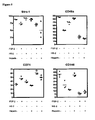
- Figure 5 illustrates the effect of heparan sulfate 2 on human mesenchymal stem cell surface marker expression.
- hMSCs were plated at 3300 cells/cm 2 in 60mm culture dishs (NUNCTM) and cultured for 5 days in the presence or absence of 160 ng/ml HS2, 160 ng/ml heparin (negative control), 10 ng/ml FGF-2 (positive control), FGF-2/ Heparin and FGF-2/HS2 combinations before measuring the proportion of cells positive for cell surface markers Stro-1(A), CD49a(B), CD71(C) and CD146(D) by antibody staining based flow cytometry. Each point represents the average and data of triplicate experiments.
- Figure 6 illustrates the mitogenic effect of heparan sulfate 2 and FGF-2 on human mesenchymal stem cells.
- hMSCs were plated at 3300 cells/cm 2 in 24 well plates (NUNC) and cultured for 9 days in the presence or absence of 160 ng/ml heparan sulfate 2 (HS2), 160 ng/ml of heparin and 10 ng/ml of FGF-2 as well as combinations of FGF-2 with HS2 or heparin.
- NUNC heparan sulfate 2
- Figure 7 illustrates the effect of heparan sulfate 2 and FGF-2 on human mesenchymal stem cell survival.
- Human mesenchymal stem cells were plated at 3300 cells/cm 2 in 24 well plates (NUNC) and cultured for 9 days in the presence or absence of 160 ng/ml heparan sulfate 2, 160 ng/ml of heparin and 10 ng/ml of FGF-2 as well as combinations of FGF-2 with HS2 or heparin.
- the viability and apoptosis of the cells in culture were tested by Annexin V flow cytometry.
- Figure 8 illustrates the effect of heparan sulfate 2 on the multipotentiality of human mesenchymal stem cells.
- Gene expression signature was used to compare low and high population doublings (PD) cells cultured in different conditions (with or without 160 ng/ml HS2 or heparin). The signature was constructed using Singular Value Decomposition (SVD). SVD was performed on gene expression measurements from stem cell SuperArrays (extracted using GEArray, SuperArray Bioscience Corp, log-transformed and corrected for cross-chip variations), projecting the data onto the first 2 maximally-variant singular vectors. Abbreviations used: Hep heparin, Hsp heparan sulfate 2, Ctrl control. The numbers indicate the PD number.
- proliferation or “proliferating” is used in its regular meaning and relates to the expansion of cells or tissue, including cell growth and cell division.
- maintenance refers to the preservation of the "stemness”, i.e. the multipotentiality, and the viability of said stem cells in culture.
- heparan sulfate or “HS” is meant chains that are initially synthesised in the Golgi apparatus as polysaccharides consisting of tandem repeats of D-glucuronic acid (GIcA) and N-acetyl-D-glucosamine (GlcNAc).
- the nascent polysaccharides may be subsequently modified in a series of steps: N-deacetylation/N-sulfation of GlcNAc, C5 epimerisation of GlcA to iduronic acid (IdoA), O-sulphation at C2 of IdoA and GlcA, O-sulphation at C6 of N-sulphoglucosamine (GlcNS) and occasional O-sulphation at C3 of GlcNS.
- HSNDST HS N-deacetylase/N-sulfotransferase
- HS2ST HS 2-O-sulfotransferase
- HS 6-O sulfotransferase
- HS 3-O-sulfotransferase respectively.
- heparan sulfate 2 or "HS2” is meant the heparan sulfate that is described by Brickman et al. (1998), J. Biol. Chem. 273(8), 4350-4359 ) and that is capable of interacting with FGF-2. Accordingly, this heparan sulfate 2 is obtainable from heparan proteoglycans of murine cells at embryonic day 10 as described by Brickman (supra).
- the HS2 that is used in the experimental section of the present application is derived from embryonic mouse, it has been found to be very potent on mouse, human, rat, chicken, Xenopus and drosophila cells.
- any heparan sulfate 2 and any respective heparan sulfate proteoglycan that is capable of interacting with FGF-2 and that is able to promote or facilitate proliferation and/or maintenance of stem cells ex vivo is encompassed is the present invention, including such heparan sulfate trencheoglycan and heparan sulfate 2 that is yet to be isolated from a specific species.
- Mesenchymal stem cells or human bone marrow stromal stem cells are defined as pluripotent progenitor cells with the ability to generate cartilage, bone, muscle, tendon, ligament and fat. These primitive progenitors exist postnatally and exhibit stem cell characteristics, namely low incidence and extensive renewal potential. These properties in combination with their developmental plasticity have generated tremendous interest in the potential use of mesenchymal stem cells to replace damaged tissues. In essence mesenchymal stem cells could be cultured to expand their numbers then transplanted to the injured site or after seeding in/on scaffolds to generate appropriate tissue constructs.
- an alternative approach for skeletal, muscular, tendon and ligament repair is the selection, expansion and modulation of the appropriate progenitor cells such as osteoprogenitor cells in the case of bone in combination with a conductive or inductive scaffolds to support and guide regeneration together with judicious selection of specific tissue growth factors.
- Human bone marrow mesenchymal stem cells can be isolated and detected using selective markers, such as STRO-1, from a CD34+ fraction indicating their potential for marrow repopulation. These cell surface markers are only found on the cell surface of mesencymal stem cells and are an indication of the cells pluripotency.
- GAGs glycosaminoglycans
- FGFR1 is also expressed on human mesenchymal stem cells (hMSCs). It was found in the present invention that the addition of glycosaminoglycans together with growth factors (in form of FCS supplementation) to a culture of bone marrow derived adult human mesenchymal stem cells could optimize the culture conditions for growth and differentiation of these cells.
- hMSCs human mesenchymal stem cells
- heparan sulfate glycosaminoglycan (HS) heparan sulfate 2 (HS2) as defined above was used.
- the heparan sulfate 2 used in the invention may be isolated from any suitable source, for example from precursor cells other than murine (e.g. human, rat, chicken, drosophila, Xenopus, zebra fish, dog to name only a few illustrative examples) using, for example, the method of isolating as described in WO 96/23003 or by Brickman et al. (supra).
- HS2 heparan sulfate 2
- the (optimal) dose of 160 ng/ml increased the number of cells by 65% at sub-confluency ( Fig. 2A , day 6) and part of this increase was due to a decrease in apoptosis ( Fig.2C ), as determined by flow cytometric assays. However, most of this increase is due to a higher number of cells entering the cell cycle at a given time as shown in Figure 2B .
- the increase in proliferation of human mesenchymal stem cells is comparable to the effect observed in the presence of 10 ng/ml of FGF-2, a known mitogen ( Figure 6 ).
- FGF-2 a known mitogen
- FGF 2 is also known to protect against apoptosis.
- Heparan sulfate 2 (HS2) displayed properties similar to FGF-2 it was investigated if protection against apoptosis contributed to the increase in cell number observed. It could be demonstrated that the increase in proliferation is associated with a decrease in apoptosis ( Figure 7 ).
- HS2 has a mitogenic effect even at FCS concentration as low 1%.
- FCS concentration as low 1%.
- HS2 was not able to significantly increase the number of cells in serum starve condition over a short period of time.
- the overall increase in proliferation of the hMSCs cultured in the presence of HS2 implicates that for a given period of time they undergo more population doubling (PD). Since PD is limited in these cells, it was expected that they reach replicative senescence earlier if kept in culture for a long term. Surprisingly, it was demonstrated that cells proliferation slowed down after a similar time in culture as the control but yielded 50% more population doubling after 45 days in culture ( Fig. 3A ). Since FGF-2 was shown to increase telomerase activity in neural precursor cells ( Haik et al. (2000) Oncogene 19, 2957- 2966 ), it was verified if any residual activity was present in the hMSCs.
- Osteogenesis and adipogenesis are induced and controlled by a range heparan binding growth factors like members of the FGF and transforming growth factor beta families.
- Differentiation assays ( Fig. 4 ) demonstrated that the addition of HS2 alone or in the presence of osteoinducive media (10 nM dexamethazone, 50 ⁇ M glycerophosphate and 100 ⁇ M L-ascorbate) or adipogenic media (DMEM with 10% FCS, 10 ⁇ g/ml insulin, 0.5 mM methlisobutylxanthine, 1 ⁇ M Dexamethasone) did not significantly effect on human mesenchymal stem cell differentiation, proving that although HS2 increases hMSC proliferation and preserves their "stemness", their capability to differentiate is not impaired.
- FIG. 5 demonstrates that human mesenchymal stem cells cultured in the presence of HS2 proliferate while maintaining their pluripotency while those human mesenchymal stem cells cultured with FGF-2 are able to proliferate but the cells loose some of their pluripotency.
- the maintenance of the mutipotentiality of mesenchymal stem cells is indicated by high level of STRO-1 expression, whereas the enhanced proliferation of the stem cells is hinted at by higher level of CD71 expression which is an iron transporter and important for proliferation.
- cell mobility is increased implicated by decreased expression level of cell adhesion molecules CD49a and CD146. From the results it appears that the HS2 mediated mechanism of proliferation may include FGF-independent signaling pathways.
- gene expression signature was used to compare low and high PD cells cultured in the different conditions.
- the signature was constructed using Singular Value Decomposition (SVD) previously shown to be a powerful tool allowing the distinction between tumors subtypes based on gene profiling.
- Singular Value Decomposition Singular Value Decomposition
- heparan sulfate 2 may prove to be a valuable tool for the ex vivo propagation of stem cells, maintenance of "stemness” and specific cell differentiation and thus help unlock the potential use of stem cells for therapy and tissue repair.
Landscapes
- Health & Medical Sciences (AREA)
- Life Sciences & Earth Sciences (AREA)
- Engineering & Computer Science (AREA)
- Biomedical Technology (AREA)
- Bioinformatics & Cheminformatics (AREA)
- Chemical & Material Sciences (AREA)
- Organic Chemistry (AREA)
- Developmental Biology & Embryology (AREA)
- Zoology (AREA)
- Wood Science & Technology (AREA)
- Genetics & Genomics (AREA)
- Biotechnology (AREA)
- General Health & Medical Sciences (AREA)
- Biochemistry (AREA)
- Microbiology (AREA)
- Cell Biology (AREA)
- Hematology (AREA)
- Immunology (AREA)
- Rheumatology (AREA)
- General Engineering & Computer Science (AREA)
- Nuclear Medicine, Radiotherapy & Molecular Imaging (AREA)
- Veterinary Medicine (AREA)
- Public Health (AREA)
- Animal Behavior & Ethology (AREA)
- Pharmacology & Pharmacy (AREA)
- Medicinal Chemistry (AREA)
- General Chemical & Material Sciences (AREA)
- Chemical Kinetics & Catalysis (AREA)
- Micro-Organisms Or Cultivation Processes Thereof (AREA)
Claims (3)
- In-vitro-Kultur von mesenchymalen Stammzellen in Kontakt mit isoliertem Heparansulfat 2 (HS2).
- In-vitro-Kultur von mesenchymalen Stammzellen nach Anspruch 1, worin die Stammzellen menschliche Stammzellen sind.
- Verwendung von isoliertem HS2 in einer Kultur von mesenchymalen Stammzellen in vitro.
Applications Claiming Priority (2)
| Application Number | Priority Date | Filing Date | Title |
|---|---|---|---|
| US65163305P | 2005-02-11 | 2005-02-11 | |
| EP20060710368 EP1846548B1 (de) | 2005-02-11 | 2006-02-13 | Verfahren zur proliferation von stammzellen |
Related Parent Applications (2)
| Application Number | Title | Priority Date | Filing Date |
|---|---|---|---|
| EP20060710368 Division EP1846548B1 (de) | 2005-02-11 | 2006-02-13 | Verfahren zur proliferation von stammzellen |
| EP06710368.9 Division | 2006-02-13 |
Publications (3)
| Publication Number | Publication Date |
|---|---|
| EP2048227A2 EP2048227A2 (de) | 2009-04-15 |
| EP2048227A3 EP2048227A3 (de) | 2010-07-21 |
| EP2048227B1 true EP2048227B1 (de) | 2015-08-19 |
Family
ID=36792923
Family Applications (2)
| Application Number | Title | Priority Date | Filing Date |
|---|---|---|---|
| EP20060710368 Expired - Lifetime EP1846548B1 (de) | 2005-02-11 | 2006-02-13 | Verfahren zur proliferation von stammzellen |
| EP09001019.0A Expired - Lifetime EP2048227B1 (de) | 2005-02-11 | 2006-02-13 | Verfahren zur proliferation von stammzellen |
Family Applications Before (1)
| Application Number | Title | Priority Date | Filing Date |
|---|---|---|---|
| EP20060710368 Expired - Lifetime EP1846548B1 (de) | 2005-02-11 | 2006-02-13 | Verfahren zur proliferation von stammzellen |
Country Status (8)
| Country | Link |
|---|---|
| US (2) | US8178085B2 (de) |
| EP (2) | EP1846548B1 (de) |
| CN (2) | CN102220280A (de) |
| AT (1) | ATE480615T1 (de) |
| AU (2) | AU2006213572B2 (de) |
| DE (1) | DE602006016735D1 (de) |
| SG (1) | SG148171A1 (de) |
| WO (1) | WO2006085209A1 (de) |
Families Citing this family (22)
| Publication number | Priority date | Publication date | Assignee | Title |
|---|---|---|---|---|
| AU2005207042B2 (en) | 2004-01-23 | 2010-09-09 | President And Fellows Of Harvard College | Improved modalities for the treatment of degenerative diseases of the retina |
| US7794704B2 (en) | 2004-01-23 | 2010-09-14 | Advanced Cell Technology, Inc. | Methods for producing enriched populations of human retinal pigment epithelium cells for treatment of retinal degeneration |
| US8287853B2 (en) | 2005-02-11 | 2012-10-16 | Agency For Science, Technology And Research | Methods of culturing mesenchymal stem cells |
| DE602006016735D1 (de) | 2005-02-11 | 2010-10-21 | Agency Science Tech & Res | Verfahren zur proliferation von stammzellen |
| CN104946591A (zh) | 2007-10-12 | 2015-09-30 | 奥卡塔治疗公司 | 制备rpe 细胞和rpe 细胞的组合物的改良方法 |
| US20110014701A1 (en) | 2007-12-04 | 2011-01-20 | Proteobioactives Pty Ltd. | Protection of Progenitor Cells and Regulation of Their Differentiation |
| WO2010011185A1 (en) * | 2008-07-21 | 2010-01-28 | Agency For Science, Technology And Research | Stem cells obtained through in vitro culture with heparan sulfate |
| GB2463474B (en) * | 2008-09-11 | 2012-05-02 | Agency Science Tech & Res | Therapeutic bone growth and regeneration |
| KR101094445B1 (ko) * | 2009-05-13 | 2011-12-15 | 한국과학기술연구원 | 줄기세포에 대한 접착활성을 갖는 섬유아세포 성장인자의 재조합 단백질 및 이를 이용한 줄기세포의 배양방법 |
| EP2501802A4 (de) | 2009-11-17 | 2013-08-21 | Advanced Cell Tech Inc | Verfahren zur herstellung menschlicher rpe-zellen und pharmazeutischer präparate aus menschlichen rpe-zellen |
| US9359452B2 (en) | 2009-11-20 | 2016-06-07 | Agency For Science, Technology And Research | Isolation and characterisation of heparan sulphates and their use in pharmaceutical compositions, methods of treatment and stem cell culture media suitable for conditions associated with bone repair |
| EP2516628A4 (de) | 2009-12-22 | 2014-06-25 | Agency Science Tech & Res | Behandlung von knochenfrakturen |
| CA2829804A1 (en) * | 2011-03-29 | 2012-10-04 | Geron Corporation | Enriched populations of cardiomyocyte lineage cells from pluripotent stem cells |
| CN102487939B (zh) * | 2011-12-29 | 2014-04-09 | 上海润生生物技术有限公司 | 一种间充质干细胞储存液 |
| WO2013158279A1 (en) | 2012-04-20 | 2013-10-24 | Abbvie Inc. | Protein purification methods to reduce acidic species |
| WO2013158273A1 (en) | 2012-04-20 | 2013-10-24 | Abbvie Inc. | Methods to modulate c-terminal lysine variant distribution |
| BR112015010256A2 (pt) * | 2012-11-08 | 2017-07-11 | Arthrodynamic Tech Animal Health Division Inc | meio para cultivar, preservar e administrar células regenerativas |
| US9017687B1 (en) | 2013-10-18 | 2015-04-28 | Abbvie, Inc. | Low acidic species compositions and methods for producing and using the same using displacement chromatography |
| NL2011170C2 (en) * | 2013-07-15 | 2015-01-21 | Univ Erasmus Medical Ct | Method and culture medium for in vitro culturing of stem cells. |
| WO2015073884A2 (en) | 2013-11-15 | 2015-05-21 | Abbvie, Inc. | Glycoengineered binding protein compositions |
| US10792833B2 (en) * | 2017-04-03 | 2020-10-06 | Circsaw Technologies Llc | Rolling plate assembly attachment for portable power cutting tools including an improved structural design, improved wheel configuration, and a cutting guide |
| WO2020075534A1 (ja) * | 2018-10-11 | 2020-04-16 | 一丸ファルコス株式会社 | 神経幹細胞増殖用培地 |
Family Cites Families (13)
| Publication number | Priority date | Publication date | Assignee | Title |
|---|---|---|---|---|
| US6071889A (en) | 1991-07-08 | 2000-06-06 | Neurospheres Holdings Ltd. | In vivo genetic modification of growth factor-responsive neural precursor cells |
| US5980885A (en) * | 1991-07-08 | 1999-11-09 | Neurospheres Holdings Ltd. | Growth factor-induced proliferation of neural precursor cells in vivo |
| WO1995013088A1 (en) * | 1993-11-12 | 1995-05-18 | Regents Of The University Of Minnesota | Stroma-derived stem cell growth factors |
| WO1996015226A1 (en) | 1994-11-14 | 1996-05-23 | Neurospheres Holdings Ltd. | Regulation of neural stem cell proliferation |
| WO1996023003A1 (en) | 1995-01-27 | 1996-08-01 | Amrad Operations Pty. Ltd. | A therapeutic molecule |
| CA2304954A1 (en) * | 1997-09-26 | 1999-04-08 | Kyowa Hakko Kogyo Co., Ltd. | Killer t cell receptor recognizing human immunodeficiency virus |
| JP3880795B2 (ja) | 1997-10-23 | 2007-02-14 | ジェロン・コーポレーション | フィーダー細胞を含まない培養物中で、霊長類由来始原幹細胞を増殖させるための方法 |
| AU2003901668A0 (en) | 2003-03-28 | 2003-05-01 | Medvet Science Pty. Ltd. | Non-haemopoietic precursor cells |
| US8287853B2 (en) | 2005-02-11 | 2012-10-16 | Agency For Science, Technology And Research | Methods of culturing mesenchymal stem cells |
| DE602006016735D1 (de) | 2005-02-11 | 2010-10-21 | Agency Science Tech & Res | Verfahren zur proliferation von stammzellen |
| US20070116680A1 (en) | 2005-11-18 | 2007-05-24 | Rensselaer Polytechnic Institute | Stem cells within gel microenvironments |
| US8241908B2 (en) | 2006-05-16 | 2012-08-14 | Becton, Dickinson And Company | Extracellular matrix coated surface for culturing cells |
| US7654214B2 (en) * | 2008-01-25 | 2010-02-02 | Rupp Marine, Inc. | Hydraulic operated locking and release actuator for use with fishing outriggers |
-
2006
- 2006-02-13 DE DE200660016735 patent/DE602006016735D1/de not_active Expired - Lifetime
- 2006-02-13 AU AU2006213572A patent/AU2006213572B2/en not_active Ceased
- 2006-02-13 SG SG200808338-8A patent/SG148171A1/en unknown
- 2006-02-13 US US11/816,153 patent/US8178085B2/en not_active Expired - Fee Related
- 2006-02-13 CN CN201110112051XA patent/CN102220280A/zh active Pending
- 2006-02-13 CN CN2006800113249A patent/CN101155913B/zh not_active Expired - Fee Related
- 2006-02-13 EP EP20060710368 patent/EP1846548B1/de not_active Expired - Lifetime
- 2006-02-13 EP EP09001019.0A patent/EP2048227B1/de not_active Expired - Lifetime
- 2006-02-13 WO PCT/IB2006/000278 patent/WO2006085209A1/en not_active Ceased
- 2006-02-13 AT AT06710368T patent/ATE480615T1/de not_active IP Right Cessation
-
2008
- 2008-11-14 AU AU2008243281A patent/AU2008243281B2/en not_active Ceased
- 2008-12-05 US US12/329,460 patent/US9145546B2/en not_active Expired - Fee Related
Non-Patent Citations (3)
| Title |
|---|
| GUPTA P ET AL: "Structurally specific heparan sulfates support primitive human hematopoiesis by formation of a multimolecular stem cell niche", BLOOD, AMERICAN SOCIETY OF HEMATOLOGY, US, vol. 92, no. 12, 15 December 1998 (1998-12-15), pages 4641 - 4651, XP002301976, ISSN: 0006-4971 * |
| HAMPSON I N ET AL: "Heterogeneity of cell-associated and secretory heparan sulphate proteoglycans produced by cultured human neuroblastoma cells", BIOCHIMICA ET BIOPHYSICA ACTA (BBA) - GENERAL SUBJECTS, ELSEVIER, AMSTERDAM, NL, vol. 801, no. 2, 28 September 1984 (1984-09-28), pages 306 - 313, XP025854650, ISSN: 0304-4165, [retrieved on 19840928], DOI: 10.1016/0304-4165(84)90081-3 * |
| QIAN L ET AL: "Improving the expansion and neuronal differentiation of mesenchymal stem cells through culture surface modification", BIOMATERIALS, ELSEVIER SCIENCE PUBLISHERS BV., BARKING, GB, vol. 25, no. 7-8, 1 March 2004 (2004-03-01), pages 1331 - 1337, XP004475077, ISSN: 0142-9612, DOI: 10.1016/J.BIOMATERIALS.2003.08.013 * |
Also Published As
| Publication number | Publication date |
|---|---|
| AU2006213572B2 (en) | 2011-04-21 |
| SG148171A1 (en) | 2008-12-31 |
| US20090148422A1 (en) | 2009-06-11 |
| AU2008243281A1 (en) | 2008-12-04 |
| AU2008243281B2 (en) | 2011-05-19 |
| ATE480615T1 (de) | 2010-09-15 |
| EP1846548A4 (de) | 2009-01-14 |
| EP1846548A1 (de) | 2007-10-24 |
| US8178085B2 (en) | 2012-05-15 |
| AU2006213572A1 (en) | 2006-08-17 |
| CN101155913B (zh) | 2011-07-06 |
| CN102220280A (zh) | 2011-10-19 |
| CN101155913A (zh) | 2008-04-02 |
| WO2006085209A1 (en) | 2006-08-17 |
| US20090137038A1 (en) | 2009-05-28 |
| EP1846548B1 (de) | 2010-09-08 |
| DE602006016735D1 (de) | 2010-10-21 |
| US9145546B2 (en) | 2015-09-29 |
| EP2048227A2 (de) | 2009-04-15 |
| EP2048227A3 (de) | 2010-07-21 |
Similar Documents
| Publication | Publication Date | Title |
|---|---|---|
| US9145546B2 (en) | Methods of proliferating stem cells | |
| US8287853B2 (en) | Methods of culturing mesenchymal stem cells | |
| Ravikumar et al. | Heparan sulfate proteoglycans: key mediators of stem cell function | |
| Smith et al. | Glycosaminoglycans as regulators of stem cell differentiation | |
| US10266612B2 (en) | Heparan sulphates | |
| US10471091B2 (en) | Heparan sulphates for use in repair and/or regeneration of skin | |
| HK1212382A1 (en) | Differentiation of human fibroblast cells | |
| WO2010011185A1 (en) | Stem cells obtained through in vitro culture with heparan sulfate | |
| Nadanaka et al. | Exostosin-like 2 regulates FGF2 signaling by controlling the endocytosis of FGF2 | |
| US8722398B2 (en) | Treatment of bone fracture | |
| Anerillas et al. | Platelet lysate for expansion or osteogenic differentiation of bone marrow mesenchymal stem cells for 3D tissue constructs | |
| JP6478222B2 (ja) | 未分化細胞のアポトーシス誘導剤 | |
| 고동우 | Studies on Improvement of Bone Marrow-derived Cell Establishment and Manipulation in Chicken |
Legal Events
| Date | Code | Title | Description |
|---|---|---|---|
| PUAI | Public reference made under article 153(3) epc to a published international application that has entered the european phase |
Free format text: ORIGINAL CODE: 0009012 |
|
| AC | Divisional application: reference to earlier application |
Ref document number: 1846548 Country of ref document: EP Kind code of ref document: P |
|
| AK | Designated contracting states |
Kind code of ref document: A2 Designated state(s): AT BE BG CH CY CZ DE DK EE ES FI FR GB GR HU IE IS IT LI LT LU LV MC NL PL PT RO SE SI SK TR |
|
| PUAL | Search report despatched |
Free format text: ORIGINAL CODE: 0009013 |
|
| AK | Designated contracting states |
Kind code of ref document: A3 Designated state(s): AT BE BG CH CY CZ DE DK EE ES FI FR GB GR HU IE IS IT LI LT LU LV MC NL PL PT RO SE SI SK TR |
|
| 17P | Request for examination filed |
Effective date: 20110119 |
|
| AKX | Designation fees paid |
Designated state(s): AT BE BG CH CY CZ DE DK EE ES FI FR GB GR HU IE IS IT LI LT LU LV MC NL PL PT RO SE SI SK TR |
|
| RAP1 | Party data changed (applicant data changed or rights of an application transferred) |
Owner name: AGENCY FOR SCIENCE, TECHNOLOGY AND RESEARCH |
|
| 17Q | First examination report despatched |
Effective date: 20130313 |
|
| GRAP | Despatch of communication of intention to grant a patent |
Free format text: ORIGINAL CODE: EPIDOSNIGR1 |
|
| RIC1 | Information provided on ipc code assigned before grant |
Ipc: C12N 5/02 20060101AFI20150330BHEP |
|
| INTG | Intention to grant announced |
Effective date: 20150429 |
|
| GRAS | Grant fee paid |
Free format text: ORIGINAL CODE: EPIDOSNIGR3 |
|
| GRAA | (expected) grant |
Free format text: ORIGINAL CODE: 0009210 |
|
| AC | Divisional application: reference to earlier application |
Ref document number: 1846548 Country of ref document: EP Kind code of ref document: P |
|
| AK | Designated contracting states |
Kind code of ref document: B1 Designated state(s): AT BE BG CH CY CZ DE DK EE ES FI FR GB GR HU IE IS IT LI LT LU LV MC NL PL PT RO SE SI SK TR |
|
| REG | Reference to a national code |
Ref country code: GB Ref legal event code: FG4D |
|
| REG | Reference to a national code |
Ref country code: CH Ref legal event code: EP |
|
| REG | Reference to a national code |
Ref country code: IE Ref legal event code: FG4D |
|
| REG | Reference to a national code |
Ref country code: AT Ref legal event code: REF Ref document number: 743845 Country of ref document: AT Kind code of ref document: T Effective date: 20150915 |
|
| REG | Reference to a national code |
Ref country code: DE Ref legal event code: R096 Ref document number: 602006046390 Country of ref document: DE |
|
| REG | Reference to a national code |
Ref country code: AT Ref legal event code: MK05 Ref document number: 743845 Country of ref document: AT Kind code of ref document: T Effective date: 20150819 |
|
| REG | Reference to a national code |
Ref country code: LT Ref legal event code: MG4D |
|
| REG | Reference to a national code |
Ref country code: NL Ref legal event code: MP Effective date: 20150819 |
|
| PG25 | Lapsed in a contracting state [announced via postgrant information from national office to epo] |
Ref country code: FI Free format text: LAPSE BECAUSE OF FAILURE TO SUBMIT A TRANSLATION OF THE DESCRIPTION OR TO PAY THE FEE WITHIN THE PRESCRIBED TIME-LIMIT Effective date: 20150819 Ref country code: GR Free format text: LAPSE BECAUSE OF FAILURE TO SUBMIT A TRANSLATION OF THE DESCRIPTION OR TO PAY THE FEE WITHIN THE PRESCRIBED TIME-LIMIT Effective date: 20151120 Ref country code: LV Free format text: LAPSE BECAUSE OF FAILURE TO SUBMIT A TRANSLATION OF THE DESCRIPTION OR TO PAY THE FEE WITHIN THE PRESCRIBED TIME-LIMIT Effective date: 20150819 Ref country code: LT Free format text: LAPSE BECAUSE OF FAILURE TO SUBMIT A TRANSLATION OF THE DESCRIPTION OR TO PAY THE FEE WITHIN THE PRESCRIBED TIME-LIMIT Effective date: 20150819 |
|
| REG | Reference to a national code |
Ref country code: FR Ref legal event code: PLFP Year of fee payment: 11 |
|
| PG25 | Lapsed in a contracting state [announced via postgrant information from national office to epo] |
Ref country code: PL Free format text: LAPSE BECAUSE OF FAILURE TO SUBMIT A TRANSLATION OF THE DESCRIPTION OR TO PAY THE FEE WITHIN THE PRESCRIBED TIME-LIMIT Effective date: 20150819 Ref country code: SE Free format text: LAPSE BECAUSE OF FAILURE TO SUBMIT A TRANSLATION OF THE DESCRIPTION OR TO PAY THE FEE WITHIN THE PRESCRIBED TIME-LIMIT Effective date: 20150819 Ref country code: ES Free format text: LAPSE BECAUSE OF FAILURE TO SUBMIT A TRANSLATION OF THE DESCRIPTION OR TO PAY THE FEE WITHIN THE PRESCRIBED TIME-LIMIT Effective date: 20150819 Ref country code: AT Free format text: LAPSE BECAUSE OF FAILURE TO SUBMIT A TRANSLATION OF THE DESCRIPTION OR TO PAY THE FEE WITHIN THE PRESCRIBED TIME-LIMIT Effective date: 20150819 Ref country code: PT Free format text: LAPSE BECAUSE OF FAILURE TO SUBMIT A TRANSLATION OF THE DESCRIPTION OR TO PAY THE FEE WITHIN THE PRESCRIBED TIME-LIMIT Effective date: 20151221 Ref country code: IS Free format text: LAPSE BECAUSE OF FAILURE TO SUBMIT A TRANSLATION OF THE DESCRIPTION OR TO PAY THE FEE WITHIN THE PRESCRIBED TIME-LIMIT Effective date: 20151219 |
|
| PG25 | Lapsed in a contracting state [announced via postgrant information from national office to epo] |
Ref country code: NL Free format text: LAPSE BECAUSE OF FAILURE TO SUBMIT A TRANSLATION OF THE DESCRIPTION OR TO PAY THE FEE WITHIN THE PRESCRIBED TIME-LIMIT Effective date: 20150819 |
|
| PG25 | Lapsed in a contracting state [announced via postgrant information from national office to epo] |
Ref country code: IT Free format text: LAPSE BECAUSE OF FAILURE TO SUBMIT A TRANSLATION OF THE DESCRIPTION OR TO PAY THE FEE WITHIN THE PRESCRIBED TIME-LIMIT Effective date: 20150819 Ref country code: DK Free format text: LAPSE BECAUSE OF FAILURE TO SUBMIT A TRANSLATION OF THE DESCRIPTION OR TO PAY THE FEE WITHIN THE PRESCRIBED TIME-LIMIT Effective date: 20150819 Ref country code: SK Free format text: LAPSE BECAUSE OF FAILURE TO SUBMIT A TRANSLATION OF THE DESCRIPTION OR TO PAY THE FEE WITHIN THE PRESCRIBED TIME-LIMIT Effective date: 20150819 Ref country code: CZ Free format text: LAPSE BECAUSE OF FAILURE TO SUBMIT A TRANSLATION OF THE DESCRIPTION OR TO PAY THE FEE WITHIN THE PRESCRIBED TIME-LIMIT Effective date: 20150819 Ref country code: EE Free format text: LAPSE BECAUSE OF FAILURE TO SUBMIT A TRANSLATION OF THE DESCRIPTION OR TO PAY THE FEE WITHIN THE PRESCRIBED TIME-LIMIT Effective date: 20150819 |
|
| REG | Reference to a national code |
Ref country code: DE Ref legal event code: R097 Ref document number: 602006046390 Country of ref document: DE |
|
| PG25 | Lapsed in a contracting state [announced via postgrant information from national office to epo] |
Ref country code: BE Free format text: LAPSE BECAUSE OF NON-PAYMENT OF DUE FEES Effective date: 20160229 Ref country code: RO Free format text: LAPSE BECAUSE OF FAILURE TO SUBMIT A TRANSLATION OF THE DESCRIPTION OR TO PAY THE FEE WITHIN THE PRESCRIBED TIME-LIMIT Effective date: 20150819 |
|
| PLBE | No opposition filed within time limit |
Free format text: ORIGINAL CODE: 0009261 |
|
| STAA | Information on the status of an ep patent application or granted ep patent |
Free format text: STATUS: NO OPPOSITION FILED WITHIN TIME LIMIT |
|
| 26N | No opposition filed |
Effective date: 20160520 |
|
| PG25 | Lapsed in a contracting state [announced via postgrant information from national office to epo] |
Ref country code: SI Free format text: LAPSE BECAUSE OF FAILURE TO SUBMIT A TRANSLATION OF THE DESCRIPTION OR TO PAY THE FEE WITHIN THE PRESCRIBED TIME-LIMIT Effective date: 20150819 |
|
| PG25 | Lapsed in a contracting state [announced via postgrant information from national office to epo] |
Ref country code: LU Free format text: LAPSE BECAUSE OF FAILURE TO SUBMIT A TRANSLATION OF THE DESCRIPTION OR TO PAY THE FEE WITHIN THE PRESCRIBED TIME-LIMIT Effective date: 20160213 Ref country code: MC Free format text: LAPSE BECAUSE OF FAILURE TO SUBMIT A TRANSLATION OF THE DESCRIPTION OR TO PAY THE FEE WITHIN THE PRESCRIBED TIME-LIMIT Effective date: 20150819 |
|
| REG | Reference to a national code |
Ref country code: IE Ref legal event code: MM4A |
|
| PG25 | Lapsed in a contracting state [announced via postgrant information from national office to epo] |
Ref country code: BE Free format text: LAPSE BECAUSE OF FAILURE TO SUBMIT A TRANSLATION OF THE DESCRIPTION OR TO PAY THE FEE WITHIN THE PRESCRIBED TIME-LIMIT Effective date: 20150819 |
|
| REG | Reference to a national code |
Ref country code: FR Ref legal event code: PLFP Year of fee payment: 12 |
|
| PG25 | Lapsed in a contracting state [announced via postgrant information from national office to epo] |
Ref country code: IE Free format text: LAPSE BECAUSE OF NON-PAYMENT OF DUE FEES Effective date: 20160213 |
|
| PGFP | Annual fee paid to national office [announced via postgrant information from national office to epo] |
Ref country code: CH Payment date: 20170120 Year of fee payment: 12 Ref country code: DE Payment date: 20170120 Year of fee payment: 12 Ref country code: FR Payment date: 20170125 Year of fee payment: 12 |
|
| PGFP | Annual fee paid to national office [announced via postgrant information from national office to epo] |
Ref country code: GB Payment date: 20170123 Year of fee payment: 12 |
|
| PG25 | Lapsed in a contracting state [announced via postgrant information from national office to epo] |
Ref country code: CY Free format text: LAPSE BECAUSE OF FAILURE TO SUBMIT A TRANSLATION OF THE DESCRIPTION OR TO PAY THE FEE WITHIN THE PRESCRIBED TIME-LIMIT Effective date: 20150819 Ref country code: HU Free format text: LAPSE BECAUSE OF FAILURE TO SUBMIT A TRANSLATION OF THE DESCRIPTION OR TO PAY THE FEE WITHIN THE PRESCRIBED TIME-LIMIT; INVALID AB INITIO Effective date: 20060213 |
|
| PG25 | Lapsed in a contracting state [announced via postgrant information from national office to epo] |
Ref country code: TR Free format text: LAPSE BECAUSE OF FAILURE TO SUBMIT A TRANSLATION OF THE DESCRIPTION OR TO PAY THE FEE WITHIN THE PRESCRIBED TIME-LIMIT Effective date: 20150819 |
|
| PG25 | Lapsed in a contracting state [announced via postgrant information from national office to epo] |
Ref country code: BG Free format text: LAPSE BECAUSE OF FAILURE TO SUBMIT A TRANSLATION OF THE DESCRIPTION OR TO PAY THE FEE WITHIN THE PRESCRIBED TIME-LIMIT Effective date: 20150819 |
|
| REG | Reference to a national code |
Ref country code: DE Ref legal event code: R119 Ref document number: 602006046390 Country of ref document: DE |
|
| REG | Reference to a national code |
Ref country code: CH Ref legal event code: PL |
|
| GBPC | Gb: european patent ceased through non-payment of renewal fee |
Effective date: 20180213 |
|
| PG25 | Lapsed in a contracting state [announced via postgrant information from national office to epo] |
Ref country code: CH Free format text: LAPSE BECAUSE OF NON-PAYMENT OF DUE FEES Effective date: 20180228 Ref country code: LI Free format text: LAPSE BECAUSE OF NON-PAYMENT OF DUE FEES Effective date: 20180228 |
|
| REG | Reference to a national code |
Ref country code: FR Ref legal event code: ST Effective date: 20181031 |
|
| PG25 | Lapsed in a contracting state [announced via postgrant information from national office to epo] |
Ref country code: DE Free format text: LAPSE BECAUSE OF NON-PAYMENT OF DUE FEES Effective date: 20180901 |
|
| PG25 | Lapsed in a contracting state [announced via postgrant information from national office to epo] |
Ref country code: FR Free format text: LAPSE BECAUSE OF NON-PAYMENT OF DUE FEES Effective date: 20180228 Ref country code: GB Free format text: LAPSE BECAUSE OF NON-PAYMENT OF DUE FEES Effective date: 20180213 |