EP2048655A1 - Reconnaissance vocale à plusieurs étages sensible au contexte - Google Patents
Reconnaissance vocale à plusieurs étages sensible au contexte Download PDFInfo
- Publication number
- EP2048655A1 EP2048655A1 EP07019654A EP07019654A EP2048655A1 EP 2048655 A1 EP2048655 A1 EP 2048655A1 EP 07019654 A EP07019654 A EP 07019654A EP 07019654 A EP07019654 A EP 07019654A EP 2048655 A1 EP2048655 A1 EP 2048655A1
- Authority
- EP
- European Patent Office
- Prior art keywords
- variants
- recognition result
- phonetic
- speech
- phonetic representation
- Prior art date
- Legal status (The legal status is an assumption and is not a legal conclusion. Google has not performed a legal analysis and makes no representation as to the accuracy of the status listed.)
- Granted
Links
Images
Classifications
-
- G—PHYSICS
- G10—MUSICAL INSTRUMENTS; ACOUSTICS
- G10L—SPEECH ANALYSIS TECHNIQUES OR SPEECH SYNTHESIS; SPEECH RECOGNITION; SPEECH OR VOICE PROCESSING TECHNIQUES; SPEECH OR AUDIO CODING OR DECODING
- G10L15/00—Speech recognition
- G10L15/08—Speech classification or search
-
- G—PHYSICS
- G10—MUSICAL INSTRUMENTS; ACOUSTICS
- G10L—SPEECH ANALYSIS TECHNIQUES OR SPEECH SYNTHESIS; SPEECH RECOGNITION; SPEECH OR VOICE PROCESSING TECHNIQUES; SPEECH OR AUDIO CODING OR DECODING
- G10L15/00—Speech recognition
- G10L15/02—Feature extraction for speech recognition; Selection of recognition unit
- G10L2015/025—Phonemes, fenemes or fenones being the recognition units
Definitions
- the present invention relates to speech recognition and more particularly seeks to create phonetic representations of speech inputs using context sensitive modeling.
- Speech recognition systems i.e. apparatus for converting an acoustic signal to a sequence of words or strings
- speech input capabilities comprise voice dialing, call routing, document preparation, dictation, device controlling, etc.
- a speech dialog system can, e.g., be employed in a car to allow the user to control different devices such as a mobile phone, a car radio, a navigation system and/or an air condition.
- Speech recognition verbal utterances either isolated words or continuous speech, are captured by a microphone or a telephone, for example, and converted to analog electronic signals that subsequently are digitized.
- the digital signals are usually subject to a subsequent spectral analysis.
- Representations of the speech waveforms sampled typically at a rate between 6.6 kHz and 20 kHz are derived from the short term power spectra and represent a sequence of characterizing vectors containing values of what is generally referred to as features/feature parameters.
- the values of the feature parameters are used for the estimation of the probability that the portion of the analyzed waveform corresponds to, for example, a particular entry, i.e. a word, in a vocabulary list.
- Speech recognition systems usually make use of a concatenation of phonemes that constitute a linguistic word.
- the phonemes are typically represented by Hidden Markov Models (HMM) that are characterized by a sequence of states each of which has a well-defined transition probability.
- HMM Hidden Markov Models
- the systems In order to recognize a spoken word, the systems have to compute the most likely sequence of states through the HMM. This calculation is usually performed by means of the Viterbi algorithm, which iteratively determines the most likely path through the associated trellis.
- a recognition mode that allows for any sequence of simple speech subunits.
- Such a subunit may be part of a phoneme, at least one phoneme, at least one letter, at least one syllable or the like.
- the recognition engine can approximate any word in a language. There may be some advantage in using phonotactic and modeling information during this recognition stage.
- the recognized sequence can serve as an input to further linguistic processing.
- context dependent models of phonemes are widely used, e.g. triphones that model phonemes according to their left and right contexts.
- the context modeling information can, in particular, be provided by a training corpus comprising polyphone models. For instance, clustered cross-word triphones comprising some thousand states might be used.
- the above-mentioned problem is solved by the method for speech recognition according to claim 1, comprising the steps of detecting and digitizing a speech signal representing a verbal utterance; generating a phonetic representation of the speech signal as a first recognition result; generating variants of the phonetic representation; and selecting at least one of the variants of the phonetic representation as a second recognition result.
- the variants of the phonetic representation are based on various sources of information as described below.
- Context models can then be used that match the actual context of the speech signal that is to be recognized.
- the context models comprising polyphone models, in particular, triphone models can be generated using a training corpus.
- the first recognition result may itself be generated by a loop of context dependent phoneme models. Due to the large number of possible contexts and the large number of phonetic alternatives there is no practical way to enforce a match of context and phonemes in the first recognition result. However, the left and right contexts in a triphone contain information about the following or preceding phonemes. This and other information may be used (see detailed description below) to generate new variants.
- the variants including the phonetic representation generated as the first recognition result can be scored based on acoustic features already extracted for the first recognition stage. Based on the scoring one of the variants can be selected as a second recognition result and be used for further processing.
- the second recognition result always obeys the actual polyphone contexts thus using fine grained modeling. Because it was generated from a reasonable first guess it is a better phonetic approximation. Thus, speech recognition is improved and thereby speech control and verbal human-machine interaction, in general, is more successful than in the art.
- the recognized phonetic representation of the utterance (e.g., of a word comprising a number of phonemes) can be obtained by a variety of methods known in the art. Acoustic features (e.g., MEL-frequency perceptual linear prediction PLP cepstral coefficients) of the speech signal are extracted. A loop of simple speech subunits is used to deliver a phonetic representation. Such a subunit may be part of a phoneme, at least one phoneme, at least one letter, at least one syllable, or the like. Thus, the recognition engine can approximate any word in a language.
- the phonetic representation representing the first recognition result might be, e.g., one element (the highest scored one) of an N-best list of phonetic representations representing phonetic candidates corresponding to the detected utterance.
- the speech subunits may be modeled according to their contexts. There may be some advantage to enhance contexts that match the following or preceding phoneme.
- a phoneme is a minimal unit of speech used to distinguish meaning.
- speech recognition a phoneme is often modeled according to its context as a so called polyphone model. This accommodates variations that change appearance in sound in the presence of other phonemes (allophonic variations) as well as transitions between different phonemes.
- Important and very common phonemes may be modeled with very long contexts, up to 5 phonemes called quinphones. For phoneme combinations that are unusual in a particular language and dependent upon training material one may have to back off to biphones or even monophones.
- Triphones using left and right contexts are used most often however. Some consonants e.g., /b/ and /p/ have similar effects if they follow the same vowels.
- the triphone models may include models where contexts are clustered in classes of phonemes with similar effects (triphone class models).
- the phonetic representation obtained as the first recognition result comprises phonemes and the variants are generated based on a predetermined probability of mistaking one phoneme for another.
- long vowels /a:/ instead of previously recognized shorter /a/ might be generated as a variant, because they are easily confused.
- the generation of variants may take advantage of multiple recognition results known as N-Best lists or hypothesis graphs as known in the art.
- the variants can be generated such that they differ from each other only for parts (phonemes) that are recognized with a relatively high degree of uncertainty (measured is terms of acoustic scores or some confidence measure, for example). Thereby, the probability of a correct second recognition result can be significantly improved.
- the generation of variants may take into account the duration that is modeled by a certain sound, preferably discarding those that model an unusually short or long interval. Moreover, it is known that some sounds in a given language are more important in speech recognition than others. When generating variants one may concentrate on these sounds.
- the method for speech recognition further comprises splitting the utterance into several intervals.
- the division into intervals may be based on prosodic features of the verbal utterance, in particular, speech pauses included in the verbal utterance. Intonation, rhythm and focus in speech can be taken into account in order to find natural breaks in the detected utterance.
- the syllable length, loudness, pitch and formant structure as well as the lexical stress might also be analyzed and considered in dividing the speech signal into intervals.
- the second recognition stage may be supplemented by one or more subsequent recognition stages for generating further variants.
- partial solutions of different recognition stages might be combined to obtain an optimal recognition result playing the role of the above-described second recognition result in the further matching processing.
- the second recognition result obtained in the second recognition stage might be used to generate and score variants in a third recognition stage. Parts of the second recognition result (e.g., recognized with a high confidence measure) and parts of a variant obtained in the third recognition stage can be combined to obtain the final phonetic representation for the detected utterance.
- the herein disclosed method for speech recognition may further comprise providing a database comprising phonetic representations of entries of at least one lexical list which may be linked via a grammar as known in the art. These entries may be scored against the variants of second recognition result using the same acoustic features. Thus, an entry of the lexical list (e.g., some command phrase as "stop", "abort”, etc.), matching the utterance of an operator, may be detected and preferred to the optimal phonetic variant of the second recognition stage.
- a database comprising phonetic representations of entries of at least one lexical list which may be linked via a grammar as known in the art. These entries may be scored against the variants of second recognition result using the same acoustic features.
- an entry of the lexical list e.g., some command phrase as "stop”, "abort”, etc.
- matching the utterance of an operator may be detected and preferred to the optimal phonetic variant of the second recognition stage.
- the present invention also provides a method for voice enrolment, comprising the steps of detecting and digitizing a speech signal representing a verbal utterance; generating a phonetic representation of the speech signal as a first recognition result; generating variants of the phonetic representation, e.g., based on context information provided for the phonetic representation, in particular, provided by a training corpus comprising a polyphone model, e.g., a triphone model or based on other methods described above; selecting at least one of the variants of the phonetic representation as a second recognition result; matching the second recognition result with stored phonetic representations of entries of at least one stored lexical list, in particular, by comparing acoustic scores of the second recognition result with acoustic scores of stored phonetic representations of entries of at least one stored lexical list; and adding the second recognition result to the stored phonetic representations, if none of the phonetic representations of the entries of the at least one stored lexical list matches the second recognition result (verbal utterance
- the generation of variants of the first recognition result is an essential feature and provides the advantage of a more reliable operation as compared to the art.
- the thus obtained template or voice tag (new entry in the database of stored phonetic representations) is closer to the actual phonetics of the utterance than in the art, since the context information used to generate the second recognition result improves the reliability of the recognition processing.
- the phonetic representation usually comprises phoneme variants of which are preferably also generated on the basis of further a priori information, e.g., a predetermined probability of mistaking one phoneme for another.
- the variants of the phonetic representation may be scored as known in the art and the second recognition result may be generated based on the scores of the variants of the phonetic representation.
- the speech signal can be divided into intervals based on prosodic information (such as speech pauses).
- the present invention further provides a computer program product, comprising one or more computer readable media having computer-executable instructions for performing the steps of the above-described method for speech recognition of voice enrolment.
- a speech recognition means comprising a database comprising at least one lexical list; a speech input interface configured to detect a verbal utterance and to generate a speech signal corresponding to the detected verbal utterance; recognizing means configured to generate phonetic representation of the speech signal as a first recognition result; generate variants of the phonetic representation, in particular, based on context information provided for the phonetic representation; select at least one of the variants of the phonetic representation as a second recognition result; and match the second recognition result with stored phonetic representations of entries of at least one stored lexical list.
- the speech recognition means may be part of an embedded system and, in particular, may be integrated in a navigation system of a vehicle or may be provided for speech control of mechanical or electronic devices.
- the speech recognition means may comprise one or more microphones, in particular, a microphone array for detecting the utterance of a speaker. It may also comprise one or more loudspeakers in order to be enabled to output a recognition result or a stored phonetic representation of an entry of a lexical list, respectively.
- the speech recognition means is further configured to add the second recognition result to the stored phonetic representations, if none of the phonetic representations of the entries of the at least one stored lexical list matches the second recognition result better than a predetermined matching threshold.
- the speech recognition means may also be configured for voice enrolment, i.e. a sample of a voice is taken and a voice print (voice tag) is generated and stored.
- the recognizing means may be configured to generate the variants of the phonetic representation based not only on the above-mentioned context information (e.g., provided by a triphone model used for the speech recognition) but also based on one of the above-mentioned methods, in particular, based on a predetermined probability of mistaking one phoneme for another. Further information, e.g., referring to the known fact that commonly voiceless consonants, e.g., "p" or "t", are erroneously recognized at the very end of a detected utterance can be used by the speech recognition means for generating the variants of the phonetic representation of the detected utterance that represents the first recognition result.
- the speech recognition means for generating the variants of the phonetic representation of the detected utterance that represents the first recognition result.
- the recognizing means of the speech recognition means may be configured to score the variants of the phonetic representation and to generate the second recognition result based on the scores of the variants of the phonetic representation.
- the scores may be some acoustic scores or confidence measures as known in the art of speech recognition processing.
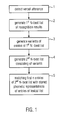
- Figure 1 illustrates a flow diagram of basic steps of an example of the herein disclosed method for speech recognition.
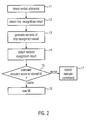
- Figure 2 illustrates a flow diagram of basic steps of an example of the herein disclosed method for voice enrolment.
- a verbal utterance of a user of a speech recognition means is detected 1.
- the detected verbal utterance is processed to obtain a digital speech signal.
- the digital speech signal is subject to a subsequent spectral analysis.
- Representations of the speech waveforms typically sampled at a rate between 6.6 kHz and 20 kHz are derived from the short term power spectra and represent a sequence of characterizing vectors containing values of what is generally referred to as features/feature parameters.
- Characterizing vectors can comprise the spectral content of the speech signals.
- the spectrum of a speech signal is particularly adequate for further analysis.
- the characterizing vectors can be cepstral vectors.
- the cepstrum separates the glottal frequency from the vocal tract resonance.
- the cepstrum is obtained in two steps. A logarithmic power spectrum is calculated and on that an inverse Fourier transform is performed.
- the characterizing vectors may be derived from a short-term power spectrum.
- the speech signal is divided into frames of some 10 to 20 ms duration.
- the feature parameters may comprise the power of some 20 discrete frequencies that are of relevance for the identification of the string representation of a spoken speech signal.
- a first N-best list of phonetic representations of the detected utterance is generated 2.
- the entries of this first N-best list are scored as known in the art.
- the scores represent the probability that a given phonetic representation actually represents, e.g., a spoken word.
- the scores can, e.g., be determined on the basis of an acoustic model probability given by a Hidden Markov Model or an ANN or the like.
- Hidden Markov Models represent one of the dominant recognition paradigms with respect to phonemes.
- a Hidden Markov Model is a double stochastic model according to which the generation of underlying phoneme strings and the surface acoustic representations are both represented probabilistically as Markov processes.
- acoustic features of phonemes can be used to determine the score.
- an "s" usually has a temporal duration of more than 50 ms and exhibits mainly frequencies above some 4 kHz.
- Knowledge of this kind can be used to derive rules for statistical classification methods.
- the score may represent distance measures indicating how far from or close to a specified phoneme a generated sequence of characterizing vectors and thereby the associated word hypothesis is.
- the context information is provided by a triphone model.
- a triphone model a phoneme is recognized depending on preceding and consecutive phonemes. Some consonants e.g., /b/ and /p/ have similar effects if they follow the same vowels.
- the triphone models may include phonemes where contexts are clustered in classes of phonemes with similar effects (triphone class models).
- a short hand notation of the contexts of a phoneme may be shown by a few examples as follows: m)a(b shall describe the model of phoneme /a/ with left context /m/ and right context /b/. l(i: shall describe a biphone of phoneme /I/ with right context /i:/.
- the acoustic features / feature parameters obtained by analyzing the speech signal to obtain the first N-best list are stored and used for a second recognition process.
- This second recognition process comprises a re-scoring of the variants (including the first recognition result "Alinerp") based on the stored feature parameters thereby generating a second N-best list consisting of at least some of the variants 4.
- a priori known probabilities for confusing particular phonemes can be used to generate the variants in step 3.
- additional background information can be used. For instance, it is known that commonly voiceless consonants, e.g., "p” or "t”, are erroneously recognized at the very end of a detected utterance. Thus, in the present example variants without final "p" are also generated.
- a predetermined number of the entries of the second N-best list with the highest scores are matched with stored phonetic representations of entries of one or more lexical lists 5. The best match is determined and according to the present example, "Alina" can be judged to be the correct list entry that corresponds to the detected verbal utterance.
- FIG. 2 a flow diagram of basic steps of an example of the herein disclosed method for voice enrolment is shown.
- a verbal utterance is detected 11, e.g., by a means of a microphone array comprising one or more directional microphones.
- a first recognition result is obtained 12 (e.g., an N-best list of word candidates) and variants thereof are generated 13 based on the relevant context information provided by the employed triphone model.
- the variants are scored and the variants with the highest scores are obtained as a second recognition result 14 and are compared 15 with scores of stored phonetic representations of entries of a lexical list, i.e. with stored voice enrolments. Comparison with stored commands might also be performed thereby allowing for the recognition of commands during the enrolment phase.
- the acoustic score of a variant is better (e.g. within a predetermined distance measure) than the one of a stored voice enrolment, a new voice enrolment is performed 16, i.e. a newly trained word is added to the already stored phonetic representations.
- the quality of the voice enrolment can be enhanced by taking two or more voice samples (detected speech signals). If, on the other hand, the score is worse, the voice enrolment candidate is rejected 17. If a command is recognized, this command is executed 17.
- voice enrolment based on the herein disclosed method can also be used to generate and store variants of command phrases.
- it is checked whether a detected speech signal recognized as an already stored command shows some deviation from an expected recognized speech input for this command in terms of an acoustic score.
- This speech sample that nevertheless was mapped to an existing command can be saved in order to allow for a reliable recognition of the command when the same speaker utters this command in the future.
Landscapes
- Engineering & Computer Science (AREA)
- Computational Linguistics (AREA)
- Health & Medical Sciences (AREA)
- Audiology, Speech & Language Pathology (AREA)
- Human Computer Interaction (AREA)
- Physics & Mathematics (AREA)
- Acoustics & Sound (AREA)
- Multimedia (AREA)
- Machine Translation (AREA)
Priority Applications (2)
| Application Number | Priority Date | Filing Date | Title |
|---|---|---|---|
| EP07019654.8A EP2048655B1 (fr) | 2007-10-08 | 2007-10-08 | Reconnaissance vocale à plusieurs étages sensible au contexte |
| US12/247,201 US20090182559A1 (en) | 2007-10-08 | 2008-10-07 | Context sensitive multi-stage speech recognition |
Applications Claiming Priority (1)
| Application Number | Priority Date | Filing Date | Title |
|---|---|---|---|
| EP07019654.8A EP2048655B1 (fr) | 2007-10-08 | 2007-10-08 | Reconnaissance vocale à plusieurs étages sensible au contexte |
Publications (2)
| Publication Number | Publication Date |
|---|---|
| EP2048655A1 true EP2048655A1 (fr) | 2009-04-15 |
| EP2048655B1 EP2048655B1 (fr) | 2014-02-26 |
Family
ID=38736664
Family Applications (1)
| Application Number | Title | Priority Date | Filing Date |
|---|---|---|---|
| EP07019654.8A Active EP2048655B1 (fr) | 2007-10-08 | 2007-10-08 | Reconnaissance vocale à plusieurs étages sensible au contexte |
Country Status (2)
| Country | Link |
|---|---|
| US (1) | US20090182559A1 (fr) |
| EP (1) | EP2048655B1 (fr) |
Cited By (4)
| Publication number | Priority date | Publication date | Assignee | Title |
|---|---|---|---|---|
| CN111276127A (zh) * | 2020-03-31 | 2020-06-12 | 北京字节跳动网络技术有限公司 | 语音唤醒方法、装置、存储介质及电子设备 |
| CN113096650A (zh) * | 2021-03-03 | 2021-07-09 | 河海大学 | 一种基于先验概率的声学解码方法 |
| CN115440194A (zh) * | 2022-09-01 | 2022-12-06 | 成都知道创宇信息技术有限公司 | 违规音频检测方法、装置、电子设备及计算机可读存储介质 |
| CN111368506B (zh) * | 2018-12-24 | 2023-04-28 | 阿里巴巴集团控股有限公司 | 文本处理方法及装置 |
Families Citing this family (18)
| Publication number | Priority date | Publication date | Assignee | Title |
|---|---|---|---|---|
| US8510109B2 (en) | 2007-08-22 | 2013-08-13 | Canyon Ip Holdings Llc | Continuous speech transcription performance indication |
| US8571862B2 (en) * | 2006-11-30 | 2013-10-29 | Ashwin P. Rao | Multimodal interface for input of text |
| US9973450B2 (en) | 2007-09-17 | 2018-05-15 | Amazon Technologies, Inc. | Methods and systems for dynamically updating web service profile information by parsing transcribed message strings |
| US8676577B2 (en) * | 2008-03-31 | 2014-03-18 | Canyon IP Holdings, LLC | Use of metadata to post process speech recognition output |
| US8140328B2 (en) * | 2008-12-01 | 2012-03-20 | At&T Intellectual Property I, L.P. | User intention based on N-best list of recognition hypotheses for utterances in a dialog |
| TWI421857B (zh) * | 2009-12-29 | 2014-01-01 | Ind Tech Res Inst | 產生詞語確認臨界值的裝置、方法與語音辨識、詞語確認系統 |
| US8700405B2 (en) * | 2010-02-16 | 2014-04-15 | Honeywell International Inc | Audio system and method for coordinating tasks |
| US8949125B1 (en) * | 2010-06-16 | 2015-02-03 | Google Inc. | Annotating maps with user-contributed pronunciations |
| US9697827B1 (en) * | 2012-12-11 | 2017-07-04 | Amazon Technologies, Inc. | Error reduction in speech processing |
| KR101892734B1 (ko) * | 2013-01-04 | 2018-08-28 | 한국전자통신연구원 | 음성 인식 시스템에서의 오류 수정 방법 및 그 장치 |
| DE112014006795B4 (de) * | 2014-07-08 | 2018-09-20 | Mitsubishi Electric Corporation | Spracherkennungssystem und Spracherkennungsverfahren |
| US11289077B2 (en) * | 2014-07-15 | 2022-03-29 | Avaya Inc. | Systems and methods for speech analytics and phrase spotting using phoneme sequences |
| US10719115B2 (en) * | 2014-12-30 | 2020-07-21 | Avago Technologies International Sales Pte. Limited | Isolated word training and detection using generated phoneme concatenation models of audio inputs |
| US10192555B2 (en) * | 2016-04-28 | 2019-01-29 | Microsoft Technology Licensing, Llc | Dynamic speech recognition data evaluation |
| US10607601B2 (en) * | 2017-05-11 | 2020-03-31 | International Business Machines Corporation | Speech recognition by selecting and refining hot words |
| DE102017216571B4 (de) * | 2017-09-19 | 2022-10-06 | Volkswagen Aktiengesellschaft | Kraftfahrzeug |
| CN112291281B (zh) * | 2019-07-09 | 2023-11-03 | 钉钉控股(开曼)有限公司 | 语音播报及语音播报内容的设定方法和装置 |
| US11586964B2 (en) * | 2020-01-30 | 2023-02-21 | Dell Products L.P. | Device component management using deep learning techniques |
Citations (3)
| Publication number | Priority date | Publication date | Assignee | Title |
|---|---|---|---|---|
| US20040034527A1 (en) | 2002-02-23 | 2004-02-19 | Marcus Hennecke | Speech recognition system |
| US7058573B1 (en) | 1999-04-20 | 2006-06-06 | Nuance Communications Inc. | Speech recognition system to selectively utilize different speech recognition techniques over multiple speech recognition passes |
| US20070179784A1 (en) | 2006-02-02 | 2007-08-02 | Queensland University Of Technology | Dynamic match lattice spotting for indexing speech content |
Family Cites Families (2)
| Publication number | Priority date | Publication date | Assignee | Title |
|---|---|---|---|---|
| US5715367A (en) * | 1995-01-23 | 1998-02-03 | Dragon Systems, Inc. | Apparatuses and methods for developing and using models for speech recognition |
| US7630898B1 (en) * | 2005-09-27 | 2009-12-08 | At&T Intellectual Property Ii, L.P. | System and method for preparing a pronunciation dictionary for a text-to-speech voice |
-
2007
- 2007-10-08 EP EP07019654.8A patent/EP2048655B1/fr active Active
-
2008
- 2008-10-07 US US12/247,201 patent/US20090182559A1/en not_active Abandoned
Patent Citations (3)
| Publication number | Priority date | Publication date | Assignee | Title |
|---|---|---|---|---|
| US7058573B1 (en) | 1999-04-20 | 2006-06-06 | Nuance Communications Inc. | Speech recognition system to selectively utilize different speech recognition techniques over multiple speech recognition passes |
| US20040034527A1 (en) | 2002-02-23 | 2004-02-19 | Marcus Hennecke | Speech recognition system |
| US20070179784A1 (en) | 2006-02-02 | 2007-08-02 | Queensland University Of Technology | Dynamic match lattice spotting for indexing speech content |
Non-Patent Citations (3)
| Title |
|---|
| L. TEN BOSCH ET AL.: "Acoustic Scores and Symbolic Mismatch Penalties in Phone Lattices", IEEE INTERNATIONAL CONFERENCE ON ACOUSTICS, SPEECH AND SIGNAL PROCESSING, 2006, pages 437 - 440 |
| RICHARDSON F ET AL: "Lattice-based search strategies for large vocabulary speech recognition", ACOUSTICS, SPEECH, AND SIGNAL PROCESSING, 1995. ICASSP-95., 1995 INTERNATIONAL CONFERENCE ON DETROIT, MI, USA 9-12 MAY 1995, NEW YORK, NY, USA,IEEE, US, vol. 1, 9 May 1995 (1995-05-09), pages 576 - 579, XP010625298, ISBN: 0-7803-2431-5 * |
| TEN BOSCH L ET AL: "Acoustic Scores and Symbolic Mismatch Penalties in Phone Lattices", ACOUSTICS, SPEECH AND SIGNAL PROCESSING, 2006. ICASSP 2006 PROCEEDINGS. 2006 IEEE INTERNATIONAL CONFERENCE ON TOULOUSE, FRANCE 14-19 MAY 2006, PISCATAWAY, NJ, USA,IEEE, 14 May 2006 (2006-05-14), pages I - 437, XP010930210, ISBN: 1-4244-0469-X * |
Cited By (5)
| Publication number | Priority date | Publication date | Assignee | Title |
|---|---|---|---|---|
| CN111368506B (zh) * | 2018-12-24 | 2023-04-28 | 阿里巴巴集团控股有限公司 | 文本处理方法及装置 |
| CN111276127A (zh) * | 2020-03-31 | 2020-06-12 | 北京字节跳动网络技术有限公司 | 语音唤醒方法、装置、存储介质及电子设备 |
| CN113096650A (zh) * | 2021-03-03 | 2021-07-09 | 河海大学 | 一种基于先验概率的声学解码方法 |
| CN113096650B (zh) * | 2021-03-03 | 2023-12-08 | 河海大学 | 一种基于先验概率的声学解码方法 |
| CN115440194A (zh) * | 2022-09-01 | 2022-12-06 | 成都知道创宇信息技术有限公司 | 违规音频检测方法、装置、电子设备及计算机可读存储介质 |
Also Published As
| Publication number | Publication date |
|---|---|
| US20090182559A1 (en) | 2009-07-16 |
| EP2048655B1 (fr) | 2014-02-26 |
Similar Documents
| Publication | Publication Date | Title |
|---|---|---|
| EP2048655B1 (fr) | Reconnaissance vocale à plusieurs étages sensible au contexte | |
| EP1936606B1 (fr) | Reconnaissance vocale multi-niveaux | |
| US10522134B1 (en) | Speech based user recognition | |
| US6910012B2 (en) | Method and system for speech recognition using phonetically similar word alternatives | |
| US7783484B2 (en) | Apparatus for reducing spurious insertions in speech recognition | |
| US7013276B2 (en) | Method of assessing degree of acoustic confusability, and system therefor | |
| JP4301102B2 (ja) | 音声処理装置および音声処理方法、プログラム、並びに記録媒体 | |
| US6553342B1 (en) | Tone based speech recognition | |
| US7181395B1 (en) | Methods and apparatus for automatic generation of multiple pronunciations from acoustic data | |
| EP1355295A2 (fr) | Appareil et méthode de reconnaissance vocale et support lisible par un ordinateur, contenant un tel programme | |
| KR20060041829A (ko) | 호출자 식별 방법 및 시스템, 컴퓨터 판독가능 매체 | |
| US20060206326A1 (en) | Speech recognition method | |
| Aggarwal et al. | Acoustic modeling problem for automatic speech recognition system: conventional methods (Part I) | |
| US8566091B2 (en) | Speech recognition system | |
| EP1734509A1 (fr) | Méthode et système de reconnaissance de la parole | |
| JP4340685B2 (ja) | 音声認識装置及び音声認識方法 | |
| JPH0283593A (ja) | ノイズ適応形音声認識装置 | |
| US20260105908A1 (en) | Language independent dictionary-trained grapheme-to-phoneme converter and text-to-speech engine for improved speech recognition | |
| US20260105911A1 (en) | Hmm decoding with acoustic model compensation for phoneme modeling and pronunciation modelings | |
| EP2948943B1 (fr) | Réduction de fausses alarmes dans des systèmes de reconnaissance vocale au moyen d'informations contextuelles | |
| US20260105909A1 (en) | Data Free Speech Recognition | |
| US20260105912A1 (en) | Hmm decoding compensation for speech recognition and multi-structured decoding for low resource command recognition | |
| JP4749990B2 (ja) | 音声認識装置 | |
| Zacharie et al. | Keyword spotting on word lattices | |
| JP2003345384A (ja) | 音声認識装置、音声認識方法および音声認識プログラム |
Legal Events
| Date | Code | Title | Description |
|---|---|---|---|
| PUAI | Public reference made under article 153(3) epc to a published international application that has entered the european phase |
Free format text: ORIGINAL CODE: 0009012 |
|
| AK | Designated contracting states |
Kind code of ref document: A1 Designated state(s): AT BE BG CH CY CZ DE DK EE ES FI FR GB GR HU IE IS IT LI LT LU LV MC MT NL PL PT RO SE SI SK TR |
|
| AX | Request for extension of the european patent |
Extension state: AL BA HR MK RS |
|
| 17P | Request for examination filed |
Effective date: 20090505 |
|
| AKX | Designation fees paid |
Designated state(s): AT BE BG CH CY CZ DE DK EE ES FI FR GB GR HU IE IS IT LI LT LU LV MC MT NL PL PT RO SE SI SK TR |
|
| RAP1 | Party data changed (applicant data changed or rights of an application transferred) |
Owner name: NUANCE COMMUNICATIONS, INC. |
|
| 17Q | First examination report despatched |
Effective date: 20121108 |
|
| REG | Reference to a national code |
Ref country code: DE Ref legal event code: R079 Ref document number: 602007035173 Country of ref document: DE Free format text: PREVIOUS MAIN CLASS: G10L0015280000 Ipc: G10L0015080000 |
|
| RIC1 | Information provided on ipc code assigned before grant |
Ipc: G10L 15/08 20060101AFI20130718BHEP |
|
| GRAP | Despatch of communication of intention to grant a patent |
Free format text: ORIGINAL CODE: EPIDOSNIGR1 |
|
| INTG | Intention to grant announced |
Effective date: 20130918 |
|
| GRAS | Grant fee paid |
Free format text: ORIGINAL CODE: EPIDOSNIGR3 |
|
| GRAA | (expected) grant |
Free format text: ORIGINAL CODE: 0009210 |
|
| AK | Designated contracting states |
Kind code of ref document: B1 Designated state(s): AT BE BG CH CY CZ DE DK EE ES FI FR GB GR HU IE IS IT LI LT LU LV MC MT NL PL PT RO SE SI SK TR |
|
| REG | Reference to a national code |
Ref country code: GB Ref legal event code: FG4D |
|
| REG | Reference to a national code |
Ref country code: CH Ref legal event code: EP |
|
| REG | Reference to a national code |
Ref country code: AT Ref legal event code: REF Ref document number: 653996 Country of ref document: AT Kind code of ref document: T Effective date: 20140315 |
|
| REG | Reference to a national code |
Ref country code: IE Ref legal event code: FG4D |
|
| REG | Reference to a national code |
Ref country code: DE Ref legal event code: R096 Ref document number: 602007035173 Country of ref document: DE Effective date: 20140410 |
|
| REG | Reference to a national code |
Ref country code: NL Ref legal event code: VDEP Effective date: 20140226 |
|
| REG | Reference to a national code |
Ref country code: AT Ref legal event code: MK05 Ref document number: 653996 Country of ref document: AT Kind code of ref document: T Effective date: 20140226 |
|
| REG | Reference to a national code |
Ref country code: LT Ref legal event code: MG4D |
|
| PG25 | Lapsed in a contracting state [announced via postgrant information from national office to epo] |
Ref country code: IS Free format text: LAPSE BECAUSE OF FAILURE TO SUBMIT A TRANSLATION OF THE DESCRIPTION OR TO PAY THE FEE WITHIN THE PRESCRIBED TIME-LIMIT Effective date: 20140626 Ref country code: LT Free format text: LAPSE BECAUSE OF FAILURE TO SUBMIT A TRANSLATION OF THE DESCRIPTION OR TO PAY THE FEE WITHIN THE PRESCRIBED TIME-LIMIT Effective date: 20140226 |
|
| PG25 | Lapsed in a contracting state [announced via postgrant information from national office to epo] |
Ref country code: FI Free format text: LAPSE BECAUSE OF FAILURE TO SUBMIT A TRANSLATION OF THE DESCRIPTION OR TO PAY THE FEE WITHIN THE PRESCRIBED TIME-LIMIT Effective date: 20140226 Ref country code: CY Free format text: LAPSE BECAUSE OF FAILURE TO SUBMIT A TRANSLATION OF THE DESCRIPTION OR TO PAY THE FEE WITHIN THE PRESCRIBED TIME-LIMIT Effective date: 20140226 Ref country code: SE Free format text: LAPSE BECAUSE OF FAILURE TO SUBMIT A TRANSLATION OF THE DESCRIPTION OR TO PAY THE FEE WITHIN THE PRESCRIBED TIME-LIMIT Effective date: 20140226 Ref country code: NL Free format text: LAPSE BECAUSE OF FAILURE TO SUBMIT A TRANSLATION OF THE DESCRIPTION OR TO PAY THE FEE WITHIN THE PRESCRIBED TIME-LIMIT Effective date: 20140226 Ref country code: PT Free format text: LAPSE BECAUSE OF FAILURE TO SUBMIT A TRANSLATION OF THE DESCRIPTION OR TO PAY THE FEE WITHIN THE PRESCRIBED TIME-LIMIT Effective date: 20140626 Ref country code: AT Free format text: LAPSE BECAUSE OF FAILURE TO SUBMIT A TRANSLATION OF THE DESCRIPTION OR TO PAY THE FEE WITHIN THE PRESCRIBED TIME-LIMIT Effective date: 20140226 |
|
| PG25 | Lapsed in a contracting state [announced via postgrant information from national office to epo] |
Ref country code: BE Free format text: LAPSE BECAUSE OF FAILURE TO SUBMIT A TRANSLATION OF THE DESCRIPTION OR TO PAY THE FEE WITHIN THE PRESCRIBED TIME-LIMIT Effective date: 20140226 Ref country code: LV Free format text: LAPSE BECAUSE OF FAILURE TO SUBMIT A TRANSLATION OF THE DESCRIPTION OR TO PAY THE FEE WITHIN THE PRESCRIBED TIME-LIMIT Effective date: 20140226 |
|
| PG25 | Lapsed in a contracting state [announced via postgrant information from national office to epo] |
Ref country code: DK Free format text: LAPSE BECAUSE OF FAILURE TO SUBMIT A TRANSLATION OF THE DESCRIPTION OR TO PAY THE FEE WITHIN THE PRESCRIBED TIME-LIMIT Effective date: 20140226 Ref country code: RO Free format text: LAPSE BECAUSE OF FAILURE TO SUBMIT A TRANSLATION OF THE DESCRIPTION OR TO PAY THE FEE WITHIN THE PRESCRIBED TIME-LIMIT Effective date: 20140226 Ref country code: EE Free format text: LAPSE BECAUSE OF FAILURE TO SUBMIT A TRANSLATION OF THE DESCRIPTION OR TO PAY THE FEE WITHIN THE PRESCRIBED TIME-LIMIT Effective date: 20140226 Ref country code: CZ Free format text: LAPSE BECAUSE OF FAILURE TO SUBMIT A TRANSLATION OF THE DESCRIPTION OR TO PAY THE FEE WITHIN THE PRESCRIBED TIME-LIMIT Effective date: 20140226 |
|
| REG | Reference to a national code |
Ref country code: DE Ref legal event code: R097 Ref document number: 602007035173 Country of ref document: DE |
|
| PG25 | Lapsed in a contracting state [announced via postgrant information from national office to epo] |
Ref country code: SK Free format text: LAPSE BECAUSE OF FAILURE TO SUBMIT A TRANSLATION OF THE DESCRIPTION OR TO PAY THE FEE WITHIN THE PRESCRIBED TIME-LIMIT Effective date: 20140226 Ref country code: PL Free format text: LAPSE BECAUSE OF FAILURE TO SUBMIT A TRANSLATION OF THE DESCRIPTION OR TO PAY THE FEE WITHIN THE PRESCRIBED TIME-LIMIT Effective date: 20140226 Ref country code: ES Free format text: LAPSE BECAUSE OF FAILURE TO SUBMIT A TRANSLATION OF THE DESCRIPTION OR TO PAY THE FEE WITHIN THE PRESCRIBED TIME-LIMIT Effective date: 20140226 |
|
| PLBE | No opposition filed within time limit |
Free format text: ORIGINAL CODE: 0009261 |
|
| STAA | Information on the status of an ep patent application or granted ep patent |
Free format text: STATUS: NO OPPOSITION FILED WITHIN TIME LIMIT |
|
| 26N | No opposition filed |
Effective date: 20141127 |
|
| REG | Reference to a national code |
Ref country code: DE Ref legal event code: R097 Ref document number: 602007035173 Country of ref document: DE Effective date: 20141127 |
|
| PG25 | Lapsed in a contracting state [announced via postgrant information from national office to epo] |
Ref country code: IT Free format text: LAPSE BECAUSE OF FAILURE TO SUBMIT A TRANSLATION OF THE DESCRIPTION OR TO PAY THE FEE WITHIN THE PRESCRIBED TIME-LIMIT Effective date: 20140226 |
|
| PG25 | Lapsed in a contracting state [announced via postgrant information from national office to epo] |
Ref country code: MC Free format text: LAPSE BECAUSE OF FAILURE TO SUBMIT A TRANSLATION OF THE DESCRIPTION OR TO PAY THE FEE WITHIN THE PRESCRIBED TIME-LIMIT Effective date: 20140226 Ref country code: LU Free format text: LAPSE BECAUSE OF FAILURE TO SUBMIT A TRANSLATION OF THE DESCRIPTION OR TO PAY THE FEE WITHIN THE PRESCRIBED TIME-LIMIT Effective date: 20141008 Ref country code: SI Free format text: LAPSE BECAUSE OF FAILURE TO SUBMIT A TRANSLATION OF THE DESCRIPTION OR TO PAY THE FEE WITHIN THE PRESCRIBED TIME-LIMIT Effective date: 20140226 |
|
| REG | Reference to a national code |
Ref country code: CH Ref legal event code: PL |
|
| REG | Reference to a national code |
Ref country code: IE Ref legal event code: MM4A |
|
| PG25 | Lapsed in a contracting state [announced via postgrant information from national office to epo] |
Ref country code: CH Free format text: LAPSE BECAUSE OF NON-PAYMENT OF DUE FEES Effective date: 20141031 Ref country code: LI Free format text: LAPSE BECAUSE OF NON-PAYMENT OF DUE FEES Effective date: 20141031 |
|
| PG25 | Lapsed in a contracting state [announced via postgrant information from national office to epo] |
Ref country code: IE Free format text: LAPSE BECAUSE OF NON-PAYMENT OF DUE FEES Effective date: 20141008 |
|
| PG25 | Lapsed in a contracting state [announced via postgrant information from national office to epo] |
Ref country code: BG Free format text: LAPSE BECAUSE OF FAILURE TO SUBMIT A TRANSLATION OF THE DESCRIPTION OR TO PAY THE FEE WITHIN THE PRESCRIBED TIME-LIMIT Effective date: 20140226 |
|
| PG25 | Lapsed in a contracting state [announced via postgrant information from national office to epo] |
Ref country code: GR Free format text: LAPSE BECAUSE OF FAILURE TO SUBMIT A TRANSLATION OF THE DESCRIPTION OR TO PAY THE FEE WITHIN THE PRESCRIBED TIME-LIMIT Effective date: 20140527 |
|
| PG25 | Lapsed in a contracting state [announced via postgrant information from national office to epo] |
Ref country code: HU Free format text: LAPSE BECAUSE OF FAILURE TO SUBMIT A TRANSLATION OF THE DESCRIPTION OR TO PAY THE FEE WITHIN THE PRESCRIBED TIME-LIMIT; INVALID AB INITIO Effective date: 20071008 Ref country code: TR Free format text: LAPSE BECAUSE OF FAILURE TO SUBMIT A TRANSLATION OF THE DESCRIPTION OR TO PAY THE FEE WITHIN THE PRESCRIBED TIME-LIMIT Effective date: 20140226 Ref country code: MT Free format text: LAPSE BECAUSE OF FAILURE TO SUBMIT A TRANSLATION OF THE DESCRIPTION OR TO PAY THE FEE WITHIN THE PRESCRIBED TIME-LIMIT Effective date: 20140226 |
|
| REG | Reference to a national code |
Ref country code: FR Ref legal event code: PLFP Year of fee payment: 10 |
|
| REG | Reference to a national code |
Ref country code: FR Ref legal event code: PLFP Year of fee payment: 11 |
|
| REG | Reference to a national code |
Ref country code: FR Ref legal event code: PLFP Year of fee payment: 12 |
|
| PGFP | Annual fee paid to national office [announced via postgrant information from national office to epo] |
Ref country code: GB Payment date: 20250821 Year of fee payment: 19 |
|
| PGFP | Annual fee paid to national office [announced via postgrant information from national office to epo] |
Ref country code: FR Payment date: 20250821 Year of fee payment: 19 |
|
| PGFP | Annual fee paid to national office [announced via postgrant information from national office to epo] |
Ref country code: DE Payment date: 20250819 Year of fee payment: 19 |