EP2050813A2 - Verwendung von mikrobiologischen Konsortien aus Rhizokugeln zur Mykotoxinreduktion, Eiweiss und Antioxidantienverbindungszunahme in landwirtschaftlichen Produkten - Google Patents
Verwendung von mikrobiologischen Konsortien aus Rhizokugeln zur Mykotoxinreduktion, Eiweiss und Antioxidantienverbindungszunahme in landwirtschaftlichen Produkten Download PDFInfo
- Publication number
- EP2050813A2 EP2050813A2 EP08171207A EP08171207A EP2050813A2 EP 2050813 A2 EP2050813 A2 EP 2050813A2 EP 08171207 A EP08171207 A EP 08171207A EP 08171207 A EP08171207 A EP 08171207A EP 2050813 A2 EP2050813 A2 EP 2050813A2
- Authority
- EP
- European Patent Office
- Prior art keywords
- use according
- rhizosphere
- fungi
- cfu
- plants
- Prior art date
- Legal status (The legal status is an assumption and is not a legal conclusion. Google has not performed a legal analysis and makes no representation as to the accuracy of the status listed.)
- Granted
Links
Images


Classifications
-
- C—CHEMISTRY; METALLURGY
- C12—BIOCHEMISTRY; BEER; SPIRITS; WINE; VINEGAR; MICROBIOLOGY; ENZYMOLOGY; MUTATION OR GENETIC ENGINEERING
- C12P—FERMENTATION OR ENZYME-USING PROCESSES TO SYNTHESISE A DESIRED CHEMICAL COMPOUND OR COMPOSITION OR TO SEPARATE OPTICAL ISOMERS FROM A RACEMIC MIXTURE
- C12P39/00—Processes involving microorganisms of different genera in the same process, simultaneously
-
- A—HUMAN NECESSITIES
- A01—AGRICULTURE; FORESTRY; ANIMAL HUSBANDRY; HUNTING; TRAPPING; FISHING
- A01N—PRESERVATION OF BODIES OF HUMANS OR ANIMALS OR PLANTS OR PARTS THEREOF; BIOCIDES, e.g. AS DISINFECTANTS, AS PESTICIDES OR AS HERBICIDES; PEST REPELLANTS OR ATTRACTANTS; PLANT GROWTH REGULATORS
- A01N63/00—Biocides, pest repellants or attractants, or plant growth regulators containing microorganisms, viruses, microbial fungi, animals or substances produced by, or obtained from, microorganisms, viruses, microbial fungi or animals, e.g. enzymes or fermentates
- A01N63/20—Bacteria; Substances produced thereby or obtained therefrom
- A01N63/22—Bacillus
-
- A—HUMAN NECESSITIES
- A01—AGRICULTURE; FORESTRY; ANIMAL HUSBANDRY; HUNTING; TRAPPING; FISHING
- A01N—PRESERVATION OF BODIES OF HUMANS OR ANIMALS OR PLANTS OR PARTS THEREOF; BIOCIDES, e.g. AS DISINFECTANTS, AS PESTICIDES OR AS HERBICIDES; PEST REPELLANTS OR ATTRACTANTS; PLANT GROWTH REGULATORS
- A01N63/00—Biocides, pest repellants or attractants, or plant growth regulators containing microorganisms, viruses, microbial fungi, animals or substances produced by, or obtained from, microorganisms, viruses, microbial fungi or animals, e.g. enzymes or fermentates
- A01N63/20—Bacteria; Substances produced thereby or obtained therefrom
- A01N63/27—Pseudomonas
-
- A—HUMAN NECESSITIES
- A01—AGRICULTURE; FORESTRY; ANIMAL HUSBANDRY; HUNTING; TRAPPING; FISHING
- A01N—PRESERVATION OF BODIES OF HUMANS OR ANIMALS OR PLANTS OR PARTS THEREOF; BIOCIDES, e.g. AS DISINFECTANTS, AS PESTICIDES OR AS HERBICIDES; PEST REPELLANTS OR ATTRACTANTS; PLANT GROWTH REGULATORS
- A01N63/00—Biocides, pest repellants or attractants, or plant growth regulators containing microorganisms, viruses, microbial fungi, animals or substances produced by, or obtained from, microorganisms, viruses, microbial fungi or animals, e.g. enzymes or fermentates
- A01N63/20—Bacteria; Substances produced thereby or obtained therefrom
- A01N63/28—Streptomyces
-
- A—HUMAN NECESSITIES
- A01—AGRICULTURE; FORESTRY; ANIMAL HUSBANDRY; HUNTING; TRAPPING; FISHING
- A01N—PRESERVATION OF BODIES OF HUMANS OR ANIMALS OR PLANTS OR PARTS THEREOF; BIOCIDES, e.g. AS DISINFECTANTS, AS PESTICIDES OR AS HERBICIDES; PEST REPELLANTS OR ATTRACTANTS; PLANT GROWTH REGULATORS
- A01N63/00—Biocides, pest repellants or attractants, or plant growth regulators containing microorganisms, viruses, microbial fungi, animals or substances produced by, or obtained from, microorganisms, viruses, microbial fungi or animals, e.g. enzymes or fermentates
- A01N63/30—Microbial fungi; Substances produced thereby or obtained therefrom
-
- A—HUMAN NECESSITIES
- A01—AGRICULTURE; FORESTRY; ANIMAL HUSBANDRY; HUNTING; TRAPPING; FISHING
- A01N—PRESERVATION OF BODIES OF HUMANS OR ANIMALS OR PLANTS OR PARTS THEREOF; BIOCIDES, e.g. AS DISINFECTANTS, AS PESTICIDES OR AS HERBICIDES; PEST REPELLANTS OR ATTRACTANTS; PLANT GROWTH REGULATORS
- A01N63/00—Biocides, pest repellants or attractants, or plant growth regulators containing microorganisms, viruses, microbial fungi, animals or substances produced by, or obtained from, microorganisms, viruses, microbial fungi or animals, e.g. enzymes or fermentates
- A01N63/30—Microbial fungi; Substances produced thereby or obtained therefrom
- A01N63/38—Trichoderma
-
- C—CHEMISTRY; METALLURGY
- C12—BIOCHEMISTRY; BEER; SPIRITS; WINE; VINEGAR; MICROBIOLOGY; ENZYMOLOGY; MUTATION OR GENETIC ENGINEERING
- C12N—MICROORGANISMS OR ENZYMES; COMPOSITIONS THEREOF; PROPAGATING, PRESERVING, OR MAINTAINING MICROORGANISMS; MUTATION OR GENETIC ENGINEERING; CULTURE MEDIA
- C12N1/00—Microorganisms; Compositions thereof; Processes of propagating, maintaining or preserving microorganisms or compositions thereof; Processes of preparing or isolating a composition containing a microorganism; Culture media therefor
- C12N1/14—Fungi; Culture media therefor
- C12N1/145—Fungi isolates
-
- C—CHEMISTRY; METALLURGY
- C12—BIOCHEMISTRY; BEER; SPIRITS; WINE; VINEGAR; MICROBIOLOGY; ENZYMOLOGY; MUTATION OR GENETIC ENGINEERING
- C12N—MICROORGANISMS OR ENZYMES; COMPOSITIONS THEREOF; PROPAGATING, PRESERVING, OR MAINTAINING MICROORGANISMS; MUTATION OR GENETIC ENGINEERING; CULTURE MEDIA
- C12N1/00—Microorganisms; Compositions thereof; Processes of propagating, maintaining or preserving microorganisms or compositions thereof; Processes of preparing or isolating a composition containing a microorganism; Culture media therefor
- C12N1/20—Bacteria; Culture media therefor
- C12N1/205—Bacterial isolates
-
- C—CHEMISTRY; METALLURGY
- C12—BIOCHEMISTRY; BEER; SPIRITS; WINE; VINEGAR; MICROBIOLOGY; ENZYMOLOGY; MUTATION OR GENETIC ENGINEERING
- C12R—INDEXING SCHEME ASSOCIATED WITH SUBCLASSES C12C - C12Q, RELATING TO MICROORGANISMS
- C12R2001/00—Microorganisms ; Processes using microorganisms
- C12R2001/01—Bacteria or Actinomycetales ; using bacteria or Actinomycetales
-
- C—CHEMISTRY; METALLURGY
- C12—BIOCHEMISTRY; BEER; SPIRITS; WINE; VINEGAR; MICROBIOLOGY; ENZYMOLOGY; MUTATION OR GENETIC ENGINEERING
- C12R—INDEXING SCHEME ASSOCIATED WITH SUBCLASSES C12C - C12Q, RELATING TO MICROORGANISMS
- C12R2001/00—Microorganisms ; Processes using microorganisms
- C12R2001/645—Fungi ; Processes using fungi
Definitions
- the present invention relates to the use of microbiological consortia of the rhizosphere for elimination of pollutants from agricultural products, reduction of mycotoxins, as well as increase of antioxidants, Brix degree, forage unit and proteins in the agricultural products themselves.
- the knowledge acquired by the present applicant on the use of microbiological consortia of the root as fertilizers has led the present applicant to verify that the use of microbiological consortia of the root determines an improvement in the wholesomeness of foodstuffs through a reduction in carcinogenic substances and mycotoxins, an increase in antioxidant and aromatic substances and a reduction in the amount of nitrates in the agricultural products themselves.
- plants In order to absorb from the soil the nutritive substances necessary for life, plants need micro-organisms of the rhizosphere that co-operate with the radical apparatus of the plants. It is to be recalled, in fact, that plants evolved from marine algae without roots and when they colonized the land had to establish with some micro-organisms, and more specifically with symbiont fungi, bacteria, actinomycetes and saprophytic fungi, a system of co-operation in order to be able to colonize inhospitable lands.
- the roots of plants establish symbiotic unions with mycorrhizal fungi, which assist the roots in their function of absorbing nutritive substances and water from the soil and receive from the plants the sugars necessary for their life. They amplify the explorative capacity of the root by approximately 600/800 times. In addition, they multiply the normal extension of the radical apparatus; for example, a plant of wheat passes from a length of its root of approximately 200 kilometres to 120 000 or 160 000 kilometres when in symbiosis with mycorrhizal fungi.
- the root moreover establishes a relationship of co-operation with bacteria, actinomycetes and saprophytic fungi, which perform for the plant metabolization of the nutritive substances and live off the root exudate produced thereby. It has been calculated that approximately 20% of the substances produced by the plant through chlorophyll photosynthesis is vehicled in the root and used for nourishing the microbiological consortium thereof.
- Table 1 Micro-organisms Number per gram Biomass (kg/ha,as such) Bacteria 10 8 -10 9 300-3000 Actinomycetes 10 7 -10 8 300-3000 Fungi 10 5 -10 6 500-5000 Micro-algae 10 9 -10 10 10-1500 Protozoa 10 9 -10 10 5-200 Nematodes 10 6 -10 7 1-100
- the purpose of the present invention is to improve the conditions of growth and development of plants for human and animal alimentation and, in particular, to identify natural products that will enable reduction of the amount of harmful (for example, carcinogenic) substances and of nitrates accumulated in plants and, at the same time, an increase of antioxidant substances and of proteins useful to human beings and animals.
- harmful for example, carcinogenic
- Another purpose of the present invention is to improve the conditions of growth and development of plants for human and animal alimentation and, in particular, to identify natural products that will enable reduction of contamination by fungi that produce mycotoxins, principally in cereal crops.
- a further purpose of the present invention is to identify a product that will enable reduction, and possibly complete elimination, of pollutant, in particular carcinogenic, substances from purified waters and, in particular, from waters that undergo phytodepuration.
- the present invention relates to the use of a consortium of micro-organisms of the rhizosphere that, if applied to the soil to be cultivated, enables reduction in the amount of pollutants absorbed by or accumulated in cultivated plants and at the same time an increase in the content of antioxidant substances present in the plants themselves.
- PCBs polychlorobiphenyls
- dioxins for example, dioxins, insecticides, phytopharmaceutical substances, aromatic polycyclic hydrocarbons, metals, nitrates, etc.
- Said filter effect is obtained using as probiotic of the plants the microbiological consortium of the rhizosphere.
- the present applicant has surprisingly discovered that the use of mycorrhizae and of bacteria of the rhizosphere reduces or decreases sensibly the passage of pollutants into plants.
- microbiological consortia of the root possess, in fact, micro-organisms that - since they possess an enzymatic complex capable of metabolizing different substances present in the soil - are able to destroy carcinogenic substances, which are consequently not absorbed by the plant.
- This work is principally performed by the cytochrome P450, which is able to metabolize also substances that are harmful on account of their toxicity and their mutagenic, and consequently carcinogenic, capacity on animal organisms.
- the microbiological consortium of the rhizosphere is basically constituted by mycorrhizae, bacteria, actinomycetes, saprophytic fungi and micromycetes.
- Mycorrhizae are symbiotic associations that are set up between the root of many plants and fungi of the subsoil (mycorrhizal fungi). It is believed that they were fundamental in the process of colonization of the continents, and, even today, are still necessary for contemporary vegetation. However, in anthropized environments, such as cultivated land, the mycorrhizae are frequently absent, or else present in a very reduced amount, probably on account of chemical pollution of the soils.
- Mycorrhizae are divided into two major groups: ectomycorrhizae and endomycorrhizae.
- Ectomycorrhizae are able to colonize few species of plants, almost all forest species (conifers and broadleaf trees) but are of little importance for agricultural crops. They are so defined because they do not penetrate within the tissues, but form a thick layer of mycelium (mantle) around the roots.
- the known species of ectomycorrhizae number approximately 5 000. They generate spores for their survival and diffusion, which are transported by the wind, by animals, or by the action of human beings. Truffles are the best known expression of this mycorrhizal symbiosis.
- Endomycorrhizae are obligate symbionts. Unlike the former, they penetrate within the tissues and cells of the host, but do not form an external fungal mantle. They install on the cortical part of the root, penetrating the cells and filling the intercellular spaces thereof, without, however, ever invading the central cylinder. Within the cells ovoidal structures, referred to as vesicles, and branched structures, referred to as arbuscules, may form. Externally the mycelium can expand around the root up to a few centimetres.
- the endomycorrhizae can be divided into five subgroups.
- the fungus which grows in the soil, penetrates into the root cells, where it forms branched structures (arbuscules). It is in the arbuscules that the nutritional exchanges occur: the fungus absorbs the nutritive elements from the soil, in particular phosphorous, potassium and some micro-elements, and yields them to the plant in order to receive therefrom in exchange processed lymph.
- the formation of mycorrhizae bestows upon the plant a greater capacity for absorption of the water and protection from attack by certain root pathogens. The sum of these effects guarantees a better growth in mycorrhized plants.
- Mycorrhizae are able to solubilize and hence to absorb the organic or mineral forms present in the soil in the form of insoluble compounds, which are not directly usable by the plants, changing radically the agronomic count of the availability of the nutritive elements in the soil.
- the greater absorption of mineral salts from the soil modifies the equilibrium and the composition of the nutrients in the plant tissues, with consequences on the photosynthetic yield, which increases, and on sharing of the products of photosynthesis between the root and the aerial part of the plant. Of the total carbon assimilated by the plant 20% can be transferred to the fungus.
- the bacteria of the rhizosphere, the actinomycetes, the saprophytic fungi and the micromycetes create an assimilative network capable of extracting the nutrients naturally present in the soil, rendering them available to the plant, and metabolize the carcinogenic substances.
- Table 2 Micromycetes Saprophytic fungi Actinomycetes Bacteria of the rhizosphere Endomycorrhizal fungi Mortierella isabellina Trichoderma spp. Streptomyces spp.
- Trichoderma viride Bacillus megaterium Glomus etunicatum Pichia spp Coniothyrium spp Bacillus polymyxa Glomus epigaeum Pichia pastoris Coniothyrium minitans Bacillus licheniformis Glomus lamellosum Gliocadium spp Alcanivorax spp Glomus monosporum Gliocadium calenulatum Alcanivorax venetianus Acaulospora spp Beauveria spp Candida spp Acaulospora longula Beauveria bassiana Rhodococcus spp Acaulospora laevis Rhodococcus rythropolys Gigaspora spp Acinetobacter spp Gigaspora ramisporophora Acinetobacter calcoaceticus Gigaspora gigantea Acinetobacter Radioresistens Gigaspora margarita Mycobacterium s
- composition of the inoculation of the mycorrhizal consortium of the rhizosphere has the following minimum content of microbiological components:
- the consortium When used for treating the seeds directly, in order to obtain a greater adhesion to the seeds themselves, the consortium can be glued with the usual glues used in the treatment of seeds; in this case, a concentrated product needs to be used in a range of between 200 g and 400 g per hectare dose of seeds to be treated.
- the consortium For mixing in loam and peat used in seed boxes for the production of young plants and cuttings, the consortium is used in a recommended dose of 15 litres per cubic metre of loam or peat.
- the consortium When making the distribution at the moment of sowing in field, the consortium is spread directly by the seeders, provided with microgranulators, in a dose equal to approximately 13-20 litres per hectare.
- consortium In the case of broadcast sowing in cropping beds, the consortium is distributed directly prior to sowing or to transplantation of the young plants themselves at a dose of approximately 100 l/ha.
- the consortium In the case of direct distribution in cultivations (e.g. vineyards, fruit orchards, olive groves), the consortium is distributed slightly buried, with a light ploughing, or with an injector tube, at a dose of 100-200 l/ha.
- microbiological consortium of the rhizosphere not only contributes directly to the development of the treated plants, but indirectly favours a series of other processes, such as for example:
- mycorrhizae and bacteria of the rhizosphere constitutes a surprisingly advantageous tool for reducing (and, in some cases, even preventing) the passage of chemical pollutants into the food chain thanks to the metabolic work of the cytochromes P450 and of the conjugation enzymes present in the mycorrhizal fungi and in the bacteria of the rhizosphere.
- Table 3 Appearing in Table 3 are data regarding the presence of the enzymes responsible for metabolization of carcinogenic substances in each of the micro-organisms present in the microbiological consortia of the rhizosphere tested by the present applicant.
- Table 3 SPECIFIC ACTIVITY BACILLUS SUBTILIS PSEUDOMONAS FLUORESCENS TRICHODERMA GLIOCLADIUM CATALASE a 23.34+0.01 150.45 ⁇ 30.09 8+1.6 DT-DIAPHORASE b 114.44 ⁇ 20.24 30.15 ⁇ 8.23 66.35 ⁇ 15.82 25.70 ⁇ 10.45 ECOD c 0.162 ⁇ 0.011 n.d.
- PCBs polychlorinated biphenyls
- PCBs constitute a group of 209 congeners [2] produced by the chlorination of two benzene groups joined to one another by just one bond; they may be grouped together into 10 families of isomers from mono to deca according to the number of substituent chlorine atoms.
- the PCBs are, then, characterized by a considerable variability of structure with chlorine atoms in ortho, meta and para position, with a marked spatial symmetry or asymmetry that ranges from complete planarity of the two benzene groups up to non-planarity, in which the benzene rings are at 90° with respect to one another.
- the number and position of the chlorine atoms present condition and govern accumulation and persistence of the different congeners in the different environmental matrices, as a consequence of the different chemical and biological reactivity; the equal variability of the chemical, chemico-physical and toxicological properties thereof do not determine their destiny and dangerousness.
- the individual congeners are identified by an increasing numbering system, referred to as BZ number, after the name of the drafters of the classification, Ballschmiter and Zell 1980, which follows the IUPAC characterization for the identification of the position of the chlorine atoms.
- BZ number an increasing numbering system
- PCB 126 indicates the congener 3,3',4,4',5 penta-CB.
- Table 4 Specimen Description Lot In-field treatment 1fM MAIZE leaves and stems 1 Y No in-field treatment 1gm-fruit MAIZE fruit 1 Y 1rM MAIZE roots 1 Y 1tP POTATO tubers 1 Z No in-field treatment 1fP POTATO leaves 1 Z 2fC CANAPA leaves, stems and fruit 2 X+Y+Z Treatments wit h the consortia of the rhizosphere 2rC CANAPA root 2 X+Y+Z 3fC CANAPA leaves, stems and fruit 3 X+Y+Z In-field treatment with the consortia of the rhizosphere + biosurfactan t micro-organisms 3rC CANAPA roots 3 X+Y+Z 4fM MAIZE leaves and stems 4 X+Y+Z Treatments wit h the consortia of the rhizosphere 4gM-fruit MAIZE fruit 4 X+Y+Z 4rM MAIZE
- the moist material was cut and reduced into small pieces.
- the seeds were crushed in a steel mortar.
- the roots and the potatoes were washed with water, and the traces of soil were removed using an ultrasound bath.
- Approximately 10 g of material for leaves and stems and 30 g for seeds and tubers of the potatoes were weighed, placed in a cellulose extraction thimble and extracted in 80-100 ml of dichloromethane using a Soxhlet (Soxhtech) system.
- the extract was purified from organic substances that interfere with concentrated sulphuric acid; the organic phase, separated by centrifuging, was purified with a Florisil column (8-10 g).
- the dichloromethane was removed with a rotavapor by addition of hexane, and then the specimen was brought down to a small volume (200 ⁇ l) in nitrogen flow.
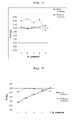
- Table 5 Appearing in Table 5 are the values of the PCBs of the 24 congeners mentioned above, encountered in the different lots; there may be noted a reduction of the concentration of PCBs in the soil sampled and analysed after sowing in the soils treated with the consortia of micro-organisms of the rhizosphere. It is to be noted that in the untreated lots the absorption is almost zero: this means that the untreated soils maintain the same initial contamination of PCBs. Represented graphically in Figure 1 are the values of Table 5.
- the present applicant has also found that the application of the consortia of micro-organisms of the rhizosphere causes, at a physiological level, a change in the formation of antioxidant substances, in particular, with an increase in the amount of antioxidant substances present in the end agricultural product.
- the tests were conducted on wine and peas coming from plants cultivated with consortia of micro-organisms of the rhizosphere.
- the anti-oxidizing power of the extracts of wine and peas was evaluated using a spectrophotometric method.
- microbiological consortia of the root moreover has the effect of improving the photosynthetic efficiency, with consequent reduction of the nitrates in the leaf, and that of favouring the absorption of nitrates and nitrites present in the agricultural soil that are not normally accessible for the root.
- the values of the nitrate content of tobacco leaves (Burley and Bright) coming from mycorrhized plants, and from non-mycorrhized (i.e., traditional) plants were compared.
- the latter as regards the Burley, following the normal practices of cultivation, envisage the administration of approximately 240 kg/ha of mineral nitrogen (160 kg/ha for bottom fertilization and 80 kg/ha for cover fertilization).
- the mycorrhized plants instead, which envisage the use of 100 l/ha of a microbiological consortium of the rhizosphere and an organic bottom fertilization with approximately 200 q/ha of buffalo manure, the mineral nitrogen is spread only as cover fertilization and reduced to 22 kg/ha i.e., by a factor of approximately 10.
- the pattern of the values of nicotine ( Figure 6 ) reflects the one regarding nitrates and organic nitrogen in green leaves.
- Product B endomycorrhizal symbiont fungi of the genus Glomus (G. viscosum, G. coronatum), bacteria of the rhizosphere (Pseudomonas fluorescens, Pseudomonas spp, Bacillus subtilis and Streptomyces spp.) and antagonistic saprophytic fungi (Trichoderma spp.) to a minimum extent of 5x10 6 C.F.U./g.
- Example 4 Increase in the protein content, gluten, and forage unit in foodstuffs
- the present applicant has found a surprising increase in the protein quality of agricultural products following upon the application of a microbiological consortium of the rhizosphere.
- some results are given regarding the increase in gluten in durum wheat, the increase of the forage unit and proteins in shredded maize silage and in alfalfa. It is moreover pointed out that mycorrhization favours the assumption, in a balanced way, of micro-elements that determine the thickening of the cell walls, with consequent increase in weight of the plants and of the fruit.
- Table 9 Mycorrhization of tomatoes Test Type of test Optical residue °Bx Bostwik cm/30 s. Comm. Product.
- the analyses reveal a clear increase in the total protein percentage of the product harvested, an increase in the percentage of gluten, and an increase in the electrolytic weight on the treated plants as compared to the untreated produce (control).
- Example 5 Barrier to mycotoxins produced by moulds and fungi
- mycotoxins in the food chain may mean a risk for human health, where the seriousness of the risk is determined by the amount and type of mycotoxin.
- Recent studies of the Bayer company show that these fungi are able to infect the entire plant, penetrating from the roots of the plants themselves, and through the lymphatic channels the infection is transmitted to the entire plant.
Landscapes
- Life Sciences & Earth Sciences (AREA)
- Engineering & Computer Science (AREA)
- Health & Medical Sciences (AREA)
- Zoology (AREA)
- General Health & Medical Sciences (AREA)
- Wood Science & Technology (AREA)
- Microbiology (AREA)
- Biotechnology (AREA)
- Chemical & Material Sciences (AREA)
- Organic Chemistry (AREA)
- Virology (AREA)
- Environmental Sciences (AREA)
- Plant Pathology (AREA)
- Pest Control & Pesticides (AREA)
- Agronomy & Crop Science (AREA)
- Dentistry (AREA)
- Genetics & Genomics (AREA)
- Bioinformatics & Cheminformatics (AREA)
- General Engineering & Computer Science (AREA)
- Mycology (AREA)
- Biochemistry (AREA)
- Tropical Medicine & Parasitology (AREA)
- Medicinal Chemistry (AREA)
- Biomedical Technology (AREA)
- General Chemical & Material Sciences (AREA)
- Chemical Kinetics & Catalysis (AREA)
- Botany (AREA)
- Micro-Organisms Or Cultivation Processes Thereof (AREA)
- Agricultural Chemicals And Associated Chemicals (AREA)
- Immobilizing And Processing Of Enzymes And Microorganisms (AREA)
- Peptides Or Proteins (AREA)
Applications Claiming Priority (2)
| Application Number | Priority Date | Filing Date | Title |
|---|---|---|---|
| EP06780237A EP2031967B1 (de) | 2006-03-30 | 2006-03-30 | Verwendung von rhizosphäre-mikrobenverbänden für die elimination von umweltgiften und die reduktion von nitraten in agrarprodukten |
| PCT/IB2006/052592 WO2007116245A1 (en) | 2006-03-30 | 2006-03-30 | Use of microbiological consortia of rhizosphere for pollutants elimination, mycotoxins and nitrates reduction and antioxidant compounds increase in agricultural products |
Related Parent Applications (2)
| Application Number | Title | Priority Date | Filing Date |
|---|---|---|---|
| EP06780237.1 Division | 2006-03-30 | ||
| EP06780237A Division EP2031967B1 (de) | 2006-03-30 | 2006-03-30 | Verwendung von rhizosphäre-mikrobenverbänden für die elimination von umweltgiften und die reduktion von nitraten in agrarprodukten |
Publications (3)
| Publication Number | Publication Date |
|---|---|
| EP2050813A2 true EP2050813A2 (de) | 2009-04-22 |
| EP2050813A3 EP2050813A3 (de) | 2009-07-29 |
| EP2050813B1 EP2050813B1 (de) | 2012-02-01 |
Family
ID=38109554
Family Applications (2)
| Application Number | Title | Priority Date | Filing Date |
|---|---|---|---|
| EP06780237A Ceased EP2031967B1 (de) | 2006-03-30 | 2006-03-30 | Verwendung von rhizosphäre-mikrobenverbänden für die elimination von umweltgiften und die reduktion von nitraten in agrarprodukten |
| EP08171207A Expired - Lifetime EP2050813B1 (de) | 2006-03-30 | 2006-03-30 | Verwendung von mikrobiologischen Konsortien aus Rhizosphäre zur Mykotoxinreduktion, Eiweiss und Antioxidantienverbindungszunahme in landwirtschaftlichen Produkten |
Family Applications Before (1)
| Application Number | Title | Priority Date | Filing Date |
|---|---|---|---|
| EP06780237A Ceased EP2031967B1 (de) | 2006-03-30 | 2006-03-30 | Verwendung von rhizosphäre-mikrobenverbänden für die elimination von umweltgiften und die reduktion von nitraten in agrarprodukten |
Country Status (6)
| Country | Link |
|---|---|
| US (1) | US20090170700A1 (de) |
| EP (2) | EP2031967B1 (de) |
| AT (2) | ATE543898T1 (de) |
| CA (1) | CA2647692A1 (de) |
| DE (1) | DE602006012887D1 (de) |
| WO (1) | WO2007116245A1 (de) |
Cited By (2)
| Publication number | Priority date | Publication date | Assignee | Title |
|---|---|---|---|---|
| FR2996727A1 (fr) * | 2012-10-11 | 2014-04-18 | Fabre Pierre Dermo Cosmetique | Utilisation d'un produit comprenant un inoculum de trichoderma atroviride et de glomus spp pour augmenter la teneur en principes actifs dans les plantes cerealieres |
| FR3127674A1 (fr) | 2021-10-05 | 2023-04-07 | Medinbio | Intrant agricole et procedes de protection et de stimulation de la croissance d’une plante associes |
Families Citing this family (14)
| Publication number | Priority date | Publication date | Assignee | Title |
|---|---|---|---|---|
| NZ598092A (en) | 2008-02-14 | 2012-07-27 | Lincoln University | Methods and compositions comprising specific strains of trichoderma atroviride for the biological control of soil borne plant pathogens and promoting plant growth |
| WO2012088548A1 (en) * | 2010-12-23 | 2012-06-28 | Moxham Murray Robert | Organic soil treatment |
| FR2975568B1 (fr) * | 2011-05-23 | 2013-05-17 | Biovitis | Utilisation d'une souche fongique de coniothyrium minitans comme agent fertilisant |
| CN103937684B (zh) * | 2014-04-23 | 2016-06-29 | 福建农林大学 | 一种从桉树土壤中筛选的抑草真菌 |
| CZ307607B6 (cs) * | 2015-06-30 | 2019-01-09 | Symbiom, S.R.O. | Přípravek k ochraně listnatých dřevin |
| ITUB20152637A1 (it) * | 2015-07-30 | 2017-01-30 | Univ Bologna Alma Mater Studiorum | Composizione e metodo per promuovere la crescita di piante erbacee e favorire un accumulo di sostanza organica nel terreno |
| MX389611B (es) | 2015-11-19 | 2025-03-20 | Centro De Investig Y Asistencia En Tecnologia Y Diseno Del Estado De Jalisco | Biofertilizante para aumentar el rendimiento de cultivos. |
| CN106834189B (zh) * | 2017-03-09 | 2020-02-14 | 武汉科技大学 | 一株产生生物表面活性剂菌及其应用 |
| CN107306532B (zh) * | 2017-06-13 | 2021-09-07 | 南京农业大学 | 一种利用复合PAHs降解菌同时去除植物体内USEPA PAHs的方法 |
| MX2017014720A (es) * | 2017-11-16 | 2019-05-17 | Jose Alfredo Suarez Rivero | Consorcio microbiano para uso agricola y formulacion que lo contiene. |
| CN109221255B (zh) * | 2018-09-07 | 2021-06-22 | 山东省科学院生态研究所 | 木霉ltr-2的应用及其菌剂和制备方法 |
| CN110938549B (zh) * | 2019-12-09 | 2020-09-01 | 江西农业大学 | 一种促进圆齿野鸦椿容器苗生长的菌剂及其制备方法和应用 |
| WO2023219483A1 (es) * | 2022-05-09 | 2023-11-16 | Becerra Carranza Luis Rodrigo | Mezcla probiótica, biofungicida y método, para el control de hongos micotoxigénicos |
| CN121753675A (zh) * | 2026-03-05 | 2026-03-31 | 昆明学院 | 一种烟草提质增产的全周期种植方法 |
Family Cites Families (7)
| Publication number | Priority date | Publication date | Assignee | Title |
|---|---|---|---|---|
| DE19647847B4 (de) * | 1995-11-20 | 2008-11-13 | Kabushiki Kaisha Toshiba, Kawasaki | Verfahren zum Zersetzen organischer Verbindungen, Vorrichtung zum Zersetzen organischer Verbindungen, Verfahren zum Isolieren von Mikroorganismen der Art Komagatella brevis und neuer Mikroorganismus der Art Komagatella brevis |
| EP1074611A4 (de) * | 1998-04-28 | 2005-09-21 | Idemitsu Kosan Co | Schimmelpilz, der dioxin abbauen kann, abbau von dioxin mittels eines solchen schimmeplpilzes, methode zur kompostproduktion, die dioxin abbauen kann, und zuchtmethode für pflanzen. |
| AU5447099A (en) * | 1998-09-14 | 2000-04-03 | Kondo, Ryuichiro | White rot fungus and method for degrading dioxins by using the same |
| US6423531B1 (en) * | 1999-11-17 | 2002-07-23 | Geovation Technologies, Inc. | Advanced organic-inorganic solid-chemical composition and methods for anaerobic bioremediation |
| JP2002262861A (ja) * | 2001-03-13 | 2002-09-17 | Toshiba Corp | 難分解性有機物分解微生物の増殖方法及び難分解性有機物の分解方法 |
| ITMI20020759A1 (it) * | 2002-04-09 | 2003-10-09 | Tirsi S R L | Composizioni per il biorisanamento di terreni contaminati da idrocarburi e/o solventi e/o composti organici |
| KR100588305B1 (ko) * | 2004-04-28 | 2006-06-12 | 이성기 | 세균 공동체 엔비씨2000 및 그를 이용한 환경호르몬의 처리방법 |
-
2006
- 2006-03-30 EP EP06780237A patent/EP2031967B1/de not_active Ceased
- 2006-03-30 CA CA002647692A patent/CA2647692A1/en not_active Abandoned
- 2006-03-30 EP EP08171207A patent/EP2050813B1/de not_active Expired - Lifetime
- 2006-03-30 AT AT08171207T patent/ATE543898T1/de active
- 2006-03-30 AT AT06780237T patent/ATE460080T1/de not_active IP Right Cessation
- 2006-03-30 DE DE602006012887T patent/DE602006012887D1/de not_active Expired - Lifetime
- 2006-03-30 WO PCT/IB2006/052592 patent/WO2007116245A1/en not_active Ceased
- 2006-03-30 US US12/295,111 patent/US20090170700A1/en not_active Abandoned
Non-Patent Citations (6)
| Title |
|---|
| "Bioassay of Aroclor 1254 for possible carcinogenicity", CARCINOGENESIS TECH. REP SER., no. 38, 1978 |
| "Considerazioni in merito alle problematiche per la condotta dell'analisi di rischio da PCB", 8TH INTERNATIONAL CONFERENCE ON CONTAMINATED SOIL, BELGIUM, 12 May 2003 (2003-05-12) |
| "Environmental Health Criteria", 1993, article "Polychlorinated biphenyls and terphenyls", pages: 140 |
| "Reassessment of liver findings in five PCBs studies rats", INSTITUTE FOR EVALUATING HEALTH RISKS, 1991 |
| "Toxicological profile for polychlorinated biphenyls", ATSDR, 2000 |
| "U.S APA Environmental Protection Agency (1991)" Workshop report on toxicity equivalency factors for polychlorinated-biphenyl congeners", RISK ASSESSMENT FORUM |
Cited By (3)
| Publication number | Priority date | Publication date | Assignee | Title |
|---|---|---|---|---|
| FR2996727A1 (fr) * | 2012-10-11 | 2014-04-18 | Fabre Pierre Dermo Cosmetique | Utilisation d'un produit comprenant un inoculum de trichoderma atroviride et de glomus spp pour augmenter la teneur en principes actifs dans les plantes cerealieres |
| FR3127674A1 (fr) | 2021-10-05 | 2023-04-07 | Medinbio | Intrant agricole et procedes de protection et de stimulation de la croissance d’une plante associes |
| WO2023057533A1 (fr) | 2021-10-05 | 2023-04-13 | Medinbio | Intrant agricole et procedes de protection et de stimulation de la croissance d'une plante associes |
Also Published As
| Publication number | Publication date |
|---|---|
| ATE543898T1 (de) | 2012-02-15 |
| EP2031967A1 (de) | 2009-03-11 |
| EP2050813A3 (de) | 2009-07-29 |
| DE602006012887D1 (de) | 2010-04-22 |
| ATE460080T1 (de) | 2010-03-15 |
| US20090170700A1 (en) | 2009-07-02 |
| EP2050813B1 (de) | 2012-02-01 |
| CA2647692A1 (en) | 2007-10-18 |
| EP2031967B1 (de) | 2010-03-10 |
| WO2007116245A1 (en) | 2007-10-18 |
Similar Documents
| Publication | Publication Date | Title |
|---|---|---|
| Mathew et al. | Halotolerant marine rhizosphere-competent actinobacteria promote Salicornia bigelovii growth and seed production using seawater irrigation | |
| Postma et al. | Efficacy of four phosphate-mobilizing bacteria applied with an animal bone charcoal formulation in controlling Pythium aphanidermatum and Fusarium oxysporum f. sp. radicis lycopersici in tomato | |
| EP2050813B1 (de) | Verwendung von mikrobiologischen Konsortien aus Rhizosphäre zur Mykotoxinreduktion, Eiweiss und Antioxidantienverbindungszunahme in landwirtschaftlichen Produkten | |
| Singh et al. | Synergy between Glomus fasciculatum and a beneficial Pseudomonas in reducing root diseases and improving yield and forskolin content in Coleus forskohlii Briq. under organic field conditions | |
| Egamberdiyeva | The effect of plant growth promoting bacteria on growth and nutrient uptake of maize in two different soils | |
| Sekar et al. | Potential of finger millet indigenous rhizobacterium Pseudomonas sp. MSSRFD41 in blast disease management—growth promotion and compatibility with the resident rhizomicrobiome | |
| Reddy et al. | Application for rhizobacteria in transplant production and yield enhancement | |
| Xu et al. | Biocontrol of Fusarium crown and root rot and promotion of growth of tomato by Paenibacillus strains isolated from soil | |
| EP2525648B1 (de) | Neue fluoreszente pseudomonaden der gattung pseudomonas azotoformans für verstärkte entstehung und wachstum von pflanzen | |
| WO2010109436A1 (en) | Microbial formulation for widespread uesd in agricultural practices | |
| ALORI | Effectiveness of Pseudomonas species in the management of tomato early blight pathogen Alternaria solani | |
| Leandro et al. | Population dynamics of Trichoderma in fumigated and compost-amended soil and on strawberry roots | |
| Woyessa et al. | Effects of Plant Growth Promoting Rhizobaceria on Growth and Yield of Tef Eragrostis tef Zucc. Trotter) under Greenhouse Condition | |
| Yadav et al. | Endophytes and their applications as biofertilizers | |
| Akhtar et al. | Efficacy of root‐associated fungi and PGPR on the growth of Pisum sativum (cv. Arkil) and reproduction of the root‐knot nematode Meloidogyne incognita | |
| Madbouly et al. | Biocontrol of certain soilborne diseases and promotion of growth of Capsicum annuum using biofungicides | |
| Kumar et al. | Isolation and identification of plant growth promoting rhizobacteria (Pseudomonas spp.) and their effect on growth promotion of Lycopersicon esculentum L | |
| Sakpetch et al. | Isolation of indigenous antagonistic microorganism to inhibit Rigidoporus microporus and other plant pathogens and analysis of the bioactive compounds | |
| Liu et al. | Biocontrol of Fusarium crown and root rot of tomato and growth-promoting effect of bacteria isolated from recycled substrates of soilless crops | |
| Dheeman et al. | Harnessing beneficial Bacillus in Productivity improvement of food security crops of Himalayan agro-climatic zones | |
| Baswaraj | Studies on potato wilt caused by Sclerotium rolfsii Sacc | |
| Olayinka et al. | Effect of Aflasafe® Application on the Productivity, Grain Quality, and Aflatoxin Reduction in Maize (Zea mays L.) | |
| Pandey et al. | Differential response of native Bacillus spp. isolates from agricultural and forest soils in growth promotion of Amaranthus hypochondriacus | |
| SINGH | MASTER OF SCIENCE MASTER OF SCIENCE | |
| Sekar et al. | Potential of Finger Millet Indigenous |
Legal Events
| Date | Code | Title | Description |
|---|---|---|---|
| PUAI | Public reference made under article 153(3) epc to a published international application that has entered the european phase |
Free format text: ORIGINAL CODE: 0009012 |
|
| AC | Divisional application: reference to earlier application |
Ref document number: 2031967 Country of ref document: EP Kind code of ref document: P |
|
| AK | Designated contracting states |
Kind code of ref document: A2 Designated state(s): AT BE BG CH CY CZ DE DK EE ES FI FR GB GR HU IE IS IT LI LT LU LV MC NL PL PT RO SE SI SK TR |
|
| AX | Request for extension of the european patent |
Extension state: AL BA HR MK RS |
|
| PUAL | Search report despatched |
Free format text: ORIGINAL CODE: 0009013 |
|
| AK | Designated contracting states |
Kind code of ref document: A3 Designated state(s): AT BE BG CH CY CZ DE DK EE ES FI FR GB GR HU IE IS IT LI LT LU LV MC NL PL PT RO SE SI SK TR |
|
| AX | Request for extension of the european patent |
Extension state: AL BA HR MK RS |
|
| 17P | Request for examination filed |
Effective date: 20091211 |
|
| 17Q | First examination report despatched |
Effective date: 20100111 |
|
| AKX | Designation fees paid |
Designated state(s): AT BE BG CH CY CZ DE DK EE ES FI FR GB GR HU IE IS IT LI LT LU LV MC NL PL PT RO SE SI SK TR |
|
| GRAP | Despatch of communication of intention to grant a patent |
Free format text: ORIGINAL CODE: EPIDOSNIGR1 |
|
| GRAS | Grant fee paid |
Free format text: ORIGINAL CODE: EPIDOSNIGR3 |
|
| GRAA | (expected) grant |
Free format text: ORIGINAL CODE: 0009210 |
|
| AC | Divisional application: reference to earlier application |
Ref document number: 2031967 Country of ref document: EP Kind code of ref document: P |
|
| AK | Designated contracting states |
Kind code of ref document: B1 Designated state(s): AT BE BG CH CY CZ DE DK EE ES FI FR GB GR HU IE IS IT LI LT LU LV MC NL PL PT RO SE SI SK TR |
|
| REG | Reference to a national code |
Ref country code: GB Ref legal event code: FG4D |
|
| REG | Reference to a national code |
Ref country code: AT Ref legal event code: REF Ref document number: 543898 Country of ref document: AT Kind code of ref document: T Effective date: 20120215 Ref country code: CH Ref legal event code: EP |
|
| REG | Reference to a national code |
Ref country code: DE Ref legal event code: R096 Ref document number: 602006027492 Country of ref document: DE Effective date: 20120329 |
|
| REG | Reference to a national code |
Ref country code: NL Ref legal event code: VDEP Effective date: 20120201 |
|
| LTIE | Lt: invalidation of european patent or patent extension |
Effective date: 20120201 |
|
| PG25 | Lapsed in a contracting state [announced via postgrant information from national office to epo] |
Ref country code: IS Free format text: LAPSE BECAUSE OF FAILURE TO SUBMIT A TRANSLATION OF THE DESCRIPTION OR TO PAY THE FEE WITHIN THE PRESCRIBED TIME-LIMIT Effective date: 20120601 Ref country code: NL Free format text: LAPSE BECAUSE OF FAILURE TO SUBMIT A TRANSLATION OF THE DESCRIPTION OR TO PAY THE FEE WITHIN THE PRESCRIBED TIME-LIMIT Effective date: 20120201 Ref country code: LT Free format text: LAPSE BECAUSE OF FAILURE TO SUBMIT A TRANSLATION OF THE DESCRIPTION OR TO PAY THE FEE WITHIN THE PRESCRIBED TIME-LIMIT Effective date: 20120201 |
|
| PG25 | Lapsed in a contracting state [announced via postgrant information from national office to epo] |
Ref country code: FI Free format text: LAPSE BECAUSE OF FAILURE TO SUBMIT A TRANSLATION OF THE DESCRIPTION OR TO PAY THE FEE WITHIN THE PRESCRIBED TIME-LIMIT Effective date: 20120201 Ref country code: BE Free format text: LAPSE BECAUSE OF FAILURE TO SUBMIT A TRANSLATION OF THE DESCRIPTION OR TO PAY THE FEE WITHIN THE PRESCRIBED TIME-LIMIT Effective date: 20120201 Ref country code: LV Free format text: LAPSE BECAUSE OF FAILURE TO SUBMIT A TRANSLATION OF THE DESCRIPTION OR TO PAY THE FEE WITHIN THE PRESCRIBED TIME-LIMIT Effective date: 20120201 Ref country code: PL Free format text: LAPSE BECAUSE OF FAILURE TO SUBMIT A TRANSLATION OF THE DESCRIPTION OR TO PAY THE FEE WITHIN THE PRESCRIBED TIME-LIMIT Effective date: 20120201 Ref country code: PT Free format text: LAPSE BECAUSE OF FAILURE TO SUBMIT A TRANSLATION OF THE DESCRIPTION OR TO PAY THE FEE WITHIN THE PRESCRIBED TIME-LIMIT Effective date: 20120601 Ref country code: GR Free format text: LAPSE BECAUSE OF FAILURE TO SUBMIT A TRANSLATION OF THE DESCRIPTION OR TO PAY THE FEE WITHIN THE PRESCRIBED TIME-LIMIT Effective date: 20120502 |
|
| REG | Reference to a national code |
Ref country code: AT Ref legal event code: MK05 Ref document number: 543898 Country of ref document: AT Kind code of ref document: T Effective date: 20120201 |
|
| PG25 | Lapsed in a contracting state [announced via postgrant information from national office to epo] |
Ref country code: CY Free format text: LAPSE BECAUSE OF FAILURE TO SUBMIT A TRANSLATION OF THE DESCRIPTION OR TO PAY THE FEE WITHIN THE PRESCRIBED TIME-LIMIT Effective date: 20120201 |
|
| PG25 | Lapsed in a contracting state [announced via postgrant information from national office to epo] |
Ref country code: EE Free format text: LAPSE BECAUSE OF FAILURE TO SUBMIT A TRANSLATION OF THE DESCRIPTION OR TO PAY THE FEE WITHIN THE PRESCRIBED TIME-LIMIT Effective date: 20120201 Ref country code: MC Free format text: LAPSE BECAUSE OF NON-PAYMENT OF DUE FEES Effective date: 20120331 Ref country code: SI Free format text: LAPSE BECAUSE OF FAILURE TO SUBMIT A TRANSLATION OF THE DESCRIPTION OR TO PAY THE FEE WITHIN THE PRESCRIBED TIME-LIMIT Effective date: 20120201 Ref country code: DK Free format text: LAPSE BECAUSE OF FAILURE TO SUBMIT A TRANSLATION OF THE DESCRIPTION OR TO PAY THE FEE WITHIN THE PRESCRIBED TIME-LIMIT Effective date: 20120201 Ref country code: SE Free format text: LAPSE BECAUSE OF FAILURE TO SUBMIT A TRANSLATION OF THE DESCRIPTION OR TO PAY THE FEE WITHIN THE PRESCRIBED TIME-LIMIT Effective date: 20120201 Ref country code: RO Free format text: LAPSE BECAUSE OF FAILURE TO SUBMIT A TRANSLATION OF THE DESCRIPTION OR TO PAY THE FEE WITHIN THE PRESCRIBED TIME-LIMIT Effective date: 20120201 Ref country code: CZ Free format text: LAPSE BECAUSE OF FAILURE TO SUBMIT A TRANSLATION OF THE DESCRIPTION OR TO PAY THE FEE WITHIN THE PRESCRIBED TIME-LIMIT Effective date: 20120201 |
|
| REG | Reference to a national code |
Ref country code: CH Ref legal event code: PL |
|
| PG25 | Lapsed in a contracting state [announced via postgrant information from national office to epo] |
Ref country code: SK Free format text: LAPSE BECAUSE OF FAILURE TO SUBMIT A TRANSLATION OF THE DESCRIPTION OR TO PAY THE FEE WITHIN THE PRESCRIBED TIME-LIMIT Effective date: 20120201 |
|
| PLBE | No opposition filed within time limit |
Free format text: ORIGINAL CODE: 0009261 |
|
| STAA | Information on the status of an ep patent application or granted ep patent |
Free format text: STATUS: NO OPPOSITION FILED WITHIN TIME LIMIT |
|
| REG | Reference to a national code |
Ref country code: FR Ref legal event code: ST Effective date: 20121130 |
|
| REG | Reference to a national code |
Ref country code: IE Ref legal event code: MM4A |
|
| 26N | No opposition filed |
Effective date: 20121105 |
|
| GBPC | Gb: european patent ceased through non-payment of renewal fee |
Effective date: 20120501 |
|
| PG25 | Lapsed in a contracting state [announced via postgrant information from national office to epo] |
Ref country code: AT Free format text: LAPSE BECAUSE OF FAILURE TO SUBMIT A TRANSLATION OF THE DESCRIPTION OR TO PAY THE FEE WITHIN THE PRESCRIBED TIME-LIMIT Effective date: 20120201 Ref country code: LI Free format text: LAPSE BECAUSE OF NON-PAYMENT OF DUE FEES Effective date: 20120331 Ref country code: FR Free format text: LAPSE BECAUSE OF NON-PAYMENT OF DUE FEES Effective date: 20120402 Ref country code: IE Free format text: LAPSE BECAUSE OF NON-PAYMENT OF DUE FEES Effective date: 20120330 Ref country code: CH Free format text: LAPSE BECAUSE OF NON-PAYMENT OF DUE FEES Effective date: 20120331 |
|
| REG | Reference to a national code |
Ref country code: DE Ref legal event code: R119 Ref document number: 602006027492 Country of ref document: DE Effective date: 20121002 |
|
| PG25 | Lapsed in a contracting state [announced via postgrant information from national office to epo] |
Ref country code: GB Free format text: LAPSE BECAUSE OF NON-PAYMENT OF DUE FEES Effective date: 20120501 |
|
| PG25 | Lapsed in a contracting state [announced via postgrant information from national office to epo] |
Ref country code: BG Free format text: LAPSE BECAUSE OF FAILURE TO SUBMIT A TRANSLATION OF THE DESCRIPTION OR TO PAY THE FEE WITHIN THE PRESCRIBED TIME-LIMIT Effective date: 20120501 |
|
| PG25 | Lapsed in a contracting state [announced via postgrant information from national office to epo] |
Ref country code: ES Free format text: LAPSE BECAUSE OF FAILURE TO SUBMIT A TRANSLATION OF THE DESCRIPTION OR TO PAY THE FEE WITHIN THE PRESCRIBED TIME-LIMIT Effective date: 20120512 |
|
| PG25 | Lapsed in a contracting state [announced via postgrant information from national office to epo] |
Ref country code: TR Free format text: LAPSE BECAUSE OF FAILURE TO SUBMIT A TRANSLATION OF THE DESCRIPTION OR TO PAY THE FEE WITHIN THE PRESCRIBED TIME-LIMIT Effective date: 20120201 |
|
| PG25 | Lapsed in a contracting state [announced via postgrant information from national office to epo] |
Ref country code: LU Free format text: LAPSE BECAUSE OF NON-PAYMENT OF DUE FEES Effective date: 20120330 |
|
| PG25 | Lapsed in a contracting state [announced via postgrant information from national office to epo] |
Ref country code: HU Free format text: LAPSE BECAUSE OF FAILURE TO SUBMIT A TRANSLATION OF THE DESCRIPTION OR TO PAY THE FEE WITHIN THE PRESCRIBED TIME-LIMIT Effective date: 20060330 |
|
| PG25 | Lapsed in a contracting state [announced via postgrant information from national office to epo] |
Ref country code: DE Free format text: LAPSE BECAUSE OF FAILURE TO SUBMIT A TRANSLATION OF THE DESCRIPTION OR TO PAY THE FEE WITHIN THE PRESCRIBED TIME-LIMIT Effective date: 20121002 |
|
| PGFP | Annual fee paid to national office [announced via postgrant information from national office to epo] |
Ref country code: IT Payment date: 20230314 Year of fee payment: 18 |
|
| PG25 | Lapsed in a contracting state [announced via postgrant information from national office to epo] |
Ref country code: IT Free format text: LAPSE BECAUSE OF NON-PAYMENT OF DUE FEES Effective date: 20240330 |