EP2051560B1 - Procédé de transmission d'informations de signalisation dans un réseau transmis par paquet et réseau transmis par paquet - Google Patents
Procédé de transmission d'informations de signalisation dans un réseau transmis par paquet et réseau transmis par paquet Download PDFInfo
- Publication number
- EP2051560B1 EP2051560B1 EP08015222A EP08015222A EP2051560B1 EP 2051560 B1 EP2051560 B1 EP 2051560B1 EP 08015222 A EP08015222 A EP 08015222A EP 08015222 A EP08015222 A EP 08015222A EP 2051560 B1 EP2051560 B1 EP 2051560B1
- Authority
- EP
- European Patent Office
- Prior art keywords
- transport layer
- packet
- layer
- node
- uncoded
- Prior art date
- Legal status (The legal status is an assumption and is not a legal conclusion. Google has not performed a legal analysis and makes no representation as to the accuracy of the status listed.)
- Not-in-force
Links
- 238000000034 method Methods 0.000 title claims description 33
- 230000005540 biological transmission Effects 0.000 claims description 35
- 230000011664 signaling Effects 0.000 claims description 19
- 230000004044 response Effects 0.000 claims description 12
- 238000004590 computer program Methods 0.000 claims description 6
- 238000012856 packing Methods 0.000 claims 1
- 238000011161 development Methods 0.000 description 13
- 230000018109 developmental process Effects 0.000 description 13
- 238000012790 confirmation Methods 0.000 description 10
- 238000010586 diagram Methods 0.000 description 10
- 238000001514 detection method Methods 0.000 description 7
- 238000012546 transfer Methods 0.000 description 7
- 230000008901 benefit Effects 0.000 description 6
- RTZKZFJDLAIYFH-UHFFFAOYSA-N Diethyl ether Chemical compound CCOCC RTZKZFJDLAIYFH-UHFFFAOYSA-N 0.000 description 4
- 230000009471 action Effects 0.000 description 2
- 230000004048 modification Effects 0.000 description 2
- 238000012986 modification Methods 0.000 description 2
- 239000000523 sample Substances 0.000 description 2
- 238000001228 spectrum Methods 0.000 description 2
- 241000404883 Pisa Species 0.000 description 1
- 238000004891 communication Methods 0.000 description 1
- 230000008878 coupling Effects 0.000 description 1
- 238000010168 coupling process Methods 0.000 description 1
- 238000005859 coupling reaction Methods 0.000 description 1
- 230000001419 dependent effect Effects 0.000 description 1
- 230000004069 differentiation Effects 0.000 description 1
- 238000004806 packaging method and process Methods 0.000 description 1
- 230000008569 process Effects 0.000 description 1
Images

Classifications
-
- H—ELECTRICITY
- H04—ELECTRIC COMMUNICATION TECHNIQUE
- H04L—TRANSMISSION OF DIGITAL INFORMATION, e.g. TELEGRAPHIC COMMUNICATION
- H04L69/00—Network arrangements, protocols or services independent of the application payload and not provided for in the other groups of this subclass
- H04L69/16—Implementation or adaptation of Internet protocol [IP], of transmission control protocol [TCP] or of user datagram protocol [UDP]
-
- H—ELECTRICITY
- H04—ELECTRIC COMMUNICATION TECHNIQUE
- H04L—TRANSMISSION OF DIGITAL INFORMATION, e.g. TELEGRAPHIC COMMUNICATION
- H04L47/00—Traffic control in data switching networks
- H04L47/10—Flow control; Congestion control
- H04L47/19—Flow control; Congestion control at layers above the network layer
- H04L47/193—Flow control; Congestion control at layers above the network layer at the transport layer, e.g. TCP related
-
- H—ELECTRICITY
- H04—ELECTRIC COMMUNICATION TECHNIQUE
- H04L—TRANSMISSION OF DIGITAL INFORMATION, e.g. TELEGRAPHIC COMMUNICATION
- H04L47/00—Traffic control in data switching networks
- H04L47/10—Flow control; Congestion control
- H04L47/24—Traffic characterised by specific attributes, e.g. priority or QoS
- H04L47/2466—Traffic characterised by specific attributes, e.g. priority or QoS using signalling traffic
-
- H—ELECTRICITY
- H04—ELECTRIC COMMUNICATION TECHNIQUE
- H04L—TRANSMISSION OF DIGITAL INFORMATION, e.g. TELEGRAPHIC COMMUNICATION
- H04L69/00—Network arrangements, protocols or services independent of the application payload and not provided for in the other groups of this subclass
- H04L69/16—Implementation or adaptation of Internet protocol [IP], of transmission control protocol [TCP] or of user datagram protocol [UDP]
- H04L69/163—In-band adaptation of TCP data exchange; In-band control procedures
-
- H—ELECTRICITY
- H04—ELECTRIC COMMUNICATION TECHNIQUE
- H04W—WIRELESS COMMUNICATION NETWORKS
- H04W28/00—Network traffic management; Network resource management
- H04W28/02—Traffic management, e.g. flow control or congestion control
-
- H—ELECTRICITY
- H04—ELECTRIC COMMUNICATION TECHNIQUE
- H04W—WIRELESS COMMUNICATION NETWORKS
- H04W80/00—Wireless network protocols or protocol adaptations to wireless operation
- H04W80/06—Transport layer protocols, e.g. TCP [Transport Control Protocol] over wireless
-
- H—ELECTRICITY
- H04—ELECTRIC COMMUNICATION TECHNIQUE
- H04B—TRANSMISSION
- H04B7/00—Radio transmission systems, i.e. using radiation field
- H04B7/14—Relay systems
- H04B7/15—Active relay systems
- H04B7/155—Ground-based stations
- H04B7/15521—Ground-based stations combining by calculations packets received from different stations before transmitting the combined packets as part of network coding
-
- H—ELECTRICITY
- H04—ELECTRIC COMMUNICATION TECHNIQUE
- H04W—WIRELESS COMMUNICATION NETWORKS
- H04W88/00—Devices specially adapted for wireless communication networks, e.g. terminals, base stations or access point devices
- H04W88/02—Terminal devices
- H04W88/04—Terminal devices adapted for relaying to or from another terminal or user
Definitions
- the invention relates to a method for transmitting signaling messages in a packet-switched network and to such a packet-switched network.
- the technical field of the invention relates to packet-switched networks, such as WLAN networks, which support network coding.
- network coding is from the publication "Network Information Flow, "Rudolf Ahlswede et al., IE-EE Transactions on Information Theory, Vol 46, No. 4, July 2000 , known.
- the use of network coding reduces the number of necessary transmissions in the respective network.
- TCP acknowledgments are also used by the overlying TCP layer to confirm that the particular data packet has arrived at the destination node. Like in US 6757738 is disclosed. TCP acknowledgments are one way to optimize system performance. Conventionally, the destination node or receiving node sends a TCP acknowledgment or a TCP acknowledgment packet to the source node to confirm the successful transmission. If no such TCP acknowledgment is received by the source node or transmitting node within a predetermined period of time, the corresponding packet must disadvantageously be retransmitted to the destination node. Furthermore, the TCP protocol can respond with a packet loss with a lowering of the data transfer rate.
- FIG. 1 and 2 a schematic block diagram of a network 1 with two transmitting / receiving nodes 1 and 2 and a two transmitting / receiving nodes 1 and 2 coupling forwarding node. 3
- the forwarding node 3 has at least one reliable link layer 31 and a network coding layer 32.
- first receiving node 10 and the second receiving node 20 each have at least one reliable link layer 11, 21, a network coding layer 12, 22 and additionally a reliable transport layer 13, 23.
- the show Fig. 1 and 2 the necessary transmissions including the necessary acknowledgments for sending a TCP data segment D from the first send / receive node 10 via the forwarding node 30 to the second send / receive node 20.
- the packets transmitted between the nodes 10, 20 and 30 are designated by a letter and a number, respectively.
- the numbers of the packages indicate their chronological order.
- arrow labeled "2" and “M” represents that in the sequence according to FIGS Fig. 1 and 2 as second transmitted
- This second transmitted data packet M is a MAC acknowledgment M received from the forwarding node 30 as acknowledgment for the received transport layer data segment D from the MAC layer 31 of the forwarding node 30 to the MAC layer 11 of the first send / receive node 10 is transmitted.
- the sixteen transferred packages contain after the Fig. 1 and 2 only two data packets, namely the TCP data segment denoted by “D” and “1” and the TCP data segment denoted by “D” and "5".
- the remaining fourteen packets contain signaling messages, in particular acknowledgments.
- this object is achieved by a method having the features of patent claim 1 for transmitting signaling messages in a packet-switched network and / or by a packet-switched network having the features of patent claim 21.
- a packet-switched network for transmitting signaling messages which has at least three nodes, wherein a respective forwarding node at least one reliable link layer and a network coding layer and a respective send / receive node additionally has a reliable transport layer the respective send / receive node is arranged to package at least one signaling message into a respective uncoded transport layer packet without transport layer payload and to prioritize the respective uncoded transport layer packet to a predetermined forwarding node, the predetermined forwarding Node forwards the uncoded transport layer packet prioritized.
- An advantage of the present invention is that the use of the uncoded transport layer packet according to the invention without transport layer payload, hereafter GOHAR packet, reduces the number of necessary confirmations in the transmission of transport layer packets.
- the prioritized transmission and the prioritized forwarding of the GOHAR packet may eliminate various acknowledgments, in particular security layer acknowledgments and network code acknowledgments. This becomes clear when comparing the Fig. 2 with the Fig. 5 , which will be discussed in more detail below.
- the GOHAR packet according to the invention has only a small amount of data due to the lack of transport layer user data. This minimizes the burden on the network needed to transfer the GOHAR packets.
- the GOHAR packets according to the invention are respectively transmitted or forwarded to a predetermined node (unicast transmission).
- the unicast transmission of the GOHAR packets according to the invention reduces the probabilities of timeouts and packet losses.
- the data transmission rate in the packet-switched network is increased.
- the Applicant has implemented an implementation of a TCP connection over two forwarding nodes without using the GOHAR packets according to the invention and using the GOHAR packets according to the invention. Without the use of the GOHAR packages according to the invention, the data transfer rate was 88 kbit / s in one direction and 105 kbit / s in the other direction. In contrast, for the same TCP connection using the GOHAR packet of the present invention, a data transfer rate of 143 kbps in one direction and 134 kbps in the other direction resulted.
- a reliable layer such as a reliable data link layer or reliable transport layer, means that it acknowledges receipt of a message of the respective layer with an acknowledgment to the sender of this message, in particular transmits an acknowledgment packet to the sender of the message.
- the respective reliable link layer of the nodes is set up to transmit a link layer acknowledgment for acknowledgment of a received link layer packet to the node transmitting the link layer packet.
- the respective reliable transport layer of the nodes is set up to transmit a transport layer confirmation for confirming a received, network-coded transport layer packet to the node transmitting the coded transport layer packet.
- the respective uncoded transport layer packet is sent prioritized over transport layer packets encoded by network coding.
- An advantage of prioritizing forwarding the uncoded transport layer packet over the encoded transport layer packets is that certain different acknowledgments, particularly security layer acknowledgments and network code acknowledgments, may be omitted.
- the respective reliable link layer of the nodes is set up to to detect the uncoded transport layer packet and, depending on this, to forward the detected uncoded transport layer packet prioritized.
- An advantage of detecting the uncoded transport layer packet by the respective reliable data link layer is that as a result of the detection, the respective uncoded transport layer packet can be forwarded immediately and without further latency, in particular can be forwarded prioritized.
- the transport layer packets received by the respective reliable data link layer are examined for a lack of transport layer payload data.
- the detection of the absence of transport layer user data is advantageously easy to configure and therefore cost-effective.
- the respective transport layer packet received by the reliable data link layer is forwarded prioritized by the reliable data link layer in the absence of the transport layer user data.
- the detection shows that the transport layer packet has no transport layer user data, this can advantageously be forwarded immediately to the next node or nodes.
- a predetermined field (type, sub type) of the header of the uncoded transport layer packet is provided with display information which is adapted to indicate to the respective reliable link layer of a node receiving the uncoded transport layer packet that the received one Transport layer packet is an uncoded transport layer packet without transport layer payload.
- the display information provides a simple possibility for the detection of an uncoded transport layer packet.
- the respective reliable link layer of the nodes is set up to interpret the predetermined field (type, sub type) of the header of the uncoded transport layer packet.
- the respective reliable security layer can easily detect uncoded transport layer packets or GOHAR packets.
- the respective network coding layer of the nodes of the network is set up to transmit a network coding acknowledgment to the transmitting node of the coded transport layer packet upon receiving a coded transport layer packet and to receive an uncoded transport layer Packets forward the received uncoded transport layer packet without transmitting a network coding acknowledgment.
- An advantage of the above development is the differentiation of the need for network-code acknowledgments.
- the network coding acknowledgments to be omitted according to the invention advantageously reduce the overall load on the network.
- each signaling message is packed into a respective uncoded transport layer packet without transport layer user data.
- the reliable link layer comprises a MAC layer and an LLC layer and / or the reliable transport layer is formed as a TCP layer.
- a TCP ACK, a TCP SYN and a TCP-FIN are packed into a respective uncoded transport layer packet without transport layer user data.
- the predetermined field of the header of the uncoded transport layer packet is formed as the ether type field of the LLC layer.
- the predetermined field (type, sub type) of the header of the uncoded transport layer packet is formed as a type field (type) or as a sub-type field (sub type) of the MAC layer.
- a link layer acknowledgment from the trusted link layer is then generated in response to a received transport layer packet and transmitted to the transmitting node of the transport layer packet when the predetermined field (Type, Sub type) displays the display information to display a transport layer packet Unencoded transport layer package does not have.
- no link layer acknowledgment is generated in response to a received transport layer packet and transmitted to the transmitting node of the transport layer packet if the predetermined field (Type, Sub type) comprises a network coding packet in the payload of the transport packet Transport layer package indexed.
- a transport layer data segment for example a TCP data segment
- four transmissions are necessary in a packet-switched network with network coding from one node to the next.
- the transport layer data segment D is transferred from the first send / receive node 10 to the forwarding node 30 (see FIG. 1). This is transmitted to the forwarding node 30 in a MAC frame, for example.
- the second transmission shows the subsequent MAC acknowledgment M which is returned in accordance with the 802.11 protocol as an acknowledgment for the previously received MAC frame with the coded transport layer data segment D (see Figure 2).
- the network coding layer which is formed, for example, as a COPE layer, supports the COPE protocol, which provides that a successful decoding of a coded transport layer packet or data segment D by a COPE confirmation C (see FIG. 3) to the Transmit / receive node 10 is confirmed.
- This COPE acknowledgment C is also transmitted as a MAC frame and thus also requires a MAC acknowledgment M (see FIG. 4).
- the transport layer data segment D1 is transmitted as multicast or pseudo-broadcast to multiple nodes.
- the transport layer data segment D in each case only one of the recipients of the transport layer data segment D can be addressed. Nevertheless, all recipients accept this transport layer data segment D in so-called promiscuous mode and remove from the COPE header in the payload data of the MAC frame whether they are the respective addressed recipients and thus have to process the received packet of the transport layer data segment D.
- a MAC acknowledgment is sent only by a single receiver of the transport-layer data segment D.
- the link layer acknowledgment or MAC layer acknowledgment M has little benefit in that it merely tells whether a single one of several receiving nodes has correctly received the associated MAC frame.
- the information content by the transmission of the COPE confirmation C (see 3) redundant.
- the link layer acknowledgment is only generated if the predetermined field does not index a network coding packet in the payload packet packet payload.
- the link layer acknowledgment is generated when the predetermined field of the received MAC frame does not index or announce a COPE protocol in the payload of that MAC frame.
- This COPE acknowledgment is interpreted by the link layer, in particular by the MAC layer, of the received node as well as a protocol-compliant MAC acknowledgment as confirmation of a MAC frame previously sent for pseudo-broadcast.
- a negative acknowledgment is preferably sent to the sending node. This negative acknowledgment may include the additional information, as in the case of a positive COPE acknowledgment, that the previously received MAC frame was correctly received.
- only one network coding acknowledgment is generated by the network coding layer in response to a received transport layer packet and transmitted to the transmitting node of the transport layer packet if the predetermined field (type, sub type) a network coding packet in the payload of the transport layer packet is indexed and if the network coding packet is decodable by the respective network coding layer.
- step d) is formed by: - Prioritized forwarding of the respective uncoded transport layer packet by the forwarding node to another predetermined forwarding node or to another transmitting / receiving node.
- a computer program product such as a computer program means can be provided or supplied, for example, as a storage medium, such as a memory card, USB stick, floppy, CD-ROM, DVD or even in the form of a downloadable file from a server in a network. This can be done, for example, in a wireless communication network by the transmission of a corresponding file with the computer program product or the computer program means.
- the respective forwarding node comprises a physical layer, the reliable link layer, the network coding layer and an IP layer.
- the respective send / receive node has a physical layer, the reliable link layer, the network coding layer, an IP layer, the reliable transport layer and an application layer.
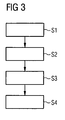
- FIG. 3 is a schematic flow diagram of an embodiment of the inventive method for transmitting signaling messages in a packet-switched network 1 shown.
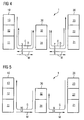
- the method according to the invention will be described below with reference to the block diagram in FIG Fig. 3 with reference to the block diagrams of 4 and 5 explained.
- the 4 and 5 show schematic block diagrams of a packet-switched network 1 according to the invention.
- the packet-switched network 1 has at least three nodes 10-30. At least two of the at least three nodes 10-30 are designed as transmitting / receiving nodes 10, 20. The transmit / receive nodes 10, 20 are source and / or sink of the packets transmitted over the packet-switched network 1.
- the packet-switched network 1 is designed, for example, as a WLAN network. Furthermore, a forwarding node 30 is designed, for example, as a router or routing computer.
- the transmitting / receiving nodes 10, 20 can be configured as a server or as a subscriber terminal.
- the packet-switched network 1 according to the 4 and 5 two transmit / receive nodes 10, 20 and a forwarding node 30.
- the packet-switched network 1 may have a plurality of transmitting / receiving nodes and a plurality of forwarding nodes.
- the forwarding node 30 has at least one reliable link layer 31 and a network coding layer 32.
- the forwarding node 30 has a bit transmission layer, the reliable link layer 31, the network coding layer 32, and an IP layer.
- the respective transmit / receive node 10, 20 has at least one reliable link layer 11, 21, a network coding layer 12, 22 and a reliable transport layer 13, 33.
- the respective transmit / receive node 10, 20 has a bit transmission layer , the reliable link layer 11, 21, the network coding layer 12, 22, an IP layer, the reliable transport layer 13, 33, and an application layer.
- the respective send / receive node 10, 20 is adapted to package at least one signaling message in a respective uncoded transport layer packet G without transport layer payload and the respective uncoded transport layer packet G, hereinafter also GOHAR packet G, to a predetermined forwarding node 30th prioritized to send.
- the respective predetermined forwarding node 30 is adapted to forward the uncoded transport layer packet G prioritized.
- the packets transmitted between the nodes 10, 20 and 30 are designated by a letter and a number, respectively.
- the numbers of the packages indicate their chronological order.
- "D” denotes a transport layer data segment
- "M” a link layer acknowledgment
- "C” a network code acknowledgment
- T a transport layer acknowledgment
- G the GOHAR packet of the present invention.
- the inventive method according to FIG. 1 has the method steps S1 to S4:
- a packet-switched network 1 with at least three nodes 10, 30 is provided, wherein a respective forwarding node 30 has at least one reliable link layer 31 and a network coding layer 32 and a respective transmission / reception node 10, 20 additionally a reliable transport layer 13, 23 Has.
- a respective signaling message is packed into a respective uncoded transport layer packet G without transport layer payload, hereinafter referred to as the GOHAR packet, by a send / receive node 10, for example a first send / receive node 10.
- the respective uncoded transport layer packet G is sent from the send / receive node 10 to a predetermined forwarding node 30 prioritized.
- the respective coded transport layer packet G is forwarded by the predetermined forwarding node 30 prioritized, for example to a further forwarding node or to the destination transmitting / receiving node 20.
- the respective reliable link layer 11, 21, 31 of the nodes 10-31 is adapted to transmit a link layer acknowledgment M for acknowledging a received link layer packet to the link layer packet transmitting node 10-30.
- the respective reliable transport layer 13, 23 of the send / receive nodes 10, 30 can be set up to receive a transport layer confirmation T for confirming a received, transmit network packet encoded transport layer packet to the encoded transport layer packet sending node 10-30.
- the respective uncoded transport layer packet G is sent prioritized to transmission-packet packets encoded by network coding or forwarded.
- the respective reliable data link layer 11, 21, 31 of the nodes 10-30 is set up, in particular, to detect the uncoded transport layer packet G and, depending on this, to forward the detected uncoded transport layer packet G prioritized.
- the transport layer packets G received by the respective reliable data link layer 11, 21, 31 are examined for a lack of transport layer payload data. If the transport layer user data is missing, the reliable data link layer 11, 21, 31 interprets the received transport layer packet as a GOHAR packet according to the invention and forwards it in a prioritized manner.
- a predetermined field (type, sub-type) of the header H of the uncoded transport layer packet G can be used.
- the predetermined field Type, Sub type equipped with a display information.
- the display information is preferably arranged to indicate to the respective reliable link layer 11, 21, 31 of a node 10-30 receiving the uncoded transport layer packet G that the received transport layer packet is an uncoded transport layer packet G without transport layer payload data.
- the predetermined field of the header H of the uncoded transport layer packet G can be interpreted by the respective reliable link layer 11, 21, 31 of the nodes 10-30.
- the respective network coding layer 12, 22, 32 of the nodes 10-30 of the network 1 is preferably added thereto upon receipt of a coded transport layer packet, transmitting a network coding acknowledgment C to the transmitting node 10-30 of the coded transport layer packet and, on receiving an uncoded transport layer packet G, transmitting the uncoded transport layer packet G without transmission of a network Pass on the coding confirmation C.
- a conventional network coding confirmation C can be saved here.
- the reliable link layer 11, 21, 31 comprises a MAC layer and an LLC layer.
- the reliable transport layer 13, 33 may be formed as a TCP layer.
- each TCP ACK, each TCP SYN and each TCP FIN is packaged in a respective GOHAR packet G.
- the predetermined field of the header H of the uncoded transport layer packet G may be formed as the ether type field of the LLC layer.
- the predetermined field Type, Sub type of the header H of the uncoded transport layer packet G may be formed as a Type field type or as a Sub type field Sub type of the MAC layer.
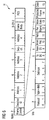
- FIG. 6 a schematic block diagram of an 802.11 header H.
- the identifier is preferably realized as a GOHAR packet G via the reserved Type field Type.
- An 802.11 frame is therefore a GOHAR packet G if and only if the type field Type has the value "11" as display information.
- the semantics of the Subtype field Subtype are the same as those of a Subtyp with a value of "10" in the Type field.
- a backup acknowledgment M from the trusted link layer 11, 21, 31 may then be generated in response to a received transport layer packet and transmitted to the sending node 10, 30 of the transport layer packet if the predetermined field Type, Sub type, the display information , For example, "11", not to display an uncoded transport layer package G has.
- the display information For example, "11", not to display an uncoded transport layer package G has.
- no link layer acknowledgment M is generated in response to a received transport layer packet and transmitted to the sending node 10-30 of the transport layer packet if the predetermined field Type, Sub type is a network coding packet in the payload of the transport layer Packages indicated.
- a network coding acknowledgment C is generated by the network coding layer 12, 22, 32 in response to a received transport layer packet and transmitted to the sending node 10-30 of the transport layer packet, if the predetermined field Type, Sub type indicates a network coding packet in the payload of the transport layer packet, and if the network coding packet is decodable by the respective network coding layer 12, 22, 32.
Landscapes
- Engineering & Computer Science (AREA)
- Computer Networks & Wireless Communication (AREA)
- Signal Processing (AREA)
- Computer Security & Cryptography (AREA)
- Mobile Radio Communication Systems (AREA)
- Data Exchanges In Wide-Area Networks (AREA)
Claims (22)
- Procédé de transmission de messages de signalisation dans un réseau (1) à commutation de paquets, comportant les étapes suivantes :a) mise à disposition d'un réseau (1) à commutation de paquets avec au moins trois noeuds (10-30), un noeud de retransmission respectif (30) ayant au moins une couche de sécurité fiable (31) et une couche de codage de réseau (32), et un noeud émetteur-récepteur respectif (10, 20) ayant additionnellement une couche de transport fiable (13, 23) ;b) encapsulation d'au moins un message de signalisation en un paquet respectif non codé (G) de la couche de transport sans données utiles de la couche de transport dans un noeud émetteur-récepteur (10) ;c) envoi priorisé du paquet respectif non codé (G) de la couche de transport à un noeud de retransmission prédéterminé (30) par le noeud émetteur-récepteur (10) ; etd) retransmission priorisée du paquet respectif non codé (G) de la couche de transport par le noeud de retransmission (30).
- Procédé selon la revendication 1, caractérisé en ce que la couche de sécurité fiable respective (11, 21, 31) des noeuds (10, 20, 30) est configurée pour transmettre au noeud (10, 20, 30) qui émet le paquet de la couche de sécurité une confirmation (M) de la couche de sécurité pour confirmer un paquet de la couche de sécurité reçu.
- Procédé selon la revendication 1 ou 2, caractérisé en ce que la couche de transport fiable respective (13, 23) des noeuds (10, 30) est configurée pour transmettre au noeud (10, 20) qui émet le paquet codé de la couche de transport une confirmation (T) de la couche de transport pour confirmer un paquet de la couche de transport reçu et codé au moyen d'un codage de réseau.
- Procédé selon la revendication 1, 2 ou 3, caractérisé en ce que le paquet respectif non codé (G) de la couche de transport est envoyé de manière priorisée par rapport à des paquets de la couche de transport codés au moyen d'un codage de réseau.
- Procédé selon la revendication 1 ou selon l'une des revendications 2 à 4, caractérisé en ce que la couche de sécurité fiable respective (11, 21, 31) des noeud (10-30) est configurée pour détecter le paquet non codé (G) de la couche de transport et, en fonction de cela, retransmettre de manière priorisée le paquet non codé détecté (G) de la couche de transport.
- Procédé selon la revendication 5, caractérisé en ce que, en cas de recherche visant à détecter des paquets non codés (G) de la couche de transport, les paquets (G) de la couche de transport reçus par la couche de sécurité fiable respective (11, 21, 31) sont examinés pour y constater l'absence de données utiles de la couche de transport.
- Procédé selon la revendication 6, caractérisé en ce que le paquet respectif de la couche de transport reçu par la couche de sécurité fiable (11, 21, 31) est retransmis de manière priorisée par la couche de sécurité fiable (11, 21, 31) en l'absence des données utiles de la couche de transport.
- Procédé selon la revendication 5, caractérisé en ce qu'un champ prédéterminé (Type, Sub-Type) de l'en-tête (H) du paquet non codé (G) de la couche de transport est pourvu d'une information d'affichage qui est configurée de manière à afficher à la couche de sécurité fiable respective (11, 21, 31) d'un noeud (10-30) qui reçoit le paquet non codé (G) de la couche de transport que le paquet reçu (G) de la couche de transport est un paquet non codé (G) de la couche de transport sans données utiles de la couche de transport.
- Procédé selon la revendication 8, caractérisé en ce que la couche de sécurité fiable respective (11, 21, 31) des noeuds (10-30) est configurée de manière à interpréter le champ prédéterminé (Type, Sub-Type) de l'en-tête (H) du paquet non codé (G) de la couche de transport.
- Procédé selon la revendication 1 ou selon l'une des revendications 2 à 9, caractérisé en ce que la couche de codage de réseau respective (12, 22, 32) des noeuds (10-30) du réseau (1) est configurée de manière à transmettre une confirmation de codage de réseau (C) au noeud émetteur (10-30) du paquet codé de la couche de transport à la réception d'un paquet codé de la couche de transport et à retransmettre le paquet non codé reçu (G) de la couche de transport sans transmission d'une confirmation de codage de réseau (C) à la réception d'un paquet non codé (G) de la couche de transport.
- Procédé selon la revendication 1 ou selon l'une des revendications 2 à 10, caractérisé en ce que chaque message de signalisation est encapsulé en un paquet respectif non codé (G) de la couche de transport sans données utiles de la couche de transport.
- Procédé selon la revendication 1 ou selon l'une des revendications 2 à 11, caractérisé en ce que la couche de sécurité fiable (11, 21, 31) comporte une couche MAC et une couche LLC et/ou la couche de transport fiable (13, 33) se présente sous la forme d'une couche TCP.
- Procédé selon la revendication 12, caractérisé en ce qu'un TCP-ACK, un TCP-SYN et un TCP-FIN sont encapsulés en un paquet respectif non codé (G) de la couche de transport sans données utiles de la couche de transport.
- Procédé selon la revendication 12, caractérisé en ce que le champ prédéterminé de l'en-tête du paquet non codé (G) de la couche de transport se présente sous la forme d'un champ Ethertype.
- Procédé selon la revendication 12, caractérisé en ce que le champ prédéterminé (Type, Sub-Type) de l'en-tête (H) du paquet non codé (G) de la couche de transport se présente sous la forme d'un champ Type (Type) ou d'un champ Sub-Type (Sub-Type) de la couche MAC.
- Procédé selon la revendication 8 ou selon l'une des revendications 9 à 15, caractérisé en ce que la couche de sécurité fiable (11, 21, 31) génère une confirmation (M) de la couche de sécurité en réponse à un paquet de la couche de transport reçu et la transmet au noeud (10-30) qui émet le paquet de la couche de transport lorsque le champ prédéterminé (Type, Sub-Type) ne comporte pas l'information d'affichage pour afficher un paquet non codé (G) de la couche de transport.
- Procédé selon la revendication 9 ou selon l'une des revendications 9 à 15, caractérisé en ce qu'aucune confirmation (M) de la couche de sécurité n'est générée en réponse à un paquet de la couche de transport reçu et n'est transmise au noeud (10-30) qui émet le paquet de la couche de transport lorsque le champ prédéterminé (Type, Sub-Type) indique un paquet de codage de réseau dans les données utiles du paquet de la couche de transport.
- Procédé selon la revendication 9 ou selon l'une des revendications 9 à 17, caractérisé en ce que la couche de codage de réseau (12, 22, 32) génère seulement une confirmation (C) de codage de réseau en réponse à un paquet de la couche de transport reçu et la transmet au noeud (10-30) qui émet le paquet de la couche de transport lorsque le champ prédéterminé (Type, Sub-Type) indique un paquet de codage de réseau dans les données utiles du paquet de la couche de transport et lorsque le paquet de codage de réseau peut être décodé par la couche de codage de réseau respective (12, 22, 32).
- Procédé selon la revendication 1 ou selon l'une des revendications 2 à 18, caractérisé en ce que l'étape d) consiste à retransmettre de manière priorisée le paquet respectif non codé (G) de la couche de transport par le noeud de retransmission (30) vers un autre noeud de retransmission prédéterminé ou vers un autre noeud émetteur-récepteur.
- Produit de programme informatique qui fait exécuter un procédé selon l'une des revendications 1 à 19 sur un dispositif commandé par un programme.
- Réseau à commutation de paquets (1) pour transmettre des messages de signalisation, avec :- au moins trois noeuds (10-30), un noeud de retransmission respectif (30) ayant au moins une couche de sécurité fiable (31) et une couche de codage de réseau (32), et un noeud émetteur-récepteur respectif (10, 20) ayant additionnellement une couche de transport fiable (13, 33) ;- le noeud émetteur-récepteur respectif (10, 20) étant configuré pour encapsuler au moins un message de signalisation en un paquet respectif non codé (G) de la couche de transport sans données utiles de la couche de transport et envoyer le paquet respectif non codé (G) de la couche de transport de manière priorisée à un noeud de retransmission prédéterminé (30) ; et- le noeud de retransmission prédéterminé (30) retransmettant le paquet non codé (G) de la couche de transport de manière priorisée.
- Réseau à commutation de paquets selon la revendication 21, caractérisé en ce que le noeud de retransmission respectif (30) a une couche de transmission binaire, la couche de sécurité fiable (31), la couche de codage de réseau (32) et une couche IP et/ou le noeud émetteur-récepteur respectif (10, 20) a une couche de transmission binaire, la couche de sécurité fiable (11, 21), la couche codage de réseau (12, 22), une couche IP, la couche de transport fiable (13, 33) et une couche d'application.
Priority Applications (3)
| Application Number | Priority Date | Filing Date | Title |
|---|---|---|---|
| PL08015222T PL2051560T3 (pl) | 2007-09-26 | 2008-08-28 | Sposób transmitowania wiadomości sygnalizacyjnych w sieci pakietowej i sieć pakietowa |
| EP08015222A EP2051560B1 (fr) | 2007-09-26 | 2008-08-28 | Procédé de transmission d'informations de signalisation dans un réseau transmis par paquet et réseau transmis par paquet |
| PCT/EP2008/062029 WO2009043699A1 (fr) | 2007-09-26 | 2008-09-11 | Procédé de transmission de messages de signalisation dans un réseau à transmission de données en mode paquet et réseau à transmission de données en mode paquet |
Applications Claiming Priority (2)
| Application Number | Priority Date | Filing Date | Title |
|---|---|---|---|
| EP07018979 | 2007-09-26 | ||
| EP08015222A EP2051560B1 (fr) | 2007-09-26 | 2008-08-28 | Procédé de transmission d'informations de signalisation dans un réseau transmis par paquet et réseau transmis par paquet |
Publications (2)
| Publication Number | Publication Date |
|---|---|
| EP2051560A1 EP2051560A1 (fr) | 2009-04-22 |
| EP2051560B1 true EP2051560B1 (fr) | 2012-05-30 |
Family
ID=40405102
Family Applications (1)
| Application Number | Title | Priority Date | Filing Date |
|---|---|---|---|
| EP08015222A Not-in-force EP2051560B1 (fr) | 2007-09-26 | 2008-08-28 | Procédé de transmission d'informations de signalisation dans un réseau transmis par paquet et réseau transmis par paquet |
Country Status (4)
| Country | Link |
|---|---|
| EP (1) | EP2051560B1 (fr) |
| ES (1) | ES2388637T3 (fr) |
| PL (1) | PL2051560T3 (fr) |
| WO (1) | WO2009043699A1 (fr) |
Family Cites Families (2)
| Publication number | Priority date | Publication date | Assignee | Title |
|---|---|---|---|---|
| US6757738B1 (en) * | 2000-05-18 | 2004-06-29 | Nortel Networks Limited | Method and apparatus for improving channel utilization |
| KR20070074256A (ko) * | 2006-01-09 | 2007-07-12 | 삼성전자주식회사 | 셀룰러 망에서 릴레이를 통한 데이터 중계방법 및 이를지원하는 셀룰러 이동통신시스템 |
-
2008
- 2008-08-28 PL PL08015222T patent/PL2051560T3/pl unknown
- 2008-08-28 EP EP08015222A patent/EP2051560B1/fr not_active Not-in-force
- 2008-08-28 ES ES08015222T patent/ES2388637T3/es active Active
- 2008-09-11 WO PCT/EP2008/062029 patent/WO2009043699A1/fr not_active Ceased
Also Published As
| Publication number | Publication date |
|---|---|
| PL2051560T3 (pl) | 2012-10-31 |
| EP2051560A1 (fr) | 2009-04-22 |
| ES2388637T3 (es) | 2012-10-17 |
| WO2009043699A1 (fr) | 2009-04-09 |
Similar Documents
| Publication | Publication Date | Title |
|---|---|---|
| DE60204835T2 (de) | Adaptive Fragmentierung von MAC Paketen und Datenratenauswahl für ein 802.11 drahtloses Netz | |
| DE60036606T2 (de) | Verfahren und einrichtung zur verwaltung von abfrageanforderungen in datenkommunikationen | |
| DE69518186T2 (de) | Vorrichtung und Verfahren für Funkübertragung | |
| DE69904113T2 (de) | System und Verfahren zum Einleiten von Transaktionen auf der Verbindungs- und der Medienzugriffssteuerungsschicht | |
| DE60220978T2 (de) | Drahtloses Kommunikationssystem | |
| DE69932069T2 (de) | Arq protokoll mit packetbasierter zuverlässigkeitseinstellung | |
| DE69130187T2 (de) | Hochgeschwindigkeitsübertragungsprotokoll mit zwei Fenstern | |
| DE69833615T2 (de) | Vorrichtungen zur adaptiven Steuerung von Transportschichtverbindungen zwischen Mobil- und Festnetzteilnehmern | |
| DE60219588T2 (de) | Verfahren zur Unterscheidung von Paketverlusten | |
| HUE025844T2 (en) | Procedure and tool for improved status reports | |
| DE112013000411T5 (de) | Benachrichtigung durch Netzwerkelement über Paketverluste | |
| EP1668952B1 (fr) | Procede de transmission de donnees avec une probabilite reduite de rejet errone de donnees | |
| DE20214310U1 (de) | Engerät, welches Funkressourcensteuerungs-Dienstdateneinheiten (RRC-SDUs) empfängt | |
| DE60132974T2 (de) | Empfängerseitig gesteuerte isochrone übertragung | |
| DE69905649T2 (de) | Verfahren und Vorrichtung zur Komplettierung von Verbindungsschicht- und Medienzugriffssteurung-transaktionen | |
| DE112006004292B4 (de) | Vorrichtung zur Anfrage einer Blockbestätigung | |
| EP1401137B1 (fr) | Procédé pour opérer un réseau radio mobile utilisant la protection d'erreur différent de contrôle et de données de l'utilisateur | |
| DE202005014183U1 (de) | Drahtlose Station für die Verwendung in einem Maschennetzwerk | |
| DE10244696A1 (de) | Verfahren und Datenübertragungssystem zur Übertragung von Datenpaketen zwischen einem Sender und einem Empfänger | |
| DE60313229T2 (de) | Verfahren zur Anpassung einer Funkverbindung in einem Netzwerk mit auf Konkurrenzbetrieb basiertem Mediumzugriff | |
| DE69031015T2 (de) | Zur Ausführung einer Wiederholungskontrolle pro Zeiteinheit fähiges Signalübertragungssystem | |
| DE102022203178A1 (de) | Verfahren und Vorrichtungen für die Funkkommunikation | |
| DE19637026A1 (de) | Lokales Netzwerk mit zur Funkübertragung vorgesehenen Terminals | |
| DE60217687T2 (de) | Vorrichtung und Verfahren zur Wiederherstellung von unbestätigter "Network Layer Service Access Point Identifier (NSAPI)"- Kommunikation im "Subnetwork Dependent Convergence Protocol" SNDCP | |
| DE202006018478U1 (de) | Vorrichtung zur Unterstützung der Fragmentierung und Defragmentierung in einem WLAN |
Legal Events
| Date | Code | Title | Description |
|---|---|---|---|
| PUAI | Public reference made under article 153(3) epc to a published international application that has entered the european phase |
Free format text: ORIGINAL CODE: 0009012 |
|
| AK | Designated contracting states |
Kind code of ref document: A1 Designated state(s): AT BE BG CH CY CZ DE DK EE ES FI FR GB GR HR HU IE IS IT LI LT LU LV MC MT NL NO PL PT RO SE SI SK TR |
|
| AX | Request for extension of the european patent |
Extension state: AL BA MK RS |
|
| 17P | Request for examination filed |
Effective date: 20091019 |
|
| 17Q | First examination report despatched |
Effective date: 20091110 |
|
| AKX | Designation fees paid |
Designated state(s): AT BE BG CH CY CZ DE DK EE ES FI FR GB GR HR HU IE IS IT LI LT LU LV MC MT NL NO PL PT RO SE SI SK TR |
|
| GRAP | Despatch of communication of intention to grant a patent |
Free format text: ORIGINAL CODE: EPIDOSNIGR1 |
|
| GRAS | Grant fee paid |
Free format text: ORIGINAL CODE: EPIDOSNIGR3 |
|
| GRAA | (expected) grant |
Free format text: ORIGINAL CODE: 0009210 |
|
| AK | Designated contracting states |
Kind code of ref document: B1 Designated state(s): AT BE BG CH CY CZ DE DK EE ES FI FR GB GR HR HU IE IS IT LI LT LU LV MC MT NL NO PL PT RO SE SI SK TR |
|
| REG | Reference to a national code |
Ref country code: GB Ref legal event code: FG4D Free format text: NOT ENGLISH |
|
| REG | Reference to a national code |
Ref country code: CH Ref legal event code: EP |
|
| REG | Reference to a national code |
Ref country code: AT Ref legal event code: REF Ref document number: 560563 Country of ref document: AT Kind code of ref document: T Effective date: 20120615 |
|
| REG | Reference to a national code |
Ref country code: IE Ref legal event code: FG4D Free format text: LANGUAGE OF EP DOCUMENT: GERMAN |
|
| REG | Reference to a national code |
Ref country code: DE Ref legal event code: R096 Ref document number: 502008007289 Country of ref document: DE Effective date: 20120802 |
|
| REG | Reference to a national code |
Ref country code: NL Ref legal event code: VDEP Effective date: 20120530 |
|
| REG | Reference to a national code |
Ref country code: ES Ref legal event code: FG2A Ref document number: 2388637 Country of ref document: ES Kind code of ref document: T3 Effective date: 20121017 |
|
| REG | Reference to a national code |
Ref country code: LT Ref legal event code: MG4D Effective date: 20120523 |
|
| PG25 | Lapsed in a contracting state [announced via postgrant information from national office to epo] |
Ref country code: LT Free format text: LAPSE BECAUSE OF FAILURE TO SUBMIT A TRANSLATION OF THE DESCRIPTION OR TO PAY THE FEE WITHIN THE PRESCRIBED TIME-LIMIT Effective date: 20120530 Ref country code: FI Free format text: LAPSE BECAUSE OF FAILURE TO SUBMIT A TRANSLATION OF THE DESCRIPTION OR TO PAY THE FEE WITHIN THE PRESCRIBED TIME-LIMIT Effective date: 20120530 Ref country code: NO Free format text: LAPSE BECAUSE OF FAILURE TO SUBMIT A TRANSLATION OF THE DESCRIPTION OR TO PAY THE FEE WITHIN THE PRESCRIBED TIME-LIMIT Effective date: 20120830 Ref country code: SE Free format text: LAPSE BECAUSE OF FAILURE TO SUBMIT A TRANSLATION OF THE DESCRIPTION OR TO PAY THE FEE WITHIN THE PRESCRIBED TIME-LIMIT Effective date: 20120530 Ref country code: CY Free format text: LAPSE BECAUSE OF FAILURE TO SUBMIT A TRANSLATION OF THE DESCRIPTION OR TO PAY THE FEE WITHIN THE PRESCRIBED TIME-LIMIT Effective date: 20120530 Ref country code: IS Free format text: LAPSE BECAUSE OF FAILURE TO SUBMIT A TRANSLATION OF THE DESCRIPTION OR TO PAY THE FEE WITHIN THE PRESCRIBED TIME-LIMIT Effective date: 20120930 |
|
| REG | Reference to a national code |
Ref country code: PL Ref legal event code: T3 |
|
| PG25 | Lapsed in a contracting state [announced via postgrant information from national office to epo] |
Ref country code: HR Free format text: LAPSE BECAUSE OF FAILURE TO SUBMIT A TRANSLATION OF THE DESCRIPTION OR TO PAY THE FEE WITHIN THE PRESCRIBED TIME-LIMIT Effective date: 20120530 Ref country code: GR Free format text: LAPSE BECAUSE OF FAILURE TO SUBMIT A TRANSLATION OF THE DESCRIPTION OR TO PAY THE FEE WITHIN THE PRESCRIBED TIME-LIMIT Effective date: 20120831 Ref country code: LV Free format text: LAPSE BECAUSE OF FAILURE TO SUBMIT A TRANSLATION OF THE DESCRIPTION OR TO PAY THE FEE WITHIN THE PRESCRIBED TIME-LIMIT Effective date: 20120530 Ref country code: SI Free format text: LAPSE BECAUSE OF FAILURE TO SUBMIT A TRANSLATION OF THE DESCRIPTION OR TO PAY THE FEE WITHIN THE PRESCRIBED TIME-LIMIT Effective date: 20120530 |
|
| PG25 | Lapsed in a contracting state [announced via postgrant information from national office to epo] |
Ref country code: EE Free format text: LAPSE BECAUSE OF FAILURE TO SUBMIT A TRANSLATION OF THE DESCRIPTION OR TO PAY THE FEE WITHIN THE PRESCRIBED TIME-LIMIT Effective date: 20120530 Ref country code: SK Free format text: LAPSE BECAUSE OF FAILURE TO SUBMIT A TRANSLATION OF THE DESCRIPTION OR TO PAY THE FEE WITHIN THE PRESCRIBED TIME-LIMIT Effective date: 20120530 Ref country code: DK Free format text: LAPSE BECAUSE OF FAILURE TO SUBMIT A TRANSLATION OF THE DESCRIPTION OR TO PAY THE FEE WITHIN THE PRESCRIBED TIME-LIMIT Effective date: 20120530 Ref country code: NL Free format text: LAPSE BECAUSE OF FAILURE TO SUBMIT A TRANSLATION OF THE DESCRIPTION OR TO PAY THE FEE WITHIN THE PRESCRIBED TIME-LIMIT Effective date: 20120530 Ref country code: CZ Free format text: LAPSE BECAUSE OF FAILURE TO SUBMIT A TRANSLATION OF THE DESCRIPTION OR TO PAY THE FEE WITHIN THE PRESCRIBED TIME-LIMIT Effective date: 20120530 Ref country code: RO Free format text: LAPSE BECAUSE OF FAILURE TO SUBMIT A TRANSLATION OF THE DESCRIPTION OR TO PAY THE FEE WITHIN THE PRESCRIBED TIME-LIMIT Effective date: 20120530 |
|
| BERE | Be: lapsed |
Owner name: SIEMENS A.G. Effective date: 20120831 |
|
| PG25 | Lapsed in a contracting state [announced via postgrant information from national office to epo] |
Ref country code: PT Free format text: LAPSE BECAUSE OF FAILURE TO SUBMIT A TRANSLATION OF THE DESCRIPTION OR TO PAY THE FEE WITHIN THE PRESCRIBED TIME-LIMIT Effective date: 20121001 Ref country code: IT Free format text: LAPSE BECAUSE OF FAILURE TO SUBMIT A TRANSLATION OF THE DESCRIPTION OR TO PAY THE FEE WITHIN THE PRESCRIBED TIME-LIMIT Effective date: 20120530 |
|
| RAP2 | Party data changed (patent owner data changed or rights of a patent transferred) |
Owner name: SIEMENS AKTIENGESELLSCHAFT |
|
| REG | Reference to a national code |
Ref country code: CH Ref legal event code: PL |
|
| PG25 | Lapsed in a contracting state [announced via postgrant information from national office to epo] |
Ref country code: MC Free format text: LAPSE BECAUSE OF NON-PAYMENT OF DUE FEES Effective date: 20120831 |
|
| PLBE | No opposition filed within time limit |
Free format text: ORIGINAL CODE: 0009261 |
|
| STAA | Information on the status of an ep patent application or granted ep patent |
Free format text: STATUS: NO OPPOSITION FILED WITHIN TIME LIMIT |
|
| PG25 | Lapsed in a contracting state [announced via postgrant information from national office to epo] |
Ref country code: CH Free format text: LAPSE BECAUSE OF NON-PAYMENT OF DUE FEES Effective date: 20120831 Ref country code: LI Free format text: LAPSE BECAUSE OF NON-PAYMENT OF DUE FEES Effective date: 20120831 |
|
| 26N | No opposition filed |
Effective date: 20130301 |
|
| REG | Reference to a national code |
Ref country code: IE Ref legal event code: MM4A |
|
| PG25 | Lapsed in a contracting state [announced via postgrant information from national office to epo] |
Ref country code: BE Free format text: LAPSE BECAUSE OF NON-PAYMENT OF DUE FEES Effective date: 20120831 |
|
| REG | Reference to a national code |
Ref country code: DE Ref legal event code: R097 Ref document number: 502008007289 Country of ref document: DE Effective date: 20130301 |
|
| PG25 | Lapsed in a contracting state [announced via postgrant information from national office to epo] |
Ref country code: BG Free format text: LAPSE BECAUSE OF FAILURE TO SUBMIT A TRANSLATION OF THE DESCRIPTION OR TO PAY THE FEE WITHIN THE PRESCRIBED TIME-LIMIT Effective date: 20120830 Ref country code: IE Free format text: LAPSE BECAUSE OF NON-PAYMENT OF DUE FEES Effective date: 20120828 |
|
| PG25 | Lapsed in a contracting state [announced via postgrant information from national office to epo] |
Ref country code: MT Free format text: LAPSE BECAUSE OF FAILURE TO SUBMIT A TRANSLATION OF THE DESCRIPTION OR TO PAY THE FEE WITHIN THE PRESCRIBED TIME-LIMIT Effective date: 20120530 |
|
| PG25 | Lapsed in a contracting state [announced via postgrant information from national office to epo] |
Ref country code: TR Free format text: LAPSE BECAUSE OF FAILURE TO SUBMIT A TRANSLATION OF THE DESCRIPTION OR TO PAY THE FEE WITHIN THE PRESCRIBED TIME-LIMIT Effective date: 20120530 |
|
| PG25 | Lapsed in a contracting state [announced via postgrant information from national office to epo] |
Ref country code: LU Free format text: LAPSE BECAUSE OF NON-PAYMENT OF DUE FEES Effective date: 20120828 |
|
| PG25 | Lapsed in a contracting state [announced via postgrant information from national office to epo] |
Ref country code: HU Free format text: LAPSE BECAUSE OF FAILURE TO SUBMIT A TRANSLATION OF THE DESCRIPTION OR TO PAY THE FEE WITHIN THE PRESCRIBED TIME-LIMIT Effective date: 20080828 |
|
| REG | Reference to a national code |
Ref country code: AT Ref legal event code: MM01 Ref document number: 560563 Country of ref document: AT Kind code of ref document: T Effective date: 20130828 |
|
| PG25 | Lapsed in a contracting state [announced via postgrant information from national office to epo] |
Ref country code: AT Free format text: LAPSE BECAUSE OF NON-PAYMENT OF DUE FEES Effective date: 20130828 |
|
| PGFP | Annual fee paid to national office [announced via postgrant information from national office to epo] |
Ref country code: ES Payment date: 20140923 Year of fee payment: 7 |
|
| PGFP | Annual fee paid to national office [announced via postgrant information from national office to epo] |
Ref country code: DE Payment date: 20141020 Year of fee payment: 7 |
|
| REG | Reference to a national code |
Ref country code: FR Ref legal event code: PLFP Year of fee payment: 8 |
|
| PGFP | Annual fee paid to national office [announced via postgrant information from national office to epo] |
Ref country code: GB Payment date: 20150812 Year of fee payment: 8 |
|
| PGFP | Annual fee paid to national office [announced via postgrant information from national office to epo] |
Ref country code: PL Payment date: 20150723 Year of fee payment: 8 Ref country code: FR Payment date: 20150818 Year of fee payment: 8 |
|
| REG | Reference to a national code |
Ref country code: DE Ref legal event code: R119 Ref document number: 502008007289 Country of ref document: DE |
|
| PG25 | Lapsed in a contracting state [announced via postgrant information from national office to epo] |
Ref country code: DE Free format text: LAPSE BECAUSE OF NON-PAYMENT OF DUE FEES Effective date: 20160301 |
|
| REG | Reference to a national code |
Ref country code: ES Ref legal event code: FD2A Effective date: 20160927 |
|
| PG25 | Lapsed in a contracting state [announced via postgrant information from national office to epo] |
Ref country code: ES Free format text: LAPSE BECAUSE OF NON-PAYMENT OF DUE FEES Effective date: 20150829 |
|
| GBPC | Gb: european patent ceased through non-payment of renewal fee |
Effective date: 20160828 |
|
| REG | Reference to a national code |
Ref country code: FR Ref legal event code: ST Effective date: 20170428 |
|
| PG25 | Lapsed in a contracting state [announced via postgrant information from national office to epo] |
Ref country code: GB Free format text: LAPSE BECAUSE OF NON-PAYMENT OF DUE FEES Effective date: 20160828 Ref country code: FR Free format text: LAPSE BECAUSE OF NON-PAYMENT OF DUE FEES Effective date: 20160831 |
|
| PG25 | Lapsed in a contracting state [announced via postgrant information from national office to epo] |
Ref country code: PL Free format text: LAPSE BECAUSE OF NON-PAYMENT OF DUE FEES Effective date: 20160828 |