EP2053054B1 - Procédé pour introduire un groupe protecteur d'acide nucléique - Google Patents
Procédé pour introduire un groupe protecteur d'acide nucléique Download PDFInfo
- Publication number
- EP2053054B1 EP2053054B1 EP07791750.8A EP07791750A EP2053054B1 EP 2053054 B1 EP2053054 B1 EP 2053054B1 EP 07791750 A EP07791750 A EP 07791750A EP 2053054 B1 EP2053054 B1 EP 2053054B1
- Authority
- EP
- European Patent Office
- Prior art keywords
- general formula
- acid derivative
- following general
- reaction
- producing
- Prior art date
- Legal status (The legal status is an assumption and is not a legal conclusion. Google has not performed a legal analysis and makes no representation as to the accuracy of the status listed.)
- Active
Links
- 0 *CCOC*1C2[C@@](CO)O[C@](*)C12 Chemical compound *CCOC*1C2[C@@](CO)O[C@](*)C12 0.000 description 4
Classifications
-
- C—CHEMISTRY; METALLURGY
- C07—ORGANIC CHEMISTRY
- C07H—SUGARS; DERIVATIVES THEREOF; NUCLEOSIDES; NUCLEOTIDES; NUCLEIC ACIDS
- C07H19/00—Compounds containing a hetero ring sharing one ring hetero atom with a saccharide radical; Nucleosides; Mononucleotides; Anhydro-derivatives thereof
- C07H19/02—Compounds containing a hetero ring sharing one ring hetero atom with a saccharide radical; Nucleosides; Mononucleotides; Anhydro-derivatives thereof sharing nitrogen
- C07H19/04—Heterocyclic radicals containing only nitrogen atoms as ring hetero atom
- C07H19/06—Pyrimidine radicals
-
- C—CHEMISTRY; METALLURGY
- C07—ORGANIC CHEMISTRY
- C07H—SUGARS; DERIVATIVES THEREOF; NUCLEOSIDES; NUCLEOTIDES; NUCLEIC ACIDS
- C07H19/00—Compounds containing a hetero ring sharing one ring hetero atom with a saccharide radical; Nucleosides; Mononucleotides; Anhydro-derivatives thereof
- C07H19/02—Compounds containing a hetero ring sharing one ring hetero atom with a saccharide radical; Nucleosides; Mononucleotides; Anhydro-derivatives thereof sharing nitrogen
- C07H19/04—Heterocyclic radicals containing only nitrogen atoms as ring hetero atom
- C07H19/16—Purine radicals
- C07H19/167—Purine radicals with ribosyl as the saccharide radical
-
- Y—GENERAL TAGGING OF NEW TECHNOLOGICAL DEVELOPMENTS; GENERAL TAGGING OF CROSS-SECTIONAL TECHNOLOGIES SPANNING OVER SEVERAL SECTIONS OF THE IPC; TECHNICAL SUBJECTS COVERED BY FORMER USPC CROSS-REFERENCE ART COLLECTIONS [XRACs] AND DIGESTS
- Y02—TECHNOLOGIES OR APPLICATIONS FOR MITIGATION OR ADAPTATION AGAINST CLIMATE CHANGE
- Y02P—CLIMATE CHANGE MITIGATION TECHNOLOGIES IN THE PRODUCTION OR PROCESSING OF GOODS
- Y02P20/00—Technologies relating to chemical industry
- Y02P20/50—Improvements relating to the production of bulk chemicals
- Y02P20/55—Design of synthesis routes, e.g. reducing the use of auxiliary or protecting groups
Definitions
- the present invention relates to a method for introducing the following substituent (I) at the 2'-hydroxyl group of the ribose in a ribonucleic acid derivative whose 3'-hydroxyl group and 5'-hydroxyl group are protected with a silicon protecting group.
- WG 1 represents an electron-withdrawing group.
- the "electron-withdrawing group" of WG 1 includes, for example, cyano, nitro, alkylsulfonyl, arylsulfonyl, and halogen. Among these, cyano is preferable.
- alkyl moiety in “alkylsulfonyl” of WG 1 includes, for example, a straight or branched alkyl with one to 5 carbon atoms.
- the alkyl moiety includes, for example, methyl, ethyl, n-propyl, isopropyl, n-butyl, isobutyl, sec-butyl, tert-butyl, n-pentyl, isopentyl, neopentyl, and tert-pentyl.
- the "aryl" moiety in “arylsulfonyl” of WG 1 includes, for example, an aryl with 6 to 12 carbon atoms.
- the aryl moiety includes, for example, phenyl, 1-naphthyl, 2-naphthyl and biphenyl.
- the aryl may or may not have a substituent.
- the substituent includes, for example, halogen, alkyl, alkoxy, cyano and nitro.
- the aryl may be substituted with one to three such substituents at any appropriate positions.
- the "halogen" of WG 1 includes, for example, fluorine, chlorine, bromine and iodine.
- the "halogen” and the “alkyl” as substituents of "aryl” of WG 1 are the same as those described for the "halogen".
- the "alkoxy” as the substituent of "aryl” of WG 1 includes, for example, a straight or branched alkoxy with one to 4 carbon atoms. Specifically, the alkoxy includes, for example, methoxy, ethoxy, n-propoxy, isopropoxy, n-butoxy, isobutoxy, sec-butoxy, and tert-butoxy. Among these, the alkoxy with one to 3 carbon atoms is preferable.
- Oligo RNA is useful as RNA probes for gene analysis, pharmaceutical RNA materials (antisense RNA, ribozymes, RNA for control of gene expression through RNAi), artificial enzymes, and aptamers.
- RNA materials antisense RNA, ribozymes, RNA for control of gene expression through RNAi
- artificial enzymes and aptamers.
- reagents for use in the preparation of the oligo RNA phosphoramidite compounds substituted at the 2'-hydroxyl group of the ribose with the 2-cyanoethoxymethyl (CEM) group, which can be removed under neutral conditions, have been reported (Non-patent reference 1, Patent reference 1).
- the production of the phosphoramidite compounds includes a step for introducing CEM as a protecting group at the 2'-hydroxyl group of the ribose.
- This step has so far been performed by reacting a ribonucleic acid derivative (raw material) protected with a silicon protecting group (for example, tetraisopropyldisiloxan-1,3-diyl) at the 3'- and 5'-hydroxyl groups of the ribose, with methylthiomethyl 2-cyanoethyl ether as an alkylating reagent and N-iodosuccinimide (NIS) or N-bromosuccinimide (NBS) as a reagent (oxidant) for halogenating the sulfur atom in the alkylating reagent, in the presence of an acid such as trifluoromethanesulfonic acid or silver trifluoromethanesulfonate (Patent reference 1).
- a silicon protecting group for example, te
- the nucleobase in the ribonucleic acid derivative as the raw material compound may also possibly be halogenated, even when the reaction temperature is lowered to about 0°C. Therefore, it is necessary to carry out the reaction at very low temperatures of -50°C to -40°C, so as to prevent the halogenation of the nucleobase.
- the reaction may sometimes proceed smoothly even when the reaction temperature is around 0°C.
- NIS NIS, NBS, trifluoromethanesulfonic acid, and silver trifluoromethanesulfonate are very expensive reagents and so carry an economic disadvantage.
- substituent (I) for example, the CEM group
- WG 1 has the same meaning as described above.
- the present invention includes, for instance, a method for producing a ribonucleic acid derivative represented by the following general formula (3), comprising the reaction of a ribonucleic acid derivative represented by the following general formula (1) with a monothioacetal compound represented by the following general formula (2) to produce the ribonucleic acid derivative represented by the following general formula (3), wherein iodine is used as the reagent for halogenating the sulfur atom of the monothioacetal compound (2) in the presence of an acid.
- Bz represents a nucleobase which may have a protecting group
- WG 1 has the same meaning as described above
- R 3 represents alkyl or aryl
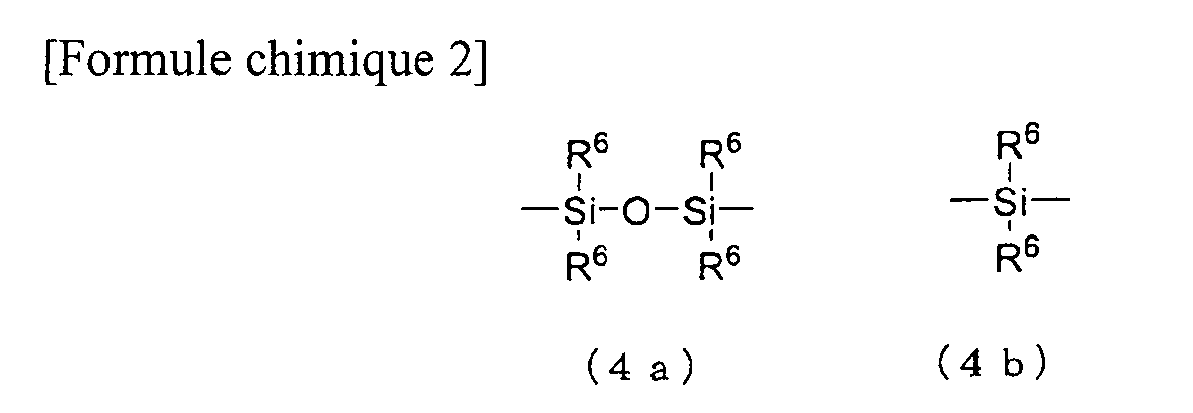
- A represents a silicon substituent represented by the following general formula (4a) and (4b).
- R 6 represents alkyl
- nucleobase Bz is not particularly limited as long as it is a nucleobase to be used in the synthesis of a nucleic acid.
- the nucleobase may include, for example, pyrimidine bases such as cytosine and uracil; purine bases such as adenine and guanine; or modified forms thereof.
- the "nucleobase” Bz may or may not be protected. Especially, in the nucleobases with the amino group, for example, adenine, guanine and cytosine, the amino group is preferably protected.
- the "protecting group for the amino group” is not particularly limited as long as it is a protecting group to be used as a protecting group of a nucleic acid, and it may include, for example, benzoyl, 4-methoxybenzoyl, acetyl, propionyl, butyryl, isobutyryl, phenylacetyl, phenoxyacetyl, 4-tert-butylphenoxyacetyl, 4-isopropylphenoxyacetyl, and (dimethylamino)methylene.
- the "modified form" of Bz means a nucleobase substituted with appropriate substituents, which include, for example, halogen, acyl, alkyl, arylalkyl, alkoxy, alkoxyalkyl, hydroxy, amino, monoalkylamino, dialkylamino, carboxy, cyano and nitro.
- the modified form means a nucleobase substituted with one to three such substituents at any appropriate positions.
- the "acyl" for the "modified form” of Bz may include, for example, a straight or branched alkanoyl with one to 6 carbon atoms and an aroyl with 7 to 13 carbon atoms.
- the acyl may include formyl, acetyl, n-propionyl, isopropionyl, n-butyryl, isobutyryl, tert-butyryl, valeryl, hexanoyl, benzoyl, naphthoyl, and levulinyl.
- the "alkyl” for the "modified form” of Bz may include, for example, a straight or branched alkyl with one to 5 carbon atoms.
- the alkyl may include, for example, methyl, ethyl, n-propyl, isopropyl, n-butyl, isobutyl, sec-butyl, tert-butyl, n-pentyl, isopentyl, neopentyl, and tert-pentyl.
- the alkyl may or may not have a substituent, which includes, for example, halogen, alkyl, alkoxy, cyano and nitro.
- the alkyl may be substituted with one to three such substituents at appropriate positions.
- alkyl moiety in the "arylalkyl", “alkoxyalkyl”, “monoalkylamino”, “dialkylamino” and “alkylsulfonyl” for the "modified form" of Bz is the same as those for the "alkyl" as described above.
- the "alkoxy" for the "modified form” of Bz may include, for example, a straight or branched alkoxy with one to 4 carbon atoms.
- the alkoxy may include, for example, methoxy, ethoxy, n-propoxy, isopropoxy, n-butoxy, isobutoxy, sec-butoxy, and tert-butoxy.
- the alkoxy with one to 3 carbon atoms is preferable. Methoxy is particularly preferable.
- the "aryl" moiety in the "arylalkyl” for the modified form of Bz may include, for example, an aryl group with 6 to 12 carbon atoms.
- the aryl may include, for example, phenyl, 1-naphthyl, 2-naphthyl, and biphenyl.
- the aryl may have a substituent, which includes, for example, halogen, alkyl, alkoxy, cyano and nitro.
- the aryl may be substituted with one to three such substituents at any appropriate positions.
- a specific example of the monothioacetal compound (11) is 2-cyanoethyl methylthiomethyl ether.
- the "alkyl" of R 6 may include, for example, a straight or branched alkyl with one to 5 carbon atoms.
- the alkyl may include, for example, methyl, ethyl, n-propyl, isopropyl, n-butyl, isobutyl, sec-butyl, tert-butyl, n-pentyl, isopentyl, neopentyl, and tert-pentyl.
- the method for producing a ribonucleic acid derivative represented by the following general formula (3) comprising the reaction of a ribonucleic acid derivative represented by the following general formula (1) with a monothioacetal compound represented by the following general formula (2) may include a method for producing a phosphoramidite compound (hereinafter referred to as phosphoramidite compound (A)) represented by the following general formula (A) comprising a step for producing a ribonucleic acid derivative represented by the following general formula (3), using iodine as a reagent for halogenating the sulfur atom in the monothioacetal compound (2) in the presence of an acid.
- phosphoramidite compound (A) represented by the following general formula (A) comprising a step for producing a ribonucleic acid derivative represented by the following general formula (3), using iodine as a reagent for halogenating the sulfur atom in the monothioacetal compound (2) in the presence of an acid.
- R 2a and R 2b may be the same or different and each represents alkyl, or R 2a and R 2b may form a 5- or 6-membered saturated cyclic amino group when combined together with the adjacent nitrogen atom.
- the saturated cyclic amino group may have one oxygen atom or one sulfur atom as a ring member in addition to the nitrogen atom.
- WG 2 may be the same or different and represents an electron-withdrawing group; and R 1 represents a substituent represented by the following general formula (5).
- R 11 , R 12 and R 13 may be the same or different and each represents hydrogen or alkoxy.
- the "saturated 5- or 6-membered cyclic amino group" of R 2a and R 2b may include, for example, pyrrolidin-1-yl, piperidin-1-yl, morpholin-4-yl and thiomorpholin-4-yl.
- the "electron-withdrawing group" of WG 2 is the same as those described above for the “electron-withdrawing group” of WG 1 .
- the phosphoramidite compound (A) is a phosphoramidite compound protected with the following substituent (I) at the 2'-hydroxyl group of the ribose. Because the group introduced at the 2'-hydroxyl group is a straight substituent and because the configuration around the phosphorus atom bound to the 3'-hydroxyl group is not crowded, the condensation reaction in the synthesis of oligo RNA can proceed very quickly compared with the phosphoramidite compounds conventionally used, so that the phosphoramidite compound (A) has the characteristic feature of a good condensation yield. The use of the phosphoramidite compound (A) can lead to the production of oligo RNA of high purity through almost the same procedures as those used for producing oligo DNA.
- WG 1 has the same meaning as described above.
- oligo RNA in accordance with the invention means an oligo nucleic acid containing at least one ribonucleic acid (RNA) as a monomer constituting the oligo nucleic acid.
- oligo DNA means an oligo nucleic acid that contains no ribonucleic acid (RNA) as a monomer constituting the oligo nucleic acid.
- a raw material has a substituent (for example, hydroxy, amino, carboxy) that would affect the reaction by the method described below
- the raw material is protected in advance with an appropriate protecting group by a known method before the reaction is carried out.
- the protecting group can be removed by a known method such as catalytic reduction, alkali treatment or acid treatment.
- the method can be carried out by reacting a ribonucleic acid derivative represented by the following general formula (1) with a monothioacetal compound represented by the following general formula (2) in the presence of an acid and iodine.
- the monothioacetal compound (2) can be produced by known methods (for example, the International Publication WO 2006/022323 A1 pamphlet).
- the method can be carried out by reacting a ribonucleic acid derivative (1) commercially available or synthesizable according to any method described in references with the monothioacetal compound (2) and iodine in the presence of an acid.
- the amount of "iodine" to be used in the method is suitably in the range of 0.8 to 20 mol per mol of the ribonucleic acid derivative (1), and preferably in the range of one to 10 mol per mol thereof.
- the reaction temperature is suitably in the range of -20°C to 20°C, preferably in the range of -10°C to 10°C, and more preferably in the range of -5°C to 5°C.
- the reaction time depends on the kind of raw material and the reaction temperature.
- the reaction time is suitably in the range of 5 min to 5 h.
- the amount of the "monothioacetal compound (2)" to be used in the method is suitably in the range of 0.8 to 5 mol per mol of the ribonucleic acid derivative (1), preferably in the range of 1 to 3 mol per mol thereof.
- the acid any organic acid that can activate the alkylating reaction at the 2'-position of the ribose and that is acidic enough to form a salt with a base moiety of the nucleic acid, with no specific limitation, is satisfactory. Satisfactory examples of such acids are methanesulfonic acid, trifluoromethanesulfonic acid, or mixtures thereof.
- methanesulfonic acid or a mixture of trifluoromethanesulfonic acid and methanesulfonic acid is preferable.
- the amount of the acid to be used is suitably in the range of 0.01 to 10 mol per mol of the ribonucleic acid derivative (I), and preferably in the range of 0.1 to 5 mol per mol thereof.
- trifluoromethanesulfonic acid is suitably in the range of 0.01 to 0.9 mol per mol of methanesulfonic acid, preferably in the range of 0.02 to 0.5 mol per mol thereof, and more preferably in the range of 0.05 to 0.2 mol per mol thereof.
- the solvent to be used is not specifically limited unless it is involved in the reaction, and may include, for example, dichloromethane, chloroform, carbon tetrachloride, 1,2-dichloroethane, benzene, toluene, xylene, tetrahydrofuran (hereinafter referred to as "THF"), acetonitrile, N,N-dimethylformamide, or appropriate mixtures thereof.
- THF tetrahydrofuran
- acetonitrile N,N-dimethylformamide
- the phosphoramidite compound (A) can be produced from known compounds or from readily producible intermediates.
- This step is the same as the method described above in I.
- This step is a step for producing a ribonucleic acid derivative represented by the following formula (7), by dissolving the ribonucleic acid derivative (3) produced in step "a" in an appropriate solvent and then treating the resulting solution with a reagent for removing the silicon substituent.
- the "reagent for removing the silicon substituent" to be used in the step may include tetrabutylammonium fluoride, a salt of an amine with hydrogen fluoride, or a mixture of an amine and hydrogen fluoride at an appropriate ratio in an appropriate solvent.
- the step is carried out by using a mixed reagent prepared by adding an additional appropriate acid to a salt of an amine with hydrogen fluoride or a mixture of an amine and hydrogen fluoride at an appropriate ratio in an appropriate solvent.
- the acid to be used in such cases includes, for example, acetic acid, hydrochloric acid and sulfuric acid.
- the amount of such acid to be used is suitably in the range of 0.01 to 10 mol per mol of an amine, preferably in the range of 0.1 to 5 mol per mol thereof.
- the solvent to be used includes, for example, THF, acetonitrile, methanol, isopropanol, toluene, dimethylsulfoxide, N,N-dimethylformamide or appropriate mixtures thereof. THF and methanol are particularly preferable.
- the amount of the "reagent for removing the silicon substituent" that can be used in this step depends on the kind of ribonucleic acid derivative (3), the reagent to be used for removing the silicon substituent, and the solvent to be used.
- the reagent is used suitably in the range of 1 to 10 mol per mol of the ribonucleic acid derivative (3), and preferably in the range of 1.2 to 1.5 mol per mol thereof.
- the reaction temperature is suitably in the range of 0°C to 80°C.
- the reaction time depends on the kind of ribonucleic acid derivative (3), the reagent for to be used removing the silicon substituent, the solvent to be used, and the reaction temperature. Generally, the reaction time is suitably in the range of 30 min to 10 h.
- the volume of water to be added is suitably in the range of 0.05 to 5 times the volume of the solvent used, preferably in the range of 0.06 to 1 times the volume thereof, and more preferably in the range of 0.07 to 0.1 times the volume thereof.
- the "salt of an amine with hydrogen fluoride" to be used in this step may include, for example, ammonium fluoride, trimethylamine hydrofluoride, trimethylamine dihydrofluoride, trimethylamine trihydrofluoride, trimethylamine tetrahydrofluoride, trimethylamine pentahydrofluoride, trimethylamine hexahydrofluoride, triethylamine hydrofluoride, triethylamine dihydrofluoride, triethylamine trihydrofluoride, triethylamine tetrahydrofluoride, triethylamine 26 hydrofluoride, quinuclidine trihydrofluoride, and triethylenediamine tetrahydrofluoride (see, for example, Journal Molecular Structure, 193, 247 (1989), Pol.
- the "mixture of an amine and hydrogen fluoride at an appropriate ratio in an appropriate solvent” includes, for example, mixtures of amines, such as ammonia, triethylamine, triethylamine, quinuclidine, and triethylenediamine, and hydrogen fluoride in an appropriate solvent (for example, THF, acetonitrile, methanol, isopropanol, and toluene) at a molar ratio of amine:hydrogen fluoride in the range of, for example, 1:1 to 1:30.
- an appropriate solvent for example, THF, acetonitrile, methanol, isopropanol, and toluene
- the step is a step for allowing R 1 X 3 (8) to react with a ribonucleic acid derivative (7) according to a known method, and producing a ribonucleic acid derivative (9) by introducing a protecting group (R 1 ), which can be removed under acidic conditions, at the 5'-hydroxyl group of the ribonucleic acid derivative (7) produced in Step b.
- B z , R 1 and WG 1 have the same meanings as described above.
- X 3 represents halogen.
- halogen of X 3 is the same as those described above for the "halogen" for modified form of B z .
- the amount of R 1 X 3 (8) to be used may be in the range of 0.8 to 20 mol per mol of the ribonucleic acid derivative (7), and preferably in the range of 1 to 10 mol per mol thereof.
- the solvent to be used is not specifically limited unless it is involved in the reaction, and may include, for example, acetonitrile and THF.
- the "base” may include organic bases such as pyridine, 2,6-dimethylpyridine, 2,4,6-trimethylpyridine, N-methylimidazole, triethylamine, tributylamine, N,N-diisopropylethylamine and 1,8-diazabicyclo[5.4.0]-7-undecene.
- the amount of the base to be used may be in the range of 0.8 to 20 mol per mol of the ribonucleic acid derivative (7), and preferably in the range of 1 to 10 mol per mol thereof.
- the reaction temperature is preferably in the range of 0°C to 120°C.
- the reaction time depends on the kind of raw materials and the reaction temperature, and is preferably between 30 min and 24 h.
- the step is a step for producing the phosphoramidite compound (A), whose 3'-hydroxyl group is phosphoramidited, by allowing a phosphoramiditing reagent and an activating agent, if necessary, to act on the ribonucleic acid derivative (9) produced in Step c.
- B z , R 1 , R 2a , R 2b , WG 1 and WG 2 have the same meanings as described above.
- the "phosphoramiditing reagent” may include a compound represented by the following general formulae (10a) and (10b).
- R 2a , R 2b and WG 2 have the same meanings as described above.
- X 1 represents halogen.
- the "halogen" of X 1 may include the same as those described above for the "halogen” for the modified form of B z .
- the solvent to be used is not specifically limited unless it is involved in the reaction, and may include, for example, acetonitrile and THF.
- the amount of the phosphoramiditing reagent to be used may be in the range of 0.8 to 20 mol per mol of the ribonucleic acid derivative (9), and preferably in the range of 1 to 10 mol per mol thereof.
- the "activating agent” may include 1H-tetrazole, 5-ethylthiotetrazole, 5-benzylmercapto-1H-tetrazole, 4,5-dichloroimidazole, 4,5-dicyanoimidazole, benzotriazole triflate, imidazole triflate, pyridinium triflate, N,N-diisopropylethylamine and 2,4,6-collidine/N-methylimidazole.
- the amount of the activating agent to be used may be in the range of 0.8 to 20 mol per mol of the ribonucleic acid derivative (9), and preferably in the range of 1 to 10 mol per mol thereof.
- the reaction temperature is preferably in the range of 0°C to 120°C.
- the reaction time depends on the kind of raw material and the reaction temperature, and is preferably between 30 min and 24 h.
- the phosphoramidite compound (A) thus produced can be isolated and purified by a general method such as concentration, liquid phase conversion, partition, solvent extraction, crystallization, recrystallization, fractional distillation or chromatography.
- Oligo RNA represented by the following general formula (B) (hereinafter referred to as "oligo RNA (B)") can be produced by using the phosphoramidite compound (A).
- each B represents independently a nucleobase or a modified form thereof.
- Each Q independently represents 0 or S.
- Each R independently represents H, hydroxyl, halogen, alkoxy, alkylthio, alkylamino, dialkylamino, alkenyloxy, alkenylthio, alkenylamino, dialkenylamino, alkynyloxy, alkynylthio, alkynylamino, dialkynylamino or alkoxyalkyloxy, and at least one R is hydroxyl.
- Each Y represents alkyl, alkoxy, alkylthio, O - , S - , NR 2a R 2b (R 2a and R 2b have the same meanings as described above).
- R in the nucleic acid monomer unit constituting the oligo RNA (B) is hydroxyl
- Y represents O - .
- Z represents H, a phosphate group or a thiophosphate group.
- n represents an integer in the range of 1 to 200.
- n is preferably an integer in the range of 10 to 100, and more preferably an integer in the range of 15 to 50.
- nucleobase of B is not particularly limited as long as it is a nucleobase to be used in the synthesis of a nucleic acid, and examples thereof may include pyrimidine bases such as cytosine, uracil and thymine, purine bases such as adenine and guanine.
- modified form of B is a group in which a nucleobase has been substituted by an arbitrary substituent.
- the "substituent" for the modified form of B may include halogen, acyl, alkyl, arylalkyl, alkoxy, alkoxyalkyl, hydroxyl, amino, monoalkylamino, dialkylamino, carboxy, cyano and nitro.
- the modified form of B may be substituted by 1 to 3 of these substituents at arbitrary positions.
- alkyl moiety in the "alkyl”, “alkoxy”, and “alkylthio” of Y is the same as those described above for.the modified form of B z , respectively.
- alkyl moiety in the "alkoxyalkyloxy” and “alkylthio" of R is the same as those described above for the "alkyl” for the modified form of B z .
- alkenyl in the "alkenyloxy”, “alkenylthio”, “alkenylamino” and “dialkenylamino” of R may include straight or branched alkenyl having 2 to 6 carbon atoms.
- the alkenyl may include, for example, vinyl, allyl, 1-propenyl, isopropenyl, 1-butenyl, 2-butenyl, 1-pentenyl and 1-hexenyl.
- alkynyl moiety in the "alkynyloxy”, “alkynylthio", “alkynylamino” and “dialkynylamino” of R may include straight or branched alkynyl having 2 to 4 carbon atoms.
- the alkynyl may include, for example, ethynyl, 2-propynyl and 1-butynyl.
- nucleic acid monomer unit represents each part of nucleic acid constituting oligo RNA (B) and each (oligo) nucleic acid derivative.
- a method for producing oligo-RNA (B) using phosphoramidite compound (A) can be performed by a known method, for example, by condensing a nucleic acid monomer compound to step by step in the 3' to 5' direction according to the following Steps A to G.
- the method for producing the oligo-RNA mentioned above it is possible to produce an oligo-RNA (B) wherein one or more R groups are hydroxyl groups.
- process B mentioned below it is possible to produce an oligo-RNA (B) in which all of the R groups are hydroxyl groups, by using solely the phosphoramidite compound (A) as a nucleic acid monomer compound.
- phosphoramidite compound (A) is not particularly limited as long as they are generally used in syntheses of oligo-RNAs or oligo-DNAs.
- all the steps can be performed by using an automatic DNA synthesizer or manually as in the case of using conventional reagents for synthesizing a nucleic acid.
- the use of an automatic synthesizer is desirable from the point of view of the simplicity and ease of the method and the accuracy of the synthesis.
- the step is a step for producing an (oligo)nucleic acid derivative represented by the following general formula (12) by removing the 5'-hydroxyl group from an (oligo)nucleic acid derivative represented by the following general formula (11) by allowing an acid for removing to R 1 to act on the (oligo)nucleic acid derivative (11).
- each Q and R 1 has the same meanings as described above.
- Each B x independently represents a nucleobase which may have protecting groups, or a modified form thereof.
- Each R 4 independently represents H, halogen, alkoxy, alkylthio, alkylamino, dialkylamino, alkenyloxy, alkenylthio, alkenylamino, dialkenylamino, alkynyloxy, alkynylthio, alkynylamino, dialkynylamino, alkoxyalkyloxy or the substituent represented by the following general formula (13).
- WG 1 has the same meanings as described above.
- Each Y 1 represents alkyl, alkoxy, alkylthio, NR 2a R 2b (R 2a and R 2b have the same meanings as described above) or the substituent represented by the following general formula (14).
- WG 2 have the same meanings as described above.
- R 4 in the nucleic acid monomer unit constituting the (oligo) nucleic acid derivatives (11) and (12) is a substituent represented by the above general formula (13)
- Y 1 represents a substituent represented by the above general formula (14).
- E represents acyl and a substituent represented by the following general formula (15).
- E 1 represents a single bond or a substituent represented by the following general formula (16).
- T represents H, acyloxy, halogen, alkoxy, alkylthio, alkylamino, dialkylamino, alkenyloxy, alkenylthio, alkenylamino, dialkenylamino, alkynyloxy, alkynylthio, alkynylamino, dialkynylamino, alkoxyalkyloxy, an substituent represented by the above general formula (13) or a substituent represented by the above general formula (15), with the proviso that either E or T is a substituent (15).
- nucleobase B x is not particularly limited as long as it is a nucleobase to be used in the synthesis of a nucleic acid, and examples thereof may include pyrimidine bases such as cytosine, uracil, and thymine, purine bases such as adenine and guanine.
- nucleobase B x may be protected, and particularly in the case of a nucleobase having an amino group such as adenine, guanine or cytosine, the amino group thereof is preferably protected.
- the "protecting group of amino group” is not particularly limited as long as it is a protecting group to be used as a protecting group of a nucleic acid, and examples thereof may include benzoyl, 4-methoxybenzoyl, acetyl, propionyl, butyryl, isobutyryl, phenylacetyl, phenoxyacetyl, 4-tert-butylphenoxyacetyl, 4-isopropylphenoxyacetyl and (dimethylamino)methylene.
- the "modified form" of B x is a group in which a nucleobase has been substituted by an arbitrary substituent.
- the "substituent" for the modified form of B x may include halogen, acyl, alkyl, arylalkyl, alkoxy, alkoxyalkyl, hydroxyl, amino, monoalkylamino, dialkylamino, carboxy, cyano and nitro.
- the modified form of B may be substituted by 1 to 3 of these substituents at arbitrary positions.
- alkyl moiety in the "alkoxyalkyloxy” and “alkylthio" of R 4 is the same as those described above for the "alkyl” for the modified form of B z .
- alkenyl moiety in “alkenyloxy”, “alkenylthio”, “alkenylamino”, and “dialkenylamino” of R 4 is the same as those described above for the “alkenyl” of R.
- alkynyl moiety in the "alkynyloxy" "alkynylthio", “alkynylamino” and “dialkynylamino” of R 4 is the same as those described above for the “alkynyl” of R.
- the “amino”, “alkylamino”, “alkenylamino” or “alkynylamino” of R 4 may be protected.
- the protecting group of the amino group is not particularly limited as long as it is a protecting group to be used as a protecting group of an amino group, and examples thereof may include trifluoroacetyl, benzoyl, 4-methoxybenzoyl, acetyl, propionyl, butyryl, isobutyryl, phenylacetyl, phenoxyacetyl, 4-tert-butylphenoxyacetyl, 4-isopropylphenoxyacetyl and (dimethylamino)methylene. In particularly, trifluoroacetyl is preferred.
- alkyl moiety in the "alkoxyalkyloxy” and “alkylthio" related to the T may include the same ones as those illustrated for the "alkyl” related to the above-mentioned modified form of B z .
- alkenyl moiety in “alkenyloxy”, “alkenylthio”, “alkenylamino” and “dialkenylamino” of T is the same as those described above for the “alkenyl” of R.
- alkynyl moiety in “alkynyloxy” "alkynylthio", “alkynylamino”, “alkylamino” and “dialkynylamino” of T is the same as those described above for the “alkynyl” of R.
- the step is performed by allowing an acid to act on a compound represented by the following formula (17a), (17b) (a nucleic acid derivative (11) wherein n is 1) which is attached to the solid support, or an oligo-RNA or an oligo-DNA produced by performing Step A through Step D (oligonucleic acid derivative (18) wherein n is 2 to 100) which is attached to the solid support (hereinafter referred to as the "oligonucleic acid attached the solid support").
- R 2L and R 4L represent substituent (21).
- R 2 represents acyloxy.
- R 4a represents H, acyloxy, halogen, alkoxy, alkylthio, alkylamino, dialkylamino, alkenyloxy, alkenylthio, alkenylamino, dialkenylamino, alkynyloxy, alkynylthio, alkynylamino, dialkynylamino, alkoxyalkyloxy or substituent (13).
- alkyl moiety in “alkoxyalkyloxy” and “alkylthio" of R 4a is the same as those described above for the "alkyl” for the modified form of B z .
- alkenyl moiety in “alkenyloxy”, “alkenylthio”, “alkenylamino” and “dialkenylamino” of R 4a is the same as those described above for the “alkenyl” of R.
- alkynyl moiety in the "alkynyloxy”, “alkynylthio", “alkynylamino” and “dialkynylamino” of R 4a is the same as those described above for the “alkynyl” of R.
- the “amino”, “alkylamino”, “alkenylamino” and “alkynylamino” of R 4a may be protected.
- the protecting group of the amino group is not particularly limited as long as it is a protecting group to be used as a protecting group of an amino group, and examples thereof may include trifluoroacetyl, benzoyl, 4-methoxybenzoyl, acetyl, propionyl, butyryl, isobutyryl, phenylacetyl, phenoxyacetyl, 4-tert-butylphenoxyacetyl, 4-isopropylphenoxyacetyl and (dimethylamino)methylene. Particularly, trifluoroacetyl is preferred.
- solid support may include a controlled-pore glass (CPG), an oxalyl-controlled pore glass (see, for example, Alul et al., Nucleic Acids Research, Vol. 19, 1527 (1991 )), TentaGel support-amino polyethylene glycol derivatization support (see, for example, Wright et al., Tetrahedron Letters, Vol.34, 3373 (1993 )) and a copolymer of porous polystyrene and divinylbenzene.
- CPG controlled-pore glass
- an oxalyl-controlled pore glass see, for example, Alul et al., Nucleic Acids Research, Vol. 19, 1527 (1991 )
- TentaGel support-amino polyethylene glycol derivatization support see, for example, Wright et al., Tetrahedron Letters, Vol.34, 3373 (1993 )
- the “linker” may include 3-aminopropyl, succinyl, 2,2'-diethanol sulfonyl and a long-chain alkylamino (LCAA).
- LCAA long-chain alkylamino
- nucleic acid derivative (17a), nucleic acid derivative (17b) are attached to the solid support, which are produced according to a known method or are commercially available, and examples of a preferable embodiment are a nucleic acid derivative represented by the following general formula (18), (19).
- B X , Q, R 1 , R 4 and WG 2 have the same meanings as described above.
- the nucleic acid derivative (19) wherein R 4 is a substituent (13) can be produced from a phosphoramidite compound (A) according to a known method.
- the “acid" to be used in the step may include trifluoroacetic acid, dichloroacetic acid and trichloroacetic acid.
- the acid to be used in the step can be diluted in a suitable solvent so as to be of a concentration of 1% to 5%.
- the solvent is not specifically limited unless it is involved in the reaction, and may include dichloromethane, acetonitrile, water and an arbitrary mixture thereof.
- the reaction temperature in the reaction is preferably in the range of 20°C to 50°C.
- the reaction time depends on the kind of oligonucleic acid derivative (11), the acid, and the reaction temperature, and is preferably between 1 min and 1 h.
- the amount of the reagent to be used is preferably in the range of 0.8 to 100 mol per mol of the (oligo)nucleic acid derivative attached to the solid support, and more preferably in the range of 1 to 10 mol per mol thereof.
- the step is a step for producing an oligonucleic acid derivative represented by the following general formula (20) by condensing a nucleic acid monomer compound with the oligonucleic acid derivative (12) produced in Step A using an activating agent.
- each B x , E, n, each Q, R 1 , each R 4 , T and each Y 1 independently have the same meanings as described above.
- R 4 in the nucleic acid monomer unit constituting the (oligo) nucleic acid derivatives (12) and (20) is a substituent represented by the above general formula (13)
- Y 1 represents a substituent represented by the above general formula (14).
- nucleic acid monomer compound may include the phosphoramidite compound (A) and a nucleic acid derivative represented by the following general formula (21).
- R 1 , R 2a , R 2b , R 4a and Y 1 have the same meanings as described above.
- a nucleobase which may have protecting groups, or a modified form thereof.
- nucleobase B Y is not particularly limited as long as it is a nucleobase to be used in the synthesis of a nucleic acid, and examples thereof may include pyrimidine bases such as cytosine, uracil and thymine, and purine bases such as adenine and guanine.
- nucleobase B Y may be protected, and particularly in the case of a nucleobase having an amino group, such as adenine, guanine or cytosine, the amino group thereof is preferably to be protected.
- the protecting group of amino group is not particularly limited as long as it is a protecting group to be used as a protecting group of a nucleic acid, and examples thereof may include benzoyl, 4-methoxybenzoyl, acetyl, propionyl, butyryl, isobutyryl, phenylacetyl, phenoxyacetyl, 4-tert-butylphenoxyacetyl, 4-isopropylphenoxyacetyl and (dimethylamino)methylene.
- the "modified form" of B Y is a group in which a nucleobase has been substituted by an arbitrary substituent.
- the "substituent" for the modified form of B Y may include halogen, acyl, alkyl, arylalkyl, alkoxy, alkoxyalkyl, hydroxyl, amino, monoalkylamino, dialkylamino, carboxy, cyano and nitro.
- the modified form of B may be substituted by 1 to 3 of these substituents at arbitrary positions.
- nucleic acid derivative (21) may include a nucleic acid compound, which are commercially available or are produced according to a known method (see, for example, Protocols for oligonucleotides and analogs; S. Agrawal, Eds.: Human Press Inc.: Totowa, NJ, 1993 ).
- the activating agent may include the same ones as those illustrated in the above description.
- the reaction solvent to be used is not specifically limited unless it is involved in the reaction, and may include, for example, acetonitrile and THF.
- the reaction temperature is preferably in the range of 20°C to 50°C.
- the reaction time depends on the kind of oligonucleic acid derivative (12), the kind of activating agent used, and the reaction temperature, and it is preferably between 1 min and 1 h.
- the step is a step for allowing a capping agent to react with an oligonucleic acid derivative (12) attached to the solid support in order to cap the 5'-hydroxyl group of the unreacted oligonucleic acid derivative (12) in Step B.
- each B X , E, n, each Q, each R 4 , T, each Y 1 have the same meanings as described above.
- R 5 represents methyl, phenoxymethyl and tert-butylphenoxymethyl.
- the "capping agent” may include acetic anhydride, phenoxyacetic anhydride and tert-butylphenoxyacetic anhydride.
- the capping agent to be used can be diluted in a suitable solvent so as to be of a concentration of 0.05 to 1 M.
- the reaction solvent to be used is not specifically limited unless it is involved in the reaction, and may include, for example, pyridine, dichloromethane, acetonitrile, THF and mixtures thereof.
- 4-dimethylaminopyridine and N-methylimidazole can be used as a "reaction accelerator” in the step, if necessary.
- the reaction temperature in the reaction is preferably in the range of 20°C to 50°C.
- the reaction time depends on the kind of oligonucleic acid derivative (12), the capping agent, and the reaction temperature, and is preferably between 1 and 30 min.
- the amount of the capping agent to be used is preferably in the range of 0.8-100 mol per mol of the oligonucleic acid derivative attached to the solid support, and more preferably 1 to 10 mol per mol thereof.
- the step is a step for converting a phosphite group (trivalent phosphorus) into a phosphate or thiophosphate group (pentavalent phosphorus) by treating the oligonucleic acid derivative (20) produced in Step B with an oxidizing agent.
- each B x , E, n, each Q, R 1 , each R 4 , T and each Y 1 have the same meanings as described above.
- R 4 in the nucleic acid monomer unit constituting the (oligo) nucleic acid derivatives (20) and (23) is a substituent represented by the above general formula (13)
- Y 1 represents a substituent represented by the above general formula (14).
- examples of the "oxidizing agent” may include iodine and tert-butylhydroperoxide.
- the oxidizing agent to be used can be diluted in a suitable solvent so as to be of a concentration of 0.05 to 2 M.
- the reaction solvent to be used is not specifically limited unless it is involved in the reaction, and may include, for example, pyridine, tetrahydrofuran, water and mixtures thereof.
- iodine / water / pyridine - THF, iodine / pyridine - acetic acid and a peroxidation agent (tert-butylhydroperoxide / dichloromethane and the like) can be used.
- examples of the "oxidizing agent” may include sulfur, Beaucage reagent (3H-1,2-benz'odithiol-3-on-1,1-dioxide) and 3-amino-1,2,4-dithiazole-5-thione (ADTT).
- the oxidizing agent to be used can be diluted in a suitable solvent so as to be of a concentration of 0.01 to 2 M.
- the reaction solvent to be used is not specifically limited unless it is involved in the reaction, and may include, for example, dichloromethane, acetonitrile, pyridine and mixtures thereof.
- the amount of the oxidizing agent to be used is preferably in the range of 0.8-100 mol per mol of the oligonucleic acid derivative attached to the solid support, and more preferably in the range of 10 to 50 mol per mol thereof.
- the reaction temperature is preferably in the range of 20°C to 50°C.
- the reaction time depends on the kind of oligonucleic acid derivative (20), the oxidizing agent, and the reaction temperature, and is preferably between 1 and 30 min.
- the step is a step for cleaving the oligonucleic acid derivative (23) produced in Step D from the solid support, and then removing the protecting groups of each nucleobase and each phosphate group.
- each B, each B x , E, each Q, R, R 1 , each R 4 , n, T, each Y, each Y 1 and Z have the same meanings as described above.
- R 4 in the nucleic acid monomer unit constituting the (oligo) nucleic acid derivatives (23) and (24) is a substituent represented by the above general formula (13)
- Y 1 , Y represent a substituent represented by the above general formula (14) or O - .
- the cleavage step is a reaction for cleaving an oligo-RNA having a desired chain length from the solid support and linker with a cleaving agent, and is performed by adding a cleaving agent to the solid support which contains an oligo-RNA having a desired chain length.
- the protecting group of a nucleobase can be removed.
- the "cleaving agent” may include concentrated aqueous ammonia and methylamine.
- the cleaving agent to be used in the step may be diluted by, for example, water, methanol, ethanol, isopropyl alcohol, acetonitrile, THF and mixtures thereof. Among these, ethanol is preferable.
- the concentration of ammonium hydroxide in the solution to be used for deprotection may be 20% to 30% by weight, preferably 25% to 30% by weight, and more preferably 28% to 30% by weight.
- the amount of "cleaving agent" to be used in the step may be in the range of 0.8 to 100 mol per mol of the oligonucleic acid derivative attached to the solid support, and preferably in the range of 10 to 50 mol per mol thereof.
- the reaction temperature may be in the range of 15°C to 75°C, preferably in the range of 15°C to 30°C, and more preferably in the range of 18°C to 25°C.
- the reaction time for deprotection may be in the range of 10 min to 30 h, preferably 30 min to 24 h, and more preferably 1 to 4 h.
- the step is a step for producing an oligonucleic acid derivative represented by the following general formula (25) by allowing a reagent for removing the protecting group of the 2'-hydroxyl group of each ribose to act on the oligonucleic acid derivative (24) produced in Step E.
- each B, n, each Q, each Y, each R, R 1 , each R 4 and Z have the same meanings as described above.
- R 4 in the nucleic acid monomer unit constituting the (oligo) nucleic acid derivatives (24) and (25) is a substituent represented by the above general formula. (13), Y represents O - .
- the "reagent for removing the protecting group of the 2'-hydroxyl group” may include TBAF, and triethylamine / trihydrogenfluoride.
- the amount of the agent for removing the protecting group of the 2'-hydroxyl group may be in the range of 1 to 500 mol per mol of the protecting group to be removed, and preferably in the range of 5 to 10 mol per mol thereof.
- the solvent to be used is not specifically limited unless it is involved in the reaction, and may include, for example, THF, N-methylpyrrolidone, pyridine, dimethylsulfoxide and mixtures thereof.
- the solvent to be used in the reaction may be in the range of 0.8 to 100 mol per mol of the agent for removing the protecting group of the 2'-hydroxyl group, and is preferably in the range of 1 to 10 mol per mol thereof.
- the reaction temperature is preferably in the range of 20°C to 80°C.
- the reaction time depends on the kind of oligonucleic acid derivative (24), the agent for removing the protecting group of the 2'-hydroxyl group to be used, and the reaction temperature, and is preferably in the range of 1 to 100 h.
- nitroalkane, alkylamine, amidine, thiol, thiol derivative and mixture thereof can be added as a scavenger of acrylonitrile, if necessary, to trap the acrylonitrile which is a byproduct in the step.
- the "nitroalkane” may include straight nitroalkane having 1 to 6 carbon atoms.
- the nitroalkane may include, for example, nitromethane.
- alkylamine may include straight alkylamine having 1 to 6 carbon atoms.
- the "alkylamine” may include, for example, methylamine, ethylamine, n-propylamine, n-butylamine, n-pentylamine and n-hexylamine.
- the "amidine” may include benzamidine and formamidine.
- the "thiol” may include straight thiol having 1 to 6 carbon atoms. Specifically, the “thiol” may include, for example, methanethiol, ethanethiol, 1-propanethiol, 1-butanthiol, 1-pentanethiol and 1-hexanthiol.
- the "thiol derivative” may include alcohol and ether having the same or different straight alkylthiol having 1 to 6 carbon atoms.
- the thiol derivative may include, for example, 2-mercaptoethanol, 4-mercapto-1-butanol, 6-mercapto-1-hexanol, mercaptomethyl ether, 2-mercaptoethyl ether, 3-mercaptopropyl ether, 4-mercaptobutyl ether, 5-mercaptopentyl ether and 6-mercaptohexyl ether.
- the amount of the acrylonitrile scavenger to be used depends on the kind of oligonucleic acid derivative (24), and may be in the range of 0.8 to 500 mol per mol of 2-cyanoethoxymethyl substituting the 2'-hydroxyl group of each ribose of the oligonucleic acid derivative (24), and preferably in the range of 1 to 10 mol per mol thereof.
- the step is a step for removing the protecting group of the 5'-hydroxyl group of the oligonucleic acid derivative (25) by allowing an acid to act on the oligonucleic acid derivative (25) produced in Step F.
- each B, n, each Q, each Y, each R, R 1 and Z have the same meanings as described above.
- R in the nucleic acid monomer unit constituting the oligo nucleic acid derivative (25) and oligo-RNA (B) is a hydroxyl group
- Y represents O - .
- the "acid" to be used in the step may include, for example, trichloroacetic acid, dichloroacetic acid and acetic acid.
- the acid diluted in a suitable solvent can be used in the step.
- the solvent is not specifically limited unless it is involved in the reaction, and may include, for example, dichloromethane, acetonitrile, water, a buffer whose pH is in the range of 2 to 5 and mixtures thereof.
- the "buffer solution” may include an acetate buffer.
- the amount of the reagent to be used may be in the range of 0.8 to 100 mol per mol of the oligonucleic acid derivative attached to the solid support, and is preferably 1 to 10 mol per mol thereof.
- the reaction temperature in the reaction is preferably in the range of 20°C to 50°C.
- the reaction time for deprotection depends on the kind of oligonucleic acid derivative (25), the acid, and the reaction temperature, and may be in the range of 1 min to 1 h.
- the step is a step for isolating and purifying the oligo-RNA (B) produced in Step G.
- the “step for isolating and purifying” is a step for isolating and purifying a desired oligo-RNA from the above reaction mixture by a known method, for example, extraction, concentration, neutralization, filtration, centrifugal separation, recrystallization, reverse-phase column chromatography (C 8 to C 18 ), reverse phase cartridge column chromatography, (C 8 to C 18 ), cation-exchange column chromatography, anion-exchange column chromatography, gel-filtration column chromatography, high performance liquid chromatography, dialysis, ultrafiltration and combinations thereof.
- a known method for example, extraction, concentration, neutralization, filtration, centrifugal separation, recrystallization, reverse-phase column chromatography (C 8 to C 18 ), reverse phase cartridge column chromatography, (C 8 to C 18 ), cation-exchange column chromatography, anion-exchange column chromatography, gel-filtration column chromatography, high performance liquid chromatography, dialysis, ultrafiltration and combinations thereof.
- the "eluent” may include acetonitrile, methanol, ethanol, isopropyl alcohol, water and mixtures thereof.
- pH of the solution can be controlled to be in the range of pH 1 to 9 by adding sodium phosphate, potassium phosphate, sodium chloride, potassium chloride, ammonium acetate, triethylammonium acetate, sodium acetate, potassium acetate, tris-hydrochloric acid or ethylenediaminetetraacetic acid as an additive in a concentration of 1 mM to 2 M.
- the oligoribonucleic acid (B) of desired chain length can be produced by repeating Step A through Step D.
- the nucleic acid derivative (17a) wherein R 4a is the substituent (13), the nucleic acid derivative (17a) wherein R 4a is H or acyl, or the nucleic acid derivative (17b) wherein R 2 is alkyloxy are used.
- the nucleic acid derivative (17a) wherein R 4a is H or acyloxy or the nucleic acid derivative (17b) wherein R 2 is alkyloxy it is necessary to use one or more units of the phosphoramidite compounds according to the present invention as a nucleic acid monomer compound.
- the isolation and purification of an oligo-RNA (B) is also performed by carrying out Step G before Step E, then carrying out Step E, and then Steps F and H.
- 3-Hydroxypropionitrile 32 g, 450 mmol was dissolved in 450 mL of dimethylsulfoxide, and 324 mL of acetic anhydride and 231 mL of acetic acid were added thereto, and the reaction solution was stirred at room temperature for 24 h.
- Sodium bicarbonate (990 g) was dissolved in 4.5 L of water, and the reaction solution was added dropwise to the aqueous sodium bicarbonate solution over 1 h, and was subjected to extraction with ethyl acetate, and the extract was dried over anhydrous magnesium sulfate, and the solvent was distilled off.
- reaction solution was cooled and triethylamine was added.
- the reaction solution was then neutralized, filtered at room temperature, and diluted in dichloromethane.
- the organic layer was washed with aqueous sodium thiosulfate solution and aqueous saturated sodium bicarbonate solution and the solvent was distilled off.
- reaction mixture obtained was diluted in ethyl acetate and washed with water and aqueous sodium thiosulfate solution and brine and dried over anhydrous sodium sulfate, and the solvent was distilled off to give 3',5'-O-(tetraisopropyldisiloxan-1,3-diyl)-2'-O-(2-cyanoethoxymethyl)uridine (64.2 g, quantitative yield).
- N 4 -acetyl-3',5'-O-(tetraisopropyldisiloxane-1,3-diyl)-2'-O-(2-cyanoethoxymethyl)cytidine 500 mg, 0.819 mmol obtained in Step 1 was dissolved in a mixed solvent of 2.5 mL of THF and 2.5 mL of methanol, and 150 mg of ammonium fluoride (4.10 mmol) was added, and then the reaction was allowed to proceed at 50°C for 4 h. After completion of the reaction, the reaction solution was diluted with acetonitrile and filtered, and the solvent was distilled off.
- N 4 -Acetyl-3',5'-O-(1,3-tetraisopropyldisiloxane-diyl)cytidine (50 g, 95 mmol) was dissolved in 500 mL of THF under an argon atmosphere, and 18.64 g of methylthiomethyl 2-cyanoethyl ether (142 mmol) and 40 g of Molecular Sieves 4A were added, and the reaction solution was stirred at -45°C for 30 min.
- Trifluoromethanesulfonic acid (21.41 g, 142 mmol) was added dropwise, and then, 31.97 g of N-iodosuccinimide (142 mmol) was added, and the reaction solution was stirred for 30 min.
- Triethylamine was added to the reaction solution, and reaction solution was filtered. The organic layer was washed with 1 M aqueous sodium thiosulfate solution, aqueous saturated sodium bicarbonate solution and brine, and dried over anhydrous sodium sulfate, and the solvent was distilled off.
- reaction mixture obtained was diluted with 300 mL of THF, 18.3 g of triethylamine trihydrofluoride (110 mmol) were added, and the reaction allowed to proceed at 45°C for 2 h.
- the resulting precipitate was filtered, washed with cooled THF and dried to give the desired compound (27 g, yield 78%).
- N 6 -acetyl-3',5'-O-(tetraisopropyldisiloxane-1,3-diyl)-2'-O-(2-cyanoethoxymethyl)adenosine (300 mg, 0.47 mmol) obtained in step 1 was dissolved in a mixed solvent of 0.1 mL of acetic acid and 2 mL of 0.5 M TBAF / THF solution, and the reaction solution was stirred at room temperature for 2 h. After completion of the reaction, the reaction mixture was subjected to silica gel column chromatography to give the desired compound (160 mg, yield 86%).
- N 6 -Acetyl-3',5'-O-(tetraisopropyldisiloxan-1,3-diyl)adenosine (15 g, 17.4 mmol) was dissolved in 100 mL of dimethylsulfoxide, 80 mL of acetic anhydride and 80 mL of acetic acid were added, and the reaction solution was stirred at room temperature overnight.
- a suspension of 150 g of sodium bicarbonate in 1 L of water was prepared, and the reaction mixture was poured into it, and, after extraction with ethyl acetate, the solvent was distilled off. The residue was redissolved in ethyl acetate and washed with water.
- reaction solution was added 21.6 g of N-iodosuccinimide (96.1 mmol) and then 24.2 g of trifluoromethanesulfonic acid (161 mmol), and the reaction solution was stirred at -45 °C for 20 min. After completion of the reaction, the reaction solution was neutralized by adding triethylamine while cooling, and diluted with dichloromethane. The reaction solution was washed with aqueous sodium thiosulfate solution and saturated aqueous sodium bicarbonate solution, and the extract was dried over anhydrous sodium sulfate, and the solvent was distilled off. The reaction mixture obtained was diluted with ethyl acetate.
- N 6 -acetyl-3',5'-O-(tetraisopropyldisiloxane-1,3-diyl)-2'-O-(2-cyanoethoxymethyl)adenosine (44 g, 69 mmol) obtained in Step 2 was dissolved in 150 mL of THF, the THF solution was poured into 13.4 g of triethylamine trihydrofluoride dissolved in 50 mL THF, and the reaction solution was stirred at 45 °C for 1 h. After completion of the reaction, 50 mL of hexane was added to the reaction mixture and the solution was stirred under ice cooling. The resulting precipitate was collected by filtration and dried on the filter under aspiration to give the desired compound (29 g, quantitative yield).
- N 2 -Phenoxyacetyl-3',5'-O-(1,3-tetraisopropyldisiloxane-1,3-diyl) guanosine (2.0 g, 3.0 mmol) was dissolved in 16 mL of THF, and 0.99 g of methylthiomethyl 2-cyanoethyl ether (7.6 mmol) and 1.0 g of Molecular Sieves 4A were added, and the reaction solution was stirred at -45°C for 10 min under an argon atmosphere.
- N 2 -Phenoxyacetyl-3',5'-O-(1,3-tetraisopropyldisiloxane-1,3-diyl) guanosine (36 g, 55 mmol) was dissolved in 380 mL of THF, and 17.2 g of methylthiomethyl 2-cyanoethyl ether (131 mmol) and 36 g of Molecular Sieves 4A were added, and the reaction solution was stirred at -45°C for 10 min under an argon atmosphere.
- N 4 -Acetyl-3',5'-O-(tetraisopropyldisiloxan-1,3-diyl)cytidine (70 g, 133 mmol) was dissolved in 133 mL of THF, then 10.3 mL (160 mmol) of methanesulfonic acid, 201 g (798 mmol) of iodine and 19.9 g (200 mmol) of methylthiomethyl 2-cyanoethyl ether were added in an argon atmosphere at 0°C.
- reaction solution was added to a mixture of aqueous saturated sodium bicarbonate solution and aqueous sodium thiosulfate solution for extraction with ethyl acetate.
- the organic layer was washed with aqueous saturated brine, dried over magnesium sulfate and concentrated under reduced pressure to give the crude product.
- N 4 -Acetyl-3',5'-O-(tetraisopropyldisiloxan-1,3-diyl)adenosine (60 g, 109 mmol) was dissolved in 109 mL of THF, then 1.04 g (10.9 mmol) of methanesulfonic acid, 165.6 g (654 mmol) of iodine and 21.3 g (164 mmol) of methylthiomethyl 2-cyanoethyl ether were added in an argon atmosphere at 0°C.
- reaction solution was added to a mixture of aqueous saturated sodium bicarbonate solution and aqueous sodium thiosulfate solution for extraction with ethyl acetate.
- the organic layer was collected, washed with aqueous saturated brine, dried over magnesium sulfate and concentrated under reduced pressure to give the crude product.
- N 2 -Phenoxyacetyl-3',5'-O-(tetraisopropyldisiloxan-1,3-diyl)guanosine (52.8 g, 80 mmol) was dissolved in 180 mL of THF, then 7.69 g (80 mmol) of methanesulfonic acid, 1.20 g (8 mmol) of trifluoromethanesulfonic acid, 203.0 g (80 mmol) of iodine, and 31.5 g (240 mmol) of methylthiomethyl 2-cyanoethyl ether were added in an argon atmosphere at 0°C with stirring.
- reaction solution was added to a mixture of aqueous saturated sodium bicarbonate solution and aqueous sodium thiosulfate solution for extraction with ethyl acetate.
- the organic layer was collected, washed with aqueous saturated brine, dried over magnesium sulfate and concentrated under reduced pressure to give the crude product.
- the ribonucleic acid derivative (3) useful as an intermediate for producing various ribonucleic acid derivatives can be produced in large quantities at low cost in a simple manner. Since the reaction can proceed at higher concentrations than when conventional methods are used, the amounts of the reaction solvents needed can be reduced.
- the phosphoramidite compound (A) can be produced economically, and it can be used for producing the oligo RNA (B), useful as RNA probes for gene analysis, raw materials for pharmaceutical RNA products (using antisense RNA, ribozymes, control of gene expression or RNAi), artificial enzymes, and aptamers.
Landscapes
- Chemical & Material Sciences (AREA)
- Organic Chemistry (AREA)
- Health & Medical Sciences (AREA)
- Life Sciences & Earth Sciences (AREA)
- Engineering & Computer Science (AREA)
- Biochemistry (AREA)
- Biotechnology (AREA)
- General Health & Medical Sciences (AREA)
- Genetics & Genomics (AREA)
- Molecular Biology (AREA)
- Saccharide Compounds (AREA)
Claims (10)
- Méthode de production d'un dérivé d'acide ribonucléique représenté par la formule générale (3) suivante, comprenant la réaction d'un dérivé d'acide ribonucléique représenté par la formule générale (1) suivante avec un composé de monothioacétal représenté par la formule générale (2) suivante pour produire le dérivé d'acide ribonucléique représenté par la formule générale (3) suivante, dans laquelle de l'iode est utilisé en tant que réactif pour halogéner l'atome de soufre du composé de monothioacétal (2) en présence d'un acide :

- Méthode de production d'un dérivé d'acide ribonucléique selon la revendication 1, dans laquelle l'acide est l'acide méthanesulfonique ou un mélange d'acide trifluorométhanesulfonique et d'acide méthanesulfonique.
- Méthode de production d'un dérivé d'acide ribonucléique selon la revendication 1 ou 2, dans laquelle R3 est méthyle.
- Méthode de production d'un dérivé d'acide ribonucléique selon l'une quelconque des revendications 1 à 3, dans laquelle WG1 est cyano.
- Méthode de production d'un composé de phosphoramidite représenté par la formule générale (A) suivante :


comprenant les étapes "a" à "d" suivantes :Etape a :Etape de production d'un dérivé d'acide ribonucléique représenté par la formule générale (3) suivante, comprenant la réaction d'un dérivé d'acide ribonucléique représenté par la formule générale (1) suivante avec un composé de monothioacétal représenté par la formule générale (2) suivante pour produire le dérivé d'acide ribonucléique représenté par la formule générale (3) suivante, utilisant de l'iode en tant que réactif pour halogéner l'atome de soufre du composé de monothioacétal (2) en présence d'un acide :[dans les formules (1), (2), et (3), Bz et WG1 ont les significations décrites ci-dessus ; R3 représente un alkyle ou un aryle ; et A représente un substituant à base de silicium représenté par la formule générale (4a) ou (4b) suivante :
 Etape b :Etape de production d'un dérivé d'acide ribonucléique représenté par la formule générale (7) suivante, comprenant la réaction du dérivé d'acide ribonucléique produit dans l'Etape "a" avec un réactif pour éliminer le substituant à base de silicium :
 Etape c :Etape de production d'un dérivé d'acide ribonucléique représenté par la formule générale (9) suivante, comprenant la réaction du groupe 5'-hydroxyle du dérivé d'acide ribonucléique (7) produit dans l'Etape "b" avec R1X3 représenté par la formule générale (8) suivante pour introduire un groupe de protection (R1) éliminable dans des conditions acides :
 Etape d :Etape de production d'un composé de phosphoramidite représenté par la formule générale (A) suivante, comprenant la réaction du dérivé d'acide ribonucléique (9) produit dans l'Etape "c" avec un réactif pour préparer un phosphoramidite et avec un agent d'activation si nécessaire, pour phosphoramiditiser le dérivé d'acide ribonucléique au niveau de son groupe 3'-hydroxyle :
- Méthode de production d'un composé de phosphoramidite selon la revendication 5, dans laquelle l'acide est l'acide méthanesulfonique ou un mélange d'acide trifluorométhanesulfonique et d'acide méthanesulfonique.
- Méthode de production d'un composé de phosphoramidite selon la revendication 5 ou 6, dans laquelle R3 est méthyle.
- Méthode de production d'un composé de phosphoramidite selon l'une quelconque des revendications 5 à 7, dans laquelle WG1 est cyano.
- Méthode de production d'un composé de phosphoramidite selon l'une quelconque des revendications 5 à 8, dans laquelle le réactif pour préparer le phosphoramidite est un composé représenté par la formule générale (10a) ou (10b) suivante :

- Méthode de production d'un composé de phosphoramidite selon l'une quelconque des revendications 5 à 9, dans laquelle l'agent d'activation à utiliser dans l'Etape "d" est le 1H-tétrazole, le 5-éthylthiotétrazole, le 5-benzylmercapto-1H-tétrazole, le 4,5-dichloroimidazole, le 4,5-dicyanoimidazole, le triflate de benzotriazole, le triflate d'imidazole, le triflate de pyridinium, la N,N-diisopropyléthylamine ou le 2,4,6-collidine/N-méthylimidazole.
Applications Claiming Priority (2)
| Application Number | Priority Date | Filing Date | Title |
|---|---|---|---|
| JP2006210439 | 2006-08-02 | ||
| PCT/JP2007/065070 WO2008016079A1 (fr) | 2006-08-02 | 2007-08-01 | Procédé pour introduire un groupe protecteur d'acide nucléique |
Publications (3)
| Publication Number | Publication Date |
|---|---|
| EP2053054A1 EP2053054A1 (fr) | 2009-04-29 |
| EP2053054A4 EP2053054A4 (fr) | 2013-11-06 |
| EP2053054B1 true EP2053054B1 (fr) | 2014-12-17 |
Family
ID=38997254
Family Applications (1)
| Application Number | Title | Priority Date | Filing Date |
|---|---|---|---|
| EP07791750.8A Active EP2053054B1 (fr) | 2006-08-02 | 2007-08-01 | Procédé pour introduire un groupe protecteur d'acide nucléique |
Country Status (7)
| Country | Link |
|---|---|
| US (1) | US8158774B2 (fr) |
| EP (1) | EP2053054B1 (fr) |
| JP (1) | JP5168145B2 (fr) |
| KR (1) | KR101405632B1 (fr) |
| CN (1) | CN101522701B (fr) |
| CA (1) | CA2659703C (fr) |
| WO (1) | WO2008016079A1 (fr) |
Families Citing this family (3)
| Publication number | Priority date | Publication date | Assignee | Title |
|---|---|---|---|---|
| WO2010079813A1 (fr) * | 2009-01-07 | 2010-07-15 | 日本新薬株式会社 | Procédé pour fabriquer un dérivé d'inosine |
| JP7423533B2 (ja) * | 2018-09-07 | 2024-01-29 | 住友化学株式会社 | 配糖体化合物の製造方法 |
| KR102938084B1 (ko) | 2019-10-08 | 2026-03-11 | 스미또모 가가꾸 가부시끼가이샤 | 배당체 화합물의 제조 방법 |
Family Cites Families (4)
| Publication number | Priority date | Publication date | Assignee | Title |
|---|---|---|---|---|
| AU2002243508A1 (en) * | 2001-01-10 | 2002-07-24 | Bristol-Myers Squibb Company Patent Department | Alpha-aminoboronic acids prepared by novel synthetic methods |
| JPWO2002088062A1 (ja) * | 2001-04-23 | 2004-08-12 | エーザイ株式会社 | アルコール誘導体の製造方法 |
| WO2005023828A1 (fr) | 2003-09-02 | 2005-03-17 | Takeshi Wada | Procede de production de ribonucleotide ou de derive de ribonucleotide |
| ES2386709T3 (es) * | 2004-08-26 | 2012-08-27 | Nippon Shinyaku Co., Ltd. | Compuesto de fosforamidita y método para producir un oligo-ARN |
-
2007
- 2007-08-01 CN CN2007800362424A patent/CN101522701B/zh active Active
- 2007-08-01 KR KR1020097004292A patent/KR101405632B1/ko active Active
- 2007-08-01 US US12/375,755 patent/US8158774B2/en active Active
- 2007-08-01 WO PCT/JP2007/065070 patent/WO2008016079A1/fr not_active Ceased
- 2007-08-01 EP EP07791750.8A patent/EP2053054B1/fr active Active
- 2007-08-01 CA CA2659703A patent/CA2659703C/fr not_active Expired - Fee Related
- 2007-08-01 JP JP2008527773A patent/JP5168145B2/ja active Active
Also Published As
| Publication number | Publication date |
|---|---|
| CA2659703A1 (fr) | 2008-02-07 |
| CA2659703C (fr) | 2014-03-11 |
| US8158774B2 (en) | 2012-04-17 |
| US20090286970A1 (en) | 2009-11-19 |
| CN101522701A (zh) | 2009-09-02 |
| WO2008016079A1 (fr) | 2008-02-07 |
| KR101405632B1 (ko) | 2014-06-10 |
| JPWO2008016079A1 (ja) | 2009-12-24 |
| JP5168145B2 (ja) | 2013-03-21 |
| EP2053054A4 (fr) | 2013-11-06 |
| KR20090035629A (ko) | 2009-04-09 |
| CN101522701B (zh) | 2012-05-23 |
| EP2053054A1 (fr) | 2009-04-29 |
Similar Documents
| Publication | Publication Date | Title |
|---|---|---|
| CA2577922C (fr) | Compose de phosphoramidite et procede de fabrication d'oligo-arn | |
| EP1995253B1 (fr) | Procede pour detacher un groupe protecteur d'un acide nucleique | |
| US20090137790A1 (en) | Method of capping oligonucleic acid | |
| US20090312534A1 (en) | Method for removal of nucleic acid-protecting group | |
| EP2053054B1 (fr) | Procédé pour introduire un groupe protecteur d'acide nucléique | |
| RU2415862C2 (ru) | Производное фосфорамидита и способ получения олиго-рнк |
Legal Events
| Date | Code | Title | Description |
|---|---|---|---|
| PUAI | Public reference made under article 153(3) epc to a published international application that has entered the european phase |
Free format text: ORIGINAL CODE: 0009012 |
|
| 17P | Request for examination filed |
Effective date: 20090224 |
|
| AK | Designated contracting states |
Kind code of ref document: A1 Designated state(s): AT BE BG CH CY CZ DE DK EE ES FI FR GB GR HU IE IS IT LI LT LU LV MC MT NL PL PT RO SE SI SK TR |
|
| AX | Request for extension of the european patent |
Extension state: AL BA HR MK RS |
|
| DAX | Request for extension of the european patent (deleted) | ||
| A4 | Supplementary search report drawn up and despatched |
Effective date: 20131008 |
|
| RIC1 | Information provided on ipc code assigned before grant |
Ipc: C07H 19/06 20060101AFI20131001BHEP |
|
| GRAP | Despatch of communication of intention to grant a patent |
Free format text: ORIGINAL CODE: EPIDOSNIGR1 |
|
| INTG | Intention to grant announced |
Effective date: 20140403 |
|
| INTG | Intention to grant announced |
Effective date: 20140416 |
|
| GRAS | Grant fee paid |
Free format text: ORIGINAL CODE: EPIDOSNIGR3 |
|
| GRAP | Despatch of communication of intention to grant a patent |
Free format text: ORIGINAL CODE: EPIDOSNIGR1 |
|
| INTG | Intention to grant announced |
Effective date: 20140930 |
|
| GRAA | (expected) grant |
Free format text: ORIGINAL CODE: 0009210 |
|
| AK | Designated contracting states |
Kind code of ref document: B1 Designated state(s): AT BE BG CH CY CZ DE DK EE ES FI FR GB GR HU IE IS IT LI LT LU LV MC MT NL PL PT RO SE SI SK TR |
|
| REG | Reference to a national code |
Ref country code: GB Ref legal event code: FG4D |
|
| REG | Reference to a national code |
Ref country code: CH Ref legal event code: EP |
|
| REG | Reference to a national code |
Ref country code: IE Ref legal event code: FG4D |
|
| REG | Reference to a national code |
Ref country code: AT Ref legal event code: REF Ref document number: 701824 Country of ref document: AT Kind code of ref document: T Effective date: 20150115 |
|
| REG | Reference to a national code |
Ref country code: NL Ref legal event code: T3 |
|
| REG | Reference to a national code |
Ref country code: DE Ref legal event code: R096 Ref document number: 602007039719 Country of ref document: DE Effective date: 20150129 |
|
| REG | Reference to a national code |
Ref country code: CH Ref legal event code: NV Representative=s name: VOSSIUS AND PARTNER, CH |
|
| PG25 | Lapsed in a contracting state [announced via postgrant information from national office to epo] |
Ref country code: LT Free format text: LAPSE BECAUSE OF FAILURE TO SUBMIT A TRANSLATION OF THE DESCRIPTION OR TO PAY THE FEE WITHIN THE PRESCRIBED TIME-LIMIT Effective date: 20141217 Ref country code: FI Free format text: LAPSE BECAUSE OF FAILURE TO SUBMIT A TRANSLATION OF THE DESCRIPTION OR TO PAY THE FEE WITHIN THE PRESCRIBED TIME-LIMIT Effective date: 20141217 |
|
| REG | Reference to a national code |
Ref country code: LT Ref legal event code: MG4D |
|
| PG25 | Lapsed in a contracting state [announced via postgrant information from national office to epo] |
Ref country code: GR Free format text: LAPSE BECAUSE OF FAILURE TO SUBMIT A TRANSLATION OF THE DESCRIPTION OR TO PAY THE FEE WITHIN THE PRESCRIBED TIME-LIMIT Effective date: 20150318 Ref country code: SE Free format text: LAPSE BECAUSE OF FAILURE TO SUBMIT A TRANSLATION OF THE DESCRIPTION OR TO PAY THE FEE WITHIN THE PRESCRIBED TIME-LIMIT Effective date: 20141217 Ref country code: LV Free format text: LAPSE BECAUSE OF FAILURE TO SUBMIT A TRANSLATION OF THE DESCRIPTION OR TO PAY THE FEE WITHIN THE PRESCRIBED TIME-LIMIT Effective date: 20141217 |
|
| REG | Reference to a national code |
Ref country code: AT Ref legal event code: MK05 Ref document number: 701824 Country of ref document: AT Kind code of ref document: T Effective date: 20141217 |
|
| PG25 | Lapsed in a contracting state [announced via postgrant information from national office to epo] |
Ref country code: EE Free format text: LAPSE BECAUSE OF FAILURE TO SUBMIT A TRANSLATION OF THE DESCRIPTION OR TO PAY THE FEE WITHIN THE PRESCRIBED TIME-LIMIT Effective date: 20141217 Ref country code: SK Free format text: LAPSE BECAUSE OF FAILURE TO SUBMIT A TRANSLATION OF THE DESCRIPTION OR TO PAY THE FEE WITHIN THE PRESCRIBED TIME-LIMIT Effective date: 20141217 Ref country code: CZ Free format text: LAPSE BECAUSE OF FAILURE TO SUBMIT A TRANSLATION OF THE DESCRIPTION OR TO PAY THE FEE WITHIN THE PRESCRIBED TIME-LIMIT Effective date: 20141217 Ref country code: ES Free format text: LAPSE BECAUSE OF FAILURE TO SUBMIT A TRANSLATION OF THE DESCRIPTION OR TO PAY THE FEE WITHIN THE PRESCRIBED TIME-LIMIT Effective date: 20141217 Ref country code: RO Free format text: LAPSE BECAUSE OF FAILURE TO SUBMIT A TRANSLATION OF THE DESCRIPTION OR TO PAY THE FEE WITHIN THE PRESCRIBED TIME-LIMIT Effective date: 20141217 |
|
| PG25 | Lapsed in a contracting state [announced via postgrant information from national office to epo] |
Ref country code: IS Free format text: LAPSE BECAUSE OF FAILURE TO SUBMIT A TRANSLATION OF THE DESCRIPTION OR TO PAY THE FEE WITHIN THE PRESCRIBED TIME-LIMIT Effective date: 20150417 Ref country code: PL Free format text: LAPSE BECAUSE OF FAILURE TO SUBMIT A TRANSLATION OF THE DESCRIPTION OR TO PAY THE FEE WITHIN THE PRESCRIBED TIME-LIMIT Effective date: 20141217 Ref country code: AT Free format text: LAPSE BECAUSE OF FAILURE TO SUBMIT A TRANSLATION OF THE DESCRIPTION OR TO PAY THE FEE WITHIN THE PRESCRIBED TIME-LIMIT Effective date: 20141217 |
|
| REG | Reference to a national code |
Ref country code: DE Ref legal event code: R097 Ref document number: 602007039719 Country of ref document: DE |
|
| PGFP | Annual fee paid to national office [announced via postgrant information from national office to epo] |
Ref country code: NL Payment date: 20150824 Year of fee payment: 9 |
|
| PLBE | No opposition filed within time limit |
Free format text: ORIGINAL CODE: 0009261 |
|
| STAA | Information on the status of an ep patent application or granted ep patent |
Free format text: STATUS: NO OPPOSITION FILED WITHIN TIME LIMIT |
|
| PG25 | Lapsed in a contracting state [announced via postgrant information from national office to epo] |
Ref country code: DK Free format text: LAPSE BECAUSE OF FAILURE TO SUBMIT A TRANSLATION OF THE DESCRIPTION OR TO PAY THE FEE WITHIN THE PRESCRIBED TIME-LIMIT Effective date: 20141217 |
|
| 26N | No opposition filed |
Effective date: 20150918 |
|
| PG25 | Lapsed in a contracting state [announced via postgrant information from national office to epo] |
Ref country code: IT Free format text: LAPSE BECAUSE OF FAILURE TO SUBMIT A TRANSLATION OF THE DESCRIPTION OR TO PAY THE FEE WITHIN THE PRESCRIBED TIME-LIMIT Effective date: 20141217 |
|
| PG25 | Lapsed in a contracting state [announced via postgrant information from national office to epo] |
Ref country code: SI Free format text: LAPSE BECAUSE OF FAILURE TO SUBMIT A TRANSLATION OF THE DESCRIPTION OR TO PAY THE FEE WITHIN THE PRESCRIBED TIME-LIMIT Effective date: 20141217 |
|
| PG25 | Lapsed in a contracting state [announced via postgrant information from national office to epo] |
Ref country code: LU Free format text: LAPSE BECAUSE OF FAILURE TO SUBMIT A TRANSLATION OF THE DESCRIPTION OR TO PAY THE FEE WITHIN THE PRESCRIBED TIME-LIMIT Effective date: 20150801 Ref country code: MC Free format text: LAPSE BECAUSE OF FAILURE TO SUBMIT A TRANSLATION OF THE DESCRIPTION OR TO PAY THE FEE WITHIN THE PRESCRIBED TIME-LIMIT Effective date: 20141217 |
|
| REG | Reference to a national code |
Ref country code: IE Ref legal event code: MM4A |
|
| REG | Reference to a national code |
Ref country code: FR Ref legal event code: PLFP Year of fee payment: 10 |
|
| REG | Reference to a national code |
Ref country code: CH Ref legal event code: PFA Owner name: NIPPON SHINYAKU CO., LTD., JP Free format text: FORMER OWNER: NIPPON SHINYAKU CO., LTD., JP |
|
| PG25 | Lapsed in a contracting state [announced via postgrant information from national office to epo] |
Ref country code: IE Free format text: LAPSE BECAUSE OF NON-PAYMENT OF DUE FEES Effective date: 20150801 |
|
| PG25 | Lapsed in a contracting state [announced via postgrant information from national office to epo] |
Ref country code: MT Free format text: LAPSE BECAUSE OF FAILURE TO SUBMIT A TRANSLATION OF THE DESCRIPTION OR TO PAY THE FEE WITHIN THE PRESCRIBED TIME-LIMIT Effective date: 20141217 |
|
| REG | Reference to a national code |
Ref country code: NL Ref legal event code: MM Effective date: 20160901 |
|
| PG25 | Lapsed in a contracting state [announced via postgrant information from national office to epo] |
Ref country code: BG Free format text: LAPSE BECAUSE OF FAILURE TO SUBMIT A TRANSLATION OF THE DESCRIPTION OR TO PAY THE FEE WITHIN THE PRESCRIBED TIME-LIMIT Effective date: 20141217 Ref country code: HU Free format text: LAPSE BECAUSE OF FAILURE TO SUBMIT A TRANSLATION OF THE DESCRIPTION OR TO PAY THE FEE WITHIN THE PRESCRIBED TIME-LIMIT; INVALID AB INITIO Effective date: 20070801 |
|
| PG25 | Lapsed in a contracting state [announced via postgrant information from national office to epo] |
Ref country code: CY Free format text: LAPSE BECAUSE OF FAILURE TO SUBMIT A TRANSLATION OF THE DESCRIPTION OR TO PAY THE FEE WITHIN THE PRESCRIBED TIME-LIMIT Effective date: 20141217 Ref country code: NL Free format text: LAPSE BECAUSE OF NON-PAYMENT OF DUE FEES Effective date: 20160901 |
|
| REG | Reference to a national code |
Ref country code: FR Ref legal event code: PLFP Year of fee payment: 11 |
|
| PG25 | Lapsed in a contracting state [announced via postgrant information from national office to epo] |
Ref country code: TR Free format text: LAPSE BECAUSE OF FAILURE TO SUBMIT A TRANSLATION OF THE DESCRIPTION OR TO PAY THE FEE WITHIN THE PRESCRIBED TIME-LIMIT Effective date: 20141217 |
|
| REG | Reference to a national code |
Ref country code: FR Ref legal event code: PLFP Year of fee payment: 12 |
|
| PG25 | Lapsed in a contracting state [announced via postgrant information from national office to epo] |
Ref country code: PT Free format text: LAPSE BECAUSE OF FAILURE TO SUBMIT A TRANSLATION OF THE DESCRIPTION OR TO PAY THE FEE WITHIN THE PRESCRIBED TIME-LIMIT Effective date: 20141217 |
|
| PGFP | Annual fee paid to national office [announced via postgrant information from national office to epo] |
Ref country code: DE Payment date: 20250702 Year of fee payment: 19 |
|
| PGFP | Annual fee paid to national office [announced via postgrant information from national office to epo] |
Ref country code: GB Payment date: 20250703 Year of fee payment: 19 Ref country code: BE Payment date: 20250703 Year of fee payment: 19 |
|
| PGFP | Annual fee paid to national office [announced via postgrant information from national office to epo] |
Ref country code: FR Payment date: 20250703 Year of fee payment: 19 |
|
| PGFP | Annual fee paid to national office [announced via postgrant information from national office to epo] |
Ref country code: CH Payment date: 20250901 Year of fee payment: 19 |