EP2055076B1 - Mechanismus zur vergebührung und sitzungsbehandlung mit gabelungsunterstützung - Google Patents
Mechanismus zur vergebührung und sitzungsbehandlung mit gabelungsunterstützung Download PDFInfo
- Publication number
- EP2055076B1 EP2055076B1 EP07826055.1A EP07826055A EP2055076B1 EP 2055076 B1 EP2055076 B1 EP 2055076B1 EP 07826055 A EP07826055 A EP 07826055A EP 2055076 B1 EP2055076 B1 EP 2055076B1
- Authority
- EP
- European Patent Office
- Prior art keywords
- message
- charging
- network
- response
- connection
- Prior art date
- Legal status (The legal status is an assumption and is not a legal conclusion. Google has not performed a legal analysis and makes no representation as to the accuracy of the status listed.)
- Active
Links
Images

Classifications
-
- H—ELECTRICITY
- H04—ELECTRIC COMMUNICATION TECHNIQUE
- H04L—TRANSMISSION OF DIGITAL INFORMATION, e.g. TELEGRAPHIC COMMUNICATION
- H04L65/00—Network arrangements, protocols or services for supporting real-time applications in data packet communication
- H04L65/10—Architectures or entities
- H04L65/1016—IP multimedia subsystem [IMS]
-
- H—ELECTRICITY
- H04—ELECTRIC COMMUNICATION TECHNIQUE
- H04L—TRANSMISSION OF DIGITAL INFORMATION, e.g. TELEGRAPHIC COMMUNICATION
- H04L12/00—Data switching networks
- H04L12/02—Details
- H04L12/14—Charging, metering or billing arrangements specially adapted for data communications, e.g. authentication, authorisation and accounting [AAA] framework
-
- H—ELECTRICITY
- H04—ELECTRIC COMMUNICATION TECHNIQUE
- H04L—TRANSMISSION OF DIGITAL INFORMATION, e.g. TELEGRAPHIC COMMUNICATION
- H04L65/00—Network arrangements, protocols or services for supporting real-time applications in data packet communication
- H04L65/1066—Session management
- H04L65/1101—Session protocols
- H04L65/1104—Session initiation protocol [SIP]
Definitions
- the present invention relates to a mechanism used for charging and connection handling in a communication connection in case of forking.
- the present invention is related to a method and apparatus used for charging and session handling for an IMS (IP Multimedia Subsystem) session in case of SIP (Session Initiation Protocol) forking.
- IMS IP Multimedia Subsystem
- SIP Session Initiation Protocol
- communication networks e.g. of wire based communication networks, such as the Integrated Services Digital Network (ISDN), or wireless communication networks, such as the cdma2000 (code division multiple access) system, cellular 3rd generation (3G) communication networks like the Universal Mobile Telecommunications System (UMTS), cellular 2nd generation (2G) communication networks like the Global System for Mobile communications (GSM), the General Packet Radio System (GPRS), the Enhanced Data Rates for Global Evolutions (EDGE), or other wireless communication system, such as the Wireless Local Area Network (WLAN), took place all over the world.
- wire based communication networks such as the Integrated Services Digital Network (ISDN)
- wireless communication networks such as the cdma2000 (code division multiple access) system
- UMTS Universal Mobile Telecommunications System
- 2G 2nd generation
- GSM Global System for Mobile communications
- GPRS General Packet Radio System
- EDGE Enhanced Data Rates for Global Evolutions
- WLAN Wireless Local Area Network
- 3GPP 3 rd Generation Partnership Project
- ITU International Telecommunication Union
- 3GPP2 3 rd Generation Partnership Project 2
- IETF Internet Engineering Task Force
- the system structure of a communication network is such that one party, e.g. a subscriber's terminal device, such as a mobile station, a mobile phone, a fixed phone, a personal computer (PC), a laptop, a personal digital assistant (PDA) or the like, is connected via transceivers and interfaces, such as an air interface, a wired interface or the like, to an access network subsystem.
- the access network subsystem controls the communication connection to and from the communication equipment and is connected via an interface to a corresponding core or backbone network subsystem.
- the core (or backbone) network subsystem switches the data transmitted via the communication connection to a destination party, such as another terminal device, a service provider (server/proxy), or another communication network.
- the core network subsystem may be connected to a plurality of access network subsystems.
- the actual network structure may vary, as known for those skilled in the art and defined in respective specifications, for example, for UMTS, GSM and the like.
- network elements such as the terminal device and another communication equipment or terminal device, a database, a server, etc.
- intermediate network elements such as control network elements, support nodes or service nodes are involved.
- a multimedia call is a communication where, for example, voice (speech), text, data, video and/or picture are used simultaneously.
- Multimedia calls generally require the transmission of several different types of data (video, audio, and the like) in parallel, and these data are to be transmitted and received by various different types of communication equipments or network elements, so that it is required that plural communication protocols are negotiated and appropriate parameters for the communication are adjusted.
- IMS Internet Protocol Multimedia Subsystem
- VoIP Voice over IP
- SIP Session Initiation Protocol
- IP Internet Protocol
- PS packet-switched
- CS circuit switched
- IMS Intra-MS-to-Internet Protocol
- SIP Session Initiation Protocol
- Details of the structure and procedures executed in IMS are described in the related standards and are commonly known to a person skilled in the art so that a description thereof is omitted herein for the sake of simplicity.
- Offline charging is applied to users who pay for their services periodically (e.g., at the end of the month).
- Online charging also known as credit-based charging, is used for prepaid services. Both may be applied to the same session.
- OCS Online Charging System
- CCF Charging Collector Function
- Parallel forking means that the call initiated by a first user is directed in parallel to several possible destination addresses of the called user. For example, if the calling user does not know the current address of the other party, a corresponding proxy server asks a location server for possible addresses of the called party. After receiving the addresses, the proxy server sends corresponding INVITE messages to all addresses simultaneously.
- the present charging solution defined in the corresponding 3GPP specifications are not adapted to handle correctly SIP parallel forking, neither in the forking Call State Control Function (CSCF) nor in the CSCFs in a backward direction (i.e. a direction from a called in a backward direction (i.e. a direction from a called party to a calling party, or generally towards a calling party) from this point.
- CSCF Call State Control Function
- the charging triggers for different forking branches will be mixed up, so that a usual credit control session handling is not usable.
- the charging will be incorrect if the forked INVITE request results in more then one 200 OK response, since it can neither be guaranteed that the session description of the proper branch is used for rating, nor that the whole charging session is not terminated by receiving a BYE request generated by the calling UE, for closing those dialogues (forking branches) in which a second, third etc. successful final response was received.
- the Reason Header Field for the Session Initiation Protocol (SIP)
- RFC 3326, IETF, December 2002 a header field, Reason, is described that provides information why a Session Initiation Protocol (SIP) request was issued.
- the Reason header field is also intended to be used to encapsulate a final status code in a provisional response.
- a method of communication and a corresponding system comprising attempting to set up a session between a calling party and a called party via at least one entity; after a confirming response has been received from at least one of said called party, said calling party and said at least one entity, determining if said attempt to set up a session has failed; and preventing at least one of said calling party and said called party from being charged for said session.
- the proposed solutions it is possible to achieve that charging is effected correctly even in case of forking, i.e. that users have to pay only for services that have been really used. In other words, it can be excluded that users have to pay also for only service related signalling which can occur in the conventional charging methods.
- a charging functionality is able to determine which branch is to be charged while credit control sessions belonging to other forking branches not used (or terminated) may be closed as unsuccessful.
- the proposed example for charging and session handling in a communication connection is applicable to both an online charging and an offline charging, and it is easy to implement in existing and future system as no additional elements are required in the network structure.
- a basic system architecture of communication networks in which the charging and session handling mechanism according to the present invention is usable may comprise a commonly known architecture of an IMS network.
- a network architecture comprises several control nodes or CSCF which are SIP servers or proxies fulfilling several roles (such as Interrogating CSCF (I-CSCF), Proxy CSCF (P-CSCF), Serving CSCF (S-SCSF)) and used to process SIP signalling packets in the IMS.
- I-CSCF Interrogating CSCF
- P-CSCF Proxy CSCF
- S-SCSF Serving CSCF
- charging functionalities like a CCF or an OCS are provided which are used for charging control.
- IBCF Interconnect Border Control Function
- SMF Subscription Locator Function
- HSS Home Subscriber Server
- network elements and their functions described herein may be implemented by software, e.g. by a computer program product for a computer, or by hardware.
- correspondingly used devices such as a user terminal, core network control element, CSCF, an access network subsystem element like a Base Station Subsystem BSS element or Radio Access Network RAN element and the like, comprise several means and components (not shown) which are required for control, processing and communication/signaling functionality.
- Such means may comprise, for example, a processor unit for executing instructions, programs and for processing data, memory means for storing instructions, programs and data, for serving as a work area of the processor and the like (e.g.
- ROM read-only memory
- RAM random access memory
- EEPROM electrically erasable programmable read-only memory
- input means for inputting data and instructions by software (e.g. floppy diskette, CD-ROM, EEPROM, and the like)
- user interface means for providing monitor and manipulation possibilities to a user (e.g. a screen, a keyboard and the like)
- interface means for establishing links and/or connections under the control of the processor unit (e.g. wired and wireless interface means, an antenna, etc.) and the like.
- the respective network environments i.e. the IMS domain, may comprise several elements and/or functionalities not shown which are known, however, to a person skilled in the art and therefore not described in greater detail herein.
- a network node such as a network control node or an application server
- a plurality of branches in a forward direction
- response messages which may include, for example, successful response messages (such as a 200 OK message in case of SIP), failure response messages (such as 4xx messages in case of SIP) or information response messages (such as 1xx provisional responses in case of SIP).
- successful response messages such as a 200 OK message in case of SIP
- failure response messages such as 4xx messages in case of SIP
- information response messages such as 1xx provisional responses in case of SIP.
- a normal processing thereof may be executed by the forking network node, such as termination of a dialog or forwarding of the message to the calling side (in a backward direction (i.e. a direction from a called party to a calling party)).
- the session handling is as follows.
- a first successful response message from one of the destination nodes is forwarded to an backward direction side of the forking network node, so that a corresponding processing thereof can be effected as prescribed, for example by the specifications of the correspondingly used network.
- further successful response messages from at least one other destination node differing to the first successful response are received in the forking network node, this is or these are not proxied in the backward direction. Instead, a connection terminating message is generated in response to a receipt thereof and forwarded to the respective destination node or nodes so that the dialog in this branch or in these branches is terminated.
- the forking network node i.e. the forking S-CSCF, for example
- sends an appropriate failure response message such as a 4xx message, towards the calling party.
- connection terminating message such as the BYE request, generated by the forking network node for subsequent (200 OK) successful response messages
- a predetermined parameter for example a Reason Header with value of "Call completed elsewhere".
- a "trust parameter" set to guarantee that the BYE message is generated by a trusted network (and not, for example, by a UE) may be included.
- the functions of this session handling are implemented in all network control nodes such as CSCF nodes in order to ensure that further functions, such as charging of the forking branches, can be handled as described below.
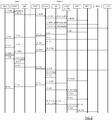
- Fig. 1 a further example of the mechanism used for charging and connection handling in a communication connection in case of forking is described in connection with the signalling diagram shown in Fig. 1 .
- the case depicted in Fig. 1 is related to a session handling in case of parallel forking and an online charging solution for a communication connection/session in an IMS environment using SIP signalling.
- UE-A and UE-B1, UE-B2, UE-B3 (UE-Bx representing possible destination addresses of the same user) which represent the parties of the communication connection to the established
- S-CSCF of a network 1 where the UE-A is located as a network control node an OCS of the network 1
- I-CSCF of a network 2 which is the home network of the UE-B
- S-CSCF of the network 2 which is the forking network node
- OCS of the network 2 an OCS of the network 2.
- the UE-A as the calling party sends an INVITE message comprising an identifier such as an Uniform Resource Identifier URI of the destination UE-B via the network 1 to the S-CSCF of network 1 (message 1 of Fig. 1 ).
- the S-CSCF of network 1 starts a credit control session with the OCS of network 1 (message 2: Charging Control Request CCR for initializing the credit control session, and message 2: Charging Control Answer from OCS).
- the INVITE message is forwarded to the I-CSCF of network 2 where the UE-B is located (message 4 of Fig. 1 ).
- the I-CSCF of network 2 forwards the INVITE message with message 5 to an S-CSCF of network 2 in order to contact the UE-B.
- S-CSCF selection like Subscription Location Function SLF or Unified Messaging Server (UMS) queries were omitted here for the sake of simplicity.
- the S-CSCF of network 2 executes forking in order to find the called user and sends INVITE messages (messages 8, 11 and 14) to possible destination addresses of the UE-B (i.e. UE-B1, UE-B2 and UE-B3) in order to contact them. Furthermore, the forking node S-CSCF establishes a separate credit control session for each of the forking branches with the OCS of network 2 (see messages 6, 7, 9, 10 and 12, 13). For this purpose, corresponding CCRs sent are independent of each other, i.e. for example no special Attribute Value Pair (AVP) is used for a correlation or signalling in the forking case. This enables the OCS to check the credit availability for each branch independently (credit check may lead to disallowing the setup of some branches, which is not discussed further here) and to rate the session according to the finally selected callee, as described in the following.
- AVP Attribute Value Pair
- IMS-Charging_Identifier and User-Session_ID AVPs carried by the requests will be the same.
- the OCS may consider that only one of the allocated quotas will be really used, i.e. they can be implicitly pooled. This can be relevant only if the user would not have enough credit to allow for parallel setup of the forking branches.
- a correlation mechanism may be used.
- a possible solution for that is using the same Session-ID value in all the credit control sessions involved for forking branches and distinguishing them by utilising, for example, an "Accounting-Sub-Session-ID" AVP known to those skilled in the art.
- Another option could be to utilise an Acct-Multi-Session-ID known to those skilled in the art.
- This AVP has to be set for the same value in all involved credit control sessions and different Session-IDs can be used in each of them.
- provisional response message such as an information response message 1xx is received, as shown by message 15 from UE-B1 or message 22 from UE-B3
- this provisional type message is forwarded to the calling party via the network (see, for example, messages 16 to 18 as well as messages 23 to 25 of Fig. 1 ).
- a first successful response message is received from one of the branches of the destination nodes for forking, such as a 200 OK message 26 from UE-B3
- the credit control session belonging to this branch in which the first 200 OK response is received is handled in a commonly known manner (see messages 27 and 28 of Fig. 1 concerning a credit control session update between the S-CSCF and the OCS), such as defined by the current 3GPP specifications, for example.
- the successful response message is sent upstream by the S-CSCF to the calling party where the establishment of the communication connection is completed and acknowledged to the corresponding successful destination (see messages 29, 30 and 33 to 37), and the credit control session on the backward direction side (S-CSCF and OCS of network 1) is updated (see messages 31 and 32).
- a subsequent successful response message such as 200 OK message 38 from UE-B1
- the response is terminated by the forking node, here the S-CSCF of network 2.
- the 200 OK response message is acknowledged with an ACK request (message 44).
- a connection terminating message such as a BYE request message 45 is sent in this dialog with UE-B1 in order to terminate it.
- the BYE request generated by the forking network node preferably comprises a predetermined parameter, for example a Reason Header with value of "Call completed elsewhere".
- a "trust parameter" which is set to guarantee that the BYE message is generated by a trusted network (and not, for example, by a UE) may be included.
- a network node such as a network control node CSCF in the backward direction from the forking point establishes only one credit control session, but it handles the charging triggers as defined in the following.
- the Charging Trigger Function CTF in such a node has to be aware of and follow the forking branches by using the remote tags received in subsequent SIP responses. Furthermore, a CCR update request is sent only when receiving a 200 OK final response from one of the contacted users (message 31 in Fig. 1 ) or a negative final response is received for the last branch pending (i.e. for branch for which a provisional response have been received earlier).
- a network control node such as an S-CSCF node
- the node in the forward direction of the forking node generates a CCR update request with units in Used Service Unit AVP (e.g. CC-Time (Charging Control Time)) set to zero, irrespective of the time elapsed until the reception of the BYE message. In this way, it can be avoided that a session is charged in which the called user cannot participate but is contacted only as part of a hunting effort.
- CC-Time Charging Control Time
- the new Cause code as proposed above can be inserted into the request.
- the OCS has to use this AVP value to prevent any charges possibly levied for successful sessions with zero length. (This will be further explained connected to Fig. 2 , see below)
- FIG. 2 a further example of the mechanism used for charging and connection handling in a communication connection in case of parallel forking is described in connection with the signalling diagram shown in Fig. 2 .
- the case depicted in Fig. 2 is related to a session handling in case of forking and an offline charging solution for a communication connection/session in an IMS environment using SIP signalling.
- UE-A and UE-B1, UE-B2, UE-B3 (UE-Bx representing possible destination addresses of the same user) which represent the parties of the communication connection to the established
- an S-CSCF of a network 1 where the UE-A is located as a network control node an CCF of the network 1, an I-CSCF of a network 2 where the UE-B is located, an S-CSCF of the network 2 which is the forking network node a CCF of the network 2
- P-CSCF serving UE-B1 (while other P-CSCFs are omitted for the sake of simplicity).
- the UE-A as the calling party sends an INVITE message comprising an identifier such as an Uniform Resource Identifier URI of the destination UE-B via the network 1 to the S-CSCF of network 1 (message 1 of Fig. 2 ).
- the S-CSCF of network 1 forwards the INVITE message to the I-CSCF of network 2 where the UE-B is located (message 2 of Fig. 1 ).
- the I-CSCF of network 2 forwards the INVITE message with message 3 to an S-CSCF of network 2 in order to contact the UE-B.
- the S-CSCF of network 2 executes forking in order to find the correct address of the UE-B and sends INVITE messages (messages 4 and 5 (via the P-CSCF), message 6 and message 7) to possible destination addresses of the UE-B (i.e. UE-B1, UE-B2 and UE-B3) in order to contact them.
- INVITE messages messages 4 and 5 (via the P-CSCF), message 6 and message 7) to possible destination addresses of the UE-B (i.e. UE-B1, UE-B2 and UE-B3) in order to contact them.
- provisional response message such as an information response message 1xx is received, as shown by message 8 from UE-B1 or message 14 from UE-B3
- this provisional type message is forwarded to the calling party via the network (see, for example, messages 10 to 12 as well as messages 15 to 17 of Fig. 2 ).
- a first successful response message is received from one of the branches of the destination nodes for forking, such as a 200 OK message 18 from UE-B3
- the successful response message is forwarded by the forking network node in the backward direction to the calling party UE-A (see messages 19 to 21 of Fig. 2 ).
- the establishment of the communication connection is completed and acknowledged to the corresponding successful destination (see messages 22 and 25 to 27 of Fig. 2 ).
- the forking node establishes only one accounting session for the forked session.
- An Accounting Request ACR (Start) for starting charging (message 28) is sent after the first 200 OK response is received.
- This ACR contains information referring only to the "winning" branch, e.g. it contains information about the Session Description Protocol (SDP) which defines a protocol which conveys information about media streams in multimedia sessions to allow the recipients of a session description to participate in the session, agreed between UE-A and UE-B3.
- SDP Session Description Protocol
- the charging functionality (CCF) of the network 2 of the forking node responds with a corresponding Accounting Answer ACA message 29.
- an ACR is generated after receiving the last final response. It may contain information according to the last final response received. (Note that depending on the operators preferences, the generation of the ACR for such unsuccessful attempts might be not requested at all.)
- a network control node such as a CSCF node located in the backward direction from the forking point, such as S-CSCF serving UE-A in Fig. 2 creates only one accounting session.
- the CTF in such a node has to be aware of and follow the forking branches.
- An ACR (Start) request is sent only when receiving ACK for a 200 OK final response from one of the contacted users (as shown in connection with message 20 (200 OK received) and messages 23 and 24: ACR to charging functionality of network 1 and corresponding ACA answer message) or when a negative final response is received for the last branch pending (not shown in Fig. 2 ).
- a network control node located in the forward direction from the forking point such as a P-CSCF node serving UE-B1
- P-CSCF node serving UE-B1 is not aware of the fact that the INVITE request handled is a forking branch. Therefore, it may generate an accounting session as in any other case (message 36 and 37 to and from CCF of network 2 in Fig. 2 ).
- the forking node receives further successful response message(s) from other branches being different to the first successful branch, the following processing is effected.
- a subsequent successful response message such as 200 OK message 31 from UE-B1
- the response is terminated, for example, by the S-CSCF of network 2.
- the 200 OK response message is acknowledged with an ACK request (message 35 of Fig. 2 ).
- a connection terminating message such as a BYE request message 39 is sent to this dialog with UE-B1 in order to terminate it.
- the BYE request generated by the forking network node preferably comprises a predetermined parameter, for example a Reason Header with value of "Call completed elsewhere".
- a "trust parameter" set to guarantee that the BYE message is generated by a trusted network (and not, for example, by a UE) may be included.
- BYE request is received by the network control node located in the forward direction from the forking point, such as the P-CSCF serving UE-B1 in Fig. 2 , which contains a Reason header as specified above, it generates an ACR (Stop) request, with units in Used Service Unit AVP (e.g. CC-Time) set to zero, irrespective of the time elapsed until the reception of the BYE message (message 40, answered by message 41 from the CCF).
- a special Cause Code value can be included into the request, as described for online charging case. It is to be noted that this can be applicable for terminating S-CSCF as well if the forking node is e.g. the originating S-CSCF (not shown in figure 2 )
- a network node such as a network control node like a CSCF or an application server, executing forking forward only the first successful response message arriving from a forking branch, which enables the charging function in the forking node and in nodes in the backward direction from this point to apply charges only for the "winning" branch.
- a special Reason header sent in a BYE request of "unused" successfully contacted branches, charging function in nodes in the forward direction from the forking point are allowed to suppress charges for such unused branches. This is applicable both for online and offline charging methods as defined, for example, by 3GPP.
- online and offline charging scenarios presented above can be mixed: it is possible e.g. that offline charging is used for one of the called parties and online charging for the other, or it is also possible that P-CSCF applies offline charging and S-CSCF applies online charging for the same user.
- the charging solutions for online and offline charging described above for each node can be invoked in the proper combination, ensuring that the SIP session branch providing real user service will be charged.
Landscapes
- Engineering & Computer Science (AREA)
- Computer Networks & Wireless Communication (AREA)
- Signal Processing (AREA)
- Multimedia (AREA)
- Business, Economics & Management (AREA)
- General Business, Economics & Management (AREA)
- Mobile Radio Communication Systems (AREA)
- Telephonic Communication Services (AREA)
- Data Exchanges In Wide-Area Networks (AREA)
- Computer And Data Communications (AREA)
Claims (17)
- Verfahren zum Betreiben eines Netzsteuerknotens, wobei das Verfahren die folgenden Schritte umfasst:Teilnehmen an einer Initialisierung einer Kommunikationsverbindung zwischen mindestens zwei Parteien, umfassend eine anrufende Partei und eine angerufene Partei;Ausführen von Gabelung der Kommunikationsverbindung an dem Netzsteuerknoten zu mehreren Zweigen in einer Vorwärtsrichtung des Netzknotens zu der angerufenen Partei;Empfangen von Antwortnachrichten von Zielknoten des mindestens einen Zweigs der mehreren Zweige;Weiterleiten einer ersten erfolgreichen Antwortnachricht von einem der Zielknoten in einer Rückwärtsrichtung des gabelnden Netzsteuerknotens zu der anrufenden Partei;Erzeugen einer Verbindungsabbruchnachricht als Reaktion auf einen Empfang weiterer erfolgreicher Antwortnachrichten von mindestens einem anderen Zielknoten, die sich von der ersten erfolgreichen Antwort unterscheiden; undWeiterleiten der Verbindungsabbruchnachricht an den mindestens einen anderen Zielknoten zum Abbrechen eines Dialogs mit dem mindestens einen anderen Zielknoten;ferner umfassend:Initialisieren einer Inrechnungstellung der Kommunikationsverbindung, undBewirken von Inrechnungstellung für den Zweig, von welchem die erste erfolgreiche Antwortnachricht empfangen wurde, während Abbrechens einer Inrechnungstellung für die anderen Zweige als den Zweig, von welchem die erste erfolgreiche Antwortnachricht empfangen wurde.
- Verfahren nach Anspruch 1, ferner umfassend:
Senden einer Fehlerantwortnachricht in die Rückwärtsrichtung des gabelnden Netzsteuerknotens zu der anrufenden Partei als Reaktion auf einen Empfang einer weiteren erfolgreichen Antwortnachricht von dem mindestens einen anderen Zielknoten, die sich von einer ersten Bestätigungsantwort unterscheidet, für den Fall, dass eine provisorische Antwort in die Rückwärtsrichtung des Netzsteuerknotens zu der anrufenden Partei weitergeleitet wird, vor dem Empfang der ersten erfolgreichen Antwortnachricht. - Verfahren nach Anspruch 1 oder 2, wobei die Inrechnungstellung Online-Inrechnungstellung umfasst.
- Verfahren nach einem der Ansprüche 1 bis 3, ferner umfassend:
Auslegen der Verbindungsabbruchnachricht, einen vorbestimmten Parameter zu umfassen, der anzeigt, dass die Kommunikationsverbindung mit einem anderen Ziel abgeschlossen ist. - Verfahren nach Anspruch 4, ferner umfassend:
Unterdrücken einer Inrechnungstellung in einem Netzknoten, der sich in der Vorwärtsrichtung des das Gabeln ausführenden Netzknotens befindet, durch Senden der Verbindungsabbruchnachricht einschließlich des vorbestimmten Parameters. - Verfahren nach Anspruch 2, ferner umfassend:
Abbrechen, in dem Netzsteuerknoten und in Netzknoten, die sich in der Rückwärtsrichtung des Netzsteuerknotens zu der anrufenden Partei befinden, einer Inrechnungstellungssitzung für Zweige, für welche die Fehlerantwortnachricht gesendet wurde. - Verfahren nach Anspruch 3, ferner umfassend:
Aufsetzen einer separaten Guthabenkontrollsitzung für jeden Zweig im Falle von Online-Inrechnungstellung. - Einrichtung, die Folgendes umfasst:ein Mittel zum Teilnehmen, als ein Netzsteuerknoten, an der Initialisierung einer Kommunikationsverbindung zwischen mindestens zwei Parteien, umfassend eine anrufende Partei und eine angerufene Partei;ein Ausführungsmittel zum Ausführen von Gabelung der Kommunikationsverbindung zu mehreren Zweigen in der Vorwärtsrichtung der Einrichtung zu der angerufenen Partei;ein Empfangsmittel zum Empfangen von Antwortnachrichten von Zielknoten von mindestens einem Zweig der mehreren Zweige;ein Weiterleitungsmittel zum Weiterleiten einer ersten erfolgreichen Antwortnachricht von einem der Zielknoten in Rückwärtsrichtung der Einrichtung zu der anrufenden Partei;ein Erzeugungsmittel zum Erzeugen einer Verbindungsabbruchnachricht als Reaktion auf einen Empfang weiterer erfolgreicher Antwortnachrichten von mindestens einem anderen Zielknoten, die sich von der ersten erfolgreichen Antwort unterscheiden;ein Weiterleitungsmittel zum Weiterleiten der Verbindungsabbruchnachricht an den mindestens einen anderen Zielknoten zum Abbrechen eines Dialogs mit dem mindestens einen anderen Zielknoten;ein Initialisierungsmittel zum Initialisieren einer Inrechnungstellung der Kommunikationsverbindung, undein Mittel zum Bewirken von Inrechnungstellung für den Zweig, von welchem die erste erfolgreiche Antwortnachricht empfangen wurde, während Abbrechens einer Inrechnungstellung für die anderen Zweige als den Zweig, von welchem die erste erfolgreiche Antwortnachricht empfangen wurde.
- Einrichtung nach Anspruch 8, ferner umfassend:
ein Sendemittel zum Senden einer Fehlerantwortnachricht in die Rückwärtsrichtung der Einrichtung zu der anrufenden Partei als Reaktion auf einen Empfang einer weiteren erfolgreichen Antwortnachricht von dem mindestens einen anderen Zielknoten, die sich von einer ersten Bestätigungsantwort unterscheidet, für den Fall, dass eine provisorische Antwort in die Rückwärtsrichtung der Einrichtung zu der anrufenden Partei weitergeleitet wird, vor dem Empfang der ersten erfolgreichen Antwortnachricht. - Einrichtung nach Anspruch 8 oder 9, wobei das Initialisierungsmittel ausgelegt ist zum Initialisieren der Inrechnungstellung als Online-Inrechnungstellung.
- Einrichtung nach einem der Ansprüche 8 bis 10, wobei die Verbindungsabbruchnachricht einen vorbestimmten Parameter umfasst, der anzeigt, dass die Kommunikationsverbindung mit einem anderen Ziel abgeschlossen ist.
- Einrichtung nach Anspruch 11, wobei:
das Mittel zum Unterdrücken oder Abbrechen einer Inrechnungstellung für die anderen Zweige ausgelegt ist zum Unterdrücken einer Inrechnungstellung in einem Netzknoten, der sich in der Vorwärtsrichtung der das Gabeln zu der angerufenen Partei ausführenden Einrichtung befindet, durch Senden der Verbindungsabbruchnachricht einschließlich des vorbestimmten Parameters. - Einrichtung nach Anspruch 9, ferner umfassend:
ein Abbrechmittel zum Abbrechen, in der Einrichtung und in Netzknoten, die sich in der Rückwärtsrichtung der Einrichtung zu der anrufenden Partei befinden, einer Inrechnungstellungssitzung für Zweige, für welche die Fehlerantwortnachricht gesendet wurde. - Einrichtung nach Anspruch 10, wobei:
das Initialisierungsmittel eingerichtet ist zum Aufsetzen einer separaten Guthabenkontrollsitzung für jeden Zweig im Falle von Online-Inrechnungstellung. - Verfahren zum Betreiben eines Netzknotens, der sich innerhalb eines Verbindungspfads zwischen einem gabelnden Netzsteuerknoten und einer angerufenen Partei befindet, wobei das Verfahren die folgenden Schritte umfasst:Empfangen einer Verbindungsabbruchnachricht von einem gabelnden Netzsteuerknoten als Reaktion auf eine erfolgreiche Antwortnachricht als Antwort auf Kommunikationsverbindungsinitialisierung, wobei die Kommunikationsverbindung mindestens eine anrufende Partei und die angerufene Partei involviert;Verarbeiten eines vorbestimmten Parameters, welcher in der Verbindungsabbruchnachricht enthalten ist und anzeigt, dass die Kommunikationsverbindung mit einem anderen Ziel abgeschlossen ist, wobei die Verbindungsabbruchnachricht ferner einen Vertrauensparametersatz umfasst zum Garantieren, dass die Verbindungsabbruchnachricht von einem vertrauenswürdigen Netz erzeugt wurde; undUnterdrücken einer Inrechnungstellung als Reaktion auf den Empfang der Verbindungsabbruchnachricht einschließlich des vorbestimmten Parameters.
- Einrichtung, die Folgendes umfasst:Empfängermittel zum Empfangen, wenn sich die Einrichtung innerhalb eines Verbindungspfads zwischen einem gabelnden Netzsteuerknoten und einer angerufenen Partei befindet, einer Verbindungsabbruchnachricht von dem gabelnden Netzsteuerknoten als Reaktion auf eine erfolgreiche Antwortnachricht als Antwort auf Kommunikationsverbindungsinitialisierung, wobei die Kommunikationsverbindung mindestens eine anrufende Partei und die angerufene Partei involviert;ein Prozessormittel zum Verarbeiten eines vorbestimmten Parameters, welcher in der Verbindungsabbruchnachricht enthalten ist und anzeigt, dass die Kommunikationsverbindung mit einem anderen Ziel abgeschlossen ist, wobei die Verbindungsabbruchnachricht ferner einen Vertrauensparametersatz umfasst zum Garantieren, dass die Verbindungsabbruchnachricht von einem vertrauenswürdigen Netz erzeugt wurde; undein Unterdrückermittel zum Unterdrücken einer Inrechnungstellung als Reaktion auf den Empfang der Verbindungsabbruchnachricht einschließlich des vorbestimmten Parameters.
- Computerprogramm, das auf einem computerlesbaren Medium verkörpert ist, wobei das Computerprogramm ausgelegt ist zum Steuern eines Prozessors, ein Verfahren nach einem der Ansprüche 1 bis 7 oder 15 durchzuführen.
Applications Claiming Priority (3)
| Application Number | Priority Date | Filing Date | Title |
|---|---|---|---|
| US83887606P | 2006-08-21 | 2006-08-21 | |
| US11/889,991 US8850012B2 (en) | 2006-08-21 | 2007-08-17 | Mechanism for charging and session handling supporting forking |
| PCT/IB2007/053310 WO2008023320A2 (en) | 2006-08-21 | 2007-08-20 | Mechanism for charging and session handling supporting forking |
Publications (2)
| Publication Number | Publication Date |
|---|---|
| EP2055076A2 EP2055076A2 (de) | 2009-05-06 |
| EP2055076B1 true EP2055076B1 (de) | 2018-09-19 |
Family
ID=39060328
Family Applications (1)
| Application Number | Title | Priority Date | Filing Date |
|---|---|---|---|
| EP07826055.1A Active EP2055076B1 (de) | 2006-08-21 | 2007-08-20 | Mechanismus zur vergebührung und sitzungsbehandlung mit gabelungsunterstützung |
Country Status (4)
| Country | Link |
|---|---|
| US (1) | US8850012B2 (de) |
| EP (1) | EP2055076B1 (de) |
| CN (1) | CN101518031B (de) |
| WO (1) | WO2008023320A2 (de) |
Families Citing this family (29)
| Publication number | Priority date | Publication date | Assignee | Title |
|---|---|---|---|---|
| JP5282448B2 (ja) * | 2008-05-30 | 2013-09-04 | 富士通株式会社 | 無線通信システム、無線通信装置及びその切断処理方法 |
| CN101296085B (zh) * | 2008-06-23 | 2011-07-13 | 中兴通讯股份有限公司 | 基于分叉的认证方法、系统以及分叉认证装置 |
| US8379655B2 (en) * | 2008-08-26 | 2013-02-19 | Motorola Mobility Llc | Data network and method for executing forking |
| CN101990186B (zh) | 2009-08-07 | 2013-11-06 | 华为技术有限公司 | 释放资源的方法、装置和系统 |
| CN101998347B (zh) * | 2009-08-24 | 2013-06-12 | 中兴通讯股份有限公司 | 本地ip访问计费信息的获取方法和系统 |
| CN102835065B (zh) * | 2010-04-21 | 2016-09-28 | 瑞典爱立信有限公司 | 与ip多媒体子系统中的计费有关的方法和设备 |
| US8725896B2 (en) * | 2010-12-16 | 2014-05-13 | Openet Telecom Ltd. | Methods, systems and devices for forked routing |
| US8943221B2 (en) | 2010-12-16 | 2015-01-27 | Openet Telecom Ltd. | Methods, systems and devices for pipeline processing |
| US8675659B2 (en) | 2010-12-16 | 2014-03-18 | Openet Telecom Ltd. | Methods, systems and devices for multiphase decoding |
| US8824370B2 (en) | 2010-12-16 | 2014-09-02 | Openet Telecom Ltd. | Methods, systems and devices for dynamic context-based routing |
| US8880726B2 (en) | 2010-12-16 | 2014-11-04 | Openet Telecom Ltd. | Methods, systems and devices for dynamic context-based routing using a topology tree |
| US8725820B2 (en) | 2010-12-16 | 2014-05-13 | Openet Telecom Ltd. | Methods, systems and devices for horizontally scalable high-availability dynamic context-based routing |
| US9565063B2 (en) | 2011-04-26 | 2017-02-07 | Openet Telecom Ltd. | Systems, devices and methods of synchronizing information across multiple heterogeneous networks |
| US8929859B2 (en) | 2011-04-26 | 2015-01-06 | Openet Telecom Ltd. | Systems for enabling subscriber monitoring of telecommunications network usage and service plans |
| US9641403B2 (en) | 2011-04-26 | 2017-05-02 | Openet Telecom Ltd. | Systems, devices and methods of decomposing service requests into domain-specific service requests |
| US9444692B2 (en) | 2011-04-26 | 2016-09-13 | Openet Telecom Ltd. | Systems, devices and methods of crowd-sourcing across multiple domains |
| US9130760B2 (en) | 2011-04-26 | 2015-09-08 | Openet Telecom Ltd | Systems, devices and methods of establishing a closed feedback control loop across multiple domains |
| US9450766B2 (en) | 2011-04-26 | 2016-09-20 | Openet Telecom Ltd. | Systems, devices and methods of distributing telecommunications functionality across multiple heterogeneous domains |
| US9565074B2 (en) | 2011-04-26 | 2017-02-07 | Openet Telecom Ltd. | Systems, devices, and methods of orchestrating resources and services across multiple heterogeneous domains |
| US9300531B2 (en) | 2011-12-12 | 2016-03-29 | Openet Telecom Ltd. | Systems, devices, and methods of orchestration and application of business rules for real-time control of subscribers in a telecommunications operator's network |
| US20130159150A1 (en) * | 2011-12-19 | 2013-06-20 | Verizon Patent And Licensing, Inc. | Mobile device data metering, bandwidth allocation, and traffic control |
| US9173081B2 (en) | 2012-01-27 | 2015-10-27 | Openet Telecom Ltd. | System and method for enabling interactions between a policy decision point and a charging system |
| EP2829017B1 (de) * | 2012-03-19 | 2019-07-03 | Nokia Solutions and Networks Oy | Chargement fiable dans un scénario d' itinérance au moyen de relations de confiance entre des réseaux voisins |
| CN103582011A (zh) * | 2012-07-26 | 2014-02-12 | 中兴通讯股份有限公司 | 一种进行多网络联合传输的系统、用户设备及方法 |
| CN103685200B (zh) | 2012-09-24 | 2018-01-30 | 中兴通讯股份有限公司 | 接入协商、释放中服务质量承载资源控制的方法及系统 |
| EP3116284B1 (de) | 2014-03-04 | 2018-08-22 | Huawei Technologies Co., Ltd. | Verfahren und vorrichtung zur verwaltung einer abrechnungssitzung |
| FR3045999A1 (fr) * | 2015-12-18 | 2017-06-23 | Orange | Procede de communication entre un appelant et une pluralite de terminaux appeles |
| JP6912729B2 (ja) * | 2018-04-12 | 2021-08-04 | 日本電信電話株式会社 | Sipプロキシサーバ、通信方法およびsipプロキシプログラム |
| US10944580B2 (en) | 2018-12-03 | 2021-03-09 | At&T Intellectual Property I, L.P. | Responding to a termination reason in an accounting record |
Family Cites Families (14)
| Publication number | Priority date | Publication date | Assignee | Title |
|---|---|---|---|---|
| US6226365B1 (en) * | 1997-08-29 | 2001-05-01 | Anip, Inc. | Method and system for global communications network management and display of market-price information |
| US6144727A (en) * | 1997-08-29 | 2000-11-07 | Anip, Inc. | Method and system for global telecommunications network management and display of market-price information |
| US6335927B1 (en) * | 1996-11-18 | 2002-01-01 | Mci Communications Corporation | System and method for providing requested quality of service in a hybrid network |
| IL131102A0 (en) * | 1997-02-03 | 2001-01-28 | Mci Communications Corp | A communication system architecture |
| US6731625B1 (en) * | 1997-02-10 | 2004-05-04 | Mci Communications Corporation | System, method and article of manufacture for a call back architecture in a hybrid network with support for internet telephony |
| US6694153B1 (en) * | 1999-12-30 | 2004-02-17 | Nortel Networks Limited | Service control point location register function |
| US7469299B2 (en) * | 2001-10-25 | 2008-12-23 | Verizon Business Global Llc | Bridging user agent and a proxy server for supporting network services |
| US7831247B2 (en) | 2002-11-12 | 2010-11-09 | Nokia Corporation | Method of communication and communication system |
| DE10348208A1 (de) * | 2003-10-16 | 2005-05-19 | Siemens Ag | Behandlung von Early Media-I |
| CA2557609A1 (en) * | 2004-03-10 | 2005-09-15 | Ab Seesta Oy | Heterogeneous network system, network node and mobile host |
| US7599478B2 (en) * | 2004-11-30 | 2009-10-06 | Alcatel-Lucent Usa Inc. | IMS gateway systems and methods for online charging in IMS networks |
| US7680481B2 (en) * | 2005-03-07 | 2010-03-16 | Alcatel-Lucent Usa Inc. | Method and apparatus for linking charging records |
| US8798253B2 (en) * | 2005-07-29 | 2014-08-05 | Verizon Patent And Licensing Inc. | Network routing |
| US8125931B2 (en) * | 2006-01-10 | 2012-02-28 | Utbk, Inc. | Systems and methods to provide availability indication |
-
2007
- 2007-08-17 US US11/889,991 patent/US8850012B2/en active Active
- 2007-08-20 CN CN2007800358880A patent/CN101518031B/zh active Active
- 2007-08-20 EP EP07826055.1A patent/EP2055076B1/de active Active
- 2007-08-20 WO PCT/IB2007/053310 patent/WO2008023320A2/en not_active Ceased
Non-Patent Citations (1)
| Title |
|---|
| None * |
Also Published As
| Publication number | Publication date |
|---|---|
| US8850012B2 (en) | 2014-09-30 |
| EP2055076A2 (de) | 2009-05-06 |
| WO2008023320A2 (en) | 2008-02-28 |
| US20080046573A1 (en) | 2008-02-21 |
| CN101518031B (zh) | 2012-11-14 |
| CN101518031A (zh) | 2009-08-26 |
| WO2008023320A3 (en) | 2008-08-14 |
Similar Documents
| Publication | Publication Date | Title |
|---|---|---|
| US8850012B2 (en) | Mechanism for charging and session handling supporting forking | |
| JP4549414B2 (ja) | 通信方法及び通信システム | |
| JP4903849B2 (ja) | 特にumtsネットワークにおける課金識別子の分配 | |
| US9337917B2 (en) | Call establishment optimization for IMS based mobile satellite system | |
| US10044553B2 (en) | Media resource reservation request failure handling for voice over mobile wireless network | |
| US20080043717A1 (en) | Exchange Protocol For Combinational Multimedia Services | |
| EP1619854A1 (de) | Erweiterte SIP Nachricht für einen drücken-zum-betrachten Dienst | |
| KR20100042270A (ko) | 호 전달 서비스 제공 방법, 호 전달 서비스 제공 장치 및 호 전달 서비스 제공 시스템 | |
| WO2008085333A2 (en) | Dynamic service triggers in communication networks | |
| US9246955B2 (en) | Capability query handling in a communication network | |
| EP2749049B1 (de) | Verfahren zur kommunikation zwischen ims-knoten | |
| WO2010026459A2 (en) | Method and system of using ip multimedia system for call setup in mobile satellite systems | |
| CN100499469C (zh) | 离线计费方法 | |
| WO2013117215A1 (en) | Session persistent data and method of use thereof | |
| CN101127940B (zh) | Ims域中短消息业务报告的发送方法及ims域实体 | |
| CN101742455B (zh) | 漫游计费方法和装置、代理/服务呼叫会话控制功能实体 | |
| EP2561642B1 (de) | Verfahren und vorrichtung im zusammenhang mit der vergebührung in einem multimedia-ip-subsystem | |
| RU2575873C2 (ru) | Способ связи между узлами подсистемы ip-мультимедиа | |
| WO2008113408A1 (en) | Method and apparatus for use in a communications network | |
| WO2011047712A1 (en) | Charging in an ip multimedia subsystem network |
Legal Events
| Date | Code | Title | Description |
|---|---|---|---|
| PUAI | Public reference made under article 153(3) epc to a published international application that has entered the european phase |
Free format text: ORIGINAL CODE: 0009012 |
|
| 17P | Request for examination filed |
Effective date: 20090316 |
|
| AK | Designated contracting states |
Kind code of ref document: A2 Designated state(s): AT BE BG CH CY CZ DE DK EE ES FI FR GB GR HU IE IS IT LI LT LU LV MC MT NL PL PT RO SE SI SK TR |
|
| AX | Request for extension of the european patent |
Extension state: AL BA HR MK RS |
|
| DAX | Request for extension of the european patent (deleted) | ||
| 17Q | First examination report despatched |
Effective date: 20100408 |
|
| RAP1 | Party data changed (applicant data changed or rights of an application transferred) |
Owner name: NOKIA CORPORATION |
|
| RAP1 | Party data changed (applicant data changed or rights of an application transferred) |
Owner name: NOKIA TECHNOLOGIES OY |
|
| STAA | Information on the status of an ep patent application or granted ep patent |
Free format text: STATUS: EXAMINATION IS IN PROGRESS |
|
| GRAP | Despatch of communication of intention to grant a patent |
Free format text: ORIGINAL CODE: EPIDOSNIGR1 |
|
| STAA | Information on the status of an ep patent application or granted ep patent |
Free format text: STATUS: GRANT OF PATENT IS INTENDED |
|
| INTG | Intention to grant announced |
Effective date: 20180216 |
|
| GRAJ | Information related to disapproval of communication of intention to grant by the applicant or resumption of examination proceedings by the epo deleted |
Free format text: ORIGINAL CODE: EPIDOSDIGR1 |
|
| STAA | Information on the status of an ep patent application or granted ep patent |
Free format text: STATUS: EXAMINATION IS IN PROGRESS |
|
| GRAR | Information related to intention to grant a patent recorded |
Free format text: ORIGINAL CODE: EPIDOSNIGR71 |
|
| GRAS | Grant fee paid |
Free format text: ORIGINAL CODE: EPIDOSNIGR3 |
|
| STAA | Information on the status of an ep patent application or granted ep patent |
Free format text: STATUS: GRANT OF PATENT IS INTENDED |
|
| INTC | Intention to grant announced (deleted) | ||
| GRAA | (expected) grant |
Free format text: ORIGINAL CODE: 0009210 |
|
| STAA | Information on the status of an ep patent application or granted ep patent |
Free format text: STATUS: THE PATENT HAS BEEN GRANTED |
|
| INTG | Intention to grant announced |
Effective date: 20180720 |
|
| AK | Designated contracting states |
Kind code of ref document: B1 Designated state(s): AT BE BG CH CY CZ DE DK EE ES FI FR GB GR HU IE IS IT LI LT LU LV MC MT NL PL PT RO SE SI SK TR |
|
| REG | Reference to a national code |
Ref country code: GB Ref legal event code: FG4D |
|
| REG | Reference to a national code |
Ref country code: CH Ref legal event code: EP |
|
| REG | Reference to a national code |
Ref country code: AT Ref legal event code: REF Ref document number: 1044577 Country of ref document: AT Kind code of ref document: T Effective date: 20181015 |
|
| REG | Reference to a national code |
Ref country code: IE Ref legal event code: FG4D |
|
| REG | Reference to a national code |
Ref country code: DE Ref legal event code: R096 Ref document number: 602007056223 Country of ref document: DE |
|
| REG | Reference to a national code |
Ref country code: NL Ref legal event code: MP Effective date: 20180919 |
|
| PG25 | Lapsed in a contracting state [announced via postgrant information from national office to epo] |
Ref country code: FI Free format text: LAPSE BECAUSE OF FAILURE TO SUBMIT A TRANSLATION OF THE DESCRIPTION OR TO PAY THE FEE WITHIN THE PRESCRIBED TIME-LIMIT Effective date: 20180919 Ref country code: SE Free format text: LAPSE BECAUSE OF FAILURE TO SUBMIT A TRANSLATION OF THE DESCRIPTION OR TO PAY THE FEE WITHIN THE PRESCRIBED TIME-LIMIT Effective date: 20180919 Ref country code: GR Free format text: LAPSE BECAUSE OF FAILURE TO SUBMIT A TRANSLATION OF THE DESCRIPTION OR TO PAY THE FEE WITHIN THE PRESCRIBED TIME-LIMIT Effective date: 20181220 Ref country code: LT Free format text: LAPSE BECAUSE OF FAILURE TO SUBMIT A TRANSLATION OF THE DESCRIPTION OR TO PAY THE FEE WITHIN THE PRESCRIBED TIME-LIMIT Effective date: 20180919 Ref country code: BG Free format text: LAPSE BECAUSE OF FAILURE TO SUBMIT A TRANSLATION OF THE DESCRIPTION OR TO PAY THE FEE WITHIN THE PRESCRIBED TIME-LIMIT Effective date: 20181219 |
|
| REG | Reference to a national code |
Ref country code: LT Ref legal event code: MG4D |
|
| PG25 | Lapsed in a contracting state [announced via postgrant information from national office to epo] |
Ref country code: LV Free format text: LAPSE BECAUSE OF FAILURE TO SUBMIT A TRANSLATION OF THE DESCRIPTION OR TO PAY THE FEE WITHIN THE PRESCRIBED TIME-LIMIT Effective date: 20180919 |
|
| REG | Reference to a national code |
Ref country code: AT Ref legal event code: MK05 Ref document number: 1044577 Country of ref document: AT Kind code of ref document: T Effective date: 20180919 |
|
| PG25 | Lapsed in a contracting state [announced via postgrant information from national office to epo] |
Ref country code: IS Free format text: LAPSE BECAUSE OF FAILURE TO SUBMIT A TRANSLATION OF THE DESCRIPTION OR TO PAY THE FEE WITHIN THE PRESCRIBED TIME-LIMIT Effective date: 20190119 Ref country code: AT Free format text: LAPSE BECAUSE OF FAILURE TO SUBMIT A TRANSLATION OF THE DESCRIPTION OR TO PAY THE FEE WITHIN THE PRESCRIBED TIME-LIMIT Effective date: 20180919 Ref country code: PL Free format text: LAPSE BECAUSE OF FAILURE TO SUBMIT A TRANSLATION OF THE DESCRIPTION OR TO PAY THE FEE WITHIN THE PRESCRIBED TIME-LIMIT Effective date: 20180919 Ref country code: NL Free format text: LAPSE BECAUSE OF FAILURE TO SUBMIT A TRANSLATION OF THE DESCRIPTION OR TO PAY THE FEE WITHIN THE PRESCRIBED TIME-LIMIT Effective date: 20180919 Ref country code: CZ Free format text: LAPSE BECAUSE OF FAILURE TO SUBMIT A TRANSLATION OF THE DESCRIPTION OR TO PAY THE FEE WITHIN THE PRESCRIBED TIME-LIMIT Effective date: 20180919 Ref country code: ES Free format text: LAPSE BECAUSE OF FAILURE TO SUBMIT A TRANSLATION OF THE DESCRIPTION OR TO PAY THE FEE WITHIN THE PRESCRIBED TIME-LIMIT Effective date: 20180919 Ref country code: IT Free format text: LAPSE BECAUSE OF FAILURE TO SUBMIT A TRANSLATION OF THE DESCRIPTION OR TO PAY THE FEE WITHIN THE PRESCRIBED TIME-LIMIT Effective date: 20180919 Ref country code: RO Free format text: LAPSE BECAUSE OF FAILURE TO SUBMIT A TRANSLATION OF THE DESCRIPTION OR TO PAY THE FEE WITHIN THE PRESCRIBED TIME-LIMIT Effective date: 20180919 Ref country code: EE Free format text: LAPSE BECAUSE OF FAILURE TO SUBMIT A TRANSLATION OF THE DESCRIPTION OR TO PAY THE FEE WITHIN THE PRESCRIBED TIME-LIMIT Effective date: 20180919 |
|
| PG25 | Lapsed in a contracting state [announced via postgrant information from national office to epo] |
Ref country code: PT Free format text: LAPSE BECAUSE OF FAILURE TO SUBMIT A TRANSLATION OF THE DESCRIPTION OR TO PAY THE FEE WITHIN THE PRESCRIBED TIME-LIMIT Effective date: 20190119 Ref country code: SK Free format text: LAPSE BECAUSE OF FAILURE TO SUBMIT A TRANSLATION OF THE DESCRIPTION OR TO PAY THE FEE WITHIN THE PRESCRIBED TIME-LIMIT Effective date: 20180919 |
|
| REG | Reference to a national code |
Ref country code: DE Ref legal event code: R097 Ref document number: 602007056223 Country of ref document: DE |
|
| PLBE | No opposition filed within time limit |
Free format text: ORIGINAL CODE: 0009261 |
|
| STAA | Information on the status of an ep patent application or granted ep patent |
Free format text: STATUS: NO OPPOSITION FILED WITHIN TIME LIMIT |
|
| PG25 | Lapsed in a contracting state [announced via postgrant information from national office to epo] |
Ref country code: DK Free format text: LAPSE BECAUSE OF FAILURE TO SUBMIT A TRANSLATION OF THE DESCRIPTION OR TO PAY THE FEE WITHIN THE PRESCRIBED TIME-LIMIT Effective date: 20180919 |
|
| 26N | No opposition filed |
Effective date: 20190620 |
|
| PG25 | Lapsed in a contracting state [announced via postgrant information from national office to epo] |
Ref country code: SI Free format text: LAPSE BECAUSE OF FAILURE TO SUBMIT A TRANSLATION OF THE DESCRIPTION OR TO PAY THE FEE WITHIN THE PRESCRIBED TIME-LIMIT Effective date: 20180919 |
|
| PG25 | Lapsed in a contracting state [announced via postgrant information from national office to epo] |
Ref country code: TR Free format text: LAPSE BECAUSE OF FAILURE TO SUBMIT A TRANSLATION OF THE DESCRIPTION OR TO PAY THE FEE WITHIN THE PRESCRIBED TIME-LIMIT Effective date: 20180919 |
|
| GBPC | Gb: european patent ceased through non-payment of renewal fee |
Effective date: 20190820 |
|
| PG25 | Lapsed in a contracting state [announced via postgrant information from national office to epo] |
Ref country code: LI Free format text: LAPSE BECAUSE OF NON-PAYMENT OF DUE FEES Effective date: 20190831 Ref country code: CH Free format text: LAPSE BECAUSE OF NON-PAYMENT OF DUE FEES Effective date: 20190831 Ref country code: MC Free format text: LAPSE BECAUSE OF FAILURE TO SUBMIT A TRANSLATION OF THE DESCRIPTION OR TO PAY THE FEE WITHIN THE PRESCRIBED TIME-LIMIT Effective date: 20180919 Ref country code: LU Free format text: LAPSE BECAUSE OF NON-PAYMENT OF DUE FEES Effective date: 20190820 |
|
| REG | Reference to a national code |
Ref country code: BE Ref legal event code: MM Effective date: 20190831 |
|
| PG25 | Lapsed in a contracting state [announced via postgrant information from national office to epo] |
Ref country code: IE Free format text: LAPSE BECAUSE OF NON-PAYMENT OF DUE FEES Effective date: 20190820 Ref country code: FR Free format text: LAPSE BECAUSE OF NON-PAYMENT OF DUE FEES Effective date: 20190831 |
|
| PG25 | Lapsed in a contracting state [announced via postgrant information from national office to epo] |
Ref country code: GB Free format text: LAPSE BECAUSE OF NON-PAYMENT OF DUE FEES Effective date: 20190820 Ref country code: BE Free format text: LAPSE BECAUSE OF NON-PAYMENT OF DUE FEES Effective date: 20190831 |
|
| PG25 | Lapsed in a contracting state [announced via postgrant information from national office to epo] |
Ref country code: CY Free format text: LAPSE BECAUSE OF FAILURE TO SUBMIT A TRANSLATION OF THE DESCRIPTION OR TO PAY THE FEE WITHIN THE PRESCRIBED TIME-LIMIT Effective date: 20180919 |
|
| PG25 | Lapsed in a contracting state [announced via postgrant information from national office to epo] |
Ref country code: HU Free format text: LAPSE BECAUSE OF FAILURE TO SUBMIT A TRANSLATION OF THE DESCRIPTION OR TO PAY THE FEE WITHIN THE PRESCRIBED TIME-LIMIT; INVALID AB INITIO Effective date: 20070820 Ref country code: MT Free format text: LAPSE BECAUSE OF FAILURE TO SUBMIT A TRANSLATION OF THE DESCRIPTION OR TO PAY THE FEE WITHIN THE PRESCRIBED TIME-LIMIT Effective date: 20180919 |
|
| REG | Reference to a national code |
Ref country code: DE Ref legal event code: R079 Ref document number: 602007056223 Country of ref document: DE Free format text: PREVIOUS MAIN CLASS: H04L0029060000 Ipc: H04L0065000000 |
|
| P01 | Opt-out of the competence of the unified patent court (upc) registered |
Effective date: 20230527 |
|
| PGFP | Annual fee paid to national office [announced via postgrant information from national office to epo] |
Ref country code: DE Payment date: 20250702 Year of fee payment: 19 |