EP2055764B1 - Oil-based lubricant for forging, forging method and use of the lubricant - Google Patents
Oil-based lubricant for forging, forging method and use of the lubricant Download PDFInfo
- Publication number
- EP2055764B1 EP2055764B1 EP08722726.0A EP08722726A EP2055764B1 EP 2055764 B1 EP2055764 B1 EP 2055764B1 EP 08722726 A EP08722726 A EP 08722726A EP 2055764 B1 EP2055764 B1 EP 2055764B1
- Authority
- EP
- European Patent Office
- Prior art keywords
- lubricant
- oil
- forging
- mold
- mass
- Prior art date
- Legal status (The legal status is an assumption and is not a legal conclusion. Google has not performed a legal analysis and makes no representation as to the accuracy of the status listed.)
- Not-in-force
Links
- 239000000314 lubricant Substances 0.000 title claims description 202
- 238000005242 forging Methods 0.000 title claims description 54
- 238000000034 method Methods 0.000 title claims description 32
- 239000003921 oil Substances 0.000 claims description 83
- 239000007921 spray Substances 0.000 claims description 77
- 238000005507 spraying Methods 0.000 claims description 51
- 239000003963 antioxidant agent Substances 0.000 claims description 31
- XLYOFNOQVPJJNP-UHFFFAOYSA-N water Substances O XLYOFNOQVPJJNP-UHFFFAOYSA-N 0.000 claims description 26
- 230000003078 antioxidant effect Effects 0.000 claims description 25
- 150000001412 amines Chemical class 0.000 claims description 16
- 229920002545 silicone oil Polymers 0.000 claims description 14
- 150000002148 esters Chemical class 0.000 claims description 13
- -1 polysiloxane Polymers 0.000 claims description 13
- 239000002904 solvent Substances 0.000 claims description 13
- 239000002480 mineral oil Substances 0.000 claims description 12
- 229920001296 polysiloxane Polymers 0.000 claims description 11
- 239000002199 base oil Substances 0.000 claims description 10
- 235000010446 mineral oil Nutrition 0.000 claims description 9
- VTYYLEPIZMXCLO-UHFFFAOYSA-L Calcium carbonate Chemical compound [Ca+2].[O-]C([O-])=O VTYYLEPIZMXCLO-UHFFFAOYSA-L 0.000 claims description 8
- 239000000654 additive Substances 0.000 claims description 8
- 230000001747 exhibiting effect Effects 0.000 claims description 8
- ZOKXTWBITQBERF-UHFFFAOYSA-N Molybdenum Chemical compound [Mo] ZOKXTWBITQBERF-UHFFFAOYSA-N 0.000 claims description 7
- 229910052750 molybdenum Inorganic materials 0.000 claims description 7
- 239000011733 molybdenum Substances 0.000 claims description 7
- 239000000344 soap Substances 0.000 claims description 7
- 235000014113 dietary fatty acids Nutrition 0.000 claims description 6
- 239000000194 fatty acid Substances 0.000 claims description 6
- 229930195729 fatty acid Natural products 0.000 claims description 6
- 230000000996 additive effect Effects 0.000 claims description 5
- 239000004927 clay Substances 0.000 claims description 5
- 150000004665 fatty acids Chemical class 0.000 claims description 5
- QTWJRLJHJPIABL-UHFFFAOYSA-N 2-methylphenol;3-methylphenol;4-methylphenol Chemical compound CC1=CC=C(O)C=C1.CC1=CC=CC(O)=C1.CC1=CC=CC=C1O QTWJRLJHJPIABL-UHFFFAOYSA-N 0.000 claims description 4
- ISWSIDIOOBJBQZ-UHFFFAOYSA-N Phenol Chemical compound OC1=CC=CC=C1 ISWSIDIOOBJBQZ-UHFFFAOYSA-N 0.000 claims description 4
- 229910000019 calcium carbonate Inorganic materials 0.000 claims description 4
- 229930003836 cresol Natural products 0.000 claims description 4
- 239000003995 emulsifying agent Substances 0.000 claims description 4
- 239000008262 pumice Substances 0.000 claims description 4
- 150000005846 sugar alcohols Polymers 0.000 claims description 4
- 241001465754 Metazoa Species 0.000 claims description 3
- 229920006243 acrylic copolymer Polymers 0.000 claims description 3
- 239000004575 stone Substances 0.000 claims description 3
- 235000019871 vegetable fat Nutrition 0.000 claims description 3
- 235000019198 oils Nutrition 0.000 description 75
- XEEYBQQBJWHFJM-UHFFFAOYSA-N Iron Chemical compound [Fe] XEEYBQQBJWHFJM-UHFFFAOYSA-N 0.000 description 62
- 230000000052 comparative effect Effects 0.000 description 52
- 238000000465 moulding Methods 0.000 description 39
- 238000012360 testing method Methods 0.000 description 37
- 229910052742 iron Inorganic materials 0.000 description 32
- 238000004519 manufacturing process Methods 0.000 description 25
- 239000000843 powder Substances 0.000 description 22
- 230000000694 effects Effects 0.000 description 17
- 239000000203 mixture Substances 0.000 description 17
- 239000000853 adhesive Substances 0.000 description 12
- 230000001070 adhesive effect Effects 0.000 description 12
- 230000001965 increasing effect Effects 0.000 description 12
- 239000007788 liquid Substances 0.000 description 11
- OKTJSMMVPCPJKN-UHFFFAOYSA-N Carbon Chemical compound [C] OKTJSMMVPCPJKN-UHFFFAOYSA-N 0.000 description 10
- XAGFODPZIPBFFR-UHFFFAOYSA-N aluminium Chemical compound [Al] XAGFODPZIPBFFR-UHFFFAOYSA-N 0.000 description 10
- 238000011156 evaluation Methods 0.000 description 10
- 239000010439 graphite Substances 0.000 description 10
- 229910002804 graphite Inorganic materials 0.000 description 10
- 229910052751 metal Inorganic materials 0.000 description 10
- 239000002184 metal Substances 0.000 description 10
- 239000007787 solid Substances 0.000 description 10
- 229910052782 aluminium Inorganic materials 0.000 description 9
- 239000003795 chemical substances by application Substances 0.000 description 9
- 230000008569 process Effects 0.000 description 9
- 238000007906 compression Methods 0.000 description 8
- 230000006835 compression Effects 0.000 description 8
- 238000010586 diagram Methods 0.000 description 8
- 238000012669 compression test Methods 0.000 description 7
- 230000000593 degrading effect Effects 0.000 description 7
- 238000010790 dilution Methods 0.000 description 7
- 239000012895 dilution Substances 0.000 description 7
- 230000001050 lubricating effect Effects 0.000 description 7
- 239000000463 material Substances 0.000 description 7
- 230000009467 reduction Effects 0.000 description 7
- 230000004520 agglutination Effects 0.000 description 6
- 238000010273 cold forging Methods 0.000 description 6
- 230000000670 limiting effect Effects 0.000 description 6
- 238000002156 mixing Methods 0.000 description 6
- 238000004140 cleaning Methods 0.000 description 5
- 238000001816 cooling Methods 0.000 description 5
- 230000003247 decreasing effect Effects 0.000 description 5
- 238000001704 evaporation Methods 0.000 description 5
- 230000008020 evaporation Effects 0.000 description 5
- 238000010438 heat treatment Methods 0.000 description 5
- 238000005259 measurement Methods 0.000 description 5
- 230000002829 reductive effect Effects 0.000 description 5
- 235000019484 Rapeseed oil Nutrition 0.000 description 4
- 230000008901 benefit Effects 0.000 description 4
- 238000009472 formulation Methods 0.000 description 4
- 230000002035 prolonged effect Effects 0.000 description 4
- 239000012298 atmosphere Substances 0.000 description 3
- 239000011248 coating agent Substances 0.000 description 3
- 238000000576 coating method Methods 0.000 description 3
- 230000008021 deposition Effects 0.000 description 3
- 125000000118 dimethyl group Chemical group [H]C([H])([H])* 0.000 description 3
- 230000002708 enhancing effect Effects 0.000 description 3
- 230000006872 improvement Effects 0.000 description 3
- 239000003973 paint Substances 0.000 description 3
- 239000003208 petroleum Substances 0.000 description 3
- 235000019353 potassium silicate Nutrition 0.000 description 3
- 238000004062 sedimentation Methods 0.000 description 3
- NTHWMYGWWRZVTN-UHFFFAOYSA-N sodium silicate Chemical compound [Na+].[Na+].[O-][Si]([O-])=O NTHWMYGWWRZVTN-UHFFFAOYSA-N 0.000 description 3
- BVUXDWXKPROUDO-UHFFFAOYSA-N 2,6-di-tert-butyl-4-ethylphenol Chemical compound CCC1=CC(C(C)(C)C)=C(O)C(C(C)(C)C)=C1 BVUXDWXKPROUDO-UHFFFAOYSA-N 0.000 description 2
- 229920004482 WACKER® Polymers 0.000 description 2
- 230000002411 adverse Effects 0.000 description 2
- 125000000217 alkyl group Chemical group 0.000 description 2
- 229910045601 alloy Inorganic materials 0.000 description 2
- 239000000956 alloy Substances 0.000 description 2
- 230000015572 biosynthetic process Effects 0.000 description 2
- 229910052799 carbon Inorganic materials 0.000 description 2
- 239000003240 coconut oil Substances 0.000 description 2
- 235000019864 coconut oil Nutrition 0.000 description 2
- 238000011109 contamination Methods 0.000 description 2
- 230000007547 defect Effects 0.000 description 2
- 230000002950 deficient Effects 0.000 description 2
- POULHZVOKOAJMA-UHFFFAOYSA-N dodecanoic acid Chemical compound CCCCCCCCCCCC(O)=O POULHZVOKOAJMA-UHFFFAOYSA-N 0.000 description 2
- 238000001035 drying Methods 0.000 description 2
- 239000000839 emulsion Substances 0.000 description 2
- 239000011521 glass Substances 0.000 description 2
- IPCSVZSSVZVIGE-UHFFFAOYSA-N hexadecanoic acid Chemical compound CCCCCCCCCCCCCCCC(O)=O IPCSVZSSVZVIGE-UHFFFAOYSA-N 0.000 description 2
- 239000011777 magnesium Substances 0.000 description 2
- 229910052749 magnesium Inorganic materials 0.000 description 2
- 239000007769 metal material Substances 0.000 description 2
- 150000007524 organic acids Chemical class 0.000 description 2
- 235000005985 organic acids Nutrition 0.000 description 2
- 230000003647 oxidation Effects 0.000 description 2
- 238000007254 oxidation reaction Methods 0.000 description 2
- 239000012188 paraffin wax Substances 0.000 description 2
- 230000002265 prevention Effects 0.000 description 2
- 238000001953 recrystallisation Methods 0.000 description 2
- 239000011369 resultant mixture Substances 0.000 description 2
- 150000003839 salts Chemical class 0.000 description 2
- 238000010186 staining Methods 0.000 description 2
- 238000003860 storage Methods 0.000 description 2
- 239000001993 wax Substances 0.000 description 2
- WRIDQFICGBMAFQ-UHFFFAOYSA-N (E)-8-Octadecenoic acid Natural products CCCCCCCCCC=CCCCCCCC(O)=O WRIDQFICGBMAFQ-UHFFFAOYSA-N 0.000 description 1
- DAKZLOJXUDPQIL-UHFFFAOYSA-N 2-butyl-4-ethylphenol Chemical compound CCCCC1=CC(CC)=CC=C1O DAKZLOJXUDPQIL-UHFFFAOYSA-N 0.000 description 1
- JBIJLHTVPXGSAM-UHFFFAOYSA-N 2-naphthylamine Chemical compound C1=CC=CC2=CC(N)=CC=C21 JBIJLHTVPXGSAM-UHFFFAOYSA-N 0.000 description 1
- WJQOZHYUIDYNHM-UHFFFAOYSA-N 2-tert-Butylphenol Chemical compound CC(C)(C)C1=CC=CC=C1O WJQOZHYUIDYNHM-UHFFFAOYSA-N 0.000 description 1
- LQJBNNIYVWPHFW-UHFFFAOYSA-N 20:1omega9c fatty acid Natural products CCCCCCCCCCC=CCCCCCCCC(O)=O LQJBNNIYVWPHFW-UHFFFAOYSA-N 0.000 description 1
- BWNXHYNQHGSZLN-UHFFFAOYSA-N 3-amino-2,6-ditert-butyl-4-methylphenol Chemical group CC1=CC(C(C)(C)C)=C(O)C(C(C)(C)C)=C1N BWNXHYNQHGSZLN-UHFFFAOYSA-N 0.000 description 1
- MDWVSAYEQPLWMX-UHFFFAOYSA-N 4,4'-Methylenebis(2,6-di-tert-butylphenol) Chemical compound CC(C)(C)C1=C(O)C(C(C)(C)C)=CC(CC=2C=C(C(O)=C(C=2)C(C)(C)C)C(C)(C)C)=C1 MDWVSAYEQPLWMX-UHFFFAOYSA-N 0.000 description 1
- TVDZNGHKRSKPCD-UHFFFAOYSA-N 4-heptyl-n-(4-heptylphenyl)aniline Chemical compound C1=CC(CCCCCCC)=CC=C1NC1=CC=C(CCCCCCC)C=C1 TVDZNGHKRSKPCD-UHFFFAOYSA-N 0.000 description 1
- FCQAFXHLHBGGSK-UHFFFAOYSA-N 4-nonyl-n-(4-nonylphenyl)aniline Chemical compound C1=CC(CCCCCCCCC)=CC=C1NC1=CC=C(CCCCCCCCC)C=C1 FCQAFXHLHBGGSK-UHFFFAOYSA-N 0.000 description 1
- QSBYPNXLFMSGKH-UHFFFAOYSA-N 9-Heptadecensaeure Natural products CCCCCCCC=CCCCCCCCC(O)=O QSBYPNXLFMSGKH-UHFFFAOYSA-N 0.000 description 1
- 229910052582 BN Inorganic materials 0.000 description 1
- WVDDGKGOMKODPV-UHFFFAOYSA-N Benzyl alcohol Chemical compound OCC1=CC=CC=C1 WVDDGKGOMKODPV-UHFFFAOYSA-N 0.000 description 1
- PZNSFCLAULLKQX-UHFFFAOYSA-N Boron nitride Chemical compound N#B PZNSFCLAULLKQX-UHFFFAOYSA-N 0.000 description 1
- NLZUEZXRPGMBCV-UHFFFAOYSA-N Butylhydroxytoluene Chemical compound CC1=CC(C(C)(C)C)=C(O)C(C(C)(C)C)=C1 NLZUEZXRPGMBCV-UHFFFAOYSA-N 0.000 description 1
- LFQSCWFLJHTTHZ-UHFFFAOYSA-N Ethanol Chemical compound CCO LFQSCWFLJHTTHZ-UHFFFAOYSA-N 0.000 description 1
- 239000005069 Extreme pressure additive Substances 0.000 description 1
- 239000005639 Lauric acid Substances 0.000 description 1
- FYYHWMGAXLPEAU-UHFFFAOYSA-N Magnesium Chemical compound [Mg] FYYHWMGAXLPEAU-UHFFFAOYSA-N 0.000 description 1
- XQVWYOYUZDUNRW-UHFFFAOYSA-N N-Phenyl-1-naphthylamine Chemical compound C=1C=CC2=CC=CC=C2C=1NC1=CC=CC=C1 XQVWYOYUZDUNRW-UHFFFAOYSA-N 0.000 description 1
- 239000005642 Oleic acid Substances 0.000 description 1
- ZQPPMHVWECSIRJ-UHFFFAOYSA-N Oleic acid Natural products CCCCCCCCC=CCCCCCCCC(O)=O ZQPPMHVWECSIRJ-UHFFFAOYSA-N 0.000 description 1
- QAPVYZRWKDXNDK-UHFFFAOYSA-N P,P-Dioctyldiphenylamine Chemical compound C1=CC(CCCCCCCC)=CC=C1NC1=CC=C(CCCCCCCC)C=C1 QAPVYZRWKDXNDK-UHFFFAOYSA-N 0.000 description 1
- 235000019482 Palm oil Nutrition 0.000 description 1
- 235000021314 Palmitic acid Nutrition 0.000 description 1
- OAICVXFJPJFONN-UHFFFAOYSA-N Phosphorus Chemical compound [P] OAICVXFJPJFONN-UHFFFAOYSA-N 0.000 description 1
- VYPSYNLAJGMNEJ-UHFFFAOYSA-N Silicium dioxide Chemical compound O=[Si]=O VYPSYNLAJGMNEJ-UHFFFAOYSA-N 0.000 description 1
- 235000021355 Stearic acid Nutrition 0.000 description 1
- NINIDFKCEFEMDL-UHFFFAOYSA-N Sulfur Chemical compound [S] NINIDFKCEFEMDL-UHFFFAOYSA-N 0.000 description 1
- 229920004500 WACKER® AK 10000 SILICONE FLUID Polymers 0.000 description 1
- HCHKCACWOHOZIP-UHFFFAOYSA-N Zinc Chemical compound [Zn] HCHKCACWOHOZIP-UHFFFAOYSA-N 0.000 description 1
- 239000002518 antifoaming agent Substances 0.000 description 1
- 238000010009 beating Methods 0.000 description 1
- WPYMKLBDIGXBTP-UHFFFAOYSA-N benzoic acid Chemical compound OC(=O)C1=CC=CC=C1 WPYMKLBDIGXBTP-UHFFFAOYSA-N 0.000 description 1
- 229960004217 benzyl alcohol Drugs 0.000 description 1
- 235000010354 butylated hydroxytoluene Nutrition 0.000 description 1
- 239000011575 calcium Substances 0.000 description 1
- 229910052791 calcium Inorganic materials 0.000 description 1
- 230000015556 catabolic process Effects 0.000 description 1
- 239000000919 ceramic Substances 0.000 description 1
- 230000008859 change Effects 0.000 description 1
- 238000006243 chemical reaction Methods 0.000 description 1
- 239000008119 colloidal silica Substances 0.000 description 1
- 239000003086 colorant Substances 0.000 description 1
- 238000004040 coloring Methods 0.000 description 1
- 238000007796 conventional method Methods 0.000 description 1
- 238000005260 corrosion Methods 0.000 description 1
- 238000005336 cracking Methods 0.000 description 1
- 239000013078 crystal Substances 0.000 description 1
- 239000010727 cylinder oil Substances 0.000 description 1
- 238000006731 degradation reaction Methods 0.000 description 1
- 239000002283 diesel fuel Substances 0.000 description 1
- 150000005690 diesters Chemical class 0.000 description 1
- 230000008034 disappearance Effects 0.000 description 1
- 239000002270 dispersing agent Substances 0.000 description 1
- 239000006185 dispersion Substances 0.000 description 1
- 230000008030 elimination Effects 0.000 description 1
- 238000003379 elimination reaction Methods 0.000 description 1
- 238000005516 engineering process Methods 0.000 description 1
- 230000007613 environmental effect Effects 0.000 description 1
- 239000012530 fluid Substances 0.000 description 1
- 230000004927 fusion Effects 0.000 description 1
- 239000003502 gasoline Substances 0.000 description 1
- LHGVFZTZFXWLCP-UHFFFAOYSA-N guaiacol Chemical compound COC1=CC=CC=C1O LHGVFZTZFXWLCP-UHFFFAOYSA-N 0.000 description 1
- 230000000977 initiatory effect Effects 0.000 description 1
- 150000002505 iron Chemical class 0.000 description 1
- JEIPFZHSYJVQDO-UHFFFAOYSA-N iron(III) oxide Inorganic materials O=[Fe]O[Fe]=O JEIPFZHSYJVQDO-UHFFFAOYSA-N 0.000 description 1
- QXJSBBXBKPUZAA-UHFFFAOYSA-N isooleic acid Natural products CCCCCCCC=CCCCCCCCCC(O)=O QXJSBBXBKPUZAA-UHFFFAOYSA-N 0.000 description 1
- 150000002576 ketones Chemical class 0.000 description 1
- 238000005461 lubrication Methods 0.000 description 1
- ZQKXQUJXLSSJCH-UHFFFAOYSA-N melamine cyanurate Chemical compound NC1=NC(N)=NC(N)=N1.O=C1NC(=O)NC(=O)N1 ZQKXQUJXLSSJCH-UHFFFAOYSA-N 0.000 description 1
- 150000002739 metals Chemical class 0.000 description 1
- 239000010445 mica Substances 0.000 description 1
- 229910052618 mica group Inorganic materials 0.000 description 1
- 239000003595 mist Substances 0.000 description 1
- WQEPLUUGTLDZJY-UHFFFAOYSA-N n-Pentadecanoic acid Natural products CCCCCCCCCCCCCCC(O)=O WQEPLUUGTLDZJY-UHFFFAOYSA-N 0.000 description 1
- ZLNMGXQGGUZIJL-UHFFFAOYSA-N n-octyl-n-phenylnaphthalen-1-amine Chemical compound C=1C=CC2=CC=CC=C2C=1N(CCCCCCCC)C1=CC=CC=C1 ZLNMGXQGGUZIJL-UHFFFAOYSA-N 0.000 description 1
- QIQXTHQIDYTFRH-UHFFFAOYSA-N octadecanoic acid Chemical compound CCCCCCCCCCCCCCCCCC(O)=O QIQXTHQIDYTFRH-UHFFFAOYSA-N 0.000 description 1
- OQCDKBAXFALNLD-UHFFFAOYSA-N octadecanoic acid Natural products CCCCCCCC(C)CCCCCCCCC(O)=O OQCDKBAXFALNLD-UHFFFAOYSA-N 0.000 description 1
- ZQPPMHVWECSIRJ-KTKRTIGZSA-N oleic acid Chemical compound CCCCCCCC\C=C/CCCCCCCC(O)=O ZQPPMHVWECSIRJ-KTKRTIGZSA-N 0.000 description 1
- 238000011017 operating method Methods 0.000 description 1
- 238000005457 optimization Methods 0.000 description 1
- 239000002540 palm oil Substances 0.000 description 1
- 239000002304 perfume Substances 0.000 description 1
- 125000001997 phenyl group Chemical group [H]C1=C([H])C([H])=C(*)C([H])=C1[H] 0.000 description 1
- 229910052698 phosphorus Inorganic materials 0.000 description 1
- 239000011574 phosphorus Substances 0.000 description 1
- 230000000704 physical effect Effects 0.000 description 1
- 239000004033 plastic Substances 0.000 description 1
- 125000003367 polycyclic group Chemical group 0.000 description 1
- 229920006254 polymer film Polymers 0.000 description 1
- PDEDQSAFHNADLV-UHFFFAOYSA-M potassium;disodium;dinitrate;nitrite Chemical compound [Na+].[Na+].[K+].[O-]N=O.[O-][N+]([O-])=O.[O-][N+]([O-])=O PDEDQSAFHNADLV-UHFFFAOYSA-M 0.000 description 1
- 238000002360 preparation method Methods 0.000 description 1
- 230000003449 preventive effect Effects 0.000 description 1
- 230000000171 quenching effect Effects 0.000 description 1
- 230000008439 repair process Effects 0.000 description 1
- 102200082816 rs34868397 Human genes 0.000 description 1
- 150000003873 salicylate salts Chemical class 0.000 description 1
- 229920006395 saturated elastomer Polymers 0.000 description 1
- 238000000926 separation method Methods 0.000 description 1
- 238000005476 soldering Methods 0.000 description 1
- 239000000243 solution Substances 0.000 description 1
- 238000001179 sorption measurement Methods 0.000 description 1
- 239000003549 soybean oil Substances 0.000 description 1
- 235000012424 soybean oil Nutrition 0.000 description 1
- 239000008117 stearic acid Substances 0.000 description 1
- 238000003756 stirring Methods 0.000 description 1
- 239000000126 substance Substances 0.000 description 1
- 150000003871 sulfonates Chemical class 0.000 description 1
- 239000011593 sulfur Substances 0.000 description 1
- 229910052717 sulfur Inorganic materials 0.000 description 1
- 239000004094 surface-active agent Substances 0.000 description 1
- 230000002459 sustained effect Effects 0.000 description 1
- 230000002195 synergetic effect Effects 0.000 description 1
- 238000010998 test method Methods 0.000 description 1
- 239000002351 wastewater Substances 0.000 description 1
- 238000004065 wastewater treatment Methods 0.000 description 1
- 229920003169 water-soluble polymer Polymers 0.000 description 1
- 229910052725 zinc Inorganic materials 0.000 description 1
- 239000011701 zinc Substances 0.000 description 1
Images

Classifications
-
- C—CHEMISTRY; METALLURGY
- C10—PETROLEUM, GAS OR COKE INDUSTRIES; TECHNICAL GASES CONTAINING CARBON MONOXIDE; FUELS; LUBRICANTS; PEAT
- C10M—LUBRICATING COMPOSITIONS; USE OF CHEMICAL SUBSTANCES EITHER ALONE OR AS LUBRICATING INGREDIENTS IN A LUBRICATING COMPOSITION
- C10M111/00—Lubrication compositions characterised by the base-material being a mixture of two or more compounds covered by more than one of the main groups C10M101/00 - C10M109/00, each of these compounds being essential
- C10M111/02—Lubrication compositions characterised by the base-material being a mixture of two or more compounds covered by more than one of the main groups C10M101/00 - C10M109/00, each of these compounds being essential at least one of them being a non-macromolecular organic compound
-
- B—PERFORMING OPERATIONS; TRANSPORTING
- B21—MECHANICAL METAL-WORKING WITHOUT ESSENTIALLY REMOVING MATERIAL; PUNCHING METAL
- B21J—FORGING; HAMMERING; PRESSING METAL; RIVETING; FORGE FURNACES
- B21J3/00—Lubricating during forging or pressing
-
- C—CHEMISTRY; METALLURGY
- C10—PETROLEUM, GAS OR COKE INDUSTRIES; TECHNICAL GASES CONTAINING CARBON MONOXIDE; FUELS; LUBRICANTS; PEAT
- C10M—LUBRICATING COMPOSITIONS; USE OF CHEMICAL SUBSTANCES EITHER ALONE OR AS LUBRICATING INGREDIENTS IN A LUBRICATING COMPOSITION
- C10M171/00—Lubricating compositions characterised by purely physical criteria, e.g. containing as base-material, thickener or additive, ingredients which are characterised exclusively by their numerically specified physical properties, i.e. containing ingredients which are physically well-defined but for which the chemical nature is either unspecified or only very vaguely indicated
-
- C—CHEMISTRY; METALLURGY
- C10—PETROLEUM, GAS OR COKE INDUSTRIES; TECHNICAL GASES CONTAINING CARBON MONOXIDE; FUELS; LUBRICANTS; PEAT
- C10M—LUBRICATING COMPOSITIONS; USE OF CHEMICAL SUBSTANCES EITHER ALONE OR AS LUBRICATING INGREDIENTS IN A LUBRICATING COMPOSITION
- C10M2203/00—Organic non-macromolecular hydrocarbon compounds and hydrocarbon fractions as ingredients in lubricant compositions
- C10M2203/10—Petroleum or coal fractions, e.g. tars, solvents, bitumen
- C10M2203/1006—Petroleum or coal fractions, e.g. tars, solvents, bitumen used as base material
-
- C—CHEMISTRY; METALLURGY
- C10—PETROLEUM, GAS OR COKE INDUSTRIES; TECHNICAL GASES CONTAINING CARBON MONOXIDE; FUELS; LUBRICANTS; PEAT
- C10M—LUBRICATING COMPOSITIONS; USE OF CHEMICAL SUBSTANCES EITHER ALONE OR AS LUBRICATING INGREDIENTS IN A LUBRICATING COMPOSITION
- C10M2203/00—Organic non-macromolecular hydrocarbon compounds and hydrocarbon fractions as ingredients in lubricant compositions
- C10M2203/10—Petroleum or coal fractions, e.g. tars, solvents, bitumen
- C10M2203/102—Aliphatic fractions
- C10M2203/1025—Aliphatic fractions used as base material
-
- C—CHEMISTRY; METALLURGY
- C10—PETROLEUM, GAS OR COKE INDUSTRIES; TECHNICAL GASES CONTAINING CARBON MONOXIDE; FUELS; LUBRICANTS; PEAT
- C10M—LUBRICATING COMPOSITIONS; USE OF CHEMICAL SUBSTANCES EITHER ALONE OR AS LUBRICATING INGREDIENTS IN A LUBRICATING COMPOSITION
- C10M2203/00—Organic non-macromolecular hydrocarbon compounds and hydrocarbon fractions as ingredients in lubricant compositions
- C10M2203/10—Petroleum or coal fractions, e.g. tars, solvents, bitumen
- C10M2203/108—Residual fractions, e.g. bright stocks
- C10M2203/1085—Residual fractions, e.g. bright stocks used as base material
-
- C—CHEMISTRY; METALLURGY
- C10—PETROLEUM, GAS OR COKE INDUSTRIES; TECHNICAL GASES CONTAINING CARBON MONOXIDE; FUELS; LUBRICANTS; PEAT
- C10M—LUBRICATING COMPOSITIONS; USE OF CHEMICAL SUBSTANCES EITHER ALONE OR AS LUBRICATING INGREDIENTS IN A LUBRICATING COMPOSITION
- C10M2207/00—Organic non-macromolecular hydrocarbon compounds containing hydrogen, carbon and oxygen as ingredients in lubricant compositions
- C10M2207/02—Hydroxy compounds
- C10M2207/023—Hydroxy compounds having hydroxy groups bound to carbon atoms of six-membered aromatic rings
- C10M2207/026—Hydroxy compounds having hydroxy groups bound to carbon atoms of six-membered aromatic rings with tertiary alkyl groups
-
- C—CHEMISTRY; METALLURGY
- C10—PETROLEUM, GAS OR COKE INDUSTRIES; TECHNICAL GASES CONTAINING CARBON MONOXIDE; FUELS; LUBRICANTS; PEAT
- C10M—LUBRICATING COMPOSITIONS; USE OF CHEMICAL SUBSTANCES EITHER ALONE OR AS LUBRICATING INGREDIENTS IN A LUBRICATING COMPOSITION
- C10M2207/00—Organic non-macromolecular hydrocarbon compounds containing hydrogen, carbon and oxygen as ingredients in lubricant compositions
- C10M2207/10—Carboxylix acids; Neutral salts thereof
- C10M2207/12—Carboxylix acids; Neutral salts thereof having carboxyl groups bound to acyclic or cycloaliphatic carbon atoms
- C10M2207/125—Carboxylix acids; Neutral salts thereof having carboxyl groups bound to acyclic or cycloaliphatic carbon atoms having hydrocarbon chains of eight up to twenty-nine carbon atoms, i.e. fatty acids
- C10M2207/126—Carboxylix acids; Neutral salts thereof having carboxyl groups bound to acyclic or cycloaliphatic carbon atoms having hydrocarbon chains of eight up to twenty-nine carbon atoms, i.e. fatty acids monocarboxylic
-
- C—CHEMISTRY; METALLURGY
- C10—PETROLEUM, GAS OR COKE INDUSTRIES; TECHNICAL GASES CONTAINING CARBON MONOXIDE; FUELS; LUBRICANTS; PEAT
- C10M—LUBRICATING COMPOSITIONS; USE OF CHEMICAL SUBSTANCES EITHER ALONE OR AS LUBRICATING INGREDIENTS IN A LUBRICATING COMPOSITION
- C10M2207/00—Organic non-macromolecular hydrocarbon compounds containing hydrogen, carbon and oxygen as ingredients in lubricant compositions
- C10M2207/10—Carboxylix acids; Neutral salts thereof
- C10M2207/12—Carboxylix acids; Neutral salts thereof having carboxyl groups bound to acyclic or cycloaliphatic carbon atoms
- C10M2207/125—Carboxylix acids; Neutral salts thereof having carboxyl groups bound to acyclic or cycloaliphatic carbon atoms having hydrocarbon chains of eight up to twenty-nine carbon atoms, i.e. fatty acids
- C10M2207/127—Carboxylix acids; Neutral salts thereof having carboxyl groups bound to acyclic or cycloaliphatic carbon atoms having hydrocarbon chains of eight up to twenty-nine carbon atoms, i.e. fatty acids polycarboxylic
-
- C—CHEMISTRY; METALLURGY
- C10—PETROLEUM, GAS OR COKE INDUSTRIES; TECHNICAL GASES CONTAINING CARBON MONOXIDE; FUELS; LUBRICANTS; PEAT
- C10M—LUBRICATING COMPOSITIONS; USE OF CHEMICAL SUBSTANCES EITHER ALONE OR AS LUBRICATING INGREDIENTS IN A LUBRICATING COMPOSITION
- C10M2207/00—Organic non-macromolecular hydrocarbon compounds containing hydrogen, carbon and oxygen as ingredients in lubricant compositions
- C10M2207/28—Esters
- C10M2207/2805—Esters used as base material
-
- C—CHEMISTRY; METALLURGY
- C10—PETROLEUM, GAS OR COKE INDUSTRIES; TECHNICAL GASES CONTAINING CARBON MONOXIDE; FUELS; LUBRICANTS; PEAT
- C10M—LUBRICATING COMPOSITIONS; USE OF CHEMICAL SUBSTANCES EITHER ALONE OR AS LUBRICATING INGREDIENTS IN A LUBRICATING COMPOSITION
- C10M2207/00—Organic non-macromolecular hydrocarbon compounds containing hydrogen, carbon and oxygen as ingredients in lubricant compositions
- C10M2207/40—Fatty vegetable or animal oils
- C10M2207/401—Fatty vegetable or animal oils used as base material
-
- C—CHEMISTRY; METALLURGY
- C10—PETROLEUM, GAS OR COKE INDUSTRIES; TECHNICAL GASES CONTAINING CARBON MONOXIDE; FUELS; LUBRICANTS; PEAT
- C10M—LUBRICATING COMPOSITIONS; USE OF CHEMICAL SUBSTANCES EITHER ALONE OR AS LUBRICATING INGREDIENTS IN A LUBRICATING COMPOSITION
- C10M2215/00—Organic non-macromolecular compounds containing nitrogen as ingredients in lubricant Compositions
- C10M2215/02—Amines, e.g. polyalkylene polyamines; Quaternary amines
- C10M2215/06—Amines, e.g. polyalkylene polyamines; Quaternary amines having amino groups bound to carbon atoms of six-membered aromatic rings
-
- C—CHEMISTRY; METALLURGY
- C10—PETROLEUM, GAS OR COKE INDUSTRIES; TECHNICAL GASES CONTAINING CARBON MONOXIDE; FUELS; LUBRICANTS; PEAT
- C10M—LUBRICATING COMPOSITIONS; USE OF CHEMICAL SUBSTANCES EITHER ALONE OR AS LUBRICATING INGREDIENTS IN A LUBRICATING COMPOSITION
- C10M2219/00—Organic non-macromolecular compounds containing sulfur, selenium or tellurium as ingredients in lubricant compositions
- C10M2219/02—Sulfur-containing compounds obtained by sulfurisation with sulfur or sulfur-containing compounds
- C10M2219/024—Sulfur-containing compounds obtained by sulfurisation with sulfur or sulfur-containing compounds of esters, e.g. fats
-
- C—CHEMISTRY; METALLURGY
- C10—PETROLEUM, GAS OR COKE INDUSTRIES; TECHNICAL GASES CONTAINING CARBON MONOXIDE; FUELS; LUBRICANTS; PEAT
- C10M—LUBRICATING COMPOSITIONS; USE OF CHEMICAL SUBSTANCES EITHER ALONE OR AS LUBRICATING INGREDIENTS IN A LUBRICATING COMPOSITION
- C10M2219/00—Organic non-macromolecular compounds containing sulfur, selenium or tellurium as ingredients in lubricant compositions
- C10M2219/06—Thio-acids; Thiocyanates; Derivatives thereof
- C10M2219/062—Thio-acids; Thiocyanates; Derivatives thereof having carbon-to-sulfur double bonds
- C10M2219/066—Thiocarbamic type compounds
- C10M2219/068—Thiocarbamate metal salts
-
- C—CHEMISTRY; METALLURGY
- C10—PETROLEUM, GAS OR COKE INDUSTRIES; TECHNICAL GASES CONTAINING CARBON MONOXIDE; FUELS; LUBRICANTS; PEAT
- C10M—LUBRICATING COMPOSITIONS; USE OF CHEMICAL SUBSTANCES EITHER ALONE OR AS LUBRICATING INGREDIENTS IN A LUBRICATING COMPOSITION
- C10M2229/00—Organic macromolecular compounds containing atoms of elements not provided for in groups C10M2205/00, C10M2209/00, C10M2213/00, C10M2217/00, C10M2221/00 or C10M2225/00 as ingredients in lubricant compositions
- C10M2229/02—Unspecified siloxanes; Silicones
- C10M2229/025—Unspecified siloxanes; Silicones used as base material
-
- C—CHEMISTRY; METALLURGY
- C10—PETROLEUM, GAS OR COKE INDUSTRIES; TECHNICAL GASES CONTAINING CARBON MONOXIDE; FUELS; LUBRICANTS; PEAT
- C10N—INDEXING SCHEME ASSOCIATED WITH SUBCLASS C10M RELATING TO LUBRICATING COMPOSITIONS
- C10N2020/00—Specified physical or chemical properties or characteristics, i.e. function, of component of lubricating compositions
- C10N2020/01—Physico-chemical properties
- C10N2020/02—Viscosity; Viscosity index
-
- C—CHEMISTRY; METALLURGY
- C10—PETROLEUM, GAS OR COKE INDUSTRIES; TECHNICAL GASES CONTAINING CARBON MONOXIDE; FUELS; LUBRICANTS; PEAT
- C10N—INDEXING SCHEME ASSOCIATED WITH SUBCLASS C10M RELATING TO LUBRICATING COMPOSITIONS
- C10N2040/00—Specified use or application for which the lubricating composition is intended
- C10N2040/20—Metal working
- C10N2040/24—Metal working without essential removal of material, e.g. forming, gorging, drawing, pressing, stamping, rolling or extruding; Punching metal
-
- C—CHEMISTRY; METALLURGY
- C10—PETROLEUM, GAS OR COKE INDUSTRIES; TECHNICAL GASES CONTAINING CARBON MONOXIDE; FUELS; LUBRICANTS; PEAT
- C10N—INDEXING SCHEME ASSOCIATED WITH SUBCLASS C10M RELATING TO LUBRICATING COMPOSITIONS
- C10N2040/00—Specified use or application for which the lubricating composition is intended
- C10N2040/20—Metal working
- C10N2040/244—Metal working of specific metals
- C10N2040/245—Soft metals, e.g. aluminum
-
- C—CHEMISTRY; METALLURGY
- C10—PETROLEUM, GAS OR COKE INDUSTRIES; TECHNICAL GASES CONTAINING CARBON MONOXIDE; FUELS; LUBRICANTS; PEAT
- C10N—INDEXING SCHEME ASSOCIATED WITH SUBCLASS C10M RELATING TO LUBRICATING COMPOSITIONS
- C10N2050/00—Form in which the lubricant is applied to the material being lubricated
- C10N2050/04—Aerosols
Definitions
- the present invention relates to an oil type lubricant to be sprayed on the occasion of forging nonferrous metals such as aluminum, magnesium, zinc and alloys thereof or iron. Further, the present invention relates to a forging method using the oil type lubricant and to the use of the oil type lubricant in a spray apparatus.
- forging is a technique for deforming a metallic material to be commercialized by means of compression.
- This technique can be generally classified into two types, i.e., a hand forging and die forging.
- One good example of the hand forging may be represented by a sword which can be manufactured through the beating of an iron material.
- the die forging is carried out by making use of a mold for homogenizing the products to be produced.
- One good example of the die forging is the crankshaft constituting one component of engine.
- a material to be forged hereinafter referred to as a workpiece
- the temperature for heating the workpiece may differ depending on the material constituting the workpiece.
- the forging can be classified, depending on the magnitude of heating, into cold forging, warm forging and hot forging, there is no clear numerical definition.
- the cold forging is performed at a temperature of lower than the recrystallization temperature (room temperature in general) of a workpiece and the dimensional accuracy of the workpiece is very high. Accordingly, there are large possibilities that the workpiece can be commercialized without necessitating any post-work treatment.
- the cold forging can be suitably applied to manufactures of small products.
- the hot forging is performed at a temperature of higher than the recrystallization temperature of a workpiece and can be suitably applied to manufactures of large products.
- the hot forging is accompanied with problems that an oxide layer is caused to form on the surface of the workpiece and that the cracking of the product tends to be produced by the enlargement of crystal grain.
- the metal constituting a workpiece is caused to deform in the forging, the workpiece is compressed at a high pressure.
- a lubricant is used for the mold.
- a film of lubricant is more likely to be created due to the physical adsorption of the lubricant.
- the lubricant can hardly adhere to the workpiece due to Leidenfrost's phenomenon (a kind of bumping) of lubricating components. Further, even if the lubricant is enabled to adhere to the workpiece to some extent, the absorptivity thereof is weak resulting in a difficulty in forming a firm lubricating film.
- lubricants to form a film can be classified into the following types.
- Graphite exhibits excellent lubricity throughout temperatures ranging from low to high temperature levels.
- graphite is accompanied with a problem that the working environment will be stained with black powder, creating bad environments.
- a lubricant wherein graphite is mixed with oil, it would become a cause for bringing about a badly stained environment.
- white powder is contained as a major powder component
- the working environment may not be so badly stained as compared with graphite.
- the white powder is inferior in lubricity as compared with graphite.
- the white powder is relatively high in hardness, the surface of mold would be damaged, thus tending to shorten the useful life of the mold.
- the glass-type and the polymer-type lubricants are useful in forming a thick film, the lubricity thereof is inferior as compared with graphite and may shorten the useful life of the mold. Furthermore, in the use of these lubricants, a glass film or a polymer film is caused to be formed on a portion around a forging apparatus, thereby necessitating a step of cleaning and hence degrading the working efficiency even though the cleaning step may not be as troublesome as in the case of the white powder.
- the graphite-based and the white powder-based lubricants are dispersed in water or in oil, these lubricants are always accompanied with a problem of separation during the storage thereof or with a problem of clogging on the occasion of spraying these lubricants.
- the dry up of the lubricant occurs in the vicinity of a spray nozzle. Especially when the interruption of work is prolonged, the dry up of the lubricant is promoted giving rise to the clogging of the nozzle. As a result, the quantity of spray would be decreased at the time of resuming the spraying work. Therefore, since the lubricating capability becomes insufficient, defective forging would result.
- the aqueous-emulsion-type lubricant is excellent in mold-cooling properties, it will necessitate a wastewater treatment.
- the emulsion-type lubricant Since water cannot be evaporated at a temperature lower than 100°C, the emulsion-type lubricant is unsuitable for use in the cold forging. This emulsion-type lubricant however is useful in the warm or hot forging.
- the mold in the case of this emulsion-type lubricant, the mold is cooled by water but heated by a workpiece. When this heating/cooling cycle is repeated, cracks are generated in the mold. As a result, the mold is required to be repaired and when the number of this repair is increased, the mold which is expensive is required to be discarded. Namely, the useful life of the mold is shortened by water. Further, because the lowering of the workpiece temperature is prominent during the molding process, a high pressure molding would be required, which is one of the factors to shorten the useful life of the mold.
- the cycle time is prolonged due to a large amount of spray.
- the water-soluble lubricant since a large quantity of the lubricant is required to be sprayed, it is not preferable in terms of production efficiency.
- due to the scattering of the lubricant resulting from a large quantity of spraying of the lubricant there will be raised various problems such as the degrading of the working environment and the increase of frequency for replenishing the lubricant.
- the heating step of a workpiece may cause the lowering of productivity.
- the production process using the conventional water-soluble lubricant includes various steps after the temperature rise of the workpiece.
- they include three steps such as a rough molding step, a finish molding step and a preliminary molding step.
- the deformation resistance is caused to increase thus making it difficult to mold the workpiece.
- the water-soluble lubricant since the quantity of spraying is relatively large, the mold is cooled and hence the lowering of the workpiece temperature is accelerated.
- a step of re-increasing the temperature is sometimes incorporated in the manufacturing process of the workpiece.
- the step of re-increasing the temperature leads to the increases of cycle time, working space, running cost, etc., resulting in the degrading of production efficiency.
- WO9903956 discloses a lubricant for metalforming processes comprising an isoparaffinic base oil with a viscosity of 2.25 - 2.6 mm 2 /s at 25°C, an ester of a polyhydric alcohol, an antiwear agent and an antioxidant.
- the present invention has been accomplished in view of overcoming the aforementioned problems and hence the major object of the present invention is to provide a water-free type lubricant for forging which is capable of minimizing the non-uniformity in quality of forged products that may be caused by the decrease of spraying quantity of the lubricant due to the clogging of the nozzle.
- Other objects of the present invention are to provide a forging method and a spray apparatus, both making it possible to carry out the spray of a lubricant at a smaller quantity as compared with the conventional method and apparatus, to enhance the production efficiency, to prolong the useful life of the mold and to inhibit the degrading of the working environment.
- the present invention will be explained with reference to specific examples and comparative examples. It should be appreciated that the present invention is not only limited to the formulation of oil type die cast lubricant but also applicable to the lubricants for squeezing process.
- a high-viscosity mineral oil, silicone oil, rapeseed oil, organic molybdenum, a wettability improver and an antioxidant were introduced into a stainless stell tank at a ratio (% by mass) described in the following Table 4. Then, the components were heated to 40°C and stirred for 30 minutes. Thereafter, a solvent was added to the resultant mixture at a ratio (% by mass) described in the following Table 4. The resultant mixture was further stirred for 10 minutes to manufacture an oil type lubricant.
- the flash point was measured according to Pensky-Martens method of JIS-K-2265.
- the viscosity at 40°C was measured according to JIK-2283.
- An iron plate(SPCC, 100 mm ⁇ 100 mm ⁇ 1 mm thick) used as a test piece is baked in an oven for 30 minutes at the temperature of 200°C. Thereafter, the iron plate was left to cool overnight in a desiccator and the mass of the iron plate was measured to an accuracy of 0.1 mg.
- FIG. 1 shows a spray apparatus for measuring the quantity of adhesion.
- the reference number 1 in FIG. 1 indicates the table of the adhesion testing machine.
- a power source/temperature controller 2 is mounted on a portion of this table 1.
- An iron frame 4 having a heater 3 inside is mounted on the table 1 and close to the power source/temperature controller 2.
- An iron plate-supporting fitment 5 is secured to one side wall of the iron frame 4.
- a test piece (iron plate) 6 is positioned inside the iron plate-supporting fitment 5.
- Two thermocouples, 7a and 7b, are buried in the vicinity of the heater 3 and the thermocouples 7a and 7b are contacted with the heater 3 and the plate-supporting fitment 5, respectively. It is designed that a release agent 9 is sprayed from a spray nozzle 8 toward the iron plate 6.
- the power source/temperature controller 2 of the spray apparatus (Yamaguchi Giken Co., Ltd.) is set to a predetermined temperature and the iron plate-supporting fitment 5 is heated by means of the heater 3.
- the thermocouple 7a is reached up to a set temperature
- the iron plate 6 used as a test piece is placed on the iron plate-supporting fitment 5 and the thermocouple 7b is contacted steadily with the iron plate 6.
- a predetermined quantity of the release agent 9 is sprayed from the spray nozzle 8 toward the iron plate 6.
- the iron plate 6 is picked up, erected vertically and allowed to cool in an air atmosphere for a predetermined period of time.
- the oil components that flow down from the iron plate 6 are squeezed away.
- the iron plate 6 with adhered matter thereon is placed in the oven at a predetermined temperature and for a predetermined period of time. Thereafter, the iron plate 6 is picked up and air-cooled and further allowed to cool for a predetermined period of time in a desiccator. Thereafter, the mass of iron plate 6 with adhered matter thereon is measured to an accuracy of 0.1 mg and the quantity of adhered matter is calculated based on the blank test and a change in mass of the test piece.
- Table 1 Conditions Quantity of coating (mL) 0.3 Spraying time (sec.) 1 Liquid pressure (MPa) 0.005 Air pressure (MPa) 0.3 Distance of spray gan (mm) 150 Temperature of iron plate (°C) 150, 250, 350 Drying of iron plate after test 200°C, 30 min.
- FIGS. 2A and 2B illustrate the order of steps in the method of measuring the frictional force of the test piece.
- the operating method of the friction test is as follows.
- An iron plate (SKD-61; 200 mm ⁇ 200 mm ⁇ 34 mm) 11 for measuring the friction of an automatic tension tester (MEC International Co., Ltd.) is equipped with a built-in thermocouple 12.
- This iron plate 11 is heated by making use of a heater which is available in the market.
- this thermocouple 12 is actuated to indicate a predetermined temperature, the iron plate 11 for measuring the friction is erected vertically. Then, under the conditions described in the aforementioned adhesion test, a release agent 14 is sprayed from a spray nozzle 13.
- the iron plate 11 for measuring the friction is immediately placed horizontally on a tester trestle 15 as shown in FIG. 2B .
- a ring (MEC International Co., Ltd.; S45C; 75 mm in inner diameter, 100 mm in outer diameter and 50 mm in height) 16 is placed on a central portion of the iron plate 11.
- 90 mL of molten aluminum (ADC-12; temperature: 670°C) 17 which has been melted in advance in a fusion furnace for ceramics, are poured in the ring 16.
- the molten aluminum 17 is allowed to cool in an air atmosphere for 40 seconds and to solidify.
- an iron weight having a weight 18 of 8.8 kg (a total weight thereof together with the molten aluminum is 10 kg) is gently placed on this solidified aluminum (ADC-12) and then the ring 16 is pulled in the direction of X indicated by an arrow to thereby measure the frictional force of the solidified aluminum.
- Table 2 Load 10 Kg (a total of ring, aluminum and weight) Contacting area 44.2 cm 2 (cross-sectional area of the ring) Pulling velocity 1 cm/sec.
- FIGS. 3A-3C are diagrams schematically illustrating the ring compression test.
- This testing method is based on the ring compression test which is described in the document ( Plasticity and Work; Vol-18, No. 202, 1977-11 ) provided by the cold forging branch/warm forging study group of Japan Society for Technology of Plasticity.
- Table 4 shows the compositions of Examples 1-4 (Example 2 being a Reference Example) and Comparative Examples 1-3 and the results measured in the adhesion and friction tests.
- Examples 1, 2 and 3 are related respectively to an oil type lubricant for forging
- Comparative Examples 1 and 2 are related to water-soluble lubricants for forging
- Comparative Example 3 is related to an oil type lubricant for forging.
- Table 5 shown below indicates the spray quantity of the lubricants of Example 3 and of Comparative Examples 1 and 2 as well as the results of friction test.
- Table 5 Ex. 3 Comp Ex. 1 Comp Ex. 2 Quantity of Spraying (mL) 0.3 6.0 2.1 Magnification of dilution Undiluted liquid 20 7 Effective component (mass%) 22.8 21.4 21.1 Effective component sprayed (g) 0.063 0.063 0.063 Adhesion test (mg) 350°C 8.8 2.0 2.8 300°C 10.5 3.1 5.1 Friction test (Kgf) 350°C 4.3 Seizing 6.2 300°C 4.6 Seizing 6.2
- Example 3 and of Comparative Examples 1 and 2 are the same as those shown in Table 4.
- the lubricant was diluted before use at the working site of forging.
- the quantity of adhesion and the frictional force shown in Table 4 are compared between Comparative Examples with dilution and Example with no dilution.
- lubricant evaluation was made under the condition of "the same amount of effective components", not "the same amount of spray" which is as seen in the working site.
- Comparative Example 1 since the lubricant was formed of a 7 times dilution, seven times in spraying quantity of the lubricant was used.
- Comparative Example 2 since the lubricant was formed of a 20 times dilution, 20 times in spray quantity of the lubricant was used. Then, these sprayings of Comparative Examples 1 and 2 were compared with the 0.3-mL spray of undiluted lubricant of Example 3. The results obtained are shown in Table 5.
- Comparative Example 1 On the quantity of adhesion, Comparative Example 1 was of a level of 3 mg and Comparative Example 2 was of a level of 4 mg, indicating very low level as compared with a level of 9 mg of Example 3. With respect to the frictional force, Comparative Example 1 exhibited seizing and Comparative Example 2 was of a level of 6 kgf. In the case of Example 1, the frictional force was as low level as 4-5 kgf. Even in the comparison with the same quantity of effective components, Example 3 was found superior than Comparative Examples 1 and 2 in terms of the quantity of adhesion and the frictional force.
- Table 6 shown below shows the results of measurement in the ring compression test of Comparative Examples 2, 3 and 4.
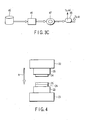
- FIG. 4 is a diagram schematically illustrating the ring compression testing machine.
- Reference numbers 21 and 22 represent a lower die set and an upper die set, respectively.
- a die 23 is disposed on the lower die set 21 and a test piece 25 is placed on a lubricant film 24, which is on the die 23.
- a punch (upper side) 26 is disposed on the underside of the upper die set 22 and the lubricant 24 is sprayed to the underside of the punch 26.
- Comparative Example 3 is the oil type lubricant of which formulation is close to the lubricant of Examples (see Table 4).
- Table 7 shows the results of measurement in the ring compression test of Example 3 and Comparative Examples 1, 2 and 4.
- Table 8 shows the results of measurement of Examples 3 and 4 and Comparative Example 2.
- Table 8 Ex. 3 Ex. 4 Comp. Ex. 2 Quantity of spraying, 7 times dilution (mL), - - 58 Quantity of spraying undiluted liquid (mL) 3.2 5.4 - Effective component (mass %) 22.8 24.8 21.1 Effective component in spraying liquid g(calculate) 0.73 1.33 1.22 Average real load (KN) 1665 1679 1667 Average work thickness (mm) 44.1 44.7 42.6
- the lubricity was evaluated in an upset-bend molding step (preliminary molding).
- the conditions in this evaluation for Table 8 were as follows: the temperature of mold: 250-280°C; load-set value: 1600KN; workpiece temperature: 470-490°C; and material: A6061 alloy.
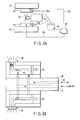
- FIG. 3A is a general view schematically illustrating the spraying apparatus.
- FIG. 3B is an enlarged view of a spray unit constituting the spray apparatus shown in FIG. 3A .
- FIG. 3C is a diagram for illustrating the flow of a lubricant in the spray apparatus shown in FIG. 3A .
- This spray apparatus comprises an upper die set 31 and a lower die set 32 which are disposed to face each other; and an upper mold 33 and a lower mold 34 which are disposed on the inner side of these die sets 31 and 32, respectively.
- Cartridge heaters 35a and 35b are buried in the upper mold 33 and the lower mold 34, respectively.
- a spray robot (delivering system) 37 for spraying a lubricant 36 to these molds is placed close to the upper mold 33 and the lower mold 34.
- the cartridge heaters 35a and 35b are electrically connected with a heat-up unit 38 for controlling the temperature.
- a temperature control unit 40 is connected with thermocouples 39a and 39b which are buried in the upper mold 33 and the lower mold 34, respectively.
- the spray robot 37 is equipped with a manifold 43 provided with a pipe 41 for feeding an oil type lubricant to a spray outlet and with a pipe 42 for feeding air.
- the manifold 43 is equipped with a needle valve 44 which is designed to be pushed by air pressure toward the right-hand in the drawing.
- the temperature of the upper mold 33 and the lower mold 34 can be adjusted by the heat-up unit 38 which is electrically connected with the thermocouples 39a and 39b which are buried in the molds. After the upper mold 33 and the lower mold 34 have been heated to a predetermined temperature, the lubricant 36 supplied from the spray robot 37 is sprayed on the upper mold 33 and the lower mold 34. Subsequently, a workpiece is set on the lower mold 34 to initiate the molding of the workpiece.
- a reference number 45 denotes an oil type lubricant tank
- 46 denotes a pressure unit
- 47 denotes a regulator
- 48 denotes a flow-meter.
- the oil type lubricant accommodated in the oil type lubricant tank 45 is delivered, via the regulator 47 and the flow-meter 48, to the pipe 41 by means of the pressure unit 46.
- the delivering system is constituted by the manifold 43; the pressure unit 46 such as a pump for feeding the oil type lubricant and air respectively to the pipes 41 and 42 which are formed in the manifold 43; and the flow-meter 48.
- the delivery condition-controlling system is constituted by the needle valve 44 of the spray unit 37, and by a driving power source (not shown) for driving the needle valve 44.
- the temperature control system is constituted by the cartridge heaters 35a and 35b, the thermocouples 39a and 39b, the heat-up unit 38, and the temperature control unit 40.
- the spray apparatus of the present invention is equipped with the delivering system 37 for spraying the oil type lubricant for forging onto the upper mold 33 and the lower mold 34; with the delivery condition-controlling system which is electrically connected with this delivering system 37 and designed to control the quantity of the oil type lubricant to be delivered from the delivering system 37; and with the temperature control system for controlling the temperature of the mold.
- Example 4 wherein powder was incorporated in the lubricant, the quantity of spraying was about 1/10 of the quantity used in Comparative Example 2.
- the thickness of the workpiece was 44.7 mm, it was found possible to perform the molding within the aimed thickness range of 43-45 mm for the workpiece.
- the quantity of effective component which was calculated from the ratio (mass %) of the effective component obtained through excluding volatile components in the lubricant, was 0.73 g in the case of Example 3 and 1.21 g in the case of Comparative Example, thus indicating an increased adhesive efficiency by a magnitude of about 40% in Example 3. Further, the following phenomena were observed as the features of Example 3.
- the lubricity at the first shot was inferior as compared to the second shot.
- Example 3 where the oil type lubricant was the same with or slightly inferior to that in Comparative Example 2, the lubricity in Example 3 was found acceptable. Prominent features of Example 3 are a great reduction of lubricant consumption and a solution of the problem caused by solid matter as in the case of Comparative Example.
- Table 9 below shows the results of measurement of Reference Example 2, Example 3 and Comparative Examples 1 and 2.
- Quantity of spraying 0.5 0.5 15 15
- Magnification of dilution Undiluted liquid Undiluted liquid 20 times 7 times Effective component (mass %) 34.2 22.8 21.4 21.1
- Effective component g) 0.17 0.11 0.16 0.45 Molding load (ton) 375 419 352 279 Slide (mm) 4.90 5.13 4.82 4.57 Thickness (mm) 20.22 20.20 20.21 20.14 Difference in temp. of work before and after molding (°C) -45 -36 -54 -50 Galling and agglutination None None None None None None None None None None None None None None None None None None None None None None None None None None None None None None None None None None None None None None None None None None None None None None None None None None None None None None None None None None None None None None None None None None None None
- the conditions were as follows: the temperature of mold: 200°C; workpiece temperature: 400°C; and material: Aluminum No. 2000.
- the advantage is almost no temperature decrease of the workpiece before and after the molding since there was almost no cooling effect due to the small quantity spray.
- Example 3 is suited for use in a continuous molding, which is a major characteristic of Examples.
- the load required in the molding is relatively high. Specifically, the molding load would become higher in the order of Comparative Example 2, Comparative Example 1, Reference Example 2 and Example 3.
- Comparative Example 2 is the lowest in molding load and preferable.
- this problem was resolved by setting a shorter distance between the upper and lower die sets to secure a thickness of 20.2 mm.
- the quantity of effective component sprayed was relevant to the load required. Specifically, when the quantity of effective component is small (oil film thin) as in the case of Example 3, the load required would become higher. On the contrary, it may be assumed that it was possible to make a production having a thickness of 20.2 mm using Comparative Example 2 with the smallest load, although the sprayed quantity of effective component was the largest.
- Example 3 with the oil type lubricant was suitable for a continuous molding without accompanying galling and agglutination, a high load is required.
- this oil type lubricant it is made possible to enhance the production efficiency by elimination of the re-increasing step for keeping the mold temperature, prevention of the staining of apparatus and prevention of the clogging of spray nozzle, i.e., advantages as described in paragraph G-5. Namely, it is possible to expect the enhancement of production efficiency.
- the oil type lubricant of the present invention is suited for spraying on the occasion of performing the forging of non-iron metals or iron and also suited for lubricating the surface of a mold. Further, this oil type lubricant is also applicable to the drawing work wherein an oil-type lubricant is used.
Landscapes
- Chemical & Material Sciences (AREA)
- Chemical Kinetics & Catalysis (AREA)
- General Chemical & Material Sciences (AREA)
- Oil, Petroleum & Natural Gas (AREA)
- Organic Chemistry (AREA)
- Engineering & Computer Science (AREA)
- Mechanical Engineering (AREA)
- Lubricants (AREA)
- Forging (AREA)
- Paints Or Removers (AREA)
Priority Applications (1)
| Application Number | Priority Date | Filing Date | Title |
|---|---|---|---|
| PL08722726T PL2055764T3 (pl) | 2007-03-29 | 2008-03-24 | Środek smarny do kucia oparty na oleju, sposób kucia i zastosowanie środka smarnego |
Applications Claiming Priority (2)
| Application Number | Priority Date | Filing Date | Title |
|---|---|---|---|
| JP2007089741A JP4829830B2 (ja) | 2007-03-29 | 2007-03-29 | 鍛造用油性潤滑剤、鍛造方法及び塗布装置 |
| PCT/JP2008/055460 WO2008123201A1 (ja) | 2007-03-29 | 2008-03-24 | 鍛造用油性潤滑剤、鍛造方法及び塗布装置 |
Publications (3)
| Publication Number | Publication Date |
|---|---|
| EP2055764A1 EP2055764A1 (en) | 2009-05-06 |
| EP2055764A4 EP2055764A4 (en) | 2010-05-12 |
| EP2055764B1 true EP2055764B1 (en) | 2014-10-15 |
Family
ID=39830698
Family Applications (1)
| Application Number | Title | Priority Date | Filing Date |
|---|---|---|---|
| EP08722726.0A Not-in-force EP2055764B1 (en) | 2007-03-29 | 2008-03-24 | Oil-based lubricant for forging, forging method and use of the lubricant |
Country Status (6)
| Country | Link |
|---|---|
| US (1) | US8728994B2 (pl) |
| EP (1) | EP2055764B1 (pl) |
| JP (1) | JP4829830B2 (pl) |
| CN (1) | CN101541936B (pl) |
| PL (1) | PL2055764T3 (pl) |
| WO (1) | WO2008123201A1 (pl) |
Families Citing this family (14)
| Publication number | Priority date | Publication date | Assignee | Title |
|---|---|---|---|---|
| JP5297742B2 (ja) | 2008-09-26 | 2013-09-25 | 株式会社青木科学研究所 | 金型用粉体含有油性潤滑剤、これを用いた静電塗布方法、及び静電塗布装置 |
| JP5232755B2 (ja) * | 2009-10-23 | 2013-07-10 | 三菱重工業株式会社 | 鍛造成型加工用潤滑油組成物および鍛造成型装置 |
| CN101898227A (zh) * | 2010-07-28 | 2010-12-01 | 启东尤希路化学工业有限公司 | 环境友好型镁合金脱模剂 |
| CN102688966B (zh) * | 2011-03-24 | 2015-06-24 | 比亚迪股份有限公司 | 一种冷锻方法及金属壳体加工方法 |
| MX347071B (es) * | 2011-07-25 | 2017-04-10 | Mccreery David | Lubricante inhibidor de la corrosión y métodos para ello. |
| CN102581184B (zh) * | 2012-02-27 | 2014-10-22 | 上海明兴开城超音波科技有限公司 | 一种避免金属零件积炭的锻压前润滑工艺及其生产装置 |
| CN102925248B (zh) * | 2012-11-26 | 2015-01-21 | 大连三环复合材料技术开发有限公司 | 润滑剂和对摩擦表面进行润滑的方法 |
| US8859486B2 (en) * | 2013-03-14 | 2014-10-14 | Church & Dwight Co., Inc. | Anhydrous detergent composition comprising a clay mixture processed with quaternary ammonium salts |
| TWI624403B (zh) * | 2014-10-07 | 2018-05-21 | 日商島野股份有限公司 | Inner cable of the bicycle control cable |
| JP6676247B2 (ja) * | 2015-05-26 | 2020-04-08 | 株式会社サンダテック | 冷間圧造成形機 |
| CN106345959B (zh) * | 2016-08-27 | 2024-06-07 | 上海科正模具有限公司 | 一种汽车模具脱模装置 |
| JP7319760B2 (ja) * | 2017-12-20 | 2023-08-02 | 出光興産株式会社 | 金属加工油組成物、及び金属板積層体の製造方法 |
| CN108659929A (zh) * | 2018-06-05 | 2018-10-16 | 朱东洋 | 一种油性防锈脱模剂的制备方法 |
| CN111607757B (zh) * | 2020-05-25 | 2022-12-06 | 东风汽车紧固件有限公司 | 一种7Cr7Mo2V2Si制造高温镦锻模具的表面处理方法 |
Family Cites Families (14)
| Publication number | Priority date | Publication date | Assignee | Title |
|---|---|---|---|---|
| US3287264A (en) * | 1958-11-28 | 1966-11-22 | Ici Ltd | Coating compositions |
| GB980143A (en) * | 1962-09-14 | 1965-01-13 | Rolls Royce | Improvements in or relating to the forming of metal articles |
| US4178260A (en) * | 1974-10-31 | 1979-12-11 | Exxon Research & Engineering Co. | Ester based metal working lubricants |
| JPS601293A (ja) | 1983-06-17 | 1985-01-07 | Agency Of Ind Science & Technol | 金属の温間乃至熱間加工用潤滑剤 |
| JPH0633393B2 (ja) | 1988-05-30 | 1994-05-02 | 日華化学株式会社 | 塑性加工用水溶性潤滑剤 |
| JPH01315493A (ja) * | 1988-06-15 | 1989-12-20 | Hitachi Ltd | 冷間鍛造加工用潤滑剤組成物 |
| GB9714997D0 (en) * | 1997-07-17 | 1997-09-24 | Exxon Research Engineering Co | Lubricant composition for metal working operations |
| DE19823797A1 (de) * | 1998-05-28 | 1999-12-09 | Daimler Chrysler Ag | Vorrichtung und Verfahren zum Stranggießen von Werkstücken |
| JP3467529B2 (ja) * | 2000-06-13 | 2003-11-17 | 広島大学長 | 金型鋳造用の粉体離型潤滑剤および金型鋳造法 |
| JP4885384B2 (ja) * | 2001-08-22 | 2012-02-29 | 昭和電工株式会社 | 鍛造製品の製造方法 |
| JP4095102B2 (ja) * | 2004-08-31 | 2008-06-04 | 株式会社青木科学研究所 | 油性ダイカスト用離型剤、溶剤混合比率の設定方法、鋳造方法及びスプレー装置 |
| US7111665B2 (en) * | 2004-10-26 | 2006-09-26 | Alcon Inc. | Lubricant for improved surface quality of cast aluminum and method |
| JP2006182806A (ja) * | 2004-12-24 | 2006-07-13 | Toyota Motor Corp | 塑性加工潤滑油組成物 |
| JP4829549B2 (ja) * | 2005-06-29 | 2011-12-07 | トヨタ自動車株式会社 | 塑性加工用潤滑油 |
-
2007
- 2007-03-29 JP JP2007089741A patent/JP4829830B2/ja active Active
-
2008
- 2008-03-24 CN CN2008800005188A patent/CN101541936B/zh not_active Expired - Fee Related
- 2008-03-24 PL PL08722726T patent/PL2055764T3/pl unknown
- 2008-03-24 WO PCT/JP2008/055460 patent/WO2008123201A1/ja not_active Ceased
- 2008-03-24 EP EP08722726.0A patent/EP2055764B1/en not_active Not-in-force
-
2009
- 2009-01-13 US US12/352,687 patent/US8728994B2/en active Active
Also Published As
| Publication number | Publication date |
|---|---|
| CN101541936B (zh) | 2012-11-28 |
| EP2055764A4 (en) | 2010-05-12 |
| JP4829830B2 (ja) | 2011-12-07 |
| US8728994B2 (en) | 2014-05-20 |
| PL2055764T3 (pl) | 2015-03-31 |
| JP2008248037A (ja) | 2008-10-16 |
| EP2055764A1 (en) | 2009-05-06 |
| WO2008123201A1 (ja) | 2008-10-16 |
| US20090118149A1 (en) | 2009-05-07 |
| CN101541936A (zh) | 2009-09-23 |
Similar Documents
| Publication | Publication Date | Title |
|---|---|---|
| US8728994B2 (en) | Oil type lubricant for forging, forging method and spray apparatus | |
| KR101161906B1 (ko) | 유성 다이 캐스팅용 이형제, 용제 혼합 비율의 설정 방법, 주조 방법 및 스프레이 장치 | |
| US8394461B2 (en) | Powder-containing oil based mold lubricant and method and apparatus for applying the lubricant | |
| JP5419267B2 (ja) | ダイカスト油性離型剤 | |
| JP5319889B2 (ja) | 鋼材用熱間圧延油及び鋼材の熱間圧延方法 | |
| CN100558485C (zh) | 用于压铸的油性脱模剂、设定溶剂混合比率的方法、铸造方法及喷射单元 | |
| CN104327927A (zh) | 一种低合金钢热锻造润滑剂组合物 | |
| JPH1177234A (ja) | 金型鋳造用離型剤 | |
| CN110168059B (zh) | 润滑脂组合物、该润滑脂组合物的制造方法、和该润滑脂组合物的使用方法 | |
| CN104450076A (zh) | 一种铜及其合金热锻造润滑剂的组合物 | |
| JP4953117B2 (ja) | ダイカスト油性離型剤 | |
| KR100714084B1 (ko) | 금속가공유제 및 이를 이용한 금속가공방법 | |
| CN103695116B (zh) | 拉拔高烧结负荷钢板的润滑剂 | |
| JP5588318B2 (ja) | 油性型プランジャー潤滑剤組成物 | |
| JP2009024049A (ja) | 油系温・熱間鍛造用潤滑剤 | |
| CN106520295A (zh) | 一种锰合金冷镦工艺润滑剂组合物 | |
| JP4535719B2 (ja) | 鋼材の塑性加工用処理剤、塑性加工方法及び酸化抑制方法 | |
| JP2006182806A (ja) | 塑性加工潤滑油組成物 | |
| CN103695086A (zh) | 深度拉拔铜和铜合金板的润滑剂 | |
| CN106544116A (zh) | 一种普通黄铜合金拉拔加工工艺润滑剂组合物 | |
| CN108913284A (zh) | 一种碳钢板易清洗无氯深冲压拉伸油及其制备方法 | |
| KR20180007866A (ko) | 복합기능 윤활제 | |
| CN106520333A (zh) | 一种镁合金冷镦工艺润滑剂组合物 | |
| CN106520325A (zh) | 一种锌合金磨削加工工艺润滑剂组合物 |
Legal Events
| Date | Code | Title | Description |
|---|---|---|---|
| PUAI | Public reference made under article 153(3) epc to a published international application that has entered the european phase |
Free format text: ORIGINAL CODE: 0009012 |
|
| 17P | Request for examination filed |
Effective date: 20090114 |
|
| AK | Designated contracting states |
Kind code of ref document: A1 Designated state(s): AT BE BG CH CY CZ DE DK EE ES FI FR GB GR HR HU IE IS IT LI LT LU LV MC MT NL NO PL PT RO SE SI SK TR |
|
| AX | Request for extension of the european patent |
Extension state: AL BA MK RS |
|
| A4 | Supplementary search report drawn up and despatched |
Effective date: 20100414 |
|
| 17Q | First examination report despatched |
Effective date: 20100921 |
|
| DAX | Request for extension of the european patent (deleted) | ||
| RAP1 | Party data changed (applicant data changed or rights of an application transferred) |
Owner name: AOKI SCIENCE INSTITUTE CO, LTD Owner name: TOYOTA JIDOSHA KABUSHIKI KAISHA Owner name: SHIMANO, INC. |
|
| GRAP | Despatch of communication of intention to grant a patent |
Free format text: ORIGINAL CODE: EPIDOSNIGR1 |
|
| INTG | Intention to grant announced |
Effective date: 20140212 |
|
| GRAS | Grant fee paid |
Free format text: ORIGINAL CODE: EPIDOSNIGR3 |
|
| RAP1 | Party data changed (applicant data changed or rights of an application transferred) |
Owner name: TOYOTA JIDOSHA KABUSHIKI KAISHA Owner name: AOKI SCIENCE INSTITUTE CO., LTD. Owner name: SHIMANO, INC. |
|
| RIN1 | Information on inventor provided before grant (corrected) |
Inventor name: NARUOKA, ATSUSI C/O SHIMANO INC. Inventor name: TANI, MASAHIKO C/O SHIMANO INC. Inventor name: SUGISAWA, MUNENORI C/O TOYOTA JIDOSHA KABUSHIKI KA Inventor name: OHIRA, HIROBUMI C/O AOKI SCIENCE INSTITUTE CO., LT Inventor name: NAKAMURA, HITOMI C/O AOKI SCIENCE INSTITUTE CO., L |
|
| GRAA | (expected) grant |
Free format text: ORIGINAL CODE: 0009210 |
|
| AK | Designated contracting states |
Kind code of ref document: B1 Designated state(s): AT BE BG CH CY CZ DE DK EE ES FI FR GB GR HR HU IE IS IT LI LT LU LV MC MT NL NO PL PT RO SE SI SK TR |
|
| REG | Reference to a national code |
Ref country code: CH Ref legal event code: EP Ref country code: GB Ref legal event code: FG4D |
|
| REG | Reference to a national code |
Ref country code: IE Ref legal event code: FG4D |
|
| REG | Reference to a national code |
Ref country code: AT Ref legal event code: REF Ref document number: 691688 Country of ref document: AT Kind code of ref document: T Effective date: 20141115 |
|
| REG | Reference to a national code |
Ref country code: DE Ref legal event code: R096 Ref document number: 602008034898 Country of ref document: DE Effective date: 20141127 |
|
| REG | Reference to a national code |
Ref country code: NL Ref legal event code: VDEP Effective date: 20141015 |
|
| REG | Reference to a national code |
Ref country code: AT Ref legal event code: MK05 Ref document number: 691688 Country of ref document: AT Kind code of ref document: T Effective date: 20141015 |
|
| REG | Reference to a national code |
Ref country code: LT Ref legal event code: MG4D |
|
| PG25 | Lapsed in a contracting state [announced via postgrant information from national office to epo] |
Ref country code: NL Free format text: LAPSE BECAUSE OF FAILURE TO SUBMIT A TRANSLATION OF THE DESCRIPTION OR TO PAY THE FEE WITHIN THE PRESCRIBED TIME-LIMIT Effective date: 20141015 |
|
| REG | Reference to a national code |
Ref country code: PL Ref legal event code: T3 |
|
| PG25 | Lapsed in a contracting state [announced via postgrant information from national office to epo] |
Ref country code: LT Free format text: LAPSE BECAUSE OF FAILURE TO SUBMIT A TRANSLATION OF THE DESCRIPTION OR TO PAY THE FEE WITHIN THE PRESCRIBED TIME-LIMIT Effective date: 20141015 Ref country code: PT Free format text: LAPSE BECAUSE OF FAILURE TO SUBMIT A TRANSLATION OF THE DESCRIPTION OR TO PAY THE FEE WITHIN THE PRESCRIBED TIME-LIMIT Effective date: 20150216 Ref country code: FI Free format text: LAPSE BECAUSE OF FAILURE TO SUBMIT A TRANSLATION OF THE DESCRIPTION OR TO PAY THE FEE WITHIN THE PRESCRIBED TIME-LIMIT Effective date: 20141015 Ref country code: ES Free format text: LAPSE BECAUSE OF FAILURE TO SUBMIT A TRANSLATION OF THE DESCRIPTION OR TO PAY THE FEE WITHIN THE PRESCRIBED TIME-LIMIT Effective date: 20141015 Ref country code: NO Free format text: LAPSE BECAUSE OF FAILURE TO SUBMIT A TRANSLATION OF THE DESCRIPTION OR TO PAY THE FEE WITHIN THE PRESCRIBED TIME-LIMIT Effective date: 20150115 Ref country code: IS Free format text: LAPSE BECAUSE OF FAILURE TO SUBMIT A TRANSLATION OF THE DESCRIPTION OR TO PAY THE FEE WITHIN THE PRESCRIBED TIME-LIMIT Effective date: 20150215 |
|
| PG25 | Lapsed in a contracting state [announced via postgrant information from national office to epo] |
Ref country code: HR Free format text: LAPSE BECAUSE OF FAILURE TO SUBMIT A TRANSLATION OF THE DESCRIPTION OR TO PAY THE FEE WITHIN THE PRESCRIBED TIME-LIMIT Effective date: 20141015 Ref country code: LV Free format text: LAPSE BECAUSE OF FAILURE TO SUBMIT A TRANSLATION OF THE DESCRIPTION OR TO PAY THE FEE WITHIN THE PRESCRIBED TIME-LIMIT Effective date: 20141015 Ref country code: GR Free format text: LAPSE BECAUSE OF FAILURE TO SUBMIT A TRANSLATION OF THE DESCRIPTION OR TO PAY THE FEE WITHIN THE PRESCRIBED TIME-LIMIT Effective date: 20150116 Ref country code: CY Free format text: LAPSE BECAUSE OF FAILURE TO SUBMIT A TRANSLATION OF THE DESCRIPTION OR TO PAY THE FEE WITHIN THE PRESCRIBED TIME-LIMIT Effective date: 20141015 Ref country code: SE Free format text: LAPSE BECAUSE OF FAILURE TO SUBMIT A TRANSLATION OF THE DESCRIPTION OR TO PAY THE FEE WITHIN THE PRESCRIBED TIME-LIMIT Effective date: 20141015 Ref country code: AT Free format text: LAPSE BECAUSE OF FAILURE TO SUBMIT A TRANSLATION OF THE DESCRIPTION OR TO PAY THE FEE WITHIN THE PRESCRIBED TIME-LIMIT Effective date: 20141015 |
|
| REG | Reference to a national code |
Ref country code: DE Ref legal event code: R097 Ref document number: 602008034898 Country of ref document: DE |
|
| PG25 | Lapsed in a contracting state [announced via postgrant information from national office to epo] |
Ref country code: DK Free format text: LAPSE BECAUSE OF FAILURE TO SUBMIT A TRANSLATION OF THE DESCRIPTION OR TO PAY THE FEE WITHIN THE PRESCRIBED TIME-LIMIT Effective date: 20141015 Ref country code: RO Free format text: LAPSE BECAUSE OF FAILURE TO SUBMIT A TRANSLATION OF THE DESCRIPTION OR TO PAY THE FEE WITHIN THE PRESCRIBED TIME-LIMIT Effective date: 20141015 Ref country code: EE Free format text: LAPSE BECAUSE OF FAILURE TO SUBMIT A TRANSLATION OF THE DESCRIPTION OR TO PAY THE FEE WITHIN THE PRESCRIBED TIME-LIMIT Effective date: 20141015 Ref country code: SK Free format text: LAPSE BECAUSE OF FAILURE TO SUBMIT A TRANSLATION OF THE DESCRIPTION OR TO PAY THE FEE WITHIN THE PRESCRIBED TIME-LIMIT Effective date: 20141015 |
|
| PLBE | No opposition filed within time limit |
Free format text: ORIGINAL CODE: 0009261 |
|
| STAA | Information on the status of an ep patent application or granted ep patent |
Free format text: STATUS: NO OPPOSITION FILED WITHIN TIME LIMIT |
|
| PG25 | Lapsed in a contracting state [announced via postgrant information from national office to epo] |
Ref country code: IT Free format text: LAPSE BECAUSE OF FAILURE TO SUBMIT A TRANSLATION OF THE DESCRIPTION OR TO PAY THE FEE WITHIN THE PRESCRIBED TIME-LIMIT Effective date: 20141015 |
|
| 26N | No opposition filed |
Effective date: 20150716 |
|
| PG25 | Lapsed in a contracting state [announced via postgrant information from national office to epo] |
Ref country code: MC Free format text: LAPSE BECAUSE OF FAILURE TO SUBMIT A TRANSLATION OF THE DESCRIPTION OR TO PAY THE FEE WITHIN THE PRESCRIBED TIME-LIMIT Effective date: 20141015 Ref country code: LU Free format text: LAPSE BECAUSE OF FAILURE TO SUBMIT A TRANSLATION OF THE DESCRIPTION OR TO PAY THE FEE WITHIN THE PRESCRIBED TIME-LIMIT Effective date: 20150324 |
|
| REG | Reference to a national code |
Ref country code: CH Ref legal event code: PL |
|
| REG | Reference to a national code |
Ref country code: IE Ref legal event code: MM4A |
|
| PG25 | Lapsed in a contracting state [announced via postgrant information from national office to epo] |
Ref country code: CH Free format text: LAPSE BECAUSE OF NON-PAYMENT OF DUE FEES Effective date: 20150331 Ref country code: IE Free format text: LAPSE BECAUSE OF NON-PAYMENT OF DUE FEES Effective date: 20150324 Ref country code: LI Free format text: LAPSE BECAUSE OF NON-PAYMENT OF DUE FEES Effective date: 20150331 |
|
| PG25 | Lapsed in a contracting state [announced via postgrant information from national office to epo] |
Ref country code: SI Free format text: LAPSE BECAUSE OF FAILURE TO SUBMIT A TRANSLATION OF THE DESCRIPTION OR TO PAY THE FEE WITHIN THE PRESCRIBED TIME-LIMIT Effective date: 20141015 |
|
| REG | Reference to a national code |
Ref country code: FR Ref legal event code: PLFP Year of fee payment: 9 |
|
| PG25 | Lapsed in a contracting state [announced via postgrant information from national office to epo] |
Ref country code: MT Free format text: LAPSE BECAUSE OF FAILURE TO SUBMIT A TRANSLATION OF THE DESCRIPTION OR TO PAY THE FEE WITHIN THE PRESCRIBED TIME-LIMIT Effective date: 20141015 |
|
| REG | Reference to a national code |
Ref country code: FR Ref legal event code: PLFP Year of fee payment: 10 |
|
| PG25 | Lapsed in a contracting state [announced via postgrant information from national office to epo] |
Ref country code: HU Free format text: LAPSE BECAUSE OF FAILURE TO SUBMIT A TRANSLATION OF THE DESCRIPTION OR TO PAY THE FEE WITHIN THE PRESCRIBED TIME-LIMIT; INVALID AB INITIO Effective date: 20080324 Ref country code: BG Free format text: LAPSE BECAUSE OF FAILURE TO SUBMIT A TRANSLATION OF THE DESCRIPTION OR TO PAY THE FEE WITHIN THE PRESCRIBED TIME-LIMIT Effective date: 20141015 |
|
| PG25 | Lapsed in a contracting state [announced via postgrant information from national office to epo] |
Ref country code: TR Free format text: LAPSE BECAUSE OF FAILURE TO SUBMIT A TRANSLATION OF THE DESCRIPTION OR TO PAY THE FEE WITHIN THE PRESCRIBED TIME-LIMIT Effective date: 20141015 |
|
| PG25 | Lapsed in a contracting state [announced via postgrant information from national office to epo] |
Ref country code: BE Free format text: LAPSE BECAUSE OF FAILURE TO SUBMIT A TRANSLATION OF THE DESCRIPTION OR TO PAY THE FEE WITHIN THE PRESCRIBED TIME-LIMIT Effective date: 20141015 |
|
| REG | Reference to a national code |
Ref country code: FR Ref legal event code: PLFP Year of fee payment: 11 |
|
| PGFP | Annual fee paid to national office [announced via postgrant information from national office to epo] |
Ref country code: GB Payment date: 20220114 Year of fee payment: 15 Ref country code: DE Payment date: 20220224 Year of fee payment: 15 |
|
| PGFP | Annual fee paid to national office [announced via postgrant information from national office to epo] |
Ref country code: PL Payment date: 20220228 Year of fee payment: 15 Ref country code: FR Payment date: 20220328 Year of fee payment: 15 Ref country code: CZ Payment date: 20220302 Year of fee payment: 15 |
|
| REG | Reference to a national code |
Ref country code: DE Ref legal event code: R119 Ref document number: 602008034898 Country of ref document: DE |
|
| PG25 | Lapsed in a contracting state [announced via postgrant information from national office to epo] |
Ref country code: CZ Free format text: LAPSE BECAUSE OF NON-PAYMENT OF DUE FEES Effective date: 20230324 |
|
| GBPC | Gb: european patent ceased through non-payment of renewal fee |
Effective date: 20230324 |
|
| PG25 | Lapsed in a contracting state [announced via postgrant information from national office to epo] |
Ref country code: GB Free format text: LAPSE BECAUSE OF NON-PAYMENT OF DUE FEES Effective date: 20230324 |
|
| PG25 | Lapsed in a contracting state [announced via postgrant information from national office to epo] |
Ref country code: GB Free format text: LAPSE BECAUSE OF NON-PAYMENT OF DUE FEES Effective date: 20230324 Ref country code: FR Free format text: LAPSE BECAUSE OF NON-PAYMENT OF DUE FEES Effective date: 20230331 Ref country code: DE Free format text: LAPSE BECAUSE OF NON-PAYMENT OF DUE FEES Effective date: 20231003 |
|
| PG25 | Lapsed in a contracting state [announced via postgrant information from national office to epo] |
Ref country code: PL Free format text: LAPSE BECAUSE OF NON-PAYMENT OF DUE FEES Effective date: 20230324 |
|
| PG25 | Lapsed in a contracting state [announced via postgrant information from national office to epo] |
Ref country code: PL Free format text: LAPSE BECAUSE OF NON-PAYMENT OF DUE FEES Effective date: 20230324 |