EP2056571A2 - System zur Messung von Internet-Verkehr - Google Patents
System zur Messung von Internet-Verkehr Download PDFInfo
- Publication number
- EP2056571A2 EP2056571A2 EP07123288A EP07123288A EP2056571A2 EP 2056571 A2 EP2056571 A2 EP 2056571A2 EP 07123288 A EP07123288 A EP 07123288A EP 07123288 A EP07123288 A EP 07123288A EP 2056571 A2 EP2056571 A2 EP 2056571A2
- Authority
- EP
- European Patent Office
- Prior art keywords
- web
- session
- session data
- identifier
- client interface
- Prior art date
- Legal status (The legal status is an assumption and is not a legal conclusion. Google has not performed a legal analysis and makes no representation as to the accuracy of the status listed.)
- Withdrawn
Links
- 230000000694 effects Effects 0.000 claims abstract description 13
- 238000000034 method Methods 0.000 claims description 68
- 238000005259 measurement Methods 0.000 claims description 38
- 230000002452 interceptive effect Effects 0.000 claims description 30
- 238000004458 analytical method Methods 0.000 claims description 19
- 230000004044 response Effects 0.000 claims description 12
- 230000000977 initiatory effect Effects 0.000 claims description 6
- 230000001737 promoting effect Effects 0.000 claims description 2
- 230000003993 interaction Effects 0.000 claims 1
- 235000014510 cooky Nutrition 0.000 description 10
- 238000013515 script Methods 0.000 description 5
- 230000009286 beneficial effect Effects 0.000 description 3
- 230000008859 change Effects 0.000 description 3
- 230000006870 function Effects 0.000 description 3
- 238000012544 monitoring process Methods 0.000 description 3
- 230000036961 partial effect Effects 0.000 description 3
- 230000003068 static effect Effects 0.000 description 3
- 238000013459 approach Methods 0.000 description 2
- 238000013500 data storage Methods 0.000 description 2
- 238000010586 diagram Methods 0.000 description 2
- 230000000670 limiting effect Effects 0.000 description 2
- 230000005540 biological transmission Effects 0.000 description 1
- 230000001413 cellular effect Effects 0.000 description 1
- 238000004590 computer program Methods 0.000 description 1
- 231100001261 hazardous Toxicity 0.000 description 1
- 238000012986 modification Methods 0.000 description 1
- 230000004048 modification Effects 0.000 description 1
- 238000009877 rendering Methods 0.000 description 1
- 230000000717 retained effect Effects 0.000 description 1
- 238000012546 transfer Methods 0.000 description 1
Images






Classifications
-
- H—ELECTRICITY
- H04—ELECTRIC COMMUNICATION TECHNIQUE
- H04L—TRANSMISSION OF DIGITAL INFORMATION, e.g. TELEGRAPHIC COMMUNICATION
- H04L41/00—Arrangements for maintenance, administration or management of data switching networks, e.g. of packet switching networks
- H04L41/50—Network service management, e.g. ensuring proper service fulfilment according to agreements
- H04L41/508—Network service management, e.g. ensuring proper service fulfilment according to agreements based on type of value added network service under agreement
- H04L41/5083—Network service management, e.g. ensuring proper service fulfilment according to agreements based on type of value added network service under agreement wherein the managed service relates to web hosting
-
- H—ELECTRICITY
- H04—ELECTRIC COMMUNICATION TECHNIQUE
- H04L—TRANSMISSION OF DIGITAL INFORMATION, e.g. TELEGRAPHIC COMMUNICATION
- H04L67/00—Network arrangements or protocols for supporting network services or applications
- H04L67/01—Protocols
- H04L67/02—Protocols based on web technology, e.g. hypertext transfer protocol [HTTP]
-
- H—ELECTRICITY
- H04—ELECTRIC COMMUNICATION TECHNIQUE
- H04L—TRANSMISSION OF DIGITAL INFORMATION, e.g. TELEGRAPHIC COMMUNICATION
- H04L67/00—Network arrangements or protocols for supporting network services or applications
- H04L67/14—Session management
-
- H—ELECTRICITY
- H04—ELECTRIC COMMUNICATION TECHNIQUE
- H04L—TRANSMISSION OF DIGITAL INFORMATION, e.g. TELEGRAPHIC COMMUNICATION
- H04L67/00—Network arrangements or protocols for supporting network services or applications
- H04L67/14—Session management
- H04L67/142—Managing session states for stateless protocols; Signalling session states; State transitions; Keeping-state mechanisms
-
- H—ELECTRICITY
- H04—ELECTRIC COMMUNICATION TECHNIQUE
- H04L—TRANSMISSION OF DIGITAL INFORMATION, e.g. TELEGRAPHIC COMMUNICATION
- H04L67/00—Network arrangements or protocols for supporting network services or applications
- H04L67/14—Session management
- H04L67/146—Markers for unambiguous identification of a particular session, e.g. session cookie or URL-encoding
-
- H—ELECTRICITY
- H04—ELECTRIC COMMUNICATION TECHNIQUE
- H04L—TRANSMISSION OF DIGITAL INFORMATION, e.g. TELEGRAPHIC COMMUNICATION
- H04L67/00—Network arrangements or protocols for supporting network services or applications
- H04L67/50—Network services
- H04L67/535—Tracking the activity of the user
Definitions
- the present specification is generally directed to a system and method of measuring, analysing and/or reporting web traffic, predetermined events, and/or user activity on one or more web pages on an interactive computer network.
- the World Wide Web continues to drive or at least play a significant role in modem day economics, it is particularly important for web site developers, owners, webmasters, etc., especially in the e-commerce business, to tailor their web site(s) and/or marketing and advertising campaigns associated therewith, so as to obtain the maximum financial gain or return on investment.
- the owner, marketing/advertising director, or other administrative contact may develop or deploy one or more marketing campaigns to direct consumers to one or more corresponding web sites via various advertisements.
- the web site(s), or the products/services offered for sale thereon may be advertised through any one or more of a plurality of mediums, such as, for example, on other web site(s) throughout the Internet, print, television, radio, etc.
- the owner desires to maximise the financial gain obtained from the various marketing and/or advertising campaigns directed to the corresponding web site(s).
- the study or monitoring of web behaviour has been typically employed by two approaches, namely, web server log file analysis and page tagging or web bugs.
- the first approach i.e., web server log file analysis
- web server log file analysis typically includes the employment of specially designed web log analysis software to analyse one or more log files retained on a web server. It is not uncommon for a web server to contain a log file with recorded transactions or other activity occurring on various web sites contained on the web server. In fact, the vast majority of web servers employ such log files.
- web pages associated with a single internet domain name have been hosted on a plurality of web servers, with each web server having its own log file. Accordingly, as the number of web servers for a single internet domain increases, the less efficient log file analysis becomes.
- Cookies consist of text and/or other data transmitted to a user's web browser by a web server serving a web domain, and then transmitted back to the web server serving the web domain each time the particular web browser accesses the respective web domain. Cookies have been criticised and are disfavoured for a variety of reasons. For example, cookies are a concern relative to Internet privacy, and as such, have been the subject of litigation concerning the same. In addition, cookies are commonly the source of the inaccurate identification of users, and can further be used for various, potentially hazardous, network attacks. Furthermore, cookies are often a disfavoured means of obtaining information and/or tracking users in light of the fact that most modern day web browsers are equipped with settings or configurations that allow the user to reject cookies, thereby rendering some websites completely inaccessible or inoperable.
- the second commonly utilised tactic to study or monitor web behaviour i.e., page tagging or web bugs
- page tagging or web bugs generally consists of one or more objects embedded in a web page that facilitates a server to track web users.
- each and every web page for which the server is to monitor visits, views, or other activity must be tagged or must otherwise include at least a portion of specifically designed and tailored program code.
- page tagging is also commonly implemented in conjunction with the use of cookies which, as noted above, are highly criticised and disfavoured for measuring web traffic and other activity.
- a method for measuring web traffic comprising:
- a system for measuring web traffic conducted via a client interface comprising:
- At least one embodiment of the system includes a measurement service and at least one web server disposed in a communicative relation via an interactive computer network.
- the interactive computer network may include, but is not limited to, access to the World Wide Web, such as via the Internet.
- the system includes a client interface disposed in a communicative relation with the interactive computer network and structured to submit a request to the web server(s) and initiate at least a first session.
- the system includes a web site having a plurality of web pages, at least one of which includes a landing page having program code embedded thereon.
- the program code is structured to deploy at least one portal element onto the landing page and display one or more web pages therein.
- the portal element is further structured to remain substantially imperceptible at the client interface.
- system of the present specification is structured to detect at least one predetermined event, including, but not limited to mouse clicks and/or navigation.
- At least one embodiment of the system is structured to transmit at least one session data element and/or session data set to the measurement service for analysis.
- the present specification includes a method for measuring web traffic. At least one embodiment of the method includes submitting a first request from the client interface to the web server(s) and initiating a first session. In addition, the method of at least one embodiment includes serving the landing page to the client interface via the interactive computer network and loading a requested web page into the portal element deployed on the landing page. The method includes the step of detecting at least one predetermined event and communicating at least one session data element and/or session data set to the measurement service for analysis.
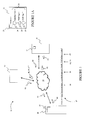
- At least one embodiment of the present system comprises at least one web server 20, a measurement service 30, which may include one or more server, and one or more client interfaces 40, wherein the web server 20, the measurement service 30, and the client interface(s) 40 are disposed in a communicative relation with one another via an interactive computer network 50.
- the communicative relation between the web server(s) 20, the measurement service 30, and the client interface(s) 40 may be either a direct communicative relationship or and an indirect communicative relationship.
- the web server(s) 20 may be structured and disposed to directly communicate with the measurement service 30.
- the web server(s) 20 may be structured and disposed to indirectly communicate with the measurement service 30, such as, for example, via the client interface 40.
- the interactive computer network 50 may comprise the Internet or other access to the World Wide Web, which typically includes a vast collection of web sites having web pages including electronic content such as text, images, audio, hyperlinks, input fields, and/or other program code. It is also contemplated that, in at least one embodiment, the interactive computer network 50 comprises a private, limited, or other computer network such as an Intranet, Extranet, Local Area Network ("LAN”), or Wide Area Network ("WAN").
- LAN Local Area Network
- WAN Wide Area Network
- the web server 20 of the various embodiments generally includes a computer processor structured to execute one or more computer programs and/or scripts which are responsible for accepting a request 60 from the client interface 40.
- the web server 20 includes at least one storage medium 22 capable of storing various electronic files, including but not limited to a plurality of web pages, databases, and/or other objects which facilitate operation of the present system 10.
- a request 60 transmitted from a client interface 40 to the respective web server(s) 20 are generally regarded as hypertext transfer protocol ("HTTP") requests; however, any form of request(s) 60 transmitted over the interactive computer network 50 from the client interface 40 to the one or more web servers 20 may be utilised.
- HTTP hypertext transfer protocol
- the web server 20 is programmed or otherwise structured to respond to a request 60 by serving the requesting client interface 40 with a response 61, generally in the form of an HTTP response, along with data such as various web pages, images, audio, etc.
- an HTTP response generally includes Hypertext Markup Language (“HTML”) document(s), but may include any document, object, or device structured to facilitate the implementation of the present system, including but not limited to Extensible Hypertext Markup Language (“XHTML”), an image file, audio, text, or other data.
- HTML Hypertext Markup Language
- XHTML Extensible Hypertext Markup Language
- the various web pages may be structured to facilitate either static or dynamic behaviour.
- the web page may include JavaScript or other embedded code implementing dynamic AJAX techniques.
- the measurement service 30, in at least one embodiment, is generally structured to receive set(s) of data 80 and/or data elements 82, 82' via the interactive computer network 50, as illustrated in Figure 1 .
- the web server 20 and/or the client interface 40 may transmit data or otherwise communicate with the measurement service 30 in any one or more of a plurality of manners, including but not limited to direct and/or indirect data connections.
- data from the web server(s) 20 may be transferred to a physical data storage medium, such as a CD-ROM, DVD-ROM, flash drive, etc., which is then distributed to the measurement service 30.
- the measurement service 30 is structured to read the information or data directly from the physical data storage medium.
- the client interface 40 may include, but is in no way limited to, a desktop computer, notebook or laptop computer, handheld computer, personal digital assistant ("PDA"), cellular telephone, video game console, or any other device structured to read, write, interpret, and/or display various computer or electronic data.
- the client interface 40 is equipped with one or more web browser 42 structured to transmit requests 60 to, and receive responses 61 from the web server(s) 20.
- the web browser 42 may include MICROSOFT® INTERNET EXPLORER®, MOZILLA® FIREFOX®, NETSCAPE NAVIGATOR®, SAFARI TM , OPERA®, or other such web browser 42.
- storage medium 22 of the one or more web servers 20 includes at least one web site 23, such that the web site 23 is hosted on the at least one web server 20.
- the web site 23 generally includes a plurality of web pages 24 wherein at least one of the plurality of web pages 24 comprises a landing page 26 having program code 27 embedded thereon.
- the program code 27 may include code written directly on the file associated with the landing page 26, or code or other text or objects imported from various other files or scripts.
- the program code 27 may include executable and/or non-executable code and/or scripts, such as, for example, JavaScript, HTML, XHTML, CSS, or other scripts, codes, or languages.
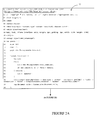
- FIG. 2A and 2B An illustrative example of one embodiment of the program code 27 is shown in Figures 2A and 2B , which is discussed below in detail.
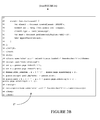
- Figures 2C and 2D present an illustrative example at least one other embodiment of the program code 27, also discussed in further detail below.
- at least one of the web pages 24 of the web site 23 includes a non-landing page 26'.
- the client interface 40 is structured to submit or transmit at least a first request 60 to one or more web servers 20 via the interactive computer network 50.
- the first request 60 is at least partially defined by a Uniform Resource Locator ("URL"), such as a source URL, an illustrative example of which is shown as 62.
- URL Uniform Resource Locator
- an owner, web master, marketing director, or other individual or entity in control of the web site 23 may launch or deploy one or more marketing campaign 70 to market and/or advertise the web site 23 to various users at a client interface 40, or to users who have access to a client interface 40.
- a marketing campaign 70 represented as an advertisement, is shown in Figure 3 .
- the marketing campaign 70 is structured to direct the users to the one or more web sites 23.
- the source URL 62 may be embedded as a hyperlink 72 or other navigation element in an electronic mail ("e-mail") document, advertisement, article, video clip, or other document, device, or object communicated to, or otherwise exposed to one or more users.
- e-mail electronic mail
- the source URL 62 need not be electronically communicated to the user, and may instead be placed on a printed brochure, flyer, or newspaper publication, or it may be broadcast via television or radio, etc. In such a case, the user must type, transcribe or otherwise communicate the source URL 62 into a web browser 42, which will then send the first request 60 to the one or more respective web servers 20 hosting the corresponding web site 23.
- the user(s), individual(s), or entity directed to the source URL 62 may be part of a selected group of individuals strategically compiled through various marketing techniques.
- the user(s), individual(s), or entity directed to the source URL 62 may be any member of the public preferably with access to the World Wide Web or other interactive computer network 50.
- a web site 23 typically comprises a plurality of web pages 24, which include at least one landing page 26 and at least one non-landing page 26'.
- the source URL 62 is structured to define or identify the location of the landing page 26 on the World Wide Web, the location of a requested web page 24, as well as the source and/or corresponding marketing campaign 70.
- a source URL 62 in accordance with one embodiment of the present system 10, and as shown in Figure 1 is as follows: http://www.website1.com/landingpage 1.html# 1234?webpage 1.php Accordingly, the landing page 26 in the above example is located or accessed on the World Wide Web at "landingpage1.html" from the domain ⁇ www.website1.com>, generally referenced as 64. It is also contemplated that, in at least one embodiment, the landing page 26 is the home page of the web site 23, which may be viewed, for example, by accessing the domain ⁇ www.website1.com> in the illustrative embodiment above.
- the requested web page 24 in the above example is identified as "webpage1.php” from the same domain 64, and the identification of the source 65 or marketing campaign 70 of the source URL 62 is "1234".
- a first session 66 is initiated.
- a session is defined as a continuous and/or uninterrupted connection between the client interface 40 and the web server(s) 20, such as, via the interactive computer network 50.
- the first session 66 is created or initiated when the client interface 40 transmits a first request 60 to the web server(s) 20, and the web server(s) 20 respond by serving the client interface 40 with the respective HTTP response or other like response 61.
- the present system 10 includes one or more unique session identifiers 67 associated with at least the first session 66 by the program code 27 embedded on the corresponding landing page 26.
- the unique session identifier(s) 67 may be one or more numbers, alpha-numeric characters, or virtually any unique identifier which may be sequentially or randomly generated. It is also contemplated that in at least one embodiment, the unique session identifiers 67 are generated based upon information gathered from the client interface 40 by the web server(s) 20 or the program code 27, such as a Media Access Control ("MAC") address, the time and/or date of access, etc.
- MAC Media Access Control
- the unique session identifier(s) 67 is structured to link or associate the web visitor and/or the source 65 of the web visit to various navigation activities, or other predetermined events 69.
- At least one embodiment of the present system 10 includes a unique client identifier 68 associated with a client interface 40 by the program code 27 embedded on a landing page 26.
- the unique client identifier 68 of at least one embodiment includes, but is not limited to the utilisation of cached files and/or cookies transmitted to and disposed on the client interface 40.
- the unique client identifiers 68 are structured to identify a subsequent request from a specific client interface 40 thereby initiating a subsequent session such as, for example, when the web visitor closes the web browser 42 or otherwise terminate the first session 66, and subsequently visits the same web site 23 at a later date or time.
- the present system 10 is structured to identify the client interface 40 via the unique client identifier 68 and link or associate the first request 62 and/or the first session 66 with the subsequent request and the subsequent session. Additionally, the unique client identifier 68 is utilised to identify a specific client interface 40 during a subsequent visit to the particular web site 23 which occurs via a web page 24 that is not a landing page 26, i.e., a non-landing page 26'. However, in at least one embodiment, the unique client identifier 68 may be utilised regardless of whether the first page visited is via a landing page 26 or a non-landing page 26' on the web site 23.
- the unique client identifier 68 may be utilised to associate web navigation and/or other predetermined events 69 occurring during the first session 66 with web navigation and/or other predetermined events 69 occurring during subsequent sessions, the significance of which will be apparent as discussed below.
- the program code 27 embedded on the landing page 26 is structured to deploy at least one portal element 28 onto the landing page 26.
- the portal element 28 is structured to display at least one web page 24 therein while simultaneously remaining substantially imperceptible at the client interface 40.
- the program code 27 embedded on the landing page 26 is structured to parse the source URL 62 and identify, among other things, a landing page 26, and a requested web page 24 to display within a corresponding portal element 28 deployed on the landing page 26.
- the requested web page 24, namely, "webpage1.php” is loaded into the portal element 28 of the landing page 26, namely, "landingpage1.html”.
- the web page 24 initially loaded into the portal element 28 is hard-coded into the landing page 26 of the web site 23.
- the program code 27 embedded on the landing page 26 includes code or other text structured to display the web page 24 in the one or more corresponding portal elements 28.
- the source URL 62 may, but need not include the identification or location of the first requested web page 24. Any subsequent navigation between web pages 24 within the web site 23, however, changes the web page 24 displayed within the portal element 28 while the portal element 28 remains active and substantially imperceptible at the client interface 40.
- the portal element(s) 28 deployed on the landing page 26 is structured to display various web pages 24 therein.
- the landing page 26 and the portal element 28 are structured to remain intact, active, and substantially imperceptible at the client interface 40 even during navigation between various web pages 24 of the web site 23.
- a first session 66, or any subsequent session will remain active.
- the web visitor at the client interface 40 is able to navigate the web site 23 without any apparent indication of the existence of the portal element 28, and instead appears to be navigating the web site 23 as any other web site 23 without a portal element 28.
- the only indication of the presence of the portal element 28 is the static nature of the URL 62 displayed in the web browser 42. Specifically, as a user navigates between various web pages 24 of the web site 23, the URL 62 will remain unchanged.
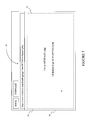
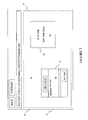
- Figure 5 represents a web browser 42 displaying a landing page 26, e.g., "landingpage1.html", with the first requested web page 24, e.g., "webpage1.php", loaded into the portal element 28.
- a predetermined event 69 includes, in at least one embodiment, a web visitor activity or a user activated event.
- a predetermined event 69 may include but is in no manner limited to any of a variety of clicks of a mouse or pointer and/or navigation between different ones of the plurality of web pages 24.
- a web visitor or user may play, stop, pause, rewind or fast forward a video displayed on the web page, each of which would be considered a separate predetermined event 69 detectable by the program code 27.
- the web visitor or user may highlight, manipulate, or move data or objects for example on a web page employing AJAX techniques, each of which may also be a detectable predetermined event 69.
- a predetermined event 69 detected by the program code 27 need not be user activated, and may include the duration of a session, or the duration a user spends on a particular web site, watching a video, etc.
- the program code 27 embedded on the landing page 26 is further structured to communicate at least one session data set 80 and/or at least one session data element 82, 82' to the measurement service 30.
- a session data element 82, 82' may include an event identifier, i.e., the identification of any one or more detected predetermined events 69, web page identifier(s), navigation history identifying the various web pages 24 the user visited or navigated to, a unique web site identifier, a marketing campaign identifier, i.e., identification of the source or marketing campaign 70, an advertising identifier, i.e., identification of an advertising medium associated with the marketing campaign 70, the unique client identifier(s) 67 and/or unique session identifier(s) 68, date/time, and/or any other information/data compiled or gathered by the system 10.
- an event identifier i.e., the identification of any one or more detected predetermined events 69
- web page identifier(s) the identification of the source or marketing campaign 70
- an advertising identifier i.e., identification of an advertising medium associated with the marketing campaign 70
- the session data set 80 or session data element(s) 82, 82' may include at least one client data element, such as, for example, the MAC address of the client interface 42, the IP address of the client interface 40, identification of the type and version of the web browser 42, etc.
- client data element such as, for example, the MAC address of the client interface 42, the IP address of the client interface 40, identification of the type and version of the web browser 42, etc.
- the various identifiers including, event identifier(s), web page identifiers, marketing campaign identifiers, advertising identifiers, and/or unique web site identifier(s) of at least one embodiment of the present system 10 include a series of numbers, letters, or other identifying characters or marks structured to identify one or more predetermined events 69, web pages 24, marketing campaign(s) 70, advertising mediums, or web sites 23, respectively.
- the at least one session data set 80 is defined as any one or more of the various session data elements 82, 82'.
- the session data set 80 includes a unique session identifier 68 represented as session data element 82, and the identification of at least one predetermined event 69, represented as session data element 82'.
- the identification of the at least one predetermined event 69 i.e., the event identifier, may be coded, as shown in Figure 6 .
- "pe_1_100” is parsed into a predetermined event (“pe") represented by number "1" having a value of "100” which may, for example, define the duration of a first session 66 as being active for 100 seconds.
- the measurement service 30 of the system 10 is structured to receive and/or analyse the session data set 80 and/or the session data element(s) 82, 82'.
- the measurement service 30 of at least one embodiment is structured to generate reports based upon the various session data element(s) 82, 82' and/or session data set(s) 80 received in association with the respective web site 23.
- a web site owner, web master, or other entity is equipped to manipulate the corresponding web sites 23 and/or marketing campaigns 70 in order to maximise the return on investment therefrom.
- At least one embodiment of the present system 10 further includes an auxiliary code 90 transmitted to the web browser 42 and/or landing page 26 via the interactive computer network 50.
- the auxiliary code 90 may be transmitted to the web browser 42 and/or landing page 26 randomly, at predetermined intervals, and/or in response to analysis of the session data set 80, session data element(s) 82, 82' and/or one or more predetermined event 69.
- the system 10 may analyse the location of the user, the purchase history of the user, the loyalty of the user, and/or other predetermined events 69 to determine whether or not to transmit the auxiliary code 90.
- the web server(s) 20 and/or the measurement service 30 of the present system 10 may be structured to transmit the auxiliary code 90 via the interactive computer network 50.
- the auxiliary code 90 is structured to deploy one or more auxiliary modules 92, which are activated at the client interface 40.
- the auxiliary module(s) 92 may include a promotional element 94, such as, for example, a coupon, advertisement, or the like.
- a user at the client interface 40 may interact with the auxiliary module(s) 92.
- the auxiliary module 92 may include a chat box 96 such that the user can chat with an associate or other individual or Internet bot via the interactive computer network 50.
- the portal element(s) 28 in at least one embodiment are partially defined as HTML ⁇ iframe> tags.
- any tag or element which facilitates the implementation of the present system 10 may be utilised, including, but not limited to ⁇ frame>, ⁇ div>, or ⁇ span> tags.
- any element which facilitates embedding or displaying web pages 24 or web page content therein is contemplated.
- the portal element 28 is defined in the ⁇ style> tag to ensure that the portal element 28, i.e., the ⁇ iframe> in this particular embodiment, is substantially imperceptible at the client interface 40.
- a global variable identified as "guanoo" is defined and includes, among other elements, a unique site number, "123" in this particular embodiment, and a campaign name, which is initially blank.
- the global variable "guanoo” also includes a function entitled “loaded” which is invoked each time a new web page 24 is loaded into the portal element 28 of the landing page 26.
- a variable entitled “url” is created and defined to hold the URL of the particular web page 24 loaded in the portal element 28.
- the present system 10 is structured to transmit or send at least one session data element 82 or session data set 80 to the measurement service 30.
- the program code 27 is structured to send the site identification, the date and time, the URL of the web page loaded in the portal element, a referring web page, and identification of the marketing campaign 70 to the measurement service 30.
- the system 10 is structured to update the document title of the web page as it appears on the client interface 40 to include the title of the web page 24 which has been loaded into the portal element 28 of the landing page 26. Accordingly, with the exception of the static nature of the source URL 62 in the web browser address bar as described above, the portal element 28 is structured to remain substantially imperceptible at the client interface 40.
- the measurement service 30 of at least one embodiment may be hosted at a web domain that is different than the web domain in which the web site 23 is hosted.
- the measurement service 30 is hosted at the domain ⁇ www.guanoo.com>, which may be different than the web site's 23 domain.
- lines 39-47 of Figure 2B illustrate that the program code 27 defines the portal element 28, i.e., the ⁇ iframe> element in this particular embodiment, and parses the source URL 62 to identify the requested web page 24 and/or the marketing campaign 70.
- the variable 'q' holds the position of a '?' in the source URL 62
- the variable 'h' holds the position of a '#' in the source URL 62. Accordingly, by utilising the variables 'q' and 'h', the program code 27 is structured to identify the requested web page 24 and the marketing campaign 70 associated with the particular source URL 62.
- the unique client identifier 68 in this embodiment a cached JavaScript file entitled "goal.php” is requested from the measurement service 30 at the measurement service domain name, i.e., ⁇ www.guanoo.com> in this particular illustrative embodiment.
- the unique client identifier 68 namely, the cached file entitled "goal.php”
- the unique client identifier 68 may be utilised to identify the client interface 40 and/or measure one or more predetermined event 69 in a subsequent session, which may be initiated via a landing page 26 or a non-landing page 26'.
- FIG. 2C and 2D Another illustrative embodiment of the program code 27 embedded on the landing page 26 is shown in Figures 2C and 2D .
- the requested web page 24 is hard-coded or otherwise included within the program code 27.
- the illustrative embodiment shown in Figures 2C and 2D also includes a "display" function at lines 33-38 of Figure 2D structured to display and/or otherwise load the web page 24 into the portal element 28.
- the program code 27 need not parse the source URL 62 to identify the requested web page 24.
- the above represents but two illustrative embodiments of the program code 27 which may be embedded on the landing page 26 and are not to be considered in a limiting sense.
- at least one embodiment of the present system 10 may include one or more landing pages 26 for each marketing campaign 70.
- the present specification presents a method for measuring web traffic, generally as shown at 100.
- the present method 100 includes providing 101 a plurality of web pages 24.
- the one or more web servers 20 include a plurality of web pages 24, at least one of which is a landing page 26.
- the plurality of web pages 24 are associated with a single domain name, however, it is contemplated that the method 100 may be implemented with a plurality of domain names.
- the method 100 further includes submitting 102 a first request 60 from a client interface 40 to at least one web server 20.
- the client interface 40 is disposed in a communicative relation with an interactive computer network 50 and the first request 60 includes a source URL 62 corresponding to at least a landing page 26 on a web site 23 hosted on the at least one web server 20.
- the present method 100 further includes initiating 104 a first session 66 with the client interface 40.
- a session is defined as a continuous or uninterrupted connection between the client interface 40 and the web server(s) 20, such as, via the interactive computer network 50.
- the present method 100 includes creating a unique identifier 106, 108, and in particular, creating a unique session identifier 67 corresponding to the first session, represented as 106, and/or creating a unique client identifier 68 associated with the client interface 40, represented as 108.
- the unique identifiers 67, 68 are structured to facilitate the linking of detected predetermined events 69 or purchases with a user, client interface 40, source, and/or marketing campaign 70 so as to assist the owner or other administrator of the web site 23 to maximise or improve its return on investment.
- the method 100 in at least one embodiment includes identifying 110 a requested web page 24.
- the source URL 62 in at least one embodiment is structured to include the web address or identification of the requested web page 24.
- identifying 110 a requested web page 24 includes parsing the source URL 62 via the program code 27.
- the requested web page 24 is identified as "webpage1.php”.
- the requested web page 24 may be hard-coded or otherwise included on the landing page 26 itself. Accordingly, the method 100 includes identifying 110 the hard-coded or otherwise included web page 24 requested.
- At least one embodiment of the present method 100 includes identifying 111 one or more marketing campaigns 70 associated with the source URL 62.
- the method 100 includes parsing the source URL 62 via the program code 27 for identification of the marketing campaign 70.
- the advertising medium, marketing campaign 70, and/or other source 65 may be identified as "1234".
- at least one embodiment includes a separate landing page 26 for each marketing campaign 70, and as such, identification of the marketing campaign 70 may not be needed.
- the method 100 of the present specification further includes serving 112 a landing page 26 to the client interface 40 over the interactive computer network 50.
- the web server(s) 20 are structured to transmit a response 61, which may be in the form of an HTTP response, via the interactive computer network 50.
- the response 61 in at least one embodiment of the present method 100, includes serving 112 the landing page 26 to the client interface 40.
- the present method 100 includes deploying 114 a portal element 28 on the landing page 26, wherein the portal element 28 remains substantially imperceptible at the client interface 40. Furthermore, and as illustrated in Figure 8 , the method 100 includes loading 116 the requested web page 24 into the portal element 28 deployed on the landing page 26. More in particular, the requested web page 24, in at least one embodiment, may be identified in the source URL 62 and may include a separate file, such as an HTML file. In at least one embodiment, however, the landing page 26 includes the code or other text for the web page 24 hard-coded thereon. As such, the web page 24 which is loaded within the portal element 28 may be a separate file or hard- coded within the landing page 26, and in particular, in the program code 27 thereon.
- the method 100 further includes the step of detecting 118 predetermined events 69 via the program code 27 embedded on the landing page 26. For example, a user may navigate between web pages 24, click on, hover over, or otherwise manipulate buttons, hyperlinks, or other objects, all of which are detectable predetermined events 69. In addition, the duration a user spends on each web page 24 and/or the web site 23 are also a detectable predetermined events 69.
- At least one embodiment of the present method 100 further includes compiling and/or communicating 120 at least one session data element 82, 82' and/or at least one session data set 80 to a measurement service 30.
- the session data set 80 or element 82, 82' may include, by way of example only, the identification of the web site 23, i.e., a unique web site identifier, the identification of one or more predetermined events 69, i.e., event identifier(s), the source 65 or marketing campaign 70, identification data of the client interface 40, i.e., client data element(s), the date/time, the unique session identifier 67, and/or the unique client identifier 68.
- the present method 100 may also include analysing 122 a session data set 80 and/or at least one session data element 82, 82'. Further, the present method 100 provides for transmitting 124 auxiliary code 90 to the web browser 42 and/or landing page 26, and generating 127 one or more data reports based upon analysis 122 of the session data set/data element(s) 80, 82, 82'.
- the web server(s) 20 and/or the measurement service 30 are structured to analyse 122 the session data set/data element(s) 80, 82 and respond by transmitting 124 auxiliary code 90 to the web browser 42 which, in effect, causes one or more auxiliary modules 92 to display at the client interface 40, as shown in Figure 7 .
- the method 100 may elect not to send auxiliary code 90 based upon the analysis 122 of the session data set/element(s) 80, 82, 82' or other information.
- the method 100 may continue to detect predetermined events 69 until, for example, the user at the client interface 40 closes the web browser 42 or otherwise ends the session.
- the method 100 may include generating 127 one or more data reports, as illustrated in Figure 8 .
- a data report may be generated at specified time intervals, upon a predetermined condition, or at the request of a web site owner, administrator, or other individual or entity.
- a data report includes information structured to facilitate the web site owner or administrator to maximise or improve his/her return on investment.
- Figure 8 illustrates that a data report may, but need not be generated, at 126.
- Figure 9 is a partial flow chart of the present method 100 demonstrating a link or other association between a subsequent request or session with a first session 66 and/or predetermined events 69 detected in a first session 66.
- the present method further includes submitting 202 a subsequent request to the web server(s) 20 and creating a subsequent session.
- the subsequent request may include a subsequent URL which directs a user to a landing page 26 or any other web page 24 of the web site 23.
- the present method 100 as illustrated in Figure 9 , also includes identifying 204 a client interface 40 with a unique client identifier 68 created during the first session 66.
- At least one embodiment of the method 100 includes creating a unique client identifier 68, such as, for example, by utilising a cached file and/or cookie as at 106, 108.
- the present method 100 may include identifying 204 a client interface 40 via a unique session identifier 67 created during a first session 66, or a subsequent session.
- the present method includes detecting 206 one or more predetermined events 69 occurring during a subsequent session.
- the method 100 in at least one embodiment, includes linking 208 the detected predetermined events 69, and other data, occurring in the subsequent session, with predetermined events 69, the source, marketing campaign 70, and other data from the first session 66.
- the data may then be compiled and/or communicated to the measurement service 30.
- the measurement service 30 and/or the web server(s) 20 may then transmit 121 auxiliary code 90 and/or generate data reports.
Landscapes
- Engineering & Computer Science (AREA)
- Computer Networks & Wireless Communication (AREA)
- Signal Processing (AREA)
- Computer Hardware Design (AREA)
- General Engineering & Computer Science (AREA)
- Information Transfer Between Computers (AREA)
- Management, Administration, Business Operations System, And Electronic Commerce (AREA)
Applications Claiming Priority (1)
| Application Number | Priority Date | Filing Date | Title |
|---|---|---|---|
| US11/978,400 US20090112976A1 (en) | 2007-10-29 | 2007-10-29 | Method for measuring web traffic |
Publications (2)
| Publication Number | Publication Date |
|---|---|
| EP2056571A2 true EP2056571A2 (de) | 2009-05-06 |
| EP2056571A3 EP2056571A3 (de) | 2009-07-15 |
Family
ID=40429685
Family Applications (1)
| Application Number | Title | Priority Date | Filing Date |
|---|---|---|---|
| EP07123288A Withdrawn EP2056571A3 (de) | 2007-10-29 | 2007-12-14 | System zur Messung von Internet-Verkehr |
Country Status (2)
| Country | Link |
|---|---|
| US (1) | US20090112976A1 (de) |
| EP (1) | EP2056571A3 (de) |
Cited By (3)
| Publication number | Priority date | Publication date | Assignee | Title |
|---|---|---|---|---|
| US7752308B2 (en) | 2007-10-30 | 2010-07-06 | Hutchinson Kevin P | System for measuring web traffic |
| FR2957167A1 (fr) * | 2010-03-08 | 2011-09-09 | Alcatel Lucent | Dispositif de gestion dynamique des pages de sites internet dont les frequentation et audience doivent etre analysees |
| US9065859B1 (en) * | 2009-04-24 | 2015-06-23 | Google Inc. | Server side disambiguation of ambiguous statistics |
Families Citing this family (2)
| Publication number | Priority date | Publication date | Assignee | Title |
|---|---|---|---|---|
| US10681156B1 (en) * | 2014-07-17 | 2020-06-09 | Melih Abdulhayoglu | System and process for cloud based analytics |
| CN107515865B (zh) * | 2016-06-15 | 2022-08-09 | 北京京东尚科信息技术有限公司 | 页面数据点击量统计方法及装置 |
Citations (1)
| Publication number | Priority date | Publication date | Assignee | Title |
|---|---|---|---|---|
| US20020165954A1 (en) | 2001-05-04 | 2002-11-07 | Kave Eshghi | System and method for monitoring browser event activities |
Family Cites Families (36)
| Publication number | Priority date | Publication date | Assignee | Title |
|---|---|---|---|---|
| US675654A (en) * | 1897-12-16 | 1901-06-04 | William J Fryer | Wall-paper. |
| US5787253A (en) * | 1996-05-28 | 1998-07-28 | The Ag Group | Apparatus and method of analyzing internet activity |
| US6112238A (en) * | 1997-02-14 | 2000-08-29 | Webtrends Corporation | System and method for analyzing remote traffic data in a distributed computing environment |
| US5796952A (en) * | 1997-03-21 | 1998-08-18 | Dot Com Development, Inc. | Method and apparatus for tracking client interaction with a network resource and creating client profiles and resource database |
| US6393407B1 (en) * | 1997-09-11 | 2002-05-21 | Enliven, Inc. | Tracking user micro-interactions with web page advertising |
| US6167441A (en) * | 1997-11-21 | 2000-12-26 | International Business Machines Corporation | Customization of web pages based on requester type |
| US6298356B1 (en) * | 1998-01-16 | 2001-10-02 | Aspect Communications Corp. | Methods and apparatus for enabling dynamic resource collaboration |
| US6434614B1 (en) * | 1998-05-29 | 2002-08-13 | Nielsen Media Research, Inc. | Tracking of internet advertisements using banner tags |
| US6317787B1 (en) * | 1998-08-11 | 2001-11-13 | Webtrends Corporation | System and method for analyzing web-server log files |
| US6925442B1 (en) * | 1999-01-29 | 2005-08-02 | Elijahu Shapira | Method and apparatus for evaluating vistors to a web server |
| US6393479B1 (en) * | 1999-06-04 | 2002-05-21 | Webside Story, Inc. | Internet website traffic flow analysis |
| AU5789000A (en) * | 1999-07-07 | 2001-01-22 | Screamingmedia Inc. | User activity reporting browser |
| US6789115B1 (en) * | 1999-07-09 | 2004-09-07 | Merrill Lynch & Company | System for collecting, analyzing, and reporting high volume multi-web server usage |
| US6792458B1 (en) * | 1999-10-04 | 2004-09-14 | Urchin Software Corporation | System and method for monitoring and analyzing internet traffic |
| US7031932B1 (en) * | 1999-11-22 | 2006-04-18 | Aquantive, Inc. | Dynamically optimizing the presentation of advertising messages |
| US6850975B1 (en) * | 1999-11-29 | 2005-02-01 | Intel Corporation | Web site monitoring |
| IL136324A0 (en) * | 2000-05-24 | 2001-05-20 | Softcom Computers Ltd | Method of surveilling internet communication |
| JP2002056027A (ja) * | 2000-07-31 | 2002-02-20 | Internatl Business Mach Corp <Ibm> | 目標情報提供システム、端末装置、オブジェクト位置情報提供方法、オブジェクト情報提供システム、コンピュータプログラム、記憶媒体及びプログラム伝送装置 |
| CA2432344C (en) * | 2000-08-21 | 2010-10-26 | Netiq Corporation | Data tracking using ip address filtering over a wide area network |
| US6971107B2 (en) * | 2001-03-22 | 2005-11-29 | International Business Machines Corporation | System and method for frame storage of executable code |
| US6944827B2 (en) * | 2000-09-11 | 2005-09-13 | Appeon Corporation | System and method of data transmission for computer networks utilizing HTTP |
| EP1340132A4 (de) * | 2000-11-02 | 2005-12-07 | Netiq Corp | System und verfahren zum erzeugen und melden von cookie-werten in einem client-knoten |
| US20020087679A1 (en) * | 2001-01-04 | 2002-07-04 | Visual Insights | Systems and methods for monitoring website activity in real time |
| US7359943B2 (en) * | 2002-01-22 | 2008-04-15 | Yahoo! Inc. | Providing instant messaging functionality in non-instant messaging environments |
| US7185085B2 (en) * | 2002-02-27 | 2007-02-27 | Webtrends, Inc. | On-line web traffic sampling |
| US7143365B2 (en) * | 2002-06-18 | 2006-11-28 | Webtrends, Inc. | Method and apparatus for using a browser to configure a software program |
| JP4394335B2 (ja) * | 2002-07-23 | 2010-01-06 | 富士通株式会社 | サイト評価システムおよびサイト評価プログラム |
| CN101023419B (zh) * | 2004-05-14 | 2010-06-16 | 模比莱普斯有限公司 | 提供具有嵌入内容的网页的方法 |
| US8732610B2 (en) * | 2004-11-10 | 2014-05-20 | Bt Web Solutions, Llc | Method and apparatus for enhanced browsing, using icons to indicate status of content and/or content retrieval |
| US9432468B2 (en) * | 2005-09-14 | 2016-08-30 | Liveperson, Inc. | System and method for design and dynamic generation of a web page |
| US7792843B2 (en) * | 2005-12-21 | 2010-09-07 | Adobe Systems Incorporated | Web analytics data ranking and audio presentation |
| US20070220010A1 (en) * | 2006-03-15 | 2007-09-20 | Kent Thomas Ertugrul | Targeted content delivery for networks |
| EP2080088A2 (de) * | 2006-09-28 | 2009-07-22 | SFGT Inc. | Vorrichtungen, verfahren und systeme für codegetriggerte informationsabfrage und versorgung |
| US20080222283A1 (en) * | 2007-03-08 | 2008-09-11 | Phorm Uk, Inc. | Behavioral Networking Systems And Methods For Facilitating Delivery Of Targeted Content |
| DE102007032084A1 (de) * | 2007-07-09 | 2009-01-22 | Eads Deutschland Gmbh | Kollisions- und Konfliktvermeidungssystem für autonome unbemannte Flugzeuge (UAV) |
| US20090132375A1 (en) * | 2007-10-02 | 2009-05-21 | 6Dgr, Inc. | System for allocating rebates in conjunction with a product |
-
2007
- 2007-10-29 US US11/978,400 patent/US20090112976A1/en not_active Abandoned
- 2007-12-14 EP EP07123288A patent/EP2056571A3/de not_active Withdrawn
Patent Citations (1)
| Publication number | Priority date | Publication date | Assignee | Title |
|---|---|---|---|---|
| US20020165954A1 (en) | 2001-05-04 | 2002-11-07 | Kave Eshghi | System and method for monitoring browser event activities |
Cited By (4)
| Publication number | Priority date | Publication date | Assignee | Title |
|---|---|---|---|---|
| US7752308B2 (en) | 2007-10-30 | 2010-07-06 | Hutchinson Kevin P | System for measuring web traffic |
| US9065859B1 (en) * | 2009-04-24 | 2015-06-23 | Google Inc. | Server side disambiguation of ambiguous statistics |
| FR2957167A1 (fr) * | 2010-03-08 | 2011-09-09 | Alcatel Lucent | Dispositif de gestion dynamique des pages de sites internet dont les frequentation et audience doivent etre analysees |
| EP2365680A1 (de) * | 2010-03-08 | 2011-09-14 | Alcatel Lucent | Vorrichtung zur dynamischen Verwaltung von Webseiten zwecks der Analyse ihrer Besuchshäufigkeit und ihres Publikums |
Also Published As
| Publication number | Publication date |
|---|---|
| US20090112976A1 (en) | 2009-04-30 |
| EP2056571A3 (de) | 2009-07-15 |
Similar Documents
| Publication | Publication Date | Title |
|---|---|---|
| US20100281389A1 (en) | System for measuring web traffic | |
| US7752308B2 (en) | System for measuring web traffic | |
| US10489814B2 (en) | Method and system for facilitating access to a promotional offer | |
| EP2433258B1 (de) | Geschützte lieferung von elektronischem inhalt | |
| US9268547B2 (en) | Conditional logic for delivering computer-executable program instructions and content | |
| US20100281008A1 (en) | Universal Tracking Agent System and Method | |
| US6973492B2 (en) | Method and apparatus for collecting page load abandons in click stream data | |
| JP4633049B2 (ja) | ウェブサイトクリックとウェブページ上のリンクとの関連付け | |
| US20080177600A1 (en) | Methods and systems for measuring online chat performance | |
| US20090037521A1 (en) | System and method for identifying compatibility between users from identifying information on web pages | |
| WO2010042199A1 (en) | Indexing online advertisements | |
| US20080071881A1 (en) | Advertising on Idle Web Browser Windows | |
| EP2223271A1 (de) | System zur verfolgung der exponierung gegenüber online-werbung | |
| EP2056571A2 (de) | System zur Messung von Internet-Verkehr | |
| JP2013200763A (ja) | 端末装置及び収集方法 | |
| US20150213483A1 (en) | Methods and systems for conducting ad research | |
| JP7145215B2 (ja) | ブラウザ管理システム、ブラウザ管理方法、ブラウザ管理プログラム、およびクライアントプログラム | |
| JP7046418B1 (ja) | 広告配信システム、広告配信プログラム、広告配信方法 | |
| US20120096079A1 (en) | Generating a web page with identified sources of data | |
| US20150310482A1 (en) | Method and survey server for generating metrics indicative of website visit originating channel effectiveneess | |
| WO2019069060A1 (en) | System for tracking user interactions | |
| JP7557578B2 (ja) | トラッキングシステム、トラッキング方法及びトラッキングプログラム | |
| KR20070091729A (ko) | 웹브라우저 주소창 광고방법 | |
| WO2001001310A2 (en) | Method and apparatus for standardizing transaction systems |
Legal Events
| Date | Code | Title | Description |
|---|---|---|---|
| PUAI | Public reference made under article 153(3) epc to a published international application that has entered the european phase |
Free format text: ORIGINAL CODE: 0009012 |
|
| AK | Designated contracting states |
Kind code of ref document: A2 Designated state(s): AT BE BG CH CY CZ DE DK EE ES FI FR GB GR HU IE IS IT LI LT LU LV MC MT NL PL PT RO SE SI SK TR |
|
| AX | Request for extension of the european patent |
Extension state: AL BA HR MK RS |
|
| PUAL | Search report despatched |
Free format text: ORIGINAL CODE: 0009013 |
|
| AK | Designated contracting states |
Kind code of ref document: A3 Designated state(s): AT BE BG CH CY CZ DE DK EE ES FI FR GB GR HU IE IS IT LI LT LU LV MC MT NL PL PT RO SE SI SK TR |
|
| AX | Request for extension of the european patent |
Extension state: AL BA HR MK RS |
|
| RIC1 | Information provided on ipc code assigned before grant |
Ipc: G06Q 30/00 20060101ALI20090605BHEP Ipc: G06F 17/30 20060101ALI20090605BHEP Ipc: H04L 29/08 20060101AFI20090317BHEP |
|
| 17P | Request for examination filed |
Effective date: 20100115 |
|
| 17Q | First examination report despatched |
Effective date: 20100205 |
|
| AKX | Designation fees paid |
Designated state(s): AT BE BG CH CY CZ DE DK EE ES FI FR GB GR HU IE IS IT LI LT LU LV MC MT NL PL PT RO SE SI SK TR |
|
| STAA | Information on the status of an ep patent application or granted ep patent |
Free format text: STATUS: THE APPLICATION IS DEEMED TO BE WITHDRAWN |
|
| 18D | Application deemed to be withdrawn |
Effective date: 20120328 |