EP2057024B1 - Procede de commande d'un compresseur de suspension pneumatique pouvant etre active et desactive en fonction des besoins - Google Patents
Procede de commande d'un compresseur de suspension pneumatique pouvant etre active et desactive en fonction des besoins Download PDFInfo
- Publication number
- EP2057024B1 EP2057024B1 EP07765591A EP07765591A EP2057024B1 EP 2057024 B1 EP2057024 B1 EP 2057024B1 EP 07765591 A EP07765591 A EP 07765591A EP 07765591 A EP07765591 A EP 07765591A EP 2057024 B1 EP2057024 B1 EP 2057024B1
- Authority
- EP
- European Patent Office
- Prior art keywords
- compressor
- temperature
- air
- switched
- run
- Prior art date
- Legal status (The legal status is an assumption and is not a legal conclusion. Google has not performed a legal analysis and makes no representation as to the accuracy of the status listed.)
- Not-in-force
Links
- 238000000034 method Methods 0.000 title claims abstract description 26
- 239000000725 suspension Substances 0.000 claims description 20
- 230000007423 decrease Effects 0.000 claims description 8
- 238000011161 development Methods 0.000 description 11
- 238000010586 diagram Methods 0.000 description 9
- 238000001816 cooling Methods 0.000 description 3
- 238000010438 heat treatment Methods 0.000 description 2
- 240000006829 Ficus sundaica Species 0.000 description 1
- 238000009529 body temperature measurement Methods 0.000 description 1
- 238000004891 communication Methods 0.000 description 1
- 230000006835 compression Effects 0.000 description 1
- 238000007906 compression Methods 0.000 description 1
- 230000001419 dependent effect Effects 0.000 description 1
- 238000013021 overheating Methods 0.000 description 1
- 239000007787 solid Substances 0.000 description 1
- 238000012549 training Methods 0.000 description 1
Images
Classifications
-
- B—PERFORMING OPERATIONS; TRANSPORTING
- B60—VEHICLES IN GENERAL
- B60G—VEHICLE SUSPENSION ARRANGEMENTS
- B60G17/00—Resilient suspensions having means for adjusting the spring or vibration-damper characteristics, for regulating the distance between a supporting surface and a sprung part of vehicle or for locking suspension during use to meet varying vehicular or surface conditions, e.g. due to speed or load
- B60G17/02—Spring characteristics, e.g. mechanical springs and mechanical adjusting means
- B60G17/04—Spring characteristics, e.g. mechanical springs and mechanical adjusting means fluid spring characteristics
- B60G17/052—Pneumatic spring characteristics
-
- B—PERFORMING OPERATIONS; TRANSPORTING
- B60—VEHICLES IN GENERAL
- B60G—VEHICLE SUSPENSION ARRANGEMENTS
- B60G17/00—Resilient suspensions having means for adjusting the spring or vibration-damper characteristics, for regulating the distance between a supporting surface and a sprung part of vehicle or for locking suspension during use to meet varying vehicular or surface conditions, e.g. due to speed or load
- B60G17/02—Spring characteristics, e.g. mechanical springs and mechanical adjusting means
- B60G17/04—Spring characteristics, e.g. mechanical springs and mechanical adjusting means fluid spring characteristics
- B60G17/0408—Spring characteristics, e.g. mechanical springs and mechanical adjusting means fluid spring characteristics details, e.g. antifreeze for suspension fluid, pumps, retarding means per se
-
- B—PERFORMING OPERATIONS; TRANSPORTING
- B60—VEHICLES IN GENERAL
- B60G—VEHICLE SUSPENSION ARRANGEMENTS
- B60G17/00—Resilient suspensions having means for adjusting the spring or vibration-damper characteristics, for regulating the distance between a supporting surface and a sprung part of vehicle or for locking suspension during use to meet varying vehicular or surface conditions, e.g. due to speed or load
-
- B—PERFORMING OPERATIONS; TRANSPORTING
- B60—VEHICLES IN GENERAL
- B60G—VEHICLE SUSPENSION ARRANGEMENTS
- B60G17/00—Resilient suspensions having means for adjusting the spring or vibration-damper characteristics, for regulating the distance between a supporting surface and a sprung part of vehicle or for locking suspension during use to meet varying vehicular or surface conditions, e.g. due to speed or load
- B60G17/02—Spring characteristics, e.g. mechanical springs and mechanical adjusting means
- B60G17/04—Spring characteristics, e.g. mechanical springs and mechanical adjusting means fluid spring characteristics
-
- B—PERFORMING OPERATIONS; TRANSPORTING
- B60—VEHICLES IN GENERAL
- B60G—VEHICLE SUSPENSION ARRANGEMENTS
- B60G2400/00—Indexing codes relating to detected, measured or calculated conditions or factors
- B60G2400/70—Temperature of vehicle part or in the vehicle
-
- B—PERFORMING OPERATIONS; TRANSPORTING
- B60—VEHICLES IN GENERAL
- B60G—VEHICLE SUSPENSION ARRANGEMENTS
- B60G2500/00—Indexing codes relating to the regulated action or device
- B60G2500/20—Spring action or springs
- B60G2500/205—Air-compressor operation
Definitions
- the compressor can be reliably protected in the on state against excessive heat development.
- the method does not take into account that the compressor has components which heat or cool at different speeds.
- the piston of the compressor is made of plastic and after a compressor run can cool much worse than the cylinder head.
- the components of the compressor, which cool down slowly, are particularly sensitive to heat and can be damaged more easily than the other components.
- the invention has for its object to provide a method for controlling a demand on and off compressor of an air suspension system of a motor vehicle, in which on the one hand all components of the compressor are well protected against damage due to excessive heat and on the other hand
- the invention is also based on the object to provide an air suspension system with which the method can be performed.
- temperature model in the sense of the application is a calculation model with which the temperature rise or the temperature decrease of the air in the compressor can be calculated.
- a first Temperatumiodell then differs from a second temperature model, if the first temperature model is based on a completely different calculation model than the second temperature model or if the same temperature model as in the second temperature model is selected in the first temperature model, but other parameters are used in the calculation model ,
- a temperature model may be chosen for the calculation of the temperature of the air in the compressor, according to which the temperature rises more slowly than for the subsequent runs of the compressor.
- a temperature model must be selected for the subsequent runs of the compressor, according to the temperature of the air in the compressor rises faster to take into account that certain components in the compressor cool down worse than other components of the compressor (for more details see figure description).
- the advantage achieved with the invention is thus to be seen in particular in that, by choosing a different temperature model for the first compressor run, the running time of the first compressor run can be substantially extended.
- Another advantage of the invention is the fact that the temperature of the air in the compressor in all compressor runs is calculated exclusively by means of a temperature model and temperature measurements are not made. A temperature sensor with which the air is measured in the compressor is therefore not necessary.
- the positive temperature gradient d. h., the value for the temperature rise / time between the second threshold and the first threshold is set smaller than for the subsequent runs of the compressor.
- the positive temperature gradient increases gradually for the first n runs of the compressor.
- the positive temperature gradient is kept constant from the n + 1 run of the compressor.
- the Temperature behavior of the air in the compressor from a certain compressor run "settles", so that the positive temperature gradient can be kept constant.
- the advantage of the development is the fact that the positive temperature gradient, which is selected for the n + 1 run, can be optimally adapted to this condition. Usually, the temperature behavior of the compressor will oscillate after the third to tenth run (n is therefore 3 or 10 or an integer in between).
- the air in the compressor has the temperature of the environment of the compressor, when the switched-off compressor is not turned on again for a certain time.
- a time is preferably chosen that is between 5 and 15 minutes.
- the ambient temperature is measured with a control unit of the motor vehicle and set the temperature model for the first run of the compressor as a function of the ambient temperature.
- the training takes advantage of the fact that most motor vehicles have a sensor with which the ambient temperature can be measured. By continuing the advantage is achieved that the term for the first run of the compressor based on the actual ambient temperature can be further improved.
- the first off time of the compressor for the calculation of the temperature of the air in the
- the compressor is based on a different temperature model than the compressor's subsequent switch-off times.
- the negative temperature gradient d. h., the value for the temperature decrease / time, for the calculation of the temperature of the air in the compressor in the temperature range between the first threshold and the second threshold selected smaller than for the subsequent turn-off of the compressor.
- the negative temperature gradient increases gradually for the first n turn-off of the compressor.
- the advantage of the development is the fact that the negative temperature gradient can be adjusted to the temperature decrease during the n first turn-off of the compressor gradually, so that the turn-off can be optimally shortened.
- the negative temperature gradient is kept constant from the n + 1 off time of the compressor. From the n + 1 off time of the compressor, the time course of the temperature decrease during a turn-off time is almost always the same.
- the advantage of this development is the fact that from the n + 1 off time always the same temperature model with the same negative temperature gradient is selected and yet the switch-off of the compressor are optimally sized.
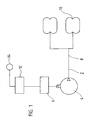
- Fig. 1 shows a highly schematic representation of an air suspension 2 of a motor vehicle with a compressor 4, a control unit 6 and air springs 10, which can be filled via supply lines 8 by means of the compressor 4 with compressed air.
- the compressor 4 is switched on and off by the control unit 6. In the switched-on state, heat is generated in the compressor 4 and, consequently, an increase in temperature.
- the temperature of the compressed air in the compressor is calculated by the control unit 6 according to a temperature model. When the temperature of the air in the compressor has risen to a first threshold, the control unit 6 turns off the compressor. After switching off, the control unit 6 calculates how the temperature of the air in the compressor drops. When the calculated temperature of the air in the compressor has dropped to a second lower limit, the compressor 4 may be turned on by the control unit 6 for further inflation of the air springs 10, if necessary.
- the control unit 6 is connected to a further control unit 12 of the motor vehicle, which is in communication with a temperature sensor 14. With the temperature sensor 14, the ambient temperature can be measured and passed to the control unit 12. The control unit 12 passes on the measured ambient temperature to the control unit 6 of the air suspension system. There it is taken into account in the first run of the compressor for calculating the temperature of the air in the compressor according to a temperature model.
- the compressor By calculating the temperature of the air in the compressor in the control unit 6, it is possible to determine a temperature sensor with which the temperature of the air in the compressor is measured, be waived. In addition, the compressor is reliably protected from overheating by the early shutdown on reaching the first upper limit temperature. After a run of the compressor, however, the different components of the compressor can cool down at different rates. For example, a plastic piston cools down more slowly than the metallic cylinder head of the compressor. The different rapid cooling of the components of the compressor should be taken into account in the calculation of the temperature of the air in the compressor in order to operate the compressor 4 with optimal maturities can. How this is done in detail in the context of the Figures 2 and 3 explained.
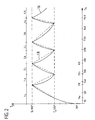
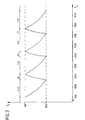
- Fig. 2 shows a diagram in which the temperature T is plotted against the time t.
- the temperature T shown in the diagram refers to the temperature of the air in the compressor.
- a solid graph 16 and a dashed graph 18 can be seen.
- the graph 16 shows the relationship between the temperature T and the time t, as calculated according to a temperature model in the control unit 6 of the air suspension system (s. Fig.1 ).
- Graph 18 again shows how between the lower temperature limit Tu and the upper temperature limit To is the average temperature gradient for the graph 16 (ie, that the graphs 16 and 18 have common points at the lower and upper temperature limits, respectively).
- the temperature gradient is used for the running times and the switch-off times of the compressor, since the temperature profile between the temperature limit values is not relevant for the subsequent considerations.
- this temperature has a value of about 25 ° C, ie ambient temperature.
- the ambient temperature is indicated by the compressor 4 if it has not been switched on for a longer time of 5 to 15 minutes after the last shutdown. In this case, the air in the compression space of the compressor has cooled down to the ambient temperature.
- the compressor 4 is controlled by the control unit 6 and the first run of the compressor 4 begins.
- the compressor 4 remains on until the temperature of the air in the compressor calculated in the control unit 6 reaches the upper limit To (in the example chosen 180 ° C).
- the compressor is then turned off by the control unit 6 and the first run of the compressor is completed after about 210 sec.
- the air cools in the compressor.
- the control unit 6 is calculated how this happens.
- Tu which in the example chosen is 100 ° C.
- the compressor 4 is ready for the second run. This is the case after about 330 seconds.
- the compressor 4 can then be switched on again by the control unit 6, so that it can be further filled the air springs 10.
- the compressor 4 remains turned on in the second run until the calculated in the control unit 6 temperature of the air in the compressor reaches the upper limit To of 180 ° C. Then the compressor 4 is turned off again.
- the positive temperature gradient for the first run is smaller than the positive temperature gradient for the subsequent runs of the compressor.
- the temperature of the piston in the compressor approximately corresponds to the temperature of the air in the compressor, the actually calculated.
- the first runtime can therefore be particularly long.
- the ambient temperature of the compressor can be taken into account, which is passed on from the control unit 12 to the control unit 6.
- the temperature model used to calculate the temperature of the air in the compressor can then be determined as a function of the ambient temperature. This is done in such a way that the lower the measured ambient temperature is, the lower the positive temperature gradient for the first run.
- the temperature of the air in the compressor decreases.
- the decrease in the temperature in the compressor is calculated in the control unit 6 and the compressor can be turned on again when the calculated temperature reaches the lower temperature limit Tu.
- the plastic piston of the compressor does not cool down as well as the air, it must be assumed at the beginning of the second running time (ie at time t2u) that the temperature of the plastic piston is above Tu, ie above 100 ° C. How high the temperature of the plastic piston is exactly can not be estimated.
- the second duration of the compressor 4 is inventively chosen shorter than the first term of the compressor 4 to take into account the elevated temperature of the plastic piston of the compressor at the beginning of the second term.
- the positive temperature gradient PTG2 is greater than the positive temperature gradient PTG1 of the first transit time.
- the running times of the compressor are increasingly shortened to account for the increasing decoupling between heating or cooling of the air in the compressor and heating or cooling of the plastic piston of the compressor.
- the negative temperature gradient NTG 1.A for the first turn-off time of the compressor is smaller than the negative temperature gradients for the subsequent turn-off times.
- the negative temperature gradients gradually increase for the n first turn-off times, which also results from the above relationship.
- the gradual increase of the negative temperature gradients in the off-times of the compressor means that the off-times of the compressor are gradually increased. This lengthening of the turn-off times accommodates the development that the plastic piston of the compressor takes an increasingly long time to cool to the temperature of the air in the compressor.
Landscapes
- Engineering & Computer Science (AREA)
- Mechanical Engineering (AREA)
- Vehicle Body Suspensions (AREA)
- Control Of Positive-Displacement Pumps (AREA)
- Vibration Prevention Devices (AREA)
- Fluid-Damping Devices (AREA)
Claims (11)
- Procédé de commande d'un compresseur (4) qui peut être branché et débranché en fonction des besoins dans une installation de suspension pneumatique d'un véhicule automobile et par lequel les amortisseurs pneumatiques (10) de l'installation de suspension pneumatique peuvent être remplis, tandis que dans le procédé:- la température de l'air comprimé dans le compresseur (4) est calculée en fonction d'un modèle de température,- le compresseur branché (4) reste branché au plus tard jusqu'à ce que la température calculée de l'air comprimé soit montée jusqu'à une première valeur limite et- le compresseur débranché (4) ne peut être rebranché qu'au plus tôt lorsque la température calculée de l'air dans le compresseur (4) est descendue à une deuxième valeur limite,caractérisé en ce que- dans le procédé, une première course du compresseur (4) est définie par le fait que l'air présent dans le compresseur (4) présente au début de la première course la température de l'environnement du compresseur (4) et en ce que- pour le calcul de la température de l'air dans le compresseur (4), on utilise pour les courses suivantes du compresseur (4) un autre modèle de température que pour la première course du compresseur (4).
- Procédé selon la revendication 1, caractérisé en ce que pour la première course du compresseur (4), le gradient positif de température, c'est-à-dire la valeur de l'augmentation de température en fonction du temps, entre la deuxième valeur limite et la première valeur limite est plus petit que pour les courses suivantes du compresseur (4).
- procédé selon la revendication 2, caractérisé en ce que le gradient positif de température augmente par pas sur les n premières courses du compresseur (4).
- Procédé selon la revendication 2, caractérisé en ce que le gradient positif de température est maintenu constant à partir de la course n + 1 du compresseur (4).
- Procédé selon l'une des revendications 1 à 4, caractérisé en ce que le procédé part de l'hypothèse que l'air présent dans le compresseur (4) présente la température de l'environnement du compresseur (4) lorsque le compresseur débranché (4) n'a pas été rebranché pendant une certaine durée.
- Procédé selon l'une des revendications 2 à 5, caractérisé en ce que la température ambiante est mesurée à l'aide d'un appareil de commande du véhicule automobile et en ce que le modèle de température de la première course du compresseur (4) est défini en fonction de la température ambiante.
- Procédé selon l'une des revendications 1 à 6, caractérisé en ce que pour le calcul de la température de l'air dans le compresseur (4), on se base pour le premier instant de débranchement du compresseur (4) sur un autre modèle de température que pour les instants suivants de débranchement du compresseur (4).
- Procédé selon la revendication 7, caractérisé en ce que pour le premier instant de débranchement du compresseur (4), le gradient négatif de température, c'est-à-dire la valeur de la diminution de température en fonction du temps entre la première valeur limite et la deuxième valeur limite, est sélectionné à une valeur plus petite que pour les instants suivants de débranchement du compresseur (4).
- Procédé selon la revendication 8, caractérisé en ce que le gradient négatif de température augmente par pas sur les n premiers instants de débranchement du compresseur (4).
- Procédé selon la revendication 2, caractérisé en ce que le gradient négatif de température est maintenu constant à partir de l'instant de débranchement n + 1 du compresseur (4).
- Installation de suspension pneumatique pour véhicule automobile, dotée d'un compresseur (4) par lequel les amortisseurs pneumatiques de l'installation de suspension pneumatique peuvent être remplis, caractérisée en ce que l'installation de suspension pneumatique présente un appareil de commande qui permet d'exécuter le procédé selon l'une des revendications 1 à 10.
Applications Claiming Priority (2)
| Application Number | Priority Date | Filing Date | Title |
|---|---|---|---|
| DE102006039538.7A DE102006039538B4 (de) | 2006-08-23 | 2006-08-23 | Verfahren zur Steuerung eines bedarfsabhängig ein- und ausschaltbaren Kompressors einer Luftfederungsanlage |
| PCT/EP2007/056295 WO2008022825A1 (fr) | 2006-08-23 | 2007-06-25 | Procédé de commande d'un compresseur de suspension pneumatique pouvant être activé et désactivé en fonction des besoins |
Publications (2)
| Publication Number | Publication Date |
|---|---|
| EP2057024A1 EP2057024A1 (fr) | 2009-05-13 |
| EP2057024B1 true EP2057024B1 (fr) | 2010-02-24 |
Family
ID=38353095
Family Applications (1)
| Application Number | Title | Priority Date | Filing Date |
|---|---|---|---|
| EP07765591A Not-in-force EP2057024B1 (fr) | 2006-08-23 | 2007-06-25 | Procede de commande d'un compresseur de suspension pneumatique pouvant etre active et desactive en fonction des besoins |
Country Status (6)
| Country | Link |
|---|---|
| EP (1) | EP2057024B1 (fr) |
| JP (1) | JP5055366B2 (fr) |
| KR (1) | KR101412197B1 (fr) |
| AT (1) | ATE458630T1 (fr) |
| DE (2) | DE102006039538B4 (fr) |
| WO (1) | WO2008022825A1 (fr) |
Families Citing this family (4)
| Publication number | Priority date | Publication date | Assignee | Title |
|---|---|---|---|---|
| DE102009003686A1 (de) | 2009-03-27 | 2010-09-30 | Continental Aktiengesellschaft | Kraftfahrzeug mit einer Niveauregelanlage |
| DE102010017654A1 (de) | 2010-06-30 | 2012-01-05 | Continental Teves Ag & Co. Ohg | Höhenabhängige Kompressorsteuerung |
| DE102010036744A1 (de) | 2010-07-29 | 2012-02-02 | Continental Teves Ag & Co. Ohg | Verfahren zur Steuerung eines Kompressors |
| DE102019214858A1 (de) | 2019-09-27 | 2021-04-01 | Continental Teves Ag & Co. Ohg | Verfahren zur Lebensdauerkontrolle eines Kompressors für eine Druckluftanlage |
Family Cites Families (12)
| Publication number | Priority date | Publication date | Assignee | Title |
|---|---|---|---|---|
| JPS61106408U (fr) * | 1984-12-19 | 1986-07-05 | ||
| JPH03118719A (ja) * | 1989-09-29 | 1991-05-21 | Seikosha Co Ltd | モータの制御方法 |
| JPH06320928A (ja) * | 1993-05-10 | 1994-11-22 | Aisin Seiki Co Ltd | 車高調整装置用コンプレッサの制御装置 |
| DE4333591A1 (de) * | 1993-10-01 | 1995-04-06 | Bayerische Motoren Werke Ag | Steuergerät zum bedarfsgerechten Ein- und Ausschalten des elektrischen Antriebsmotors, insbesondere eines Luftkompressors |
| DE19621946C2 (de) * | 1996-05-31 | 2002-05-29 | Daimler Chrysler Ag | Luftfederung |
| DE19810764B4 (de) * | 1998-03-12 | 2005-05-25 | Continental Aktiengesellschaft | Bedarfsabhängig ein- und ausschaltbarer Kompressor und Verfahren zur Steuerung bzw Regelung eines solchen Kompressors |
| DE19812234C2 (de) * | 1998-03-20 | 2002-07-18 | Daimler Chrysler Ag | Luftfederungsanlage für Fahrzeuge |
| DE10330121A1 (de) * | 2003-07-04 | 2005-02-03 | Continental Aktiengesellschaft | Verfahren zur Steuerung des Betriebs eines Kompressors |
| DE10331600B4 (de) * | 2003-07-12 | 2012-03-15 | Continental Teves Ag & Co. Ohg | Verfahren zur Niveauregelung für pneumatische Niveauregelanlagen in Kraftfahrzeugen |
| DE10354491A1 (de) * | 2003-11-21 | 2005-06-09 | Continental Aktiengesellschaft | Verfahren zur Steuerung eines Kompressors zur Druckmittelförderung in einer Niveauregelanlage eines Kraftfahrzeuges |
| JP4702078B2 (ja) * | 2006-02-03 | 2011-06-15 | トヨタ自動車株式会社 | エアサスペンション装置 |
| JP4826360B2 (ja) * | 2006-06-27 | 2011-11-30 | トヨタ自動車株式会社 | 車高調整装置及び車高調整プログラム |
-
2006
- 2006-08-23 DE DE102006039538.7A patent/DE102006039538B4/de not_active Expired - Fee Related
-
2007
- 2007-06-25 AT AT07765591T patent/ATE458630T1/de active
- 2007-06-25 KR KR1020087029944A patent/KR101412197B1/ko not_active Expired - Fee Related
- 2007-06-25 DE DE502007002954T patent/DE502007002954D1/de active Active
- 2007-06-25 WO PCT/EP2007/056295 patent/WO2008022825A1/fr not_active Ceased
- 2007-06-25 JP JP2009524975A patent/JP5055366B2/ja not_active Expired - Fee Related
- 2007-06-25 EP EP07765591A patent/EP2057024B1/fr not_active Not-in-force
Also Published As
| Publication number | Publication date |
|---|---|
| DE102006039538B4 (de) | 2014-12-24 |
| JP2010501392A (ja) | 2010-01-21 |
| KR20090042762A (ko) | 2009-04-30 |
| ATE458630T1 (de) | 2010-03-15 |
| JP5055366B2 (ja) | 2012-10-24 |
| WO2008022825A1 (fr) | 2008-02-28 |
| DE102006039538A1 (de) | 2008-03-06 |
| DE502007002954D1 (de) | 2010-04-08 |
| EP2057024A1 (fr) | 2009-05-13 |
| KR101412197B1 (ko) | 2014-06-25 |
Similar Documents
| Publication | Publication Date | Title |
|---|---|---|
| EP1253321A2 (fr) | Système de régulation de compresseur | |
| DE10360122B4 (de) | Verfahren zur Drucküberwachung von Kraftfahrzeugreifen | |
| DE102019219880A1 (de) | Verfahren zum Betreiben einer Luftfederungsanlage und eine Luftfederungsanlage | |
| DE10331600B4 (de) | Verfahren zur Niveauregelung für pneumatische Niveauregelanlagen in Kraftfahrzeugen | |
| DE102012108027A1 (de) | Ölpumpenregelungssystem für ein Fahrzeug und Betriebsverfahren davon | |
| DE102014202173A1 (de) | Verfahren zum Lösen einer automatischen Parkbremse | |
| DE19621946C2 (de) | Luftfederung | |
| EP2057024B1 (fr) | Procede de commande d'un compresseur de suspension pneumatique pouvant etre active et desactive en fonction des besoins | |
| DE102010016131B4 (de) | Verfahren zur Regelung eines Kompressors | |
| DE102011076785A1 (de) | Steuervorrichtung für eine elektrische Vakuumpumpe und Verfahren zum Ansteuern einer elektrischen Vakuumpumpe | |
| DE102019214858A1 (de) | Verfahren zur Lebensdauerkontrolle eines Kompressors für eine Druckluftanlage | |
| DE10255656A1 (de) | Steuereinheit für einen kupplungslosen verstellbaren Kompressor | |
| DE102004043059A1 (de) | Verfahren und Schutzschaltung zur Temperaturüberwachung von kältemittelgekühlten Elektromotoren | |
| DE102016123782B4 (de) | Verfahren zum Steuern eines Klimakompressors | |
| DE102007012702A1 (de) | Verfahren zur Regelung eines Generators und Generatorregler | |
| DE102005045687A1 (de) | Verfahren zur Temperaturkompensation von Druckmesswerten in einem Reifendruckkontrollsystem | |
| EP1380485A1 (fr) | Procédé pour limitation controllée de freinage d'un ralentisseur en fonction de la température | |
| DE102007045370A1 (de) | Verfahren zur Bestimmung einer Leistungsfähigkeit eines Kühlsystems | |
| DE102005023276A1 (de) | Verfahren zur Bestimmung der Initialwerte für ein Temperaturschätzverfahren von Komponenten eines Kraftfahrzeugs | |
| DE102023205114A1 (de) | Verfahren zum Bestimmen zumindest eines Betriebsparameters eines sich im Betrieb befindlichen Brennstoffzellensystems für ein Kraftfahrzeug, Brennstoffzellensystem, Computerprogrammprodukt sowie computerlesbares Medium | |
| DE102007062313B4 (de) | Verfahren, Vorrichtung und Verwendung der Vorrichtung zum Steuern eines Kompressors | |
| DE10354491A1 (de) | Verfahren zur Steuerung eines Kompressors zur Druckmittelförderung in einer Niveauregelanlage eines Kraftfahrzeuges | |
| DE102019002381A1 (de) | Verfahren zur Bestimmung eines Ölwechselzeitpunktes von Motoröl beim Betrieb einer Verbrennungskraftmaschine | |
| DE102021207800A1 (de) | Verfahren, Recheneinheit und Computerprogramm zum Einstellen eines Betriebsparameters in einer technischen Anlage | |
| DE102021206455A1 (de) | Verfahren zum Einleiten eines Abtauprozesses eines Wärmeübertragers einer Wärmepumpe eines Kraftfahrzeuges |
Legal Events
| Date | Code | Title | Description |
|---|---|---|---|
| PUAI | Public reference made under article 153(3) epc to a published international application that has entered the european phase |
Free format text: ORIGINAL CODE: 0009012 |
|
| 17P | Request for examination filed |
Effective date: 20090323 |
|
| AK | Designated contracting states |
Kind code of ref document: A1 Designated state(s): AT BE BG CH CY CZ DE DK EE ES FI FR GB GR HU IE IS IT LI LT LU LV MC MT NL PL PT RO SE SI SK TR |
|
| AX | Request for extension of the european patent |
Extension state: AL BA HR MK RS |
|
| GRAP | Despatch of communication of intention to grant a patent |
Free format text: ORIGINAL CODE: EPIDOSNIGR1 |
|
| GRAS | Grant fee paid |
Free format text: ORIGINAL CODE: EPIDOSNIGR3 |
|
| GRAA | (expected) grant |
Free format text: ORIGINAL CODE: 0009210 |
|
| AK | Designated contracting states |
Kind code of ref document: B1 Designated state(s): AT BE BG CH CY CZ DE DK EE ES FI FR GB GR HU IE IS IT LI LT LU LV MC MT NL PL PT RO SE SI SK TR |
|
| REG | Reference to a national code |
Ref country code: GB Ref legal event code: FG4D Free format text: NOT ENGLISH |
|
| REG | Reference to a national code |
Ref country code: CH Ref legal event code: EP |
|
| REG | Reference to a national code |
Ref country code: IE Ref legal event code: FG4D Free format text: LANGUAGE OF EP DOCUMENT: GERMAN |
|
| REF | Corresponds to: |
Ref document number: 502007002954 Country of ref document: DE Date of ref document: 20100408 Kind code of ref document: P |
|
| REG | Reference to a national code |
Ref country code: NL Ref legal event code: VDEP Effective date: 20100224 |
|
| LTIE | Lt: invalidation of european patent or patent extension |
Effective date: 20100224 |
|
| PG25 | Lapsed in a contracting state [announced via postgrant information from national office to epo] |
Ref country code: PT Free format text: LAPSE BECAUSE OF FAILURE TO SUBMIT A TRANSLATION OF THE DESCRIPTION OR TO PAY THE FEE WITHIN THE PRESCRIBED TIME-LIMIT Effective date: 20100625 Ref country code: LT Free format text: LAPSE BECAUSE OF FAILURE TO SUBMIT A TRANSLATION OF THE DESCRIPTION OR TO PAY THE FEE WITHIN THE PRESCRIBED TIME-LIMIT Effective date: 20100224 Ref country code: IS Free format text: LAPSE BECAUSE OF FAILURE TO SUBMIT A TRANSLATION OF THE DESCRIPTION OR TO PAY THE FEE WITHIN THE PRESCRIBED TIME-LIMIT Effective date: 20100624 |
|
| PG25 | Lapsed in a contracting state [announced via postgrant information from national office to epo] |
Ref country code: SI Free format text: LAPSE BECAUSE OF FAILURE TO SUBMIT A TRANSLATION OF THE DESCRIPTION OR TO PAY THE FEE WITHIN THE PRESCRIBED TIME-LIMIT Effective date: 20100224 Ref country code: PL Free format text: LAPSE BECAUSE OF FAILURE TO SUBMIT A TRANSLATION OF THE DESCRIPTION OR TO PAY THE FEE WITHIN THE PRESCRIBED TIME-LIMIT Effective date: 20100224 Ref country code: LV Free format text: LAPSE BECAUSE OF FAILURE TO SUBMIT A TRANSLATION OF THE DESCRIPTION OR TO PAY THE FEE WITHIN THE PRESCRIBED TIME-LIMIT Effective date: 20100224 Ref country code: FI Free format text: LAPSE BECAUSE OF FAILURE TO SUBMIT A TRANSLATION OF THE DESCRIPTION OR TO PAY THE FEE WITHIN THE PRESCRIBED TIME-LIMIT Effective date: 20100224 |
|
| REG | Reference to a national code |
Ref country code: IE Ref legal event code: FD4D |
|
| PG25 | Lapsed in a contracting state [announced via postgrant information from national office to epo] |
Ref country code: IE Free format text: LAPSE BECAUSE OF FAILURE TO SUBMIT A TRANSLATION OF THE DESCRIPTION OR TO PAY THE FEE WITHIN THE PRESCRIBED TIME-LIMIT Effective date: 20100224 Ref country code: RO Free format text: LAPSE BECAUSE OF FAILURE TO SUBMIT A TRANSLATION OF THE DESCRIPTION OR TO PAY THE FEE WITHIN THE PRESCRIBED TIME-LIMIT Effective date: 20100224 Ref country code: SE Free format text: LAPSE BECAUSE OF FAILURE TO SUBMIT A TRANSLATION OF THE DESCRIPTION OR TO PAY THE FEE WITHIN THE PRESCRIBED TIME-LIMIT Effective date: 20100224 Ref country code: CY Free format text: LAPSE BECAUSE OF FAILURE TO SUBMIT A TRANSLATION OF THE DESCRIPTION OR TO PAY THE FEE WITHIN THE PRESCRIBED TIME-LIMIT Effective date: 20100224 Ref country code: EE Free format text: LAPSE BECAUSE OF FAILURE TO SUBMIT A TRANSLATION OF THE DESCRIPTION OR TO PAY THE FEE WITHIN THE PRESCRIBED TIME-LIMIT Effective date: 20100224 Ref country code: ES Free format text: LAPSE BECAUSE OF FAILURE TO SUBMIT A TRANSLATION OF THE DESCRIPTION OR TO PAY THE FEE WITHIN THE PRESCRIBED TIME-LIMIT Effective date: 20100604 Ref country code: GR Free format text: LAPSE BECAUSE OF FAILURE TO SUBMIT A TRANSLATION OF THE DESCRIPTION OR TO PAY THE FEE WITHIN THE PRESCRIBED TIME-LIMIT Effective date: 20100525 Ref country code: NL Free format text: LAPSE BECAUSE OF FAILURE TO SUBMIT A TRANSLATION OF THE DESCRIPTION OR TO PAY THE FEE WITHIN THE PRESCRIBED TIME-LIMIT Effective date: 20100224 |
|
| PG25 | Lapsed in a contracting state [announced via postgrant information from national office to epo] |
Ref country code: BG Free format text: LAPSE BECAUSE OF FAILURE TO SUBMIT A TRANSLATION OF THE DESCRIPTION OR TO PAY THE FEE WITHIN THE PRESCRIBED TIME-LIMIT Effective date: 20100524 Ref country code: SK Free format text: LAPSE BECAUSE OF FAILURE TO SUBMIT A TRANSLATION OF THE DESCRIPTION OR TO PAY THE FEE WITHIN THE PRESCRIBED TIME-LIMIT Effective date: 20100224 Ref country code: CZ Free format text: LAPSE BECAUSE OF FAILURE TO SUBMIT A TRANSLATION OF THE DESCRIPTION OR TO PAY THE FEE WITHIN THE PRESCRIBED TIME-LIMIT Effective date: 20100224 |
|
| BERE | Be: lapsed |
Owner name: CONTINENTAL A.G. Effective date: 20100630 |
|
| PLBE | No opposition filed within time limit |
Free format text: ORIGINAL CODE: 0009261 |
|
| STAA | Information on the status of an ep patent application or granted ep patent |
Free format text: STATUS: NO OPPOSITION FILED WITHIN TIME LIMIT |
|
| PG25 | Lapsed in a contracting state [announced via postgrant information from national office to epo] |
Ref country code: MC Free format text: LAPSE BECAUSE OF NON-PAYMENT OF DUE FEES Effective date: 20100630 Ref country code: DK Free format text: LAPSE BECAUSE OF FAILURE TO SUBMIT A TRANSLATION OF THE DESCRIPTION OR TO PAY THE FEE WITHIN THE PRESCRIBED TIME-LIMIT Effective date: 20100224 |
|
| 26N | No opposition filed |
Effective date: 20101125 |
|
| PG25 | Lapsed in a contracting state [announced via postgrant information from national office to epo] |
Ref country code: IT Free format text: LAPSE BECAUSE OF FAILURE TO SUBMIT A TRANSLATION OF THE DESCRIPTION OR TO PAY THE FEE WITHIN THE PRESCRIBED TIME-LIMIT Effective date: 20100224 |
|
| PG25 | Lapsed in a contracting state [announced via postgrant information from national office to epo] |
Ref country code: MT Free format text: LAPSE BECAUSE OF FAILURE TO SUBMIT A TRANSLATION OF THE DESCRIPTION OR TO PAY THE FEE WITHIN THE PRESCRIBED TIME-LIMIT Effective date: 20100224 |
|
| REG | Reference to a national code |
Ref country code: DE Ref legal event code: R081 Ref document number: 502007002954 Country of ref document: DE Owner name: CONTINENTAL TEVES AG & CO. OHG, DE Free format text: FORMER OWNER: CONTINENTAL AKTIENGESELLSCHAFT, 30165 HANNOVER, DE Effective date: 20110414 |
|
| PG25 | Lapsed in a contracting state [announced via postgrant information from national office to epo] |
Ref country code: BE Free format text: LAPSE BECAUSE OF NON-PAYMENT OF DUE FEES Effective date: 20100630 |
|
| REG | Reference to a national code |
Ref country code: CH Ref legal event code: PL |
|
| GBPC | Gb: european patent ceased through non-payment of renewal fee |
Effective date: 20110625 |
|
| PG25 | Lapsed in a contracting state [announced via postgrant information from national office to epo] |
Ref country code: CH Free format text: LAPSE BECAUSE OF NON-PAYMENT OF DUE FEES Effective date: 20110630 Ref country code: LI Free format text: LAPSE BECAUSE OF NON-PAYMENT OF DUE FEES Effective date: 20110630 |
|
| PG25 | Lapsed in a contracting state [announced via postgrant information from national office to epo] |
Ref country code: GB Free format text: LAPSE BECAUSE OF NON-PAYMENT OF DUE FEES Effective date: 20110625 |
|
| PG25 | Lapsed in a contracting state [announced via postgrant information from national office to epo] |
Ref country code: LU Free format text: LAPSE BECAUSE OF NON-PAYMENT OF DUE FEES Effective date: 20100625 Ref country code: HU Free format text: LAPSE BECAUSE OF FAILURE TO SUBMIT A TRANSLATION OF THE DESCRIPTION OR TO PAY THE FEE WITHIN THE PRESCRIBED TIME-LIMIT Effective date: 20100825 |
|
| PG25 | Lapsed in a contracting state [announced via postgrant information from national office to epo] |
Ref country code: TR Free format text: LAPSE BECAUSE OF FAILURE TO SUBMIT A TRANSLATION OF THE DESCRIPTION OR TO PAY THE FEE WITHIN THE PRESCRIBED TIME-LIMIT Effective date: 20100224 |
|
| REG | Reference to a national code |
Ref country code: AT Ref legal event code: MM01 Ref document number: 458630 Country of ref document: AT Kind code of ref document: T Effective date: 20120625 |
|
| PG25 | Lapsed in a contracting state [announced via postgrant information from national office to epo] |
Ref country code: AT Free format text: LAPSE BECAUSE OF NON-PAYMENT OF DUE FEES Effective date: 20120625 |
|
| REG | Reference to a national code |
Ref country code: FR Ref legal event code: PLFP Year of fee payment: 9 |
|
| REG | Reference to a national code |
Ref country code: FR Ref legal event code: PLFP Year of fee payment: 10 |
|
| REG | Reference to a national code |
Ref country code: FR Ref legal event code: PLFP Year of fee payment: 11 |
|
| REG | Reference to a national code |
Ref country code: FR Ref legal event code: PLFP Year of fee payment: 12 |
|
| PGFP | Annual fee paid to national office [announced via postgrant information from national office to epo] |
Ref country code: FR Payment date: 20210622 Year of fee payment: 15 |
|
| REG | Reference to a national code |
Ref country code: DE Ref legal event code: R081 Ref document number: 502007002954 Country of ref document: DE Owner name: CONTINENTAL AUTOMOTIVE TECHNOLOGIES GMBH, DE Free format text: FORMER OWNER: CONTINENTAL TEVES AG & CO. OHG, 60488 FRANKFURT, DE |
|
| PGFP | Annual fee paid to national office [announced via postgrant information from national office to epo] |
Ref country code: DE Payment date: 20220702 Year of fee payment: 16 |
|
| PG25 | Lapsed in a contracting state [announced via postgrant information from national office to epo] |
Ref country code: FR Free format text: LAPSE BECAUSE OF NON-PAYMENT OF DUE FEES Effective date: 20220630 |
|
| REG | Reference to a national code |
Ref country code: DE Ref legal event code: R119 Ref document number: 502007002954 Country of ref document: DE |
|
| PG25 | Lapsed in a contracting state [announced via postgrant information from national office to epo] |
Ref country code: DE Free format text: LAPSE BECAUSE OF NON-PAYMENT OF DUE FEES Effective date: 20240103 |