EP2057472B1 - Procédé de détection et/ou de mesure de la concentration d'hepcidine dans un échantillon - Google Patents
Procédé de détection et/ou de mesure de la concentration d'hepcidine dans un échantillon Download PDFInfo
- Publication number
- EP2057472B1 EP2057472B1 EP07810654.9A EP07810654A EP2057472B1 EP 2057472 B1 EP2057472 B1 EP 2057472B1 EP 07810654 A EP07810654 A EP 07810654A EP 2057472 B1 EP2057472 B1 EP 2057472B1
- Authority
- EP
- European Patent Office
- Prior art keywords
- hepcidin
- sample
- seq
- iron
- human
- Prior art date
- Legal status (The legal status is an assumption and is not a legal conclusion. Google has not performed a legal analysis and makes no representation as to the accuracy of the status listed.)
- Not-in-force
Links
- 108060003558 hepcidin Proteins 0.000 title claims description 222
- 102000018511 hepcidin Human genes 0.000 title claims description 219
- XJOTXKZIRSHZQV-RXHOOSIZSA-N (3S)-3-amino-4-[[(2S,3R)-1-[[(2S)-1-[[(2S)-1-[(2S)-2-[[(2S,3S)-1-[[(1R,6R,12R,17R,20S,23S,26R,31R,34R,39R,42S,45S,48S,51S,59S)-51-(4-aminobutyl)-31-[[(2S)-6-amino-1-[[(1S,2R)-1-carboxy-2-hydroxypropyl]amino]-1-oxohexan-2-yl]carbamoyl]-20-benzyl-23-[(2S)-butan-2-yl]-45-(3-carbamimidamidopropyl)-48-(hydroxymethyl)-42-(1H-imidazol-4-ylmethyl)-59-(2-methylsulfanylethyl)-7,10,19,22,25,33,40,43,46,49,52,54,57,60,63,64-hexadecaoxo-3,4,14,15,28,29,36,37-octathia-8,11,18,21,24,32,41,44,47,50,53,55,58,61,62,65-hexadecazatetracyclo[32.19.8.26,17.212,39]pentahexacontan-26-yl]amino]-3-methyl-1-oxopentan-2-yl]carbamoyl]pyrrolidin-1-yl]-1-oxo-3-phenylpropan-2-yl]amino]-3-(1H-imidazol-4-yl)-1-oxopropan-2-yl]amino]-3-hydroxy-1-oxobutan-2-yl]amino]-4-oxobutanoic acid Chemical compound CC[C@H](C)[C@H](NC(=O)[C@@H]1CCCN1C(=O)[C@H](Cc1ccccc1)NC(=O)[C@H](Cc1cnc[nH]1)NC(=O)[C@@H](NC(=O)[C@@H](N)CC(O)=O)[C@@H](C)O)C(=O)N[C@H]1CSSC[C@H](NC(=O)[C@@H]2CSSC[C@@H]3NC(=O)[C@@H]4CSSC[C@H](NC(=O)[C@H](Cc5ccccc5)NC(=O)[C@@H](NC1=O)[C@@H](C)CC)C(=O)N[C@@H](CSSC[C@H](NC(=O)[C@H](CCCCN)NC(=O)[C@H](CO)NC(=O)[C@H](CCCNC(N)=N)NC(=O)[C@H](Cc1cnc[nH]1)NC3=O)C(=O)NCC(=O)N[C@@H](CCSC)C(=O)N2)C(=O)NCC(=O)N4)C(=O)N[C@@H](CCCCN)C(=O)N[C@@H]([C@@H](C)O)C(O)=O XJOTXKZIRSHZQV-RXHOOSIZSA-N 0.000 title claims description 218
- 229940066919 hepcidin Drugs 0.000 title claims description 215
- 238000000034 method Methods 0.000 title claims description 60
- OKKJLVBELUTLKV-UHFFFAOYSA-N Methanol Chemical compound OC OKKJLVBELUTLKV-UHFFFAOYSA-N 0.000 claims description 87
- 210000002966 serum Anatomy 0.000 claims description 40
- 241000282414 Homo sapiens Species 0.000 claims description 37
- XLYOFNOQVPJJNP-UHFFFAOYSA-N water Substances O XLYOFNOQVPJJNP-UHFFFAOYSA-N 0.000 claims description 35
- 238000002414 normal-phase solid-phase extraction Methods 0.000 claims description 33
- 239000002904 solvent Substances 0.000 claims description 27
- 208000007502 anemia Diseases 0.000 claims description 24
- 239000012071 phase Substances 0.000 claims description 16
- 206010040047 Sepsis Diseases 0.000 claims description 13
- 239000000203 mixture Substances 0.000 claims description 12
- 238000004885 tandem mass spectrometry Methods 0.000 claims description 11
- 206010061218 Inflammation Diseases 0.000 claims description 10
- 206010028980 Neoplasm Diseases 0.000 claims description 10
- 150000001413 amino acids Chemical group 0.000 claims description 10
- 208000037265 diseases, disorders, signs and symptoms Diseases 0.000 claims description 10
- 238000000132 electrospray ionisation Methods 0.000 claims description 10
- 230000004054 inflammatory process Effects 0.000 claims description 10
- OXCMYAYHXIHQOA-UHFFFAOYSA-N potassium;[2-butyl-5-chloro-3-[[4-[2-(1,2,4-triaza-3-azanidacyclopenta-1,4-dien-5-yl)phenyl]phenyl]methyl]imidazol-4-yl]methanol Chemical compound [K+].CCCCC1=NC(Cl)=C(CO)N1CC1=CC=C(C=2C(=CC=CC=2)C2=N[N-]N=N2)C=C1 OXCMYAYHXIHQOA-UHFFFAOYSA-N 0.000 claims description 10
- 238000002560 therapeutic procedure Methods 0.000 claims description 10
- 230000000913 erythropoietic effect Effects 0.000 claims description 9
- 230000002757 inflammatory effect Effects 0.000 claims description 9
- 125000000539 amino acid group Chemical group 0.000 claims description 8
- 238000001819 mass spectrum Methods 0.000 claims description 8
- 230000002441 reversible effect Effects 0.000 claims description 7
- 208000015710 Iron-Deficiency Anemia Diseases 0.000 claims description 6
- 230000004968 inflammatory condition Effects 0.000 claims description 6
- 206010048998 Acute phase reaction Diseases 0.000 claims description 5
- 102000003951 Erythropoietin Human genes 0.000 claims description 5
- 108090000394 Erythropoietin Proteins 0.000 claims description 5
- 208000018565 Hemochromatosis Diseases 0.000 claims description 5
- 241000124008 Mammalia Species 0.000 claims description 5
- 201000011510 cancer Diseases 0.000 claims description 5
- 229940105423 erythropoietin Drugs 0.000 claims description 5
- 238000004949 mass spectrometry Methods 0.000 claims description 5
- 206010007559 Cardiac failure congestive Diseases 0.000 claims description 4
- 206010019280 Heart failures Diseases 0.000 claims description 4
- 208000020832 chronic kidney disease Diseases 0.000 claims description 4
- 208000035475 disorder Diseases 0.000 claims description 4
- 208000024827 Alzheimer disease Diseases 0.000 claims description 3
- 200000000007 Arterial disease Diseases 0.000 claims description 3
- 206010003210 Arteriosclerosis Diseases 0.000 claims description 3
- 206010016880 Folate deficiency Diseases 0.000 claims description 3
- 206010029400 Nicotinic acid deficiency Diseases 0.000 claims description 3
- 208000018737 Parkinson disease Diseases 0.000 claims description 3
- 208000002141 Pellagra Diseases 0.000 claims description 3
- 206010047115 Vasculitis Diseases 0.000 claims description 3
- 208000003056 Vitamin B6 deficiency Diseases 0.000 claims description 3
- 208000011775 arteriosclerosis disease Diseases 0.000 claims description 3
- 208000029078 coronary artery disease Diseases 0.000 claims description 3
- 206010012601 diabetes mellitus Diseases 0.000 claims description 3
- 201000000388 hemochromatosis type 4 Diseases 0.000 claims description 3
- 208000034737 hemoglobinopathy Diseases 0.000 claims description 3
- 208000018337 inherited hemoglobinopathy Diseases 0.000 claims description 3
- 230000002093 peripheral effect Effects 0.000 claims description 3
- 206010039073 rheumatoid arthritis Diseases 0.000 claims description 3
- 201000000596 systemic lupus erythematosus Diseases 0.000 claims description 3
- 208000002670 vitamin B12 deficiency Diseases 0.000 claims description 3
- 208000001647 Renal Insufficiency Diseases 0.000 claims description 2
- 230000001684 chronic effect Effects 0.000 claims description 2
- 208000017169 kidney disease Diseases 0.000 claims description 2
- 201000006370 kidney failure Diseases 0.000 claims description 2
- XEEYBQQBJWHFJM-UHFFFAOYSA-N Iron Chemical compound [Fe] XEEYBQQBJWHFJM-UHFFFAOYSA-N 0.000 description 110
- 239000000523 sample Substances 0.000 description 57
- 229910052742 iron Inorganic materials 0.000 description 55
- 150000002500 ions Chemical class 0.000 description 39
- 238000004458 analytical method Methods 0.000 description 21
- 238000005259 measurement Methods 0.000 description 20
- 101001021253 Homo sapiens Hepcidin Proteins 0.000 description 19
- 108090000765 processed proteins & peptides Proteins 0.000 description 17
- 238000000926 separation method Methods 0.000 description 15
- 239000002243 precursor Substances 0.000 description 14
- 238000001514 detection method Methods 0.000 description 13
- 230000010438 iron metabolism Effects 0.000 description 13
- 238000004811 liquid chromatography Methods 0.000 description 13
- 238000005406 washing Methods 0.000 description 13
- QTBSBXVTEAMEQO-UHFFFAOYSA-N Acetic acid Chemical compound CC(O)=O QTBSBXVTEAMEQO-UHFFFAOYSA-N 0.000 description 12
- 238000011002 quantification Methods 0.000 description 12
- 239000000243 solution Substances 0.000 description 12
- 239000012472 biological sample Substances 0.000 description 10
- 239000012156 elution solvent Substances 0.000 description 10
- 238000011534 incubation Methods 0.000 description 10
- BDAGIHXWWSANSR-UHFFFAOYSA-N methanoic acid Natural products OC=O BDAGIHXWWSANSR-UHFFFAOYSA-N 0.000 description 10
- 238000011282 treatment Methods 0.000 description 10
- WEVYAHXRMPXWCK-UHFFFAOYSA-N Acetonitrile Chemical compound CC#N WEVYAHXRMPXWCK-UHFFFAOYSA-N 0.000 description 9
- 238000010828 elution Methods 0.000 description 9
- 239000007789 gas Substances 0.000 description 9
- 238000004128 high performance liquid chromatography Methods 0.000 description 9
- 239000002594 sorbent Substances 0.000 description 9
- 102400001150 Hepcidin-20 Human genes 0.000 description 8
- 101800003308 Hepcidin-20 Proteins 0.000 description 8
- 230000013632 homeostatic process Effects 0.000 description 8
- 210000002700 urine Anatomy 0.000 description 8
- VHUUQVKOLVNVRT-UHFFFAOYSA-N Ammonium hydroxide Chemical compound [NH4+].[OH-] VHUUQVKOLVNVRT-UHFFFAOYSA-N 0.000 description 7
- 239000000908 ammonium hydroxide Substances 0.000 description 7
- 239000000872 buffer Substances 0.000 description 7
- -1 hepcidin ions Chemical class 0.000 description 7
- 108090000623 proteins and genes Proteins 0.000 description 7
- 238000004587 chromatography analysis Methods 0.000 description 6
- 150000001875 compounds Chemical class 0.000 description 6
- 230000000875 corresponding effect Effects 0.000 description 6
- 201000010099 disease Diseases 0.000 description 6
- 239000012634 fragment Substances 0.000 description 6
- 238000012544 monitoring process Methods 0.000 description 6
- 239000000047 product Substances 0.000 description 6
- 235000018102 proteins Nutrition 0.000 description 6
- 102000004169 proteins and genes Human genes 0.000 description 6
- 239000003643 water by type Substances 0.000 description 6
- OSWFIVFLDKOXQC-UHFFFAOYSA-N 4-(3-methoxyphenyl)aniline Chemical compound COC1=CC=CC(C=2C=CC(N)=CC=2)=C1 OSWFIVFLDKOXQC-UHFFFAOYSA-N 0.000 description 5
- 102000008857 Ferritin Human genes 0.000 description 5
- 108050000784 Ferritin Proteins 0.000 description 5
- 238000008416 Ferritin Methods 0.000 description 5
- 238000003556 assay Methods 0.000 description 5
- 230000008901 benefit Effects 0.000 description 5
- 210000004369 blood Anatomy 0.000 description 5
- 239000008280 blood Substances 0.000 description 5
- 210000004027 cell Anatomy 0.000 description 5
- 238000003066 decision tree Methods 0.000 description 5
- 239000007857 degradation product Substances 0.000 description 5
- 238000003745 diagnosis Methods 0.000 description 5
- 238000002474 experimental method Methods 0.000 description 5
- 235000019253 formic acid Nutrition 0.000 description 5
- 238000002955 isolation Methods 0.000 description 5
- 238000004895 liquid chromatography mass spectrometry Methods 0.000 description 5
- 238000001294 liquid chromatography-tandem mass spectrometry Methods 0.000 description 5
- 239000000463 material Substances 0.000 description 5
- 239000011159 matrix material Substances 0.000 description 5
- 210000002381 plasma Anatomy 0.000 description 5
- 102000004196 processed proteins & peptides Human genes 0.000 description 5
- 239000011550 stock solution Substances 0.000 description 5
- 108010074051 C-Reactive Protein Proteins 0.000 description 4
- 102100032752 C-reactive protein Human genes 0.000 description 4
- 102000004889 Interleukin-6 Human genes 0.000 description 4
- 108090001005 Interleukin-6 Proteins 0.000 description 4
- 238000010521 absorption reaction Methods 0.000 description 4
- 235000001014 amino acid Nutrition 0.000 description 4
- 239000012491 analyte Substances 0.000 description 4
- 238000011088 calibration curve Methods 0.000 description 4
- 230000003750 conditioning effect Effects 0.000 description 4
- 238000003795 desorption Methods 0.000 description 4
- 230000000694 effects Effects 0.000 description 4
- 238000013467 fragmentation Methods 0.000 description 4
- 238000006062 fragmentation reaction Methods 0.000 description 4
- 230000014509 gene expression Effects 0.000 description 4
- 230000002452 interceptive effect Effects 0.000 description 4
- 229940100601 interleukin-6 Drugs 0.000 description 4
- 230000014759 maintenance of location Effects 0.000 description 4
- 238000004519 manufacturing process Methods 0.000 description 4
- 239000003960 organic solvent Substances 0.000 description 4
- 229920001184 polypeptide Polymers 0.000 description 4
- 238000003908 quality control method Methods 0.000 description 4
- 238000004445 quantitative analysis Methods 0.000 description 4
- 238000001228 spectrum Methods 0.000 description 4
- 239000000126 substance Substances 0.000 description 4
- 238000012360 testing method Methods 0.000 description 4
- 230000007704 transition Effects 0.000 description 4
- LRHRHAWNXCGABU-UHFFFAOYSA-N 2-(cyclopentylazaniumyl)acetate Chemical compound OC(=O)CNC1CCCC1 LRHRHAWNXCGABU-UHFFFAOYSA-N 0.000 description 3
- 241000282472 Canis lupus familiaris Species 0.000 description 3
- 108010019673 Darbepoetin alfa Proteins 0.000 description 3
- 102000001554 Hemoglobins Human genes 0.000 description 3
- 108010054147 Hemoglobins Proteins 0.000 description 3
- 102400001151 Hepcidin-25 Human genes 0.000 description 3
- 101800003310 Hepcidin-25 Proteins 0.000 description 3
- PMMYEEVYMWASQN-DMTCNVIQSA-N Hydroxyproline Chemical compound O[C@H]1CN[C@H](C(O)=O)C1 PMMYEEVYMWASQN-DMTCNVIQSA-N 0.000 description 3
- 241000699666 Mus <mouse, genus> Species 0.000 description 3
- 102000004338 Transferrin Human genes 0.000 description 3
- 108090000901 Transferrin Proteins 0.000 description 3
- 230000015572 biosynthetic process Effects 0.000 description 3
- 230000015556 catabolic process Effects 0.000 description 3
- 229960005029 darbepoetin alfa Drugs 0.000 description 3
- 238000005516 engineering process Methods 0.000 description 3
- 208000015181 infectious disease Diseases 0.000 description 3
- 238000001802 infusion Methods 0.000 description 3
- 238000011068 loading method Methods 0.000 description 3
- 238000005457 optimization Methods 0.000 description 3
- 230000001105 regulatory effect Effects 0.000 description 3
- 102220013334 rs368367224 Human genes 0.000 description 3
- 230000001629 suppression Effects 0.000 description 3
- 239000012581 transferrin Substances 0.000 description 3
- 239000012224 working solution Substances 0.000 description 3
- BWKMGYQJPOAASG-SECBINFHSA-N D-1,2,3,4-Tetrahydroisoquinoline-3-carboxylic acid Chemical compound C1=CC=C2CN[C@@H](C(=O)O)CC2=C1 BWKMGYQJPOAASG-SECBINFHSA-N 0.000 description 2
- 108010074604 Epoetin Alfa Proteins 0.000 description 2
- 208000009386 Experimental Arthritis Diseases 0.000 description 2
- 230000005526 G1 to G0 transition Effects 0.000 description 2
- 101000987586 Homo sapiens Eosinophil peroxidase Proteins 0.000 description 2
- 101000920686 Homo sapiens Erythropoietin Proteins 0.000 description 2
- 101500027592 Homo sapiens Transferrin receptor protein 1, serum form Proteins 0.000 description 2
- 208000016286 Iron metabolism disease Diseases 0.000 description 2
- FFEARJCKVFRZRR-BYPYZUCNSA-N L-methionine Chemical compound CSCC[C@H](N)C(O)=O FFEARJCKVFRZRR-BYPYZUCNSA-N 0.000 description 2
- KDXKERNSBIXSRK-UHFFFAOYSA-N Lysine Natural products NCCCCC(N)C(O)=O KDXKERNSBIXSRK-UHFFFAOYSA-N 0.000 description 2
- 241000699660 Mus musculus Species 0.000 description 2
- 241000699670 Mus sp. Species 0.000 description 2
- 241000283973 Oryctolagus cuniculus Species 0.000 description 2
- 208000001132 Osteoporosis Diseases 0.000 description 2
- 206010033645 Pancreatitis Diseases 0.000 description 2
- 208000031306 Rare hereditary hemochromatosis Diseases 0.000 description 2
- 241000700159 Rattus Species 0.000 description 2
- 241000700157 Rattus norvegicus Species 0.000 description 2
- 108091006976 SLC40A1 Proteins 0.000 description 2
- 102400000838 Transferrin receptor protein 1, serum form Human genes 0.000 description 2
- 108060008682 Tumor Necrosis Factor Proteins 0.000 description 2
- 102000000852 Tumor Necrosis Factor-alpha Human genes 0.000 description 2
- 125000000218 acetic acid group Chemical group C(C)(=O)* 0.000 description 2
- 230000003213 activating effect Effects 0.000 description 2
- 230000000975 bioactive effect Effects 0.000 description 2
- 238000011953 bioanalysis Methods 0.000 description 2
- 230000033228 biological regulation Effects 0.000 description 2
- 210000001124 body fluid Anatomy 0.000 description 2
- 238000004364 calculation method Methods 0.000 description 2
- 125000000837 carbohydrate group Chemical group 0.000 description 2
- 238000000451 chemical ionisation Methods 0.000 description 2
- 230000001143 conditioned effect Effects 0.000 description 2
- 239000000356 contaminant Substances 0.000 description 2
- 238000006731 degradation reaction Methods 0.000 description 2
- 230000001419 dependent effect Effects 0.000 description 2
- 238000011161 development Methods 0.000 description 2
- 230000018109 developmental process Effects 0.000 description 2
- 238000007865 diluting Methods 0.000 description 2
- 238000010494 dissociation reaction Methods 0.000 description 2
- 230000005593 dissociations Effects 0.000 description 2
- PMMYEEVYMWASQN-UHFFFAOYSA-N dl-hydroxyproline Natural products OC1C[NH2+]C(C([O-])=O)C1 PMMYEEVYMWASQN-UHFFFAOYSA-N 0.000 description 2
- 238000002101 electrospray ionisation tandem mass spectrometry Methods 0.000 description 2
- 201000000523 end stage renal failure Diseases 0.000 description 2
- 239000002158 endotoxin Substances 0.000 description 2
- 229960003388 epoetin alfa Drugs 0.000 description 2
- 108010002601 epoetin beta Proteins 0.000 description 2
- 229960004579 epoetin beta Drugs 0.000 description 2
- 230000010437 erythropoiesis Effects 0.000 description 2
- 238000000605 extraction Methods 0.000 description 2
- 238000001914 filtration Methods 0.000 description 2
- 238000004817 gas chromatography Methods 0.000 description 2
- 238000005534 hematocrit Methods 0.000 description 2
- 208000006454 hepatitis Diseases 0.000 description 2
- 231100000283 hepatitis Toxicity 0.000 description 2
- 102000044890 human EPO Human genes 0.000 description 2
- 230000006698 induction Effects 0.000 description 2
- 238000002347 injection Methods 0.000 description 2
- 239000007924 injection Substances 0.000 description 2
- 230000015788 innate immune response Effects 0.000 description 2
- 238000000752 ionisation method Methods 0.000 description 2
- 229920006008 lipopolysaccharide Polymers 0.000 description 2
- 210000004185 liver Anatomy 0.000 description 2
- 230000007246 mechanism Effects 0.000 description 2
- 230000004060 metabolic process Effects 0.000 description 2
- 238000002360 preparation method Methods 0.000 description 2
- 230000008569 process Effects 0.000 description 2
- 238000000746 purification Methods 0.000 description 2
- 230000004044 response Effects 0.000 description 2
- 230000035945 sensitivity Effects 0.000 description 2
- 150000003384 small molecules Chemical class 0.000 description 2
- 239000007974 sodium acetate buffer Substances 0.000 description 2
- 241000894007 species Species 0.000 description 2
- 238000012421 spiking Methods 0.000 description 2
- 239000007921 spray Substances 0.000 description 2
- 239000012086 standard solution Substances 0.000 description 2
- 230000004936 stimulating effect Effects 0.000 description 2
- 238000003860 storage Methods 0.000 description 2
- PMMYEEVYMWASQN-IMJSIDKUSA-N trans-4-Hydroxy-L-proline Natural products O[C@@H]1CN[C@H](C(O)=O)C1 PMMYEEVYMWASQN-IMJSIDKUSA-N 0.000 description 2
- 230000003827 upregulation Effects 0.000 description 2
- 229920003169 water-soluble polymer Polymers 0.000 description 2
- MZOFCQQQCNRIBI-VMXHOPILSA-N (3s)-4-[[(2s)-1-[[(2s)-1-[[(1s)-1-carboxy-2-hydroxyethyl]amino]-4-methyl-1-oxopentan-2-yl]amino]-5-(diaminomethylideneamino)-1-oxopentan-2-yl]amino]-3-[[2-[[(2s)-2,6-diaminohexanoyl]amino]acetyl]amino]-4-oxobutanoic acid Chemical compound OC[C@@H](C(O)=O)NC(=O)[C@H](CC(C)C)NC(=O)[C@H](CCCN=C(N)N)NC(=O)[C@H](CC(O)=O)NC(=O)CNC(=O)[C@@H](N)CCCCN MZOFCQQQCNRIBI-VMXHOPILSA-N 0.000 description 1
- FWMNVWWHGCHHJJ-SKKKGAJSSA-N 4-amino-1-[(2r)-6-amino-2-[[(2r)-2-[[(2r)-2-[[(2r)-2-amino-3-phenylpropanoyl]amino]-3-phenylpropanoyl]amino]-4-methylpentanoyl]amino]hexanoyl]piperidine-4-carboxylic acid Chemical compound C([C@H](C(=O)N[C@H](CC(C)C)C(=O)N[C@H](CCCCN)C(=O)N1CCC(N)(CC1)C(O)=O)NC(=O)[C@H](N)CC=1C=CC=CC=1)C1=CC=CC=C1 FWMNVWWHGCHHJJ-SKKKGAJSSA-N 0.000 description 1
- QTBSBXVTEAMEQO-UHFFFAOYSA-M Acetate Chemical compound CC([O-])=O QTBSBXVTEAMEQO-UHFFFAOYSA-M 0.000 description 1
- 206010001258 Adenoviral infections Diseases 0.000 description 1
- 239000004254 Ammonium phosphate Substances 0.000 description 1
- 239000004475 Arginine Substances 0.000 description 1
- 208000035143 Bacterial infection Diseases 0.000 description 1
- 241000282465 Canis Species 0.000 description 1
- 241000282552 Chlorocebus aethiops Species 0.000 description 1
- 241000867610 Chlorocebus pygerythrus Species 0.000 description 1
- KRKNYBCHXYNGOX-UHFFFAOYSA-K Citrate Chemical compound [O-]C(=O)CC(O)(CC([O-])=O)C([O-])=O KRKNYBCHXYNGOX-UHFFFAOYSA-K 0.000 description 1
- 230000006820 DNA synthesis Effects 0.000 description 1
- 102000000541 Defensins Human genes 0.000 description 1
- 108010002069 Defensins Proteins 0.000 description 1
- 238000002965 ELISA Methods 0.000 description 1
- 102000004190 Enzymes Human genes 0.000 description 1
- 108090000790 Enzymes Proteins 0.000 description 1
- BDAGIHXWWSANSR-UHFFFAOYSA-M Formate Chemical compound [O-]C=O BDAGIHXWWSANSR-UHFFFAOYSA-M 0.000 description 1
- 206010017533 Fungal infection Diseases 0.000 description 1
- DHMQDGOQFOQNFH-UHFFFAOYSA-N Glycine Natural products NCC(O)=O DHMQDGOQFOQNFH-UHFFFAOYSA-N 0.000 description 1
- 239000004471 Glycine Substances 0.000 description 1
- 208000031856 Haemosiderosis Diseases 0.000 description 1
- 102000000213 Hemojuvelin Human genes 0.000 description 1
- 108050008605 Hemojuvelin Proteins 0.000 description 1
- 102000004125 Interleukin-1alpha Human genes 0.000 description 1
- 108010082786 Interleukin-1alpha Proteins 0.000 description 1
- 206010022971 Iron Deficiencies Diseases 0.000 description 1
- 206010065973 Iron Overload Diseases 0.000 description 1
- 102000008133 Iron-Binding Proteins Human genes 0.000 description 1
- 108010035210 Iron-Binding Proteins Proteins 0.000 description 1
- ONIBWKKTOPOVIA-BYPYZUCNSA-N L-Proline Chemical compound OC(=O)[C@@H]1CCCN1 ONIBWKKTOPOVIA-BYPYZUCNSA-N 0.000 description 1
- COLNVLDHVKWLRT-QMMMGPOBSA-N L-phenylalanine Chemical compound OC(=O)[C@@H](N)CC1=CC=CC=C1 COLNVLDHVKWLRT-QMMMGPOBSA-N 0.000 description 1
- 239000004472 Lysine Substances 0.000 description 1
- 208000029725 Metabolic bone disease Diseases 0.000 description 1
- 241001465754 Metazoa Species 0.000 description 1
- 241001529936 Murinae Species 0.000 description 1
- 101001021252 Mus musculus Hepcidin Proteins 0.000 description 1
- 208000031888 Mycoses Diseases 0.000 description 1
- 206010049088 Osteopenia Diseases 0.000 description 1
- 229910019142 PO4 Inorganic materials 0.000 description 1
- 239000002202 Polyethylene glycol Substances 0.000 description 1
- ONIBWKKTOPOVIA-UHFFFAOYSA-N Proline Natural products OC(=O)C1CCCN1 ONIBWKKTOPOVIA-UHFFFAOYSA-N 0.000 description 1
- 206010060862 Prostate cancer Diseases 0.000 description 1
- 208000000236 Prostatic Neoplasms Diseases 0.000 description 1
- 208000025844 Prostatic disease Diseases 0.000 description 1
- 108010076504 Protein Sorting Signals Proteins 0.000 description 1
- 101001021296 Rattus norvegicus Hepcidin Proteins 0.000 description 1
- MTCFGRXMJLQNBG-UHFFFAOYSA-N Serine Natural products OCC(N)C(O)=O MTCFGRXMJLQNBG-UHFFFAOYSA-N 0.000 description 1
- 241000779819 Syncarpia glomulifera Species 0.000 description 1
- 241000251539 Vertebrata <Metazoa> Species 0.000 description 1
- 208000036142 Viral infection Diseases 0.000 description 1
- 229930003779 Vitamin B12 Natural products 0.000 description 1
- 230000002378 acidificating effect Effects 0.000 description 1
- 230000009471 action Effects 0.000 description 1
- 230000004658 acute-phase response Effects 0.000 description 1
- 239000002671 adjuvant Substances 0.000 description 1
- 230000032683 aging Effects 0.000 description 1
- 230000004075 alteration Effects 0.000 description 1
- 239000001099 ammonium carbonate Substances 0.000 description 1
- 235000011162 ammonium carbonates Nutrition 0.000 description 1
- 235000011114 ammonium hydroxide Nutrition 0.000 description 1
- 235000019289 ammonium phosphates Nutrition 0.000 description 1
- 230000000845 anti-microbial effect Effects 0.000 description 1
- 239000003125 aqueous solvent Substances 0.000 description 1
- ODKSFYDXXFIFQN-UHFFFAOYSA-N arginine Natural products OC(=O)C(N)CCCNC(N)=N ODKSFYDXXFIFQN-UHFFFAOYSA-N 0.000 description 1
- 125000004429 atom Chemical group 0.000 description 1
- 230000001580 bacterial effect Effects 0.000 description 1
- 208000022362 bacterial infectious disease Diseases 0.000 description 1
- 238000004166 bioassay Methods 0.000 description 1
- 230000004071 biological effect Effects 0.000 description 1
- 244000078885 bloodborne pathogen Species 0.000 description 1
- 210000000988 bone and bone Anatomy 0.000 description 1
- 150000004649 carbonic acid derivatives Chemical class 0.000 description 1
- 238000005341 cation exchange Methods 0.000 description 1
- 150000001768 cations Chemical class 0.000 description 1
- 230000019522 cellular metabolic process Effects 0.000 description 1
- 230000009920 chelation Effects 0.000 description 1
- 238000006243 chemical reaction Methods 0.000 description 1
- 208000037976 chronic inflammation Diseases 0.000 description 1
- 208000037893 chronic inflammatory disorder Diseases 0.000 description 1
- AGVAZMGAQJOSFJ-WZHZPDAFSA-M cobalt(2+);[(2r,3s,4r,5s)-5-(5,6-dimethylbenzimidazol-1-yl)-4-hydroxy-2-(hydroxymethyl)oxolan-3-yl] [(2r)-1-[3-[(1r,2r,3r,4z,7s,9z,12s,13s,14z,17s,18s,19r)-2,13,18-tris(2-amino-2-oxoethyl)-7,12,17-tris(3-amino-3-oxopropyl)-3,5,8,8,13,15,18,19-octamethyl-2 Chemical compound [Co+2].N#[C-].[N-]([C@@H]1[C@H](CC(N)=O)[C@@]2(C)CCC(=O)NC[C@@H](C)OP(O)(=O)O[C@H]3[C@H]([C@H](O[C@@H]3CO)N3C4=CC(C)=C(C)C=C4N=C3)O)\C2=C(C)/C([C@H](C\2(C)C)CCC(N)=O)=N/C/2=C\C([C@H]([C@@]/2(CC(N)=O)C)CCC(N)=O)=N\C\2=C(C)/C2=N[C@]1(C)[C@@](C)(CC(N)=O)[C@@H]2CCC(N)=O AGVAZMGAQJOSFJ-WZHZPDAFSA-M 0.000 description 1
- 238000001360 collision-induced dissociation Methods 0.000 description 1
- 239000002299 complementary DNA Substances 0.000 description 1
- 239000012141 concentrate Substances 0.000 description 1
- 239000000470 constituent Substances 0.000 description 1
- 230000001276 controlling effect Effects 0.000 description 1
- 229920001577 copolymer Polymers 0.000 description 1
- 230000002596 correlated effect Effects 0.000 description 1
- 235000018417 cysteine Nutrition 0.000 description 1
- XUJNEKJLAYXESH-UHFFFAOYSA-N cysteine Natural products SCC(N)C(O)=O XUJNEKJLAYXESH-UHFFFAOYSA-N 0.000 description 1
- 230000007812 deficiency Effects 0.000 description 1
- 230000002950 deficient Effects 0.000 description 1
- GUJOJGAPFQRJSV-UHFFFAOYSA-N dialuminum;dioxosilane;oxygen(2-);hydrate Chemical compound O.[O-2].[O-2].[O-2].[Al+3].[Al+3].O=[Si]=O.O=[Si]=O.O=[Si]=O.O=[Si]=O GUJOJGAPFQRJSV-UHFFFAOYSA-N 0.000 description 1
- 238000009826 distribution Methods 0.000 description 1
- 210000001198 duodenum Anatomy 0.000 description 1
- 230000005684 electric field Effects 0.000 description 1
- 238000001962 electrophoresis Methods 0.000 description 1
- 208000028208 end stage renal disease Diseases 0.000 description 1
- 230000007515 enzymatic degradation Effects 0.000 description 1
- 108010030868 epoetin zeta Proteins 0.000 description 1
- 229950005185 epoetin zeta Drugs 0.000 description 1
- 210000003743 erythrocyte Anatomy 0.000 description 1
- 238000011156 evaluation Methods 0.000 description 1
- 230000001747 exhibiting effect Effects 0.000 description 1
- 238000010265 fast atom bombardment Methods 0.000 description 1
- 230000008713 feedback mechanism Effects 0.000 description 1
- 239000000706 filtrate Substances 0.000 description 1
- 239000012530 fluid Substances 0.000 description 1
- 238000011010 flushing procedure Methods 0.000 description 1
- 229940014144 folate Drugs 0.000 description 1
- OVBPIULPVIDEAO-LBPRGKRZSA-N folic acid Chemical compound C=1N=C2NC(N)=NC(=O)C2=NC=1CNC1=CC=C(C(=O)N[C@@H](CCC(O)=O)C(O)=O)C=C1 OVBPIULPVIDEAO-LBPRGKRZSA-N 0.000 description 1
- 235000019152 folic acid Nutrition 0.000 description 1
- 239000011724 folic acid Substances 0.000 description 1
- 238000005194 fractionation Methods 0.000 description 1
- 230000006870 function Effects 0.000 description 1
- 230000002538 fungal effect Effects 0.000 description 1
- 210000001035 gastrointestinal tract Anatomy 0.000 description 1
- 125000003630 glycyl group Chemical group [H]N([H])C([H])([H])C(*)=O 0.000 description 1
- 230000012010 growth Effects 0.000 description 1
- 230000002489 hematologic effect Effects 0.000 description 1
- 210000003494 hepatocyte Anatomy 0.000 description 1
- HNDVDQJCIGZPNO-UHFFFAOYSA-N histidine Natural products OC(=O)C(N)CC1=CN=CN1 HNDVDQJCIGZPNO-UHFFFAOYSA-N 0.000 description 1
- 238000003384 imaging method Methods 0.000 description 1
- 230000006872 improvement Effects 0.000 description 1
- 238000005462 in vivo assay Methods 0.000 description 1
- 239000011261 inert gas Substances 0.000 description 1
- 210000005007 innate immune system Anatomy 0.000 description 1
- 230000003993 interaction Effects 0.000 description 1
- 210000000936 intestine Anatomy 0.000 description 1
- 238000005040 ion trap Methods 0.000 description 1
- 210000001630 jejunum Anatomy 0.000 description 1
- 238000002386 leaching Methods 0.000 description 1
- 239000007788 liquid Substances 0.000 description 1
- 229940049920 malate Drugs 0.000 description 1
- BJEPYKJPYRNKOW-UHFFFAOYSA-N malic acid Chemical compound OC(=O)C(O)CC(O)=O BJEPYKJPYRNKOW-UHFFFAOYSA-N 0.000 description 1
- 239000003550 marker Substances 0.000 description 1
- 239000002207 metabolite Substances 0.000 description 1
- 229930182817 methionine Natural products 0.000 description 1
- 238000002156 mixing Methods 0.000 description 1
- 239000003607 modifier Substances 0.000 description 1
- 230000009456 molecular mechanism Effects 0.000 description 1
- 230000000921 morphogenic effect Effects 0.000 description 1
- 235000016709 nutrition Nutrition 0.000 description 1
- 230000035764 nutrition Effects 0.000 description 1
- 125000004430 oxygen atom Chemical group O* 0.000 description 1
- 239000006174 pH buffer Substances 0.000 description 1
- 238000012856 packing Methods 0.000 description 1
- 239000013610 patient sample Substances 0.000 description 1
- COLNVLDHVKWLRT-UHFFFAOYSA-N phenylalanine Natural products OC(=O)C(N)CC1=CC=CC=C1 COLNVLDHVKWLRT-UHFFFAOYSA-N 0.000 description 1
- NBIIXXVUZAFLBC-UHFFFAOYSA-K phosphate Chemical compound [O-]P([O-])([O-])=O NBIIXXVUZAFLBC-UHFFFAOYSA-K 0.000 description 1
- 239000001739 pinus spp. Substances 0.000 description 1
- 230000000581 polycythemic effect Effects 0.000 description 1
- 229920001223 polyethylene glycol Polymers 0.000 description 1
- 229920000642 polymer Polymers 0.000 description 1
- 238000013139 quantization Methods 0.000 description 1
- 230000000717 retained effect Effects 0.000 description 1
- 238000004007 reversed phase HPLC Methods 0.000 description 1
- 238000001044 reversed-phase solid-phase extraction Methods 0.000 description 1
- 150000003839 salts Chemical class 0.000 description 1
- 230000028327 secretion Effects 0.000 description 1
- 238000012163 sequencing technique Methods 0.000 description 1
- 125000003607 serino group Chemical group [H]N([H])[C@]([H])(C(=O)[*])C(O[H])([H])[H] 0.000 description 1
- 230000011664 signaling Effects 0.000 description 1
- 238000005507 spraying Methods 0.000 description 1
- 238000010561 standard procedure Methods 0.000 description 1
- KDYFGRWQOYBRFD-UHFFFAOYSA-L succinate(2-) Chemical compound [O-]C(=O)CCC([O-])=O KDYFGRWQOYBRFD-UHFFFAOYSA-L 0.000 description 1
- 239000004094 surface-active agent Substances 0.000 description 1
- 230000008685 targeting Effects 0.000 description 1
- 230000001225 therapeutic effect Effects 0.000 description 1
- 210000001519 tissue Anatomy 0.000 description 1
- 239000011573 trace mineral Substances 0.000 description 1
- 235000013619 trace mineral Nutrition 0.000 description 1
- 238000012546 transfer Methods 0.000 description 1
- 238000011269 treatment regimen Methods 0.000 description 1
- 229940036248 turpentine Drugs 0.000 description 1
- 230000002485 urinary effect Effects 0.000 description 1
- 230000009385 viral infection Effects 0.000 description 1
- 230000004304 visual acuity Effects 0.000 description 1
- 235000019163 vitamin B12 Nutrition 0.000 description 1
- 239000011715 vitamin B12 Substances 0.000 description 1
Images






Classifications
-
- G—PHYSICS
- G01—MEASURING; TESTING
- G01N—INVESTIGATING OR ANALYSING MATERIALS BY DETERMINING THEIR CHEMICAL OR PHYSICAL PROPERTIES
- G01N33/00—Investigating or analysing materials by specific methods not covered by groups G01N1/00 - G01N31/00
- G01N33/48—Biological material, e.g. blood, urine; Haemocytometers
- G01N33/50—Chemical analysis of biological material, e.g. blood, urine; Testing involving biospecific ligand binding methods; Immunological testing
- G01N33/74—Chemical analysis of biological material, e.g. blood, urine; Testing involving biospecific ligand binding methods; Immunological testing involving hormones or other non-cytokine intercellular protein regulatory factors such as growth factors, including receptors to hormones and growth factors
-
- A—HUMAN NECESSITIES
- A61—MEDICAL OR VETERINARY SCIENCE; HYGIENE
- A61P—SPECIFIC THERAPEUTIC ACTIVITY OF CHEMICAL COMPOUNDS OR MEDICINAL PREPARATIONS
- A61P7/00—Drugs for disorders of the blood or the extracellular fluid
- A61P7/06—Antianaemics
Definitions
- the methods disclosed herein relate to isolation of hepcidin, detection of hepcidin, and measurements of hepcidin levels in biological samples.
- the methods disclosed herein allow for efficient isolation of hepcidin from a sample and for quantitative measurement ofhepcidin levels in the sample.
- Iron is an essential trace element required for growth and development of all living organisms. For example, iron is indispensable for DNA synthesis and in a broad range of metabolic processes. Iron metabolism disturbances have been implicated in a number of significant mammalian diseases, including, but not limited to, iron deficiency anemia, hemosiderosis, and the iron overload disease hemochromatosis ( Andrews, Ann. Rev. Genomics Hum. Genet. 1:75 (2000 ); Philpott, Hepatology 35:993 (2002 ); Beutler et al., Drug-Metab. Dispos. 29:495 (2001 )).
- Iron content in mammals is regulated by controlling absorption, predominantly in the duodenum and upper jejunum, which is the only mechanism by which iron stores are physiologically controlled ( Philpott, Hepatology 35:993 (2002 )). Following absorption, iron is bound to circulating transferrin and delivered to tissues throughout the body. The liver is the major site of iron storage.
- the molecular mechanism by which the intestine responds to alterations in body iron requirements have only recently been elucidated.
- hepcidin a recently identified mammalian polypeptide ( Krause et al., FEBS Lett. 480:147 (2000 ); Park et al., J. Biol. Chem.
- Hepcidin was isolated as a 25 amino acid (aa) polypeptide in human plasma and urine, exhibiting antimicrobial activity ( Krause et al., FEBS Lett. 480:147 (2000 ); Park et al., J. Biol. Chem. 276:7806 (2001 )).
- a hepcidin cDNA encoding an 83 aa precursor in mice and an 84 aa precursor in rat and human, including a putative 24 aa signal peptide, were subsequently identified searching for liver specific genes that were regulated by iron ( Pigeon et al., J. Biol. Chem. 276:7811 (2001 )).
- hepcidin The association of hepcidin with innate immune response derives from the observation of a robust upregulation of hepcidin gene expression after inflammatory stimuli, such as infections, which induce the acute phase response of the innate immune systems of vertebrates.
- inflammatory stimuli such as infections
- hepcidin gene expression was shown to be upregulated by lipopolysaccharide (LPS), turpentine, Freund's complete adjuvant, and adenoviral infections.
- hepcidin gene expression responded to the addition of interleukin-6 (IL-6), but not to interleukin-1 ⁇ (IL-1a) or tumor necrosis factor- ⁇ (TNF- ⁇ ).
- IL-6 interleukin-6
- IL-1a interleukin-1 ⁇
- TNF- ⁇ tumor necrosis factor- ⁇
- hepcidin The central role of hepcidin and its key functions in iron regulation and in the innate immune response to infection illustrates the need for methods and informative diagnostic tools for the measurement of mature, bioactive forms of hepcidin in biological samples and for the regulation of hepcidin production.
- hepcidin secretion into urine is increased between 10 and 100-fold relative to normal levels in conditions of inflammation ( Park et al., J. Biol. Chem. 276(11):7806 (2001 )).
- RNA analysis which may not correlate to circulating hepcidin levels.
- no method is available to accurately measure levels of hepcidin in serum or plasma. The urinary method described above does not shed light on absolute circulating hepcidin levels.
- a method for quantifying hepcidin in a biological sample using mass spectrometry and a method of purifying and/or separating hepcidin from a biological sample are disclosed.
- one aspect of the invention is to provide a method of determining a concentration of hepcidin in a sample comprising (1) separating the hepcidin from the sample prior to subjecting the hepcidin to mass spectrometry using solid phase extraction; (2) subjecting the hepcidin and an internal standard to tandem mass spectrometry to produce a mass spectrum having a hepcidin signal and an internal standard signal; (3) measuring an intensity of the hepcidin signal and the internal standard signal; and (4) correlating the hepcidin signal intensity and the internal standard signal intensity to a standard curve of hepcidin concentrations to determine the concentration of the hepcidin in the sample, wherein the internal standard comprises isotopically labelled SEQ ID No. 4.
- the hepcidin is a prepropeptide form of hepcidin having about 84 amino acid residues. In other examples, the hepcidin is a propeptide form of hepcidin having about 61 amino acid residues. In still other examples, the hepcidin is a processed form of hepcidin having about 20 to about 25 amino acid residues. In some embodiments, the hepcidin is a peptide having a sequence of SEQ. ID NO: 3; SEQ. ID NO: 4; SEQ. ID NO: 13; SEQ. ID NO: 14; SEQ. ID NO: 15, or a combination thereof.
- the hepcidin is ionized during MS analysis, and the resulting charge of hepcidin can be +1, +2, +3, +4, or a mixture thereof.
- the MS analysis can be through liquid chromatography-MS and/or tandem MS.
- the hepcidin is further separated from the sample prior to MS analysis. Separation can occur through chromatography, such as liquid chromatography and solid phase extraction.
- a method of determining the presence or concentration of hepcidin in a sample comprising separating the hepcidin from a sample; subjecting the hepcidin to MS to produce a mass spectrum having a signal corresponding to hepcidin; measuring the intensity of the hepcidin signal; and correlating the signal intensity in the mass spectrum to a standard curve of hepcidin concentrations to obtain a quantity of hepcidin in the sample is taught herein.
- the separating of hepcidin from the sample is through chromatography, such as liquid chromatography, solid phase extraction, or a combination thereof.
- the hepcidin is a preproteptide form of hepcidin having about 84 amino acid residues.
- the hepcidin is a propeptide form of hepcidin having about 61 amino acid residues. In still other examples, the hepcidin is a processed form ofhepcidin having about 20 to about 25 amino acid residues. The hepcidin is ionized during MS analysis, and the resulting charge of hepcidin can be +1, +2, +3, +4, or a mixture thereof.
- a method of separating hepcidin from a sample comprising introducing the sample to a reverse phase column and treating the reverse phase column with an eluting solvent, wherein the resulting eluant comprises hepcidin is also taught herein.
- the eluting solvent comprises methanol, water, or a mixture thereof.
- the reverse phase column comprises a C18, C8, or C3 reverse phase column or polar modified C18, C8, or C3 reverse phase column. Such columns are available from a variety of commercial sources, including Waters, Agilent, and the like.
- the sample can be from a mammal, and in specific embodiments, the mammal is human.
- the human is healthy, while in other embodiments, the human exhibits disrupted iron homeostasis.
- the iron homeostasis is below normal, while in other embodiments, the iron homeostasis is above normal.
- iron indices or hematological criteria of the subject are outside normal ranges as indicated in Table I, below.
- a human patient suffers from anemia and is hypo-responsive to erythropoietin therapy or an erythropoietic therapy.
- the erythropoietic therapy comprises an erythropoietin analog such as darbepoetin alfa.
- the human may suffer from or be suspected of suffering from an inflammatory or inflammatory-related condition.
- inflammatory or inflammatory-related condition include sepsis, anemia of inflammation, anemia of cancer, chronic inflammatory anemia, congestive heart failure, end stage renal disease, iron deficiency anemia, ferroportin disease, hemochromatosis, diabetes, rheumatoid arthritis, arteriosclerosis, tumors, vasculitis, systemic lupus erythematosus, and arthopathy.
- the human may suffer from or is suspected of suffering from a non-inflammatory condition.
- Such non-inflammatory conditions include vitamin B6 deficiency, vitamin B12 deficiency, folate deficiency, pellagra, funicular myelosis, pseudoencephalitis, Parkinson's disease, Alzheimer's disease, coronary heart disease and peripheral occlusive arterial disease.
- the human may suffer from or is suspected of suffering from an acute phase reaction.
- Such acute phase reactions include sepsis, pancreatitis, hepatitis and rheumatoid diseases.
- the hepcidin concentration is about 10 ng/mL or less, about 5 ng/mL or less, about 2 ng/mL or less, or about 1 ng/mL or less. In other examples the hepcidin concentration is about 25 ng/mL or greater or 30 ng/mL or greater.
- the patient's anemia therapy is modified and/or reassessed based upon monitoring of his or her hepcidin concentration.
- kits comprising two or more items useful for practicing a method of the invention, packaged together is taught herein.
- the kit comprises a plurality of hepcidin containers, each container having a known and different amount of hepcidin, a standard container, and instructions for preparing a standard curve of hepcidin concentrations to standard and for assaying a test sample for hepcidin concentration.
- the standard comprises an isotopically labeled hepcidin, while in other cases, the standard is a peptide which has similar retention as hepcidin and a mass about ⁇ 750 Da of that of hepcidin.
- the hepcidin comprises SEQ. ID NO: 4.
- the hepcidin comprises SEQ. ID NO: 4 and the standard comprises isotopically labeled SEQ. ID NO: 4.
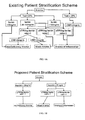
- FIG. 1A shows a decision tree of iron indices and disease states for assessment of a patient, absent a measurement of hepcidin levels
- FIG. 1B shows a decision tree for assessment of a patient using measurement of hepcidin levels
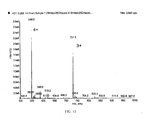
- FIG. 2 shows that the formation of hepcidin ions in a mass spectrum is predominantly charge state +4 (m/z 698.5) and +3 (m/z 930.8);
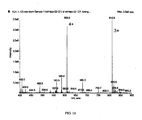
- FIG. 3 shows the MS/MS hepcidin spectrum of the +3 charge state
- FIG. 4 shows the MS/MS hepcidin spectrum of the +4 charge state
- FIG. 5 shows pH optimization for solid phase extraction (SPE) of hepcidin
- FIG. 6 shows MS chromatograms of human hepcidin (+3 and +4 charge states) extracted from blank human serum
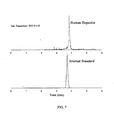
- FIG. 7 shows MS chromatograms of human hepcidin (+3 and +4 charge states) and internal standard extracted from a sepsis patient;
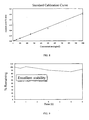
- FIG. 8 shows a standard curve of concentration vs. analyte area : internal standard area created from known hepcidin amounts;
- FIG. 9 shows stability of hepcidin over time under incubation conditions
- FIG. 10 shows a base peak LC chromatogram of an incubation solution at time 0;
- FIG. 11 shows the corresponding MS chromatogram of hepcidin at incubation time 0;
- FIG. 12 shows the base peak chromatogram of a solution after 4 hours incubation
- FIG. 13 shows the corresponding MS chromatogram of hepcidin at incubation time 4 hours
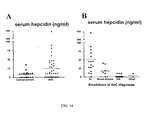
- FIG. 14A shows comparison of serum hepcidin levels in 20 volunteer donors compared to 40 patients with a variety of cancers and a hemoglobin less than 10 g/dL, where two elevated readings in the control donors correlated with high Tsat or infection;
- FIG. 14B shows sub-classification of the anemia of cancer patients in order to identify those with probable inflammation (AI), iron deficiency anemia (IDA) or a mixture of the two (mixed anemia). Any patients falling into none of these classes was designated 'other'. Indices used to classify patients were CRP, sTfR/log ferritin ratio, Tsat, and ferritin (as seen in FIG. 1B ). Lines represent the mean value.
- FIG. 15 shows a MS chromatogram of truncated human hepcidin Hepc-20 (SEQ ID NO: 15), which shows Hepc-20 in both a +3 and +4 charge state.
- FIG. 16 shows a MS chromatogram of truncated human hepcidin Hepc-22 (SEQ ID NO: 16), which shows Hepc-22 in both a +3 and +4 charge state.
- FIG. 17 shows a MS chromatogram of human hepcidin Hepc-25 (SEQ ID NO: 4), which shows Hepc-25 in both a +3 and +4 charge state.
- FIG. 18 shows calibration curves for concentration (ng/mL) of Hepc-25, Hepc-22, and Hepc-20 by intensity of MS signal.
- Hepcidin is an important peptide linked to iron metabolism. Disturbances in iron metabolism can be assessed by measuring hepcidin levels, then comparing the measured hepcidin levels to normal levels. Such comparisons can facilitate diagnosis, can assess treatment regimens, or can monitor a patient's progress over time.
- the disclosed methods provide a means of isolating hepcidin from and/or analyzing hepcidin in a biological sample.
- mass spectrometry of nor isolation of hepcidin from a sample was sufficiently efficient or accurate to correlate to an absolute quantification of hepcidin in the sample.
- Inefficient MS and/or separation techniques, or inconsistent MS and/or separation techniques hinder one's ability to compare discrete sets of data.
- various data sets can be compared, both from the same patient over time, or different patients at different times.
- Hepcidin due in part to its amino acid sequence, is not easily fragmented for MS analysis.
- Disclosed herein are techniques for proficient ionization and fragmentation of hepcidin, which results in MS spectra suitable for quantification of hepcidin using internal standard and standard curve comparisons.
- Prior reports of hepcidin MS analyses utilized MS techniques which do not effectively permit quantification of hepcidin in a sample. (See, e.g., Kemna et al., Blood, 106:3268 (2005 ).)
- the methods disclosed herein also can be applied to measurement of defensins ( Kluver et al., J. Peptide. Res. 59:241 (2002 )).
- the terms "quantitative” or “quantification” refer to providing an absolute measurement of hepcidin in a sample that can be compared to measurements taken at a different time or from a different source. Quantitative measurements are valuable for many purposes in addition to relative measurements that only can be compared to other measurements taken at the same time that may yield information such as a ratio. As described below in greater detail, the use of a measured quantity of an internal standard permits quantitative calculation of the hepcidin in a sample.
- sample means any biological sample suitable for hepcidin analysis by the methods disclosed herein.
- the source of such samples can be serum, blood, plasma, urine, or other bodily fluid, or a filtrate of a bodily fluid, from a test subject.
- the test subject is an animal, preferably mammal, and more preferably human.
- an "iron marker” is a metabolite, protein, or other biomolecule which is implicated in iron levels or metabolism.
- a disruption of iron metabolism signifies a deficiency or deviation from normal values of one or more iron markers, such as those listed in Table I, or other clinical iron parameters, such as those listed in FIG. 1A or FIG. 1B .
- Proteins, in addition to clinical iron parameters, which may control iron levels include ferroportin, soluble hemojuvelin, bone morphogenic proteins (BMP) and related family members.
- Inflammatory conditions which are implicated in a disruption of iron metabolism include, but are not limited to, sepsis, anemia of inflammation ( Weiss et al., N. Engl. J. Med. 352:1011 (2005 )), anemia of cancer, collagen-induced arthritis (CIA), congestive heart failure (CHF), end stage renal disease (ESRD) ( Kulaksiz et al., Gut, 53:735 (2004 )), iron deficiency, hemochromatosis ( Ganz, Blood, 102(3):783 (2003 )), diabetes, rheumatoid arthritis ( Jordan, Curr. Opin.
- Non-inflammatory conditions which are implicated in a disruption of iron metabolism include, but are not limited to, vitamin B6 deficiency, vitamin B12 deficiency, folate deficiency, pellagra, funicular myelosis, pseudoencephalitis, Parkinson's disease ( Fasano et al., J. Neurochem. 96:909 (2006 ) and Kaur et al., Ageing Res.
- Acute phase reaction conditions which are implicated in a disruption of iron metabolism include, but are not limited to, pancreatitis, hepatitis ( Brock, Curr. Opin. Clinic. Nutrition. Metab. Care, 2:507 (1999 )), and rheumatoid diseases.
- the reference values for the measured hepcidin are, for example, in the range of 0 to about 2000 ng/mL, in particular about 100 to about 500 ng/mL.
- a particularly preferred reference range is about 200 to about 260 ng/mL. Any value within the reference range can be used as a threshold value for the measurement, for example a value in the range of 0 to about 1000 ng/mL.
- a measurement below about 10 ng/mL may indicate suppression of hepcidin, while the "normal" range of hepcidin levels is less than about 25 ng/mL.
- Various other iron indices and their normal ranges of concentrations are listed in Table I.
- a patient's iron index level outside of the normal ranges listed in Table I is a trigger to measure the hepcidin level of that patient. Because hepcidin is a key component of iron metabolism, hepcidin levels correlate to a disruption of iron metabolism and/or iron indices. Elevated hepcidin levels correlate with serum iron levels below the normal ranges indicated in Table I, low hemoglobin, and hematocrit, reduced or normal Tsat and high or normal ferritin values, and elevated inflammatory status as measured by C-reactive protein (CRP) elevation.
- CRP C-reactive protein
- Detection of disruption of iron metabolism includes assaying, imaging, or otherwise establishing the presence, absence, or concentration of hepcidin or a hepcidin precursor.
- detection encompasses diagnostic, prognostic, and monitoring applications for hepcidin.
- hepcidin includes prepropeptides of 83 or 84 aa sequences in mouse (SEQ. ID NO: 1); rat (SEQ ID NO: 2); and human (SEQ ID NO: 3); the 25 aa hepcidin sequences of human hepcidin (SEQ. ID NO: 4); cyno hepcidin (SEQ. ID NO: 5); vervet monkey hepcidin (SEQ.ID NO: 6); rabbit hepcidin (SEQ. ID NO: 7); rat hepcidin (SEQ. ID NO: 8); mouse hepcidin (SEQ. ID NO: 9); or canine hepcidin (SEQ.
- Hepcidin peptides also include a 60 amino acid human propetide (SEQ. ID NO: 13) and (SEQ. ID NO: 14), as well as a 20 amino acid sequence (SEQ ID NO: 15), and 22 amino acid sequence (SEQ ID NO: 16).
- mass spectrometry refers to methods of filtering, detecting, and measuring ions based on their mass-to-charge ratio, or " m / z .”
- mass spectrometry or “MS” as used herein refer to methods of filtering, detecting, and measuring ions based on their mass-to-charge ratio, or " m / z .”
- MS mass-to-charge ratio
- one or more molecules of interest are ionized, and the ions are subsequently introduced into a mass spectrographic instrument where, due to a combination of magnetic and electric fields, the ions follow a path in space that is dependent upon mass (“m”) and charge (“z”). See, e.g., U.S. Pat. No.
- ions in an oscillating radio frequency (RF) field experience a force proportional to the direct current (DC) potential applied between electrodes, the amplitude of the RF signal, and m / z .
- the voltage and amplitude can be selected such that only ions having a particular m / z travel the length of the quadrupole, while all other ions are deflected.
- quadrupole instruments can act as both a “mass filter” and as a “mass detector” for the ions injected into the instrument.
- Triple quadrupole mass spectrometer in multiple ion reaction monitoring (MRM) mode preferably is used for hepcidin quantification. It involves two stand-alone quadrupole mass analyzers, separated by a quadrupole collision cell. The first quadrupole is used to select analyte ions of interest (precursor), which is fragmented in the collision cell by collision-induced dissociation. The resulting fragments are analyzed by the second analytical quadrupole. Because precursor ions break apart in the collision cell very specifically, monitoring the unique fragment ion of the precursor leads to great improvement of the specificity and signal to noise ratio. It therefore can be used for quantitative analysis on complex samples like serum.
- MRM multiple ion reaction monitoring
- MS/MS tandem mass spectrometry
- a precursor ion or group of ions generated from a molecule (or molecules) of interest are filtered in an MS instrument, and these precursor ions subsequently are fragmented to yield one or more fragment ions that then are analyzed in a second MS procedure.
- precursor ions By careful selection of precursor ions, only ions produced by certain analytes of interest are passed to the fragmentation chamber, where collision with atoms of an inert gas occurs to produce the fragment ions. Because both the precursor and fragment ions are produced in a reproducible fashion under a given set of ionization/fragmentation conditions, the MS/MS technique can provide an extremely powerful analytical tool. For example, the combination of filtration/fragmentation can be used to eliminate interfering substances, and can be particularly useful in complex samples, such as biological samples.
- Mass spectrometers utilize a number of different ionization methods. These methods include, but are not limited to, gas phase ionization sources, such as electron impact, chemical ionization, and field ionization, as well as desorption sources, such as field desorption, fast atom bombardment, matrix assisted laser desorption/ionization, and surface enhanced laser desorption/ionization.
- gas phase ionization sources such as electron impact, chemical ionization, and field ionization
- desorption sources such as field desorption, fast atom bombardment, matrix assisted laser desorption/ionization, and surface enhanced laser desorption/ionization.
- mass spectrometers can be coupled to separation means such as gas chromatography (GC) and high performance liquid chromatography (HPLC). In some cases, electrospray ionization is employed. Electrospray ionization (ESI) in positive ion mode is used to interface the HPLC separation and mass spectrometer detection of hepcidin.
- ESI Electros
- Ionization takes place at atmospheric pressure. It involves spraying the effluent of an LC analysis or a sample itself out of a small needle, to which a high voltage is applied. This process produces small charged droplets, and the mobile phase solvent is then evaporated leaving the sample molecule in the gas phase and ionized. These generated gas phase ions then are "swept" into mass spectrometer for detection. Other ionization techniques can be employed as well, such as chemical ionization, but ESI is the preferred ionization mechanism. Because a mass spectrum is reported in m / z units, the degree of ionization will affect the resulting peak corresponding to the hepcidin peptide. The charge of hepcidin can be +1, +2, +3, +4, or a combination thereof, depending upon the ionization method employed.
- the MS is combined with a liquid chromatography step in order to increase sensitivity of the resulting measurements.
- Reverse phase HPLC is a separation technique involving mass-transfer between two immiscible non-polar stationary and relative polar mobile phases. The components of a mixture first are dissolved in a solvent, then introduced into the mobile phase and flow through a chromatographic column where the stationary phase is immobilized on the packing material. In the column, the mixture is resolved into its components depending upon the interaction of the solute with mobile and stationary phases. Each of the resolved components is then detected by the mass spectrometer.
- Quantification of hepcidin in a sample is achieved by adding an internal standard to the samples and comparing the ratio of hepcidin and internal standard to ratios obtained from a series of samples where known amounts of hepcidin and internal standard are added to blank matrix (a standard curve, see, e.g., FIG. 8 ).
- the use of this method allows for the determination of the levels of hepcidin in normal healthy individuals, as well as the level of hepcidin from patients suffering sepsis or other inflammatory conditions.
- Appropriate internal standards are those which have a distinct molecular weight (i.e., mass spectrum signal) from that of hepcidin, but within a ⁇ 750 (m/z) range.
- the internal standard is an isotopically labeled hepcidin peptide, wherein one or more H, C, N, and/or O atoms is replaced with a stable isotope having a different mass (e.g., 2 H, 13 C, 15 N, 17 O, or 18 O).
- the internal standard is a peptide having similar retention and/or chromatographic characteristics as hepcidin and a distinct molecular weight, within ⁇ 50 m/z.
- the internal standard is a peptide of SEQ. ID NO: 4.
- the quantification of hepcidin levels in a sample permits comparisons between data sets. This ability to compare different sample measurements permits diagnosis as well as monitoring abilities.
- the quantification methods for hepcidin can be advantageously utilized in diagnosing the extent of iron metabolism or iron homeostasis disruption in patients within a clinical diagnostic setting. Such diagnosis could in turn be used by clinicians to select and implement appropriate preventative and treatment therapies including iron chelation, iron treatment, inflammatory suppression, or erythropoietic therapy. In a clinical diagnostic setting, the above methods and calculations are interpreted such that a proper course of action can be taken depending on the concentration levels of hepcidin, alone or in combination with other parameters such as those listed in Table I.
- iron homeostasis refers to a process of coordinating all aspects of iron metabolism in the body to maintain a balance between iron uptake, iron loss, and iron mobilization and storage, resulting in control of serum iron levels within the normal range.
- Iron homeostasis with a negative balance would consist of situations where serum iron levels were maintained below the normal range, the balance between iron uptake and loss led to a net iron loss to the body or iron maldistribution occurred such that the iron stores became depleted.
- Iron homeostasis with a positive balance would consist of situations where serum iron levels were maintained above the normal range, the balance between iron uptake and loss led to a net iron gain to the body or iron maldistribution occurred such that the iron stores became increased.
- decision trees can be used to interpret the level of the hepcidin, and which is used to assist the user or interpreter in determining a course of treatment and the significance of the concentration reading.
- Hepcidin values are predicted to be elevated in patients with inflammation iron overload and ferroportin disease and suppressed in patients with hemochromatosis, hemoglobinopathies, and other red cell disorders.
- the decision tree of FIG. 1B shows how measurement ofhepcidin levels simplifies diagnosis and/or assessment of a patient suspected of having iron metabolism disorders.
- FIG. 1A shows the decision tree assessment without a measurement of hepcidin levels.
- hepcidin levels can be used to improve treatment of a patient with anemia.
- the medical decision maker can better evaluate a particular treatment under consideration or currently undertaken by the patient.
- patients who are hypo-responsive to typical anemia treatments such as erythropoietin or analogs thereof (Epoetin alfa, Epoetin beta, darbepoetin alfa, any erythropoietic stimulating protein or peptide or small molecule with erythropoietic stimulating activity), or any other kind of erythropoeitic therapy, benefit from rapid and/or accurate analyses of alternative anemia treatments.
- the anemia treatment is tailored for an individual patient based upon monitoring of the patient's hepcidin levels in response to each anemia treatment.
- erythropoiesis-stimulating molecules or "erythropoietic therapy” as used herein includes human erythropoietin or a biologically active variant, derivative, or analog thereof, including a chemically modified derivative of such protein or analog or any small molecule which stimulates erythropoiesis.
- Erythropoietin includes but is not limited to, a polypeptide comprising the amino acid sequence as set forth in SED. ID NO: 18 or SEQ. ID NO: 19.
- Amino acids 1 through 165 of SEQ ID NO: 18 constitute the mature protein of any molecules designated as an epoetin, e.g., epoetin alfa, epoetin beta, epotein gamma, epoetin zeta, and the like. Additionally, an epoein also includes any of the aforementioned epoetin which are chemically modified, e.g., with one or more water-soluble polymers such as, e.g., polyethylene glycol.
- Darbepoetin is a hyperglycosylated erythropoietin analog having five changes in the amino acid sequence of rHuEPO which provide for two additional carbohydrate chains. More specifically, darbepoetin alfa contains two additional N-linked carbohydrate chains at amino acid residues 30 and 88 of SEQ ID NO: 18.
- erythropoietic activity means activity to stimulate erythropoiesis as demonstrated in an in vivo assay, for example, the exhypoxic polycythemic mouse assay. See, e.g., Cotes and Bangham, Nature 191:1065 (1961 ).
- Hepcidin is isolated from a sample prior to, or in place of, MS or LC-MS analysis.
- Solid phase extraction is a preferred means of hepcidin isolation.
- Use of SPE allows for extraction and isolation of hepcidin from biological sample (such as serum, plasma, and urine) for subsequent HPLC separation and mass spectrometric detection.
- SPE is a chromatographic technique for preparing samples prior to performing quantitative chemical analysis, such as MS.
- the goal of SPE is to isolate target analytes from a complex sample matrix containing unwanted interferences, which would have a negative effect on the ability to perform quantitative analysis.
- the isolated target analytes are recovered in a solution that is compatible with quantitative analysis.
- This final solution containing the target compound can be used for analysis directly, or evaporated and reconstituted in another solution of a lesser volume for the purpose of further concentrating the target analyte, and making it more amenable to detection and measurement.
- Analysis of biological samples, such as plasma and urine, using liquid chromatography (LC) generally benefits from SPE prior to analysis both to remove insoluble matter and soluble interferences, and also to pre-concentrate target compounds for enhanced detection sensitivity.
- Many sample matrices encountered in bio-separations contain buffers, salts, or surfactants, which can be particularly troublesome when mass spectrometer based detection is used.
- SPE can also be used to perform a simple fractionation of a sample based on differences in the chemical structure of the component parts, thereby reducing the complexity of the sample to be analyzed.
- Typical SPE methods contain a sequence of steps, each with a specific purpose.
- the first step referred to as the "conditioning" step, prepares the device, typically a chromatography column, for receiving the sample.
- the conditioning step involves first flushing the SPE device with an organic solvent such as methanol or acetonitrile, which acts to wet the surfaces of both the device and the sorbent, and also rinses any residual contaminants from the device. This initial rinse generally is followed by a highly aqueous solvent rinse, often containing pH buffers or other modifiers, which will prepare the chromatographic sorbent to preferentially retain the target sample components.
- the SPE device is ready to receive the sample.
- the second step involves passing the sample through the device. During loading, the sample components, along with many interferences are adsorbed onto the chromatographic sorbent. Once loading is complete, a “washing” step is used to rinse away interfering sample components, while allowing the target compounds to remain retained on the sorbent. With little or no loss of hepcidin, the resulting measurement of hepcidin accurately reflects the actual amount of hepcidin in the sample.
- a pH of greater than 7 is preferred, a pH of geater than 8 is more preferred, and a pH of about 10 or higher is most preferred. Washing using a solvent system in this range of pH values allows for contaminants and other biomolecules in the sample to be washed away from the hepcidin, with little or no loss of the hepcidin itself.
- Buffers used to adjust the pH of the washing solvent include, but are not limited to, ammonium hydroxide, phosphate, carbonates, and the like. Ammonium hydroxide is the preferred buffer.
- the amount of buffer present in the solvent system will affect the resulting pH, but is typically present in amount of about 0.1 to about 10%, more preferably about 1 to about 5%, and most preferably about 1.5 to about 3%.
- ammonium hydroxide is the buffer and is present in an amount of about 2%.
- the washing solvent typically is a mixture of water and methanol. Methanol is present in amounts of about 20 to about 70% of the mixture, and more preferably is about 40 to about 50%.
- the balance of the solvent system is water.
- the washing step then is followed by an "elution" step, which typically uses a fluid containing a high percentage of an organic solvent, such as methanol or acetonitrile.
- the elution solvent is chosen to effectively release the target compounds from the chromatographic sorbent, and into a suitable sample container.
- the eluting solvent typically has a pH of less than about 8, more preferably a pH of about 3 to about 6, and most preferably about 4.5 to about 5.5. A pH of about 5 is a highly preferred pH for the eluting solvent.
- Buffers used to adjust the pH of the eluting solvent include, but are not limited to, acetate, citrate, malate, formate, succinate, and the like. Buffer choice depends upon the desired pH.
- the eluting solvent typically is a mixture of water and methanol. Methanol is present in amounts greater than 70% of the mixture, and more preferably is greater than about 75%, and most preferably is greater than about 80%.
- Sorbent materials for SPE columns include, but are not limited to, C18, C8, cation exchange and hydrophilic-lipophilic-balanced copolymer materials.
- SPE columns are commercially available from a variety of commercial sources, including Waters (e.g., Oasis HLB and MCX), Varian (e.g., C18 and C8), and Millipore (e.g., C18, C8, and mixed phase cation - MPC).
- the gradient conditions were set as follows: 0-0.1 min, isocratic 2% B/98% A; 2% B to 95% B at 0.1-4.5 min; 95% B at 4.5-4.9 min; 95% B to 2% B at 4.9-5.0 min; 5.0-6.0 min, isocratic 2% B.
- the needle wash solvent was methanol : water (50:50, v/v).
- the HPLC system consisted of a fully equipped Agilent 1100 configuration (Agilient Technologies, Palo Alto, CA) with temperature-controlled autosampler set at 4 °C. A linear gradient ran from 5% to 95% B in 18 min, then maintained at 95% B for 2 min after which the gradient returned to the initial conditions and equilibrated for 10 min before next run.
- the sample injection volume was 20 ⁇ l for both all the experiments.
- Stock solution of human hepcidin (SEQ. ID NO: 4) with concentration 1 mg/mL was prepared in 10 mM sodium acetate buffer (pH about 5).
- One mg/ml stock solution of internal standard (SEQ. ID NO: 17) was prepared in water.
- ID NO: 17 has a sequence of Ac-Lys-Lys-Arg-Pro-Hyp-Gly-CpG-Ser-DTic-CpG, wherein Ac is acetyl, Lys is lysine, Arg is arginine, Pro is proline, Hyp is trans 4-hydroxy-proline, Gly is glycine, CpG is cyclopentylglycine, Ser is serine, and DTic is D-1,2,3,4-tetrahydroisoquinoline-3-carboxylic acid. Both stock solutions were stored at -70 °C. Final concentration of 100 ⁇ g/ml hepcidin working solution was prepared by diluting stock solution with 10 mM sodium acetate buffer. Final internal standard solution with concentration 100 ng/ml was prepared by diluting internal standard stock solution in water.
- Calibration standards were prepared freshly by spiking blank serum with hepcidin (SEQ. ID NO: 4) working solution, resulting in concentrations of 10, 25, 50, 100, 250, 500 and 1000 ng/mL of serum. Three different concentrations (20, 200, 800 ng/mL) of quality control (QC) samples were prepared along with the calibration standards.
- a human hepcidin stability study was carried out by incubating hepcidin (SEQ. ID NO: 4) in 10% human serum water at room temperature. The incubation was started by mixing 20 ⁇ L hepcidin working solution (100 ⁇ g/mL) with 1980 ⁇ L 10% serum water in a 5 ml test tube, resulting 1 ⁇ g/mL initial concentration. A 100 ⁇ L solution was aliquoted from the incubation solution at time points of 0h, 0.5h, 1h, 1.5h, 2h, 3h, 4h and 5h. Each aliquot was extracted by SPE immediately and stored at 4 °C until analysis.
- Solid phase extraction was carried out on Oasis HLB 96-well plate (Waters, Milford, MA). Washing solvent: 30% methanol/water with pH of about 10 adjusted with ammonium hydroxide. Elution solvent: 90% methanol/water solution with pH of about 5 adjusted with acetic acid. After activating and conditioning, 100 ⁇ L serum sample and 200 ⁇ L internal standard were loaded onto the SPE plate, washed with water and 350 ⁇ L washing solvent. Elution was done using 100 ⁇ L elution solvent and diluted with 100 ⁇ L water. The resulting 200 ⁇ L eluate was ready for LC-MS analysis.
- Precursor and product ions for human hepcidin were determined by direct infusion of 10 ⁇ g/mL hepcidin in 50:50 methanol: water (v/v) containing 0.1% formic acid. Since hepcidin is a basic peptide, a positive ionization mode by ESI was used. As shown in FIG. 2 , the formation of hepcidin ions with charge state +4 ( m / z 698.5) and +3 ( m / z 930.8) is predominant.
- FIG. 3 and 4 show the MS/MS spectra for both charge states.
- the collision assisted dissociation of the hepcidin precursor ions at m / z 698 and m / z 931 produce major product ions at m / z 110 corresponding to the histidine immonium ion and at m / z 120 corresponding to the phenylalanine immonium ion.
- tandem mass spectrometry offers great specificity for detection of analyte of interest
- the competition for ionization in the LC-MS interface from co-eluted interfering components of the LC separation can cause significant and inconsistent matrix effect leading to undesirable effects, such as ion suppression and chemical noises.
- sample cleanup prior LC separation has a large impact on LC-MS/MS bioanalysis due to the complexity of biological matrices and the limited resolving power of HPLC, especially for fast LC separation.
- Solid phase extraction is used for hepcidin bioanalysis by which hepcidin is extracted and pre-concentrated, while the amount of the interfering components is greatly reduced.
- FIG. 5 shows the elution curves of fixed amount of hepcidin using methanol/ water solvents with pH of about 10 adjusted by ammonium hydroxide and solvents with pH about 5 adjusted by acetic acid. Leaching out of hepcidin from the SPE sorbent occurs even with water in acidic condition.
- a maximum of 50% methanol in basic condition does not cause elution of hepcidin from the SPE sorbent.
- a 30% methanol with pH about 10 was chosen for washing and 90% methanol with pH about 5 was used for hepcidin SPE elution.
- FIG. 5 shows a MRM chromatogram of human hepcidin extracted from blank human serum. Ion transition of m / z 930.60 ⁇ 110.15 gives much cleaner background and less interference from the serum matrix than the ion transition m / z 698.10 ⁇ 110.15, so it was chosen for hepcidin quantification.
- FIG. 6 shows the chromatogram of hepcidin and internal standard extracted from sepsis patient serum.
- a linear calibration curve was obtained for human hepcidin in serum in the range of 10 to 100 ng/mL, deviations for all seven non-zero standards (10, 25, 50,100, 200, 500 and 1000 ng/mL) in duplicates are all within 15% as shown in FIG. 7 .
- Table IV shows the results of hepcidin level of sepsis patient sera.
- Table IV Sepsis Sample 1 2 3 4 5 6 AVG %RSD 1 135 152 133 158 133 137 141.3 7.7 2 194 222 199 218 203 209 207.5 5.3 3 204 213 187 197 190 181 195.3 6.0 4 ⁇ 10 ng/ml ⁇ 10 ng/ml ⁇ 10 ng/ml ⁇ 10 ng/ml ⁇ 10 ng/ml ⁇ 10 ng/ml 5 ⁇ 10 ng/ml ⁇ 10 ng/ml ⁇ 10 ng/ml ⁇ 10 ng/ml ⁇ 10 ng/ml ⁇ 10 ng/ml ⁇ 10 ng/ml ⁇ 10 ng/ml ⁇ 10 ng/ml ⁇ 10 ng/ml ⁇ 10 ng/ml ⁇ 10 ng/ml ⁇ 10 ng/ml ⁇ 10 ng/ml
- hepcidin stability was assessed by incubating hepcidin in 10% human serum/water at room temperature with an initial concentration of 1 ⁇ g/ml, followed by LC-MS/MS analysis. The ratio of the hepcidin peak area to the internal standard was used to evaluate the stability, and all data were normalized to the value at time point 0h.
- the stability data ( FIG. 8 ) indicated that human hepcidin are relatively stable. Within five hours incubation, hepcidin showed less than 10% degradation.
- FIG. 9 shows the base peak chromatogram of the incubation solution at 0h time point. Peptide sequencing based on the tandem mass spectrum confirms that the peak at retention time 8.18 min is human hepcidin ( FIG. 10 ). Due to the four internal cysteine disulfide bonds, the major fragment ions are small b ions (b3, b4) and large y ions (y21, y22, y23 and y24).
- FIG. 11 shows the base peak chromatogram of the solution after four hours incubation. A new peak at retention time of 7.53 min was detected and identified as the human hepcidin with an oxidized methionine (M21) by it MS/MS ( FIG. 12 ).
- Samples from patients suffering from anemia of cancer obtained from ProteoGenex or volunteers (control) were collected.
- the SPE plate was activated with 500 ⁇ L methanol and conditioned with 500 ⁇ L water, then 100 ⁇ L serum sample and 200 ⁇ L internal standard were loaded onto the elution plate, washed with 350 ⁇ L water and 350 ⁇ L washing solvent. Elution was done using 100 ⁇ L elution solvent and diluted with 100 ⁇ L water. The resulting 200 ⁇ L eluate was analyzed by LC-MS/MS.
- a Sciex API4000 triple quadrupole mass spectrometer from Applied Biosystems (Foster City, CA) with Turbo ESI source was used for hepcidin detection in MRM mode with ion transition of m / z 930.60 to mlz 110.15. Quantification was achieved by comparing the ratio of the LC peak areas of the hepcidin and the internal standard to the ratios obtained from a series of standards where the amounts of hepcidin and internal standard were known.
- This experiment allowed for the determination of the serum levels of hepcidin in a control population presumed to contain a large number of healthy individuals, as well as the serum level of hepcidin from patients suffering anemia of cancers (AOC). The results are shown in FIG. 14A .
- FIG. 14B After identification of elevated hepcidin levels, a sample was then analyzed for other iron index concentrations to determine whether a patient had inflammation or iron deficiency anemia ( FIG. 14B ).
- the parameters were measured as follows: serum iron, UIBC, ferritin, and CRP were measured on an Olympus AU400 clinical laboratory analyzer using standard procedures; sTfR was measured using a standard ELISA method (R&D systems).
- Hepcidin-20, hepcidin-22, and hepcidin-25 in a sample may be relevant to the biological activity to be expected.
- Hepcidin-20 and hepcidin 22 are believed to be breakdown products of the full length mature peptide.
- Hepcidin-20 has been demonstrated to be inactive in a biological assay, presumably due to the inability to bind ferroportin.
- hepcidin-20 and potentially hepcidin-22 may be inactive constituents of the circulating hepcidin pool. Since in certain disease states such as chronic kidney disease the normal clearance of hepcidin may be affected, the relative abundance of different forms may be affected. For this reason, there are advantages to developing detection methods which allow estimation of full length material (hepcidin -25) relative to hepcidin-22 and hepcidin -20.
- Precursor and product ions for N-terminal truncated human hepcidin Hepc-20 (SEQ ID NO: 15), Hepc-22 (SEQ ID NO: 16) and intact Hepc-25 (SEQ ID NO: 4) were determined by direct infusion of 10 ⁇ g/ml hepcidin in 50:50 methanol : water (v/v) containing 0.1% formic acid. A positive ionization mode by ESI was used. As shown in FIG. 15-17 , the formation of charge states of 4+ and 3+ ions for the three hepcidin peptides is predominant.
- the collision assisted dissociation of the Hepc-20, Hepc-22 and Hepc-25 precursor ions produced unique product ions which were optimized and used for the quantitation of Hepc-20, Hepc-22 and Hepc-25 as shown in Table V. Isotope labeled Hepcidin Hepc-25* was used as internal standard.
- the gradient conditions were set as follows: 0-0.5 min, isocratic 2% B/98% A; 2% B to 95% B at 0.5-4.0 min; 95% B at 4.0-5.4 min; 95% B to 2% B at 5.4-5.5 min; 5.5-6.5 min, isocratic 2% B.
- the sample injection volume was 20 ⁇ l for all the experiments.
- Calibration standards were prepared freshly by spiking blank serum with human hepcidin peptides, resulting in concentrations of 2.5, 5, 10, 25, 50, 100, 250, 500 ng/ml of Hepc-20, Hepc-22 and Hepc-25 in serum standards. Both Hepc-20 and Hepc-22 showed excellent linear range of 2.5 to 500 ng/mL, while Hepc-25 showed excellent linear range of 5 to 500 ng/mL ( FIG. 18 ).
- Solid phase extraction was carried out on Oasis HLB 96-well plate (Waters, Milford, MA).
- the washing solvent was 30% methanol in water at pH 10 adjusted with ammonium hydroxide.
- the elution solvent was 90% methanol in water solution at pH 5 adjusted with acetic acid.
- 100 ⁇ l serum sample and 200 ⁇ l internal standard were loaded onto the SPE plate, then washed with water and 350 ⁇ l washing solvent. Elution was performed using 100 ⁇ l elution solvent and diluted with 100 ⁇ l water. The resulting 200 ⁇ l elute was ready for LC-MS analysis.
Landscapes
- Health & Medical Sciences (AREA)
- Life Sciences & Earth Sciences (AREA)
- Engineering & Computer Science (AREA)
- Molecular Biology (AREA)
- Hematology (AREA)
- Chemical & Material Sciences (AREA)
- Urology & Nephrology (AREA)
- Biomedical Technology (AREA)
- Immunology (AREA)
- General Health & Medical Sciences (AREA)
- Medicinal Chemistry (AREA)
- Analytical Chemistry (AREA)
- Microbiology (AREA)
- Food Science & Technology (AREA)
- Cell Biology (AREA)
- Physics & Mathematics (AREA)
- Biotechnology (AREA)
- Biochemistry (AREA)
- Endocrinology (AREA)
- General Physics & Mathematics (AREA)
- Pathology (AREA)
- Diabetes (AREA)
- Bioinformatics & Cheminformatics (AREA)
- Chemical Kinetics & Catalysis (AREA)
- General Chemical & Material Sciences (AREA)
- Nuclear Medicine, Radiotherapy & Molecular Imaging (AREA)
- Organic Chemistry (AREA)
- Pharmacology & Pharmacy (AREA)
- Animal Behavior & Ethology (AREA)
- Public Health (AREA)
- Veterinary Medicine (AREA)
- Other Investigation Or Analysis Of Materials By Electrical Means (AREA)
- Investigating Or Analysing Biological Materials (AREA)
Claims (15)
- Procédé de détermination d'une concentration d'hepcidine dans un échantillon comprenant (1) la séparation de l'hepcidine à partir de l'échantillon avant de soumettre l'hepcidine à une spectrométrie de masse en utilisant une extraction sur phase solide ; (2) la soumission de l'hepcidine et d'un étalon interne à une spectrométrie de masse en tandem pour produire un spectre de masse ayant un signal d'hepcidine et un signal d'étalon interne ; (3) la mesure d'une intensité du signal d'hepcidine et du signal d'étalon interne ; et (4) la corrélation de l'intensité du signal d'hepcidine et de l'intensité du signal d'étalon interne à une courbe d'étalonnage de concentrations d'hepcidine pour déterminer la concentration de l'hepcidine dans l'échantillon, l'étalon interne comprenant SEQ ID NO: 4 marqué de façon isotopique.
- Procédé de la revendication 1, dans lequel l'hepcidine comprend de 20 à 25 résidus d'acide aminé.
- Procédé de la revendication 1, dans lequel l'hepcidine comprend une séquence d'acides aminés choisie dans le groupe constitué de SEQ ID NO: 3 ; SEQ ID NO: 4 ; SEQ ID NO: 13 ; SEQ ID NO: 14 ; SEQ ID NO: 15 ; et toutes combinaisons quelconques de celles-ci.
- Procédé de la revendication 1, dans lequel la séparation de l'hepcidine comprend l'introduction de l'échantillon à une colonne de phase inverse et le traitement de la colonne de phase inverse avec un solvant d'élution, un éluant résultant comprenant de l'hepcidine, le solvant d'élution comprenant du méthanol, de l'eau, ou des mélanges de ceux-ci.
- Procédé de la revendication 1, l'échantillon étant un échantillon de plasma ou un échantillon de sérum d'un mammifère, et de préférence d'un humain.
- Procédé de la revendication 5, dans lequel l'humain souffre de ou est soupçonné souffrir d'une affection inflammatoire ou associée à une inflammation.
- Procédé de la revendication 6, dans lequel l'affection est choisie dans le groupe constitué d'une sepsie, l'anémie due à une inflammation, l'anémie due à un cancer, l'anémie inflammatoire chronique, l'insuffisance cardiaque congestive, une maladie rénale à un stade terminal, une maladie rénale chronique, une anémie due à une déficience en fer, la maladie de la ferroportine, l'hémochromatose, la polyarthrite rhumatoïde due au diabète, l'artériosclérose, des tumeurs, une angéite, le lupus érythémateux disséminé, des hémoglobinopathies, des troubles érythrocytaires, et une insuffisance rénale.
- Procédé de la revendication 5, dans lequel l'humain souffre de ou est soupçonné souffrir d'une affection non inflammatoire.
- Procédé de la revendication 8, dans lequel l'affection non inflammatoire est choisie dans le groupe constitué d'une déficience en vitamine B6, une déficience en vitamine B12, une déficience en folate, la pellagre, la myélose funiculaire, la pseudoencéphalite, la maladie de Parkinson, la maladie d'Alzheimer, une maladie coronarienne, et une maladie artérielle occlusive périphérique.
- Procédé de la revendication 5, dans lequel l'humain souffre de ou est soupçonné souffrir d'une réaction en phase aiguë.
- Procédé de la revendication 5, dans lequel l'humain est hyporépondeur à une thérapie avec l'érythropoïétine ou une thérapie érythropoïétique.
- Procédé comprenant la détermination d'une concentration d'hepcidine dans un échantillon provenant d'un patient souffrant d'anémie, la détermination comprenant la séparation de l'hepcidine à partir de l'échantillon ; l'ajout d'un étalon interne à l'hepcidine ; et la détermination de la concentration d'hepcidine selon le procédé de la revendication 1.
- Procédé de la revendication 12, dans lequel la concentration d'hepcidine est de 10 ng/ml ou moins, de préférence 5 ng/ml ou moins, et plus préférablement de 1 ng/ml ou moins.
- Procédé de la revendication 12, dans lequel la concentration d'hepcidine est de 30 ng/ml ou plus ou 50 ng/ml ou plus.
- Procédé de l'une quelconque des revendications 1 à 14, dans lequel l'hepcidine est ionisée par ionisation electrospray (ESI).
Priority Applications (1)
| Application Number | Priority Date | Filing Date | Title |
|---|---|---|---|
| EP12165193A EP2498096A1 (fr) | 2006-07-21 | 2007-07-20 | Procédé de détection et/ou de mesure de l'hepcidine dans un échantillon |
Applications Claiming Priority (2)
| Application Number | Priority Date | Filing Date | Title |
|---|---|---|---|
| US83262506P | 2006-07-21 | 2006-07-21 | |
| PCT/US2007/016477 WO2008011158A2 (fr) | 2006-07-21 | 2007-07-20 | Procédé de détection et/ou de mesure de la concentration d'hepcidine dans un échantillon |
Related Child Applications (2)
| Application Number | Title | Priority Date | Filing Date |
|---|---|---|---|
| EP12165193A Division EP2498096A1 (fr) | 2006-07-21 | 2007-07-20 | Procédé de détection et/ou de mesure de l'hepcidine dans un échantillon |
| EP12165193.9 Division-Into | 2012-04-23 |
Publications (2)
| Publication Number | Publication Date |
|---|---|
| EP2057472A2 EP2057472A2 (fr) | 2009-05-13 |
| EP2057472B1 true EP2057472B1 (fr) | 2013-11-13 |
Family
ID=38825839
Family Applications (2)
| Application Number | Title | Priority Date | Filing Date |
|---|---|---|---|
| EP12165193A Withdrawn EP2498096A1 (fr) | 2006-07-21 | 2007-07-20 | Procédé de détection et/ou de mesure de l'hepcidine dans un échantillon |
| EP07810654.9A Not-in-force EP2057472B1 (fr) | 2006-07-21 | 2007-07-20 | Procédé de détection et/ou de mesure de la concentration d'hepcidine dans un échantillon |
Family Applications Before (1)
| Application Number | Title | Priority Date | Filing Date |
|---|---|---|---|
| EP12165193A Withdrawn EP2498096A1 (fr) | 2006-07-21 | 2007-07-20 | Procédé de détection et/ou de mesure de l'hepcidine dans un échantillon |
Country Status (8)
| Country | Link |
|---|---|
| US (2) | US20090173876A1 (fr) |
| EP (2) | EP2498096A1 (fr) |
| JP (2) | JP5410971B2 (fr) |
| AU (1) | AU2007275638B2 (fr) |
| CA (1) | CA2657307A1 (fr) |
| ES (1) | ES2446266T3 (fr) |
| MX (1) | MX2009000685A (fr) |
| WO (1) | WO2008011158A2 (fr) |
Families Citing this family (18)
| Publication number | Priority date | Publication date | Assignee | Title |
|---|---|---|---|---|
| DE112005001166B4 (de) * | 2004-05-20 | 2014-10-09 | Waters Technologies Corp. (N.D.Ges.D. Staates Delaware) | Verfahren und Vorrichtung zum Identifizieren von Proteinen in Gemischen |
| WO2008047485A1 (fr) * | 2006-10-17 | 2008-04-24 | Naohisa Tomosugi | Procédé de diagnostic d'un métabolisme anormal du fer en utilisant de l'hepcidine active en tant qu'indicateur |
| TW201307390A (zh) * | 2007-02-02 | 2013-02-16 | Amgen Inc | 海帕西啶(hepcidin)、海帕西啶拮抗劑及使用方法 |
| US8313950B2 (en) * | 2007-05-21 | 2012-11-20 | The Ohio State University Research Foundation | Hepcidins as biomarkers for impending lupus nephritis flare |
| US8187827B2 (en) * | 2007-05-31 | 2012-05-29 | Naohisa Tomosugi | Diagnostic methods for acute ischemic disease using activated hepcidin as an indicator |
| US20100292131A1 (en) * | 2007-11-16 | 2010-11-18 | Pronota N.V. | Biomarkers and methods for diagnosing, predicting and/or prognosing sepsis and uses thereof |
| US9315577B2 (en) | 2008-05-01 | 2016-04-19 | Amgen Inc. | Anti-hepcidin antibodies and methods of use |
| WO2011057744A1 (fr) | 2009-11-13 | 2011-05-19 | Roche Diagnostics Gmbh | Diagnostic différentiel de carences en fer sur la base de l'hepcidine et de la concentration moyenne en hémoglobine par réticulocyte |
| EP3299386A1 (fr) | 2010-08-16 | 2018-03-28 | Pieris Pharmaceuticals GmbH | Protéines de liaison de le hepcidine |
| JP5664667B2 (ja) * | 2011-01-11 | 2015-02-04 | 株式会社島津製作所 | 質量分析データ解析方法、質量分析データ解析装置、及び質量分析データ解析用プログラム |
| AU2012350654C1 (en) | 2011-12-12 | 2018-05-10 | Pieris Ag | Methods for preventing or treating disorders by increasing bioavailability of iron and related pharmaceutical formulation |
| DE112013002122T5 (de) | 2012-04-18 | 2014-12-31 | Waters Technologies Corporation | Verfahren zur Quantifizierung von Polypeptiden mittels Massenspektrometrie |
| GB201415367D0 (en) * | 2014-08-29 | 2014-10-15 | Iles Raymond K And Docherty Suzanne M E And Abban Thomas And Naase Mahmoud And Iles Jason K | Methods for detecting abnormalities in haemoglobin |
| JP6760753B2 (ja) * | 2016-04-01 | 2020-09-23 | 株式会社Lsiメディエンス | ピロロキノリンキノンの分析方法 |
| CN111579665B (zh) * | 2020-05-20 | 2021-11-05 | 苏州帕诺米克生物医药科技有限公司 | 一种基于uplc/hrms的代谢组学相对定量分析方法 |
| WO2022003238A1 (fr) | 2020-07-02 | 2022-01-06 | Tampere University Foundation Sr | Analyse de l'hepcidine basée sur la rénine |
| CN116829922A (zh) | 2020-12-17 | 2023-09-29 | 豪夫迈·罗氏有限公司 | 用于质谱法的基于蒸发的样品制备工作流程 |
| CN116868057A (zh) * | 2021-02-25 | 2023-10-10 | 株式会社岛津制作所 | 肽测定中的品质管理用标准溶液及肽测定的品质管理 |
Family Cites Families (42)
| Publication number | Priority date | Publication date | Assignee | Title |
|---|---|---|---|---|
| US3847072A (en) * | 1970-10-23 | 1974-11-12 | Hesston Corp | Loose hay wagon |
| US3973377A (en) * | 1971-11-04 | 1976-08-10 | Ezra C. Lundahl Inc. | Compacting method for stacking bulk hay |
| US3901142A (en) * | 1973-06-20 | 1975-08-26 | Deere & Co | Door control mechanism for stack-forming implement |
| US3824730A (en) * | 1973-06-27 | 1974-07-23 | R Johnson | Fishing rod holder |
| US3886718A (en) * | 1974-05-17 | 1975-06-03 | John M Talbot | Automatic header height control system for combines and the like |
| US4519189A (en) * | 1983-08-19 | 1985-05-28 | J. I. Case Company | Telescoping basket cover |
| US4703008A (en) | 1983-12-13 | 1987-10-27 | Kiren-Amgen, Inc. | DNA sequences encoding erythropoietin |
| US4667016A (en) | 1985-06-20 | 1987-05-19 | Kirin-Amgen, Inc. | Erythropoietin purification |
| US5260028A (en) | 1988-02-22 | 1993-11-09 | Astle Thomas W | Method and apparatus for effecting solid phase extraction |
| US4930297A (en) * | 1988-10-11 | 1990-06-05 | Deere & Company | Telescoping basket for a cotton harvester |
| US5137626A (en) | 1989-02-21 | 1992-08-11 | Rohm And Haas Company | Solid-phase extraction tubes containing sulfonazide bonded-phase extractants |
| KR100221066B1 (ko) | 1989-10-13 | 1999-10-01 | 스튜어트 엘.왓트 | 에리트로포이에틴 유사체와 그를 포함하는 제약학적 조성물 |
| US4996831A (en) * | 1990-05-07 | 1991-03-05 | Deere & Company | Cotton basket extension latch |
| US5230806A (en) | 1991-02-04 | 1993-07-27 | Iowa State University Research Foundation, Inc. | Modified resins for solid-phase extraction |
| US5071565A (en) | 1991-02-04 | 1991-12-10 | Iowa State University Research Foundation, Inc. | Modified resins for solid-phase extraction |
| CA2059398C (fr) | 1991-02-07 | 1999-05-25 | Craig G. Markell | Agent d'extraction en phase solide |
| US5242598A (en) | 1991-08-14 | 1993-09-07 | Envirogen, Inc. | Solid phase extraction |
| US5248875A (en) | 1992-04-24 | 1993-09-28 | Mds Health Group Limited | Method for increased resolution in tandem mass spectrometry |
| US5605798A (en) | 1993-01-07 | 1997-02-25 | Sequenom, Inc. | DNA diagnostic based on mass spectrometry |
| EP0700521B1 (fr) | 1993-05-28 | 2003-06-04 | Baylor College Of Medicine | Procedes et spectrometre de masse pour la desorption et l'ionisation d'analytes |
| US5368729A (en) | 1993-07-23 | 1994-11-29 | Whatman, Inc. | Solid phase extraction device |
| CN1057534C (zh) | 1993-08-17 | 2000-10-18 | 柯瑞英-艾格公司 | 促红细胞生成素类似物 |
| US5407390A (en) * | 1993-12-06 | 1995-04-18 | Deere & Company | Basket structure for a cotton harvester |
| US5609523A (en) * | 1995-08-11 | 1997-03-11 | Deere & Company | Cotton basket latch structure |
| GB9717926D0 (en) | 1997-08-22 | 1997-10-29 | Micromass Ltd | Methods and apparatus for tandem mass spectrometry |
| JP2002502086A (ja) | 1998-01-23 | 2002-01-22 | アナリティカ オブ ブランフォード インコーポレーテッド | 表面からの質量分光測定 |
| AU774989B2 (en) | 1998-10-23 | 2004-07-15 | Amgen, Inc. | Methods and compositions for the prevention and treatment of anemia |
| US6263650B1 (en) * | 1999-09-23 | 2001-07-24 | Deere & Company | Cotton harvester with accumulator |
| PT1274728E (pt) | 2000-04-21 | 2008-06-20 | Amgen Inc | Métodos e composições para a prevenção e tratamento de anemia |
| US6409456B1 (en) * | 2001-01-09 | 2002-06-25 | Case Corporation | Apparatus for raising and lowering a lid structure of a cotton receiving basket of a cotton harvester |
| EP1392345B2 (fr) * | 2001-05-25 | 2018-02-28 | Institut National De La Sante Et De La Recherche Medicale (Inserm) | Utilisation de l'hepcidine comme regulateur de l'homeostasie ferrique |
| US6701701B2 (en) * | 2001-11-13 | 2004-03-09 | Deere & Company | Duct support and transition structure for a harvester |
| GB0305796D0 (en) | 2002-07-24 | 2003-04-16 | Micromass Ltd | Method of mass spectrometry and a mass spectrometer |
| AU2003262824B2 (en) | 2002-08-22 | 2007-08-23 | Applied Biosystems Inc. | Method for characterizing biomolecules utilizing a result driven strategy |
| US7411048B2 (en) * | 2002-11-19 | 2008-08-12 | Drg International, Inc. | Diagnostic method for diseases by screening for hepcidin in human or animal tissues, blood or body fluids |
| RU2359268C2 (ru) * | 2002-11-19 | 2009-06-20 | ДиАрДжи ИНТЕРНЭШНЛ, ИНК. | Способ диагностики заболеваний путем скрининга тканей, крови или жидкостей организма животных или человека на предмет обнаружения нефизиологических уровней гепсидина и его терапевтическое применение |
| DE10349124A1 (de) * | 2003-10-22 | 2005-05-19 | Roche Diagnostics Gmbh | Differenzialdiagnostik mit Hepcidin |
| EP2208992A1 (fr) * | 2003-11-21 | 2010-07-21 | Eisai R&D Management Co., Ltd. | Procédé de quantification faisant intervenir un étalon interne marqué par un isotope, système d'analyse pour exécution du procédé de quantification et programme de séparation associé |
| US7178454B2 (en) * | 2004-03-30 | 2007-02-20 | Cnh America Llc | Compactor apparatus including single cylinders and guide members on the sides of an on-board module builder of a cotton harvesting machine |
| EP1750683B1 (fr) * | 2004-04-23 | 2013-01-09 | Amgen Inc. | Formulations à libération continue |
| US7723063B2 (en) * | 2004-04-28 | 2010-05-25 | Intrinsic Lifesciences | Methods for measuring levels of bioactive human hepcidin |
| US7510842B2 (en) * | 2005-03-11 | 2009-03-31 | Vermilllion, Inc. | Biomarker for ovarian and endometrial cancer: hepcidin |
-
2007
- 2007-07-20 US US11/880,313 patent/US20090173876A1/en not_active Abandoned
- 2007-07-20 EP EP12165193A patent/EP2498096A1/fr not_active Withdrawn
- 2007-07-20 EP EP07810654.9A patent/EP2057472B1/fr not_active Not-in-force
- 2007-07-20 AU AU2007275638A patent/AU2007275638B2/en not_active Ceased
- 2007-07-20 JP JP2009520856A patent/JP5410971B2/ja not_active Expired - Fee Related
- 2007-07-20 ES ES07810654.9T patent/ES2446266T3/es active Active
- 2007-07-20 WO PCT/US2007/016477 patent/WO2008011158A2/fr not_active Ceased
- 2007-07-20 CA CA002657307A patent/CA2657307A1/fr not_active Abandoned
- 2007-07-20 MX MX2009000685A patent/MX2009000685A/es active IP Right Grant
-
2011
- 2011-06-15 US US13/160,711 patent/US20110312888A1/en not_active Abandoned
-
2013
- 2013-11-07 JP JP2013230912A patent/JP2014066710A/ja not_active Withdrawn
Non-Patent Citations (4)
| Title |
|---|
| CATZ ET AL: "Simultaneous determination of myristyl nicotinate, nicotinic acid, and nicotinamide in rabbit plasma by liquid chromatography-tandem mass spectrometry using methyl ethyl ketone as a deproteinization solvent", JOURNAL OF CHROMATOGRAPHY B: BIOMEDICAL SCIENCES & APPLICATIONS, ELSEVIER, AMSTERDAM, NL, vol. 829, no. 1-2, 27 December 2005 (2005-12-27), pages 123 - 135, XP005205092, ISSN: 1570-0232, DOI: 10.1016/J.JCHROMB.2005.10.003 * |
| ERICK KINDT ET AL: "Development and Validation of an LC/MS/MS Procedure for the Quantification of Endogenous myo -Inositol Concentrations in Rat Brain Tissue Homogenates", ANALYTICAL CHEMISTRY, vol. 76, no. 16, 1 August 2004 (2004-08-01), pages 4901 - 4908, XP055008481, ISSN: 0003-2700, DOI: 10.1021/ac049746w * |
| GERBER S A ET AL: "Absolute quantification of proteins and phosphoproteins from cell lysates by tandem MS", PROC NATL ACAD SCI (US), WASHINGTON, DC; US, vol. 100, no. 12, 10 June 2003 (2003-06-10), pages 6940 - 6945, XP002360986, ISSN: 0027-8424, DOI: 10.1073/PNAS.0832254100 * |
| KIRKPATRICK D S ET AL: "The absolute quantification strategy: a general procedure for the quantification of proteins and post-translational modifications", METHODS : A COMPANION TO METHODS IN ENZYMOLOGY, ACADEMIC PRESS INC., NEW YORK, NY, US, vol. 35, no. 3, 1 March 2005 (2005-03-01), pages 265 - 273, XP004762289, ISSN: 1046-2023, DOI: 10.1016/J.YMETH.2004.08.018 * |
Also Published As
| Publication number | Publication date |
|---|---|
| EP2057472A2 (fr) | 2009-05-13 |
| WO2008011158A2 (fr) | 2008-01-24 |
| AU2007275638A1 (en) | 2008-01-24 |
| ES2446266T3 (es) | 2014-03-06 |
| CA2657307A1 (fr) | 2008-01-24 |
| US20110312888A1 (en) | 2011-12-22 |
| MX2009000685A (es) | 2009-01-30 |
| US20090173876A1 (en) | 2009-07-09 |
| JP5410971B2 (ja) | 2014-02-05 |
| WO2008011158A3 (fr) | 2008-06-05 |
| JP2009544941A (ja) | 2009-12-17 |
| JP2014066710A (ja) | 2014-04-17 |
| AU2007275638B2 (en) | 2014-01-16 |
| EP2498096A1 (fr) | 2012-09-12 |
Similar Documents
| Publication | Publication Date | Title |
|---|---|---|
| EP2057472B1 (fr) | Procédé de détection et/ou de mesure de la concentration d'hepcidine dans un échantillon | |
| EP3301450B1 (fr) | Quantification de thyroglobuline par spectrométrie de masse | |
| US20220349897A1 (en) | Amyloid beta detection by mass spectrometry | |
| US10672600B2 (en) | Methods of detecting reverse triiodothyronine by mass spectrometry | |
| KR101075012B1 (ko) | 시료 용액중의 알부민의 분석방법 | |
| US9012835B2 (en) | Methods for simultaneous quantification of thyroid hormones and metabolites thereof by mass spectrometry | |
| EP3557605B1 (fr) | Détection de la kisspeptine-54 par spectrométrie de masse en tandem | |
| US9269550B2 (en) | Mass spectrometric methods for quantifying NPY 1-36 and NPY 3-36 | |
| HK1175841A (en) | Method of detecting and/or measuring hepcidin in a sample | |
| AU2013270594A1 (en) | Method of detecting and/or measuring hepcidin in a sample | |
| US20250224404A1 (en) | Detection of insulin-like growth factor-2 variants by mass spectrometry |
Legal Events
| Date | Code | Title | Description |
|---|---|---|---|
| PUAI | Public reference made under article 153(3) epc to a published international application that has entered the european phase |
Free format text: ORIGINAL CODE: 0009012 |
|
| 17P | Request for examination filed |
Effective date: 20090220 |
|
| AK | Designated contracting states |
Kind code of ref document: A2 Designated state(s): AT BE BG CH CY CZ DE DK EE ES FI FR GB GR HU IE IS IT LI LT LU LV MC MT NL PL PT RO SE SI SK TR |
|
| AX | Request for extension of the european patent |
Extension state: AL BA HR MK RS |
|
| DAX | Request for extension of the european patent (deleted) | ||
| 17Q | First examination report despatched |
Effective date: 20100423 |
|
| GRAP | Despatch of communication of intention to grant a patent |
Free format text: ORIGINAL CODE: EPIDOSNIGR1 |
|
| GRAS | Grant fee paid |
Free format text: ORIGINAL CODE: EPIDOSNIGR3 |
|
| GRAP | Despatch of communication of intention to grant a patent |
Free format text: ORIGINAL CODE: EPIDOSNIGR1 |
|
| INTG | Intention to grant announced |
Effective date: 20130612 |
|
| GRAA | (expected) grant |
Free format text: ORIGINAL CODE: 0009210 |
|
| AK | Designated contracting states |
Kind code of ref document: B1 Designated state(s): AT BE BG CH CY CZ DE DK EE ES FI FR GB GR HU IE IS IT LI LT LU LV MC MT NL PL PT RO SE SI SK TR |
|
| REG | Reference to a national code |
Ref country code: GB Ref legal event code: FG4D |
|
| REG | Reference to a national code |
Ref country code: CH Ref legal event code: EP |
|
| REG | Reference to a national code |
Ref country code: AT Ref legal event code: REF Ref document number: 640776 Country of ref document: AT Kind code of ref document: T Effective date: 20131215 |
|
| REG | Reference to a national code |
Ref country code: IE Ref legal event code: FG4D |
|
| REG | Reference to a national code |
Ref country code: DE Ref legal event code: R096 Ref document number: 602007033812 Country of ref document: DE Effective date: 20140109 |
|
| REG | Reference to a national code |
Ref country code: ES Ref legal event code: FG2A Ref document number: 2446266 Country of ref document: ES Kind code of ref document: T3 Effective date: 20140306 |
|
| REG | Reference to a national code |
Ref country code: NL Ref legal event code: VDEP Effective date: 20131113 |
|
| REG | Reference to a national code |
Ref country code: AT Ref legal event code: MK05 Ref document number: 640776 Country of ref document: AT Kind code of ref document: T Effective date: 20131113 |
|
| REG | Reference to a national code |
Ref country code: LT Ref legal event code: MG4D |
|
| PG25 | Lapsed in a contracting state [announced via postgrant information from national office to epo] |
Ref country code: SE Free format text: LAPSE BECAUSE OF FAILURE TO SUBMIT A TRANSLATION OF THE DESCRIPTION OR TO PAY THE FEE WITHIN THE PRESCRIBED TIME-LIMIT Effective date: 20131113 Ref country code: NL Free format text: LAPSE BECAUSE OF FAILURE TO SUBMIT A TRANSLATION OF THE DESCRIPTION OR TO PAY THE FEE WITHIN THE PRESCRIBED TIME-LIMIT Effective date: 20131113 Ref country code: LT Free format text: LAPSE BECAUSE OF FAILURE TO SUBMIT A TRANSLATION OF THE DESCRIPTION OR TO PAY THE FEE WITHIN THE PRESCRIBED TIME-LIMIT Effective date: 20131113 Ref country code: IS Free format text: LAPSE BECAUSE OF FAILURE TO SUBMIT A TRANSLATION OF THE DESCRIPTION OR TO PAY THE FEE WITHIN THE PRESCRIBED TIME-LIMIT Effective date: 20140313 Ref country code: FI Free format text: LAPSE BECAUSE OF FAILURE TO SUBMIT A TRANSLATION OF THE DESCRIPTION OR TO PAY THE FEE WITHIN THE PRESCRIBED TIME-LIMIT Effective date: 20131113 |
|
| PG25 | Lapsed in a contracting state [announced via postgrant information from national office to epo] |
Ref country code: CY Free format text: LAPSE BECAUSE OF FAILURE TO SUBMIT A TRANSLATION OF THE DESCRIPTION OR TO PAY THE FEE WITHIN THE PRESCRIBED TIME-LIMIT Effective date: 20131113 Ref country code: AT Free format text: LAPSE BECAUSE OF FAILURE TO SUBMIT A TRANSLATION OF THE DESCRIPTION OR TO PAY THE FEE WITHIN THE PRESCRIBED TIME-LIMIT Effective date: 20131113 Ref country code: LV Free format text: LAPSE BECAUSE OF FAILURE TO SUBMIT A TRANSLATION OF THE DESCRIPTION OR TO PAY THE FEE WITHIN THE PRESCRIBED TIME-LIMIT Effective date: 20131113 Ref country code: BE Free format text: LAPSE BECAUSE OF FAILURE TO SUBMIT A TRANSLATION OF THE DESCRIPTION OR TO PAY THE FEE WITHIN THE PRESCRIBED TIME-LIMIT Effective date: 20131113 |
|
| PG25 | Lapsed in a contracting state [announced via postgrant information from national office to epo] |
Ref country code: PT Free format text: LAPSE BECAUSE OF FAILURE TO SUBMIT A TRANSLATION OF THE DESCRIPTION OR TO PAY THE FEE WITHIN THE PRESCRIBED TIME-LIMIT Effective date: 20140313 |
|
| PG25 | Lapsed in a contracting state [announced via postgrant information from national office to epo] |
Ref country code: EE Free format text: LAPSE BECAUSE OF FAILURE TO SUBMIT A TRANSLATION OF THE DESCRIPTION OR TO PAY THE FEE WITHIN THE PRESCRIBED TIME-LIMIT Effective date: 20131113 |
|
| REG | Reference to a national code |
Ref country code: DE Ref legal event code: R097 Ref document number: 602007033812 Country of ref document: DE |
|
| PG25 | Lapsed in a contracting state [announced via postgrant information from national office to epo] |
Ref country code: PL Free format text: LAPSE BECAUSE OF FAILURE TO SUBMIT A TRANSLATION OF THE DESCRIPTION OR TO PAY THE FEE WITHIN THE PRESCRIBED TIME-LIMIT Effective date: 20131113 Ref country code: CZ Free format text: LAPSE BECAUSE OF FAILURE TO SUBMIT A TRANSLATION OF THE DESCRIPTION OR TO PAY THE FEE WITHIN THE PRESCRIBED TIME-LIMIT Effective date: 20131113 Ref country code: RO Free format text: LAPSE BECAUSE OF FAILURE TO SUBMIT A TRANSLATION OF THE DESCRIPTION OR TO PAY THE FEE WITHIN THE PRESCRIBED TIME-LIMIT Effective date: 20131113 Ref country code: SK Free format text: LAPSE BECAUSE OF FAILURE TO SUBMIT A TRANSLATION OF THE DESCRIPTION OR TO PAY THE FEE WITHIN THE PRESCRIBED TIME-LIMIT Effective date: 20131113 |
|
| PGFP | Annual fee paid to national office [announced via postgrant information from national office to epo] |
Ref country code: ES Payment date: 20140611 Year of fee payment: 8 |
|
| PLBE | No opposition filed within time limit |
Free format text: ORIGINAL CODE: 0009261 |
|
| STAA | Information on the status of an ep patent application or granted ep patent |
Free format text: STATUS: NO OPPOSITION FILED WITHIN TIME LIMIT |
|
| PG25 | Lapsed in a contracting state [announced via postgrant information from national office to epo] |
Ref country code: DK Free format text: LAPSE BECAUSE OF FAILURE TO SUBMIT A TRANSLATION OF THE DESCRIPTION OR TO PAY THE FEE WITHIN THE PRESCRIBED TIME-LIMIT Effective date: 20131113 |
|
| 26N | No opposition filed |
Effective date: 20140814 |
|
| PGFP | Annual fee paid to national office [announced via postgrant information from national office to epo] |
Ref country code: CH Payment date: 20140714 Year of fee payment: 8 Ref country code: DE Payment date: 20140716 Year of fee payment: 8 |
|
| REG | Reference to a national code |
Ref country code: DE Ref legal event code: R097 Ref document number: 602007033812 Country of ref document: DE Effective date: 20140814 |
|
| PGFP | Annual fee paid to national office [announced via postgrant information from national office to epo] |
Ref country code: FR Payment date: 20140708 Year of fee payment: 8 Ref country code: GB Payment date: 20140716 Year of fee payment: 8 |
|
| PGFP | Annual fee paid to national office [announced via postgrant information from national office to epo] |
Ref country code: IT Payment date: 20140714 Year of fee payment: 8 |
|
| PG25 | Lapsed in a contracting state [announced via postgrant information from national office to epo] |
Ref country code: LU Free format text: LAPSE BECAUSE OF FAILURE TO SUBMIT A TRANSLATION OF THE DESCRIPTION OR TO PAY THE FEE WITHIN THE PRESCRIBED TIME-LIMIT Effective date: 20140720 Ref country code: SI Free format text: LAPSE BECAUSE OF FAILURE TO SUBMIT A TRANSLATION OF THE DESCRIPTION OR TO PAY THE FEE WITHIN THE PRESCRIBED TIME-LIMIT Effective date: 20131113 |
|
| REG | Reference to a national code |
Ref country code: IE Ref legal event code: MM4A |
|
| PG25 | Lapsed in a contracting state [announced via postgrant information from national office to epo] |
Ref country code: IE Free format text: LAPSE BECAUSE OF NON-PAYMENT OF DUE FEES Effective date: 20140720 |
|
| REG | Reference to a national code |
Ref country code: DE Ref legal event code: R119 Ref document number: 602007033812 Country of ref document: DE |
|
| REG | Reference to a national code |
Ref country code: CH Ref legal event code: PL |
|
| GBPC | Gb: european patent ceased through non-payment of renewal fee |
Effective date: 20150720 |
|
| PG25 | Lapsed in a contracting state [announced via postgrant information from national office to epo] |
Ref country code: LI Free format text: LAPSE BECAUSE OF NON-PAYMENT OF DUE FEES Effective date: 20150731 Ref country code: MC Free format text: LAPSE BECAUSE OF FAILURE TO SUBMIT A TRANSLATION OF THE DESCRIPTION OR TO PAY THE FEE WITHIN THE PRESCRIBED TIME-LIMIT Effective date: 20131113 Ref country code: CH Free format text: LAPSE BECAUSE OF NON-PAYMENT OF DUE FEES Effective date: 20150731 Ref country code: IT Free format text: LAPSE BECAUSE OF NON-PAYMENT OF DUE FEES Effective date: 20150720 Ref country code: DE Free format text: LAPSE BECAUSE OF NON-PAYMENT OF DUE FEES Effective date: 20160202 Ref country code: GB Free format text: LAPSE BECAUSE OF NON-PAYMENT OF DUE FEES Effective date: 20150720 |
|
| REG | Reference to a national code |
Ref country code: FR Ref legal event code: ST Effective date: 20160331 |
|
| PG25 | Lapsed in a contracting state [announced via postgrant information from national office to epo] |
Ref country code: BG Free format text: LAPSE BECAUSE OF FAILURE TO SUBMIT A TRANSLATION OF THE DESCRIPTION OR TO PAY THE FEE WITHIN THE PRESCRIBED TIME-LIMIT Effective date: 20131113 Ref country code: FR Free format text: LAPSE BECAUSE OF NON-PAYMENT OF DUE FEES Effective date: 20150731 |
|
| PG25 | Lapsed in a contracting state [announced via postgrant information from national office to epo] |
Ref country code: MT Free format text: LAPSE BECAUSE OF FAILURE TO SUBMIT A TRANSLATION OF THE DESCRIPTION OR TO PAY THE FEE WITHIN THE PRESCRIBED TIME-LIMIT Effective date: 20131113 Ref country code: GR Free format text: LAPSE BECAUSE OF FAILURE TO SUBMIT A TRANSLATION OF THE DESCRIPTION OR TO PAY THE FEE WITHIN THE PRESCRIBED TIME-LIMIT Effective date: 20140214 |
|
| PG25 | Lapsed in a contracting state [announced via postgrant information from national office to epo] |
Ref country code: HU Free format text: LAPSE BECAUSE OF FAILURE TO SUBMIT A TRANSLATION OF THE DESCRIPTION OR TO PAY THE FEE WITHIN THE PRESCRIBED TIME-LIMIT; INVALID AB INITIO Effective date: 20070720 Ref country code: TR Free format text: LAPSE BECAUSE OF FAILURE TO SUBMIT A TRANSLATION OF THE DESCRIPTION OR TO PAY THE FEE WITHIN THE PRESCRIBED TIME-LIMIT Effective date: 20131113 |
|
| PG25 | Lapsed in a contracting state [announced via postgrant information from national office to epo] |
Ref country code: ES Free format text: LAPSE BECAUSE OF NON-PAYMENT OF DUE FEES Effective date: 20150721 |
|
| REG | Reference to a national code |
Ref country code: ES Ref legal event code: FD2A Effective date: 20180706 |