EP2058399A1 - Impfungsverfahren und -reagenzien zur Erzeugung einer CD8-T-Zellen-Immunreaktion - Google Patents
Impfungsverfahren und -reagenzien zur Erzeugung einer CD8-T-Zellen-Immunreaktion Download PDFInfo
- Publication number
- EP2058399A1 EP2058399A1 EP08006920A EP08006920A EP2058399A1 EP 2058399 A1 EP2058399 A1 EP 2058399A1 EP 08006920 A EP08006920 A EP 08006920A EP 08006920 A EP08006920 A EP 08006920A EP 2058399 A1 EP2058399 A1 EP 2058399A1
- Authority
- EP
- European Patent Office
- Prior art keywords
- mva
- recombinant
- dna
- cell
- immunisation
- Prior art date
- Legal status (The legal status is an assumption and is not a legal conclusion. Google has not performed a legal analysis and makes no representation as to the accuracy of the status listed.)
- Withdrawn
Links
Images






Classifications
-
- C—CHEMISTRY; METALLURGY
- C12—BIOCHEMISTRY; BEER; SPIRITS; WINE; VINEGAR; MICROBIOLOGY; ENZYMOLOGY; MUTATION OR GENETIC ENGINEERING
- C12N—MICROORGANISMS OR ENZYMES; COMPOSITIONS THEREOF; PROPAGATING, PRESERVING, OR MAINTAINING MICROORGANISMS; MUTATION OR GENETIC ENGINEERING; CULTURE MEDIA
- C12N15/00—Mutation or genetic engineering; DNA or RNA concerning genetic engineering, vectors, e.g. plasmids, or their isolation, preparation or purification; Use of hosts therefor
- C12N15/09—Recombinant DNA-technology
- C12N15/63—Introduction of foreign genetic material using vectors; Vectors; Use of hosts therefor; Regulation of expression
- C12N15/79—Vectors or expression systems specially adapted for eukaryotic hosts
- C12N15/85—Vectors or expression systems specially adapted for eukaryotic hosts for animal cells
- C12N15/86—Viral vectors
-
- A—HUMAN NECESSITIES
- A61—MEDICAL OR VETERINARY SCIENCE; HYGIENE
- A61K—PREPARATIONS FOR MEDICAL, DENTAL OR TOILETRY PURPOSES
- A61K38/00—Medicinal preparations containing peptides
- A61K38/16—Peptides having more than 20 amino acids; Gastrins; Somatostatins; Melanotropins; Derivatives thereof
- A61K38/17—Peptides having more than 20 amino acids; Gastrins; Somatostatins; Melanotropins; Derivatives thereof from animals; from humans
- A61K38/1703—Peptides having more than 20 amino acids; Gastrins; Somatostatins; Melanotropins; Derivatives thereof from animals; from humans from vertebrates
- A61K38/1709—Peptides having more than 20 amino acids; Gastrins; Somatostatins; Melanotropins; Derivatives thereof from animals; from humans from vertebrates from mammals
-
- A—HUMAN NECESSITIES
- A61—MEDICAL OR VETERINARY SCIENCE; HYGIENE
- A61K—PREPARATIONS FOR MEDICAL, DENTAL OR TOILETRY PURPOSES
- A61K39/00—Medicinal preparations containing antigens or antibodies
- A61K39/0005—Vertebrate antigens
- A61K39/0011—Cancer antigens
-
- A—HUMAN NECESSITIES
- A61—MEDICAL OR VETERINARY SCIENCE; HYGIENE
- A61K—PREPARATIONS FOR MEDICAL, DENTAL OR TOILETRY PURPOSES
- A61K39/00—Medicinal preparations containing antigens or antibodies
- A61K39/002—Protozoa antigens
- A61K39/015—Hemosporidia antigens, e.g. Plasmodium antigens
-
- A—HUMAN NECESSITIES
- A61—MEDICAL OR VETERINARY SCIENCE; HYGIENE
- A61K—PREPARATIONS FOR MEDICAL, DENTAL OR TOILETRY PURPOSES
- A61K39/00—Medicinal preparations containing antigens or antibodies
- A61K39/12—Viral antigens
-
- A—HUMAN NECESSITIES
- A61—MEDICAL OR VETERINARY SCIENCE; HYGIENE
- A61K—PREPARATIONS FOR MEDICAL, DENTAL OR TOILETRY PURPOSES
- A61K39/00—Medicinal preparations containing antigens or antibodies
- A61K39/12—Viral antigens
- A61K39/145—Orthomyxoviridae, e.g. influenza virus
-
- A—HUMAN NECESSITIES
- A61—MEDICAL OR VETERINARY SCIENCE; HYGIENE
- A61K—PREPARATIONS FOR MEDICAL, DENTAL OR TOILETRY PURPOSES
- A61K39/00—Medicinal preparations containing antigens or antibodies
- A61K39/12—Viral antigens
- A61K39/21—Retroviridae, e.g. equine infectious anemia virus
-
- A—HUMAN NECESSITIES
- A61—MEDICAL OR VETERINARY SCIENCE; HYGIENE
- A61K—PREPARATIONS FOR MEDICAL, DENTAL OR TOILETRY PURPOSES
- A61K39/00—Medicinal preparations containing antigens or antibodies
- A61K39/39—Medicinal preparations containing antigens or antibodies characterised by the immunostimulating additives, e.g. chemical adjuvants
-
- A—HUMAN NECESSITIES
- A61—MEDICAL OR VETERINARY SCIENCE; HYGIENE
- A61P—SPECIFIC THERAPEUTIC ACTIVITY OF CHEMICAL COMPOUNDS OR MEDICINAL PREPARATIONS
- A61P31/00—Antiinfectives, i.e. antibiotics, antiseptics, chemotherapeutics
- A61P31/12—Antivirals
-
- A—HUMAN NECESSITIES
- A61—MEDICAL OR VETERINARY SCIENCE; HYGIENE
- A61P—SPECIFIC THERAPEUTIC ACTIVITY OF CHEMICAL COMPOUNDS OR MEDICINAL PREPARATIONS
- A61P31/00—Antiinfectives, i.e. antibiotics, antiseptics, chemotherapeutics
- A61P31/12—Antivirals
- A61P31/14—Antivirals for RNA viruses
- A61P31/16—Antivirals for RNA viruses for influenza or rhinoviruses
-
- A—HUMAN NECESSITIES
- A61—MEDICAL OR VETERINARY SCIENCE; HYGIENE
- A61P—SPECIFIC THERAPEUTIC ACTIVITY OF CHEMICAL COMPOUNDS OR MEDICINAL PREPARATIONS
- A61P31/00—Antiinfectives, i.e. antibiotics, antiseptics, chemotherapeutics
- A61P31/12—Antivirals
- A61P31/14—Antivirals for RNA viruses
- A61P31/18—Antivirals for RNA viruses for HIV
-
- A—HUMAN NECESSITIES
- A61—MEDICAL OR VETERINARY SCIENCE; HYGIENE
- A61P—SPECIFIC THERAPEUTIC ACTIVITY OF CHEMICAL COMPOUNDS OR MEDICINAL PREPARATIONS
- A61P31/00—Antiinfectives, i.e. antibiotics, antiseptics, chemotherapeutics
- A61P31/12—Antivirals
- A61P31/20—Antivirals for DNA viruses
-
- A—HUMAN NECESSITIES
- A61—MEDICAL OR VETERINARY SCIENCE; HYGIENE
- A61P—SPECIFIC THERAPEUTIC ACTIVITY OF CHEMICAL COMPOUNDS OR MEDICINAL PREPARATIONS
- A61P33/00—Antiparasitic agents
- A61P33/02—Antiprotozoals, e.g. for leishmaniasis, trichomoniasis, toxoplasmosis
- A61P33/06—Antimalarials
-
- A—HUMAN NECESSITIES
- A61—MEDICAL OR VETERINARY SCIENCE; HYGIENE
- A61P—SPECIFIC THERAPEUTIC ACTIVITY OF CHEMICAL COMPOUNDS OR MEDICINAL PREPARATIONS
- A61P35/00—Antineoplastic agents
-
- A—HUMAN NECESSITIES
- A61—MEDICAL OR VETERINARY SCIENCE; HYGIENE
- A61P—SPECIFIC THERAPEUTIC ACTIVITY OF CHEMICAL COMPOUNDS OR MEDICINAL PREPARATIONS
- A61P37/00—Drugs for immunological or allergic disorders
- A61P37/02—Immunomodulators
- A61P37/04—Immunostimulants
-
- C—CHEMISTRY; METALLURGY
- C07—ORGANIC CHEMISTRY
- C07K—PEPTIDES
- C07K14/00—Peptides having more than 20 amino acids; Gastrins; Somatostatins; Melanotropins; Derivatives thereof
- C07K14/005—Peptides having more than 20 amino acids; Gastrins; Somatostatins; Melanotropins; Derivatives thereof from viruses
-
- C—CHEMISTRY; METALLURGY
- C07—ORGANIC CHEMISTRY
- C07K—PEPTIDES
- C07K14/00—Peptides having more than 20 amino acids; Gastrins; Somatostatins; Melanotropins; Derivatives thereof
- C07K14/435—Peptides having more than 20 amino acids; Gastrins; Somatostatins; Melanotropins; Derivatives thereof from animals; from humans
- C07K14/44—Peptides having more than 20 amino acids; Gastrins; Somatostatins; Melanotropins; Derivatives thereof from animals; from humans from protozoa
- C07K14/445—Plasmodium
-
- A—HUMAN NECESSITIES
- A61—MEDICAL OR VETERINARY SCIENCE; HYGIENE
- A61K—PREPARATIONS FOR MEDICAL, DENTAL OR TOILETRY PURPOSES
- A61K39/00—Medicinal preparations containing antigens or antibodies
- A61K2039/51—Medicinal preparations containing antigens or antibodies comprising whole cells, viruses or DNA/RNA
-
- A—HUMAN NECESSITIES
- A61—MEDICAL OR VETERINARY SCIENCE; HYGIENE
- A61K—PREPARATIONS FOR MEDICAL, DENTAL OR TOILETRY PURPOSES
- A61K39/00—Medicinal preparations containing antigens or antibodies
- A61K2039/51—Medicinal preparations containing antigens or antibodies comprising whole cells, viruses or DNA/RNA
- A61K2039/525—Virus
- A61K2039/5256—Virus expressing foreign proteins
-
- A—HUMAN NECESSITIES
- A61—MEDICAL OR VETERINARY SCIENCE; HYGIENE
- A61K—PREPARATIONS FOR MEDICAL, DENTAL OR TOILETRY PURPOSES
- A61K39/00—Medicinal preparations containing antigens or antibodies
- A61K2039/51—Medicinal preparations containing antigens or antibodies comprising whole cells, viruses or DNA/RNA
- A61K2039/525—Virus
- A61K2039/5258—Virus-like particles
-
- A—HUMAN NECESSITIES
- A61—MEDICAL OR VETERINARY SCIENCE; HYGIENE
- A61K—PREPARATIONS FOR MEDICAL, DENTAL OR TOILETRY PURPOSES
- A61K39/00—Medicinal preparations containing antigens or antibodies
- A61K2039/51—Medicinal preparations containing antigens or antibodies comprising whole cells, viruses or DNA/RNA
- A61K2039/53—DNA (RNA) vaccination
-
- A—HUMAN NECESSITIES
- A61—MEDICAL OR VETERINARY SCIENCE; HYGIENE
- A61K—PREPARATIONS FOR MEDICAL, DENTAL OR TOILETRY PURPOSES
- A61K39/00—Medicinal preparations containing antigens or antibodies
- A61K2039/54—Medicinal preparations containing antigens or antibodies characterised by the route of administration
-
- A—HUMAN NECESSITIES
- A61—MEDICAL OR VETERINARY SCIENCE; HYGIENE
- A61K—PREPARATIONS FOR MEDICAL, DENTAL OR TOILETRY PURPOSES
- A61K39/00—Medicinal preparations containing antigens or antibodies
- A61K2039/545—Medicinal preparations containing antigens or antibodies characterised by the dose, timing or administration schedule
-
- A—HUMAN NECESSITIES
- A61—MEDICAL OR VETERINARY SCIENCE; HYGIENE
- A61K—PREPARATIONS FOR MEDICAL, DENTAL OR TOILETRY PURPOSES
- A61K39/00—Medicinal preparations containing antigens or antibodies
- A61K2039/555—Medicinal preparations containing antigens or antibodies characterised by a specific combination antigen/adjuvant
- A61K2039/55511—Organic adjuvants
- A61K2039/55522—Cytokines; Lymphokines; Interferons
-
- A—HUMAN NECESSITIES
- A61—MEDICAL OR VETERINARY SCIENCE; HYGIENE
- A61K—PREPARATIONS FOR MEDICAL, DENTAL OR TOILETRY PURPOSES
- A61K39/00—Medicinal preparations containing antigens or antibodies
- A61K2039/57—Medicinal preparations containing antigens or antibodies characterised by the type of response, e.g. Th1, Th2
-
- C—CHEMISTRY; METALLURGY
- C12—BIOCHEMISTRY; BEER; SPIRITS; WINE; VINEGAR; MICROBIOLOGY; ENZYMOLOGY; MUTATION OR GENETIC ENGINEERING
- C12N—MICROORGANISMS OR ENZYMES; COMPOSITIONS THEREOF; PROPAGATING, PRESERVING, OR MAINTAINING MICROORGANISMS; MUTATION OR GENETIC ENGINEERING; CULTURE MEDIA
- C12N2710/00—MICROORGANISMS OR ENZYMES; COMPOSITIONS THEREOF; PROPAGATING, PRESERVING, OR MAINTAINING MICROORGANISMS; MUTATION OR GENETIC ENGINEERING; CULTURE MEDIA dsDNA viruses
- C12N2710/00011—Details
- C12N2710/10011—Adenoviridae
- C12N2710/10311—Mastadenovirus, e.g. human or simian adenoviruses
- C12N2710/10341—Use of virus, viral particle or viral elements as a vector
- C12N2710/10343—Use of virus, viral particle or viral elements as a vector viral genome or elements thereof as genetic vector
-
- C—CHEMISTRY; METALLURGY
- C12—BIOCHEMISTRY; BEER; SPIRITS; WINE; VINEGAR; MICROBIOLOGY; ENZYMOLOGY; MUTATION OR GENETIC ENGINEERING
- C12N—MICROORGANISMS OR ENZYMES; COMPOSITIONS THEREOF; PROPAGATING, PRESERVING, OR MAINTAINING MICROORGANISMS; MUTATION OR GENETIC ENGINEERING; CULTURE MEDIA
- C12N2710/00—MICROORGANISMS OR ENZYMES; COMPOSITIONS THEREOF; PROPAGATING, PRESERVING, OR MAINTAINING MICROORGANISMS; MUTATION OR GENETIC ENGINEERING; CULTURE MEDIA dsDNA viruses
- C12N2710/00011—Details
- C12N2710/24011—Poxviridae
- C12N2710/24041—Use of virus, viral particle or viral elements as a vector
- C12N2710/24043—Use of virus, viral particle or viral elements as a vector viral genome or elements thereof as genetic vector
-
- C—CHEMISTRY; METALLURGY
- C12—BIOCHEMISTRY; BEER; SPIRITS; WINE; VINEGAR; MICROBIOLOGY; ENZYMOLOGY; MUTATION OR GENETIC ENGINEERING
- C12N—MICROORGANISMS OR ENZYMES; COMPOSITIONS THEREOF; PROPAGATING, PRESERVING, OR MAINTAINING MICROORGANISMS; MUTATION OR GENETIC ENGINEERING; CULTURE MEDIA
- C12N2710/00—MICROORGANISMS OR ENZYMES; COMPOSITIONS THEREOF; PROPAGATING, PRESERVING, OR MAINTAINING MICROORGANISMS; MUTATION OR GENETIC ENGINEERING; CULTURE MEDIA dsDNA viruses
- C12N2710/00011—Details
- C12N2710/24011—Poxviridae
- C12N2710/24111—Orthopoxvirus, e.g. vaccinia virus, variola
- C12N2710/24141—Use of virus, viral particle or viral elements as a vector
- C12N2710/24143—Use of virus, viral particle or viral elements as a vector viral genome or elements thereof as genetic vector
-
- C—CHEMISTRY; METALLURGY
- C12—BIOCHEMISTRY; BEER; SPIRITS; WINE; VINEGAR; MICROBIOLOGY; ENZYMOLOGY; MUTATION OR GENETIC ENGINEERING
- C12N—MICROORGANISMS OR ENZYMES; COMPOSITIONS THEREOF; PROPAGATING, PRESERVING, OR MAINTAINING MICROORGANISMS; MUTATION OR GENETIC ENGINEERING; CULTURE MEDIA
- C12N2740/00—Reverse transcribing RNA viruses
- C12N2740/00011—Details
- C12N2740/10011—Retroviridae
- C12N2740/15011—Lentivirus, not HIV, e.g. FIV, SIV
- C12N2740/15034—Use of virus or viral component as vaccine, e.g. live-attenuated or inactivated virus, VLP, viral protein
-
- C—CHEMISTRY; METALLURGY
- C12—BIOCHEMISTRY; BEER; SPIRITS; WINE; VINEGAR; MICROBIOLOGY; ENZYMOLOGY; MUTATION OR GENETIC ENGINEERING
- C12N—MICROORGANISMS OR ENZYMES; COMPOSITIONS THEREOF; PROPAGATING, PRESERVING, OR MAINTAINING MICROORGANISMS; MUTATION OR GENETIC ENGINEERING; CULTURE MEDIA
- C12N2740/00—Reverse transcribing RNA viruses
- C12N2740/00011—Details
- C12N2740/10011—Retroviridae
- C12N2740/16011—Human Immunodeficiency Virus, HIV
- C12N2740/16111—Human Immunodeficiency Virus, HIV concerning HIV env
- C12N2740/16134—Use of virus or viral component as vaccine, e.g. live-attenuated or inactivated virus, VLP, viral protein
-
- C—CHEMISTRY; METALLURGY
- C12—BIOCHEMISTRY; BEER; SPIRITS; WINE; VINEGAR; MICROBIOLOGY; ENZYMOLOGY; MUTATION OR GENETIC ENGINEERING
- C12N—MICROORGANISMS OR ENZYMES; COMPOSITIONS THEREOF; PROPAGATING, PRESERVING, OR MAINTAINING MICROORGANISMS; MUTATION OR GENETIC ENGINEERING; CULTURE MEDIA
- C12N2740/00—Reverse transcribing RNA viruses
- C12N2740/00011—Details
- C12N2740/10011—Retroviridae
- C12N2740/16011—Human Immunodeficiency Virus, HIV
- C12N2740/16211—Human Immunodeficiency Virus, HIV concerning HIV gagpol
- C12N2740/16234—Use of virus or viral component as vaccine, e.g. live-attenuated or inactivated virus, VLP, viral protein
-
- C—CHEMISTRY; METALLURGY
- C12—BIOCHEMISTRY; BEER; SPIRITS; WINE; VINEGAR; MICROBIOLOGY; ENZYMOLOGY; MUTATION OR GENETIC ENGINEERING
- C12N—MICROORGANISMS OR ENZYMES; COMPOSITIONS THEREOF; PROPAGATING, PRESERVING, OR MAINTAINING MICROORGANISMS; MUTATION OR GENETIC ENGINEERING; CULTURE MEDIA
- C12N2760/00—MICROORGANISMS OR ENZYMES; COMPOSITIONS THEREOF; PROPAGATING, PRESERVING, OR MAINTAINING MICROORGANISMS; MUTATION OR GENETIC ENGINEERING; CULTURE MEDIA ssRNA viruses negative-sense
- C12N2760/00011—Details
- C12N2760/16011—Orthomyxoviridae
- C12N2760/16111—Influenzavirus A, i.e. influenza A virus
- C12N2760/16122—New viral proteins or individual genes, new structural or functional aspects of known viral proteins or genes
-
- C—CHEMISTRY; METALLURGY
- C12—BIOCHEMISTRY; BEER; SPIRITS; WINE; VINEGAR; MICROBIOLOGY; ENZYMOLOGY; MUTATION OR GENETIC ENGINEERING
- C12N—MICROORGANISMS OR ENZYMES; COMPOSITIONS THEREOF; PROPAGATING, PRESERVING, OR MAINTAINING MICROORGANISMS; MUTATION OR GENETIC ENGINEERING; CULTURE MEDIA
- C12N2760/00—MICROORGANISMS OR ENZYMES; COMPOSITIONS THEREOF; PROPAGATING, PRESERVING, OR MAINTAINING MICROORGANISMS; MUTATION OR GENETIC ENGINEERING; CULTURE MEDIA ssRNA viruses negative-sense
- C12N2760/00011—Details
- C12N2760/16011—Orthomyxoviridae
- C12N2760/16111—Influenzavirus A, i.e. influenza A virus
- C12N2760/16134—Use of virus or viral component as vaccine, e.g. live-attenuated or inactivated virus, VLP, viral protein
-
- Y—GENERAL TAGGING OF NEW TECHNOLOGICAL DEVELOPMENTS; GENERAL TAGGING OF CROSS-SECTIONAL TECHNOLOGIES SPANNING OVER SEVERAL SECTIONS OF THE IPC; TECHNICAL SUBJECTS COVERED BY FORMER USPC CROSS-REFERENCE ART COLLECTIONS [XRACs] AND DIGESTS
- Y02—TECHNOLOGIES OR APPLICATIONS FOR MITIGATION OR ADAPTATION AGAINST CLIMATE CHANGE
- Y02A—TECHNOLOGIES FOR ADAPTATION TO CLIMATE CHANGE
- Y02A50/00—TECHNOLOGIES FOR ADAPTATION TO CLIMATE CHANGE in human health protection, e.g. against extreme weather
- Y02A50/30—Against vector-borne diseases, e.g. mosquito-borne, fly-borne, tick-borne or waterborne diseases whose impact is exacerbated by climate change
Definitions
- This invention relates to generation of a protective CD8+ T cell immune response against target antigens using different primer and booster compositions as sources of CD8+ T cell epitopes.
- CD8+ T cells may function in more than one way.
- the best known function is the killing or lysis of target cells bearing peptide antigen in the context of an MHC class I molecule. Hence these cells are often termed cytotoxic T lymphocytes (CTL).
- CTL cytotoxic T lymphocytes
- CD8+ T cells may secrete interferon gamma (IFN- ⁇ ).
- IFN- ⁇ interferon gamma
- Rodrigues et al. (J. Immunol. 1994, 4636-4648 ) describe immunising mice with repeated doses of a recombinant influenza virus expressing an immunodominant B cell epitope of the malarial circumsporozoite (CS) protein followed by a recombinant vaccinia virus booster.
- CS malarial circumsporozoite
- the attenuated but replication competent strain was slightly less immunogenic for priming CD8 T cells than the wild type vaccinia strain.
- Recombinant MVA expressing influenza nucleoprotein, influenza haemagglutinin, and SIV proteins have proved to be immunogenic and provide varying degrees of protection in animal models, although this has never been ascribed to CD8+ T lymphocytes alone (Sutter et al. 1994, Hirsch et al. 1995; Hirsch et al. 1996). Recombinant MVA is considered a promising human vaccine candidate because of these properties of safety and immunogenicity (Moss et al. 1995). Recombinant MVA containing DNA which codes for foreign antigens is described in US 5,185,146 (Altenburger).
- the present invention provides in one aspect a kit for generating a protective CD8+ T cell immune response against at least one target antigen, which kit comprises:
- the source of CD8+ T cell epitopes in the boosting composition is a vaccinia virus vector such as MVA or NYVAC.
- a vaccinia virus vector such as MVA or NYVAC.
- MVA vaccinia strain modified virus ankara
- Alternatives to vaccinia vectors include avipox vectors such as fowlpox or canarypox vectors.
- avipox vectors is a strain of canarypox known as ALVAC (commercially available as Kanapox), and strains derived therefrom.
- Poxvirus genomes can carry a large amount of heterologous genetic information.
- Other requirements for viral vectors for use in vaccines include good immunogenicity and safety.
- MVA is a replication-impaired vaccinia strain with a good safety record. In most cell types and normal human tissues, MVA does not replicate; limited replication of MVA is observed in a few transformed cell types such as BHK21 cells.
- non-replicating or “replication-impaired” as used herein means not capable of replication to any significant extent in the majority of normal mammalian cells or normal human cells.
- Viruses which are non-replicating or replication-impaired may have become so naturally (i.e. they may be isolated as such from nature) or artificially e.g. by breeding in vitro or by genetic manipulation, for example deletion of a gene which is critical for replication.
- Alternative preferred viral vectors for use in the priming composition according to the invention include a variety of different viruses, genetically disabled so as to be non-replicating or replication-impaired.
- viruses include for example non-replicating adenoviruses such as E1 deletion mutants. Genetic disabling of viruses to produce non-replicating or replication-impaired vectors has been widely described in the literature (e.g. McLean et al. 1994).
- Suitable viral vectors for use in the priming composition are vectors based on herpes virus and Venezuelan equine encephalitis virus (VEE) (Davies et al. 1996).
- Suitable bacterial vectors for priming include recombinant BCG and recombinant Salmonella and Salmonella transformed with plasmid DNA ( Darji A et al. 1997 Cell 91: 765-775 ).
- Non-viral vectors for use in the priming composition include lipid-tailed peptides known as lipopeptides, peptides fused to carrier proteins such as KLH either as fusion proteins or by chemical linkage, whole antigens with adjuvant, and other similar systems.
- Adjuvants such as QS21 or SBAS2 ( Stoute J A et al. 1997 N Engl J Medicine 226: 86-91 ) may be used with proteins, peptides or nucleic acids to enhance the induction of T cell responses.
- These systems are sometimes referred to as "immunogens” rather than “vectors”, but they are vectors herein in the sense that they carry the relevant CD8+ T cell epitopes.
- the priming and boosting compositions should not be identical in that they may both contain the priming source of CD8+ T cell epitopes as defined in (i) above and the boosting source of CD8+ T cell epitopes as defined in (ii) above.
- a single formulation which can be used as a primer and as a booster will simplify administration. The important thing is that the primer contains at least the priming source of epitopes as defined in (i) above and the booster contains at least the boosting source of epitopes as defined in (ii) above.
- compositions described herein may be employed as therapeutic or prophylactic vaccines. Whether prophylactic or therapeutic immunisation is the more appropriate will usually depend upon the nature of the disease. For example, it is anticipated that cancer will be immunised against therapeutically rather than before it has been diagnosed, while anti-malaria vaccines will preferably, though not necessarily be used as a prophylactic.
- compositions according to the invention may be administered via a variety of different routes. Certain routes may be favoured for certain compositions, as resulting in the generation of a more effective response, or as being less likely to induce side effects, or as being easier for administration.
- the present invention has been shown to be effective with gene gun delivery, either on gold beads or as a powder.
- the invention provides:
- Doses may be given between for example, 1 to 8 weeks apart rather than 2 weeks apart.
- the malaria epitope string was made up of a series of cassettes each encoding three epitopes as shown in Table 1, with restriction enzyme sites at each end of the cassette.
- Each cassette was constructed from four synthetic oligonucleotides which were annealed together, ligated into a cloning vector and then sequenced to check that no errors had been introduced. Individual cassettes were then joined together as required.
- the Bam HI site at the 3' end of cassette C was fused to the Bgl II site at the 5' end of cassette A, destroying both restriction enzyme sites and encoding a two amino acid spacer (GS) between the two cassettes.
- Cassettes B, D and H were then joined to the string in the same manner.
- FIG. 1 shows the construct used to express Ty-VLP with the malaria epitope cassette CABDHFE.
- CTL epitopes are from P. falciparum STARP (sporozoite threonine- and asparagine-rich protein) (st), LSA-1 (liver stage antigen 1) (1s), CSP (circumsporozoite protein) (cp), TRAP (thrombospondin-related adhesive protein) (tr), LSA-3 (liver stage antigen 3) (la) and Exp-1 (exported protein 1) (ex).
- Helper epitopes are from the P. falciparum CS protein, the M. tuberculosis 38Kd antigen and Tetanus Toxoid.
- tumour epitope string containing CTL epitopes was generated, similar to the malaria and HIV epitope string.
- this tumour epitope string published murine CTL epitopes were fused together to create the tumour epitope string with the amino acid sequence: MLPYLGWLVF-AQHPNAELL-KHYLFRNL-SPSYVYHQF-IPNPLLGLD [SEQ ID NO: 65].
- CTL epitopes shown here were fused together. The first amino acid methionine was introduced to initiate translation.
- the shuttle vectors, pSC11 or pMCO3 were then used to transform cells infected with wild-type MVA so that viral sequences flanking the promoter, antigen coding sequence and marker gene could recombine with the MVA and produce recombinants.
- Recombinant viruses express the marker gene ( ⁇ glucuronidase or ⁇ galactosidase) allowing identification of plaques containing recombinant virus.
- Recombinants were repeatedly plaque purified before use in immunisations.
- the recombinant NYVAC-PbCSP vaccinia was previously described (Lanar et al. 1996).
- the wild type or Western Reserve (WR) strain of recombinant vaccinia encoding PbCSP was described previously (Satchidanandam et al. 1991).
- CD8+ T cells were quantified in the spleens of immunised mice without in vitro restimulation using the peptide epitopes indicated and the ELISPOT assay as described by Miyahara et al (1993). Briefly, 96-well nitrocellulose plates (Miliscreen MAHA, Millipore, Bedford UK) were coated with 15 ⁇ g/ml of the anti-mouse interferon- ⁇ monoclonal antibody R4 (EACC) in 50 ⁇ l of phosphate-buffered saline (PBS). After overnight incubation at 4°C the wells were washed once with PBS and blocked for 1 hour at room temperature with 100 ⁇ l RPMI with 10% FCS.
- EACC anti-mouse interferon- ⁇ monoclonal antibody
- ELISPOT assays on the chimpanzee peripheral blood lymphocytes were performed using a very similar method employing the assay and reagents developed to detect human CD8 T cells (Mabtech, Sweden).
- mice were challenged with 1 x 10 5 P815 cells in 200 ⁇ l of PBS by intravenous inoculation. Animals were monitored for survival.
- mice were challenged with 100 haemagglutinating units (HA) of influenza virus A/PR/8/34 by intranasal inoculation. Following challenge the animals were weighed daily and monitored for survival.
- HA haemagglutinating units
- FIG. 5 shows the CTL responses induced in BALB/c mice to malaria and HIV epitopes by various immunisation regimes employing plasmid DNA and recombinant MVA.
- Mice were immunised intramuscularly as described in the legend to table 3 and in methods.
- High levels of CTL (>30% specific lysis at effector/target ration of 25:1) were observed to both the malaria and HIV epitopes only after priming with plasmid DNA and boosting with the recombinant MVA.
- the antigen used in this experiment is the HIV-malaria epitope string.
- the recombinant MVA is denoted MVA.HM and the plasmid DNA expressing this epitope string is denoted pTH.HM.
- Levels of specific lysis at various effector to target ratios are shown. These were determined after 5 days in vitro restimulation of splenocytes with the two peptides pb9 and RGPGRAFVTI [SEQ ID
- Ty-VLPs Ty-virus like particles
- lipid-tailed malaria peptides both gave good CTL induction but Ty-VLPs were better in that they required only a single immunising dose for good CTL induction.
- Ty-VLPs were better in that they required only a single immunising dose for good CTL induction.
- two doses of Ty particles fail to induce significant protection against sporozoite challenge (Table 7, line 1).
- Immunisation with a recombinant modified vaccinia Ankara virus encoding the circumsporozoite protein of P. berghei also generates good levels of CTL.
- the immunogenicity of the three immunisation regimens was analysed using ELISPOT assays.
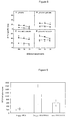
- the highest frequency of specific T cells was observed with two gene gun immunisations followed by an MVA i.v. boost and the intramuscular DNA injection followed an MVA i.v. boost ( Figure 6 ).
- Figure 6 shows the results of ELISPOT assays performed to measure the levels of specific CD8+ T cells to the malaria epitope pb9 following different immunisation regimes.
- ELISPOT assays were done two weeks after the last immunisation.
- mice of different strains were immunised with different antigens using two DNA immunisations and compared with DNA/MVA immunisations.
- the antigens used were E. coli -galactosidase, the malaria/HIV epitope string, a murine tumour epitope string and P. falciparum TRAP.
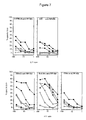
- the DNA-priming/MVA-boosting regimen induced higher levels of CTL in all the different mouse strains and antigen combinations tested ( Figure 8 ).
- Figure 8 shows CTL responses against different antigens induced in different inbred mouse strains.
- Mice were immunised with two DNA vaccine immunisations two weeks apart (open circles) or primed with a DNA vaccine and two weeks later boosted with a recombinant MVA expressing the same antigen (closed circles).
- the strains and antigens were: C57BL/6; P. falciparum TRAP in A. DBA/2; E .coli ⁇ -galactosidase in B. BALB/c; HM epitope string CTL activity against malaria peptide (pb9) in C. DBA/2; HM epitope string CTL activity against pb9 in D.
- Figure 10 shows CTL responses primed by plasmid DNA or recombinant Adenovirus and boosted with MVA .
- Plasmid DNA was administered intramuscularly, MVA intravenously and Adenovirus intradermally.
- Splenocytes were restimulated with peptide TPHPARIGL [SEQ ID NO: 69] two weeks after the last immunisation.
- CTL activity was tested with peptide-pulsed P815 cells.
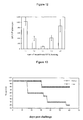
- the frequencies of peptide-specific CD8+ T cells were determined using the ELISPOT assay. The frequencies were: MVA 1103 +/- 438, NYVAC 826 +/- 249 and WR 468 +/- 135.
- Recombinant canary pox virus (rCPV) or fowl pox virus (rFVP) are made using shuttle vectors described previously ( Taylor et al. Virology 1992, 187: 321-328 and Taylor et al. Vaccine 1988, 6: 504-508 ).
- the strategy for these shuttle vectors is to insert the gene encoding the protein of interest preceded by a vaccinia-specific promoter between two flanking regions comprised of sequences derived from the CPV or FPV genome. These flanking sequences are chosen to avoid insertion into essential viral genes.
- Recombinant CPV or FPV are generated by in vivo recombination in permissive avian cell lines i.e. primary chicken embryo fibroblasts.
- Any protein sequence of antigens or epitope strings can be expressed using fowl pox or canary pox virus.
- Recombinant CPV or FPV is characterised for expression of the protein of interest using antigen-specific antibodies or including an antibody epitope into the recombinant gene.
- Recombinant viruses are grown on primary CEF.
- An immune response is primed using plasmid DNA as described in Materials and Methods. This plasmid DNA primed immune response is boosted using 10 7 ffu/pfu of rCPV or rFPV inoculated intravenously, intradermally or intramuscularly.
- CD8+ T cell responses are monitored and challenges are performed as described herein.
- mice were challenged by intravenous injection with 2000 or 200 P. berghei sporozoites. This leads to infection of liver cells by the sporozoites. However, in the presence of a sufficiently strong T lymphocyte response against the intrahepatic parasite no viable parasite will leave the liver and no blood-stage parasites will be detectable. Blood films from challenged mice were therefore assessed for parasites by microscopy 5-12 days following challenge.
- mice immunised twice with a mixture of two plasmid DNAs encoding the CS protein and the TRAP antigen, respectively, of P. berghei were not protected against sporozoite challenge.
- Mice immunised twice with a mixture of recombinant MVA viruses encoding the same two antigens were not protected against sporozoite challenge.
- Mice immunised first with the two recombinant MVAs and secondly with the two recombinant plasmids were also not protected against sporozoite challenge.
- all 15 mice immunised first with the two plasmid DNAs and secondly with the two recombinant MVA viruses were completely resistant to sporozoite challenge (Table 6 A and B).
- mice were then immunised with each antigen separately (Table 6 B). All 10 mice immunised first with the CS plasmid DNA and secondly with the CS MVA virus were completely protected against sporozoite challenge. Fourteen out of 16 mice immunised first with the TRAP plasmid DNA vaccine and secondly with the TRAP MVA virus were protected against sporozoite challenge. Therefore the CS antigen alone is fully protective when the above immunisation regime is employed and the TRAP antigen is substantially protective with the same regime.
- CD8+ T lymphocyte clones against the major CD8+ T cell epitope in the P. berghei CS protein can protect against sporozoite challenge.
- a plasmid DNA and a recombinant MVA encoding only this nine amino acid sequence from P. berghei as a part of a string of epitopes Table 6 B. (All the other epitopes were from micro-organisms other than P. berghei ).
- mice immunised twice with recombinant Ty-VLPs encoding pb9 were fully susceptible to infection.
- mice immunised twice with the recombinant MVA encoding the full CS protein were fully susceptible to infection.
- the mice immunised once with the Ty-VLP and subsequently once with the recombinant MVA showed an 85% reduction in malaria incidence when boosted with MVA expressing the full length CS protein, and 95% when MVA expressing the HM epitope string which includes pb9 was used to boost (Table 7).
- Table 7 Results of challenge experiments using different immunisation regimes of Ty-VLPs and MVA Immunisation 1 Immunisation 2 No.
- Ty-VLPs carried epitope cassettes CABDH or CABDHFE as described in table 1.
- MVA.HM includes cassettes CAB.
- mice were immunised with the DNA vaccine encoding P. berghei CS protein and boosted with either (i) recombinant MVA encoding this antigen; (ii) recombinant wild-type vaccinia virus (Western Reserve strain) encoding the same antigen (Satchidanandam et al. 1991), or (iii) recombinant NYVAC (COPAK) virus (Lanar et al. 1996) encoding the same malaria antigen.
- recombinant MVA encoding this antigen
- recombinant wild-type vaccinia virus Western Reserve strain
- COPAK recombinant NYVAC
- PbCSP indicates the entire P. berghei antigen and NP the nucleoprotein antigen of influenza virus (used as a control antigen).
- the control immunisation was with a plasmid DNA vector expressing ⁇ -galactosidase followed by MVA.NP.
- Intravenous injection of recombinant MVA is not a preferred route for immunising humans and not feasible in mass immunisations. Therefore different routes of MVA boosting were tested for their immunogenicity and protective efficacy. Mice were primed with plasmid DNA i.m. Two weeks later they were boosted with MVA administered via the following routes: intravenous (i.v.), subcutaneous (s.c.), intraperitoneal (i.p.), intramuscular (i.p.) and intradermal (i.d.). Two weeks after this boost peptide-specific CD8+ T cells were determined in an ELISPOT assay. The most effective route which induced the highest levels were i.v. and i.d inoculation of MVA. The other routes gave moderate to poor responses ( Figure 12 ).
- Figure 12 shows frequencies of peptide-specific CD8+ T cells following different routes of MVA boosting. Results are shown as the number of spot-forming cells (SFC) per one million splenocytes. Mice were primed with plasmid DNA and two weeks later boosted with MVA via the indicated routes. The number of splenocytes specific for the SYIPSAEKI [SEQ ID NO: 67] peptide was determined in INF- ⁇ ELISPOT assays two weeks after the last immunisation. Each bar represents the mean number of SFCs from three mice assayed individually.
- SFC spot-forming cells
- Boosting via the i.v. route was compared with the i.d. and i.m route in a challenge experiment.
- the i.d route gave high levels of protection (80% protection).
- 50% of the animals were protected.
- Complete protection was achieved with MVA boost administered i.v. (Table 10)
- mice 10/10 0 * culminative data from two independent experiments
- Table 10 Results from challenge experiments using different routes of MVA boosting immunisation. Animals were primed by intramuscular plasmid DNA injection and two weeks later boosted with the indicated recombinant MVA (10 6 ffu/mouse) administered via the routes indicated. The mice were challenged 16 days after the last immunisation with 2000 P. berghei sporozoites and screened for blood stage parasitemia at day 8 and 10 post challenge. Epitope indicates the polypeptide string HM.
- mice Intradermal delivery of plasmid DNA using a biolistic device is another route to prime specific CTL responses.
- Plasmid DNA is coated onto gold particles and delivered intradermally with a gene gun.
- mice challenged % protection 1000 sporozoites DNA followed by MVA 4/10 60 Na ⁇ ve 5/5 0 200 sporozoites DNA followed by MVA 0/10 100 Na ⁇ ve 5/5 0
- Table 12 Results of a challenge experiment using C57BL/6 mice. Animals were immunised with PbCSP and PbTRAP using the DNA followed by MVA prime boost regime. Fourteen days later the mice were challenged with P. berghei sporozoites as indicated.
- the two challenge models were the P815 tumour model and the influenza A virus challenge model. In both model systems CTL have been shown to mediate protection.
- mice were immunised with MVA.NP i.v. alone, three times with the gene gun, two times with the gene gun followed by one MVA.NP boost i.v. and two i.m injections of V1J-NP followed by one MVA.NP boost. Two weeks after the last immunisation the mice were challenged with 100 HA units of influenza A/PR/8/34 virus.
- Chimp H1 received an initial immunisation with 500 ⁇ g of a plasmid expressing Plasmodium falciparum TRAP from the CMV promoter without intron A, CMV-TRAP.
- Chimp H2 received the same dose of CMV-LSA-1, which expresses the C-terminal portion of the LSA-1 gene of P. falciparum.
- Both animals were subsequently immunised with three doses of 10 8 ffu of a recombinant MVA virus encoding the P. falciparum TRAP antigen over a 6 week period.
- T cell responses to the TRAP antigen were detectable in both chimpanzees using an ELISPOT assay to whole TRAP protein bound to latex beads. This assay detects both CD4+ and CD8+ T cell responses.
- Specific CD8+ T responses were searched for with a series of short 8-11 amino acid peptides in both immunised chimpanzees. Such analysis for CD8+ T cell responses indicated that CD8+ T cells were detectable only in the chimpanzee H1.
- the target epitope of these CD8+ T lymphocytes was an 11 amino acid peptide from TRAP, tr57, of sequence KTASCGVWDEW [SEQ ID NO: 78].
- These CD8+ T cells from H1 had lytic activity against autologous target cells pulsed with the tr57 peptide and against autologous target cells infected with the recombinant PfTRAP-MVA virus.
- a high precursor frequency of these specific CD8+ T cells of about 1 per 500 lymphocytes was detected in the peripheral blood of this chimpanzee H1 using an ELISPOT assay two months following the final MVA immunisation. No specific CD8+ T cell response was clearly detected in the chimpanzee H2, which was not primed with a plasmid DNA expressing TRAP.
- the levels induced are comparable to those found in SIV-infected animals.
- the data from the chimpanzee studies indicate that the same immunisation regime can induce a strong CD8+ T lymphocyte response against P. falciparum in higher primates with some evidence of protection against P. falciparum sporozoite challenge.
- Ty-VLPs have previously been reported to induce good levels of CD8+ T cell responses against the P. berghei rodent malaria (Allsopp et al . 1995) but alone this construct is not protective. It has now been found that subsequent immunisation with recombinant MVA boosts the CD8+ T cell response very substantially and generates a high level of protection (Table 7).
- Recombinant MVA viruses have not been assessed for efficacy as malaria vaccines previously. Recombinant MVA alone was not significantly protective, nor was priming with recombinant MVA followed by a second immunisation with recombinant plasmid DNA. However, a second immunisation with the recombinant MVA following an initial immunisation with either Ty-VLPs or plasmid DNA yielded impressive levels of protection. Non-recombinant MVA virus has been safely used to vaccinate thousands of human against smallpox and appears to have an excellent safety profile. The molecular basis of the increased safety and immunogenicity of this strain of vaccinia virus is being elucidated by detailed molecular studies (Meyer et al. 1991; Sutter at al. 1994).
- Plasmid DNA has previously been tested as a malaria vaccine for the P. yoelii rodent malaria. High levels of, but not complete, protection is seen in some strains but in other strains of mice little or no protection was observed even after multiple immunisations (Doolan et al. 1996). Although plasmid DNA has been proposed as a method of immunisation against P. falciparum, success has not previously been achieved. The evidence provided here is the first evidence to show that plasmid DNA may be used in an immunisation regime to induce protective immunity against the human malaria parasite P. falciparum.
- the plasmid DNA encoding the same epitope string as 3. 5.
- the plasmid DNAs and MVA encoding HIV epitopes for human class I molecules could be used in either prophylactic or therapeutic immunisation against HIV infection.
- the critical step in this immunisation regimen is the use of non-replicating or replication-impaired recombinant poxviruses to boost a pre-existing CTL response.
- CTL responses can be primed using different antigen delivery systems such as a DNA vaccine i.d. and i.m, a recombinant Ty-VLP, a recombinant adenovirus and irradiated sporozoites. This is supported by the data presented on the generation of a CD8+ T cell response against HIV, influenza virus and tumours.
- CD8+ T cell immune response is important
- Induction of protective CTL responses against influenza A virus has been demonstrated in Figure 14 .
- the immunisation regime described herein is expected to be of value in immunising against forms of cancer where CD8+ T cell responses plays a protective role.
- the induction of protective CTL responses using the DNA prime MVA boost regime against tumours is shown in Figure 13 . Specific examples in humans include melanoma, cancer of the breast and cancer of the colon.
- Patents Act Sections 22 and 33(3), Icelandic Patents Act Sections 22 and 33(3), Norwegian Patents Act Sections 22 and 33(3) and generally similar provisions mutatis mutandis for any other designated State.
Landscapes
- Health & Medical Sciences (AREA)
- Life Sciences & Earth Sciences (AREA)
- Chemical & Material Sciences (AREA)
- General Health & Medical Sciences (AREA)
- Medicinal Chemistry (AREA)
- Veterinary Medicine (AREA)
- Virology (AREA)
- Public Health (AREA)
- Pharmacology & Pharmacy (AREA)
- Animal Behavior & Ethology (AREA)
- Organic Chemistry (AREA)
- Immunology (AREA)
- Microbiology (AREA)
- Epidemiology (AREA)
- Genetics & Genomics (AREA)
- Mycology (AREA)
- Engineering & Computer Science (AREA)
- Tropical Medicine & Parasitology (AREA)
- Chemical Kinetics & Catalysis (AREA)
- Molecular Biology (AREA)
- General Chemical & Material Sciences (AREA)
- Zoology (AREA)
- Nuclear Medicine, Radiotherapy & Molecular Imaging (AREA)
- Bioinformatics & Cheminformatics (AREA)
- Gastroenterology & Hepatology (AREA)
- Oncology (AREA)
- Proteomics, Peptides & Aminoacids (AREA)
- Biochemistry (AREA)
- Biophysics (AREA)
- Communicable Diseases (AREA)
- Biotechnology (AREA)
- Biomedical Technology (AREA)
- Wood Science & Technology (AREA)
- General Engineering & Computer Science (AREA)
- Pulmonology (AREA)
- Physics & Mathematics (AREA)
- Toxicology (AREA)
- Hematology (AREA)
- Plant Pathology (AREA)
- Marine Sciences & Fisheries (AREA)
Applications Claiming Priority (4)
| Application Number | Priority Date | Filing Date | Title |
|---|---|---|---|
| GBGB9711957.2A GB9711957D0 (en) | 1997-06-09 | 1997-06-09 | Methods and reagents for vaccination |
| EP98928434A EP0979284B2 (de) | 1997-06-09 | 1998-06-09 | Reagenzien zur impfung, die eine cd8 t-zell-immunantwort erzeugen |
| EP04029353A EP1616954B1 (de) | 1997-06-09 | 1998-06-09 | Verfahren und Reagenzien zur Erzeugung einer CD8+T-Zellen Immunantwort gegen Hepatitis B oder C |
| EP02079736A EP1335023B1 (de) | 1997-06-09 | 1998-06-09 | Verfahren und Reagenzien zur Erzeugung einer CD8+ T-Zellen Immunantwort |
Related Parent Applications (1)
| Application Number | Title | Priority Date | Filing Date |
|---|---|---|---|
| EP04029353A Division EP1616954B1 (de) | 1997-06-09 | 1998-06-09 | Verfahren und Reagenzien zur Erzeugung einer CD8+T-Zellen Immunantwort gegen Hepatitis B oder C |
Publications (1)
| Publication Number | Publication Date |
|---|---|
| EP2058399A1 true EP2058399A1 (de) | 2009-05-13 |
Family
ID=10813841
Family Applications (5)
| Application Number | Title | Priority Date | Filing Date |
|---|---|---|---|
| EP08006920A Withdrawn EP2058399A1 (de) | 1997-06-09 | 1998-06-09 | Impfungsverfahren und -reagenzien zur Erzeugung einer CD8-T-Zellen-Immunreaktion |
| EP04029353A Expired - Lifetime EP1616954B1 (de) | 1997-06-09 | 1998-06-09 | Verfahren und Reagenzien zur Erzeugung einer CD8+T-Zellen Immunantwort gegen Hepatitis B oder C |
| EP98928434A Expired - Lifetime EP0979284B2 (de) | 1997-06-09 | 1998-06-09 | Reagenzien zur impfung, die eine cd8 t-zell-immunantwort erzeugen |
| EP02079736A Expired - Lifetime EP1335023B1 (de) | 1997-06-09 | 1998-06-09 | Verfahren und Reagenzien zur Erzeugung einer CD8+ T-Zellen Immunantwort |
| EP04029354A Expired - Lifetime EP1589108B1 (de) | 1997-06-09 | 1998-06-09 | Verfahren und Reagenzien zur Erzeugung einer CD8+ T-Zellen Immunantwort gegen Melanoma |
Family Applications After (4)
| Application Number | Title | Priority Date | Filing Date |
|---|---|---|---|
| EP04029353A Expired - Lifetime EP1616954B1 (de) | 1997-06-09 | 1998-06-09 | Verfahren und Reagenzien zur Erzeugung einer CD8+T-Zellen Immunantwort gegen Hepatitis B oder C |
| EP98928434A Expired - Lifetime EP0979284B2 (de) | 1997-06-09 | 1998-06-09 | Reagenzien zur impfung, die eine cd8 t-zell-immunantwort erzeugen |
| EP02079736A Expired - Lifetime EP1335023B1 (de) | 1997-06-09 | 1998-06-09 | Verfahren und Reagenzien zur Erzeugung einer CD8+ T-Zellen Immunantwort |
| EP04029354A Expired - Lifetime EP1589108B1 (de) | 1997-06-09 | 1998-06-09 | Verfahren und Reagenzien zur Erzeugung einer CD8+ T-Zellen Immunantwort gegen Melanoma |
Country Status (12)
| Country | Link |
|---|---|
| US (10) | US6663871B1 (de) |
| EP (5) | EP2058399A1 (de) |
| JP (2) | JP4282095B2 (de) |
| CN (1) | CN100379865C (de) |
| AT (4) | ATE391783T1 (de) |
| AU (1) | AU737780B2 (de) |
| CA (1) | CA2293692C (de) |
| DE (4) | DE69839405T2 (de) |
| DK (2) | DK0979284T4 (de) |
| ES (1) | ES2189185T5 (de) |
| GB (1) | GB9711957D0 (de) |
| WO (1) | WO1998056919A2 (de) |
Cited By (1)
| Publication number | Priority date | Publication date | Assignee | Title |
|---|---|---|---|---|
| WO2014080017A1 (en) | 2012-11-23 | 2014-05-30 | Epiontis Gmbh | Epigenetic method for the identification of subpopulations of cd8+ t lymphocytes, in particular cd8 alpha and beta t lymphocytes |
Families Citing this family (61)
| Publication number | Priority date | Publication date | Assignee | Title |
|---|---|---|---|---|
| US20030138454A1 (en) * | 1997-06-09 | 2003-07-24 | Oxxon Pharmaccines, Ltd. | Vaccination method |
| GB0023203D0 (en) * | 2000-09-21 | 2000-11-01 | Isis Innovation | Vaccination method |
| GB9711957D0 (en) | 1997-06-09 | 1997-08-06 | Isis Innovation | Methods and reagents for vaccination |
| CA2685270C (en) * | 1998-05-13 | 2014-07-29 | Pharmexa Inc. | Expression vectors for stimulating an immune response and methods of using the same |
| IL141868A0 (en) | 1998-10-05 | 2002-03-10 | M & E Biotech As | Novel methods for therapeutic vaccination |
| SI1117421T1 (en) * | 1998-10-05 | 2004-12-31 | Pharamexa A/S | Methods for therapeutic vaccination |
| US7148035B1 (en) | 1998-11-18 | 2006-12-12 | Oxford Biomedica (Uk) Limited | Polypeptide |
| AU2579600A (en) * | 1999-01-28 | 2000-08-18 | Stichting Biomedical Primate Research Centre | Product and method for obtaining specific immunisation with one or more antigens |
| ATE412762T1 (de) | 1999-05-28 | 2008-11-15 | Helmholtz Zentrum Muenchen | Vektor zur integration von heterologen sequenzen in poxvirusgenomen |
| CA2378539A1 (en) | 1999-07-06 | 2001-01-11 | Merck & Co., Inc. | Adenovirus carrying gag gene hiv vaccine |
| ATE395930T1 (de) | 1999-10-22 | 2008-06-15 | Aventis Pasteur | Verfahren zur erregung und/oder verstärkung der immunantwort gegen tumorantigene |
| AU784679B2 (en) * | 1999-12-23 | 2006-05-25 | International Aids Vaccine Initiative | Improvements in or relating to immune responses to HIV |
| MXPA02006554A (es) * | 1999-12-28 | 2003-09-22 | Epimmune Inc | Minigenes optimizados y peptidos codificados por los mismos. |
| CN1311871C (zh) | 2000-03-02 | 2007-04-25 | 爱莫里大学 | Dna表达载体及其应用方法 |
| US8623379B2 (en) | 2000-03-02 | 2014-01-07 | Emory University | Compositions and methods for generating an immune response |
| US7094408B2 (en) | 2000-04-28 | 2006-08-22 | The United States Of America As Represented By The Department Of Health And Human Services | Immunogenicity using a combination of DNA and vaccinia virus vector vaccines |
| US6733993B2 (en) | 2000-09-15 | 2004-05-11 | Merck & Co., Inc. | Enhanced first generation adenovirus vaccines expressing codon optimized HIV1-gag, pol, nef and modifications |
| AU3941002A (en) | 2000-10-31 | 2002-06-03 | Zycos Inc | Cyp1b1 nucleic acids and methods of use |
| US7628980B2 (en) | 2000-11-23 | 2009-12-08 | Bavarian Nordic A/S | Modified vaccinia virus ankara for the vaccination of neonates |
| US7445924B2 (en) | 2000-11-23 | 2008-11-04 | Bavarian Nordic A/S | Modified Vaccinia Ankara virus variant and cultivation method |
| PL212047B1 (pl) | 2000-11-23 | 2012-08-31 | Bavarian Nordic As | Zmodyfikowany wirus krowianki szczepu Ankara MVA-BN i jego pochodna, genom i zawierające je kompozycja farmaceutyczna, zwłaszcza szczepionka oraz ich zastosowania |
| JP4554887B2 (ja) | 2001-03-08 | 2010-09-29 | アメリカ合衆国 | 改変HIVエンベロープ、gag、およびpol遺伝子を発現するMVA |
| GB0118532D0 (en) | 2001-07-30 | 2001-09-19 | Isis Innovation | Materials and methods relating to improved vaccination strategies |
| EP1450854A2 (de) * | 2001-11-30 | 2004-09-01 | Isis Innovation Limited | Impfstoff |
| WO2003066833A2 (en) * | 2002-02-08 | 2003-08-14 | New York University | Use of recombinant hepatitis b core particles to develop vaccines against infectious pathogens and malignancies |
| CA2478631A1 (en) * | 2002-03-13 | 2003-09-18 | Merck & Co., Inc. | Method of inducing an enhanced immune response against hiv |
| NZ536592A (en) | 2002-04-19 | 2007-01-26 | Bavarian Nordic As | Modified vaccinia virus ankara for the vaccination of neonates |
| US20050123561A1 (en) * | 2002-05-20 | 2005-06-09 | Mitsuo Honda | Radio lan access authentication system |
| JP2005537793A (ja) | 2002-09-05 | 2005-12-15 | バヴァリアン・ノルディック・アクティーゼルスカブ | 無血清条件下で初代細胞を培養する方法及びウイルスを増幅させる方法 |
| WO2004043399A2 (en) * | 2002-11-13 | 2004-05-27 | The United States Of America As Represented By The Secretary Of The Navy | Methods and compositions for inducing immune responses and protective immunity by priming with alphavirus replicon vaccines |
| WO2004056391A1 (en) * | 2002-12-20 | 2004-07-08 | The University Of New South Wales | A method of immunisation and agents useful for same |
| US20050175627A1 (en) * | 2003-09-24 | 2005-08-11 | Oxxon Therapeutics Ltd. | HIV pharmaccines |
| EP1773402A2 (de) * | 2004-06-17 | 2007-04-18 | Mannkind Corporation | Wirksamere immuntherapie mittels ergänzung diagnostischer verfahren mit therapeutischen verfahren |
| GB2421025A (en) * | 2004-12-09 | 2006-06-14 | Oxxon Therapeutics Ltd | HSV vaccination vectors |
| WO2006120474A2 (en) * | 2005-05-13 | 2006-11-16 | Oxxon Therapeutics Ltd | Compositions for inducing an immune response against tumor antigens |
| WO2007004231A1 (en) * | 2005-07-04 | 2007-01-11 | Pradeep Seth | Hiv-1 vaccinogens with immunomodulators |
| FR2893254B1 (fr) | 2005-11-14 | 2007-12-21 | Biomerieux Sa | Composition comprenant un vecteur synthetique colloidal bioresorbable et un vecteur viral et son utilisation prophylactique, therapeutique et diagnostique. |
| TWI477602B (zh) | 2006-02-09 | 2015-03-21 | Educational Foundation Jichi Medical Univ | Novel viral vector |
| US9333249B2 (en) | 2006-02-09 | 2016-05-10 | Educational Foundation Jichi Medical University | Recombinant baculovirus vaccine |
| WO2007102326A1 (ja) * | 2006-03-07 | 2007-09-13 | Yokohama City University | アデノウイルス5型/35型ベクターとワクシニアウイルスmvaベクターとの併用による強力な免疫誘導 |
| ES2517615T3 (es) * | 2006-11-09 | 2014-11-03 | The United States Of America As Represented By The Secretary Of The Navy | Inducción de una respuesta inmunitaria frente al virus del dengue usando un enfoque de sensibilización-refuerzo |
| US8440202B2 (en) * | 2006-11-09 | 2013-05-14 | The United States Of America As Represented By The Secretary Of The Navy | Induction of an immune response against dengue virus using the prime-boost approach |
| GB0706912D0 (en) * | 2007-04-10 | 2007-05-16 | Isis Innovation | Novel viral vaccines |
| GB0706914D0 (en) * | 2007-04-10 | 2007-05-16 | Isis Innovation | Novel adenovirus vectors |
| WO2009127666A2 (en) * | 2008-04-15 | 2009-10-22 | Glaxosmithkline Biologicals S.A. | Method and compositions |
| US8691502B2 (en) | 2008-10-31 | 2014-04-08 | Tremrx, Inc. | T-cell vaccination with viral vectors via mechanical epidermal disruption |
| AU2010310468A1 (en) | 2009-10-23 | 2012-05-24 | Mannkind Corporation | Cancer immunotherapy and method of treatment |
| EP2552490A4 (de) * | 2010-03-26 | 2013-12-18 | Emergent Product Dev Gaithersburg Inc | Ektodomänen des influenza-matrix-2-proteins, expressionssystem dafür und verwendungen davon |
| GB201007207D0 (en) | 2010-04-29 | 2010-06-16 | Univ Cork | Method |
| WO2012023033A2 (en) | 2010-08-18 | 2012-02-23 | Purdue Pharma L.P. | Improved peptide immunogens |
| GB201018480D0 (en) | 2010-11-02 | 2010-12-15 | Oxford Biomedica Ltd | Factors |
| WO2012141984A1 (en) * | 2011-04-08 | 2012-10-18 | Immune Design Corp. | Immunogenic compositions and methods of using the compositions for inducing humoral and cellular immune responses |
| WO2014005643A1 (en) * | 2012-07-05 | 2014-01-09 | Okairos Ag | Novel prime-boosting regimens involving immunogenic polypeptides encoded by polynucleotides |
| WO2014064534A2 (en) | 2012-10-05 | 2014-05-01 | Chrontech Pharma Ab | Injection needle, device, immunogenic compositions and method of use |
| US9828414B2 (en) * | 2012-10-28 | 2017-11-28 | Bavarian Nordic A/S | Pr13.5 promoter for robust T-cell and antibody responses |
| WO2014139587A1 (en) | 2013-03-15 | 2014-09-18 | Okairòs Ag | Improved poxviral vaccines |
| US10576143B2 (en) * | 2013-03-15 | 2020-03-03 | Glaxosmithkline Biologicals Sa | Poxviral vaccines |
| CN106659777A (zh) | 2014-06-13 | 2017-05-10 | 葛兰素史密丝克莱恩生物有限公司 | 免疫原性组合产品 |
| US12220451B2 (en) | 2016-02-04 | 2025-02-11 | Duke University | Cell-based vaccine compositions and methods of use |
| EP3442570A1 (de) * | 2016-04-12 | 2019-02-20 | Oxford University Innovation Limited | Primärziel |
| CA3056542A1 (en) | 2017-03-15 | 2018-09-20 | Oxford Biomedica (Uk) Limited | Method |
Citations (4)
| Publication number | Priority date | Publication date | Assignee | Title |
|---|---|---|---|---|
| US5185146A (en) | 1988-01-12 | 1993-02-09 | Hoffmann-Laroche Inc. | Recombinant mva vaccinia virus |
| WO1996026271A1 (en) * | 1995-02-22 | 1996-08-29 | Therion Biologics Corporation | Generation of human cytotoxic t-cells specific for carcinoma self-associated antigens and uses thereof |
| WO1997039771A1 (en) * | 1996-04-22 | 1997-10-30 | The Government Of The United States Of America, Represented By The Secretary Of The Department Of Health And Human Services | Heterologous boosting immunizations |
| WO1998004728A1 (en) * | 1996-07-25 | 1998-02-05 | Therion Biologics Corporation | Recombinant pox virus for immunization against tumor-associated antigens |
Family Cites Families (48)
| Publication number | Priority date | Publication date | Assignee | Title |
|---|---|---|---|---|
| US197349A (en) * | 1877-11-20 | Improvement in ore-mills | ||
| US2003A (en) * | 1841-03-12 | Improvement in horizontal windivhlls | ||
| US131594A (en) * | 1872-09-24 | Improvement in pulley-blocks | ||
| US171272A (en) * | 1875-12-21 | Improvement in school-desks | ||
| US175365A (en) * | 1876-03-28 | Improvement in sheet-metal-straightening machines | ||
| US138454A (en) * | 1873-04-29 | Improvement in card-racks | ||
| ZA754725B (en) * | 1974-08-01 | 1976-06-30 | H Stickl | Preparation for the treatment of infectious diseases, method for the manufacture thereof, and its use |
| US5110587A (en) | 1981-12-24 | 1992-05-05 | Health Research, Incorporated | Immunogenic composition comprising synthetically modified vaccinia virus |
| GB8405530D0 (en) * | 1984-03-02 | 1984-04-04 | Lysons R J | Vaccine for swine dysentery |
| JP3044062B2 (ja) | 1989-03-08 | 2000-05-22 | ヘルス・リサーチ・インク | 組換えポックスウイルス宿主選択系 |
| US5225336A (en) | 1989-03-08 | 1993-07-06 | Health Research Incorporated | Recombinant poxvirus host range selection system |
| US5462734A (en) * | 1990-11-02 | 1995-10-31 | Wisconsin Alumni Research Foundation | Bovine herpesvirus vaccine and method of using same |
| US5766597A (en) * | 1991-03-07 | 1998-06-16 | Virogenetics Corporation | Malaria recombinant poxviruses |
| BE1004877A3 (fr) | 1991-05-27 | 1993-02-16 | Solvay | Virus de l'avipox recombinant, culture de cellules infectees par ce virus et vaccins pour la volaille derives de ce virus. |
| DE69233080T2 (de) | 1991-06-14 | 2004-04-15 | Connaught Technology Corp., Greenville | Rekombinanter hiv-spezifischer impfstoff aus poxviru |
| CA2110505A1 (en) | 1991-07-26 | 1993-02-18 | Enzo Paoletti | Infectious bursal disease virus recombinant poxvirus vaccine |
| ATE181108T1 (de) * | 1991-08-26 | 1999-06-15 | Immuno Ag | Direkt molekuläre klonierung eines modifizierten genoms eines chordopocken-virus |
| US5972351A (en) * | 1992-04-03 | 1999-10-26 | Isis Innovation Limited | Plasmodium falciparum MHC class I-restricted CTL epitopes derived from pre-erythrocytic stage antigens |
| PT638316E (pt) | 1993-08-11 | 2003-10-31 | Wyeth Corp | Vacinas de adenoviros recombinante |
| DE4341770A1 (de) * | 1993-12-08 | 1995-06-14 | Basf Ag | Verfahren zur Herstellung von Milchsäureestern |
| CA2195642A1 (en) * | 1994-07-27 | 1996-02-08 | Andreas Suhrbier | Polyepitope vaccines |
| FR2724945B1 (fr) * | 1994-09-27 | 1996-12-27 | Centre Nat Rech Scient | Vecteurs viraux et utilisation en therapie genique |
| WO1996039178A1 (en) * | 1995-06-05 | 1996-12-12 | The Wistar Institute Of Anatomy And Biology | A replication-defective adenovirus human type 5 recombinant as a vaccine carrier |
| EP0753581A1 (de) | 1995-07-10 | 1997-01-15 | Immuno Ag | Verbesserte rekombinante eukaryotische zytoplasmatische Viren, Methode ihrer Herstellung und ihrer Verwendung als Impfstoffe |
| US5741492A (en) * | 1996-01-23 | 1998-04-21 | St. Jude Children's Research Hospital | Preparation and use of viral vectors for mixed envelope protein vaccines against human immunodeficiency viruses |
| US20010036928A1 (en) * | 1996-04-22 | 2001-11-01 | Chamberlain Ronald S. | Heterologous boosting immunizations |
| EP0985046B1 (de) * | 1997-02-21 | 2006-04-12 | Oxxon Therapeutics Limited | Rekombinantes pockenvirus das das lösliche chemokine-bindende protein kodierende gen a41l nicht exprimieren kann. |
| GB0023203D0 (en) | 2000-09-21 | 2000-11-01 | Isis Innovation | Vaccination method |
| GB9711957D0 (en) * | 1997-06-09 | 1997-08-06 | Isis Innovation | Methods and reagents for vaccination |
| US20030138454A1 (en) * | 1997-06-09 | 2003-07-24 | Oxxon Pharmaccines, Ltd. | Vaccination method |
| CA2320958A1 (en) | 1998-02-11 | 1999-08-19 | Maxygen, Inc. | Antigen library immunization |
| US20010036929A1 (en) * | 1998-09-25 | 2001-11-01 | Arch Development Corporation. | Xrcc3 is required for assembly of Rad51-complexes in vivo |
| CA2378539A1 (en) | 1999-07-06 | 2001-01-11 | Merck & Co., Inc. | Adenovirus carrying gag gene hiv vaccine |
| AU772611B2 (en) | 1999-08-25 | 2004-05-06 | Merck Sharp & Dohme Corp. | Synthetic human papillomavirus genes |
| GB9922361D0 (en) | 1999-09-21 | 1999-11-24 | Isis Innovation | Generating an immune response to an antigen |
| DK1282702T3 (da) | 2000-05-10 | 2007-04-02 | Sanofi Pasteur Ltd | Immunogene polypeptider, som er kodet af KAGE-minigener, og anvendelser deraf |
| CU23235A1 (es) | 2001-02-28 | 2007-09-26 | Ct Ingenieria Genetica Biotech | POXVIRUS RECOMBINANTES PARA PROTEINAS QUIMéRICAS DEL VIRUS DE LA INMUNODEFICIENCIA HUMANA Y SU APLICACION EN LA TERAPéUTICA Y LA PREVENCION DEL SIDA |
| JP2002271316A (ja) * | 2001-03-13 | 2002-09-20 | Sanyo Electric Co Ltd | 再生装置 |
| CN1164331C (zh) | 2001-05-23 | 2004-09-01 | 中国人民解放军第二军医大学 | 一种人乙型肝炎核酸疫苗 |
| EP1450854A2 (de) * | 2001-11-30 | 2004-09-01 | Isis Innovation Limited | Impfstoff |
| US20040171272A1 (en) * | 2003-02-28 | 2004-09-02 | Applied Materials, Inc. | Method of etching metallic materials to form a tapered profile |
| US6942373B2 (en) * | 2003-03-14 | 2005-09-13 | Fiberstars Incorporated | Fiberoptic lighting system with shaped collector for efficiency |
| CA2537931A1 (en) | 2003-09-05 | 2005-03-24 | Dennis Panicali | Multi-antigen vectors for melanoma |
| WO2005030964A1 (en) | 2003-09-24 | 2005-04-07 | Oxxon Therapeutics Limited | Hiv pharmaccines |
| US20050175627A1 (en) * | 2003-09-24 | 2005-08-11 | Oxxon Therapeutics Ltd. | HIV pharmaccines |
| GB2421025A (en) | 2004-12-09 | 2006-06-14 | Oxxon Therapeutics Ltd | HSV vaccination vectors |
| WO2006120474A2 (en) | 2005-05-13 | 2006-11-16 | Oxxon Therapeutics Ltd | Compositions for inducing an immune response against tumor antigens |
| WO2006125983A1 (en) | 2005-05-23 | 2006-11-30 | Oxxon Therapeutics Ltd | Compositions for inducing an immune response against hepatitis b |
-
1997
- 1997-06-09 GB GBGB9711957.2A patent/GB9711957D0/en active Pending
-
1998
- 1998-06-09 DE DE69839405T patent/DE69839405T2/de not_active Expired - Lifetime
- 1998-06-09 DK DK98928434.4T patent/DK0979284T4/da active
- 1998-06-09 AT AT04029354T patent/ATE391783T1/de active
- 1998-06-09 EP EP08006920A patent/EP2058399A1/de not_active Withdrawn
- 1998-06-09 DE DE69839357T patent/DE69839357T2/de not_active Expired - Lifetime
- 1998-06-09 EP EP04029353A patent/EP1616954B1/de not_active Expired - Lifetime
- 1998-06-09 AT AT02079736T patent/ATE393225T1/de active
- 1998-06-09 DE DE69810459T patent/DE69810459T3/de not_active Expired - Lifetime
- 1998-06-09 AT AT04029353T patent/ATE391784T1/de active
- 1998-06-09 EP EP98928434A patent/EP0979284B2/de not_active Expired - Lifetime
- 1998-06-09 DE DE69839359T patent/DE69839359T2/de not_active Expired - Lifetime
- 1998-06-09 AT AT98928434T patent/ATE230437T1/de active
- 1998-06-09 DK DK02079736T patent/DK1335023T3/da active
- 1998-06-09 EP EP02079736A patent/EP1335023B1/de not_active Expired - Lifetime
- 1998-06-09 EP EP04029354A patent/EP1589108B1/de not_active Expired - Lifetime
- 1998-06-09 WO PCT/GB1998/001681 patent/WO1998056919A2/en not_active Ceased
- 1998-06-09 AU AU80266/98A patent/AU737780B2/en not_active Expired
- 1998-06-09 CN CNB98808063XA patent/CN100379865C/zh not_active Expired - Lifetime
- 1998-06-09 ES ES98928434T patent/ES2189185T5/es not_active Expired - Lifetime
- 1998-06-09 CA CA2293692A patent/CA2293692C/en not_active Expired - Lifetime
- 1998-06-09 JP JP50189099A patent/JP4282095B2/ja not_active Expired - Lifetime
-
1999
- 1999-12-09 US US09/454,204 patent/US6663871B1/en not_active Expired - Lifetime
-
2003
- 2003-09-02 US US10/653,624 patent/US20040131594A1/en not_active Abandoned
- 2003-10-16 US US10/686,943 patent/US20040213799A1/en not_active Abandoned
-
2004
- 2004-04-28 US US10/833,439 patent/US7514087B2/en not_active Expired - Fee Related
- 2004-04-28 US US10/833,744 patent/US7407661B2/en not_active Expired - Fee Related
- 2004-04-28 US US10/833,745 patent/US20040191272A1/en not_active Abandoned
-
2006
- 2006-08-14 JP JP2006221144A patent/JP2007023044A/ja active Pending
-
2008
- 2008-08-04 US US12/221,498 patent/US20090191237A1/en not_active Abandoned
-
2009
- 2009-05-15 US US12/454,385 patent/US20090324632A1/en not_active Abandoned
- 2009-06-19 US US12/456,699 patent/US20100119551A1/en not_active Abandoned
-
2010
- 2010-11-05 US US12/940,627 patent/US20110159034A1/en not_active Abandoned
Patent Citations (4)
| Publication number | Priority date | Publication date | Assignee | Title |
|---|---|---|---|---|
| US5185146A (en) | 1988-01-12 | 1993-02-09 | Hoffmann-Laroche Inc. | Recombinant mva vaccinia virus |
| WO1996026271A1 (en) * | 1995-02-22 | 1996-08-29 | Therion Biologics Corporation | Generation of human cytotoxic t-cells specific for carcinoma self-associated antigens and uses thereof |
| WO1997039771A1 (en) * | 1996-04-22 | 1997-10-30 | The Government Of The United States Of America, Represented By The Secretary Of The Department Of Health And Human Services | Heterologous boosting immunizations |
| WO1998004728A1 (en) * | 1996-07-25 | 1998-02-05 | Therion Biologics Corporation | Recombinant pox virus for immunization against tumor-associated antigens |
Non-Patent Citations (98)
| Title |
|---|
| 0GG GS ET AL.: "Quantitation of HIV-1-specific cytotoxic T lymphocytes and plasma load of viral RNA", SCIENCE, vol. 279, 1998, pages 2103 - 6 |
| ADA G.: "Do cytotoxic T lymphocytes clear some HIV/SIV infections", JOURNAL OF MEDICAL PRIMATOLOGY, vol. 25, 1996, pages 158 - 62 |
| AIDOO M; LALVANI A; ALLSOPP CEM ET AL.: "Identification of conserved antigenic components for a cytotoxic T lymphocyte-inducing vaccine against malaria", THE LANCET., vol. 345, 1995, pages 1003 - 1007 |
| AIDOO, MICHAEL ET AL: "Recombinant vaccinia viruses for the characterization of Plasmodium falciparum-specific cytotoxic T lymphocytes: recognition of processed antigen despite limited re-stimulation efficacy", INT. IMMUNOL. (MAY 1997), 9(5), 731-737 CODEN: INIMEN;ISSN: 0953-8178, May 1997 (1997-05-01), XP002096556 * |
| ALCAMI A; SMITH GL., CELL, vol. 71, 1992, pages 153 - 67 |
| ALCAMI A; SMITH GL., J. VIROL., vol. 69, 1995, pages 4633 - 9 |
| ALCAMI A; SMITH GL., PROC. NATL. ACAD. SCI. USA, vol. 93, 1996, pages 11029 - 34 |
| ALLSOPP CEM; PLEBANSKI M; GILBERT S: "Comparison of numerous delivery systems for the induction of cytotoxic T lymphocytes", EUROPEAN JOUMAL OF IMMUNOLOGY, vol. 26, 1996, pages 1951 - 1959 |
| ALTENBURGER W; SUTER CP; ALTENBURGER, J. ARCH VIROL., vol. 105, 1989, pages 15 - 27 |
| AUPERIN DD: "Protection of guinea pigs from Lassa fever by vaccinia virus recombinants expressing the nucleoprotein or the envelope glycoproteins of Lassa virus", VIROLOGY, vol. 171, 1989, pages 179 - 88 |
| BLANCHARD TJ ET AL., LANCET, vol. 348, 1997, pages 1741 |
| BLANCHARD, TOM J. ET AL: "Modified vaccinia virus Ankara undergoes limited replication in human cells and lacks several immunomodulatory proteins: implications for use as a human vaccine", J. GEN. VIROL. (MAY 1998), 79(5), 1159-1167 CODEN: JGVIAY;ISSN: 0022-1317, May 1998 (1998-05-01), XP002096559 * |
| BURNS ET AL., MOLEC. BIOTECHNOL., vol. 1, 1994, pages 137 - 145 |
| CARROLL MW; MOSS BE, BIOTECHNOLOGY, vol. 19, 1995, pages 352 - 4 |
| CARROLL, MILES W. ET AL: "Highly attenuated modified vaccinia virus Ankara (MVA) as an effective recombinant vector: A murine tumor model.", VACCINE, (MARCH 1997) VOL. 15, NO. 4, PP. 387-394. ISSN: 0264-410X., March 1997 (1997-03-01), XP004094431 * |
| CHAKRABARTI S ET AL., MOL. CELL. BIOL., vol. 5, 1995, pages 3403 - 9 |
| CHAMBERLAIN R S ET AL: "USE OF MULTIPLE VACCINATION VECTORS FOR THE GENERATION OF CTL AGAINST A MODEL TUMOR ANTIGEN", PROCEEDINGS OF THE 87TH. ANNUAL MEETING OF THE AMERICAN ASSOCIATION FOR CANCER RESEARCH. WASHINGTON, APR. 20 - 24, 1996, PROCEEDINGS OF THE ANNUAL MEETING OF THE AMERICAN ASSOCIATION FOR CANCER RESEARCH, PHILADELPHIA, AACR, US, vol. MEETING 87, 20 April 1996 (1996-04-20), pages 3263, XP002036179, ISSN: 0197-016X * |
| COX W I ET AL: "INDUCTION OF CYTOTOXIC T LYMPHOCYTES BY RECOMBINANT CANARYPOX (ALVAC) AND ATTENUATED VACCINIA (NYVAC) VIRUSES EXPRESSING THE HIV-1 ENVELOPE GLYCOPROTEIN", VIROLOGY, ACADEMIC PRESS,ORLANDO, US, vol. 195, 1993, pages 845 - 850, XP002085837, ISSN: 0042-6822 * |
| DALLO S ET AL: "Isolation and characterization of attenuated mutants of vaccinia virus", VIROLOGY, ELSEVIER, AMSTERDAM, NL, vol. 159, no. 2, 1 August 1987 (1987-08-01), pages 408 - 422, XP023059283, ISSN: 0042-6822, [retrieved on 19870801], DOI: 10.1016/0042-6822(87)90480-6 * |
| DARJI A, CELL, vol. 91, 1997, pages 765 - 775 |
| DAVIS HL; MICHEL ML; WHALEN RG.: "DNA-based immunization induces continuous secretion of hepatitis B surface antigen and high levels of circulating antibody", HUMAN MOLECULAR GENETICS, vol. 2, 1993, pages 1847 - 51 |
| DAVIS JR ET AL.: "Estimate of anti-Plasmodium falciparum sporozoite activity in humans vaccinated with synthetic circumsporozoite protein (NANP)3", TRANSACTIONS OF THE ROYAL SOCIETY FOR TROPICAL MEDICINE AND HYGIENE, vol. 83, 1989, pages 748 - 50 |
| DAVIS NL; BROWN KW; JOHNSTON RE, J. VIROL, vol. 70, no. 6, 1996, pages 3781 - 7 |
| DEGANO ET AL., VACCINE, vol. 16, 1998, pages 394 - 398 |
| DOOLAN DL ET AL.: "Circumventing genetic restriction of protection against malaria with multigene DNA immunization: CD8+ cell-, interferon gamma-, and nitric oxide-dependent immunity", J. EXP. MED., vol. 183, 1996, pages 1739 - 46 |
| EGAN M A ET AL: "INDUCTION OF HUMAN IMMUNODEFIENCY VIRUS TYPE 1 (HIV-1)-SPECIFIC CYTOLYTIC T LYMPHOCYTE RESPONSES IN SERONEGATIVE ADULTS BY A NONREPLICATING, HOST-RANGE-RESTRICTED CANARYPOX VECTOR (ALVAC) CARRYING THE HIV-1MNENV GENE", JOURNAL OF INFECTIOUS DISEASES, CHICAGO, IL, US, vol. 171, no. 6, June 1995 (1995-06-01), pages 1623 - 1627, XP000671829, ISSN: 0022-1899 * |
| EISENBRAUN ET AL., DNA CELL BIOL, vol. 12, 1993, pages 791 - 797 |
| ELLIS: "Vaccines", 1988, article "new technologies for making vaccines", pages: 568 |
| FULLER ET AL., VACCINE, vol. 15, 1997, pages 924 - 926 |
| GALLIMORE A ET AL.: "Early suppression of SIV replication by CD8+ nef-specific cytotoxic T cells in vaccinated macaques", NATURE MEDICINE, vol. 1, 1995, pages 1167 - 73 |
| GILBERT, SARAH C. ET AL: "A protein particle vaccine containing multiple malaria epitopes", NAT. BIOTECHNOL. (NOVEMBER 1997), 15(12), 1280-1284 CODEN: NABIF9;ISSN: 1087-0156, November 1997 (1997-11-01), XP002096555 * |
| GONCZOL E ET AL: "Preclinical evaluation of an ALVAC (canarypox)-human cytomegalovirus glycoprotein B vaccine candidate", VACCINE, BUTTERWORTH SCIENTIFIC. GUILDFORD, GB, vol. 13, no. 12, August 1995 (1995-08-01), pages 1080 - 1085, XP004057496, ISSN: 0264-410X * |
| GRAHAM KA ET AL., VIROLOGY, vol. 229, 1997, pages 12 - 24 |
| HANKE T ET AL: "DNA multi - CTL epitope vaccines for HIV and Plasmodium falciparum: immunogenicity in mice.", VACCINE, (1998 FEB) 16 (4) 426-35. JOURNAL CODE: X6O. ISSN: 0264-410X., February 1998 (1998-02-01), ENGLAND: United Kingdom, XP004099305 * |
| HANKE T ET AL: "Enhancement of MHC class I-restricted peptide-specific T cell induction b a DNA prime/MVA boost vaccination regime.", VACCINE, (1998 MAR) 16 (5) 439-45. JOURNAL CODE: X6O. ISSN: 0264-410X., March 1998 (1998-03-01), ENGLAND: United Kingdom, XP004106957 * |
| HANKE, T. ET AL: "Immunogenicities of intravenous and intramuscular administrations of modified vaccinia virus Ankara -base multi-CTL epitope vaccine for human immunodeficiency virus type 1 in mice", J. GEN. VIROL. (JANUARY 1998), 79(1), 83-90 CODEN: JGVIAY;ISSN: 0022-1317, January 1998 (1998-01-01), XP002096554 * |
| HILL AVS ET AL.: "Common West African HLA antigens are associated with protection from severe malaria", NATURE, vol. 352, 1991, pages 595 - 600 |
| HIRSCH V M ET AL: "Patterns of viral replication correlate with outcome in Simian Imunodeficiency Virus (SIV)-infected macaques: Effect of prior immunization with a trivalent SIV vaccine in modified Vaccinia virus Ankara", JOURNAL OF VIROLOGY, THE AMERICAN SOCIETY FOR MICROBIOLOGY, US, vol. 70, no. 6, June 1996 (1996-06-01), pages 3741 - 3752, XP002102926, ISSN: 0022-538X * |
| HIRSCH VM; FUERST TR; SUTTER G ET AL., J. VIROL, vol. 70, 1996, pages 3741 - 52 |
| HIRSCH VM; GOLDSTEIN S; CHANNOCK R ET AL.: "Vaccines 95", 1995, COLD SPRING HARBOR LABORATORY PRESS, pages: 195 - 200 |
| HODGE, JAMES W. ET AL: "Diversified prime and boost protocols using recombinant vaccini virus and recombinant non - replicating avian pox virus to enhance T-cell immunity and antitumor responses", VACCINE (APRIL-MAY 1997), 15(6/7), 759-768 CODEN: VACCDE;ISSN: 0264-410X, April 1997 (1997-04-01), XP004064540 * |
| HODGE, VACCINE, vol. 15, 1997, pages 759 - 768 |
| IMMUNOL CELL BIOL, vol. 75, 1997, pages 389 - 396 |
| IRVINE K R ET AL: "Enhancing efficacy of recombinant anticancer vaccines with prime/boost regimens that use two different vectors", JOURNAL OF THE NATIONAL CANCER INSTITUTE, US DEPT. OF HEALTH, EDICATIONAND WELFARE, PUBLIC HEALTH, US, vol. 89, no. 21, 1997, pages 1595 - 1601, XP002110478, ISSN: 0027-8874 * |
| KONISHI E ET AL: "Poxvirus-Based Japanese Encephalitis Vaccine Candidates Induce JE Virus-Specific CD8<+>Cytotoxic T Lymphocytes in Mice", VIROLOGY, ACADEMIC PRESS,ORLANDO, US, vol. 227, no. 2, 20 January 1997 (1997-01-20), pages 353 - 360, XP004459998, ISSN: 0042-6822 * |
| LALVANI A ET AL.: "An HLA-based approach to the design of a CTL-inducing vaccine against Plasmodium falciparum", RESEARCH IN IMMUNOLOGY, vol. 145, 1994, pages 461 - 8 |
| LANAR DE ET AL.: "Attenuated vaccinia virus-circumsporozoite protein recombinants confer protection against rodent malaria", INFECTION AND IMMUNITY, vol. 64, 1996, pages 1666 - 71 |
| LANAR ET AL: "Attenuated vaccinia virus-circumsporozoite protein recombinants confer protection against rodent malaria.", INFECTION AND IMMUNITY, vol. 64, no. 5, 1 May 1996 (1996-05-01), pages 1666 - 1671, XP055071386, ISSN: 0019-9567 * |
| LAYTON GT ET AL.: "Induction of single and dual cytotoxic T-lymphocyte responses to viral proteins in mice using recombinant hybrid Ty-virus-like particles", IMMUNOLOGY, vol. 87, 1996, pages 171 - 8 |
| LAYTON, G. T. ET AL: "Induction of single and dual cytotoxic T-lymphocyte responses to viral proteins in mice using recombinant hybrid Ty - virus - like particles", IMMUNOLOGY (1996), 87(2), 171-8 CODEN: IMMUAM;ISSN: 0019-2805, 1996, XP002096558 * |
| LEE M S ET AL., J VIROLOGY, vol. 66, 1992, pages 2617 - 2630 |
| LEONG ET AL., VACCINES, 1995, pages 327 - 331 |
| LEONG ET AL: "Generation of enhanced immune responses by consecutive immunization with DNA and recombinant fowl pox vectors", VACCINE, BUTTERWORTH SCIENTIFIC. GUILDFORD, GB, 1995, pages 327 - 331, XP002080404, ISSN: 0264-410X * |
| LI S ET AL.: "Priming with recombinant influenza virus followed by administration of recombinant vaccinia virus induces CD8+ T-cell-mediated protective immunity against malaria", PROC. NATL. ACAD. SCI. USA., vol. 90, 1993, pages 5214 - 8 |
| LI S ET AL: "PRIMING WITH RECOMBINANT INFLUENZA VIRUS FOLLOWED BY ADMINISTRATIONOF RECOMBINANT VACCINA VIRUS INDUCES CD8+ T-CELL-MEDIATED PROTECTIVE IMMUNITY AGAINST MALARIA", PROCEEDINGS OF THE NATIONAL ACADEMY OF SCIENCES OF USA, NATIONAL ACADEMY OF SCIENCE. WASHINGTON, US, vol. 90, June 1993 (1993-06-01), pages 5214 - 5218, XP002053216, ISSN: 0027-8424 * |
| LIMBACH, K. J. ET AL: "Non - replicating expression vectors: Applications in vaccine development and gene therapy.", EPIDEMIOLOGY AND INFECTION, (1996) VOL. 116, NO. 3, PP. 241-256. ISSN: 0950-2688., 1996, XP002096557 * |
| MACKETT M ET AL., J. VIROL., vol. 49, 1984, pages 857 - 864 |
| MAHNEL H; MAYR A., BERL MUNCH TIERARZTL WOCHENSCHR, vol. 107, 1994, pages 253 - 6 |
| MAYR A ET AL., ZENTRALBF BAKTERIOL B., vol. 167, 1978, pages 375 - 90 |
| MAYR A, ZENTRALBL VETERINARMED B, vol. 23, 1976, pages 417 - 30 |
| MAYR A; HOCHSTEIN-MINTZEL V; STICKL H., INFECTION, vol. 33, 1975, pages 6 - 14 |
| MCGRORY-WJ;; BAUTISTA-DS; GRAHAM-FL: "A simple technique for the rescue of early region I mutations into infectious human adenovirus type 5", VIROLOGY, vol. 163, 1988, pages 614 - 7 |
| MCLEAN CS ET AL., J. INFECT. DIS, vol. 170, no. 5, 1994, pages 1100 - 9 |
| MEYER H; SUTTER G; MAYR A., J GEN VIROL, vol. 72, 1991, pages 1031 - 8 |
| MEYER, H.; SUTTER, G.; MAYR, A: "Mapping of deletions in the genome of the highly attenuated vaccinia virus MVA and their influence on virulence", J. GEN. VIROL., vol. 72, 1991, pages 1031 - 38 |
| MIYAHIRA Y; MURATA K; RODRIGUEZ D ET AL.: "Quantification of antigen specific CD8+ T cells using an ELlSPOT assay", J IMMUNOT METHODS, vol. 18, 1995, pages 45 - 54 |
| MOSS B; CARROLL MW; WYATT L ET AL.: "Anonymous, ed. Vaccines: Novel strategies in design and production", 1995, PLENUM PRES |
| MULLER HM ET AL.: "Thrombospondin related anonymous protein (TRAP) of Plasmodium falciparum binds specifically to sulfated glycoconjugates and to HepG2 hepatoma cells suggesting a role for this molecule in sporozoite invasion of hepatocytes", EMBO-J., vol. 12, 1993, pages 2881 - 9 |
| MURATA ET AL., CELL. TMMUNO, vol. 173, 1996, pages 96 - 107 |
| NARDIN EH; NUSSENZWEIG RS.: "T cell responses to pre-erythrocytic stages of malaria: role in protection and vaccine development against pre-erythrocytic stages", ANNUAL REVIEW OF IMMUNOLOGY, vol. 11, 1993, pages 687 - 727 |
| RICHMOND ET AL., VIROLOGY, vol. 230, 1997, pages 265 - 274 |
| RODRIGUES EG ET AL.: "Single immunizing dose of recombinant adenovirus efficiently induces CD8+ T cell-mediated protective immunity against malaria", J. IMMUNOL., vol. 158, 1997, pages 1268 - 74 |
| RODRIGUES EG ET AL.: "Single immunizing dose of recombinant adenovirus efficiently induces CD8+ T cell-mediated protective immunity against malaria", JOURNAL OF IMMUNOLOGY, vol. 158, 1997, pages 1268 - 74 |
| RODRIGUES ET AL., J. IMMUNOL., 1994, pages 4636 - 4648 |
| RODRIGUES M ET AL: "INFLUENZA AND VACCINIA VIRUSES EXPRESSING MALARIA CD8+ T AND B CELLEPITOPES COMPARISON OF THEIR IMMUNOGENICITY AND CAPACITY TO INDUCE PROTECTIVE IMMUNITY", JOURNAL OF IMMUNOLOGY, THE WILLIAMS AND WILKINS CO. BALTIMORE, US, vol. 153, no. 10, 1994, pages 4636 - 4648, XP001026182, ISSN: 0022-1767 * |
| SATCHIDANANDAM V; ZAVALA F; MOSS B.: "Studies using a recombinant vaccinia virus expressing the circumsporozoite protein of Plasmodium berghei.", MOL. BIOCHEM. PARASITOL., vol. 48, 1991, pages 89 - 99 |
| SCHNEIDER, JORG ET AL: "Enhanced immunogenicity for CD8+ T cell induction and complete protective efficacy of malaria DNA vaccination by boosting with modified vaccinia virus Ankara", NAT. MED. (N. Y.) (APRIL 1998), 4(4), 397-402 CODEN: NAMEFI;ISSN: 1078-8956, April 1998 (1998-04-01), XP000739989 * |
| SCHODEL F ET AL.: "Immunity to malaria elicited by hybrid hepatitis B virus core particles carrying circumsporozoite protein epitopes", J. EXP. MED., vol. 180, 1994, pages 1037 - 46 |
| SEDEGAH M ET AL.: "Protection against malaria by immunization with plasmid DNA encoding circumsporozoite protein", PROC. NATL. ACAD. SCI USA., vol. 91, 1994, pages 9866 - 70 |
| SEGUIN MC ET AL.: "Induction of nitric oxide synthase protects against malaria in mice exposed to irradiated Plasmodium berghei infected mosquitoes: involvement of interferon gamma and CD8+ T cells", J. EXP. MED., vol. 180, 1994, pages 353 - 8 |
| STICKL H ET AL., DTSCH MED WOCHENSCHR., vol. 99, 1974, pages 23866 - 922 |
| STOUTE J A ET AL., N ENGL J MEDICINE, vol. 226, 1997, pages 86 - 91 |
| SUTTER G ET AL., J. VIROL, vol. 68, 1994, pages 4109 - 16 |
| SUTTER G ET AL.: "A recombinant vector derived from the host range-restricted and highly attenuated MVA strain of vaccinia virus stimulates protective immunity in mice to influenza virus", VACCINE, vol. 12, 1994, pages 1032 - 40 |
| SUTTER G ET AL: "A RECOMBINANT VECTOR DERIVED FROM THE HOST RANGE-RESTRICTED AND HIGHLY ATTENUATED MVA SRTAIN OF VACCINIA VIRUS STIMULATES PROTECTIVE IMMUNITY IN MICE TE INFLUENZA VIRUS", VACCINE, BUTTERWORTH SCIENTIFIC. GUILDFORD, GB, vol. 12, no. 11, January 1994 (1994-01-01), pages 1032 - 1040, XP002019163, ISSN: 0264-410X * |
| SUTTER G; MOSS B., PROC NATL ACAD SCI U S A, vol. 89, 1992, pages 10847 - 51 |
| SUTTER GW ET AL., VACCINE, vol. 12, 1994, pages 1032 - 40 |
| SYMONS JA; ALCAMI A; SMITH GL., CELL, vol. 81, 1995, pages 551 - 60 |
| TARTAGLIA J ET AL., VIROLOGY, vol. 188, 1992, pages 217 - 232 |
| TARTAGLIA, VIROLOGY, vol. 188, 1992, pages 217 - 232 |
| TAYLOR, VACCINE, vol. 6, 1988, pages 504 - 508 |
| TAYLOR, VIROLOGY, vol. 187, 1992, pages 321 - 328 |
| THOMAS AW ET AL.: "Chimpanzees and supporting models in the study of malaria pre-erythrocytic stages", MEM. INST. OSWALDO CRUZ., vol. 89, no. 2, 1994, pages 111 - 4 |
| TSANG K Y ET AL: "Generation of human cytotoxic T cells specific for human carcinoembryonic antigen epitopes from patients immunized with recombinant vaccinia-CEA vaccine [see comments].", JOURNAL OF THE NATIONAL CANCER INSTITUTE, (1995 JUL 5) 87 (13) 982-90. JOURNAL CODE: J9J. ISSN: 0027-8874., July 1995 (1995-07-01), United States, XP000578019 * |
| VACCINE, vol. 9, 1991, pages 190 - 193 |
| WANG M ET AL: "ACTIVE IMMUNOTHERAPY OF CANCER WITH A NONREPLICATING RECOMBINANT FOWLPOX VIRUS ENCODING A MODEL TUMOR-ASSOCIATED ANTIGEN", JOURNAL OF IMMUNOLOGY, THE WILLIAMS AND WILKINS CO. BALTIMORE, US, vol. 154, May 1995 (1995-05-01), pages 4685 - 4692, XP000676343, ISSN: 0022-1767 * |
| WIZEL B ET AL.: "Irradiated sporozoite vaccine induces HLA-B8-restricted cytotoxic T lymphocyte responses against two overlapping epitopes of the Plasmodium falciparum sporozoite surface protein 2", J. EXP MED., vol. 182, 1995, pages 1435 - 45 |
| WOODROW G C: "New Generation Vacciness", 1977, pages: 33 |
Cited By (1)
| Publication number | Priority date | Publication date | Assignee | Title |
|---|---|---|---|---|
| WO2014080017A1 (en) | 2012-11-23 | 2014-05-30 | Epiontis Gmbh | Epigenetic method for the identification of subpopulations of cd8+ t lymphocytes, in particular cd8 alpha and beta t lymphocytes |
Also Published As
Similar Documents
| Publication | Publication Date | Title |
|---|---|---|
| EP1616954B1 (de) | Verfahren und Reagenzien zur Erzeugung einer CD8+T-Zellen Immunantwort gegen Hepatitis B oder C | |
| Webster et al. | Safety of recombinant fowlpox strain FP9 and modified vaccinia virus Ankara vaccines against liver-stage P. falciparum malaria in non-immune volunteers | |
| US20030138454A1 (en) | Vaccination method | |
| AU762894B2 (en) | Use of replication-deficient adenoviral vector to boost CD8+ T cell immune response to antigen | |
| Gilbert et al. | Ty virus-like particles, DNA vaccines and Modified Vaccinia Virus Ankara; comparisons and combinations | |
| CN1708587B (zh) | 作为抗恶性疟的潜在疫苗的重组mva株 | |
| AU775973B2 (en) | Methods and reagents for vaccination which generate a CD8 T cell immune response | |
| AU2004203141B2 (en) | Methods and reagents for vaccination which generate CD8 T cell immune response |
Legal Events
| Date | Code | Title | Description |
|---|---|---|---|
| PUAI | Public reference made under article 153(3) epc to a published international application that has entered the european phase |
Free format text: ORIGINAL CODE: 0009012 |
|
| AC | Divisional application: reference to earlier application |
Ref document number: 1616954 Country of ref document: EP Kind code of ref document: P Ref document number: 0979284 Country of ref document: EP Kind code of ref document: P Ref document number: 1335023 Country of ref document: EP Kind code of ref document: P |
|
| AK | Designated contracting states |
Kind code of ref document: A1 Designated state(s): AT BE CH DE DK ES FI FR GB GR IE IT LI NL SE |
|
| 17P | Request for examination filed |
Effective date: 20091111 |
|
| 17Q | First examination report despatched |
Effective date: 20091208 |
|
| AKX | Designation fees paid |
Designated state(s): AT BE CH DE DK ES FI FR GB GR IE IT LI NL SE |
|
| STAA | Information on the status of an ep patent application or granted ep patent |
Free format text: STATUS: THE APPLICATION IS DEEMED TO BE WITHDRAWN |
|
| 18D | Application deemed to be withdrawn |
Effective date: 20140417 |