EP2059007A1 - Bildverarbeitungsvorrichtung - Google Patents
Bildverarbeitungsvorrichtung Download PDFInfo
- Publication number
- EP2059007A1 EP2059007A1 EP08014055A EP08014055A EP2059007A1 EP 2059007 A1 EP2059007 A1 EP 2059007A1 EP 08014055 A EP08014055 A EP 08014055A EP 08014055 A EP08014055 A EP 08014055A EP 2059007 A1 EP2059007 A1 EP 2059007A1
- Authority
- EP
- European Patent Office
- Prior art keywords
- casing
- input
- key
- processing apparatus
- input numeral
- Prior art date
- Legal status (The legal status is an assumption and is not a legal conclusion. Google has not performed a legal analysis and makes no representation as to the accuracy of the status listed.)
- Ceased
Links
- 238000012545 processing Methods 0.000 title claims description 93
- 230000010365 information processing Effects 0.000 claims abstract description 29
- 238000003825 pressing Methods 0.000 claims abstract description 5
- 238000000034 method Methods 0.000 claims description 10
- 230000004044 response Effects 0.000 claims description 3
- 230000001413 cellular effect Effects 0.000 description 93
- 230000006835 compression Effects 0.000 description 19
- 238000007906 compression Methods 0.000 description 19
- 230000005540 biological transmission Effects 0.000 description 18
- 210000004935 right thumb Anatomy 0.000 description 11
- 210000003811 finger Anatomy 0.000 description 6
- 230000006870 function Effects 0.000 description 3
- 238000001228 spectrum Methods 0.000 description 3
- 230000003321 amplification Effects 0.000 description 2
- 238000006243 chemical reaction Methods 0.000 description 2
- 238000012217 deletion Methods 0.000 description 2
- 230000037430 deletion Effects 0.000 description 2
- 238000010586 diagram Methods 0.000 description 2
- 238000005516 engineering process Methods 0.000 description 2
- 238000012544 monitoring process Methods 0.000 description 2
- 238000003199 nucleic acid amplification method Methods 0.000 description 2
- 239000004065 semiconductor Substances 0.000 description 2
- 238000000926 separation method Methods 0.000 description 2
- 230000001427 coherent effect Effects 0.000 description 1
- 238000012937 correction Methods 0.000 description 1
- 238000001514 detection method Methods 0.000 description 1
- 230000003287 optical effect Effects 0.000 description 1
- 230000010363 phase shift Effects 0.000 description 1
- 230000035945 sensitivity Effects 0.000 description 1
Images



Classifications
-
- H—ELECTRICITY
- H04—ELECTRIC COMMUNICATION TECHNIQUE
- H04M—TELEPHONIC COMMUNICATION
- H04M1/00—Substation equipment, e.g. for use by subscribers
- H04M1/02—Constructional features of telephone sets
- H04M1/0202—Portable telephone sets, e.g. cordless phones, mobile phones or bar type handsets
- H04M1/0206—Portable telephones comprising a plurality of mechanically joined movable body parts, e.g. hinged housings
- H04M1/0208—Portable telephones comprising a plurality of mechanically joined movable body parts, e.g. hinged housings characterized by the relative motions of the body parts
- H04M1/0214—Foldable telephones, i.e. with body parts pivoting to an open position around an axis parallel to the plane they define in closed position
-
- H—ELECTRICITY
- H04—ELECTRIC COMMUNICATION TECHNIQUE
- H04M—TELEPHONIC COMMUNICATION
- H04M1/00—Substation equipment, e.g. for use by subscribers
- H04M1/72—Mobile telephones; Cordless telephones, i.e. devices for establishing wireless links to base stations without route selection
- H04M1/724—User interfaces specially adapted for cordless or mobile telephones
- H04M1/72403—User interfaces specially adapted for cordless or mobile telephones with means for local support of applications that increase the functionality
-
- H—ELECTRICITY
- H04—ELECTRIC COMMUNICATION TECHNIQUE
- H04M—TELEPHONIC COMMUNICATION
- H04M2250/00—Details of telephonic subscriber devices
- H04M2250/16—Details of telephonic subscriber devices including more than one display unit
Definitions
- the present invention relates to an information processing apparatus.
- the invention relates to an information processing apparatus such as a cellular phone capable of executing an outgoing call processing by way of input of a telephone number.
- cellular phones having various types have been proposed.
- a straight style cellular phone a flip style cellular phone in which a straight style key pad part is covered with a rotatable top
- a foldable style cellular phone a slide style cellular phone, and the like have been proposed.
- a foldable style cellular phone in a related art in general, the shape is designed to be compact.
- the foldable style cellular phone is put in an opened state to carry out the call.
- the foldable style cellular phone in the related art generally have a first casing as a main body and a second casing to which a main display is mounted.
- the first casing and the second casing are hinge-connected via a hinge part.
- a sub display is provided on a back face side of the main display in the second casing.
- a technology related to the foldable style cellular phone for example, a technology described in Japanese Unexamined Patent Application Publication No. 2004-88512 is known.
- the foldable style cellular phones As this data terminal is superior in functionality as compared with the cellular phone in the related art, but inevitably the shape becomes totally large. For that reason, if the phone call is carried out with the foldable style cellular phone in the opened state similarly to the foldable style cellular phone in the related art, the ease of use is deteriorated.
- the cellular phone is put in the opened state once, and then the user uses the key board to input the telephone number of the intended party or selects the telephone number of the intended party with use of an incoming call or outgoing call history, so that the user can start the outgoing call by using the cellular phone.
- the user needs to perform opening/closing of the cellular phone at least one time at the time of the outgoing call or conversation.
- the present invention to provide has been made in view of the above-mentioned situation, and it is an object of the invention to provide an information processing apparatus in which even if a foldable style cellular phone is in a closed state, it is possible to easily carry out an outgoing call or incoming call processing with use of operation keys.
- an information processing apparatus including: a first casing; a second casing which is hinge-connected to the first casing via a hinge part; a display unit which is provided to the second casing, exposed to an outside when the first casing and the second casing are in a closed state, and configured to display a plurality of input numeral keys in a first display area when the first casing and the second casing are in the closed state; a decision unit configured to accept an input of any of the input numeral key from among the plurality of the input numeral keys displayed in the first display area by the display unit and decide the input of the accepted input numeral key; and an outgoing call unit configured to perform an outgoing call to another information processing apparatus which is identified by a combination of the decided numerals based on the input numeral keys whose inputs are decided by the decision unit via a network in accordance with a press of an outgoing call key provided to the second casing.
- the foldable style cellular phone is in the closed state, it is possible to easily carry out the outgoing call or incoming call processing with use of the operation key.
- Fig. 1 illustrates an external configuration of a cellular phone 1 which can be applied to an information processing apparatus according to an embodiment of the present invention. It should be noted that Fig. 1 illustrates an external configuration of the cellular phone 1 opened at about 180 degrees (opened state) as viewed from the front.
- the cellular phone 1 includes a first casing 12 and a second casing 13 which are hinge-connected with a hinge part 11 at the center, and is formed so as to be foldable in an arrow X direction via the hinge part 11.
- an antenna for transmission and reception (an antenna 31 in Fig. 3 which will be described later) is provided.
- the cellular phone 1 is adapted to transmit and receive a radio wave with a base station (not shown) via the built-in antenna.
- the first casing 12 is provided with first operation keys 14 on its surface, such as alphanumeral keys from “0" to “9", an outgoing call key, a redial key, a power key, a clear key, and an electronic mail key, and by using the first operation keys 14, it is possible to input various instructions.
- the first casing 12 is provided with an arrow key and a decision key as the first operation keys 14. As a user operates the arrow key in up, down, left, and right directions, an allocated cursor can be moved in the up, down, left, and right directions.
- various operations are executed such as a scroll operation of a telephone directory list and an electronic mail displayed on a main display 15 of the second casing 13, a page turning over operation of a simplified home page, and an image feed operation.
- the first casing 12 is provided with a microphone 16 at a lower part of the first operation keys 14. With the microphone 16, speech from the user at the time of conversation is collected.
- the second casing 13 is provided with the main display 15 on its front.
- the main display 15 can display the contents of the electronic mail, the simplified home page, an image captured by a CCD (Charge Coupled Device) camera (a CCD camera 48 of Fig. 3 ), a content received from an external content server (not shown), and a content stored in a memory card (a memory card 46 in Fig. 3 which will be described later).
- CCD Charge Coupled Device
- magnetic sensors 17a and 17b for detecting the states of the cellular phone 1 are provided at predetermined positions inside the first casing 12 and the second casing 13.
- Fig. 2 illustrates another external configuration of the cellular phone 1 which can be applied to the information processing apparatus according to the embodiment of the present invention.
- a state of the cellular phone 1 in Fig. 2 refers to a state in which the cellular phone 1 is turned from the state in Fig. 1 in an arrow X direction (the closed state). It should be noted that Fig. 2 illustrates an external configuration of the cellular phone 1 closed as viewed from the front.
- a receiver (earpiece) 18 is provided at a predetermined upper part of the second casing 13. With this configuration, the user can perform the voice conversation. It should be noted that a speaker (not shown) as an speech output unit other than a receiver 18 is provided at a predetermined position of the cellular phone 1.
- a sub display 19 is provided.
- An antenna pictogram indicating the current antenna sensitivity, a battery pictogram indicating the current battery remaining amount of the cellular phone 1, the current time, numerals etc., which input along the operations by the user are displayed on the sub display 19,
- second operation keys 20 composed of an arrow key, a decision key, and the like. As a user operates the arrow key in up, down, left, and right directions, an allocated cursor can be moved in the up, down, left, and right directions.
- an outgoing call key is provided as the second operation key on the left of the arrow key and the decision key, and also a call termination is provided as the second operation key on the right of the arrow key and the decision key.
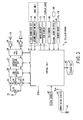
- Fig. 3 illustrates an inner configuration of the cellular phone 1 which can be applied to the information processing apparatus according to the embodiment of the present invention.
- a raido signal transmitted from the base station is received by the antenna 31, and thereafter input to a reception circuit (RX) 33 via an antenna duplexer (DUP) 32.
- the reception circuit 33 may perform mixing of the received radio signal with a local oscillator signal output from a frequency synthesizer (SYN) 34.
- the reception circuit 33 down-convert a frequency conversion to generate an intermediate frequency signal.
- the reception circuit 33 performs a quadrature demodulation (quadrature detection) on this down-converted intermediate frequency signal to output a reception baseband signal.
- the frequency of the local oscillator signal generated from the frequency synthesizer 34 is instructed on the basis of a control signal SYC output from a control unit 41.
- the reception baseband signal from the reception circuit 33 is input to a CDMA signal processing unit 36.
- the CDMA signal processing unit 36 is provided with a RAKE receiver which is not shown in the drawing.
- a RAKE receiver a plurality of paths included in the reception baseband signal are subjected to a despreading processing with the respective spread codes (that is, the same spread code as the spread code of the spread reception signal).
- the despread signal of the respective paths is coherently RAKE combined by a coherent RAKE combiner which is not shown.
- the data series after the Rake combining is subjected to deinterleave and channel decoding (error correction decoding), and thereafter a binary data determination is carried out. With this configuration, it is possible to obtain reception packet data with use of a predetermined transmission format.
- This reception packet data is input to a compression/expansion processing unit 37.
- the compression/expansion processing unit 37 is composed of a DSP (Digital Signal Processor).
- the compression/expansion processing unit 37 may separate the reception packet data output from the CDMA signal processing unit 36 in a multiple separation unit in the drawing for each media, and perform a decoding processing on the separated data for each media.
- speech data corresponding to the conversation voice or the like included in the reception packet data is decoded by way of speech codec.
- this motion picture data is decoded by way of video codec.
- the reception packet data is a download content, after this download content is expanded, the expanded download content is output to the control unit 41.
- the digital speech signal obtained through the decoding processing is supplied to a PCM codec 38.
- the PCM codec 38 may perform a PCM decoding on the digital speech signal output from the compression/expansion processing unit 37 and output the analog speech data after the PCM decoding to a receiver amplifier 39.
- This analog speech signal is amplified by the call receiver amplifier 39 and thereafter output from the receiver 18.
- the digital motion picture signal decoded by way of the video codec through the compression/expansion processing unit 37 is input to the control unit 41.
- the control unit 41 displays the motion picture based on the digital motion picture signal output from the compression/expansion processing unit 37 on the main display 15 via a video RAM (for example, a VRAM or the like) which is not shown. It should be noted that the control unit 41 can display not only the received motion picture data but also the motion picture data picked up by the CCD camera 48 on the main display 15 via the video RAM.
- the compression/expansion processing unit 37 supplies this electronic mail to the control unit 41.
- the control unit 41 instructs a storage unit 42 to store the electronic mail supplied from the compression/expansion processing unit 37. Then, in accordance with the operation by the user on the first operation keys 14 as the input unit, the control unit 41 reads out this electronic mail stored in the storage unit 42 and displays the read electronic mail on the main display 15.
- the speech signal (analog speech signal) of the speaker (user) which is input to the microphone 16 is amplified to an appropriate level by a transmitter amplifier 40, and then PCM-encoded by the PCM codec 38.
- the digital speech signal after the PCM encoding is input to the compression/expansion processing unit 37.
- the motion picture signal output from the CCD camera 48 is digitalized by the control unit 41 to be input to the compression/expansion processing unit 37.
- the electronic mail as text data which is generated in the control unit 41 is also input to the compression/expansion processing unit 37.
- the compression/expansion processing unit 37 may perform a compression encoding on the digital speech signal output from the PCM codec 38 in a format in accordance with a predetermined transmission data rate. With this configuration, the speech data is generated. Also, the compression/expansion processing unit 37 performs a compression encoding on the digital motion picture signal output from the control unit 41 to generate the motion picture data. Then, the compression/expansion processing unit 37 multiplexes the speech data and the motion picture data in the multiple separation unit in accordance with a predetermined transmission format, and packetizes the data. After that, the compression/expansion processing unit 37 outputs the transmission packet data after the packetization to the CDMA signal processing unit 36. It should be noted that also in a case where the electronic mail is output from the control unit 41, the compression/expansion processing unit 37 multiplexes this electronic mail into the transmission packet data.
- the CDMA signal processing unit 36 mayuse a spread code allocated to the transmission channel to perform a spread spectrum processing on the transmission packet data output from the compression/expansion processing unit 37. Then, the CDMA signal processing unit 36 outputs the output signal after the spread spectrum processing to a transmission circuit (TX) 35.
- the transmission circuit 35 modulates the signal after the spread spectrum processing by using a digital modulation system such as a QPSK (Quadrature Phase Shift Keying) method.
- the transmission circuit 35 synthesizes the transmission signal after the digital modulation with the local oscillator signal generated from the frequency synthesizer 34 to perform a frequency conversion (up convert) on the radio signal.
- the transmission circuit 35 performs a high frequency amplification on the radio signal generated through this up convert so as to obtain the transmission power level which is instructed by the control unit 41.
- This wireless signal having been subjected to the high frequency amplification is supplied to the antenna 31 via the antenna duplexer 32 and transmitted from the antenna 31 to the base station.
- the cellular phone 1 is provided with an external memory interface 45.
- the external memory interface 45 is provided with a slot to which the memory card 46 can be detachably attached.
- the memory card 46 is one type of flash memory cards represented by a NAND type flash memory card, a NOR type flash memory card, and the like. In the memory card 46, write and read of various data such as images, speech, and music can be performed via a ten-pin terminal.
- the cellular phone 1 is provided with a clock circuit (timer) 47 for measuring the current time.
- the control unit 41 is composed of a CPU (Central Processing unit), a ROM (Read Only Memory), a RAM (Random Access Memory), and the like.
- the CPU executes various processings while following programs stored in the ROM or various application programs loaded from the storage unit 42 to the RAM, and also generates various control signals to be supplied to the respective units, thus controlling the cellular phone 1 in an overall manner.
- the RAM appropriately stores data necessary for the CPU to execute the various processings.
- the storage unit 42 is composed, for example, of a flash memory which is a non-volatile memory in which electrical rewrite and deletion can be performed, an HDD (Hard Disc Drive), or the like.
- the storage unit 42 stores the various application programs to be executed by the CPU of the control unit 41 or various data groups.
- a power source circuit 44 generates a predetermined operation power source voltage Vcc on the basis of the output of a battery 43 to be supplied to the respective circuit units.
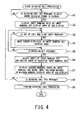
- this cellular phone 1 is started when the outgoing call key provided at a predetermined position of the second casing 13 among the second operation keys 20 is pressed by the user in a state where the cellular phone 1 is closed.
- step S1 by monitoring the operation of the second operation keys 20, the control unit 41 determines whether the outgoing call key provided at the predetermined position of the second casing 13 which functions as the second operation key 20 is pressed by the user in a state where the cellular phone 1 is closed.
- the processing stands by until it is determined that the outgoing call key provided at the predetermined position of the second casing 13 is pressed by the user in a state where the cellular phone 1 is closed.
- step S1 in a case where it is determined that the outgoing call key provided at the predetermined position of the second casing 13 which functions as the second operation key 20 is pressed by the user in a state where the cellular phone 1 is closed, in step S2, the control unit 41 controls the sub display 19 to display a plurality of input numeral keys on an input numeral key display area of the sub display 19.
- the sub display 19 displays plurality of input numeral keys on the input numeral key display area of the sub display 19 in accordance with the control of the control unit 41.
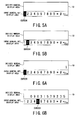
- an input numeral key display area for display the input numeral keys which are to be input in the outgoing call processing is provided.
- " 1 ", " 2 ", “ 3 ", ..., "*", "#", " ⁇ Clear” are displayed on the input numeral key display area.
- a cursor is currently located at "1" among these input numeral keys, and "1" is inverted to be displayed as an outlined character. This represents that the input numeral key "1" is a target currently selected through the decision operation.
- step S3 the control unit 41 determines whether as the arrow key among the second operation keys 20 is operated by the user and either a left or right key among the arrow key is pressed.
- step S3 in a case where it is determined that either the left or right key among the arrow key is pressed (that is, in a case where a left key or a right key among the arrow key is pressed), while following either the pressed left or right key among the arrow key, in step S4, the control unit 41 moves the cursor display in the input numeral key display area of the sub display 19.
- step S3 in a case where it is determined that either the left or right key among the arrow key is not pressed, the processing in step S4 is skipped, and the cursor currently displayed in the input numeral key display area of the sub display 19 is not moved.
- step S5 the control unit 41 determines whether a decision key among the second operation keys 20 is pressed by the user.
- step S5 in a case where it is determined that the decision key among the second operation keys 20 is not pressed by the user, the processing is returned to step S3, and the processing in step S3 and subsequent steps is repeatedly executed.
- the cursor display in the input numeral key display area of the sub display 19 is moved from the current location "2" to "3".
- step S5 in a case where it is determined that the decision key among the second operation keys 20 is pressed by the user, while following the press of the control unit 41 decision key among the second operation keys 20 by the user, in step S6, the control unit 41 accepts the input of the input numeral key which is the target currently selected through the decision operation and decides the accepted input of the input numeral key.
- the control unit 41 accepts the input of the input numeral key which is the target currently selected through the decision operation and decides the accepted input of the input numeral key.
- the decision key among the second operation keys 20 is pressed by the user, the input of the input numeral key "1" which is the target currently selected through the decision operation is accepted, and the input of this input numeral key "1" is decided.
- step S7 the control unit 41 controls the sub display 19 to display the decided numeral based on the input numeral key whose input has been decided in the processing in step S6 in the decided numeral display area of the sub display 19. While following the control of the control unit 41, the sub display 19 displays the decided numeral based on the input numeral key whose input has been decided in the processing in step S6 in the decided numeral display area of the sub display 19.
- step S8 the control unit 41 determines whether as the user operates the second operation keys 20, the outgoing call key among the second operation keys 20 is pressed. In step S8, in a case where it is determined that the outgoing call key among the second operation keys 20 is not pressed, the processing is returned to step S3, and the processing in step S3 and subsequent steps is repeatedly run.
- step S8 in a case where it is determined that the outgoing call key among the second operation keys 20 is pressed, in step S9, the control unit 41 performs the outgoing call processing via the antenna 31, the antenna duplexer 32, a transmission circuit 35, and the like to another cellular phone 1 which is identified by the telephone number corresponding to the input numeral keys which have been already input by the user.
- the outgoing call processing is executed to another cellular phone 1 which is identified by the telephone number corresponding to the input numerals "09031579235".
- the cellular phone 1 is provided with the first casing 12 and the second casing 13 which is hinge-connected to the first casing 12 via the hinge part 11.
- a plurality of input numeral keys are displayed on a first display area (the input numeral key display area). From the plurality of input numeral keys displayed in the first display area, inputs of some input numeral keys are accepted, and the accepted inputs of the input numeral keys are decided. Then, it is possible to carry out the outgoing call to another cellular phone 1 which is identified by a combination of the decided numerals based on the input numeral keys whose inputs have been decided.
- the user does not need to perform opening/closing of the cellular phone at least one time at the time of the outgoing call or conversation. Even in a case where the foldable style cellular phone 1 as the data terminal is in the closed state, it is possible to easily carry out the outgoing call or incoming call processing by using the second operation keys 20. Therefore, it is possible to improve the usability for carrying out the outgoing call or incoming call (conversation) processing by using the foldable style cellular phone 1 as the data terminal.
- the display screen of the sub display 19 having a dial display format illustrated in Figs. 5A, 5B, 6A, and 6B is used, but the present invention is not limited to the above-described case.
- the dial display format for displaying the input numeral keys in the input numeral key display area of the sub display 19 may be a two-stage display method instead of the one-stage display method. Also, for example, as illustrated in Fig.
- the dial display method for displaying the input numeral keys in the input numeral key display area of the sub display 19 may also be a three or more stage display method. Such a dial display method may also be appropriately changed in accordance with a preference of the user.
- Fig. 8 illustrates a correspondence relation example between the second operation keys 20 and operations corresponding to the second operation keys performed by the user at the time of the outgoing call processing illustrated in the flowchart of Fig. 4 .
- the input numeral keys displayed in the input numeral key display area of the sub display 19 are divided for groups of some numerals, and in accordance with an operation of an upper or lower key of the arrow key among the second operation keys 20 performed by user, the input numeral keys displayed in the input numeral key display area may be transited.
- the number of troublesome tasks for the user when the telephone number is input in the outgoing call processing by using the second operation keys 20 is reduced, and even when the display area of the sub display 19 is small, it is possible to easily input the telephone number.
- input numerals such as “123”, “456”, “789”, and "0" are allocated to up, down, left, and right keys existing in the arrow key among the second operation keys 20 provided to the second casing 13.
- the cursor in the input numeral key display area is moved, and the input numeral keys may be input and decided.
- the input is carried out in the following manner: down ⁇ decision key ⁇ right twice ⁇ decision key ⁇ down ⁇ decision key (080) ⁇ left ⁇ decision key ⁇ left twice ⁇ decision key ⁇ left three times ⁇ decision key ⁇ up ⁇ decision key (1234) ⁇ up twice ⁇ decision key ⁇ up three times ⁇ right ⁇ decision key ⁇ right twice ⁇ decision key (5678).
- the outgoing call processing is carried out by pressing the outgoing call key among the second operation keys 20, but the present invention is not limited to the above-described case.
- the outgoing call processing may be carried out by pressing the decision key among the second operation keys 20 for a long period of time. With this configuration, it is possible to reduce the number of operation keys provided to the second casing 13.
- a particular finger is allocated with the moving direction of the cursor in advance for setting.
- the cursor displayed in the input numeral key display area is moved, and the telephone number may be input.
- a fingerprint sensor 49 for authenticating the finger of the user is provided, for instance, on a side face of the first casing 12.
- the following setting is previously established: 1. the moving direction of the cursor allocated to the right thumb of the user is the "right" direction, 2. the moving direction of the cursor allocated to the left index finger of the user is the "left" direction.
- the "left and right" directions may be allocated to other fingers.
- the dial display format illustrated in Fig. 7C is used.
- the input numeral keys are input and decided by using the fingerprint sensor 49, for example, when "080-1234-5678" is input, if the current cursor location is at "*", the input is carried out in the following manner: 1. right thumb x once (0), 2. left index finger x three times (8), 1. right thumb x three times (0), 1. right thumb x twice (1), 1. right thumb x once (2), 1. right thumb x once (3), 1. right thumb x once (4), 1. right thumb x once (5), 1. right thumb x once (6), 1. right thumb x once (7), 1. right thumb x once (8).
- the decision operation by way of the decision key is omitted for simplification.
- the outgoing call and conversation processing is carried out by using the second operation keys 20 in a state where the foldable style cellular phone 1 as the data terminal is closed.
- the cellular phone 1 is put in the opened state once, and after the telephone number is input by using the first operation keys 14 provided to the first casing 12, or, in the course of the input, the cellular phone 1 is put in the closed state.
- the outgoing call processing may be carried out.
- a processing in steps S18 to S22 of Fig. 12 are basically similar to the processing in steps S3 to S7 of Fig. 4 , and a description thereof will be omitted to avoid the repetition.
- step S11 by monitoring operations of the first operation keys 14, the control unit 41 determines whether any of numeral keys among the first operation keys 14 provided at predetermined locations of the first casing 12 is pressed by the user in a state in which the cellular phone 1 is opened. The processing stands by until it is determined that any of numeral keys among the first operation keys 14 provided at predetermined locations of the first casing 12 is pressed by the user in a state in which the cellular phone 1 is opened.
- step S11 in a case where it is determined that any of numeral keys among the first operation keys 14 provided at predetermined locations of the first casing 12 is pressed by the user in a state in which the cellular phone 1 is opened, in step S12, the control unit 41 accepts the input of the pressed numeral key.
- step S13 the control unit 41 controls the main display 15 to display the numeral key whose input has been accepted on the main display 15. The main display 15 displays the numeral key whose input has been accepted while following the control of the control unit 41.
- step S14 the control unit 41 uses the magnetic sensors 17a and 17b to determine whether the cellular phone 1 is in the closed state.
- step S14 in a case where it is determined that the cellular phone 1 is not in the closed state, the processing is returned to step S11, and the processing in step S11 and subsequent steps is repeatedly executed.
- the user operates the first operation keys 14, for example, the telephone number "09031579235" or the like is input.
- step S14 in a case where it is determined that the cellular phone 1 is in the closed state, in step S15, the control unit 41 controls the sub display 19 to display the numeral key whose input has been already accepted (for example, "09031579235" or the like) in the decided numeral display area of the sub display 19, and also to display a plurality of input numeral keys in the input numeral key display area of the sub display 19.
- the numeral key whose input has been already accepted (for example, "09031579235" or the like) in the decided numeral display area of the sub display 19, and also to display a plurality of input numeral keys in the input numeral key display area of the sub display 19.
- step S16 as the user operates the second operation keys 20, the control unit 41 determines whether the outgoing call key among the second operation keys 20 is pressed. In step S16, in a case where it is determined that the outgoing call key among the second operation keys 20 is pressed, the processing is advanced to step S17. In step S17, the outgoing call processing is executed. With this configuration, after the telephone number is input until the last digit by using the first operation keys 14, the outgoing call processing can be started while the cellular phone 1 is put in a state where the calling is facilitated.
- step S16 in a case where it is determined that the outgoing call key among the second operation keys 20 is not pressed, the processing is advanced to step S18. Then, the processing in step S18 and subsequent steps is executed.
- the processing in step S18 and subsequent steps is executed.
- the processing for example, by the first operation keys 14, the telephone number is input until the last digit.
- a deletion processing is executed after the cursor is moved to " ⁇ Clear", and a new input numeral key is input and decided.
- step S17 the outgoing call processing is executed. Also, for example, the processing is similar to the case where the telephone number is input only partway by using the first operation keys 14.
- step S34 in a case where it is determined that the cellular phone 1 is put in the closed state, this situation is used as a trigger for the outgoing call processing, and the outgoing call processing to the input telephone number may also be executed immediately in step S36.
- this configuration it is possible further improve the usability at the time of carrying out the outgoing call and conversation processing with use of the foldable style cellular phone 1 as the data terminal.
- step 541 in a case where the control unit 41 determines that there is an incoming call response operation to an incoming call from another cellular phone 1 via the antenna 31, the reception circuit 33, and the like (that is, in a case where the user presses a conversation button or the like when the incoming call is received from another cellular phone 1), in step S42, the control unit 41 uses the magnetic sensors 17a and 17b to determine whether the cellular phone 1 is in the closed state.
- step S42 in a case where it is determined that the cellular phone 1 is in the closed state, in step S43, the control unit 41 executes a normal conversation processing via the antenna 31, the reception circuit 33, the transmission circuit 35, and the like.
- step S42 in a case where it is determined that the cellular phone 1 is in the opened state, in step S44, the control unit 41 executes a hands-free conversation processing via the antenna 31, the reception circuit 33, the transmission circuit 35, and the like.
- the present invention can also be applied to other information processing apparatuses such as a PDA (Personal Digital Assistant), a personal computer, a portable game player, a portable music player, and a portable video player.
- PDA Personal Digital Assistant
Landscapes
- Engineering & Computer Science (AREA)
- Signal Processing (AREA)
- Human Computer Interaction (AREA)
- Computer Networks & Wireless Communication (AREA)
- Telephone Set Structure (AREA)
- Input From Keyboards Or The Like (AREA)
- Telephone Function (AREA)
- Mobile Radio Communication Systems (AREA)
Applications Claiming Priority (1)
| Application Number | Priority Date | Filing Date | Title |
|---|---|---|---|
| JP2007293625A JP4863969B2 (ja) | 2007-11-12 | 2007-11-12 | 情報処理装置 |
Publications (1)
| Publication Number | Publication Date |
|---|---|
| EP2059007A1 true EP2059007A1 (de) | 2009-05-13 |
Family
ID=40260741
Family Applications (1)
| Application Number | Title | Priority Date | Filing Date |
|---|---|---|---|
| EP08014055A Ceased EP2059007A1 (de) | 2007-11-12 | 2008-08-06 | Bildverarbeitungsvorrichtung |
Country Status (4)
| Country | Link |
|---|---|
| US (1) | US8326367B2 (de) |
| EP (1) | EP2059007A1 (de) |
| JP (1) | JP4863969B2 (de) |
| CN (1) | CN101437058B (de) |
Families Citing this family (3)
| Publication number | Priority date | Publication date | Assignee | Title |
|---|---|---|---|---|
| US20080142603A1 (en) * | 2006-11-01 | 2008-06-19 | Gerhard Stephanus Mynhardt | Portable Industrial Data Capturing Device |
| CN104594119B (zh) * | 2014-12-26 | 2016-12-07 | 上海乘鹰新材料有限公司 | 一种直接真空镀铝水性底涂涂料组合物及其制备方法 |
| CN109857328A (zh) * | 2019-03-04 | 2019-06-07 | 出门问问信息科技有限公司 | 智能手表以及信息处理方法 |
Citations (4)
| Publication number | Priority date | Publication date | Assignee | Title |
|---|---|---|---|---|
| EP0897236A2 (de) | 1997-08-12 | 1999-02-17 | Nec Corporation | Tragbares und klappbares Funkkommunikationsgerät |
| US20020037754A1 (en) * | 2000-09-25 | 2002-03-28 | Mitsuji Hama | Folding communication terminal having two displays |
| US20030162569A1 (en) | 2001-01-05 | 2003-08-28 | Emi Arakawa | Information processing device |
| US20050064911A1 (en) | 2003-09-18 | 2005-03-24 | Vulcan Portals, Inc. | User interface for a secondary display module of a mobile electronic device |
Family Cites Families (27)
| Publication number | Priority date | Publication date | Assignee | Title |
|---|---|---|---|---|
| JP3606498B2 (ja) * | 1996-04-26 | 2005-01-05 | 三菱電機株式会社 | 携帯情報端末装置 |
| JP2000253113A (ja) * | 1999-02-26 | 2000-09-14 | Hitachi Ltd | 情報通信端末装置 |
| CN1156189C (zh) * | 1999-06-30 | 2004-06-30 | Lg情报通信株式会社 | 具有扬声器电话功能的移动电话站 |
| JP2001186226A (ja) * | 1999-12-27 | 2001-07-06 | Sanyo Electric Co Ltd | 折り畳み式携帯電話機 |
| JP3626703B2 (ja) * | 2001-06-18 | 2005-03-09 | Necアクセステクニカ株式会社 | 折り畳み型無線端末装置及びその発呼方法 |
| JP2003018078A (ja) * | 2001-07-03 | 2003-01-17 | Nec Access Technica Ltd | 無線携帯端末装置、受話拡声方法、およびそのプログラム |
| KR100396518B1 (ko) * | 2001-07-27 | 2003-09-02 | 삼성전자주식회사 | 원 키 데이터 입력 장치 및 이를 채용한 휴대용 단말기 |
| JP2003134204A (ja) * | 2001-10-26 | 2003-05-09 | Nec Corp | 携帯電話機 |
| KR20030046891A (ko) * | 2001-12-07 | 2003-06-18 | 에스케이텔레텍주식회사 | 상폴더 외부에 터치스크린과 기능키를 구비하는 폴더형이동통신단말기 |
| JP4009899B2 (ja) * | 2002-05-22 | 2007-11-21 | 日本電気株式会社 | 携帯電話のダイヤル発呼方法及び携帯電話機 |
| JP3941933B2 (ja) * | 2002-08-26 | 2007-07-11 | 松下電器産業株式会社 | 開閉式の通信端末およびヒンジ装置 |
| JP4270487B2 (ja) | 2002-08-27 | 2009-06-03 | シャープ株式会社 | 折り畳み式携帯通信機器 |
| TW560785U (en) * | 2002-10-01 | 2003-11-01 | Toppoly Optoelectionics Corp | Cellular phone without opening a cover for communicating |
| JP4101732B2 (ja) * | 2003-10-30 | 2008-06-18 | 株式会社ナカヨ通信機 | ダイヤルキーを有さない電話機および該電話機におけるダイヤル発信方法 |
| CN1627767A (zh) * | 2003-12-09 | 2005-06-15 | 摩托罗拉公司 | 可合上的无线通信设备 |
| JP2005347910A (ja) * | 2004-06-01 | 2005-12-15 | Nec Access Technica Ltd | 携帯電話端末 |
| JP4385864B2 (ja) * | 2004-06-23 | 2009-12-16 | 日本電気株式会社 | 携帯端末及び情報入力方法 |
| KR100689468B1 (ko) * | 2005-03-21 | 2007-03-08 | 삼성전자주식회사 | 슬라이딩 겸용 스윙 타입 휴대 장치 |
| US7460893B2 (en) * | 2005-05-17 | 2008-12-02 | Nokia Corporation | Display changing in a portable electronic device |
| JP2007179525A (ja) * | 2005-11-30 | 2007-07-12 | Casio Comput Co Ltd | 携帯型電子機器 |
| US7581893B2 (en) * | 2006-04-17 | 2009-09-01 | Ivan Miramontes | U-cover camera phone |
| KR101102811B1 (ko) * | 2006-06-05 | 2012-01-05 | 엘지전자 주식회사 | 이동 통신 단말기의 회신 처리 방법 및 그 이동 통신단말기 |
| KR100810252B1 (ko) * | 2006-07-04 | 2008-03-06 | 삼성전자주식회사 | 이축 회전 유형 휴대 통신 단말기 및 그의 제어방법 |
| US20080167081A1 (en) * | 2007-01-10 | 2008-07-10 | Eng U P Peter | Keyless touch-screen cellular telephone |
| KR100832800B1 (ko) * | 2007-02-03 | 2008-05-27 | 엘지전자 주식회사 | 후보 전화번호를 제공하는 이동통신 단말기 및 그 제어방법 |
| KR20080073872A (ko) * | 2007-02-07 | 2008-08-12 | 엘지전자 주식회사 | 터치 스크린을 구비한 이동통신 단말기 및 이를 이용한정보 입력 방법 |
| US9043725B2 (en) * | 2007-07-27 | 2015-05-26 | Sony Corporation | User interface with enlarged icon display of key function |
-
2007
- 2007-11-12 JP JP2007293625A patent/JP4863969B2/ja not_active Expired - Fee Related
-
2008
- 2008-08-06 EP EP08014055A patent/EP2059007A1/de not_active Ceased
- 2008-08-06 CN CN2008101461442A patent/CN101437058B/zh not_active Expired - Fee Related
- 2008-08-06 US US12/186,735 patent/US8326367B2/en not_active Expired - Fee Related
Patent Citations (4)
| Publication number | Priority date | Publication date | Assignee | Title |
|---|---|---|---|---|
| EP0897236A2 (de) | 1997-08-12 | 1999-02-17 | Nec Corporation | Tragbares und klappbares Funkkommunikationsgerät |
| US20020037754A1 (en) * | 2000-09-25 | 2002-03-28 | Mitsuji Hama | Folding communication terminal having two displays |
| US20030162569A1 (en) | 2001-01-05 | 2003-08-28 | Emi Arakawa | Information processing device |
| US20050064911A1 (en) | 2003-09-18 | 2005-03-24 | Vulcan Portals, Inc. | User interface for a secondary display module of a mobile electronic device |
Also Published As
| Publication number | Publication date |
|---|---|
| CN101437058B (zh) | 2012-12-19 |
| CN101437058A (zh) | 2009-05-20 |
| JP4863969B2 (ja) | 2012-01-25 |
| US8326367B2 (en) | 2012-12-04 |
| US20090124292A1 (en) | 2009-05-14 |
| JP2009124265A (ja) | 2009-06-04 |
Similar Documents
| Publication | Publication Date | Title |
|---|---|---|
| JP4823163B2 (ja) | 情報処理装置 | |
| US7612766B2 (en) | Portable terminal device | |
| JP5098839B2 (ja) | 携帯端末 | |
| JP5217371B2 (ja) | 携帯電話機 | |
| US8326367B2 (en) | Foldable image processing apparatus | |
| JP5206135B2 (ja) | 携帯端末 | |
| JP2009266040A (ja) | 携帯端末およびその文字入力方法 | |
| KR100891771B1 (ko) | 휴대용 단말기에서 각도를 이용한 어플리케이션 구동 장치및 방법 | |
| JP5211587B2 (ja) | 情報処理装置 | |
| US8112031B2 (en) | Information processing apparatus | |
| JP2002185600A (ja) | 携帯電話機 | |
| JP2010004170A (ja) | 情報処理装置 | |
| JP5369619B2 (ja) | 情報処理装置 | |
| JP5434049B2 (ja) | 携帯端末 | |
| KR100605869B1 (ko) | 슬라이드용 휴대 단말기의 자동동작 방법 | |
| US8041382B2 (en) | Cellular phone | |
| KR100651387B1 (ko) | 이동통신 단말기에서 데이터 입력 방법 | |
| JP2009188928A (ja) | 携帯端末装置 | |
| KR100663433B1 (ko) | 휴대용 단말기에서 데이터 표시방법 | |
| JP5163503B2 (ja) | 携帯端末装置 | |
| KR100571320B1 (ko) | 이동통신단말기의 메뉴 검색 방법 | |
| JP2009080562A (ja) | 情報処理装置 | |
| JP2009025985A (ja) | 入力装置および入力方法 | |
| KR20060037908A (ko) | 입력부 기능 전환 방법 및 이를 구현하는 슬라이드형이동통신단말기 | |
| KR20060107004A (ko) | 이동통신 단말기에서 데이터를 저장하는 방법 |
Legal Events
| Date | Code | Title | Description |
|---|---|---|---|
| PUAI | Public reference made under article 153(3) epc to a published international application that has entered the european phase |
Free format text: ORIGINAL CODE: 0009012 |
|
| 17P | Request for examination filed |
Effective date: 20080806 |
|
| AK | Designated contracting states |
Kind code of ref document: A1 Designated state(s): AT BE BG CH CY CZ DE DK EE ES FI FR GB GR HR HU IE IS IT LI LT LU LV MC MT NL NO PL PT RO SE SI SK TR |
|
| AX | Request for extension of the european patent |
Extension state: AL BA MK RS |
|
| 17Q | First examination report despatched |
Effective date: 20090716 |
|
| AKX | Designation fees paid |
Designated state(s): DE FR GB |
|
| RAP1 | Party data changed (applicant data changed or rights of an application transferred) |
Owner name: FUJITSU TOSHIBA MOBILE COMMUNICATIONS LIMITED |
|
| RAP1 | Party data changed (applicant data changed or rights of an application transferred) |
Owner name: FUJITSU MOBILE COMMUNICATIONS LIMITED |
|
| STAA | Information on the status of an ep patent application or granted ep patent |
Free format text: STATUS: THE APPLICATION HAS BEEN REFUSED |
|
| 18R | Application refused |
Effective date: 20140312 |