EP2059040A2 - Verfahren zur Bereitstellung eines Videosignals sowie Entschlüsselungskarte und Videogerät damit - Google Patents
Verfahren zur Bereitstellung eines Videosignals sowie Entschlüsselungskarte und Videogerät damit Download PDFInfo
- Publication number
- EP2059040A2 EP2059040A2 EP08153800A EP08153800A EP2059040A2 EP 2059040 A2 EP2059040 A2 EP 2059040A2 EP 08153800 A EP08153800 A EP 08153800A EP 08153800 A EP08153800 A EP 08153800A EP 2059040 A2 EP2059040 A2 EP 2059040A2
- Authority
- EP
- European Patent Office
- Prior art keywords
- interface
- video signal
- scrambled
- card
- video
- Prior art date
- Legal status (The legal status is an assumption and is not a legal conclusion. Google has not performed a legal analysis and makes no representation as to the accuracy of the status listed.)
- Ceased
Links
Images



Classifications
-
- H—ELECTRICITY
- H04—ELECTRIC COMMUNICATION TECHNIQUE
- H04N—PICTORIAL COMMUNICATION, e.g. TELEVISION
- H04N21/00—Selective content distribution, e.g. interactive television or video on demand [VOD]
- H04N21/40—Client devices specifically adapted for the reception of or interaction with content, e.g. set-top-box [STB]; Operations thereof
- H04N21/41—Structure of client; Structure of client peripherals
- H04N21/418—External card to be used in combination with the client device, e.g. for conditional access
-
- H—ELECTRICITY
- H04—ELECTRIC COMMUNICATION TECHNIQUE
- H04N—PICTORIAL COMMUNICATION, e.g. TELEVISION
- H04N7/00—Television systems
- H04N7/16—Analogue secrecy systems; Analogue subscription systems
- H04N7/162—Authorising the user terminal, e.g. by paying; Registering the use of a subscription channel, e.g. billing
- H04N7/163—Authorising the user terminal, e.g. by paying; Registering the use of a subscription channel, e.g. billing by receiver means only
-
- H—ELECTRICITY
- H04—ELECTRIC COMMUNICATION TECHNIQUE
- H04N—PICTORIAL COMMUNICATION, e.g. TELEVISION
- H04N21/00—Selective content distribution, e.g. interactive television or video on demand [VOD]
- H04N21/40—Client devices specifically adapted for the reception of or interaction with content, e.g. set-top-box [STB]; Operations thereof
- H04N21/41—Structure of client; Structure of client peripherals
- H04N21/4104—Peripherals receiving signals from specially adapted client devices
- H04N21/4135—Peripherals receiving signals from specially adapted client devices external recorder
-
- H—ELECTRICITY
- H04—ELECTRIC COMMUNICATION TECHNIQUE
- H04N—PICTORIAL COMMUNICATION, e.g. TELEVISION
- H04N21/00—Selective content distribution, e.g. interactive television or video on demand [VOD]
- H04N21/40—Client devices specifically adapted for the reception of or interaction with content, e.g. set-top-box [STB]; Operations thereof
- H04N21/41—Structure of client; Structure of client peripherals
- H04N21/414—Specialised client platforms, e.g. receiver in car or embedded in a mobile appliance
- H04N21/4147—PVR [Personal Video Recorder]
-
- H—ELECTRICITY
- H04—ELECTRIC COMMUNICATION TECHNIQUE
- H04N—PICTORIAL COMMUNICATION, e.g. TELEVISION
- H04N21/00—Selective content distribution, e.g. interactive television or video on demand [VOD]
- H04N21/40—Client devices specifically adapted for the reception of or interaction with content, e.g. set-top-box [STB]; Operations thereof
- H04N21/41—Structure of client; Structure of client peripherals
- H04N21/418—External card to be used in combination with the client device, e.g. for conditional access
- H04N21/4181—External card to be used in combination with the client device, e.g. for conditional access for conditional access
-
- H—ELECTRICITY
- H04—ELECTRIC COMMUNICATION TECHNIQUE
- H04N—PICTORIAL COMMUNICATION, e.g. TELEVISION
- H04N21/00—Selective content distribution, e.g. interactive television or video on demand [VOD]
- H04N21/40—Client devices specifically adapted for the reception of or interaction with content, e.g. set-top-box [STB]; Operations thereof
- H04N21/43—Processing of content or additional data, e.g. demultiplexing additional data from a digital video stream; Elementary client operations, e.g. monitoring of home network or synchronising decoder's clock; Client middleware
- H04N21/432—Content retrieval operation from a local storage medium, e.g. hard-disk
- H04N21/4325—Content retrieval operation from a local storage medium, e.g. hard-disk by playing back content from the storage medium
-
- H—ELECTRICITY
- H04—ELECTRIC COMMUNICATION TECHNIQUE
- H04N—PICTORIAL COMMUNICATION, e.g. TELEVISION
- H04N21/00—Selective content distribution, e.g. interactive television or video on demand [VOD]
- H04N21/40—Client devices specifically adapted for the reception of or interaction with content, e.g. set-top-box [STB]; Operations thereof
- H04N21/43—Processing of content or additional data, e.g. demultiplexing additional data from a digital video stream; Elementary client operations, e.g. monitoring of home network or synchronising decoder's clock; Client middleware
- H04N21/436—Interfacing a local distribution network, e.g. communicating with another STB or one or more peripheral devices inside the home
- H04N21/43607—Interfacing a plurality of external cards, e.g. through a DVB Common Interface [DVB-CI]
-
- H—ELECTRICITY
- H04—ELECTRIC COMMUNICATION TECHNIQUE
- H04N—PICTORIAL COMMUNICATION, e.g. TELEVISION
- H04N21/00—Selective content distribution, e.g. interactive television or video on demand [VOD]
- H04N21/40—Client devices specifically adapted for the reception of or interaction with content, e.g. set-top-box [STB]; Operations thereof
- H04N21/43—Processing of content or additional data, e.g. demultiplexing additional data from a digital video stream; Elementary client operations, e.g. monitoring of home network or synchronising decoder's clock; Client middleware
- H04N21/44—Processing of video elementary streams, e.g. splicing a video clip retrieved from local storage with an incoming video stream or rendering scenes according to encoded video stream scene graphs
- H04N21/4405—Processing of video elementary streams, e.g. splicing a video clip retrieved from local storage with an incoming video stream or rendering scenes according to encoded video stream scene graphs involving video stream decryption
-
- H—ELECTRICITY
- H04—ELECTRIC COMMUNICATION TECHNIQUE
- H04N—PICTORIAL COMMUNICATION, e.g. TELEVISION
- H04N5/00—Details of television systems
- H04N5/76—Television signal recording
Definitions
- Methods, cards, and apparatuses consistent with the present invention relate to providing a video signal, and more particularly, to a method for providing a video signal enabling a user to record and replay broadcast contents, and a descramble card and a video apparatus using the same.
- a public broadcast provider or a broadcast provider having sufficient revenue from advertising usually provides free contents.
- a premium content provider limits viewing access to specific viewers, for example, to viewers who paid television subscription fees for its premium channel.
- This conditional access includes a scramble process which encrypts a part or entire transport stream of a broadcast signal so that a subscriber can exclusively access a channel.
- An algorithm used in such a conditional access system is strictly maintained in secrecy, because this is related to broadcasting copyrights. Accordingly, each of the broadcasting providers provides each of their own conditional access apparatus to allow its users to access the channel.
- a conditional access apparatus includes a digital video broadcasting-common interface (DVB-CI) card or a cable card.
- the DVB-CI card is a conditional access apparatus for a DVB type of terrestrial digital broadcast which is a European digital broadcasting standard
- a cable card is a conditional access apparatus for an open cable digital broadcast which is a digital broadcasting standard in North America.
- a broadcast receiving apparatus To access a premium channel, a broadcast receiving apparatus has to have a descramble card such as a DVB-CI card or a cable card provided by a broadcast provider.
- a descramble card such as a DVB-CI card or a cable card provided by a broadcast provider.
- a personal video recorder (PVR) function enables a user to record a broadcast content in an internal recoding medium. However, if the PVR function enables recording of the broadcast contents of the premium channel, the user may provide other viewers who have not subscribed to the premium channel with the recorded broadcast contents.
- PVR personal video recorder
- Broadcasting providers consider a conditional access system important in preventing unauthorized access to premium broadcast contents. Therefore, there is a need for a user to use the PVR function for premium channel broadcast while preventing unauthorized view of the broadcast contents.
- Exemplary embodiments of the present invention address at least the above problems and/or disadvantages and other disadvantages not described above. Also, the present invention is not required to overcome the disadvantages described above, and an exemplary embodiment of the present invention may not overcome any of the problems described above.
- the present invention provides a video apparatus storing a scrambled video signal in a storage medium and a descramble card so that a user can use a personal video recorder (PVR) function for premium channel broadcast, and a method for providing a video signal using the same.
- PVR personal video recorder
- the present invention also provides a video apparatus storing a video signal in a storage medium using the same type interface, and a method for providing a video signal using the same.
- a video apparatus comprising a first interface which receives a scrambled video signal, and outputs the scrambled video signal; a second interface which transmits the scrambled video signal to a storage medium connected with the video apparatus; and a controller which controls the first interface to transmit the scrambled video signal to the second interface.
- the controller may control the second interface to store the scrambled video signal in the storage medium in a scrambled state.
- the first interface and the second interface may be the same type of interface.
- the first interface and the second interface may be in compliance with the personal computer memory card international association (PCMCIA) standard.
- PCMCIA personal computer memory card international association
- the first interface may be connected with a descramble card which descrambles the scrambled video signal.
- the apparatus may further comprise a video processor which performs a signal processing of a descrambled video signal, wherein the first interface receives the descrambled video signal from a descramble card, and outputs the descrambled video signals to the video processor, and the controller controls the first interface to transmit the descrambled video signal to the video processor.
- a video processor which performs a signal processing of a descrambled video signal
- the first interface receives the descrambled video signal from a descramble card, and outputs the descrambled video signals to the video processor, and the controller controls the first interface to transmit the descrambled video signal to the video processor.
- the storage medium connected with the second interface may be a nonvolatile memory.
- the nonvolatile memory may be a flash memory.
- the scrambled video signal may be a video signal of a premium broadcast content.
- a method for providing a video signal in a video apparatus comprising receiving a scrambled video signal; and outputting the scrambled video signal by a first interface; and controlling a second interface to transmit the scrambled video signal output from the first interface to a storage medium connected with the video apparatus.
- the scrambled video signal may be stored in the storage medium in a scrambled state.
- the first interface and the second interface may be the same type of interface.
- the first interface and the second interface may be in compliance with the personal computer memory card international association (PCMCIA) standard.
- PCMCIA personal computer memory card international association
- the method may further comprise retrieving the scrambled video signal from the storage medium and transmitting the retrieved video signal to a descramble device; and descrambling the retrieved video signal by the descramble device.
- the method may further comprise receiving a descrambled video signal corresponding to the scrambled video signal by the first interface; and transmitting the descrambled video signal output from the first interface to a video processor.
- the storage medium connected with the second interface may be a nonvolatile memory.
- the nonvolatile memory may be a flash memory.
- the scrambled video signal may be a video signal of a premium broadcast content.
- a descramble card comprising an interface which receives a scrambled video signal; and a controller which controls the interface to store the scrambled video signal in a storage medium, and descrambles the scrambled video signal.
- the controller may retrieve the scrambled video signal from the storage medium to descramble the retrieved video signal.
- the descramble card may be a digital video broadcasting-common interface (DVB-CI) card.
- DVD-CI digital video broadcasting-common interface
- a video apparatus comprising a first interface which receives a video signal, and outputs the received video signal; a second interface which transmits the received video signal to a storage medium connected with the video apparatus; and a controller which controls the first interface to directly transmit the video signal output from the first interface to the second interface, wherein the first interface and the second interface are the same type of interface.
- the apparatus may further comprise a bus which electrically connects the first interface with the second interface, wherein the controller controls the first interface to directly transmit the video signal output from the first interface through the bus to the second interface.
- a method for providing a video signal comprising receiving a video signal, and outputting the received video signal by a first interface; and directly receiving the video signal output from the first interface, and transmitting the received video signal to a storage medium by a second interface, wherein the first interface and the second interface are the same type of interface.
- the video signal output from the first interface may be received by the second interface through a bus which electrically connects the first interface with the second interface.
- FIG. 1 is a block diagram illustrating a digital broadcasting system applicable to an exemplary embodiment of the present invention
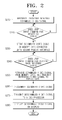
- FIG. 2 is a flowchart provided to explain a method for providing a video signal according to an exemplary embodiment of the present invention
- FIG. 3 is a view illustrating a flow of a scrambled video signal and a descrambled video signal in a premium broadcast viewing mode according to an exemplary embodiment of the present invention
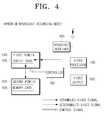
- FIG. 4 is a view illustrating a flow of a scrambled video signal and a descrambled video signal in a premium broadcast recording mode according to an exemplary embodiment of the present invention.
- FIG. 5 is a view illustrating a flow of a scrambled video signal and a descrambled video signal in a recorded premium broadcast playing back mode according to an exemplary embodiment of the present invention.
- FIG. 1 is a block diagram illustrating a digital broadcasting system applicable to an exemplary embodiment of the present invention.
- a digital broadcasting system may comprise a digital television (DTV) 100, a digital video broadcasting-common interface (DVB-CI) card 115, and a memory card 125.
- DTV digital television
- DVD-CI digital video broadcasting-common interface
- the DTV 100 provides a user with broadcast contents received over wire or wirelessly through a display.
- the DTV 100 may also provide the user with a video signal received from an external input apparatus connected over wire or wirelessly through the display.
- the DTV 100 may play back files such as a motion picture file, a still image file, and a music file stored in a memory card connected with the DTV 100 to provide the user with the files.
- the DTV 100 may comprise a broadcast receiver 160, a first personal computer memory card international association (PCMCIA) interface 110, a second PCMCIA interface 120, a controller 130, a video processor 140, and a video output 150.
- PCMCIA personal computer memory card international association
- the broadcast receiver 160 receives a broadcast signal from a satellite or a broadcasting station over wire or wirelessly, and demodulates the received broadcast signal.
- the broadcast receiver 160 can receive a premium broadcast content from a premium channel provider.
- the first PCMCIA interface 110 is connected with a descramble card to control access to the premium broadcast content.
- a PCMCIA interface is generally used to connect a notebook computer with a flash memory.
- a DTV may have a PCMCIA interface slot to support a descramble card for a conditional access to a premium broadcast content.
- the DVB-CI card 115 may be connected with the DTV 100 through the PCMCIA interface.
- the second PCMCIA interface 120 is connected with the memory card 125 which may store a video signal.
- the PCMCIA interface is an international standard regarding a PC memory card that is compliant with the standard of the PCMCIA.
- a memory card often referred to as a flash memory, is a recording medium which has faster executing speed and less power consumption than those of auxiliary memory such as a hard disc.
- the PCMCIA interface may be applicable to a DTV to embody a personal video recorder (PVR).
- the memory card 125 connected with the second PCMCIA interface 120 may be a flash memory card.
- the first and second PCMCIA interfaces 110 and 120 may use the same type of interface, the first and second PCMCIA interfaces 110 and 120 may transmit a video signal through a local bus without converting a data format.
- the PCMCIA interface it is not necessary to use the PCMCIA interface, but other types of the interface may be used. Additionally, the first and second PCMCIA interfaces 110 and 120 may be of the different type of interface.
- the controller 130 controls the first PCMCIA interface 110 and the second PCMCIA interface 120.
- the controller 130 controls the first PCMCIA interface to receive a scrambled broadcast signal from the broadcast receiver 160, and to transmit the received broadcast signal to the DVB-CI card 115 which is connected with the DTV 100.
- the controller 130 may control the first PCMCIA interface 110 to receive a scrambled video signal or a descrambled video signal from the DVB-CI card 115.
- the controller 130 may control the first PCMCIA interface 110 to transmit the scrambled video signal to the second PCMCIA interface 120, and the second PCMCIA interface 120 to store the transmitted scrambled video signal in the memory card 125. If the first PCMCIA interface 110 receives the descrambled video signal from the DVB-CI card 115, the controller 130 controls the first PCMCIA interface 110 to transmit the descrambled video signal to the video processor 140 such that the transmitted descrambled video signal is displayed on a screen.
- the controller 130 If the controller 130 receives a command for executing PVR function from the user, the controller controls the second PCMCIA interface 120 to transmit the scrambled video signal stored in the memory card 125 to the first PCMCIA interface 110.
- the controller 130 may control a DVB-CI controller 117 to determine whether to descramble the scrambled video signal transmitted to the DVB-CI card 115. For example, if the DTV 100 is in a general playback mode, the controller 130 controls the DVB-CI controller 117 to descramble the scrambled video signal transmitted to the DVB-CI card 115. On the other hand, if the DTV 100 is in a recording mode, the controller 130 controls the DVB-CI controller 117 to transmit the scrambled video signal to the first PCMCIA interface 110.
- the video processor 140 performs a signal processing such as a video decoding, a video scaling, and an audio decoding of the descrambled video signal output from the first PCMCIA interface 110.
- the video processor 140 transmits the processed video signal to the video output 150.
- the video output 150 displays the video signal output from the video processor 140 on a display, or outputs the video signal to an exterior apparatus which is connected through an external output terminal.
- the DVB-CI card 115 is one type of a descramble card which descrambles the scrambled video signal.
- a premium broadcast provider transmits a scrambled video signal of a premium broadcast content, and controls an access to the premium content so that a user can watch the premium broadcast content only in the DTV 100 having the DVB-CI card 115.
- the DVB-CI card 115 operates as a conditional access apparatus. Components of the DVB-CI card 115 will be described below in detail.
- the DVB-CI card 115 may comprise a DVB-CI interface 116, the DVB-CI controller 117, and a buffer 118.
- the DVB-CI interface 116 connects physically and electrically the DVB-CI card 115 with the first PCMCIA interface 110.
- the DVB-CI interface 116 transmits and receives a scrambled video signal and a descrambled video signal to and from the first PCMCIA interface 110.
- the DVB-CI controller 117 controls the DVB-CI interface 116 to store the scrambled video signal in the buffer 118.
- the DVB-CI controller 117 descrambles the scrambled video signal stored in the buffer 118.
- the DVB-CI controller 117 controls the DVB-CI interface 116 to transmit the descrambled video signal to the first PCMCIA interface 110.
- the DVB-CI controller 117 may control the DVB-CI interface 116 to transmit the scrambled video signal stored in the buffer 118 to the first PCMCIA interface 110. That is, the DVB-CI controller 117 may control the DVB-CI interface 116 to output the scrambled video signal to be stored in the memory card 125.
- the DVB-CI controller 117 may receive the scrambled video signal stored in the memory card 125 through the first PCMCIA interface 110 and the second PCMCIA interface 120. The DVB-CI controller 117 may descramble the scrambled video signal stored in the memory card 125.
- the controller 130 controls the DVB-CI controller 117 to determine whether to descramble the scrambled video signal.
- the buffer 118 temporarily stores the scrambled video signal so that the DVB-CI controller 117 can descramble the scrambled video signal.
- the buffer 118 may output the scrambled video signal stored under the control of the controller 117 to the exterior through the DVB-CI interface 116.
- the memory card 125 is connected with the DTV 100 via the second PCMCIA interface 120.
- the memory card 125 stores the scrambled video signal input through the second PCMCIA interface 120.
- a nonvolatile memory may be used in the memory card 125.
- the nonvolatile memory may be implemented as a flash memory.
- FIG. 2 is a flowchart provided to explain a method for providing a video signal according to an exemplary embodiment of the present invention.
- the broadcast receiver 160 receives a scrambled video signal for premium broadcast content (S210).
- the DTV 100 If a user does not input a command for recording a video (S220-N), the DTV 100 is in a general premium broadcasting viewing mode. Accordingly, the scrambled video signal is descrambled at the DVB-CI card 115, and is displayed on a screen.
- the controller 130 controls so that the scrambled video signal is stored in the memory card 125 connected with the second PCMCIA interface 120 (S230). More specifically, the scrambled video signal received from the broadcast receiver 160 may be transmitted to the DVB-CI card 115 through the first PCMCIA interface 110. Then, the controller 130 controls the DVB-CI controller 117 not to descramble the scrambled video signal, but instead to transmit the scrambled video signal to the first interface 110.
- the scrambled video signal is directly transmitted from the first PCMCIA interface 110 to the second PCMCIA interface 120.
- the first PCMCIA interface 110 is capable of directly communicating with the second PCMCIA interface 120 through a local bus.
- the scrambled video signal is transmitted to the memory card 125 via the second PCMCIA interface 120, and stored in the memory card 125.
- the scrambled video signal may be transmitted from the first PCMCIA interface 110 to the second PCMCIA interface 120 via the DVB-CI card 115.
- the scrambled video signal may be transmitted from the first PCMCIA interface 110 to the second PCMCIA interface 120 without passing the DVB-CI card 115.
- the controller 130 retrieves the scrambled video signal from the memory card 125, and transmits the retrieved video signal to the DVB-CI card 115 (S250). That is, the controller 130 controls the second PCMCIA interface 120 to retrieve the scrambled video signal from the memory card 125. The controller 130 controls the first PCMCIA interface 110 so that the scrambled video signal is transmitted from the second PCMCIA interface 120 to the DVB-CI card 115.
- the DVB-CI card 115 descrambles the scrambled video signal transmitted from the first PCMCIA interface 110 (S260).
- a general descramble operation may be conducted using a smart card (not shown) which authorizes identification to the DVB-CI card 115.
- the smart card may include information indicating that a user is a premium broadcast subscriber.
- the smart card may perform part of descramble processes by itself, or may have a decryption key in order to enable the DVB-CI card 115 to descramble the video signal.
- the smart card may be equipped with the DVB-CI card 115.
- the DVB-CI card 115 transmits the descrambled video signal to the video processor 140 via the first PCMCIA interface 110 (S270). If the first PCMCIA interface 110 receives the descrambled video signal, the controller 130 controls the first PCMCIA interface 110 to transmit the descrambled video signal to the video processor 140.
- the descrambled video signal is processed at the video processor 140, and is displayed on the display through the video output 150 (S280).
- FIG. 3 is a view illustrating a flow of a scrambled video signal and a descrambled video signal in a premium broadcast viewing mode according to an exemplary embodiment of the present invention.
- the scrambled video signal received through the broadcast receiver 160 is transmitted to the first PCMCIA interface 110 in a general premium broadcast viewing mode.
- the scrambled video signal is transmitted to the DVB-CI card 115 which is connected with the first PCMCIA interface 110.
- the scrambled video signal is descrambled at the DVB-CI card 115, and the descrambled video signal is transmitted to the first PCMCIA interface 110.
- the descrambled video signal is transmitted from the first PCMCIA interface 110 to the video output 150 via the video processor 140.
- the above operations are executed according to the control of the controller 130 on the first PCMCIA interface 110.
- a subscriber to a premium broadcast can watch the premium broadcast while a non-subscriber is not allowed to view the premium broadcast because the scrambled video signal is not descrambled at the DVB-CI card 115.
- FIG. 4 is a view illustrating a flow of a scrambled video signal and a descrambled video signal in a premium broadcast recording mode according to an exemplary embodiment of the present invention.
- a scrambled video signal received through the broadcast receiver 160 is transmitted to the first PCMCIA interface 110.
- the scrambled video signal may be directly transmitted from the first PCMCIA interface 110 to the second PCMCIA interface 120.
- the controller 130 determines that the DTV 100 is in a recording mode, and controls the DVB-CI controller 117 not to descramble the scrambled video signal at the DVB-CIA card 115. Accordingly, the scrambled video signal is transmitted to the DVB-CI card 115, and is then transmitted to the first PCMCIA interface 110. The scrambled video signal is then stored in the memory card 125 connected with the second PCMCIA interface 120. It should be noted that the scrambled video signal may be directly transmitted from the first PCMCIA interface 110 to the second PCMCIA interface 120 without passing the DVB-CI card 115.
- the process of directly transmitting the scrambled video signal from the first PCMCIA interface 110 to the second PCMCIA interface 120 does not require a separate format conversion. This is because the first and second interfaces 110 and 120 use the same type of interfaces.
- the scrambled video signal may be stored in the memory card 125.
- FIG. 5 is a view illustrating a flow of a scrambled video signal and a descrambled video signal in a recorded premium broadcast playing back mode according to an exemplary embodiment of the present invention.
- a scrambled video signal stored in the memory card 125 is transmitted to the first PCMCIA interface 110 via the second PCMCIA interface 120.
- the scrambled video signal is transmitted to the DVB-CI card 115 connected with the first PCMCIA interface 110, and is descrambled by the DVB-CI card 115.
- the descrambled video signal is transmitted to the video processor 140 through the first PCMCIA interface 110.
- the controller 130 controls the first PCMCIA interface 110 and the second PCMCIA interface 120 to descramble the video signal.
- the video processor 140 processes the descrambled video signal, and transmits the processed descrambled video signal to the video output 150.
- the video output 150 displays the descrambled video signal on a display.
- the user can use a PVR function for premium broadcast by the processes illustrated in FIGs. 4 and 5 .
- a descramble card for conducting conditional access is the DVB-CI card in the exemplary embodiment of the present invention
- alterative descramble cards may be applied.
- the present invention is applicable to a cable card for an open cable DTV or a cable ready DTV used in North America, for conditional access for specific broadcast.
- DTV 100 is provided as a video apparatus in the exemplary embodiment of the present invention
- other video apparatuses such as a set-top box, a digital multimedia broadcast (DMB) receiver, and a PVR may be applied.
- DMB digital multimedia broadcast
- a video apparatus which stores a scrambled video signal in a storage medium, a descramble card, and a method for providing a video signal using the same are provided according to the exemplary embodiment of the present invention. Accordingly, a user can use a PVR function for premium broadcast contents.
- a scrambled video signal may be stored without processing separate data conversion between the descramble card and the memory card.
- the scrambled video signal is stored in the storage medium. Accordingly, although a subscriber to premium broadcast contents provides other users with the storage medium containing the premium broadcast contents, unauthorized users cannot play back the premium broadcast contents. As a result, copyright problems such as unauthorized broadcast copying are solved.
Landscapes
- Engineering & Computer Science (AREA)
- Multimedia (AREA)
- Signal Processing (AREA)
- Databases & Information Systems (AREA)
- Computer Security & Cryptography (AREA)
- Two-Way Televisions, Distribution Of Moving Picture Or The Like (AREA)
Applications Claiming Priority (1)
| Application Number | Priority Date | Filing Date | Title |
|---|---|---|---|
| KR1020070084123A KR20090019579A (ko) | 2007-08-21 | 2007-08-21 | 스크램블된 영상 제공방법, 이를 적용한 디스크램블 카드및 영상기기 |
Publications (2)
| Publication Number | Publication Date |
|---|---|
| EP2059040A2 true EP2059040A2 (de) | 2009-05-13 |
| EP2059040A3 EP2059040A3 (de) | 2011-02-16 |
Family
ID=40382172
Family Applications (1)
| Application Number | Title | Priority Date | Filing Date |
|---|---|---|---|
| EP08153800A Ceased EP2059040A3 (de) | 2007-08-21 | 2008-03-31 | Verfahren zur Bereitstellung eines Videosignals sowie Entschlüsselungskarte und Videogerät damit |
Country Status (3)
| Country | Link |
|---|---|
| US (1) | US20090052668A1 (de) |
| EP (1) | EP2059040A3 (de) |
| KR (1) | KR20090019579A (de) |
Families Citing this family (4)
| Publication number | Priority date | Publication date | Assignee | Title |
|---|---|---|---|---|
| FR2986681B1 (fr) * | 2012-02-02 | 2014-02-14 | Aston France | Enregistrement differe d'un programme televisuel crypte a partir d'un module de controle d'acces de type pcmcia |
| US20170005993A9 (en) * | 2012-02-08 | 2017-01-05 | Vixs Systems, Inc. | Content access device with programmable interface and methods for use therewith |
| CN105578291B (zh) * | 2015-12-25 | 2018-09-21 | 广州视源电子科技股份有限公司 | 数字电视终端的电视节目处理方法和系统 |
| CN111475450A (zh) * | 2020-03-27 | 2020-07-31 | 深圳市金锐显数码科技有限公司 | 电视主板ci接口检测装置和ci接口信号检测方法 |
Citations (1)
| Publication number | Priority date | Publication date | Assignee | Title |
|---|---|---|---|---|
| US20050078936A1 (en) | 2003-10-10 | 2005-04-14 | Advanced Digital Broadcast Polska Sp. Z O.O. | Memory card for digital television decoder and method of processing data using memory card and method of rental of memory cards |
Family Cites Families (18)
| Publication number | Priority date | Publication date | Assignee | Title |
|---|---|---|---|---|
| KR100217745B1 (ko) * | 1996-05-31 | 1999-09-01 | 윤종용 | 디지탈 비디오 디스크 재생장치의 시스템 디코더 |
| WO1999044141A1 (en) * | 1998-02-26 | 1999-09-02 | Kabushiki Kaisha Toshiba | Signal processor unit and digital information receiver with detachable card module |
| US7110542B1 (en) * | 1999-12-30 | 2006-09-19 | Intel Corporation | Protecting audio/video content during storage and playback on a processor-based system |
| US6742182B1 (en) * | 2000-01-24 | 2004-05-25 | Webtv Networks, Inc. | Descrambling a scrambled television signal using a cable box for authentication |
| KR100325023B1 (ko) * | 2000-05-18 | 2002-02-25 | 이 용 국 | 다중 채널 수신 장치 및 그 방법 |
| US7024683B1 (en) * | 2000-11-01 | 2006-04-04 | Ip Co., Llc | System and method for adaptively interfacing different POD modules to a navigation device |
| US6925180B2 (en) * | 2001-09-27 | 2005-08-02 | Sony Corporation | PC card recorder |
| KR100405193B1 (ko) * | 2001-11-28 | 2003-11-12 | 이은복 | 무선 데이터 통신 카드장치 |
| EP1320006A1 (de) * | 2001-12-12 | 2003-06-18 | Canal+ Technologies Société Anonyme | Datenverarbeitung |
| GB0208373D0 (en) * | 2002-04-11 | 2002-05-22 | Nokia Corp | Digital video broadcasting receiver |
| US7634171B2 (en) * | 2002-05-20 | 2009-12-15 | Microsoft Corporation | PC-based personal video recorder |
| EP1447976B1 (de) * | 2003-02-12 | 2019-06-19 | Irdeto B.V. | Verfahren zur Steuerung der Entschlüsselung von mehreren Programmströmen, Empfängersystem und trägbares gesichertes Gerät |
| JP2005102150A (ja) * | 2003-08-29 | 2005-04-14 | Matsushita Electric Ind Co Ltd | 放送受信装置 |
| KR100577189B1 (ko) * | 2003-08-29 | 2006-05-10 | 엘지전자 주식회사 | 오픈 케이블 피브이알 및 그 동작 방법 |
| KR100470398B1 (ko) * | 2004-02-07 | 2005-02-05 | 가온미디어 주식회사 | 디지탈 복합 레코더 장치 |
| US20060184702A1 (en) * | 2005-01-31 | 2006-08-17 | You-Min Yeh | Apparatus and related method for sharing address and data pins of a cryptocard module and external memory |
| US20060174298A1 (en) * | 2005-01-31 | 2006-08-03 | Wei-Jen Chen | Apparatus and related method for sharing address and data pins of a cryptocard module and external memory |
| CA2594982A1 (en) * | 2005-02-10 | 2006-08-17 | Matsushita Electric Industrial Co., Ltd. | Broadcast recording apparatus |
-
2007
- 2007-08-21 KR KR1020070084123A patent/KR20090019579A/ko not_active Ceased
-
2008
- 2008-03-04 US US12/041,779 patent/US20090052668A1/en not_active Abandoned
- 2008-03-31 EP EP08153800A patent/EP2059040A3/de not_active Ceased
Patent Citations (1)
| Publication number | Priority date | Publication date | Assignee | Title |
|---|---|---|---|---|
| US20050078936A1 (en) | 2003-10-10 | 2005-04-14 | Advanced Digital Broadcast Polska Sp. Z O.O. | Memory card for digital television decoder and method of processing data using memory card and method of rental of memory cards |
Also Published As
| Publication number | Publication date |
|---|---|
| EP2059040A3 (de) | 2011-02-16 |
| US20090052668A1 (en) | 2009-02-26 |
| KR20090019579A (ko) | 2009-02-25 |
Similar Documents
| Publication | Publication Date | Title |
|---|---|---|
| TW385618B (en) | Data transmission device, reception device and transmission/ reception system | |
| US7634171B2 (en) | PC-based personal video recorder | |
| US6298400B1 (en) | Enhancing interface device to transport stream of parallel signals to serial signals with separate clock rate using a pin reassignment | |
| US9455829B2 (en) | Method and system for decrypting a transport stream | |
| EP1901293A1 (de) | Bildsteuergerät und Anwendungsverfahren | |
| EP2262136A2 (de) | Empfänger für digitalen verwürfelten Informationen | |
| US7739745B2 (en) | Information-processing apparatus, information-processing method, program, and storage medium | |
| EP2059040A2 (de) | Verfahren zur Bereitstellung eines Videosignals sowie Entschlüsselungskarte und Videogerät damit | |
| EP1865506A1 (de) | Einrichtung und verfahren zum aufzeichnen/wiedergeben | |
| US10104433B2 (en) | Display apparatus, broadcast signal receiving apparatus and control methods thereof | |
| CN102246519B (zh) | 传输流处理装置 | |
| CN100576903C (zh) | 条件接收模块的读取装置 | |
| US8661460B2 (en) | System for controlling use of broadcast content | |
| JP2011040838A (ja) | 受信装置 | |
| JP5225029B2 (ja) | 録画装置、及びその制御方法 | |
| JP2007028228A (ja) | コンテンツ編集装置およびコンテンツ編集方法 | |
| KR19980047722A (ko) | 전자 프로그램 안내(Electronic program Guide)를 위한 디지탈방송 수신기 및 그 제어방법 | |
| KR100837430B1 (ko) | 방송수신장치 및 그의 보안방법 | |
| JP2007180905A (ja) | 情報処理システム | |
| JP2007067459A (ja) | 情報処理システム | |
| JP2008294894A (ja) | デジタル放送受信システムとそれを構成するデジタル放送受信装置及びスクランブル解除兼録画用カード | |
| CN101019425A (zh) | 转播以及处理和 /或再现和 /或存储声音和 /或图像内容的方法和装置以及处理和 /或再现和 /或存储声音和 /或图像内容的设备 | |
| KR20050029919A (ko) | Ci모듈의 장착 및 탈착이 가능한 방송수신기 및 그의신호처리 방법 | |
| JP2002314966A (ja) | 暗号解読装置、avデータ再生装置 | |
| JP2008294893A (ja) | デジタル放送受信システムとそれを構成するデジタル放送受信装置及びスクランブル解除兼再生用カード |
Legal Events
| Date | Code | Title | Description |
|---|---|---|---|
| PUAI | Public reference made under article 153(3) epc to a published international application that has entered the european phase |
Free format text: ORIGINAL CODE: 0009012 |
|
| AK | Designated contracting states |
Kind code of ref document: A2 Designated state(s): AT BE BG CH CY CZ DE DK EE ES FI FR GB GR HR HU IE IS IT LI LT LU LV MC MT NL NO PL PT RO SE SI SK TR |
|
| AX | Request for extension of the european patent |
Extension state: AL BA MK RS |
|
| PUAL | Search report despatched |
Free format text: ORIGINAL CODE: 0009013 |
|
| AK | Designated contracting states |
Kind code of ref document: A3 Designated state(s): AT BE BG CH CY CZ DE DK EE ES FI FR GB GR HR HU IE IS IT LI LT LU LV MC MT NL NO PL PT RO SE SI SK TR |
|
| AX | Request for extension of the european patent |
Extension state: AL BA MK RS |
|
| 17P | Request for examination filed |
Effective date: 20110815 |
|
| AKX | Designation fees paid |
Designated state(s): DE GB NL |
|
| 17Q | First examination report despatched |
Effective date: 20111025 |
|
| RAP1 | Party data changed (applicant data changed or rights of an application transferred) |
Owner name: SAMSUNG ELECTRONICS CO., LTD. |
|
| STAA | Information on the status of an ep patent application or granted ep patent |
Free format text: STATUS: THE APPLICATION HAS BEEN REFUSED |
|
| 18R | Application refused |
Effective date: 20120720 |