EP2059084B1 - Mesh-Deterministic-Access-Verfahren in drahtlosem Mesh-Netzwerk und drahtlose Vorrichtung zur dessen Unterstützung - Google Patents
Mesh-Deterministic-Access-Verfahren in drahtlosem Mesh-Netzwerk und drahtlose Vorrichtung zur dessen Unterstützung Download PDFInfo
- Publication number
- EP2059084B1 EP2059084B1 EP08168077A EP08168077A EP2059084B1 EP 2059084 B1 EP2059084 B1 EP 2059084B1 EP 08168077 A EP08168077 A EP 08168077A EP 08168077 A EP08168077 A EP 08168077A EP 2059084 B1 EP2059084 B1 EP 2059084B1
- Authority
- EP
- European Patent Office
- Prior art keywords
- mdaop
- broadcast
- time
- mesh
- neighboring
- Prior art date
- Legal status (The legal status is an assumption and is not a legal conclusion. Google has not performed a legal analysis and makes no representation as to the accuracy of the status listed.)
- Active
Links
Images



Classifications
-
- H—ELECTRICITY
- H04—ELECTRIC COMMUNICATION TECHNIQUE
- H04L—TRANSMISSION OF DIGITAL INFORMATION, e.g. TELEGRAPHIC COMMUNICATION
- H04L47/00—Traffic control in data switching networks
- H04L47/70—Admission control; Resource allocation
- H04L47/82—Miscellaneous aspects
- H04L47/826—Involving periods of time
-
- H—ELECTRICITY
- H04—ELECTRIC COMMUNICATION TECHNIQUE
- H04L—TRANSMISSION OF DIGITAL INFORMATION, e.g. TELEGRAPHIC COMMUNICATION
- H04L47/00—Traffic control in data switching networks
- H04L47/70—Admission control; Resource allocation
-
- H—ELECTRICITY
- H04—ELECTRIC COMMUNICATION TECHNIQUE
- H04L—TRANSMISSION OF DIGITAL INFORMATION, e.g. TELEGRAPHIC COMMUNICATION
- H04L47/00—Traffic control in data switching networks
- H04L47/70—Admission control; Resource allocation
- H04L47/72—Admission control; Resource allocation using reservation actions during connection setup
-
- H—ELECTRICITY
- H04—ELECTRIC COMMUNICATION TECHNIQUE
- H04W—WIRELESS COMMUNICATION NETWORKS
- H04W74/00—Wireless channel access
- H04W74/002—Transmission of channel access control information
-
- H—ELECTRICITY
- H04—ELECTRIC COMMUNICATION TECHNIQUE
- H04W—WIRELESS COMMUNICATION NETWORKS
- H04W84/00—Network topologies
- H04W84/02—Hierarchically pre-organised networks, e.g. paging networks, cellular networks, WLAN [Wireless Local Area Network] or WLL [Wireless Local Loop]
- H04W84/10—Small scale networks; Flat hierarchical networks
- H04W84/12—WLAN [Wireless Local Area Networks]
-
- H—ELECTRICITY
- H04—ELECTRIC COMMUNICATION TECHNIQUE
- H04W—WIRELESS COMMUNICATION NETWORKS
- H04W84/00—Network topologies
- H04W84/18—Self-organising networks, e.g. ad-hoc networks or sensor networks
Definitions
- the present invention relates to a wireless local access network (WLAN), and more particularly, to a mesh deterministic access (MDA) procedure in a wireless mesh network and a device supporting the MDA procedure.
- WLAN wireless local access network
- MDA mesh deterministic access
- a WLAN is the technology permitting wireless access to Internet in home or companies or specific service areas by the use of portable terminals such as a personal digital assistant (PDA), a laptop computer, and a portable multimedia player (PMP) on the basis of a radio frequency technology.
- PDA personal digital assistant
- PMP portable multimedia player
- the IEEE (Institute of Electrical and Electronics Engineers) 802 which is a standardization of the WLAN technology established in February, 1980 has carried out much standardization work.
- a data rate of 1 to 2 Mbps was supported by the use of frequency hopping, spread spectrum, and infrared communication using a frequency of 2.4 GHz in accordance with the IEEE 802.11.
- 54 Mbps in maximum can be supported by the use of the orthogonal frequency division multiplex (OFDM) technology to the WLAN.
- OFDM orthogonal frequency division multiplex
- the IEEE 802.11 has developed or is developing a variety of technical standards for improvement in quality of service (QoS), compatibility of an access point (AP) protocol, security enhancement, wireless resource measurement, wireless access in vehicular environment, fast roaming, wireless mesh network, inter-working with external networks, wireless network management, and the like.
- QoS quality of service
- AP access point
- security enhancement wireless resource measurement, wireless access in vehicular environment, fast roaming, wireless mesh network, inter-working with external networks, wireless network management, and the like.
- the "wireless mesh network” can support direct communication between plural wireless stations having a relay function.
- a distribution system (DS) of an AP can be replaced with an inter-operable wireless link or a multi-hop path between the plural wireless stations.
- one wireless station can set up a peer-to-peer wireless link interworking with one or more neighboring wireless stations, thereby constructing a more flexible network.
- one wireless station can establish plural peer links with each of other wireless stations.
- plural communication paths can exist between two wireless stations.
- the direct communication paths between two neighboring wireless stations are called a wireless mesh link or a mesh peer link or a peer link.
- the wireless stations are called mesh points (MP), which is only an example.
- a wireless station performing the function of an AP is called mesh access point (MAP).
- Such a wireless mesh network has advantages such as flexibility in constructing a network, reliability due to bypass paths, reduction in power consumption due to a decrease in communication distance. More specifically, it is possible to construct a flexible network between the MPs using the mesh network even in places not including any existing communication network.
- the plural MPs are connected to each other to guarantee plural bypass paths. Accordingly, even when one MP is out of order, data can be transmitted through another path.
- the mesh network since the coverage of one MP is not wide but the communication is made through a neighboring MP, telecommunication can be permitted with low power.
- message transmission types can be classified into a unicast type, a multicast type, and a broadcast type.
- the number of receivers receiving a transmission message is one.
- the number of receivers receiving a transmission message is plural.
- a reception address of a transmission message is specified as an address for identifying one terminal, for example, a medium access control (MAC) address.
- MAC medium access control
- the reception address of a transmission message can be specified as a multicast group address.
- the multicast group address specifies all terminals. Accordingly, it should be understood that the "broadcast" or “multicast” described in the following description includes multicast or broadcast together, except that the application thereof is not possible in nature.
- a Mesh Deterministic Access procedure for unicast transmission is also disclosed in "Draft STANDARD for Information Technology-Telecommunications and information exchange between systems - Local and metropolitan area networks - Specific Requirements", 802.11 WORKING GROUP OF THE IEEE 802 COMMITTEE, PART 11: WIRELESS LAN MEDIUM ACCESS CONTROL (MAC) AND PHYSICAL LAYER (PHY) SPECIFICATIONS, IEEE P802.11S/D1.06.
- non-AP STAs communicate with each other via an AP.
- the AP as an adjuster allocates radio resources for the non-AP STAs.
- a non-AP STA need not know how radio resources other than the radio resources allocated thereto. This is because there is generally no problem with interference due to the communication of other non-AP STAs by using the radio resources adjusted and allocated thereto by the AP.
- N(N-1)/2 mesh peer links in maximum can be set up in theory. Some mesh peer links (when two MPs having set up a mesh peer link are different every mesh peer link) of the N(N-1)/2 mesh peer links are apart from each other not to interfere with each other, but some mesh peer links (when mesh peer links within two hops or mesh peer links close to each other) of the N(N-1)/2 mesh peer links may interfere with each other. Accordingly, a resource allocation mechanism in the wireless mesh network need consider the interference between the mesh peer links.
- the radio resources are as limited in a wireless mesh network as other wireless network.
- the contention of the MPs intending to acquire transmission opportunity becomes more severe. Accordingly, there is a need for a mechanism enabling to efficiently utilize the radio resources in the wireless mesh network. Since the receiver in the unicast is a single wireless device but the receiver in the multicast or broadcast is plural wireless devices, the multicast or broadcast type is a method more efficiently utilizing the radio resources in view of only the transmission type. However, in the multicast or broadcast of the wireless mesh network, it should be considered that the communication between some mesh peer links can influence third-party MPs.
- a technical goal of the present invention is to provide a procedure preventing the interference of other mesh peer links in a wireless mesh network and improving the use efficiency of radio resources and a station supporting the procedure.
- Another technical goal of the present invention is to provide a procedure preventing the interference of other mesh peer links in a wireless mesh network and distinguishing unicast transmission and broadcast/multicast transmission from each other and a station supporting the procedure.
- a mesh deterministic access procedure in a wireless mesh network comprising the features of claim 1.
- a method for setting up a mesh deterministic access in a wireless mesh network comprising the features of claim 5.
- Fig. 1 is a block diagram illustrating a configuration of a wireless mesh network according to an embodiment of the invention.
- a wireless mesh network has a proper mesh identifier, which is used as a title for identifying a group of MPs constituting the wireless mesh network.
- a method of giving the mesh identifier is not limited.
- the wireless mesh network includes one or more STAs 131, 132, 133, and 134 and one or more wireless stations, that is, MPs 110, 121, 122, and 123.
- Reference numerals 121 and 122 indicate MPs performing the function of an AP, that is, MAPs, since the STAs 131, 132, 133, and 134 associated therewith exist.
- Reference numeral 121 indicates an MP connected to an external network by wired or by wireless, which is called a mesh portal.
- the STAs 131 to 134 are optional functional mediums including a medium access control interface and a physical layer interface for wireless mediums according to the IEEE 802.11 standard and are non-AP STAs.
- the STAs 131 to 134 notify their multi-cast subscription information to the MAP 121 or 122.
- the STAs may be called wireless transmitting/receiving unit (WTRU), user equipment (UE), mobile station (MS), or mobile subscriber unit, in addition to the title of wireless station.
- WTRU wireless transmitting/receiving unit
- UE user equipment
- MS mobile station
- mobile subscriber unit in addition to the title of wireless station.
- the MPs 110, 121, 122, and 123 are entities constituting the wireless mesh network and are functional entities according to the IEEE 802.11 including the MAC and PHY interfaces according to the IEEE 802.11 standard.
- the MPs 110, 121, 122, and 123 are wireless devices supporting a mesh service.
- the mesh service includes all services permitting the direct communication between the MPs in the mesh network.
- the communication between the MPs for providing the mesh service, for example, the MP 121 and the MP 123, is made through a mesh link or a peer link as the direct link set up between two MPs.
- the mesh profiles of the MPs to set up the peer links should be necessarily equal to each other.
- the MPs support at least one mesh profiles.
- the mesh profile includes a mesh ID, a path selection protocol ID, and a path selection metric ID.
- the mesh profile may further include a congestion control mode ID.
- an MP also having the function of an AP is particularly called an MAP.
- the MAPs 121 and 122 also perform the function of an AP for wireless stations associated therewith.
- the AP may be called convergence controller, base station (BS), node-B, or site controller, in addition to the title of access point.
- a mesh peer link is set up between two MPs indicated by arrows, for example, between an MP 111 and MP 121, between an MP 121 and an MP 122, between an MP 121 and an MP 123, between an MP 122 and an MP 123, and between an MP 111 and an MP 123, and an MP (for example, 121) intends to communicate with a peer MP 122 (for example, 122).
- the MP 121 cannot communicate with the peer MP 122. Accordingly, in the wireless mesh network, in order to efficiently distribute the resources and to alleviate the channel access contention between the MPs, it is necessary to allocate the radio resources in consideration of access times or reserved access times of the peer MP as an opposite party of the mesh peer link and neighboring MPs thereof to the radio resources.
- the time period that the peer MPs or the neighboring MPs do not start a transmission sequence need be set as time period for allowing the MP to transmit and receive a message.
- the MP selects and determines as a channel access time period a time period when the interference does not occur, by the use of channel access time information of the peer MP and the neighboring MPs.
- the channel access allowing the MP to exclude the interference of the peer MP or the neighboring MPs is called a mesh deterministic access (MDA).
- the MDA can be considered as a method of allowing the MPs to reserve a channel access time. By using this method, the MPs can access a channel at a time selected by lower contention than the normal contention.
- the MPs should be synchronized with each other to use the MDA.
- an MDA procedure in a wireless mesh network is provided.
- an MP can transmit messages or data by broadcast/multicast as well as unicast using the transmission opportunity acquired through the MDA procedure.
- the MP need determine that the transmission opportunity is for broadcast/multicast transmission with the consent and need advertise the determination to the relevant MPs and the neighboring MPs thereof. In this case, it is necessary to prevent the improper rejection of the transmission opportunity in another MDA procedure after the transmission opportunity for broadcast/multicast transmission is determined.
- Fig. 2 is a diagram illustrating a flow of messages in the MDA procedure in a wireless mesh network according to an embodiment of the invention.
- a transmitting MP MP-A or an initiating MP prepares a map of neighboring MDAOP (MDA Opportunity) times within a mesh delivery traffic indication map (DTIM) interval (S11).
- the "transmitting MP” or the “initiating MP” is an MP starting an MDAOP setup procedure to be an owner of a new MDAOP set in the wireless mesh network and is an intended transmitter.
- the "neighboring MDAOP time period" includes all the MDAOPs in which the transmitting MP and the neighboring MPs (that is, receivers intended by the transmitting MP are a transmitter or a receiver.
- it can include a "neighboring MDAOP interfering time" to be described later.
- the transmitting MP MP-A can prepare a map of neighboring MDAOP times after receiving an MDAOP advertisement message received from all the neighboring peer MPs.
- the MDAOP advertisement message can include TX-RX times report information and interfering times report information.
- the transmitting AP can request the MPs for the MDAOP advertisement message.
- the transmitting MP MP-A transmits an MDAOP setup request message to neighboring MPs MP-Bs (S12).
- the MDAOP setup request message is used to set up an MDAOP for broadcast and/or multicast transmission.
- the MDAOP setup request message can include MDAOP setup request information and may be, for example, an MDAOP setup request action frame.
- the MDAOP indicates a time interval set by an MDA access procedure between the MDAOP owner and the MP addressed in an MDA setup procedure every mesh DTIM interval.
- the MDAOP setup request message includes information (MDAOP set ID) for identifying the MDAOP desired by the transmitting MP and information for specifying the MDAOP time.
- the information for specifying the MDAOP time may be, for example, information on MDAOP start time and MDAOP duration within the mesh DTIM interval.
- the MDAOP start time and the MDAOP duration can be selected within the mesh DTIM interval on the basis of traffic characteristics acquired using the map of neighboring MDAOP times acquired by the transmitting MP in step S11. In this case, the MDAOP start time and duration are selected so as not to overlap with the neighboring MDAOP times and/or the neighboring MDAOP interfering time, but this is not true when the transmitting MP plans the broadcast MDAOP owned by the transmitting MP in advance.
- the "neighboring MDAOP interfering time” means an MDAOP time set in TX-RX reports from neighboring MPs of a specific neighboring MP which does not directly participate in the MDAOP time and means a time set as an interfering time in the MDAOP advertisement message from the specific neighboring MP.
- the MDAOP set may be plural MDAOPs set for individually address transmission (that is, unicast transmission) from a transmitter to a receiver or plural MDAOPs set for group-addressed transmission from a transmitter.
- the plural MDAOPs are identified by IDs called MDAOP set IDs).
- the MDAOP set ID has a value selected by the transmitter. By combining the MDAOP set ID selected by the transmitter with the MAC address of the transmitter, the MDAOP can be identified in the wireless mesh network.
- the "broadcast" MDAOP setup request message is a message used to request for an MDAOP for broadcast or multicast transmission to plural receiving MPs. This is different from the unicast MDAOP setup request message used to request for an MDAOP for unicast transmission to one receiving MP.
- the MDAOP setup request message used to request for an MDAOP for unicast transmission to one receiving MP.
- the MDAOP setup request message it is distinguished in the step of transmitting the MDAOP setup request message whether the MDA procedure is for broadcast transmission or unicast transmission. This distinction helps the MP replying to the MDAOP setup request message to determine the rejection or acceptance of the request, which will be described later.
- the method of distinguishing the broadcast MDAOP setup request message and the unicast MDAOP setup request message from each other is not particularly limited. According to an aspect of this embodiment, they may be identified using the MDAOP set ID. For example, it is assumed that the value of the MDAOP set ID has a length of 1 octet. Then, when the MDAOP set ID has a value of 0 to 127, it is defined as the unicast MDAOP. When the MDAOP set ID has a value of 128 to 255, it is defined as the broadcast MDAOP.
- the distinction method using the MDAOP set ID has an advantage that the broadcast MDAOP setup request message and the unicast MDAOP setup request message can be distinguished without adding a particular field for distinction to the MDAOP setup request message.
- the broadcast MDAOP setup request message can be transmitted by broadcast, multicast, or unicast. For example, when the request message is transmitted by broadcast or multicast, the broadcast MDAOP setup request message is transmitted only once. On the contrary, when the request message is transmitted by unicast, the broadcast MDAOP setup request message is sequentially transmitted to the receiving MPs.
- the transmitting MP may select the transmission of the MDAOP setup request message having the same MDAOP set ID set to the same MDAOP time. That is, when a specific time corresponding to the neighboring MDAOP time or the neighboring MDAOP interfering time and the specific time is the broadcast MDAOP time owned by the transmitting MP, the transmitting MP MP-A may transmit the MDAOP setup request message in step S12. In this case, the MDAOP set ID included in the MDAOP setup request message should be equal to the MDAOP set ID of the broadcast MDAOP time owned by the transmitting MP.
- the transmitting MP MP-A can consider an MDA access fraction (MAF) of the receiving MP MP-Bs as the neighboring peer MPs.
- MAF means a ratio of the total duration of the neighboring MDAOP time to a specific mesh DTIM interval.
- the transmitting MP should select the MDAOP duration, etc. so that the MAFs of the receiving MPs MP-Bs do not exceed a predetermined MAF limit.
- the transmitting MP MP-A may avoid the time which the transmitting MP or the neighboring peer MPs use for other actions such as beacon transmission.
- Fig. 3 is a diagram illustrating a format of a broadcast MDAOP setup request frame as an example of the MDAOP setup request message.
- the broadcast MDAOP setup request frame is an MDAOP setup request action frame of which the MDAOP set ID is set to one of values indicating broadcast.
- the broadcast MDAOP setup request frame 200 (hereinafter, simply also referred to as "setup request frame") includes a category field 210, an action value field 220, and an MDAOP setup request element field 230.
- the category field 210 is set to a value indicating a mesh resource coordination category.
- the action value field 220 is set to the same value as indicating a unicast MDAOP setup request action or is set to an additionally allocated value indicating the broadcast MDAOP setup request as needed. In the former, the unicast MDAOP setup request action and the broadcast MDAOP setup request action need be distinguished using the MDAOP set ID. In the latter, two request actions need not be distinguished using the MDAOP set ID.
- the MDAOP setup request element 230 is used for the transmitting MP MP-A to request for the setup of an MDAOP set and is identified by one MDAOP set ID.
- the MDAOP setup request element field 230 includes an element ID subfield 231, a length subfield 232, an MDAOP set ID subfield 233, an MDAOP duration subfield 234, an MDAOP periodicity subfield 235, and an MDAOP offset subfield 236.
- the element ID subfield 231 is set to a value indicating the MDAOP setup request element.
- the length subfield 232 is set to, for example, 5 octets.
- the MDAOP set ID subfield 233 is set to a value indicating the requested MDAOP set and the value is determined by an MDAOP owner. When an MAC address of the MDAOP owner is used along with the MDAOP set ID, the value of the MDAOP set ID subfield 233 uniquely identifies the MDAOP set.
- the MDAOP duration subfield 234 is set to a value indicating the duration of the MDAOP.
- the MDAOP periodicity subfield 235 is set to a value indicating the number of sub-intervals into which the mesh DTIM interval is divided.
- the MDAOP offset subfield 236 is set to a value indicating a position of the sub-interval from the mesh DTIM interval or the subsequent mesh DTIM sub-interval and is used to indicate the start time of the MDAOP.
- the MDAOP duration, the MDAOP periodicity (for example, 4), and the MDAOP offset are schematically illustrated in Fig. 4 .
- the plural MPs MP-Bs having received the broadcast MDAOP setup request message determines whether to accept the received request on the basis of information included in the received setup request message and then transmits an MDAOP setup reply message including the determination result (S13).
- the reply message is a message including an MDAOP setup reply information element and is not particularly limited in type.
- the reply message may be an MDAOP setup reply frame.
- the receiving MPs checks whether the MDAOP time included in the request message overlaps with the neighboring MDAOP time, whether the MDAOP time causes the neighboring peer MPs to exceed the MAF limit, and/or whether the MDAOP time overlaps with the time known that the receiving MPs or the neighboring peer MPs use for transmission of a beacon.
- the MDAOP setup reply message including information indicating that the received MDAOP setup request is not accepted (however, this is not true when the received MDAOP setup request message is a broadcast MDAOP setup request message, which will be described later). In this way, when the MDAOP setup request is rejected, another channel access time may be suggested using the MDAOP setup reply message.
- the receiving MPs MP-Bs having received the broadcast MDAOP setup request message transmit a broadcast MDAOP setup reply message including information for accepting the request to the transmitting MP MP-A when it corresponds to one of the following three cases.
- the receiving MP MP-B accepts the request in principle.
- the receiving MP can accept the request.
- the receiving MP when the receiving MP receives the broadcast MDAOP advertisement message for the same MDAOP set from the same MDAOP owner and then receives the broadcast MDAOP setup request message, the receiving MP can accept the request.
- the broadcast MDAOP owner is determined in the process of transmitting the broadcast MDAOP advertisement message.
- the broadcast MDAOP owner is the MP transmitting the broadcast MDAOP advertisement message.
- the third case is to prevent the receiving MP from rejecting the broadcast MDAOP setup request from the transmitting MP in the following situation.
- a transmitting MP MP-A sets up a broadcast MDAOP with N neighboring MPs and then sets up a peer link with MP-B.
- the MP-B receives a broadcast MDAOP advertisement message transmitted from the MP-A after setting up the peer link. Then, the MP-A transmits a broadcast MDAOP setup request message having the same MDAOP set ID to set up an additional broadcast MDAOP with the MP-B.
- the MP-B determines that the broadcast MDAOP setup request is the "neighboring MDAOP time" from the MP-A and rejects the request, the MP-B cannot receive data broadcast from the MP-A in the time reserved by the MDAOP set ID. Accordingly, in the third case, the receiving MP should accept the broadcast MDAOP setup request from the transmitting MP.
- Fig. 5 is a diagram illustrating a format of a broadcast MDAOP setup reply frame as an example of the broadcast MDAOP setup reply message.
- the broadcast MDAOP setup reply frame is an MDAOP setup reply action frame in which the MDAOP set ID is set as one of the values indicating broadcast.
- the broadcast MDAOP setup reply frame 300 (hereinafter, also simply referred to as "setup reply frame”) includes a category field 310, an action value field 320, and an MDAOP setup reply element field 330.
- the category field 310 is set to a value indicating a mesh resource coordination category.
- the action value field 320 is set to the same value as indicating a unicast MDAOP setup reply action or is set to an additionally allocated value indicating the broadcast MDAOP setup reply as needed.
- the unicast MDAOP setup reply action and the broadcast MDAOP setup reply action can be distinguished using the MDAOP set ID. In the latter, two actions need not be distinguished using the MDAOP set ID.
- the MMDAOP setup reply element 330 is used for the receiving MP MP-B to reply to the MDAOP setup request and is set to the same MDAOP set ID as included in the received broadcast MDAOP setup request message.
- the MDAOP setup reply element 330 includes an element ID subfield 331, a length subfield 332, an MDAOP set ID subfield 333, a reply code subfield 334, and an alternate suggested MDAOP subfield 336.
- the element ID subfield 331 is set to a value indicating the MDAOP setup reply element.
- the length subfield 332 is set to, for example, 2 or 6 octets.
- the MDAOP set ID subfield 333 is set to a value indicating the requested MDAOP set and the value is the same as included in the received broadcast MDAOP setup request frame 200.
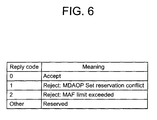
- the reply code subfield 334 includes information indicating the result of the received broadcast MDAOP setup request frame 200 and an example thereof is shown in Fig. 6 .
- the reply code indicates the acceptance or rejection of the request.
- the reply code can be finely divided depending on whether the reason is an MDAOP set reservation conflict or an excess of an MDA access fraction (MAF).
- the MAF indicates a ratio of the total duration of the neighboring MDAOP time in the mesh DTIM to the duration of the mesh DTIM interval.
- a new MDAOP may be optionally included and transmitted in an alternate suggested MDAOP subfield 336.
- the MDAOP owner (the transmitting MP having transmitted the broadcast MDAOP setup request message to reserve the channel access time) tries to transmit data in the reserved channel access time.
- the MDAOP owner since all the MPs in the mesh network do not support the MDA setup procedure, the MDAOP owner transmits data by backing off the data.
- the receiving MPs MP-Bs having transmitted the broadcast MDAOP setup reply message including the information indicating the acceptance of the setup request and/or the transmitting MP MP-A having received the broadcast MDAOP setup reply message transmits an MDAOP advertisement message (S14).
- the MDAOP advertisement message includes TX-RX time information and interfering times information and the type is not particularly limited.
- the MDAOP advertisement message may be a beacon frame or an MDAOP advertisement frame.
- the MDAOP advertisement message is transmitted at least once within a predetermined time and is always transmitted in the multicast/broadcast type.
- the MDAOP advertisement message is used to notify other MPs of information that the transmitting MP and the receiving MPs relate to and/or know after the MDAOP setup procedure for broadcast.
- the MDAOP advertisement message can be controlled by the following rules.
- the broadcast MDAOP owner transmits the MDAOP advertisement message including time information on the setup broadcast MDAOP after finishing the broadcast MDAOP setup procedure with all the receiving MPs.
- the receiving MPs having performed the broadcast MDAOP setup procedure with the broadcast MDAOP owner transmits the MDAOP advertisement message including the time information on the setup broadcast MDAOP after receiving the MDAOP advertisement message from the broadcast MDAOP owner.
- This rule considers that some receiving MPs may accept the broadcast MDAOP setup request but the other receiving MPs may not accept the broadcast MDAOP setup request.
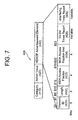
- Fig. 7 is a diagram illustrating a format of an MDAOP advertisement frame as an example of the MDAOP advertisement message.
- An action frame or a beacon frame can be used as the MDAOP advertisement frame.
- an MDAOP advertisement element can be included in the beacon frame.
- the MDAOP advertisement frame 400 (hereinafter, also simply referred to as "advertisement frame”) includes a category field 410, an action value field 420, and an MDAOP advertisement element field 430.
- the category field 410 is set to a value indicating a mesh resource coordination category.
- the action value field 420 is set to the same value as indicating a unicast MDAOP advertisement action or is set to an additionally allocated value indicating the broadcast MDAOP advertisement as needed.
- the MMDAOP advertisement element 430 includes an element ID subfield 431, a length subfield 432, an MDAOP access fraction subfield 433, an MDA access fraction limit subfield 434, a TX-RX time report subfield 435, and an interfering time report subfield 436.
- the element ID subfield 431 is set to a value indicating the MDAOP advertisement element.
- the length subfield 432 is set to a value indicating the length of data included in the subsequent subfields 433 to 436.
- the MDA access fraction subfield 433 is set to a current value of the MDA access fraction.
- the MDA access fraction limit subfield 434 is set to a value indicating the maximum MDA access fraction permitted in the MP.
- the TX-RX time report subfield 435 is used to advertise the time reserved for a channel in which the MP is the transmitter or the receiver in the mesh DTIM interval and can include unknown TX-RX reserved time other than the MDAOP, as well as known reserved time.
- the TX-RX time report subfield 435 may be used to advertise the time in which the transmitting MP MP-A knows that the channel is busy or reserved.
- the interfering time report subfield 436 is equal to the TX-RX time report subfield 435 in format, but is different in information included therein. That is, the interfering time report subfield 436 includes information indicating the TX and/or RX time of the neighboring MPs which one of the neighboring MPs of the MP knows on the basis of the TX-RX time report subfield in the MDAOP advertisement message transmitted by the neighboring MPs.
- Fig. 8 is a diagram illustrating a format of the RX-TX time report subfield 435 or the interfering time report subfield 436 according to the embodiment of the invention.
- the RX-TX time report subfield 435 or the interfering time report subfield 436 includes a number of unicast MDAOPs subfield, unicast MDAOP subfields Unicast MDAOP1, Unicast MDAOP2, ..., Unicast MDAOPn corresponding to the number of unicast MDAOPs, a number of broadcast MDAOPs subfield, broadcast MDAOP subfields Broadcast MDAOP1, Broadcast MDAOP2, ..., Broadcast MDAOPm corresponding to the number of broadcast MDAOPs.
- the unicast MDAOP subfields and the broadcast MDAOP subfields include detailed information on the MDAOP reserved as the transmitter or the receiver in the MPs or detailed information on the MDAOP of the neighboring MPs that may interfere with the MPs.
- the MPs supporting the MDA (MDA-supporting MPs) procedure purchase the neighbaring MDAOP times.
- the neighboring MDAOP time means a time when the MPs or the neighboring peer MPs are a transmitter or a receiver.
- the MP When an MP is an MDAOP owner and an MSDU (MAC Service Data Unit) relating to an MDA session and to be transmitted exists, the MP tries to acquire the transmission opportunity TXOP using the contention of EDCA (Enhanced Distributed Channel Access) and backoff parameters.
- EDCA Enhanced Distributed Channel Access
- the MP When the MP completely exchanges messages with a receiver, the MP successfully acquires the transmission opportunity.
- the MP having acquired the transmission opportunity can transmit data until reaching the EDCA TXOP limit of the MSDU in the access category.
- the MP reaches the TXOP limit before the MDAOP is ended, the MP tries to transmit an additional MSDU relating to the MDA session by accessing a channel again to acquire the subsequent transmission opportunity during the MDAOP.
- the MP When the MP tried to access a channel but fails to acquire the transmission opportunity first or additionally, the MP should perform a backoff procedure.
- the MP When the MP prepares a channel access for retransmission during a time other than the MDAOP, the MP should avoid the channel access during the MDAOP time of the neighboring MP by setting the MDAOP time to an NAV (Network Allocation Vector).
- NAV Network Allocation Vector
- All the MDAOP-supporting MPs other than the MDAOP owner should delay the start of transmission during the transmission opportunity started in the MDAOP.
- the MPs other than the current MDAOP owner can start the contention for channel access after the transmission opportunity started in the current MDAOP is ended.
- a transmitting MP intending to transmit data in a broadcast type or a multicast type can set up an MDAOP for broadcast transmission with plural receiving MPs.
- an MDAOP setup request message for broadcast transmission and an MDAOP setup request message for unicast transmission can be simply distinguished using an MDAOP set ID.
- the transmitting MP owns another MDAOP for broadcast transmission in advance but the time period correspond to a neighboring MDAOP time period or a neighboring MDAOP interference time period, the transmitting MP, the transmitting MP can transmit an MDAOP setup request message having the same MDAOP set ID for the same time period during the another MDAOP.
Landscapes
- Engineering & Computer Science (AREA)
- Computer Networks & Wireless Communication (AREA)
- Signal Processing (AREA)
- Mobile Radio Communication Systems (AREA)
- Small-Scale Networks (AREA)
Claims (5)
- Mesh-Deterministic-Access-Verfahren in einem drahtlosen Mesh-Netzwerk, dadurch gekennzeichnet, dass das Verfahren Folgendes umfasst:Erlauben, dass ein vorgesehener Sender eine rundgesendete Mesh Deterministic Access Opportunity (im Weiteren als "MDAOP" bezeichnet)-Einrichtungsanforderungsmeldung (200) zum Anfordern einer MDAOP für eine Multicast-Übertragung an einen vorgesehenen Empfänger sendet (S12), wobei die rundgesendete MDAOP-Einrichtungsanforderungsmeldung Informationen zum Spezifizieren einer MDAOP-Zeit der MDAOP und eine vorgegebene MDAOP-ID zum Identifizieren die MDAOP enthält, wobei die MDAOP-Zeit eine MDAOP-Startzeit und eine MDAOP-Dauer innerhalb eines Mesh Delivery Traffic Indication Map (im Weiteren als DTIM bezeichnet)-Intervalls enthält; undErlauben, dass der vorgesehene Empfänger eine MDAOP-Einrichtungsantwortmeldung (300), die einen Antwortcode enthält, an den vorgesehenen Sender sendet (S13), wobei der Antwortcode entweder die Annahme oder die Ablehnung der Anforderung für die rundgesendete MDAOP anzeigt,wobei der Antwortcode die Annahme der Anforderung anzeigt, wenn sich die MDAOP-Zeit der MDAOP mit einer benachbarten MDAOP-Zeit überlappt, wobei die benachbarte MDAOP-Zeit eine MDA-Zeit ist, die dem vorgesehenen Sender gehört, und von dem vorgesehenen Sender kommend durch den vorgesehenen Empfänger über eine MDAOP-Ankündigungsmeldung empfangen wird.
- Verfahren gemäß Anspruch 1, das des Weiteren Folgendes umfasst:Erlauben, dass der vorgesehene Sender eine Karte aus benachbarten MDAOP-Zeiten in der Mesh-DTIM aufbaut (S11), bevor die MDAOP-Anforderungsmeldung übertragen wird, wobei die Karte aus benachbarten MDAOP-Zeiten benachbarte MDAOP-Zeiten und Nachbar-MDAOP-Interferenzzeiten aller Nachbar-Peer-Mesh-Punkte (MPs) enthält.
- Verfahren gemäß Anspruch 1, das des Weiteren Folgendes umfasst:wenn der vorgesehene Empfänger die Anforderung für die rundgesendete MDAOP annimmt, Erlauben, dass der vorgesehene Empfänger eine MDAOP-Ankündigungsmeldung (400), die die Zeitinformationen über die rundgesendete MDAOP-Einrichtungsanforderungsmeldung enthält, sendet (S14), nachdem eine MDAOP-Ankündigungsmeldung von dem vorgesehenen Sender kommend empfangen wurde.
- Verfahren zum Einrichten eines Mesh-Deterministic-Access in einem drahtlosen Mesh-Netzwerk, der durch einen Empfänger ausgeführt wird, dadurch gekennzeichnet, dass das Verfahren Folgendes umfasst:Empfangen (S12) einer rundgesendeten Mesh Deterministic Access Opportunity (im Weiteren als "MDAOP" bezeichnet)-Einrichtungsanforderungsmeldung (200) zum Anfordern einer MDAOP für eine Multicast-Übertragung von einem MDAOP-Eigner, wobei die rundgesendete MDAOP-Einrichtungsanforderungsmeldung eine MDAOP-Zeit der MDAOP und eine vorgegebene MDAOP-ID zum Identifizieren die MDAOP enthält, wobei die MDAOP-Zeit eine MDAOP-Startzeit und eine MDAOP-Dauer innerhalb eines Mesh Delivery Traffic Indication Map (im Weiteren als DTIM bezeichnet)-Intervalls enthält; undSenden (S13) einer MDAOP-Einrichtungsantwortmeldung (300), die einen Antwortcode enthält, an den MDAOP-Eigner, wobei der Antwortcode entweder die Annahme oder die Ablehnung der Anforderung für die rundgesendete MDAOP anzeigt,wobei der Antwortcode die Annahme der Anforderung anzeigt, wenn sich die MDAOP-Zeit der MDAOP mit einer benachbarten MDAOP-Zeit überlappt, wobei die benachbarte MDAOP-Zeit eine MDA-Zeit ist, die dem MDAOP-Eigner gehört, und von dem MDAOP-Eigner kommend über eine MDAOP-Ankündigungsmeldung empfangen wird.
- Verfahren gemäß Anspruch 4, das des Weiteren Folgendes umfasst:wenn die Anforderung für die rundgesendete MDAOP angenommen wird, Senden einer MDAOP-Ankündigungsmeldung, die die Zeitinformationen über die rundgesendete MDAOP-Einrichtungsanforderungsmeldung enthält, nachdem eine MDAOP-Ankündigungsmeldung von dem MDAOP-Eigner kommend empfangen wurde.
Applications Claiming Priority (1)
| Application Number | Priority Date | Filing Date | Title |
|---|---|---|---|
| KR20070114016 | 2007-11-09 |
Publications (2)
| Publication Number | Publication Date |
|---|---|
| EP2059084A1 EP2059084A1 (de) | 2009-05-13 |
| EP2059084B1 true EP2059084B1 (de) | 2011-03-09 |
Family
ID=40193488
Family Applications (1)
| Application Number | Title | Priority Date | Filing Date |
|---|---|---|---|
| EP08168077A Active EP2059084B1 (de) | 2007-11-09 | 2008-10-31 | Mesh-Deterministic-Access-Verfahren in drahtlosem Mesh-Netzwerk und drahtlose Vorrichtung zur dessen Unterstützung |
Country Status (8)
| Country | Link |
|---|---|
| US (1) | US8310999B2 (de) |
| EP (1) | EP2059084B1 (de) |
| KR (1) | KR101099259B1 (de) |
| CN (1) | CN101889414B (de) |
| AT (1) | ATE501623T1 (de) |
| DE (1) | DE602008005388D1 (de) |
| TW (1) | TWI445355B (de) |
| WO (1) | WO2009061096A1 (de) |
Cited By (1)
| Publication number | Priority date | Publication date | Assignee | Title |
|---|---|---|---|---|
| CN102907162A (zh) * | 2010-05-17 | 2013-01-30 | 西门子公司 | 信息元以及用于通告信道预留的方法 |
Families Citing this family (12)
| Publication number | Priority date | Publication date | Assignee | Title |
|---|---|---|---|---|
| US7548758B2 (en) | 2004-04-02 | 2009-06-16 | Nortel Networks Limited | System and method for peer-to-peer communication in cellular systems |
| US20110225312A1 (en) * | 2010-03-10 | 2011-09-15 | Thomson Licensing | Unified cache and peer-to-peer method and apparatus for streaming media in wireless mesh networks |
| US8447875B2 (en) * | 2010-03-10 | 2013-05-21 | Thomson Licensing | Unified cache and peer-to-peer method and apparatus for streaming media in wireless mesh networks |
| CN102238560B (zh) * | 2010-05-06 | 2015-10-21 | 中兴通讯股份有限公司 | 小区休眠的处理方法及系统 |
| CN101977406B (zh) * | 2010-11-18 | 2013-11-13 | 重庆金美通信有限责任公司 | 一种无线mesh网络中快速服务流建立方法 |
| KR101684875B1 (ko) * | 2010-12-07 | 2016-12-09 | 지멘스 악티엔게젤샤프트 | 채널 예약들을 광고하기 위한 방법 |
| KR101951358B1 (ko) | 2011-12-15 | 2019-02-22 | 삼성전자주식회사 | 무선 전력 송신기 및 그 제어 방법 |
| KR102058935B1 (ko) * | 2013-04-04 | 2019-12-24 | 삼성전자 주식회사 | 리시버와 이를 구비하는 휴대단말장치 및 이의 제조방법 |
| JP6409438B2 (ja) | 2014-09-19 | 2018-10-24 | 株式会社リコー | セッション制御システム、通信端末、通信システム、セッション制御方法、及びプログラム |
| US10567267B2 (en) * | 2017-07-06 | 2020-02-18 | Cisco Technology, Inc. | Deterministic data collection from mobile network device traveling within a deterministic network |
| US11196830B2 (en) * | 2018-02-12 | 2021-12-07 | International Business Machines Corporation | Delivering messages to offline devices using peer-to-peer communication |
| CN113228759B (zh) * | 2019-01-07 | 2024-06-04 | 索尼集团公司 | 通信装置及通信方法 |
Family Cites Families (2)
| Publication number | Priority date | Publication date | Assignee | Title |
|---|---|---|---|---|
| US20060251119A1 (en) | 2005-05-04 | 2006-11-09 | Sridhar Ramesh | Methods and apparatus to setup end-to-end flows in wireless mesh networks |
| US7746879B2 (en) * | 2005-08-29 | 2010-06-29 | Texas Instruments Incorporated | Mesh deterministic access |
-
2008
- 2008-10-29 KR KR1020107011151A patent/KR101099259B1/ko active Active
- 2008-10-29 WO PCT/KR2008/006361 patent/WO2009061096A1/en not_active Ceased
- 2008-10-29 CN CN200880119395XA patent/CN101889414B/zh active Active
- 2008-10-31 EP EP08168077A patent/EP2059084B1/de active Active
- 2008-10-31 AT AT08168077T patent/ATE501623T1/de not_active IP Right Cessation
- 2008-10-31 DE DE602008005388T patent/DE602008005388D1/de active Active
- 2008-11-04 TW TW097142549A patent/TWI445355B/zh active
- 2008-11-06 US US12/266,442 patent/US8310999B2/en active Active
Cited By (2)
| Publication number | Priority date | Publication date | Assignee | Title |
|---|---|---|---|---|
| CN102907162A (zh) * | 2010-05-17 | 2013-01-30 | 西门子公司 | 信息元以及用于通告信道预留的方法 |
| CN102907162B (zh) * | 2010-05-17 | 2017-11-03 | 西门子公司 | 信息元以及用于通告信道预留的方法 |
Also Published As
| Publication number | Publication date |
|---|---|
| KR101099259B1 (ko) | 2011-12-27 |
| WO2009061096A1 (en) | 2009-05-14 |
| DE602008005388D1 (de) | 2011-04-21 |
| KR20100087174A (ko) | 2010-08-03 |
| EP2059084A1 (de) | 2009-05-13 |
| US20090122774A1 (en) | 2009-05-14 |
| CN101889414B (zh) | 2013-08-21 |
| ATE501623T1 (de) | 2011-03-15 |
| TWI445355B (zh) | 2014-07-11 |
| CN101889414A (zh) | 2010-11-17 |
| TW200931883A (en) | 2009-07-16 |
| US8310999B2 (en) | 2012-11-13 |
Similar Documents
| Publication | Publication Date | Title |
|---|---|---|
| EP2059084B1 (de) | Mesh-Deterministic-Access-Verfahren in drahtlosem Mesh-Netzwerk und drahtlose Vorrichtung zur dessen Unterstützung | |
| KR101159018B1 (ko) | 메쉬 네트워크에서의 전송 기회 전송 장치 및 방법 | |
| CN100531076C (zh) | 通过无线电传输提供多个站间的同时通信的方法和接入点 | |
| CN102714861B (zh) | 演进型节点b控制的用于设备到设备和蜂窝用户的集中式资源重用 | |
| US9294883B2 (en) | Method, apparatus, and computer program product for probe request and response exchange | |
| US10136349B2 (en) | System and method for changing an identifier of a basic service set | |
| US8175047B2 (en) | Data transmission method in wireless mesh network and A-MSDU format | |
| KR20200007996A (ko) | 무선랜 시스템에서 스캐닝 방법과 이를 지원하는 장치 | |
| CN106131799B (zh) | 非时隙信道跳跃介质接入控制中的增强型广播传输方法 | |
| EP1998499A1 (de) | Abfrage für Peer-to-Peer-Verkehr | |
| US8243699B2 (en) | Multi-channel MAC method for WLAN devices with a single radio interface and system for implementing the same | |
| KR20150007909A (ko) | 무선 통신 시스템에서 분산 스케줄링 장치 및 방법 | |
| WO2012022822A1 (en) | Method and apparatus for wireless networks | |
| KR20080019605A (ko) | 다중 액세스 포인트 무선 네트워크의 자원 할당 방법 | |
| CN107231702A (zh) | 直连链路的建立方法及其实现数据传输的方法和节点 | |
| CN105208626A (zh) | 无线网络的通信方法、接入设备、用户设备 | |
| US20140017991A1 (en) | Signalling method for direct communication between terminals | |
| KR101913261B1 (ko) | 무선통신시스템에서 신호 송수신 방법 | |
| JP2025072892A (ja) | ステーション装置、アクセスポイント装置、及び通信方法 | |
| KR20100032987A (ko) | 무선랜에서 데이터 직접 전송 장치 및 그 방법 |
Legal Events
| Date | Code | Title | Description |
|---|---|---|---|
| PUAI | Public reference made under article 153(3) epc to a published international application that has entered the european phase |
Free format text: ORIGINAL CODE: 0009012 |
|
| AK | Designated contracting states |
Kind code of ref document: A1 Designated state(s): AT BE BG CH CY CZ DE DK EE ES FI FR GB GR HR HU IE IS IT LI LT LU LV MC MT NL NO PL PT RO SE SI SK TR |
|
| AX | Request for extension of the european patent |
Extension state: AL BA MK RS |
|
| 17P | Request for examination filed |
Effective date: 20091023 |
|
| 17Q | First examination report despatched |
Effective date: 20091126 |
|
| GRAP | Despatch of communication of intention to grant a patent |
Free format text: ORIGINAL CODE: EPIDOSNIGR1 |
|
| GRAS | Grant fee paid |
Free format text: ORIGINAL CODE: EPIDOSNIGR3 |
|
| GRAA | (expected) grant |
Free format text: ORIGINAL CODE: 0009210 |
|
| AK | Designated contracting states |
Kind code of ref document: B1 Designated state(s): AT BE BG CH CY CZ DE DK EE ES FI FR GB GR HR HU IE IS IT LI LT LU LV MC MT NL NO PL PT RO SE SI SK TR |
|
| REG | Reference to a national code |
Ref country code: GB Ref legal event code: FG4D |
|
| REG | Reference to a national code |
Ref country code: CH Ref legal event code: EP |
|
| REG | Reference to a national code |
Ref country code: IE Ref legal event code: FG4D |
|
| REF | Corresponds to: |
Ref document number: 602008005388 Country of ref document: DE Date of ref document: 20110421 Kind code of ref document: P |
|
| REG | Reference to a national code |
Ref country code: DE Ref legal event code: R096 Ref document number: 602008005388 Country of ref document: DE Effective date: 20110421 |
|
| REG | Reference to a national code |
Ref country code: NL Ref legal event code: VDEP Effective date: 20110309 |
|
| PG25 | Lapsed in a contracting state [announced via postgrant information from national office to epo] |
Ref country code: SE Free format text: LAPSE BECAUSE OF FAILURE TO SUBMIT A TRANSLATION OF THE DESCRIPTION OR TO PAY THE FEE WITHIN THE PRESCRIBED TIME-LIMIT Effective date: 20110309 Ref country code: ES Free format text: LAPSE BECAUSE OF FAILURE TO SUBMIT A TRANSLATION OF THE DESCRIPTION OR TO PAY THE FEE WITHIN THE PRESCRIBED TIME-LIMIT Effective date: 20110620 Ref country code: LT Free format text: LAPSE BECAUSE OF FAILURE TO SUBMIT A TRANSLATION OF THE DESCRIPTION OR TO PAY THE FEE WITHIN THE PRESCRIBED TIME-LIMIT Effective date: 20110309 Ref country code: LV Free format text: LAPSE BECAUSE OF FAILURE TO SUBMIT A TRANSLATION OF THE DESCRIPTION OR TO PAY THE FEE WITHIN THE PRESCRIBED TIME-LIMIT Effective date: 20110309 Ref country code: HR Free format text: LAPSE BECAUSE OF FAILURE TO SUBMIT A TRANSLATION OF THE DESCRIPTION OR TO PAY THE FEE WITHIN THE PRESCRIBED TIME-LIMIT Effective date: 20110309 Ref country code: NO Free format text: LAPSE BECAUSE OF FAILURE TO SUBMIT A TRANSLATION OF THE DESCRIPTION OR TO PAY THE FEE WITHIN THE PRESCRIBED TIME-LIMIT Effective date: 20110609 Ref country code: GR Free format text: LAPSE BECAUSE OF FAILURE TO SUBMIT A TRANSLATION OF THE DESCRIPTION OR TO PAY THE FEE WITHIN THE PRESCRIBED TIME-LIMIT Effective date: 20110610 |
|
| LTIE | Lt: invalidation of european patent or patent extension |
Effective date: 20110309 |
|
| PG25 | Lapsed in a contracting state [announced via postgrant information from national office to epo] |
Ref country code: CY Free format text: LAPSE BECAUSE OF FAILURE TO SUBMIT A TRANSLATION OF THE DESCRIPTION OR TO PAY THE FEE WITHIN THE PRESCRIBED TIME-LIMIT Effective date: 20110309 Ref country code: FI Free format text: LAPSE BECAUSE OF FAILURE TO SUBMIT A TRANSLATION OF THE DESCRIPTION OR TO PAY THE FEE WITHIN THE PRESCRIBED TIME-LIMIT Effective date: 20110309 Ref country code: BG Free format text: LAPSE BECAUSE OF FAILURE TO SUBMIT A TRANSLATION OF THE DESCRIPTION OR TO PAY THE FEE WITHIN THE PRESCRIBED TIME-LIMIT Effective date: 20110609 Ref country code: SI Free format text: LAPSE BECAUSE OF FAILURE TO SUBMIT A TRANSLATION OF THE DESCRIPTION OR TO PAY THE FEE WITHIN THE PRESCRIBED TIME-LIMIT Effective date: 20110309 Ref country code: NL Free format text: LAPSE BECAUSE OF FAILURE TO SUBMIT A TRANSLATION OF THE DESCRIPTION OR TO PAY THE FEE WITHIN THE PRESCRIBED TIME-LIMIT Effective date: 20110309 Ref country code: AT Free format text: LAPSE BECAUSE OF FAILURE TO SUBMIT A TRANSLATION OF THE DESCRIPTION OR TO PAY THE FEE WITHIN THE PRESCRIBED TIME-LIMIT Effective date: 20110309 |
|
| PG25 | Lapsed in a contracting state [announced via postgrant information from national office to epo] |
Ref country code: BE Free format text: LAPSE BECAUSE OF FAILURE TO SUBMIT A TRANSLATION OF THE DESCRIPTION OR TO PAY THE FEE WITHIN THE PRESCRIBED TIME-LIMIT Effective date: 20110309 |
|
| PG25 | Lapsed in a contracting state [announced via postgrant information from national office to epo] |
Ref country code: PT Free format text: LAPSE BECAUSE OF FAILURE TO SUBMIT A TRANSLATION OF THE DESCRIPTION OR TO PAY THE FEE WITHIN THE PRESCRIBED TIME-LIMIT Effective date: 20110711 Ref country code: EE Free format text: LAPSE BECAUSE OF FAILURE TO SUBMIT A TRANSLATION OF THE DESCRIPTION OR TO PAY THE FEE WITHIN THE PRESCRIBED TIME-LIMIT Effective date: 20110309 |
|
| PG25 | Lapsed in a contracting state [announced via postgrant information from national office to epo] |
Ref country code: CZ Free format text: LAPSE BECAUSE OF FAILURE TO SUBMIT A TRANSLATION OF THE DESCRIPTION OR TO PAY THE FEE WITHIN THE PRESCRIBED TIME-LIMIT Effective date: 20110309 Ref country code: IS Free format text: LAPSE BECAUSE OF FAILURE TO SUBMIT A TRANSLATION OF THE DESCRIPTION OR TO PAY THE FEE WITHIN THE PRESCRIBED TIME-LIMIT Effective date: 20110709 Ref country code: RO Free format text: LAPSE BECAUSE OF FAILURE TO SUBMIT A TRANSLATION OF THE DESCRIPTION OR TO PAY THE FEE WITHIN THE PRESCRIBED TIME-LIMIT Effective date: 20110309 Ref country code: SK Free format text: LAPSE BECAUSE OF FAILURE TO SUBMIT A TRANSLATION OF THE DESCRIPTION OR TO PAY THE FEE WITHIN THE PRESCRIBED TIME-LIMIT Effective date: 20110309 |
|
| PLBE | No opposition filed within time limit |
Free format text: ORIGINAL CODE: 0009261 |
|
| STAA | Information on the status of an ep patent application or granted ep patent |
Free format text: STATUS: NO OPPOSITION FILED WITHIN TIME LIMIT |
|
| 26N | No opposition filed |
Effective date: 20111212 |
|
| PG25 | Lapsed in a contracting state [announced via postgrant information from national office to epo] |
Ref country code: PL Free format text: LAPSE BECAUSE OF FAILURE TO SUBMIT A TRANSLATION OF THE DESCRIPTION OR TO PAY THE FEE WITHIN THE PRESCRIBED TIME-LIMIT Effective date: 20110309 Ref country code: DK Free format text: LAPSE BECAUSE OF FAILURE TO SUBMIT A TRANSLATION OF THE DESCRIPTION OR TO PAY THE FEE WITHIN THE PRESCRIBED TIME-LIMIT Effective date: 20110309 |
|
| REG | Reference to a national code |
Ref country code: DE Ref legal event code: R097 Ref document number: 602008005388 Country of ref document: DE Effective date: 20111212 |
|
| PG25 | Lapsed in a contracting state [announced via postgrant information from national office to epo] |
Ref country code: IT Free format text: LAPSE BECAUSE OF FAILURE TO SUBMIT A TRANSLATION OF THE DESCRIPTION OR TO PAY THE FEE WITHIN THE PRESCRIBED TIME-LIMIT Effective date: 20110309 Ref country code: MC Free format text: LAPSE BECAUSE OF NON-PAYMENT OF DUE FEES Effective date: 20111031 |
|
| REG | Reference to a national code |
Ref country code: IE Ref legal event code: MM4A |
|
| PG25 | Lapsed in a contracting state [announced via postgrant information from national office to epo] |
Ref country code: IE Free format text: LAPSE BECAUSE OF NON-PAYMENT OF DUE FEES Effective date: 20111031 |
|
| PG25 | Lapsed in a contracting state [announced via postgrant information from national office to epo] |
Ref country code: MT Free format text: LAPSE BECAUSE OF FAILURE TO SUBMIT A TRANSLATION OF THE DESCRIPTION OR TO PAY THE FEE WITHIN THE PRESCRIBED TIME-LIMIT Effective date: 20110309 |
|
| PG25 | Lapsed in a contracting state [announced via postgrant information from national office to epo] |
Ref country code: LU Free format text: LAPSE BECAUSE OF NON-PAYMENT OF DUE FEES Effective date: 20111031 |
|
| REG | Reference to a national code |
Ref country code: CH Ref legal event code: PL |
|
| PG25 | Lapsed in a contracting state [announced via postgrant information from national office to epo] |
Ref country code: LI Free format text: LAPSE BECAUSE OF NON-PAYMENT OF DUE FEES Effective date: 20121031 Ref country code: CH Free format text: LAPSE BECAUSE OF NON-PAYMENT OF DUE FEES Effective date: 20121031 |
|
| PG25 | Lapsed in a contracting state [announced via postgrant information from national office to epo] |
Ref country code: TR Free format text: LAPSE BECAUSE OF FAILURE TO SUBMIT A TRANSLATION OF THE DESCRIPTION OR TO PAY THE FEE WITHIN THE PRESCRIBED TIME-LIMIT Effective date: 20110309 |
|
| PG25 | Lapsed in a contracting state [announced via postgrant information from national office to epo] |
Ref country code: HU Free format text: LAPSE BECAUSE OF FAILURE TO SUBMIT A TRANSLATION OF THE DESCRIPTION OR TO PAY THE FEE WITHIN THE PRESCRIBED TIME-LIMIT Effective date: 20110309 |
|
| REG | Reference to a national code |
Ref country code: FR Ref legal event code: PLFP Year of fee payment: 8 |
|
| REG | Reference to a national code |
Ref country code: FR Ref legal event code: PLFP Year of fee payment: 9 |
|
| REG | Reference to a national code |
Ref country code: FR Ref legal event code: PLFP Year of fee payment: 10 |
|
| REG | Reference to a national code |
Ref country code: FR Ref legal event code: PLFP Year of fee payment: 11 |
|
| P01 | Opt-out of the competence of the unified patent court (upc) registered |
Effective date: 20230524 |
|
| PGFP | Annual fee paid to national office [announced via postgrant information from national office to epo] |
Ref country code: GB Payment date: 20250909 Year of fee payment: 18 |
|
| PGFP | Annual fee paid to national office [announced via postgrant information from national office to epo] |
Ref country code: FR Payment date: 20250909 Year of fee payment: 18 |
|
| PGFP | Annual fee paid to national office [announced via postgrant information from national office to epo] |
Ref country code: DE Payment date: 20250908 Year of fee payment: 18 |