EP2059604B1 - Systèmes enzymatiques pour la saccharification de polysaccharides de parois cellulaires de plantes - Google Patents
Systèmes enzymatiques pour la saccharification de polysaccharides de parois cellulaires de plantes Download PDFInfo
- Publication number
- EP2059604B1 EP2059604B1 EP07838012.8A EP07838012A EP2059604B1 EP 2059604 B1 EP2059604 B1 EP 2059604B1 EP 07838012 A EP07838012 A EP 07838012A EP 2059604 B1 EP2059604 B1 EP 2059604B1
- Authority
- EP
- European Patent Office
- Prior art keywords
- gene
- xref
- microbulbifer
- protein
- cog
- Prior art date
- Legal status (The legal status is an assumption and is not a legal conclusion. Google has not performed a legal analysis and makes no representation as to the accuracy of the status listed.)
- Not-in-force
Links
Images





Classifications
-
- C—CHEMISTRY; METALLURGY
- C12—BIOCHEMISTRY; BEER; SPIRITS; WINE; VINEGAR; MICROBIOLOGY; ENZYMOLOGY; MUTATION OR GENETIC ENGINEERING
- C12N—MICROORGANISMS OR ENZYMES; COMPOSITIONS THEREOF; PROPAGATING, PRESERVING, OR MAINTAINING MICROORGANISMS; MUTATION OR GENETIC ENGINEERING; CULTURE MEDIA
- C12N9/00—Enzymes; Proenzymes; Compositions thereof; Processes for preparing, activating, inhibiting, separating or purifying enzymes
- C12N9/14—Hydrolases (3)
- C12N9/24—Hydrolases (3) acting on glycosyl compounds (3.2)
- C12N9/2402—Hydrolases (3) acting on glycosyl compounds (3.2) hydrolysing O- and S- glycosyl compounds (3.2.1)
- C12N9/2405—Glucanases
- C12N9/2434—Glucanases acting on beta-1,4-glucosidic bonds
- C12N9/2437—Cellulases (3.2.1.4; 3.2.1.74; 3.2.1.91; 3.2.1.150)
-
- C—CHEMISTRY; METALLURGY
- C12—BIOCHEMISTRY; BEER; SPIRITS; WINE; VINEGAR; MICROBIOLOGY; ENZYMOLOGY; MUTATION OR GENETIC ENGINEERING
- C12P—FERMENTATION OR ENZYME-USING PROCESSES TO SYNTHESISE A DESIRED CHEMICAL COMPOUND OR COMPOSITION OR TO SEPARATE OPTICAL ISOMERS FROM A RACEMIC MIXTURE
- C12P7/00—Preparation of oxygen-containing organic compounds
- C12P7/02—Preparation of oxygen-containing organic compounds containing a hydroxy group
- C12P7/04—Preparation of oxygen-containing organic compounds containing a hydroxy group acyclic
- C12P7/06—Ethanol, i.e. non-beverage
-
- C—CHEMISTRY; METALLURGY
- C12—BIOCHEMISTRY; BEER; SPIRITS; WINE; VINEGAR; MICROBIOLOGY; ENZYMOLOGY; MUTATION OR GENETIC ENGINEERING
- C12N—MICROORGANISMS OR ENZYMES; COMPOSITIONS THEREOF; PROPAGATING, PRESERVING, OR MAINTAINING MICROORGANISMS; MUTATION OR GENETIC ENGINEERING; CULTURE MEDIA
- C12N1/00—Microorganisms; Compositions thereof; Processes of propagating, maintaining or preserving microorganisms or compositions thereof; Processes of preparing or isolating a composition containing a microorganism; Culture media therefor
- C12N1/20—Bacteria; Culture media therefor
-
- C—CHEMISTRY; METALLURGY
- C12—BIOCHEMISTRY; BEER; SPIRITS; WINE; VINEGAR; MICROBIOLOGY; ENZYMOLOGY; MUTATION OR GENETIC ENGINEERING
- C12N—MICROORGANISMS OR ENZYMES; COMPOSITIONS THEREOF; PROPAGATING, PRESERVING, OR MAINTAINING MICROORGANISMS; MUTATION OR GENETIC ENGINEERING; CULTURE MEDIA
- C12N15/00—Mutation or genetic engineering; DNA or RNA concerning genetic engineering, vectors, e.g. plasmids, or their isolation, preparation or purification; Use of hosts therefor
- C12N15/09—Recombinant DNA-technology
- C12N15/11—DNA or RNA fragments; Modified forms thereof; Non-coding nucleic acids having a biological activity
-
- C—CHEMISTRY; METALLURGY
- C12—BIOCHEMISTRY; BEER; SPIRITS; WINE; VINEGAR; MICROBIOLOGY; ENZYMOLOGY; MUTATION OR GENETIC ENGINEERING
- C12N—MICROORGANISMS OR ENZYMES; COMPOSITIONS THEREOF; PROPAGATING, PRESERVING, OR MAINTAINING MICROORGANISMS; MUTATION OR GENETIC ENGINEERING; CULTURE MEDIA
- C12N9/00—Enzymes; Proenzymes; Compositions thereof; Processes for preparing, activating, inhibiting, separating or purifying enzymes
- C12N9/14—Hydrolases (3)
- C12N9/24—Hydrolases (3) acting on glycosyl compounds (3.2)
-
- C—CHEMISTRY; METALLURGY
- C12—BIOCHEMISTRY; BEER; SPIRITS; WINE; VINEGAR; MICROBIOLOGY; ENZYMOLOGY; MUTATION OR GENETIC ENGINEERING
- C12P—FERMENTATION OR ENZYME-USING PROCESSES TO SYNTHESISE A DESIRED CHEMICAL COMPOUND OR COMPOSITION OR TO SEPARATE OPTICAL ISOMERS FROM A RACEMIC MIXTURE
- C12P19/00—Preparation of compounds containing saccharide radicals
- C12P19/14—Preparation of compounds containing saccharide radicals produced by the action of a carbohydrase (EC 3.2.x), e.g. by alpha-amylase, e.g. by cellulase, hemicellulase
-
- C—CHEMISTRY; METALLURGY
- C12—BIOCHEMISTRY; BEER; SPIRITS; WINE; VINEGAR; MICROBIOLOGY; ENZYMOLOGY; MUTATION OR GENETIC ENGINEERING
- C12Y—ENZYMES
- C12Y302/00—Hydrolases acting on glycosyl compounds, i.e. glycosylases (3.2)
- C12Y302/01—Glycosidases, i.e. enzymes hydrolysing O- and S-glycosyl compounds (3.2.1)
- C12Y302/01004—Cellulase (3.2.1.4), i.e. endo-1,4-beta-glucanase
-
- Y—GENERAL TAGGING OF NEW TECHNOLOGICAL DEVELOPMENTS; GENERAL TAGGING OF CROSS-SECTIONAL TECHNOLOGIES SPANNING OVER SEVERAL SECTIONS OF THE IPC; TECHNICAL SUBJECTS COVERED BY FORMER USPC CROSS-REFERENCE ART COLLECTIONS [XRACs] AND DIGESTS
- Y02—TECHNOLOGIES OR APPLICATIONS FOR MITIGATION OR ADAPTATION AGAINST CLIMATE CHANGE
- Y02E—REDUCTION OF GREENHOUSE GAS [GHG] EMISSIONS, RELATED TO ENERGY GENERATION, TRANSMISSION OR DISTRIBUTION
- Y02E50/00—Technologies for the production of fuel of non-fossil origin
- Y02E50/10—Biofuels, e.g. bio-diesel
Definitions
- the invention is generally directed to degradative enzymes and systems.
- the present invention is directed to plant cell wall degrading enzymes and associated proteins found in Microbulbifer degradans, systems containing such enzymes and/or proteins, and methods of using the systems to obtain ethanol.
- the cell walls of plants are composed of a heterogenous mixture of complex polysaccharides that interact through covalent and noncovalent means.
- Complex polysaccharides of higher plant cell walls include, for example, cellulose ( ⁇ -1, 4 glucan) which generally makes up 35-50% of carbon found in cell wall components.
- Cellulose polymers self associate through hydrogen bonding, van der Waals interactions and hydrophobic interactions to form semi-crystalline cellulose microfibrils. These microfibrils also include noncrystalline regions, generally known as amorphous cellulose.
- the cellulose microfibrils are embedded in a matrix formed of hemicelluloses (including, e.g., xylans, arabinans, and mannans), pectins (e.g., galacturonans and galactans), and various other ⁇ -1, 3 and ⁇ -1, 4 glucans. These matrix polymers are often substituted with, for example, arabinose, galactose and/or xylose residues to yield highly complex arabinoxylans, arabinogalactans, galactomannans, and xyloglucans.
- the hemicellulose matrix is, in turn, surrounded by polyphenolic lignin.
- the complexity of the matrix makes it difficult to degrade by microorganisms as lignin and hemicellulose components must be degraded before enzymes can act on the core cellulose microfibrils.
- a consortium of different microorganisms is required to degrade cell wall polymers to release the constituent monosaccharides.
- the lignin For saccharification of plant cell walls, the lignin must be permeabilized and hemicellulose removed to allow cellulose-degrading enzymes to act on their substrate.
- large amounts of primarily fungal cellulases are added to processed feedstock that has been treated with dilute sulfuric acid at high temperature and pressure to permeabilize the lignin and partially saccharify the hemicellulose constituents.
- Saccharophagus degradans strain 2-40 (herein referred to as “ S. degradans 2-40” or “2-40”) is a representative of an emerging group of marine bacteria that degrade complex polysaccharides (CP).
- S . degradans has been deposited at the American Type Culture Collection and bears accession number ATCC 43961.
- S. degradans 2-40 formerly known and referred to synonymously herein as Microbulbifer degradans strain 2-40 (“M. degradans 2-40”), is a marine ⁇ -proteobacterium that was isolated from decaying Sparina alterniflora, a salt marsh cord grass in the Chesapeake Bay watershed. Consistent with its isolation from decaying plant matter, S .
- degradans strain 2-40 is able to degrade many complex polysaccharides, including cellulose, pectin, xylan, and chitin, which are common components of the cell walls of higher plants.
- S . degradans strain 2-40 is also able to depolymerize algal cell wall components, such as agar, agarose, and laminarin, as well as protein, starch, pullulan, and alginic acid.
- algal cell wall components such as agar, agarose, and laminarin
- protein, starch, pullulan, and alginic acid In addition to degrading this plethora of polymers, S. degradans strain 2-40 can utilize each of the polysaccharides as the sole carbon source. Therefore, S.
- ICPs insoluble complex polysaccharides
- Microbulbifer degradans strain 2-40 requires at least 1 % sea salts for growth and will tolerate salt concentrations as high as 10%. It is a highly pleomorphic, Gram-negative bacterium that is aerobic, generally rod-shaped, and motile by means of a single polar flagellum. Previous work has determined that 2-40 can degrade at least 10 different carbohydrate polymers (CP), including agar, chitin, alginic acid, carboxymethylcellulose (CMC), ⁇ -glucan, laminarin, pectin, pullulan, starch and xylan (Ensor, Stotz et al. 1999).
- CP carbohydrate polymers
- the agarase, chitinase and alginase systems have been generally characterized.
- Zymogram activity gels indicate that all three systems are comprised of multiple depolymerases and multiple lines of evidence suggest that at least some of these depolymerases are attached to the cell surface (Stotz 1994; Whitehead 1997; Chakravorty 1998).
- Activity assays reveal that the majority of 2-40 enzyme activity resides with the cell fraction during logarithmic growth on CP, while in later growth phases the bulk of the activity is found in the supernatant and cell-bound activity decreases dramatically (Stotz 1994). Growth on CP is also accompanied by dramatic alterations in cell morphology.
- Glucose-grown cultures of 2-40 are relatively uniform in cell size and shape, with generally smooth and featureless cell surfaces. However, when grown on agarose, alginate, or chitin, 2-40 cells exhibit novel surface structures and features.
- exo- and extra-cellular structures include small protuberances, larger bleb-like structures that appear to be released from the cell, fine fimbrae or pili, and a network of fibril-like appendages which may be tubules of some kind.
- Immunoelectron microscopy has shown that agarases, alginases and/or chitinases are localized in at least some types of 2-40 ES.
- the surface topology and pattern of immunolocalization of 2-40 enzymes to surface protuberances are very similar to what is seen with cellulolytic members of the genus Clostridium.
- U.S. Patent No. 6,333,181 discloses production of ethanol from lignocellulosic material by treatment of a mixture of lignocellulose, cellulose, and an ethanologenic microorganism with ultrasound.
- One aspect of the present invention concerns a method for producing ethanol from lignocellulosic material, comprising: contacting lignocellulosic material with Saccharophagus degradans expressing an effective saccharifying amount of one or more compounds listed in Figures 4-11 , to obtain saccharides; and converting the saccharides to produce ethanol, as defined in claim 1.
- Specific embodiments of the present invention are defined in the dependent claims 2-10.
- the present invention concerns a method for producing saccharides from lignocellulosic material, comprising: contacting lignocellulosic material with Saccharophagus degradans expressing an effective saccharifying amount of one or more compounds listed in Figures 4-11 to obtain saccharides as defined in claim 12.
- the present invention further concerns the use of Saccharophagus degradans expressing an effective saccharifying amount of one or more compounds listed in Figures 4-11 for the production of ethanol from lignocellulosic material.
- Saccharophagus degradans expressing an effective saccharifying amount of one or more compounds listed in Figures 4-11 to obtain saccharides from lignocellulosic material.
- Conversion of sugars to ethanol and recovery may be accomplished by, but are not limited to, any of the well-established methods known to those of skill in the art.
- an ethanologenic microorganism such as Zymomonas, Erwinia, Klebsiella, Xanthomonas, and Escherichia, preferably Escherichia coli K011 and Klebsiella oxytoca P2.
- Such an ethanologenic microorganism expresses an effective amount of one or more compounds listed in Figures 4-11 to saccharify the lignocellulosic material and an effective amount of one or more enzymes or enzyme systems which, in turn, catalyze (individually or in concert) the conversion of the saccharides to ethanol.
- the cellulose degrading substances can be used in food, beer, wine, animal feeds, textile production and laundering, pulp and paper industry, and agricultural industries.
- the present invention is advantageous in that saccharification of plant cell walls and ethanol production processes including saccharification may be obtained without permeabilizing lignin and/or removing or partially saccharifying the hemicellulose or hemicellulose constituents before the cellulose-degrading enzymes can act on their substrate.
- the present invention also allows for saccharification and ethanol production processes including saccharification without or with a reduced amount of fungal cellulases, acids (e.g., sulfuric acid), high temperatures, and high pressures in the saccharification process.
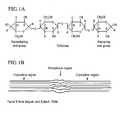
- Figure 1A shows the chemical formula of cellulose
- Figure 1 B illustrates the physical structure of cellulose
- Figure 2A illustrates the degradation of cellulose fibrils
- Figure 2B shows the chemical representation of cellulose degradation to cellobiose and glucose
- Figure 3 shows SDS-PAGE and Zymogram analysis of 2-40 culture supernatants
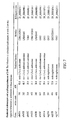
- Figure 4 lists the predicted cellulases of S . degradans 2-40 (the sequences from Figures 4-10 are disclosed as SEQ ID NOs 1-214, respectively in order of appearance in the appendix);
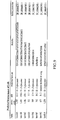
- Figure 5 lists the predicted xylanases, xylosidases and related accessories of M . degradans 2-40;
- Figure 6 lists the predicted pectinases and related accessories of S . degradans 2-40;
- Figure 7 lists the arabinanases and arabinogalactanases of S . degradans 2-40;
- Figure 8 lists the mannanases of S . degradans 2-40;
- Figure 9 lists the laminarinases of S . degradans 2-40;
- FIG. 10 lists selected carbohydrate-binding module proteins of S. degradans 2-40.
- Figure 11 lists the recombinant proteins of S . degradans 2-40 and a comparison of predicted vs. observed molecular weights thereof.
- 2-40 has a complete complement of enzymes, suitably positioned, to degrade plant cell walls. This has been accomplished by the following approaches: a) annotation and genomic analysis of 2-40 plant-wall active enzyme systems, b) identification of enzymes and other proteins which contain domains or motifs that may be involved in surface enzyme display, c) the development of testable models based on identified protein motifs, and d) cloning and expression of selected proteins for the production of antibody probes to allow testing of proposed models of surface enzyme display using immunoelectron microscopy.
- Enzymatic and non-enzymatic ORFs with compelling sequence elements are identified using BLAST and other amino acid sequence alignment and analysis tools. Genes of interest can be cloned into E coli, expressed with in-frame polyhistidine affinity tag fusions and purified by nickel ion chromatography, thus providing the means of identifying and producing recombinant 2-40 proteins for study and antibody probe production.
- the genome sequence of 2-40 was recently obtained in conjunction with the Department of Energy's Joint Genome Initiative (JGI).
- JGI Joint Genome Initiative
- the finished draft sequence dated January 19, 2005 comprises 5.1Mbp contained in a single contiguous sequence.
- Automated annotation of open reading frames (ORFs) was performed by the computational genomics division of the Oak Ridge National Laboratory (ORNL), and the annotated sequence is available on the World Wide Web (hftp://genome.ornl.gov/microbial/mdeg).
- the initial genome annotation has revealed a variety of carbohydrases, including a number of agarases, alginases and chitinases.
- the genome also contains an abundance of enzymes with predicted roles in the degradation of plant cell wall polymers, including a number of ORFs with homology to cellulases, xylanases, pectinases, and other glucanases and glucosidases. In all, over 180 open reading frames with a probable role in carbohydrate catabolism were identified in the draft genome.
- Enzymes have traditionally been classified by substrate specificity and reaction products. In the pre-genomic era, function was regarded as the most amenable (and perhaps most useful) basis for comparing enzymes and assays for various enzymatic activities have been well-developed for many years, resulting in the familiar EC classification scheme.
- Cellulases and other O -Glycosyl hydrolases which act upon glycosidic bonds between two carbohydrate moieties (or a carbohydrate and non-carbohydrate moiety as occurs in nitrophenol-glycoside derivatives) are designated as EC 3.2.1.-, with the final number indicating the exact type of bond cleaved. According to this scheme an endo-acting cellulase (1,4- ⁇ -endoglucanase) is designated EC 3.2.1.4.
- CAZy defines four major classes of carbohydrases, based on the type of reaction catalyzed: Glycosyl Hydrolases (GH's), Glycosyltransferases (GT's), Polysaccharide Lyases (PL's), and Carbohydrate Esterases (CE's).
- GH's cleave glycosidic bonds through hydrolysis.
- This class includes many familiar polysaccharidases such as cellulases, xylanases, and agarases.
- GT's generally function in polysaccharide synthesis, catalyzing the formation of new glycosidic bonds through the transfer of a sugar molecule from an activated carrier molecule, such as uridine diphosphate (UDP), to an acceptor molecule.
- activated carrier molecule such as uridine diphosphate (UDP)
- GT's While GT's often function in biosynthesis, there are examples where the mechanism is exploited for bond cleavage, as occurs in the phosphorolytic cleavage of cellobiose and cellodextrins (Lou, Dawson et al. 1996).
- PL's use a ⁇ -elimination mechanism to mediate bond cleavage and are commonly involved in alginate and pectin depolymerization.
- CE's generally act as deacetylases on O - or N- substituted polysaccharides. Common examples include xylan and chitin deacetylases. Sequence-based families are designated by number within each class, as is seen with GH5: glycosyl hydrolase family 5.
- GH5 hydrolyzes ⁇ -1,4 bonds in a retaining fashion, using a double-displacement mechanism which results in retention of the original bond stereospecificity. Retention or inversion of anomeric configuration is a general characteristic of a given GH family (Henrissat and Bairoch 1993; Coutinho and Henrissat 1999). Many examples of endocellulases, xylanases and mannanases belonging to GH5 have been reported, illustrating the variety of substrate specificity possible within a GH family. Also, GH5s are predominantly endohydrolases cleaving chains of their respective substrates at random locations internal to the polymer chains. While true for GH5, this generalization does not hold for many other GH families. In addition to carbohydrases, the CAZy server defines numerous families of Carbohydrate Binding Modules (CBM). As with catalytic modules, CBM families are designated based on amino acid sequence similarity and conserved three-dimensional folds.
- CBM Carbohydrate Binding
- CAZyme nomenclature retains the familiar acronym to indicate the functional system a gene belongs to and incorporates the family number designation.
- Capital letters after the family number indicate the order of report within a given organism system.
- An example is provided by two endoglucanases, CenA and CenB, of Cellulomonas fimi. In the old nomenclature nothing can be deduced from the names except order of discovery. Naming them Cel6A and Cel9A, respectively, makes it immediately clear that these two cellulases are unrelated in sequence, and so belong to different GH families (where Cel stands for cellulase, and 9 for glycosyl hydrolase family nine).
- CBM modules occurring on proteins with no predicted carbohydrase module. In the absence of some other predicted functional domain (like a protease) these proteins are named for the CBM module family. If there are multiple CBM families present, then naming is again from amino to carboxy end, i.e. cbm2D-cbm10A (Henrissat, Teeri et al. 1998). This nomenclature has been widely accepted and will be used in the naming of all 2-40 plant-wall active carbohydrases and related proteins considered as part of this study.
- the cell walls of higher plants are comprised of a variety of carbohydrate polymer (CP) components. These CP interact through covalent and non-covalent means, providing the structural integrity plants required to form rigid cell walls and resist turgor pressure.
- the major CP found in plants is cellulose, which forms the structural backbone of the cell wall. See Fig. 1A .
- chains of poly- ⁇ -1,4-D-glucose self associate through hydrogen bonding and hydrophobic interactions to form cellulose microfibrils which further self-associate to form larger fibrils.
- Cellulose microfibrils are somewhat irregular and contain regions of varying crystallinity.
- the degree of crystallinity of cellulose fibrils depends on how tightly ordered the hydrogen bonding is between its component cellulose chains. Areas with less-ordered bonding, and therefore more accessible glucose chains, are referred to as amorphous regions ( Figure 1 B) .
- the relative crystallinity and fibril diameter are characteristic of the biological source of the cellulose (Beguin and Aubert 1994; Tomme, Warren et al. 1995; Lynd, Weimer et al. 2002).
- the irregularity of cellulose fibrils results in a great variety of altered bond angles and steric effects which hinder enzymatic access and subsequent degradation.
- Endoglucanases cleave cellulose chains internally to generate shorter chains and increase the number of accessible ends, which are acted upon by exoglucanases. These exoglucanases are specific for either reducing ends or non-reducing ends and frequently liberate cellobiose, the dimer of cellulose (cellobiohydrolases). The accumulating cellobiose is cleaved to glucose by cellobiases ( ⁇ -1,4-glucosidases).
- cellodextrinases are ⁇ -1,4-glucosidases which cleave glucose monomers from cellulose oligomers, but not from cellobiose. Because of the variable crystallinity and structural complexity of cellulose, and the enzymatic activities required for is degradation, organisms with "complete" cellulase systems synthesize a variety of endo and/or exo-acting ⁇ -1,4-glucanases.
- Cellulomonas fimi and Thermomonospora fusca have each been shown to synthesize six cellulases while Clostridium thermocellum has as many as 15 or more (Tomme, Warren et al. 1995). Presumably, the variations in the shape of the substrate-binding pockets and/or active sites of these numerous cellulases facilitate complete cellulose degradation (Warren 1996). Organisms with complete cellulase systems are believed to be capable of efficiently using plant biomass as a carbon and energy source while mediating cellulose degradation.
- microfibrils of cellulose are embedded in a matrix of hemicelluloses (including xylans, arabinans and mannans), pectins (galacturonans and galactans), and various ⁇ -1,3 and ⁇ -1,4 glucans.
- matrix polymers are often substituted with arabinose, galactose and/or xylose residues, yielding arabinoxylans, galactomannans and xytoglucans to name a few (Tomme, Warren et al. 1995; Warren 1996; Kosugi, Murashima et al. 2002; Lynd, Weimer et al. 2002).
- ORFs which belong to other plant wall-active enzyme systems were tentatively classified based on the sequence analyses and functional predictions of B. Henrissat.
- DNSA assays dinitrosalicylic acid reducing-sugar assays
- Enzyme activity gels (zymograms) of avicel and xylan grown cell pellets and culture supernatants were analyzed to visualize and identify expressed cellulases and xylanases.
- the zymograms revealed five xylanolytic bands in xylan-grown supernatants ( Figure 3 ), four of which correspond well with the calculated MW of predicted xylanases (xyl/arb43G-xyn10D: 129.6kDa, xyn10E: 75.2kDa, xyn10C: 42.3kDa, and xyn11A: 30.4kDa; see Table 2).
- CMC is generally a suitable substrate for endocellulase activity.
- zymograms clearly demonstrate that 2-40 synthesizes a number of endocellulases of varied size during growth on avice indicative of a functioning multienzyme cellulase system.
- the CMC and xylan zymograms confirm the results of the genomic analyses and the inducible expression of multienzyme cellulase and xylanase systems in M degradans 2-40.
- the amino acid translations of all gene models in the 2-40 draft genome were analyzed on the CAZy ModO (Carbohydrase Active enZyme Modular Organization) server at AFMB-CRNS.
- CAZy ModO Carbohydrase Active enZyme Modular Organization
- This analysis identified all gene models that contain a catalytic module (GH, GT, PL, or CE) and/or a CBM.
- the genome contains 222 gene models containing CAZy domains, most of which have modular architecture. Of these, 117 contain a GH module, 39 have GTs, 29 PLs, and 17 CE. Many of these carry one or more CBM from various families. There are also 20 proteins that contain a CBM but no predicted carbohydrase domain.
- Cel9B from the gel slice MS/MS contains a GH9 module which is predicted to function as an endocellulase, a CBM2 and a CBM10 module.
- the genes chosen for cloning and functional analysis include the carbohydrases gly3C, gly5K, gly5M, gly9C, and gly43M. Because the active site of gly5L is highly homologous to that of gly5K, its activity is inferred from the results obtained from gly5K.
- CBM only proteins cbm2A, cbm2B, cbm2C and cbm2D-cbm10A are included in activity assays to investigate their predicted lack of enzymatic function. These four contain CBM2 modules that are predicted to bind to crystalline cellulose.
- This vector places expression under the control an inducible T7 lac promoter and incorporates a C-terminal 6xHistidine tag, allowing purification of the recombinant protein by nickel ion affinity.
- Successful cloning and expression of these proteins was confirmed by western blots using ⁇ -HisTag ® monoclonal antibody (Novagen). All expressed proteins have apparent MWs which are close to, or larger, than their predicted MW (Table 8) except for Cbm2D-Cbm10A which appears to be unstable; two separate attempts to clone and express this protein have resulted in HisTag® containing bands which occur near the dye front in western blots, suggesting proteolytic degradation of this gene product.
- Cel5A An additional enzyme, Cel5A, has been cloned and expressed for use as an endocellulase positive control in activity assays.
- Cel5A has a predicted MW of 129 kDa, contains two GH5 modules, and is highly active in HE-cellulose zymograms.
- the major criteria for assigning function will be the substrate acted upon, and the type of activity detected. As such, the various enzyme activity assays will focus on providing a qualitative demonstration of function rather than on rigorously quantifying relative activity levels. The assays required are dictated by the substrate being tested, and are discussed in more detail in Experimental Protocols. For cellulose it is important to distinguish between ⁇ -1,4-endoglucanase (endocellulase), ⁇ -1,4-exoglucanase (cellobiohydrolase), and ⁇ -1,4-glucosidase (cellobiase) activities.
- a positive zymogram indicates endocellulase activity
- a negative zymogram combined with a positive DNSA assay and a negative pnp-cellobiose assay indicates an exocellulase
- a negative zymogram and DNSA with a positive pnp-cellobiose result will imply that the enzyme is a cellobiase.
- Xylanase ( ⁇ -1,4-xylanase), laminarinase ( ⁇ -1,3-glucanase), and mixed glucanase ( ⁇ -1,3(4)-glucanase) activity will be determined by xylan, laminarin and barley glucan zymograms, respectively. Unlike cellulose, there do not appear to be any reports of "xylobiohydrolases" or other exo-acting enzymes which specifically cleave dimers from these substrates. Thus zymograms will suffice for demonstrating depolymerase (endo) activity and pnp-derivatives will detect monosaccharide (exo) cleavage.
- the pnp-derivatives used in this study will include pnp- ⁇ -L-arabinofuranoside, - ⁇ -L-arabinopyranoside, - ⁇ -L-arabinopyranoside, - ⁇ -D-cellobioside, - ⁇ -D-xylopyranoside and - ⁇ -D-xylopyranoside. These substrates were chosen based on the possible activities of the domains in question.
- the assays will allow determination of function for any ⁇ - and ⁇ -arabinosidases, ⁇ -cellobiases, ⁇ -xylosidases, bifunctional ⁇ -arabinosidase/ ⁇ -xylosidases, and ⁇ -xylosidases which cleave ⁇ -linked xylose substituents from xyloglucans.
- the pnp-derivative assays will be run in 96-well microtiter plates using a standard curve of p-nitrophenol concentrations, as discussed in Experimental Protocols.
- All activity gels were prepared as standard SDS-PAGE gels with the appropriate CP substrate incorporated directly into the separating gel. Zymograms are cast with 8% polyacrylamide concentration and the substrate dissolved in dH 2 O and/or gel buffer solution to give a final concentration of 0.1 % (HE-cellulose), 0.15% (barley ⁇ -glucan), or 0.2% (xylan). Gels are run under discontinuous conditions according to the procedure of Laemmli (Laemmli 1970) with the exception of an 8 minute treatment at 95°C in sample buffer containing a final concentration of 2% SDS and 100mM dithiothreitol (DTT).
- Laemmli Laemmli 1970
- gels are incubated at room temperature for 1 hour in 80ml of a renaturing buffer of 20mM PIPES buffer pH 6.8 which contains 2.5% Triton X-100, 2mM DTT and 2.5mM CaCl 2 .
- the calcium was included to assist the refolding of potential calcium-binding domains such as the tsp3s of Lam16A.
- Test substrates included avicel, CMC, phosphoric-acid swollen cellulose (PASC), Barley glucan, laminarin, and xylan dissolved at 1% in 20mM PIPES pH 6.8 (Barley glucan and laminarin, 0.5%). Barley glucan, laminarin and xylan assays were incubated 2 hours at 37°C; avicel, CMC and PASC assays were incubated 36 hours at 37°C.
- PASC phosphoric-acid swollen cellulose
- Purified proteins were assayed for activity against pNp derivatives of ⁇ -L-arabinofuranoside, - ⁇ -L-arabinopyranoside, - ⁇ -L-arabinopyranoside, - ⁇ -D-cellobioside, - ⁇ -D-glucopyranoside, - ⁇ -D-glucopyranoside, - ⁇ -D-xylopyranoside and - ⁇ -D-xylopyranoside. 25 ⁇ l of enzyme solution was added to 125 ⁇ l of 5mM substrate solution in 20mM PIPES pH 6.8, incubated for 30 min at 37°C, and A 405 was determined. After correcting for blank reactions, readings were compared to a p-nitrophenol standard curve and reported as specific activities in U/mg protein, with one unit (U) defined as 1 ⁇ mol p-Np/min.
- the samples are then exchanged into 50mM Tris, 1mM CaCl 2 , pH 8.5 using microcon devices.
- the denatured, reduced, and alkylated sample is digested into peptide fragments using proteomics-grade trypsin (Promega) at a 1:50 enzyme (trypsin) to substrate (supernatant) ratio.
- Typical digestion reactions were around 150 ⁇ l total volume. Digestions were incubated overnight at 37°C, stopped by addition of 99% formic acid to a final concentration of ⁇ 1% and analyzed by RPHPLC-MS/MS at the UMCP College of Life Sciences CORE Mass Spectrometry facility.
- Peptide fragments were loaded onto a Waters 2960 HPLC fitted with a 12cm microbore column containing C 18 as the adsorbent and eluted with a linear gradient of increasing acetonitrile (CH 3 CN) concentration into an electrospray ionization apparatus.
- the electrospray apparatus ionized and injected the peptides into a Finnagin LCQ tandem Mass Spectrometer.
- Automated operating software controlled the solvent gradient and continually scanned the eluted peptides.
- the program identifies each of the three most abundant ion species in a survey scan, isolates each of them in the Mass Spectrometer's ion trap and fragments them by inducing collisions with helium molecules.
- the resulting sub-fragment masses are recorded for further analysis by peptide analysis packages like SEQUEST and MASCOT. After the three subscan and collision cycles have completed, the MS takes another survey scan and the cycle repeats until the end of the run, usually about three hours. The raw MS reads are used by the analysis software to generate peptide fragment sequences, which were compared to amino acid sequence translations of all gene models in the 2-40 draft genome. Peptide identity matches were evaluated using accepted thresholds of statistical significance which are specific for each program.
- the basic cloning and expression system uses pETBlue2 (Novagen) as the vector, E coli DH5 ⁇ (Invitrogen) as the cloning strain, and E coli BL-21(DE3) Tuner® cells (Novagen) for protein expression strain.
- This system allows the cloning of toxic or otherwise difficult genes because the vector places expression under the control of a T7 lac promoter which is lacking in the cloning strain DH5 ⁇ , thereby abolishing even low-level expression during plasmid screening and propagation.
- plasmids are purified from DH5 ⁇ and transformed into the expression host (Tuners).
- the Tuner strain has the T7 lac promoter, allowing IPTG-inducible expression of the vector-coded protein and lacks the Lon and Omp proteases.
- the nucleotide sequences of gene models were obtained from the DOE JGl's Microbulbifer degradans genome web server and entered into the PrimerQuest TM design tool provided on Integrated DNA Technologies web page located at http://biotools.idtdna.com/Primerquest/ .
- the cloning and expression vector, pETBlue2 provides a C-terminal 6xHistidine fusion as well as the start and stop codon for protein expression.
- the resulting "tailed primers" were between 26 to 30nt long, and their sequences were verified by "virtual cloning" analysis using the PDRAW software package (http://www.acaclone.com). This program allows vector and insert DNA sequences to be cut with standard restriction enzymes and ligated together. The amino acid translations of the resulting sequences were examined to detect any frame shifts introduced by errors in primer design. Following this verification, the primers were purchased from Invitrogen (Frederick, MD).
- PCR reactions contained 10pMol of forward and reverse primers, 1 ⁇ l of 10mM DNTPs, 1.5 ⁇ l of 100mM MgCl 2 , and 1 ⁇ l Proof Pro® Pfu Polymerase in a 50 ⁇ l reaction with 0.5 ⁇ l of 2-40 genomic DNA as the template.
- PCRs conditions used standard parameters for tailed primers and Pfu DNA polymerase.
- PCR products were cleaned up with the QIAGEN QIAquick PCR Cleanup kit and viewed in 0.8% agarose gels.
- PCR products and pETBlue2 are digested with appropriate restriction enzymes, usually AscI and ClaI at 37°C for 1 to 4 hours, cleaned up using the QIAquick kit, and visualized in agarose gels. Clean digestions are ligated using T4 DNA ligase for at least 2 hours in the dark at room temperature. Ligations are then transformed into E coli DH5 ⁇ by electroporation. Transformants are incubated one hour at 37°C in non-selective media, and then plated onto LB agar containing ampicillin and X-gal. As pETBlue2 carries an Amp r gene and inserts are cloned into the lac Z ORF, white colonies contain the insert sequence.
- appropriate restriction enzymes usually AscI and ClaI at 37°C for 1 to 4 hours
- QIAquick kit the QIAquick kit
- White colonies are picked with toothpicks and patched onto a new LB/Amp/X-gal plate, with three of the patched colonies also being used to inoculate 3ml overnight broths. Plasmids are prepped from broths which correspond to patched colonies which remained white after overnight outgrowth. These plasmid preps are then singly digested with an appropriate restriction enzyme and visualized by agarose electrophoresis for size confirmation.
- the plasmids are then heat-shock transformed into the Tuner® strain, which carries a chromosomal chloramphenicol resistance gene ( Cm r ).
- the Transformants are incubated 1 hour at 37°C in non-selective rescue medium, plated on LB agar with Amp and Cm (Tuner medium) and incubated overnight at 37°C. Any colonies thus selected should contain the vector and insert. This is confirmed by patching three colonies onto a Tuner medium plate and inoculating corresponding 3ml overnight broths. The next morning the broths are used to inoculate 25ml broths which are grown to an OD 600 of around 0.6 (2-3 hours).
- Expression strains are grown to an OD 600 of 0.6 to 0.8 in 500ml or 1 liter broths of tuner medium. At this point a non-induced sample is collected and the remaining culture induced by addition of 100mM IPTG to a final concentration of 1 mM. Induction is carried out for four hours at 37°C or for 16 hours at 25°C. Culture pellets are harvested and frozen overnight at -20°C for storage and to aid cell lysis. Pellets are then thawed on ice for 10 minutes and transferred to pre-weighed falcon tubes and weighed.
- the cells are then rocked for 1 hour at 25°C in 4ml of lysis buffer (8M Urea, 100mM NaH 2 PO 4 , 25mM Tris, pH 8.0) per gram wet pellet weight.
- the lysates are centrifuged for 30 minutes at 15,000g to pellet cell debris.
- the cleared lysate (supernatant) is pipetted into a clean falcon tube, where 1ml of QIAGEN 50% Nickel-NTA resin is added for each 4ml cleared lysate. This mixture is gently agitated for 1 hour at room temperature to facilitate binding between the Ni +2 ions on the resin and the His tags of the recombinant protein.
- the slurry is loaded into a disposable mini column and the flow thru (depleted lysate) is collected and saved for later evaluation.
- the resin is washed twice with lysis buffer that has been adjusted to pH 7.0; the volume of each of these washes is equal to the original volume of cleared lysate.
- the flow thru of these two washes is also saved for later analysis in western blots to evaluate purification efficiency.
- the columns contain relatively purified recombinant proteins which are immobilized by the His tags at their C-terminus. This is an ideal situation for refolding, so the column is moved to a 4°C room and a series of renaturation buffers with decreasing urea concentrations are passed through the column.
- the renaturation buffers contain varying amounts of urea in 25mM Tris pH 7.4, 500mM NaCl, and 20% glycerol. This buffer is prepared as stock solutions containing 6M, 4M, 2M and 1M urea. Aliquots of these can be easily mixed to obtain 5M and 3M urea concentrations thus providing a descending series of urea concentrations in 1 M steps.
- One volume (the original lysate volume) of 6M buffer is passed through the column, followed by one volume of 5M buffer, continuing on to the 1M buffer which is repeated once to ensure equilibration of the column at 1 M urea.
- the refolded proteins are eluted in 8 fractions of 1/10 th original volume using 1 M urea, 25mM Tris pH 7.4, 500mM NaCl, 20% glycerol containing 250mM imidazole.
- the imidazole disrupts the Nickel ion-His tag interaction, thereby releasing the protein from the column.
- Western blots are used to evaluate the amount of His tagged protein in the depleted lysate, the two washes, and the eluted fractions. If there is an abundance of recombinant protein in the depleted lysate and/or washes it is possible to repeat the process and "scavenge" more protein. Eluate fractions that contain the protein of interest are pooled and then concentrated and exchanged into storage buffer (20mM Tris pH 7.4, 10mM NaCl, 10% glycerol) using centricon centrifugal ultrafiltration devices (Millipore). The enzyme preparations are then aliquoted and frozen at -80°C for use in activity assays.
- the cellulose degrading enzymes, related proteins and systems containing thereof, of this invention have a number of uses.
- Many possible uses of the cellulases of the present invention are the same as described for other cellulases in the paper " Cellulases and related enzymes in biotechnology" by M.K. Bhat (Biotechnical Advances 18 (2000) 355-383 ).
- the cellulases and systems thereof of this invention can be utilized in food, beer, wine, animal feeds, textile production and laundering, pulp and paper industry, and agricultural industries.
- These systems are used to break down cellulose in the extraction and/or clarification of fruit and vegetable juices, in the production and preservation of fruit nectars and purees, in altering the texture, flavor and other sensory properties of food, in the extraction of olive oil, in improving the quality of bakery products, in brewing beer and making wine, in preparing monogastic and ruminant feeds, in textile and laundry technologies including "fading" denim material, defibrillation of lyocell, washing garments and the like, preparing paper and pulp products, and in agricultural uses.
- Cellulose may be used to absorb environmental pollutants and waste spills. The cellulose may then be degraded by the cellulase degrading systems of the present invention. Bacteria that can metabolize environmental pollutants and can degrade cellulose may be used in bioreactors that degrade toxic materials. Such a bioreactor would be advantageous since there would be no need to add additional nutrients to maintain the bacteria - they would use cellulose as a carbon source.
- the present invention concerns a method for producing ethanol from lignocellulosic material, comprising: contacting lignocellulosic material with Saccharophagus degradans expressing an effective saccharifying amount of one or more compounds listed in Figures 4-11 , preferably cellulase cel5A listed in Figure 4 , to obtain saccharides; and converting the saccharides to produce ethanol.
- the contacting can be conducted in a marine environment, such as underwater.
- Saccharophagus degradans expresses an effective saccharifying amount of all of the compounds listed in Figures 4-11 .
- the one or more compounds listed in Figures 4-11 are present in dry form, in a buffer, or in the form of a paste, paint, or micelle.
- the one or more compounds listed in Figures 4-11 can be in a system consisting essentially of one or more compounds listed in Figures 4-11 .
- the one or more compounds listed in Figures 4-11 are present in a system further comprising metal ions, chelators, detergents, organic ions, inorganic ions, or one or more additional proteins, such as biotin and/or albumin.
- the ethanologenic microorganism expresses an effective amount of one or more compounds listed in Figures 4-11 to saccharify the lignocellulosic material and an effective amount of one or more enzymes or enzyme systems which, in turn, catalyze (individually or in concert) the conversion of the saccharides (e.g., sugars such as xylose and/or glucose) to ethanol.
- the one or more enzymes or enzyme systems of the ethanologenic organism may be expressed naturally or by, but not limited to, any of the methods known to those of skill in the art. For example, release of the one or more enzymes or enzyme systems may be obtained through the use of ultrasound.
- Conversion of sugars to ethanol and recovery may be accomplished by, but are not limited to, any of the well-established methods known to those of skill in the art.
- an ethanologenic microorganism such as Zymomonas, Erwinia, Klebsiella, Xanthomonas, and Escherichia, preferably Escherichia coli K011 and Klebsiella oxytoca P2.
- the present invention further concerns the use of Saccharophagus degradans expressing an effective saccharifying amount of one or more compounds listed in Figures 4-11 for the production of ethanol from lignocellulosic material.
- the present invention concerns a method for producing saccharides from lignocellulosic material, comprising:
Landscapes
- Chemical & Material Sciences (AREA)
- Life Sciences & Earth Sciences (AREA)
- Organic Chemistry (AREA)
- Health & Medical Sciences (AREA)
- Engineering & Computer Science (AREA)
- Zoology (AREA)
- Wood Science & Technology (AREA)
- Genetics & Genomics (AREA)
- Bioinformatics & Cheminformatics (AREA)
- General Engineering & Computer Science (AREA)
- General Health & Medical Sciences (AREA)
- Biotechnology (AREA)
- Biochemistry (AREA)
- Microbiology (AREA)
- Biomedical Technology (AREA)
- Molecular Biology (AREA)
- Medicinal Chemistry (AREA)
- General Chemical & Material Sciences (AREA)
- Chemical Kinetics & Catalysis (AREA)
- Biophysics (AREA)
- Physics & Mathematics (AREA)
- Plant Pathology (AREA)
- Tropical Medicine & Parasitology (AREA)
- Virology (AREA)
- Preparation Of Compounds By Using Micro-Organisms (AREA)
- Enzymes And Modification Thereof (AREA)
- Immobilizing And Processing Of Enzymes And Microorganisms (AREA)
Claims (14)
- Procédé de production d'éthanol à partir de matière lignocellulosique, comprenant:la mise en contact de la matière lignocellulosique avec le Saccharophagus degradans exprimant une quantité saccharifiante efficace d'un ou de plusieurs composés cités dans les Figures 4-11 pour obtenir des saccharides; etla conversion des saccharides pour produire de l'éthanol.
- Procédé selon la revendication 1, dans lequel le Saccharophagus degradans exprime une quantité saccharifiante efficace de tous les composés cités dans les Figures 4-11.
- Procédé selon la revendication 1, dans lequel le ou les composés cités dans les Figures 4-11 sont présents sous forme sèche, dans un tampon, ou sous la forme d'une pâte, d'une peinture ou d'une micelle.
- Procédé selon la revendication 1, dans lequel le ou les composés cités dans les Figures 4-11 sont dans un système constitué essentiellement d'un ou de plusieurs composés cités dans les Figures 4-11.
- Procédé selon la revendication 1, dans lequel le ou les composés cités dans les Figures 4-11 sont présents dans un système comprenant en outre des ions métalliques, des agents chélatants, des détergents, des ions organiques, des ions inorganiques, ou une ou plusieurs protéines supplémentaires.
- Procédé selon la revendication 5, où la ou les protéines supplémentaires sont la biotine et/ou l'albumine.
- Procédé selon la revendication 1, dans lequel le traitement est effectué dans un environnement marin.
- Procédé selon la revendication 7, dans lequel le traitement est effectué sous l'eau.
- Procédé selon la revendication 1, dans lequel le ou les composés cités dans les Figures 4-11 représentent la cellulase ceI5A citée dans la Figure 4.
- Procédé selon la revendication 1, dans lequel le Saccharophagus degradans est soumis aux ultrasons.
- Utilisation du Saccharophagus degradans exprimant une quantité saccharifiante efficace d'un ou de plusieurs composés cités dans les Figures 4-11 pour la production d'éthanol à partir de matière lignocellulosique.
- Procédé de production de saccharides à partir de matière lignocellulosique, comprenant:la mise en contact de la matière lignocellulosique avec le Saccharophagus degradans exprimant une quantité saccharifiante efficace d'un ou de plusieurs composés cités dans les Figures 4-11 pour obtenir des saccharides.
- Procédé selon la revendication 12, dans lequel le Saccharophagus degradans est soumis aux ultrasons.
- Utilisation du Saccharophagus degradans exprimant une quantité saccharifiante efficace d'un ou de plusieurs composés cités dans les Figures 4-11 pour obtenir des saccharides à partir de matière lignocellulosique.
Applications Claiming Priority (2)
| Application Number | Priority Date | Filing Date | Title |
|---|---|---|---|
| US11/519,104 US8273557B2 (en) | 2004-05-04 | 2006-09-12 | Hydrolytic enzyme mixtures for saccharification of lignocellulosic polysaccharides |
| PCT/US2007/019708 WO2008033330A2 (fr) | 2006-09-12 | 2007-09-11 | Systèmes enzymatiques pour la saccharification de polysaccharides de parois cellulaires de plantes |
Publications (3)
| Publication Number | Publication Date |
|---|---|
| EP2059604A2 EP2059604A2 (fr) | 2009-05-20 |
| EP2059604A4 EP2059604A4 (fr) | 2009-10-21 |
| EP2059604B1 true EP2059604B1 (fr) | 2013-05-01 |
Family
ID=39184291
Family Applications (1)
| Application Number | Title | Priority Date | Filing Date |
|---|---|---|---|
| EP07838012.8A Not-in-force EP2059604B1 (fr) | 2006-09-12 | 2007-09-11 | Systèmes enzymatiques pour la saccharification de polysaccharides de parois cellulaires de plantes |
Country Status (6)
| Country | Link |
|---|---|
| US (2) | US8273557B2 (fr) |
| EP (1) | EP2059604B1 (fr) |
| KR (1) | KR20090088856A (fr) |
| CN (1) | CN101636499A (fr) |
| AU (1) | AU2007294906A1 (fr) |
| WO (1) | WO2008033330A2 (fr) |
Families Citing this family (13)
| Publication number | Priority date | Publication date | Assignee | Title |
|---|---|---|---|---|
| US7365180B2 (en) | 2004-05-04 | 2008-04-29 | University Of Maryland | Plant wall degradative compounds and systems |
| US8273557B2 (en) | 2004-05-04 | 2012-09-25 | University Of Maryland | Hydrolytic enzyme mixtures for saccharification of lignocellulosic polysaccharides |
| US8404004B2 (en) * | 2006-12-29 | 2013-03-26 | Genifuel Corporation | Process of producing oil from algae using biological rupturing |
| WO2008136997A2 (fr) * | 2007-04-30 | 2008-11-13 | University Of Maryland | Expression de la carbohydrase pendant la dégradation d'une matière végétale entière par saccharophagus degradans |
| EP2192177A1 (fr) * | 2008-11-28 | 2010-06-02 | Total S.A. | Réactifs de type cellulase Cel5H et leur utilisation dans les micro-organismes |
| WO2010099406A2 (fr) * | 2009-02-27 | 2010-09-02 | University Of Maryland | Procédés de conversion de polysaccharides végétaux |
| WO2010118007A2 (fr) * | 2009-04-06 | 2010-10-14 | University Of Maryland | Stimulation de l'expression de la cellulase chez s. degradans |
| KR101322797B1 (ko) * | 2010-12-30 | 2013-10-29 | 고려대학교 산학협력단 | 사카로파거스 데그라단스 세포 내로 유전자 도입 및 유전자를 발현시키는 방법 |
| CN109295031B (zh) * | 2018-10-23 | 2020-06-19 | 南京工业大学 | 一种抗真菌蛋白β-1,3-葡聚糖酶和含有该基因的工程菌及其应用 |
| CN110643620B (zh) * | 2019-10-22 | 2021-05-28 | 怀化学院 | 一种高活性茯苓纤维素内切酶基因及其蛋白和重组载体 |
| CN111154740B (zh) * | 2020-02-07 | 2022-03-04 | 中国农业大学 | 一种沙质微泡菌β-半乳糖苷酶及其编码基因与应用 |
| CN114540328A (zh) * | 2022-02-18 | 2022-05-27 | 浙江工业大学 | 一种温度敏感型α-淀粉酶及其制备方法与应用 |
| CN116103317B (zh) * | 2023-02-17 | 2024-09-17 | 大连工业大学 | 一种碳水化合物结合模块的基因、融合酶及应用 |
Family Cites Families (9)
| Publication number | Priority date | Publication date | Assignee | Title |
|---|---|---|---|---|
| US5366558A (en) | 1979-03-23 | 1994-11-22 | Brink David L | Method of treating biomass material |
| US6333181B1 (en) | 1997-04-07 | 2001-12-25 | University Of Florida Research Foundation, Inc. | Ethanol production from lignocellulose |
| US5916780A (en) | 1997-06-09 | 1999-06-29 | Iogen Corporation | Pretreatment process for conversion of cellulose to fuel ethanol |
| AU9374298A (en) | 1997-09-12 | 1999-04-05 | Oceanix Biosciences Corporation | Preparation and use of biofilm-degrading, multiple-specificit y, hydrolytic enzyme mixtures |
| US20050136426A1 (en) | 2003-06-27 | 2005-06-23 | Michael Howard | Bacterial phytochelatin synthetase |
| US7384772B2 (en) | 2003-06-27 | 2008-06-10 | The University Of Maryland | Chitin degradative systems |
| US7365180B2 (en) * | 2004-05-04 | 2008-04-29 | University Of Maryland | Plant wall degradative compounds and systems |
| US8273557B2 (en) | 2004-05-04 | 2012-09-25 | University Of Maryland | Hydrolytic enzyme mixtures for saccharification of lignocellulosic polysaccharides |
| WO2008136997A2 (fr) | 2007-04-30 | 2008-11-13 | University Of Maryland | Expression de la carbohydrase pendant la dégradation d'une matière végétale entière par saccharophagus degradans |
-
2006
- 2006-09-12 US US11/519,104 patent/US8273557B2/en not_active Expired - Fee Related
-
2007
- 2007-09-11 KR KR1020097007532A patent/KR20090088856A/ko not_active Ceased
- 2007-09-11 AU AU2007294906A patent/AU2007294906A1/en not_active Abandoned
- 2007-09-11 CN CN200780041931A patent/CN101636499A/zh active Pending
- 2007-09-11 WO PCT/US2007/019708 patent/WO2008033330A2/fr not_active Ceased
- 2007-09-11 EP EP07838012.8A patent/EP2059604B1/fr not_active Not-in-force
-
2012
- 2012-08-22 US US13/592,006 patent/US8835139B2/en not_active Expired - Fee Related
Also Published As
| Publication number | Publication date |
|---|---|
| WO2008033330A3 (fr) | 2008-12-18 |
| US8273557B2 (en) | 2012-09-25 |
| KR20090088856A (ko) | 2009-08-20 |
| US20070292929A1 (en) | 2007-12-20 |
| AU2007294906A1 (en) | 2008-03-20 |
| CN101636499A (zh) | 2010-01-27 |
| US8835139B2 (en) | 2014-09-16 |
| US20130196401A1 (en) | 2013-08-01 |
| EP2059604A4 (fr) | 2009-10-21 |
| WO2008033330A2 (fr) | 2008-03-20 |
| EP2059604A2 (fr) | 2009-05-20 |
Similar Documents
| Publication | Publication Date | Title |
|---|---|---|
| US8835139B2 (en) | Methods of producing ethanol using hydrolytic enzyme mixtures for saccharification of lignocellulosic polysaccharides | |
| US8541563B2 (en) | Plant wall degradative compounds and systems | |
| Schwarz | The cellulosome and cellulose degradation by anaerobic bacteria | |
| Broeker et al. | The hemicellulose-degrading enzyme system of the thermophilic bacterium Clostridium stercorarium: comparative characterisation and addition of new hemicellulolytic glycoside hydrolases | |
| Taylor et al. | Complete cellulase system in the marine bacterium Saccharophagus degradans strain 2-40T | |
| Gomez del Pulgar et al. | The cellulolytic system of Thermobifida fusca | |
| Chang et al. | Characterization of a bifunctional xylanase/endoglucanase from yak rumen microorganisms | |
| Moser et al. | Regulation and characterization of Thermobifida fusca carbohydrate‐binding module proteins E7 and E8 | |
| Huang et al. | Purification and characterization of a cellulase (CMCase) from a newly isolated thermophilic aerobic bacterium Caldibacillus cellulovorans gen. nov., sp. nov | |
| Maharjan et al. | Fusion of carbohydrate binding modules to bifunctional cellulase to enhance binding affinity and cellulolytic activity | |
| Gao et al. | A novel salt-tolerant endo-β-1, 4-glucanase Cel5A in Vibrio sp. G21 isolated from mangrove soil | |
| Haq et al. | CenC, a multidomain thermostable GH9 processive endoglucanase from Clostridium thermocellum: cloning, characterization and saccharification studies | |
| CA2685864A1 (fr) | Expression de la carbohydrase pendant la degradation d'une matiere vegetale entiere par saccharophagus degradans | |
| Meng et al. | Characterization of a thermostable endo-1, 3 (4)-β-glucanase from Caldicellulosiruptor sp. strain F32 and its application for yeast lysis | |
| Domingues et al. | Cellulase production by bacteria is a strain-specific characteristic with a high biotechnological potential. A review of cellulosome of highly studied strains | |
| Rashmi et al. | Microbial xyloglucanases: a comprehensive review | |
| Arai et al. | Properties of cellulosomal family 9 cellulases from Clostridium cellulovorans | |
| Anderson et al. | RETRACTED: Recombinant Bacillus subtilis That Grows on Untreated Plant Biomass | |
| Andrade et al. | Enzymatic and biophysical characterization of a novel modular cellulosomal GH5 endoglucanase multifunctional from the anaerobic gut fungus Piromyces finnis | |
| US20120115235A1 (en) | Enhanced cellulase expression in s. degradans | |
| Cheawchanlertfa et al. | A novel amylolytic/xylanolytic/cellulolytic multienzyme complex from Clostridium manihotivorum that hydrolyzes polysaccharides in cassava pulp | |
| Lisov et al. | Multifunctional enzyme with endoglucanase and alginase/glucuronan lyase activities from bacterium Cellulophaga lytica | |
| Ohta et al. | Cloning, expression, and characterization of novel GH5 endoglucanases from Thermobifida alba AHK119 | |
| Suvorov et al. | Novelties of the cellulolytic system of a marine bacterium applicable to cellulosic sugar production | |
| Rai et al. | New paradigm in degradation of lignocellulosic biomass and discovery of novel microbial strains |
Legal Events
| Date | Code | Title | Description |
|---|---|---|---|
| PUAI | Public reference made under article 153(3) epc to a published international application that has entered the european phase |
Free format text: ORIGINAL CODE: 0009012 |
|
| 17P | Request for examination filed |
Effective date: 20090325 |
|
| AK | Designated contracting states |
Kind code of ref document: A2 Designated state(s): AT BE BG CH CY CZ DE DK EE ES FI FR GB GR HU IE IS IT LI LT LU LV MC MT NL PL PT RO SE SI SK TR |
|
| AX | Request for extension of the european patent |
Extension state: AL BA HR MK RS |
|
| A4 | Supplementary search report drawn up and despatched |
Effective date: 20090921 |
|
| DAX | Request for extension of the european patent (deleted) | ||
| 17Q | First examination report despatched |
Effective date: 20100210 |
|
| GRAP | Despatch of communication of intention to grant a patent |
Free format text: ORIGINAL CODE: EPIDOSNIGR1 |
|
| RAP1 | Party data changed (applicant data changed or rights of an application transferred) |
Owner name: UNIVERSITY OF MARYLAND |
|
| GRAS | Grant fee paid |
Free format text: ORIGINAL CODE: EPIDOSNIGR3 |
|
| GRAL | Information related to payment of fee for publishing/printing deleted |
Free format text: ORIGINAL CODE: EPIDOSDIGR3 |
|
| GRAS | Grant fee paid |
Free format text: ORIGINAL CODE: EPIDOSNIGR3 |
|
| GRAA | (expected) grant |
Free format text: ORIGINAL CODE: 0009210 |
|
| AK | Designated contracting states |
Kind code of ref document: B1 Designated state(s): AT BE BG CH CY CZ DE DK EE ES FI FR GB GR HU IE IS IT LI LT LU LV MC MT NL PL PT RO SE SI SK TR |
|
| REG | Reference to a national code |
Ref country code: GB Ref legal event code: FG4D |
|
| REG | Reference to a national code |
Ref country code: AT Ref legal event code: REF Ref document number: 609992 Country of ref document: AT Kind code of ref document: T Effective date: 20130515 Ref country code: CH Ref legal event code: EP |
|
| REG | Reference to a national code |
Ref country code: IE Ref legal event code: FG4D |
|
| REG | Reference to a national code |
Ref country code: DE Ref legal event code: R096 Ref document number: 602007030226 Country of ref document: DE Effective date: 20130627 |
|
| RAP2 | Party data changed (patent owner data changed or rights of a patent transferred) |
Owner name: UNIVERSITY OF MARYLAND |
|
| REG | Reference to a national code |
Ref country code: AT Ref legal event code: MK05 Ref document number: 609992 Country of ref document: AT Kind code of ref document: T Effective date: 20130501 |
|
| REG | Reference to a national code |
Ref country code: NL Ref legal event code: VDEP Effective date: 20130501 |
|
| REG | Reference to a national code |
Ref country code: LT Ref legal event code: MG4D |
|
| PG25 | Lapsed in a contracting state [announced via postgrant information from national office to epo] |
Ref country code: AT Free format text: LAPSE BECAUSE OF FAILURE TO SUBMIT A TRANSLATION OF THE DESCRIPTION OR TO PAY THE FEE WITHIN THE PRESCRIBED TIME-LIMIT Effective date: 20130501 Ref country code: GR Free format text: LAPSE BECAUSE OF FAILURE TO SUBMIT A TRANSLATION OF THE DESCRIPTION OR TO PAY THE FEE WITHIN THE PRESCRIBED TIME-LIMIT Effective date: 20130802 Ref country code: FI Free format text: LAPSE BECAUSE OF FAILURE TO SUBMIT A TRANSLATION OF THE DESCRIPTION OR TO PAY THE FEE WITHIN THE PRESCRIBED TIME-LIMIT Effective date: 20130501 Ref country code: SI Free format text: LAPSE BECAUSE OF FAILURE TO SUBMIT A TRANSLATION OF THE DESCRIPTION OR TO PAY THE FEE WITHIN THE PRESCRIBED TIME-LIMIT Effective date: 20130501 Ref country code: ES Free format text: LAPSE BECAUSE OF FAILURE TO SUBMIT A TRANSLATION OF THE DESCRIPTION OR TO PAY THE FEE WITHIN THE PRESCRIBED TIME-LIMIT Effective date: 20130812 Ref country code: SE Free format text: LAPSE BECAUSE OF FAILURE TO SUBMIT A TRANSLATION OF THE DESCRIPTION OR TO PAY THE FEE WITHIN THE PRESCRIBED TIME-LIMIT Effective date: 20130501 Ref country code: PT Free format text: LAPSE BECAUSE OF FAILURE TO SUBMIT A TRANSLATION OF THE DESCRIPTION OR TO PAY THE FEE WITHIN THE PRESCRIBED TIME-LIMIT Effective date: 20130902 Ref country code: LT Free format text: LAPSE BECAUSE OF FAILURE TO SUBMIT A TRANSLATION OF THE DESCRIPTION OR TO PAY THE FEE WITHIN THE PRESCRIBED TIME-LIMIT Effective date: 20130501 Ref country code: IS Free format text: LAPSE BECAUSE OF FAILURE TO SUBMIT A TRANSLATION OF THE DESCRIPTION OR TO PAY THE FEE WITHIN THE PRESCRIBED TIME-LIMIT Effective date: 20130901 |
|
| PG25 | Lapsed in a contracting state [announced via postgrant information from national office to epo] |
Ref country code: PL Free format text: LAPSE BECAUSE OF FAILURE TO SUBMIT A TRANSLATION OF THE DESCRIPTION OR TO PAY THE FEE WITHIN THE PRESCRIBED TIME-LIMIT Effective date: 20130501 Ref country code: CY Free format text: LAPSE BECAUSE OF FAILURE TO SUBMIT A TRANSLATION OF THE DESCRIPTION OR TO PAY THE FEE WITHIN THE PRESCRIBED TIME-LIMIT Effective date: 20130501 Ref country code: BG Free format text: LAPSE BECAUSE OF FAILURE TO SUBMIT A TRANSLATION OF THE DESCRIPTION OR TO PAY THE FEE WITHIN THE PRESCRIBED TIME-LIMIT Effective date: 20130801 |
|
| PG25 | Lapsed in a contracting state [announced via postgrant information from national office to epo] |
Ref country code: LV Free format text: LAPSE BECAUSE OF FAILURE TO SUBMIT A TRANSLATION OF THE DESCRIPTION OR TO PAY THE FEE WITHIN THE PRESCRIBED TIME-LIMIT Effective date: 20130501 |
|
| PG25 | Lapsed in a contracting state [announced via postgrant information from national office to epo] |
Ref country code: CZ Free format text: LAPSE BECAUSE OF FAILURE TO SUBMIT A TRANSLATION OF THE DESCRIPTION OR TO PAY THE FEE WITHIN THE PRESCRIBED TIME-LIMIT Effective date: 20130501 Ref country code: BE Free format text: LAPSE BECAUSE OF FAILURE TO SUBMIT A TRANSLATION OF THE DESCRIPTION OR TO PAY THE FEE WITHIN THE PRESCRIBED TIME-LIMIT Effective date: 20130501 Ref country code: EE Free format text: LAPSE BECAUSE OF FAILURE TO SUBMIT A TRANSLATION OF THE DESCRIPTION OR TO PAY THE FEE WITHIN THE PRESCRIBED TIME-LIMIT Effective date: 20130501 Ref country code: DK Free format text: LAPSE BECAUSE OF FAILURE TO SUBMIT A TRANSLATION OF THE DESCRIPTION OR TO PAY THE FEE WITHIN THE PRESCRIBED TIME-LIMIT Effective date: 20130501 Ref country code: SK Free format text: LAPSE BECAUSE OF FAILURE TO SUBMIT A TRANSLATION OF THE DESCRIPTION OR TO PAY THE FEE WITHIN THE PRESCRIBED TIME-LIMIT Effective date: 20130501 |
|
| PG25 | Lapsed in a contracting state [announced via postgrant information from national office to epo] |
Ref country code: IT Free format text: LAPSE BECAUSE OF FAILURE TO SUBMIT A TRANSLATION OF THE DESCRIPTION OR TO PAY THE FEE WITHIN THE PRESCRIBED TIME-LIMIT Effective date: 20130501 Ref country code: RO Free format text: LAPSE BECAUSE OF FAILURE TO SUBMIT A TRANSLATION OF THE DESCRIPTION OR TO PAY THE FEE WITHIN THE PRESCRIBED TIME-LIMIT Effective date: 20130501 Ref country code: NL Free format text: LAPSE BECAUSE OF FAILURE TO SUBMIT A TRANSLATION OF THE DESCRIPTION OR TO PAY THE FEE WITHIN THE PRESCRIBED TIME-LIMIT Effective date: 20130501 |
|
| PLBE | No opposition filed within time limit |
Free format text: ORIGINAL CODE: 0009261 |
|
| STAA | Information on the status of an ep patent application or granted ep patent |
Free format text: STATUS: NO OPPOSITION FILED WITHIN TIME LIMIT |
|
| 26N | No opposition filed |
Effective date: 20140204 |
|
| PG25 | Lapsed in a contracting state [announced via postgrant information from national office to epo] |
Ref country code: MC Free format text: LAPSE BECAUSE OF FAILURE TO SUBMIT A TRANSLATION OF THE DESCRIPTION OR TO PAY THE FEE WITHIN THE PRESCRIBED TIME-LIMIT Effective date: 20130501 |
|
| REG | Reference to a national code |
Ref country code: CH Ref legal event code: PL |
|
| REG | Reference to a national code |
Ref country code: DE Ref legal event code: R097 Ref document number: 602007030226 Country of ref document: DE Effective date: 20140204 |
|
| GBPC | Gb: european patent ceased through non-payment of renewal fee |
Effective date: 20130911 |
|
| REG | Reference to a national code |
Ref country code: DE Ref legal event code: R119 Ref document number: 602007030226 Country of ref document: DE Effective date: 20140401 |
|
| REG | Reference to a national code |
Ref country code: FR Ref legal event code: ST Effective date: 20140530 |
|
| REG | Reference to a national code |
Ref country code: IE Ref legal event code: MM4A |
|
| PG25 | Lapsed in a contracting state [announced via postgrant information from national office to epo] |
Ref country code: GB Free format text: LAPSE BECAUSE OF NON-PAYMENT OF DUE FEES Effective date: 20130911 Ref country code: LI Free format text: LAPSE BECAUSE OF NON-PAYMENT OF DUE FEES Effective date: 20130930 Ref country code: CH Free format text: LAPSE BECAUSE OF NON-PAYMENT OF DUE FEES Effective date: 20130930 Ref country code: IE Free format text: LAPSE BECAUSE OF NON-PAYMENT OF DUE FEES Effective date: 20130911 |
|
| REG | Reference to a national code |
Ref country code: DE Ref legal event code: R073 Ref document number: 602007030226 Country of ref document: DE |
|
| PG25 | Lapsed in a contracting state [announced via postgrant information from national office to epo] |
Ref country code: DE Free format text: LAPSE BECAUSE OF NON-PAYMENT OF DUE FEES Effective date: 20140401 Ref country code: FR Free format text: LAPSE BECAUSE OF NON-PAYMENT OF DUE FEES Effective date: 20130930 |
|
| REG | Reference to a national code |
Ref country code: FR Ref legal event code: RN Effective date: 20140812 |
|
| REG | Reference to a national code |
Ref country code: GB Ref legal event code: S28 Free format text: APPLICATION FILED |
|
| REG | Reference to a national code |
Ref country code: FR Ref legal event code: FC Effective date: 20140918 |
|
| REG | Reference to a national code |
Ref country code: DE Ref legal event code: R074 Ref document number: 602007030226 Country of ref document: DE |
|
| REG | Reference to a national code |
Ref country code: DE Ref legal event code: R074 Ref document number: 602007030226 Country of ref document: DE Effective date: 20141031 |
|
| PGRI | Patent reinstated in contracting state [announced from national office to epo] |
Ref country code: DE Effective date: 20141028 |
|
| REG | Reference to a national code |
Ref country code: GB Ref legal event code: S28 Free format text: RESTORATION ALLOWED Effective date: 20150305 |
|
| PG25 | Lapsed in a contracting state [announced via postgrant information from national office to epo] |
Ref country code: MT Free format text: LAPSE BECAUSE OF FAILURE TO SUBMIT A TRANSLATION OF THE DESCRIPTION OR TO PAY THE FEE WITHIN THE PRESCRIBED TIME-LIMIT Effective date: 20130501 Ref country code: TR Free format text: LAPSE BECAUSE OF FAILURE TO SUBMIT A TRANSLATION OF THE DESCRIPTION OR TO PAY THE FEE WITHIN THE PRESCRIBED TIME-LIMIT Effective date: 20130501 |
|
| PG25 | Lapsed in a contracting state [announced via postgrant information from national office to epo] |
Ref country code: LU Free format text: LAPSE BECAUSE OF NON-PAYMENT OF DUE FEES Effective date: 20130911 Ref country code: HU Free format text: LAPSE BECAUSE OF FAILURE TO SUBMIT A TRANSLATION OF THE DESCRIPTION OR TO PAY THE FEE WITHIN THE PRESCRIBED TIME-LIMIT; INVALID AB INITIO Effective date: 20070911 |
|
| REG | Reference to a national code |
Ref country code: FR Ref legal event code: PLFP Year of fee payment: 9 |
|
| PGFP | Annual fee paid to national office [announced via postgrant information from national office to epo] |
Ref country code: GB Payment date: 20150924 Year of fee payment: 9 |
|
| PGFP | Annual fee paid to national office [announced via postgrant information from national office to epo] |
Ref country code: DE Payment date: 20150930 Year of fee payment: 9 |
|
| PGFP | Annual fee paid to national office [announced via postgrant information from national office to epo] |
Ref country code: FR Payment date: 20150924 Year of fee payment: 9 |
|
| PGRI | Patent reinstated in contracting state [announced from national office to epo] |
Ref country code: FR Effective date: 20151022 |
|
| REG | Reference to a national code |
Ref country code: DE Ref legal event code: R119 Ref document number: 602007030226 Country of ref document: DE |
|
| GBPC | Gb: european patent ceased through non-payment of renewal fee |
Effective date: 20160911 |
|
| REG | Reference to a national code |
Ref country code: FR Ref legal event code: ST Effective date: 20170531 |
|
| PG25 | Lapsed in a contracting state [announced via postgrant information from national office to epo] |
Ref country code: GB Free format text: LAPSE BECAUSE OF NON-PAYMENT OF DUE FEES Effective date: 20160911 Ref country code: FR Free format text: LAPSE BECAUSE OF NON-PAYMENT OF DUE FEES Effective date: 20160930 |
|
| PG25 | Lapsed in a contracting state [announced via postgrant information from national office to epo] |
Ref country code: DE Free format text: LAPSE BECAUSE OF NON-PAYMENT OF DUE FEES Effective date: 20170401 |