EP2060168A1 - Procédé pour la production de chou de couleur rose - Google Patents
Procédé pour la production de chou de couleur rose Download PDFInfo
- Publication number
- EP2060168A1 EP2060168A1 EP07022265A EP07022265A EP2060168A1 EP 2060168 A1 EP2060168 A1 EP 2060168A1 EP 07022265 A EP07022265 A EP 07022265A EP 07022265 A EP07022265 A EP 07022265A EP 2060168 A1 EP2060168 A1 EP 2060168A1
- Authority
- EP
- European Patent Office
- Prior art keywords
- cabbage
- plant
- capitata
- pink
- brassica oleracea
- Prior art date
- Legal status (The legal status is an assumption and is not a legal conclusion. Google has not performed a legal analysis and makes no representation as to the accuracy of the status listed.)
- Withdrawn
Links
Images
Classifications
-
- A—HUMAN NECESSITIES
- A01—AGRICULTURE; FORESTRY; ANIMAL HUSBANDRY; HUNTING; TRAPPING; FISHING
- A01H—NEW PLANTS OR NON-TRANSGENIC PROCESSES FOR OBTAINING THEM; PLANT REPRODUCTION BY TISSUE CULTURE TECHNIQUES
- A01H5/00—Angiosperms, i.e. flowering plants, characterised by their plant parts; Angiosperms characterised otherwise than by their botanic taxonomy
- A01H5/10—Seeds
-
- A—HUMAN NECESSITIES
- A01—AGRICULTURE; FORESTRY; ANIMAL HUSBANDRY; HUNTING; TRAPPING; FISHING
- A01H—NEW PLANTS OR NON-TRANSGENIC PROCESSES FOR OBTAINING THEM; PLANT REPRODUCTION BY TISSUE CULTURE TECHNIQUES
- A01H1/00—Processes for modifying genotypes ; Plants characterised by associated natural traits
- A01H1/10—Processes for modifying non-agronomic quality output traits, e.g. for industrial processing; Value added, non-agronomic traits
- A01H1/101—Processes for modifying non-agronomic quality output traits, e.g. for industrial processing; Value added, non-agronomic traits involving biosynthetic or metabolic pathways, i.e. metabolic engineering, e.g. nicotine or caffeine
- A01H1/107—Processes for modifying non-agronomic quality output traits, e.g. for industrial processing; Value added, non-agronomic traits involving biosynthetic or metabolic pathways, i.e. metabolic engineering, e.g. nicotine or caffeine involving pigment biosynthesis
-
- A—HUMAN NECESSITIES
- A01—AGRICULTURE; FORESTRY; ANIMAL HUSBANDRY; HUNTING; TRAPPING; FISHING
- A01H—NEW PLANTS OR NON-TRANSGENIC PROCESSES FOR OBTAINING THEM; PLANT REPRODUCTION BY TISSUE CULTURE TECHNIQUES
- A01H5/00—Angiosperms, i.e. flowering plants, characterised by their plant parts; Angiosperms characterised otherwise than by their botanic taxonomy
- A01H5/12—Leaves
-
- A—HUMAN NECESSITIES
- A01—AGRICULTURE; FORESTRY; ANIMAL HUSBANDRY; HUNTING; TRAPPING; FISHING
- A01H—NEW PLANTS OR NON-TRANSGENIC PROCESSES FOR OBTAINING THEM; PLANT REPRODUCTION BY TISSUE CULTURE TECHNIQUES
- A01H6/00—Angiosperms, i.e. flowering plants, characterised by their botanic taxonomy
- A01H6/20—Brassicaceae, e.g. canola, broccoli or rucola
- A01H6/203—Brassica oleraceae, e.g. broccoli or kohlrabi
-
- A—HUMAN NECESSITIES
- A23—FOODS OR FOODSTUFFS; TREATMENT THEREOF, NOT COVERED BY OTHER CLASSES
- A23L—FOODS, FOODSTUFFS OR NON-ALCOHOLIC BEVERAGES, NOT OTHERWISE PROVIDED FOR; PREPARATION OR TREATMENT THEREOF
- A23L19/00—Products from fruits or vegetables; Preparation or treatment thereof
-
- A—HUMAN NECESSITIES
- A23—FOODS OR FOODSTUFFS; TREATMENT THEREOF, NOT COVERED BY OTHER CLASSES
- A23L—FOODS, FOODSTUFFS OR NON-ALCOHOLIC BEVERAGES, NOT OTHERWISE PROVIDED FOR; PREPARATION OR TREATMENT THEREOF
- A23L19/00—Products from fruits or vegetables; Preparation or treatment thereof
- A23L19/03—Products from fruits or vegetables; Preparation or treatment thereof consisting of whole pieces or fragments without mashing the original pieces
-
- A—HUMAN NECESSITIES
- A23—FOODS OR FOODSTUFFS; TREATMENT THEREOF, NOT COVERED BY OTHER CLASSES
- A23L—FOODS, FOODSTUFFS OR NON-ALCOHOLIC BEVERAGES, NOT OTHERWISE PROVIDED FOR; PREPARATION OR TREATMENT THEREOF
- A23L19/00—Products from fruits or vegetables; Preparation or treatment thereof
- A23L19/20—Products from fruits or vegetables; Preparation or treatment thereof by pickling, e.g. sauerkraut or pickles
-
- A—HUMAN NECESSITIES
- A23—FOODS OR FOODSTUFFS; TREATMENT THEREOF, NOT COVERED BY OTHER CLASSES
- A23L—FOODS, FOODSTUFFS OR NON-ALCOHOLIC BEVERAGES, NOT OTHERWISE PROVIDED FOR; PREPARATION OR TREATMENT THEREOF
- A23L5/00—Preparation or treatment of foods or foodstuffs, in general; Food or foodstuffs obtained thereby; Materials therefor
- A23L5/40—Colouring or decolouring of foods
- A23L5/42—Addition of dyes or pigments, e.g. in combination with optical brighteners
- A23L5/43—Addition of dyes or pigments, e.g. in combination with optical brighteners using naturally occurring organic dyes or pigments, their artificial duplicates or their derivatives
Definitions
- the invention relates to pink Brassica oleracea capitata (cabbage) plants and a production method thereof.
- the invention relates furthermore to the use of pink cabbage for the production of pink pickled cabbage and pink salad.
- the cabbage ( Brassica oleracea capitata ) is a leaf vegetable and the so-called 'cabbage head' is widely consumed raw, cooked, or preserved in a great variety of dishes. More than 400 Brassica oleracea capitata cultivars with different leave colours (mainly white and red) are available and widely used for food production. Cabbage plants are used for the preparation of salad and for the production of pickled cabbage (also called sour cabbage or Sauerkraut). Sauerkraut is finely sliced cabbage fermented by various lactic acid bacteria. Roughly 50% of the German annual production of white cabbage is used to produce pickled cabbage.
- Red cabbage contains large amount of the so called anthocyanins, which are a type of flavanoid pigments and are responsible for the colouration of red cabbage leaves. These pigments are water soluble and are dissolved in the vacuole of the plant cells.
- Anthocyanins have a range of biological activities that may produce health benefits; examples ranging from inhibition of DNA damage in cancer cells in vitro (Hou, 2003), protection against oxidative stress (lgarashi 2000), inhibition of digestive enzymes (McDougall and Stewart, 2006), induction of insulin production in isolated pancreatic cells (Jayaprakasam et al., 2005), reduction in inflammatory responses (Tall et al., 2004) to protection against age-related decline in brain function (Lau et al., 2006).
- eating anthocyanin-rich fruits, extracts or pure anthocyanins may prevent or suppress disease states in vivo (Ramirez-Tortosa et al., 2001 and Mazza et al., 2002). Beside the anthocyanins, which are exclusively present in red cabbage, red cabbage has a higher Vitamin C and phenolic content compared to white or savoy cabbage, all of which protect against oxidative damage ( Jagdish et. al., 2006, Scientia horticulturae 2006; 108:233-7 ). Furthermore it has been reported that red cabbage ameliorates diabetic effects in mammals ( Hazem A.H. Kataya et al., 2007 eCAM April 27, 2007 ).
- anthocyanins are widely used as colouring agents and are proven food colours within the European Union (i.e. E-163).
- the anthocyanins stain skin, clothes, paper, textiles and stoneware, which make it difficult to handle for the producer and the consumer.
- the water soluble red pigment leaking out of fresh cut leaves leads to a discolouration of the plant material.
- the red cabbage leaves are slightly dried out, which gives a poorer, less fresh appearance as for example white cabbage.
- the colour of the anthocyanins can turn dark-blue or dark-purple during the production of pickled cabbage resulting in an unappetizing appearance.
- new cabbage plants e.g. Brassica oleracea capitata germplasm
- the anthocyanin content of plants produced by pollinating a red-cabbage with a white- or savoy-cabbage -or vice versa- does not correspond to an intermediate phenotype, although the leaf colour of said plants is pink.
- the skilled person would have expected an intermediate inheritance pattern and that the anthocyanins present in the leaves of the F1 plants would account for half the amount of anthocyanins present in red cabbage. This assumption is furthermore supported by the pink colour of the leaves of said hybrid plants.
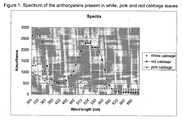
- the amount of anthocyanins present in the leaves of the F1 plants only constitute around one fourth of the anthocyanins present in red cabbage leaves.
- the invention relates to a method for the production of a Brassica oleracea var. capitata (cabbage) hybrid plant comprising the steps:
- the pink pickled cabbage of the invention is produced using a progeny plant of the above described pink Brassica oleracea var. capitata F1 hybrid plant.
- the invention relates furthermore to pickled cabbage, wherein the colour of the pickled cabbage after the above described fermentation process has a colour ranging from from 186A to 186C or 58A to 59C measured with reference to the colour patch of The Royal Horticulture Society Colour Chart.
- the invention relates to the above described pink Brassica oleracea var. capitata hybrid plant or the pink pickled cabbage, wherein the cell sap, released after cutting or shredding the leaves of the hybrid plants, stains surfaces much less than cell sap released from red cabbage.
- the invention relates to the use of a pink cabbage plant described above, whit leaves having a colour ranging from 79C to N83D, preferably from 79C to 82C measured with reference to the colour patch of The Royal Horticulture Society Colour Chart for the production of pink pickled cabbage or pink cabbage salad, wherein the salad can be a mixture of different vegetables.
- “About” is used herein to mean approximately, roughly, around, or in the region of. When the term “about” is used in conjunction with a numerical range, it modifies that range by extending the boundaries above and below the numerical values set forth. In general, the term “about” is used herein to modify a numerical value above and below the stated value by a variance of 20 percent, preferably 10 percent up or down (higher or lower). As used herein, the word “or” means any one member of a particular list.
- a DNA sequence conferring male sterility or "a DNA sequence able to confer male sterility”: in the context of a hybrid plant containing said DNA sequence, it refers to a hybrid plant that has been produced by using a male sterile female parent plant and, therefore, carries a DNA sequence conferring male sterility without necessarily being male sterile (e.g. in case that a restorer line has been used as the male parent plant).
- restorer lines will be used, the plant cells of the resulting offspring comprising a DNA sequence which is able to confer male sterility, without being male sterile.
- Conditions suitable for the fermentation process and for a time period sufficient to complete the fermentation process refers to the lacto-fermentation based pickled cabbage production process.
- the conditions for the production of pickled cabbage are well known to the skilled person and are described in the literature since the beginning of the 20 th century (e.g. production of pickled cabbage has been described by Creuss, "Commercial Fruit and Vegetable Products", McGraw-Hill Book Co., 1958, p. 722-725 , Frazer in “Food Microbiology”, McGraw-Hill Book Co., 1967, p. 199-212 .; Pederson, C.S. 1930. Floral changes in the fermentation of sauerkraut. N.Y. Agr. Exp. St. Geneva Bull.
- “Fermentation process” in the context of the present invention refers to the lacto fermentation process used for the production of pickled cabbage as described above.
- Hybrid plant refers to plants produced by pollinating the pistil of one plant with the pollen of another, whereby the plants belong to different populations, breeds or cultivars within a single species (e.g. crosses between a Brassica oleracea var. capitata (L) Alef. var. rubra DC plant with a Brassica oleracea var. capitata (L) Alef var. alba DC plant).
- hybrids are commonly produced and selected because they have desirable characteristics not found or inconsistently present in the parent individuals or populations.
- the parent plants are two different parent cultivars, each of which are inbred for a number of generations to the extent that they are almost homozygous, ensuring a phenotypically uniform F1 generation (filial).
- male sterile refers to plants unable to produce functional anthers, pollen, or male gametes. Male sterile plants are widely used to ensure large scale production of pure F1 hybrid seeds.
- the male sterility can be based on genetic or non-genetic factors. In case of the non-genetic type, the male sterility might be based on chemical substances or environmental or physiological parameters. Based on the location of genes controlling the male sterility such systems can be classified as (i) nuclear male sterility (nms or gms for genic male sterility) and (ii) cytoplasmic-nuclear male sterility (cnms or cms).
- nms or cnms can occur spontaneously or can be artificially induced through mutagenesis (Induction of mutations for cytoplasmic male sterility and some rare phenotypes in Indian mustard (Brassica juncea L.). Indian Journal of Genetics & Plant Breeding. 61(4). November, 2001. 335-340 .; Male sterile broccoli (Brassica oleracea var. italica) induced by in vitro mutagenesis. Cruciferae Newsletter. 1987. 12, 50-51 ), protoplast fusion (e.g. as described in US 5,917128 , examples 1 to 9, columns 4 to 12) or genetic engineering.
- Nms is controlled by genes from the nuclear compartment. It is possible that Nms based male sterility is combined with environmental parameters (like temperature) in so called conditional mutants or e-nms lines (e.g. thermo sensitive- or photoperiod sensitive-genic male sterility in cabbage; Rundfeldt, H., 1961, Z. convincedzucht 44: 30-62 ).
- male sterile plants and method for the production thereof are well known in the art ( Analysis of genic male sterility in Brassica oleracea. Journal Euphytica, Publisher Springer Netherlands, Issue Volume 68, Numbers 1-2 / January, 1993, Pages 53-57 ; A male sterile line with dominant gene (Ms) in cabbage (Brassica oleracea var. captata) and its utilization for hybrid seed production. Journal Euphytica, Publisher Springer Netherlands, Issue Volume 97, Number 3 / November, 1997, Pages 265-268 ; Production of new CMS Brassica oleracea by transfer of 'Anand' cytoplasm from B.
- the cnms is the result of incompatibility between a recessive nuclear gene (maintainer gene) and the male sterile specific cytoplasmic genome (e.g. mitochondria genome). Nuclear genes capable of reversing the cnms are called restorer genes. If the fruits of the F1 hybrids are important, it is necessary that the male parent line carries the restorer gene. This is not necessary where vegetative parts of the plant are of economic value (e.g. cabbage).
- Male sterile female plants that can be used as parent plants in the method of this invention can be created by several cycles of backcrossings with fertile parent plants.
- the skilled person is aware of methods for producing CMS lines.
- the initial step of one method to produce CMS lines is the transfer of the Ogura CMS germplasm from radish to Brassica oleracea by protoplast fusion.
- the CMS is than introgressed by back crossing into preferred elite lines.
- the CMS lines used as parent lines deposited under NCIMB 41492 Brassica oleracea var capitata (L) Alef var rubra and NCIMB 41493 Brassica oleracea var capitata (L) Alef var alba; date of deposit: 31 st August 2007; NCIMB Ltd Ferguson Building, Craibstone Estate Bucks-burn, Aberdeen) have been backcrossed 8 times with an elite parent line.
- Open pollination refers to pollination by insects, birds, wind, or other natural mechanisms.
- Pink when used in connection with Brassica oleracea plants refer to a colour of the intercostals areas of mature leaves of said plants ranging from 79C to N83D, preferably from 79C to 82C measured with reference to the colour patch of The Royal Horticulture Society Colour Chart (RHSCC).
- the RHSCC is the standard reference for plant colour identification and can be purchased from The Royal Horticulture Society (http://www.rhs. org.uk/ publications/pubs_library_ colourchart.asp).
- the colour of the intercostal areas of the mature leaves of said plants is compared with the RHSCC.
- the term pink when used in connection with "pink Brassica oleracea hybrid plants", refers to the colour of the internal mature leaves of said plants, which, on both sides, having a colour ranging from 79C to N83D, preferably from 79C to 82C measured with reference to the colour patch of The Royal Horticulture Society Colour Chart.
- the veins the mature leaves of the "pink Brassica oleracea hybrid plant” can have a white colour.
- the external leaves of the pink Brassica oleracea hybrid plants” can show greenish leaves with some anthocyanin pigmentation.
- Pink pickled cabbage refers to pickled cabbage produced from the pink cabbage plants of the invention. Pink pickled cabbage does not refer to pickled cabbage turned red/pink as a result of the fermentation process. This discolouration has been observed occasionally as the result of an improper fermentation process.
- the red/pink discolouration of pickled cabbage is due the presence of yeasts or Lactobacillus brevis and is pH dependent and occurs during the post logarithmic phase of growth ( Stamer et al., Induction of red colour formation in cabbage juice by L. brevis and its relationship to pink sauerkraut. 1973, Applied Microbiology, p.161-166 ; Peterson C.S and Kelly C.D. 1938 Development of pink colour in sauerkraut. Food.Res. 3: 583-588 ).
- Red-cabbage plant and/or “white- or savoy-cabbage plant” refers to plant varieties of the genus Brassica oleracea var. capitata differing in their leave colour, as a result of different amounts of anthocyanins present in their leaves. Examples of said plants can be found at the ECPGR Brassica database (http://documents.plant.wur.nl/cgn/pgr/brasedb/). Red-cabbage plants are cultivars of the plant species Brassica oleracea capitata rubra. Said plants can be found within the mentioned database by using the following search profile:
- 262 red cabbage plants can be identified, which are individualised by specific accession numbers, accession names and the source of said germplasm.
- White-cabbage plants are cultivars of the plant species Brassica oleracea capitata alba or sabauda. Said plants can be found within the ECPGR Brassica database by using the following search profile:
- the salt can be replaced by a mixture of ethanol and an ingestible acid selected from the group of acetic acid, lactic acid, malic acid, citric acid, phosphoric acid, and mixtures thereof as described in US 5,064,662 .
- the fermentation yields lactic acid as the major product.
- the production of pickled cabbage is state of the art and known to the skilled person. In the production of pickled cabbage, the heads of mature cabbage are washed and shredded and salt is added to the cabbage to a final concentration ranging between 2 and 3%, preferably 2,5%.
- the salted cabbage is protected from oxygen by tightly packing into useful containers known to the skilled person.
- the fermentation process takes about five weeks and it is important to assure that gases produced during the fermentation can escape from the container.
- a temperature of about 20°C is preferred for the fermentation process.
- the salting of the cabbage serves two major purposes. First, it causes an osmotic imbalance which results in the release of water and nutrients from the cabbage leaves.
- the sap of the shredded cabbage cells which is released due to the osmotic pressure resulting from the high salt environment, is an excellent growth medium for the microorganisms needed for the fermentation process.
- the salt must be even distributed to avoid areas of high and low salt concentrations.
- the exclusion of oxygen is critical for the fermentation process to assure that only the desired microorganisms are able to grow and that the growth of spoilage organisms is prevented.
- the fermentation process can start with microorganisms present in the cabbage leaves. As soon as the pH drops, the environment becomes favourable for the heterofermentative strains of leuconostoc, which produce much cacrbon dioxide and acid, leading to a continuous drop in the pH of the system. Later in the process, lactobacillus stains displace the leuconostoc strains.
- Self-incompatibility refers to the genetic mechanisms in plants, which prevent selffertilization. When a pollen grain produced by a Self-incompatible plant reaches a stigma of the same plant, the process of pollen germination, pollen tube growth, ovule fertilization, and/or embryo development is halted, and consequently no seeds are produced. In Brassica oleracea this self-recognition mechanism is found ( Olsson, G., 1960: Self-incompatibility and outcrossing in rape and white mustard. Hereditas 46, 241-252 .).
- the teaching of the present invention enables the production of new Brassica oleracea var. capitata (cabbage) germplasm useful for the production of vegetable based foodstuff by overcoming some drawbacks related to the use of white- and/or red-cabbage varieties related to the production of pickled cabbage or the use as fresh salad.
- cabbage Brassica oleracea var. capitata
- a first embodiment of the invention relates to a method of producing a Brassica o / eracea var. capitata (cabbage) hybrid plant comprising the steps:
- An additional embodiment of the invention relates to the production of Brassica oleracea var. capitata (cabbage) seeds comprising the following steps:
- the harvested seeds can be used for the production of cabbage plants as described above.
- An additional embodiment of the invention are the seeds produced in accordance with the above described inventive method.
- the pollinating steps a) and e) described above refer to sexual crossing or cross-fertilisation between two parent plants or plant populations, one performing the role of the male, the other of the female.
- the plant used as a female plant is male sterile, i.e. the cytoplasm of the cells of said plant contains organelles possessing nucleotide sequences conferring male sterility, and, preferably, good agronomic characteristics.
- the male sterility system enable female plants to be obtained which are incapable of self-fertilisation, and from which, after pollination, the seeds, which are all uniform hybrids, can be harvested directly. Laborious techniques, such as castration of the flowers, are not necessary.
- male sterile Cruci-fereae plants are known in the art since a long time. The first male sterile Cruciferae plant has been described by Ogura in 1968 (Raphanus sativus). Examples of male sterile systems in Brassicacae plants and methods how to produce them are described in the art and known to the skilled person.
- Bannerot et al. produced male sterile Brasscica oleracea plants by transferring the "Ogura cytoplasm" to Brasscica oleracea ( Bannerot, H., L. Boulidard, Y. Cauderon & J. Tempe, 1974.
- the male parent plant using a fixed red or white cabbage variety, developed by classical inbreeding methods like self pollination, mass pollination or by dihaploidisa-tion, as the male parent plant. Since the vegetative parts of the cabbage plants are of commercial interest, it is not necessary to use male parent plants able to restore the male-fertility of the produced offspring. This is different if the interest lies in the seeds produced by the hybrid offspring plants (F2 seeds). In this case the male-fertility needs to be restored. Restoration of pollen fertility is achieved by means of pollinator parent lines carrying nuclear dominant restorer genes. Hence, for the above described inventive method, the used male parent plant can be -but does not need to be- a restorer line.
- the invention relates to the production of pink Brassica oleracea var. capitata (cabbage) hybrid plants as describe above, wherein the intercostal areas of the leaves of the produced cabbage have a colour ranging from 79C to N83D, preferably from 79C to 82C as measured with reference to the colour patch of The Royal Horticulture Society Colour Chart
- capitata hybrid plants produced according to the method of the invention having an absorption measured at 524 nm using a spectrophotometer of 1) at least more than 500%, preferably at least more than 600% or more than 700%, more preferably at least more than 800% or more than 900%, particularly preferably at least more than 1000% of the white- or savoy-cabbage parent plant; and 2) not more than 40% , preferably not more than 35%, more preferably not more than 30, particularly preferably not more than 29%, 28% ,27% or 26% of the red cabbage parent plant, wherein, the leave extracts used for the measurement are produced by extracting identical leave samples in 4 % phosphoric acid (see Example 2).
- the skilled person is aware of method for the determination of anthocyanins in cabbage leaves.
- the anthocyanin content of cabbage leaves can be determined using a spectrophotometer (e.g. Spectrophotometer Ultrospec III (Phamacia LKB) or Perkin Elmer Model 510), reading the extract absorbance at 530nm.
- a spectrophotometer e.g. Spectrophotometer Ultrospec III (Phamacia LKB) or Perkin Elmer Model 510
- the hybrid plant or the seeds produced according to the above described inventive methods have been produced by pollinating a Brassica oleracea capitata rubra plant with a Brassica oleracea capitata alba or a Brassica oleracea capitata sabauda plant, wherein the female plant is male sterile.
- Varieties that are particularly preferred are Brassica oleracea var. capitata (L) Alef. var. rubra DC, Brassica oleracea var. capitata (L) Alef var. alba DC or Brassica oleracea var. capitata (L) Alef var. sabauda DC t.
- plants are those male sterile plants listed in the ECPGR Brassica database (see definitions: "red-cabbage plant” and/or “white- or savoy-cabbage plant”). Particularly preferred are the male sterile white cabbage line WK989 deposited under NCIMB 41493 Brassica oleracea var capitata (L) Alef var alba and the red cabbage fertile line RK015, deposited under NCIMB 41492 Brassica oleracea var capitata (L) Alef var rubra on 31 st August 2007.
- On embodiment of the present invention relates to pink cabbage plants having the leave colour of the pink cabbage resulting from the pollination of the male sterile white cabbage line WK989 deposited under NCIMB 41493 with pollen derived from the red cabbage fertile line RK015, deposited under NCIMB 41492.
- another embodiment of the present invention is the use of at least one self incompatible parent inbreed line for the production of the inventive hybrid plants.
- the invention relates to a pink Brassica oleracea var. capitata (cabbage) plant containing a DNA sequence conferring male sterility.
- the plant is male sterile and the male sterility is based on cytoplasmic male sterility (CMS) or nuclear male sterility (NMS).
- CMS cytoplasmic male sterility
- NMS nuclear male sterility
- the pink Brassica oleracea var. capitata (cabbage) plant of the invention has pink coloured intercostal leaf areas, wherein the colour ranges from 79C to N83D, preferably from 79C to 82C as measured with reference to the colour patch of The Royal Horticulture Society Colour Chart.
- capitata (cabbage) plant of the invention is a hybrid plant produced as described above.
- a pink Brassica oleracea var. capitata (cabbage) hybrid plant produced by pollinating a Brassica oleracea var. capitata (L) Alef. var. rubra DC plant with a Brassica oleracea var. capitata (L) Alef var. alba DC or a Brassica oleracea var. capitata (L) Alef. var. sabauda DC plant.
- An additional embodiment of the invention are pink Brassica oleracea var. capitata plants produced by crossing two pink cabbage plants, preferably crossing of plants that have been produced as described above. In this respect it has to mention that the inheritance pattern of the offspring produced by using the pink cabbage as parent plant(s) will follow the "law of independent assortment", also known as Mendel's Second Law.
- An additional subject matter of the pertinent invention relates to a method for the production of pink pickled cabbage by a fermentation process, comprising the steps of:
- the salt can be replaced by a mixture of ethanol and an ingestible acid selected from the group of acetic acid, lactic acid, malic acid, citric acid, phosphoric acid, and mixtures thereof.
- the pink Brassica oleracea var. capitata hybrid plant according to step g) described above can be produced by pollinating a red-cabbage plant with a white- or savoy-cabbage plant according to the inventive method defined above.
- each plant listed as Brassica oleracea capitata rubra and Brassica oleracea capitata alba or sabauda in the ECPGR Brassica database http://documents.plant.wur.nl/cgn /pgr/brasedb/) can in principle be used as parent plant.
- the person skilled in the art is aware of additional sources of useful germplasm.
- male-fertile, self incompatible and/or male-sterile parent plants can be used for the provision of a pink Brassica oleracea var. capitata plant used in step g) above.
- the pink hybrid plant can also be produced by open pollination.
- the parent lines can be produced by inbreeding methods known to the skilled person.
- the pink Brassica oleracea var. capitata hybrid plant according to step g) has been produced according to the above described inventive method and contains a DNA sequence conferring male sterility.
- said plant is a male sterile plant.
- the pink Brassica oleracea var. capitata plant can be an offspring of the hybrid plants produced as described above. In this case it is necessary to use a male restorer line for the production of the F1 hybrid plants as described above.
- An additional subject matter of the present invention relates to pink pickled cabbage.
- the pickled cabbage has still a colour ranging from 186A to 186C or 58A to 59C measured with reference to the colour patch of The Royal Horticulture Society Colour Chart and said colour is not caused by a microorganism based discolouration (see Stamer et al., Induction of red colour formation in cabbage juice by L. brevis and its relationship to pink sauerkraut. 1973, Applied Microbiology, p.161-166 ; and Peterson C.S and Kelly C.D. 1938. Development of pink colour in Sauerkraut. Food. Res. 3: 583-588 .)
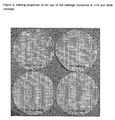
- the cell sap released after mechanical destruction (e.g. cutting or shredding) from leaves of the above described pink Brassica oleracea var. capitata plants, or plants produced according to the inventive method, stains surfaces which absorb liquid colours (e.g. paper or clothes) to a much lesser extend compared to the cell sap released from red cabbage (see Example 2, Fig.1 ).
- a preferred embodiment of the invention relates to pink Brassica oleracea var. capitata plants, wherein the cell sap, released after mechanical destruction (e.g. cutting or shredding) from leaves of said plants, stains surfaces which absorb liquid colours much less compared to the cell sap released from red cabbage.
- "much less staining” means a reduction of the staining capacity of the pink cabbage cell sap compared to the red cabbage cell sap (e.g. as determined in example 2) of 50%, preferably of 60%, more preferably of 70%, much more preferably of 75%, most preferably of 80%.
- the leaves of the pink cabbage of the present invention, or cabbage produced according to the inventive method show less discolouration of the edges of cut leaves.
- “less discolouration of the edges of cut leaves” refers to a reduction of the discolouration of the leave edges after cutting of 50%, preferably of 60%, more preferably of 70%, much more preferably of 75%, most preferably of 80%.
- pink cabbage is much easier to handle and less care must be taken to avoid staining (by the producer as well as the consumer).
- pink Brassica oleracea var. capitata hybrid plants are particularly suited for (i) production of pickled cabbage (reduced staining propeties) and (ii) pink cabbage salad, which must not be partially dried in order to prevent discolouration of the leave edges.
- presence of anthocyanins in the leaves of the pink cabbage plants lead to a reduced visibility of enzymatic browning effects, which again, lead to a fresher appearance of the salad.
- an additional embodiment of the invention relates to the use of pink Brassica oleracea var. capitata plants as described above, or produced using the above described inventive method, for the production of pink pickled cabbage and pink cabbage salad, wherein the pink cabbage is preferably used in combination with other vegetables in a vegetable salad mixture.
- An additional embodiment is the above described pink cabbage salad or the vegetable salad mixture comprising pink cabbage as such.
- Example 2 Analysis of the pink cabbage plants obtained in Example 1
- the cell sap released from pink cabbage leaves stains filter paper much less compared to red cabbage.
- the red coloured anthocyanins will paint human skin but also clothes, paper and other surfaces which absorb liquid colour.
- the pink cabbage there is no colour absorption on human skin, clothes, paper or other surfaces which absorb liquid colour.
- Example 3 production of pickled cabbage (Sauerkraut) using the plants obtained in Example 1.
- Sauerkraut mature cabbage heads are washed and shredded.
- the salt is mixed with the shredded cabbage to a final concentration of about 2.5%.
- the salted cabbage is then tightly packed into a tierce or crock.
- the cabbage is protected from air (oxygen) in a manner that will permit gases produced during the fermentation to escape.
- a temperature of about 20°C is preferred for the fermentation.
- About five weeks is required for a complete fermentation.
- the salting of the cabbage serves two major purposes. First, it causes an osmotic imbalance which results in the release of water and nutrients from the cabbage leaves. The fluid expelled is an excellent growth medium for the microorganisms involved in the fermentation. It is rich in sugar and growth factors. Second, the salt concentration used inhibits the growth of many spoilage organisms and pathogens. It does not, obviously, inhibit the desired floral succession. As cabbage is approximately 90% water and the salt is dissolved entirely in the water, the actual salt concentration (brine strength) experienced by the microorganisms in their aquatic milieu is around 2.8%. Thorough and even distribution of the salt is critical. Pockets of low or high salt concentration would result in spoilage and/or lack of the desired fermentation.
- the resulting Sauerkraut had a colour ranging from 186A to 186C or 58A to 59C measured with reference to the colour patch of The Royal Horticulture Society Colour Chart
Landscapes
- Life Sciences & Earth Sciences (AREA)
- Health & Medical Sciences (AREA)
- Engineering & Computer Science (AREA)
- Nutrition Science (AREA)
- Polymers & Plastics (AREA)
- Food Science & Technology (AREA)
- Chemical & Material Sciences (AREA)
- Developmental Biology & Embryology (AREA)
- Environmental Sciences (AREA)
- Botany (AREA)
- Physiology (AREA)
- General Health & Medical Sciences (AREA)
- Genetics & Genomics (AREA)
- Natural Medicines & Medicinal Plants (AREA)
- Biotechnology (AREA)
- Breeding Of Plants And Reproduction By Means Of Culturing (AREA)
Priority Applications (4)
| Application Number | Priority Date | Filing Date | Title |
|---|---|---|---|
| EP07022265A EP2060168A1 (fr) | 2007-11-16 | 2007-11-16 | Procédé pour la production de chou de couleur rose |
| EP08849594A EP2214473A1 (fr) | 2007-11-16 | 2008-11-10 | Procédé de production d'un chou de couleur rose |
| US12/739,512 US8754288B2 (en) | 2007-11-16 | 2008-11-10 | Method for the production of pink colored cabbage |
| PCT/EP2008/009458 WO2009062645A1 (fr) | 2007-11-16 | 2008-11-10 | Procédé de production d'un chou de couleur rose |
Applications Claiming Priority (1)
| Application Number | Priority Date | Filing Date | Title |
|---|---|---|---|
| EP07022265A EP2060168A1 (fr) | 2007-11-16 | 2007-11-16 | Procédé pour la production de chou de couleur rose |
Publications (1)
| Publication Number | Publication Date |
|---|---|
| EP2060168A1 true EP2060168A1 (fr) | 2009-05-20 |
Family
ID=39015675
Family Applications (2)
| Application Number | Title | Priority Date | Filing Date |
|---|---|---|---|
| EP07022265A Withdrawn EP2060168A1 (fr) | 2007-11-16 | 2007-11-16 | Procédé pour la production de chou de couleur rose |
| EP08849594A Ceased EP2214473A1 (fr) | 2007-11-16 | 2008-11-10 | Procédé de production d'un chou de couleur rose |
Family Applications After (1)
| Application Number | Title | Priority Date | Filing Date |
|---|---|---|---|
| EP08849594A Ceased EP2214473A1 (fr) | 2007-11-16 | 2008-11-10 | Procédé de production d'un chou de couleur rose |
Country Status (3)
| Country | Link |
|---|---|
| US (1) | US8754288B2 (fr) |
| EP (2) | EP2060168A1 (fr) |
| WO (1) | WO2009062645A1 (fr) |
Cited By (3)
| Publication number | Priority date | Publication date | Assignee | Title |
|---|---|---|---|---|
| CN103229711A (zh) * | 2013-04-23 | 2013-08-07 | 镇江瑞繁农艺有限公司 | 一种富含萝卜硫素结球甘蓝的育种方法 |
| CN103262993A (zh) * | 2013-04-28 | 2013-08-28 | 合肥徽之皇食品集团有限公司 | 一种降脂调味薇菜的加工方法及降脂调味薇菜 |
| CN114015699A (zh) * | 2021-10-18 | 2022-02-08 | 西南大学 | 基因BnbHLH92a调控花青素或原花青素的应用 |
Families Citing this family (1)
| Publication number | Priority date | Publication date | Assignee | Title |
|---|---|---|---|---|
| CN108901833A (zh) * | 2018-09-07 | 2018-11-30 | 重庆市农业科学院 | 一种利用腋芽抽枝提高早熟甘蓝杂交一代制种产量的方法 |
Citations (7)
| Publication number | Priority date | Publication date | Assignee | Title |
|---|---|---|---|---|
| US2345814A (en) * | 1942-04-27 | 1944-04-04 | Continental Can Co | Method of producing and storing sauerkraut |
| US5064662A (en) | 1990-11-13 | 1991-11-12 | Owades Joseph L | Method of making salt/free sauerkraut |
| US5254802A (en) | 1987-12-17 | 1993-10-19 | Sietske Hoekstra | Male sterile brassica plants |
| WO1996021010A1 (fr) * | 1994-12-30 | 1996-07-11 | Asgrow Seed Company | Plantes de la famille brassica oleracea steriles males |
| US5789566A (en) | 1990-09-21 | 1998-08-04 | Institut National De La Recherche Agronomique | DNA sequence imparting cytoplasmic male sterility, mitochondrial genome, nuclear genome, mitochondria and plant containing said sequence and process for the preparation of hybrids |
| US5917128A (en) | 1996-05-31 | 1999-06-29 | Bejo Zaden B.V. | Cytoplasmic male sterile brassica oleracea plant, and method for obtaining such plant |
| US6046383A (en) | 1995-09-11 | 2000-04-04 | Seminis Vegetable Seeds, Inc. | Cytoplasmic male sterile Brassica oleracea plants which contain the polima CMS cytoplasm and are male sterile at high and low temperatures |
-
2007
- 2007-11-16 EP EP07022265A patent/EP2060168A1/fr not_active Withdrawn
-
2008
- 2008-11-10 US US12/739,512 patent/US8754288B2/en not_active Expired - Fee Related
- 2008-11-10 WO PCT/EP2008/009458 patent/WO2009062645A1/fr not_active Ceased
- 2008-11-10 EP EP08849594A patent/EP2214473A1/fr not_active Ceased
Patent Citations (8)
| Publication number | Priority date | Publication date | Assignee | Title |
|---|---|---|---|---|
| US2345814A (en) * | 1942-04-27 | 1944-04-04 | Continental Can Co | Method of producing and storing sauerkraut |
| US5254802A (en) | 1987-12-17 | 1993-10-19 | Sietske Hoekstra | Male sterile brassica plants |
| US5789566A (en) | 1990-09-21 | 1998-08-04 | Institut National De La Recherche Agronomique | DNA sequence imparting cytoplasmic male sterility, mitochondrial genome, nuclear genome, mitochondria and plant containing said sequence and process for the preparation of hybrids |
| US5064662A (en) | 1990-11-13 | 1991-11-12 | Owades Joseph L | Method of making salt/free sauerkraut |
| WO1996021010A1 (fr) * | 1994-12-30 | 1996-07-11 | Asgrow Seed Company | Plantes de la famille brassica oleracea steriles males |
| US6046383A (en) | 1995-09-11 | 2000-04-04 | Seminis Vegetable Seeds, Inc. | Cytoplasmic male sterile Brassica oleracea plants which contain the polima CMS cytoplasm and are male sterile at high and low temperatures |
| US5917128A (en) | 1996-05-31 | 1999-06-29 | Bejo Zaden B.V. | Cytoplasmic male sterile brassica oleracea plant, and method for obtaining such plant |
| EP0810284B1 (fr) | 1996-05-31 | 2005-01-19 | Bejo Zaden B.V. | Plante Brassica Oleracea avec stérilité male cytoplasmique et méthode pour l'obtenir |
Non-Patent Citations (21)
| Title |
|---|
| "Journal Euphytica", vol. 68, January 1993, PUBLISHER SPRINGER, article "Analysis of genic male sterility in Brassica oleracea", pages: 53 - 57 |
| "Journal Euphytica", vol. 97, November 1997, PUBLISHER SPRINGER, pages: 265 - 268 |
| BAGGETT J R ET AL: "THE ALLELIC RELATIONSHIP BETWEEN A-I-P INTERNAL PIGMENTATION AND A-R-C RED CABBAGE IN BRASSICA-OLERACEA-VAR-CAPITATA", EUPHYTICA, KLUWER ACADEMIC PRESS, AMSTERDAM, NL, vol. 33, no. 2, June 1984 (1984-06-01), pages 587 - 590, XP008088531, ISSN: 0014-2336 * |
| BANNEROT, H. ET AL.: "Transfer of cytoplasmic male sterility from Raphanus sativus to Brassica oleracea", PROC. EUCARPIA MEETING-CRUCIFERAE, 1974, pages 52 - 54 |
| BRASSICA JUNCEA L., INDIAN JOURNAL OF GENETICS & PLANT BREEDING., vol. 61, no. 4, November 2001 (2001-11-01), pages 335 - 340 |
| CREUSS: "Commercial Fruit and Vegetable Products", 1958, MCGRAW-HILL BOOK CO., pages: 722 - 725 |
| FRANCIS FJ: "Analysis of anthocyanins, in Anthocyanins as Food -Colors", 1982, ACADEMIC PRESS, pages: 181 - 207 |
| FRANCIS FJ: "Anthocyanins as Food Colors", 1982, ACADEMIC PRESS, article "Analysis of anthocyanins", pages: 181 - 207 |
| FRAZER: "Food Microbiology", 1967, MCGRAW-HILL BOOK CO., pages: 199 - 212 |
| G. MAZZA; JUAN E. CACACE; COLIN D. KAY, J AOAC INT., vol. 87, no. 1, January 2004 (2004-01-01), pages 129 - 45 |
| JAGDISH, SCIENTIA HORTICULTURAE, vol. 108, 2006, pages 233 - 7 |
| JOURNAL OF THEORETICAL AND APPLIED GENETICS, vol. 94, no. 2, February 1997 (1997-02-01), pages 204 - 212 |
| MALE STERILE BROCCOLI: "Brassica oleracea var. italica) induced by in vitro mutagenesis", CRUCIFERAE NEWSLETTER, vol. 12, 1987, pages 50 - 51 |
| OLSSON, G.: "Self-incompatibility and outcrossing in rape and white mustard", HEREDITAS, vol. 46, 1960, pages 241 - 252 |
| PEDERSON, C.S.: "Advances in food research", vol. 10, 1960, ACADEMIC PRESS, article "Sauerkraut", pages: 247 |
| PEDERSON, C.S.: "Floral changes in the fermentation of sauerkraut.", N.Y. AGR. EXP. ST. GENEVA BULL., vol. 168, 1930 |
| PETERSON C.S; KELLY C.D.: "Development of pink colour in Sauerkraut", FOOD.RES, vol. 3, 1938, pages 583 - 588 |
| PETERSON C.S; KELLY C.D.: "Development of pink colour in sauerkraut", FOOD.RES., vol. 3, 1938, pages 583 - 588 |
| RUNDFELDT, H., Z. PFLANZENZUCHT, vol. 44, 1961, pages 30 - 62 |
| STAMER ET AL.: "Induction of red colour formation in cabbage juice by L. brevis and its relationship to pink sauerkraut", APPLIED MICROBIOLOGY, 1973, pages 161 - 166 |
| STEINBRUCH, E.; O.L. STADEN: "Sauerkraut: processing of sauerkraut", ANNUAL REPORTS OF THE SPRENGER INST., 1964, pages 41 |
Cited By (4)
| Publication number | Priority date | Publication date | Assignee | Title |
|---|---|---|---|---|
| CN103229711A (zh) * | 2013-04-23 | 2013-08-07 | 镇江瑞繁农艺有限公司 | 一种富含萝卜硫素结球甘蓝的育种方法 |
| CN103262993A (zh) * | 2013-04-28 | 2013-08-28 | 合肥徽之皇食品集团有限公司 | 一种降脂调味薇菜的加工方法及降脂调味薇菜 |
| CN114015699A (zh) * | 2021-10-18 | 2022-02-08 | 西南大学 | 基因BnbHLH92a调控花青素或原花青素的应用 |
| CN114015699B (zh) * | 2021-10-18 | 2023-09-22 | 西南大学 | 基因BnbHLH92a调控花青素或原花青素的应用 |
Also Published As
| Publication number | Publication date |
|---|---|
| WO2009062645A1 (fr) | 2009-05-22 |
| US8754288B2 (en) | 2014-06-17 |
| US20110003033A1 (en) | 2011-01-06 |
| EP2214473A1 (fr) | 2010-08-11 |
Similar Documents
| Publication | Publication Date | Title |
|---|---|---|
| Ilahy et al. | When color really matters: horticultural performance and functional quality of high-lycopene tomatoes | |
| Chang et al. | The morphology and varietal characteristics of the rice plant | |
| Achigan-Dako et al. | Current knowledge and breeding perspectives for the miracle plant Synsepalum dulcificum (Schum. et Thonn.) Daniell | |
| Garcia et al. | Assessing lycopene content in California processing tomatoes | |
| EP3491916A1 (fr) | Nouveaux plants et fruits de poivrons dotés d'une valeur nutritionnelle améliorée | |
| Pandey et al. | Ascorbate and carotenoid content in an Indian collection of pumpkin (Cucurbita moschata Duch. Ex Poir.) | |
| CN104735971A (zh) | 具有部分或全部倍增的基因组的栽培的亚洲栽培稻植物及其用途 | |
| Roy et al. | Path analysis study and morphological characterization of sweet pepper (Capsicum annuum L. var. grossum) | |
| JP2002519043A (ja) | 新規な高度化学物質保護性の十字花科生殖質の開発 | |
| Stommel et al. | Inheritance of beta carotene content in the wild tomato species Lycopersicon cheesmanii | |
| US8754288B2 (en) | Method for the production of pink colored cabbage | |
| Toro-Vélez et al. | Production and postharvest assessment of tropical pumpkin flowers harvested for consumption | |
| Paris | Genetic analysis and breeding of pumpkins and squash for high carotene content | |
| RU2650764C2 (ru) | Кукурузные продукты и способы их получения | |
| Mai et al. | Gac (Momordica cochinchinensis (Lour) Spreng.) Oil | |
| Kleintop et al. | Total phenolic content and associated phenotypic traits in a diverse collection of snap bean cultivars | |
| Imen et al. | Determination of healthy natural antioxidants in selected muskmelon (Cucumis melo) cultivars | |
| Guzman et al. | NuMex LotaLutein, a lutein-rich serrano pepper | |
| Itle et al. | Heritability estimates of L* a* b* color space values in winter squash (Cucurbita spp.) | |
| Calugaru-Spataru et al. | In vitro multiplication and cultivation of Actinidia arguta in the Republic of Moldova | |
| De Maine | An assessment of true potato seed families of Solanum phureja | |
| CN105208853B (zh) | 红色菠菜植株 | |
| Marveldani et al. | Genetic study of rock melon (Cucumis melo L. var. Cantalupensis): fruit variability in segregating populations and after selfing performance. | |
| Kiraci et al. | Purple carrot lines has superior technological characteristics in Turkey | |
| JP2008537487A (ja) | ビタミン含有量が改変された果実を有するコショウ植物 |
Legal Events
| Date | Code | Title | Description |
|---|---|---|---|
| PUAI | Public reference made under article 153(3) epc to a published international application that has entered the european phase |
Free format text: ORIGINAL CODE: 0009012 |
|
| AK | Designated contracting states |
Kind code of ref document: A1 Designated state(s): AT BE BG CH CY CZ DE DK EE ES FI FR GB GR HU IE IS IT LI LT LU LV MC MT NL PL PT RO SE SI SK TR |
|
| AX | Request for extension of the european patent |
Extension state: AL BA HR MK RS |
|
| AKX | Designation fees paid | ||
| REG | Reference to a national code |
Ref country code: DE Ref legal event code: 8566 |
|
| STAA | Information on the status of an ep patent application or granted ep patent |
Free format text: STATUS: THE APPLICATION IS DEEMED TO BE WITHDRAWN |
|
| 18D | Application deemed to be withdrawn |
Effective date: 20091124 |