EP2062602A2 - Neuer nichttoxischer biologisch abbaubarer klebstoff zur verwendung bei bauchoperationen - Google Patents
Neuer nichttoxischer biologisch abbaubarer klebstoff zur verwendung bei bauchoperationen Download PDFInfo
- Publication number
- EP2062602A2 EP2062602A2 EP07808494A EP07808494A EP2062602A2 EP 2062602 A2 EP2062602 A2 EP 2062602A2 EP 07808494 A EP07808494 A EP 07808494A EP 07808494 A EP07808494 A EP 07808494A EP 2062602 A2 EP2062602 A2 EP 2062602A2
- Authority
- EP
- European Patent Office
- Prior art keywords
- adhesive
- dextrin
- adhesive formulation
- formulation
- formulation according
- Prior art date
- Legal status (The legal status is an assumption and is not a legal conclusion. Google has not performed a legal analysis and makes no representation as to the accuracy of the status listed.)
- Granted
Links
- 239000003364 biologic glue Substances 0.000 title abstract 2
- 238000012084 abdominal surgery Methods 0.000 title 1
- 231100000252 nontoxic Toxicity 0.000 title 1
- 230000003000 nontoxic effect Effects 0.000 title 1
- 229920001353 Dextrin Polymers 0.000 abstract 1
- 239000004375 Dextrin Substances 0.000 abstract 1
- 206010016717 Fistula Diseases 0.000 abstract 1
- 206010019909 Hernia Diseases 0.000 abstract 1
- 208000002847 Surgical Wound Diseases 0.000 abstract 1
- 230000003872 anastomosis Effects 0.000 abstract 1
- 230000003115 biocidal effect Effects 0.000 abstract 1
- 239000003795 chemical substances by application Substances 0.000 abstract 1
- 235000019425 dextrin Nutrition 0.000 abstract 1
- 210000002249 digestive system Anatomy 0.000 abstract 1
- 230000003890 fistula Effects 0.000 abstract 1
- 238000009472 formulation Methods 0.000 abstract 1
- 230000035876 healing Effects 0.000 abstract 1
- 239000000203 mixture Substances 0.000 abstract 1
- 239000003607 modifier Substances 0.000 abstract 1
- 230000001737 promoting effect Effects 0.000 abstract 1
Images
Classifications
-
- A—HUMAN NECESSITIES
- A61—MEDICAL OR VETERINARY SCIENCE; HYGIENE
- A61L—METHODS OR APPARATUS FOR STERILISING MATERIALS OR OBJECTS IN GENERAL; DISINFECTION, STERILISATION OR DEODORISATION OF AIR; CHEMICAL ASPECTS OF BANDAGES, DRESSINGS, ABSORBENT PADS OR SURGICAL ARTICLES; MATERIALS FOR BANDAGES, DRESSINGS, ABSORBENT PADS OR SURGICAL ARTICLES
- A61L15/00—Chemical aspects of, or use of materials for, bandages, dressings or absorbent pads
- A61L15/16—Bandages, dressings or absorbent pads for physiological fluids such as urine or blood, e.g. sanitary towels, tampons
- A61L15/42—Use of materials characterised by their function or physical properties
- A61L15/58—Adhesives
-
- A—HUMAN NECESSITIES
- A61—MEDICAL OR VETERINARY SCIENCE; HYGIENE
- A61L—METHODS OR APPARATUS FOR STERILISING MATERIALS OR OBJECTS IN GENERAL; DISINFECTION, STERILISATION OR DEODORISATION OF AIR; CHEMICAL ASPECTS OF BANDAGES, DRESSINGS, ABSORBENT PADS OR SURGICAL ARTICLES; MATERIALS FOR BANDAGES, DRESSINGS, ABSORBENT PADS OR SURGICAL ARTICLES
- A61L15/00—Chemical aspects of, or use of materials for, bandages, dressings or absorbent pads
- A61L15/16—Bandages, dressings or absorbent pads for physiological fluids such as urine or blood, e.g. sanitary towels, tampons
- A61L15/22—Bandages, dressings or absorbent pads for physiological fluids such as urine or blood, e.g. sanitary towels, tampons containing macromolecular materials
- A61L15/28—Polysaccharides or their derivatives
-
- A—HUMAN NECESSITIES
- A61—MEDICAL OR VETERINARY SCIENCE; HYGIENE
- A61L—METHODS OR APPARATUS FOR STERILISING MATERIALS OR OBJECTS IN GENERAL; DISINFECTION, STERILISATION OR DEODORISATION OF AIR; CHEMICAL ASPECTS OF BANDAGES, DRESSINGS, ABSORBENT PADS OR SURGICAL ARTICLES; MATERIALS FOR BANDAGES, DRESSINGS, ABSORBENT PADS OR SURGICAL ARTICLES
- A61L15/00—Chemical aspects of, or use of materials for, bandages, dressings or absorbent pads
- A61L15/16—Bandages, dressings or absorbent pads for physiological fluids such as urine or blood, e.g. sanitary towels, tampons
- A61L15/42—Use of materials characterised by their function or physical properties
- A61L15/64—Use of materials characterised by their function or physical properties specially adapted to be resorbable inside the body
-
- A—HUMAN NECESSITIES
- A61—MEDICAL OR VETERINARY SCIENCE; HYGIENE
- A61L—METHODS OR APPARATUS FOR STERILISING MATERIALS OR OBJECTS IN GENERAL; DISINFECTION, STERILISATION OR DEODORISATION OF AIR; CHEMICAL ASPECTS OF BANDAGES, DRESSINGS, ABSORBENT PADS OR SURGICAL ARTICLES; MATERIALS FOR BANDAGES, DRESSINGS, ABSORBENT PADS OR SURGICAL ARTICLES
- A61L24/00—Surgical adhesives or cements; Adhesives for colostomy devices
- A61L24/001—Use of materials characterised by their function or physical properties
- A61L24/0015—Medicaments; Biocides
-
- A—HUMAN NECESSITIES
- A61—MEDICAL OR VETERINARY SCIENCE; HYGIENE
- A61L—METHODS OR APPARATUS FOR STERILISING MATERIALS OR OBJECTS IN GENERAL; DISINFECTION, STERILISATION OR DEODORISATION OF AIR; CHEMICAL ASPECTS OF BANDAGES, DRESSINGS, ABSORBENT PADS OR SURGICAL ARTICLES; MATERIALS FOR BANDAGES, DRESSINGS, ABSORBENT PADS OR SURGICAL ARTICLES
- A61L24/00—Surgical adhesives or cements; Adhesives for colostomy devices
- A61L24/001—Use of materials characterised by their function or physical properties
- A61L24/0042—Materials resorbable by the body
-
- A—HUMAN NECESSITIES
- A61—MEDICAL OR VETERINARY SCIENCE; HYGIENE
- A61L—METHODS OR APPARATUS FOR STERILISING MATERIALS OR OBJECTS IN GENERAL; DISINFECTION, STERILISATION OR DEODORISATION OF AIR; CHEMICAL ASPECTS OF BANDAGES, DRESSINGS, ABSORBENT PADS OR SURGICAL ARTICLES; MATERIALS FOR BANDAGES, DRESSINGS, ABSORBENT PADS OR SURGICAL ARTICLES
- A61L24/00—Surgical adhesives or cements; Adhesives for colostomy devices
- A61L24/04—Surgical adhesives or cements; Adhesives for colostomy devices containing macromolecular materials
- A61L24/08—Polysaccharides
-
- A—HUMAN NECESSITIES
- A61—MEDICAL OR VETERINARY SCIENCE; HYGIENE
- A61L—METHODS OR APPARATUS FOR STERILISING MATERIALS OR OBJECTS IN GENERAL; DISINFECTION, STERILISATION OR DEODORISATION OF AIR; CHEMICAL ASPECTS OF BANDAGES, DRESSINGS, ABSORBENT PADS OR SURGICAL ARTICLES; MATERIALS FOR BANDAGES, DRESSINGS, ABSORBENT PADS OR SURGICAL ARTICLES
- A61L31/00—Materials for other surgical articles, e.g. stents, stent-grafts, shunts, surgical drapes, guide wires, materials for adhesion prevention, occluding devices, surgical gloves, tissue fixation devices
- A61L31/04—Macromolecular materials
- A61L31/042—Polysaccharides
-
- A—HUMAN NECESSITIES
- A61—MEDICAL OR VETERINARY SCIENCE; HYGIENE
- A61L—METHODS OR APPARATUS FOR STERILISING MATERIALS OR OBJECTS IN GENERAL; DISINFECTION, STERILISATION OR DEODORISATION OF AIR; CHEMICAL ASPECTS OF BANDAGES, DRESSINGS, ABSORBENT PADS OR SURGICAL ARTICLES; MATERIALS FOR BANDAGES, DRESSINGS, ABSORBENT PADS OR SURGICAL ARTICLES
- A61L31/00—Materials for other surgical articles, e.g. stents, stent-grafts, shunts, surgical drapes, guide wires, materials for adhesion prevention, occluding devices, surgical gloves, tissue fixation devices
- A61L31/14—Materials characterised by their function or physical properties, e.g. injectable or lubricating compositions, shape-memory materials, surface modified materials
- A61L31/148—Materials at least partially resorbable by the body
-
- A—HUMAN NECESSITIES
- A61—MEDICAL OR VETERINARY SCIENCE; HYGIENE
- A61L—METHODS OR APPARATUS FOR STERILISING MATERIALS OR OBJECTS IN GENERAL; DISINFECTION, STERILISATION OR DEODORISATION OF AIR; CHEMICAL ASPECTS OF BANDAGES, DRESSINGS, ABSORBENT PADS OR SURGICAL ARTICLES; MATERIALS FOR BANDAGES, DRESSINGS, ABSORBENT PADS OR SURGICAL ARTICLES
- A61L31/00—Materials for other surgical articles, e.g. stents, stent-grafts, shunts, surgical drapes, guide wires, materials for adhesion prevention, occluding devices, surgical gloves, tissue fixation devices
- A61L31/14—Materials characterised by their function or physical properties, e.g. injectable or lubricating compositions, shape-memory materials, surface modified materials
- A61L31/16—Biologically active materials, e.g. therapeutic substances
-
- A—HUMAN NECESSITIES
- A61—MEDICAL OR VETERINARY SCIENCE; HYGIENE
- A61L—METHODS OR APPARATUS FOR STERILISING MATERIALS OR OBJECTS IN GENERAL; DISINFECTION, STERILISATION OR DEODORISATION OF AIR; CHEMICAL ASPECTS OF BANDAGES, DRESSINGS, ABSORBENT PADS OR SURGICAL ARTICLES; MATERIALS FOR BANDAGES, DRESSINGS, ABSORBENT PADS OR SURGICAL ARTICLES
- A61L2300/00—Biologically active materials used in bandages, wound dressings, absorbent pads or medical devices
- A61L2300/40—Biologically active materials used in bandages, wound dressings, absorbent pads or medical devices characterised by a specific therapeutic activity or mode of action
- A61L2300/404—Biocides, antimicrobial agents, antiseptic agents
- A61L2300/406—Antibiotics
Definitions
- the invention relates to a biological adhesive for surgical use in humans.
- this invention relates to a biologically adhesive formulation that is biodegradable, non-toxic, offers temporary protection of anastomosis within, for example, the gastrointestinal tract, and reduces or eliminates to the maximum dehiscences and their serious consequences.
- the present invention relates to a temporary adhesive to affix prosthesis during inguinal hernioplasties and an adhesive for occluding fistulas.
- obesity has reached epidemic proportions throughout in the world, in developed as well as in underdeveloped countries.
- morbid obesity i.e., a body mass index (BMI) of 35 kg/m 2 or greater
- BMI body mass index
- 1 of each 6 children suffers from obesity 1,2 .
- BMI body mass index
- numerous medical treatments exist these treatments only aid those patients with lower degrees of obesity, or in the short term, patients with morbid obesity, since, although initially the patients loose weight, a follow-up 10 to15 years after the treatment demonstrates that 98% of the patients have returned to their initial levels of obesity ("bounce"). Thus, they remain obese and frustrated.
- Morbid obesity is recognized at the present time as a chronic, incurable multi-factorial disease, the effects of which damage several organ systems that not only decrease the duration of life, but also the quality of life as well. besity affects the organism through the so-called co-morbidities, the most important ones being diabetes mellitus II, arterial hypertension, ischemic accidents of the heart and the cerebral circulation, serious pulmonary complications such as sleep-apnea, pulmonary disease of the obese, thromboembolic accidents, gastroesophageal reflux, several osteo-articular disorders, alterations of fertility, urinary incontinence, dislipidemias, etc 1-6 . Moreover, objective evidence exists that obesity is a predisponent factor for the development of several malignant tumors such as breast cancer, colon-rectal cancer, prostate cancer, endometrial cancer, myelomas, leukemias, etc. 1-4
- dehiscence a premature bursting open or splitting along a surgical suture line, like in the junction or connection between the ends of the intestine, or the stomach pouch and the intestine as in the gastric bypass
- pulmonary thromboembolism 5-8 The prevalence of the first varies from 1 to 5% in general, it being less in some groups with more experience 5-13 .
- the mortality caused by the anastomotic dehiscence ranges from 30 to 50%.
- the anastomosis does not have any strength by itself.
- collagen deposition and new tissue bridges have not yet been built across the two ends (2 nd phase of healing process).
- the anastomosis is very weak, inflamed due to the presence of sutures and staples (foreign bodies) and bacteria, clots, etc. It is precisely during this time period that anastomosis leaks (or failures) often occur with the ensuing very grave and often lethal complications.
- Anastomotic dehiscences like a perforated duodenal ulcer, initially produce a discharge of gastro-intestinal secretions that cause an intense, localized inflammatory reaction called "chemical peritonitis.” Later on, the discharge process continues and more secretions and bacteria are discharged producing secondary peritonitis, a most feared cause of mortality.
- the peritonitis is of fecal type from the beginning and therefore of greater gravity in patients that, e.g., due to their age, other cardio-pulmonary ailments, metabolic complications, malnourishment, etc., have a greater surgical risk from the outset. 17-20
- the first phase starts immediately following the traumatic event with clotting accompanied by acute inflammation and, only after 7 - 8 days, the collagen deposition or second phase begins.
- the resultant scar is remodeled in the 3rd phase and then, there is considerable strength in this area weeks later.
- the intestinal anastomotic area there is acute inflammation, clots, bacteria and secretions and it is known that during these days there is no collagen deposition in the edges. For this reason, the segments of intestine are held only by the sutures and/or staples, without bridges of new tissue to join both ends, but the anastomosis itself does not have any intrinsic firmness or strength per se.
- fistulas In the case of fistulas that can be a consequence of an anastomotic dehiscence or trans-operative trauma, etc., they represent a very serious and annoying complication of various surgical procedures and some diseases of diverse organ systems like the gastrointestinal, respiratory, urinary, etc. When fistulas are not accompanied by obstruction or complicated with active suppuration, one can try to obliterate them with different methods or sealants with variable results 30 -33 .
- US 6,046,178 discloses a "wound treating" composition
- a starch hydrosylate such as maltodextrin
- the starch hydrosylate is combined with sterile water and a gelatinization agent such as glycerin to form an emulsion.
- the starch hydrosylate mixes with the proteins in the wound fluid and forms a film that ultimately adheres to underlying tissue.
- the formed film is semipermeable to air and fluid.
- US 5,985,312 describes using metal compounds such as zinc oxide to enhance the bioadhesiveness of polymers used in drug delivery devices such as microspheres, tablets, capsules, which contain a drug or a diagnostic agent. US 5,985,312 does not suggest a bioadhesive polymer such as polysaccharide for use in surgical practice for temporarily reinforcing and protecting the anastomosis of the digestive system (and of other organ systems).
- US 4,600,574 disclose a tissue adhesive in which a tissue-compatible material such as polysaccharide is combined with a solution comprising fibrinogen and Factor XIII. Due to the presence of fibrin, this adhesive suffers from the disadvantages as discussed further below.
- US 5,496,872 disclose a non-toxic, biodegradable adhesive composition for surgical use.
- the composition contains a compound having at least two relative functions which can be used in combination with a biodegradable, synthetic or natural polypeptides such as polysaccharides.
- a technique involving a tissue adhesive or glue that protects and/or promotes the normal healing of tissues. This technique solves at least some of the problems associated with leaking of anastomosis and affixing prosthesis in inguinal and other hernia operations. Additionally, there is provided a composition for use in the above mentioned technique.
- a biological adhesive formulation comprising dextrin as a dispersion, at least one adhesiveness modifier agent, and at least one antibiotic, wherein the formulation contains 80-97 weight % of the dextrin dispersion, and the dextrin dispersion contains 45-75% solids, based on the total weight of the formulation.
- a biological adhesive formulation consisting essentially of dextrin as a dispersion, at least one adhesiveness modifier agent, and at least one antibiotic, wherein the formulation contains 80-97 weight % of the dextrin dispersion, and the dextrin dispersion contains 45-75% solids, based on the total weight of the formulation.
- a biological adhesive formulation comprising dextrin as a dispersion, at least one adhesiveness modifier agent, and at least one antibiotic, wherein the formulation contains 80-97 weight % of the dextrin dispersion, the dextrin dispersion contains 45-75% solids, based on the total weight of the formulation, and the formulation has a viscosity of 12,000-25,000 cp, preferably 15,000-18,000 cp.
- a method for promoting healing of tissue in a patient comprising applying to the tissue an adhesive formulation comprising dextrin, at least one adhesiveness modifier agent, and at least one antibiotic.
- the adhesive formulation comprises dextrin as a dispersion, at least one adhesiveness modifier agent, and at least one antibiotic, wherein the formulation contains 80-97 weight % of the dextrin dispersion, and the dextrin dispersion contains 45-75% solids, based on the total weight of the formulation.
- a method for preventing dehiscence of an anastomosis in a patient comprising applying an adhesive formulation comprising dextrin, at least one adhesiveness modifier agent, and at least one antibiotic.
- the adhesive formulation comprises dextrin as a dispersion, at least one adhesiveness modifier agent, and at least one antibiotic, wherein the formulation contains 80-97 weight % of the dextrin dispersion, and the dextrin dispersion contains 45-75% solids, based on the total weight of the formulation.
- the wound is within the digestive system and the adhesive formulation protects against dehiscences of anastomosis of the digestive system.
- a method for affixing a prosthesis during a hernia operation in a patient comprising applying an adhesive formulation comprising dextrin, at least one adhesiveness modifier agent, and at least one antibiotic.
- the adhesive formulation comprises dextrin as a dispersion, at least one adhesiveness modifier agent, and at least one antibiotic, wherein the formulation contains 80-97 weight % of the dextrin dispersion, and the dextrin dispersion contains 45-75% solids, based on the total weight of the formulation.
- the hernia operation is for an inguinal hernia.
- a method for occluding a fistula within a patient comprising applying to the fistula an adhesive formulation comprising dextrin, at least one adhesiveness modifier agent, and at least one antibiotic.
- the adhesive formulation comprises dextrin as a dispersion, at least one adhesiveness modifier agent, and at least one antibiotic, wherein the formulation contains 80-97 weight % of the dextrin dispersion, and the dextrin dispersion contains 45-75% solids, based on the total weight of the formulation.
- tissue adhesive disclosed in U.S. Patent No. 3,667,472 (Halpern ) relates to the surgical use of monomeric adhesives of C 2 - C 4 alpha-cyanoacrylate. This tissue adhesive cures on contact with water or blood to form a solid layer which crystallizes over the tissue. Nevertheless, a disadvantage of this class of adhesives is that it is contraindicated for application in internal organs or vascular surgery, and therefore in anastomosis, due to its toxicity and oncogenic effects which have been well documented 30-31 .
- fibrin has several disadvantages: risk of viral transmission like any other cryoprecipitate exists; use of fibrin requires processes for extraction of blood; costs associated with fibrin are high; it requires a special applicator; risk of allergic reactions is always present; and a fatality has been reported.
- Another disadvantage with fibrin is that the adhesion force is relatively weak compared to other adhesives.
- an aspect of the present invention is to provide an adhesive formulation based on a dextrin, which is safe and effective, and which has the following characteristics and properties:
- another aspect of the present invention is to provide a formulation based on a dextrin as an effective, safe, biological adhesive, with appropriate adherent strength for biomedical applications, particularly those that involve smooth tissues. More specifically, the present invention is directed to useful compositions that temporarily protect anastomosis to eliminate dehiscences to the maximum, and that, in addition, can serve as an adhesive for inguinal prosthesis in hernia operations and for occluding certain types of fistulas.
- composition based on dextrin is to combine a dextrin with other agents that confer additional desirable characteristics and also avoid adhesions with the surrounding organs and structures, for example, an interface of cellulose or collagen can be included to avoid such adhesions.
- dehiscence used presently includes any defect or failure of the anastomosis in the gastrointestinal, respiratory, urinary systems, etc., that can produce leakage of secretions and bacteria through this defect, with very serious and frequently lethal consequences. This statement is not to be considered limitative but rather illustrative of some of the applications of the biological adhesive of the present invention to eliminate dehiscences of anastomosis to the maximum.
- adheresive formulation and “adhesive” are used in an interchangeable indistinct way and mean any biological adhesive that offers protection.
- the adhesive formulation of the present invention is biodegradable, non-toxic, safe and effective, and has the capacity to provide temporary protection of anastomosis for several days, particularly during "the critical days” in order to enhance healing. It must be understood clearly that the adhesive formulation of the present invention is not a substitute for good surgical techniques, but an additional element of protection.
- the adhesive formulation is constituted mainly by a natural product, and which is easy to use and inexpensive.
- the formulation has demonstrated to have very useful properties in experiments made in minor and major animal species, and is very well tolerated and biologically degraded, (depending on the physico-chemical mixture and concentration of additional components), after the 10th post operative day without any collateral or undesirable effect.
- the adhesive formulation can be used with such similar results for temporary fixation of prosthesis in inguinal hernia operations (and others as well).
- the adhesive can be used to facilitate the closing of some digestive fistulas or fistulas of other organ systems, if there is no obstruction or active suppuration.
- the biological adhesive of the present invention has the characteristics and properties, such as, it allows effective temporary protection of the anastomosis between 2o and 10o postoperative days, is not toxic, and does not produce adverse reactions or risks of transmission of infectious agents. It minimizes the demands on surgical resources and time, and demonstrates superior biocompatibility.
- the biological adhesive of the present invention offers improved convenience and permanence compared to formulations presently available.
- the inventive formulation promotes treatment of the patient, and reduces hospital stays and/or medical supervision. Additionally, the strength of adhesiveness of the present invention does not affect the normal physiological functions of the digestive system and other organ systems, where it is applied.
- an important advantage of the inventive biological adhesive is that the adhesive effectively can protect the anastomosis during the crucial time period between the 2nd and 8 th postoperative days. It is during this time period that the anastomosis is particularly week because collagen deposition and development of new tissue bridges (2 nd phase of healing process) has yet to occur.
- Another important advantage of the inventive biological adhesive is its non-toxic nature, thereby allowing the formulation to be used as an internal biological adhesive for anastomosis, without the safety concerns associated with, for example, biological adhesives obtained from fibrin that are very expensive, and complicated to use. Additionally, in this time of cost containment, the biological adhesive of the present invention is extremely inexpensive.
- this biological adhesive contains a material of fundamentally natural origin that has the property to adhere to tissues and/or live structures (call “bio-adhesion") for a determined period of time. So, in order for this "bio-adhesion" to be effective, an intimate contact between the adhesive material and the receiving tissue must exist.
- the adherent material makes not only direct contact with the surface of the tissue and/or live structure, but also penetrates into the hollows or grooves of the receiving tissue so that mechanical, chemical and/or electrostatic connections or unions or links are formed.
- the adherent property of the material will be affected by certain factors, such as the physical and chemical conditions where it is applied 44-47 .
- the biological adhesive of the present invention includes a dextrin, an adhesiveness modifier agent and an antibiotic. Each one of the components of the biological adhesive is present in suitable amounts to provide the characteristics and properties previously mentioned.
- the term "dextrin” as it is used in the present invention means a glucose polymer that forms from starch hydrolysis and which has glucose units connected by a-1,4 or a-1,6 links.
- dextrins are hydrosoluble polysaccharides (dextrorotatory polymers) of diverse molecular weight and chemical structure, obtained from partial hydrolysis of starch. In biological systems, this conversion takes place by the enzymatic action of a-glycosidases or dextrinases, but industrially the conversion is carried out by means of acids, heating or both.
- the dextrins are not susceptible to fermentation, and have antibacterial properties. Dextrins exist with a high or low level of conversion (hydrolysis).
- the former are more hydrosoluble, whereas with greater solid concentration (for example, borax, as discussed below) the greater the adhesiveness.
- Dextrins also exist naturally in some vegetables during the process of germination and maturation. The dextrins also can be classified as white dextrins (greater viscosity), yellows (greater adhesiveness) and "British gum", which have a high degree of conversion.
- Preferred dextrins for use in the formulation of the biological adhesive of the present invention are those that exhibit a viscosity of 12,000-33,000 cp (for example, 15,000 - 32,000 cp, or 12,000 - 25,000 cp, or 15,000 - 25,000 cp, or 15,000 - 18,000 cp, or 30,000 - 32,000).
- a dextrin such as maltodextrin is used at one of two different concentrations: (1) maltodextrin with a viscosity 12,000-18,000 cp (such as 15,000-18,000 cp), especially 12,000-16,000 cp, wherein the resultant composition is in the form of a suspension which is easy to apply and has the above mentioned properties, and (2) another maltodextrin with a higher viscosity (e.g., 30,000 -32,000 cp), wherein the resultant composition is in the form of a paste.
- a dextrin such as maltodextrin is used at one of two different concentrations: (1) maltodextrin with a viscosity 12,000-18,000 cp (such as 15,000-18,000 cp), especially 12,000-16,000 cp, wherein the resultant composition is in the form of a suspension which is easy to apply and has the above mentioned properties, and (2) another maltodextrin with a higher viscosity (e.g.,
- viscosity ranges are based on the formulation containing dextrin, the carrier (e.g., water), and an adhesiveness modifier (e.g., borax or zinc oxide). It is believed that the antibiotic will have little effect on the viscosity.
- the carrier e.g., water
- an adhesiveness modifier e.g., borax or zinc oxide
- the resultant adhesive composition needs between about 10 - 12 minutes to cure (based on animal tests) and produce the desired adhesiveness.
- the resultant adhesive composition has a higher concentration of zinc oxide and/or borax and thus requires only 5 - 6 minutes to cure (based on animal tests), but due to this characteristic the composition is applied as a paste and produces minimal adhesions to surrounding fatty tissues.
- the estimated curing times mentioned above are based on acute animal experiments wherein curing times were measured in the determination of the bursting pressure of a suture line.
- the adhesive formulation will obviously be allowed to sufficiently cure and will remain in place for several dates protecting the anastomosis, or affixing the prosthesis, or occluding the fistula, and then later on will be metabolized.
- the dextrin is used in the form of a mixture or suspension with a pharmaceutically acceptable carrier/excipient such as water.
- a pharmaceutically acceptable carrier/excipient such as water.
- This mixture/suspension can have a solids content of, for example, 45-75 %, preferably 55-70, especially 60-68%.
- borax hydroxide modifies certain properties of the dextrins such as viscosity, drying time and adhesiveness.
- dextrins have been used commercially in diverse forms for several decades, like as adhesives for paper, pasteboard, packages, etc. In spite of daily frequent contact with the skin and human digestive system, no toxic effects are known. In fact, certain types of dextrins, for example, malto-dextrins, are used for the manufacture of beer.
- dextrin as the main component of the present inventive adhesive formulation or biological glue - for use as safe, temporary protection of anastomosis of the gastrointestinal, respiratory, urinary systems, and to fix the prosthesis of hernia operations among other clinical uses - is based on several months of extensive tests with diverse products, on a large number of inorganic materials and, later on, derived from experimental work in minor and major animal species, under a strict research protocol.
- the selection of dextrins is based, in addition, on the following properties and/or characteristics:
- icodextrins Use of icodextrins is common in peritoneal dialysis in concentrations from 4 to 7 % 49,50 .
- An example of the use of icodextrins is disclosed in U.S. Patent No. 6,770,148 , issued 3 of August of 2004, and entitled "Solution for peritoneal dialysis that contains modified icodextrins".
- Other groups recently have used intraperitoneal icodextrins in women with reproductive problems. Apparently, pelvic adhesions decreased and no collateral or toxic effects were observed, only a single report of a minor allergic reaction 51,52
- Cyclodextrins have special properties that allow them to improve the stability, solubility and bioavailability for oral absorption of some drugs, and they are used accordingly. Cyclodextrins are degraded enzymatically in the digestive lumen, mainly in the colon, and no toxic effects are known. Due to the mentioned properties, use of cyclodextrins intravenously is under investigation at the present time with great interest 53
- Maltodextrins also are used orally in solutions for rehydration, and in pill manufacture, etc., without any reports of toxicity. 54
- maltodextrin is used. Maltodextrin, derived from vegetables and, in industrial processes, mixed with borax (2-4 %), has been used as glue commercially for decades. However, since other dextrins share similar physic-chemical properties, the applicant considers that they can also be used for similar purposes in accordance with the invention. In fact, they are used frequently in humans in different medical applications successfully. Maltodextrins are non-toxic and are used commercially in the food-processing business. They are ingested daily in many places in the world and are easily digested in the GI tract to form glucose.
- Dextrins have antibacterial properties. This property is of particular importance in biological adhesives for protection of anastomosis where the "micro leaks" of secretions and bacteria between microscopic spaces of sutures or staples can occur, where germs make contact with organs and intraperitoneal and/or intrathoracic structures, or with foreign bodies like a prosthesis with very serious consequences.
- dextrins in porous substrates such as paper and cardboard
- porous substrates such as paper and cardboard
- penetration into grooves or hollows of the receiving tissue is an important property of dextrin, with respect to microscopic defects in the anastomosis (denominated "micro leaks” of liquids and bacteria present in the lumen of the digestive system).
- Adhesives based on dextrin exhibit a high environmental resistance to humidity. This characteristic is important because the adhesive can thus be applied in an internal cavity with normally high humidity. Also, the dextrin will work as an adhesive at the human body temperature.
- the strength or force of the adhesion can persist for many weeks or months, dextrin's force or strength of adhesion in the human body is temporary, due to the capacity of living human tissues to metabolize the adhesive.
- the resulting products are simple carbohydrates that are eliminated or absorbed without adverse consequence.
- metal oxides are used to increase the viscosity and the tack, the adhesive of the present invention can be observed to adhere to the intestinal segment for up to 3 weeks later. In this case, if an interphase is not used, some adhesions to the neighboring intestinal loops may occur.
- the cost of the adhesive according to the invention is approximately, $2,000.00 pesos ($ 200 USD) per 60 kg.
- Preferred dextrins for use in the formulation of the biological adhesive of the present invention are those that exhibit a viscosity of 12,000-33,000 cp such as 15,000 - 32,000 cp, or 15,000 - 25,000 cp, 15,000 - 18,000 cp, or even 30,000 - 32,000 cp (higher zinc oxide concentration).
- the latter ones with higher zinc oxide and/or borax content can also be used, but topical application requires an extra 2 minutes for it is a paste.
- the dextrin-water mixture (having a solids content of, for example, 45-75 %, preferably 55-70, especially 60-68%) is present in the formulation of the biological adhesive in an amount of about 80% - 97% (e.g., 90-97% or 80%-95%), preferably 92% - 96%, by weight of the total formulation.
- the solid content of the dextrin/water mixture is, for example, 60-63 %, and it has a pH of 8-9 with a tack time of about 10-14 min.
- This formulation works well at room temperatures (e.g., 20-30 °C), does not require heating and remains active for 6 months in a dry storage room.
- the adhesiveness modifier agent used in the biological adhesive of the present invention is preferably an insoluble metallic oxide powder.
- borax is used in industrial processes to modify the physical characteristics of dextrins such as, for example, viscosity, adhesiveness, solubility in the water, tack, etc. Nevertheless, the use of borax can produce adverse effects such as adhesion when it is in free direct contact with the intraperitoneal structures.
- diverse metal compounds such as calcium, iron, titanium, zirconium, and zinc can be incorporated into polymers to increase the capacity of the polymers to adhere to tissues. These metallic compounds preferably are insoluble in water and have an ionizable charge in the surface where they are used.
- Incorporation of the metallic compound into the polymer can be achieved by mixing with the polymer or by covering the polymer ("coasting") 46,47 . Also, it is known that some polymers that contain metals actively adhere to tissues such as mesenteric, surrounding adipose tissue, a phenomenon we observed with very viscous dextrins (30.000 cp or higher) when the biological adhesive is placed in the peritoneal cavity without a patch or interphase of a biodegradable material.
- Zinc oxide powder is a preferred adhesiveness modifier agent for use in the biological adhesive dextrin-based of the present invention.
- Zinc oxide has the approval of the FDA as a pharmaceutically acceptable additive and can be ingested by humans without adverse collateral effect.
- zinc oxide due to its emollient, absorbent properties, among others, is daily used in an endless number of applications such as treatment of wounds, decubitus ulcers, "diaper rash" in babies, etc.
- zinc oxide when added to the polymer increases the biological adhesiveness of the polymer, its tack, and diminishes the drying time, thus improving the properties of the formulation as a biological adhesive to temporarily protect the anastomosis, or to fix a prosthesis used in hernia operations.
- a higher viscosity e.g., 30,000 cp (or higher)
- the biological adhesive is in the form of a paste which must be applied with, for example, a cotton tip applicator.
- zinc is a very important ion in human metabolism and in the healing process.
- the adhesiveness modifier agent is present in the biological adhesive of the present invention in a suitable amount to modify the adhesive strength of the adhesive in such a way that the biological adhesive remains temporarily in the anastomosis.
- the amount of adhesiveness exhibited by the biological adhesive is suitable to promote healing of the anastomosis.
- the adhesiveness modifier agent is present in the formulation of the biological adhesive in an amount up to about 19 % by weight (e.g., 4-8 % by weight), but preferably is about 2 - 6 % by weight of the total formulation, and very preferably about 4 to 6 % by weight of the total formulation.
- the cost of zinc oxide is very inexpensive, similar to the cost of dextrin.
- the adhesive formulation of the present invention includes an antibiotic, preferably to avoid problems associated with bacterial invasion.
- the inventor of the present invention has found that the preferred antibiotic agent for topical use is kanamycin due to its well-known efficacy when used topically in the surgical wounds but more importantly because it has been used safely and extensively inside the abdominal cavity.
- the antibiotic agent is used in amounts that do not interfere with the healing process.
- the antibiotic agent is present in an amount of between 0.1 and 1% by weight of the total formulation (for example, of 100 to 125 milligrams).
- the antibiotic agent is present in amounts of between 0.2 and 0.5 % in weight of the total formulation (for example, of 250 to 500 milligrams single dose in the topical application).
- antibiotics are also suitable for use in the inventive composition such as a 1 st generation cephalosporins like cefazolin. This popular and inexpensive antibiotic is used topically and subcutaneously to prevent incisional infections. Ann R Coll Surg Engl. 1978 May;60(3):243-5 .). Gentamycin, Clindamycin and Vancomycin are also suitable antibiotics. These agents are being used topically with collagen with good results externally. ( Phinney, R.B., Schwartz, S.D., Lee, D.A., Mondino, B.J.: Collagen shield delivery of gentamycin and vancomycin. Archives of Ophthalmology, 1988. 106 pp. 1599-1604 ).
- the formulation may also pharmaceutically acceptable adjuvants and excipients.
- the formulation may contain further active agents.
- the formulation may contain growth factors, i.e. substances that in very small amounts can be placed in wounds to stimulate development of new vessels, namely ngiogenesis which is vital for the development of new tissue such as collagen.
- growth factors are derived mainly from macrophages present in the wound along with different types of cytokines in the initial phase of the healing process and some of them are the platelet one (PDGF), a vascular GF (VEGF), Keratinocyte GF (wounds), etc.
- arginine is an amino acid that plays a role in cell division, healing of wounds, improving immunity to illness, etc. It is used by the body to make nitric oxide, a substance that dilates blood vessels which plays an important role in wound healing ( Rizk M, Witte MB, Barbul A. Nitric oxide and wound healing. World J Surg 2004;28:301-6 ).
- mini-leaks not clinically relevant are shown in patients when radio-opaque enemas are administered in the first 7 days postoperatively and many of these leaks do not produce peritonitis.
- this may explain why some patients have a more torpid postoperative course, others develop a horric abscess later, and in some others an extensive adhesive process surrounds the area of the anastomosis.
- the biological adhesive of the present invention is applied, for example with a sterile cotton tip applicator, in a sufficient amount to cover completely the area over the suture line. Then, a patch (an interphase) of cellulose or collagen is preferably applied with sterile technique to cover the area in a way that adhesions with surrounding structures are avoided.
- the biological adhesive of the present invention is preferably applied with an interphase to reinforce the suture lines, to promote healing during the critical period of several days when the anastomosis is held only by sutures and/or staples, in an area of acute inflammation, with no collagen deposition, without any intrinsic strength per se, and in a manner which will prevent the occurrence of a dehiscence and/or mini-leaks.
- This is a very advantageous aspect of the inventive adhesive and method.
- a similar method can be used to fix the prosthesis in inguinal hernioplasties.
- the method of application of the biological adhesive based on dextrin can include, in addition, a patch, an interphase of sterile cellulose or collagen as a patch, in order to avoid adhesions with the surrounding organs and structures.
- patches that constitute the interphase are used very frequently in neurosurgery, orthopedic surgery, general surgery, etc. as haemostatic agents. This interphase is reabsorbed in 3 to 6 days.
- fistulas of different etiology can also be closed from their orifice of origin by endoscopic procedures using the biological adhesive of the present invention instead of re-operating on the patient, if the clinical situation so permits.
- a biological adhesive of the present invention was prepared in the following way: Approximately 93-94 % by weight of dextrin, 1-2% borax (industrially used in the production of maltodextrin), 0.4-0.5% formaldehyde (used in industrial formulations as an additive to make the adhesive more water-resistant and to slow bacterial growth during storage), 5 % by weight of adhesiveness modifier agent, and 0.5 % by weight of the antibiotic agent are added to a small container.
- borax and formaldehyde are not required in the inventive formulation.
- Borax and formaldehyde are typically present in industrial produced maltodextrin. The components are vigorously mixed together for about 15 minutes using a mechanical agitator, until a homogenous mixture or paste is formed.
- the mixture is warmed up until a temperature of, for example, between 23 to 30o C to reduce the viscosity of the dextrin and allow the adhesiveness modifier agent and antibiotic agent to properly mix with the dextrin.
- the antibiotic can also be added later separately, for example, just before the adhesive formulation is applied to the suture line.
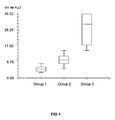
- the biological adhesive of the present invention had a protective effect on the suture line, as demonstrated by a much higher hydraulic pressure being required to produce fluid leakage in group 3, as compared to groups 1 and 2.
- phase 2 was to observe the tissue reaction, both macroscopically and microscopically, in the intestinal tissue.
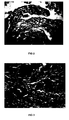
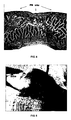
- Figures 2 and 3 in the case of rats of group 1 that died in the first three days due to peritonitis, the well-known phenomena of intense inflammatory reaction, cellular infiltrate and even intestinal defect were observed ( Figure 2 ).
- Figure 2 In the necropsies of the surviving rats in the same group, from the macroscopic point of view, multiple adhesions were observed to the abdominal wall and to the surrounding intestinal loops with fibrosis, and the presence of giant cells was also observed.
- large parietal abscesses were seen ( Figure 3 ).
- Phases 1 and 2 were extended and applied to dogs using sterile techniques. Preoperatively, 1g intramuscular of a second generation cephalosporin was applied. The technique involved making a 6 cm vertical midline incision under the xyphoid appendix, and, by means of careful gastric traction, the duodenum was exteriorized. Then, a 5 to 6 mm 2 laceration was made in the antimesenteric edge using a fine haemostatic clamp 4-5 cm distal to the pancreatic duct. Then, a 3 cm 2 patch of cellulose or collagen was applied with the adhesive of the present invention over the laceration.
- the duodenum was returned to its normal position, that is, the laceration was not sutured, and a patch with the adhesive was applied over the defect.
- the incision was then closed with 2-0 polidioxanone, a continuous suture in two separated layers.
- the biological adhesive of the present invention provided more strength to prevent "bursting" of the suture lines or defects as compared to the sites sutured and/or patched without adhesive formulation.
- the temporary biological adhesive of the present invention protects the suture lines based on the fact that a greater hydraulic pressure in Phase 1 is required to produce leakage of liquid in the suture line when the patch and adhesive were placed. This results in a greater survival rate in rats as shown in Phase 2.
- Phase 2 there was an intense inflammatory reaction and cellular infiltrate in rats which died soon (Phase 2, group 1: patch alone).
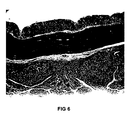
- Phase 2 A chronic inflammatory process with giant cells was observed in surviving rats (Phase 2, group 1: patch alone), as compared with a normal healing process when the patch was applied with the adhesive of the present invention (Phase 2, group 2: patch with adhesive).
- Phase 3 involving dogs with a very serious, lethal injury in the duodenum, where it is known that pancreatic and intestinal secretions exist, most animals survived and similar findings to those observed in rats were present, namely a normal healing process in the duodenal wall and site of the injury. All of these results are proof that the adhesive of the present invention produces the necessary seal by its adhesive properties.
- Phase 2 and in hase 3 the macroscopic and microscopic findings were similar: the biological adhesive is very well tolerated by the intestinal tissues, external adhesions practically do not exist, and histological signs of inflammation or giant cells were not observed.
- Phase 2 it was practically impossible sometimes to determine the site of the injury in the intestine of the rat, and in the dogs in Phase 3, only a small scar existed.
Landscapes
- Health & Medical Sciences (AREA)
- Life Sciences & Earth Sciences (AREA)
- Epidemiology (AREA)
- Animal Behavior & Ethology (AREA)
- General Health & Medical Sciences (AREA)
- Public Health (AREA)
- Veterinary Medicine (AREA)
- Chemical & Material Sciences (AREA)
- Surgery (AREA)
- Engineering & Computer Science (AREA)
- Materials Engineering (AREA)
- Hematology (AREA)
- Vascular Medicine (AREA)
- Heart & Thoracic Surgery (AREA)
- Biomedical Technology (AREA)
- Medicinal Chemistry (AREA)
- Molecular Biology (AREA)
- Materials For Medical Uses (AREA)
- Pharmaceuticals Containing Other Organic And Inorganic Compounds (AREA)
- Adhesives Or Adhesive Processes (AREA)
Priority Applications (2)
| Application Number | Priority Date | Filing Date | Title |
|---|---|---|---|
| EP10190200A EP2298363A1 (de) | 2006-08-22 | 2007-08-21 | Neuer nichttoxischer biologisch abbaubarer Klebstoff zur Verwendung bei Bauchoperationen |
| PL07808494T PL2062602T3 (pl) | 2006-08-22 | 2007-08-21 | Nowy, nietoksyczny i biodegradowalny klej biologiczny przeznaczony do stosowania w chirurgii jamy brzusznej |
Applications Claiming Priority (2)
| Application Number | Priority Date | Filing Date | Title |
|---|---|---|---|
| US11/507,623 US8252333B2 (en) | 2006-01-26 | 2006-08-22 | Biodegradable, non-toxic biological adhesive for use in abdominal surgery |
| PCT/MX2007/000098 WO2008026905A2 (es) | 2006-08-22 | 2007-08-21 | Un nuevo adhesivo biológico biodegradable no tóxico para uso en cirugía abdominal |
Related Child Applications (1)
| Application Number | Title | Priority Date | Filing Date |
|---|---|---|---|
| EP10190200.5 Division-Into | 2010-11-05 |
Publications (2)
| Publication Number | Publication Date |
|---|---|
| EP2062602A2 true EP2062602A2 (de) | 2009-05-27 |
| EP2062602B1 EP2062602B1 (de) | 2011-07-06 |
Family
ID=38802467
Family Applications (2)
| Application Number | Title | Priority Date | Filing Date |
|---|---|---|---|
| EP10190200A Withdrawn EP2298363A1 (de) | 2006-08-22 | 2007-08-21 | Neuer nichttoxischer biologisch abbaubarer Klebstoff zur Verwendung bei Bauchoperationen |
| EP07808494A Not-in-force EP2062602B1 (de) | 2006-08-22 | 2007-08-21 | Neuer nichttoxischer biologisch abbaubarer klebstoff zur verwendung bei bauchoperationen |
Family Applications Before (1)
| Application Number | Title | Priority Date | Filing Date |
|---|---|---|---|
| EP10190200A Withdrawn EP2298363A1 (de) | 2006-08-22 | 2007-08-21 | Neuer nichttoxischer biologisch abbaubarer Klebstoff zur Verwendung bei Bauchoperationen |
Country Status (9)
| Country | Link |
|---|---|
| US (2) | US8252333B2 (de) |
| EP (2) | EP2298363A1 (de) |
| AT (1) | ATE515276T1 (de) |
| CA (1) | CA2661686C (de) |
| DK (1) | DK2062602T3 (de) |
| ES (1) | ES2368518T3 (de) |
| MX (1) | MX2009001737A (de) |
| PL (1) | PL2062602T3 (de) |
| WO (1) | WO2008026905A2 (de) |
Cited By (2)
| Publication number | Priority date | Publication date | Assignee | Title |
|---|---|---|---|---|
| WO2012108753A1 (es) * | 2011-02-08 | 2012-08-16 | Cueto Garcia Jorge | Adhesivo biológico tixotrópico para uso en cavidades internas del cuerpo |
| US9808484B2 (en) | 2013-10-02 | 2017-11-07 | Pebisut De Mexico S.A. De C.V. | Anti-inflammatory composition for aiding and promoting the healing of chronic ulcerative lesions |
Families Citing this family (24)
| Publication number | Priority date | Publication date | Assignee | Title |
|---|---|---|---|---|
| US10500309B2 (en) * | 2007-10-05 | 2019-12-10 | Cook Biotech Incorporated | Absorbable adhesives and their formulation for use in medical applications |
| US9393093B2 (en) | 2008-02-18 | 2016-07-19 | Covidien Lp | Clip for implant deployment device |
| US9044235B2 (en) | 2008-02-18 | 2015-06-02 | Covidien Lp | Magnetic clip for implant deployment device |
| US8317808B2 (en) | 2008-02-18 | 2012-11-27 | Covidien Lp | Device and method for rolling and inserting a prosthetic patch into a body cavity |
| US8758373B2 (en) | 2008-02-18 | 2014-06-24 | Covidien Lp | Means and method for reversibly connecting a patch to a patch deployment device |
| US9833240B2 (en) | 2008-02-18 | 2017-12-05 | Covidien Lp | Lock bar spring and clip for implant deployment device |
| US9393002B2 (en) | 2008-02-18 | 2016-07-19 | Covidien Lp | Clip for implant deployment device |
| EP2247245B1 (de) | 2008-02-18 | 2017-06-28 | Covidien LP | Vorrichtung zur ablage und befestigung eines pflasters auf biologischem gewebe |
| US9034002B2 (en) | 2008-02-18 | 2015-05-19 | Covidien Lp | Lock bar spring and clip for implant deployment device |
| US9301826B2 (en) | 2008-02-18 | 2016-04-05 | Covidien Lp | Lock bar spring and clip for implant deployment device |
| US9398944B2 (en) | 2008-02-18 | 2016-07-26 | Covidien Lp | Lock bar spring and clip for implant deployment device |
| US8808314B2 (en) | 2008-02-18 | 2014-08-19 | Covidien Lp | Device and method for deploying and attaching an implant to a biological tissue |
| EP2337502B1 (de) | 2008-10-20 | 2014-08-06 | Covidien LP | Vorrichtung zur anbringung eines pflasters auf einem biologischen gewebe |
| BRPI0916102A2 (pt) * | 2008-11-20 | 2015-11-03 | Lifecell Corp | "método para a prevenção da hérnia paraestomal, método para preparar uma hérnia paraestomal e dispositivo para preparar ou reduzir a incidência da hérnia paraestomal" |
| US9999424B2 (en) | 2009-08-17 | 2018-06-19 | Covidien Lp | Means and method for reversibly connecting an implant to a deployment device |
| WO2011021083A1 (en) | 2009-08-17 | 2011-02-24 | PolyTouch Medical, Inc. | Articulating patch deployment device and method of use |
| AU2011218066B2 (en) * | 2010-02-19 | 2015-04-23 | Lifecell Corporation | Abdominal wall treatment devices |
| EP3842078A1 (de) | 2011-12-20 | 2021-06-30 | LifeCell Corporation | Blattförmige tissueprodukte |
| US9549805B2 (en) | 2011-12-20 | 2017-01-24 | Lifecell Corporation | Flowable tissue products |
| EP2806907B1 (de) | 2012-01-24 | 2018-11-21 | LifeCell Corporation | Längliche gewebematrizen |
| US9999637B2 (en) | 2012-04-24 | 2018-06-19 | Lifecell Corporation | Functionalized tissue matrices |
| US9579414B2 (en) * | 2013-07-08 | 2017-02-28 | Hossam Abdel Salam El Sayed Mohamed | Devices and methods for effecting faster healing of orthopedic and other wounds |
| CN107126578A (zh) * | 2017-04-21 | 2017-09-05 | 常州市蓝勖化工有限公司 | 一种医用粘合剂的制备方法 |
| JP7146314B1 (ja) * | 2022-04-11 | 2022-10-04 | しぶやポンプ株式会社 | 防水手袋 |
Family Cites Families (24)
| Publication number | Priority date | Publication date | Assignee | Title |
|---|---|---|---|---|
| US3667472A (en) | 1961-10-19 | 1972-06-06 | Borden Inc | Adhesive for living tissue |
| US4600574A (en) | 1984-03-21 | 1986-07-15 | Immuno Aktiengesellschaft Fur Chemisch-Medizinische Produkte | Method of producing a tissue adhesive |
| US4889844A (en) * | 1985-10-22 | 1989-12-26 | Silvetti Sr Anthony N | Fructose containing wound healing preparation |
| US4990339A (en) * | 1987-11-16 | 1991-02-05 | H. B. Fuller Company | Dermal treatment film |
| GB8806692D0 (en) * | 1988-03-21 | 1988-04-20 | Cerestar Holding Bv | Acrylate polymer compositions |
| US5318780A (en) | 1991-10-30 | 1994-06-07 | Mediventures Inc. | Medical uses of in situ formed gels |
| FR2707878A1 (fr) | 1993-07-21 | 1995-01-27 | Imedex | Nouvelles compositions adhésives à usage chirurgical. |
| FR2735777B1 (fr) | 1995-06-21 | 1997-09-12 | Sanofi Sa | Derives de 4-phenylaminothiazole, leur procede de preparation et les compositions pharmaceutiques les contenant |
| US6368586B1 (en) | 1996-01-26 | 2002-04-09 | Brown University Research Foundation | Methods and compositions for enhancing the bioadhesive properties of polymers |
| US5985312A (en) | 1996-01-26 | 1999-11-16 | Brown University Research Foundation | Methods and compositions for enhancing the bioadhesive properties of polymers |
| US5932639A (en) * | 1996-05-06 | 1999-08-03 | National Starch And Chemical Investment Holding Corporation | Maltodextrin-based adhesives |
| US5955096A (en) | 1996-06-25 | 1999-09-21 | Brown University Research Foundation | Methods and compositions for enhancing the bioadhesive properties of polymers using organic excipients |
| US20030077317A1 (en) | 1996-06-25 | 2003-04-24 | Brown University Research Foundation | Methods and compositions for enhancing the bioadhesive properties of polymers using organic excipients |
| IN192791B (de) | 1996-06-28 | 2004-05-22 | Johnson & Johnson Medical | |
| US6046178A (en) | 1997-04-18 | 2000-04-04 | Deroyal Industries, Inc. | Method and compound for treating wounds with starch hydrolysate medication |
| US6582720B1 (en) | 1998-03-20 | 2003-06-24 | Kowa Co., Ltd. | Medicinal compositions adhering to stomach/duodenum |
| EP1085920B1 (de) | 1998-05-13 | 2001-12-19 | ML Laboratories PLC | Dextrinhaltige mischung zur verhinderung von chirurgischen verklebungen |
| US6770148B1 (en) | 1998-12-04 | 2004-08-03 | Baxter International Inc. | Peritoneal dialysis solution containing modified icodextrins |
| US20040208906A1 (en) | 1999-07-12 | 2004-10-21 | Daiichi Suntory Pharma Co., Ltd. | Pharmaceutical composition for topical administration |
| DE60018571T8 (de) * | 1999-07-28 | 2006-04-27 | Davol Inc. | Hernienprothese |
| KR100740735B1 (ko) | 2000-01-21 | 2007-07-19 | 이노바타 피엘씨 | 덱스트린을 함유하는 유착 방지용 조성물 |
| FR2836046B1 (fr) | 2002-02-15 | 2006-09-15 | Marie Jose Touche | Nouvelle application therapeutique d'un compose a : le butoforme ou scuroforme, associe au produit b : l'eugenol et au produit c : oxyde de zinc , additionne de lycopene |
| US7098189B2 (en) * | 2002-12-16 | 2006-08-29 | Kimberly-Clark Worldwide, Inc. | Wound and skin care compositions |
| US7316822B2 (en) | 2003-11-26 | 2008-01-08 | Ethicon, Inc. | Conformable tissue repair implant capable of injection delivery |
-
2006
- 2006-08-22 US US11/507,623 patent/US8252333B2/en not_active Expired - Fee Related
-
2007
- 2007-08-21 PL PL07808494T patent/PL2062602T3/pl unknown
- 2007-08-21 WO PCT/MX2007/000098 patent/WO2008026905A2/es not_active Ceased
- 2007-08-21 MX MX2009001737A patent/MX2009001737A/es active IP Right Grant
- 2007-08-21 EP EP10190200A patent/EP2298363A1/de not_active Withdrawn
- 2007-08-21 ES ES07808494T patent/ES2368518T3/es active Active
- 2007-08-21 CA CA2661686A patent/CA2661686C/en active Active
- 2007-08-21 EP EP07808494A patent/EP2062602B1/de not_active Not-in-force
- 2007-08-21 AT AT07808494T patent/ATE515276T1/de active
- 2007-08-21 DK DK07808494.4T patent/DK2062602T3/da active
-
2012
- 2012-04-23 US US13/453,468 patent/US8440227B2/en not_active Expired - Fee Related
Non-Patent Citations (1)
| Title |
|---|
| See references of WO2008026905A2 * |
Cited By (2)
| Publication number | Priority date | Publication date | Assignee | Title |
|---|---|---|---|---|
| WO2012108753A1 (es) * | 2011-02-08 | 2012-08-16 | Cueto Garcia Jorge | Adhesivo biológico tixotrópico para uso en cavidades internas del cuerpo |
| US9808484B2 (en) | 2013-10-02 | 2017-11-07 | Pebisut De Mexico S.A. De C.V. | Anti-inflammatory composition for aiding and promoting the healing of chronic ulcerative lesions |
Also Published As
| Publication number | Publication date |
|---|---|
| US8252333B2 (en) | 2012-08-28 |
| WO2008026905A2 (es) | 2008-03-06 |
| WO2008026905A4 (es) | 2009-04-09 |
| US20070202173A1 (en) | 2007-08-30 |
| MX2009001737A (es) | 2009-02-25 |
| ES2368518T3 (es) | 2011-11-18 |
| CA2661686C (en) | 2013-04-09 |
| EP2062602B1 (de) | 2011-07-06 |
| WO2008026905A3 (es) | 2008-12-31 |
| ATE515276T1 (de) | 2011-07-15 |
| CA2661686A1 (en) | 2008-03-06 |
| DK2062602T3 (da) | 2011-08-29 |
| US8440227B2 (en) | 2013-05-14 |
| US20120209324A1 (en) | 2012-08-16 |
| EP2298363A1 (de) | 2011-03-23 |
| PL2062602T3 (pl) | 2011-11-30 |
Similar Documents
| Publication | Publication Date | Title |
|---|---|---|
| EP2062602B1 (de) | Neuer nichttoxischer biologisch abbaubarer klebstoff zur verwendung bei bauchoperationen | |
| EP2219691B1 (de) | Chirurgische barrieren mit haftabweisenden eigenschaften | |
| US9238088B2 (en) | Surgical barriers having adhesion inhibiting properties | |
| Lee et al. | Use of fibrin sealant in laparoscopic gastric bypass for the morbidly obese | |
| EP2676682A1 (de) | Thixotrope biologische klebstoffe für innere körperhöhlen | |
| KR101786786B1 (ko) | 개선된 피브린 밀봉 방법 | |
| US20100260845A1 (en) | Biocompatible and Biodegradable Biopolymer Matrix | |
| US20160068714A1 (en) | Sealants, manufacturing thereof and applications thereof | |
| Kayaoglu et al. | Effect of n‐Butyl‐2‐Cyanoacrylate on High‐Risk Colonic Anastomoses | |
| Bhatia | Adhesive Biomaterials for Tissue Repair and Reconstruction | |
| EP4262901B1 (de) | Biologisch abbaubare, nicht poröse medizinische vorrichtung und verfahren zu deren herstellung und verwendung | |
| RU2325926C1 (ru) | Раневое покрытие для внутренних органов | |
| Majeed et al. | Wound Healing Adhesives | |
| WO2023140088A1 (ja) | 消化管吻合部補強材 |
Legal Events
| Date | Code | Title | Description |
|---|---|---|---|
| PUAI | Public reference made under article 153(3) epc to a published international application that has entered the european phase |
Free format text: ORIGINAL CODE: 0009012 |
|
| 17P | Request for examination filed |
Effective date: 20090320 |
|
| AK | Designated contracting states |
Kind code of ref document: A2 Designated state(s): AT BE BG CH CY CZ DE DK EE ES FI FR GB GR HU IE IS IT LI LT LU LV MC MT NL PL PT RO SE SI SK TR |
|
| AX | Request for extension of the european patent |
Extension state: AL BA HR MK RS |
|
| DAX | Request for extension of the european patent (deleted) | ||
| 17Q | First examination report despatched |
Effective date: 20100305 |
|
| GRAP | Despatch of communication of intention to grant a patent |
Free format text: ORIGINAL CODE: EPIDOSNIGR1 |
|
| GRAS | Grant fee paid |
Free format text: ORIGINAL CODE: EPIDOSNIGR3 |
|
| GRAA | (expected) grant |
Free format text: ORIGINAL CODE: 0009210 |
|
| AK | Designated contracting states |
Kind code of ref document: B1 Designated state(s): AT BE BG CH CY CZ DE DK EE ES FI FR GB GR HU IE IS IT LI LT LU LV MC MT NL PL PT RO SE SI SK TR |
|
| REG | Reference to a national code |
Ref country code: GB Ref legal event code: FG4D |
|
| REG | Reference to a national code |
Ref country code: CH Ref legal event code: EP |
|
| REG | Reference to a national code |
Ref country code: IE Ref legal event code: FG4D |
|
| REG | Reference to a national code |
Ref country code: NL Ref legal event code: T3 |
|
| REG | Reference to a national code |
Ref country code: SE Ref legal event code: TRGR |
|
| REG | Reference to a national code |
Ref country code: DE Ref legal event code: R096 Ref document number: 602007015681 Country of ref document: DE Effective date: 20110825 |
|
| REG | Reference to a national code |
Ref country code: DK Ref legal event code: T3 |
|
| REG | Reference to a national code |
Ref country code: ES Ref legal event code: FG2A Ref document number: 2368518 Country of ref document: ES Kind code of ref document: T3 Effective date: 20111118 |
|
| PG25 | Lapsed in a contracting state [announced via postgrant information from national office to epo] |
Ref country code: SI Free format text: LAPSE BECAUSE OF FAILURE TO SUBMIT A TRANSLATION OF THE DESCRIPTION OR TO PAY THE FEE WITHIN THE PRESCRIBED TIME-LIMIT Effective date: 20110706 |
|
| REG | Reference to a national code |
Ref country code: PL Ref legal event code: T3 |
|
| PG25 | Lapsed in a contracting state [announced via postgrant information from national office to epo] |
Ref country code: MT Free format text: LAPSE BECAUSE OF FAILURE TO SUBMIT A TRANSLATION OF THE DESCRIPTION OR TO PAY THE FEE WITHIN THE PRESCRIBED TIME-LIMIT Effective date: 20110706 |
|
| REG | Reference to a national code |
Ref country code: GR Ref legal event code: EP Ref document number: 20110402367 Country of ref document: GR Effective date: 20111117 |
|
| PG25 | Lapsed in a contracting state [announced via postgrant information from national office to epo] |
Ref country code: PT Free format text: LAPSE BECAUSE OF FAILURE TO SUBMIT A TRANSLATION OF THE DESCRIPTION OR TO PAY THE FEE WITHIN THE PRESCRIBED TIME-LIMIT Effective date: 20111107 Ref country code: IS Free format text: LAPSE BECAUSE OF FAILURE TO SUBMIT A TRANSLATION OF THE DESCRIPTION OR TO PAY THE FEE WITHIN THE PRESCRIBED TIME-LIMIT Effective date: 20111106 Ref country code: LT Free format text: LAPSE BECAUSE OF FAILURE TO SUBMIT A TRANSLATION OF THE DESCRIPTION OR TO PAY THE FEE WITHIN THE PRESCRIBED TIME-LIMIT Effective date: 20110706 |
|
| PG25 | Lapsed in a contracting state [announced via postgrant information from national office to epo] |
Ref country code: CY Free format text: LAPSE BECAUSE OF FAILURE TO SUBMIT A TRANSLATION OF THE DESCRIPTION OR TO PAY THE FEE WITHIN THE PRESCRIBED TIME-LIMIT Effective date: 20110706 Ref country code: LV Free format text: LAPSE BECAUSE OF FAILURE TO SUBMIT A TRANSLATION OF THE DESCRIPTION OR TO PAY THE FEE WITHIN THE PRESCRIBED TIME-LIMIT Effective date: 20110706 |
|
| REG | Reference to a national code |
Ref country code: HU Ref legal event code: AG4A Ref document number: E012375 Country of ref document: HU |
|
| PG25 | Lapsed in a contracting state [announced via postgrant information from national office to epo] |
Ref country code: MC Free format text: LAPSE BECAUSE OF NON-PAYMENT OF DUE FEES Effective date: 20110831 |
|
| PG25 | Lapsed in a contracting state [announced via postgrant information from national office to epo] |
Ref country code: SK Free format text: LAPSE BECAUSE OF FAILURE TO SUBMIT A TRANSLATION OF THE DESCRIPTION OR TO PAY THE FEE WITHIN THE PRESCRIBED TIME-LIMIT Effective date: 20110706 |
|
| PLBE | No opposition filed within time limit |
Free format text: ORIGINAL CODE: 0009261 |
|
| STAA | Information on the status of an ep patent application or granted ep patent |
Free format text: STATUS: NO OPPOSITION FILED WITHIN TIME LIMIT |
|
| REG | Reference to a national code |
Ref country code: IE Ref legal event code: MM4A |
|
| PG25 | Lapsed in a contracting state [announced via postgrant information from national office to epo] |
Ref country code: RO Free format text: LAPSE BECAUSE OF FAILURE TO SUBMIT A TRANSLATION OF THE DESCRIPTION OR TO PAY THE FEE WITHIN THE PRESCRIBED TIME-LIMIT Effective date: 20110706 Ref country code: EE Free format text: LAPSE BECAUSE OF FAILURE TO SUBMIT A TRANSLATION OF THE DESCRIPTION OR TO PAY THE FEE WITHIN THE PRESCRIBED TIME-LIMIT Effective date: 20110706 |
|
| 26N | No opposition filed |
Effective date: 20120411 |
|
| PG25 | Lapsed in a contracting state [announced via postgrant information from national office to epo] |
Ref country code: IE Free format text: LAPSE BECAUSE OF NON-PAYMENT OF DUE FEES Effective date: 20110821 |
|
| REG | Reference to a national code |
Ref country code: DE Ref legal event code: R097 Ref document number: 602007015681 Country of ref document: DE Effective date: 20120411 |
|
| PG25 | Lapsed in a contracting state [announced via postgrant information from national office to epo] |
Ref country code: LU Free format text: LAPSE BECAUSE OF NON-PAYMENT OF DUE FEES Effective date: 20110821 |
|
| PG25 | Lapsed in a contracting state [announced via postgrant information from national office to epo] |
Ref country code: BG Free format text: LAPSE BECAUSE OF FAILURE TO SUBMIT A TRANSLATION OF THE DESCRIPTION OR TO PAY THE FEE WITHIN THE PRESCRIBED TIME-LIMIT Effective date: 20111006 |
|
| PG25 | Lapsed in a contracting state [announced via postgrant information from national office to epo] |
Ref country code: TR Free format text: LAPSE BECAUSE OF FAILURE TO SUBMIT A TRANSLATION OF THE DESCRIPTION OR TO PAY THE FEE WITHIN THE PRESCRIBED TIME-LIMIT Effective date: 20110706 |
|
| REG | Reference to a national code |
Ref country code: FR Ref legal event code: PLFP Year of fee payment: 9 |
|
| PGFP | Annual fee paid to national office [announced via postgrant information from national office to epo] |
Ref country code: GR Payment date: 20151230 Year of fee payment: 9 Ref country code: FI Payment date: 20151222 Year of fee payment: 9 Ref country code: DK Payment date: 20151221 Year of fee payment: 9 |
|
| PGFP | Annual fee paid to national office [announced via postgrant information from national office to epo] |
Ref country code: HU Payment date: 20151217 Year of fee payment: 9 Ref country code: BE Payment date: 20151221 Year of fee payment: 9 Ref country code: NL Payment date: 20151221 Year of fee payment: 9 Ref country code: CZ Payment date: 20151229 Year of fee payment: 9 Ref country code: SE Payment date: 20151221 Year of fee payment: 9 |
|
| PGFP | Annual fee paid to national office [announced via postgrant information from national office to epo] |
Ref country code: PL Payment date: 20160104 Year of fee payment: 9 |
|
| REG | Reference to a national code |
Ref country code: FR Ref legal event code: PLFP Year of fee payment: 10 |
|
| PGFP | Annual fee paid to national office [announced via postgrant information from national office to epo] |
Ref country code: GB Payment date: 20160819 Year of fee payment: 10 Ref country code: CH Payment date: 20160819 Year of fee payment: 10 Ref country code: DE Payment date: 20160822 Year of fee payment: 10 Ref country code: IT Payment date: 20160825 Year of fee payment: 10 |
|
| PGFP | Annual fee paid to national office [announced via postgrant information from national office to epo] |
Ref country code: AT Payment date: 20160822 Year of fee payment: 10 Ref country code: FR Payment date: 20160822 Year of fee payment: 10 |
|
| PG25 | Lapsed in a contracting state [announced via postgrant information from national office to epo] |
Ref country code: BE Free format text: LAPSE BECAUSE OF NON-PAYMENT OF DUE FEES Effective date: 20160831 |
|
| PGFP | Annual fee paid to national office [announced via postgrant information from national office to epo] |
Ref country code: ES Payment date: 20160823 Year of fee payment: 10 |
|
| REG | Reference to a national code |
Ref country code: DK Ref legal event code: EBP Effective date: 20160831 |
|
| REG | Reference to a national code |
Ref country code: SE Ref legal event code: EUG |
|
| REG | Reference to a national code |
Ref country code: NL Ref legal event code: MM Effective date: 20160901 |
|
| PG25 | Lapsed in a contracting state [announced via postgrant information from national office to epo] |
Ref country code: FI Free format text: LAPSE BECAUSE OF NON-PAYMENT OF DUE FEES Effective date: 20160821 Ref country code: HU Free format text: LAPSE BECAUSE OF NON-PAYMENT OF DUE FEES Effective date: 20160822 Ref country code: SE Free format text: LAPSE BECAUSE OF NON-PAYMENT OF DUE FEES Effective date: 20160822 Ref country code: GR Free format text: LAPSE BECAUSE OF NON-PAYMENT OF DUE FEES Effective date: 20170309 |
|
| REG | Reference to a national code |
Ref country code: GR Ref legal event code: ML Ref document number: 20110402367 Country of ref document: GR Effective date: 20170309 |
|
| PG25 | Lapsed in a contracting state [announced via postgrant information from national office to epo] |
Ref country code: CZ Free format text: LAPSE BECAUSE OF NON-PAYMENT OF DUE FEES Effective date: 20160821 |
|
| PG25 | Lapsed in a contracting state [announced via postgrant information from national office to epo] |
Ref country code: NL Free format text: LAPSE BECAUSE OF NON-PAYMENT OF DUE FEES Effective date: 20160901 |
|
| PG25 | Lapsed in a contracting state [announced via postgrant information from national office to epo] |
Ref country code: DK Free format text: LAPSE BECAUSE OF NON-PAYMENT OF DUE FEES Effective date: 20160831 |
|
| PG25 | Lapsed in a contracting state [announced via postgrant information from national office to epo] |
Ref country code: PL Free format text: LAPSE BECAUSE OF NON-PAYMENT OF DUE FEES Effective date: 20160821 |
|
| REG | Reference to a national code |
Ref country code: DE Ref legal event code: R119 Ref document number: 602007015681 Country of ref document: DE |
|
| REG | Reference to a national code |
Ref country code: CH Ref legal event code: PL |
|
| REG | Reference to a national code |
Ref country code: AT Ref legal event code: MM01 Ref document number: 515276 Country of ref document: AT Kind code of ref document: T Effective date: 20170821 |
|
| GBPC | Gb: european patent ceased through non-payment of renewal fee |
Effective date: 20170821 |
|
| PG25 | Lapsed in a contracting state [announced via postgrant information from national office to epo] |
Ref country code: CH Free format text: LAPSE BECAUSE OF NON-PAYMENT OF DUE FEES Effective date: 20170831 Ref country code: LI Free format text: LAPSE BECAUSE OF NON-PAYMENT OF DUE FEES Effective date: 20170831 |
|
| REG | Reference to a national code |
Ref country code: FR Ref legal event code: ST Effective date: 20180430 |
|
| PG25 | Lapsed in a contracting state [announced via postgrant information from national office to epo] |
Ref country code: AT Free format text: LAPSE BECAUSE OF NON-PAYMENT OF DUE FEES Effective date: 20170821 |
|
| PG25 | Lapsed in a contracting state [announced via postgrant information from national office to epo] |
Ref country code: GB Free format text: LAPSE BECAUSE OF NON-PAYMENT OF DUE FEES Effective date: 20170821 Ref country code: DE Free format text: LAPSE BECAUSE OF NON-PAYMENT OF DUE FEES Effective date: 20180301 |
|
| PG25 | Lapsed in a contracting state [announced via postgrant information from national office to epo] |
Ref country code: FR Free format text: LAPSE BECAUSE OF NON-PAYMENT OF DUE FEES Effective date: 20170831 Ref country code: IT Free format text: LAPSE BECAUSE OF NON-PAYMENT OF DUE FEES Effective date: 20170821 |
|
| REG | Reference to a national code |
Ref country code: ES Ref legal event code: FD2A Effective date: 20181029 |
|
| PG25 | Lapsed in a contracting state [announced via postgrant information from national office to epo] |
Ref country code: ES Free format text: LAPSE BECAUSE OF NON-PAYMENT OF DUE FEES Effective date: 20170822 |