EP2063024B1 - Nano-Kohlenstoff-Kristallmaterial und Verfahren zur Herstellung einer elektrothermischen Platte damit - Google Patents
Nano-Kohlenstoff-Kristallmaterial und Verfahren zur Herstellung einer elektrothermischen Platte damit Download PDFInfo
- Publication number
- EP2063024B1 EP2063024B1 EP07022709A EP07022709A EP2063024B1 EP 2063024 B1 EP2063024 B1 EP 2063024B1 EP 07022709 A EP07022709 A EP 07022709A EP 07022709 A EP07022709 A EP 07022709A EP 2063024 B1 EP2063024 B1 EP 2063024B1
- Authority
- EP
- European Patent Office
- Prior art keywords
- nano carbon
- crystal material
- carbon crystal
- paper
- temperature
- Prior art date
- Legal status (The legal status is an assumption and is not a legal conclusion. Google has not performed a legal analysis and makes no representation as to the accuracy of the status listed.)
- Not-in-force
Links
- 239000013078 crystal Substances 0.000 title claims abstract description 94
- 229910021392 nanocarbon Inorganic materials 0.000 title claims abstract description 83
- 239000000463 material Substances 0.000 title claims abstract description 51
- 238000004519 manufacturing process Methods 0.000 title claims abstract description 21
- 229920000049 Carbon (fiber) Polymers 0.000 claims abstract description 56
- 239000004917 carbon fiber Substances 0.000 claims abstract description 56
- VNWKTOKETHGBQD-UHFFFAOYSA-N methane Chemical compound C VNWKTOKETHGBQD-UHFFFAOYSA-N 0.000 claims abstract description 26
- OKTJSMMVPCPJKN-UHFFFAOYSA-N Carbon Chemical compound [C] OKTJSMMVPCPJKN-UHFFFAOYSA-N 0.000 claims abstract description 25
- 229910052799 carbon Inorganic materials 0.000 claims abstract description 25
- NLHHRLWOUZZQLW-UHFFFAOYSA-N Acrylonitrile Chemical compound C=CC#N NLHHRLWOUZZQLW-UHFFFAOYSA-N 0.000 claims abstract description 16
- 229920001131 Pulp (paper) Polymers 0.000 claims abstract description 13
- 239000000853 adhesive Substances 0.000 claims abstract description 10
- 230000001070 adhesive effect Effects 0.000 claims abstract description 10
- 239000000123 paper Substances 0.000 claims description 41
- XEEYBQQBJWHFJM-UHFFFAOYSA-N Iron Chemical compound [Fe] XEEYBQQBJWHFJM-UHFFFAOYSA-N 0.000 claims description 36
- 239000004744 fabric Substances 0.000 claims description 24
- 229910052742 iron Inorganic materials 0.000 claims description 18
- CSCPPACGZOOCGX-UHFFFAOYSA-N Acetone Chemical compound CC(C)=O CSCPPACGZOOCGX-UHFFFAOYSA-N 0.000 claims description 14
- RYGMFSIKBFXOCR-UHFFFAOYSA-N Copper Chemical compound [Cu] RYGMFSIKBFXOCR-UHFFFAOYSA-N 0.000 claims description 14
- 239000006082 mold release agent Substances 0.000 claims description 14
- XLYOFNOQVPJJNP-UHFFFAOYSA-N water Substances O XLYOFNOQVPJJNP-UHFFFAOYSA-N 0.000 claims description 14
- KXGFMDJXCMQABM-UHFFFAOYSA-N 2-methoxy-6-methylphenol Chemical compound [CH]OC1=CC=CC([CH])=C1O KXGFMDJXCMQABM-UHFFFAOYSA-N 0.000 claims description 12
- 239000004698 Polyethylene Substances 0.000 claims description 12
- 239000000835 fiber Substances 0.000 claims description 12
- 239000003365 glass fiber Substances 0.000 claims description 12
- 239000000203 mixture Substances 0.000 claims description 12
- 229920001568 phenolic resin Polymers 0.000 claims description 12
- 239000005011 phenolic resin Substances 0.000 claims description 12
- -1 polyethylene Polymers 0.000 claims description 12
- 229920000573 polyethylene Polymers 0.000 claims description 12
- 239000002270 dispersing agent Substances 0.000 claims description 11
- 239000003822 epoxy resin Substances 0.000 claims description 9
- 229920000647 polyepoxide Polymers 0.000 claims description 9
- 239000011889 copper foil Substances 0.000 claims description 8
- 239000002655 kraft paper Substances 0.000 claims description 7
- 239000003973 paint Substances 0.000 claims description 7
- 239000011248 coating agent Substances 0.000 claims description 6
- 238000000576 coating method Methods 0.000 claims description 6
- 229910052802 copper Inorganic materials 0.000 claims description 6
- 239000010949 copper Substances 0.000 claims description 6
- 238000005034 decoration Methods 0.000 claims description 6
- ATJFFYVFTNAWJD-UHFFFAOYSA-N Tin Chemical compound [Sn] ATJFFYVFTNAWJD-UHFFFAOYSA-N 0.000 claims description 4
- 229920002635 polyurethane Polymers 0.000 claims description 4
- 239000004814 polyurethane Substances 0.000 claims description 4
- IXPNQXFRVYWDDI-UHFFFAOYSA-N 1-methyl-2,4-dioxo-1,3-diazinane-5-carboximidamide Chemical compound CN1CC(C(N)=N)C(=O)NC1=O IXPNQXFRVYWDDI-UHFFFAOYSA-N 0.000 claims description 3
- 239000004372 Polyvinyl alcohol Substances 0.000 claims description 3
- 238000010009 beating Methods 0.000 claims description 3
- 229920002678 cellulose Polymers 0.000 claims description 3
- 239000001913 cellulose Substances 0.000 claims description 3
- 238000001035 drying Methods 0.000 claims description 3
- 229920000609 methyl cellulose Polymers 0.000 claims description 3
- 239000001923 methylcellulose Substances 0.000 claims description 3
- 235000010981 methylcellulose Nutrition 0.000 claims description 3
- 229920000767 polyaniline Polymers 0.000 claims description 3
- 229920002451 polyvinyl alcohol Polymers 0.000 claims description 3
- 239000011265 semifinished product Substances 0.000 claims description 3
- 239000000661 sodium alginate Substances 0.000 claims description 3
- 235000010413 sodium alginate Nutrition 0.000 claims description 3
- 229940005550 sodium alginate Drugs 0.000 claims description 3
- 239000002023 wood Substances 0.000 claims description 3
- 238000002156 mixing Methods 0.000 claims description 2
- 238000012545 processing Methods 0.000 claims description 2
- 238000007493 shaping process Methods 0.000 claims description 2
- 230000001815 facial effect Effects 0.000 abstract description 5
- 230000017525 heat dissipation Effects 0.000 abstract description 4
- 238000009413 insulation Methods 0.000 abstract description 3
- 238000000034 method Methods 0.000 abstract description 3
- 230000000694 effects Effects 0.000 description 4
- 238000010438 heat treatment Methods 0.000 description 3
- 239000000047 product Substances 0.000 description 3
- 238000001514 detection method Methods 0.000 description 2
- 238000002474 experimental method Methods 0.000 description 2
- 239000002245 particle Substances 0.000 description 2
- 238000012360 testing method Methods 0.000 description 2
- 230000005653 Brownian motion process Effects 0.000 description 1
- 238000000498 ball milling Methods 0.000 description 1
- 238000003287 bathing Methods 0.000 description 1
- 238000005537 brownian motion Methods 0.000 description 1
- 230000003139 buffering effect Effects 0.000 description 1
- 150000001721 carbon Chemical class 0.000 description 1
- 239000003575 carbonaceous material Substances 0.000 description 1
- 239000000969 carrier Substances 0.000 description 1
- 238000006243 chemical reaction Methods 0.000 description 1
- 239000003795 chemical substances by application Substances 0.000 description 1
- 239000004020 conductor Substances 0.000 description 1
- 238000010276 construction Methods 0.000 description 1
- 238000005520 cutting process Methods 0.000 description 1
- 238000009826 distribution Methods 0.000 description 1
- 238000010891 electric arc Methods 0.000 description 1
- 230000005684 electric field Effects 0.000 description 1
- 238000000605 extraction Methods 0.000 description 1
- 239000003292 glue Substances 0.000 description 1
- 239000012761 high-performance material Substances 0.000 description 1
- 239000012535 impurity Substances 0.000 description 1
- 238000005259 measurement Methods 0.000 description 1
- 239000003595 mist Substances 0.000 description 1
- 239000000178 monomer Substances 0.000 description 1
- 238000003672 processing method Methods 0.000 description 1
- 238000000746 purification Methods 0.000 description 1
- 230000001603 reducing effect Effects 0.000 description 1
- 230000000630 rising effect Effects 0.000 description 1
- 150000003839 salts Chemical class 0.000 description 1
- 239000004065 semiconductor Substances 0.000 description 1
- 238000004506 ultrasonic cleaning Methods 0.000 description 1
Images

Classifications
-
- D—TEXTILES; PAPER
- D21—PAPER-MAKING; PRODUCTION OF CELLULOSE
- D21H—PULP COMPOSITIONS; PREPARATION THEREOF NOT COVERED BY SUBCLASSES D21C OR D21D; IMPREGNATING OR COATING OF PAPER; TREATMENT OF FINISHED PAPER NOT COVERED BY CLASS B31 OR SUBCLASS D21G; PAPER NOT OTHERWISE PROVIDED FOR
- D21H13/00—Pulp or paper, comprising synthetic cellulose or non-cellulose fibres or web-forming material
- D21H13/36—Inorganic fibres or flakes
- D21H13/46—Non-siliceous fibres, e.g. from metal oxides
- D21H13/50—Carbon fibres
-
- D—TEXTILES; PAPER
- D21—PAPER-MAKING; PRODUCTION OF CELLULOSE
- D21H—PULP COMPOSITIONS; PREPARATION THEREOF NOT COVERED BY SUBCLASSES D21C OR D21D; IMPREGNATING OR COATING OF PAPER; TREATMENT OF FINISHED PAPER NOT COVERED BY CLASS B31 OR SUBCLASS D21G; PAPER NOT OTHERWISE PROVIDED FOR
- D21H17/00—Non-fibrous material added to the pulp, characterised by its constitution; Paper-impregnating material characterised by its constitution
- D21H17/63—Inorganic compounds
- D21H17/67—Water-insoluble compounds, e.g. fillers, pigments
-
- D—TEXTILES; PAPER
- D21—PAPER-MAKING; PRODUCTION OF CELLULOSE
- D21H—PULP COMPOSITIONS; PREPARATION THEREOF NOT COVERED BY SUBCLASSES D21C OR D21D; IMPREGNATING OR COATING OF PAPER; TREATMENT OF FINISHED PAPER NOT COVERED BY CLASS B31 OR SUBCLASS D21G; PAPER NOT OTHERWISE PROVIDED FOR
- D21H21/00—Non-fibrous material added to the pulp, characterised by its function, form or properties; Paper-impregnating or coating material, characterised by its function, form or properties
- D21H21/50—Non-fibrous material added to the pulp, characterised by its function, form or properties; Paper-impregnating or coating material, characterised by its function, form or properties characterised by form
- D21H21/52—Additives of definite length or shape
- D21H21/54—Additives of definite length or shape being spherical, e.g. microcapsules, beads
-
- H—ELECTRICITY
- H05—ELECTRIC TECHNIQUES NOT OTHERWISE PROVIDED FOR
- H05B—ELECTRIC HEATING; ELECTRIC LIGHT SOURCES NOT OTHERWISE PROVIDED FOR; CIRCUIT ARRANGEMENTS FOR ELECTRIC LIGHT SOURCES, IN GENERAL
- H05B3/00—Ohmic-resistance heating
- H05B3/10—Heating elements characterised by the composition or nature of the materials or by the arrangement of the conductor
- H05B3/12—Heating elements characterised by the composition or nature of the materials or by the arrangement of the conductor characterised by the composition or nature of the conductive material
- H05B3/14—Heating elements characterised by the composition or nature of the materials or by the arrangement of the conductor characterised by the composition or nature of the conductive material the material being non-metallic
- H05B3/145—Carbon only, e.g. carbon black, graphite
Definitions
- the present invention relates to a nano carbon crystal material and a method of manufacturing electrothermal board using the same, and more particularly to a crystal material and a method of manufacturing a facial heating body by using the crystal material.
- Carbon fiber is a high performance material with excellent electrical and thermal conductivity, and its cost becomes increasingly lower, and thus extensive applications are developed in the areas of our daily life.
- most of the present carbon fiber electrothermal boards for preserving temperature and keeping warm have the following issues:
- the carbon crystal is described briefly here. Under certain conditions, carbon is a very good semiconductor material. Theoretically, each monomer has an anode and a cathode no matter how many particles is cut and divided from carbon. In fact, most carbon particles do not have these features. In special manufacturing methods (such as the ball milling, softening, purification and extraction processes conducted at high temperature and high pressure) by a modified carbon material for extracting pure large mesh carbon crystals, and a large quantity of carbon crystals perform Brownian motion under the effect of electric fields to rub and oscillate with each other to produce a large quantity of heat, so as to convert electric energy into heat energy.
- special manufacturing methods such as the ball milling, softening, purification and extraction processes conducted at high temperature and high pressure
- the nano carbon crystal material consists of acrylonitrile-based carbon fibers, occupying 70 ⁇ 80% of the total weight of the nano carbon crystal material; nano carbon fibers, occupying 1 ⁇ 5% of the total weight of the nano carbon crystal material; and carbon crystals, occupying 15 ⁇ 29% of the total weight of the nano carbon crystal material.
- the acrylonitrile-based carbon fiber is composed of acrylonitrile-based carbon fibers having a number of thousand-filaments of 10 ⁇ 15K, a diameter of 1 ⁇ 5 ⁇ m, and a length of 2 ⁇ 4mm and 4.5-6mm respectively, and formed according to the ratio of 0.5 ⁇ 2: 1 by weight; and the diameter of the nano carbon fiber is 50 ⁇ 200nm; and the number of meshes of the carbon crystal mesh is 400 ⁇ 1000 meshes.
- a method of manufacturing an electrothermal board by using the above-mentioned nano carbon crystal material includes the steps of:
- the dispersant is composed of sodium alginate, methyl cellulose, polyacrylamine or any combination of the above.
- the paper pulp for making paper is a wood cellulose pulp.
- the water soluble adhesive is composed of polyaniline, polyvinyl alcohol, water soluble phenolic resin or any combination of the above.
- the mold release agent is a polyurethane mold release agent.
- Carbon crystals are used for lattice vibrations to generate heat, and acrylonitrile-based carbon fiber materials with different aspect ratios form the connecting wires of the lattices.
- Adding nano carbon fibers not only reduces the occurrence of electrostatic dissipations and sparks, and also guarantees the heat dissipation of the lattices that are contacted with each other or separated with a distance equal to several atomic diameters, and the nano carbon crystal material is constituted of a three-dimensional network with transversal and longitudinal intersections of points, lines and planes for moving carriers in this network along the direction towards a low electric potential.
- nano carbon crystals are partially disordered, but as to the macroscopic view, nano carbon crystals are totally ordered. Carbon crystals can form an even facial heat-generating surface, and thus the surface of an electrothermal board made of a nano carbon crystal material comes with even temperature rise and heat dissipation.
- the present invention an electrothermal board made of a nano carbon crystal material, and the electrothermal board is a whole facial heat dissipating board whose conductor is a facial heat-generating surface formed by carbon fibers with a three-dimensional network which is partially disordered, totally ordered, and cut into different lengths.
- the electrothermal board can produce far infrared rays of 8 ⁇ 10 ⁇ m, and a long time of use provides a health care effect to users
- electrothermal boards are rigid, safe and highly insulated, and usually come with a puncture voltage of 10000V, a long life that will not break or fall off after a continuous use of over 30000 hours, and moisture-proof and waterproof features, and thus the electrothermal boards are suitable for the application of keeping warm at home, heating a bathing pool, drying clothes, offices, meeting rooms or hotels.
- the electrothermal board manufactured by the method of the present invention features the advantages of having an even stable heat generating performance, a quick temperature rise, an excellent insulating function, and a long working life, and thus such electrothermal board is suitable for mass production to satisfy production requirements and our daily needs, and the manufacturing method is simple, easy and convenient to operate.
- Embodiment 1 The nano carbon crystal material is composed of acrylonitrile-based carbon fibers occupying 70 ⁇ 80% of the total weight, nano carbon fibers occupying 1 ⁇ 5% of the total weight, and carbon crystals occupying 15 ⁇ 29% of the total weight, wherein the acrylonitrile-based carbon fibers have a number of thousand-filaments of 10 ⁇ 15K, a diameter of 1 ⁇ 5 ⁇ m, and lengths of 2 ⁇ 4mm and 4.5 ⁇ 6mm respectively, and a weight ratio of 0.5 ⁇ 2: 1.
- the diameter of the nano carbon fibers is 50 ⁇ 200nm, and the number of carbon crystal meshes is equal to 400 ⁇ 1000 meshes.
- the processing method is carried out according to the following reactions:
- Embodiment 2 The difference between this embodiment and Embodiment 1 is that the nano carbon crystal material is composed of acrylonitrile-based carbon fibers occupying 72 ⁇ 78% of the total weight, nano carbon fibers occupying 2 ⁇ 4% of the total weight, and carbon crystals occupying 18 ⁇ 25% of the total weight, and the rest is the same as Embodiment 1.
- Embodiment 3 The difference between this embodiment and Embodiment 1 is that nano carbon crystal material is composed of acrylonitrile-based carbon fibers occupying75% of the total weight, nano carbon fibers occupying 3% of the total weight, and carbon crystals occupying 20% of the total weight, and the rest is the same as Embodiment 1.
- Embodiment 4 The difference between this embodiment and Embodiment 1 is that the diameter of acrylonitrile-based carbon fibers is 2 ⁇ 4 ⁇ m, and the rest is the same as Embodiment 1.
- Embodiment 5 The difference between this embodiment and Embodiment 1 is that the diameter of acrylonitrile-based carbon fibers is 3 ⁇ m, and the rest is the same as Embodiment 1.
- Embodiment 6 The difference between this embodiment and Embodiment 1 is that the diameter of nano carbon fibers is 80 ⁇ 150nm, and the rest is the same as Embodiment 1.
- Embodiment 7 The difference between this embodiment and Embodiment 1 is that the diameter of nano carbon fibers is 100nm, and the rest is the same as Embodiment 1.
- Embodiment 8 The difference between this embodiment and Embodiment 1 is that the carbon crystal mesh is 600 ⁇ 900 meshes, and the rest is the same as Embodiment 1.
- Embodiment 9 The difference between this embodiment and Embodiment 1 is that the carbon crystal mesh is 800 meshes, and the rest is the same as Embodiment 1.
- Embodiment 10 The method of manufacturing an electrothermal board by using the nano carbon crystal material produced by Embodiment 1 comprises the following steps:
- the heat-generating paper has a basis weight of 30 ⁇ 70g/m 2 , a thickness of 60 ⁇ 80 ⁇ m; both upper and lower layers of the Kraft paper provide a pressure reducing and buffering effect; if the dispersant is a mixture, the different dispersants can be mixed according to any proportion; if the water soluble adhesive is a mixture, different water soluble adhesives can be mixed according to any proportion; the phenolic resin in the fixed paint is a curing agent; the epoxy resin is an adhesive, and the acetone solution is a thinner.
- the experiments were conducted in a temperature controlled chamber with international standard, and the chamber has no heat source inside out and provides an almost 100% heat insulating effect, and the net dimensions of the interior of the chamber include: a floor of (3.93 ⁇ 0.2m) x (3.93 ⁇ 0.2m), a height of 2.8 ⁇ 0.2m, 16 pieces of nano carbon crystal electrothermal boards of (600mmx900mm) on the floor of the chamber 16, and all nano carbon crystal electrothermal boards are connected in series.
- the nano carbon crystal electrothermal board is placed horizontally in the standard chamber, and the edge of the electrothermal board is kept 0.3m from the wall and set at the middle.
- Thermal couple for measuring temperature, galvanometer, temperature indicating meter, voltmeter, ammeter, anemometer, humidity meter, and watt-hour meter.
- any selected electrothermal board eight temperature detection points are set on the surface of the selected electrothermal board as shown in FIG. 1 , and set in the standard chamber without cold or hot sources such as air conditioners, and close to absolutely insulating. If the room temperature is at 12.5°C, the nano carbon crystal electrothermal board is electrically conducted to continue measuring the temperature.
- Table 1 that shows the measurements of temperature at each measuring point of the electrothermal board while the temperature is rising
- Table 2 that shows that temperature of each measuring point of the electrothermal board after the temperature is stable, regardless of the condition of a temperature rise as shown in Table 1 or a stable process as shown in Table 2, the temperature of each measuring point of the electrothermal board is uniform, and close to an isothermal field, and each measuring time and the average difference between the maximum temperature and minimum temperature fall within a range of 0.5 ⁇ 2.5°C.
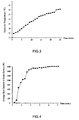
- the average surface temperature of 16 pieces of electrothermal board varies with time, and it shows that the average surface temperature of the electrically conducted board rises rapidly, and the average surface temperature of the 16 boards reaches an appropriate temperature 36°C within 4.4minutes for the construction requirements on ground.
- the room air temperature in the chamber varies with time, and it shows that the nano carbon crystal electrothermal board can dissipate heat into air rapidly, so that it only takes 23.2 minutes for the room temperature to rise quickly to the standard temperature of 18°C.
- the curve of the average heating generating quantity of the 16 pieces of boards varying with time indicates that the quantity of generated heat of the electrically conducted electrothermal board increases rapidly. After 4.3 minutes, the quantity of generated heat reaches its maximum, and remains unchanged thereafter.
- Embodiment 11 The difference between this embodiment and Embodiment 10 is that the ratio of the weight of the nano carbon crystal material and the weight of the paper pulp for making paper is 1: 12 ⁇ 17, and the rest is the same as Embodiment 10.
- Embodiment 12 The difference between this embodiment and Embodiment 10 is that the ratio of the weight of the nano carbon crystal material and the weight of paper pulp for making paper is 1: 15, and the rest is the same as Embodiment 10.
- Embodiment 13 The difference between this embodiment and Embodiment 10 is that the proportion of the weight of the phenolic resin, the weight of the epoxy resin and the weight of the acetone is 3: 6: 1, and the rest is the same as Embodiment 10.
Landscapes
- Chemical & Material Sciences (AREA)
- Inorganic Chemistry (AREA)
- Paper (AREA)
- Ceramic Products (AREA)
Claims (10)
- Nano-Kohlenstoffkristallmaterial, umfassend:acrylnitrilbasierte Kohlefasern, die 70~80% des Gesamtgewichts des Nano-Kohlenstoffkristallmaterials ausmachen;Nanokohlenstofffasern, die 1~5% des Gesamtgewichts des Nano-Kohlenstoffkristallmaterials ausmachen; undKohlenstoffkristalle, die 15~29% des Gesamtgewichts des Nano-Kohlenstoffkristallmaterials ausmachen.
- Nano-Kohlenstoffkristallmaterial nach Anspruch 1, dadurch gekennzeichnet, dass sich das Nano-Kohlenstoffkristallmaterial aus acrylnitrilbasierten Kohlefasern, die 72~78% des Gesamtgewichts ausmachen, Nanokohlenstofffasern, die 2~4% des Gesamtgewichts ausmachen, und Kohlenstoffkristallen, die 18~25% des Gesamtgewichts ausmachen, zusammensetzt.
- Nano-Kohlenstoffkristallmaterial nach Anspruch 1 oder 2, wobei sich die acrylnitrilbasierte Kohlefaser aus acrylnitrilbasierten Kohlefasern mit einer Filamentzahl von 10.000~15.000, einem Durchmesser von 1~5 µm und einer Länge von 2~4 mm bzw. 4,5~6 mm zusammensetzt und in einem Gewichtsverhältnis von 0,5~2:1 gebildet ist; und wobei der Durchmesser der Nanokohlenstofffaser 50~200 nm beträgt; und die Maschenzahl des Kohlenstoffkristallnetzes 400~1000 Maschen beträgt.
- Verfahren zur Herstellung einer elektrothermischen Platte unter Verwendung des Nano-Kohlenstoffkristallmaterials nach Anspruch 1, mit den folgenden Schritten:1. Herstellen eines wärmeerzeugenden Papiers aus Nanokohlenstoffkristall;a. Einstellen eines Verhältnisses des Gewichts des Nanokohlenstoff-Kristallmaterials und des Gewichts des Papierbreis zur Herstellung des Papiers auf 1:9~19, und Mischen des Nanokohlenstoffmaterials in den Papierbrei, um Papier herzustellen, und dann Zugabe einer Wasserlösung zu einem Dispergiermittel, um einen gemischen Kohlefaserbrei zu bilden, wobei die Verbrauchsmenge des Dispergiermittels gleich 0,5~5% des Gewichts des Nano-Kohlenstoffkristallmaterials ist;b. Einleiten des gemischten Kohlefaserbreis in eine isotrope Hochgeschwindigkeitsmaschine, die eine wasserlösliche Klebstofflösung enthält, und Mischen mit einer Drehzahl von 800~2000 UpM für 1-2 Stunden, so dass der Mahlgrad des Faserbreis in einen Bereich von 35°~55° SR fällt;c. Verwenden einer Papierherstellungsmaschine mit einem 50 mesh-Papiermarkierungsnetz, um die Papiermarkierungsmaschine mit einer Geschwindigkeit von 10~15 m/min zur Verarbeitung des aufbereiteten gemischten Kohlefaserbreis zu steuern, und dann Komprimieren der Kohlefasern auf einem Stück Wollstoff sowie Trocknen und Formen der Kohlefasern mit einer Heizspule;2. Herstellen eines Prepregs aus Glasfasergewebe: Aufbringen der gemischten Farbe auf die Oberfläche eines Glasfasergewebes mit über 25x16 quer- und längsgerichteten Glasfasern, wobei die gemischte Farbe eine Mischung von Phenolharz, Epoxidharz und Aceton in einem Gewichtsverhältnis von 1~5:4~8:1 enthält, um ein Prepreg aus Glasfasergewebe mit einer Dicke von 0,1~0,3 mm zu erhalten;3. Herstellen einer elektrothermischen Platte aus Nanokohlenstoffkristall;d. zuerst Auflegen von sechs Lagen 50 Gramm-Kraftpapier auf ein Eisenblech und dann Auflegen einer egalisierenden Eisenplatte mit einer Dicke von 1~3 mm und schließlich Auftragen eines Formtrennmittels auf die Eisenplatte;e. Auftragen einer Schicht einer hochdruckbeständigen Polyethylenfolie mit einer Dicke von 0,01~0,05 mm auf die Eisenplatte und Auflegen eines Stücks Dekorationspapier auf die hochdruckbeständige Polyethylenfolie;f. Auflegen von 3~5 Lagen Prepregs aus Glasfasergewebe auf das Dekorationspapier und dann Auflegen eines Stücks Nanokohlenstoffkristallpapier und einer mit Stanniolfolie umwickelten Kupferfolie getrennt voneinander auf beide Seiten als leitende Elektrode;g. Auflegen von 3~5 Lagen Prepregs aus Glasfasergewebe auf das Nanokohlenstoffkristallpapier;h. Auflegen einer Schicht der hochdruckbeständigen Polyethylenfolie mit einer Dicke von 0,01~0,05 mm auf das Prepreg aus Glasfasergewebe und Auftragen eines Formtrennmittels, und dann Auflegen einer egalisierenden Eisenplatte mit einer Dicke von 1~3 mm auf die hochdruckbeständige Polyethylenfolie und dann Auflegen von 6 Lagen 50 Gramm-Kraftpapier auf die Eisenplatte;i. Befestigen des flachen leitenden Kupferdrahtgitters mit der Kupferelektrode als leitender Anode und Kathode und Herausführen derselben parallel zueinander aus der Rückseite des Prepregs aus Glasfasergewebe; undj. Auflegen des halbfertigen Produkts auf eine Heißpressmaschine und Vorheizen derselben bis auf 80°C, und dann Einschalten der Heißpressmaschine, um einen Druck von bis zu 200 Tonnen aufzubringen und die Temperatur bis auf 100°C zu erhöhen, und Beibehalten von Temperatur und Druck für 8~9 Minuten, und dann Erhöhen der Temperatur auf 120°C und Beibehalten von Temperatur und Druck für 8~9 Minuten, und dann Erhöhen der Temperatur auf 140°C und Beibehalten von Temperatur und Druck für 8~9 Minuten, und dann Absenken der Temperatur auf 55°C unter Beibehaltung des Drucks, und dann Absenken von Druck und Temperatur auf Raumtemperatur, und schließlich Öffnen der Form, um die elektrothermische Platte aus Nanokohlenstoffkristall zu erhalten.
- Verfahren zur Herstellung einer elektrothermischen Platte unter Verwendung eines Nano-Kohlenstoffkristallmaterials nach Anspruch 4, wobei sich das Dispergiermittel aus Natriumalginat, Methylcellulose, Polyacrylamin oder einer Kombination der obigen zusammensetzt.
- Verfahren zur Herstellung einer elektrothermischen Platte unter Verwendung eines Nano-Kohlenstoffkristallmaterials nach Anspruch 4, wobei der Papierbrei zur Herstellung von Papier ein Holzzellstoffbrei ist.
- Verfahren zur Herstellung einer elektrothermischen Platte unter Verwendung eines Nano-Kohlenstoffkristallmaterials nach Anspruch 4, wobei sich der wasserlösliche Klebstoff aus Polyanilin, Polyvinylalkohol, wasserlöslichem Phenolharz oder einer Kombination der obigen zusammensetzt.
- Verfahren zur Herstellung einer elektrothermischen Platte unter Verwendung eines Nano-Kohlenstoffkristallmaterials nach Anspruch 4, wobei das Phenolharz ein Phenolharz 1411 ist und das Epoxidharz ein Epoxidharz E44 ist.
- Verfahren zur Herstellung einer elektrothermischen Platte unter Verwendung eines Nano-Kohlenstoffkristallmaterials nach Anspruch 4, wobei die Kupferfolie eine Breite von 10~15 mm und eine Dicke von 0,6 mm hat und die Kupferfolie mit einer Rändelmaschine gepresst wird, um an beiden Rändern der Kupferfolie Maschen zu bilden.
- Verfahren zur Herstellung einer elektrothermischen Platte unter Verwendung eines Nano-Kohlenstoffkristallmaterials nach Anspruch 4, wobei das Formtrennmittel ein Formtrennmittel auf Polyurethanbasis ist.
Priority Applications (2)
| Application Number | Priority Date | Filing Date | Title |
|---|---|---|---|
| AT07022709T ATE525525T1 (de) | 2007-11-22 | 2007-11-22 | Nano-kohlenstoff-kristallmaterial und verfahren zur herstellung einer elektrothermischen platte damit |
| EP07022709A EP2063024B1 (de) | 2007-11-22 | 2007-11-22 | Nano-Kohlenstoff-Kristallmaterial und Verfahren zur Herstellung einer elektrothermischen Platte damit |
Applications Claiming Priority (1)
| Application Number | Priority Date | Filing Date | Title |
|---|---|---|---|
| EP07022709A EP2063024B1 (de) | 2007-11-22 | 2007-11-22 | Nano-Kohlenstoff-Kristallmaterial und Verfahren zur Herstellung einer elektrothermischen Platte damit |
Publications (2)
| Publication Number | Publication Date |
|---|---|
| EP2063024A1 EP2063024A1 (de) | 2009-05-27 |
| EP2063024B1 true EP2063024B1 (de) | 2011-09-21 |
Family
ID=39204924
Family Applications (1)
| Application Number | Title | Priority Date | Filing Date |
|---|---|---|---|
| EP07022709A Not-in-force EP2063024B1 (de) | 2007-11-22 | 2007-11-22 | Nano-Kohlenstoff-Kristallmaterial und Verfahren zur Herstellung einer elektrothermischen Platte damit |
Country Status (2)
| Country | Link |
|---|---|
| EP (1) | EP2063024B1 (de) |
| AT (1) | ATE525525T1 (de) |
Families Citing this family (4)
| Publication number | Priority date | Publication date | Assignee | Title |
|---|---|---|---|---|
| CN107071935A (zh) * | 2017-06-13 | 2017-08-18 | 芜湖桑乐金电子科技有限公司 | 红外加热板及制备方法 |
| CN111138693A (zh) * | 2019-12-04 | 2020-05-12 | 沈阳化工大学 | 一种柔性碳晶电热薄膜的制备方法 |
| CN113411917B (zh) * | 2021-07-29 | 2026-04-07 | 宁波烯沃新材料科技有限公司 | 碳纳米管透明发热结构、其制备方法及其制备装置 |
| CN115011133B (zh) * | 2022-05-27 | 2023-06-23 | 广东简一(集团)陶瓷有限公司 | 一种适用于发热瓷砖的发热纸及其制备方法 |
Family Cites Families (2)
| Publication number | Priority date | Publication date | Assignee | Title |
|---|---|---|---|---|
| KR100337609B1 (ko) * | 2000-08-26 | 2002-05-22 | 서영석 | 세라믹 탄소섬유지 면상발열체 |
| US7396403B1 (en) * | 2006-02-17 | 2008-07-08 | Ogden Technologies, Inc. | Concrete reinforced with acrylic coated carbon fibers |
-
2007
- 2007-11-22 AT AT07022709T patent/ATE525525T1/de not_active IP Right Cessation
- 2007-11-22 EP EP07022709A patent/EP2063024B1/de not_active Not-in-force
Also Published As
| Publication number | Publication date |
|---|---|
| EP2063024A1 (de) | 2009-05-27 |
| ATE525525T1 (de) | 2011-10-15 |
Similar Documents
| Publication | Publication Date | Title |
|---|---|---|
| US20090120600A1 (en) | Nano carbon crystal material and method of manufacturing electrothermal board by using the same | |
| Yang et al. | Scalable electric heating paper based on CNT/Aramid fiber with superior mechanical and electric heating properties | |
| JP2009132574A (ja) | 炭素ナノ結晶材料及びそれを用いた電熱板の製造方法 | |
| CN201817744U (zh) | 一种多层复合的发热导电纳米碳纤维纸 | |
| TW421685B (en) | Wholly aromatic polyamide fiber sheet | |
| CN104072988B (zh) | 氮化硼高导热绝缘材料及其制备方法 | |
| CN102226325B (zh) | 一种远红外碳纤维低温导电发热纸及其制备方法 | |
| RU2015124163A (ru) | Электроизоляционная бумага | |
| TW201834539A (zh) | 電磁波抑制片 | |
| CN101150891B (zh) | 纳米碳素晶体材料及其制备电热板的方法 | |
| EP2063024A1 (de) | Nano-Kohlenstoff-Kristallmaterial und Verfahren zur Herstellung einer elektrothermischen Platte damit | |
| CN108521683B (zh) | 纳米纤维素氧化石墨烯电热材料及其制备方法 | |
| CN110467846A (zh) | 一种油性电热转化油墨的制备方法及所制备的油墨 | |
| JP3077410U (ja) | 炭素繊維混抄シート発熱体 | |
| CN106381752A (zh) | 一种碳纤维发热纸及其应用 | |
| CN107592685A (zh) | 一种制备双发热层石墨烯电热膜的方法 | |
| CN116061525A (zh) | 一种聚多巴胺改性氮化硼纳米片/聚酰亚胺复合纤维导热薄膜及其制备方法和应用 | |
| JP2013223962A (ja) | アラミド−樹脂フィルム積層体及びその製造方法 | |
| Tan et al. | Simultaneously enhanced in-plane and through-plane thermal conductivity of the bacterial cellulose composite prepared via a facile method | |
| CN114573844A (zh) | 一种仿珍珠母芳纶-云母纳米纸及其制备方法 | |
| CN109098029A (zh) | 一种新型碳纤维发热纸的制造方法 | |
| CN115141001B (zh) | 石墨基电热材料及其制备方法和电热设备 | |
| CN102821495A (zh) | 一种聚四氟乙烯基电热厚膜及其制造方法 | |
| TWI325902B (de) | ||
| CN105384954B (zh) | 一种利用芳纶树脂制备芳纶绝缘薄膜的方法 |
Legal Events
| Date | Code | Title | Description |
|---|---|---|---|
| PUAI | Public reference made under article 153(3) epc to a published international application that has entered the european phase |
Free format text: ORIGINAL CODE: 0009012 |
|
| AK | Designated contracting states |
Kind code of ref document: A1 Designated state(s): AT BE BG CH CY CZ DE DK EE ES FI FR GB GR HU IE IS IT LI LT LU LV MC MT NL PL PT RO SE SI SK TR |
|
| AX | Request for extension of the european patent |
Extension state: AL BA HR MK RS |
|
| 17P | Request for examination filed |
Effective date: 20091118 |
|
| AKX | Designation fees paid |
Designated state(s): AT BE BG CH CY CZ DE DK EE ES FI FR GB GR HU IE IS IT LI LT LU LV MC MT NL PL PT RO SE SI SK TR |
|
| GRAP | Despatch of communication of intention to grant a patent |
Free format text: ORIGINAL CODE: EPIDOSNIGR1 |
|
| GRAS | Grant fee paid |
Free format text: ORIGINAL CODE: EPIDOSNIGR3 |
|
| 17Q | First examination report despatched |
Effective date: 20110419 |
|
| GRAA | (expected) grant |
Free format text: ORIGINAL CODE: 0009210 |
|
| AK | Designated contracting states |
Kind code of ref document: B1 Designated state(s): AT BE BG CH CY CZ DE DK EE ES FI FR GB GR HU IE IS IT LI LT LU LV MC MT NL PL PT RO SE SI SK TR |
|
| REG | Reference to a national code |
Ref country code: GB Ref legal event code: FG4D |
|
| REG | Reference to a national code |
Ref country code: CH Ref legal event code: EP |
|
| REG | Reference to a national code |
Ref country code: IE Ref legal event code: FG4D |
|
| REG | Reference to a national code |
Ref country code: DE Ref legal event code: R096 Ref document number: 602007017308 Country of ref document: DE Effective date: 20111117 |
|
| REG | Reference to a national code |
Ref country code: NL Ref legal event code: VDEP Effective date: 20110921 |
|
| PG25 | Lapsed in a contracting state [announced via postgrant information from national office to epo] |
Ref country code: FI Free format text: LAPSE BECAUSE OF FAILURE TO SUBMIT A TRANSLATION OF THE DESCRIPTION OR TO PAY THE FEE WITHIN THE PRESCRIBED TIME-LIMIT Effective date: 20110921 Ref country code: SE Free format text: LAPSE BECAUSE OF FAILURE TO SUBMIT A TRANSLATION OF THE DESCRIPTION OR TO PAY THE FEE WITHIN THE PRESCRIBED TIME-LIMIT Effective date: 20110921 Ref country code: LT Free format text: LAPSE BECAUSE OF FAILURE TO SUBMIT A TRANSLATION OF THE DESCRIPTION OR TO PAY THE FEE WITHIN THE PRESCRIBED TIME-LIMIT Effective date: 20110921 |
|
| LTIE | Lt: invalidation of european patent or patent extension |
Effective date: 20110921 |
|
| PG25 | Lapsed in a contracting state [announced via postgrant information from national office to epo] |
Ref country code: GR Free format text: LAPSE BECAUSE OF FAILURE TO SUBMIT A TRANSLATION OF THE DESCRIPTION OR TO PAY THE FEE WITHIN THE PRESCRIBED TIME-LIMIT Effective date: 20111222 Ref country code: LV Free format text: LAPSE BECAUSE OF FAILURE TO SUBMIT A TRANSLATION OF THE DESCRIPTION OR TO PAY THE FEE WITHIN THE PRESCRIBED TIME-LIMIT Effective date: 20110921 Ref country code: SI Free format text: LAPSE BECAUSE OF FAILURE TO SUBMIT A TRANSLATION OF THE DESCRIPTION OR TO PAY THE FEE WITHIN THE PRESCRIBED TIME-LIMIT Effective date: 20110921 Ref country code: CY Free format text: LAPSE BECAUSE OF FAILURE TO SUBMIT A TRANSLATION OF THE DESCRIPTION OR TO PAY THE FEE WITHIN THE PRESCRIBED TIME-LIMIT Effective date: 20110921 Ref country code: AT Free format text: LAPSE BECAUSE OF FAILURE TO SUBMIT A TRANSLATION OF THE DESCRIPTION OR TO PAY THE FEE WITHIN THE PRESCRIBED TIME-LIMIT Effective date: 20110921 |
|
| REG | Reference to a national code |
Ref country code: AT Ref legal event code: MK05 Ref document number: 525525 Country of ref document: AT Kind code of ref document: T Effective date: 20110921 |
|
| PG25 | Lapsed in a contracting state [announced via postgrant information from national office to epo] |
Ref country code: BE Free format text: LAPSE BECAUSE OF FAILURE TO SUBMIT A TRANSLATION OF THE DESCRIPTION OR TO PAY THE FEE WITHIN THE PRESCRIBED TIME-LIMIT Effective date: 20110921 |
|
| PG25 | Lapsed in a contracting state [announced via postgrant information from national office to epo] |
Ref country code: CZ Free format text: LAPSE BECAUSE OF FAILURE TO SUBMIT A TRANSLATION OF THE DESCRIPTION OR TO PAY THE FEE WITHIN THE PRESCRIBED TIME-LIMIT Effective date: 20110921 Ref country code: SK Free format text: LAPSE BECAUSE OF FAILURE TO SUBMIT A TRANSLATION OF THE DESCRIPTION OR TO PAY THE FEE WITHIN THE PRESCRIBED TIME-LIMIT Effective date: 20110921 Ref country code: IS Free format text: LAPSE BECAUSE OF FAILURE TO SUBMIT A TRANSLATION OF THE DESCRIPTION OR TO PAY THE FEE WITHIN THE PRESCRIBED TIME-LIMIT Effective date: 20120121 |
|
| PG25 | Lapsed in a contracting state [announced via postgrant information from national office to epo] |
Ref country code: RO Free format text: LAPSE BECAUSE OF FAILURE TO SUBMIT A TRANSLATION OF THE DESCRIPTION OR TO PAY THE FEE WITHIN THE PRESCRIBED TIME-LIMIT Effective date: 20110921 Ref country code: PT Free format text: LAPSE BECAUSE OF FAILURE TO SUBMIT A TRANSLATION OF THE DESCRIPTION OR TO PAY THE FEE WITHIN THE PRESCRIBED TIME-LIMIT Effective date: 20120123 Ref country code: PL Free format text: LAPSE BECAUSE OF FAILURE TO SUBMIT A TRANSLATION OF THE DESCRIPTION OR TO PAY THE FEE WITHIN THE PRESCRIBED TIME-LIMIT Effective date: 20110921 Ref country code: IT Free format text: LAPSE BECAUSE OF FAILURE TO SUBMIT A TRANSLATION OF THE DESCRIPTION OR TO PAY THE FEE WITHIN THE PRESCRIBED TIME-LIMIT Effective date: 20110921 Ref country code: NL Free format text: LAPSE BECAUSE OF FAILURE TO SUBMIT A TRANSLATION OF THE DESCRIPTION OR TO PAY THE FEE WITHIN THE PRESCRIBED TIME-LIMIT Effective date: 20110921 Ref country code: EE Free format text: LAPSE BECAUSE OF FAILURE TO SUBMIT A TRANSLATION OF THE DESCRIPTION OR TO PAY THE FEE WITHIN THE PRESCRIBED TIME-LIMIT Effective date: 20110921 |
|
| PG25 | Lapsed in a contracting state [announced via postgrant information from national office to epo] |
Ref country code: MC Free format text: LAPSE BECAUSE OF NON-PAYMENT OF DUE FEES Effective date: 20111130 |
|
| REG | Reference to a national code |
Ref country code: CH Ref legal event code: PL |
|
| PLBE | No opposition filed within time limit |
Free format text: ORIGINAL CODE: 0009261 |
|
| STAA | Information on the status of an ep patent application or granted ep patent |
Free format text: STATUS: NO OPPOSITION FILED WITHIN TIME LIMIT |
|
| PG25 | Lapsed in a contracting state [announced via postgrant information from national office to epo] |
Ref country code: CH Free format text: LAPSE BECAUSE OF NON-PAYMENT OF DUE FEES Effective date: 20111130 Ref country code: LI Free format text: LAPSE BECAUSE OF NON-PAYMENT OF DUE FEES Effective date: 20111130 Ref country code: DK Free format text: LAPSE BECAUSE OF FAILURE TO SUBMIT A TRANSLATION OF THE DESCRIPTION OR TO PAY THE FEE WITHIN THE PRESCRIBED TIME-LIMIT Effective date: 20110921 |
|
| 26N | No opposition filed |
Effective date: 20120622 |
|
| REG | Reference to a national code |
Ref country code: IE Ref legal event code: MM4A |
|
| REG | Reference to a national code |
Ref country code: DE Ref legal event code: R097 Ref document number: 602007017308 Country of ref document: DE Effective date: 20120622 |
|
| PG25 | Lapsed in a contracting state [announced via postgrant information from national office to epo] |
Ref country code: IE Free format text: LAPSE BECAUSE OF NON-PAYMENT OF DUE FEES Effective date: 20111122 |
|
| REG | Reference to a national code |
Ref country code: DE Ref legal event code: R082 Ref document number: 602007017308 Country of ref document: DE Representative=s name: CABINET CHAILLOT, FR |
|
| PG25 | Lapsed in a contracting state [announced via postgrant information from national office to epo] |
Ref country code: MT Free format text: LAPSE BECAUSE OF FAILURE TO SUBMIT A TRANSLATION OF THE DESCRIPTION OR TO PAY THE FEE WITHIN THE PRESCRIBED TIME-LIMIT Effective date: 20110921 |
|
| REG | Reference to a national code |
Ref country code: DE Ref legal event code: R081 Ref document number: 602007017308 Country of ref document: DE Owner name: PAN, CHING-LING, TW Free format text: FORMER OWNERS: PAN, CHING-LING, TAIPEI, TW; WU, YUNG-SHUN, TAIPEI, TW Effective date: 20130107 Ref country code: DE Ref legal event code: R081 Ref document number: 602007017308 Country of ref document: DE Owner name: PAN, CHING-LING, TW Free format text: FORMER OWNER: CHING-LING PAN,YUNG-SHUN WU, , TW Effective date: 20130107 Ref country code: DE Ref legal event code: R082 Ref document number: 602007017308 Country of ref document: DE Representative=s name: CABINET CHAILLOT, FR Effective date: 20130107 |
|
| REG | Reference to a national code |
Ref country code: FR Ref legal event code: TP Owner name: CHING-LING PAN, TW Effective date: 20130128 |
|
| REG | Reference to a national code |
Ref country code: GB Ref legal event code: 732E Free format text: REGISTERED BETWEEN 20130228 AND 20130306 |
|
| PG25 | Lapsed in a contracting state [announced via postgrant information from national office to epo] |
Ref country code: ES Free format text: LAPSE BECAUSE OF FAILURE TO SUBMIT A TRANSLATION OF THE DESCRIPTION OR TO PAY THE FEE WITHIN THE PRESCRIBED TIME-LIMIT Effective date: 20120101 |
|
| PG25 | Lapsed in a contracting state [announced via postgrant information from national office to epo] |
Ref country code: LU Free format text: LAPSE BECAUSE OF NON-PAYMENT OF DUE FEES Effective date: 20111122 |
|
| PG25 | Lapsed in a contracting state [announced via postgrant information from national office to epo] |
Ref country code: BG Free format text: LAPSE BECAUSE OF FAILURE TO SUBMIT A TRANSLATION OF THE DESCRIPTION OR TO PAY THE FEE WITHIN THE PRESCRIBED TIME-LIMIT Effective date: 20111221 |
|
| PG25 | Lapsed in a contracting state [announced via postgrant information from national office to epo] |
Ref country code: TR Free format text: LAPSE BECAUSE OF FAILURE TO SUBMIT A TRANSLATION OF THE DESCRIPTION OR TO PAY THE FEE WITHIN THE PRESCRIBED TIME-LIMIT Effective date: 20110921 |
|
| PG25 | Lapsed in a contracting state [announced via postgrant information from national office to epo] |
Ref country code: HU Free format text: LAPSE BECAUSE OF FAILURE TO SUBMIT A TRANSLATION OF THE DESCRIPTION OR TO PAY THE FEE WITHIN THE PRESCRIBED TIME-LIMIT Effective date: 20110921 |
|
| REG | Reference to a national code |
Ref country code: FR Ref legal event code: PLFP Year of fee payment: 9 |
|
| REG | Reference to a national code |
Ref country code: FR Ref legal event code: PLFP Year of fee payment: 10 |
|
| PGFP | Annual fee paid to national office [announced via postgrant information from national office to epo] |
Ref country code: DE Payment date: 20161116 Year of fee payment: 10 Ref country code: FR Payment date: 20161125 Year of fee payment: 10 Ref country code: GB Payment date: 20161115 Year of fee payment: 10 |
|
| REG | Reference to a national code |
Ref country code: DE Ref legal event code: R119 Ref document number: 602007017308 Country of ref document: DE |
|
| GBPC | Gb: european patent ceased through non-payment of renewal fee |
Effective date: 20171122 |
|
| REG | Reference to a national code |
Ref country code: FR Ref legal event code: ST Effective date: 20180731 |
|
| PG25 | Lapsed in a contracting state [announced via postgrant information from national office to epo] |
Ref country code: DE Free format text: LAPSE BECAUSE OF NON-PAYMENT OF DUE FEES Effective date: 20180602 Ref country code: FR Free format text: LAPSE BECAUSE OF NON-PAYMENT OF DUE FEES Effective date: 20171130 |
|
| PG25 | Lapsed in a contracting state [announced via postgrant information from national office to epo] |
Ref country code: GB Free format text: LAPSE BECAUSE OF NON-PAYMENT OF DUE FEES Effective date: 20171122 |